MLK said: "Injustice Anywhere is a Threat to Justice Everywhere"

End Corruption in the Courts!

Court employee, judge or citizen - Report Corruption in any Court Today !! As of June 15, 2016, we've received over 142,500 tips...KEEP THEM COMING !! Email: CorruptCourts@gmail.com

Wednesday, January 13, 2010

Corruption: The Most Underrated Crime

Corruption: The Most Underrated Crime
MaltaGreenYouth by Robert Callus - January 12, 2010

As young boy I remember my father mentioning the word korrotti (corrupt). I used to laugh at him thinking he was saying karrotti (carrots) in slang. I was too innocent to realise he was talking about a heinous crime that has become so much socially accepted we’ve learn to live with. A crime which has different implications according to the merits for each situation. Nearly always they are dead serious. A crime that makes trafficking of drugs as well as humans across borders possible, that is the main cause for famine in third world countries as well as being usually implicated in projects ruining the environment. An act so powerful than was not only one of the main factors of bringing down the USSR, but together with fanatic Nationalism is the reason why neither Russia nor most of its former satellite states ever really recovered. (A saying in Russia goes: After Lenin we had de-intellectualisation; after Stalin de-stalinisation; but after Brezhnev we never had any de-corruptisation). Corruption has such a devastating effect because it infiltrates every sector of society, and hinders law enforcement as well as any real reform, be it economic, legal or environmental. How can one, for example stop human trafficking when the traffickers move innocent people across borders for purposes of slavery if the former haven’t got protection from some of those who are meant to be there to protect the victims? Why would dictators leave thousands of overworked humans live with less than 2$ a day if multinationals were not pumping them millions to turn a blind eye? Despite all this, compared to other crimes, on both a local and international level we rarely see people convicted of corruption, and when we do they rarely get serious penalties. I attribute this to mainly two reasons. First of all, corruption is invisible. Unlike a small time thief or even a bank robber, those most responsible do not break into houses themselves, or hold a gun towards a person’s head. Though they might be responsible for thousands of deaths, they are rarely if ever seen with blood on their hands. Due to this, their crime seems a minor one. It rarely creates public outrage. It has become socially acceptable. Lately we’ve seen the violent attack on Italian leader Silvio Berlusconi. The perpetrator, Massimo Tartaglia, a person with mental health problems, is seen as one of the most dangerous people in Italy. We’ve all seen the blood on Berlusconi’s face. Yet, in reality, Tartaglia’s crime is a minor one compared to the six charges against the same leader. The latter’s charges of bribery are easily forgivable. They left no blood or broken noses. At least not directly. The second reason while corruption rarely sees the light of day is that the corrupt are usually wiser than the common thief. We believe that a person bribes another for only one reason – getting from him the particular thing he wants. Yet there is another, less obvious albeit more sinister reason. The big time corrupter not only gives a bribe to the small time corrupt, but knows it. Now that you’ve taken your bribe you are an accomplice. Maybe you accepted a small cheque to close your eyes for a seemingly innocent deviation from the law. However if the person who bribed you is making big dirty money, from say drug trafficking, you are afraid to report him. If you do so, that little cheque you accepted will come to light. And the higher he is, the more he can harm you for your little escapade. You are now under his thumb. You might be disgusted with what he is doing, your guilt feelings might be killing you, yet you have to remain silent. Otherwise he’ll ruin you. If we, as a society make a genuine effort against corruption we might not stop it, but we could give it a very significant blow. I suggest three simple steps: (1) Realise and convince ourselves this is a serious crime hurting ourselves and our society from every angle possible. The aim of this article is towards this step. (2) Refuse it. Many of us will have one or more opportunities to accept bribes, no matter how small they are. If we categorically decide to refuse any bribe we will not only doing what is legally and morally right but we are free. We are under no ones thumb. (3) Enforce the law and increase punishment. This is only possible if the first two steps are accomplished. If we as a society realise how serious this is, even to the extent of letting its crackdown affect our voting in elections, rather than run after the Party leader that makes the most charismatic speeches, the law makers will start putting it on their agenda. We can only do this if we are free from it ourselves. (While following these steps will definitely harm this malady, other measures have to be taken. A case in point is a clear and enforceable Whistleblower Act.)

NY Daily News Editorial on Judicial Raises

An order for the court: State's judiciary must not direct Legislature to give it a raise
The New York Daily News - EDITORIAL- January 13, 2010

Judges on the Court of Appeals heard a suit yesterday contending they and their colleagues have a right to higher salaries - and should order the Legislature to pony up. The court must not go down that road. The arguments made clear that New York's judiciary should refrain from provoking a constitutional clash with lawmakers over pay. This is not the case for war between branches of government. The good-government and political grounds for granting judges their first cost-of-living adjustment since 1999 are rock-solid. Their salaries have lost a third of their buying power to inflation, to the point that the chief judge brings in less than a junior associate at a major Manhattan law firm. But good-government and political arguments are out of place as the basis for judicial action, let alone for intruding on lawmakers' prerogatives. Then, too, ordering legislators to appropriate moneys would would smack of credibility-destroying self-interest. The jurists point primarily to a constitutional clause that prohibits lawmakers from diminishing judicial salaries. They reason that inflation has eaten away judges' purchasing power, and therefore pay has, in effect, been diminished. It's a slim reed. But there's no way constitutional framers had the Consumer Price Index in mind when they wrote the clause. The intent was to prevent rogue lawmakers from punishing judges for unpopular decisions by actively cutting salaries. Nothing of the sort has happened here. No, New York's judges are, like so many others, merely victims of irresponsible legislating. The onus rests with the Assembly, led by Speaker Sheldon Silver, who refused to hike judicial pay unless lawmakers, too, got raises - and then never had the gumption to fight for increases. No matter what the Court of Appeals does, rest assured that Silver will get around to the issue when he is good and ready. Sadly, judicial discretion will be the better part of valor.

Tuesday, January 12, 2010

Can Andrew Cuomo Do Something About Corruption?

Andrew's opportunity
The New York Post - EDITORIAL - January 11, 2010

Attorney General Andrew Cuomo has long argued that the best way to clean up Albany is to vest in his of fice broad authority to investigate political corruption. Forget the hopelessly compromised "ethics" panels, in other words: A few well-targeted criminal probes -- with full power of subpoena -- are the best way to make things right. Well, now's his chance. Cuomo's office has subpoenaed a wide range of state Senate e-mails regarding Majority Leader Pedro Espada and his Soundview Health Center, the Bronx clinic that functions as the Espada family piggy bank. The AG's authority is narrowly focused; it comes from his probe into Soundview's possible misuse of public funds. Now Cuomo reportedly wants to know whether Espada used his position to steer cash toward the clinic. Um, is the Hudson wet? Fact is, if Cuomo can't unravel Espada's exceedingly brazen Soundview advantage-taking, he's going to have a tough time justifying a bid for wider powers. If he can, of course, it's even less likely that the Legislature would grant them -- but that's the sad lot of an aspiring Albany reformer. The problem certainly transcends Espada. Take Senate Democratic leader John Sampson. Barely had the gavel come down on former Majority Leader Joe Bruno's conviction for using his office to personal advantage when Sampson tossed a few feathers into his own nest. The Post's Brendan Scott reports that the Brooklyn Democrat last month locked up a gig as counsel to the politically powerful law firm Belluck & Fox. He'll be nicely compensated, no doubt -- but the details will be privileged information because of the lawyer-client relationship. And guess what: A founding partner at the firm, Joseph Belluck, just happens to be a board member at the state Trial Lawyers Association -- a key lobbyist for the tort bar. This, of course, is almost the same arrangement Assembly Speaker Sheldon Silver has with top tort-law firm Weitz & Luxenberg. Probably not a good year for tort reform in Albany, we'd guess: Clearly, the trial lawyers have covered their bases in both houses of the Legislature. Average New Yorkers come up with the short end of the stick. Meanwhile, Joe Bruno must be wondering why he never got a law degree. Pedro Espada, too. Alas, it'll be a cold day in hell before Sampson, Silver & Co. willingly give anyone the power to probe them. But if Cuomo can sort out Soundview, it will be significantly more difficult to justify denying him the authority to cast a wider net. That would be a good thing.

Monday, January 11, 2010

Another Lying Judge Sent Off To Prison

<Another Lying Judge Sent Off To Prison
The Connecticut Law Journal by Karen Lee Torre - January 11, 2010

Last week saw another disgraced judge handcuffed. Judge Bobby DeLaughter, a former Mississippi prosecutor, and the latest judge or lawyer to fall in connection with the inherently corrupt mass tort litigation (shakedown) industry involving tobacco and asbestos claims, went to federal prison. In the 1990s, DeLaughter achieved fame as a “civil rights hero” for getting Byron de la Beckwith finally convicted for the 1963 murder of civil rights leader Medgar Evers. DeLaughter later became a judge. There were books written by and about DeLaughter, and his trial feat was dramatized in the movie “Ghosts of Mississippi.” The “civil rights hero” would not respect the basic rights of lawyers and litigants to have an honest judge. DeLaughter isn’t alone; he follows two other of Mississippi judges imprisoned in connection with shady, behind-the-scenes collusions in similar litigations. The year 2009 also saw two Pennsylvania judges plead guilty in federal court upon facing a host of charges for throwing rulings to one side in a big case. They got caught lying about it and face enormous prison time.
Then we saw U.S. District Judge Samuel Kent, of Texas, indicted in an unusual case of a court employee who complained of his repeated sexual advances. What hung Kent was his like decision to minimize (that is, lie about) the extent of his contact with the woman to judicial council investigators. Charges of obstructing justice were piled on. Judicial officials also noticed a pattern of Kent taking assignments on cases involving an attorney who was a close friend. They yanked the cases and reassigned them to other federal judges. Kent was locked up. Kent modeled himself after U.S. District Judge Walter L. Nixon Jr., who lied to federal investigators and a grand jury in the 1980s when he denied that he discussed a criminal case involving a businessman’s son with a prosecutor and the businessman. Off to prison he went. And there are others. Didn’t anybody learn from Martha Stewart?


DeLaughter’s indictment is interesting. He never sought or took a dime. But his friend, former prosecutor Ed Peters, took big money as a “consultant” to the defense lawyers in a mega-fee dispute case before DeLaughter. Peters served as conduit for the defense lawyers to communicate with DeLaughter. Since Peters was a friend, he could provide the cover for the lawyers’ telegraphing their signals to the judge. They needed an advantageous scheduling order. They got it. DeLaughter timed preliminary rulings to suit their strategy. Crafty, he didn’t make it stink too much. His merits ruling did not relieve defendants from liability but merely minimized it. Notably, there was no allegation that his rulings were incorrect on the law. DeLaughter might have been willing to appear to be granting favors when he really wasn’t. He allegedly went along to curry political favor with bar heavyweights necessary to gain appointment to the federal bench. But when asked by investigators whether he ever spoke to his friend Peters regarding the subject matter of that lawsuit, DeLaughter said “no.” For that, he was charged with obstruction of justice and jailed. Bizarre is the charge against one of the lawyers who arranged for a colleague to file an appearance in the case to facilitate and provide cover for the influence peddling. For depositing the appearance in the post office box, he was charged with mail fraud. These jailed judges were also charged with depriving the public of the honest services of a judge. What a depressing spectacle – a judge brought into court in shackles. In a twist, the son of Byron de la Beckwith attended DeLaughter’s sentencing and watched justice come round again. All these judges assumed they could evade detection or lie when asked a question. But it doesn’t take much. A guilt-ridden associate, a court clerk whispering in another’s ear, a morally offended law clerk, a secretary, or just a rat like Peters who saved himself by turning on his friend. For striking such a ghastly blow to public confidence in the courts, they should have gotten life behind bars. Karen Lee Torre, a New Haven trial lawyer, litigates civil rights issues in the federal courts. Her e-mail address is thimbleislands@sbcglobal.net

Sunday, January 10, 2010

The Mafia's Organized Crime vs. OCA's Disorganized Crime

Stuck on the mafia's highways
Part One of Three
The New York Daily News by Greg B. Smith - Originally published on September 25, 2005

Today, the Daily News begins a three-part series exposing how real-life Tony Sopranos and mobbed-up contractors steal your tax dollars, put workers' lives in danger and even screw up traffic at rush hour. The next time you're stuck in traffic caused by highway construction that appears to involve no actual work, you can thank the Gambino crime family. While you're sitting there, burning up $3 per gallon gasoline, chew on the fact that mob-connected contractors are creating highway traffic jams all over New York — on the BQE, the Bruckner, the Van Wyck, the Cross Bronx, the Long Island Expressway, as well as up and down the New York Thruway. The mob isn't ripping off taxpayers just on highway construction jobs, either. A four-month Daily News investigation has found that New York's organized crime families — supposedly banned from all such construction projects — are back in public works big time — at city schools, playgrounds, bridges and parks. Since 1995, dozens of contractors barred from doing government work because of mob ties, corruption or serious safety violations have been able to win more than 100 public contracts worth more than $1.2 billion.
Take the massive $138 million Brooklyn-Queens Expressway repair that is currently mucking up traffic near Flushing Ave. It's the work of Defoe Construction, a firm the FBI says has been controlled by organized crime for years. Earlier this month, The News found traffic backed up for a mile at the Defoe site, but no workers were seen working. Four men chatted inside an air-conditioned van while a backhoe and several dump trucks sat idle nearby. Defoe was hired in May by the State of New York for the BQE job, just weeks after its president was indicted on charges of bribing a mob-infected union. The FBI has gathered evidence over the last few years that Defoe president John Amicucci has regularly paid off mob-connected unions to use cheaper nonunion help. On government jobs, prosecutors say, that means Defoe billed the taxpayer for union scale, hired nonunion help and pocketed the difference as profit. Last year, Amicucci was repeatedly caught on tape delivering payoff cash and discussing corrupt practices with Gambino gangster Greg DePalma, according to FBI documents obtained by The News. DePalma, who frequently talked in mob code-speak, often referred to Amicucci as "Daffy." On Nov. 15, DePalma told a subordinate: "We got to meet Daffy this week and pick up the fazzulas," which the FBI says meant payoff cash.

The day before Thanksgiving, the FBI watched Amicucci meet DePalma in the Leewood Country Club parking lot in Eastchester. DePalma offered to get Amicucci "straightened out" — that is, arrange for him to become a made member of the Gambino family. "I could do it for you," DePalma said. According to the FBI, Amicucci said he "would consider DePalma's offer." Later that day, DePalma boasted about the "size of rubber band" he got from Amicucci, which FBI documents said referred "to the thickness of the cash payment Amicucci had just made to DePalma." DePalma described his receipt of tribute payments from Amicucci: "I did it in the rain with an umbrella." Two weeks later, Amicucci was charged with making illegal payoffs to a corrupt union infiltrated by the mob. He pleaded not guilty and faces trial. None of the evidence stopped Defoe Construction from bidding on two New York highway jobs. Amicucci promised bureaucrats that if his company won the contracts, he would have nothing to do with the projects. In March, the state Transportation Department took him at his word. Despite the pending labor corruption indictment and a thick FBI file regarding its marriage to the mob, the Defoe firm was awarded two taxpayer-funded contracts totalling $143 million. Incredibly, state DOT spokeswoman Jennifer Post said this arrangement was acceptable because Amicucci — who says he owns 99.4% of the company — "has recused himself from any involvement" in the contracts. In response to questions from The News, however, Post admitted the agency was unaware of the FBI evidence regarding Amicucci's involvement with the mob. Amicucci's lawyer, Gerald Shargel, declined to address the mob allegations, but insisted Defoe did the job it was hired to do: "Regarding those projects, they saved the state a fantastic amount of money. That's why they get these jobs."

The New York State Thruway Authority hired Persico Construction of Westchester County in April 2000 to fix an I-95 bridge in New Rochelle. For the next two and a half years, lane closures and traffic stops at the Potter Ave. location became as routine as kids in the backseat whining, "Are we there yet?" The firm is owned by Robert Persico, who was indicted in March on mob racketeering charges. Persico has been publicly identified as a mob associate since 1998. Prosecutors said in court then that Persico consulted the Gambino family to get a mob-controlled union to let him use nonunion help. In exchange, he got a Gambino soldier a no-show job, they alleged. The disclosures didn't stop Persico from being hired on the I-95 bridge job, which was supposed to be completed in September 2001 and cost $6 million. In fact, the job took an extra year and came in at $9 million.

Records obtained by The News under the Freedom of Information Law show that in March 2002, with complaints escalating about the competency of Persico's work, he hired lobbyist Albert Pirro, husband of U.S. Senate candidate Jeanine Pirro. By the time the I-95 project was half completed, Persico had already closed traffic lanes at the site on 101 occasions — far more than expected. Often, warning signs were not in place, and workers were left unprotected. Again and again, traffic was backed up 2, 3 — even 5 — miles, sometimes in rush hour, other times in the middle of the night, according to the documents, which include internal Thruway E-mails. Though the firm was under strict orders to clear all lane closures by rush hour, delays caused "significant traffic backups throughout the Tuesday morning rush hour," wrote an official from Berger Lehman, the project's engineering firm. One Thruway official was so concerned, he wrote: "If stopping traffic for approximately 10 minutes when a 5-plus-mile backup already exists (which was not properly signed and protected), please let me know in writing to remove myself from any liability." Persico was ordered banned from the site in 2001 after he cursed over a radio about a female inspector trying to cite the firm for yet another lane-closure problem. The Thruway ordered Persico off the site, but Persico kept showing up. Mid-level state officials blasted Persico for deliberately ignoring orders and threatened to bar the firm from future work with the agency. Memos from the engineering firm alleged that pilings that were to take five days to install took four weeks and that concrete footings scheduled to be in place in two weeks took six months. Persico, in turn, blamed Thruway officials for the excessive lane closings, claiming that the agency was oblivious to the road layout in designing road closure patterns. The construction company sought additional funds and said actions by Thruway officials were to blame for keeping workers on the sidelines.
On April 29, 2002, with Pirro now representing Persico, an internal Thruway E-mail showed that midlevel inspectors wanted to impose sanctions on the firm for failure to complete the job on time, "but per the director we are deferring these assessments until a later date." There were more lane closing disputes during the summer of 2002. In one case, the state police had to intervene to undo what it considered to be an unsafe lane closure during the July 4 holiday week. The final sign-off on the contract took place on Oct. 25, 2002 — 13 months behind schedule. All the proposed sanctions had disappeared, and Persico was paid an extra $3 million he had asked for. Persico's lawyer, Barry Levin, said Pirro "was hired to help my client collect outstanding monies owed to him. Pirro was successful in that endeavor." In a written statement to The News, Pirro would only say he was retained by Persico "to help resolve its payment dispute with the Thruway authority over the reconstruction of a bridge in New Rochelle." Pirro refused to answer other questions about the nature of the representation. However, Thruway authority spokesman Daniel Gilbert said Pirro's firm "did not play a role in the resolution of the payment dispute, but did make a couple of inquiries about the process and the status of the dispute." Regarding the increase in the payments, Gilbert said after careful review, the agency determined that "various delays and payment for certain documented extra expenses were justified. Ultimately, there were many reasons for the delays, including numerous design issues which additionally made the contract more expensive." Since the I-95 job, the thruway hired Persico for two more jobs worth a total of $17.5 million. In the midst of those projects, the FBI taped Persico meeting repeatedly with Gambino gangster Greg DePalma and discussing construction corruption, according to FBI transcripts.
Saturday, January 9, 2010

Depth of Public Corruption Sinking In, Pirro Name Re-emerges

Annabi charges stun community
The Journal News by Noreen O'Donnell - January 9, 2010

A decade ago, Majed Samarneh approached a woman he knew from church to run for Yonkers City Council. A Democratic district leader, he thought it was time for an Arab-American to represent the area. "By bad luck to me I found her," Samarneh said Friday. "Her" was Sandy Annabi, who became the first Arab-American to win public office in Yonkers and who this week was indicted on public corruption charges. Annabi, 39, and two others — former Yonkers Republican Chairman Zehy Jereis and politically connected lawyer Anthony Mangone — are charged in an extortion and bribery scheme. All three deny the charges. "If she's found guilty, she has to pay for her mistake," Samarneh said. "I'm sorry for what happened," he said. "If they have the proof, and that's true, that's very bad. I don't know what to say." And if she is found not guilty, he said, "We're happy for her." Annabi's win in 2001, a month after the World Trade Center attacks, was held up as proof of the growing political influence of the Arab-American community. She downplayed her ethnicity in comments after her victory, but she nonetheless was a source of pride for a group that was increasingly facing hostility. Now that pride is turning to embarrassment. "In terms of the Arab community, it is a setback," said Haifa Bint-Kadi, an artist who lives in downtown Yonkers. "In the times that we're living, it's upsetting because for the most part Arabs are American citizens who are trying really hard to battle against profiling and stereotypes, and so it makes it a little bit harder. It doesn't make it impossible but it makes it a little bit harder." Annabi served on City Council until last year, when term limits forced her out. In November, she lost a close race for a seat on the Westchester County Board of Legislators. "We hold her up as a banner to Arab contributions in the community of Yonkers," Bint-Kadi said. Samarneh noted that she was born and raised in the United States, not in the Middle East. "She is more American than Arab," he said. Annabi and Jereis are both part of the city's Jordanian community, whose families were among a wave of Arab immigrants who moved to the area in the past century, finding success as doctors, lawyers and other professionals, opening stores and real estate businesses. According to the latest census figures, about 3,400 people or 1.7 percent of Yonkers' population identified their ancestry as Arab.

In the federal charges made public Wednesday, Annabi is accused of accepting more than $166,000 in exchange for dropping her opposition to two real estate developments: the $630 million Ridge Hill project by Forest City Ratner and the development of two abandoned city schools for housing by Franco Milio. Jereis, who served as GOP chairman between 2003 and 2007 and to whom Annabi has said she is related, is alleged to have gotten a $60,000 consulting job from Forest City Ratner in exchange for Annabi's deciding vote for the Ridge Hill project. He is accused of passing bribes to her, money spent on everything from co-op apartments to payments on a Mercedes-Benz automobile. Mangone demanded a bribe from Milio for Annabi's vote on the development of the schools, a project called Longfellow, according to prosecutors, and received $10,000 for himself. Both men once worked for former state Sen. Nick Spano, and both have pleaded guilty in the past to politically connected charges. On Friday, some people in the Arab community declined to publicly criticize Annabi and Jereis. Others did not return phone calls. Still others said they were surprised at the charges brought against Annabi, though no one said the same of Jereis. "She was doing a wonderful job here in our district," said Joseph Nader, a World War II veteran who is retired from the Yonkers police force. "She was doing an excellent job as a council representative. I am surprised. I am truly, totally surprised. I really am ... It's got me in the gut. "All I could say to you, it's a damn shame that a flower has to be nipped in the bud," he said. Yet her family is no stranger to scandal; nearly 25 years ago her parents were convicted in a conspiracy to distribute heroin imported from the Middle East. Bint-Kadi said she hoped the charges against Annabi would not overshadow the achievements of Arab-Americans nor discourage young people interested in politics from seeking office. "As an Arab-American who does a lot of volunteer work and does a lot of public service, I think it just encourages us to make sure our public profile is what it needs to be. "It's hard to talk," she said. "I think a lot of us are just still reeling. We're just reeling. It's just shocking, and (we're) in shock and not really sure what to make of it. Everybody gets their day in court, so I'm waiting to see what's going to happen." Annabi appeared so sincere, she was approachable as a councilwoman, she seemed to have integrity, Bint-Kadi said. "This is very damaging not to just the Arab community but to the community in general," she said. Is Samarneh searching for other Arab-Americans to run for City Council? "I think that that's a bad image for the Arab-American community over here," he said of the charges. "Now, with that image, I think we have to be quiet for a while." nodonnel@lohud.com

Friday, January 8, 2010

Governor Has Plan to Resolve Pay Increase for Judges Dispute

Paterson Says His Bill Would Resolve Suits Over Judges' Pay
The New York Law Journal by Joel Stashenko - January 8, 2010

Governor David A. Paterson suggested yesterday that a bill he submitted last year to create a commission to review every four years pay levels for the judiciary could resolve the legal fight over judicial salaries that shifts to the state's highest court next week. Mr. Paterson's bill, submitted in May, received scant attention because of the paralysis caused last summer by the power struggle between Democrats and Republicans in the Senate. The commission would not review state lawmakers' salary levels on a quadrennial basis, under Mr. Paterson's bill. Legislators and judges both received pay raises for the last time in 1999. In a statement yesterday, Mr. Paterson said the long pay lag for judges "is wrong and has the potential to do great harm to our very accomplished judicial branch." The Judiciary, he said "deserves…a straightforward analytical approach [to periodic pay raises] and I urge all parties—judges, litigants and legislators—to consider adopting such an approach as a means of settling all of the pending matters before the Court of Appeals." The bill calls for the Legislature to approve or reject a commission's pay recommendations, on a straight up-or-down vote. In an interview yesterday, Mr. Paterson's counsel, Peter Kiernan, said a compensation commission would not authorize raises retroactively. He also said the governor's actual support for a raise recommendation by a commission would depend on budgetary conditions, when raises would take effect and other "abstracts." The three suits before the Court for oral argument on Tuesday revolve around the constitutionality of "linkage" between the judges' raises and issues at the Capitol unrelated to the judiciary or how much judges are paid.

A New Year's Resolution for Lawyers

A New Year's Resolution for Lawyers
The New York Law Journal by Joel Cohen and Katherine A. Helm - January 4, 2010

This is a week for New Year's resolutions, generally a time for one to accept certain responsibilities hitherto ignored. And yet we seem hardwired not to. When Cain uttered his famously contemptuous remark -- "Am I my brother's keeper?" -- he became the paradigmatic evader of responsibility. With his brother dead or still lying in extremis at the side of the road, Cain tersely stated his worldview that everyone needs to simply look out for oneself. All but the most heretical attorneys would decry Cain's wholesale abandoning of any accountability for Abel's death. True, personal responsibility is crucial to the rule of law. But beyond that, has the legal profession adequately rejected Cain's credo that we need only save ourselves? Think about the lawyers, whom each of us can easily call to mind, whose conduct appears to be "on the edge" but who we nonetheless largely ignore. Should questions arise about our own conduct, precisely because of such willingness to let our colleagues' behavior go unchecked? The longer we avoid such questions, the more we place at risk our collective professional reputation. While none of us is perfect, some lawyers have behaved far worse than others lately. Daily, it seems, we read about some lawyer defrauding a client, another conspiring to commit securities fraud or insider trading on client information, still another willing to compromise witnesses, and on goes the parade of horribles. Statutes enacted to prosecute the Mafia are now being applied to practicing attorneys; law firms are actually being named as "racketeering enterprises." The generic lawyer's fall from grace has not been as salacious as that of Tiger Woods, but it still is ugly. A prosecutor might be heard to publicly admonish a lawyer, reminding him that his license to practice law is "not a license to commit crimes." Or the SEC, announcing insider trading cases against lawyers might, colorfully, publicly condemn them this way: "If you find yourself chewing the memory card in your cell phone to destroy any record of your misconduct, something has gone terribly wrong ...."

Confronted by these challenges, we practitioners tend to do what we do by nature and training: Get our backs up against the wall and defend our turf. We promptly separate the good guys from the bad guys; the "us" from "them." Only moral pedants quibble over the dividing line. Law firms admit no liability and dismiss the "bad apples" as aberrational actors. Those who did the deed will do the time and the law-abiding lawyers will continue to serve their clients. It seems a bit Micawber-like, at best, to assume that things like ethical practice and proper managerial skills are innate talents of the "good" lawyers. One doesn't learn to think morally and critically without practice. Think of where we would be as a profession if practicing attorneys abandoned their legal ethics as quickly as most people abandon New Year's resolutions. By sweeping "bad" lawyers under the rug, without study and self-reflection on their flubs, we can only hold our breath until the next mishap. Lawyer misconduct is neither a new nor passing trend. Before Marc Dreier's massive fraud, countless others dipped into escrow accounts, and for every big story -- like Dickie Scruggs bribing a judge in Mississippi and Edward Fagan misappropriating funds from his Holocaust victim clients -- a bevy of small, unremarkable cases of attorney disbarment go largely unnoticed. Faced with these vast ethical and legal lapses, what did our "best practices," our model rules of professional conduct and other aspirational standards do to guide attorney conduct? The cynic might say they are good for a little lip service and CLE credit, and maybe some hearty ethical debates, but when blatant criminal conduct is involved, it's every lawyer for himself. This sounds like a play from Cain's rule book -- casting aside our brethren. The legal pragmatist would indeed tell upstanding attorneys to distance themselves from the lone "black sheep" of the profession. If the trappings of our lawyerly existence mandate that we principally limit our own liability, do we kid ourselves by even considering an obligation to look out for our own? Being our "brother's keeper" in that sense may seem anathema to the notion of individual responsibility. But we lawyers hold ourselves out as professionals and so we must help hold other members to a standard. Otherwise, how effete are our professional conduct rules in imbuing us with principles of taking responsibility for the acts of another, and to maintain the integrity of the profession? Does it not seem like cheating if we just kick the bad actors out of the profession? The black sheep of the family is still family, after all.

If we truly believe that we have a collective responsibility to repair the profession's name, we need to personalize it and work at it daily, so that we can avoid these elegiac laments after the damage is done. We need to be better friends to our fellow workers before it hits the fan. If we open our eyes, we might see someone wavering, which should remind us that most people want to be saved. We need to be perceptive, whether in the courtroom, the law office or the after-work hangout and recognize that a confrere may require a sounding board to stay grounded. We may see constancy in other lawyers' corner-cutting behavior -- perhaps in how they take liberties with the truth to judges or opposing counsel; how they prepare witnesses (to elicit questionable testimony); how they "loosely" obtain retainers and maintain escrow accounts; or how they pad expense reports. Certain manifestations of malcontent with a focus on the siren call of money could be telltale signs of a much larger problem. Getting involved as a "brother's keeper" is not always easy, and can create obligations far beyond just lending an ear. An ethical quandary could arise when a sinner comes clean to his big brother and privately admits wrongdoing. In that case, the listener might actually have to report the offender to the disciplinary committee (assuming an informal attorney-client relationship wasn't first created). Also, the challenged workfellow may simply shut down and tell his "brother" to "get lost," thus ending the friendship or collegiality. Hard-nosed attorneys often think they can handle whatever comes their way, and may not welcome compassionate arms. Furthermore, some pristine lawyers might feel tarnished by the blighting influence of a troubled soul with too much baggage. These days, even the slightest appearance of impropriety or involvement can be a real concern indeed. The legal profession depends on internal checks and balances, not moral exhortation. To maintain more than theories about the profession's integrity by looking after our fallen colleagues, we have already waited too long. Simply put, we need to be pre-emptive. While the term "intervention" might be too strong, our ethics rules teach us to become engaged. The atmosphere of a law firm certainly influences its members' conduct, but for those who veer from the straightforward structure, we can try to take responsibility for them on an individual basis in which privilege is carefully maintained. As lawyers, we pride ourselves on our ability to persuade. Without intending to sound preachy, let's see if we're up to our proud pronouncements. For this New Year, let's see if we're up to making a resolution we can stick to.

Joel Cohen is a partner in the New York office of Stroock & Stroock & Lavan, where he practices white-collar criminal defense law. He is a former New York state and federal prosecutor and is an Adjunct Professor of Professional Responsibility at Fordham Law School. He is a frequent commentator and lecturer on criminal law and legal ethics. He can be reached at jcohen@stroock.com. Katherine A. Helm, Ph.D., is a law clerk for a U.S. Court of Appeals judge in Washington, D.C. She previously clerked in a U.S. District Court and worked at a large New York law firm. She has published numerous articles and commentary on legal issues. She can be reached at kassie.helm@gmail.com. This column is the latest in a monthly series by Cohen and Helm for Law.com.

Thursday, January 7, 2010

New Suit Latest Twist In Kids-For-Cash Scandal

New suit latest twist in kids-for-cash scandal
The Associated Press/Citizens Voice by MICHAEL R. SISAK - December 29, 2009

Associated Press- Former Luzerne County Judge Mark A. Ciavarella Jr. was charged last January with pocketing $2.8 million in kickbacks from the backers of for-profit juvenile detention facilities. Former Luzerne County Judge Mark A. Ciavarella Jr. sentenced one former juvenile defendant to six months at a detention facility based solely on the number of birds perched on the ledge outside his courtroom, attorneys for the defendant, now 21, charged in a lawsuit Monday. It was the latest legal twist in the kids-for-cash scandal that has swirled around Ciavarella, 59, and former Judge Michael T. Conahan, 56, since they were originally charged last January with pocketing $2.8 million in kickbacks from the backers of for-profit juvenile detention facilities. They have already been hit with civil-rights claims from hundreds of former juvenile defendants, and a 48-count racketeering indictment. Monday's lawsuit accused Ciavarella, the juvenile court judge from 1999 to May 2008, of inexplicably ordering Raul Clark to look at the ledge and tell him the number of birds he saw, the attorneys said. Clark, 14 at the time of the November 2002 hearing, counted six; Ciavarella sentenced him to six months of detention - one for each bird, according to the lawsuit. "Ciavarella's cavalier conduct demonstrates that what took place before him was nothing more than theater for (his) amusement," Clark's attorneys said. Clark, of White Haven, is seeking unspecified damages, plus attorneys' fees and other costs. His parents paid $3,837 between 2002 and 2005 for his incarceration and probation, and for a time the county garnished his mother's wages, the lawsuit said. Ciavarella and Conahan did not return telephone messages Monday. Attorneys for other defendants in the lawsuit, including the former judges' wives, the backers of the private detention facilities, and related businesses, did not return messages or declined to comment.

Last month, a federal judge ruled Ciavarella and Conahan can only be held liable for actions they took outside the courtroom to further their alleged kids-for-cash conspiracy. Ciavarella is immune, the federal judge said, from liability for any decisions he made while on the bench. U.S. Supreme Court rulings dating to 1871 have established judges cannot be sued for their actions from the bench, even if they act in bad faith, U.S. District Judge A. Richard Caputo, said. Clark's attorney, Bridget E. Montgomery, did not return a telephone message. According to the lawsuit Monday, Clark appeared in Ciavarella's courtroom on two misdemeanor charges: violating a town curfew and possession of a small drug pipe. A police officer did not find any drugs or drug residue in the pipe, but Ciavarella misconstrued the charges and said in court that Clark had been charged with being intoxicated and possession of marijuana, the lawsuit said. Ciavarella never offered Clark an opportunity to enter a formal plea, only asking if he "did it," the lawsuit said. Clark started his sentence at the former Luzerne County-owned detention facility, but was transferred to Lackawanna County when Conahan ordered the facility closed, the lawsuit said. Ciavarella eventually sent Clark to two other facilities before releasing him to probation in May 2003. One missed curfew landed Clark at one of the private centers, Pa. Child Care in Pittston Township, for three days, the lawsuit said. Ciavarella ordered Clark back to Pa. Child Care in early 2004 after he tested positive for methamphetamine and PCP - an allegation Clark's attorneys denied. The positive drug test was motivated, Clark's attorneys said, by Ciavarella's push to keep the private detention centers filled. The probation department "switched urine samples" or "falsely reported the test findings in order to incarcerate Raul and to obtain more money" from the detention facilities and Clark's parents, the lawsuit said. msisak@citizensvoice.com, 570-821-2061

Wednesday, January 6, 2010

Connected and Corrupt Westchester Attorney, Former Councilwoman, Among Indicted

"Today's indictment describes what was essentially a bipartisan corruption pact...," said Preet Bharara, the United States Attorney for the Southern District of New York.


Feds: Councilwoman sold her vote 'for baubles and trinkets'

The Journal News by Timothy O'Connor and Jorge Fitz-Gibbon

WHITE PLAINS, NY — Former Yonkers Councilwoman Sandy Annabi sold her vote “for baubles and trinkets,” federal investigators said today as Annabi and two connected political insiders were indicted on public corruption charges. Annabi is accused of taking more than $160,000 in “secret payments” for casting the deciding council vote on two Yonkers development projects — the $630 million Ridge Hill development and the Longfellow development of two abandoned city schools. Also indicted were former Yonkers GOP Chairman Zehy Jereis and political fixer Anthony Mangone, who U.S. Attorney Preet Bharara said conspired with Annabi to accept bribes and no-show jobs in exchange for pushing the development deals through the city council. “Rather than keep her word, she betrayed Yonkers residents by selling the most important assets any elected official has: her integrity and her independence,” Bharara said at a midday press conference at U.S. District Court in White Plains. According to the indictment, Jereis was given a $60,000 consulting job in exchange for Annabi switching her vote and backing the Ridge Hill project on July 11, 2006 — the deciding vote. Annabi, 39, also received $30,000 to switch her vote in opposition to the Longfellow project, federal prosecutors said. The project called for developers Milio Management Inc. to redevelop two abandoned city schools, including the Longfellow School in the Hollow section of Yonkers, which sits in Annabi’s council district. Annabi had held up the project for years because residents in her district opposed it. But she later switched her vote. Prosecutors said that was after she received a $30,000 bribe, with Mangone acting as the middleman, allegedly receiving $10,000 himself. Jereis, 38, is also accused of paying thousands of dollars in cash and expenses for Annabi, who is also his cousin. According to the federal complaint, Jereis gave Annabi $60,000 for two separate homes in Yonkers and $7,200 for a co-op apartment on Rumsey Road in 2004 alone. He also paid more than $6,000 worth of utility and cable television bills for her, the complaint said. Annabi, Jereis and Mangone are all due to be arraigned on the charges this afternoon in U.S. District Court in White Plains.

Yonkers Mayor Phil Amicone issued this statement this afternooon: "I am deeply disappointed with today's indictments of individuals who, if proven guilty, have brought shame upon themselves, their positions of public trust and the people they represented. Those of us who have endeavored tirelessly to build a better future for this city, and who have done so with integrity, condemn such criminal actions in the strongest possible terms and urge a swift and appropriate administration of justice. As always, we will continue to run an honest and ethical city government so that the people of Yonkers may be assured that the few who seek personal gain over the public good are just that---a shameful few." Annabi served on the Yonkers City Council until last month, when she was forced out due to the city’s term limits law. She challenged Westchester County Legislator Jose Alvarado for his seat in November election but lost by a narrow margin. Jereis served as Yonkers GOP chairman between 2003 and 2007, when he opted not to seek re-election. He was a former aide to former state Sen. Nick Spano, his political patron of many years. Jereis also pleaded guilty in 1998 to charges of falsely witnessing a campaign nominating petition, and to misdemeanor marijuana charges in 1994. Mangone is a politically connected lawyer who once served as counsel to Spano. He also represented Milio when the council approved the developer for the project. In 2002, Managone was also charged in a ballot-rigging scandal, and was accused of opening sealed absentee ballots to write in the names of Spano and a judicial candidate. He agreed to plead guilty to a misdemeanor charge but was never charged. In the winter of 2008, at least five Yonkers council members received federal subpoenas demanding records and ordering them to testify before a federal grand jury in White Plains. Annabi, a councilwoman at the time, would not say whether she had also been subpoenaed.

The subpoenas covered a range of topics, from the long-disputed $630 million Ridge Hill development to the Longfellow project, a redevelopment plan involving two shuttered city schools; and increased water rates and higher fees for building and fire safety inspections. The Ridge Hill project, under construction since the summer of 2007, is expected to produce 1,000 apartments, 1.3 million square feet of retail space and a movie complex on 81 acres east of the New York State Thruway and north of Tuckahoe Road. Proposed by Forest City Ratner, Ridge Hill faced opposition largely over the issue of traffic from neighborhood groups, the Westchester County Planning Board and the neighboring municipalities of Greenburgh, Hastings-on-Hudson and Ardsley. The City Council attempted to get around the county's opposition, which would require a so-called supermajority, or five members of the seven-member council, by changing the law to require only a simple four-vote majority. When that law was struck down in court, the Ridge Hill development appeared in peril, but in July 2006 Annabi dropped her opposition to the development, citing an agreement by Forest City Ratner to pay an additional $10 million in property taxes over three years. The Longfellow school project remained before the city council as recently as July 2008, when it was revived by Yonkers-based Milio Management after sitting dormant for nearly two years. The developer was proposing to tear down School 6 on Ashburton Avenue and build a Walgreens pharmacy, and redevelop the Longfellow Junior High School on Mulberry Street as a 40-unit apartment building. The proposal called for the city to swap the school sites for an 8- to 10-foot strip of land on five Milio-owned properties between School 6 and North Broadway to allow for the widening of Ashburton Avenue. Annabi, whose district included the Hollow neighborhood, had met with the developer about including some senior housing in the Longfellow conversion, citing concerns that market-rate housing would price them out and change the character of the neighborhood. In response, Milio agreed to earmark 20 percent of the units as affordable housing and market exclusively to seniors for six months. tpoconnor@lohud.com
-----

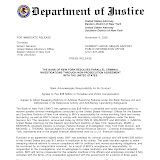
United States Attorney Southern District of New York
FOR IMMEDIATE RELEASE
CONTACT: U.S. ATTORNEY'S OFFICE, HERBERT HADAD, YUSILL SCRIBNER, REBEKAH CARMICHAEL, JANICE OH - PUBLIC INFORMATION OFFICE - (914) 993-1900 - (212) 637-2600
IRS FBI -JOSEPH FOY JAMES MARGOLIN, RICH KOLKO
PUBLIC INFORMATION OFFICE PUBLIC INFORMATION OFFICE
(212) 436-1032 (212) 384-2720, 2715

UNITED STATES ATTORNEY CHARGES FORMER DEMOCRATIC MAJORITY LEADER OF YONKERS CITY COUNCIL, FORMER YONKERS REPUBLICAN PARTY CHIEF, AND ATTORNEY WITH PUBLIC CORRUPTION CRIMES

Former Yonkers City Councilwoman Sandy Annabi Allegedly Received More Than $160,000 In Secret Payments; Defendants Charged With Conspiracy, Bribery, Extortion, False Statements, and Tax Crimes

PREET BHARARA, the United States Attorney for the Southern District of New York, JOSEPH M. DEMAREST, JR., the Assistant Director-in-Charge of the New York Field Division of the Federal Bureau of Investigation ("FBI"), and PATRICIA J. HAYNES, the Special Agent-in-Charge of the New York Field Office of the Internal Revenue Service ("IRS"), Criminal Investigation Division, announced today the unsealing of an Indictment against SANDY ANNABI, the former Democratic Majority Leader of the Yonkers City Council, charging her with conspiracy, bribery, extortion, false statements, and tax crimes. The Indictment also charges ZEHY JEREIS, the former head of the Yonkers Republican Party, and ANTHONY MANGONE, a Westchester County attorney, with conspiracy, bribery, and extortion in connection with two real estate development projects within the City of Yonkers which were pending before ANNABI.

MANGONE was arrested early this morning in Purchase, New York. ANNABI and JEREIS surrendered to federal authorities earlier today. All three defendants are expected to be presented later today before United States Magistrate Judge LISA MARGARET SMITH in White Plains federal court. According to the Indictment filed in White Plains federal court: On November 6, 2001, SANDY ANNABI was elected to serve as a Councilwoman to represent the Second District of the City of Yonkers. ANNABI was reelected two subsequent times, in 2003 and 2005, and served as the Democratic Majority Leader of the Yonkers City Council. The Yonkers City Council's primary function is to consider and vote on the City's budget, zoning changes, and other legislation. From the Fall of 2003 through the Fall of 2007, ZEHY JEREIS was the Chairman of the Yonkers Republican Party. As the Party Chairman, JEREIS's duties were to promote the Republican Party in Yonkers and to advance the interests of Republican elected officials and candidates. ANTHONY MANGONE is an attorney whose office was located in Hawthorne, New York.

The Longfellow Project

In 2003, a developer ("Developer No. 1") proposed to develop a tract of land located partially within the Yonkers City Council District represented by ANNABI by renovatin and transforming two vacant and dilapidated schools into market-rate housing (the "Longfellow Project"). ANNABI initially opposed the Longfellow Project. During a City Council meeting on June 14, 2005, ANNABI proclaimed her strong opposition to the project, stating: "Even if the entire community supported [it], I would be opposed" She also said that the project was "outrageous" and a "slap in the face to the taxpayers of Yonkers." Despite considerable effort, Developer No. 1 was unable to move the project forward in the face of ANNABI's opposition. In April 2006, however, Developer No. 1 hired MANGONE to assist in persuading ANNABI to support the Longfellow Project. Shortly thereafter, MANGONE arranged a meeting between a representative of Developer No. 1 and JEREIS, who advised that he could help persuade ANNABI to support the project. Later, MANGONE told Developer No. 1 that, in order for the project to proceed, Developer No. 1 would have to pay ANNABI $30,000 in exchange for her support. Developer No. 1 gave MANGONE the $30,000 in cash for ANNABI and paid MANGONE a $10,000 cash fee for his services. Shortly after receiving the $30,000 in cash, ANNABI made several substantial cash and credit card purchases -- including airline ticket upgrades, a Rolex watch, and a diamond cross necklace. Then, at a City Council meeting in September 2006, ANNABI reversed her long-held opposition to the Longfellow Project and voted in favor of awarding the project to Developer.

The Ridge Hill Development Project

The "Ridge Hill Development Project" was a project proposed by a large developer ("Developer No. 2") to develop an 81-acre tract of land to establish retail shopping, restaurants, office space, hundreds of residential housing units, and a hotel and conference center. ANNABI was an outspoken critic of the proposed Ridge Hill Project and voted against both the project and legislation that would allow the project to move forward despite her opposition. ANNABI, with two other City Council members and others, also filed a civil lawsuit to effectively block the Ridge Hill Project. As the City Council was considering the Ridge Hill Project, Developer No. 2 made repeated and unsuccessful efforts to convince ANNABI to vote in favor of the project. On June 2, 2006, JEREIS was introduced to representatives of Developer No. 2, after which JEREIS told representatives of Developer No. 2 that he could arrange a meeting between them, ANNABI, and JEREIS to discuss the Ridge Hill Project. JEREIS and representatives of Developer No. 2 also had an agreement in which Developer No. 2 would give JEREIS a consulting job sometime after ANNABI formally voted in favor of the Ridge Hill Project. After two meetings held in less than two weeks, ANNABI reversed her opposition to the Ridge Hill Project and issued a press release -- drafted by JEREIS and representatives of Developer No. 2 -- informing the public of her support for the project. Specifically, at a City Council meeting on July 11, 2006, ANNABI voted in favor of the zoning change necessary for the Ridge Hill Project. Shortly after ANNABI changed her vote on the Ridge Hill Project, JEREIS received the promised consulting contract from Developer No. 2 worth $60,000 over one year.

Secret Payments To ANNABI And Efforts To Conceal The Crimes

Since at least 2004, ANNABI has received from JEREIS, MANGONE, and others more than $160,000 worth of secret payments designed to influence and reward her for favorable official action or inaction on matters pending before the City Council as specific opportunities arose. ANNABI, JEREIS, and MANGONE also took various steps to conceal their scheme, by making false statements and/or omitting required information in various reporting documents. For example, JEREIS secretly gave ANNABI money and purported loans to finance the purchase of two residential properties located outside of ANNABI's Council District. To obtain favorable financing, ANNABI contemporaneously submitted applications to two different banks, advising both that she intended to occupy the house for which she was seeking financing and concealing that she was seeking to borrow money from the other bank for a second house. The closings for the two loans occurred only three days apart. Furthermore, despite being required as a Councilmember, by state and local law, to live within her Council District, ANNABI in fact lived in one of these houses outside of her Council District. In order to meet the residential requirement to maintain her position, JEREIS purchased a cooperative apartment for ANNABI within her Council District. JEREIS had paid for the down payment and made the monthly mortgage payments, at times with postal money orders he had obtained. The Indictment further charges that in her loan applications for one of the houses and for the apartment she purchased, ANNABI falsely inflated her income. ANNABI's applications also included fake pay stubs, W-2's, and bank statements. According to the Indictment, ANNABI affirmatively concealed the illegal benefits she received from JEREIS and MANGONE by filing annual financial disclosure statements, from 2004 through 2007, that intentionally omitted the illegal payments. ANNABI also failed to report in federal income tax returns the illegal payments that she received from JEREIS, MANGONE, and others. In a further effort to conceal the criminal conduct, during the federal grand jury investigation into ANNABI's corrupt relationship with JEREIS, MANGONE instructed Developer No. 1 not to tell an attorney representing Developer No. 1 that representatives of Developer No. 1 had given MANGONE the $30,000 in cash for ANNABI. MANGONE also failed to report, as required, the $30,000 cash bribe and an additional $10,000 fee that he received from Developer No. 1 to the IRS. The Indictment also seeks forfeiture of the proceeds of the crimes set forth above.

Mr. BHARARA praised the work of the FBI and the IRS Criminal Investigation Division. He added that the investigation is ongoing. PREET BHARARA, the United States Attorney for the Southern District of New York, "Today's indictment describes what was essentially a bipartisan corruption pact between Sandy Annabi, Zehy Jereis, and Anthony Mangone. When the people of Yonkers elected Annabi to the City Council, she swore an oath to faithfully discharge the duties of her office. But rather than keep her word, she betrayed Yonkers' residents by selling the most important assets any elected official has: her integrity and her independence. In our down economy, there are too many buildings with 'For Sale' signs hanging in the window; City Hall shouldn’t be one of them," said United States Attorney PREET BHARARA. "The conduct charged in the indictment is an assault on democracy. The people of Yonkers were betrayed by Sandy Annabi, someone elected -- and sworn -- to serve them. In publicly opposing one of the projects for which she later sold her vote, she called it 'a slap in the face to the taxpayers of Yonkers.' She willfully conspired to redefine her job from Councilmember to Councilmember-for-sale. That was the real slap in the face for the people of Yonkers," said FBI Assistant Director-in-Charge JOSEPH M. DEMAREST, JR. "Public officials are no different from you or I in their responsibility to follow tax law. When this trust is violated it deteriorates confidence in the fairness of the application of tax law," IRS Special Agent-in-Charge PATRICIA J. HAYNES. Assistant United States Attorneys JASON P.W. HALPERIN and PERRY A. CARBONE are in charge of the prosecution. The charges contained in the Indictment are merely accusations and the defendants are presumed innocent unless and until proven guilty. ###

Governor Patterson Wants to Expose Lawyer-Politicians Money Secrets

Gov bids to expose lawyer pols' $ecrets
The New York Post by BRENDAN SCOTT - January 6, 2010

ALBANY, NY -- Legislators who moonlight for fat-cat law firms, such as top Dems Sheldon Silver and John Sampson, would be forced to make their client lists public under an ethics-reform package unveiled yesterday by Gov. Paterson. The governor's proposal would, for the first time, require the state's 212 "part-time" lawmakers to detail all outside business relationships, including those who perform legal work on the side. The plan comes two days after The Post revealed that Sampson, the Senate Democratic leader, recently joined a Manhattan personal-injury law firm with ties to the powerful trial lawyers lobby. Silver, the Assembly speaker, also has an oft-criticized side job as "of counsel" to a top law firm. Paterson's ethics bill, which he plans to highlight in his State of the State Address today, rejects arguments that disclosing more about those relationships would violate attorney-client privilege. "The general rule would be that clients would have to be disclosed," said Paterson's chief counsel, Peter Kiernan. "Just as when you get in court, it's all a matter of public record. We're just making it public somewhat earlier." While lawyer-legislators don't have to reveal their clients, private businessmen serving in the Legislature must disclose with whom they do business if they are receiving checks directly from those clients. However, a businessman could incorporate as a "consulting firm," for instance, in order to hide his clients, who make payments to the firm and not directly to the lawmaker.

A 2008 study by the New York Law Journal found 39 members of the 150-seat Assembly and 19 members of the 62-seat Senate have law degrees. The sweeping legislation also would throw out the current ethics monitoring system and create a new commission to investigate everything from campaign-finance scofflaws to violations of open meetings law. It contained two proposals similar to reforms advocated by Attorney General Andrew Cuomo: Giving the AG authority to probe corruption cases and creating a board to oversee the state's pension fund. The bill would also strip pensions from public officials who have been convicted of a felony. Lawmakers said the plan was unrealistic and faulted Paterson for not taking part in recent ethics talks. "If the governor is going to continue down this path, he's going to go down it alone," said one Senate Democrat. Lawmakers have been scrambling to come up with an ethics deal since former Senate Majority Leader Joseph Bruno's federal corruption conviction last month. Bruno had taken hundreds of thousands of dollars in consulting fees from companies with interests before the state -- but would not have been required to reveal his clients had he been a lawyer. Proposals backed by Silver and Sampson would require lawmakers to provide greater detail about outside earnings, but would exempt lawyers -- the job held by the vast majority of legislators with outside work -- from detailing clients. The governor's plan would allow the new ethics board to shield the names of clients in circumstances where disclosure might jeopardize their safety or right to fair representation. Additional reporting by Fredric U. Dicker - brendan.scott@nypost.com

Judge Busted for DUI Outside Courthouse

Judge Busted for DUI Outside Courthouse
The Associated Press - January 5, 2010

GREAT FALLS, Mont. — The Valley County justice of the peace has been cited for drunken driving. Justice Court Judge Linda Hartsock pleaded not guilty to the misdemeanor charge Monday during an initial appearance in City Court in Glasgow. Glasgow Police Chief Bruce Barstad says the 54-year-old Hartsock was arrested outside the Valley County Courthouse at 8 p.m. on Dec. 29 after the department received a complaint. Barstad says Hartsock was not pulled over, but was found in her vehicle outside the courthouse. Hartsock, who has been the justice of the peace in Valley County for 12 years, was back at work later Monday. She told The Great Falls Tribune she "made the biggest mistake in the world" and said she was not proud of it.

Tuesday, January 5, 2010

Federal Judge Helps Screw Madoff Vitctims, Again

Class Action Denied In Madoff-Related Litigation
The Connecticut Law Tribune by DOUGLAS S. MALAN - January 5, 2010

People who invested with imprisoned swindler Bernard Madoff through Westport National Bank will have to work a little harder to get back lost investment money. A federal court judge in New Haven has ruled that the victimized investors cannot file a class action lawsuit against the bank. Judge Peter C. Dorsey also denied the bank’s motion to dismiss. The 26 plaintiffs in Backus v. Connecticut Community Bank were suing for part of $60 million lost from accounts the bank invested with Bernard L. Madoff Investment Securities. All together, more than 200 investors could have been part of the class. Dorsey remanded the case to Superior Court. Plaintiffs’ attorney David Golub has a total of 44 clients in suit against Connecticut Community Bank in Backus and in Sklar v. Connecticut Community Bank. Golub expects the two cases to be consolidated on the complex litigation docket in Stamford later this month. Connecticut Community Bank owns Westport National Bank. Dorsey’s ruling “doesn’t make it harder to litigate; it’s the same litigation whether it’s 50 people or 200 people,” Golub said. But the ruling forces people to take affirmative actions toward filing a lawsuit, Golub said, rather than automatically becoming part of a class. “My concern is it’s a strong case, and I want to make sure everyone [among the potential plaintiffs] is protected,” Golub said. The plaintiffs argue that the bank breached its contractual duty to serve as custodian of the accounts, a role designed to prevent fraudulent investment activity. Dorsey determined that the plaintiffs’ complaints about the bank’s activities were “within the bounds” of the Securities Litigation Uniform Standards Act of 1998. That federal law limits to 50 the number of plaintiffs filing a securities-related lawsuit in state court.

Paterson Seeks Overhaul to Combat Corruption

Paterson Seeks Overhaul to Combat Corruption
The New York Times by NICHOLAS CONFESSORE - January 5, 2010


ALBANY, NY — Gov. David A. Paterson on Wednesday will unveil a set of sweeping proposals to rein in political corruption in state government, including vastly expanded ethics oversight, term limits for all state officeholders and a system of public campaign financing modeled on New York City’s, administration officials said on Monday. Under the proposed legislation, which Mr. Paterson will make a centerpiece of his State of the State address on Wednesday, New York would for the first time provide matching funds to candidates for state office, limit lobbyists to contributions no larger than $250 and ban corporate contributions entirely. The maximum contribution for any candidate for state office, including the governor, would fall to $1,000 from $55,900, and the limits would apply to candidates who opt out of public financing. Mr. Paterson is also proposing to sharply limit contributions to each party’s so-called housekeeping accounts, where special interests may now deposit five- and six-figure checks with few restrictions, and ban bundling — the practice by which lobbyists and others collect contributions on behalf of a candidate. While bills to create public financing have passed the Assembly many times, the expanded ethics oversight and term limits are expected to be a difficult sell in both houses of the Legislature, which has been slow to consider tougher ethics laws. And the governor’s relationship with lawmakers has deteriorated as he publicly blamed them for failing to take action on the state budget shortfall.

The legislation would effectively dismantle Albany’s existing campaign finance system, in which corporations and labor unions deposit millions of dollars into central housekeeping accounts controlled by party leaders, who then use that money to finance individual candidates, making rank-and-file lawmakers dependent on the leaders. Perhaps most controversially, Mr. Paterson will propose limiting statewide officials — the governor, lieutenant governor, attorney general, and comptroller — to two four-year terms each, while members of the Legislature would be permitted six two-year terms. Such a change would require an amendment to the State Constitution. Mr. Paterson is also including in his package a proposal he made last year to centralize ethics enforcement in Albany with a single independent commission charged with enforcing the state’s ethics and campaign finance laws. The new commission would also have the legal authority to refer criminal and civil cases to the attorney general, who, under current law, has limited jurisdiction over political corruption cases. Taken together, the proposals amount to the most ambitious ever suggested by a sitting governor in New York, where ethics enforcement has historically been weak and limits on campaign cash are among the least stringent in the nation. “It’s everything,” said Blair Horner, legislative director of the New York Public Interest Research Group, a government watchdog organization. “It’s the kitchen sink and the stopper.”

Mr. Paterson first suggested a revamped ethics commission last May, but the idea failed to generate support from legislators, who, under current law, are policed by an oversight board appointed by Assembly and Senate leaders. But that was before the failed State Senate coup in June, the defeat of several high-profile elected officials in November and the conviction in December of Joseph L. Bruno, the former Senate majority leader, for corruption. Mr. Paterson and his aides say that with the public’s opinion of the Legislature at a historic low, and anti-incumbent sentiment running high, lawmakers will agree to support at least some portions of the governor’s proposal, if only out of self-preservation. “There needs to be change,” said one administration official involved in devising the proposal, who insisted on anonymity because the full package has not been finalized. “Big money rules Albany now. Our campaign finance laws are a joke. And I think the public wants this.” But Mr. Paterson is pushing for the overhaul at a time when his efforts to guide New York through its worst fiscal crisis in generations have been thwarted by a powerful and well-financed alliance of state lawmakers, public employee unions and health care interests.

The very breadth of Mr. Paterson’s proposal suggests how depleted his political capital is: With difficulty raising money for his own election campaign and many lawmakers balking at his budget proposals, the governor has little to lose by calling for big changes. As currently drafted, Mr. Paterson’s package does not address one major problem that was highlighted during Mr. Bruno’s trial: the lack of disclosure from lawmakers, who technically work part time, about their outside business arrangements. (Mr. Bruno was convicted of deceiving the public about payments he received from a businessman who was seeking contracts and other aid from the state.) Administration officials said that the final proposal would touch on the issue, but they declined to provide further details on Monday. While praising the breadth of Mr. Paterson’s proposals, Mr. Horner said that the true test for the governor was what he could actually get passed. Some elements of Mr. Paterson’s plan may earn a warmer welcome in the Legislature. There is already significant support among Democratic lawmakers for public financing of campaigns. Mr. Paterson previously opposed such legislation on the grounds that New York could not afford it — advocates put the cost at about $30 million a year — during a fiscal crisis. To address that concern, the governor would phase in public financing in 2012.

Americans for Legal Reform Meeting Tonight !!

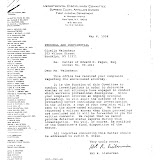
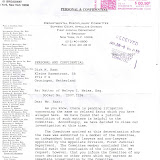
The next Americans for Legal Reform meeting will be held tonight, Tuesday, January 5th, 7pm at the Plainview Library, located at 999 Old Country Rd., Plainview, NY 11803 (516-938-0077). The speaker will be Lawrence N. Gray, Esq.

CLICK HERE TO SEE RECENT ATTORNEY LAWRENCE N. GRAY, ESQ. LETTER

Monday, January 4, 2010

Manhattan Judge Admits Guilt in Thinking He's Above the Law

Judge abuses his 'park bench' perk
The New York Post by TOM NAMAKO and BETH STEBNER - January 4, 2010

Guilty as parked! The judge in the high-profile trial of Brooke Astor's son has admitted acting like he's above the law when it comes to parking in his Upper East Side neighborhood -- dodging tickets with the help of NYPD traffic agents who turn a blind eye to His Honor's brazen violations. Manhattan Supreme Court Justice A. Kirke Bartley told The Post he was "wrong" to routinely park his black Ford Expedition at un-fed meters -- which he got away with thanks to a police placard, which is available only to a privileged few. Even though the placard declares, "This vehicle is on official police business," Bartley displays it in his windshield when his car is at home. The placard expires on Feb. 1. Judges who request the placards generally get them, but are not allowed to use them while they're off duty, a source said. Bartley -- who has also been a Criminal Court judge and a Queens prosecutor -- admitted to the infraction after reporters observed his monster SUV on Tuesday, Wednesday, Thursday and Saturday of last week parked at an expired one-hour meter, sporting not even one ticket. "The only thing I can say is, I have been remiss. I have not been feeding the meter," Bartley said yesterday. "I was working arraignments [Saturday], and I couldn't feed the meter. "But that's no excuse. It's reality. I should have [put in coins], and I didn't," he said. "I was wrong." Asked whether he was planning to make restitution, the judge said: "I can't speak to that. I've owned up to the fact that I was remiss. And I'm contrite." He also admitted to not feeding the meter on the others days The Post observed his car parked illegally. At one point Saturday -- when meter regulations were in effect -- a traffic agent dutifully planted $65 expired-meter tickets on a red Honda parked right behind Bartley's SUV and on a white Honda around the block. The agent ignored the judge's ride. The NYPD declined comment. The abuse apparently has been going on for months. The Post first spotted the judge's Ford at an expired meter at 5 p.m. on Nov. 5. The placard also apparently gets Bartley out of other motor-vehicle laws -- a sticker on his windshield showed that his registration expired on Dec. 31, and no ticket was issued on Saturday. Additional reporting by Katherine Romero and Jennifer Bain. tom.namako@nypost.com

NY POST: Sampson Playing a Law-Firm Shel Game

Sampson playing a law-firm Shel game
The New York Post by BRENDAN SCOTT - January 4, 2010

ALBANY, NY -- Move over, Sheldon Silver! Senate boss John Sampson has borrowed a page from the powerful Assembly speaker and become the second big-time Democrat to join a law firm with ties to the state's powerful trial-lawyers lobby, The Post has learned. Sampson, the state Senate Democratic leader, quietly accepted a job last month as "counsel" to Belluck & Fox, a politically connected Manhattan law firm that specializes in asbestos litigation and that claims to have won $220 million in judgments. The new gig, which comes just six months after Senate Democrats elected Sampson to run the legislative chamber, bears striking similarity to the oft-criticized side job held by Silver (D-Manhattan). Like Silver, Sampson won't say how much his job pays. And, as is the case with Silver's firm, Weitz & Luxenberg, a founding partner of Sampson's firm, Joseph W. Belluck, sits on the board of the state Trial Lawyers Association. The potent advocacy group spends about $2 million a year on campaign contributions and lobbying expenses. Silver has repeatedly come under fire for aiding its decades-long winning streak in the Assembly. The group's new ties to the Senate leader are sure to draw similar concern, especially from those who back reforming the state's medical-malpractice laws. "The trial lawyers are now covered in both houses," one veteran Capitol lobbyist said. "They have Shelly in one prominent firm, and they have the Senate leader in another firm that has a seat on their board of directors." "You can't do any better than that that." Sampson controls day-to-day decisions in the Senate in addition to leading its Judiciary and Ethics committees. The "part-time" Brooklyn lawmaker earns $88,500 annually, including a $9,000 leadership stipend. Sampson spokesman Austin Shafran refused to disclose the senator's outside income, but insisted the job would not compromise his official duties. "Senator Sampson's outside work has never been and never will be in conflict with his official duties," Shafran said. The career move comes as Democratic lawmakers negotiate ethics-reform legislation in response to several recent embarrassments, including the corruption conviction of former Republican Senate leader Joseph Bruno. During Bruno's trial, an Albany businessman testified that he started paying Bruno consulting fees after the senator complained about the money Silver was getting "from the trial lawyers." Bruno denied the remark. brendan.scott@nypost.com

Silver Predicts Candidates While Many Predict His Downfall

Silver predicts a Cuomo gov run
The New York Post by BRENDAN SCOTT - December 31, 2009

ALBANY, NY -- Assembly Speaker Sheldon Silver predicted for the first time yesterday that Andrew Cuomo would run for governor next year -- while refusing to endorse Gov. Paterson. In fact, Silver -- the state's No. 2 Democrat -- all but goaded Cuomo into making a run in 2010. His praise for the attorney general, which comes at the expense of Paterson, is the latest sign of the deteriorating relationship between Silver and the governor. When asked whether he thought Cuomo would run next year, Silver replied, "I do," and noted polls show registered Democrats favor the attorney general over Paterson 3 to 1. "He's clearly shown he's popular, and he's always wanted to be governor, and I think he thinks it's his opportunity," Silver said on WGDJ 1300AM in Albany. "That's why I said I think he would run." Silver declined to endorse either Cuomo or Paterson. A spokesman for Paterson last night responded, "The governor is focused foremost on keeping the state on stable fiscal footing. The more who wish to join him in that endeavor, the better."

Sunday, January 3, 2010

Governor Paterson Set to Make Bold Moves in 2010

Paterson scoffs at another tax hike
The New York Post by BRENDAN SCOTT - December 31, 2009

ALBANY, NY -- Gov. Paterson fired a warning shot this morning at any lawmakers who might be contemplating another income tax hike to close next year's massive budget deficit. During an interview on WOR 710 AM, Paterson cited "rumors" that some legislators might be plotting to push for the second tax hike in as many years to avoid painful cuts to state aid. "I heard a rumor yesterday that some of my colleagues are talking about another millionaires tax and that would demonstrate, I would say, a completely addictive personality," Paterson said. "The rumor isn't traceable to anybody, but somebody just mentioned that to me yesterday and I thought, 'I can't believe at this point that we never get it.'" The governor pointed out that the "$4 billion" soak-the-rich tax plan he and lawmakers included in the current budget has so-far produced 10 percent less than originally projected. Paterson said there's fewer New Yorkers qualify for the tax after the economic downturn and "many have changed their residences and moved out of the state," a fact disputed by tax-hike advocates. The state's projected 2010-2011 budget deficit could grow as large as $9 billion by the end of March, Paterson has warned. Senate Democratic Leader John Sampson said this week his conference would oppose any taxes and fees. Assembly Speaker Sheldon Silver (D-Manhattan) has not issued a similar pledge, but said in an interview on Albany's WGDJ 1300 AM that he believed spending was the problem.

Saturday, January 2, 2010

Justice Has Been Waiting for District Attorney Cyrus Vance, Jr.

Morgy says fare (&#!) well
The New York Post by DAREH GREGORIAN, BRENDAN SCOTT and ALEX GINSBERG - December 31, 2009

Outgoing Manhattan DA Robert Morgenthau took a few thinly veiled swipes at his handpicked successor yesterday during a farewell news conference to wrap up his 34 years as the borough's chief crime fighter. Morgenthau, 90, will hand over the reins today to his protégé Cyrus Vance Jr., who has already announced plans to demote two of his ex-boss' favored executives. "I have the finest staff anywhere," Morgenthau told reporters, and he singled out soon-to-be-demoted deputies Nancy Ryan and Pat Dugan, together with Mark Dwyer, who is leaving the office voluntarily. "They've all been key to the success of our staff," Morgenthau said. "They've made a great contribution to the success of the office." Asked if he was upset about Vance's moves, he said that all his successor's picks were "competent people," and that "he's entitled to make" whatever staff changes he wants. But he quickly described Ryan, who reinvestigated the Central Park Jogger case in 2002, as "extraordinarily valuable to this office," and said she was quite possibly "the best investigator in the United States."

Asked what advice he had for Vance, he also made a possibly oblique reference to the hiring of former staffers of Govs. Eliot Spitzer and George Pataki. "Hire people based on merit, not political connections," he said. Vance has tapped former Spitzer Chief of Staff Marlene Turner to serve as special assistant, a position for which she'll be paid $137,500, a spokeswoman said. But that will cost the taxpayers just a bit more, since Turner is already collecting her $16,380-a-year state pension, according to the state comptroller's office. State law generally prohibits state employees from "double-dipping" -- collecting pensions while working in a public-sector job. But the law would allow it in Turner's case because she will turn 65 in 2010. Morgenthau seemed wistful at times during the press conference, but showed a sense of humor as well, quipping, "I'll be out of here [tonight]. Not to worry." In what was essentially a farewell speech, he also thanked Police Commissioner Ray Kelly and the city's other DAs and law-enforcement agencies for their help over the years. "This is not a job for a lone ranger. You need help from a lot of people to be successful," Morgenthau said. The DA knows something about success. "In 1975, when I became district attorney, there were 648 murders in Manhattan. Last year there were 62, and this year, so far, there are 58," he said. He added that when he took office, Manhattan was the site of 40 percent of the city's murders, compared with 12 percent this year. Morgenthau saved his biggest thank-you for his staff. "I take the credit or sometimes the blame, but they do the work," he said. "They're a tremendous group of people." dareh.gregorian@nypost.com

Blog Archive

See Video of Senator John L. Sampson's 1st Hearing on Court 'Ethics' Corruption

The first hearing, held in Albany on June 8, 2009 hearing is on two videos:


               Video of 1st Hearing on Court 'Ethics' Corruption
               The June 8, 2009 hearing is on two videos:
         
               CLICK HERE TO SEE Part 1
               CLICK HERE TO SEE Part 2
Add to Technorati Favorites