Creditors say judge owes them millions
The Record by John C. Ensslin, Richard Cowen and Andrew Tangel - June 12, 2011
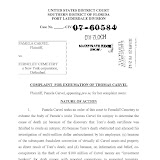
A North Jersey municipal judge accused of judicial misconduct is under growing financial pressure from banks and individuals who contend that he and his business partners owe millions in unpaid loans. Harold P. Cook III disclosed Friday that he will take a leave of absence from the bench pending the outcome of the complaint in which the state Advisory Committee on Judicial Conduct had accused him of not observing the high standards of conduct expected of a judge. The complaint, dated May 19, alleges that Cook - who made $85,197 a year as a part-time judge in Ringwood, Wanaque, Haledon and North Haledon - made campaign contributions and represented Paterson police officers in violation of judicial rules, and improperly transferred property to avoid creditors. He also is accused of failing to disclose his role as a party in 43 lawsuits, including several that have resulted in judgments against him and his partners.
An examination of some of those lawsuits reveals that: Banks have called in 10 loans - some with revolving lines of credit - issued to Cook and his partners. The complaint states that creditors have obtained $2,707,661 in judgments against Cook so far. On April 15, one of those creditors took possession of a shore house in Beach Haven that Cook had attempted to sell to his wife for $1. The property, which has an assessed value of $888,600, was transferred to a man who won a judgment against Cook in Monmouth County, according to the Ocean County Assessor's Office. Some of the individual lawsuits involve large sums of money. For example, Atlantic Stewardship Bank alleges that Cook and his partners, Gershon Alexander and Bruce G. Bohuny, and their company, Puddingstone Funding, had an outstanding balance of $2,351,352 as of Aug. 27, 2010. In two lawsuits, judges have ruled that Cook violated litigants' rights by failing to respond to subpoenas served on him by creditors seeking financial information to aid in collecting judgments against him. In a third case, Columbia Bank is seeking an arrest warrant to compel Cook and Alexander to produce follow-up information. Frederic Shulman, a lawyer for Columbia Bank, said the move was a standard procedure that he does not expect to result in an arrest. The matter is due to be heard on June 24 in a Bergen County courtroom. A check of public records also revealed liens that have been placed against Cook for non-payment of state and federal taxes. A spokeswoman for the New Jersey Judiciary said a search of court records showed an open state tax lien of $56,651.26 against Cook and his wife filed in Mercer County on May 19. Records in the Passaic County Clerk's Office show a notice of a federal tax lien of $8,013 was placed by the Internal Revenue Service in December 2006. However it was unclear whether that lien had been satisfied. Neither Cook nor his attorney would comment for this story. But in a statement announcing that the judge was taking the unpaid leave, his attorney said Cook plans to "vigorously defend himself" against the allegations contained in the committee's complaint. If the complaint is upheld, Cook faces a range of possible penalties from a public or private reprimand to the less common outcome of removal. He has until later this week to file a response to the complaint.
Two-year wait
One of the first of the lawsuits cited in the complaint was filed in April 2008, more than two years before the state judicial committee began its investigation in August 2010. The two-year lag between the first lawsuit and the state judicial investigation raises questions about what officials knew about Cook's financial problems and whether the judicial investigation could have begun sooner. A spokeswoman for the state Judiciary could not say why it took that long before the investigation began. "These things take a while to be investigated," said spokeswoman Winnie Comfort. "This one took that long." Several municipal officials said they were unaware of Cook's financial problems until their towns received notices that his salary had been garnished by creditors. In addition to the judgeships, Cook makes about $12,500 by serving as the attorney for land-use boards in Wyckoff and Elmwood Park in Bergen County. "It's not something that we ever discussed," said North Haledon Mayor Randy George. "The first time I knew anything was when I read it in the papers." Ringwood Councilman Walter J. Davison, who has served the borough for nearly 30 years, says Cook's reputation on the bench was impeccable. "I had no idea," he said, "and I don't think anyone on the Borough Council knew about it either. Judge Cook has always been an outstanding public servant." Others familiar with New Jersey's municipal court system say the lag shows a flaw in the system used to oversee the 334 judges who serve in the 527 municipal courts throughout the state. Jeffrey Gold, the former head of the New Jersey Bar Association's municipal court practice group, thinks that system could be improved if lawyers were able to report possible ethics or misconduct complaints on a confidential basis. Gold's practice group endorsed such a change several years ago, but the measure failed to win approval of the entire bar association. Attorneys who see what they consider unethical behavior often are faced with a conflict, Gold said. Do they do what's in the interest of the client, who still must appear before the judge? Or do they do what's best for the court system overall? "So if you know of some issue, you are reticent to report it because it might affect your client," Gold said. Comfort noted that the disciplinary system applies equally, whether a judge is in municipal court or on the state Supreme Court. She added that it's a system that also provides an opportunity of due process for the judges who are facing a complaint.
Responds in filings
Cook has declined to comment about the lawsuits or the specifics of the complaint. But in a variety of public records - testimony, deposition and court statements - the 57-year-old North Haledon lawyer has spelled out his side of the lawsuits. In several, he contends banking officials made unauthorized releases of confidential information about his business. In one deposition, a lawyer for First State Bank in Cranford asked Cook why he thought the banks had called in the loans to Cook and his business partners. "I think these outsourced compliance people were getting nervous," Cook replied. "Were getting nervous about what?" the lawyer asked. "I think the exposure and the declining market and I think, also, comments that were being made in the banking community." Cook also says that the chairman of the board of First State Bank called him at home late one night to say he would "hire the meanest attorney he knew" to file a lawsuit against Cook and his business partners and "make their lives miserable" and "destroy them." An attorney for First State has denied that claim. Cook lost a case filed in Hudson County in which he and a partner were accused of failing to give adequate notice to unsecured investors that a Paramus loan company was having financial problems. Jefferson Loan started in the early 1960s and made automobile and personal loans to people with poor credit histories. Cook bought the company from his uncle and became a majority shareholder and company president by March 2001. Cook testified that the business suffered after a default by a used-car dealer forced the company to write off about $1.4 million in loans. That plus a soft market for used-car loans after the Sept. 11 terror attacks caused the company to fail, he said. The firm voluntarily liquidated in December 2006. Before that, Cook had pledged his Beach Haven house plus $1 million in shares of Valley National Bank stock as collateral for a $12 million line of credit to Jefferson from Valley. Loan company officers testified that they routinely sent out letters to investors notifying them of the problem with the money owed by the used-car dealer. But Charles Sachs, a retired Bayonne lawyer who once handled collections for Jefferson, said he was never notified. Cook contends he put his own interests aside in the Jefferson Loan failure and negotiated a deal with the bank that will allow unsecured creditors to be paid back sooner. Several of the 91 creditors involved his family and friends. "I'm an attorney. I've lived in the same community my whole life," he testified. "You have to do the right thing by them," he said. But twice the verdict has gone against Cook in that case. In April 2009 a civil jury in Hudson County found that Cook and his partner Sean Caposella had breached their fiduciary duty. The jury found no damages against the two men, but awarded a $71,000 verdict against the company. When the plaintiffs won a non-jury retrial earlier this year, a judge awarded $99,400 in damages, including interest, against Cook and Caposella. That second verdict is on appeal. Cook claims in a lawsuit filed in Passaic County that he is the victim of slander by a disgruntled former employee. Cook alleged that Dennis Epperly - who worked in the law office under contract as a process server and driver for nine years - had spread false information about him around town. Epperly denies the allegations. In that same suit, Cook also claimed he had been libeled by the Gazette, a weekly paper that first reported on the lawsuits against Cook and his partners in December. The Gazette is owned by North Jersey Media Group, the publisher of The Record. Last month, a judge in Passaic County dismissed the suit against the newspaper, but let stand the slander suit against Epperly, who said Thursday that he has made up bumper stickers and T-shirts that read "An inconvenient truth is not slander."
Donations barred
There are good reasons to have rules such as the ones Cook is accused of violating, said Gold, the municipal court specialist. While offering no opinion on Cook's case, he said judges are rightly barred from making political contributions. The judicial committee complaint accused Cook or companies he owned of making $5,660 in political campaign contributions between 2000 and 2009. "That way the court regulates itself," Gold said. "They keep judges out of the political fray." The rule is especially important where judges are dependent upon being appointed and reappointed by a local mayor and council. Likewise, the rule on not serving as an attorney for police officers is important, Gold said. "It would give [a judge] an alliance to some degree with police officers and judges need to be independent," he added. And finally, the court system needs to know when a judge is dealing with lawsuits or having his salary garnished. "That's something the courts ought to know about because it could lead to other problems," Gold said. Removal of a municipal judge is a fairly rare event. In the nearly 37 years since the Advisory Committee on Judicial Conduct began policing the state's municipal courts, it has removed six municipal judges. More frequently they have issued a public reprimand (to 24 municipal judges) or a censure (to 12 judges, including two who were permanently barred from holding future judicial office after they had stepped down). E-mail: ensslin@northjersey.com, cowen@northjersey.com and tangel@northjersey.com
Monday, June 13, 2011


Judge Upholds $5 Million Legal Malpractice Award
Judge Upholds $5 Million Legal Malpractice Award
The New York Law Journal by Brendan Pierson - June 13, 2011
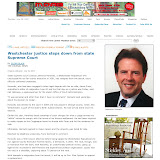
New York Supreme Court Justice Jaffe
A state judge has upheld a $5.1 million verdict against Bryan Cave and one of its former attorneys in a nearly decade-long malpractice case over a botched deal between partners in a women's apparel company. In the June 3 decision in Feinberg v. Boros, 108498/03, Manhattan Supreme Court Justice Barbara Jaffe refused to set aside the verdict, which was handed down by a jury last fall against Bryan Cave and retired attorney Jerome C. Boros. Justice Jaffe also awarded pre-verdict interest, meaning that the final judgment is likely to be more than $10 million, according to Thomas M. Monahan of Storch Amini Munves, an attorney for plaintiff Herbert Feinberg.
The malpractice suit has its roots in a dispute between Mr. Feinberg and Norman Katz, his partner in a now-defunct women's apparel business called I. Appel Corp. that they ran in the 1990s. In 1996, Mr. Feinberg bought out Mr. Katz's share of the partnership. Mr. Feinberg maintains that he relied on a 1995 statement of the company's finances prepared by I. Appel's accounting firm, Mahoney Cohen & Co. I. Appel turned out to be worth much less than Mahoney Cohen had said, causing Mr. Feinberg significant losses. He sought to recover his losses in an arbitration proceeding against Mr. Katz. However, the arbitration panel did not award Mr. Feinberg any money, and also ruled that he had not relied on Mahoney Cohen's statement. In 2000, after the arbitration was complete, Mr. Feinberg sued Mahoney Cohen for accounting malpractice in the Supreme Court. In 2001, Justice Marilyn Shafer (See Profile) dismissed the complaint insofar as it pertained to the 1995 statement, ruling that the claims were estopped by the arbitration panel's decision. A panel of the Appellate Division, First Department, affirmed in 2002. I. Appel Corp. v. Mahoney Cohen & Co., 294 AD 2d 196. In 2003, Mr. Feinberg filed a malpractice suit in the Supreme Court against Mr. Boros, the attorney who represented him in the arbitration, who was at Robinson Silverman Pearce Arenson & Berman, which later merged into Bryan Cave. Mr. Boros has since retired. Mr. Feinberg said that Mr. Boros failed to advise him that he could preserve his right to sue Mahoney Cohen by signing an agreement with Mr. Katz limiting the estoppel effect of the arbitration decision. Justice Rosalyn H. Richter (See Profile), who presided over the case before Justice Jaffe, initially dismissed the case on the grounds that Mr. Feinberg's complaint failed to allege that Mr. Katz would have been willing to enter into such an agreement or that such an agreement would have allowed Mr. Feinberg's claims against Mahoney Cohen to go forward. However, Justice Richter later vacated that decision to allow Mr. Feinberg to amend his complaint to cure these deficiencies. The defendants then moved for summary judgment, arguing, among other things, that an estoppel-limiting agreement would not have saved Mr. Feinberg's claims against Mahoney Cohen anyway. Justice Richter denied that motion, and an Appellate Division panel affirmed in Feinberg v. Boros, 17 AD 3d 275. The case went to trial in October 2010, and the jury delivered its $5 million verdict. The defendants then asked the court to enter judgment in their favor notwithstanding the verdict or, alternatively, grant a new trial, again arguing that, as a matter of law, an estoppel-limiting agreement could not have allowed Mr. Feinberg's claims against Mahoney Cohen to proceed. But Justice Jaffe said that she could not consider that argument because the court had already rejected it on summary judgment. The defendants also argued that there had not been enough evidence for the jury to conclude that Mr. Katz would have signed an estoppel-limiting agreement. Justice Jaffe said that, while testimony on that point had been ambiguous, the defendants had "failed to demonstrate that there is no valid line of reasoning and permissible inferences that could have led the jury to conclude that Katz would have entered into a limiting agreement with plaintiff." Finally, Justice Jaffe turned to Mr. Feinberg's request for pre-verdict interest. Mr. Feinberg argued that interest should begin accruing on May 15, 2000, when his representation by Mr. Boros ended—the earliest date on which he could have filed the malpractice suit. The defendants, on the other hand, argued that, if interest was awarded at all, it should begin accruing on Jan. 23, 2003, when Mr. Feinberg's lawsuit against Mahoney Cohen was dismissed, because that was when his injury occurred. Justice Jaffe agreed with Mr. Feinberg's argument and awarded interest going back to 2000. Edward A. Friedman of Friedman Kaplan Seiler & Adelman, who represented the defendants, said Friday that he would appeal the ruling. A spokesman for Bryan Cave also could not be reached. Steven G. Storch of Storch Amini Munves, another attorney for Mr. Feinberg, said he was pleased to win the case after "nearly a decade" of litigation. Brendan Pierson can be reached at bpierson@alm.com.
The New York Law Journal by Brendan Pierson - June 13, 2011
New York Supreme Court Justice Jaffe
A state judge has upheld a $5.1 million verdict against Bryan Cave and one of its former attorneys in a nearly decade-long malpractice case over a botched deal between partners in a women's apparel company. In the June 3 decision in Feinberg v. Boros, 108498/03, Manhattan Supreme Court Justice Barbara Jaffe refused to set aside the verdict, which was handed down by a jury last fall against Bryan Cave and retired attorney Jerome C. Boros. Justice Jaffe also awarded pre-verdict interest, meaning that the final judgment is likely to be more than $10 million, according to Thomas M. Monahan of Storch Amini Munves, an attorney for plaintiff Herbert Feinberg.
The malpractice suit has its roots in a dispute between Mr. Feinberg and Norman Katz, his partner in a now-defunct women's apparel business called I. Appel Corp. that they ran in the 1990s. In 1996, Mr. Feinberg bought out Mr. Katz's share of the partnership. Mr. Feinberg maintains that he relied on a 1995 statement of the company's finances prepared by I. Appel's accounting firm, Mahoney Cohen & Co. I. Appel turned out to be worth much less than Mahoney Cohen had said, causing Mr. Feinberg significant losses. He sought to recover his losses in an arbitration proceeding against Mr. Katz. However, the arbitration panel did not award Mr. Feinberg any money, and also ruled that he had not relied on Mahoney Cohen's statement. In 2000, after the arbitration was complete, Mr. Feinberg sued Mahoney Cohen for accounting malpractice in the Supreme Court. In 2001, Justice Marilyn Shafer (See Profile) dismissed the complaint insofar as it pertained to the 1995 statement, ruling that the claims were estopped by the arbitration panel's decision. A panel of the Appellate Division, First Department, affirmed in 2002. I. Appel Corp. v. Mahoney Cohen & Co., 294 AD 2d 196. In 2003, Mr. Feinberg filed a malpractice suit in the Supreme Court against Mr. Boros, the attorney who represented him in the arbitration, who was at Robinson Silverman Pearce Arenson & Berman, which later merged into Bryan Cave. Mr. Boros has since retired. Mr. Feinberg said that Mr. Boros failed to advise him that he could preserve his right to sue Mahoney Cohen by signing an agreement with Mr. Katz limiting the estoppel effect of the arbitration decision. Justice Rosalyn H. Richter (See Profile), who presided over the case before Justice Jaffe, initially dismissed the case on the grounds that Mr. Feinberg's complaint failed to allege that Mr. Katz would have been willing to enter into such an agreement or that such an agreement would have allowed Mr. Feinberg's claims against Mahoney Cohen to go forward. However, Justice Richter later vacated that decision to allow Mr. Feinberg to amend his complaint to cure these deficiencies. The defendants then moved for summary judgment, arguing, among other things, that an estoppel-limiting agreement would not have saved Mr. Feinberg's claims against Mahoney Cohen anyway. Justice Richter denied that motion, and an Appellate Division panel affirmed in Feinberg v. Boros, 17 AD 3d 275. The case went to trial in October 2010, and the jury delivered its $5 million verdict. The defendants then asked the court to enter judgment in their favor notwithstanding the verdict or, alternatively, grant a new trial, again arguing that, as a matter of law, an estoppel-limiting agreement could not have allowed Mr. Feinberg's claims against Mahoney Cohen to proceed. But Justice Jaffe said that she could not consider that argument because the court had already rejected it on summary judgment. The defendants also argued that there had not been enough evidence for the jury to conclude that Mr. Katz would have signed an estoppel-limiting agreement. Justice Jaffe said that, while testimony on that point had been ambiguous, the defendants had "failed to demonstrate that there is no valid line of reasoning and permissible inferences that could have led the jury to conclude that Katz would have entered into a limiting agreement with plaintiff." Finally, Justice Jaffe turned to Mr. Feinberg's request for pre-verdict interest. Mr. Feinberg argued that interest should begin accruing on May 15, 2000, when his representation by Mr. Boros ended—the earliest date on which he could have filed the malpractice suit. The defendants, on the other hand, argued that, if interest was awarded at all, it should begin accruing on Jan. 23, 2003, when Mr. Feinberg's lawsuit against Mahoney Cohen was dismissed, because that was when his injury occurred. Justice Jaffe agreed with Mr. Feinberg's argument and awarded interest going back to 2000. Edward A. Friedman of Friedman Kaplan Seiler & Adelman, who represented the defendants, said Friday that he would appeal the ruling. A spokesman for Bryan Cave also could not be reached. Steven G. Storch of Storch Amini Munves, another attorney for Mr. Feinberg, said he was pleased to win the case after "nearly a decade" of litigation. Brendan Pierson can be reached at bpierson@alm.com.
Top Judges Require New Trial, But Still Secret Name Of Failing Attorney
Defense Errors Warrant New Trial in Sex Assault Case, Panel Finds
The New York Law Journal by Joel Stashenko - June 13, 2011
ALBANY, NY - Repeated errors by the attorney for a man being prosecuted for rape and other sexual offenses require a new trial, an upstate appeals court ruled unanimously last week. Gary Arnold was denied adequate representation at various junctures in the 2009 trial that resulted in his convictions for multiple counts of rape and sexual abuse, the Appellate Division, Third Department, ruled unanimously in People v. Arnold, 103851. The briefs in the case are sealed, and the name of the defense attorney could not be learned Friday. The 52-year-old defendant has been serving a state prison term of up to 7 years for his conviction. The complainant, aged 12 when the alleged abuse began, told her sister that she had been repeatedly abused by Mr. Arnold starting in 2005 in the home that Mr. Arnold was then sharing with the girl's mother. The girls were living elsewhere, but frequently visited their mother's home. During trial in Schoharie County Court, Mr. Arnold denied all charges of sexual impropriety. On appeal he contended that his defense had been legally inadequate. In particular, Mr. Arnold alleged that his counsel set up an expectation for the jury during opening arguments that the attorney would be able to impugn the victim's credibility, but failed to follow through on that strategy during the trial. The defense counsel promised to put before jurors the victim's diary and messages posted on "MySpace" that the attorney promised jurors "will just shock you." "Yet [the defense] never explained how this information would relate to why the victim would falsely accuse defendant, nor did he ever attempt to introduce any of the MySpace messages into evidence," Justice Karen K. Peters wrote for the Third Department. "Although defendant argues that the significant discrepancies between the victim's accusations in her supporting deposition and her trial testimony further demonstrate her lack of credibility, those inconsistencies were never placed before the jury." While prosecutors objected to the admission into evidence of portions of the diary and the MySpace entries, the appeals judges agreed that Mr. Arnold's defense attorney failed to lodge an appropriate objection to why those writings were not allowed into the record to show a valid relevance to the victim's credibility. In addition, and perhaps more critically, the court found that Mr. Arnold's attorney failed to challenge the victim on testimony at trial that was "significantly at odds" with statements she made to police following the alleged attacks. "In her supporting deposition to police, the victim claimed only that defendant had put his hand and mouth on her vagina; she never stated that defendant ever put his penis in her vagina," Justice Peters noted. "Yet, during her trial testimony, the victim accused defendant of penetrating her vagina with his penis during four of the six alleged instances of abuse." Given that Mr. Arnold's defense hinged on the credibility of the girl's statements, Justice Peters said the Third Department panel "can perceive no strategic or legitimate tactical explanation" for his defense counsel not to have challenged the discrepancies in her recitations of the events. "Furthermore, defense counsel's questioning of his own witnesses was directionless and largely ineffective, and he elicited testimony that reflected badly on defendant and actually served to bolster the victim's credibility," the court decided. "Moreover, counsel's summation was confused, ineffectual and did more to advance the prosecution's case than that of his own client." The defense counsel referred in his closing to "whether or not the actions were consensual," which, given the victim's age, was legally irrelevant, the panel held. The judges said that the accumulation of errors made by Mr. Arnold's attorney demanded a new trial. "While none of these errors or unexplained omissions on the part of counsel, standing alone, necessarily constitutes ineffective assistance, the cumulative effect of counsel's actions deprived defendant of meaningful representation," the court concluded. Joining in the decision were Justice Edward O. Spain, Robert S. Rose and John C. Egan Jr. Schoharie County Assistant District Attorney Michael L. Breen argued the matter for the county. Terence L. Kindlon of Kindlon, Shanks & Associates represented Mr. Arnold. Neither returned calls Friday for comment. Mr. Arnold was convicted of two counts of committing a sexual act in the second degree, four counts of second-degree rape and four counts of second-degree sexual abuse in 2009 in a trial before County Court Judge George R. Bartlett III. Mr. Arnold is first eligible for parole in September 2014. Joel Stashenko can be reached at jstashenko@alm.com
The New York Law Journal by Joel Stashenko - June 13, 2011
ALBANY, NY - Repeated errors by the attorney for a man being prosecuted for rape and other sexual offenses require a new trial, an upstate appeals court ruled unanimously last week. Gary Arnold was denied adequate representation at various junctures in the 2009 trial that resulted in his convictions for multiple counts of rape and sexual abuse, the Appellate Division, Third Department, ruled unanimously in People v. Arnold, 103851. The briefs in the case are sealed, and the name of the defense attorney could not be learned Friday. The 52-year-old defendant has been serving a state prison term of up to 7 years for his conviction. The complainant, aged 12 when the alleged abuse began, told her sister that she had been repeatedly abused by Mr. Arnold starting in 2005 in the home that Mr. Arnold was then sharing with the girl's mother. The girls were living elsewhere, but frequently visited their mother's home. During trial in Schoharie County Court, Mr. Arnold denied all charges of sexual impropriety. On appeal he contended that his defense had been legally inadequate. In particular, Mr. Arnold alleged that his counsel set up an expectation for the jury during opening arguments that the attorney would be able to impugn the victim's credibility, but failed to follow through on that strategy during the trial. The defense counsel promised to put before jurors the victim's diary and messages posted on "MySpace" that the attorney promised jurors "will just shock you." "Yet [the defense] never explained how this information would relate to why the victim would falsely accuse defendant, nor did he ever attempt to introduce any of the MySpace messages into evidence," Justice Karen K. Peters wrote for the Third Department. "Although defendant argues that the significant discrepancies between the victim's accusations in her supporting deposition and her trial testimony further demonstrate her lack of credibility, those inconsistencies were never placed before the jury." While prosecutors objected to the admission into evidence of portions of the diary and the MySpace entries, the appeals judges agreed that Mr. Arnold's defense attorney failed to lodge an appropriate objection to why those writings were not allowed into the record to show a valid relevance to the victim's credibility. In addition, and perhaps more critically, the court found that Mr. Arnold's attorney failed to challenge the victim on testimony at trial that was "significantly at odds" with statements she made to police following the alleged attacks. "In her supporting deposition to police, the victim claimed only that defendant had put his hand and mouth on her vagina; she never stated that defendant ever put his penis in her vagina," Justice Peters noted. "Yet, during her trial testimony, the victim accused defendant of penetrating her vagina with his penis during four of the six alleged instances of abuse." Given that Mr. Arnold's defense hinged on the credibility of the girl's statements, Justice Peters said the Third Department panel "can perceive no strategic or legitimate tactical explanation" for his defense counsel not to have challenged the discrepancies in her recitations of the events. "Furthermore, defense counsel's questioning of his own witnesses was directionless and largely ineffective, and he elicited testimony that reflected badly on defendant and actually served to bolster the victim's credibility," the court decided. "Moreover, counsel's summation was confused, ineffectual and did more to advance the prosecution's case than that of his own client." The defense counsel referred in his closing to "whether or not the actions were consensual," which, given the victim's age, was legally irrelevant, the panel held. The judges said that the accumulation of errors made by Mr. Arnold's attorney demanded a new trial. "While none of these errors or unexplained omissions on the part of counsel, standing alone, necessarily constitutes ineffective assistance, the cumulative effect of counsel's actions deprived defendant of meaningful representation," the court concluded. Joining in the decision were Justice Edward O. Spain, Robert S. Rose and John C. Egan Jr. Schoharie County Assistant District Attorney Michael L. Breen argued the matter for the county. Terence L. Kindlon of Kindlon, Shanks & Associates represented Mr. Arnold. Neither returned calls Friday for comment. Mr. Arnold was convicted of two counts of committing a sexual act in the second degree, four counts of second-degree rape and four counts of second-degree sexual abuse in 2009 in a trial before County Court Judge George R. Bartlett III. Mr. Arnold is first eligible for parole in September 2014. Joel Stashenko can be reached at jstashenko@alm.com
Sunday, June 12, 2011
Aging Justice Too Close to Death
District Court Reaps Benefits of Hardworking Senior Judges
The New York Law Journal by Mark Hamblett - June 13, 2011
The current rush of federal judges opting to take senior status presents the U.S. District Court for the Southern District with a unique opportunity because the judges going senior show no intention of slowing down. Judge Jed S. Rakoff is one of five judges to take senior status since last September. "Neither I, nor to my understanding, any of my colleagues who have recently taken senior status are taking anything less than a full load of cases," he said. "The reasons why we went on senior status vary, but all of us recognize that, at this time, the court needs every judge it can get." Judge John F. Keenan, who went senior at age 67 on New Year's Eve 1996, said the flood of cases filed in the district has long required an all-hands-on-deck approach. "The seniors who continue to carry a heavy load, they're a tremendous asset to the court and I'm not saying that to pat myself on the back. They really help out [with the disposition of cases] at the court, and, obviously, help the active judges," Judge Keenan said. The Southern District is one of the nation's busiest courts, with 28 active slots. It now has eight vacancies, with more on the way. Seven nominations by President Barack Obama are pending in the U.S. Senate. Since Sept. 1, 2010, five judges chosen for the bench by President Bill Clinton have gone senior: Judges Rakoff, Sidney H. Stein, Victor Marrero, Lewis A. Kaplan and Alvin K. Hellerstein. They will be joined by Judges Shira A. Scheindlin in August and Richard M. Berman in September.
Judge Scheindlin said the situation is comparable to the wave of openings that was presented to Mr. Clinton in his first term—a run of appointments that led her and some of her colleagues to dub themselves the "Class of '94 and '95." "That class included a number of hard workers," Judge Scheindlin said. "It's my view, and it's not shared by all, that when a judge is eligible, the judge makes a contribution to the court by opening up a spot for another active judge while taking on a full case load. You sort of get a two-for-one effect." Of the 38 judges now serving on the court, 20 will be on senior status by September. The Southern District could have 48 judges on the bench if nominees are confirmed to fill current vacancies and the two that will be created by the end of the year. And three more judges will be eligible for senior status next year: Judges Deborah S. Batts, Barbara S. Jones, and Naomi Reice Buchwald. Judges Denise L. Cote and John G. Koeltl remain eligible to go senior at any point. Chief Judge Loretta A. Preska said senior judges now handle 24 percent of civil cases and 23 percent of criminal cases in one of the nation's busiest courts—well above the national average of roughly 15 percent. "We wouldn't be able to do it without them," Judge Preska said. Meanwhile, in the Eastern District, the recent decisions of Judges Raymond J. Dearie and Allyne R. Ross to go senior brings the total number of senior judges to 12, equal to the number of active judges in that district. The district has slots for 15 active judges, and Mr. Obama has submitted nominations for two of the three vacancies. Judge Jack B. Weinstein has been on the bench for 44 years, the last 18 on senior status. "The practice varies," he said. "In some districts, judges do not carry a full caseload. In our district, the tradition has always been to carry a full load and we are treated as part of the whole collegial court. We participate in all the judicial meetings and vote on all administrative decisions, such as what the local rules are. Here, the senior judges are treated indistinguishably."
Under 28 U.S.C. §371(b), judges can "retain the office but retire from regular active service" and are allowed to take on a reduced workload while they keep their chambers and their support staff. Judges can retire when they reach 65 or older if their age and years of service add up to 80. The one exception is for judges appointed at age 60 or older, who must serve 10 years before taking senior status. Each year, the chief judge of the Second Circuit, currently Judge Dennis Jacobs, must certify that senior judges are meeting minimum workload requirements: either by carrying a caseload involving courtroom participation or other judicial duties, such as administrative tasks equal to or greater than the amount of work which an average judge would perform in three months. "That's just to make sure you're doing the amount of work that will permit you to sit with an appropriate staff," Judge Weinstein said. "But it's not designed for the chief judge of the circuit to decide whether he wants you to stick around or not." Unlike judges who elect to retire completely, the annual certification allows senior judges to receive cost of living increases. They currently earn $174,000 per year, with the last cost of living increase of 2.8 percent coming in 2009. In the last decade, judges have received increases roughly every other year. Senior judges are not obligated to work as long as they certify they cannot work because of temporary or permanent disability. Judges take senior status for a number of reasons, including the prospect of a reduced workload, beneficial state income tax consequences, or the fact that they stop paying into Social Security at age 65. They can maintain full chambers at what is estimated by the Administrative Office of U.S. Courts to be a cost of $1 million per judge. That includes two clerks, a secretary and a courtroom deputy. One "idiosyncratic" reason for Judge Rakoff to take senior status was that he wanted to teach an additional seminar at Columbia Law School, and there is a cap on how much active judges can earn from teaching.
Selective Caseload
For many judges, one of the best parts about going senior is the opportunity to be more selective about the kind of cases they handle. The Southern District has always allowed judges to opt out of some of the wheels from which their names are randomly drawn for the assignment of cases. On the criminal side, there are three wheels: Wheel A is for trials expected to last one week or less, Wheel B is for trials of less than three weeks, and Wheel C is for complex cases expected to last longer than three weeks. On the civil side, Judge Preska said the district recently changed its rules to break down what was once a handful of categories into dozens, allowing judges to be more specific about the cases they will or will not handle. Among the least popular categories are asbestos cases, habeas corpus petitions, student loan cases and litigation over prison conditions. Judge Harold Baer Jr., who went senior in 2004, is one who maintains a full case load. He opted out of Criminal Wheel A and some civil wheels, but stayed in Criminal Wheel B. "I stayed in Wheel C as well," he said. "Unfortunately, they've all pled. I wish they hadn't, because they are frequently a lot of fun." Judge Baer jokingly said, "I don't know why I went senior and that's why my wife thinks it's a form of idiocy." He went senior in large measure because of the financial advantages, he added. Judge Baer eschews the patent litigation wheel, like most, but clearly not all of his colleagues. "I would stay in that one," Judge Scheindlin said. "That's challenging work with good lawyers."
"A lot of the people who have gone senior recently have remained in most of the wheels," Judge Preska said. "Our thought in doing this was really to take as much advantage of the seniors as we could and let them do as much as they can." The Eastern District has only two wheels, one for criminal and one for civil cases, but, like their colleagues in the Southern District, judges can opt out of certain kinds of cases. Judge Weinstein is in both the criminal and civil wheels, but after helping the district clear out an enormous backload of habeas cases, more than 500 in all, the judge has stopped accepting habeas petitions. Judge Preska said senior judges can also play an important role in filling the gaps for colleagues whose dockets have become swamped or who have run into a scheduling conflict. Judge Milton Pollack, who died at age 97 in 2004, was still taking his own cases well into his 90s, including dismissal of several class actions alleging fraudulent stock research at Merrill Lynch, and he also made an effort to help colleagues with their caseloads. "Some seniors do what Judge Pollack used to do, which was go around where somebody is overwhelmed and help run great portions of their calendar," Judge Preska said.
Another example, Judge Preska said, was a 2009 case where senior Judge Robert P. Patterson stepped in when a colleague became ill mid-trial, got up to speed by reading 2,282 pages of transcript over the weekend and then presided over the trial that ended in the conviction of former Mayer Brown partner Joseph P. Collins in the Refco Inc. fraud case. Judge Keenan said that breaking down the wheels has created an incentive for senior judges "to choose cases and take on more cases." Judge Keenan, a Reagan appointee who began his legal career in 1956, has not exactly embraced the rocking chair. He served for six years on the Foreign Intelligence Surveillance Court after taking senior status and eight years on the Judicial Panel on Multidistrict Litigation. He left the multidistrict panel as the number of products liability cases filed nationwide alleging bad side effects from the bone-density drug Fosamax began increasing. "As a parting gift, the panel asked me if I would take these cases," Judge Keenan said with a laugh. "I thought it would be 100 and it ended up being over 800." Fosamax litigation included, the judge now has a caseload of just under 900. "Until four or five months ago, I was in many of the wheels and the A and B criminal wheels," Judge Keenan said, but now, the Fosamax multidistrict litigation, where he is presiding over a series of bellwether trials to establish parameters for settlement, has taken over his docket.
Judge Miriam Goldman Cedarbaum took senior status in 1998 and, like most judges, stayed in the criminal wheel. Six years later, she took the jury's guilty verdict in the Martha Stewart obstruction of justice trial. Judge Cedarbaum said she has been gradually easing off on the workload, but she said that she believes none of the judges "go anywhere near" the floor set for recertification. Like many of her colleagues the judge declines to accept pro se cases but takes part in Wheel B and Wheel C. "I've stopped trying very short criminal cases because, frankly, most of them are pleas and sentencing is not my favorite thing," she said. Judge Cedarbaum said the main reason that most of her colleagues stay on the bench is not financial. "I find what I do much too interesting to give it up lightly. I learn something new every day of the week," she said. "This court has the most varied docket in the country among federal courts and the variety of what we do is still amazing to me." Judge Alvin K. Hellerstein, who went senior in January, has also taken himself off of pro se cases, but he has added a lot of other categories. "I'd like to start lightening my calendar so I can do some other things, maybe take some assignments in other courts," he said. But that will not be easy. For almost nine years, Judge Hellerstein has presided over the bulk of the litigation spawned by the Sept. 11, 2001, terror attacks, including the respiratory disease claims of more than 10,000 Ground Zero responders and cleanup workers, property damage claims against the airlines and airline security companies, and wrongful death actions, all but one of which has settled with a trial set for November. "I love what I do and I feel that I'm pretty good at it," he said. "I'd like to continue." Judge Leonard B. Sand was eight years into senior status when he handled the trial of four men convicted in the Osama bin Laden-led al-Qaida conspiracy that included the 1998 bombings of two U.S. embassies in East Africa. While some judges elect to take only civil or criminal cases, Judge Sand said he has remained in all the wheels and carries just about a full load of cases. "Most of the seniors carry a fairly full case load—it just reduces the number of cases that have to be assigned to judges who are not senior," he said. "When I took senior status, the court was very much understaffed and there were much heavier case loads—and we were really encouraged to take senior status and advise the court well in advance." In lower Manhattan, with few retirements and a number of nominations in the pipeline, things could get crowded fairly soon, even with the uncertainty of the confirmation process. Fortunately for the district, any space crunch caused by the number of additional judges coming on line will be alleviated by the expected completion of the renovation of the Thurgood Marshall U.S. Courthouse in 2012. The reopening of that courthouse next door to the Daniel Patrick Moynihan U.S. Courthouse at 500 Pearl St. opens the way for the return of the U.S. Court of Appeals for the Second Circuit and some chambers for what will be a record number of Southern District judges. Judge Berman said the court has a unique opportunity, although, he cautions, "Who knows what happens next year in an election year? It's the ideal world. The world where you fill every one of those vacancies." Mark Hamblett can be contacted at mhamblett@alm.com.
The New York Law Journal by Mark Hamblett - June 13, 2011
The current rush of federal judges opting to take senior status presents the U.S. District Court for the Southern District with a unique opportunity because the judges going senior show no intention of slowing down. Judge Jed S. Rakoff is one of five judges to take senior status since last September. "Neither I, nor to my understanding, any of my colleagues who have recently taken senior status are taking anything less than a full load of cases," he said. "The reasons why we went on senior status vary, but all of us recognize that, at this time, the court needs every judge it can get." Judge John F. Keenan, who went senior at age 67 on New Year's Eve 1996, said the flood of cases filed in the district has long required an all-hands-on-deck approach. "The seniors who continue to carry a heavy load, they're a tremendous asset to the court and I'm not saying that to pat myself on the back. They really help out [with the disposition of cases] at the court, and, obviously, help the active judges," Judge Keenan said. The Southern District is one of the nation's busiest courts, with 28 active slots. It now has eight vacancies, with more on the way. Seven nominations by President Barack Obama are pending in the U.S. Senate. Since Sept. 1, 2010, five judges chosen for the bench by President Bill Clinton have gone senior: Judges Rakoff, Sidney H. Stein, Victor Marrero, Lewis A. Kaplan and Alvin K. Hellerstein. They will be joined by Judges Shira A. Scheindlin in August and Richard M. Berman in September.
Judge Scheindlin said the situation is comparable to the wave of openings that was presented to Mr. Clinton in his first term—a run of appointments that led her and some of her colleagues to dub themselves the "Class of '94 and '95." "That class included a number of hard workers," Judge Scheindlin said. "It's my view, and it's not shared by all, that when a judge is eligible, the judge makes a contribution to the court by opening up a spot for another active judge while taking on a full case load. You sort of get a two-for-one effect." Of the 38 judges now serving on the court, 20 will be on senior status by September. The Southern District could have 48 judges on the bench if nominees are confirmed to fill current vacancies and the two that will be created by the end of the year. And three more judges will be eligible for senior status next year: Judges Deborah S. Batts, Barbara S. Jones, and Naomi Reice Buchwald. Judges Denise L. Cote and John G. Koeltl remain eligible to go senior at any point. Chief Judge Loretta A. Preska said senior judges now handle 24 percent of civil cases and 23 percent of criminal cases in one of the nation's busiest courts—well above the national average of roughly 15 percent. "We wouldn't be able to do it without them," Judge Preska said. Meanwhile, in the Eastern District, the recent decisions of Judges Raymond J. Dearie and Allyne R. Ross to go senior brings the total number of senior judges to 12, equal to the number of active judges in that district. The district has slots for 15 active judges, and Mr. Obama has submitted nominations for two of the three vacancies. Judge Jack B. Weinstein has been on the bench for 44 years, the last 18 on senior status. "The practice varies," he said. "In some districts, judges do not carry a full caseload. In our district, the tradition has always been to carry a full load and we are treated as part of the whole collegial court. We participate in all the judicial meetings and vote on all administrative decisions, such as what the local rules are. Here, the senior judges are treated indistinguishably."
Under 28 U.S.C. §371(b), judges can "retain the office but retire from regular active service" and are allowed to take on a reduced workload while they keep their chambers and their support staff. Judges can retire when they reach 65 or older if their age and years of service add up to 80. The one exception is for judges appointed at age 60 or older, who must serve 10 years before taking senior status. Each year, the chief judge of the Second Circuit, currently Judge Dennis Jacobs, must certify that senior judges are meeting minimum workload requirements: either by carrying a caseload involving courtroom participation or other judicial duties, such as administrative tasks equal to or greater than the amount of work which an average judge would perform in three months. "That's just to make sure you're doing the amount of work that will permit you to sit with an appropriate staff," Judge Weinstein said. "But it's not designed for the chief judge of the circuit to decide whether he wants you to stick around or not." Unlike judges who elect to retire completely, the annual certification allows senior judges to receive cost of living increases. They currently earn $174,000 per year, with the last cost of living increase of 2.8 percent coming in 2009. In the last decade, judges have received increases roughly every other year. Senior judges are not obligated to work as long as they certify they cannot work because of temporary or permanent disability. Judges take senior status for a number of reasons, including the prospect of a reduced workload, beneficial state income tax consequences, or the fact that they stop paying into Social Security at age 65. They can maintain full chambers at what is estimated by the Administrative Office of U.S. Courts to be a cost of $1 million per judge. That includes two clerks, a secretary and a courtroom deputy. One "idiosyncratic" reason for Judge Rakoff to take senior status was that he wanted to teach an additional seminar at Columbia Law School, and there is a cap on how much active judges can earn from teaching.
Selective Caseload
For many judges, one of the best parts about going senior is the opportunity to be more selective about the kind of cases they handle. The Southern District has always allowed judges to opt out of some of the wheels from which their names are randomly drawn for the assignment of cases. On the criminal side, there are three wheels: Wheel A is for trials expected to last one week or less, Wheel B is for trials of less than three weeks, and Wheel C is for complex cases expected to last longer than three weeks. On the civil side, Judge Preska said the district recently changed its rules to break down what was once a handful of categories into dozens, allowing judges to be more specific about the cases they will or will not handle. Among the least popular categories are asbestos cases, habeas corpus petitions, student loan cases and litigation over prison conditions. Judge Harold Baer Jr., who went senior in 2004, is one who maintains a full case load. He opted out of Criminal Wheel A and some civil wheels, but stayed in Criminal Wheel B. "I stayed in Wheel C as well," he said. "Unfortunately, they've all pled. I wish they hadn't, because they are frequently a lot of fun." Judge Baer jokingly said, "I don't know why I went senior and that's why my wife thinks it's a form of idiocy." He went senior in large measure because of the financial advantages, he added. Judge Baer eschews the patent litigation wheel, like most, but clearly not all of his colleagues. "I would stay in that one," Judge Scheindlin said. "That's challenging work with good lawyers."
"A lot of the people who have gone senior recently have remained in most of the wheels," Judge Preska said. "Our thought in doing this was really to take as much advantage of the seniors as we could and let them do as much as they can." The Eastern District has only two wheels, one for criminal and one for civil cases, but, like their colleagues in the Southern District, judges can opt out of certain kinds of cases. Judge Weinstein is in both the criminal and civil wheels, but after helping the district clear out an enormous backload of habeas cases, more than 500 in all, the judge has stopped accepting habeas petitions. Judge Preska said senior judges can also play an important role in filling the gaps for colleagues whose dockets have become swamped or who have run into a scheduling conflict. Judge Milton Pollack, who died at age 97 in 2004, was still taking his own cases well into his 90s, including dismissal of several class actions alleging fraudulent stock research at Merrill Lynch, and he also made an effort to help colleagues with their caseloads. "Some seniors do what Judge Pollack used to do, which was go around where somebody is overwhelmed and help run great portions of their calendar," Judge Preska said.
Another example, Judge Preska said, was a 2009 case where senior Judge Robert P. Patterson stepped in when a colleague became ill mid-trial, got up to speed by reading 2,282 pages of transcript over the weekend and then presided over the trial that ended in the conviction of former Mayer Brown partner Joseph P. Collins in the Refco Inc. fraud case. Judge Keenan said that breaking down the wheels has created an incentive for senior judges "to choose cases and take on more cases." Judge Keenan, a Reagan appointee who began his legal career in 1956, has not exactly embraced the rocking chair. He served for six years on the Foreign Intelligence Surveillance Court after taking senior status and eight years on the Judicial Panel on Multidistrict Litigation. He left the multidistrict panel as the number of products liability cases filed nationwide alleging bad side effects from the bone-density drug Fosamax began increasing. "As a parting gift, the panel asked me if I would take these cases," Judge Keenan said with a laugh. "I thought it would be 100 and it ended up being over 800." Fosamax litigation included, the judge now has a caseload of just under 900. "Until four or five months ago, I was in many of the wheels and the A and B criminal wheels," Judge Keenan said, but now, the Fosamax multidistrict litigation, where he is presiding over a series of bellwether trials to establish parameters for settlement, has taken over his docket.
Judge Miriam Goldman Cedarbaum took senior status in 1998 and, like most judges, stayed in the criminal wheel. Six years later, she took the jury's guilty verdict in the Martha Stewart obstruction of justice trial. Judge Cedarbaum said she has been gradually easing off on the workload, but she said that she believes none of the judges "go anywhere near" the floor set for recertification. Like many of her colleagues the judge declines to accept pro se cases but takes part in Wheel B and Wheel C. "I've stopped trying very short criminal cases because, frankly, most of them are pleas and sentencing is not my favorite thing," she said. Judge Cedarbaum said the main reason that most of her colleagues stay on the bench is not financial. "I find what I do much too interesting to give it up lightly. I learn something new every day of the week," she said. "This court has the most varied docket in the country among federal courts and the variety of what we do is still amazing to me." Judge Alvin K. Hellerstein, who went senior in January, has also taken himself off of pro se cases, but he has added a lot of other categories. "I'd like to start lightening my calendar so I can do some other things, maybe take some assignments in other courts," he said. But that will not be easy. For almost nine years, Judge Hellerstein has presided over the bulk of the litigation spawned by the Sept. 11, 2001, terror attacks, including the respiratory disease claims of more than 10,000 Ground Zero responders and cleanup workers, property damage claims against the airlines and airline security companies, and wrongful death actions, all but one of which has settled with a trial set for November. "I love what I do and I feel that I'm pretty good at it," he said. "I'd like to continue." Judge Leonard B. Sand was eight years into senior status when he handled the trial of four men convicted in the Osama bin Laden-led al-Qaida conspiracy that included the 1998 bombings of two U.S. embassies in East Africa. While some judges elect to take only civil or criminal cases, Judge Sand said he has remained in all the wheels and carries just about a full load of cases. "Most of the seniors carry a fairly full case load—it just reduces the number of cases that have to be assigned to judges who are not senior," he said. "When I took senior status, the court was very much understaffed and there were much heavier case loads—and we were really encouraged to take senior status and advise the court well in advance." In lower Manhattan, with few retirements and a number of nominations in the pipeline, things could get crowded fairly soon, even with the uncertainty of the confirmation process. Fortunately for the district, any space crunch caused by the number of additional judges coming on line will be alleviated by the expected completion of the renovation of the Thurgood Marshall U.S. Courthouse in 2012. The reopening of that courthouse next door to the Daniel Patrick Moynihan U.S. Courthouse at 500 Pearl St. opens the way for the return of the U.S. Court of Appeals for the Second Circuit and some chambers for what will be a record number of Southern District judges. Judge Berman said the court has a unique opportunity, although, he cautions, "Who knows what happens next year in an election year? It's the ideal world. The world where you fill every one of those vacancies." Mark Hamblett can be contacted at mhamblett@alm.com.
New York's Longest
Serving District Judges
Serving District Judges
| Judge | Year of Birth | Took Bench | Took Senior Status | |||
| Southern District | ||||||
| Richard Owen | 1922 | 1973 | 1989 | |||
| Robert W. Sweet | 1922 | 1978 | 1991 | |||
| Leonard B. Sand | 1928 | 1978 | 1993 | |||
| Charles S. Haight | 1930 | 1976 | 1995 | |||
| John F. Keenan | 1929 | 1983 | 1996 | |||
| Louis L. Stanton | 1927 | 1985 | 1996 | |||
| Kevin T. Duffy | 1933 | 1972 | 1998 | |||
| Miriam Goldman Cedarbaum | 1929 | 1986 | 1998 | |||
| Robert P. Patterson | 1923 | 1988 | 1998 | |||
| Thomas P. Griesa | 1930 | 1972 | 2000 | |||
| Lawrence McKenna | 1933 | 1990 | 2002 | |||
| Harold Baer Jr. | 1933 | 1994 | 2004 | |||
| Kimba M. Wood | 1944 | 1988 | 2009 | |||
| Sidney H. Stein | 1945 | 1995 | 2010 | |||
| Jed S. Rakoff | 1943 | 1996 | 2010 | |||
| Victor Marrero | 1941 | 1999 | 2010 | |||
| Lewis A. Kaplan | 1944 | 1994 | 2011 | |||
| Alvin K. Hellerstein | 1933 | 1998 | 2011 | |||
| Eastern District | ||||||
| Richard Owen | 1922 | 1973 | 1989 | |||
| Jack B. Weinstein | 1921 | 1967 | 1993 | |||
| I. Leo Glasser | 1924 | 1981 | 1993 | |||
| Leonard D. Wexler | 1924 | 1983 | 1994 | |||
| Thomas C. Platt | 1925 | 1974 | 2001 | |||
| Sterling Johnson Jr. | 1934 | 1991 | 2003 | |||
| Arthur D. Spatt | 1925 | 1989 | 2004 | |||
| Denis R. Hurley | 1937 | 1991 | 2004 | |||
| Frederic Block | 1934 | 1994 | 2005 | |||
| Edward R. Korman | 1942 | 1985 | 2007 | |||
| Nina Gershon | 1940 | 1996 | 2008 | |||
| Raymond J. Dearie | 1944 | 1986 | 2011 | |||
| Allyne Ross | 1946 | 1994 | 2011 | |||
| Northern District | ||||||
| Neal P. McCurn | 1926 | 1979 | 1993 | |||
| Thomas J. McAvoy | 1938 | 1986 | 2003 | |||
| Frederick J. Scullin, Jr. | 1939 | 1992 | 2006 | |||
| Lawrence E. Kahn | 1937 | 1996 | 2007 | |||
| Western District | ||||||
| John T. Curtin | 1921 | 1967 | 1989 | |||
| Michael A. Telesca | 1929 | 1982 | 1996 | |||
| David G. Larimer | 1944 | 1987 | 2009 | |||
Subscribe to:
Posts (Atom)


 Posts
Posts