MLK said: "Injustice Anywhere is a Threat to Justice Everywhere"

End Corruption in the Courts!

Court employee, judge or citizen - Report Corruption in any Court Today !! As of June 15, 2016, we've received over 142,500 tips...KEEP THEM COMING !! Email: CorruptCourts@gmail.com

Thursday, September 9, 2010

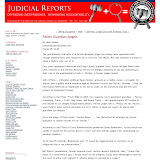
Senator Sampson Signs On to Koch Reform Pledge

Senate leader Sampson backs Koch reforms
The Associated Press - September 8, 2010

ALBANY, N.Y. — Former New York City Mayor Ed Koch said Wednesday that state Senate leader John Sampson has joined his “New York Uprising” government reform movement. “I believe it is of enormous importance and I welcome him,” Koch, a Democrat, told The Associated Press. “The only one standing in the way of reform now is (Assembly Speaker) Shelly Silver.” Sampson’s promise, in the form of in a letter, came just before a Wednesday event where Koch planned to praise the “heroes of reform” who commit to the changes and castigate those who refuse, the politicians he calls “enemies of reform.” “We share the same reform goals,” Sampson wrote in the letter to Koch obtained by the AP. “As the leader of the Democratic majority in the state Senate — a majority that recently replaced 44 years of Republican rule — I appreciate the need for fundamental change in Albany.” Sampson said it’s not his policy to sign pledges, but he supports Koch’s main issues: using an independent commission to redraw election district lines, a process that for decades has been controlled by the majority parties to protect their incumbents and power, and applying generally accepted accounting methods for state budgeting. Silver, a lower Manhattan Democrat, has cited a personal policy not to sign pledges. But he told Koch in May the Democrat-led Assembly already passed many of the reforms his organization seeks and “is open to exploring ways to improve redistricting,” the process of redrawing election district lines every decade, said Silver spokeswoman Sisa Moyo. Every member of the Senate’s Republican minority including their leader, Sen. Dean Skelos of Nassau County, and all Republican challengers signed Koch’s pledge immediately about six weeks ago, said Skelos’ spokesman John McArdle. “Our commitment is real, it’s genuine and it’s not an after thought,” McArdle said. “We did it on time.” The highly partisan Senate has been perhaps the biggest target of reform by good-government advocates. A coalition of two Democrats and the Republican minority mounted a coup in the summer of 2009 that led to weeks of gridlock. Two Democrats eventually returned to their party for lucrative leadership posts. Since then, most important measures have passed by the minimum 32 votes required and along party lines. Democrats hold a 32-30 majority. Koch said he’s accepting the Sampson letter as a substitute for signing the pledge. “Rank has it’s privilege,” Koch said. “I’m not interested in unconditional surrender. This isn’t World War II. ... I’m declaring victory.” Koch said the majority of senators and assembly members and their challengers have now signed the pledge, along with all three candidates for governor. “It ain’t done until it’s done,” Koch said. “This is just their pledge ... and we’re going to hold them to their pledges.” If they don’t follow through on the specific legislative changes, “I will go into their districts and say, ‘Liar, liar, pants on fire.’”

Tuesday, September 7, 2010

Lawsuit Claims Citibank Deprived 104-Year-Old Heiress of $80M

Lawsuit claims Citibank deprived 104-year-old heiress of $80M
The New York Post by Dan Mangan - September 6, 2010

A stunning lawsuit accuses Citibank of costing a 104-year-old Manhattan heiress’s trust fund up to $80 million by failing to invest its money properly, The Post has learned. More than 70 years after a $3 million fund was established for reclusive, eccentric Huguette Clark in 1926, "the trust’s value was still only $3 million" because it was never invested in stocks and bonds as it should have been for at least part of that time, claim explosive documents filed by two former Citibank trust officers. The money had apparently been parked completely in bonds for decades, generating some income for Clark to live on but little or no growth for the fund balance, the court papers claim. Citibank’s handling of the fund "needs to be independently investigated because the liability is now about $80 million which [the bank] owes to [Clark’s] trust," according the lawsuit filed by former Citibank trust officers John Cullen and Veronica Juliano. The two former trust officers are soon set to meet with the DA’s office, which is probing possible mismanagement of Clark’s $500 million fortune by her lawyer, Wallace Bock, and accountant, Irving Kamsler. In addition to the bank’s alleged mishandling of Clark's so-called charitable remainder trust, the trust officers' lawsuit charges that Bock knew about Citibank’s screw-up at least as far back as 1998. But the legal papers say Bock dropped his threatened lawsuit against the bank after it hired him for $10,000 to represent it during an accounting of the trust. "I asked, ‘Isn’t that a conflict of interest, since [Bock] wants to sue us,’¤" Cullen wrote in court documents. He said his manager told him that that’s what the bank’s legal department had instructed. Clark's trust fund was set up by the heiress’s mother, Anna, the year after Clark’s father, US Sen. William Clark of Montana, died. Huguette Clark spent her life obsessively collecting dolls and shunning visitors, marrying once — briefly — and having no children. She has lived for the past two decades in Manhattan hospitals. Her story only came to light recently after the media reported that Bock has kept her few, distant relatives from visiting her and not objected to a convicted sex offender, Kamsler, serving as her accountant. Meanwhile, Bock and Kamsler have sold off her $23 million Renoir painting and $6 million Stradivarius violin, supposedly with her blessing, as her two massive mansions have stood vacant for nearly 60 years, costing her millions in upkeep. Under the terms of the trust that Citibank was managing, Clark received income from the fund's investments, but whatever balance is left when the now-feeble heiress will go to the famed Corcoran Gallery of Art in Washington DC, where there is wing named after her father, who donated 800 works to it upon his death. Cullen, 68, filed a lawsuit against Citibank alleging the trust-fund mismanagement in 2008, after the bank fired him earlier that year. Juliano, who also was terminated, later joined the action, which is pending in White Plains federal court. At his Westchester County home Friday, when asked if he believed he was fired because of his concerns about Clark’s trust fund, Cullen replied, "I don’t believe it, I know it." A spokesman for Citibank’s corporate parent, Citi, said "Citi has acted appropriately in carrying out our fiduciary responsibilities in this matter and the allegations first made several years ago by a former employee are entirely baseless." Bock’s spokesman, Michael McKeon, the lawyer "has and continues to act in the best interests of Ms. Clark. Any allegation to the contrary is without support." According to the lawsuit, another alleged debacle involving also occurred involving the theft of some of Huguette Clark’s jewelry, which was kept in a bank safety-deposit box. At one point, Bock told Citibank that "[its] trust department forgot to pay [Clark’s] safe-deposit-box fees," the suit says. "After a few years, the branch drilled open the box, took an inventory and took [Clark’s] jewelry into a cardboard box, sealed it, and sent it down to its main vault for storage. "A vault attendant slit open the box from the bottom, and took the jewelry. The jewelry was put into a Sotheby’s catalog, recognized and recovered," the suit says. dan.mangan@nypost.com

Monday, September 6, 2010

Staten Island Prosecutor Charged with DWI

Staten Island prosecutor, whose job includes trying drunk drivers, charged with DWI
Staten Island Live by Peter N. Spencer - September 3, 2010

STATEN ISLAND, N.Y. -- A Staten Island assistant district attorney who often prosecutes defendants for drunk driving is now facing those charges himself. Richmond County Assistant District Attorney Craig Trainor was charged with operating a vehicle while intoxicated in Midtown Manhattan early this morning. Police said the 33-year-old Castleton Corners resident was speeding and changing lanes without using a signal before he was pulled over on the corner of West 44th Street and 12th Avenue at around 3:15 a.m. Assistant District Attorney Craig Trainor was arrested this morning for allegedly driving drunk. Trainor was also charged with refusing to take a Breathalyzer test at the scene and after he was arrested and taken to the 7th Precinct station house. He is expected to be arraigned in Manhattan Criminal Court today. Beside facing significant fines, jail time and the loss of his driver's license for at least a year, Trainor may also lose his job. District Attorney Daniel Donovan suspended Trainor without pay immediately, pending the outcome of the case. "Obviously, these are very serious allegations. Due to the prosecution being conducted by the Manhattan D.A., we cannot comment further at this time," William J. Smith, a spokesman for the prosecutor, wrote in a statement. Trainor, a graduate of Moore Catholic High School in Graniteville and the Columbus School of Law at the Catholic University of America, Washington D.C., joined Donovan's staff last August. He was assigned to Criminal Court in Stapleton, handling misdemeanor cases, which include drunk driving charges. Before working for the D.A.'s office, Trainor was a law clerk to Chief Judge Frederick J. Scullin, Jr. of the U.S. District Court in upstate New York; and was an associate at the Manhattan law firm of DeFeis, O'Connell & Rose for three years. His arrest is no doubt an embarrassment for Donovan, who has gained a reputation as one of the toughest prosecutors of drunk-drivers in the state. During his tenure, the Island not only has led the city in drunk driving convictions, but has had the highest percentage of those convicted receive jail sentences. Trainor is still being held in a Manhattan cell. It is unclear what he was doing in Manhattan, though he did work on the Island yesterday, sources confirm.

Friday, September 3, 2010

Victim Of Lawyer's Sexual Abuse Seeks Her Own 30 Seconds of Pleasure

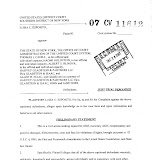
UNITED STATES DISTRICT COURT
SOUTHERN DISTRICT OF NEW YORK

----------------------------------------------------------------------------x
LUISA C. ESPOSITO, Civil Action No: 07 CV -11612 (SAS)
Plaintiff,

-against-

THE STATE OF NEW YORK, THE OFFICE OF COURT
ADMINISTRATION OF THE UNIFIED COURT SYSTEM,
THOMAS J. CAHILL, in his official and individual PLAINTIFF’S MOTION
capacity, NAOMI GOLDSTEIN, in her official and TO RE-OPEN DOCKET
individual capacity, ALBERT S. BLINDER, in his NO: 07-CIV-11612 (SAS)
official and individual capacity, HARVEY GLADSTEIN
& PARTNERS LLC f/k/a GLADSTEIN & ISAAC, and
ALLEN H. ISAAC, individually and as a partner of
HARVEY GLADSTEIN & PARTNERS LLC f/k/a
GLADSTEIN & ISAAC, THE CITY OF NEW YORK,
RAYMOND KELLY, in his official and individual capacity,
ROBERT ARBUISO, in his official and individual
capacity, and ADAM I. LAMBOY, in his official and
individual capacity, ARTHUR POLLACK, individually
and as a partner of POLLACK, POLLACK, ISAAC &
DeCICCO, LLP, CONRAD POLLACK, individually and
as a partner of POLLACK, POLLACK,ISAAC &
DeCICCO, LLP, BRIAN J. ISAAC, individually and as a
partner of POLLACK, POLLACK, ISAAC & DECICCO,
LLP and POLLACK, POLLACK, ISAAC &DeCICCO, LLP,
and Jane and John Does,

Defendants.
-----------------------------------------------------------------------------x

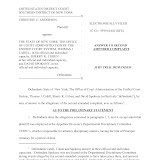
PLAINTIFF’S MOTION TO REOPEN CASE

UPON various affidavits, submitted according to proof at trial, Plaintiff LUISA C.

ESPOSITO, on the day of August 30, 2010, now moves the Court for an order reopening the

above captioned case; Docket No. 07-Civ-11612 (SAS), Luisa C. Esposito v. The State Of New

York, et.als, based upon newly discovered evidence, and the (Decision and Order, dated June 1,

2010 by the Appellate Court, First Department, pertaining to the suspension of Defendant

Allen H. Isaac’s law license).

In support of the Motion to Reopen, Plaintiff states as follows:

PLAINTIFF, LUISA C. ESPOSITO, pro se, moves from the Court's August 8, 2008
Opinion and Order (the "Order"), (Attached hereto as Exhibit A), whereby the Court dismissed this case.

THE COURT’S AUGUST 8, 2008, ORDER & DECISION FAILED TO ADDRESS PLAINTIFF’S INDIVIDUAL DEFENDANTS.

1) Plaintiff, (movant) contends that Isaac was dismissed in his individual capacity regarding her state case, (Luisa C. Esposito vs. Allen H. Isaac, et.als.,-502 TSN 2008), therefore, Defendants argument in their motion to dismiss Plaintiff’s complaint, dated May 30, 2008, regarding duplicative claims are now moot.

2) The court never made findings in the August 8, 2008, order and decision as to why each of the individual parties (exclusive of the state actors) was dismissed from the case, specifically defendant Allen H. Isaac (my assailant).

3) Subsequently to her case being dismissed Plaintiff immediately filed a motion to reargue that was denied also without explanation as to why each of the individual parties was dismissed. The Second Circuit Appeals Court also affirmed and never addressed why the individual parties those who are not state actors were dismissed.

4) Therefore, Plaintiff, (movant) moves to reopen the part of the complaint that was never addressed pursuant to rule 60 (b), (6) regarding the above listed defendants.

5) The branch of the complaint that points to Defendant Allen Isaac personally and the individual parties pursuant to rule 60 (b), (6) were never addressed by the Court involves exceptional circumstance, regarding new evidence, the suspension of Defendant Allen H. Isaac’s law license. (Attached hereto as Exhibit B), the June 1, 2010, decision and order from the Appellate Court, First Department.

6) Plaintiff, (movant’s) complaint against the state actors, the court’s ruling involved agency actors and the court never addressed Defendants Isaac personally and the individual defendants from the law firms.


I. Standard of Review

Rule 60(b) allows a party to seek relief from a final judgment in a limited set of circumstances, including mistake, excusable neglect, newly discovered evidence, fraud or other reason justifying relief. Fed. R. Civ. P. 60 (b); Here, Plaintiff seeks relief under subsection (6) of
Rule 60(b), which permits a district court to exercise its discretion to set aside a final judgment
for “any other reason justifying relief from the operation of the judgment.” The Third Circuit
“has consistently held that the Rule 60(b) ground for relief from judgment provides for
extraordinary relief and may only be invoked upon a showing of exceptional circumstances.”
Coltec Indus., Inc. v. Hobgood, 280 F.3d 262, 273 (3d Cir. 2002); see also, e.g., Gonzalez v.
Crosby, 545 U.S. 524, 535 (2005) (“[O]ur cases have required a movant seeking relief under
Rule 60(b), (6) to show ‘extraordinary circumstances’ justifying the reopening of a final
judgment.”); Ackermann v. United States, 340 U.S. 193 (1950), Stradley v. Cortez, 518 F.2d
488, 493 (3d Cir.1975). Moreover, although “relief under 60(b), (6) is not limited by any strictly defined time period,” such relief “can be afforded under this rule [only] if it is sought within a reasonable time.” Stradley v. Cortez, 518 F.2d at 493 (internal quotation marks omitted).

II. Basis For Re-Opening & Re-Instating Plaintiff’s Case/ Due to New Evidence, Exceptional Circumstances

In the Courts August 8, 2008, Opinion and Order, it states:

“These actions, all filed as related to Anderson v. The State of New York, relate to alleged corruption in the New York State courts. As discussed below, the United States Constitution does not permit this Court to supervise the departmental disciplinary committees or review the decisions of the courts of the State of New York, the only federal court that may review their decisions is the United States Supreme Court. Plaintiffs must direct their complaints to the court system, the Attorney General for the State of New York, or the appropriate United States Attorney. Because the Courts lacks jurisdiction to review the decisions of the departmental disciplinary committees and for the other reasons stated below, these actions are dismissed”. Notwithstanding the Court Statement above the District Court does have
jurisdiction pertaining to Plaintiff’s claims regarding Title V Sec. 40001-40703
(Violence Against Women Act) (“VAWA ACT”). Wikipedia: Violence Against Women Act

“The Violence Against Women Act of 1994 (VAWA) is a United States federal law. It was passed as Title IV, sec. 40001-40703 of the Violent Crime Control and Law Enforcement Act of 1994 HR 3355 and signed as Public Law 103-322 by President Bill Clinton on September 13 1994. It provided $1.6 billion to enhance investigation and prosecution of the violent crime perpetrated against women, increased pre-trial detention of the accused, provided for automatic and mandatory restitution of those convicted, and allowed civil redress in cases prosecutors chose to leave unprosecuted. The National Organization of Women heralded the bill as "the greatest breakthrough in civil rights for women in nearly two decades." VAWA and the 1994 Crime Bill in general was written by Democratic Senator Joe Biden, supported by Congressional Democrats and President Clinton, and opposed by then minority Congressional Republicans with a few exceptions. VAWA was reauthorized by Congress in 2000, and again in October 2005, when it passed the Senate unanimously. The bill was signed into law by President George W. Bush on January 5, 2006. [1] The latest version for the first time also recognizes male victims of domestic violence and sexual assault. Moreover, Plaintiff did not pray for relief to review any Court decisions regarding the DDC, or regarding any standing pertaining to that matter because Plaintiff’s case was open and pending before the court at the time the lawsuit was filed (Docket No. 2005.3074). However, Plaintiff did pray for relief because she was denied due process under federally protected laws, regarding the unethical and flawed proceedings at the DDC, against her assailant, Defendant Allen Isaac. Plaintiff has newly discovered evidence, testimony according to proof at trial, pertains to Plaintiff’s defendants, which needs to be addressed before the Court; this evidence pertains to witness affidavits in support of Plaintiff’s claims. Testimony submitted according to proof at trial by Erika Zorn, Defendant Allen Isaac’s former employee, who interned at the law offices of Gladstein & Isaac, in or about 2004); and testimony submitted according to proof at trial by Ileana Filomeno, Defendant Allen Isaac’s former legal secretary, who testified at the (“DDC”) in support of Plaintiff’s claims and moreover the recent decision and order dated June 1, 2010, from the Appellate Court, First Department. Plaintiff would like to point out that she didn't even know the woman’s name (Ileana Filomeno) who testified on her behalf at the DDC in 2007 until discovery in her state case was made available to her in or about 2010. Still further, Plaintiff contends that her complaint involved various counts regarding Federal Constitutional Rights, regarding sexual assault, etc., which pertained to Violence Against Women’s Act, (“VAWA ACT”). Plaintiff Luisa C. Esposito respectfully requests that the Court re-open Docket number 07-Civ-11612 (SAS) Luisa C. Esposito vs. The State of New York, et.als., to its original status so that she may have the opportunity to plead her case properly in order to receive the proper justice she so deserves under the federally protected constitutional laws.

III. Newly Discovered Evidence & Order & Decision from the Appellate Court, First Department.

On April 6, 2010, Plaintiff contacted Erika Zorn, the former intern who use to work
for the law offices of Gladstein & Isaac; Plaintiff attained her information through discovery
pertaining to her State case. Ms. Zorn will be called to testify regarding her experience while working for the law offices of Gladstein & Isaac. On April 19, 2010, Plaintiff contacted Ileana Filomeno, Defendant Allen H. Isaac’s former legal secretary. Plaintiff was able to attain her contact information through discovery pertaining to her state case (Index No: 109446/2006 & 502 TSN 2008). Ms. Filomeno told Plaintiff she testified in or about the month of December 2007, before the First Departmental Disciplinary Committee against Mr. Isaac on behalf of Plaintiff; Ms. Filomeno also reported Mr. Isaac to the DDC because she had been similarly victimized by Defendant, Allen Isaac; (Please refer to the Appellate Court, First Department Decision and Order, attached hereto as Exhibit B); Plaintiff would like to point out that she didn't even know the woman’s name (Ileana Filomeno) who testified on her behalf at the DDC in 2007 until discovery in her state case was made available to her in or about 2010. (Defendants Attorneys had to know about Ms. Filomeno’s testimony at the DDC).
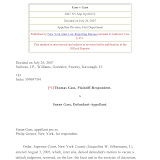
PART OF THE DECISION AND ORDER BY THE APPELLATE COURT, FIRST DEPARTMENT, DATED JUNE 1, 2010. DEFENDANT ALLEN H. ISAAC IS SUSPENDED FROM PRACTICING LAW AS OF JULY 1, 2010. “The Committee charged respondent with acts of professional misconduct including making unwelcome sexual advances to L.E. in violation of DR 1-102(A)(7), asking L.E. for oral sex incident to his representation as trial counsel in violation of DR 5-111(B), boasting to L.E. that he is able to influence improperly Appellate Division judges in violation of DR 9-101(C), calling one of the First Department judges a "prick" in violation of DR 1-102 (A)(7) and making suggestive comments to his secretary and inappropriately touching her in violation of DR 1-102(A)(7)”. Moreover, Plaintiff would like to point out to the Court that although the DDC states in their June 1, 2010 order, “The Committee charged respondent with acts of professional misconduct including making unwelcome sexual advances to LE”, Defendant Allen Isaac committed Felony Level Sexual Abuse, Coercion, and Soliciting Sex From His Client, Obstruction of Justice, etc., these crimes were Reported to the Manhattan
Special Victims Squad, and listed as “Felony Level Sexual Abuse”; there was an arrest
warrant out for Defendant Allen Isaac, which the Police Department never acted upon
because “Favors Were Getting Called In”. Defendant Allen Isaac’s former legal secretary, Ms. Filomeno told Plaintiff that some of the office staff at Gladstein & Isaac was well aware of Isaac’s sexual appetite towards attractive women and that he had a bad reputation throughout the office. Ms. Filomeno told Plaintiff Frank Cerra, the Calendar Clerk, at Gladstein & Isaac, also witnessed Isaac grabbing Plaintiff’s buttocks. Mr. Cerra reported this to his Office manager, Margie Sanchez and also to Ms. Filomeno; Coincidently, Ms. Filomeno was fired by Harvey Gladstein after she testified at the DDC. Ms. Filomeno told Plaintiff that Frank, the Calendar Clerk was also fired by Defendant Harvey Gladstein.

IV. Factual Background

The Sexual Assault

Respectfully, Plaintiff directs the Court to item number (1) on the docket of the instant case, Complaint, Sections 20, 21, and 22, pages 7 and 8. Plaintiff met with Detective Arbuiso of the Manhattan Special Victims Unit

Respectfully, Plaintiff directs the Court to item number (1) on the docket of the instant case, Complaint, Sections 25, 26, 27, 28, 29, 30 pages 9, 10, 11, and 12. Plaintiff Files a Complaint with the DDC

Respectfully, Plaintiff directs the Court to item number (1) on the docket of the instant case, Complaint, Sections 31, 32, 33, 34, 35, pages 12, and 13.

V. Conclusion

Plaintiff Esposito filed this motion within “a reasonable time” pursuant to FRCP 60 (b),
(6) and has demonstrated the requisite “exceptional circumstances.” Accordingly, this motion to reopen should be granted in its entirety and Case No: 07-CV-11612 (SAS) be re-instated to its original status.(Luisa C. Esposito vs. The State of New York, et.als, (SAS).

WHEREFORE, Plaintiff’s respectfully requests that the Court reopen this case to its

original status, based on the newly discovered evidence, the suspension of Defendant Allen H.

Isaac’s law license, effective as of July 1, 2020, and in the interest of justice, and for such other

relief that the Court may deem just equitable and proper.

Dated: West Hempstead, N.Y. August 30, 2010

Respectfully submitted,

Luisa C. Esposito, Plaintiff, pro-se
571 Roy Street, West Hempstead, N.Y 11552
(516) 741-0320

Cc:
The New York State Office of the Attorney General
Asst. AG Monica Connell, Esq.
By Hand: 120 Broadway, New York, NY10271

The City of New York Corporation Counsel
Craig Hanlon, Esq. & Sebastian Frank
By Hand: 100 Church Street, Law Dept. NY 10007
Gordon & Rees
Diane Krebs, Esq & Joshua Hurwit, Esq.
By Hand: 90 Broad Street, 23rd fl. NY 10004

Morgan Melhuish & Abrutyn
Douglas Langholz, Esq.
By Hand: 39 Broadway, 17th floor NY 10006

Epstein Becker & Green, P. C.
Traycee Ellen Klein, Esq. & Eric B. Topel, Esq.
By Hand: 250 Park Ave. NY 10177-1211

******************************************************************

PLAINTIFFS’ AFFIRMATION IN SUPPORT OF THE MOTION TO REOPEN

THIS CASE BASED ON NEWLY DISCOVERED EVIDENCE & WITNESSES
PLAINTIFF, LUISA C. ESPOSITO, pro se, swears under the penalties of perjury that the following statements are true and correct to the best of her recollection and knowledge. Plaintiff hereby respectfully moves the court to reopen this case , Docket No. 07-Civ-11612 (SAS), Luisa C. Esposito vs. The State Of New York, et.als ,from the Court's August 8, 2008 Opinion and Order (the "Order"), whereby the Court dismissed all cases related to Anderson v. State of New York (07 Civ. 9599 (S.D.N.Y.)(hereinafter, collectively, “plaintiff’s” or “related cases”), based on new evidence, and in the interest of justice. PLAINTIFF, LUISA C. ESPOSITO, pro se, moves from the Court's August 8, 2008 Opinion and Order (the "Order"), (Attached hereto as Exhibit A), whereby the Court dismissed this case.

THE COURT’S AUGUST 8, 2008, ORDER & DECISION FAILED TO ADDRESS PLAINTIFF’S INDIVIDUAL DEFENDANTS.

1) Plaintiff, (movant) contends that Isaac was dismissed in his individual capacity regarding her state case, (Luisa C. Esposito vs. Allen H. Isaac, et.als-502 TSN 2008), therefore, Defendants argument in their motion to dismiss Plaintiff’s complaint, dated May 30, 2008, regarding duplicative claims are now moot.

2) The court never made findings in the August 8, 2008, order and decision as to why each of the individual parties (exclusive of the state actors) was dismissed from the case, specifically defendant Allen H. Isaac (my assailant).

3) Subsequently to her case being dismissed Plaintiff immediately filed a motion to reargue that was denied also without explanation as to why each of the individual parties was dismissed. The Second Circuit Appeals Court also affirmed and never addressed why the individual parties those who are not state actors were dismissed.

4) Therefore, Plaintiff, (movant) to reopen the part of the complaint that was never addressed pursuant to rule 60 (b), (6) regarding the above listed defendants.

5) The branch of the complaint that points to Defendant Allen Isaac personally and the individual parties pursuant to rule 60 (b), (6) were never addressed by the Court involves exceptional circumstance, regarding new evidence, the suspension of Defendant Allen H. Isaac’s law license. (Attached hereto as Exhibit B), the June 1, 2010, decision and order from the Appellate Court, First Department.

6) Plaintiff, (movant’s) complaint against the state actors, the court’s ruling involved agency actors and the court never addressed Defendants Isaac personally and the individual defendants from the law firms.


I. Standard of Review

Rule 60(b) allows a party to seek relief from a final judgment in a limited set of circumstances, including mistake, excusable neglect, newly discovered evidence, fraud or other
reason justifying relief. Fed. R. Civ. P. 60 (b); Here, Plaintiff seeks relief under subsection (6) of
Rule 60(b), which permits a district court to exercise its discretion to set aside a final judgment for “any other reason justifying relief from the operation of the judgment.” The Third Circuit “has consistently held that the Rule 60(b) ground for relief from judgment provides for
extraordinary relief and may only be invoked upon a showing of exceptional circumstances.”
Coltec Indus., Inc. v. Hobgood, 280 F.3d 262, 273 (3d Cir. 2002); see also, e.g., Gonzalez v.
Crosby, 545 U.S. 524, 535 (2005) (“[O]ur cases have required a movant seeking relief under
Rule 60(b), (6) to show ‘extraordinary circumstances’ justifying the reopening of a final
judgment.”); Ackermann v. United States, 340 U.S. 193 (1950), Stradley v. Cortez, 518 F.2d
488, 493 (3d Cir.1975). Moreover, although “relief under 60(b), (6) is not limited by any strictly defined time period,” such relief “can be afforded under this rule [only] if it is sought within a reasonable time.” Stradley v. Cortez, 518 F.2d at 493 (internal quotation marks omitted).

II. Basis For Re-Opening & Re-Instating Plaintiff’s Case/ Due to
New Evidence, Exceptional Circumstances


In the Courts August 8, 2008, Opinion and Order, she states in her introduction, “These actions, all filed as related to Anderson v. The State of New York, relate to alleged corruption in the New York State courts. As discussed below, the United States Constitution does not permit this Court to supervise the departmental disciplinary committees or review the decisions of the courts of the State of New York, the only federal court that may review their decisions is the United States Supreme Court. Plaintiffs must direct their complaints to the court system, the Attorney General for the State of New York, or the appropriate United States Attorney. Because the Courts lacks jurisdiction to review the decisions of the departmental disciplinary committees and for the other reasons stated below, these actions are dismissed”.
Notwithstanding the Court Statement above the District Court does have
jurisdiction pertaining to Plaintiff’s claims regarding new evidence and Title V
Sec. 40001-40703 (Violence Against Women Act) (“VAWA ACT”).
Wikipedia: Violence Against Women Act

“The Violence Against Women Act of 1994 (VAWA) is a United States federal law. It was passed as Title IV, sec. 40001-40703 of the Violent Crime Control and Law Enforcement Act of 1994 HR 3355 and signed as Public Law 103-322 by President Bill Clinton on September 13 1994. It provided $1.6 billion to enhance investigation and prosecution of the violent crime perpetrated against women, increased pre-trial detention of the accused, provided for automatic and mandatory restitution of those convicted, and allowed civil redress in cases prosecutors chose to leave unprosecuted. The National Organization of Women heralded the bill as "the greatest breakthrough in civil rights for women in nearly two decades." VAWA and the 1994 Crime Bill in general was written by Democratic Senator Joe Biden, supported by Congressional Democrats and President Clinton, and opposed by then minority Congressional Republicans with a few exceptions. VAWA was reauthorized by Congress in 2000, and again in October 2005, when it passed the Senate unanimously. The bill was signed into law by President George W. Bush on January 5, 2006. [1] The latest version for the first time also recognizes male victims of domestic violence and sexual assault. Plaintiff did not pray for relief to review any Court decisions regarding the DDC or regarding any standing pertaining to that matter, because Plaintiff’s case was open and pending before the court at the time the lawsuit was filed (Docket No. 2005.3074). However, Plaintiff did pray for relief because she was denied due process under federally protected laws, regarding the unethical and flawed proceedings at the DDC against her assailant, Defendant Allen Isaac. Plaintiff has newly discovered evidence, the June 1, 2010, Order and Decision from the Appellate Court, First Department regarding the 6 month suspension of Defendant Allen H. Isaac’s law license and testimony according to proof at trial, pertains to Plaintiff’s defendants, which needs to be addressed before the Court; this evidence pertains to witness affidavits in support of Plaintiff’s claims. Testimony submitted according to proof at trial by Erika Zorn, Defendant Allen Isaac’s former employee, who interned at the law offices of Gladstein & Isaac, in or about 2004); and testimony submitted according to proof at trial by Ileana Filomeno, Defendant Allen Isaac’s former legal secretary, who testified at the (“DDC”) in support of Plaintiff’s claims. Plaintiff would like to point out that she didn't even know the woman’s name (Ileana Filomeno) who testified on her behalf at the DDC in 2007 until discovery in her state case was made available to her in or about 2010.(Defendants Attorneys had to know about Ms. Filomeno’s testimony at the DDC).
Still further, Plaintiff contends that her complaint involved various counts regarding Federal Constitutional Rights, regarding sexual assault, etc., which pertained to Violence
Against Women’s Act, (“VAWA ACT”). Plaintiff Luisa C. Esposito respectfully requests that the Court re-open Docket number 07-Civ-11612 (SAS) Luisa C. Esposito vs. The State of New York, et.als., to its original status, so that she may have the opportunity to plead her case properly, in order to receive the proper justice she so deserves.

VI. Newly Discovered Evidence & Order & Decision from the Appellate Court, First Department.

On April 6, 2010, Plaintiff contacted Erika Zorn, the former intern who use to work
for the law offices of Gladstein & Isaac; Plaintiff attained her information through discovery
pertaining to her State case. Ms. Zorn will be called to testify regarding her experience while working for the law offices of Gladstein & Isaac. On April 19, 2010, Plaintiff contacted Ileana Filomeno, Defendant Allen H. Isaac’s former legal secretary. Plaintiff was able to attain her contact information through discovery pertaining to her state case (Index No: 109446.2006 & 502 TSN 2008). Ms. Filomeno told Plaintiff she testified in or about the month of December 2007, before the First Departmental Disciplinary Committee, against Mr. Isaac, on behalf of Plaintiff; Ms. Filomeno also reported Mr. Isaac to the DDC because she had been similarly victimized by Defendant, Allen Isaac; (Please refer to: Page (3), paragraph (3) of the Appellate Court, First Department Decision and Order, attached hereto as Exhibit B); Plaintiff would like to point out that she didn't even know the woman’s name, (Ileana Filomeno,) who testified on her behalf at the DDC in 2007 until discovery in her state case was made available to her in or about 2010. PART OF THE DECISION AND ORDER BY THE APPELLATE COURT, FIRST DEPARTMENT, DATED JUNE 1, 2010. DEFENDANT ALLEN H. ISAAC IS SUSPENDED FROM PRACTICING LAW AS OF JUNE 1, 2010. “The Committee charged respondent with acts of professional misconduct including making unwelcome sexual advances to L.E. in violation of DR 1-102(A)(7), asking L.E. for oral sex incident to his representation as trial counsel in violation of DR 5-111(B), boasting to L.E. that he is able to influence improperly Appellate Division judges in violation of DR 9-101(C), calling one of the First Department judges a "prick" in violation of DR 1-102 (A)(7) and making suggestive comments to his secretary and inappropriately touching her in violation of DR 1-102(A)(7)”. Moreover, Plaintiff would like to point out to the Court that although the DDC states in their June 1, 2010 order, “The Committee charged respondent with acts of professional misconduct including making unwelcome sexual advances to LE”, Defendant Allen Isaac committed Felony Level Sexual Abuse, Coercion, and Soliciting Sex From His Client, Obstruction of Justice, etc., these crimes were Reported to the Manhattan Special Victims Squad, and listed as “Felony Level Sexual Abuse”; there was an arrest warrant out for Defendant Allen Isaac, which the Police Department never acted upon because “Favors Were Getting Called In”. Defendant Allen Isaac’s former legal secretary, Ms. Filomeno told Plaintiff that some of the office staff at Gladstein & Isaac was well aware of Isaac’s sexual appetite towards attractive women; and that he had a bad reputation throughout the office. Ms. Filomeno told Plaintiff Frank, the Calendar Clerk, at Gladstein & Isaac, also witnessed Isaac grabbing Plaintiff’s buttocks. Frank reported this to his Office manager, Margie Sanchez, and also to Ms. Filomeno; Coincidently, Ms. Filomeno was fired by Harvey Gladstein after she testified at the DDC. Ms. Filomeno told Plaintiff that Frank, the Calendar Clerk was also fired by Defendant Harvey Gladstein.

VII. Factual Background

The Sexual Assault

Respectfully, Plaintiff directs the Court to item number (1) on the docket of the instant case, Complaint, Sections 20, 21, and 22, pages 7 and 8. Plaintiff met with Detective Arbuiso of the Manhattan Special Victims Unit

Respectfully, Plaintiff directs the Court to item number (1) on the docket of the instant case, Complaint, Sections 25, 26, 27, 28, 29, 30 pages 9, 10, 11, and 12.
Plaintiff Files a Complaint with the DDC

Respectfully, Plaintiff directs the Court to item number (1) on the docket of the instant case, Complaint, Sections 31, 32, 33, 34, 35, pages 12, and 13.

VIII. Conclusion

Plaintiff Esposito filed this motion within “a reasonable time” pursuant to FRCP 60 (b),
(6) and has demonstrated the requisite “exceptional circumstances.” Accordingly, this motion to reopen should be granted in its entirety and Case No: 07-CV-11612 (SAS) be re-instated to its original status.

WHEREFORE, Plaintiff’s respectfully requests that the Court reopen this case to its original status, based on the newly discovered evidence, witnesses, the recent decision and order dated June 1, 2010, by the Appellate Court, First Department, and in the interest of justice, and for such other relief that the Court may deem just equitable and proper.


DECLARATION UNDER PENALTY OF PERJURY
The undersigned declares under penalty of perjury that she is the plaintiff in the above action, that she has read the above and that the information contained therein is true and correct, 28 U.S.C. § 1746; 18 U.S.C § 1621.

Dated: West Hempstead, New York - August 30, 2010

Respectfully submitted,

Luisa C. Esposito, Plaintiff, pro-se
571 Roy Street, West Hempstead, N.Y. 11552
(516) 741-0320 (Telephone)

Thursday, September 2, 2010

Cover-Up Continues in Surrogate's Court Chief Clerk Firing

Chief clerk of Surrogate’s Court fired
The Buffalo News by Thomas J. Prohaska - August 24, 2010

LOCKPORT, NY — The chief clerk of Niagara County Surrogate’s Court was fired last week, but the reason remains a mystery. Ronald A. Sutton, a Town of Lockport attorney, was ousted from the post he had held for 14 years. The Buffalo News learned that court officers escorted Sutton out of the County Courthouse at the close of business Thursday. County Judge Sara Sheldon Sperrazza, who was on vacation last week, said Monday the decision was made at the Eighth Judicial District office in Buffalo. A call to the office of Eighth Judicial District Administrative Judge Paula L. Feroleto was returned by David Bookstaver, spokesman for the state Office of Court Administration. Bookstaver would say only that Sutton “no longer works for the court system.” “We don’t discuss employment matters publicly,” he said. Sutton, 48, had been chief clerk of Surrogate’s Court, which handles estates and wills, for 14 years. Such posts are called “at-will” positions, meaning their occupants can be fired at will. Deputy Clerk Michael C. Veruto is in charge for now. Veruto said he was not in the building when Sutton was escorted out and had no information on the matter. Sutton could not be reached to comment.

Wednesday, September 1, 2010

Surprise: Lawyer Pushed 104-Year-Old To Sign New Will

Lawyer 'grab' for heiress $$
The New York Post by REBECCA ROSENBERG and DAN MANGAN - September 1, 2010

A lawyer for reclusive copper heiress Huguette Clark repeatedly tried to get the 104-year-old Manhattan woman to sign drafts of last wills and testaments that would have left him and her accountant $1 million or more apiece, his former paralegal told The Post. The Manhattan lawyer, Wallace Bock, "stood on his head trying to get her to sign, and she'd say, 'No,' and he'd stop for a year or months, then he'd put it to her again," said the paralegal, Cynthia Garcia. "The wills were all drafts and revisions and changes. They were all different," said Garcia, 42, who worked for Bock in the early 2000s. "The drafts left Bock and [Clark's accountant] Irving Kamsler millions," said Garcia. "This woman didn't deal in less than millions . . . I don't remember the exact amount. But it was at least a million dollars [each]." "There were marked, stamped drafts. She was asked to pick one, but I don't think she ever did. I never saw one signed," Garcia said. "She'd say, 'Change this or that.' " Bock's spokesman, Michael McKeon, yesterday ripped Garcia's "wildly inaccurate and reckless statements. "Both her credibility and her motivation are suspect," he said. "An independent review will demonstrate that Ms. Clark's affairs were handled appropriately, professionally and consistent with her wishes." Garcia last weekend spoke with the Manhattan District Attorney's Office, which is investigating Bock, 78, and Kamsler, 63, for their handling of Clark's vast wealth, estimated at $500 million. Clark, whose US senator-father was one of America's richest men by virtue of his copper-mine earnings, has voluntarily lived for more than two decades in Manhattan hospitals. In the meantime, her huge Fifth Avenue apartment and mansions in Connecticut and California have been vacant. An MSNBC.com report about her financial affairs -- and Bock's alleged habit of keeping Clark's family members from visiting her -- spurred the DA's probe. That report also noted how Bock and Kamsler -- a convicted felon on probation for attempting to send porn via the Internet to detectives posing as underage girls -- had come to jointly own a Manhattan co-op signed over to them from another elderly client, Donald Wallace, who himself once was Clark's lawyer. dan.mangan@nypost.com

Judges For Sale

Judges for sale?
The New York Post by VICTOR A. KOVNER - August 31, 2010

An exclusive story in yesterday's Post revealed that a significant number of candidates for election to New York's Civil Court this fall have accepted campaign contributions from the very attorneys who might appear before them. Unfortunately, the main contributors to judicial campaigns, other than the candidates themselves, often are such lawyers. This is no recipe for justice and fairness. Sadly, this is not a new issue -- especially in New York state, where about 73 percent of full-time judges are elected. As long ago as 2004, state Chief Judge Judith Kaye's Commission to Promote Public Confidence in Judicial Elections found that 94 percent of voters believed campaign contributions influenced how judges decided court cases. A startling 45 percent of the New York judges polled thought that the donations influenced judicial decisions to some degree. In a national poll conducted in February 2009, more than 90 percent of those surveyed said judges should be removed from any case that involves an individual or group that contributed to the judge's election campaign. The Fund for Modern Courts believes that the state Court of Appeals could improve the public's perception of the impartiality of elected judges by adopting a simple rule, namely: A judge must recuse him- or herself whenever his or her election campaign receives $1,000 or more from one of the parties or lawyers in the case. This rule would require judges to automatically step aside from presiding over matters involving such contributors.

The impropriety of judges presiding over cases involving political donors was highlighted by the case of Caperton v. Massey, where a justice of West Virginia's highest court had failed to recuse himself from the appeal of a $50 million jury verdict, even though the CEO of the lead defendant spent $3 million supporting the judge's electoral campaign. Last year, the US Supreme Court ruled that the justice had violated the Due Process Clause of the 14th Amendment by refusing to step aside. Closer to home, in 2005 the Court of Appeals removed Brooklyn Surrogate Court Judge Michael Feinberg from the bench, citing a number of his decisions -- including awarding excessive fees of more than $2 million to one of his campaign contributors, to the detriment of unknowing litigants. These types of injustices may not be common, but they have a significant impact on public perception. Worse, they suggest that similar instances of partiality may happen far more often on a smaller scale, where judges have less reason to be concerned about any scrutiny. The Fund for Modern Courts -- which has been working to improve New York's courts for more than half a century -- believes that the automatic-disqualification rule would address legitimate public concern about the influence of campaign contributions on judges. Such a recusal rule would prevent a wide variety of other instances in which public confidence in the judiciary might be undermined as a result of campaign contributions by the parties in a case. By requiring judges to step aside from cases in which they've received donations of $1,000 or more from one of the parties or lawyers involved, New York can rein in some of the worst abuses that the linkage of money and the judiciary can foment. It is a simple, straightforward way to increase public confidence in the administration of justice.

Victor A. Kovner chairs the Fund for Modern Courts, a nonprofit group dedicated to improving New York state courts.

Tuesday, August 31, 2010

Attorneys Scratch Backs of Judge Wannabes

Att'ys $cratch backs of judge wannabes
The New York Post by Chuck Bennett - August 30, 2010

This season's crop of aspiring jurists is raking in thousands of bucks in campaign contributions from the very same attorneys who argue cases before them -- despite facing uncontested elections, a Post analysis found. The 14 candidates this year -- all seeking 10-year terms in municipal Civil Court -- even held fund-raisers in the boardrooms of law firms and in the homes of the firms' founding partners. Two weeks ago, for example, attorney Harriet Thompson, who is running unopposed in Brooklyn, held a $1,000-a-plate fund-raiser in the home of Meryl Wenig, the founding partner of real-estate law firm Wenig Saltiel. That dinner, which raised $8,000, was co-sponsored by state Sen. John Sampson, a Brooklyn Democratic powerhouse under investigation for mingling his public office with his private law practice. Thompson raised $20,635 as of Aug. 18 -- including $11,965 from law firms or real-estate firms -- and at least $1,850 from practicing attorneys. She didn't return a call for comment. "I think it's reasonable you would have questions when the umpire calling the strikes is being paid by one of the teams," said Adam Skaggs, a scholar with NYU's Brennan Center for Justice. Civil Court judges earn $125,600 a year and preside over lawsuits seeking less than $25,000 in compensation -- including many slip-and-fall cases and property disputes. The campaign cash is typically spent on goodwill donations to local Democratic clubs, fees to freelance petitioners, fliers and meals.
Technically, judges aren't supposed to peek at their own contributor list, but they are allowed to attend their fund-raisers, according to the Office of Court Administration's ethical guidelines. "When they have events, what they do is always invite a few people as guests, so in theory, the [candidate] wouldn't know if someone paid or is maybe just a guest," said veteran political consultant Jerry Skurnik. "But in truth, they know it's a rule they can't enforce." His own client, Housing Court Judge Gerald Lebovits, who is running for Manhattan Civil Court, accepted 60 donations totaling $13,825 from individuals over the past two months, all but two of them attorneys. He also collected donations ranging from $50 to $1,250 from 25 law firms for a total of $8,650. Lebovits told The Post he wanted a big war chest to scare away potential opponents -- he even lent himself an extra $100,000. The strategy worked. Lebovits is running unopposed. Skurnik added that Lebovits is kept at arms-length from the fundraising numbers, although he attended his own $150-a-head fund-raiser at The Palm-Tribeca restaurant last month. Another Manhattan Civil Court candidate, Leticia Ramirez, held her July 22 fund-raiser in the law offices of Raphaelson & Levine, a firm specializing in personal-injury lawsuits. Ramirez also accepted a $5,000 loan from real-estate attorney Martin Meltzer, a partner at Belkin Burden Wenig & Goldman. That firm also gave her an outright donation of $1,000. Her campaign didn't return a call for comment. Additional reporting by Douglas Montero - chuck.bennett@nypost.com

Monday, August 30, 2010

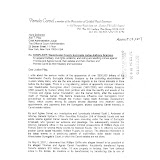
Amid Active Federal Criminal Inquiries, 2nd Circuit Again Considers Carvel


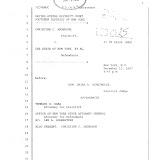
MOTION TO PROCEDURALLY REASSIGN REMANDED CASE TO ANOTHER JUDGE AND TO REFER APPARENT FELONIES TO THE U.S. ATTORNEY

I. GROUNDS & RELIEF

1. Plaintiff Pamela Carvel respectfully requests that this Court, following its remand of this case on appeal, order reassignment of the case to a different district court judge because by actions and words reflected in the attached hearing transcript. The district court has left Plaintiff with no meaningful alternative to secure the First, Fifth, and Fourteenth Amendment rights guaranteed by the U.S. Constitution and enforced by U.S. laws.

2. Judge Scheindlin’s bias resulting from “the Second Circuit's very limited remand” (Tr. 2:3-2:4) and unusual circumstances resulting from the judge’s attitude against pro se litigants, and against allegations of corruption by lawyers and judges. This bias is demonstrated by the tone of a hearing convened by the district court’s calling lawyers who did not file Notices of Appearance, to coach the lawyers in a speedy dismissal of Plaintiff’s remanded case by lack of “plausible” claims. “THE COURT: If she can plead a conspiracy against these people that's viable in federal court under the pleading standards, that's that. But it hasn't been tested yet. Do you wish to test it with a motion to dismiss? (Tr. 8:16- 8:19). “THE COURT: Failure to state a plausible claim of conspiracy.” (Tr. 12:10- 12:11).

3. Reassignment is appropriate where the trial judge has engaged in conduct that gives rise to the appearance of impropriety or a lack of impartiality in the mind of a reasonable member of the public. United States v. White, 846 F.2d 678, 696 (11th Cir.), cert. denied, 488 U.S. 984 (1988); 109 S.Ct. 537, 538, 102 L.Ed.2d 568 (1988).

II. STATEMENT OF JURISDICTION

4. This case was never tried. No motions were made before remand. Both for the judge's sake and the appearance of justice, an assignment to a different judge may be desirable and would not effect judicial economy. There is no suggestion in any of the case law that the district court as an institution must first be given the opportunity to consider whether to reassign a case. If the request for reassignment after remand were made of the district judge by a party on bias grounds, the judge's refusal would be directly reviewable in this court by mandamus petition. United States v. Sears, Roebuck & Co., 785 F.2d 777, 780 (9th Cir.1986) cert. denied, 479 U.S. 988 (1986).

5. "The federal appellate courts have broad discretion to fashion remedies upon remand, including reassignment to a different district court judge, pursuant to 28 U.S.C. § 2106." See 28 U.S.C. 2106 (providing that appellate courts may "remand the cause and direct the entry of such appropriate judgment, decree, or order, or require such further proceedings to be had as may be just under the circumstances"). That provision allows this Court to reassign the case to a different judge on remand. United States v. Microsoft Corp., 56 F.3d 1448, 1463 (D.C. Cir. 1995) (per curiam).

6. Unlike recusal, reassignment may be considered by the courts of appeals in the first instance. See, e.g. United States v. Microsoft Corp., 56 F.3d 1448, 1463 (D.C. Cir. 1995) (per curiam); Bemibenista v. United States, 866 F.2d 493,499 (D.C. Cir. 1989); United States v. Tucker, 78 F.3d 1313, 1322-24(8th Cir. 1996); United States v. Sears. Roebuck & Co., 785 F.2d 777, 780 (9th Cir. 1986) (per curiam).

7. The All Writs Act provides that "[t]he Supreme Court and all courts established by Act of Congress may issue all writs necessary or appropriate in aid of their respective jurisdictions and agreeable to the usages and principles of law." 28 U.S.C. § 1651(a).

8. These statutes, as well as the court's inherent authority, allow it to direct that a case on remand be assigned to a different judge. Sederquist v. City of Tiburon, 765 F.2d 756, 763 (9th Cir.1984); Tanner Motor Livery, Ltd. v. Avis, Inc., 316 F.2d 804 (9th Cir.), cert. denied, 375 U.S. 821, 84 S.Ct. 59, 11 L.Ed.2d 55 (1963) (28 U.S.C. Sec. 2106); United States v. Ritter, 273 F.2d 30 (10th Cir.1959), cert. denied, 362 U.S. 950, 80 S.Ct. 863, 4 L.Ed.2d 869 (1960) (inherent authority and All Writs Act); see generally Barber v. United States, 711 F.2d 128 (9th Cir.1983).

9. In the scheme of the federal judicial system, the district court is required to follow and implement appeallate court decisions just as those courts are oath- and duty-bound to follow the decisions and mandates of the United States Supreme Court. "[U]nless we wish anarchy to prevail within the federal judicial system, a precedent of this court must be followed by the lower federal courts no matter how misguided the judges of those courts may think it to be." Hutto v. Davis, 454 U.S. 370, 375, 102 S.Ct. 703, 706, 70 L.Ed.2d 556 (1982); also see United States v. Sears, Roebuck & Co., 785 F.2d 777, 780 (9th Cir.1986) at 780-81 cert. denied, 479 U.S. 988 (1986), 107 S.Ct. 580, 93 L.Ed.2d 583 (1986); United States v. Yagid, 528 F.2d 962, 965 (2d Cir.1976). See also 28 U.S.C. § 2106 (1982).

10. In addition, a court of appeals decision ordering reassignment rests upon a long line of cases permitting a court of appeals to order reassignment of a case to a different judge in the exercise of the court's inherent power to administer the system of appeals and remands. United States v. Sears, Roebuck & Co., 785 F.2d 777; United States v. Alverson, 666 F.2d 341 (9th Cir.1982); United States v. Wolfson, 634 F.2d 1217 (9th Cir.1980); United States v. Ferguson, 24 F.2d 81 (9th Cir.1980); United States v. Robin, 553 F.2d 8 (2d Cir.1977) (en banc); United States v. Yagid, 528 F.2d 962 (2d Cir.1976).

11. Under these standards, reassignment here is warranted to preserve the appearance of fairness, to facilitate completion of the serious legal duties at issue, and to mitigate the wholesale violation of Constitutional rights to redress of grievances, due process, equal treatment, etc. Such rhetoric as memorialized in the transcript of the hearing raises appearance concerns going to the heart of the fairness and decorum of Article III proceedings on civil rights.

12. In Haines v. Ligpett Group, Inc., 975 F.2d 81 (3d Cir. 1992), the Third Circuit held that two paragraphs in a single published opinion — accusing the tobacco industry in colorful language of deliberately concealing information about the health risks of its product — warranted reassignment to preserve the appearance of fairness on remand. See 975 F.2d at 97-98.

III. REASONS WHY THE CASE SHOULD BE REASSIGNED TO A DIFFERENT DISTRICT COURT JUDGE

13. This district court’s hearing began with a wholly gratuitous reference to “Our biggest problem” (Tr. 3:1-3:3) referring to Pamela Carvel’s amended complaint, and continued derogatorily referring to Pamela Carvel as one who goes “barging into” Defendant’s office to serve papers (Tr. 13:15-13:16). The hearing included a misstatement of “judicial immunity” (Tr. 3:14) with inference that discovery would quashed. (Tr. 6:19-6:20). Judge Scheindlin followed by coaching Defendants’ lawyers on using plausibility to assert motions to dismiss (Tr. 12,14), and motions for sanctions (Tr. 8:25-9:3). Judge Scheindlin assured “this time, there's no leave to amend.” (Tr. 12:14-12:15). The district court’s pronouncements are even more extraordinary because they are not based on any record of evidence before the court.

14. The transcript of the first hearing in this case demonstrates Judge Scheindlin is frustrated with Petitioner’s persistence in obtaining discovery of the primary evidence from the Scarpinos that would prove or disprove conclusively Pamela Carvel’s assertions of bribery. “Take nonparty discovery, if you can.” (Tr. 6:19-6:20). Judge Scheindlin seemed frustrated to the point of expanding the legal limits of “judicial immunity” beyond the accepted precedents. “Absolute judicial immunity, and his wife.” (Tr. 3:14). The judge’s frustration appears to have affected how the district court has conducted hearings involving pro se Plaintiff and defense counsels. Judge Scheindlin coached Defendants’ lawyers as to how to seek dismissal, “You think there's still a failure to state a claim, a plausible claim of conspiracy? Is that your position?” (Tr. 12:4-12:6) “That's good, because if I dismiss it this time, there's no leave to amend.” (Tr. 12:14- 12:15).

IV. UNDERLYING LEGAL ISSUES EXPLAINED – BUT NOT HERE ARGUED

15. Plaintiff Pamela Carvel does not challenge Judge Scheindlin’s determination on judicial immunity by this application but will indeed assert its impropriety by appeal after Judge Scheindlin dismisses the case again – this time promised by Judge Scheindlin to be dismissed with prejudice. Judge Scheindlin refused to allow an appeal at this time.

16. Judge Scheindlin from the bench questioned the wisdom of the substantive law she had to apply pursuant to the Second Circuit’s remand and challenged the Plaintiff’s right to assert nonjudicial claims against Mr. And Mrs. Scarpino (Tr. 3-6). Mr. And Mrs. Scarpino entered into conspiracies that commenced prior to Anthony Scarpino’s election as Surrogate’s Court judge. Judge Scheindlin indicated “plausibility” could become impossible to overcome because discovery might be impossible to obtain -- “Take nonparty discovery, if you can.” (Tr. 6:19-6:20).

17. Judicial immunity is immunity from suit, not just from ultimate assessment of damages, and it can be overcome only if a judge's actions are nonjudicial or were taken in the complete absence of all jurisdiction. Mireles v. Waco, 502 U.S. 9 (1991). Based on the doctrine expressed in Bradley v. Fisher, 13 Wall. 335 (1872), the Court has consistently adhered to the rule that "judges defending against § 1983 actions enjoy absolute immunity from damages liability for acts performed in their judicial capacities. Pierson v. Ray, 386 U. S. 547 (1967); Stump v. Sparkman, 435 U. S. 349 (1978); Supreme Court of Virginia v. Consumers Union, 446 U. S. 719, 446 U. S. 734-735 (1980); Dennis v. Sparks, 449 U.S. 24 (1980). Judge Scheindlin expanded this doctrine to include a judge’s wife (Tr. 3:14) and the couple’s nonjudicial acts in conspiracy with others. These are two separate issues: immunity for acts as judge; liability for conspiracy against rights (42 U.S.C. 1981 et seq) as individuals with other individuals. The conspiracy is a violation “under color of state law” when the individual uses his official position to further the private conspiracy, but the official act does not determine the existence of the private conspiracy, it merely illegally guarantees success of the private conspiracy.

V. GOVERNING LAW & STANDARD OF REVIEW
18. In the absence of actual bias, the courts of appeals generally ask:

(1) "whether the original judge would reasonably be expected upon remand to have substantial difficulty in putting out of his or her mind previously-expressed views or findings determined to be erroneous or based on evidence that must be rejected,"

(2) "whether reassignment is advisable to preserve the appearance of justice," and (3) "whether reassignment would entail waste and duplication out of proportion to any gain in preserving the appearance of fairness."

See United States v. Robin, 553 F.2d 8, 10 (2d Cir. 1977); see also e.g., Cohesive Techs., Inc. v. Waters Corp., 543 F.3d 1351, 1375 (Fed. Cir. 2008) (applying First Circuit law); United States v. Lentz, 383 F.3d 191, 221-222 (4th Cir. 2004), cert. denied, 544 U.S. 979 (2005); Solomon v. United States, 467 F.3d 928, 935 (6th Cir. 2006); Mitchell v. Maynard, 80 F.3d 1433, 1450 (10th Cir. 1996); cf. United States v. Heubel, 864 F.2d 1104, 1112 (3d Cir. 1989) (applying three factors); United States v. White, 846 F.2d 678, 696 (11th Cir.) (same), cert. denied, 488 U.S. 984 (1988); United States v. Wolff, 127 F.3d 84, 88-89 (D.C. Cir. 1997) (same), cert. denied, 524 U.S. 929 (1998); In re DaimlerChrysler Corp., 294 F.3d 697, 700-701 (5th Cir. 2002) (suggesting that the Third, Eleventh, and District of Columbia Circuits apply a "more lenient test" and declining to choose which test to adopt); Simon v. City of Clute, 825 F.2d 940, 943-44 (5th Cir.1987) (footnote omitted) (citing United States v. National Medical Enterprises, Inc., 792 F.2d 906, 914 (9th Cir.1986) (quoting United States v. Robin, 553 F.2d 8, 10 (2d Cir.1977) (en banc)); Bercheny v. Johnson, 633 F.2d 473, 476-77 (6th Cir.1980)); Cook v. Reno, 74 F.3d 97, 99 (5th Cir.1996) (citing Clute and using this test); United States v. Waknine, 543 F.3d 546, 559-560 (2008); United States v. Atondo-Santos, 385 F.3d 1199, 1201 (2004)); United States v. Ressam, 593 F.3d 1095, 1131-1132 (2010); United States v. Paul, 561 F.3d 970, 975 (2009); Rhoades v. Avon Prods., Inc., 504 F.3d 1151, 1165 (2007); United States v. DeMott, 513 F. 3d 55, 59 (2d Cir. 2008).

19. The first two of these factors are of equal importance, and a finding of one of them would support a remand to a different judge. United States v. Alverson, 666 F.2d 341, 349 (9th Cir.1982); United States v. Sears, Roebuck & Co., 785 F.2d 777, 780 (9th Cir.1986) cert. denied, 479 U.S. 988 (1986).

20. Some circuits have said that they will invoke the reassignment power when the facts "might reasonably cause an objective observer to question [the judge's] impartiality." United States v. Microsoft Corp., 56 F.3d 1448, 1463 (D.C.Cir.1995) (quoting Liljeberg v. Health Servs. Acquisition Corp., 486 U.S. 847, 865, 108 S.Ct. 2194, 100 L.Ed.2d 855 (1988)); see also Haines v. Liggett Group, Inc., 975 F.2d 81, 98 (3d Cir.1992) (purpose of reassignment is "to avoid both bias and the appearance of bias"), United States v. Torkington, 874 F.2d 1441, 1446 (11th Cir.1989) ("Reassignment is appropriate where the trial judge has engaged in conduct that gives rise to the appearance of impropriety or a lack of impartiality in the mind of a reasonable member of the public."). This criteria is also demonstrated by the transcript of the hearing.

21. The judicial system has the obligation of preserving public confidence in the impartial and fair administration of justice. If a district judge's continued participation in a case presents a significant risk of undermining this public confidence, this Court has the authority and the duty to order the case reassigned to a different district judge.

A. Unusual Circumstances

22. “[I]n a few instances there may be unusual circumstances where . . . assignment to a different judge is salutary and in the public interest, especially as it minimizes even a suspicion of partiality.” United States v. Robin, 553 F.2d 8, 9-10 (2d Cir. 1977). “In such circumstances our remand does not imply any personal criticism of the trial or the sentencing judge.” Id. at 10.

23. In Rhoades v. Avon Prods., Inc., 504 F.3d 1151, 1165 (2007), the court explained that remand to a different district judge is appropriate "if there is a demonstration of personal bias," or if "unusual circumstances" are deemed to exist after considering the three factors outlined above. Ibid. (quoting United Nat'l Ins. Co. v. R&D Latex Corp., 141 F.3d 916, 920 (9th Cir. 1998)).

24. Pamela Carvel asserts that the transcript demonstrates personal bias to the remand, especially in a pro se case against lawyers. Judge Scheindlin’s early exposure as clerk to Judge Brieant’s bias against pro se litigants (see Affirmation at 16) may be the “unusual circumstances” that subconsciously make it difficult for her to hear pro se cases objectively, especially after remand. See, e.g., Research Corp. Techs., Inc. v. Microsoft Corp., 536 F.3d 1247, 1255 (Fed. Cir. 2008) (reassigning case because judge's "previously-expressed views or findings may make it difficult * * * to approach a remanded case with an open mind"); Scherbakovskiy v. Da Capo Al Fine, Ltd., 490 F.3d 130, 142 (2d Cir. 2007) (reassigning case be cause it was "questionable" whether judge could be "objective"); United States v. Andrews, 390 F.3d 840, 851 (5th Cir. 2004) (reassignment because judge "breached the barrier between the rule of law and exercise of personal caprice"); Mitchell v. Maynard, 80 F.3d 1433, 1450 (10th Cir. 1996) at 1448-1450 (reassignment following reversal of entry of judgment as a matter of law where, inter alia, judge previously expressed views that the plaintiff's "Eighth Amendment claims are frivolous, a waste of the jury's time and as a matter of law fail to state a claim"); Hermes Automation Tech., Inc. v. Hyundai Elecs. Indus. Co., 915 F.2d 739, 752 (1st Cir. 1990) (reassignment following reversal of dismissal order where judge had "strong criticism of plaintiffs' claims as not only frivolous, but verging on fraudulent," even though court had "no doubt that the original district judge could handle plaintiffs' claims with unquestionable fairness"); United States v. Torkington, 874 F.2d 1441, 1446-1147 (11th Cir. 1989) (reassignment following reversal of entry of judgment of acquittal where, among other things, the judge "questioned the wisdom of the substantive law" and "challenged the government's decision to prosecute"); In re Ellis, 356 F.3d 1198, 1211 (9th Cir.2004) (en banc) (citation omitted); United States v. Arnett, 628 F.2d 1162, 1165 (9th Cir.1979); Cullen v. United States, 194 F.3d 401, 408 (2d Cir. 1999) (noting that reassignment would be appropriate "in recognition of the 'difficulty' that a judge might have 'putting aside his previously expressed views'") (quoting United States v. Campo, 140 F.3d 415, 420 (2d Cir. 1998)).

B. District Judge's Adamance to Prior Conclusions

25. Reassignment may be appropriate, for example, if a judge’s conduct creates the appearance that she is or may be unable to perform her role in an unbiased manner, United States v. White, 846 F.2d at 695 ("[W]here a reasonable person would question the trial judge's impartiality, reassignment is appropriate."); United States v. Holland, 655 F.2d 44 (5th Cir. Unit B 1981) (remarks by judge during trial may give rise to inference of bias or prejudice), or if the judge has demonstrated that she is unwilling to carry out the law in a particular case. Brooks v. Central Bank of Birmingham, 717 F.2d 1340, 1343 (11th Cir.1983) ("stalemated posture" required reassignment of case to different judge)(emphasis added).

26. Judge Scheindlin demonstrated her great difficulty in putting aside her prior conclusions about the merits of this complaint involving corruption by lawyers and that reassignment is necessary to preserve the appearance of impartiality. Although on remand Judge Scheindlin might have fairly considered the complaint on the merits, the transcript demonstrates she has difficulty in so doing. In light of Judge Scheindlin's firmly expressed position memorialized in the transcript, the appearance of impartiality would best be preserved by reassignment of this case. Reassignment will not “entail waste and duplication out of proportion to any gain in preserving the appearance of fairness.” United States v. Robin, 553 F.2d 8, 10 (2d Cir.1977) (per curiam). In determining whether to reassign a case this Court considers not only whether a judge could be expected to have difficulty putting aside her previously expressed views, but also “whether reassignment is advisable to preserve the appearance of justice.” ”‚United States v. Robin, 553 F.2d 8, 10 (2d Cir.1977) (per curiam); See, e.g., United States v. Londono, 100 F.3d 236, 242 (2d Cir.1996).

27. Reassignment is also appropriate in cases where a district court has failed, wittingly or unwittingly, to follow repeated guidance from a court of appeals. Such cases squarely implicate the appearance of justice. A district judge's adamance in making erroneous rulings may justify remand to a different judge. United States v. Doe, 655 F.2d 920, 929 (9th Cir.1981); see also United States v. Larios, 640 F.2d 938, 943 (9th Cir.1981) (remand for resentencing before different judge where original judge had unreasonably refused to wait for transcript of former proceedings before sentencing and was adamant in his belief as to defendant's culpability; he therefore could not reasonably be expected to ignore his conclusions and the appearance of fairness required reassignment); United States v. Ferguson, 624 F.2d 81 (9th Cir.1980) (remand to new judge where original judge created error by refusing to consider mitigating factors before sentencing, where refusal to consider those factors was inconsistent with the need to preserve the appearance of justice and where reassignment would mean little duplication of efforts).

28. In ordering reassignment following consecutive reversals on related points, the en banc First Circuit explained: “A third remand would put the district court judge in a very awkward position. If he ordered a new trial yet again, it might be thought that he was wedded to an outcome; if he altered his result, [one] might suppose that the judge had yielded to exhaustion or to a supposed message from this court.” Conley v. United States, 323 F.3d 7, 15(1st Cir. 2003) (en banc). Although this case has thus far been remanded only once, Judge Scheindlin seems nonetheless to be “wedded to an outcome”. i.e. dismissal with prejudice -- “That's good, because if I dismiss it this time, there's no leave to amend.” (Tr. 12:14-12:15). Although the First Circuit had “no doubt about the good faith of the district judge,” it held that reassignment was warranted “despite the cost of requiring a new district judge to master this record.” Id.

29. In Mackler Productions. Inc. v. Cohen, 225 P.3 d 136 (2d Cir. 2000), the Second Circuit similarly ordered reassignment, to preserve the “appearance of justice” in a protracted and contentious case, after vacating orders in “two separate appeals — raising largely the same questions — on the sanctions issue alone.” Id. at 147. Such cases also implicate efficiency considerations: if a judge “has repeatedly adhered to an erroneous view after the error is called to his attention,” reassignment maybe “advisable in order to avoid ‘an exercise in futility in which the Court is merely marching up the hill only to march right down again.” United States v. Robin, 553 F.2d 8, 10 (2d Cir. 1977) at 11 (citation omitted).

30. Not surprisingly, courts repeatedly have ordered reassignment in cases involving both disparaging judicial comments and a repeated failure to follow appellate guidance. See e.g., Mitchell v. Maynard, 80 F.3d 1433, 1450(10th Cir. 1996) (“The history of this case, combined with evidence of [the judge’s] expressions of his disapproval toward [the party], his attorney and his claims indicate that in order to prevent any probability of unfairness or appearance of impropriety we should direct a new judge to hear the case on remand.”); United States v. Torkington, 874 F.2d 1441, 1447(11th Cir. 1989) (per curiam) (reassignment following two reversals and comment that prosecution was “silly” and a “vendetta”); Sears. Roebuck & Co., 785 F.2d at 781 (reassignment following three reversals and comment that prosecution was “egregious”).

31. “To reassign a case on remand, [the Court] need only find that the facts might reasonably cause an objective observer to question [the judge’s] impartiality.” United States v. Londono, 100 F.3d 236, 242 (2d Cir. 1996) (quoting Pescatore v. Pan American World Airways, Inc., 97 F.3d 1, 21 (2d Cir. 1996)) (internal quotation marks omitted) (abrogated on other grounds by United States v. Mercurris,192 F.3d 290, 294 (2d Cir. 1999)).

VI. REASSIGNMENT IS NOT RECUSAL OR DISQUALIFICATION

32. Plaintiff Pamela Carvel is not acting under the disqualification statutes, by which a party must first invoke before the district court. Instead, this Court is being asked in the first instance to exercise its inherent power to administer the system of appeals and remands by ordering a case reassigned on remand. The basis for the reassignment need not be actual bias on the part of the judge, but rather a belief that the healthy administration of the judicial and appellate processes, as well as the appearance of justice, will best be served by such reassignment.

33. The Supreme Court did not decide the standard to be applied before a court of appeals reassigns a case to a different judge on remand. The Supreme Court explained that a "[f]ederal appellate courts' ability to assign a case to a different judge on remand rests not on the recusal statutes alone [such as 28 U.S.C. 455], but on the appellate courts' statutory power to 'require such further proceedings to be had as may be just under the circumstances.'" Liteky v. United States, 510 U.S. 540 (1994) at 554. The statutory provisions concerning disqualification of judges, 28 U.S.C. Secs. 144, 455 (1982), do not pose an obstacle to this Court's ordering reassignment of the remanded case. The disqualification statutes provide a method whereby a party to an action may request a judge to disqualify herself on the grounds of bias. Id. The statutory provisions concerning disqualification are not either exhaustive or the exclusive method whereby a judge may be removed from hearing a case.

34. As the Second Circuit decision in United States v. Robin, 553 F.2d 8, 10 (2d Cir. 1977) indicates, the appellate court's authority to reassign exists apart from the judicial disqualification statutes. See 553 F.2d at 11. There is simply nothing in the disqualification statutes to prohibit this Court from taking appropriate action in the first instance. The appearance of justice and the orderly administration of this Court's appellate docket would best be served by reassignment of the remanded case to another judge. Since it appears the original judge has difficulty in putting aside previously expressed views, and reassignment is advisable to avoid the appearance of prejudgment, the case remanded to the district court can be reassigned in keeping with the principles stated in United States v. Robin, 553 F.2d 8, 10 (2d Cir. 1977) (en banc) (per curiam).

35. This Court need not doubt the district court's impartiality to nevertheless believe that reassignment is advisable, "both for the judge's sake and the appearance of justice," given the district court's strong beliefs, and soliciting that Plaintiff acted sanctionably by failing to raise a “plausible” issue. United States v. Robin, 553 F.2d 8, 10 (2d Cir. 1977); also see United States v. Quattrone, 441 F.3d 153, 192-93 (2d Cir. 2006). Reassignment is appropriate where the trial judge has engaged in conduct that gives rise to the appearance of impropriety or a lack of impartiality in the mind of a reasonable member of the public. United States v. White, 846 F.2d 678, 696 (11th Cir.), cert. denied, 488 U.S. 984 (1988); 109 S.Ct. 537, 538, 102 L.Ed.2d 568 (1988).

REFERRAL OF APPARENT FELONIES TO U.S. ATTORNEY

36. Plaintiff Pamela Carvel twice placed before Judge Scheindlin the very serious assertion of conspiracy, against Pamela Carvel’s Constitutional rights, for profit by lawyers engaged in tax fraud and grand larceny under color of state judge-made law apparently induced by bribery, and conflicts of interest. When faced with overwhelming assertions of lawyers’ corruption and violations of civil rights of Pamela Carvel and others, even when such corruption was substantiated by an investigative lawyer from the disciplinary committee, Judge Scheindlin
ignored the duty under 18 U.S.C. § 4 and 18 U.S.C. § 2382. Judge Scheindlin also allow the New York State Attorney General to proceed with gross conflicts of interest by representing accused offenders in nonjudicial acts against the People.

37. In the most recent hearing, Judge Scheindlin demeaned Plaintiff Pamela Carvel’s allegations and assisted in the obstruction of discovery of the evidence that would prove or disprove Pamela Carvel’s assertion of bribery and conspiracy. It is the mandatory duty of every citizen to report felony activities to the judge. It is the judge’s duty as citizen and lawyer to refer these apparent felonies to law enforcement for investigations and prosecutions that a private individual is not authorized to carry out. Plaintiff Pamela Carvel requests that this Court adhere to the requirements of 18 U.S.C. § 4 and 18 U.S.C. § 2382 and refer this case to the U.S. Attorney for investigation and prosecution.

38. For the foregoing reasons, this Court should exercise its discretion under 28 U.S.C. § 2106 to direct the reassignment of this case on remand to a different district court judge and to refer to the U.S. Attorney the serious matter of apparent bribery and judicial corruption in conspiracy against civil rights.

STATEMENT OF VERIFICATION
I have read the above and it is correct to the best of my knowledge.

DECLARATION UNDER PENALTY OF PERJURY

The undersigned declares under penalty of perjury that she is a party in the above action, that she has read the above, and that the information contained therein is true and correct. (28 U.S.C. 1746, 18 U.S.C. 1621).

August 23, 2010

Respectfully submitted, By: Pamela Carvel
Pamela Carvel, appearing pro se
110 West Ninth Street, Suite 177
Wilmington, Delaware 19801-1618
Telephone 1 954 524 1909


Nervous Corrupt Court Insiders Plant Misinformation

Niece Pamela Carvel vying for ice cream king's fortune frozen out by judge
The New York Daily News by Robert Gearty - August 29, 2010

After a long-running battle with as many twists as a soft-serve cone, the legal war over the estate of ice-cream king Tom Carvel may be drawing to a close. A judge has barred Carvel's niece from bringing any more lawsuits against the estate in Manhattan Federal Court. For years Pamela Carvel, 61, has asserted that she is heir to her uncle's estate, and the estate of her aunt, Agnes Carvel. The claims have been litigated countless times in various state, federal and foreign courts, only to be dismissed as baseless, meritless and defamatory. At one point she unsuccessfully sought to exhume Tom Carvel's body, claiming he was murdered to cover up a multimillion-dollar embezzlement. Judge Jed Rakoff slapped the niece with an injunction Aug. 19 after another federal judge tossed her latest suit against the Tom and Agnes Carvel Foundation. The foundation had sued Pamela Carvel in state court to enforce a cash judgement it obtained against her in England. Acting as her own lawyer, she transferred the case to Manhattan Federal Court and filed a $300 million countersuit, claiming the foundation used fraud and bribery and "procured the death of Agnes Carvel from stress through criminal coercion." Magistrate Judge Michael Dolinger threw out her case and in a 108-page report recommended Rakoff impose sanctions and blocked any more lawsuits. "Any rational litigant in Ms. Carvel's position would certainly have understood that her claims are legally meritless," Dolinger said. If she violates the injunction, she can be cited for contempt of court. Pamela Carvel, who has addresses in London and Delaware, did not return a message. In court papers, she said Dolinger's decision would leave her bankrupt and provide "an international blank check for the fraudsters who are plaintiffs to use to destroy Pamela Carvel." The lawyers for the Carvel foundation, a charitable trust, Joan Magoolaghan and Kevin Stevens, declined comment. When Tom Carvel died in 1990 his ice cream empire consisted of 850 stores. He was well-known for his gravelly voiced TV commercials and creations like Cookie Puss and Fudgie the Whale. He and his wife intended that their estates be left to charity. Pamela Carvel was an executor of her uncle's estate but was removed for the misappropriation of $2 million. After Agnes Carvel died in 1998, Pamela Carvel brought forth a 1995 will in which she was left her aunt's entire estate. The will was declared invalid, but she obtained a judgement in London against the foundation for $15 million. When she sought to enforce the judgment in Florida and Nassau County, foundation lawyers blocked her - then had the London judgement vacated. rgearty@nydailynews.com

Sunday, August 29, 2010

Another Crime Against A Family By A New York Attorney

104-year-old heiress gave lawyer 'millions' in gifts
The New York Post by Dan Mangan - August 29, 2010

A 104-year-old heiress lavished "millions" of dollars in gifts on the family of her lawyer, who is now under investigation for his handling of her finances as she lives out her days in a Manhattan hospital, an ex-employee told The Post. Huguette Clark once bought at auction a dol lhouse worth well more than $10,000 for lawyer Wallace Bock's grand daughter, and gave him a check for about $1.5 mil lion to build a "bomb shel ter" for a settlement in Israel where his daughter and her family live, two people said yesterday. Bock's co-workers were so amused by his reliance on the copper heiress that they once gave the estate lawyer a purported signed copy of her last will and testament -- which named him as a big beneficiary -- at the firm's holiday party, said Bock's former paralegal, Cynthia Garcia. "It was a joke," said Garcia. Bock, after initially being stunned because he thought it was the real deal, then realized the document was phony, Garcia said. "But he kept it," she added. The Manhattan District Attorney's Office is aggressively investigating Bock, 78, and Clark's accountant, Irving Kamsler, 63, for allegedly mismanaging Clark's $500 million fortune. Kamsler is on probation for attempting to send porn via the Internet to an undercover detective posing as an underage girl. "What they're doing to her is horrible," Garcia said, referring to Clark and her millions. Garcia said Bock called her Thursday night -- after years of no contact -- and asked her not to discuss with anyone his dealings with Clark. He also allegedly asked if she had gone on "vacation recently." "He sounded patronizing . . . and so desperate to placate me," Garcia said. Hours later, the DA's Office called Garcia and left a message asking to speak with her, she said. Bock's spokesman, Michael McKeon, said, "After more than 50 years as an attorney, Wally Bock has an excellent reputation and an unblemished record. Any inquiry will confirm that all matters have been handled appropriately and consistent with Ms. Clark's wishes." "We believe Ms. Garcia is confused about the facts," McKeon said. Kamsler refuses to comment. Clark, whose US senator-father was America's second richest man in the early 1900s, has spent more than 20 years living in New York City hospitals, and is currently at Beth Israel Medical Center. Meanwhile, her 42-room Fifth Avenue apartment is unoccupied, and her lavish mansions in California and New Canaan, Conn., have been vacant for more than 50 years, costing her millions of dollars in maintenance and taxes. Garcia said Bock has several daughters and grandchildren living in Israel, and that after 9/11 he had Garcia write to Clark asking for $1.5 million to "build a bomb shelter" in Israel. "He was not asking other people" for money, Garcia said. "In less than an hour," they received a check in that amount from Clark, Garcia said. A source close to Bock confirmed that Clark, for the purposes of building a security system to protect against a terror attack, had made the substantial donation to the West Bank settlement where Bock's daughter and grandchildren live. The donation was initially held in escrow by a lawyer there before the shelter was built, the source said. With Rebecca Rosenberg, Laura Italiano, Sabrina Ford and Jeane MacIntosh

City Prosecutor Charged With DWI and Reckless Driving

Bronx ADA Charged With DWI, Reckless Driving
NY1 News - August 28, 2010

A Bronx assistant district attorney was arrested after she got into a car accident, allegedly after drinking. The Bronx district attorney's office said Jennifer Troiano, 34, was charged with three counts, including driving while intoxicated and reckless driving. Investigators said Troiano was involved in a minor three-car accident late Thursday on the Major Deegan Expressway near 167th Street in the Bronx. The district attorney's office office has requested a special prosecutor for the case.

Saturday, August 28, 2010

Party Time Continues For White-Collar Crime

Lawyers for Joseph L. Bruno, a former New York State Senate majority leader found guilty of fraud last year, are preparing an appeal of his verdict while the Justice Department decides how to proceed.

Last week, lawyers for David Zachary Scruggs asked a federal judge in Mississippi to vacate his conviction relating to a judicial bribery scheme involving him and his former law partner and father, the trial lawyer Richard Scruggs. (The younger Mr. Scruggs served a 14-month prison term; his father is serving a seven-year sentence.)

The White-Collar Pushback After the Skilling Ruling
The New York Times - LEGAL - by Peter Lattman - August 25, 2010

On Friday afternoon, a federal judge swore in Barry Grissom as the new United States attorney in Kansas. Just hours later, his office filed a motion to dismiss its highest profile criminal case, a seven-year-old corporate fraud prosecution against two former top executives at Westar Energy, the state’s largest electric utility. The reason? The United State Supreme Court’s ruling in June that narrowed the scope of the theft of “honest services” statute left him with little choice but to drop the charges, Mr. Grissom said in a short statement. “The law no longer supported our position,” he said. “We were duty bound not to go forward with the prosecution.” The decision to dismiss the Westar case — among the first “honest services” prosecutions the government has dropped since court’s decision — underscores the challenges facing the government in the wake of the Supreme Court ruling. Over the last two decades the Justice Department has aggressively used the “honest services” law to bring fraud charges against an array of defendants, including local politicians accused of graft and corporate executives charged with looting their companies.

On June 24, the Supreme Court ruled that a section of the 1988 federal fraud statute making it a crime to deprive others “of the intangible right of honest services” was unconstitutionally vague. The court, ruling on three cases — including ones against Jeffrey K. Skilling, the former chief executive of Enron, and the newspaper mogul Conrad M. Black — narrowed the scope of the law. It ruled that an honest services prosecution required more than an allegation of an undisclosed conflict of interest or self-dealing on the part of a business executive or politician. Instead, the court said that prosecutors must prove that defendants received bribes or kickbacks. “In its heyday, the honest services theory allowed prosecutors to pursue sleaziness of all sorts without identifying a victim who lost property or money,” said Daniel Richman, a criminal law professor at Columbia Law School. “Now the Supreme Court decision has thrown a large wrench into the system and the Justice Department finds itself with the prospect of reversals and abandoned cases.” In the two months since the court’s ruling, defense lawyers across the country have filed, or are prepping, a flurry of pleadings asking judges to vacate convictions or reopen cases against their clients. A Justice Department spokeswoman said the agency did not keep statistics on how many motions or appeals had sought relief since the Supreme Court ruling, but anecdotal evidence suggests that the agency is now faced with defending a raft of earlier decisions.

Some requests have succeeded. A federal appeals court in Chicago set Mr. Black free on bail while he awaits an appeals court ruling on whether to reverse his conviction. Last month, a federal judge in New Jersey vacated the federal fraud conviction of Joseph A. Ferriero, former chairman of the Bergen County Democratic Organization, after his lawyers argued that his indictment was legally flawed in the wake of the Supreme Court ruling. But in other prosecutions, judges have rejected defense lawyers’ pleas to drop cases against their clients. This month, a federal judge in Washington refused to dismiss a case against Kevin A. Ring, a former lobbyist facing a second trial on corruption charges after his first ended in a hung jury in October. In July, a federal judge in Michigan allowed a bribery case against a school superintendent to go to trial, rejecting a request by his defense lawyers to dismiss the case in light of the Supreme Court’s ruling. Other cases hang in the balance. Lawyers for Mr. Skilling have asked a federal appeals court to release him from prison. Lawyers for Joseph L. Bruno, a former New York State Senate majority leader found guilty of fraud last year, are preparing an appeal of his verdict while the Justice Department decides how to proceed. Last week, lawyers for David Zachary Scruggs asked a federal judge in Mississippi to vacate his conviction relating to a judicial bribery scheme involving him and his former law partner and father, the trial lawyer Richard Scruggs. (The younger Mr. Scruggs served a 14-month prison term; his father is serving a seven-year sentence.)

A spokeswoman at the Justice Department in Washington declined to discuss the agency’s position on honest services prosecutions. But legal experts say that the change in the law won’t prevent the government from prosecuting financial crimes. Federal prosecutors still have an array of tools to pursue corporate or political corruption, like the wire fraud and mail fraud statutes to sections of the Sarbanes-Oxley Act of 2002. “The honest services statute is just one arrow in the government’s quiver,” said David Seide, a lawyer at Curtis, Mallet-Prevost, Colt & Mosle in Washington.”But we’re already seeing the Skilling decision have a real-world effect, and the Justice Department has been and will be more cautious in bringing these cases.” Senior Justice Department officials in Washington played an active role in determining the fate of the Westar prosecution, according to two people close to the case who requested anonymity because they were not authorized to speak about the case. The government had particular concerns about the nearly seven-year-old Westar indictments in light of the Supreme Court’s ruling, these people say. The case against the two defendants, the former Westar executives David C. Wittig and Douglas T. Lake was set to go to trial for a third time on Sept. 20. The defendants are two New York investment bankers who had moved to Kansas to take senior posts at Westar, based in Topeka.

In December 2003, the government indicted the two men on charges that they looted the company by, among other things, using corporate aircraft for personal use and failing to disclose it to securities regulators. After a 2004 mistrial, in September 2005, a jury convicted Mr. Wittig and Mr. Lake. A federal judge sentenced Mr. Wittig to 18 years in prison and Mr. Lake to 15 years. They appealed their convictions, and in January 2007, the federal court of appeals in Denver tossed their convictions on the grounds that prosecutors failed to prove their case. The dismissal allowed for a retrial on narrow grounds of conspiracy and circumventing internal controls, and the federal prosecutors in Kansas decided to try them a third time. Last month, a team of seven lawyers representing Mr. Wittig and Mr. Lake met with federal prosecutors in Washington. Lanny Breuer, the head of the Justice Department’s criminal division, attended the 90-minute meeting, at which the effect of the Supreme Court’s ruling on the case was discussed at length, according to two people in attendance who requested anonymity because they were not authorized to discuss the meeting. The legal travails of the two former Westar executives are not over, however. The company says it will pursue civil claims in an arbitration proceeding to recoup the expenses it has incurred paying the legal bills of their former employees.

Blog Archive

See Video of Senator John L. Sampson's 1st Hearing on Court 'Ethics' Corruption

The first hearing, held in Albany on June 8, 2009 hearing is on two videos:


               Video of 1st Hearing on Court 'Ethics' Corruption
               The June 8, 2009 hearing is on two videos:
         
               CLICK HERE TO SEE Part 1
               CLICK HERE TO SEE Part 2
Add to Technorati Favorites