No slap for ousted ADA
The New York Post by Jose Martinez - May 26, 2012
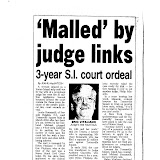
A top Brooklyn assistant district attorney who resigned this week won’t be flagged for ethical breaches in a sensational rape case that’s now on the ropes, DA Charles Hynes said yesterday. Lauren Hersh, who led the sex-trafficking unit under Hynes, quit Wednesday amid allegations prosecutors improperly failed to disclose to defense lawyers that an alleged rape victim recanted in 2010. Yesterday, Hynes said a review of Hersh’s handling of the case showed there wasn’t enough evidence to sanction her. Also, a source also told The Post that other sex-trafficking investigations supervised by Hersh are not in danger of being wrecked. Hersh quit weeks after a high-profile case, in which four black men were indicted for preying on a troubled Orthodox Jewish woman from Crown Heights, began crumbling, with two of the accused rapists being released from jail last month.
RELATED STORY:
Prosecutor Quits Her Job as Rape Case Is Reviewed
The New York By Colin Moynihan and Alan Feuer - May 24, 2012
The head of the sex trafficking unit at the Brooklyn district attorney’s office resigned on Thursday as the agency conducted a review of a controversial rape and prostitution case in Crown Heights that she oversaw last year. The prosecutor, Lauren Hersh, presented the case to a grand jury, which indicted two men last year on charges that they sexually assaulted a girl and forced her to have sex with strangers for money starting when she was 13. Two other men were indicted on rape charges. The case attracted attention because the accuser was a young Orthodox Jewish woman, and the defendants were adult black men in a neighborhood where those two groups coexist but rarely interact.
But last month, serious questions emerged regarding the handling of the case when it was revealed that, before the indictments, the accuser recanted certain allegations involving two of the men in an interview with detectives, a fact that was not shared with defense lawyers for nearly a year. A report from the interview, dated April 1, 2010, indicated that the woman had recanted a statement made the day before, when she told the police that two of the men had beaten her and forced her to have sex. “She states she was not forcibly raped,” the report’s author, a detective in the sex crimes squad, wrote, adding: “She went on to explain to me that she has been having consensual sexual intercourse and performing oral sex with both men for quite some time.” Later, the detective wrote that the woman said she had initially said that she had been raped because one of the men had hit her and had not worn a condom while having sex with her. In April, Justice John P. Walsh of State Supreme Court ordered the release of Darrell Dula, who had been charged with a single court of rape, and Damien Crooks, who had been charged with four counts of rape and two counts of sex trafficking. Both men had been on Rikers Island for 10 months, awaiting trial. The two others, Jamali Brockett, who was charged with rape and compelling prostitution, and his brother, Jawara Brockett, who was charged with rape, remain imprisoned on unrelated charges. The charges against all four men still stand, and prosecutors said they were continuing with the case. Officials in the office of the district attorney, Charles J. Hynes, said last month that prosecutors had simply neglected to request the report containing the recantation from the police, and that when a new prosecutor was assigned to the case she requested the file and turned the exculpatory evidence over as soon as she received it. Elliot Kay, a lawyer for Mr. Crooks, said prosecutors had turned over another batch of evidence in April that included a document produced by the district attorney’s office with a handwritten note referring to a recantation, indicating that prosecutors knew, before Ms. Hersh presented the case to the grand jury, that the accuser had changed her account. The jury indicted Mr. Dula and Mr. Crooks on rape stemming from the episode that the accuser had recanted. During a hearing for Mr. Crooks, Michael F. Vecchione, the head of the rackets bureau of the district attorney’s office, which oversees the sex trafficking unit, told Justice Walsh that the office was reinvestigating every aspect of the case. The district attorney’s office confirmed that Ms. Hersh had resigned, but refused any further comment. Stuart Rubin, a cousin of Ms. Hersh’s who spoke on her behalf said her resignation had no connection to the controversy surrounding the case. “There has never been a finding that Lauren breached an ethical responsibility,” Mr. Rubin said. “She was not asked to resign.” Ms. Hersh joined the district attorney’s office in 2004 after graduating from Brooklyn Law School. She worked in the domestic violence bureau before moving to the rackets division, where she specialized in sex trafficking cases.
Saturday, May 26, 2012


Federal Lawyer-Prosecutors Offer Amnesty
Feds offer amnesty to hundreds of LIRR pension disability scammers
The New York Daily News by Robert Gearty - May 22, 2012
Amnesty offer was sent to more than 1,500 Long Island Rail Road workers who retired early. If they admit making a fraudulent claim by July 6, they won't have to repay their ill-gotten gains, but if they wait until Aug. 10, they would have to return 50% of the money.
Hundreds of LIRR retirees who scammed lucrative disability pensions in a massive $1 billion ripoff can avoid prosecution — and paying back their ill-gotten gains — if they admit guilt under an innovative amnesty program, the feds said Tuesday. The amnesty offer was mailed out to more than 1,500 LIRR workers who were able to double-dip on their pensions after retiring early and submitting a bogus disability claim that was rubber-stamped by the federal Railroad Retirement Board. The offer came as federal prosecutors in Manhattan unsealed a new indictment charging 10 more LIRR retirees with boosting their regular pensions with fraudulent disability benefits. The LIRR is a commuter railroad, not a gravy train,” said Manhattan U.S. Attorney Preet Bharara in announcing the new arrests and the amnesty offer. He said those who come clean and forfeit future disability payments won’t be prosecuted. Under the program, those who cut a deal by July 6 won’t have to return any past disability benefits while those who wait until Aug. 10 will have to return 50%. In October there were 12 arrests — two doctors, the office manager of one of the doctors, two “facilitators” connecting retiring workers to the physicians and seven LIRR retirees. At the time, the FBI encouraged other fraudulent disability pensioners to come forward, but apparently got few takers. FBI New York Director Janice Fedarcyk reiterated Tuesday that it would be better for ex-workers who defrauded the government not to wait. “If you are culpable in this fraud, the voluntary disclosure program is certainly a better choice than crossing your fingers and hoping we won’t find you,” she said. LIRR workers can retire as early as 50 but can’t collect a supplementary pension from the railroad board until age 65 — unless they are disabled. Then they can start collecting right away. Fraudsters who come forward would still be able to keep their regular pensions, prosecutors say. Those busted Tuesday pleaded not guilty in Manhattan Federal Court and were released on $100,000 bond, except for Frank Plaia, 55, of Long Island, who was released on his own recognizance. Prosecutors said Plaia’s disability claim said he was so crippled he could not dress, bathe, do chores or write without difficulty. Yet, they said, he still shoveled snow and operated a snow blower. One of those arrested last year was spotted riding in a 400-mile bike race even though he retired from the LIRR with a spinal disability. rgearty@nydailynews.com
The New York Daily News by Robert Gearty - May 22, 2012
Amnesty offer was sent to more than 1,500 Long Island Rail Road workers who retired early. If they admit making a fraudulent claim by July 6, they won't have to repay their ill-gotten gains, but if they wait until Aug. 10, they would have to return 50% of the money.
Hundreds of LIRR retirees who scammed lucrative disability pensions in a massive $1 billion ripoff can avoid prosecution — and paying back their ill-gotten gains — if they admit guilt under an innovative amnesty program, the feds said Tuesday. The amnesty offer was mailed out to more than 1,500 LIRR workers who were able to double-dip on their pensions after retiring early and submitting a bogus disability claim that was rubber-stamped by the federal Railroad Retirement Board. The offer came as federal prosecutors in Manhattan unsealed a new indictment charging 10 more LIRR retirees with boosting their regular pensions with fraudulent disability benefits. The LIRR is a commuter railroad, not a gravy train,” said Manhattan U.S. Attorney Preet Bharara in announcing the new arrests and the amnesty offer. He said those who come clean and forfeit future disability payments won’t be prosecuted. Under the program, those who cut a deal by July 6 won’t have to return any past disability benefits while those who wait until Aug. 10 will have to return 50%. In October there were 12 arrests — two doctors, the office manager of one of the doctors, two “facilitators” connecting retiring workers to the physicians and seven LIRR retirees. At the time, the FBI encouraged other fraudulent disability pensioners to come forward, but apparently got few takers. FBI New York Director Janice Fedarcyk reiterated Tuesday that it would be better for ex-workers who defrauded the government not to wait. “If you are culpable in this fraud, the voluntary disclosure program is certainly a better choice than crossing your fingers and hoping we won’t find you,” she said. LIRR workers can retire as early as 50 but can’t collect a supplementary pension from the railroad board until age 65 — unless they are disabled. Then they can start collecting right away. Fraudsters who come forward would still be able to keep their regular pensions, prosecutors say. Those busted Tuesday pleaded not guilty in Manhattan Federal Court and were released on $100,000 bond, except for Frank Plaia, 55, of Long Island, who was released on his own recognizance. Prosecutors said Plaia’s disability claim said he was so crippled he could not dress, bathe, do chores or write without difficulty. Yet, they said, he still shoveled snow and operated a snow blower. One of those arrested last year was spotted riding in a 400-mile bike race even though he retired from the LIRR with a spinal disability. rgearty@nydailynews.com
Attorney Arrested in Fraud Case, Attempted Escape
Fort Myers attorney arrested in fraud case attempted escape, authorities say
The Naples News by Jessica Lipscomb - May 23, 2012
Fort Myers, FL - A Fort Myers attorney jumped out of an investigator's car after he was arrested in Collier County by the State Attorney's Office on Wednesday afternoon. His arrest follows a seven-month investigation into economic crimes, officials said. Sebastian John Balliro, 41, tried to escape around 2:45 p.m. near the intersection of Wiggins Pass Road and U.S. 41 North after he was taken into custody, authorities said. Balliro, who was in handcuffs at the time, was taken to an area hospital "for precautionary reasons," said Samantha Syoen, spokeswoman for the State Attorney's Office. Balliro is accused in three separate crimes between October of 2010 and April of 2012: stealing his law partner's identity to fraudulently purchase vehicles; defrauding a client of more than $100,000; and defrauding investors in pain clinics, a Wolfgang Puck franchise and the now-defunct Racks and Tails restaurant, Syoen said in a news release. Investigators estimate Balliro stole $830,000 altogether. Balliro, who also practices law in Fort Lauderdale, faces 10 felony charges out of Lee County, including grand theft and organized scheme to defraud. State investigators also expect to charge Balliro for offenses in Broward County involving "frauds and thefts related to his law practice there," Syoen said. Balliro was admitted to the Florida Bar in 1998, but he was suspended on Sept. 7 and disbarred by the Supreme Court of Florida on April 20, state records show.
The Naples News by Jessica Lipscomb - May 23, 2012
Fort Myers, FL - A Fort Myers attorney jumped out of an investigator's car after he was arrested in Collier County by the State Attorney's Office on Wednesday afternoon. His arrest follows a seven-month investigation into economic crimes, officials said. Sebastian John Balliro, 41, tried to escape around 2:45 p.m. near the intersection of Wiggins Pass Road and U.S. 41 North after he was taken into custody, authorities said. Balliro, who was in handcuffs at the time, was taken to an area hospital "for precautionary reasons," said Samantha Syoen, spokeswoman for the State Attorney's Office. Balliro is accused in three separate crimes between October of 2010 and April of 2012: stealing his law partner's identity to fraudulently purchase vehicles; defrauding a client of more than $100,000; and defrauding investors in pain clinics, a Wolfgang Puck franchise and the now-defunct Racks and Tails restaurant, Syoen said in a news release. Investigators estimate Balliro stole $830,000 altogether. Balliro, who also practices law in Fort Lauderdale, faces 10 felony charges out of Lee County, including grand theft and organized scheme to defraud. State investigators also expect to charge Balliro for offenses in Broward County involving "frauds and thefts related to his law practice there," Syoen said. Balliro was admitted to the Florida Bar in 1998, but he was suspended on Sept. 7 and disbarred by the Supreme Court of Florida on April 20, state records show.
Friday, May 25, 2012
Lawyer-Prosecutor Censured for Criticism of Judge in Pending Case
Albany D.A. Censured for Criticism of Judge in a Pending Case
The New York Law Journal by John Caher - May 25, 2012
ALBANY, NY - An upstate appellate panel has censured Albany County District Attorney P. David Soares for his "reckless and misleading" criticism of a local judge who had removed him from a case and appointed a special prosecutor. The Appellate Division, Fourth Department, said in a decision posted yesterday that Soares' public remarks about Albany County Judge Stephen Herrick violated the Rules of Professional Conduct. It also noted that Soares has twice been privately admonished "for making improper and prejudicial public statements regarding pending criminal matters." The censure resulted from an e-mail Soares sent reporters in 2010, after Herrick had dismissed an indictment and referred the matter to a special prosecutor. Herrick removed Soares from the case after the defendants sued the district attorney in federal court alleging unlawful arrest, defamation and other causes of action. The County Court judge appointed a special prosecutor after finding that Soares then had a "personal, professional and financial stake in the outcome of both the civil and criminal cases." Herrick was later reversed by the Appellate Division, Third Department, which expressed concern that a "dangerous precedent" would be set if defendants could preclude prosecutors by suing them.
After Herrick removed Soares, the district attorney released the following statement: "Judge Herrick's decision is a get-out-of-jail-free card for every criminal defendant in New York State. His message to defendants is: 'if your DA is being too tough on you, sue him, and you can get a new one.' The Court's decision undermines the criminal justice system and the DAs who represent the interest of the people they serve. We are seeking immediate relief from Judge Herrick's decision and to close this dangerous loophole that he created." A complaint was lodged with the Third Department, and then transferred to the Fourth Department. The reason for the transfer was not stated. However, the chief attorney for the Third Department's Committee on Professional Standards, Peter Torncello, is a former assistant district attorney who was fired by Soares. In a decision dated May 9 and posted yesterday, the Fourth Department said Soares violated Rule 8.4 (d) of the Rules of Professional Conduct by engaging in conduct that was prejudicial to the administration of justice. "Inasmuch as Judge Herrick appointed a special district attorney and granted that prosecutor leave to re-present the dismissed indictment, we conclude that respondent's statement that Judge Herrick's determination constituted a 'get-out-of-jail-free card for every criminal defendant in New York State' was objectively false," the Fourth Department said in an opinion joined by Justices John Centra, Erin Peradotto, Stephen Lindley and Salvatore Martoche. "For the same reasons, we conclude that his statement that Judge Herrick created a 'dangerous loophole' was reckless and misleading." Soares' communications director, Heather Orth, said in a statement that the district attorney "respects and accepts the Rochester court's decision, for he made a poor choice of words." She also confirmed that Soares had received two letters of admonition for public comments he made in other criminal matters.
Lee Kindlon, an attorney with Kindlon & Shanks in Albany who is challenging Soares for the Democratic nomination this fall, said in an interview that the censure evinces a "lack of respect and professionalism" by the incumbent. "It is a black eye for the district attorney's office and the criminal justice system in Albany County," Kindlon said. "I know a lot of men and women work very hard every day to promote the interests of criminal justice in Albany County, and Soares is on his own program." The case that resulted in the censure stemmed from an investigation into the allegedly illegal sale of prescription drugs to Albany County residents by the operators of a Florida pharmacy. After some of the defendants sued Soares and Herrick removed him from the case, the Third Department returned the matter to the Albany County district attorney and a federal court in Florida dismissed the civil lawsuit. But the Fourth Department said the "subsequent determinations" were not "particularly relevant to the legal issues in this proceeding." Orth said the criminal case is going forward. "The district attorney promised the citizens of Albany County that he would stop the pipeline of illegal prescription drugs into our community and as such will continue to prosecute all illegal drug distributors," Orth said. "The good news is that he has learned a lesson on the need for tempered language regarding court rulings, while the People will have an opportunity for their case to go forward against the illegal distribution of prescription drugs. Therefore, he applauds the Appellate Division's ruling in both Rochester on process and Albany in substance. The rule of law won out in both cases." John Caher can be contacted at jcaher@alm.com.
The New York Law Journal by John Caher - May 25, 2012
ALBANY, NY - An upstate appellate panel has censured Albany County District Attorney P. David Soares for his "reckless and misleading" criticism of a local judge who had removed him from a case and appointed a special prosecutor. The Appellate Division, Fourth Department, said in a decision posted yesterday that Soares' public remarks about Albany County Judge Stephen Herrick violated the Rules of Professional Conduct. It also noted that Soares has twice been privately admonished "for making improper and prejudicial public statements regarding pending criminal matters." The censure resulted from an e-mail Soares sent reporters in 2010, after Herrick had dismissed an indictment and referred the matter to a special prosecutor. Herrick removed Soares from the case after the defendants sued the district attorney in federal court alleging unlawful arrest, defamation and other causes of action. The County Court judge appointed a special prosecutor after finding that Soares then had a "personal, professional and financial stake in the outcome of both the civil and criminal cases." Herrick was later reversed by the Appellate Division, Third Department, which expressed concern that a "dangerous precedent" would be set if defendants could preclude prosecutors by suing them.
After Herrick removed Soares, the district attorney released the following statement: "Judge Herrick's decision is a get-out-of-jail-free card for every criminal defendant in New York State. His message to defendants is: 'if your DA is being too tough on you, sue him, and you can get a new one.' The Court's decision undermines the criminal justice system and the DAs who represent the interest of the people they serve. We are seeking immediate relief from Judge Herrick's decision and to close this dangerous loophole that he created." A complaint was lodged with the Third Department, and then transferred to the Fourth Department. The reason for the transfer was not stated. However, the chief attorney for the Third Department's Committee on Professional Standards, Peter Torncello, is a former assistant district attorney who was fired by Soares. In a decision dated May 9 and posted yesterday, the Fourth Department said Soares violated Rule 8.4 (d) of the Rules of Professional Conduct by engaging in conduct that was prejudicial to the administration of justice. "Inasmuch as Judge Herrick appointed a special district attorney and granted that prosecutor leave to re-present the dismissed indictment, we conclude that respondent's statement that Judge Herrick's determination constituted a 'get-out-of-jail-free card for every criminal defendant in New York State' was objectively false," the Fourth Department said in an opinion joined by Justices John Centra, Erin Peradotto, Stephen Lindley and Salvatore Martoche. "For the same reasons, we conclude that his statement that Judge Herrick created a 'dangerous loophole' was reckless and misleading." Soares' communications director, Heather Orth, said in a statement that the district attorney "respects and accepts the Rochester court's decision, for he made a poor choice of words." She also confirmed that Soares had received two letters of admonition for public comments he made in other criminal matters.
Lee Kindlon, an attorney with Kindlon & Shanks in Albany who is challenging Soares for the Democratic nomination this fall, said in an interview that the censure evinces a "lack of respect and professionalism" by the incumbent. "It is a black eye for the district attorney's office and the criminal justice system in Albany County," Kindlon said. "I know a lot of men and women work very hard every day to promote the interests of criminal justice in Albany County, and Soares is on his own program." The case that resulted in the censure stemmed from an investigation into the allegedly illegal sale of prescription drugs to Albany County residents by the operators of a Florida pharmacy. After some of the defendants sued Soares and Herrick removed him from the case, the Third Department returned the matter to the Albany County district attorney and a federal court in Florida dismissed the civil lawsuit. But the Fourth Department said the "subsequent determinations" were not "particularly relevant to the legal issues in this proceeding." Orth said the criminal case is going forward. "The district attorney promised the citizens of Albany County that he would stop the pipeline of illegal prescription drugs into our community and as such will continue to prosecute all illegal drug distributors," Orth said. "The good news is that he has learned a lesson on the need for tempered language regarding court rulings, while the People will have an opportunity for their case to go forward against the illegal distribution of prescription drugs. Therefore, he applauds the Appellate Division's ruling in both Rochester on process and Albany in substance. The rule of law won out in both cases." John Caher can be contacted at jcaher@alm.com.
'Highly Qualified' Make List For Top Judicial Post
At Least 8 Found 'Highly Qualified' for Presiding Justice, Sources Say
The New York Law Journal by John Caher - May 25, 2012
At least eight judges are apparently in the running for presiding justice of the Appellate Division, Second Department, as a screening panel has forwarded to Governor Andrew Cuomo the names of judges it found "highly qualified" to succeed A. Gail Prudenti as leader of the Brooklyn appeals court. Several sources close to the process said the screening panel has advanced Acting Presiding Justice William Mastro of the Second Department and five of his colleagues: Leonard Austin, Cheryl Chambers, Randall Eng, Robert Miller and Peter Skelos. In addition, at least two First Department justices, Angela Mazzarelli and David Friedman, were recommended, sources said. The governor's counsel's office has concluded interviewing candidates with an eye toward making an appointment in June, a source said. The Second Department has been without a permanent presiding justice since last fall, when Prudenti became chief administrative judge and Mastro, as senior associate, automatically took over as acting presiding justice. The Brooklyn-based court, which is the busiest appellate court in the state, is the only one of the four departments that continues to operate with an acting presiding justice. In early April, Cuomo appointed Karen Peters as presiding justice of the Third Department to replace Acting Presiding Justice Thomas Mercure (NYLJ, April 6). Meanwhile, all four Appellate Division departments remain shorthanded, especially the Fourth Department in Rochester that is down 25 percent of its judges with three of 12 spots vacant. The First and Second departments are each down three of their 20 and 22 judges, respectively, and the Third is operating with one short of its full contingent of 12. Appellate Division justices are selected by the governor from the ranks of elected Supreme Court justices; acting Supreme Court justices are not eligible. The governor must choose from among the candidates found highly qualified by 13-member screening panels in each department. Douglas Dunham of Skadden, Arps, Slate, Meagher & Flom chairs the Second Department screening panel. John Caher can be contacted at jcaher@alm.com.
The New York Law Journal by John Caher - May 25, 2012
At least eight judges are apparently in the running for presiding justice of the Appellate Division, Second Department, as a screening panel has forwarded to Governor Andrew Cuomo the names of judges it found "highly qualified" to succeed A. Gail Prudenti as leader of the Brooklyn appeals court. Several sources close to the process said the screening panel has advanced Acting Presiding Justice William Mastro of the Second Department and five of his colleagues: Leonard Austin, Cheryl Chambers, Randall Eng, Robert Miller and Peter Skelos. In addition, at least two First Department justices, Angela Mazzarelli and David Friedman, were recommended, sources said. The governor's counsel's office has concluded interviewing candidates with an eye toward making an appointment in June, a source said. The Second Department has been without a permanent presiding justice since last fall, when Prudenti became chief administrative judge and Mastro, as senior associate, automatically took over as acting presiding justice. The Brooklyn-based court, which is the busiest appellate court in the state, is the only one of the four departments that continues to operate with an acting presiding justice. In early April, Cuomo appointed Karen Peters as presiding justice of the Third Department to replace Acting Presiding Justice Thomas Mercure (NYLJ, April 6). Meanwhile, all four Appellate Division departments remain shorthanded, especially the Fourth Department in Rochester that is down 25 percent of its judges with three of 12 spots vacant. The First and Second departments are each down three of their 20 and 22 judges, respectively, and the Third is operating with one short of its full contingent of 12. Appellate Division justices are selected by the governor from the ranks of elected Supreme Court justices; acting Supreme Court justices are not eligible. The governor must choose from among the candidates found highly qualified by 13-member screening panels in each department. Douglas Dunham of Skadden, Arps, Slate, Meagher & Flom chairs the Second Department screening panel. John Caher can be contacted at jcaher@alm.com.
Judge Recuses Over Friendship With Ex-Police Commissioner
Judge Recuses Over Friendship With Ex-Police Commissioner
The New York Law Journal by Andrew Keshner - May 25, 2012
A judge yesterday recused himself from the criminal trial of three retired Nassau County police officers in order to avoid an "appearance of impropriety" due to his friendship with the ex-police commissioner. Nassau County Court Judge John Kase, the court's supervising judge, said he would not preside over the trial of the three men who were indicted for allegedly conspiring to prevent the arrest of the son of a donor to the police department. Reading a statement from the bench during a court appearance in People v. Flanagan, 338N/12, Kase noted he has been a friend of former Police Commissioner Lawrence Mulvey for the past five years and has been "in his company at professional as well as social events." Mulvey was the police commissioner at the time of the officers' alleged crime. Noting that "transparency and trust" in the legal process is "of paramount importance," Kase said, "The mere appearance of impropriety is as strong a reason for recusal as impropriety itself. Therefore, I believe that my presiding over this case could create an appearance of impropriety." The case has been reassigned to Nassau County Court Judge George Peck. The three officers are William Flanagan, former second deputy commissioner, whose charges include receiving a reward for official misconduct. Charges against John Hunter, former deputy chief inspector, include two counts of sixth-degree official misconduct and conspiracy. Alan Sharpe, a former detective sergeant, faces counts including offering a false instrument for filing in the second degree.
The New York Law Journal by Andrew Keshner - May 25, 2012
A judge yesterday recused himself from the criminal trial of three retired Nassau County police officers in order to avoid an "appearance of impropriety" due to his friendship with the ex-police commissioner. Nassau County Court Judge John Kase, the court's supervising judge, said he would not preside over the trial of the three men who were indicted for allegedly conspiring to prevent the arrest of the son of a donor to the police department. Reading a statement from the bench during a court appearance in People v. Flanagan, 338N/12, Kase noted he has been a friend of former Police Commissioner Lawrence Mulvey for the past five years and has been "in his company at professional as well as social events." Mulvey was the police commissioner at the time of the officers' alleged crime. Noting that "transparency and trust" in the legal process is "of paramount importance," Kase said, "The mere appearance of impropriety is as strong a reason for recusal as impropriety itself. Therefore, I believe that my presiding over this case could create an appearance of impropriety." The case has been reassigned to Nassau County Court Judge George Peck. The three officers are William Flanagan, former second deputy commissioner, whose charges include receiving a reward for official misconduct. Charges against John Hunter, former deputy chief inspector, include two counts of sixth-degree official misconduct and conspiracy. Alan Sharpe, a former detective sergeant, faces counts including offering a false instrument for filing in the second degree.
Thursday, May 24, 2012
A Court Covers Up
A Court Covers Up
The New York Times - OPINION - May 24, 2012
The Obama administration has added to its string of victories in a tawdry pursuit — making overly expansive claims of secrecy and executive power to deny full disclosure of torture and other abuses of prisoners committed during the George W. Bush administration. A three-judge panel of the United States Court of Appeals for the Second Circuit in New York has upheld the administration’s claim that cables describing the Central Intelligence Agency’s use of waterboarding and a photograph of a “high value” detainee, Abu Zubaydah, taken during the time he was subjected to repeated waterboarding, are exempt from disclosure under the Freedom of Information Act, or FOIA. The new decision came as part of a long-running lawsuit brought by the American Civil Liberties Union and other rights groups that are seeking records related to detainee mistreatment. Written by Judge Richard Wesley, the decision is too accepting of the government’s weak claim that revealing material redacted from the cables, along with the photo, would harm national security. The court found that FOIA’s exemption for “intelligence methods” applied even though the brutal conduct illuminated by these records is considered illegal by President Obama and a host of laws and treaties and is not covered by the C.I.A.’s charter. The court also said the C.I.A. was justified in withholding two passages in Justice Department memos that appear to concern the origins of the Bush torture program. The C.I.A. is, generally, entitled to shield legitimate intelligence sources and methods. But the public’s interest in disclosure in this case was especially strong. And, as the A.C.L.U. argued, unlawful waterboarding is not properly an intelligence method within the scope of the FOIA disclosure exemptions. The government argued, and the judges agreed, that the photo of Mr. Zubaydah would reveal the detainee’s condition after torture. That is a compelling argument for its release. The judges should have given the government’s overwrought claims of national security and secrecy special scrutiny, not extreme deference.
The New York Times - OPINION - May 24, 2012
The Obama administration has added to its string of victories in a tawdry pursuit — making overly expansive claims of secrecy and executive power to deny full disclosure of torture and other abuses of prisoners committed during the George W. Bush administration. A three-judge panel of the United States Court of Appeals for the Second Circuit in New York has upheld the administration’s claim that cables describing the Central Intelligence Agency’s use of waterboarding and a photograph of a “high value” detainee, Abu Zubaydah, taken during the time he was subjected to repeated waterboarding, are exempt from disclosure under the Freedom of Information Act, or FOIA. The new decision came as part of a long-running lawsuit brought by the American Civil Liberties Union and other rights groups that are seeking records related to detainee mistreatment. Written by Judge Richard Wesley, the decision is too accepting of the government’s weak claim that revealing material redacted from the cables, along with the photo, would harm national security. The court found that FOIA’s exemption for “intelligence methods” applied even though the brutal conduct illuminated by these records is considered illegal by President Obama and a host of laws and treaties and is not covered by the C.I.A.’s charter. The court also said the C.I.A. was justified in withholding two passages in Justice Department memos that appear to concern the origins of the Bush torture program. The C.I.A. is, generally, entitled to shield legitimate intelligence sources and methods. But the public’s interest in disclosure in this case was especially strong. And, as the A.C.L.U. argued, unlawful waterboarding is not properly an intelligence method within the scope of the FOIA disclosure exemptions. The government argued, and the judges agreed, that the photo of Mr. Zubaydah would reveal the detainee’s condition after torture. That is a compelling argument for its release. The judges should have given the government’s overwrought claims of national security and secrecy special scrutiny, not extreme deference.
Ineffective Assistance of Counsel by Disbarred Attorney Matters Little
Circuit Rejects Bid for Habeas Despite Disbarred Lawyer's Role
The New York Law Journal by Mark Hamblett - May 24, 2012
A defendant who has an attorney of record but relies on a disbarred lawyer as his de facto counsel cannot claim automatic ineffective assistance of counsel under the Sixth Amendment, the U.S. Court of Appeals for the Second Circuit ruled yesterday. Although the circuit used Elfgeeh v. United States, 10-4498, to extend the rule that non-lawyer legal assistance is per se ineffective assistance given by disbarred lawyers, it refused to allow Abad Elfgeeh to invoke the rule because he also took advice from a licensed attorney who signed court papers and made all court appearances on his behalf. Elfgeeh relied on the advice of Burton Pugach, who was disbarred in 1960 for hiring three men to throw lye in the face of his ex-girlfriend, Linda Riss, leaving her with severe injuries and nearly blind.
Elfgeeh was indicted in 2003 for operating and conspiring to operate a money transmitting business without a license. He was initially represented by Dawn Cardi, who was appointed under the Criminal Justice Act. Cardi filed a motion to suppress evidence and when that motion was denied, suggested Elfgeeh plead guilty. He did so in October 2003. A friend then recommended that Elfgeeh turn to Pugach and after a meeting, Pugach advised him that the government had a weak case and he should move to vacate the plea. Pugach told Elfgeeh it would cost $10,000 to make the motion. He accepted $500 for the initial consultation and another $500 when Elfgeeh gave him the file on the case. When Pugach visited Elfgeeh a few days later to collect the fee, he told him to make the check out to Frank Hancock, a solo practitioner for whom Pugach worked as a paralegal and who would later be disbarred for helping Pugach engage in the unauthorized practice of law. Elfgeeh and Pugach met with Hancock at his Queens office. Pugach again suggested withdrawing the plea, but Hancock advised against it. Pugach prevailed, however, and Hancock contacted Cardi to tell her he had been retained by Elfgeeh. Hancock filed the motion to vacate the plea in February 2004. While the motion was denied, the district court sua sponte vacated the plea because a magistrate judge had failed to properly advise Elfgeeh of the maximum term he could serve if he were sentenced consecutively on the counts charged. The government then filed a superceding indictment adding a charge for structuring transactions to evade reporting requirements under 31 U.S.C. §5324. Elfgeeh continued to meet with Pugach and Hancock and he later said Pugach did most of the talking. Hancock continued to sign documents and appear in court. Elfgeeh was convicted on all counts and sentenced to serve 15 years and eight months in prison. He would have gotten roughly 90 months had he stuck by the original plea deal. The degree to which Pugach continued to practice law was the subject of rumor in the Queens legal community that came to the surface in 2008, when Hancock was disbarred by the Appellate Division, Second Department, for helping Pugach engage in the unauthorized practice of law, including his work on the Elfgeeh case.
The "record reveals" that Hancock "afforded so little regard to his law license as to allow a disbarred felon to use his name freely on court papers to advertise himself as his paralegal," the Second Department said in Matter of Hancock, 06-02769 (NYLJ, Sept. 23, 2008). Elfgeeh's petition for a writ of habeas corpus was denied by Eastern District Judge Sterling Johnson and he appealed to the Second Circuit, where Judges Ralph Winter, Renna Raggi and Denny Chin heard oral argument on Jan. 31. In yesterday's opinion, Winter examined the two-pronged rule on ineffective assistance in Strickland v. Washington, 466 U.S. 668 (1984), which requires that counsel's performance first be so deficient that it is not "within the range of competence demanded of attorneys" and second that the attorney's deficiency was prejudicial to the defense. However, he said, "When a defendant has been represented by someone who has never been licensed to practice law, that representation is per se ineffective and thus not need satisfy Strickland's dual requirements." The panel concluded that its "rationale for a per se ineffectiveness rule applies to representation by an individual who, before the representation in question, has been disbarred in all jurisdictions where he or she was once admitted," Winter said. "In such circumstances, the defendant lacks licensed representation, and a disbarred attorney has as much, or more, to fear from the court or prosecution discovering counsel's violation of the law against the unauthorized practice of law as one who has never been licensed." The judge said a per se ineffectiveness rule "also avoids the need to scrutinize every detail of the representative's conduct for the presence of an impermissible motive of preserving the unlicensed representative's secret at the expense of serving the best interests of the defendant." But these reasons, he said, "offer no basis for applying a per se ineffectiveness rule where, as here, the defendant has a licensed attorney of record who signs all relevant papers and makes all relevant court appearances." There was another rationale for not combining a per se ineffectiveness rule with a de facto attorney claim, he said, as defendants such as Elfgeeh "would have great incentive to claim reliance on unlicensed sources." "The extent of such reliance would almost always be indeterminable, and the claimed reliance would, in and of itself, tend to constitute the advisor as a de facto attorney," he said. James Branden argued for Elfgeeh. Branden said yesterday he will file a petition for a writ of certiorari. "Mr. Elfgeeh was really disserved by the legal community and the result is that he's doing approximately double the term of imprisonment he would have otherwise served," Branden said. "Mr. Pugach acted as his lawyer and the only reason Hancock was in the case was because Pugach was paying him, as he had done in other cases. Hancock was acting as a beard for the person who was actually providing the legal advice and apparently there's no remedy for that and I think that's a shame." Eastern District Assistant U.S. Attorney Pamela Chen argued for the government. Mark Hamblett can be contacted at mhamblett@alm.com.
The New York Law Journal by Mark Hamblett - May 24, 2012
A defendant who has an attorney of record but relies on a disbarred lawyer as his de facto counsel cannot claim automatic ineffective assistance of counsel under the Sixth Amendment, the U.S. Court of Appeals for the Second Circuit ruled yesterday. Although the circuit used Elfgeeh v. United States, 10-4498, to extend the rule that non-lawyer legal assistance is per se ineffective assistance given by disbarred lawyers, it refused to allow Abad Elfgeeh to invoke the rule because he also took advice from a licensed attorney who signed court papers and made all court appearances on his behalf. Elfgeeh relied on the advice of Burton Pugach, who was disbarred in 1960 for hiring three men to throw lye in the face of his ex-girlfriend, Linda Riss, leaving her with severe injuries and nearly blind.
Elfgeeh was indicted in 2003 for operating and conspiring to operate a money transmitting business without a license. He was initially represented by Dawn Cardi, who was appointed under the Criminal Justice Act. Cardi filed a motion to suppress evidence and when that motion was denied, suggested Elfgeeh plead guilty. He did so in October 2003. A friend then recommended that Elfgeeh turn to Pugach and after a meeting, Pugach advised him that the government had a weak case and he should move to vacate the plea. Pugach told Elfgeeh it would cost $10,000 to make the motion. He accepted $500 for the initial consultation and another $500 when Elfgeeh gave him the file on the case. When Pugach visited Elfgeeh a few days later to collect the fee, he told him to make the check out to Frank Hancock, a solo practitioner for whom Pugach worked as a paralegal and who would later be disbarred for helping Pugach engage in the unauthorized practice of law. Elfgeeh and Pugach met with Hancock at his Queens office. Pugach again suggested withdrawing the plea, but Hancock advised against it. Pugach prevailed, however, and Hancock contacted Cardi to tell her he had been retained by Elfgeeh. Hancock filed the motion to vacate the plea in February 2004. While the motion was denied, the district court sua sponte vacated the plea because a magistrate judge had failed to properly advise Elfgeeh of the maximum term he could serve if he were sentenced consecutively on the counts charged. The government then filed a superceding indictment adding a charge for structuring transactions to evade reporting requirements under 31 U.S.C. §5324. Elfgeeh continued to meet with Pugach and Hancock and he later said Pugach did most of the talking. Hancock continued to sign documents and appear in court. Elfgeeh was convicted on all counts and sentenced to serve 15 years and eight months in prison. He would have gotten roughly 90 months had he stuck by the original plea deal. The degree to which Pugach continued to practice law was the subject of rumor in the Queens legal community that came to the surface in 2008, when Hancock was disbarred by the Appellate Division, Second Department, for helping Pugach engage in the unauthorized practice of law, including his work on the Elfgeeh case.
The "record reveals" that Hancock "afforded so little regard to his law license as to allow a disbarred felon to use his name freely on court papers to advertise himself as his paralegal," the Second Department said in Matter of Hancock, 06-02769 (NYLJ, Sept. 23, 2008). Elfgeeh's petition for a writ of habeas corpus was denied by Eastern District Judge Sterling Johnson and he appealed to the Second Circuit, where Judges Ralph Winter, Renna Raggi and Denny Chin heard oral argument on Jan. 31. In yesterday's opinion, Winter examined the two-pronged rule on ineffective assistance in Strickland v. Washington, 466 U.S. 668 (1984), which requires that counsel's performance first be so deficient that it is not "within the range of competence demanded of attorneys" and second that the attorney's deficiency was prejudicial to the defense. However, he said, "When a defendant has been represented by someone who has never been licensed to practice law, that representation is per se ineffective and thus not need satisfy Strickland's dual requirements." The panel concluded that its "rationale for a per se ineffectiveness rule applies to representation by an individual who, before the representation in question, has been disbarred in all jurisdictions where he or she was once admitted," Winter said. "In such circumstances, the defendant lacks licensed representation, and a disbarred attorney has as much, or more, to fear from the court or prosecution discovering counsel's violation of the law against the unauthorized practice of law as one who has never been licensed." The judge said a per se ineffectiveness rule "also avoids the need to scrutinize every detail of the representative's conduct for the presence of an impermissible motive of preserving the unlicensed representative's secret at the expense of serving the best interests of the defendant." But these reasons, he said, "offer no basis for applying a per se ineffectiveness rule where, as here, the defendant has a licensed attorney of record who signs all relevant papers and makes all relevant court appearances." There was another rationale for not combining a per se ineffectiveness rule with a de facto attorney claim, he said, as defendants such as Elfgeeh "would have great incentive to claim reliance on unlicensed sources." "The extent of such reliance would almost always be indeterminable, and the claimed reliance would, in and of itself, tend to constitute the advisor as a de facto attorney," he said. James Branden argued for Elfgeeh. Branden said yesterday he will file a petition for a writ of certiorari. "Mr. Elfgeeh was really disserved by the legal community and the result is that he's doing approximately double the term of imprisonment he would have otherwise served," Branden said. "Mr. Pugach acted as his lawyer and the only reason Hancock was in the case was because Pugach was paying him, as he had done in other cases. Hancock was acting as a beard for the person who was actually providing the legal advice and apparently there's no remedy for that and I think that's a shame." Eastern District Assistant U.S. Attorney Pamela Chen argued for the government. Mark Hamblett can be contacted at mhamblett@alm.com.
Wednesday, May 23, 2012
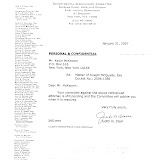
Corrupt Manhattan 'Ethics' Attorney Sherry K. Cohen is Back
Corrupt Manhattan 'Ethics' Attorney Sherry K. Cohen Available for Hire
May 23, 2012
In the 'Personal Notes on Lawyers' section of The New York Law Journal, published February 24, 2012, the legal community was advised that, "Sherry K. Cohen has joined the Law Firm of Richard M. Maltz as counsel focusing on attorney disciplinary cases, ethics consultations, admission for law graduates and attorney reinstatements. She was the first deputy chief counsel to the Departmental Disciplinary Committee."
On March 5, 2012, a New York Law Journal private ad/announcement was printed, "The Law Firm of Richard M. Maltz, PLLC is very pleased to announce that SHERRY K. COHEN former first deputy chief counsel to the Departmental Disciplinary Committee has joined the firm as counsel - Ms. Cohen will focus her practice on attorney disciplinary cases, ethics consultations, admission for law graduates and attorney reinstatements. Ms. Cohen will also work with Richard M. Maltz, Esq. on partnership issues and litigation between lawyers and their former law firms; litigation between clients and lawyers; ethics opinions; sanction and disqualification motions and, law firm risk management issues. - Sherry K. Cohen, Esq. Richard M. Maltz, PLLC 488 Madison Avenue, 10th Floor New York, NY 10022 212.705.4804 skcohen@maltz-law.com"
See Related Stories:
May 23, 2012
In the 'Personal Notes on Lawyers' section of The New York Law Journal, published February 24, 2012, the legal community was advised that, "Sherry K. Cohen has joined the Law Firm of Richard M. Maltz as counsel focusing on attorney disciplinary cases, ethics consultations, admission for law graduates and attorney reinstatements. She was the first deputy chief counsel to the Departmental Disciplinary Committee."
On March 5, 2012, a New York Law Journal private ad/announcement was printed, "The Law Firm of Richard M. Maltz, PLLC is very pleased to announce that SHERRY K. COHEN former first deputy chief counsel to the Departmental Disciplinary Committee has joined the firm as counsel - Ms. Cohen will focus her practice on attorney disciplinary cases, ethics consultations, admission for law graduates and attorney reinstatements. Ms. Cohen will also work with Richard M. Maltz, Esq. on partnership issues and litigation between lawyers and their former law firms; litigation between clients and lawyers; ethics opinions; sanction and disqualification motions and, law firm risk management issues. - Sherry K. Cohen, Esq. Richard M. Maltz, PLLC 488 Madison Avenue, 10th Floor New York, NY 10022 212.705.4804 skcohen@maltz-law.com"
See Related Stories:
- Corrupt Ethics Lawyers Friedberg and Cohen Forced to Retire
- Concealing the Truth at the Attorney Ethics Committee
- New York Law Journal on Whitewashed Ethics Complaints
- Corrupt Ethics Attorney Sherry K. Cohen Departing, Finally
- Manhattan Ethics Committee Whitewashed Dreier Complaints
- NY Times Calls Ethics Scandal a Cover-Up
Fairer Ways to Choose Judges
Fairer Ways to Choose Judges
The New York Times - EDITORIAL - May 23, 2012
More than two dozen states are holding elections for judges on their top courts this year, with millions of dollars expected to pour into those races. Among the states with the highest judicial campaign spending is Michigan, where three justices, running in partisan primaries, will be elected to a seven-member court. To reduce partisanship and repair damage to the court’s reputation and integrity, an independent task force in Michigan, convened by a state justice and a federal appeals court judge, recently proposed crucial reforms, which include model elements for other states. “The 2010 campaign season for the Michigan Supreme Court,” the report notes, “was the most expensive and most secretive in the nation,” but the problem goes back more than a decade. Under Michigan law, spending by independent groups in judicial elections does not need to be disclosed. Since 2000, when special interest groups with innocuous-sounding names began spending money on electioneering television ads, the average spending by all candidates for Supreme Court seats has reached $3.5 million, with half the total spending, or $20.8 million, being from undisclosed sources. This has made it impossible for litigants to know when they should ask for recusal by a justice since they don’t know if their case involves a party that supported the justice’s campaign. Increased spending on campaigns also amplifies the public’s perception of judicial partisanship. Justices have to seek a party nomination or be selected by the governor, who fills temporary vacancies, with no input from the Legislature. The task force has recommended legislation to require all financing for campaign ads in Supreme Court races be disclosed and that the partisan nominating process be replaced by a nonpartisan system with open primaries. Regrettably, it did not reach consensus on having an independent commission nominate justices based on merit. That would have been the best way to end the profoundly harmful effect money has had on the Michigan court.
The New York Times - EDITORIAL - May 23, 2012
More than two dozen states are holding elections for judges on their top courts this year, with millions of dollars expected to pour into those races. Among the states with the highest judicial campaign spending is Michigan, where three justices, running in partisan primaries, will be elected to a seven-member court. To reduce partisanship and repair damage to the court’s reputation and integrity, an independent task force in Michigan, convened by a state justice and a federal appeals court judge, recently proposed crucial reforms, which include model elements for other states. “The 2010 campaign season for the Michigan Supreme Court,” the report notes, “was the most expensive and most secretive in the nation,” but the problem goes back more than a decade. Under Michigan law, spending by independent groups in judicial elections does not need to be disclosed. Since 2000, when special interest groups with innocuous-sounding names began spending money on electioneering television ads, the average spending by all candidates for Supreme Court seats has reached $3.5 million, with half the total spending, or $20.8 million, being from undisclosed sources. This has made it impossible for litigants to know when they should ask for recusal by a justice since they don’t know if their case involves a party that supported the justice’s campaign. Increased spending on campaigns also amplifies the public’s perception of judicial partisanship. Justices have to seek a party nomination or be selected by the governor, who fills temporary vacancies, with no input from the Legislature. The task force has recommended legislation to require all financing for campaign ads in Supreme Court races be disclosed and that the partisan nominating process be replaced by a nonpartisan system with open primaries. Regrettably, it did not reach consensus on having an independent commission nominate justices based on merit. That would have been the best way to end the profoundly harmful effect money has had on the Michigan court.
The Public Trial of Justice Roberts
The public trial of Justice Roberts
The Washington Post by Kathleen Parker - May 22, 2012
Novelist John Grisham could hardly spin a more provocative fiction: The president and his surrogates mount an aggressive campaign to intimidate the chief justice of the United States, implying ruin and ridicule should he fail to vote in a pivotal case according to the ruling political party’s wishes. If only it were fiction. The justice is, of course, John Roberts and the case involves the Affordable Care Act (ACA), a.k.a. Obamacare, which would be affordable only if the Supreme Court upholds the individual mandate requiring all Americans to buy health insurance. The left’s narrative goes as follows: If the justices side with the Obama administration, they will be viewed as brilliant and nonpartisan. If the reverse occurs, why then, the justices are partisan, judicial activists who have delegitimized the court. Writing in the New Republic, Jeffrey Rosen laid it out for Roberts, whose vote is likely to be decisive: “In addition to deciding what kind of chief justice he wants to be, he has to decide what kind of legal conservatism he wants to embrace. Of course, if the Roberts court strikes down health care reform by a 5-4 vote, then the chief justice’s stated goal of presiding over a less divisive court will be viewed as an irredeemable failure.” Lest there be any lingering confusion, permit me: Vote our way, Chief Justice Roberts, or you will go down in history as having abrogated your duty; your reputation will be destroyed; and the country will hold you accountable for not only withholding health care from the American people but also for rolling back the New Deal. In so many words.
Wait, the New Deal? Yes, according to many on the left, including Rosen, if the court rolls back Obamacare, it will also roll back the New Deal. Legal scholars on the right insist otherwise, noting that lawyers for the plaintiffs were explicit in denying any interest in overturning precedents. I leave this debate to others more worthy, but the idea that decisions must be popular and/or bipartisan is silly on its face. Just because something is popular doesn’t make it “right” or legally correct. And, difficult as this is to accept in our Twitter culture, Supreme Court justices needn’t be popular. Nevertheless, the left is pushing many such non-legal arguments, including that the court shouldn’t overturn a “popular” legislative act. Even the president advanced this argument as recently as last month, although the ACA is not, in fact, all that popular. Speaking in the Rose Garden, Obama said: “Ultimately, I’m confident that the Supreme Court will not take what would be an unprecedented, extraordinary step of overturning a law that was passed by a strong majority of a democratically elected Congress.” Senate Judiciary Chairman Pat Leahy also recently publicly lobbied Roberts, saying he trusts that the chief justice has “a strong institutional sense of the proper role of the judicial branch.” And, “it would be extraordinary for the Supreme Court not to defer to Congress in this matter that so clearly affects interstate commerce.” This not-so-stealth campaign to influence the Supreme Court is obnoxious, if not unethical. It is also factually challenged. Overturning a law would not be unprecedented or extraordinary, as any first-year law student could tell you, but don’t take my word for it. Harvard University’s Laurence Tribe, one of Obama’s professors and a leading liberal scholar of constitutional law, said that his former student “obviously misspoke.” It happens. Yet criticizing the Supreme Court is a consistent refrain from Obama, who began his presidency by scolding the justices. During his first State of the Union address, Obama broke decorum by criticizing the justicesfor their Citizens United ruling, saying the court had “reversed a century of law that I believe will open the floodgates for special interests — including foreign corporations — to spend without limit in our elections.” Talk about extraordinary. Publicly chastising the court — and now taunting Roberts specifically — seems to have two purposes. One is to get under Roberts’s skin in the hopes that he’ll rule the “correct,” if not necessarily “legally correct,” way. Two is to lay the groundwork for declaring the court illegitimate if all or part of Obamacare is overturned. Either way, it’s politics at its filthiest and is beneath the dignity of the court — and of the White House. Unfortunately for Roberts, it’s up to the chief justice to hold the bar high. kathleenparker@washpost.com
The Washington Post by Kathleen Parker - May 22, 2012
Novelist John Grisham could hardly spin a more provocative fiction: The president and his surrogates mount an aggressive campaign to intimidate the chief justice of the United States, implying ruin and ridicule should he fail to vote in a pivotal case according to the ruling political party’s wishes. If only it were fiction. The justice is, of course, John Roberts and the case involves the Affordable Care Act (ACA), a.k.a. Obamacare, which would be affordable only if the Supreme Court upholds the individual mandate requiring all Americans to buy health insurance. The left’s narrative goes as follows: If the justices side with the Obama administration, they will be viewed as brilliant and nonpartisan. If the reverse occurs, why then, the justices are partisan, judicial activists who have delegitimized the court. Writing in the New Republic, Jeffrey Rosen laid it out for Roberts, whose vote is likely to be decisive: “In addition to deciding what kind of chief justice he wants to be, he has to decide what kind of legal conservatism he wants to embrace. Of course, if the Roberts court strikes down health care reform by a 5-4 vote, then the chief justice’s stated goal of presiding over a less divisive court will be viewed as an irredeemable failure.” Lest there be any lingering confusion, permit me: Vote our way, Chief Justice Roberts, or you will go down in history as having abrogated your duty; your reputation will be destroyed; and the country will hold you accountable for not only withholding health care from the American people but also for rolling back the New Deal. In so many words.
Wait, the New Deal? Yes, according to many on the left, including Rosen, if the court rolls back Obamacare, it will also roll back the New Deal. Legal scholars on the right insist otherwise, noting that lawyers for the plaintiffs were explicit in denying any interest in overturning precedents. I leave this debate to others more worthy, but the idea that decisions must be popular and/or bipartisan is silly on its face. Just because something is popular doesn’t make it “right” or legally correct. And, difficult as this is to accept in our Twitter culture, Supreme Court justices needn’t be popular. Nevertheless, the left is pushing many such non-legal arguments, including that the court shouldn’t overturn a “popular” legislative act. Even the president advanced this argument as recently as last month, although the ACA is not, in fact, all that popular. Speaking in the Rose Garden, Obama said: “Ultimately, I’m confident that the Supreme Court will not take what would be an unprecedented, extraordinary step of overturning a law that was passed by a strong majority of a democratically elected Congress.” Senate Judiciary Chairman Pat Leahy also recently publicly lobbied Roberts, saying he trusts that the chief justice has “a strong institutional sense of the proper role of the judicial branch.” And, “it would be extraordinary for the Supreme Court not to defer to Congress in this matter that so clearly affects interstate commerce.” This not-so-stealth campaign to influence the Supreme Court is obnoxious, if not unethical. It is also factually challenged. Overturning a law would not be unprecedented or extraordinary, as any first-year law student could tell you, but don’t take my word for it. Harvard University’s Laurence Tribe, one of Obama’s professors and a leading liberal scholar of constitutional law, said that his former student “obviously misspoke.” It happens. Yet criticizing the Supreme Court is a consistent refrain from Obama, who began his presidency by scolding the justices. During his first State of the Union address, Obama broke decorum by criticizing the justicesfor their Citizens United ruling, saying the court had “reversed a century of law that I believe will open the floodgates for special interests — including foreign corporations — to spend without limit in our elections.” Talk about extraordinary. Publicly chastising the court — and now taunting Roberts specifically — seems to have two purposes. One is to get under Roberts’s skin in the hopes that he’ll rule the “correct,” if not necessarily “legally correct,” way. Two is to lay the groundwork for declaring the court illegitimate if all or part of Obamacare is overturned. Either way, it’s politics at its filthiest and is beneath the dignity of the court — and of the White House. Unfortunately for Roberts, it’s up to the chief justice to hold the bar high. kathleenparker@washpost.com
Disbarred Lawyer Sentenced in $9.5 Million Investment Scam
Disbarred Lawyer Sentenced to Over 11 Years in Prison for $9.5 Million Investment Scam
U.S. Attorney’s Office - Central District of California - May 21, 2012
(213) 894-2434
LOS ANGELES—A Beverly Hills man was sentenced this morning to 135 months in federal prison for running an investment scheme that collected more than $9.5 million from victims who were falsely promised huge profits through investments in various oil companies and oil ventures. Mark Roy Anderson, 57, who was disbarred from the practice of law in Nevada, received the prison sentence this morning from United States District Judge Percy Anderson, who also ordered the defendant to pay more than $9.5 million in restitution, which represents the total amount of losses from Anderson’s fraudulent scheme. Judge Anderson stated that “this was nothing more than an elaborate and concerted fraud by a professional conman,” noting that the defendant “had prior convictions...[that] came from a decade-long frenzy of fraudulent activity in the 80s.” Judge Anderson called Mark Roy Anderson a “financial predator with little regard for the law or harm he causes,” concluding that he was “solely motivated by greed.” Mark Roy Anderson was remanded into custody in April 2011 after, according to Judge Anderson, he “brazenly violated court orders.” Mark Roy Anderson pleaded guilty to one count of wire fraud and one count of money laundering last July. Mark Roy Anderson solicited investments from victims who were told that their money would be invested in various oil companies and oil-related ventures in Oklahoma and California and promised his victims substantial returns on their investments. Instead of using investors’ money for oil ventures, Mark Roy Anderson and his then-wife used investors’ funds for living expenses and personal items. Mark Roy Anderson also used investors’ funds to purchase an interest in the now-closed Prego restaurant in Beverly Hills. In total, approximately 14 victims lost more than $9.5 million. “Mark Roy Anderson used his knowledge of the oil business to bilk investors and clients and to create a smoke-screen around his criminal activities,” said United States Attorney André Birotte, Jr. “But Mr. Anderson could not outrun the long reach of the law, and the collective efforts of federal and local investigators have brought him to justice.” The case against Anderson is the result of an investigation by the Federal Bureau of Investigation and IRS-Criminal Investigation. The U.S. Securities and Exchange Commission-Division of Enforcement and the Beverly Hills Police Department provided assistance in the investigation.
U.S. Attorney’s Office - Central District of California - May 21, 2012
(213) 894-2434
LOS ANGELES—A Beverly Hills man was sentenced this morning to 135 months in federal prison for running an investment scheme that collected more than $9.5 million from victims who were falsely promised huge profits through investments in various oil companies and oil ventures. Mark Roy Anderson, 57, who was disbarred from the practice of law in Nevada, received the prison sentence this morning from United States District Judge Percy Anderson, who also ordered the defendant to pay more than $9.5 million in restitution, which represents the total amount of losses from Anderson’s fraudulent scheme. Judge Anderson stated that “this was nothing more than an elaborate and concerted fraud by a professional conman,” noting that the defendant “had prior convictions...[that] came from a decade-long frenzy of fraudulent activity in the 80s.” Judge Anderson called Mark Roy Anderson a “financial predator with little regard for the law or harm he causes,” concluding that he was “solely motivated by greed.” Mark Roy Anderson was remanded into custody in April 2011 after, according to Judge Anderson, he “brazenly violated court orders.” Mark Roy Anderson pleaded guilty to one count of wire fraud and one count of money laundering last July. Mark Roy Anderson solicited investments from victims who were told that their money would be invested in various oil companies and oil-related ventures in Oklahoma and California and promised his victims substantial returns on their investments. Instead of using investors’ money for oil ventures, Mark Roy Anderson and his then-wife used investors’ funds for living expenses and personal items. Mark Roy Anderson also used investors’ funds to purchase an interest in the now-closed Prego restaurant in Beverly Hills. In total, approximately 14 victims lost more than $9.5 million. “Mark Roy Anderson used his knowledge of the oil business to bilk investors and clients and to create a smoke-screen around his criminal activities,” said United States Attorney André Birotte, Jr. “But Mr. Anderson could not outrun the long reach of the law, and the collective efforts of federal and local investigators have brought him to justice.” The case against Anderson is the result of an investigation by the Federal Bureau of Investigation and IRS-Criminal Investigation. The U.S. Securities and Exchange Commission-Division of Enforcement and the Beverly Hills Police Department provided assistance in the investigation.
Tuesday, May 22, 2012
Another NY Lawyer Down, Pleads Guilty To Money Laundering, Conspiracy
Ex-Baker Partner Pleads Guilty to Money Laundering, Conspiracy
The Wall Street Journal - May 21, 2012
Martin Weisberg, a former Baker & McKenzie securities lawyer, pleaded guilty Monday to money laundering and conspiracy to commit securities fraud, Justice Department officials said. Mr. Weisberg was charged with money laundering in connection with the alleged theft of $1.3 million from a corporate client’s escrow account. The conspiracy charge stemmed from allegations that he took kickbacks as part of a scheme to illegally profit from stock transactions involving two of Mr. Weisberg’s clients, said Loretta E. Lynch, U.S. attorney in Brooklyn, and Janice K. Fedarcyk, the FBI’s assistant director in charge of the New York Field Office, in a statement. Mr. Weisberg was a lawyer at the now-defunct Jenkens & Gilchrist at the time of the conduct for which he was charged with conspiracy. He joined Baker in 2005. The theft accusations concern his time as an escrow agent for a group of related companies known as SIAM from August 2006 to October 2007, when he resigned from Baker. Mr. Weisberg entered his plea in U.S. district court in Brooklyn before Judge Nicholas Garaufis. Mr. Weisberg faces as many as 10 years in prison on the money laundering charge and five years in prison on the securities fraud conspiracy charge. Mr. Weisberg’s lawyer, George A. Stamboulidis of Baker & Hostetler LLP, didn’t immediately respond to a call seeking comment. A spokesman for Baker & McKenzie didn’t immediately respond to a request for comment.
CLICK HERE TO SEE THE FBI PRESS RELEASE
The Wall Street Journal - May 21, 2012
Martin Weisberg, a former Baker & McKenzie securities lawyer, pleaded guilty Monday to money laundering and conspiracy to commit securities fraud, Justice Department officials said. Mr. Weisberg was charged with money laundering in connection with the alleged theft of $1.3 million from a corporate client’s escrow account. The conspiracy charge stemmed from allegations that he took kickbacks as part of a scheme to illegally profit from stock transactions involving two of Mr. Weisberg’s clients, said Loretta E. Lynch, U.S. attorney in Brooklyn, and Janice K. Fedarcyk, the FBI’s assistant director in charge of the New York Field Office, in a statement. Mr. Weisberg was a lawyer at the now-defunct Jenkens & Gilchrist at the time of the conduct for which he was charged with conspiracy. He joined Baker in 2005. The theft accusations concern his time as an escrow agent for a group of related companies known as SIAM from August 2006 to October 2007, when he resigned from Baker. Mr. Weisberg entered his plea in U.S. district court in Brooklyn before Judge Nicholas Garaufis. Mr. Weisberg faces as many as 10 years in prison on the money laundering charge and five years in prison on the securities fraud conspiracy charge. Mr. Weisberg’s lawyer, George A. Stamboulidis of Baker & Hostetler LLP, didn’t immediately respond to a call seeking comment. A spokesman for Baker & McKenzie didn’t immediately respond to a request for comment.
CLICK HERE TO SEE THE FBI PRESS RELEASE
Judges To Be Tortured by Million-Dollar-Plus Hawaii Conference
Judges’ alo-ha! at taxpayers
The New York Post by Gerry Shields - May 21, 2012
WASHINGTON, DC — Who do they think they are — the GSA? Western federal judges are planning to spend more than $1 million in tax money on a lavish Maui, Hawaii, conference that will offer sport fishing, surfing lessons, yoga, golf and Zumba dancing lessons. “The program reads more like a vacation than a business trip to discuss the means of improving the administration of justice,” Sens. Charles Grassley (R-Iowa) and Jeff Sessions (R-Ala.) said in a statement. News of the planned plush August conference comes one month after congressional hearings were held on an extravagant $830,000 Las Vegas conference last year by the General Services Administration that resulted in top officials resigning or being fired. The two members of the Senate Judiciary Committee said they want to know the justification for the conference. In addition to judges in nine Western states and two Pacific territories, hundreds of lawyers and court staffers are also invited. The senators noted that a similar Maui conference in 2010 cost $657,000 in travel expenses alone. They noted courthouses across the country need of renovations. “We are concerned that using the tax dollars of the American people to pay for conferences of this sort is not the most appropriate use of funds, but is questionable in the economic environment,” the senators said.
The New York Post by Gerry Shields - May 21, 2012
WASHINGTON, DC — Who do they think they are — the GSA? Western federal judges are planning to spend more than $1 million in tax money on a lavish Maui, Hawaii, conference that will offer sport fishing, surfing lessons, yoga, golf and Zumba dancing lessons. “The program reads more like a vacation than a business trip to discuss the means of improving the administration of justice,” Sens. Charles Grassley (R-Iowa) and Jeff Sessions (R-Ala.) said in a statement. News of the planned plush August conference comes one month after congressional hearings were held on an extravagant $830,000 Las Vegas conference last year by the General Services Administration that resulted in top officials resigning or being fired. The two members of the Senate Judiciary Committee said they want to know the justification for the conference. In addition to judges in nine Western states and two Pacific territories, hundreds of lawyers and court staffers are also invited. The senators noted that a similar Maui conference in 2010 cost $657,000 in travel expenses alone. They noted courthouses across the country need of renovations. “We are concerned that using the tax dollars of the American people to pay for conferences of this sort is not the most appropriate use of funds, but is questionable in the economic environment,” the senators said.
Lawyer Sentenced in $20 Million Investment Fraud
Irvine Lawyer Sentenced in $20 Million Investment Fraud
The Los Angeles Times - May 22, 2012
An Irvine securities lawyer who authorities said teamed with an insurance agent to bilk scores of investors out of more than $20 million has been sentenced to seven years in federal prison. Jeanne Rowzee, 53, and 65-year-old James Halstead, who already is in prison, solicited tens of millions of dollars from individual investors who ran the gamut from wealthy developers to retirees on fixed incomes. The pair promised to put the money into securities known as private investment in public equity, or PIPEs, which they said would return as much as much as 35% in as little as three months, prosecutors said. The two had met in the early 1990s, when Rowzee defended Halstead in another criminal investment-fraud case, in which he pleaded guilty and was put on probation, court records show. Investors in the PIPEs fraud said Rowzee presented herself as an expert securities lawyer, and that Halstead seemed to be an affable and able salesman. The money was supposed to be used to make bridge loans to companies that were in the process of obtaining long-term financing. Instead, Rowzee and Halstead lavished it on themselves and used it to make make bogus investment-return payments to other victims, court records showed. When the scheme collapsed, about 140 investors had lost money, prosecutors said. Halstead blew millions of dollars on everything from exotic dancers to real estate, including $353,000 on a Ferrari and a Porsche and about $1 million for a house near Las Vegas, records show. He pleaded guilty to federal fraud charges and in 2010 was sentenced to 10 years in prison. Rowzee, who was charged with securities fraud and conspiracy, pleaded guilty in 2008. On Monday, U.S. District Judge Andrew J. Guilford sentenced her to 87 months in prison and ordered her to pay $25.4 million in restitution. Investors, many of whom won an earlier $66-million judgment in a civil lawsuit, have said they have little hope of recouping their money.
The Los Angeles Times - May 22, 2012
An Irvine securities lawyer who authorities said teamed with an insurance agent to bilk scores of investors out of more than $20 million has been sentenced to seven years in federal prison. Jeanne Rowzee, 53, and 65-year-old James Halstead, who already is in prison, solicited tens of millions of dollars from individual investors who ran the gamut from wealthy developers to retirees on fixed incomes. The pair promised to put the money into securities known as private investment in public equity, or PIPEs, which they said would return as much as much as 35% in as little as three months, prosecutors said. The two had met in the early 1990s, when Rowzee defended Halstead in another criminal investment-fraud case, in which he pleaded guilty and was put on probation, court records show. Investors in the PIPEs fraud said Rowzee presented herself as an expert securities lawyer, and that Halstead seemed to be an affable and able salesman. The money was supposed to be used to make bridge loans to companies that were in the process of obtaining long-term financing. Instead, Rowzee and Halstead lavished it on themselves and used it to make make bogus investment-return payments to other victims, court records showed. When the scheme collapsed, about 140 investors had lost money, prosecutors said. Halstead blew millions of dollars on everything from exotic dancers to real estate, including $353,000 on a Ferrari and a Porsche and about $1 million for a house near Las Vegas, records show. He pleaded guilty to federal fraud charges and in 2010 was sentenced to 10 years in prison. Rowzee, who was charged with securities fraud and conspiracy, pleaded guilty in 2008. On Monday, U.S. District Judge Andrew J. Guilford sentenced her to 87 months in prison and ordered her to pay $25.4 million in restitution. Investors, many of whom won an earlier $66-million judgment in a civil lawsuit, have said they have little hope of recouping their money.
Monday, May 21, 2012
Top State Supreme Court Judge Arrested
Justice Joan Orie Melvin to step away from state Supreme Court to fight charges
The Pittsburgh Post-Gazette by Paula Reed Ward - May 18, 2012
State Supreme Court Justice Joan Orie Melvin surrendered to authorities this afternoon to face nine criminal counts pertaining to her alleged use of state resources for campaign purposes. She arrived at City Court, Downtown, at 1:40 p.m., accompanied by her brother, attorney Jack Orie, and one of her daughters, Casey Melvin. "I am a woman of faith," Justice Melvin said after she was released without bond following a video arraignment. "My strong faith in God is the cornerstone of my life. My faith will see me through this." She denied the allegations against her. "I entered a plea of not guilty today and I will vigorously defend these politically motivated charges," she said. "The voters overwhelmingly sent me to the Supreme Court and I will not resign because of these politically motivated charges." She took no questions after speaking, walking briskly to a waiting car. Allegheny County assistant district attorney Lawrence N. Claus called Justice Melvin's comments "disingenuous." "It is somewhat disappointing to hear the same old rhetoric," he said. Hours later, the Pennsylvania Judicial Conduct Board filed formal charges against state Supreme Court Justice Joan Orie Melvin and requested her interim suspension. The suspension is a moot point, however, as she had already volunteered to step down this morning, and the state Supreme Court issued an additional order requiring her suspension. According to a letter Justice Melvin's attorney submitted to Chief Justice Ronald D. Castille, she said she would recuse. "In order to avoid the appearance of impropriety and in accordance with precedent, Justice Orie Melvin is voluntarily recusing herself from all judicial duties pending resolution of the criminal charges," wrote William I. Arbuckle III, who has been representing the justice in a pending Judicial Conduct Board investigation. He continued, "She is not resigning from the court. The justice denies any wrongdoing and will vigorously defend these politically motivated criminal charges."
Justice Melvin was identified as a target of the grand jury in December. The charges include three counts of theft of services, two counts of criminal conspiracy to commit tampering with or fabricating physical evidence, two counts of official oppression and one count each of criminal conspiracy to commit theft of services and misapplication of entrusted property of government. Mr. Arbuckle hopes that because the justice has voluntarily stepped aside the Judicial Conduct Board and Court of Judicial Discipline will suspend proceedings until the criminal case is resolved. Typically, that is the case. Unless action is taken, it is likely that Justice Mevlin will continue to receive her pay. If the charges against her are bound over to Common Pleas Court at a preliminary hearing -- likely within the next several weeks -- she would be placed on leave without pay. If Justice Melvin prevails in the case, she would receive back pay. According to a 75-page grand jury presentment, the charges include allegations against Justice Melvin between 2003 and 2009. "It now appears that not only was Justice Orie Melvin directly and knowingly involved in using state paid staffers from both the judicial and legislative branches of the Pennsylvania government in her political campaign activities, but it also appears that she was aided in those endeavors by two accomplices, co-conspirator and siblings -- Janine Mary Orie and Jane Clare Orie," according to the presentment. Two sisters, state Sen. Jane Orie, R-McCandless, and Janine Orie were charged in April 2010 with misusing the senator's legislative staff to do campaign work. Janine Orie worked for the justice from 1997 until 2010. Jane Orie was convicted on 14 of 24 criminal counts in March and will be sentenced June 4. Janine Orie's case was severed and is scheduled for August. Mr. Claus said if prosecutors can move the case beyond a preliminary hearing, Justice Melvin's case could be tried together with Janine Orie's. The Judicial Conduct Board, which began an investigation into Justice Melvin several months ago, late today issued a formal complaint against her, incorporating much of the information from the grand jury presentment. It requests from the Court of Judicial Discipline interim suspension with pay, listing a number of allegations, including that Justice Melvin failed to fulfill her administrative responsibilities in supervising her staff, because judicial employees are forbidden in any way from engaging in political or campaign activities. "The pending felony criminal charges against Justice Orie Melvin undermine both public confidence in the judiciary and its reputation." If convicted on any felony counts, the board asks that the court convert it to a suspension without pay. Paula Reed Ward: pward@post-gazette.com or 412-263-2620.
CLICK HERE TO SEE THE CRIMINAL COMPLAINT
CLICK HERE TO SEE THE GRAND JURY PRESENTMENT
The Pittsburgh Post-Gazette by Paula Reed Ward - May 18, 2012
State Supreme Court Justice Joan Orie Melvin surrendered to authorities this afternoon to face nine criminal counts pertaining to her alleged use of state resources for campaign purposes. She arrived at City Court, Downtown, at 1:40 p.m., accompanied by her brother, attorney Jack Orie, and one of her daughters, Casey Melvin. "I am a woman of faith," Justice Melvin said after she was released without bond following a video arraignment. "My strong faith in God is the cornerstone of my life. My faith will see me through this." She denied the allegations against her. "I entered a plea of not guilty today and I will vigorously defend these politically motivated charges," she said. "The voters overwhelmingly sent me to the Supreme Court and I will not resign because of these politically motivated charges." She took no questions after speaking, walking briskly to a waiting car. Allegheny County assistant district attorney Lawrence N. Claus called Justice Melvin's comments "disingenuous." "It is somewhat disappointing to hear the same old rhetoric," he said. Hours later, the Pennsylvania Judicial Conduct Board filed formal charges against state Supreme Court Justice Joan Orie Melvin and requested her interim suspension. The suspension is a moot point, however, as she had already volunteered to step down this morning, and the state Supreme Court issued an additional order requiring her suspension. According to a letter Justice Melvin's attorney submitted to Chief Justice Ronald D. Castille, she said she would recuse. "In order to avoid the appearance of impropriety and in accordance with precedent, Justice Orie Melvin is voluntarily recusing herself from all judicial duties pending resolution of the criminal charges," wrote William I. Arbuckle III, who has been representing the justice in a pending Judicial Conduct Board investigation. He continued, "She is not resigning from the court. The justice denies any wrongdoing and will vigorously defend these politically motivated criminal charges."
Justice Melvin was identified as a target of the grand jury in December. The charges include three counts of theft of services, two counts of criminal conspiracy to commit tampering with or fabricating physical evidence, two counts of official oppression and one count each of criminal conspiracy to commit theft of services and misapplication of entrusted property of government. Mr. Arbuckle hopes that because the justice has voluntarily stepped aside the Judicial Conduct Board and Court of Judicial Discipline will suspend proceedings until the criminal case is resolved. Typically, that is the case. Unless action is taken, it is likely that Justice Mevlin will continue to receive her pay. If the charges against her are bound over to Common Pleas Court at a preliminary hearing -- likely within the next several weeks -- she would be placed on leave without pay. If Justice Melvin prevails in the case, she would receive back pay. According to a 75-page grand jury presentment, the charges include allegations against Justice Melvin between 2003 and 2009. "It now appears that not only was Justice Orie Melvin directly and knowingly involved in using state paid staffers from both the judicial and legislative branches of the Pennsylvania government in her political campaign activities, but it also appears that she was aided in those endeavors by two accomplices, co-conspirator and siblings -- Janine Mary Orie and Jane Clare Orie," according to the presentment. Two sisters, state Sen. Jane Orie, R-McCandless, and Janine Orie were charged in April 2010 with misusing the senator's legislative staff to do campaign work. Janine Orie worked for the justice from 1997 until 2010. Jane Orie was convicted on 14 of 24 criminal counts in March and will be sentenced June 4. Janine Orie's case was severed and is scheduled for August. Mr. Claus said if prosecutors can move the case beyond a preliminary hearing, Justice Melvin's case could be tried together with Janine Orie's. The Judicial Conduct Board, which began an investigation into Justice Melvin several months ago, late today issued a formal complaint against her, incorporating much of the information from the grand jury presentment. It requests from the Court of Judicial Discipline interim suspension with pay, listing a number of allegations, including that Justice Melvin failed to fulfill her administrative responsibilities in supervising her staff, because judicial employees are forbidden in any way from engaging in political or campaign activities. "The pending felony criminal charges against Justice Orie Melvin undermine both public confidence in the judiciary and its reputation." If convicted on any felony counts, the board asks that the court convert it to a suspension without pay. Paula Reed Ward: pward@post-gazette.com or 412-263-2620.
CLICK HERE TO SEE THE CRIMINAL COMPLAINT
CLICK HERE TO SEE THE GRAND JURY PRESENTMENT
Judge Indicted For Campaign False Filings
Forest Hill council discusses associate municipal judge's indictment
The Texas Star-Telegram by Elizabeth Campbell - May. 15, 2012
FOREST HILL, TX -- In closed session Tuesday night, the City Council discussed the indictment against Associate Municipal Judge Mario Perez, who is accused of falsifying campaign contributions to an Arlington school district trustee. Afterward, Mayor Gerald Joubert said the council directed staff to continue the investigation. "We don't know if we can remove the judge just on the basis of the indictment," Joubert said. "Staff will give us a recommendation, and we will make a decision." Before the meeting, City Manager Sheyi Ipaye said, "I don't want this indictment to be a black eye to the city," emphasizing that the council would have the final say on whether Perez keeps the job. Perez's attorney, Greg Westfall, said neither he nor Perez was aware that the council intended to discuss the judge's position. "It's just sad there is no presumption of innocence in Forest Hill," Westfall said. Perez, a partner in the Linebarger Goggan Blair & Sampson tax collection law firm until late last year, was indicted in April on six counts of fraudulent tampering with a government record. He is accused of falsifying entries on a campaign finance report during Arlington school Trustee Aaron Reich's 2009 campaign. The campaign reported a donation of $1,000 and an in-kind contribution of $338.70 from Bassam and Leila Darkazally of Arlington, who at the time were Perez's in-laws. The report also lists an in-kind contribution of $4,216.06 from a Mansfield man. The two in-kind contributions total $4,554.76, which is the exact amount of a payment that the campaign reported making to the consulting firm Murphy Turner & Associates for "production, mailing, voter contact." The indictment says all the filings were false. No charges have been brought against Reich or the Linebarger firm. Reich was re-elected Saturday. Perez was appointed Forest Hill's third municipal judge in April 2011. Municipal Judge Glenn Lewis had asked for a third judge and said it would be helpful to have one who spoke Spanish. Elizabeth Campbell, 817-390-7696 - liz@star-telegram.com
The Texas Star-Telegram by Elizabeth Campbell - May. 15, 2012
FOREST HILL, TX -- In closed session Tuesday night, the City Council discussed the indictment against Associate Municipal Judge Mario Perez, who is accused of falsifying campaign contributions to an Arlington school district trustee. Afterward, Mayor Gerald Joubert said the council directed staff to continue the investigation. "We don't know if we can remove the judge just on the basis of the indictment," Joubert said. "Staff will give us a recommendation, and we will make a decision." Before the meeting, City Manager Sheyi Ipaye said, "I don't want this indictment to be a black eye to the city," emphasizing that the council would have the final say on whether Perez keeps the job. Perez's attorney, Greg Westfall, said neither he nor Perez was aware that the council intended to discuss the judge's position. "It's just sad there is no presumption of innocence in Forest Hill," Westfall said. Perez, a partner in the Linebarger Goggan Blair & Sampson tax collection law firm until late last year, was indicted in April on six counts of fraudulent tampering with a government record. He is accused of falsifying entries on a campaign finance report during Arlington school Trustee Aaron Reich's 2009 campaign. The campaign reported a donation of $1,000 and an in-kind contribution of $338.70 from Bassam and Leila Darkazally of Arlington, who at the time were Perez's in-laws. The report also lists an in-kind contribution of $4,216.06 from a Mansfield man. The two in-kind contributions total $4,554.76, which is the exact amount of a payment that the campaign reported making to the consulting firm Murphy Turner & Associates for "production, mailing, voter contact." The indictment says all the filings were false. No charges have been brought against Reich or the Linebarger firm. Reich was re-elected Saturday. Perez was appointed Forest Hill's third municipal judge in April 2011. Municipal Judge Glenn Lewis had asked for a third judge and said it would be helpful to have one who spoke Spanish. Elizabeth Campbell, 817-390-7696 - liz@star-telegram.com
The Global Crime of Misusing Authority
Famous Spain judge convicted of misusing authority
The Associated Press - February 9, 2012
MADRID, SPAIN – The superstar Spanish judge who won global fame for aggressively taking on international human rights cases has been convicted of overstepping his jurisdiction in a domestic corruption probe and barred from the bench for 11 years, marking a spectacular fall from grace for one of the nation's most prominent citizens. Baltasar Garzon was unanimously convicted Thursday by a seven-judge panel of the Supreme Court. Because he is 56, the punishment could end his Spanish judicial career. Hours after the verdict, hundreds of Garzon supporters braved freezing weather in Madrid's central Sol plaza shouting "Shame! Shame!" in protest. It was just one of three cases pending against Garzon, who is still awaiting a verdict in trial on the same charge — knowingly overstepping the bounds of his jurisdiction — for launching a probe in 2008 of right-wing atrocities committed during and after the Spanish civil war of 1936-1939 even though the crimes were covered by a 1977 amnesty. In Thursday's verdict, the court ruled that Garzon acted arbitrarily in ordering jailhouse wiretaps of detainees talking to their lawyers, the court said, adding that his actions "these days are only found in totalitarian regimes."
Ironically, Garzon is best known for indicting a totalitarian ruler, former Chilean dictator Augusto Pinochet, in 1998, and trying to put him on trial in Madrid for crimes against humanity. He also indicted Osama bin Laden in 2003 over the Sept. 11, 2001 terror attacks. The verdict came despite declarations by Spanish prosecutors that Garzon committed no crime. The charges against him stem from a complaint filed by lawyers who were taped in prison while visiting their clients. In a quirk of Spanish law, people can seek criminal charges even if prosecutors disagree. Garzon took on cases using the principle of universal jurisdiction — the idea that some crimes are so heinous they can be prosecuted anywhere. He and colleagues at the National Court went on to champion the doctrine and try to apply it to abuses in far-flung places like Rwanda and Tibet. Legal experts have said Spain's Constitutional Court, the country's highest court, probably won't accept an appeal of the judge's conviction, although Garzon's lawyer could try, or file an appeal with the European Court of Human Rights in Strasbourg, France, that would likely take years.
The lawyer, Francisco Javier Baena Bocanegra told the Cadena Ser radio network that Garzon was "suffering severely," but suggested he will appeal. "He is completely innocent," Bocanegra said. "We face a long road ahead, but we still have strength." Garzon also said he was evaluating his appeal options without offering specifics, and vehemently denied breaking any laws. "I have worked against terrorism, drug trafficking, crimes against humanity and corruption. I've done it with the law in hand, together with prosecutors, judges and police," he said in a statement. "I have always strictly complied with the rules, I have defended the rights of defendants and victims in very adverse situations." Human rights groups that hold up Garzon as a hero slammed the decision, saying he was targeted by critics who wanted to bring him down. "It looks like Garzon's enemies got what they wanted. Absent compelling reasons, the criminal prosecution of a judge for his judicial actions undermines the independence of the judiciary," said Reed Brody, a senior legal expert for Human Rights Watch. Although Garzon enjoyed rock-star status among rights groups at home and abroad, he made many enemies in Spain, especially judicial colleagues uncomfortable with his celebrity and allegedly corner-cutting tactics in legal procedures, and conservative politicians who claimed he was more interested in fame than justice. In the civil war case, the amnesty law came two years after the death of dictator Gen. Francisco Franco, the victor in the war, as Spain moved to restore democracy and rebuild after nearly 40 years of rule under Franco. The civil war trial concluded on Wednesday, but that verdict is not expected for weeks. Garzon has been suspended from his job at the National Court since 2010 when he was indicted in that case. Garzon faces more legal woes in Spain from a probe that could see him indicted over ties with a big Spanish bank that financed human rights seminars he oversaw while on sabbatical in New York in 2005 and 2006. Thursday's conviction relates to Garzon's decision in 2009 to order wiretaps of jailhouse conversations between lawyers and detainees accused of paying off politicians of the now-ruling conservative Popular Party to obtain lucrative government contracts in the Madrid and Valencia regions. Such wiretaps are permitted for terrorism cases, but Spanish law is more vague on non-terror cases. Garzon argued that he ordered the wiretaps because of suspicions the lawyers were being given instructions by the detainees to launder money. But the Supreme Court said Thursday that Garzon had no legitimate reason to suspect the lawyers, ruling that the wiretaps were not justified and violated the detainees' right to a fair defense. The judges wrote that Garzon engaged in "practices that these days are only found in totalitarian regimes in which anything is considered fair game in order to obtain information that interests, or supposedly interests, the state." In the civil war case, prosecutors also say Garzon committed no crime. Those charges stem from a complaint filed by two small right-wing groups. After Garzon was indicted and suspended in 2010, he took a six-month job in The Hague at the International Criminal Court as an adviser to its chief prosecutor. After that, he accepted a position as a human rights adviser to the government of Colombia, which is fighting leftist rebels and powerful drug lords. So even if Garzon's career ends in Spain, he could presumably accept a similar position. Protesters said Garzon's conviction was a major setback for Spanish democracy. "Spanish justice is shameful," said Diego Torrel, a 53-year-old railway construction worker. "It seems like we still have the same judges we had during the Franco era."
The Associated Press - February 9, 2012
MADRID, SPAIN – The superstar Spanish judge who won global fame for aggressively taking on international human rights cases has been convicted of overstepping his jurisdiction in a domestic corruption probe and barred from the bench for 11 years, marking a spectacular fall from grace for one of the nation's most prominent citizens. Baltasar Garzon was unanimously convicted Thursday by a seven-judge panel of the Supreme Court. Because he is 56, the punishment could end his Spanish judicial career. Hours after the verdict, hundreds of Garzon supporters braved freezing weather in Madrid's central Sol plaza shouting "Shame! Shame!" in protest. It was just one of three cases pending against Garzon, who is still awaiting a verdict in trial on the same charge — knowingly overstepping the bounds of his jurisdiction — for launching a probe in 2008 of right-wing atrocities committed during and after the Spanish civil war of 1936-1939 even though the crimes were covered by a 1977 amnesty. In Thursday's verdict, the court ruled that Garzon acted arbitrarily in ordering jailhouse wiretaps of detainees talking to their lawyers, the court said, adding that his actions "these days are only found in totalitarian regimes."
Ironically, Garzon is best known for indicting a totalitarian ruler, former Chilean dictator Augusto Pinochet, in 1998, and trying to put him on trial in Madrid for crimes against humanity. He also indicted Osama bin Laden in 2003 over the Sept. 11, 2001 terror attacks. The verdict came despite declarations by Spanish prosecutors that Garzon committed no crime. The charges against him stem from a complaint filed by lawyers who were taped in prison while visiting their clients. In a quirk of Spanish law, people can seek criminal charges even if prosecutors disagree. Garzon took on cases using the principle of universal jurisdiction — the idea that some crimes are so heinous they can be prosecuted anywhere. He and colleagues at the National Court went on to champion the doctrine and try to apply it to abuses in far-flung places like Rwanda and Tibet. Legal experts have said Spain's Constitutional Court, the country's highest court, probably won't accept an appeal of the judge's conviction, although Garzon's lawyer could try, or file an appeal with the European Court of Human Rights in Strasbourg, France, that would likely take years.
The lawyer, Francisco Javier Baena Bocanegra told the Cadena Ser radio network that Garzon was "suffering severely," but suggested he will appeal. "He is completely innocent," Bocanegra said. "We face a long road ahead, but we still have strength." Garzon also said he was evaluating his appeal options without offering specifics, and vehemently denied breaking any laws. "I have worked against terrorism, drug trafficking, crimes against humanity and corruption. I've done it with the law in hand, together with prosecutors, judges and police," he said in a statement. "I have always strictly complied with the rules, I have defended the rights of defendants and victims in very adverse situations." Human rights groups that hold up Garzon as a hero slammed the decision, saying he was targeted by critics who wanted to bring him down. "It looks like Garzon's enemies got what they wanted. Absent compelling reasons, the criminal prosecution of a judge for his judicial actions undermines the independence of the judiciary," said Reed Brody, a senior legal expert for Human Rights Watch. Although Garzon enjoyed rock-star status among rights groups at home and abroad, he made many enemies in Spain, especially judicial colleagues uncomfortable with his celebrity and allegedly corner-cutting tactics in legal procedures, and conservative politicians who claimed he was more interested in fame than justice. In the civil war case, the amnesty law came two years after the death of dictator Gen. Francisco Franco, the victor in the war, as Spain moved to restore democracy and rebuild after nearly 40 years of rule under Franco. The civil war trial concluded on Wednesday, but that verdict is not expected for weeks. Garzon has been suspended from his job at the National Court since 2010 when he was indicted in that case. Garzon faces more legal woes in Spain from a probe that could see him indicted over ties with a big Spanish bank that financed human rights seminars he oversaw while on sabbatical in New York in 2005 and 2006. Thursday's conviction relates to Garzon's decision in 2009 to order wiretaps of jailhouse conversations between lawyers and detainees accused of paying off politicians of the now-ruling conservative Popular Party to obtain lucrative government contracts in the Madrid and Valencia regions. Such wiretaps are permitted for terrorism cases, but Spanish law is more vague on non-terror cases. Garzon argued that he ordered the wiretaps because of suspicions the lawyers were being given instructions by the detainees to launder money. But the Supreme Court said Thursday that Garzon had no legitimate reason to suspect the lawyers, ruling that the wiretaps were not justified and violated the detainees' right to a fair defense. The judges wrote that Garzon engaged in "practices that these days are only found in totalitarian regimes in which anything is considered fair game in order to obtain information that interests, or supposedly interests, the state." In the civil war case, prosecutors also say Garzon committed no crime. Those charges stem from a complaint filed by two small right-wing groups. After Garzon was indicted and suspended in 2010, he took a six-month job in The Hague at the International Criminal Court as an adviser to its chief prosecutor. After that, he accepted a position as a human rights adviser to the government of Colombia, which is fighting leftist rebels and powerful drug lords. So even if Garzon's career ends in Spain, he could presumably accept a similar position. Protesters said Garzon's conviction was a major setback for Spanish democracy. "Spanish justice is shameful," said Diego Torrel, a 53-year-old railway construction worker. "It seems like we still have the same judges we had during the Franco era."
Sunday, May 20, 2012
Nationwide Courts Fuel For-Profit Justice
Louisiana is the World's Prison Capital
The Times-Picayune by Cindy Chang - May 13, 2012

The hidden engine behind the state's well-oiled prison machine is cold, hard cash. A majority of Louisiana inmates are housed in for-profit facilities, which must be supplied with a constant influx of human beings or a $182 million industry will go bankrupt. Several homegrown private prison companies command a slice of the market. But in a uniquely Louisiana twist, most prison entrepreneurs are rural sheriffs, who hold tremendous sway in remote parishes like Madison, Avoyelles, East Carroll and Concordia. A good portion of Louisiana law enforcement is financed with dollars legally skimmed off the top of prison operations. If the inmate count dips, sheriffs bleed money. Their constituents lose jobs. The prison lobby ensures this does not happen by thwarting nearly every reform that could result in fewer people behind bars.

 How Louisiana became the prison capital of the world (view full size graphic)
 Louisiana's prison population since 1977 (view full size graphic)
 View full size
 World and state incarceration rates (full full size graphic)
Louisiana is the world's prison capital. The state imprisons more of its people, per head, than any of its U.S. counterparts. First among Americans means first in the world. Louisiana's incarceration rate is nearly triple Iran's, seven times China's and 10 times Germany's.
READ THE ENTIRE SERIES
Meanwhile, inmates subsist in bare-bones conditions with few programs to give them a better shot at becoming productive citizens. Each inmate is worth $24.39 a day in state money, and sheriffs trade them like horses, unloading a few extras on a colleague who has openings. A prison system that leased its convicts as plantation labor in the 1800s has come full circle and is again a nexus for profit. In the past two decades, Louisiana's prison population has doubled, costing taxpayers billions while New Orleans continues to lead the nation in homicides. One in 86 adult Louisianians is doing time, nearly double the national average. Among black men from New Orleans, one in 14 is behind bars; one in seven is either in prison, on parole or on probation. Crime rates in Louisiana are relatively high, but that does not begin to explain the state's No. 1 ranking, year after year, in the percentage of residents it locks up. In Louisiana, a two-time car burglar can get 24 years without parole. A trio of drug convictions can be enough to land you at the Louisiana State Penitentiary at Angola for the rest of your life. Almost every state lets judges decide when to mete out the severest punishment and when a sympathetic defendant should have a chance at freedom down the road. In Louisiana, murderers automatically receive life without parole on the guilty votes of as few as 10 of 12 jurors. The lobbying muscle of the sheriffs, buttressed by a tough-on-crime electorate, keeps these harsh sentencing schemes firmly in place. "Something has to be done -- it just has to be done -- about the long sentences," said Angola Warden Burl Cain. "Some people you can let out of here that won't hurt you and can be productive citizens, and we know the ones who can't." Every dollar spent on prisons is a dollar not spent on schools, hospitals and highways. Other states are strategically reducing their prison populations -- using tactics known in policy circles as "smart on crime." Compared with the national average, Louisiana has a much lower percentage of people incarcerated for violent offenses and a much higher percentage behind bars for drug offenses -- perhaps a signal that some nonviolent criminals could be dealt with differently.
Do all of Louisiana's 40,000 inmates need to be incarcerated for the interests of punishment and public safety to be served? Gov. Bobby Jindal, a conservative Republican with presidential ambitions, says the answer is no. Despite locking up more people for longer periods than any other state, Louisiana has one of the highest rates of both violent and property crimes. Yet the state shows no signs of weaning itself off its prison dependence. "You have people who are so invested in maintaining the present system -- not just the sheriffs, but judges, prosecutors, other people who have links to it," said Burk Foster, a former professor at the University of Louisiana-Lafayette and an expert on Louisiana prisons. "They don't want to see the prison system get smaller or the number of people in custody reduced, even though the crime rate is down, because the good old boys are all linked together in the punishment network, which is good for them financially and politically."
Keeping the beds full
In the early 1990s, when the incarceration rate was half what it is now, Louisiana was at a crossroads. Under a federal court order to reduce overcrowding, the state had two choices: Lock up fewer people or build more prisons. It achieved the latter, not with new state prisons -- there was no money for that -- but by encouraging sheriffs to foot the construction bills in return for future profits. The financial incentives were so sweet, and the corrections jobs so sought after, that new prisons sprouted up all over rural Louisiana. The national prison population was expanding at a rapid clip. Louisiana's grew even faster. There was no need to rein in the growth by keeping sentencing laws in line with those of other states or by putting minor offenders in alternative programs. The new sheriffs' beds were ready and waiting. Overcrowding became a thing of the past, even as the inmate population multiplied rapidly. "If the sheriffs hadn't built those extra spaces, we'd either have to go to the Legislature and say, 'Give us more money,' or we'd have to reduce the sentences, make it easier to get parole and commutation -- and get rid of people who shouldn't be here," said Richard Crane, former general counsel for the Louisiana Department of Corrections.
Today, wardens make daily rounds of calls to other sheriffs' prisons in search of convicts to fill their beds. Urban areas such as New Orleans and Baton Rouge have an excess of sentenced criminals, while prisons in remote parishes must import inmates to survive. The more empty beds, the more an operation sinks into the red. With maximum occupancy and a thrifty touch with expenses, a sheriff can divert the profits to his law enforcement arm, outfitting his deputies with new squad cars, guns and laptops. Inmates spend months or years in 80-man dormitories with nothing to do and few educational opportunities before being released into society with $10 and a bus ticket. Fred Schoonover, deputy warden of the 522-bed Tensas Parish Detention Center in northeast Louisiana, says he does not view inmates as a "commodity." But he acknowledges that the prison's business model is built on head counts. Like other wardens in this part of the state, he wheels and deals to maintain his tally of human beings. His boss, Tensas Parish Sheriff Rickey Jones, relies on him to keep the numbers up. "We struggle. I stay on the phone a lot, calling all over the state, trying to hustle a few," Schoonover said. Some sheriffs, and even a few small towns, lease their prison rights to private companies. LaSalle Corrections, based in Ruston, plays a role in housing one of seven Louisiana prisoners. LCS Corrections Services, another homegrown company, runs three Louisiana prisons and is a major donor to political campaigns, including those of urban sheriffs who supply rural prisons with inmates.Incarceration on the cheap
Ask anyone who has done time in Louisiana whether he or she would rather be in a state-run prison or a local sheriff-run prison. The answer is invariably state prison.
How Louisiana became the prison capital of the world (view full size graphic)Inmates in local prisons are typically serving sentences of 10 years or less on nonviolent charges such as drug possession, burglary or writing bad checks. State prisons are reserved for the worst of the worst. Yet it is the murderers, rapists and other long-termers who learn trades like welding, auto mechanics, air-conditioning repair and plumbing. Angola's Bible college offers the only chance for Louisiana inmates to earn an undergraduate degree. Such opportunities are not available to the 53 percent serving their time in local prisons. In a cruel irony, those who could benefit most are unable to better themselves, while men who will die in prison proudly show off fistfuls of educational certificates. Louisiana specializes in incarceration on the cheap, allocating by far the least money per inmate of any state. The $24.39 per diem is several times lower than what Angola and other state-run prisons spend -- even before the sheriff takes his share. All local wardens can offer is GED classes and perhaps an inmate-led support group such as Alcoholics Anonymous. Their facilities are cramped and airless compared with the spacious grounds of state prisons, where inmates walk along outdoor breezeways and stay busy with jobs or classes. With a criminal record, finding work is tough. In five years, about half of the state's ex-convicts end up behind bars again. Gregory Barber has seen the contrast between state and local prisons firsthand. He began a four-year sentence for burglary at the state-run Phelps Correctional Center -- a stroke of luck for someone with a relatively short sentence on a nonviolent charge who might easily have ended up in a sheriff's custody.
Louisiana's prison population since 1977 (view full size graphic)With only six months to go, the New Orleans native was transferred to Richwood Correctional Center, a LaSalle-run prison near Monroe. He had hoped to end his time in a work-release program to up his chances of getting a good job. But the 11th-hour transfer rendered him ineligible. At Phelps, he took a welding class. Now, he whiles away the hours lying in his bunk for lack of anything better to do. The only relief from the monotony is an occasional substance-abuse rehab meeting. "In DOC camps, you'd go to the yard every day, go to work," said Barber, 50, of state-run prisons. "Here, you just lay down, or go to meetings. It makes time pass a little slower."
Downward spiral
View full sizeWhile Louisiana tops the prison rankings, it consistently vies with Mississippi -- the state with the second-highest incarceration rate -- for the worst schools, the most poverty, the highest infant mortality. One in three Louisiana prisoners reads below a fifth-grade level. The vast majority did not complete high school. The easy fix of selling drugs or stealing is all too tempting when the alternative is a low-wage, dead-end job. More money spent on locking up an ever-growing number of prisoners means less money for the very institutions that could help young people stay out of trouble, giving rise to a vicious cycle. Louisiana spends about $663 million a year to feed, house, secure and provide medical care to 40,000 inmates. Nearly a third of that money -- $182 million -- goes to for-profit prisons, whether run by sheriffs or private companies. "Clearly, the more that Louisiana invests in large-scale incarceration, the less money is available for everything from preschools to community policing that could help to reduce the prison population," said Marc Mauer, executive director of The Sentencing Project, a national criminal justice reform group. "You almost institutionalize the high rate of incarceration, and it's even harder to get out of that situation." Louisiana's prison epidemic disproportionately affects neighborhoods already devastated by crime and poverty. In some parts of New Orleans, a stint behind bars is a rite of passage for young men. About 5,000 black men from New Orleans are doing state prison time, compared with 400 white men from the city. Because police concentrate resources on high-crime areas, minor lawbreakers there are more likely to be stopped and frisked or caught up in a drug sweep than, say, an Uptown college student with a sideline marijuana business. With so many people lost to either prison or violence, fraying neighborhoods enter a downward spiral. As the incarceration rate climbs, more children grow up with fathers, brothers, grandfathers and uncles in prison, putting them at increased risk of repeating the cycle themselves.
'Don't feel no pity'
Angola is home to scores of old men who cannot get out of bed, let alone commit a crime. Someone who made a terrible mistake in his youth and has transformed himself after decades in prison has little to no chance at freedom.
World and state incarceration rates (full full size graphic)Louisiana has a higher percentage of inmates serving life without parole than any other state. Its justice system is unstintingly tough on petty offenders as well as violent criminals. In more than four years in office, Jindal has only pardoned one inmate. "Louisiana don't feel no pity. I feel like everybody deserves a second chance," said Preston Russell, a Lower 9th Ward native who received life without parole for a string of burglaries and a crack charge. "I feel like dudes get all this education ... under their belt and been here 20, 30 years. You don't think that's enough time to let a man back out and give him another chance at life?" An inmate at Angola costs the state an average of $23,000 a year. A young lifer will rack up more than $1 million in taxpayer-funded expenses if he reaches the Louisiana male life expectancy of 72. Russell, 49, is in good health. But as he gets older, treating his age-related ailments will be expensive. The state spends about $24 million a year caring for between 300 and 400 infirm inmates. Now in his 13th year at Angola, Russell breaks into tears recounting how he rebelled against the grandmother who raised him, leaving home as soon as he could. First he smoked weed, weed became crack, then he was selling drugs and burglarizing stores in between jobs in construction or shipping. The last time he stole, Orleans Parish prosecutors tagged him as a multiple offender and sought the maximum -- the same sentence given to murderers. In the final crime that put him away for life, he broke into Fat Harry's and stole $4,000 from the Uptown bar's video poker machines.
Political will
Tough fiscal times have spurred many states to reduce their prison populations. In lock-'em-up Texas, new legislation is steering low-level criminals into drug treatment and other alternatives to prison. In Louisiana, even baby steps are met with resistance. Jindal, who rose to the governor's office with the backing of the sheriffs' lobby, says too many people are behind bars. Yet earlier this year, he watered down a reform package hammered out by the Sentencing Commission he himself had convened. The commission includes sheriffs and district attorneys, so its proposals were modest to begin with. Measures like those in Texas, which target a subset of nonviolent offenders, are frequently lauded but may not be enough. To make a significant dent in the prisoner numbers, sentences for violent crimes must be reduced and more money must be invested in inner-city communities, according to David Cole, a professor at Georgetown Law School. Such large-scale change -- which has not been attempted in any state, let alone Louisiana -- can only happen through political will. In Louisiana, that will appears to be practically nonexistent. Locking up as many people as possible for as long as possible has enriched a few while making everyone else poorer. Public safety comes second to profits. "You cannot build your way out of it. Very simply, you cannot build your way out of crime," said Secretary of Corrections Jimmy LeBlanc, who supports reducing the incarceration rate and putting more resources into inmate rehabilitation. "It just doesn't work that way. You can't afford it. Nobody can afford that." Cindy Chang can be reached at cchang@timespicayune.com or 504.826.3386.
Subscribe to:
Posts (Atom)


 Posts
Posts