MLK said: "Injustice Anywhere is a Threat to Justice Everywhere"

End Corruption in the Courts!

Court employee, judge or citizen - Report Corruption in any Court Today !! As of June 15, 2016, we've received over 142,500 tips...KEEP THEM COMING !! Email: CorruptCourts@gmail.com

Tuesday, November 9, 2010

NY Judges Chastise Banks, Finally

Some judges chastise banks over foreclosure paperwork
The Washington Post by Ariana Eunjung Cha - November 9, 2010

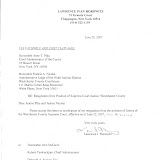
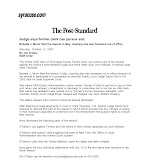
EAST PATCHOGUE, N.Y. - A year ago, Long Island Judge Jeffrey Spinner concluded that a mortgage company's paperwork in a foreclosure case was so flawed and its behavior in negotiations with the borrower so "repugnant" that he erased the family's $292,500 debt and gave the house back for free. The judgment in favor of the homeowner, Diane Yano-Horoski, which is being appealed, has alarmed the nation's biggest lenders, who say it could establish a dramatic new legal precedent and roil the nation's foreclosure system. It is not the only case that has big banks worried. Spinner and some of colleagues in the New York City area estimate they are dismissing 20 to 50 percent of foreclosure cases on the basis of sloppy or fraudulent paperwork filed by lenders. Their decisions illustrate the central role lower court judges will have in resolving the country's foreclosure debacle. The mess came to light after lawsuits and media reports showed lenders were routinely filing shoddy or fraudulent papers to seize the homes of borrowers who had missed payments. In millions of cases across the United States, local judges have wide latitude to impose sanctions on banks, free homeowners from their mortgage debts or allow the companies to proceed with flawed foreclosures. Ultimately, the industry is likely to face a messy scenario - different resolutions by courts in all 50 states. The foreclosure dismissals in this area of New York have not delivered free homes for borrowers. With so much at stake, lenders in this part of New York are aggressively appealing foreclosure dismissals, which is likely to keep the legal system bogged down, foreclosed homes off the market, and homeowners like the Yano-Horoski family in legal limbo for years. "We believe the Yano-Horoski ruling, if allowed to stand, has sweeping and dangerous implications for the entire mortgage lending industry," said OneWest Bank, the family's mortgage servicer.

The situation in Suffolk and Nassau counties on Long Island and Kings County in Brooklyn- which have among the highest rates of foreclosure in the state and where the 81 judges handling foreclosures have become infamous over the past few years for scrutinizing paperwork for errors - provides a window into how the crisis could unfold across in the country. While the level of tolerance for document mistakes varies from judge to judge, the group as a whole has a reputation for ruling against mortgage companies when paperwork issues or other problems arise. At least one bank, J.P. Morgan Chase, requires document processors to separate foreclosures cases from these three counties from those in the rest of the country. A high-ranking executive of the company is specially assigned to sign off on the area's foreclosure filings. Judge Dana Winslow of Nassau County says he's thought a lot about why judges in his area are more apt to question filings. He said it comes down to one thing: Lack of trust for Wall Street. In this region, judges have seen a lot of inaccurate filings from the financial sector. Trust "of the lending institutions and Wall Street has eroded in some areas of the country more than others," Winslow said. Craig D. Robins, a foreclosure defense attorney who authors the Long Island Bankruptcy blog, said of the Yano-Horoski case: "I think we're going to see more decisions like this across the country. Many judges are finding their court calendars clogged with cases that have all these flaws in them that never should have been brought in the first place or should never have been brought without more due diligence."

Going forward, mortgage companies trying to foreclosure in the state of New York will face stiffer requirements. On Oct. 20, the state's chief judge said attorneys for lenders will have to vouch personally for the accuracy of documents. "We can't have the process being a fraud," New York State Chief Judge Jonathan Lippman said in announcing the new procedure. "It has to be real and based on credible information." Even before Lippman's order, however, lower court judges were already raising questions about faulty paperwork in foreclosures. On June 17, for example, Judge Karen Murphy of Nassau County ruled that Wachovia Bank lacked standing to foreclose on a home because the document used to prove ownership of the mortgage was incomplete. On Sept. 21, Judge Peter Mayer of Suffolk County delayed a foreclosure by Ally Financial's GMAC mortgage unit after noticing that the paperwork transferring the mortgage to the bank was dated two days after the foreclosure was initiated. And on Oct. 21, Judge Arthur Schack of Kings County dismissed a OneWest foreclosure motion because the bank had not adequately documented how the mortgage had been sold and resold to investors. He also questioned why the employee who signed many of the documents claimed to be a vice president of several different mortgage companies at the same time.

In a different case in May, Schack ruled that HSBC Bank could not foreclose on a home because the paperwork that assigned the mortgage to HSBC from the original lender, Cambridge, was "defective." That didn't mean the borrower, Lovely Yeasmin, a 28-year-old cashier who immigrated from Bangladesh, got her three-story townhouse in Brooklyn's Bushwick neighborhood for free. Wells Fargo, the mortgage servicer for HSBC, has not appealed the case. Instead, it has offered to temporarily lower her monthly payment from $4,700 to $3,000. Yeasmin's eldest brother, Mohammed Parpez, 35, said that before the judge's order, Wells Fargo was resistent to a loan modification. "The banks are crooks. They tell everyone they are trying to help people like us, but they are really doing the opposite," Parpez said. Tom Goyda, a Wells Fargo spokesman, said that although the company "disagrees with the court's findings," it is continuing to try to work out a longer-term solution with the family. Members of the Yano-Horoski family said they struggled similarly to get their lender to modify their loan after Greg Horoski fell ill in 2005 and his online business selling specialty dolls suffered. After he underwent a triple bypass surgery, two stents and two hip replacements, he and his wife, Diane - who teaches an online English composition course - found themselves unable to pay the bills.

Despite his pleas, Horoski said, he failed to get OneWest to come to an agreement, even though he became able to pay the debt after his company's sales picked up. In his November 2009 ruling, Judge Spinner of Suffolk County blasted OneWest for negotiating with an "opprobrious demeanor and condescending attitude." He also cited the bank's "duplicity" in offering a forbearance agreement with a deadline that had already passed and for presenting contradictory paperwork claiming different amounts for what the family owed. With their case under appeal, the Yano-Horoskis now find themselves in a tricky position, wary of putting more money into a house that an appeals court could take away from them. While the other houses on their quiet suburban street are meticulously maintained, their front-porch light remains shattered and the paint on their house is peeling. They've shelled out $3,000 for a new hot-water system. They paid $2,000 for tree trimming after a neighbor complained. But they've let the $10,000 property tax bill become delinquent, and they worry an appeals court could not only reverse the earlier ruling but demand that the family pay back the mortgage for every month that has passed since. Nonetheless, Horoski remains optimistic. "People thought people who didn't pay their mortgages were automatically deadbeats," he said. "People are educated now. They are realizing all of a sudden how many hundreds of thousands of these homes that were foreclosed may have been done so with fraudulent documents." Staff researchers Julie Tate, Alice Crites and Magda Jean-Louis contributed to this report.

Corrupt Florida Lawyer Mistakenly Called Most Crookedest Ever

US Marshals Tracking Down Crookedest Lawyer Ever's Loot
The Daily Business Review by John Pacenti - November 9, 2010

MIAMI, NY - The federal government knows where a former U.S. bankruptcy trustee panelist funneled $1 million earmarked for the victims of Ponzi schemer Scott Rothstein and has filed a lawsuit to get it back. Marika Tolz is a Hollywood real estate broker who became one of South Florida’s most prolific trustees and receivers in recent years. She was ousted from the U.S. trustee’s panel in May after she tried to cover a shortfall in a bankruptcy case with a Rothstein donation to Holy Cross Hospital, according to court documents. The U.S. government sued Tolz’s successor handling the account where the $1 million allegedly landed. But an FBI inquiry goes beyond the Rothstein funds and tracks money moving among various cases where she served as a court-appointed receiver or trustee. The FBI mailed letters to Tolz’s successors, notifying them they may have been victims of fraud. So far, questions have been raised about $5.3 million in at least five cases handled by Tolz, and sources say financial improprieties have been found in two other cases. In another lawsuit, trustee Robert C. Furr, who succeeded Tolz in a bankruptcy case, alleges she falsified financial books submitted to the court and the U.S. trustee’s office and created red-herring bank accounts to pilfer $1.5 million from a personal bankruptcy case. Tolz expanded from a real estate career by serving as a caretaker for seized assets starting in 1987. She has served as a trustee in bankruptcy matters, a personal representative on estates and a receiver for businesses and proprieties that ran aground. One of her many companies, State Wide Realty, was hired in April by the U.S. Marshals Service to safeguard $1 million retrieved for the fraud victims of disbarred lawyer Rothstein. Instead, she moved the $1 million a day after receiving it to cover a shortfall in a Chapter 7 case under scrutiny by the U.S. trustee’s office, according to Marshals Service lawsuit filed Oct. 18 and Furr’s complaint filed last week. Joel Tabas, one of the many trustees who inherited Tolz’s cases, told a bankruptcy judge in September that trying to figure out where all the money went was akin to dissecting a bowl of spaghetti, and says it will take forensic accountants months to figure out exactly how much is missing. An FBI form letter was mailed Oct. 14 to Seth Heller, who succeeded Tolz as receiver in two Miami-Dade Circuit Court cases, telling him his name was forwarded to the federal victim assistance program "as being a possible victim of a federal crime." "This case is currently under investigation," the letter stated. "This can be a lengthy process, and we request your continued patience while we conduct a thorough investigation." Assistant U.S. Attorney Grisel Alonso, who is handling the Marshals Service case, referred questions to office spokeswoman Alicia Valle, who had no comment. "The federal government is about to do something," said Heller, managing partner of Heller & Co. "I think everybody who has anything to do with Tolz got this letter." Tolz has not been charged. Her attorney, Ben Kuehne of Miami, confirmed Rothstein’s $1 million has not been returned to the government as requested months ago. Tolz and Kuehne, who was traveling Tuesday, did not respond to requests for comment. The Justice Department has focused on the bankruptcy case of James Driscoll to get back the money.

Follow The Money

Fort Lauderdale’s Holy Cross Hospital returned the tainted donation from Rothstein, who is serving a 50-year prison sentence for running a $1.2 billion settlement financing scheme. Federal marshals hired Tolz in April to hold the money until a final order of forfeiture was signed by the judge in Rothstein’s criminal case. Holy Cross wired the $1 million to the Marika Tolz General Trust Account at First Citizens Bank & Trust in Hollywood on May 20 for a total balance of $1,000,390. The next day, the account balance was $133,300, according to an exhibit attached to the federal lawsuit seeking $967,856 plus court costs and attorney fees. The Rothstein money was moved to a Bank of America account for the personal bankruptcy of James P. Driscoll of Fort Lauderdale, according to the adversary complaint. "Upon discovery of the withdrawal of the diverted funds from the First Citizens account, the marshals made demand upon Tolz to remit the sum of $1 million wire transferred," the lawsuit stated. "Tolz failed to turn over the funds to the marshals." The federal government ended up suing Furr as Tolz’s successor in the Driscoll case. The Boca Raton trustee filed a 74-page third-party complaint Thursday against Tolz and Liberty Mutual Insurance, which issued bonds on behalf of U.S. trustee panelists on condition of "faithful performance." Panelists for the U.S. trustee’s office are appointed on a rotating basis as caretakers for commercial and personal bankruptcies in federal court. Tolz was one of 12 panelists until she was forced to resign in May when Driscoll’s case came to the attention of the office. The U.S. trustee’s office did not comment on the matter. Furr, in his complaint against Tolz, seeks $1.5 million allegedly misappropriated from Driscoll and more than $76,900 in fees paid to her. He alleges Tolz filed a false accounting in Driscoll’s case March 31, stating the estate had $888,000, when in fact the account was barren. When confronted with the discrepancy by the U.S. trustee’s office, Tolz listed a nonexistent account at Sun American Bank and fake accounts to support her filing, Furr alleges. Furr, who inherited about 10 of Tolz’s cases, details a busy shell game as Tolz moved money to and from several accounts to hide her trail, culminating in the transfer of Rothstein money into Driscoll’s account. Furr’s lawsuit claims Tolz took $1 million from the Driscoll account and deposited it into her general trust account in April 2009. Tolz "accounted for" the money by creating fake receipts and disbursement records for the purchase of high-yield certificates of deposit at Bank of America, the lawsuit stated. The trustee’s office later determined the account did not exist. On May 18, the day before Tolz resigned from the trustee’s panel, she issued a $967,856 check from her personal trust account to the Driscoll case. On May 20, she covered it with money from the Rothstein case, according Furr’s lawsuit. Furr also alleges Tolz illegally transferred $500,000 from Driscoll’s account to her personal account in April 2008, taking investigators further back in time. Financial irregularities also have been documented in numerous other cases. Heller took over receiverships of two financially troubled Miami-Dade commercial properties from Tolz: Douglas Centre REB-GEM, owner of a share of a Coral Gables office complex, and Monticello 856, a condominium conversion. Heller’s Miami forensic accounting firm, Pontis Advisors, found $856,000 in checks from Douglas Centre REB-GEM had been deposited in outside accounts controlled by Tolz and that $456,000 could not be traced. Drew M. Dillworth, who succeeded Tolz in the bankruptcy case of Wilkinson Hi-Rise, a Hollywood trash and linen chute manufacturer, told U.S. Bankruptcy Judge John Olson in September that Tolz should not be immediately paid her $13,000 fee because of "questionable financial transactions."

‘Over Her Head’

Then there is the Fuzion bankruptcy case, which allegedly received $715,000 meant as an inheritance for the children of man whose probate assets were administered by Tolz. The children’s new trustee claimed in court documents that the estate was $965,000 short due to diversions by Tolz. Two adversary lawsuits trying to retrieve money have been filed in the Fuzion matter, one by Heller and one by the successor trustee in the probate case. Heller said Tolz represented "the old school" of receivers and trustees, who intermingled money among accounts — even for personal use. The drama surrounding Tolz has drawn comparisons to former Miami attorney-accountant Lewis Freeman, sentenced earlier this year to more than 10 years for stealing $2.6 million and misappropriating at least $6 million from accounts he oversaw as a court-appointed receiver and trustee. Like Freeman, Tolz was considered one of the best. "Tolz was a very respected individual," Heller said. "She got in over her head."

NY Lawyer Convicted in $300,000 Adoption Scam Theft

"Cruel" NY Lawyer Convicted of Stealing $300,000 From Would-Be Parents in Adoption Scam
The New York Law Journal by Andrew Keshner - November 2, 2010

A jury found a Long Island attorney guilty yesterday of stealing more than $300,000 from the families he promised to help adopt children who did not actually exist. The Nassau County Court jury deliberated for about a day before finding Kevin Cohen, 42, a Roslyn lawyer, guilty of 37 counts, including second-degree grand larceny, 11 counts of third-degree grand larceny and 10 counts of third-degree forgery. According to the Nassau County District Attorney's Office, Mr. Cohen now faces up to 92 years in prison. His sentencing has been scheduled for Dec. 7. His felony convictions also mandate his disbarment. Mr. Cohen, who represented himself during trial, had no reaction when the jury announced its verdict, according to several people inside the courtroom.

Adam Moser, the Rockville Centre attorney who was Mr. Cohen's court-appointed legal adviser, said Mr. Cohen planned to appeal. During opening statements, Mr. Cohen argued he could not be held criminally responsible for his actions, saying he was suffering from mental illnesses. The prosecution countered that Mr. Cohen, who is a graduate of the Benjamin N. Cardozo School of Law admitted to the bar in 1996, knew exactly what he was doing and manipulated clients to take their money. County Court Judge John Kase ruled there was insufficient evidence to support Mr. Cohen's insanity defense and said the jury could not consider it. The jury heard testimony from 13 prospective parents during the three-week trial. Assistant District Attorneys Karen Bennett and Andrew Garbarino said that from October 2007 to the time of his arrest in September 2009, Mr. Cohen, who previously had headed a defunct agency called the Adoption Annex, held himself out as an adoption expert. Prosecutors said he obtained large sums of money from couples by fabricating birth mothers and forging records. Brigid Vogt, a 42-year-old Seaford homemaker who was one of Mr. Cohen's clients, testified against him and stayed to watch the verdict. "It felt good" to see the lawyer convicted on every count, she said. Mr. Cohen represented the birth mother in a planned 2006 adoption by the Vogts that fell through. Three years later, he approached them and told them that he wanted to make it up to them. "He used this against us, which was kind of cruel," Ms. Vogt said in interview. Just before Mr. Cohen's arrest, he showed Ms. Vogt fake sonograms and medical records to convince her and her husband that he had a child ready for adoption, but he said they needed to act fast. The couple came up with $22,500. "This is the cruelest crime I've ever dealt with," said Ms. Bennett, the assistant district attorney, in an interview. "There are no words to describe the pain and torment this defendant inflicted on kind and generous couples looking to provide a child with a loving home," said Nassau County District Attorney Kathleen Rice said in a statement. "Now, with Kevin Cohen going to prison, he will never again have the chance to destroy another family's dream of adopting a child." The Lawyers Fund for Client Protection has reimbursed the Vogts and Mr. Cohen's other victims for their down-payments and fees. Ms. Bennett said prosecutors will press at the sentencing next month for restitution of other expenses, such as strollers, airplane tickets and the interest on loans—one with a 30 percent rate—that some families took out. Mr. Cohen failed to make $500,000 bail when he was arrested and he has been in jail since then. He also faces unrelated charges for allegedly assaulting a corrections officer in the Nassau County Correctional Facility. Andrew Keshner can be reached at akeshner@alm.com

Little Time for Corruption; NY Federal Judge's Hands Full with "Right to Masturbate"

NY Cop Had No Constitutional Right to Pleasure Self in Tanning Booth, Judge Finds
The New York Law Journal by Joel Stashenko - November 8, 2010

A police officer fired for masturbating in a tanning room had no constitutional right to privacy, a federal judge has ruled. Sexual activity in "public places" is not protected by the Fourteenth Amendment to the U.S. Constitution, Northern District Judge David N. Hurd ruled in Fiore v. Town of Whitestown, 6:07-cv-00797, in upholding an upstate town's decision to dismiss the officer. "Here, the right of privacy may provide protection for plaintiff's act if it took place where he had a reasonable expectation of privacy, such as in his home," Judge Hurd wrote from Utica. "However, a tanning booth in a tanning salon, which is open to the public, is a commercial establishment and thus a public place where plaintiff has no protectable constitutional privacy interest in his sexual activities. Simply because the room was enclosed by four walls does not make the setting a private one for this act." Judge Hurd rejected arguments from former part-time Whitestown Town Officer Michael Fiore that statutes in several states, including Minnesota, Mississippi, North Dakota, Nebraska and New Mexico, regard tanning booths as akin to private places such as bathrooms and fitting rooms. Mr. Fiore, who was still under probation, was dismissed in 2007 after a woman told a police commission member that she had seen him while he was off-duty in a local tanning saloon with his gun visible. The woman also recounted a conversation with the owner of the salon in which the owner allegedly described having seen Mr. Fiore masturbating in a tanning room. The police commission notified Mr. Fiore that his "performance" as a police office was not "at a level acceptable" to the town. Mr. Fiore and his wife, Susan, sued the town and police commission members. On June 25, Judge Hurd threw out the federal claims without issuing a written opinion and refused to consider his state-law arguments. Mr. Fiore then asked Judge Hurd to reconsider. The judge held last week in a 14-page ruling that he had not made any errors of law and let his previous ruling stand. The judge acknowledged that "an individual's private sexual activities are generally within the zone of privacy protected from unwarranted government intrusion." But he added that such protection generally does not extend to public places. Mr. Fiore claimed that there was no evidence that he had purposely "exposed" himself to an unsuspecting woman in a public place. Rather, he argued that he had masturbated as part of an "intimate, consensual encounter" with the owner of the tanning salon in a private room. But Judge Hurd concluded that the circumstances of the ex-officer's conduct was irrelevant because "the Fourteenth Amendment does not provide protection to sexual activities, whether consensual or not, in a public place." The judge also ruled that the police department did not violate Mr. Fiore's right to procedural due process because Mr. Fiore did not request a name-clearing hearing, and the town was not obligated to offer him one. Edward J. Smith III, Eric G. Johnson and Gabrielle M. Hope of Smith, Sovik, Kendrick & Sugnet represented the Town of Whitestown and police officials. A.J. Bosman of the Bosman Law Office in Rome was the attorney for Mr. Fiore. Joel Stashenko can be reached at jstashenko@alm.com.

Tuesday, November 2, 2010

Trial Set for Judge Arrested for Exposing Himself to Undercover Cop

Trial Set for Judge Arrested in Public Restroom for Exposing Himself to Undercover Cop
The Associated Press - November 2, 2010

SALT LAKE CITY, UT — A December trial has been set for a Millard County Justice Court judge accused of exposing himself to an undercover police officer in a Salt Lake City park restroom. The Salt Lake Tribune reports 63-year-old Ronald R. Hare remained silent during a pretrial conference Monday in Salt Lake City Justice Court. Judge L.G. Cutler denied a request by Hare's attorney for a continuance, saying Hare had been granted a previous continuance. Hare, who is on the November ballot for retention as a judge, has been placed on paid leave pending the outcome of the case. He was issued a misdemeanor citation for disorderly conduct after the incident at Glendale Park in July. Hare and his attorney declined to comment on the case Monday.

BACKGROUND

Judge Hare charged
by Dean Draper - October 20, 2010

Judge Ronald R. Hare, who is on the November ballot for retention as a justice court judge, is charged in the Salt Lake City Justice Court with a Class B misdemeanor of disorderly conduct. Hare is charged with allegedly engaging in sexual conduct and/or exposing himself under the Salt Lake City municipal code. Rick Schwermer, assistant Utah court administrator, said Hare will appear in court on Monday, Nov. 1, for a pre-trial conference. No further details regarding the court action are available. Case # 10CR08058 is set for 2 p.m. Schwermer said Hare was placed on paid administrative leave on Sept. 17 by Utah Supreme Court Justice Christine Durham until the case is resolved. “The county has no contract with Judge Hare. He is a full-time county employee, yet he is a quasi-elected official. Jurisdiction regarding his employment is in question until an administrative hearing by the Judicial Conduct Commission,” said Daron Smith, County Commission chairman. Smith said the commissioners became aware of the charges through rumor. Inquiries made by the commission as to what the charges might be resulted in “no comment” according to Smith. The reasoning being a presumption of innocence until the charges have been proven or dismissed. What is known surfaced through court records. “I was given a message by another county employee from Judge Hare that he was on administrative leave,” said Smith. The court’s case history shows Hare being arrested on July 9. The Salt Lake Tribune reports “Salt Lake City police Detective Dennis McGowan said the incident involved Hare and an undercover vice officer in a men’s restroom at the Glendale Park at 5:30 p.m. SLC Municipal Code 11.16.100(B)(C) states:

  • B. Engage in sexual conduct, alone or with another person or an animal;
  • C. Make an intentional exposure of his or her genitals….

Judge Hare, 63, was sworn in as the Justice Court judge for the East Millard Justice Court in January of 1979. Hare also serves as Fillmore’s municipal court judge. “We had to call in a substitute to handle the cases until this issue is resolved.” said Fillmore Mayor Eugene Larsen. The pre-trial conference is a step in the judicial process usually followed a waiver hearing. Next would be a preliminary hearing to determine if there is enough evidence to take the case to court unless the defendant pleads guilty.

***************************************

Millard County judge cited in vice operation
The Associated Press - October 17, 2010

SALT LAKE CITY (AP) -- A 63-year-old Millard County justice court judge has been suspended with pay after being charged with disorderly conduct for either engaging in sexual conduct or exposing himself at a city park. Salt Lake City police Detective Dennis McGowan told The Salt Lake Tribune the incident involved Ronald R. Hare and an undercover vice officer in a men's restroom at Glendale Park in July. Hare could not immediately be reached for comment by The Associated Press on Sunday. Rick Schwermer, assistant Utah court administrator, says Utah Supreme Court Justice Christine Durham placed Hare on paid leave Sept. 17, the first day court officials learned of the citation. Hare is on the November ballot for retention as a justice court judge.

Thursday, October 28, 2010

NY Lawyers Arrange "Justice" for Chicago $250 Million Ponzi Scam

Committee on Public Integrity
Tel: 202-374-3680
Fax: 202-207-9548
email: CommitteeOnPublicIntegrity@gmail.com
Web: www.CommitteeOnPublicIntegrity.com


PRESS RELEASE
For Immediate Release


U.S. Senate Candidate Involved in $250 Million Ponzi Scheme

The Committee on Public Integrity, in a joint investigation withIntegrity in the Courts Finds that Alexi Giannoulias, U. S. Senate Candidate in Illinois, Failed to Reveal That His Family’s Broadway Bank Paid Kick Backs in Mortgage Fraud Deals with Financial Ponzi Scheme Operators

The Senate Candidate Also Failed to Reveal that the Giannoulias Family Bank Paid a Settlement Valued at $6 Million to End the Lawsuit by U.S. Department of Justice and Securities and Exchange Commission

As part of its continuing full disclosure by federal candidates program, The Committee on Public Integrity and Integrity in the Courts has discovered that Alexi Giannoulias, Democratic candidate for US Senate from Illinois has misrepresented the record of Broadway Bank, the Chicago bank owned by his family. The actual facts as revealed in litigation brought by the US Justice Department and the Securities and Exchange Commission reveal that Broadway Bank engaged in fraudulent loans with Wextrust, a finance company. Broadway Bank was subsequently seized by the SEC, and the chief officers of Wextrust are in jail.

During the last debate with Congressman Mark Kirk, Alexi Giannoulias was asked to comment on the activities of Broadway Bank, the main business asset of his family. Giannoulias said, “And let’s be clear, no one has ever suggested that the bank has ever done anything illegal, illicit, or improper. Never." He continued, "I will always tell you the truth. And that's what we need now more than ever. People are sick and tired of Washington, D.C. politics as usual." Information is now coming to light that shows that Broadway Bank engaged in kick-backs and other lucrative deals with Ponzi scheme operators, who are now in jail.

Beginning in 2006, when Alexi Giannoulias was a loan officer at Broadway, the bank entered into a series of commercial loans in joint ventures with Wextrust Capital, a Chicago based lending company. Wextrust provided so-called “hard money” loans to developers, who could not find standard financing from banks. Hard money loans are provided at very high interest rates, up to 18-20% when the costs of so-called origination and finders fees are added.

Under the deals between Wextrust and Broadway Bank, evidence has been discovered showing that borrowers paid the bank high interest charges (12-14%), and then Broadway Bank kicked back 2-3% of the payments received to Broadway as part of a so-called loan servicing contract. Also, it’s been established that throughout its years of operation, Wextrust was insolvent, making all of its mortgage deals void and fraudulent. That meant that all the joint mortgage deals marketed byBroadway Bank and Wextrust were illegal, illicit and improper.

Wextrust was seized and placed in control of a federal receiver by the US Securities and Exchange Commission in August 2008 for operating a $250 MM Ponzi scheme. The SEC found that Wextrust operated a massive Ponzi-type scheme from 2004 that raised approximately $255 million from approximately 1,200 investors in the US and other countries. The Receiver confirmed that Wextrust diverted, co-mingled and misappropriated those funds, in a series of unauthorized transactions. The US Department of Justice filed criminal complaints against Wextrust's principal officers who were immediately arrested, and who remain in custody. The company president, Steven Byers, entered a guilty plea in April 2010, and is awaiting sentencing.

Broadway Bank was a partner with Wextrust in the series of fraudulent loans. Alexi Giannoulias was a loan officer when Wextrust began its dealings with Broadway Bank. Evidence has been uncovered by the SEC showing that Alexi’s brother, Demetri, personally handled these mortgage loans with Wextrust.

In April 2010, just before being seized by the Illinois and US banking authorities, Broadway Bankagreed to forgo $5 million in claims and to pay up to $800,000 in cash to settle litigation with the federal Receiver of Wextrust. This Settlement clearly reflected a payment by Broadway Bank to settle claims by the Securities and Exchange Commission and avoid liability for illegal actions in connection with its financing transactions with Wextrust.

For additional information please contact: John T. Whitely at 202-374-3680

About The Committee on Public Integrity
The Committee On Public Integrity reviews both past and present cases to provide an independent assessment and analysis of the facts. With respect to past cases, the committee will hear from persons who maintain that they have been treated unfairly and unjustly. As part of its efforts, the committee is actively seeking documentation and analysis of various issues. Committee members include individuals who through their personal and professional lives have established a reputation of responsibility and fairness.

For Detailed Information to Referenced Documentation, See Below:

NY Lawyers Arrange "Justice" for Chicago Ponzi Scheme

The $250 Million Ponzi Scheme "Settlement"

Transcript of April 2010 Guilty Plea

August 2010 - 7th Interim Report of Receiver

Response to Objections to the Receiver's Report

Civil Lawsuit: SEC v Byer, et al.

Monday, October 25, 2010

Long Star State Joins New York's "Judges For Sale" Program

Couple in custody battle accused of paying judge for favorable rulings
The Dallas Morning News by - VALERIE WIGGLESWORTH, ED HOUSEWRIGHT and MATTHEW HAAG - October 23, 2010

A University Park couple was embroiled in a costly child-custody battle at the time prosecutors say they paid $150,000 in bribes to the political opponent of the judge hearing their case. David and Stacy Cary were in state district court in Collin County, fighting for custody of David Cary's twin daughters from a previous marriage, records show. The judge in the case, Charles Sandoval, had awarded primary custody of the girls to their mother and issued rulings costing the Carys hundreds of thousands of dollars.

In 2008, Sandoval ran for re-election. Prosecutors allege that in the weeks before and after the March Republican primary, the Carys paid $150,000 to a campaign consultant for Sandoval's opponent, Suzanne Wooten. She outspent and defeated the longtime incumbent. Wooten, the Carys, and the consultant, Steve Spencer, were indicted Oct. 14. Each faces six counts of bribery and one count of engaging in organized criminal activity, all felony charges carrying prison terms if they're convicted. The indictments allege Wooten accepted the money for favorable rulings in the 380th District Court. They don't detail the cases involved, how Wooten influenced them, or how money may have been passed from Spencer to Wooten. But David and Stacy Cary were parties together in just one case in the 380th, the one in which they were seeking custody of his daughters, now 10 years old. Wooten recused herself from the case. Her reason, according to her attorney, was that a lawyer for the girls' mother had served as treasurer for Wooten's judicial campaign. Peter Schulte, Wooten's attorney, said the prosecutors' case on bribery charges is weak. "A lot of it doesn't add up for the state because it didn't happen," Schulte said. "People can blow smoke in multiple directions. That doesn't mean there's fire." Keith Gore, who is representing the Carys, said there is a completely innocent explanation for the couple's payments to Spencer. He declined to elaborate. "These charges stem from a political prosecution, and the Carys deny any wrongdoing and look forward to a full exoneration," Gore said. Gary Udashen, an attorney for Spencer, reiterated that there was a legitimate reason for the payments and that Spencer is not part of any bribery scheme. "The way it's been portrayed in this indictment is flat incorrect," Udashen said. The defendants' attorneys say the charges are part of a political vendetta against Wooten launched by Collin County District Attorney John Roach, who is also a Republican. Roach asked more than a year ago that the Texas attorney general's office assign a prosecutor to investigate Wooten over campaign violations. A feud between Roach and Wooten heated up this summer. The judge alleged in court papers that Roach was intimidating and harassing her and seeking her resignation. In September, a grand jury impaneled by Wooten requested a special prosecutor to investigate "possible criminal wrongdoing" in Roach's office. And earlier this month, Roach said he would no longer submit cases to the grand jury overseen by Wooten. He said he planned to resubmit about 200 indictments made by that grand jury to a new panel. Roach declined to comment for this story, as did lawyers for the attorney general's office, which is handling the prosecution. As many as six different grand juries heard evidence related to Wooten's campaign before the bribery indictments were handed up earlier this month. It remains unclear how exactly the four defendants are connected.

People involved

David Cary, 55, is the chief financial officer of Plano-based TDi Technologies. He is active online in forums and blogs that focus on parental rights. Stacy Stine Cary, 52, owns and operates a commercial real estate company. She also runs an organization called Holistic Health of Texas. In September 2008 the couple started an advocacy group called Family Focus. On its website, the couple said they disagreed with the government disrupting families or taking away parents' rights. The site, which is registered to David Cary, says the group is "unapologetically politically active." The Carys and Spencer worked together, according to Spencer's attorney, who said he didn't know the specifics. The Carys' attorney declined to talk about the work, saying he would offer a full explanation in court filings in a few weeks. Spencer, who is 42 and lives in Dripping Springs near Austin, had worked on political campaigns before. But few details are publicly available about the kind of work he does. Many of his addresses are post-office boxes, including one for now-defunct Spen-Off Strategies, the consulting firm that Wooten paid $110,000 to during her 2008 campaign for judge. Wooten, 42, spent 12 years as a family lawyer in McKinney before making her first run for elected office. Her attorney argues that the fact that both Wooten and the Carys have worked with Spencer does not mean bribery was involved. Wooten doesn't even know the Carys, Schulte said. "To this day," he said, "she's never met them."

Custody battle

The Carys' legal battle in Collin County stems from the 2004 divorce of David and Jennifer Cary. The couple couldn't agree on custody issues related to their twin girls, who were born premature and have special education needs. Neither Jennifer Cary nor her attorney could be reached. In the summer of 2006, the couple reached an agreement through mediation to equally share in the girls' upbringing. But a social study report in the court filings raised doubts about the arrangement. The evaluator noted "difficulties that have surfaced with a number of the professionals that have worked with this family." Other court papers noted the parents' tense relationship and the girls' troubles transitioning between two households. After a three-day bench trial in October 2006, Sandoval named Jennifer Cary the sole managing conservator for the girls. In the order signed Dec. 1, the judge noted, among other things, David Cary's inability to work effectively with therapists, counselors and school officials as well as his "inability to share the rights, powers and duties to co-parent and cooperatively raise the children." Jennifer Cary got custody of the girls during the week and every second weekend of the month. David Cary had them on the other weekends. Sandoval's order went so far as to detail how the girls would be dropped off when the parents traded custody. The ruling spelled out David Cary's child support payments, the $30,000 he owed each year for the children's education fund and the $416,543 he had to pay to cover his ex-wife's attorney fees. His objections, motions to transfer to another court in Dallas County, and filings with the Court of Appeals and the Supreme Court of Texas in the ensuing months were generally denied. Then in June 2007, Sandoval granted Jennifer Cary's motion for sanctions, finding that one of David Cary's motions "was filed frivolously or designed to harass" his ex-wife. Sandoval ordered both David Cary and his attorney to pay $50,000 to Jennifer Cary. Shortly after that, the judge also ordered David Cary to pay $14,500 for his ex-wife's attorney fees.

District court race

In the summer of 2007, as the Carys were filing motions in court, Steve Spencer was looking for someone to run against Sandoval, who'd never drawn an opponent since taking office in 1997. McKinney attorney Michael Puhl said Spencer approached him about running. Puhl had some experience, having campaigned unsuccessfully for another district court bench in 2006. The two talked on the phone and then met in person, Puhl said. Spencer never mentioned the Carys but said he was affiliated with home-school interests. Spencer said his group would help finance Puhl's campaign and provide workers if he chose to run, Puhl said. "He said they thought I was a good candidate," Puhl said, "and he was encouraging me to run against Charles Sandoval." Puhl said they didn't discuss any of Sandoval's specific rulings. "It was just general disappointment. I never thought of it as, 'I'm trying to influence you to give me a ruling.' " Puhl opted not to run. He said Wooten told him later that she had decided to run and that Spencer had approached her. No one recruited Wooten to run for judge, Schulte said. She had been considering running for six years, he said. She wanted to be a judge, in part, because the hours were more predictable than private practice, Schulte said. Udashen said he didn't know how or why Spencer became Wooten's campaign consultant. He said Spencer didn't know Wooten before he joined the campaign.

Wooten's campaign

Wooten's campaign for judge got off to a slow start. Her first campaign finance report, filed in January 2008, showed $2,045 in contributions and $1,933 in expenses – $1,500 went toward the county's filing fee and the rest to Signs by Randy. Her second campaign finance report, filed eight days before the primary election, showed $9,125 in contributions and $11,734 in expenses. Her first recorded payment to Spen-Off Strategies was Feb. 13, 2008. She ultimately spent $110,341 with the firm for campaign services that included radio ads – an unheard of expense in a local judicial race. Sandoval's campaign expenses of $43,112 were no match for the $125,083 that Wooten spent. She handily beat the incumbent judge with 57 percent of the vote. The bulk of her campaign contributions came in after she'd won the primary. She also loaned her campaign $33,369 to cover the remaining invoice from Spen-Off. Wooten had no opposition in the November general election and took office Jan. 1, 2009.

Another custody battle

Before the month was out, David Cary petitioned to reopen the case related to his children. Wooten recused herself. Selecting her replacement became the job of John Ovard, presiding judge of the First Administrative Judicial Region in Dallas. Ovard, who handles judicial assignments for 34 counties in northeast Texas, including Collin, said he chooses from a pool of 40 to 50 visiting judges. In the Carys' case, Ovard said, he chose Judge John McCraw because McCraw had been an appeals court judge, because the Carys' child-custody case had been referred from the Court of Appeals back to the 380th state district court and because David Cary had been sanctioned. "Sanctions are unusual, rather complex matters," Ovard said. "My thinking at the time was that Judge McCraw, with his experience, would be a good one to handle that."

New outcome

Court documents appealing the sanctions argued that there was no evidence of harassment or frivolousness on David Cary's part. After several hearings, McCraw set aside the sanctions order.

David and Jennifer Cary went back into mediation.

Earlier this year, McCraw found that Sandoval's 2006 order was not in the children's best interests. He noted that since Jennifer Cary remarried and moved to Fort Worth, the girls had to travel 50 miles each way to their school in Dallas. McCraw noted that commute was "detrimental and potentially dangerous" for the girls. He also said that Jennifer Cary had alienated the girls against their father and falsely accused him of abusing the girls and misusing alcohol and drugs. McCraw ordered the couple to once again be joint managing conservators, but he gave David Cary primary custody during the week and every second weekend of the month. The girls' mother got custody on the remaining weekends, and they split summers and holidays. Jennifer Cary has appealed McCraw's decision.

What's next

Last week, the State Commission on Judicial Conduct suspended Wooten with pay until the charges against her can be resolved. Schulte said it's much easier for prosecutors to get an indictment than a conviction. "Getting from indictment to beyond a reasonable doubt is a whole different ballgame," he said. Wooten won't consider a plea bargain and plans to go to trial, Schulte said. "She's not guilty, so she's going all the way." Roach, whose office initiated the investigation of Wooten, likely won't be there. The longtime district attorney didn't seek re-election, and leaves office at the end of the year. vwigglesworth@ dallasnews.com, ehousewright@ dallasnews.com, mhaag@dallasnews.com

Friday, October 22, 2010

State Lawyer Arrested as Probe of Harassing Calls Unfolds

Lawyer arrested as probe of harassing calls unfolds
The Albany Times Union by BRENDAN J. LYONS - October 22, 2010

ALBANY, NY -- An attorney who works for New York state and was formerly a longtime employee of the New York Police Department is in police custody in connection with an investigation into numerous threatening telephone calls that were made to people who live on his street, according to officials familiar with the matter. James J. Hennessey Jr., 58, was taken into custody early Friday in connection with the ongoing investigation by the FBI and Albany detectives, according to a person briefed on the case. State records show Hennessey is an attorney with the Department of Civil Service and his annual salary is listed as $104,080. Hennessey was arraigned in City Court and charged with two counts of aggravated harassment, a felony. Bail is set at $15,000. Hennessey is due back in court on Wednesday. It is unclear whether Hennessey was a police officer for the NYPD. The investigation centers on allegations that Hennessey used an online service to cloak his telephone number and to make it appear the harassing and racially charged telephone calls were coming from other locations, including an office tied to the Ku Klux Klan, sources said. Police records show that Hennessey filed at least two complaints with Albany police several years ago alleging someone had done damage to his home and vehicle. A police spokesman said information about the investigation will be made available later Friday.

Sunday, October 17, 2010

Judge to Stand Trial Over Perjury

Retired Mich. judge to stand trial over perjury
The Associated Press by ED WHITE - October 1, 2010

DETROIT, MI — A retired Detroit-area judge was ordered Wednesday to stand trial on criminal charges, five years after privately agreeing with prosecutors to conceal the identity of a paid police informant in a 103-pound cocaine bust. Mary Waterstone acknowledges that she allowed the informant and officers to lie about his relationship with Inkster police when he testified at trial in 2005. She said she did it to protect the safety of informant Chad Povish. The attorney general's office, however, said jurors and defense lawyers had a right to know. Judge David Robinson Jr. of 36th District Court agreed, and ordered Waterstone to go to trial on four felony charges, including improper communications and concealing perjured testimony. Robinson said Waterstone's actions violated a fundamental tenet of the justice system: "To seek the truth." "This is an extraordinary case involving an extraordinary set of circumstances," he said. Waterstone, 70, declined to comment. Her lawyer, Gerald Evelyn, said he would try to get the charges thrown out in Wayne County Circuit Court, where Waterstone was a judge for 10 years. "You make a mistaken call and now you're charged here with a crime. ... Mr. Povish's life was hanging in the balance," Evelyn told Robinson. Povish said this week that he was repeatedly told by then-prosecutor Karen Plants and Inkster police to lie about being an informant when he testified against Alexander Aceval in 2005. Assistant Attorney General William Rollstin said Waterstone's lack of personal gain in the case is irrelevant. She "willfully allowed perjury to go to the jury," Rollstin said in court. Plants, Wayne County's former top drug prosecutor, was ordered Tuesday to stand trial on conspiracy and other charges. Officers Robert McArthur and Scott Rechtzigel will also go to trial. Povish was arrested while transporting the cocaine. He was paid $4,500 for working with police but had hoped to get thousands more. He's considering a lawsuit. Aceval's 2005 cocaine trial ended in a mistrial when jurors couldn't reach a verdict. He later pleaded guilty and is in prison until at least 2015. He's now trying to get the plea thrown out on grounds that it was part of a tainted legal process. The Michigan Court of Appeals has said Waterstone and Plants' conduct was "disgraceful." The state Judicial Tenure Commission, which serves as a watchdog of judges, did not file a formal complaint but scolded Waterstone. The Attorney Grievance Commission has a complaint pending against Plants.

Saturday, October 16, 2010

World Justice Report: U.S. Behind on Rule of Law

US Lags Well Behind Other Wealthy Nations on Rule of Law, Report Says


The American Bar Association Journal by James Podgers - October 14, 2010
image

Access to justice ranking chart from report.

A U.S. justice system already pummeled by blows from the Great Recession is getting more bad news this morning. A report released by the World Justice Project—a 3-year-old initiative sponsored by the ABA and a number of other organizations representing various disciplines—says the United States lags behind other leading developed nations on all but one of nine key measures of adherence to the rule of law. The findings for each country are based on surveys of some 1,000 residents in three leading cities as well as experts in the law and other disciplines. The good news is that the U.S. ranks no lower than 11th among 35 countries covered by the index on any of nine key rule of law principles. But when compared with 10 other nations designated in the index as "high income," the United States ranks near the bottom in nearly all of those categories. Every major region of the world is represented in the index. Peer groups of nations are categorized by the index on the basis of socioeconomic factors and region, but not form of government.

Notably, the United States ranks at the bottom of both its 11-nation economic group and its seven-nation regional group (Western Europe and North America) on providing access to civil justice through the courts and representation by attorneys or other legal professionals. The other members of the high-income group are Australia, Austria, Canada, France, Japan, the Netherlands, Singapore, South Korea, Spain and Sweden. The Western European nations and Canada also make up the regional group with the United States. Access to civil justice services already is a growing concern in the United States as recessionary pressures are leading many states to reduce funding for their court systems. In some jurisdictions, courthouses have been closed or hours cut back and trials limited. Meanwhile, the Legal Services Corp. uses data from the most recent census to estimate that nearly 57 million Americans—the highest number ever—now qualify for assistance from local legal aid programs. The LSC supports those programs with funding from Congress. Other studies estimate that legal aid offices and pro bono efforts by private attorneys meet only about 20 percent of the civil legal needs of poor Americans. Recognizing the growing crisis, ABA President Stephen N. Zack in August appointed a Task Force on the Preservation of the Justice System to focus on how the recession is affecting access to justice for Americans. When Zack, who is administrative partner in the Miami office of Boies, Schiller & Flexner, announced the task force as one of his primary initiatives, he warned that "the potential to lose the rule of law in our country is very real."

While the low U.S. score on access to justice reinforces concerns in that area, the United States scores only barely higher in the Rule of Law Index on the other factors that the World Justice Project has identified as key components of a rule of law regime that helps support societies based on opportunity, equity and respect for individual rights. Those factors are limits on government power, on which the United States ranks ninth out of the 11 countries in its income group; whether government operates with an absence of corruption (U.S. rank: 10); whether laws are clear, publicized and stable (U.S. rank: 9); whether society enjoys order and security (U.S. rank: 9); whether fundamental human rights are respected (U.S. rank: 10); whether laws are enforced in a fair manner (U.S. rank: 8); and whether an effective criminal justice system is in place (U.S. rank: 7). The United States scored highest—third among its 11 income group peers—for having an open government process.

Among the nations in the high income group, Sweden, the Netherlands and Austria ranked highest on most of the rule of law factors. Japan and Singapore also scored at the top on some factors. But because the Rule of Law Index is primarily statistical in nature, it does not offer extensive analysis of these patterns. "While the Index is helpful to tracking the 'temperature" of the rule of law situation in the countries under study," states the report issued today, "it is not powerful enough to provide a full diagnosis or to dictate concrete priorities for action. No single index can convey a full picture of a country's situation. Rule of law analysis requires a careful consideration of multiple dimensions—which vary from country to country—and a combination of sources, instruments, and methods."

Speaking at a briefing session in Washington, D.C., where the index was released, World Justice Project chair William C. Hubbard said, "Everyone in this room wants progress and a stronger rule of law, but we're not here with a one-size-fits-all approach to improving the rule of law." Rather, the purpose of the index is to produce data that help each country identify areas for possible reform, said Hubbard, a partner at Nelson Mullins Riley & Scarborough in Columbia, S.C., who is immediate past chair of the ABA House of Delegates. The report also cautions against the temptation to use the index results as a simple ranking exercise. Representatives of the World Justice Project said the index is an important addition to rule of law studies, primarily because it seeks to measure specific elements that define the rule of law on the basis of how those elements actually apply to the real lives and experiences of people in various countries. "This kind of tool is most important," said Ellen Gracie Northfleet, the former chief justice of Brazil who sits on the World Justice Project's board of directors. "We can exchange our intuitive knowledge of what's wrong and what's right with measurable data." The report being released today is a more refined and complete version of the Rule of Law Index that was released in late 2009, although both versions are based on research conducted in the same 35 countries. The World Justice Project plans to update the Rule of Law Index on an annual basis, and expand it to cover 70 countries in 2011 and 100 countries—covering more than 95 percent of the world's population—by 2012.

Tuesday, October 12, 2010

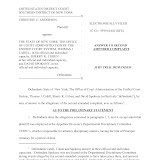
Iviewit Files Motion to Reopen Patentgate Federal Action

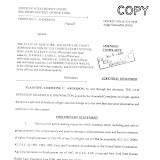
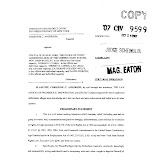
Click Here to See the Filed Iviewit Motion to Reopen, with Exhibits


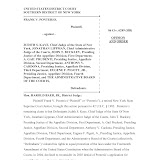
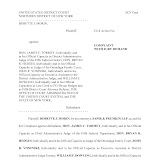
UNITED STATES DISTRICT COURT SOUTHERN DISTRICT OF NEW YORK
DOCKET NO: 07Civ11196 (SAS)

ELIOT I. BERNSTEIN, INDIVIDUALLY and P. STEPHEN LAMONT
ON BEHALF OF SHAREHOLDERS OF IVIEWIT HOLDINGS, INC., Plaintiffs,

-against-
MOTION

APPELLATE DIVISION FIRST DEPARTMENT
DEPARTMENTAL DISCIPLINARY COMMITTEE,
THOMAS J. CAHILL, in his official and individual
capacity, JOSEPH WIGLEY in his official and individual
capacity, CATHERINE O’HAGEN WOLFE in her
official and individual capacity, PAUL CURRAN in his
official and individual capacity, MARTIN R. GOLD in his
official and individual capacity , HON. ANGELA M.
MAZZARELLI in her official and individual capacity,
HON. RICHARD T. ANDRIAS in his official and
individual capacity, HON. DAVID B. SAXE in his official
and individual capacity, HON. DAVID FRIEDMAN in his
official and individual capacity, HON. LUIZ A.
GONZALES in his official and individual capacity,
APPELLATE DIVISION SECOND DEPARTMENT
DEPARTMENTAL DISCIPLINARY COMMITTEE,
LAWRENCE DIGIOVANNA in his official and
individual capacity, DIANA MAXFIELD KEARSE in
her official and individual capacity, JAMES E.
PELTZER in his official and individual capacity, HON.
A. GAIL PRUDENTI in her official and individual
capacity, STEVEN C. KRANE in his official and
individual capacity, HON. JUDITH S. KAYE in her
official and individual capacity, KENNETH
RUBENSTEIN, ESTATE OF STEPHEN KAYE,
PROSKAUER ROSE LLP, MELTZER LIPPE
GOLDSTEIN & BREISTONE LLP, LEWIS S.
MELTZER, RAYMOND A. JOAO, FOLEY LARDNER
LLP, MICHAEL C. GREBE, WILLIAM J. DICK,
DOUGLAS A. BOEHM, STEVEN C. BECKER,
STATE OF NEW YORK COMMISSION OF
INVESTIGATION, LAWYERS FUND FOR CLIENT
PROTECTION OF THE STATE OF NEW YORK,
THE FLORIDA BAR, LORRAINE CHRISTINE
HOFFMAN in her official and individual capacity,
ERIC TURNER in his official and individual capacity,
JOHN ANTHONY BOGGS in his official and individual
capacity, KENNETH MARVIN in his official and
individual capacity, THOMAS HALL in his official and
individual capacity, DEBORAH YARBOROUGH in her
official and individual capacity, VIRGINIA STATE BAR,
ANDREW H. GOODMAN in his official and individual
capacity, NOEL SENGEL in her official and individual
capacity, MARY W. MARTELINO in her official and
individual capacity, and John Does., Defendants


ORAL ARGUMENT REQUESTED


PLAINTIFFS’ MOTION TO REOPEN DOCKET NO. 07-CIV-11196
BASED ON EXCEPTIONAL CIRCUMSTANCES


Plaintiff, P. Stephen Lamont, individually, and on behalf of shareholders of Iviewit Holdings, Inc. moves this Court for an order reopening the above captioned case, Docket No. 07-Civ-11196 (SAS), based upon exceptional circumstances that ensued after the Court’s granting of Defendants’ Motion to Dismiss and its Opinion and Order of August 8, 2008 (“Order”). Respectfully, the Court should take notice that not all Defendants are parties to this Motion (see CAUSES OF ACTION AND DEFENDANTS).

BACKGROUND

Beginning in 1997, Inventors of Iviewit Holdings, Inc. (“Iviewit”) developed video and imaging technologies (the "Inventions") that use significantly less bandwidth than other technologies, provide a way to "zoom almost infinitely on a low resolution file with clarity," and were quickly incorporated into almost every digital camera, DVDs, televisions, cable and satellite and terrestrial television broadcasting, certain websites, and application specific integrated circuits (“chips”); factually, Plaintiffs stake the claim as inventors of “digital zoom,” a feature present on most if not all video capture devices. Defendant Proskauer Rose LLP, a New York law firm, was recipients of disclosures regarding the Inventions through Proskauer partner, Christopher C. Wheeler. Several weeks later, Proskauer represented that purported partners, Defendants Kenneth Rubenstein and Raymond A. Joao, would secure patents for the Inventions. Simultaneously, Rubenstein was also counsel to MPEG LA LLC, one of the largest competitors and benefactors of the Inventions. In fact, Petitioners allege that Rubenstein was part of a scheme to sabotage the Inventions so as to preserve and benefit MPEG LA LLC.

BASES FOR REOPENING

Standard of Review

Fed. R. Civ. P. Rule 60(b)(6) allows a party to seek relief from a final judgment for any other reason justifying relief from the operation of the judgment. The Third Circuit “has consistently held that the Rule 60(b) ground for relief from judgment provides for extraordinary relief and may only be invoked upon a showing of exceptional circumstances” Coltec Indus., Inc. v. Hobgood, 280 F.3d 262, 273 (3d Cir. 2002) (see also, e.g., Gonzalez v. Crosby, 545 U.S. 524, 535 (2005) where the court stated “[O]ur cases have required a movant seeking relief under Rule 60(b)(6) to show ‘extraordinary circumstances’ justifying the reopening of a final judgment.”); Ackermann v. United States, 340 U.S. 193 (1950), Stradley v. Cortez, 518 F.2d 488, 493 (3d Cir.1975). Notwithstanding that, in some instances, Plaintiffs original pleadings may be facially defective under FRCP Rule 8(a) and Rule 12(b), Plaintiffs argue that enough facts are plainly and simply pled to identify the who, what, where, when, and how of the allegations that sufficiently state claims that will become more fully evident through discovery; this Court, simply, must allow discovery to take place.

Exceptional Circumstances

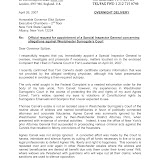
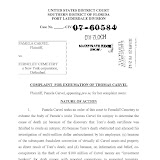
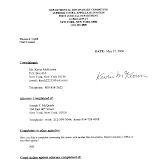
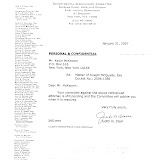
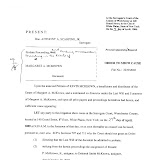
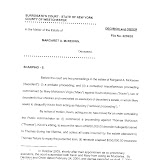
On October 3, 2008, Plaintiffs filed a Notice of Appeal of the District Court’s Order with the United States Court of Appeals for the Second Circuit, Bernstein, et al v. Appellate Division First Department Disciplinary Committee, et al. (08-cv-4873, CA2 NY, filed October 3, 2008). That just after filing such appeal, Plaintiffs, and on January 14, 2009, as movants, filed a motion with the New York State Supreme Court Appellate Division First Department (“First Department Court”) requesting an order requiring the immediate investigation of Thomas J. Cahill (“Cahill”), attached herein as Exhibit A; Cahill was a Respondent in the Second Circuit appeal and a Defendant in the District Court case. Whereby, on January 27, 2009, the Cahill complaint was immediately dismissed by Special Counsel Martin R. Gold (“Gold”), also a Respondent in the Second Circuit appeal and a Defendant herein, attached as Exhibit B. On May 13, 2009, the First Department Court denied movants motion in a decision rendered by, among others, Hon. Richard T. Andrias and Hon. David B. Saxe, attached herein as Exhibit C; Hon. Andrias and Hon. Saxe were both Respondents in the Second Circuit appeal and Defendants herein. Praying for relief of conflicts of interest and appearances of impropriety, on May 22, 2009, Plaintiffs moved the First Department Court for an order vacating the Cahill disposition by Respondent Gold and the denied motion rendered by Respondents Hon. Andrias and Hon. Saxe, attached herein as Exhibit D. The First Department Court summarily denied such motion on October 28, 2009, attached herein as Exhibit E.

Similar Pattern of Racketeering

If it were not for the actions of the above Respondents (Defendants in this Court’s 07-cv-11196), Plaintiffs would not be availing the Court for a Motion to Reopen, but since their incomprehensible actions gives the situation exceptional substance to support Plaintiffs’ original cause of action in 07-cv-11196, civil racketeering as evidenced by Exhibit B and Exhibit C, Plaintiffs must respectfully ask this Court to grant this prayer for relief.

CAUSES OF ACTION AND DEFENDANTS

Causes of Action

Should this Court grant this prayer for relief, Plaintiffs move to re-open the case based solely on two federal causes of action in the original complaint: violation of 42 U.S.C. 1983 (which this Court likened to our direct constitutional claims in its Order and Opinion) and violation of 18 U.S.C. § 1961-1968, the Racketeer Influenced and Corrupt Organizations Act; various supplemental claims and new defendants may also be included in any Amended Complaint.

Defendants

Plaintiffs move to reopen the case as to only the following defendants in the original complaint:
Appellate Division First Department Departmental Disciplinary Committee, Thomas J. Cahill, in his official and individual capacity, Paul Curran in his official and individual capacity, Martin R. Gold in his official and individual capacity , Hon. Richard T. Andrias in his official and individual capacity, Hon. David B. Saxe in his official and individual capacity, Appellate Division Second Department Departmental Disciplinary Committee, Lawrence DiGiovanna in his official and individual capacity, Diana Maxfield Kearse in her official and individual capacity, James E. Peltzer in his official and individual capacity, Steven C. Krane in his official and individual capacity, Kenneth Rubenstein, Proskauer Rose LLP, Meltzer Lippe Goldstein & Breistone LLP, Lewis S. Meltzer, Raymond A. Joao, Foley Lardner LLP, William J. Dick, Douglas A. Boehm, Steven C. Becker, The Florida Bar, Lorraine Christine Hoffman in her official and individual capacity, Eric Turner in his official and individual capacity, John Anthony Boggs in his official and individual capacity, Kenneth Marvin in his official and individual capacity, Virginia State Bar, Andrew H. Goodman in his official and individual capacity, Noel Sengel in her official and individual capacity, Mary W. Martelino in her official and individual capacity, and John Does.

Causative Relationships of the Above Defendants

That the exceptional circumstances inherent in filing this Motion to Reopen are limited strictly to Defendants Cahill, Gold, Hon. Andrias, and Hon. Saxe, may it please the Court, their actions are the expressions of these Defendants as agents that cause incomprehensible actions, to wit, the protection of Defendants Proskauer Rose LLP, Kenneth Rubenstein, Meltzer Lippe Golstein & Breitsone LLP, Raymond A. Joao, Foley Lardner LLP, William J. Dick, Douglas A. Boehm, Steven C. Becker, and their respective respondeats superior who neglected to supervise their actions, in the sabotage of Plaintiffs backbone, enabling video and imaging technologies for the benefit of MPEG LA LLC. That in their collusion to protect the above named Defendants and continue to block Plaintiffs’ Inventions for the benefit of MPEG LA LLC, Defendants New York State Actors, Florida Bar Defendants, and the Virginia Bar Defendants similarly undertook such actions as agents of the aforementioned Defendants that cause incomprehensible actions, to wit, the protection of Defendants Proskauer Rose LLP, Kenneth Rubenstein, Meltzer Lippe Golstein & Breitsone LLP, Raymond A. Joao, Foley Lardner LLP, William J. Dick, Douglas A. Boehm, Steven C. Becker, and their respective respondeats superior who neglected to supervise their actions, in the sabotage of Plaintiffs backbone, enabling video and imaging technologies for the benefit of MPEG LA LLC.

CONFLICT OF INTEREST AND APPEARANCE OF IMPROPRIETY IN THE REPRESENTATION OF THE STATE ACTORS BY
THE OFFICE OF ATTORNEY GENERAL

As the “People's Lawyer,” the Office of the Attorney General (“AG”) serves as the guardian of the legal rights of the citizens of New York, its organizations and its natural resources. In its role as the State's chief legal counsel, the AG not only advises the Executive branch of State government, but also defends actions and proceedings on behalf of the State1. As it relates to the instant Motion to Reopen, this Court cannot allow the AG to act on behalf of the State Defendants in neither their official capacity nor individual capacity as by its self proclaimed mandate above, “People’s Lawyer” vis`-a-vis State’s Chief Legal counsel, strongly suggests a incomprehensible conflict of interest and appearance of impropriety when no mention is made of an ethical barrier between different departments of the AG’s office to avoid conflicts of interest and appearances of impropriety, in complete separation of such bilateral functions. Where even in their reply papers, should the AG plead the existence of such a separation of interests (“People’s Lawyer vis`-a-vis State’s Chief Legal counsel) their still exists such a conflict and impropriety. After a multiplicity of complaints filed with the AG, and through several administrations, requesting that the AG should criminally prosecute such lawyers, law firms, and public officers, for harming the “People” (in this case Plaintiffs who seek the fruits of their labor to create the Inventions), instead the AG turns around and represents these same individuals complained of. Accordingly, this Court, however, must now disqualify the AG from any representation of the State Defendants in their official and individual capacities as a result of these conflicts of interests and appearances of impropriety.

CONCLUSION

For all the foregoing reasons, Plaintiffs move for a reopening of the action and relief from the Court's August 8, 2008 Opinion and Order whereby the Court granted Defendants’ Motion to Dismiss and a disqualification of the AG’s office in representing the New York State Actors, else Plaintiffs are deprived of rights, powers, or privileges in this action..
Attorney for Plaintiffs
P. Stephen Lamont, Pro Se
35 Locust Avenue, Rye, N.Y. 10580 - Tel.: (914) 217-0038
By: P. Stephen Lamont

AFFIDAVIT OF SERVICE

I hereby certify that a true and correct copy of the foregoing has been furnished to all defendants by facsimile this 11th day of October 2010. Defendants are served by facsimile as opposed to hand delivery to the Court for the sake of Pro se expediency.

P. Stephen Lamont, Pro Se

Joanna Smith/Gregg M. Mashberg Proskauer Rose LLP
Counsel for the Proskauer Defendants - Facsimile: (212) 969-2900

Monica Connell, Esq. - Office of the New York State Attorney General
Counsel for the New York State Defendants Facsimile: (212) 416-6075

Kent K. Anker, Esq. - Friedman Kaplan Seiler & Adelman LLP
Counsel for the Foley Larder LLP Defendants - Facsimile: (212) 373-7944

John W. Fried, Esq. - Fried & Epstein LLP
Counsel for Defendant Joao - Facsimile: (212) 268-3110

Stephen H. Hall - Office of the Virginia State Attorney General
Counsel for the Virginia Defendants - Facsimile: (804) 786-1991

Richard Howard - Meltzer, Lippe, Goldstein & Breitstone
Counsel for Meltzer Defendants - Facsimile: (516) 747-0653

Glenn T. Burhans/Bridget Smitha
Greenberg Traurig LLP
Counsel for Florida Bar Defendants - Facsimile: (850) 681-0207

CLICK BELOW TO SEE EXHIBITS

Thursday, October 7, 2010

Judge Rips Lying Cops

Years after cabbie was crippled, judge finally rips NYPD cops who covered for drunk colleague
The New York Daily News by Benjamin Lesser - October 7, 2010

Justice Lewis Bart Stone calls NYPD coverup 'disgusting.'

NYPD cops engaged in a "disgusting" coverup for a drunken colleague who mowed down a cabbie, paralyzing him for life, a Manhattan judge has found. "The statements made by this victim about a police coverup are totally believable ... and most likely occurred," Supreme Court Justice Lewis Bart Stone declared. "It is disgusting what they did to prevent justice from being done." Sitting in his wheelchair in Stone's courtroom in May, victim Eric Goldin felt vindicated. "It opened up a whole new world of possibilities in terms of getting some ... positive resolution from the [NYPD]," he said. Goldin's long road to the unusual open-court declaration was filled with frustration. It began Nov. 6, 1998, as he drove his cab in the early morning darkness near E. 86th St. and First Ave. Suddenly a car driven by off-duty cop Edilio Mejia slammed into Goldin, sending his cab careening onto the sidewalk. Cops responding to the scene included Police Officers Donald Houvener and Arthur Olivella. Houvener and Olivella said Mejia was being treated for a head wound when they arrived, and Goldin was unconscious on the floor of his taxi, records show. Olivella was told Mejia was a cop, records show. Goldin and Mejia were taken to New York Hospital, where Goldin's then-girlfriend, Johanna Viksne, asked if Mejia had been given a Breathalyzer test. Olivella says he told her he was not trained to perform the test. Records show Olivella and Houvener said there was "no reason to think a Breathalyzer exam was necessary as P.O. Mejia did not smell of, or appear to be, under the influence of alcohol." Goldin's brother complained to the NYPD, but the department closed the case in 1999 based largely on the cops' testimony. Olivella and Houvener were disciplined for failing to tell supervisors there were allegations Mejia had been drinking. In February 2001, Goldin obtained Mejia's hospital records. They show the cop told hospital staff he'd been drinking, and revealed a toxicology report declaring Mejia's blood alcohol level was at least twice the legal limit. Goldin sent the records to the Manhattan DA and the NYPD. Both opened new probes, which found six cops were involved in the 1998 incident, but the DA said Mejia's medical records were inadmissable because he didn't consent to release them. No charges were filed. Then on Jan. 14, 2002, it happened again. Mejia was arrested sitting in a parked car on W. 170th St. with the engine running, his speech slurred and booze on his breath. He was charged with drunken driving. The NYPD opened an internal investigation and ultimately filed departmental charges in the 1998 and 2002 incidents. In October 2002, Mejia was found guilty of DUI in the 2002 incident and sentenced to 60 days in jail. In February 2008, he was found guilty of six departmental counts, including vehicular assault and DWI. He was forced to retire in March 2008, but kept most of his pension. Eight months later, he drove a 2000 Lincoln Navigator the wrong way on the FDR and hit an oncoming car. He was again charged with driving drunk. In May, 12 years after the first incident, Goldin told his sad story in court at Mejia's sentencing. Then it was Stone's turn. "I can't fault you directly for the coverup of the cops because they all did it; they kept you away from any form of Breathalyzer while you were in the hospital after you hit [Goldin]," he said. Then Stone ripped into the other cops. "Your friends on the [NYPD], certainly, you know, gave you a bye till this point ... for you to pay the piper." Mejia got a year in jail for the FDR crash. It's unknown if any of the cops involved in the 1998 "coverup" were punished. NYPD spokesman Paul Browne refused to comment. Prosecutors declined to discuss the case. Houvener and Olivella would not comment. They remain on the force; Houvener has been promoted to sergeant. blesser@nydailynews.com

Monday, October 4, 2010

Federal Judge Arrested on Drug and Gun Charges

Ga. federal judge arrested on drug, gun charges
The Associated Press by Greg Bluestein. - October 4, 2010

ATLANTA, GA — A veteran federal judge faces drug and firearms charges after an exotic dancer at an Atlanta strip club told authorities he used cocaine, marijuana and other illegal drugs with her. Senior U.S. District Judge Jack T. Camp was arrested Friday minutes after he handed an undercover law enforcement agent $160 for cocaine and Roxycodone, a narcotic pain medication, that he intended to use with the exotic dancer, authorities said in a court document released Monday. They said they also found two firearms in the front seat of his vehicle. Camp, 67, who has presided over some high-profile cases, was released Monday on a $50,000 bond. His attorney, William Morrison, said after a brief hearing that the judge intends to plead not guilty. Morrison said Camp would probably take a leave of absence and would not preside over any more cases until the charges are resolved. "This is really a case between Judge Camp and his wife," said Morrison. "It's not about Judge Camp being a judge. It's about him being a husband."

Camp's arrest set up an unusual domino effect in the federal courthouse. The district's federal judges all recused themselves, so Magistrate Judge Charles S. Coody of Alabama was brought in to hear the case. Federal prosecutors from Washington also flew in to handle the government's arguments. The charges against Camp were laid out in a shocking eight-page affidavit released after the emergency hearing was finished. Camp met the confidential informant, who recently began cooperating with the FBI, at the Goldrush Showbar in Atlanta in early 2010 and he soon began paying her for sex and buying cocaine from her at $40 to $50 a pop, according to the records. In June 2010, Camp followed the informant to a drug dealer in Marietta to buy Roxycodone. He was also recorded in a wiretapped telephone call on Sept. 28 talking with her about getting together over the weekend to split more pills and cocaine with her, according to the charges. He showed up at a Publix parking lot in northeast Atlanta around 7:15 p.m. Friday to meet with the an undercover agent posing as the dealer. When the informant told her she was worried about his safety, the judge told her, "I not only have my little pistol, I've got my big pistol so, uh, we'll take care of any problems that come up," according to the affidavit. He handed over $160 in cash to pay for the drugs around 7:35 p.m. Ten minutes later, authorities arrested the judge and seized the two guns from the front seat of his vehicle.

The judge faces four drug-related charges and one count of possessing firearms while illegally using drugs. It's a stunning turn for Camp, a Vietnam War veteran who was appointed to the bench by Ronald Reagan in 1987. He is a former chief judge for the Northern District of Georgia. Known for wearing suspenders around the courtroom, he handled hundreds of cases before taking senior status — and a lesser caseload — in 2008. In 2004, he sentenced two men accused of killing DeKalb County Sheriff Derwin Brown to life in prison without parole. He also handled litigation from voting rights groups who sought to block Georgia from asking new voters to prove their identities and citizenship before casting their ballots. The judge also handled several high-profile drug cases, including the May 2009 sentencing on prescription-related charges of the personal doctor to a professional wrestler who killed himself, his wife and their 7-year-old son. Camp, wearing a pinstripe suit, said little during the brief hearing Monday but turned to flash a smile at his family after he walked in. He hired four defense attorneys over the weekend to represent him, and Morrison said his client was in "good spirits." "Judge Camp's wife is an extraordinarily strong woman and she's going to stand by her husband," said Morrison. "And this is a very strong man. He's going to overcome these circumstances."

Blog Archive

See Video of Senator John L. Sampson's 1st Hearing on Court 'Ethics' Corruption

The first hearing, held in Albany on June 8, 2009 hearing is on two videos:


               Video of 1st Hearing on Court 'Ethics' Corruption
               The June 8, 2009 hearing is on two videos:
         
               CLICK HERE TO SEE Part 1
               CLICK HERE TO SEE Part 2
Add to Technorati Favorites