Researcher's Retaliation Suit Against University Is Reinstated
The New York Law Journal by Mark Hamblett - May 9, 2012
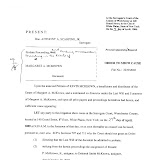
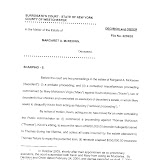
A scientist who charges he was fired from New York University in retaliation for reporting suspected research misconduct has had his lawsuit reinstated by a state appeals court. A unanimous panel of the Appellate Division, First Department, restored causes of action for retaliation and failure to follow disciplinary procedures brought by David O'Neill against NYU, NYU Hospitals Center and NYU Langone Medical Center. O'Neill was hired in 2002 as a non-tenured, full-time faculty member whose contract was renewed on a year-to-year basis. He worked as assistant director of the Vaccine/Cell Manipulation Core Laboratory for the NYU Cancer Institute, or Vaccine Lab, and oversaw the construction of the Vaccine Lab in 2004 and 2005. His supervisor was Nina Bhardwaj, and O'Neill worked with her on a clinical trial comparing a new "dentritic cell" vaccine for skin cancer with a more expensive decades-old mineral oil Montanide vaccine. Bhardwaj was the co-inventor and patent holder of the new vaccine, and she named O'Neill as the lead author for a paper on the trial. The clinical trial showed the new vaccine to be less effective than the old, but O'Neill later charged that Bhardwaj tried to shape presentations on the clinical study to downplay the negative results. In August 2009, he e-mailed a supervisor and co-authors of the research paper to report misconduct, calling Bhardwaj's new analyses "flawed and misleading and therefore invalid." As a result, he alleged that a promised promotion was stalled and that a supervisor handed him a letter saying his "lingering…anger" was hurting the lab. O'Neill went to a meeting to start the grievance process on May 3, 2010, and was handed a termination letter for "unprofessional behavior," including an April 22 phone call with a supervisor, Dr. William Carroll, in which O'Neill's "tone became very argumentative" and his "voice rose in anger." O'Neill filed a hybrid plenary action and CPLR Article 78 proceeding claiming NYU could only fire him for cause. But Manhattan Supreme Court Justice Alice Schlesinger dismissed the case under CPLR 3211(a)(1) and (7) after NYU argued that O'Neill did not characterize his complaints about Bhardwaj as research misconduct until after he filed the lawsuit. Schlesinger found that NYU appointed O'Neill as a non-tenured faculty member with an unspecified employment period.
On appeal, O'Neill argued that the renewal letter he received in February 2010 for the 2010-2011 academic year, taken together with the Faculty Handbook stating that non-tenured appointments "shall be for a definite period of time, not exceeding one academic year," created employment for one year with termination only for cause. He also argued that school policies and guidelines protected him from termination. The First Department accepted these arguments in O'Neill v. New York University, 651322/10, with Justice Karla Moskowitz writing the opinion for a panel of Justices Richard Andrias, John Sweeny, Dianne Renwick and Helen Freedman. "Here, the NYU Code of Ethics, the Code of Conduct, the Non-Retaliation Policy and the Research Misconduct Policies, in combination, include NYU's express promise that it will protect employees from reprisal for reporting suspected research misconduct," Moskowitz said in restoring the retaliation claim. "Thus, we can infer petitioner's reliance on NYU's policies, given the complaint's allegations of his compliance with those policies by reporting his concerns of suspected research misconduct." The court upheld Schlesinger's dismissal of a defamation claim, finding that the challenged statements of Carroll as to O'Neill's "anger" and "unprofessional conduct" fell within the qualified privilege for communications regarding a work-related common interest. "The complaint fails to overcome this privilege because it contains no more than conclusory allegations of malice," Moskowitz wrote. But the panel reinstated the claim that NYU failed to follow its own disciplinary procedures, saying O'Neill had "sufficiently alleged that NYU's conduct was arbitrary and capricious when it violated its own rules and regulations by summarily dismissing him during his one-year, fixed appointment term without cause." Debra Raskin and Liane Rice of Vladeck, Waldman, Elias & Engelhard represented O'Neill. "We're thrilled," Raskin said yesterday. "And we think it's really important that the rights employees are promised in handbooks be enforced." Edward Cerasia and Aaron Warshaw of Ogletree, Deakins, Nash, Smoak & Stewart represented NYU. An inquiry committee convened by NYU's School of Medicine concluded that "there is no credible evidence suggesting that Dr. Bhardwaj committed any research misconduct." Mark Hamblett can be contacted at mhamblett@alm.com.
Sunday, May 13, 2012


Saturday, May 12, 2012
Federal Grand Jury Indicts a Bunch of Lawyers in Bribery and Extortion Scheme
Federal Grand Jury Indicts Cameron County and District Attorney Armando Villalobos and Attorney Eduardo “Eddie” Lucio in Connection with a Bribery and Extortion Scheme
U.S. Attorney’s Office - Western District of Texas (210) 384-7100 -- May 07, 2012
Charges Include Conspiracy, RICO, Bribery, Extortion, and Honest Services Fraud
Western District of Texas - United States Attorney Robert Pitman and FBI Special Agent in Charge Armando Fernandez, San Antonio Division, announced the arrests of and a federal grand jury indictment charging Cameron County and District Attorney Armando Villalobos and attorney Eduardo “Eddie” Lucio in connection with a bribery and extortion scheme. The 12-count indictment, returned this morning by a federal grand jury in Brownsville, Texas, charges the defendants with one count of violating the Racketeer Influenced and Corrupt Organizations (RICO) Act and one count of conspiracy to violate the RICO Act. In addition, Villalobos is charged with seven counts of extortion and three counts of honest services fraud; Lucio, three counts of extortion and two counts of honest services fraud. According to the indictment, from October 2, 2006 through May 3, 2012, the defendants were involved in a scheme to illegally generate income for themselves and others through a pattern of bribery and extortion, favoritism, improper influence, personal self-enrichment, self-dealing, concealment, and conflict of interest. The indictment alleges that Villalobos solicited and accepted over $100,000 in bribes and kickbacks in the form of cash and campaign contributions from Lucio and others in return for favorable acts of prosecutorial discretion, including minimizing charging decisions, pre-trial diversion agreements, agreements on probationary matters, and case dismissals. The indictment also alleges that Villalobos solicited and arranged for private counsel, including Lucio, to handle civil and forfeiture matters associated with criminal matters pending in the Office of the District and County Attorney of Cameron County. The indictment further alleges that while serving as County and District Attorney for Cameron County, Villalobos used his executive authority as well as County property and employees to further the illicit affairs of the criminal enterprise. Upon conviction, Villalobos and Lucio face up to 20 years in federal prison per count. It is important to note that a criminal complaint is merely a charge and should not be considered as evidence of guilt. The defendants are presumed innocent until proven guilty in a court of law. This case is being investigated by the Federal Bureau of Investigation, Drug Enforcement Administration, Internal Revenue Service-Criminal Investigation, and the Brownsville Police Department. Southern District of Texas Assistant United States Attorney Michael Wynne and Western District of Texas Assistant United States Attorney Greg Surovic are prosecuting this case on behalf of the government.
U.S. Attorney’s Office - Western District of Texas (210) 384-7100 -- May 07, 2012
Charges Include Conspiracy, RICO, Bribery, Extortion, and Honest Services Fraud
Western District of Texas - United States Attorney Robert Pitman and FBI Special Agent in Charge Armando Fernandez, San Antonio Division, announced the arrests of and a federal grand jury indictment charging Cameron County and District Attorney Armando Villalobos and attorney Eduardo “Eddie” Lucio in connection with a bribery and extortion scheme. The 12-count indictment, returned this morning by a federal grand jury in Brownsville, Texas, charges the defendants with one count of violating the Racketeer Influenced and Corrupt Organizations (RICO) Act and one count of conspiracy to violate the RICO Act. In addition, Villalobos is charged with seven counts of extortion and three counts of honest services fraud; Lucio, three counts of extortion and two counts of honest services fraud. According to the indictment, from October 2, 2006 through May 3, 2012, the defendants were involved in a scheme to illegally generate income for themselves and others through a pattern of bribery and extortion, favoritism, improper influence, personal self-enrichment, self-dealing, concealment, and conflict of interest. The indictment alleges that Villalobos solicited and accepted over $100,000 in bribes and kickbacks in the form of cash and campaign contributions from Lucio and others in return for favorable acts of prosecutorial discretion, including minimizing charging decisions, pre-trial diversion agreements, agreements on probationary matters, and case dismissals. The indictment also alleges that Villalobos solicited and arranged for private counsel, including Lucio, to handle civil and forfeiture matters associated with criminal matters pending in the Office of the District and County Attorney of Cameron County. The indictment further alleges that while serving as County and District Attorney for Cameron County, Villalobos used his executive authority as well as County property and employees to further the illicit affairs of the criminal enterprise. Upon conviction, Villalobos and Lucio face up to 20 years in federal prison per count. It is important to note that a criminal complaint is merely a charge and should not be considered as evidence of guilt. The defendants are presumed innocent until proven guilty in a court of law. This case is being investigated by the Federal Bureau of Investigation, Drug Enforcement Administration, Internal Revenue Service-Criminal Investigation, and the Brownsville Police Department. Southern District of Texas Assistant United States Attorney Michael Wynne and Western District of Texas Assistant United States Attorney Greg Surovic are prosecuting this case on behalf of the government.
Staffers Say Law Firm Mess Finds Them 'Thrown Under Bus'
Ex-Dewey Staffers Feel 'Thrown Under Bus'
The New York Law Journal by Christine Simmons - April 14, 2012
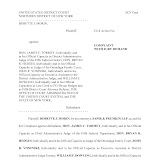
New York employees of beleaguered Dewey & LeBoeuf collected their belongings on May 11 and said goodbye to colleagues on their last day after the firm laid off scores of non-attorney personnel. Some staffers described the mood in Dewey's offices as somber and like a "funeral." Others expressed anger at firm management, blaming them for orchestrating what is shaping up as the largest law firm failure in history. "People have been thrown under the bus," a woman who described herself as a Dewey staff member said outside the firm's Avenue of the Americas offices but declined to be identified. "It's very sad." Lawyers and staff "are bursting into tears," she added. Meanwhile, the firm's downward spiral continued with the announcement that Martin Bienenstock, a Dewey partner in the office of the chairman, was joining Proskauer Rose as a partner in the corporate restructuring and governance practice. Five partners said they would follow Bienenstock to Proskauer. Two other members of the chairman's office, Richard Shutran and Jeffrey Kessler, also announced last week that they were leaving. By late afternoon May 11, only one partner in the chairman's office had not announced his departure: L. Charles Landgraf, managing partner of the Washington, D.C., office and chair of its legislative and public policy practice. Dewey sent employees a notice on May 4 that their jobs could be terminated. Last week, the firm confirmed to many associates and staff members that they were being laid off, employees said in interviews. May 11 would be the last day for many non-legal staff, while some associates were told their last day would be tomorrow. The timing of the notice has prompted an employee lawsuit (See Complaint). The suit, filed on May 10, claims the firm failed to provide enough advance notice for the terminations, as required by federal and state Worker Adjustment and Restraining Notification Act (WARN) laws. The suit is seeking class certification. At least 450 employees are members of the proposed class, which includes associates and staff in the firm's New York office, said Rene Roupinian, a partner at Outten & Golden who filed the action along with Jack Raisner. However, she said that most members of the class are non-legal staff. Vittoria Conn, 55, the named plaintiff in the suit, said in an interview that the firm is not providing severance pay. Employees' last pay check will only include the final weeks of pay and unused vacation time, she said. "We're landing completely without a cushion," said Conn, a document specialist who has worked at Dewey for more than 12 years. "As an employee, what I need now is what the law provides." "I'm pay check to pay check, like so many other people," she said. "I get one more pay check, and then what? I won't make rent next month." She said employees were put in a tough position of seeing news and blog reports, without any internal communication by the firm. "For two to three months we've been wondering who do we listen to? Do we get our truth from blogs, from newspapers," she said. "Or do we get our truth from internal communications, which were all sunshiny and optimistic. You can't really make a decision on your future with conflicts like that. You don't really know."
Employees interviewed outside Dewey's offices on May 11 described similar financial straits to those Conn recounted. Three said they believe most people in the New York office have not found new jobs. "I'm scared to death," said one, who worked in the firm's IT department and who would only provide her first name, Karen. "I don't know if I'm going to lose my home. I can't believe this is happening." Another who declined to be identified said lawyers "have not been active" in bringing staff with them to new firms. But she said she had seen partners cry about the firm's deteriorating circumstances. Employees described an office scene in which records were in boxes, furniture had been removed while fax machines and firm services, such as the cafeteria and mail room, were not functioning. "It's disgusting. There are thousands of boxes. It's pandemonium," said the woman who declined to be identified of conditions at the firm's midtown offices, which take up several floors at 1301 Avenue of the Americas. Not all employees were leaving. Staff members said a skeleton crew would remain to help clean up and collect supplies. Conn's lawsuit, filed in the U.S. District Court for the Southern District of New York, seeks to recover at least 60 days of wages and benefits, under the federal law. The firm has not responded to requests for comment on the layoffs or the lawsuit. Conn v. Dewey & LeBoeuf, 12 cv 3732, has been assigned to Judge Laura Taylor Swain. Resolution of the lawsuit likely would turn on whether the circumstances of the layoffs trigger narrowly drawn exceptions to otherwise required notice. Among those circumstances might be the unexpected loss of a major contract or an unanticipated dramatic economic downturn. "We feel strongly that the firm is liable and responsible for these wages and benefits," said Roupinian, who estimated that the collective total of wages and benefits owed would run into the millions of dollars. By late May 11, the firm had not announced a dissolution vote or a bankruptcy filing, but Roupinian said wages and benefits are priority claims under the Bankruptcy Code. "We do have a priority claim if the company files for bankruptcy," she said. "Among the unsecured creditors, the employees would be at the top of the list." However, secured creditors, including lenders owed money by the firm, would come first. Christine Simmons can be contacted at chsimmons@alm.com.
The New York Law Journal by Christine Simmons - April 14, 2012
New York employees of beleaguered Dewey & LeBoeuf collected their belongings on May 11 and said goodbye to colleagues on their last day after the firm laid off scores of non-attorney personnel. Some staffers described the mood in Dewey's offices as somber and like a "funeral." Others expressed anger at firm management, blaming them for orchestrating what is shaping up as the largest law firm failure in history. "People have been thrown under the bus," a woman who described herself as a Dewey staff member said outside the firm's Avenue of the Americas offices but declined to be identified. "It's very sad." Lawyers and staff "are bursting into tears," she added. Meanwhile, the firm's downward spiral continued with the announcement that Martin Bienenstock, a Dewey partner in the office of the chairman, was joining Proskauer Rose as a partner in the corporate restructuring and governance practice. Five partners said they would follow Bienenstock to Proskauer. Two other members of the chairman's office, Richard Shutran and Jeffrey Kessler, also announced last week that they were leaving. By late afternoon May 11, only one partner in the chairman's office had not announced his departure: L. Charles Landgraf, managing partner of the Washington, D.C., office and chair of its legislative and public policy practice. Dewey sent employees a notice on May 4 that their jobs could be terminated. Last week, the firm confirmed to many associates and staff members that they were being laid off, employees said in interviews. May 11 would be the last day for many non-legal staff, while some associates were told their last day would be tomorrow. The timing of the notice has prompted an employee lawsuit (See Complaint). The suit, filed on May 10, claims the firm failed to provide enough advance notice for the terminations, as required by federal and state Worker Adjustment and Restraining Notification Act (WARN) laws. The suit is seeking class certification. At least 450 employees are members of the proposed class, which includes associates and staff in the firm's New York office, said Rene Roupinian, a partner at Outten & Golden who filed the action along with Jack Raisner. However, she said that most members of the class are non-legal staff. Vittoria Conn, 55, the named plaintiff in the suit, said in an interview that the firm is not providing severance pay. Employees' last pay check will only include the final weeks of pay and unused vacation time, she said. "We're landing completely without a cushion," said Conn, a document specialist who has worked at Dewey for more than 12 years. "As an employee, what I need now is what the law provides." "I'm pay check to pay check, like so many other people," she said. "I get one more pay check, and then what? I won't make rent next month." She said employees were put in a tough position of seeing news and blog reports, without any internal communication by the firm. "For two to three months we've been wondering who do we listen to? Do we get our truth from blogs, from newspapers," she said. "Or do we get our truth from internal communications, which were all sunshiny and optimistic. You can't really make a decision on your future with conflicts like that. You don't really know."
Employees interviewed outside Dewey's offices on May 11 described similar financial straits to those Conn recounted. Three said they believe most people in the New York office have not found new jobs. "I'm scared to death," said one, who worked in the firm's IT department and who would only provide her first name, Karen. "I don't know if I'm going to lose my home. I can't believe this is happening." Another who declined to be identified said lawyers "have not been active" in bringing staff with them to new firms. But she said she had seen partners cry about the firm's deteriorating circumstances. Employees described an office scene in which records were in boxes, furniture had been removed while fax machines and firm services, such as the cafeteria and mail room, were not functioning. "It's disgusting. There are thousands of boxes. It's pandemonium," said the woman who declined to be identified of conditions at the firm's midtown offices, which take up several floors at 1301 Avenue of the Americas. Not all employees were leaving. Staff members said a skeleton crew would remain to help clean up and collect supplies. Conn's lawsuit, filed in the U.S. District Court for the Southern District of New York, seeks to recover at least 60 days of wages and benefits, under the federal law. The firm has not responded to requests for comment on the layoffs or the lawsuit. Conn v. Dewey & LeBoeuf, 12 cv 3732, has been assigned to Judge Laura Taylor Swain. Resolution of the lawsuit likely would turn on whether the circumstances of the layoffs trigger narrowly drawn exceptions to otherwise required notice. Among those circumstances might be the unexpected loss of a major contract or an unanticipated dramatic economic downturn. "We feel strongly that the firm is liable and responsible for these wages and benefits," said Roupinian, who estimated that the collective total of wages and benefits owed would run into the millions of dollars. By late May 11, the firm had not announced a dissolution vote or a bankruptcy filing, but Roupinian said wages and benefits are priority claims under the Bankruptcy Code. "We do have a priority claim if the company files for bankruptcy," she said. "Among the unsecured creditors, the employees would be at the top of the list." However, secured creditors, including lenders owed money by the firm, would come first. Christine Simmons can be contacted at chsimmons@alm.com.
Bar Group and The 'Conscience' of the Legal Profession
To New Leader, City Bar Is 'Conscience' of Profession
The New York Law Journal by Joel Stashenko - May 14, 2012
To Carey Dunne, the key to understanding the mission of the New York City Bar is to remember why the organization was formed in 1870. That year, 200 prominent lawyers came together to sign a document condemning the influence William "Boss" Tweed's Tammany Hall political machine had acquired over judges in the city. They vowed to fight corrupt judges and political influence on the courts. "The thing that distinguishes the city bar is that it has a fairly unique and compelling history," said Dunne, 54, who will become the bar group's 65th president at its annual meeting tomorrow, May 15. "I do think that the spirit of standing up, of using the bully pulpit, of standing up and saying, 'We believe in something and will be a force for change in the legal system' continues to this day." Early city bar leaders played pivotal roles in efforts to reform government and the legal profession. Tweed himself was convicted of stealing millions of dollars from the taxpayers and died in jail. Dunne said the city bar today remains "the conscience of the legal profession" in the city. "My view of the president's role is to make sure that the city bar continues to use its bully pulpit to be out there, making our views known, to look for the kinds of changes through the legal process that will reflect the spirit that has been animating the bar for more than 140 years," Dunne said. "I want to keep the voice of the city bar alive." Dunne is a partner at Davis Polk & Wardwell, where he leads the firm's litigation practice. He succeeds Samuel Seymour, a partner at Sullivan & Cromwell who is completing his second consecutive one-year term as president. While Dunne plans to present some policy priorities at tomorrow's meeting, he said he considers it as important, or more so, for the group to remain nimble in responding to the most important issues of the day affecting the legal profession and its 23,000 members. Dunne said the "prime example" of advocacy work that the city bar has done in the past few years occurred last year, when it, the New York State Bar Association and other local bar associations across the state banded together to urge the state Legislature to legalize same-sex marriage. The group has also thrown its influence behind higher pay for judges and an end to court system budget cuts. Dunne said the city bar president must monitor mayoral appointments to the bench as well as legislation from City Hall, Albany and Washington, D.C., that would have an impact on the courts and the legal profession. He said he intends to maintain the active pro bono programs at the city bar, adding that he himself benefitted from pro bono service by gaining hands-on experience with clients as a young lawyer. Dunne said that one of his more rewarding cases occurred in 2007, when a pro bono team of attorneys from Davis Polk succeeded in getting a murder conviction overturned for Lonnie Jones, who had served more than five years in prison for shooting a leader of the Bloods gang to death. The firm later won an award of $1.8 million from the state on Jones' behalf for false arrest and imprisonment. Dunne called Chief Judge Jonathan Lippman's new rule to require lawyers applying for bar admission (NYLJ, May 2) to perform mandatory pro bono service a "very novel, innovative step." But he said, "I am very interested to see at this point how it gets implemented over time. A lot of people are scratching their heads at this point. That will be of great interest to our summer associates." New York City Corporation Counsel Michael Cardozo, president of the city bar from 1996 to 1998, called Dunne a "perfect choice" to lead the bar group. "He's an accomplished litigator with a strong background in the so-called judicial reform issues," Cardozo said. Dunne became associated with court reform issues in part through work as a member of the Commission on the Future of Indigent Defense Services and as chair of the Special Commission on the Future of the New York State Courts. He was appointed to both commissions by former chief judge Judith Kaye. Kaye said she came to rely on Dunne because he is an "excellent" litigator who has a breadth of understanding about the court system through his work at the city bar and the Fund for Modern Courts, where he chaired a task force on judicial selection. Dunne is also a former chair of the fund and received its John J. McCloy Award in 2008. Dunne, who sits on the three-member management team at David Polk, said he will need help from his partners to meet his obligations to both the city bar and his firm's practice. At Davis Polk, he specializes in criminal, civil and regulatory matters, including defending clients in state and federal governmental investigations and enforcement actions—about 80 percent of his cases involving federal and 20 percent state agencies. He also has wide experience advising companies on compliance and corporate governance and has had recent assignments in China, Korea, Pakistan, the Philippines, Italy and the United Kingdom. Dunne, an Oberlin College and Harvard Law graduate, was a prosecutor in the Manhattan District Attorney's Office from 1984 to 1987. He joined Davis Polk as an associate in 1987. He and his wife, Kate Manning, a one-time Emmy Award-winning producer at PBS, live in Manhattan. Manning wrote a well-received novel, Whitegirl, in 2002. The couple has three children, ages 22, 19 and 16. Joel Stashenko can be contacted at jstashenko@alm.com.
The New York Law Journal by Joel Stashenko - May 14, 2012
To Carey Dunne, the key to understanding the mission of the New York City Bar is to remember why the organization was formed in 1870. That year, 200 prominent lawyers came together to sign a document condemning the influence William "Boss" Tweed's Tammany Hall political machine had acquired over judges in the city. They vowed to fight corrupt judges and political influence on the courts. "The thing that distinguishes the city bar is that it has a fairly unique and compelling history," said Dunne, 54, who will become the bar group's 65th president at its annual meeting tomorrow, May 15. "I do think that the spirit of standing up, of using the bully pulpit, of standing up and saying, 'We believe in something and will be a force for change in the legal system' continues to this day." Early city bar leaders played pivotal roles in efforts to reform government and the legal profession. Tweed himself was convicted of stealing millions of dollars from the taxpayers and died in jail. Dunne said the city bar today remains "the conscience of the legal profession" in the city. "My view of the president's role is to make sure that the city bar continues to use its bully pulpit to be out there, making our views known, to look for the kinds of changes through the legal process that will reflect the spirit that has been animating the bar for more than 140 years," Dunne said. "I want to keep the voice of the city bar alive." Dunne is a partner at Davis Polk & Wardwell, where he leads the firm's litigation practice. He succeeds Samuel Seymour, a partner at Sullivan & Cromwell who is completing his second consecutive one-year term as president. While Dunne plans to present some policy priorities at tomorrow's meeting, he said he considers it as important, or more so, for the group to remain nimble in responding to the most important issues of the day affecting the legal profession and its 23,000 members. Dunne said the "prime example" of advocacy work that the city bar has done in the past few years occurred last year, when it, the New York State Bar Association and other local bar associations across the state banded together to urge the state Legislature to legalize same-sex marriage. The group has also thrown its influence behind higher pay for judges and an end to court system budget cuts. Dunne said the city bar president must monitor mayoral appointments to the bench as well as legislation from City Hall, Albany and Washington, D.C., that would have an impact on the courts and the legal profession. He said he intends to maintain the active pro bono programs at the city bar, adding that he himself benefitted from pro bono service by gaining hands-on experience with clients as a young lawyer. Dunne said that one of his more rewarding cases occurred in 2007, when a pro bono team of attorneys from Davis Polk succeeded in getting a murder conviction overturned for Lonnie Jones, who had served more than five years in prison for shooting a leader of the Bloods gang to death. The firm later won an award of $1.8 million from the state on Jones' behalf for false arrest and imprisonment. Dunne called Chief Judge Jonathan Lippman's new rule to require lawyers applying for bar admission (NYLJ, May 2) to perform mandatory pro bono service a "very novel, innovative step." But he said, "I am very interested to see at this point how it gets implemented over time. A lot of people are scratching their heads at this point. That will be of great interest to our summer associates." New York City Corporation Counsel Michael Cardozo, president of the city bar from 1996 to 1998, called Dunne a "perfect choice" to lead the bar group. "He's an accomplished litigator with a strong background in the so-called judicial reform issues," Cardozo said. Dunne became associated with court reform issues in part through work as a member of the Commission on the Future of Indigent Defense Services and as chair of the Special Commission on the Future of the New York State Courts. He was appointed to both commissions by former chief judge Judith Kaye. Kaye said she came to rely on Dunne because he is an "excellent" litigator who has a breadth of understanding about the court system through his work at the city bar and the Fund for Modern Courts, where he chaired a task force on judicial selection. Dunne is also a former chair of the fund and received its John J. McCloy Award in 2008. Dunne, who sits on the three-member management team at David Polk, said he will need help from his partners to meet his obligations to both the city bar and his firm's practice. At Davis Polk, he specializes in criminal, civil and regulatory matters, including defending clients in state and federal governmental investigations and enforcement actions—about 80 percent of his cases involving federal and 20 percent state agencies. He also has wide experience advising companies on compliance and corporate governance and has had recent assignments in China, Korea, Pakistan, the Philippines, Italy and the United Kingdom. Dunne, an Oberlin College and Harvard Law graduate, was a prosecutor in the Manhattan District Attorney's Office from 1984 to 1987. He joined Davis Polk as an associate in 1987. He and his wife, Kate Manning, a one-time Emmy Award-winning producer at PBS, live in Manhattan. Manning wrote a well-received novel, Whitegirl, in 2002. The couple has three children, ages 22, 19 and 16. Joel Stashenko can be contacted at jstashenko@alm.com.
Friday, May 11, 2012
Tembeckjian's Corrupt 'Ethics' Crew Gets Judge to Resign
Town Justice Resigns OCA Job After Ticket-Fixing Determination
The New York Law Journal by Joel Stashenko - May 11, 2012
ALBANY, NY - A court system employee who provided training and support services for local municipal justices resigned yesterday after the Commission on Judicial Conduct recommended her removal as a part-time town justice for fixing traffic tickets. Diane Schilling, an attorney, had been a part-time justice of the East Greenbush Town Court, near Albany, since 2002. She also has worked in various positions for the Office of Court Administration since 2003, and since June 2009 she has served as the director of the Office of Justice Court Support, which provides training, education and support to local judges. She earned $115,000 in that position, and made $30,259 as a town justice. "As an experienced judge and as an attorney with expertise in providing advice, support and training to local justices [Schilling] should have recognized and avoided any taint of favoritism," the Commission on Judicial Conduct said in a report released yesterday.
"Ticket fixing strikes at the heart of our system of justice, which is based on equal treatment for all," the commission observed. "As this Commission stated more than 30 years ago, ticket fixing results in 'two systems of justice, one for the average citizen and another for people with…the right 'connections.'" While acknowledging that removal from office is an "extreme sanction," the commission concluded that the circumstances justified that action here. "While we have duly considered the mitigation presented in this case, including respondent's public service, her previously unblemished record and her admission of wrongdoing, the nature and gravity of the proven impropriety in this case cannot be overlooked," the commission said. "As the Court of Appeals has stated, in certain cases, 'no amount of [mitigation] will override inexcusable behavior.'"
The commission found that Schilling violated judicial canons by fixing a ticket received in East Greenbush in 2009 by Lisa Toomey, the wife of Sand Lake Town Court Justice Paul Toomey, then director of the justice court support division where he was a colleague of Schilling. The commission said Schilling engaged in a "substantial effort to accord favoritism" to Ms. Toomey by going to the East Greenbush police station the morning after she was ticketed for speeding to see if she could intercede. The commission said Schilling also sent an e-mail to Mr. Toomey explaining her efforts on his wife's behalf and discussed the ticket with him in person. The commission said that Schilling's actions led to the disappearance of all copies of the ticket, except the one held by Ms. Toomey, from the court system and police files. The commission noted that Ms. Toomey had pleaded not guilty and attempted to handle the ticket in the regular manner. It found no wrongdoing on the part of either Toomey. The commission added that Schilling knew from personal experience that a ticket could disappear because they let that happen in 2005 when she received a ticket from a state trooper who came to her office and took it back when he learned she was a judge. The commission said that Schilling acknowledged to co-workers at the Office of Justice Court Support that she had gotten off on the speeding ticket.
"The impropriety was compounded by telling her colleagues in an agency which advises judges on the law of her experience in cooperating with an effort to have her own ticket voided after the trooper learned she was a judge," the commission held. "Under the circumstances presented, we agree with the referee's conclusion that the example set by respondent 'falls well short of the standard of behavior expected of a judge.'" Schilling argued before the commission that she should receive only an admonition. E. Stewart Jones Jr. and James Knox of the E. Stewart Jones Law firm in Troy represented Schilling. Neither immediately returned calls seeking comment yesterday. Officials at the East Greenbush town court said yesterday they were unsure whether Schilling would contest her recommended removal by the commission. She has 60 days to do so in an appeal to the state Court of Appeals. David Bookstaver, an Office of Court Administration spokesman, confirmed yesterday that Schilling has resigned her state job, but declined further comment. The 10-member Commission on Judicial Conduct's ruling was unanimous except for commissioner Joseph Belluck, who took no part in the deliberations. Ronald Younkins, director of operations for the OCA, said the Office of Justice Court Support was formed in 2006 to give logistical and, in some cases, financial, aid to the town and village courts. Among other things, he said it administers the "j-cap" program under which local courts are given grants for equipment upgrades such as metal detectors and new computers. The office also provides training to new town and village court justices, especially those who are not lawyers. Included in that instruction, Younkins said, is training on ethical issues. There are about 1,200 town and village courts across the state with more than 2,000 justices on their benches. Joel Stashenko can be contacted at jstasthenko@alm.com.
The New York Law Journal by Joel Stashenko - May 11, 2012
ALBANY, NY - A court system employee who provided training and support services for local municipal justices resigned yesterday after the Commission on Judicial Conduct recommended her removal as a part-time town justice for fixing traffic tickets. Diane Schilling, an attorney, had been a part-time justice of the East Greenbush Town Court, near Albany, since 2002. She also has worked in various positions for the Office of Court Administration since 2003, and since June 2009 she has served as the director of the Office of Justice Court Support, which provides training, education and support to local judges. She earned $115,000 in that position, and made $30,259 as a town justice. "As an experienced judge and as an attorney with expertise in providing advice, support and training to local justices [Schilling] should have recognized and avoided any taint of favoritism," the Commission on Judicial Conduct said in a report released yesterday.
"Ticket fixing strikes at the heart of our system of justice, which is based on equal treatment for all," the commission observed. "As this Commission stated more than 30 years ago, ticket fixing results in 'two systems of justice, one for the average citizen and another for people with…the right 'connections.'" While acknowledging that removal from office is an "extreme sanction," the commission concluded that the circumstances justified that action here. "While we have duly considered the mitigation presented in this case, including respondent's public service, her previously unblemished record and her admission of wrongdoing, the nature and gravity of the proven impropriety in this case cannot be overlooked," the commission said. "As the Court of Appeals has stated, in certain cases, 'no amount of [mitigation] will override inexcusable behavior.'"
The commission found that Schilling violated judicial canons by fixing a ticket received in East Greenbush in 2009 by Lisa Toomey, the wife of Sand Lake Town Court Justice Paul Toomey, then director of the justice court support division where he was a colleague of Schilling. The commission said Schilling engaged in a "substantial effort to accord favoritism" to Ms. Toomey by going to the East Greenbush police station the morning after she was ticketed for speeding to see if she could intercede. The commission said Schilling also sent an e-mail to Mr. Toomey explaining her efforts on his wife's behalf and discussed the ticket with him in person. The commission said that Schilling's actions led to the disappearance of all copies of the ticket, except the one held by Ms. Toomey, from the court system and police files. The commission noted that Ms. Toomey had pleaded not guilty and attempted to handle the ticket in the regular manner. It found no wrongdoing on the part of either Toomey. The commission added that Schilling knew from personal experience that a ticket could disappear because they let that happen in 2005 when she received a ticket from a state trooper who came to her office and took it back when he learned she was a judge. The commission said that Schilling acknowledged to co-workers at the Office of Justice Court Support that she had gotten off on the speeding ticket.
"The impropriety was compounded by telling her colleagues in an agency which advises judges on the law of her experience in cooperating with an effort to have her own ticket voided after the trooper learned she was a judge," the commission held. "Under the circumstances presented, we agree with the referee's conclusion that the example set by respondent 'falls well short of the standard of behavior expected of a judge.'" Schilling argued before the commission that she should receive only an admonition. E. Stewart Jones Jr. and James Knox of the E. Stewart Jones Law firm in Troy represented Schilling. Neither immediately returned calls seeking comment yesterday. Officials at the East Greenbush town court said yesterday they were unsure whether Schilling would contest her recommended removal by the commission. She has 60 days to do so in an appeal to the state Court of Appeals. David Bookstaver, an Office of Court Administration spokesman, confirmed yesterday that Schilling has resigned her state job, but declined further comment. The 10-member Commission on Judicial Conduct's ruling was unanimous except for commissioner Joseph Belluck, who took no part in the deliberations. Ronald Younkins, director of operations for the OCA, said the Office of Justice Court Support was formed in 2006 to give logistical and, in some cases, financial, aid to the town and village courts. Among other things, he said it administers the "j-cap" program under which local courts are given grants for equipment upgrades such as metal detectors and new computers. The office also provides training to new town and village court justices, especially those who are not lawyers. Included in that instruction, Younkins said, is training on ethical issues. There are about 1,200 town and village courts across the state with more than 2,000 justices on their benches. Joel Stashenko can be contacted at jstasthenko@alm.com.
16 Judges Arrested in 'Vast Web of Corruption'
Italian Police Arrest 16 Judges, Sieze €1 Billion in Mafia Bust
The International Business Times by Oliver Tree - March 19, 2012
Police in Naples, Italy have arrested 16 judges and seized assets worth over €1 billion ($1.3 billion) in a huge anti-mafia bust exposing the extent of organized crime's penetration into Italian big business and the state. The judges were among 47 people arrested under operation Bad Metal, which included the seizure of buildings, cars and property. The arrests were part of a crackdown on the Fabroccino clan, who are believed to have bribed judges in order to obtain favorable court judgments. Police have not released the names of the arrested judges, the BBC said. According to the Financial Times, the 16 were all tax judges suspected of forming a "vast web of corruption" that involved an "illicit trade of court verdicts." In Italy, organized crime has a suspected "turnover" of more than €100 billion, with many legitimate businesses either paying protection money to gangs, or the businesses themselves recycling the money gained from drugs and arms smuggling. "It is a signal of transparency . . . With measures like this we can conduct a real and concrete battle against the Mafia's infiltrations and can break that vicious circle which damages the economy and healthy companies," Emma Marcegaglia, head of anti-corruption group Confindustria, told the FT last week. Monday's operation was the largest against the mafia since 2010, when authorities in Sicily seized €1.5 billion in mafia assets on the island.
The International Business Times by Oliver Tree - March 19, 2012
Police in Naples, Italy have arrested 16 judges and seized assets worth over €1 billion ($1.3 billion) in a huge anti-mafia bust exposing the extent of organized crime's penetration into Italian big business and the state. The judges were among 47 people arrested under operation Bad Metal, which included the seizure of buildings, cars and property. The arrests were part of a crackdown on the Fabroccino clan, who are believed to have bribed judges in order to obtain favorable court judgments. Police have not released the names of the arrested judges, the BBC said. According to the Financial Times, the 16 were all tax judges suspected of forming a "vast web of corruption" that involved an "illicit trade of court verdicts." In Italy, organized crime has a suspected "turnover" of more than €100 billion, with many legitimate businesses either paying protection money to gangs, or the businesses themselves recycling the money gained from drugs and arms smuggling. "It is a signal of transparency . . . With measures like this we can conduct a real and concrete battle against the Mafia's infiltrations and can break that vicious circle which damages the economy and healthy companies," Emma Marcegaglia, head of anti-corruption group Confindustria, told the FT last week. Monday's operation was the largest against the mafia since 2010, when authorities in Sicily seized €1.5 billion in mafia assets on the island.
National Judicial Reform Needed
Mecklenburg District Judge John Totten faces three challengers in re-election bid
The Charlotte Observer News by Gary L. Wright - April 27, 2012
Four years ago, Ben Thalheimer was ousted from his judgeship by millionaire socialite Bill Belk who had campaigned to reform the court system. Thalheimer had been the judge who awarded Belk’s ex-wife more than half of their $4.9 million in assets. Belk is gone – banned by the N.C. Supreme Court from ever again holding a judgeship in North Carolina. Now Thalheimer has his sights set on ousting a judge. He’s targeted Mecklenburg District Judge John Totten, who like Belk, has gotten into trouble with the N.C. Judicial Standards Commission for misconduct. Thalheimer isn’t Totten’s only challenger. Two other lawyers – David Strickland and Kary Watson – are hoping to unseat the judge. Totten will have to be among the two top vote-getters in May’s primary to get a chance to keep his judgeship. The two with the most votes will square off in November’s general election. Thalheimer and Watson are questioning Totten’s performance on the bench. “Sadly, Judge Totten has acted in a manner that has brought disgrace to the District Court,” Thalheimer said. “His actions have continued a disturbing trend started by Judge Bill Belk in which judges have disregarded the law and ignored the ethical obligations of the position…We need to reinstate the integrity of the office.” Watson said: “Judges should be held to the highest standards of professional ethics, personal integrity, knowledge and application of the law. In recent years, the actions of a few have tarnished the public’s perception of our judiciary, leading some to question the fairness and impartiality of our judicial system.” Totten wouldn’t talk with the Observer about his re-election bid. “I have no comment,” the judge said. In March 2010, N.C. Supreme Court Chief Justice Sarah Parker suspended Totten from the bench. The suspension followed complaints about what sources described as Totten’s inappropriate comments to court personnel. In some of those remarks, the sources said, Totten had recounted experiences at a bar and restaurant and described women’s bodies and how scantily they were dressed.
When Totten returned to the bench in July 2010, the judge issued a statement expressing regret in making what he described as “offensive” remarks to associates. Totten also disclosed that he has Wegener’s granulomatosis, a life-threatening illness affecting the lungs, kidneys and blood. He said his doctors believe a combination of medications and high doses of steroids severely impacted him during the period when the inappropriate remarks were made. “I am returning to my duties as District Court judge and can assure you that my future conduct will be above reproach,” Totten said in his statement. Eight months later, the N.C. Judicial Standards Commission charged Totten with misconduct in his handling of a drunken driving case in September 2010. Totten was accused of throwing out a drunken driving defendant’s alcohol level so the man wouldn’t be punished as harshly as state law requires. Totten was censured in March by the N.C. Supreme Court for misconduct in his handling of the drunken driving case. The 54-year-old judge, elected to the bench in 2008, got bad ratings for his performance on the bench in a survey of lawyers conducted by the N.C. Bar Association. Totten received a below average score – 2.03 on a scale of 1 to 5 – for his overall performance on the bench. He received a 1.98 score for integrity and impartiality. A rating of 5 is “excellent,” 4 is “good,” 3 is “average,” 2 is “below average” and 1 is “poor.” The N.C. Bar Association last week released the results of another statewide survey – this one of the lawyers seeking to oust judges or running for judgeships where the incumbents are not seeking re-election. The lawyers were evaluated on everything from legal ability and integrity and fairness to professionalism and overall performance. Among the three lawyers seeking to unseat Totten, Kary Watson got the highest marks. She received an overall performance rating of 4.18. David Strickland’s overall performance rating was 3.88, while former judge Ben Thalheimer received a 3.47 overall performance rating.
Watson - Kary Watson has spent the past 10 years with the law firm of Horack Talley Pharr & Lowndes. She began her career handling commercial and real estate litigation. “However, after experiencing a few domestic cases in District Court, it was clear that practicing family law was where I belonged,” she said. “For more than 10 years now, I have been in the trenches of family court, litigating cases both big and small. I have represented hundreds of mothers, fathers and children, and many of my cases have involved new and complex legal issues.” Watson, 37, said she has taken more than 20 cases to North Carolina’s appellate courts. “Many times other family law attorneys have trusted me to help their clients navigate the difficult process of prosecuting or defending an appeal,” she said. “Of my appellate cases more than 75 percent resulted in favorable rulings for my clients.” Watson said she does not know David Strickland and cannot comment about his bid for the judgeship. “What distinguishes me from the two candidates I know is my work ethic, my actual litigation experience, and the high standards I personally adhere to,” she said. “I am constantly reading and educating myself as to new opinions and changes in the law, both in my area of practice and others.
Strickland - David Strickland is touting his experience in his campaign to unseat Totten. He says he has spent his entire 10-year legal career working in Mecklenburg’s district courts. “I want to utilize my experience and legal knowledge by serving the citizens of Mecklenburg County in the forum I know best – District Court,” Strickland, 35, said. “Mecklenburg County deserves a fair, impartial and knowledgeable judge who will enforce the laws of this state to help protect the safety of its citizens. I can fulfill this role if elected.” Strickland likened a judge’s gavel to the whistle he carries as a basketball referee. “I have a fair amount of experience making quick, tough calls on basketball courts as a collegiate and high school basketball referee,” he said. “After 15 years of making difficult and sometimes unpopular calls, it’s not hard to understand there is little difference between a whistle and a gavel.” Asked why he’s seeking to oust Totten, Strickland replied: “I want to serve the citizens of Mecklenburg County and provide effective leadership on the Mecklenburg County District Court bench that all of its citizens can be proud of…Mecklenburg County deserves an ethical judge that can honorably serve its citizens. “My experience, professionalism, knowledge and fairness make me the best candidate for Judge Totten’s seat.”
Thalheimer - Ben Thalheimer says he wants to return to the bench as part of his long-established commitment to public service. He’s worked in the public sector for more than 15 years – as a magistrate and a District Court judge. “I have an extensive record of service to the community…,” Thalheimer, 59, said. “It is what I enjoy doing. While many of my law school contemporaries chose to work in high-paying prestigious law firms, I chose to devote my career to helping individuals instead of institutions.” Those efforts, Thalheimer says, range from his volunteer work to aid victims of domestic violence to developing programs that assisted grandparents seeking custody of their abused and neglected grandchildren. Thalheimer says he’s made “a critical difference” in improving the lives of people – particularly children. “Nothing gives me more pleasure,” he said. “I wish to return to a position that will allow me to continue to have a positive influence on families.” Thalheimer says he has firmly, fairly and impartially applied the law. The former judge says he has ruled on thousands of family law cases and his decisions have been appealed less than 10 times. “People should vote for me because of my unsurpassed experience, longtime commitment to the community, both off and on the bench, and my proven record of integrity,” Thalheimer said. gwright@charlotteobserver.com
RELATED BACKGROUND STORY:
District judge removed from bench; complaints of inappropriate comments
The Charlotte Observer News by Gary L. Wright - April 13, 2010
Sources: Action followed complaints about inappropriate comments by Totten. Mecklenburg District Judge John Totten has been taken off the bench indefinitely by N.C. Supreme Court
The chief justice did not cite a reason in her order. Totten's suspension follows complaints about what sources describe as the judge's inappropriate comments to court personnel. In some of those remarks, the sources said, the judge recounted experiences at a bar and restaurant and described women's bodies and how scantily they were dressed. Reports outlining Totten's comments to court personnel have been sent to the N.C. Judicial Standards Commission, according to sources. Totten, who is in his early 50s and was elected to the bench in 2008, did not return two phone calls from the Observer on Monday afternoon. Parker's March 26 order was made public Monday by the N.C. Administrative Office of the Courts in Raleigh. "It is hereby ordered that District Court Judge John Totten is placed on temporary suspension, that Judge Totten be relieved of all existing and future assignments and sessions of District Court, and that all such assignments be reassigned to other district court judges ... until further notice," Parker wrote in her order. A spokeswoman for the Administrative Office of the Courts said she couldn't talk about why Totten was suspended. That information, she said, is a personnel matter. Sources have said that Totten has been ill in recent months. He had been on medical leave from late October until he was allowed to return for half days in early January, a court official said. He has held court only seven days since going on medical leave, the court official said. Totten, who earns more than $109,000 a year, has never been publicly reprimanded and has never had formal charges filed against him. Paul Ross, executive director of the Judicial Standards Commission, would neither confirm nor deny Monday night if a complaint had been filed against Totten. The commission, which investigates allegations of ethical violations by judges, can issue private letters of caution, or publicly reprimand judges. It can also recommend that the N.C. Supreme Court censure, suspend or remove a judge. Totten is not the first Mecklenburg district judge to face troubles in the past year. Two judges have been disciplined. Last April, the standards commission accused Judge Bill Belk of "willful misconduct" for continuing to serve on corporate boards and for behavior during a confrontation with Chief District Judge Lisa Bell. Belk resigned in November. A week later, the standards commission recommended that the N.C. Supreme Court remove him from the bench. If that happens, he would be banned from ever holding a judgeship in the state. Last month, the Judicial Standards Commission reprimanded Judge Timothy Smith for outbursts directed at prosecutors who were trying cases against his wife, a public defender. The commission also reprimanded Smith in April 2009 for misusing the power of his judicial office to help his sister in a domestic violence case. gwright@charlotteobserver.com - Jim Morrill contributed to this story.
The Charlotte Observer News by Gary L. Wright - April 27, 2012
Four years ago, Ben Thalheimer was ousted from his judgeship by millionaire socialite Bill Belk who had campaigned to reform the court system. Thalheimer had been the judge who awarded Belk’s ex-wife more than half of their $4.9 million in assets. Belk is gone – banned by the N.C. Supreme Court from ever again holding a judgeship in North Carolina. Now Thalheimer has his sights set on ousting a judge. He’s targeted Mecklenburg District Judge John Totten, who like Belk, has gotten into trouble with the N.C. Judicial Standards Commission for misconduct. Thalheimer isn’t Totten’s only challenger. Two other lawyers – David Strickland and Kary Watson – are hoping to unseat the judge. Totten will have to be among the two top vote-getters in May’s primary to get a chance to keep his judgeship. The two with the most votes will square off in November’s general election. Thalheimer and Watson are questioning Totten’s performance on the bench. “Sadly, Judge Totten has acted in a manner that has brought disgrace to the District Court,” Thalheimer said. “His actions have continued a disturbing trend started by Judge Bill Belk in which judges have disregarded the law and ignored the ethical obligations of the position…We need to reinstate the integrity of the office.” Watson said: “Judges should be held to the highest standards of professional ethics, personal integrity, knowledge and application of the law. In recent years, the actions of a few have tarnished the public’s perception of our judiciary, leading some to question the fairness and impartiality of our judicial system.” Totten wouldn’t talk with the Observer about his re-election bid. “I have no comment,” the judge said. In March 2010, N.C. Supreme Court Chief Justice Sarah Parker suspended Totten from the bench. The suspension followed complaints about what sources described as Totten’s inappropriate comments to court personnel. In some of those remarks, the sources said, Totten had recounted experiences at a bar and restaurant and described women’s bodies and how scantily they were dressed.
When Totten returned to the bench in July 2010, the judge issued a statement expressing regret in making what he described as “offensive” remarks to associates. Totten also disclosed that he has Wegener’s granulomatosis, a life-threatening illness affecting the lungs, kidneys and blood. He said his doctors believe a combination of medications and high doses of steroids severely impacted him during the period when the inappropriate remarks were made. “I am returning to my duties as District Court judge and can assure you that my future conduct will be above reproach,” Totten said in his statement. Eight months later, the N.C. Judicial Standards Commission charged Totten with misconduct in his handling of a drunken driving case in September 2010. Totten was accused of throwing out a drunken driving defendant’s alcohol level so the man wouldn’t be punished as harshly as state law requires. Totten was censured in March by the N.C. Supreme Court for misconduct in his handling of the drunken driving case. The 54-year-old judge, elected to the bench in 2008, got bad ratings for his performance on the bench in a survey of lawyers conducted by the N.C. Bar Association. Totten received a below average score – 2.03 on a scale of 1 to 5 – for his overall performance on the bench. He received a 1.98 score for integrity and impartiality. A rating of 5 is “excellent,” 4 is “good,” 3 is “average,” 2 is “below average” and 1 is “poor.” The N.C. Bar Association last week released the results of another statewide survey – this one of the lawyers seeking to oust judges or running for judgeships where the incumbents are not seeking re-election. The lawyers were evaluated on everything from legal ability and integrity and fairness to professionalism and overall performance. Among the three lawyers seeking to unseat Totten, Kary Watson got the highest marks. She received an overall performance rating of 4.18. David Strickland’s overall performance rating was 3.88, while former judge Ben Thalheimer received a 3.47 overall performance rating.
Watson - Kary Watson has spent the past 10 years with the law firm of Horack Talley Pharr & Lowndes. She began her career handling commercial and real estate litigation. “However, after experiencing a few domestic cases in District Court, it was clear that practicing family law was where I belonged,” she said. “For more than 10 years now, I have been in the trenches of family court, litigating cases both big and small. I have represented hundreds of mothers, fathers and children, and many of my cases have involved new and complex legal issues.” Watson, 37, said she has taken more than 20 cases to North Carolina’s appellate courts. “Many times other family law attorneys have trusted me to help their clients navigate the difficult process of prosecuting or defending an appeal,” she said. “Of my appellate cases more than 75 percent resulted in favorable rulings for my clients.” Watson said she does not know David Strickland and cannot comment about his bid for the judgeship. “What distinguishes me from the two candidates I know is my work ethic, my actual litigation experience, and the high standards I personally adhere to,” she said. “I am constantly reading and educating myself as to new opinions and changes in the law, both in my area of practice and others.
Strickland - David Strickland is touting his experience in his campaign to unseat Totten. He says he has spent his entire 10-year legal career working in Mecklenburg’s district courts. “I want to utilize my experience and legal knowledge by serving the citizens of Mecklenburg County in the forum I know best – District Court,” Strickland, 35, said. “Mecklenburg County deserves a fair, impartial and knowledgeable judge who will enforce the laws of this state to help protect the safety of its citizens. I can fulfill this role if elected.” Strickland likened a judge’s gavel to the whistle he carries as a basketball referee. “I have a fair amount of experience making quick, tough calls on basketball courts as a collegiate and high school basketball referee,” he said. “After 15 years of making difficult and sometimes unpopular calls, it’s not hard to understand there is little difference between a whistle and a gavel.” Asked why he’s seeking to oust Totten, Strickland replied: “I want to serve the citizens of Mecklenburg County and provide effective leadership on the Mecklenburg County District Court bench that all of its citizens can be proud of…Mecklenburg County deserves an ethical judge that can honorably serve its citizens. “My experience, professionalism, knowledge and fairness make me the best candidate for Judge Totten’s seat.”
Thalheimer - Ben Thalheimer says he wants to return to the bench as part of his long-established commitment to public service. He’s worked in the public sector for more than 15 years – as a magistrate and a District Court judge. “I have an extensive record of service to the community…,” Thalheimer, 59, said. “It is what I enjoy doing. While many of my law school contemporaries chose to work in high-paying prestigious law firms, I chose to devote my career to helping individuals instead of institutions.” Those efforts, Thalheimer says, range from his volunteer work to aid victims of domestic violence to developing programs that assisted grandparents seeking custody of their abused and neglected grandchildren. Thalheimer says he’s made “a critical difference” in improving the lives of people – particularly children. “Nothing gives me more pleasure,” he said. “I wish to return to a position that will allow me to continue to have a positive influence on families.” Thalheimer says he has firmly, fairly and impartially applied the law. The former judge says he has ruled on thousands of family law cases and his decisions have been appealed less than 10 times. “People should vote for me because of my unsurpassed experience, longtime commitment to the community, both off and on the bench, and my proven record of integrity,” Thalheimer said. gwright@charlotteobserver.com
RELATED BACKGROUND STORY:
District judge removed from bench; complaints of inappropriate comments
The Charlotte Observer News by Gary L. Wright - April 13, 2010
Sources: Action followed complaints about inappropriate comments by Totten. Mecklenburg District Judge John Totten has been taken off the bench indefinitely by N.C. Supreme Court
The chief justice did not cite a reason in her order. Totten's suspension follows complaints about what sources describe as the judge's inappropriate comments to court personnel. In some of those remarks, the sources said, the judge recounted experiences at a bar and restaurant and described women's bodies and how scantily they were dressed. Reports outlining Totten's comments to court personnel have been sent to the N.C. Judicial Standards Commission, according to sources. Totten, who is in his early 50s and was elected to the bench in 2008, did not return two phone calls from the Observer on Monday afternoon. Parker's March 26 order was made public Monday by the N.C. Administrative Office of the Courts in Raleigh. "It is hereby ordered that District Court Judge John Totten is placed on temporary suspension, that Judge Totten be relieved of all existing and future assignments and sessions of District Court, and that all such assignments be reassigned to other district court judges ... until further notice," Parker wrote in her order. A spokeswoman for the Administrative Office of the Courts said she couldn't talk about why Totten was suspended. That information, she said, is a personnel matter. Sources have said that Totten has been ill in recent months. He had been on medical leave from late October until he was allowed to return for half days in early January, a court official said. He has held court only seven days since going on medical leave, the court official said. Totten, who earns more than $109,000 a year, has never been publicly reprimanded and has never had formal charges filed against him. Paul Ross, executive director of the Judicial Standards Commission, would neither confirm nor deny Monday night if a complaint had been filed against Totten. The commission, which investigates allegations of ethical violations by judges, can issue private letters of caution, or publicly reprimand judges. It can also recommend that the N.C. Supreme Court censure, suspend or remove a judge. Totten is not the first Mecklenburg district judge to face troubles in the past year. Two judges have been disciplined. Last April, the standards commission accused Judge Bill Belk of "willful misconduct" for continuing to serve on corporate boards and for behavior during a confrontation with Chief District Judge Lisa Bell. Belk resigned in November. A week later, the standards commission recommended that the N.C. Supreme Court remove him from the bench. If that happens, he would be banned from ever holding a judgeship in the state. Last month, the Judicial Standards Commission reprimanded Judge Timothy Smith for outbursts directed at prosecutors who were trying cases against his wife, a public defender. The commission also reprimanded Smith in April 2009 for misusing the power of his judicial office to help his sister in a domestic violence case. gwright@charlotteobserver.com - Jim Morrill contributed to this story.
Thursday, May 10, 2012
Feds File Civil Rights Lawsuit Against Sheriff
Civil rights lawsuit filed against Ariz. sheriff
The Associated Press by Jacques Billeaud - May 10, 2012
PHOENIX (AP) — Federal authorities sued America's self-proclaimed toughest sheriff Thursday, a rare step after months of negotiations failed to yield an agreement to settle allegations that his department racially profiled Latinos in his trademark immigration patrols. The U.S. Department of Justice officials said the agency filed a lawsuit only once before in the 18-year history of its police reform work. The lawsuit escalates the standoff with Sheriff Joe Arpaio and puts the dispute on track to be decided by a federal judge. "We have invariably been able to work collaboratively with law enforcement agencies to build better departments and safer communities," said Assistant U.S. Attorney General Thomas Perez, who heads the DOJ's civil rights division, at a news conference. Arpaio and the Maricopa County sheriff's office "have been a glaring exception," Perez said. The DOJ first leveled the allegations against Arpaio in December, saying that a culture of disregard for basic constitutional rights prevailed at the sheriff's office, which covers metro Phoenix. Federal officials held off on filing a lawsuit as they tried to reach a settlement, but talks broke off last month. At the time, Arpaio refused to agree to a court-appointed monitor who would help enforce a settlement. Arpaio said it would mean every policy decision would have to be cleared through an observer and would nullify his authority. At a news conference Wednesday, after DOJ officials notified him of their intent to sue, Arpaio defended himself. "If they sue, we'll go to court," he said. "And then we'll find out the real story. They're telling me how to run my organization. I'd like to get this resolved, but I'm not going to give up my authority to the federal government. It's as simple as that."
Arpaio's office is also accused of punishing Hispanic jail inmates for speaking Spanish and launching some patrols based on complaints about dark-skinned people congregating in a given area or speaking Spanish. A crime was never reported. The DOJ has been seeking an agreement requiring Arpaio's office to train officers in how to make constitutional traffic stops, collect data on people arrested in traffic stops and assure Latinos that the department is there to also protect them. "Constitutional policing is an essential element of effective law enforcement," according to the DOJ lawsuit. The sheriff's office "and Arpaio's conduct is neither constitutional nor effective law enforcement." One of the examples cited in the lawsuit was a Latino woman who is a U.S. citizen and was 5-months pregnant when she was stopped as she pulled into her driveway. When the woman refused to sit on the hood of a car as the officer insisted, the officer pulled her arms behind her back, slammed her stomach first into the vehicle three times and dragged her to his patrol car. He shoved her into the back seat and made her wait for about 30 minutes without air conditioning, the lawsuit said. Eventually, the woman was cited for failure to provide proof of insurance, but the matter was resolved when she provided such proof to a court, the lawsuit said. The sheriff has said the investigation was a politically motivated attack by the Obama administration, denied allegations of systematic discriminatory policing and insisted that the Justice Department provide facts to prove its allegations. The Justice Department has said a 22-page letter it sent to Arpaio in December provided those details. Arpaio is a national political fixture who built his reputation on jailing inmates in tents and dressing them in pink underwear, selling himself to voters as unceasingly tough on crime. Along the way, he aggressively pushed for a stronger role for local police to confront illegal immigration, launching 20 patrols looking for illegal immigrants since January 2008. During the patrols, deputies flood an area of a city — in some cases, heavily Latino areas — over several days to seek out traffic violators and arrest other suspected offenders. Over the last three years, he also raided 58 businesses suspected of breaking a state law by knowingly hiring illegal immigrants. Earlier in the three-year investigation, the Justice Department filed a lawsuit against Arpaio, alleging his office refused to fully cooperate with a request for records and access to jails and employees. That 2010 case was settled last summer after the sheriff's office handed over records and gave access to employees and jails. Separate from the Justice Department's allegations, a lawsuit that alleges that Arpaio's deputies racially profiled Latinos in immigration patrols is scheduled for a July 19 trial in federal court. A federal grand jury also has been investigating Arpaio's office on criminal abuse-of-power allegations since at least December 2009 and is specifically examining the investigative work of the sheriff's anti-public corruption squad.
The Associated Press by Jacques Billeaud - May 10, 2012
PHOENIX (AP) — Federal authorities sued America's self-proclaimed toughest sheriff Thursday, a rare step after months of negotiations failed to yield an agreement to settle allegations that his department racially profiled Latinos in his trademark immigration patrols. The U.S. Department of Justice officials said the agency filed a lawsuit only once before in the 18-year history of its police reform work. The lawsuit escalates the standoff with Sheriff Joe Arpaio and puts the dispute on track to be decided by a federal judge. "We have invariably been able to work collaboratively with law enforcement agencies to build better departments and safer communities," said Assistant U.S. Attorney General Thomas Perez, who heads the DOJ's civil rights division, at a news conference. Arpaio and the Maricopa County sheriff's office "have been a glaring exception," Perez said. The DOJ first leveled the allegations against Arpaio in December, saying that a culture of disregard for basic constitutional rights prevailed at the sheriff's office, which covers metro Phoenix. Federal officials held off on filing a lawsuit as they tried to reach a settlement, but talks broke off last month. At the time, Arpaio refused to agree to a court-appointed monitor who would help enforce a settlement. Arpaio said it would mean every policy decision would have to be cleared through an observer and would nullify his authority. At a news conference Wednesday, after DOJ officials notified him of their intent to sue, Arpaio defended himself. "If they sue, we'll go to court," he said. "And then we'll find out the real story. They're telling me how to run my organization. I'd like to get this resolved, but I'm not going to give up my authority to the federal government. It's as simple as that."
Arpaio's office is also accused of punishing Hispanic jail inmates for speaking Spanish and launching some patrols based on complaints about dark-skinned people congregating in a given area or speaking Spanish. A crime was never reported. The DOJ has been seeking an agreement requiring Arpaio's office to train officers in how to make constitutional traffic stops, collect data on people arrested in traffic stops and assure Latinos that the department is there to also protect them. "Constitutional policing is an essential element of effective law enforcement," according to the DOJ lawsuit. The sheriff's office "and Arpaio's conduct is neither constitutional nor effective law enforcement." One of the examples cited in the lawsuit was a Latino woman who is a U.S. citizen and was 5-months pregnant when she was stopped as she pulled into her driveway. When the woman refused to sit on the hood of a car as the officer insisted, the officer pulled her arms behind her back, slammed her stomach first into the vehicle three times and dragged her to his patrol car. He shoved her into the back seat and made her wait for about 30 minutes without air conditioning, the lawsuit said. Eventually, the woman was cited for failure to provide proof of insurance, but the matter was resolved when she provided such proof to a court, the lawsuit said. The sheriff has said the investigation was a politically motivated attack by the Obama administration, denied allegations of systematic discriminatory policing and insisted that the Justice Department provide facts to prove its allegations. The Justice Department has said a 22-page letter it sent to Arpaio in December provided those details. Arpaio is a national political fixture who built his reputation on jailing inmates in tents and dressing them in pink underwear, selling himself to voters as unceasingly tough on crime. Along the way, he aggressively pushed for a stronger role for local police to confront illegal immigration, launching 20 patrols looking for illegal immigrants since January 2008. During the patrols, deputies flood an area of a city — in some cases, heavily Latino areas — over several days to seek out traffic violators and arrest other suspected offenders. Over the last three years, he also raided 58 businesses suspected of breaking a state law by knowingly hiring illegal immigrants. Earlier in the three-year investigation, the Justice Department filed a lawsuit against Arpaio, alleging his office refused to fully cooperate with a request for records and access to jails and employees. That 2010 case was settled last summer after the sheriff's office handed over records and gave access to employees and jails. Separate from the Justice Department's allegations, a lawsuit that alleges that Arpaio's deputies racially profiled Latinos in immigration patrols is scheduled for a July 19 trial in federal court. A federal grand jury also has been investigating Arpaio's office on criminal abuse-of-power allegations since at least December 2009 and is specifically examining the investigative work of the sheriff's anti-public corruption squad.
Commission Hits Road In Make-Believe Attempt to Pick 'Best' Judge
Commission Is Hitting the Road to Spur High Court Candidates
The New York Law Journal by Joel Stashenko - May 10, 2012
ALBANY, NY - A state commission charged with nominating what its chairwoman called the "greatest" and "very best" candidates to Governor Andrew Cuomo for the next opening on the Court of Appeals has begun soliciting applicants. Judith Kaye, the former state chief judge who is now head of the state Commission on Judicial Nomination, said her panel will hold public information sessions in Albany, Rochester and New York to spread the word about the impending opening on the state's high court and the potential opportunities available to attorneys who may take a shot at applying. "This is the very first time in the history of the commission that we are taking the show on the road," Kaye said during a May 8 public meeting at the New York State Bar Association headquarters in Albany. "But we have decided to put a personal mark on this vacancy and travel to parts of this state and run programs and encourage people to come and ask questions, to pick up information. We are here to raise awareness, to raise public consciousness about the vacancy." Kaye said a DVD would be disseminated to legal groups based on the Albany event, which drew about 20 attendees, to encourage applications. In 2008, only some two dozen applicants put their names forward for the opening being created by the mandatory retirement of Kaye. Critics of the court system argued that reflected a process closed to all but insiders. The commission ultimately sent Governor David Paterson a list of seven approved nominees, six of them white men. Chief Judge Jonathan Lippman was Paterson's choice. Judge Carmen Beauchamp Ciparick, who is the only Hispanic on the court, has reached the court's mandatory retirement age of 70 and must step down on Dec. 31, 2012. Kaye said in an interview that the commission is "seeking the widest possible diversity for applicants. That would include the widest kind of ethnic and gender diversity possible." By Nov. 1, the commission must send a list of between three and seven candidates to Cuomo, who must formally nominate a new judge between Jan. 1 and Jan. 15, 2013. His choice, which is subject to Senate confirmation, will be Cuomo's first since becoming governor in January 2010. Applicants' names, which may be suggested at www.nysegov.com/cjn, are due to the nominating commission by Aug. 1. Kaye, now of counsel to Skadden, Arps, Slate, Meagher & Flom, said on May 8 that the commission has no candidates in mind for the Ciparick opening. She noted several times that when she was sent the application for the court in 1983 she felt she had no chance and had to be persuaded by her colleagues into throwing her hat in the ring. She urged others who similarly feel they could not be viable candidates to try. The only legal limitations for applicants is that they have practiced law for at least 10 years in New York. "You never know, right?" she said. "You just never know. If you don't do it, you won't get it." Kaye was 44 when she was selected by Governor Mario Cuomo to the high court. A commercial law specialist, she had no prior judicial experience. Cuomo's counsel, Mylan Denerstein, told the meeting that Kaye was "absolutely right" when she said there was no inside candidate for Ciparick's replacement. "There is no hidden choice at all," Denerstein said. "It's one of the governor's most important functions—appointing judges generally but, in particular, to the highest court in New York state." Denerstein said it was also incumbent on government attorneys, bar associations and other legal groups to marshall those they believe could competently serve on the court to put their names in. While Kaye was nominated on her first try in 1983, Howard Levine of Schenectady did not make it until his eighth attempt at being on a list of potential judges by the commission in 1993. Levine, now with Whiteman Osterman & Hanna in Albany, said he tried to get over his repeated disappointments at not being elevated to the top court. Levine, whose mandatory retirement came in 2002, said he came to view the repeated interviews for the high court as a "wonderful opportunity" to discuss the legal issues of the day, even if they did not lead to a nomination. Once the applications are completed for the prospective judges, they will be whittled down and given interviews this fall by the commission. The support of eight of the commission's 12 members is needed for a nomination to be sent to the governor. The commission is comprised of four appointees by the governor, four by the chief judge and one each by the majority and minority leaders of the state Legislature. Joel Stashenko can be contacted at jstashenko@alm.com.
The New York Law Journal by Joel Stashenko - May 10, 2012
ALBANY, NY - A state commission charged with nominating what its chairwoman called the "greatest" and "very best" candidates to Governor Andrew Cuomo for the next opening on the Court of Appeals has begun soliciting applicants. Judith Kaye, the former state chief judge who is now head of the state Commission on Judicial Nomination, said her panel will hold public information sessions in Albany, Rochester and New York to spread the word about the impending opening on the state's high court and the potential opportunities available to attorneys who may take a shot at applying. "This is the very first time in the history of the commission that we are taking the show on the road," Kaye said during a May 8 public meeting at the New York State Bar Association headquarters in Albany. "But we have decided to put a personal mark on this vacancy and travel to parts of this state and run programs and encourage people to come and ask questions, to pick up information. We are here to raise awareness, to raise public consciousness about the vacancy." Kaye said a DVD would be disseminated to legal groups based on the Albany event, which drew about 20 attendees, to encourage applications. In 2008, only some two dozen applicants put their names forward for the opening being created by the mandatory retirement of Kaye. Critics of the court system argued that reflected a process closed to all but insiders. The commission ultimately sent Governor David Paterson a list of seven approved nominees, six of them white men. Chief Judge Jonathan Lippman was Paterson's choice. Judge Carmen Beauchamp Ciparick, who is the only Hispanic on the court, has reached the court's mandatory retirement age of 70 and must step down on Dec. 31, 2012. Kaye said in an interview that the commission is "seeking the widest possible diversity for applicants. That would include the widest kind of ethnic and gender diversity possible." By Nov. 1, the commission must send a list of between three and seven candidates to Cuomo, who must formally nominate a new judge between Jan. 1 and Jan. 15, 2013. His choice, which is subject to Senate confirmation, will be Cuomo's first since becoming governor in January 2010. Applicants' names, which may be suggested at www.nysegov.com/cjn, are due to the nominating commission by Aug. 1. Kaye, now of counsel to Skadden, Arps, Slate, Meagher & Flom, said on May 8 that the commission has no candidates in mind for the Ciparick opening. She noted several times that when she was sent the application for the court in 1983 she felt she had no chance and had to be persuaded by her colleagues into throwing her hat in the ring. She urged others who similarly feel they could not be viable candidates to try. The only legal limitations for applicants is that they have practiced law for at least 10 years in New York. "You never know, right?" she said. "You just never know. If you don't do it, you won't get it." Kaye was 44 when she was selected by Governor Mario Cuomo to the high court. A commercial law specialist, she had no prior judicial experience. Cuomo's counsel, Mylan Denerstein, told the meeting that Kaye was "absolutely right" when she said there was no inside candidate for Ciparick's replacement. "There is no hidden choice at all," Denerstein said. "It's one of the governor's most important functions—appointing judges generally but, in particular, to the highest court in New York state." Denerstein said it was also incumbent on government attorneys, bar associations and other legal groups to marshall those they believe could competently serve on the court to put their names in. While Kaye was nominated on her first try in 1983, Howard Levine of Schenectady did not make it until his eighth attempt at being on a list of potential judges by the commission in 1993. Levine, now with Whiteman Osterman & Hanna in Albany, said he tried to get over his repeated disappointments at not being elevated to the top court. Levine, whose mandatory retirement came in 2002, said he came to view the repeated interviews for the high court as a "wonderful opportunity" to discuss the legal issues of the day, even if they did not lead to a nomination. Once the applications are completed for the prospective judges, they will be whittled down and given interviews this fall by the commission. The support of eight of the commission's 12 members is needed for a nomination to be sent to the governor. The commission is comprised of four appointees by the governor, four by the chief judge and one each by the majority and minority leaders of the state Legislature. Joel Stashenko can be contacted at jstashenko@alm.com.
Ex-Judge's Downfall Makes National Spotlight
Man in former judge pill scandal arrested again
The Knoxville News Sentinel/WSMV - May 9, 2012
KNOXVILLE, TN (AP) - A man accused of supplying a former Knox County judge with painkillers has been arrested again. The Knoxville News Sentinel reports Christopher Gibson, 41, was arrested Monday for a probation violation. Gibson had been free on bond pending an appeal of a 4-year sentence meted out for a probation violation that stemmed from his involvement with former Criminal Court Judge Richard Baumgartner. Records drafted by Gibson's defense counsel claim Baumgartner on occasion bought drugs after church, carried on sexual liaisons in the home of his drug supplier and used unidentified law officers to get painkillers. Gibson has said he violated his probation by having a gun in his house and by selling the former judge hundreds of pills from November 2009 to October 2010. His recent probation violation is the result of having four oxycodone pills and an antidepressant in his possession.
RELATED BACKGROUND STORY:
Ex-judge Richard Baumgartner's drug-addicted downfall makes national spotlight
The Associated Press by Shelia Burke - April 4, 2012
KNOXVILLE, TN — A Tennessee judge was so addicted to prescription drugs during his final two years on the bench, he was having sex and buying pills during courtroom breaks, at times purchasing from convicts he had previously sentenced, an investigation found. His behavior has called into question many of the cases he presided over, including one of Knoxville's most notorious murders. Many people didn't realize Criminal Court Judge Richard Baumgartner had a problem until he stepped down from the bench and pleaded guilty in March 2011 to a single count of official misconduct. It would be another eight months before the seriousness of the judge's drug problem was revealed, casting uncertainty about whether Baumgartner was sober enough to be sitting on the bench. Another judge has already tossed out the convictions from the high-profile murder case and ordered new trials. Other defendants are hoping for a similar outcome, and bids for new trials from the many people convicted in Baumgartner's court could overwhelm the criminal justice system in Knox County, Tennessee's third-largest county with more than 400,000 residents. Baumgartner was one of three judges in the county who heard felony cases. "We're getting pleadings almost daily now from people in the penitentiary filing habeas corpus saying, 'Let me out too.' It's raining over here," said Knox County District Attorney General Randy Nichols. Baumgartner left the bench to seek drug treatment before pleading guilty to misconduct. A special judge handed Baumgartner a sentence that allowed him to wipe the felony conviction off his record if he stayed out of trouble. The sentence also allowed Baumgartner to avoid jail time and keep his pension. The judge who sentenced Baumgartner has since said he would have come down harder on him had he known the full details of the criminal investigation. The U.S. attorney's office is also investigating. Baumgartner, 64, could not be reached for comment and his attorney didn't return phone calls seeking comment.
Baumgartner, a criminal court judge in Knoxville since 1992, got addicted to painkillers he was prescribed for pancreatitis caused by chronic alcoholism, according to the Tennessee Bureau of Investigation file. His physician told authorities that Baumgartner acknowledged being a pill addict but disregarded the doctor's advice to retire. The district attorney went to Baumgartner in 2010 because he was concerned about the judge's health. Nichols said it was widely known that Baumgartner suffered a variety of health issues. "I never suspected narcotics," the prosecutor said. Although only a small portion of the investigative file on the former judge has been released to the public, it shows a man completely consumed by his addiction. The judge looked around for multiple doctors who would prescribe him oxycodone, hydrocodone and generic Xanax and Valium. When the prescriptions weren't enough, he turned to convicts he had punished — and their friends. One of his suppliers was Deena Castleman, a woman who graduated from Baumgartner's drug court. Castleman told authorities that she regularly supplied the married judge with pills and sex, sometimes during breaks from court. The woman, who is nearly half his age and has a history of arrests, told TBI agents that she and the judge even engaged in sexual activity several times in the judge's chambers. Castleman's name appears frequently in the investigative file. She told agents the judge sometimes paid her bills and provided money for her to make bail after she got arrested. She also said the judge falsified the results of a drug test after she tested positive for drugs.
Another judge sentenced Castleman in December to serve six years in prison for convictions that included possession of prescription painkillers, a charge indirectly related to Baumgartner. Baumgartner, according to the file, frequently visited Castleman while she was hospitalized for a brief period in 2009. Nurses told investigators that the judge would often visit the woman during breaks from a high-profile trial that was televised. And they said that Castleman appeared to be high after the judge visited her. Authorities later confiscated illicit prescription drugs from her room. The judge's sole misconduct charge stemmed from his dealings with Chris Gibson, a felon on probation in Baumgartner's court. He said the judge would come by his house every two to three days to buy pills. Gibson told agents that Baumgartner was fast depleting his retirement fund buying pills, and the judge would sometimes make a drug deal during court breaks. The felon said he gave the judge an extra supply of pills when Baumgartner had to travel to Nashville so that an out-of-town jury could be picked to hear the murder case now overturned. The investigative file has raised but not fully answered questions about whether Knox County court system officials knew about Baumgartner's drug problem and failed to report him. It indicates some people attributed the judge's bizarre behavior to his illness. Baumgartner's secretary told investigators that the judge was so out of on some days that she'd have to reschedule hearings. The secretary, Jennifer Judy, did not return a phone call seeking comment, and it's not clear if she ever reported Baumgartner to authorities. She told agents that Baumgartner had previously battled an alcohol addiction and was treated for it. As time progressed "Baumgartner became visibly worse to the point that he could not function or carry on a conversation at times," she said. Prosecutors also noticed problems. Two of them revealed to agents that they saw him swerving while driving home from the jury selection in Nashville, 180 miles west of Knoxville. The prosecutors called the judge on his cell phone to try to get him to pull over.
Ethical complaints against judges in Tennessee are not public record, so it's not clear whether anyone filed a complaint against Baumgartner. He agreed to be disbarred. The Tennessee Supreme Court has recently adopted tougher ethics rules that require judges to "take appropriate action" if they believe that another judge or a lawyer is impaired by drugs or alcohol. A judge could face discipline for failing to report another judge for being impaired, but the rules don't say what that punishment would be. Judge Jon Kerry Blackwood, who was appointed to hear the former judge's cases, repeatedly cited the investigative file as grounds to overturn the convictions. Blackwood unsealed part of the file because it was relevant to the convictions he threw out. Prosecutors are appealing Blackwood's decision to overturn the convictions of the four people found guilty for their role in the 2007 slayings of a young Knoxville couple. One of those convictions came with a death sentence. Channon Christian, a 21-year-old University of Tennessee student, and Christopher Newsom, her 23-year-old boyfriend, were kidnapped during a carjacking, sexually tortured and killed. For Newsom's family, the thought of sitting through more trials is almost unbearable, but they have vowed to continue to seek justice. "We've spent five years of our life up there in court, and basically, as of this date, we have nothing to show for it," said Chris Newsom's father, Hugh Newsom. "They talk about the defendants getting a speedy trial, but I think the victims and the victims' families should get a speedy trial." Hugh Newsom said the judge never appeared to be under the influence. It's not clear exactly how many convictions are at risk. Nichols estimated the judge presided over more than 1,000 cases from 2008 until stepping down in late 2010, including more than 50 jury trials. Prosecutors contend that Baumgartner may have had a drug problem, but he was sober on the bench and functioning well shortly before he stepped down. They are arguing the convictions for most of the cases should not be overturned. Nichols estimated it could cost taxpayers tens of millions of dollars to retry the cases. In his decision to throw out the cases, Blackwood noted Baumgartner's conduct. "Some saw it, but they ignored it," a transcript of Blackwood's decision said. "Some saw it, but they were powerless to act or deal with it, and some saw it and they either denied it or denied it to themselves. "What does it mean? It means that we as a judicial system got to learn some lessons from this."
The Knoxville News Sentinel/WSMV - May 9, 2012
KNOXVILLE, TN (AP) - A man accused of supplying a former Knox County judge with painkillers has been arrested again. The Knoxville News Sentinel reports Christopher Gibson, 41, was arrested Monday for a probation violation. Gibson had been free on bond pending an appeal of a 4-year sentence meted out for a probation violation that stemmed from his involvement with former Criminal Court Judge Richard Baumgartner. Records drafted by Gibson's defense counsel claim Baumgartner on occasion bought drugs after church, carried on sexual liaisons in the home of his drug supplier and used unidentified law officers to get painkillers. Gibson has said he violated his probation by having a gun in his house and by selling the former judge hundreds of pills from November 2009 to October 2010. His recent probation violation is the result of having four oxycodone pills and an antidepressant in his possession.
RELATED BACKGROUND STORY:
Ex-judge Richard Baumgartner's drug-addicted downfall makes national spotlight
The Associated Press by Shelia Burke - April 4, 2012
KNOXVILLE, TN — A Tennessee judge was so addicted to prescription drugs during his final two years on the bench, he was having sex and buying pills during courtroom breaks, at times purchasing from convicts he had previously sentenced, an investigation found. His behavior has called into question many of the cases he presided over, including one of Knoxville's most notorious murders. Many people didn't realize Criminal Court Judge Richard Baumgartner had a problem until he stepped down from the bench and pleaded guilty in March 2011 to a single count of official misconduct. It would be another eight months before the seriousness of the judge's drug problem was revealed, casting uncertainty about whether Baumgartner was sober enough to be sitting on the bench. Another judge has already tossed out the convictions from the high-profile murder case and ordered new trials. Other defendants are hoping for a similar outcome, and bids for new trials from the many people convicted in Baumgartner's court could overwhelm the criminal justice system in Knox County, Tennessee's third-largest county with more than 400,000 residents. Baumgartner was one of three judges in the county who heard felony cases. "We're getting pleadings almost daily now from people in the penitentiary filing habeas corpus saying, 'Let me out too.' It's raining over here," said Knox County District Attorney General Randy Nichols. Baumgartner left the bench to seek drug treatment before pleading guilty to misconduct. A special judge handed Baumgartner a sentence that allowed him to wipe the felony conviction off his record if he stayed out of trouble. The sentence also allowed Baumgartner to avoid jail time and keep his pension. The judge who sentenced Baumgartner has since said he would have come down harder on him had he known the full details of the criminal investigation. The U.S. attorney's office is also investigating. Baumgartner, 64, could not be reached for comment and his attorney didn't return phone calls seeking comment.
Baumgartner, a criminal court judge in Knoxville since 1992, got addicted to painkillers he was prescribed for pancreatitis caused by chronic alcoholism, according to the Tennessee Bureau of Investigation file. His physician told authorities that Baumgartner acknowledged being a pill addict but disregarded the doctor's advice to retire. The district attorney went to Baumgartner in 2010 because he was concerned about the judge's health. Nichols said it was widely known that Baumgartner suffered a variety of health issues. "I never suspected narcotics," the prosecutor said. Although only a small portion of the investigative file on the former judge has been released to the public, it shows a man completely consumed by his addiction. The judge looked around for multiple doctors who would prescribe him oxycodone, hydrocodone and generic Xanax and Valium. When the prescriptions weren't enough, he turned to convicts he had punished — and their friends. One of his suppliers was Deena Castleman, a woman who graduated from Baumgartner's drug court. Castleman told authorities that she regularly supplied the married judge with pills and sex, sometimes during breaks from court. The woman, who is nearly half his age and has a history of arrests, told TBI agents that she and the judge even engaged in sexual activity several times in the judge's chambers. Castleman's name appears frequently in the investigative file. She told agents the judge sometimes paid her bills and provided money for her to make bail after she got arrested. She also said the judge falsified the results of a drug test after she tested positive for drugs.
Another judge sentenced Castleman in December to serve six years in prison for convictions that included possession of prescription painkillers, a charge indirectly related to Baumgartner. Baumgartner, according to the file, frequently visited Castleman while she was hospitalized for a brief period in 2009. Nurses told investigators that the judge would often visit the woman during breaks from a high-profile trial that was televised. And they said that Castleman appeared to be high after the judge visited her. Authorities later confiscated illicit prescription drugs from her room. The judge's sole misconduct charge stemmed from his dealings with Chris Gibson, a felon on probation in Baumgartner's court. He said the judge would come by his house every two to three days to buy pills. Gibson told agents that Baumgartner was fast depleting his retirement fund buying pills, and the judge would sometimes make a drug deal during court breaks. The felon said he gave the judge an extra supply of pills when Baumgartner had to travel to Nashville so that an out-of-town jury could be picked to hear the murder case now overturned. The investigative file has raised but not fully answered questions about whether Knox County court system officials knew about Baumgartner's drug problem and failed to report him. It indicates some people attributed the judge's bizarre behavior to his illness. Baumgartner's secretary told investigators that the judge was so out of on some days that she'd have to reschedule hearings. The secretary, Jennifer Judy, did not return a phone call seeking comment, and it's not clear if she ever reported Baumgartner to authorities. She told agents that Baumgartner had previously battled an alcohol addiction and was treated for it. As time progressed "Baumgartner became visibly worse to the point that he could not function or carry on a conversation at times," she said. Prosecutors also noticed problems. Two of them revealed to agents that they saw him swerving while driving home from the jury selection in Nashville, 180 miles west of Knoxville. The prosecutors called the judge on his cell phone to try to get him to pull over.
Ethical complaints against judges in Tennessee are not public record, so it's not clear whether anyone filed a complaint against Baumgartner. He agreed to be disbarred. The Tennessee Supreme Court has recently adopted tougher ethics rules that require judges to "take appropriate action" if they believe that another judge or a lawyer is impaired by drugs or alcohol. A judge could face discipline for failing to report another judge for being impaired, but the rules don't say what that punishment would be. Judge Jon Kerry Blackwood, who was appointed to hear the former judge's cases, repeatedly cited the investigative file as grounds to overturn the convictions. Blackwood unsealed part of the file because it was relevant to the convictions he threw out. Prosecutors are appealing Blackwood's decision to overturn the convictions of the four people found guilty for their role in the 2007 slayings of a young Knoxville couple. One of those convictions came with a death sentence. Channon Christian, a 21-year-old University of Tennessee student, and Christopher Newsom, her 23-year-old boyfriend, were kidnapped during a carjacking, sexually tortured and killed. For Newsom's family, the thought of sitting through more trials is almost unbearable, but they have vowed to continue to seek justice. "We've spent five years of our life up there in court, and basically, as of this date, we have nothing to show for it," said Chris Newsom's father, Hugh Newsom. "They talk about the defendants getting a speedy trial, but I think the victims and the victims' families should get a speedy trial." Hugh Newsom said the judge never appeared to be under the influence. It's not clear exactly how many convictions are at risk. Nichols estimated the judge presided over more than 1,000 cases from 2008 until stepping down in late 2010, including more than 50 jury trials. Prosecutors contend that Baumgartner may have had a drug problem, but he was sober on the bench and functioning well shortly before he stepped down. They are arguing the convictions for most of the cases should not be overturned. Nichols estimated it could cost taxpayers tens of millions of dollars to retry the cases. In his decision to throw out the cases, Blackwood noted Baumgartner's conduct. "Some saw it, but they ignored it," a transcript of Blackwood's decision said. "Some saw it, but they were powerless to act or deal with it, and some saw it and they either denied it or denied it to themselves. "What does it mean? It means that we as a judicial system got to learn some lessons from this."
Top Judge Furious at Silencing Whistle-Blowers, Unless It's About Court Corruption
At-Will Doctrine Denies Protection for Compliance Head
The New York Law Journal by John Caher - May 9, 2012
ALBANY, NY - A hedge fund compliance officer who was fired shortly after confronting his boss about allegedly improper trades is an at-will employee with no common law protection against wrongful termination, a fractured Court of Appeals held yesterday. In a 5-2 decision, the court declined to extend to compliance officers an exception to the at-will doctrine that it previously recognized in a case—Wieder v. Skala, 80 NY2d 628 (1992)—involving an attorney who was fired after reporting the unethical conduct of another associate at their firm. "Assuming that there are some employment relationships, other than those between a lawyer and a law firm, that might fall within the Wieder exception, the relationship in this case is not one of them," Judge Robert Smith wrote for the majority in Sullivan v. Harnisch, 82. Unlike the plaintiff in Wieder, the compliance officer's "regulatory and ethical obligations and his duties as an employee" were not so intertwined "as to be incapable of separation," Smith said, quoting from Wieder. Chief Judge Jonathan Lippman responded with a blistering dissent. He said the majority decision that the company has "every right to fire its compliance officer, simply for doing his job, flies in the face of what we have learned from the [Bernard] Madoff debacle, runs counter to the letter and spirit of this Court's precedent, and facilitates the perpetration of frauds on the public." "In the wake of the devastation caused by fraudulent financial schemes—such as the Madoff ponzi operation…the courts can ill afford to turn a blind eye to the potential for abuses that may be committed by unscrupulous financial service companies in violation of the public trust and law," Lippman said in a dissent joined by Judge Carmen Beauchamp Ciparick.
The at-will employment case involves Joseph Sullivan, the former chief compliance officer and COO for Peconic Partners and Peconic Asset Managers. In 2008, Sullivan questioned a series of stock trades in which his boss, William Harnisch, had sold personal shares in a fertilizer company days before the firm started selling clients' shares, a practice known as "front-running." The share price dropped 15 percent by the time the client shares were sold, records show. Harnisch fired Sullivan within days of the confrontation, and Sullivan responded with a lawsuit alleging, among other things, breach of implied contract. The First Department dismissed the claim, noting that the Court of Appeals had never extended the Wieder exception beyond the practice of law. Yesterday, the Court of Appeals declined the invitation to extend Wieder and affirmed. The majority said Sullivan's role as chief compliance officer was only one of several of his duties and found "no reason to make state common law governing the employer-employee relationship more intrusive." Smith noted that Congress in 2010 passed the Dodd-Frank Wall Street Reform and Consumer Protection Act, which protects whistle-blowers who inform the Securities and Exchange Commission about violations in their firms. He said the statute apparently would not apply to Sullivan because he did not go to the SEC before he was fired and merely confronted Harnisch. "Nothing in federal law persuades us that we should change our own law to create a remedy where Congress did not," Smith said in an opinion joined by Judges Susan Phillips Read, Victoria Graffeo, Eugene Pigott Jr. and Theodore Jones. Lippman and Ciparick said the holding sends the wrong signal to corporate wrongdoers and to those who would turn them in. "The message that will be taken from the majority's decision is self-evident: if compliance officers (and others similarly situated) wish to keep their jobs, they should keep their heads down and ignore good-faith suspicions or evidence they may have that their employers have engaged in illegal and unethical behavior, even where such violations could cause or have caused staggering losses to their employees' clients," Lippman wrote. Y. David Scharf, a partner at Morrison Cohen who represented Harnisch and Peconic, said Sullivan was fired for misconduct and sub-par performance, not because he confronted his boss. Scharf said Harnisch did nothing wrong. "Our client denies the allegation that there was any correlation in terms of what Mr. Harnisch was doing in his personal account relative to what was happening in the client account," Scharf said. "The client accounts were only sold because the market turned and had nothing to do with any advance knowledge [Harnisch] had." Scharf said several claims remain, including one in which Peconic alleges that Sullivan disclosed confidential information to the press to "prop up" his allegations. Sullivan's attorney, Daniel Felber of Manhattan, said that as a result of this decision, corporate compliance officers who do their jobs risk losing their positions. "We were hoping that the at-will employment exception in the state of New York would be expanded to recognize the burgeoning problems on Wall Street and that a chief compliance officer of a hedge fund should not be terminated for doing the very job he was hired to do," Felber said. "The concept that you can blow the whistle but have no job security for doing it doesn't resonate in the 21st century." Felber said he is hopeful that Lippman's dissent will provide impetus for a legislative exception to the at-will rule for financial industry compliance officers. He said the Dodd-Frank measure only applies to publicly traded companies, which excludes most hedge funds. "This might be a great time for the Legislature to act and provide the protection that employees like Joseph Sullivan clearly lack," Felber said. "In the absence of protection by the Legislature, chief compliance officers and other internal regulators are going to, as Judge Lippman said, turn a blind eye." John Caher can be contacted at jcaher@alm.com.
The New York Law Journal by John Caher - May 9, 2012
ALBANY, NY - A hedge fund compliance officer who was fired shortly after confronting his boss about allegedly improper trades is an at-will employee with no common law protection against wrongful termination, a fractured Court of Appeals held yesterday. In a 5-2 decision, the court declined to extend to compliance officers an exception to the at-will doctrine that it previously recognized in a case—Wieder v. Skala, 80 NY2d 628 (1992)—involving an attorney who was fired after reporting the unethical conduct of another associate at their firm. "Assuming that there are some employment relationships, other than those between a lawyer and a law firm, that might fall within the Wieder exception, the relationship in this case is not one of them," Judge Robert Smith wrote for the majority in Sullivan v. Harnisch, 82. Unlike the plaintiff in Wieder, the compliance officer's "regulatory and ethical obligations and his duties as an employee" were not so intertwined "as to be incapable of separation," Smith said, quoting from Wieder. Chief Judge Jonathan Lippman responded with a blistering dissent. He said the majority decision that the company has "every right to fire its compliance officer, simply for doing his job, flies in the face of what we have learned from the [Bernard] Madoff debacle, runs counter to the letter and spirit of this Court's precedent, and facilitates the perpetration of frauds on the public." "In the wake of the devastation caused by fraudulent financial schemes—such as the Madoff ponzi operation…the courts can ill afford to turn a blind eye to the potential for abuses that may be committed by unscrupulous financial service companies in violation of the public trust and law," Lippman said in a dissent joined by Judge Carmen Beauchamp Ciparick.
The at-will employment case involves Joseph Sullivan, the former chief compliance officer and COO for Peconic Partners and Peconic Asset Managers. In 2008, Sullivan questioned a series of stock trades in which his boss, William Harnisch, had sold personal shares in a fertilizer company days before the firm started selling clients' shares, a practice known as "front-running." The share price dropped 15 percent by the time the client shares were sold, records show. Harnisch fired Sullivan within days of the confrontation, and Sullivan responded with a lawsuit alleging, among other things, breach of implied contract. The First Department dismissed the claim, noting that the Court of Appeals had never extended the Wieder exception beyond the practice of law. Yesterday, the Court of Appeals declined the invitation to extend Wieder and affirmed. The majority said Sullivan's role as chief compliance officer was only one of several of his duties and found "no reason to make state common law governing the employer-employee relationship more intrusive." Smith noted that Congress in 2010 passed the Dodd-Frank Wall Street Reform and Consumer Protection Act, which protects whistle-blowers who inform the Securities and Exchange Commission about violations in their firms. He said the statute apparently would not apply to Sullivan because he did not go to the SEC before he was fired and merely confronted Harnisch. "Nothing in federal law persuades us that we should change our own law to create a remedy where Congress did not," Smith said in an opinion joined by Judges Susan Phillips Read, Victoria Graffeo, Eugene Pigott Jr. and Theodore Jones. Lippman and Ciparick said the holding sends the wrong signal to corporate wrongdoers and to those who would turn them in. "The message that will be taken from the majority's decision is self-evident: if compliance officers (and others similarly situated) wish to keep their jobs, they should keep their heads down and ignore good-faith suspicions or evidence they may have that their employers have engaged in illegal and unethical behavior, even where such violations could cause or have caused staggering losses to their employees' clients," Lippman wrote. Y. David Scharf, a partner at Morrison Cohen who represented Harnisch and Peconic, said Sullivan was fired for misconduct and sub-par performance, not because he confronted his boss. Scharf said Harnisch did nothing wrong. "Our client denies the allegation that there was any correlation in terms of what Mr. Harnisch was doing in his personal account relative to what was happening in the client account," Scharf said. "The client accounts were only sold because the market turned and had nothing to do with any advance knowledge [Harnisch] had." Scharf said several claims remain, including one in which Peconic alleges that Sullivan disclosed confidential information to the press to "prop up" his allegations. Sullivan's attorney, Daniel Felber of Manhattan, said that as a result of this decision, corporate compliance officers who do their jobs risk losing their positions. "We were hoping that the at-will employment exception in the state of New York would be expanded to recognize the burgeoning problems on Wall Street and that a chief compliance officer of a hedge fund should not be terminated for doing the very job he was hired to do," Felber said. "The concept that you can blow the whistle but have no job security for doing it doesn't resonate in the 21st century." Felber said he is hopeful that Lippman's dissent will provide impetus for a legislative exception to the at-will rule for financial industry compliance officers. He said the Dodd-Frank measure only applies to publicly traded companies, which excludes most hedge funds. "This might be a great time for the Legislature to act and provide the protection that employees like Joseph Sullivan clearly lack," Felber said. "In the absence of protection by the Legislature, chief compliance officers and other internal regulators are going to, as Judge Lippman said, turn a blind eye." John Caher can be contacted at jcaher@alm.com.
Wednesday, May 9, 2012
A Justice System For Some, The Select Few
Why Can't Obama Bring Wall Street to Justice?
The Daily Beast by Peter J. Boyer and Peter Schweizer - May 6, 2012
Maybe the banks are too big to jail. Or maybe Washington’s revolving door is at work.
With the Occupy protesters resuming battle stations, and Mitt Romney in place as the presumptive Republican nominee, President Obama has begun to fashion his campaign as a crusade for the 99 percent--a fight against, as one Obama ad puts it, "a guy who had a Swiss bank account." Casting Romney as a plutocrat will be easy enough. But the president's claim as avenging populist may prove trickier, given his own deeply complicated, even conflicted, relationship with Big Finance. Obama came into office vowing to end business as usual, and, in the gray post-crash dawn of 2009, nowhere did a reckoning with justice seem more due than in the financial sector. The public was shaken, and angry, and Wall Street seemed oblivious to its own culpability, defending extravagant pay bonuses even while accepting a taxpayer bailout. Obama channeled this anger, and employed its rhetoric, blaming the worldwide economic collapse on "the reckless speculation of bankers." Two months into his presidency, Obama summoned the titans of finance to the White House, where he told them, "My administration is the only thing between you and the pitchforks." The bankers may have found the president's tone unsettling. Candidate Obama had been their guy, accepting vast amounts of Wall Street campaign money for his victories over Hillary Clinton and John McCain (Goldman Sachs executives ponied up $1 million, more than any other private source of funding in 2008). Obama far outraised his Republican rival, John McCain, on Wall Street--around $16 million to $9 million. As it turned out, Obama apparently actually meant what he said at that White House meeting--his administration effectively would stand between Big Finance and anything like a severe accounting. To the dismay of many of Obama's supporters, nearly four years after the disaster, there has not been a single criminal charge filed by the federal government against any top executive of the elite financial institutions. "It's perplexing at best," says Phil Angelides, the Democratic former California treasurer who chaired the bipartisan Financial Crisis Inquiry Commission. "It's deeply troubling at worst." Strikingly, federal prosecutions overall have risen sharply under Obama, increasing dramatically in such areas as civil rights and health-care fraud. But according to the Transactional Records Access Clearinghouse, a data-gathering organization at Syracuse University, financial-fraud prosecutions by the Department of Justice are at 20-year lows. They're down 39 percent since 2003, when fraud at Enron and WorldCom led to a series of prosecutions, and are just one third of what they were during the Clinton administration. (The Justice Department says the numbers would be higher if new categories of crime were counted.)
"There hasn't been any serious investigation of any of the large financial entities by the Justice Department, which includes the FBI," says William Black, an associate professor of economics and law at the University of Missouri, Kansas City, who, as a government regulator in the 1980s, helped clean up the S&L mess. Black, who is a Democrat, notes that the feds dealt with the S&L crisis with harsh justice, bringing more than a thousand prosecutions, and securing a 90 percent conviction rate. The difference between the government's response to the two crises, Black says, is a matter of will, and priorities. "You need heads on the pike," he says. "The first President Bush's orders were to get the most prominent, nastiest frauds, and put their heads on pikes as a demonstration that there's a new sheriff in town." Obama delivered heated rhetoric, but his actions signaled different priorities. Had Obama wanted to strike real fear in the hearts of bankers, he might have appointed former special prosecutor Patrick Fitzgerald or some other fire-breather as his attorney general. Instead, he chose Eric Holder, a former Clinton Justice official who, after a career in government, joined the Washington office of Covington & Burling, a top-tier law firm with an elite white-collar defense unit. The move to Covington, and back to Justice, is an example of Washington's revolving-door ritual, which, for Holder, has been lucrative--he pulled in $2.1 million as a Covington partner in 2008, and $2.5 million (including deferred compensation) when he left the firm in 2009. Putting a Covington partner--he spent nearly a decade at the firm--in charge of Justice may have sent a signal to the financial community, whose marquee names are Covington clients. Goldman Sachs, JPMorgan Chase, Citigroup, Bank of America, Wells Fargo, and Deutsche Bank are among the institutions that pay for Covington's legal advice, some of it relating to matters before the Department of Justice. But Holder's was not the only face at Justice familiar to Covington clients. Lanny Breuer, who had co-chaired the white-collar defense unit at Covington with Holder, was chosen to head the criminal division at Obama's Justice. Two other Covington lawyers followed Holder into top positions, and Holder's principal deputy, James Cole, was recruited from Bryan Cave LLP, another white-shoe firm with A-list finance clients. Justice's defenders point out that prosecuting financial crime is a complicated matter requiring the highly specialized expertise found in the white-collar defense bar. But some suggest there is also the potential for conflicting interest when the department's top officials come from lucrative law practices representing the very financial institutions that Justice is supposed to be investigating. "And that's where they're going back to," says Black. "Everybody knows there is a problem with that." (Two members of Holder's team have already returned to Covington.) A spokesperson for Covington was not available for comment. (Newsweek uses the firm as outside counsel.)
Top bankers after meeting with Obama, who told them “my administration is the only thing standing between you and the pitchforks.”
Justice's inaction regarding the big Wall Street firms is not for a lack of suspicious activity. Three different government entities exhaustively examined the practices that contributed to the financial collapse, and each has referred its findings to the department for possible criminal investigation. One such matter involved a 2007 transaction by Goldman Sachs, in which Goldman created an investment, based on mortgage-backed securities, that seemed designed to fail. Goldman allowed a client who was betting against the mortgage market to help shape the investment instrument, which was called Abacus 2007-AC1; then both Goldman and the client bet against the investment without informing other clients (whose investments were wagers on its success) how the securities included in the portfolio were selected. These uninformed clients lost more than $1 billion on the investment. In 2010, the Securities and Exchange Commission charged Goldman with securities fraud "for making materially misleading statements and omissions" in marketing the investment. The SEC, which conducts only civil litigation, referred the case to Justice for criminal investigation. A year later, in April 2011, the Senate Permanent Subcommittee on Investigations, chaired by Democrat Carl Levin, after a two-year inquiry, issued a fat report detailing several transactions, including Goldman's Abacus deal, that Levin and his staff believed should be investigated by Justice as possible crimes. The subcommittee made a formal referral to the department (as did the federal Financial Crisis Inquiry Commission, chaired by Phil Angelides), and Levin publicly stated his view that criminal inquiry was warranted. Goldman executives, including the firm's chief executive officer, Lloyd Blankfein, started hiring defense lawyers. Meanwhile, Obama's political operation continued to ask Wall Street for campaign money. A curious pattern developed. A Newsweek examination of campaign finance records shows that, in the weeks before and after last year's scathing Senate report, several Goldman executives and their families made large donations to Obama's Victory Fund and related entities, some of them maxing out at the highest individual donation allowed, $35,800, even though 2011 was an electoral off-year. Some of these executives were giving to Obama for the first time. Justice insists that political operations such as fundraising are kept strictly distanced from the department, in order to avoid even the appearance of political influence. But the attorney general and his team are not unfamiliar with the process; Holder was himself an Obama bundler--a fundraiser who collected large sums from various donors--in 2008, as were several other lawyers who joined him at Justice. It would be a leap to infer these Goldman contributions were made--or received--as quid pro quo for dropping a criminal investigation. Still, the situation constitutes what one Justice veteran acknowledged is a "bad set of facts." Maintaining public faith in the justice system is one of the reasons why people such as Angelides continue to call for a rigorous criminal investigation into Wall Street. "I think it's fundamental that people in this country need to feel that the justice system is for everyone--that there's not one system for those people of enormous wealth and power, and one for everyone else," he says.
In July 2010, three months after the SEC charged Goldman in the Abacus case, the agency reached a settlement with the firm. Goldman agreed to pay $550 million, but admitted no wrongdoing. The agency touted the amount of the fine as the biggest ever--but to Goldman it was a relative pittance. The fine amounted to about 4 percent of the sum that Goldman paid its executives in bonuses ($12.1 billion) in 2007, the year of the Abacus transaction. Earlier this year, it was reported that Goldman executives were feeling optimistic that the Justice inquiry would not result in criminal charges against the firm, or its executives. Goldman declined to comment on the case, as did the Justice Department. But spokeswoman Alisa Finelli said, "When we find credible evidence of intentional criminal conduct--by Wall Street executives or others--we will not hesitate to charge it. However, we can and will only bring charges when the facts and the law convince us that we can prove a crime beyond a reasonable doubt." Holder, speaking in February at Columbia University, said that while "we found that much of the conduct that led to the financial crisis was unethical and irresponsible ... we have also discovered that some of this behavior--while morally reprehensible--may not necessarily have been criminal." Midway through his State of the Union speech this year, President Obama announced plans "to create a special unit of federal prosecutors and leading state attorneys general to expand our investigations into the abusive lending and packaging of risky mortgages that led to the housing crisis," and he vowed again to "hold accountable those who broke the law." That portion of the speech had a familiar ring. In November 2009, Attorney General Holder, with Treasury Secretary Timothy Geithner at his side, announced the creation of another special unit--the Financial Fraud Enforcement Task Force--that was similarly charged with investigating securities and mortgage fraud that contributed to the financial meltdown. Since its creation, that task force, which critics say was drastically under-resourced, has produced not a single conviction (or even indictment) of a major Wall Street player related to the financial disaster. Some who heard the president's State of the Union speech thought they discerned a hidden purpose behind his new "special unit"--the Residential Mortgage-Backed Securities Working Group, as it would be called. The day before the president's speech, state attorneys general from around the country met in Chicago with Justice officials to discuss a proposed national settlement with five major banks, including JPMorgan Chase and Bank of America, over questionable foreclosure practices. The administration was pushing the settlement, as were the banks. But a handful of attorneys general were resisting the settlement, believing it gave too much away to the banks--including protection from mortgage-related investigations that were still unfolding. These holdout state officials were supported by a coalition of activists, who argued that the banks would never make meaningful concessions--such as the reduction of principal on underwater mortgages--unless they faced the threat of investigation. One of those activists, Mike Gecan, of the Industrial Areas Foundation, says he was disheartened when he heard Obama's speech, and the news that New York Attorney General Eric Schneiderman would be co-chairing the new "working group." Schneiderman, who is in the tough-guy mold of his predecessors, Eliot Spitzer and Andrew Cuomo, had been a leader of the state holdouts; now, Gecan feared, Schneiderman had been co-opted by the Chicago Way. "I'm from Chicago, I've seen this game played my whole life," he says. Gecan's view seemed vindicated two weeks later, when Obama announced that the settlement had been reached. Nearly three months later, it is not clear what, if any, progress the "working group" has made. The unit was only promised 55 investigators, attorneys, and support staff--a tiny fraction of the resources afforded to similar groups investigating the S&L and Enron/WorldCom scandals--and it is not clear that even that commitment has materialized. "I think what happened is what usually happens: the administration rope-a-doped," says Gecan. "There's no office, there's no director, there's no staff, there's no space, there's no phone."
Last month, Gecan wrote an op-ed article for the New York Daily News, calling upon Schneiderman to quit the group in protest (Schneiderman's office did not respond to requests for an interview). In the meantime, Gecan said, he will work to bring pressure on Obama. "There's a little presidential campaign that's going to start, and we're going to make this issue central to this campaign," he said. It may be, as the attorney general points out, that Wall Street was greedy, stupid, and immoral, without actually breaking any laws. But the powers of the Justice Department are immense, and a more aggressive prosecutor surely could have found cases to make. Black, the UMKC professor, says the conduct could well have violated federal fraud statutes--"securities fraud for false disclosures, wire and mail fraud for making false representations about the quality of the loans and derivatives they were selling, bank fraud for false representations to the regulators." The absence of prosecutions, and the fact that the cops on the beat hail from the place that represents the banks, does not sit right with many who hoped Obama would fulfill his promise to hold Big Finance accountable. The left's frustration fuels the Occupy movement, and chills the Democratic base. And it gives Romney, the career capitalist, an opening he is avidly exploiting. Through last fall, Obama had collected more donations from Wall Street than any of the Republican candidates; employees of Bain Capital donated more than twice as much to Obama as they did to Romney, who founded the firm. By this spring, however, resolution had come to the GOP contest, and Wall Street could see a friendly alternative to Obama. While most of Romney's contributions so far come mainly from the financial sector, Obama's donations from Wall Street have dropped sharply. But this turn may yet help Obama, playing into the Romney-as-plutocrat theme. Just the other week, the Republican candidate quietly slipped into a fundraiser at the home of hedge-fund king John Paulson, who made a killing shorting mortgage futures (including about $1 billion on the Abacus deal). The Obama campaign pounced. Obama may yet fully liberate his inner populist--that Obama who in 2010 in an off-Prompter moment uttered a sentence that made blood run cold on Wall Street: "I do think at a certain point you've made enough money."
The Daily Beast by Peter J. Boyer and Peter Schweizer - May 6, 2012
Maybe the banks are too big to jail. Or maybe Washington’s revolving door is at work.
- Obama’s 2009 White House summit with finance titans, in which the president warned that only he was standing "between you and the pitchforks"
- Why, despite widespread outrage, financial-fraud prosecutions by the Department of Justice are at 20-year lows
- Attorney General Eric Holder’s lucrative ties to a top-tier law firm whose marquee clients include some of finance’s worst offenders
- How Obama’s trumpeted “task force” for investigating risky mortgage lenders—announced in this year’s State of the Union speech—is badly understaffed and has yet to produce any discernible progress
With the Occupy protesters resuming battle stations, and Mitt Romney in place as the presumptive Republican nominee, President Obama has begun to fashion his campaign as a crusade for the 99 percent--a fight against, as one Obama ad puts it, "a guy who had a Swiss bank account." Casting Romney as a plutocrat will be easy enough. But the president's claim as avenging populist may prove trickier, given his own deeply complicated, even conflicted, relationship with Big Finance. Obama came into office vowing to end business as usual, and, in the gray post-crash dawn of 2009, nowhere did a reckoning with justice seem more due than in the financial sector. The public was shaken, and angry, and Wall Street seemed oblivious to its own culpability, defending extravagant pay bonuses even while accepting a taxpayer bailout. Obama channeled this anger, and employed its rhetoric, blaming the worldwide economic collapse on "the reckless speculation of bankers." Two months into his presidency, Obama summoned the titans of finance to the White House, where he told them, "My administration is the only thing between you and the pitchforks." The bankers may have found the president's tone unsettling. Candidate Obama had been their guy, accepting vast amounts of Wall Street campaign money for his victories over Hillary Clinton and John McCain (Goldman Sachs executives ponied up $1 million, more than any other private source of funding in 2008). Obama far outraised his Republican rival, John McCain, on Wall Street--around $16 million to $9 million. As it turned out, Obama apparently actually meant what he said at that White House meeting--his administration effectively would stand between Big Finance and anything like a severe accounting. To the dismay of many of Obama's supporters, nearly four years after the disaster, there has not been a single criminal charge filed by the federal government against any top executive of the elite financial institutions. "It's perplexing at best," says Phil Angelides, the Democratic former California treasurer who chaired the bipartisan Financial Crisis Inquiry Commission. "It's deeply troubling at worst." Strikingly, federal prosecutions overall have risen sharply under Obama, increasing dramatically in such areas as civil rights and health-care fraud. But according to the Transactional Records Access Clearinghouse, a data-gathering organization at Syracuse University, financial-fraud prosecutions by the Department of Justice are at 20-year lows. They're down 39 percent since 2003, when fraud at Enron and WorldCom led to a series of prosecutions, and are just one third of what they were during the Clinton administration. (The Justice Department says the numbers would be higher if new categories of crime were counted.)
"There hasn't been any serious investigation of any of the large financial entities by the Justice Department, which includes the FBI," says William Black, an associate professor of economics and law at the University of Missouri, Kansas City, who, as a government regulator in the 1980s, helped clean up the S&L mess. Black, who is a Democrat, notes that the feds dealt with the S&L crisis with harsh justice, bringing more than a thousand prosecutions, and securing a 90 percent conviction rate. The difference between the government's response to the two crises, Black says, is a matter of will, and priorities. "You need heads on the pike," he says. "The first President Bush's orders were to get the most prominent, nastiest frauds, and put their heads on pikes as a demonstration that there's a new sheriff in town." Obama delivered heated rhetoric, but his actions signaled different priorities. Had Obama wanted to strike real fear in the hearts of bankers, he might have appointed former special prosecutor Patrick Fitzgerald or some other fire-breather as his attorney general. Instead, he chose Eric Holder, a former Clinton Justice official who, after a career in government, joined the Washington office of Covington & Burling, a top-tier law firm with an elite white-collar defense unit. The move to Covington, and back to Justice, is an example of Washington's revolving-door ritual, which, for Holder, has been lucrative--he pulled in $2.1 million as a Covington partner in 2008, and $2.5 million (including deferred compensation) when he left the firm in 2009. Putting a Covington partner--he spent nearly a decade at the firm--in charge of Justice may have sent a signal to the financial community, whose marquee names are Covington clients. Goldman Sachs, JPMorgan Chase, Citigroup, Bank of America, Wells Fargo, and Deutsche Bank are among the institutions that pay for Covington's legal advice, some of it relating to matters before the Department of Justice. But Holder's was not the only face at Justice familiar to Covington clients. Lanny Breuer, who had co-chaired the white-collar defense unit at Covington with Holder, was chosen to head the criminal division at Obama's Justice. Two other Covington lawyers followed Holder into top positions, and Holder's principal deputy, James Cole, was recruited from Bryan Cave LLP, another white-shoe firm with A-list finance clients. Justice's defenders point out that prosecuting financial crime is a complicated matter requiring the highly specialized expertise found in the white-collar defense bar. But some suggest there is also the potential for conflicting interest when the department's top officials come from lucrative law practices representing the very financial institutions that Justice is supposed to be investigating. "And that's where they're going back to," says Black. "Everybody knows there is a problem with that." (Two members of Holder's team have already returned to Covington.) A spokesperson for Covington was not available for comment. (Newsweek uses the firm as outside counsel.)
Top bankers after meeting with Obama, who told them “my administration is the only thing standing between you and the pitchforks.”
Justice's inaction regarding the big Wall Street firms is not for a lack of suspicious activity. Three different government entities exhaustively examined the practices that contributed to the financial collapse, and each has referred its findings to the department for possible criminal investigation. One such matter involved a 2007 transaction by Goldman Sachs, in which Goldman created an investment, based on mortgage-backed securities, that seemed designed to fail. Goldman allowed a client who was betting against the mortgage market to help shape the investment instrument, which was called Abacus 2007-AC1; then both Goldman and the client bet against the investment without informing other clients (whose investments were wagers on its success) how the securities included in the portfolio were selected. These uninformed clients lost more than $1 billion on the investment. In 2010, the Securities and Exchange Commission charged Goldman with securities fraud "for making materially misleading statements and omissions" in marketing the investment. The SEC, which conducts only civil litigation, referred the case to Justice for criminal investigation. A year later, in April 2011, the Senate Permanent Subcommittee on Investigations, chaired by Democrat Carl Levin, after a two-year inquiry, issued a fat report detailing several transactions, including Goldman's Abacus deal, that Levin and his staff believed should be investigated by Justice as possible crimes. The subcommittee made a formal referral to the department (as did the federal Financial Crisis Inquiry Commission, chaired by Phil Angelides), and Levin publicly stated his view that criminal inquiry was warranted. Goldman executives, including the firm's chief executive officer, Lloyd Blankfein, started hiring defense lawyers. Meanwhile, Obama's political operation continued to ask Wall Street for campaign money. A curious pattern developed. A Newsweek examination of campaign finance records shows that, in the weeks before and after last year's scathing Senate report, several Goldman executives and their families made large donations to Obama's Victory Fund and related entities, some of them maxing out at the highest individual donation allowed, $35,800, even though 2011 was an electoral off-year. Some of these executives were giving to Obama for the first time. Justice insists that political operations such as fundraising are kept strictly distanced from the department, in order to avoid even the appearance of political influence. But the attorney general and his team are not unfamiliar with the process; Holder was himself an Obama bundler--a fundraiser who collected large sums from various donors--in 2008, as were several other lawyers who joined him at Justice. It would be a leap to infer these Goldman contributions were made--or received--as quid pro quo for dropping a criminal investigation. Still, the situation constitutes what one Justice veteran acknowledged is a "bad set of facts." Maintaining public faith in the justice system is one of the reasons why people such as Angelides continue to call for a rigorous criminal investigation into Wall Street. "I think it's fundamental that people in this country need to feel that the justice system is for everyone--that there's not one system for those people of enormous wealth and power, and one for everyone else," he says.
In July 2010, three months after the SEC charged Goldman in the Abacus case, the agency reached a settlement with the firm. Goldman agreed to pay $550 million, but admitted no wrongdoing. The agency touted the amount of the fine as the biggest ever--but to Goldman it was a relative pittance. The fine amounted to about 4 percent of the sum that Goldman paid its executives in bonuses ($12.1 billion) in 2007, the year of the Abacus transaction. Earlier this year, it was reported that Goldman executives were feeling optimistic that the Justice inquiry would not result in criminal charges against the firm, or its executives. Goldman declined to comment on the case, as did the Justice Department. But spokeswoman Alisa Finelli said, "When we find credible evidence of intentional criminal conduct--by Wall Street executives or others--we will not hesitate to charge it. However, we can and will only bring charges when the facts and the law convince us that we can prove a crime beyond a reasonable doubt." Holder, speaking in February at Columbia University, said that while "we found that much of the conduct that led to the financial crisis was unethical and irresponsible ... we have also discovered that some of this behavior--while morally reprehensible--may not necessarily have been criminal." Midway through his State of the Union speech this year, President Obama announced plans "to create a special unit of federal prosecutors and leading state attorneys general to expand our investigations into the abusive lending and packaging of risky mortgages that led to the housing crisis," and he vowed again to "hold accountable those who broke the law." That portion of the speech had a familiar ring. In November 2009, Attorney General Holder, with Treasury Secretary Timothy Geithner at his side, announced the creation of another special unit--the Financial Fraud Enforcement Task Force--that was similarly charged with investigating securities and mortgage fraud that contributed to the financial meltdown. Since its creation, that task force, which critics say was drastically under-resourced, has produced not a single conviction (or even indictment) of a major Wall Street player related to the financial disaster. Some who heard the president's State of the Union speech thought they discerned a hidden purpose behind his new "special unit"--the Residential Mortgage-Backed Securities Working Group, as it would be called. The day before the president's speech, state attorneys general from around the country met in Chicago with Justice officials to discuss a proposed national settlement with five major banks, including JPMorgan Chase and Bank of America, over questionable foreclosure practices. The administration was pushing the settlement, as were the banks. But a handful of attorneys general were resisting the settlement, believing it gave too much away to the banks--including protection from mortgage-related investigations that were still unfolding. These holdout state officials were supported by a coalition of activists, who argued that the banks would never make meaningful concessions--such as the reduction of principal on underwater mortgages--unless they faced the threat of investigation. One of those activists, Mike Gecan, of the Industrial Areas Foundation, says he was disheartened when he heard Obama's speech, and the news that New York Attorney General Eric Schneiderman would be co-chairing the new "working group." Schneiderman, who is in the tough-guy mold of his predecessors, Eliot Spitzer and Andrew Cuomo, had been a leader of the state holdouts; now, Gecan feared, Schneiderman had been co-opted by the Chicago Way. "I'm from Chicago, I've seen this game played my whole life," he says. Gecan's view seemed vindicated two weeks later, when Obama announced that the settlement had been reached. Nearly three months later, it is not clear what, if any, progress the "working group" has made. The unit was only promised 55 investigators, attorneys, and support staff--a tiny fraction of the resources afforded to similar groups investigating the S&L and Enron/WorldCom scandals--and it is not clear that even that commitment has materialized. "I think what happened is what usually happens: the administration rope-a-doped," says Gecan. "There's no office, there's no director, there's no staff, there's no space, there's no phone."
Last month, Gecan wrote an op-ed article for the New York Daily News, calling upon Schneiderman to quit the group in protest (Schneiderman's office did not respond to requests for an interview). In the meantime, Gecan said, he will work to bring pressure on Obama. "There's a little presidential campaign that's going to start, and we're going to make this issue central to this campaign," he said. It may be, as the attorney general points out, that Wall Street was greedy, stupid, and immoral, without actually breaking any laws. But the powers of the Justice Department are immense, and a more aggressive prosecutor surely could have found cases to make. Black, the UMKC professor, says the conduct could well have violated federal fraud statutes--"securities fraud for false disclosures, wire and mail fraud for making false representations about the quality of the loans and derivatives they were selling, bank fraud for false representations to the regulators." The absence of prosecutions, and the fact that the cops on the beat hail from the place that represents the banks, does not sit right with many who hoped Obama would fulfill his promise to hold Big Finance accountable. The left's frustration fuels the Occupy movement, and chills the Democratic base. And it gives Romney, the career capitalist, an opening he is avidly exploiting. Through last fall, Obama had collected more donations from Wall Street than any of the Republican candidates; employees of Bain Capital donated more than twice as much to Obama as they did to Romney, who founded the firm. By this spring, however, resolution had come to the GOP contest, and Wall Street could see a friendly alternative to Obama. While most of Romney's contributions so far come mainly from the financial sector, Obama's donations from Wall Street have dropped sharply. But this turn may yet help Obama, playing into the Romney-as-plutocrat theme. Just the other week, the Republican candidate quietly slipped into a fundraiser at the home of hedge-fund king John Paulson, who made a killing shorting mortgage futures (including about $1 billion on the Abacus deal). The Obama campaign pounced. Obama may yet fully liberate his inner populist--that Obama who in 2010 in an off-Prompter moment uttered a sentence that made blood run cold on Wall Street: "I do think at a certain point you've made enough money."
Boss Tweed Would Be Proud of Current Fraudster Field Day
Boss Tweed would be proud
The New York Daily News by Juan Gonzalez - March 14, 2012
In a city where Boss Tweed, Mayor Jimmy Walker, and Stanley Friedman all brazenly pilfered public money during eras gone by, no government scandal compares to the size and scope of CityTime.
It was "the single biggest fraud ever perpetrated on the city of New York," U.S. Attorney Preet Bharara said Wednesday. But thanks to a dogged joint investigation by Bharara and Rose Gill Hearn, the commissioner for the city's Department of Investigation, the crooks are paying back most of what they stole. Science Applications International Corp., the main contractor on the CityTime project - and one of the country's biggest defense giants - has agreed to return to taxpayers the astonishing sum of half a billion dollars by close of business Thursday. Of that money, $466 million will go directly to the city treasury and the rest to the federal government. SAIC also agreed to forgo another $40 million in bills it had previously submitted to the city. No local or state government in the country has ever recouped so much money from a single fraud, Bharara said. The money represents a huge chunk of the nearly $700 million taxpayers shelled out for an automated timekeeping and payroll system that mushroomed over a decade to 10 times its original pricetag of $63 million. More than two years ago, this column repeatedly questioned the ballooning costs of CityTime and the huge salaries being paid to hundreds of outside consultants on the project. The consultants made an average of $400,000 a year. Several consultants mentioned by name in those columns - Mark Mazer of Spherion Inc., and Gerard Denault and Carl Bell of SAIC - were subsequently arrested. All were charged with being part of a massive scheme of kickbacks and inflated billings, with at least 11 individuals involved in what Bharara has described as a "fraudster field day that lasted seven years." They're accused of using scores of shell companies and overseas bank accounts to siphon off hundreds of millions of dollars. Bell and one other have since pleaded guilty and are cooperating. Two others fled to their native India before they could be arrested, and the feds have frozen or seized banks accounts and property worth another $52 million. SAIC paid all that money and agreed to have the government appoint an outside monitor, to avoid a criminal prosecution. Think of that $500 million as a giant "get out of jail free" card. Mayor Bloomberg, who stood next to Bharara at a press conference Wednesday, called this "a major victory for taxpayers...for justice and public integrity." But for a guy about to receive a $500,000 settlement, the mayor did not seem all that elated. Bloomberg has not yet explained how such a massive theft - the biggest stain on his administration - could occur for so long without any of his aides noticing. Only one city official, former Payroll Administration director Joel Bondy, has lost his job because of CityTime. Maybe when the criminal trial of the CityTime crooks finally begins, we'll learn what our own officials knew and didn't know.
The New York Daily News by Juan Gonzalez - March 14, 2012
In a city where Boss Tweed, Mayor Jimmy Walker, and Stanley Friedman all brazenly pilfered public money during eras gone by, no government scandal compares to the size and scope of CityTime.
It was "the single biggest fraud ever perpetrated on the city of New York," U.S. Attorney Preet Bharara said Wednesday. But thanks to a dogged joint investigation by Bharara and Rose Gill Hearn, the commissioner for the city's Department of Investigation, the crooks are paying back most of what they stole. Science Applications International Corp., the main contractor on the CityTime project - and one of the country's biggest defense giants - has agreed to return to taxpayers the astonishing sum of half a billion dollars by close of business Thursday. Of that money, $466 million will go directly to the city treasury and the rest to the federal government. SAIC also agreed to forgo another $40 million in bills it had previously submitted to the city. No local or state government in the country has ever recouped so much money from a single fraud, Bharara said. The money represents a huge chunk of the nearly $700 million taxpayers shelled out for an automated timekeeping and payroll system that mushroomed over a decade to 10 times its original pricetag of $63 million. More than two years ago, this column repeatedly questioned the ballooning costs of CityTime and the huge salaries being paid to hundreds of outside consultants on the project. The consultants made an average of $400,000 a year. Several consultants mentioned by name in those columns - Mark Mazer of Spherion Inc., and Gerard Denault and Carl Bell of SAIC - were subsequently arrested. All were charged with being part of a massive scheme of kickbacks and inflated billings, with at least 11 individuals involved in what Bharara has described as a "fraudster field day that lasted seven years." They're accused of using scores of shell companies and overseas bank accounts to siphon off hundreds of millions of dollars. Bell and one other have since pleaded guilty and are cooperating. Two others fled to their native India before they could be arrested, and the feds have frozen or seized banks accounts and property worth another $52 million. SAIC paid all that money and agreed to have the government appoint an outside monitor, to avoid a criminal prosecution. Think of that $500 million as a giant "get out of jail free" card. Mayor Bloomberg, who stood next to Bharara at a press conference Wednesday, called this "a major victory for taxpayers...for justice and public integrity." But for a guy about to receive a $500,000 settlement, the mayor did not seem all that elated. Bloomberg has not yet explained how such a massive theft - the biggest stain on his administration - could occur for so long without any of his aides noticing. Only one city official, former Payroll Administration director Joel Bondy, has lost his job because of CityTime. Maybe when the criminal trial of the CityTime crooks finally begins, we'll learn what our own officials knew and didn't know.
Lawyer Arraigned on $700,000 Mortgage Fraud Charges
Brooklyn Lawyer Arraigned on Mortgage Fraud Charges
The New York Law Journal by Andrew Keshner - May 9, 2012
A Brooklyn attorney is facing federal fraud and identity theft charges for his alleged role in a mortgage scheme that defrauded a bank of more than $700,000. According to an Eastern District indictment, Benjamin Turner, 48, and others fraudulently obtained $716,510 in mortgage funds from a 2007 closing using false paperwork and altered checks. Turner allegedly persuaded an unidentified woman to buy a Brooklyn property in 2006. She signed paperwork she thought was a credit check but included a power of attorney that Turner and others used to purchase the property unbeknownst to her. Co-defendant Jacob Vizel, 55, recruited a second unidentified woman to buy the same property on the promise she would not have to make payments on the mortgage. Before the purchase, Turner told an attorney for Wells Fargo there was a $633,000 lien owed to Four Dolphins Corporation—an entity Turner owned—because the first woman had not made any mortgage payments. At closing, Turner allegedly directed the bank's attorney to send the mortgage funds to a Four Dolphins bank account, which Turner wired to himself, Vizel and others. After "sporadic" payments, Turner and Vizel stopped paying the mortgage by November 2008, according to the indictment. Turner, who is charged with bank fraud, conspiracy to commit wire fraud and bank fraud, and aggravated identity theft, faces a maximum sentence of 30 years. Turner and Vizel, who were arraigned yesterday before Magistrate Judge Lois Bloom, both pleaded not guilty. During the proceedings, prosecutors and defense attorneys successfully moved to start the 70-day speedy trial clock on June 15 to allow time for plea negotiations. A status conference before Judge Frederic Block is scheduled for that day. Turner was released on $100,000 bond, with the condition the bond be co-signed later this week by another person in addition to his wife. Turner declined to comment on the case outside the courtroom.
The New York Law Journal by Andrew Keshner - May 9, 2012
A Brooklyn attorney is facing federal fraud and identity theft charges for his alleged role in a mortgage scheme that defrauded a bank of more than $700,000. According to an Eastern District indictment, Benjamin Turner, 48, and others fraudulently obtained $716,510 in mortgage funds from a 2007 closing using false paperwork and altered checks. Turner allegedly persuaded an unidentified woman to buy a Brooklyn property in 2006. She signed paperwork she thought was a credit check but included a power of attorney that Turner and others used to purchase the property unbeknownst to her. Co-defendant Jacob Vizel, 55, recruited a second unidentified woman to buy the same property on the promise she would not have to make payments on the mortgage. Before the purchase, Turner told an attorney for Wells Fargo there was a $633,000 lien owed to Four Dolphins Corporation—an entity Turner owned—because the first woman had not made any mortgage payments. At closing, Turner allegedly directed the bank's attorney to send the mortgage funds to a Four Dolphins bank account, which Turner wired to himself, Vizel and others. After "sporadic" payments, Turner and Vizel stopped paying the mortgage by November 2008, according to the indictment. Turner, who is charged with bank fraud, conspiracy to commit wire fraud and bank fraud, and aggravated identity theft, faces a maximum sentence of 30 years. Turner and Vizel, who were arraigned yesterday before Magistrate Judge Lois Bloom, both pleaded not guilty. During the proceedings, prosecutors and defense attorneys successfully moved to start the 70-day speedy trial clock on June 15 to allow time for plea negotiations. A status conference before Judge Frederic Block is scheduled for that day. Turner was released on $100,000 bond, with the condition the bond be co-signed later this week by another person in addition to his wife. Turner declined to comment on the case outside the courtroom.
New York Could Learn From New Hampshire
Public Censure With Mandatory Diversion Summary
The New Hampshire Supreme Court Attorney Discipline Office - August 25, 2008
The New Hampshire Supreme Court Professional Conduct Committee deliberated the matter of Boehm, Lenora E. ad vs. Robin Marble #07-018, and issued a Public Censure with Mandatory Diversion on July 21, 2008. Ms. Boehm was retained by Robin Marble on or about August 22, 2006, to represent her in a divorce. Ms. Marble paid Ms. Boehm a $3,000 retainer on or about August 22, 2006. Ms. Boehm filed an appearance on or about September 7, 2006. Ms. Marble met with Ms. Boehm on October 23, 2006. Following that meeting, Ms. Marble made numerous phone calls to Ms. Boehm. Ms. Boehm did not return any of Ms. Marble’s telephone calls, or otherwise communicate directly with Ms. Marble. Ms. Boehm did not respond to Ms. Marble’s emails in January, 2007 through April, 2007. Ms. Boehm did not respond to Ms. Marble’s request for a full refund of her retainer, to her request for a refund of the balance of funds, or to a request for an itemized bill for legal services. On or about March 14, 2007, Ms. Marble retained subsequent counsel. Subsequent counsel filed an appearance on March 26, 2007. Ms. Boehm filed her withdrawal on or about the same time. The Committee determined that the following findings are supported by clear and convincing evidence in the record, and accepts the Stipulation as to the facts that: · Ms. Boehm negligently violated her obligations to communicate properly with her client. · Ms. Boehm’s negligence caused her client to suffer needless anxiety. The Committee found that there was clear and convincing evidence, and accepts the Stipulation as to the Rule violations that Lenora E. Boehm violated the following Rules of Professional Conduct: 1.4; 8.1(b), and 8.4(a). Ms. Boehm was issued a Public Censure with Mandatory Diversion, and assessed all costs associated with the investigation and prosecution of this matter. The mandatory diversion component of the sanction requires Ms. Boehm to undergo an office management audit and comply with all recommendations of the auditor. This matter is public record, and available for inspection at the New Hampshire Supreme Court Attorney Discipline Office, 4 Chenell Drive, Suite 102, Concord, New Hampshire 03301. August 25, 2008
The New Hampshire Supreme Court Attorney Discipline Office - August 25, 2008
The New Hampshire Supreme Court Professional Conduct Committee deliberated the matter of Boehm, Lenora E. ad vs. Robin Marble #07-018, and issued a Public Censure with Mandatory Diversion on July 21, 2008. Ms. Boehm was retained by Robin Marble on or about August 22, 2006, to represent her in a divorce. Ms. Marble paid Ms. Boehm a $3,000 retainer on or about August 22, 2006. Ms. Boehm filed an appearance on or about September 7, 2006. Ms. Marble met with Ms. Boehm on October 23, 2006. Following that meeting, Ms. Marble made numerous phone calls to Ms. Boehm. Ms. Boehm did not return any of Ms. Marble’s telephone calls, or otherwise communicate directly with Ms. Marble. Ms. Boehm did not respond to Ms. Marble’s emails in January, 2007 through April, 2007. Ms. Boehm did not respond to Ms. Marble’s request for a full refund of her retainer, to her request for a refund of the balance of funds, or to a request for an itemized bill for legal services. On or about March 14, 2007, Ms. Marble retained subsequent counsel. Subsequent counsel filed an appearance on March 26, 2007. Ms. Boehm filed her withdrawal on or about the same time. The Committee determined that the following findings are supported by clear and convincing evidence in the record, and accepts the Stipulation as to the facts that: · Ms. Boehm negligently violated her obligations to communicate properly with her client. · Ms. Boehm’s negligence caused her client to suffer needless anxiety. The Committee found that there was clear and convincing evidence, and accepts the Stipulation as to the Rule violations that Lenora E. Boehm violated the following Rules of Professional Conduct: 1.4; 8.1(b), and 8.4(a). Ms. Boehm was issued a Public Censure with Mandatory Diversion, and assessed all costs associated with the investigation and prosecution of this matter. The mandatory diversion component of the sanction requires Ms. Boehm to undergo an office management audit and comply with all recommendations of the auditor. This matter is public record, and available for inspection at the New Hampshire Supreme Court Attorney Discipline Office, 4 Chenell Drive, Suite 102, Concord, New Hampshire 03301. August 25, 2008
Tuesday, May 8, 2012
UPDATE in Judge In Doghouse Over Sealing Attorney's Dog's Bestiality Case
Apt. super arraigned on burglary, sex charges
The Journal News by Erik Shilling - May 8, 2012
Man pleads not guilty in dog case
Kujtim Nicaj, 43, the superintendent of Rye Colony Cooperative Apartments, was charged with burglary and sexual misconduct, accused of breaking into a tenant’s unit and sodomizing the man’s dog
The former superintendent of a Rye apartment building was arraigned Tuesday on burglary and sexual misconduct charges after prosecutors said he illegally entered a tenant’s apartment and had sex with a 15-month-old dog. Kujtim Nicaj, 43, of Rye pleaded not guilty to six counts of sexual misconduct and two counts of burglary, the Westchester County District Attorney’s Office said in a statement. Nicaj, it is alleged, was seen on “nanny cams” in the Rye Colony Cooperative Apartments engaging in sex acts Feb. 8 with a tenant’s Labrador retriever. Nicaj was later questioned and arrested by Rye police. Steven Davidson, a lawyer for Nicaj, said that he had not yet seen the video, and nonetheless planned an aggressive defense. Nicaj, a 15-year resident of Rye, had worked at the apartment complex for six years before his Feb. 9 arrest, shortly after which he was fired. Since then, Davidson said, the married father of two has had a hard time supporting his family. They were evicted from their apartment at the complex after Nicaj was terminated. “He is doing surprisingly well, at least in terms of his attitude about his wife and his children,” Davidson said, adding that Nicaj has never before been arrested or charged with a crime. “He’s getting a lot of support from his wife and his children,” Davidson said. Nicaj continues to be free on $100,000 bail. If convicted, Nicaj faces up to 15 years in state prison, in addition to mandatory registration as a sex offender.
CLICK BELOW TO SEE RELATED BACKGROUND STORIES:
[Lawyer] Tenant Allegedly Tapes Super Sodomizing Dog
Rye Court Releases Limited Info on Sordid Case; Withholds Police Report
Rye Judge Redacts Specifics of Bestiality Case
The Journal News by Erik Shilling - May 8, 2012
Man pleads not guilty in dog case
Kujtim Nicaj, 43, the superintendent of Rye Colony Cooperative Apartments, was charged with burglary and sexual misconduct, accused of breaking into a tenant’s unit and sodomizing the man’s dog
The former superintendent of a Rye apartment building was arraigned Tuesday on burglary and sexual misconduct charges after prosecutors said he illegally entered a tenant’s apartment and had sex with a 15-month-old dog. Kujtim Nicaj, 43, of Rye pleaded not guilty to six counts of sexual misconduct and two counts of burglary, the Westchester County District Attorney’s Office said in a statement. Nicaj, it is alleged, was seen on “nanny cams” in the Rye Colony Cooperative Apartments engaging in sex acts Feb. 8 with a tenant’s Labrador retriever. Nicaj was later questioned and arrested by Rye police. Steven Davidson, a lawyer for Nicaj, said that he had not yet seen the video, and nonetheless planned an aggressive defense. Nicaj, a 15-year resident of Rye, had worked at the apartment complex for six years before his Feb. 9 arrest, shortly after which he was fired. Since then, Davidson said, the married father of two has had a hard time supporting his family. They were evicted from their apartment at the complex after Nicaj was terminated. “He is doing surprisingly well, at least in terms of his attitude about his wife and his children,” Davidson said, adding that Nicaj has never before been arrested or charged with a crime. “He’s getting a lot of support from his wife and his children,” Davidson said. Nicaj continues to be free on $100,000 bail. If convicted, Nicaj faces up to 15 years in state prison, in addition to mandatory registration as a sex offender.
CLICK BELOW TO SEE RELATED BACKGROUND STORIES:
[Lawyer] Tenant Allegedly Tapes Super Sodomizing Dog
Rye Court Releases Limited Info on Sordid Case; Withholds Police Report
Rye Judge Redacts Specifics of Bestiality Case
Lawyer-Judge Backs Firm's Demand for $414,000 in Fee Dispute
Judge Backs Firm's Demand for $414,000 in Fee Dispute
The New York Law Journal by Joel Stashenko - May 8, 2012
Emery Celli Brinckerhoff & Adaby is due more than $414,000 in fees from a disgruntled client who contended the law firm mishandled the accounting of a stock transfer transaction and other matters in what became an acrimonious attorney-client relationship, a judge has ruled. Manhattan Supreme Court Justice Joan Madden held that the "account stated rule," in which a client who pays part of a bill is generally deemed to have accepted the entire billing as valid, dictates the payment of the amount the firm says Michael Rose owes it. Also in Emery Celli Brinckerhoff & Adaby v. Rose, 103871/10, Madden denied Rose's request to temporarily stay the effect of the summary judgment order directing him to pay the bill for legal services rendered between 2006 and 2009 so he could begin discovery on whether Emery Celli committed legal malpractice or misconduct. The judge said she had already rejected Rose's motion for an adjournment on Nov. 22, 2011. And she noted that she had earlier given Rose an April 25, 2011, deadline to amend his answer and include a malpractice action if he wanted to, but he did not do so. "It is now too late in that 'game' to seek a stay in proceedings to conduct discovery or even a stay of the motion for summary judgment, which was fully submitted when this court denied Rose's request for an adjournment in its November 22, 2011, decision," Madden wrote in her latest ruling, dated April 27. She cited Ward v. New York City Housing Authority, 18 AD3d 391 (2005), in which the Appellate Division, First Department, found that a lack of discovery was due to the failure by a defendant to take timely steps to obtain evidence he claimed was necessary to oppose summary judgment. Here, Madden wrote that Rose had hinted for more than a year in 2009 and 2010 about his intention to file a malpractice action against Emery Celli but had never done so. At this point, the judge said, it would be a time-consuming process for Rose to straighten out his opposition papers to state a coherent malpractice action because the papers mix "assertions of fact and law in an, at best, confusing manner" and are not in conformity with the CPLR. Madden called Rose's filings "convoluted."
"The court concludes that Rose's request to resubmit his papers in opposition to ECBA's [Emery Celli's] motion for summary judgment and his motion for a stay are part of his long-established pattern of obfuscation and delay," Madden wrote. Rose retained Emery Celli in 2005 to negotiate a buy-back of stock in the family business, the Broadside Reality Corporation, from Rose's two step-sisters and one of the step-sister's sons. Rose hired Emery Celli for an initial retainer of $50,000 and the firm agreed to bill the real estate company for the hourly services of its attorneys thereafter. Emery Celli said it represented Rose or Broadside Realty in three subsequent suits stemming from Rose's efforts to gain control of the company. In April 2008, Emery Celli negotiated a settlement with the other shareholders under which Rose would get back all outstanding stock for $12 million. Emery Celli alleged that Rose, after sporadic payments to the law firm, stopped in 2009. Rose countered that he had complained that the firm's billings were exorbitant and that he believed the settlement engineered by Emery Celli was designed to allow the step-sisters and the son to avoid paying their proper share of stock transfer taxes. Rose based his effort to amend his action on an e-mail he said was written by the law firm in October 2009 showing that Emery Celli knew about mischarges in the transfer taxes. The judge countered, however, that the e-mail does not appear to reveal any such knowledge or significant new information, does not by itself demonstrate a valid claim for malpractice and was entered into the record contrary to CPLR rules. Madden noted that Emery Celli attorneys had warned Rose after the settlement to retain a tax attorney, which he did, because the litigation firm does not do tax law. The judge also said invoices sent to Rose by Emery Celli detailing the outstanding bills seemed to be in order and, at any rate, were not rebutted by Rose as to why or when they were excessive. What is clear, Madden said, is that the rhetoric by Rose had gotten more heated as time has gone by. At one point, she noted, Rose contended in his papers that an expert witness was not necessary for Madden to conclude that malpractice was involved in the handling of the transfer tax because even a "highly trained circus bear could get this right." In his latest filing with the judge, Rose suggested that the transfer tax question was not only malpractice, but possibly a RICO violation. Madden said she agreed with Emery Celli's contention that the account stated rule makes Rose liable for the outstanding balance. She ruled that Rose cannot invoke legal malpractice as a defense against account stated in this matter because he failed to show how Emery Celli had actually committed malpractice. Richard Emery said yesterday in an interview that the ruling is "especially appropriate in light of the fact that we achieved success for our client, who then decided not to pay us." "He got exactly what he wanted—total control of his family company," Emery said. Frederick Oberlander of Montauk, who represented Rose, did not return a call for comment. |Joel Stashenko can be contacted at jstashenko@alm.com.
The New York Law Journal by Joel Stashenko - May 8, 2012
Emery Celli Brinckerhoff & Adaby is due more than $414,000 in fees from a disgruntled client who contended the law firm mishandled the accounting of a stock transfer transaction and other matters in what became an acrimonious attorney-client relationship, a judge has ruled. Manhattan Supreme Court Justice Joan Madden held that the "account stated rule," in which a client who pays part of a bill is generally deemed to have accepted the entire billing as valid, dictates the payment of the amount the firm says Michael Rose owes it. Also in Emery Celli Brinckerhoff & Adaby v. Rose, 103871/10, Madden denied Rose's request to temporarily stay the effect of the summary judgment order directing him to pay the bill for legal services rendered between 2006 and 2009 so he could begin discovery on whether Emery Celli committed legal malpractice or misconduct. The judge said she had already rejected Rose's motion for an adjournment on Nov. 22, 2011. And she noted that she had earlier given Rose an April 25, 2011, deadline to amend his answer and include a malpractice action if he wanted to, but he did not do so. "It is now too late in that 'game' to seek a stay in proceedings to conduct discovery or even a stay of the motion for summary judgment, which was fully submitted when this court denied Rose's request for an adjournment in its November 22, 2011, decision," Madden wrote in her latest ruling, dated April 27. She cited Ward v. New York City Housing Authority, 18 AD3d 391 (2005), in which the Appellate Division, First Department, found that a lack of discovery was due to the failure by a defendant to take timely steps to obtain evidence he claimed was necessary to oppose summary judgment. Here, Madden wrote that Rose had hinted for more than a year in 2009 and 2010 about his intention to file a malpractice action against Emery Celli but had never done so. At this point, the judge said, it would be a time-consuming process for Rose to straighten out his opposition papers to state a coherent malpractice action because the papers mix "assertions of fact and law in an, at best, confusing manner" and are not in conformity with the CPLR. Madden called Rose's filings "convoluted."
"The court concludes that Rose's request to resubmit his papers in opposition to ECBA's [Emery Celli's] motion for summary judgment and his motion for a stay are part of his long-established pattern of obfuscation and delay," Madden wrote. Rose retained Emery Celli in 2005 to negotiate a buy-back of stock in the family business, the Broadside Reality Corporation, from Rose's two step-sisters and one of the step-sister's sons. Rose hired Emery Celli for an initial retainer of $50,000 and the firm agreed to bill the real estate company for the hourly services of its attorneys thereafter. Emery Celli said it represented Rose or Broadside Realty in three subsequent suits stemming from Rose's efforts to gain control of the company. In April 2008, Emery Celli negotiated a settlement with the other shareholders under which Rose would get back all outstanding stock for $12 million. Emery Celli alleged that Rose, after sporadic payments to the law firm, stopped in 2009. Rose countered that he had complained that the firm's billings were exorbitant and that he believed the settlement engineered by Emery Celli was designed to allow the step-sisters and the son to avoid paying their proper share of stock transfer taxes. Rose based his effort to amend his action on an e-mail he said was written by the law firm in October 2009 showing that Emery Celli knew about mischarges in the transfer taxes. The judge countered, however, that the e-mail does not appear to reveal any such knowledge or significant new information, does not by itself demonstrate a valid claim for malpractice and was entered into the record contrary to CPLR rules. Madden noted that Emery Celli attorneys had warned Rose after the settlement to retain a tax attorney, which he did, because the litigation firm does not do tax law. The judge also said invoices sent to Rose by Emery Celli detailing the outstanding bills seemed to be in order and, at any rate, were not rebutted by Rose as to why or when they were excessive. What is clear, Madden said, is that the rhetoric by Rose had gotten more heated as time has gone by. At one point, she noted, Rose contended in his papers that an expert witness was not necessary for Madden to conclude that malpractice was involved in the handling of the transfer tax because even a "highly trained circus bear could get this right." In his latest filing with the judge, Rose suggested that the transfer tax question was not only malpractice, but possibly a RICO violation. Madden said she agreed with Emery Celli's contention that the account stated rule makes Rose liable for the outstanding balance. She ruled that Rose cannot invoke legal malpractice as a defense against account stated in this matter because he failed to show how Emery Celli had actually committed malpractice. Richard Emery said yesterday in an interview that the ruling is "especially appropriate in light of the fact that we achieved success for our client, who then decided not to pay us." "He got exactly what he wanted—total control of his family company," Emery said. Frederick Oberlander of Montauk, who represented Rose, did not return a call for comment. |Joel Stashenko can be contacted at jstashenko@alm.com.
Subscribe to:
Posts (Atom)


 Posts
Posts