U.S. Judge Dismisses Pay Disparity Lawsuit Against Port Authority
The New York Law Journal by Mark Hamblett - May 21, 2012
Allegations that women lawyers at the Port Authority of New York and New Jersey are paid thousands of dollars less each year than men doing substantially equal work have been thrown out by a Manhattan federal judge. Southern District Judge Naomi Reice Buchwald (See Profile) dismissed a lawsuit on May 18 brought by the Equal Employment Opportunity Commission (EEOC) on behalf of 14 non-supervisory women lawyers in the agency's in-house law department. The suit, EEOC v. Port Authority of New York and New Jersey, 10. Civ. 7462, was brought under the Equal Pay Act of 1963, 29 U.S.C. §206(d)(1), following a three-year investigation by the commission. The case also alleged age discrimination under the Age Discrimination in Employment Act. Buchwald heard oral arguments on dispositive motions on the equal pay component of the lawsuit on April 24. In her ruling, the judge said the EEOC's complaint is "clearly insufficiently pleaded," particularly its "conclusory allegation" that women in the law department are paid less than men. "The only remotely substantive allegations are that the relevant attorneys 'have substantially similar lengths of service and experience' and 'hav[e] the same job code,'" Buchwald said. "These allegations do not speak at all to the effort or responsibility required of the jobs, and they mention the requisite skill only cursorily. Without more, they are insufficient to meet the plausibility and fair notice standard." At a June 2011 conference, the judge directed the EEOC to respond to interrogatories so the Port Authority could better determine the grounds of the Equal Pay Act claims. She said in her decision that some of the answers to those interrogatories "do little more than recite broad generalities about attorneys in general, rather than say anything about Port Authority's attorneys in particular." The judge continued, "While it is no doubt true that the attorneys in Port Authority's law department all have 'the same professional degree and admission to the bar,' utilize 'problem-solving and analytical skills' as well as 'professional judgment and legal skills,' and work 'under pressures and deadlines,' the same may be said of virtually any practicing lawyer. We are hard-pressed to deem a listing of these abstract generalities a true comparison of the content of the jobs at issue." The EEOC had argued that it didn't need to give a detailed description of the requirements of the claimants' and comparators' jobs because the Port Authority doesn't treat the jobs as different. But Buchwald rejected this argument as well. "It strains credulity to argue that Port Authority, which does not set wages based on a lockstep scale, does not factor into its pay decisions the kind and quality of work its attorneys perform," she said. "The allegations as a whole simply do not rise to the requisite level of facial plausibility." The decision still leaves alive the EEOC's allegations that the Port Authority discriminated on the basis of age by firing older workers. Also still pending in Newark federal court is another suit charging discrimination at the Port Authority. Donald Burke, a former high level attorney at the agency, filed suit in 2011 claiming he refused a request from higher-ups in the general counsel's office to alter job evaluations to make a disparity in pay appear justified. When he refused, Burke claims in Burke v. Port Authority, 11-cv-6853, that two of the lowest paid women in the department, Shirley Spira and Dolores Ward, were fired in 2007 to make the disparity less stark. Ward, 55 when the Southern District EEOC suit was filed, and Shirley Spira, 57, both had their pay claims rejected by Buchwald. The Port Authority said in a statement on May 18 that "the agency is committed to a merit-based pay system—one in which employees are paid based on their performance and quality of their work, consistent with business necessity, not on their gender." Noting that Buchwald had rejected the EEOC pay claims after a thee-year investigation, the Port Authority said, "We stand firmly behind paying people based on skill, effort and responsibility." EEOC attorney Louis Graziano told the Law Journal in a 2010 interview that the Port Authority had roughly 50 nonsupervisory attorneys, about 20 of whom were women. Attorneys in those positions could be earning upward of $150,000, Graziano said. However, he estimated that entry-level nonsupervisory lawyers were earning under $100,000. Rosemary Alito and Laura Stutz of K& L Gates represented the Port Authority. Konrad Batog represented the EEOC. Mark Hamblett can be contacted at mhamblett@alm.com. Mary Pat Gallagher of the New Jersey Law Journal, an affiliate, contributed to this report.
Saturday, May 19, 2012


Friday, May 18, 2012
Trove of Top Attorney's Corruptive Practices on the Horizon
Ruling Backs Access to Spitzer's Private E-Mails on Public Matters
The New York Law Journal by John Caher - May 18, 2012
ALBANY, NY - The private e-mails of Eliot Spitzer—who as attorney general tapped into corporate e-mails to build some of his biggest cases against Wall Street tycoons—are subject to the state Freedom of Information Law to the extent that they deal with public business, an upstate judge has held. Supreme Court Justice Christopher Cahill (See Profile) ordered the Attorney General's Office to "gain access to [Spitzer's] private e-mail account" in connection with its seven-year-old civil fraud case against Howard Smith, the former CFO of American International Group (AIG). Smith and former AIG CEO Maurice "Hank" Greenberg were sued by Spitzer in 2005 and accused of fraud under the Martin Act. Spitzer's two successors as attorney general, Andrew Cuomo and Eric Schneiderman, continued the case, which is now pending before Manhattan Supreme Court Justice Charles Ramos. In preparation for Smith's defense, his attorneys at Kaye Scholer submitted a Freedom of Information Law (FOIL) demand to the attorney general seeking copies of pertinent e-mails sent from or to a private account that had been provided to Spitzer by the Democratic National Committee. Spitzer frequently used the private account to conduct official business, according to court records. Schneiderman's office claimed that it could not comply with the FOIL because the e-mails in question are not in its possession. But Cahill rejected that argument. Cahill said the attorney general cited "no case law to support its contention that the use of personal e-mail accounts by government officials for agency-related business will serve to shield such accounts from disclosure" under the Freedom of Information Law. The attorney general "has both the responsibility and the obligation to gain access to the private e-mail account of former Attorney General Spitzer to determine whether the documents contained therein should be disclosed," Cahill said in Matter of the Application of Howard I. Smith v. New York State Office of the Attorney General, 3670-08. Cahill cited decisions dating back to 1979—see Matter of Fink v. Lefkowitz, 47 NY2d 567 (1979), and Matter of Capital Newspapers Division of the Hearst Corp. v. Whalen, 69 NY2d 246 (1987)—for the proposition that a "determination as to whether a document is a public record subject to FOIL must focus on the content and purpose of the document, not its location or the means by which it was transmitted." Otherwise, he said, the purpose of FOIL could easily be undermined.
"Here, it is clear that disclosure has been thwarted upon the pretense that the requested information was not in the physical possession of" the Attorney General's Office, Cahill said in an order dated April 30. "In this Court's view, the inquiry must return to the question as to whether the documents sought by petitioner pertain to official agency business generated or acquired by the former Attorney General in his official capacity, no matter where such documents were generated or located." Robert Freeman, executive director of the state Committee on Open Government, said New York's Freedom of Information Law broadly defines "record" to include "any information, in any physical form whatsoever, kept, held, filed, produced or reproduced by, with or for a government agency." Freeman said Cahill's decision confirms opinions his office has issued "advising that the location of a record is irrelevant, and that a communication received or transmitted in relation to one's governmental function falls within the coverage of FOIL." Kaye Scholer attorneys Vincent Sama and Daphne Morduchowitz argued for Smith. Assistant Attorney General Adrienne Kerwin represented Schneiderman's office. The Attorney General's Office declined to comment and there was no response from Kaye Scholer. Spitzer was not available for comment. Spitzer, the so-called "Sheriff of Wall Street," in 2005 alleged that AIG, then the world's largest insurance company, Greenberg and Smith hid the firm's losses through reinsurance transactions, deceiving both investors and regulators. In that case, as well as several others, Spitzer invoked the nearly century-old Martin Act, which enables the state to prevail on a securities fraud claim without establishing an intent to defraud. On May 8, the Appellate Division, First Department, refused to dismiss the Martin Act charges, seemingly clearing the way to trial. However, the defendants are seeking leave to challenge the 4-1 decision to the Court of Appeals (NYLJ, May 9). John Caher can be contacted at jcaher@alm.com.
The New York Law Journal by John Caher - May 18, 2012
ALBANY, NY - The private e-mails of Eliot Spitzer—who as attorney general tapped into corporate e-mails to build some of his biggest cases against Wall Street tycoons—are subject to the state Freedom of Information Law to the extent that they deal with public business, an upstate judge has held. Supreme Court Justice Christopher Cahill (See Profile) ordered the Attorney General's Office to "gain access to [Spitzer's] private e-mail account" in connection with its seven-year-old civil fraud case against Howard Smith, the former CFO of American International Group (AIG). Smith and former AIG CEO Maurice "Hank" Greenberg were sued by Spitzer in 2005 and accused of fraud under the Martin Act. Spitzer's two successors as attorney general, Andrew Cuomo and Eric Schneiderman, continued the case, which is now pending before Manhattan Supreme Court Justice Charles Ramos. In preparation for Smith's defense, his attorneys at Kaye Scholer submitted a Freedom of Information Law (FOIL) demand to the attorney general seeking copies of pertinent e-mails sent from or to a private account that had been provided to Spitzer by the Democratic National Committee. Spitzer frequently used the private account to conduct official business, according to court records. Schneiderman's office claimed that it could not comply with the FOIL because the e-mails in question are not in its possession. But Cahill rejected that argument. Cahill said the attorney general cited "no case law to support its contention that the use of personal e-mail accounts by government officials for agency-related business will serve to shield such accounts from disclosure" under the Freedom of Information Law. The attorney general "has both the responsibility and the obligation to gain access to the private e-mail account of former Attorney General Spitzer to determine whether the documents contained therein should be disclosed," Cahill said in Matter of the Application of Howard I. Smith v. New York State Office of the Attorney General, 3670-08. Cahill cited decisions dating back to 1979—see Matter of Fink v. Lefkowitz, 47 NY2d 567 (1979), and Matter of Capital Newspapers Division of the Hearst Corp. v. Whalen, 69 NY2d 246 (1987)—for the proposition that a "determination as to whether a document is a public record subject to FOIL must focus on the content and purpose of the document, not its location or the means by which it was transmitted." Otherwise, he said, the purpose of FOIL could easily be undermined.
"Here, it is clear that disclosure has been thwarted upon the pretense that the requested information was not in the physical possession of" the Attorney General's Office, Cahill said in an order dated April 30. "In this Court's view, the inquiry must return to the question as to whether the documents sought by petitioner pertain to official agency business generated or acquired by the former Attorney General in his official capacity, no matter where such documents were generated or located." Robert Freeman, executive director of the state Committee on Open Government, said New York's Freedom of Information Law broadly defines "record" to include "any information, in any physical form whatsoever, kept, held, filed, produced or reproduced by, with or for a government agency." Freeman said Cahill's decision confirms opinions his office has issued "advising that the location of a record is irrelevant, and that a communication received or transmitted in relation to one's governmental function falls within the coverage of FOIL." Kaye Scholer attorneys Vincent Sama and Daphne Morduchowitz argued for Smith. Assistant Attorney General Adrienne Kerwin represented Schneiderman's office. The Attorney General's Office declined to comment and there was no response from Kaye Scholer. Spitzer was not available for comment. Spitzer, the so-called "Sheriff of Wall Street," in 2005 alleged that AIG, then the world's largest insurance company, Greenberg and Smith hid the firm's losses through reinsurance transactions, deceiving both investors and regulators. In that case, as well as several others, Spitzer invoked the nearly century-old Martin Act, which enables the state to prevail on a securities fraud claim without establishing an intent to defraud. On May 8, the Appellate Division, First Department, refused to dismiss the Martin Act charges, seemingly clearing the way to trial. However, the defendants are seeking leave to challenge the 4-1 decision to the Court of Appeals (NYLJ, May 9). John Caher can be contacted at jcaher@alm.com.
A Judge’s Plea for Pot
A Judge’s Plea for Pot
The New York Times by Gustin L. Reichbach - May 16, 2012
Three and a half years ago, on my 62nd birthday, doctors discovered a mass on my pancreas. It turned out to be Stage 3 pancreatic cancer. I was told I would be dead in four to six months. Today I am in that rare coterie of people who have survived this long with the disease. But I did not foresee that after having dedicated myself for 40 years to a life of the law, including more than two decades as a New York State judge, my quest for ameliorative and palliative care would lead me to marijuana. My survival has demanded an enormous price, including months of chemotherapy, radiation hell and brutal surgery. For about a year, my cancer disappeared, only to return. About a month ago, I started a new and even more debilitating course of treatment. Every other week, after receiving an IV booster of chemotherapy drugs that takes three hours, I wear a pump that slowly injects more of the drugs over the next 48 hours. Nausea and pain are constant companions. One struggles to eat enough to stave off the dramatic weight loss that is part of this disease. Eating, one of the great pleasures of life, has now become a daily battle, with each forkful a small victory. Every drug prescribed to treat one problem leads to one or two more drugs to offset its side effects. Pain medication leads to loss of appetite and constipation. Anti-nausea medication raises glucose levels, a serious problem for me with my pancreas so compromised. Sleep, which might bring respite from the miseries of the day, becomes increasingly elusive. Inhaled marijuana is the only medicine that gives me some relief from nausea, stimulates my appetite, and makes it easier to fall asleep. The oral synthetic substitute, Marinol, prescribed by my doctors, was useless. Rather than watch the agony of my suffering, friends have chosen, at some personal risk, to provide the substance. I find a few puffs of marijuana before dinner gives me ammunition in the battle to eat. A few more puffs at bedtime permits desperately needed sleep.
This is not a law-and-order issue; it is a medical and a human rights issue. Being treated at Memorial Sloan Kettering Cancer Center, I am receiving the absolute gold standard of medical care. But doctors cannot be expected to do what the law prohibits, even when they know it is in the best interests of their patients. When palliative care is understood as a fundamental human and medical right, marijuana for medical use should be beyond controversy. Sixteen states already permit the legitimate clinical use of marijuana, including our neighbor New Jersey, and Connecticut is on the cusp of becoming No. 17. The New York State Legislature is now debating a bill to recognize marijuana as an effective and legitimate medicinal substance and establish a lawful framework for its use. The Assembly has passed such bills before, but they went nowhere in the State Senate. This year I hope that the outcome will be different. Cancer is a nonpartisan disease, so ubiquitous that it’s impossible to imagine that there are legislators whose families have not also been touched by this scourge. It is to help all who have been affected by cancer, and those who will come after, that I now speak. Given my position as a sitting judge still hearing cases, well-meaning friends question the wisdom of my coming out on this issue. But I recognize that fellow cancer sufferers may be unable, for a host of reasons, to give voice to our plight. It is another heartbreaking aporia in the world of cancer that the one drug that gives relief without deleterious side effects remains classified as a narcotic with no medicinal value. Because criminalizing an effective medical technique affects the fair administration of justice, I feel obliged to speak out as both a judge and a cancer patient suffering with a fatal disease. I implore the governor and the Legislature of New York, always considered a leader among states, to join the forward and humane thinking of 16 other states and pass the medical marijuana bill this year. Medical science has not yet found a cure, but it is barbaric to deny us access to one substance that has proved to ameliorate our suffering. Gustin L. Reichbach is a justice of the State Supreme Court in Brooklyn.
The New York Times by Gustin L. Reichbach - May 16, 2012
Three and a half years ago, on my 62nd birthday, doctors discovered a mass on my pancreas. It turned out to be Stage 3 pancreatic cancer. I was told I would be dead in four to six months. Today I am in that rare coterie of people who have survived this long with the disease. But I did not foresee that after having dedicated myself for 40 years to a life of the law, including more than two decades as a New York State judge, my quest for ameliorative and palliative care would lead me to marijuana. My survival has demanded an enormous price, including months of chemotherapy, radiation hell and brutal surgery. For about a year, my cancer disappeared, only to return. About a month ago, I started a new and even more debilitating course of treatment. Every other week, after receiving an IV booster of chemotherapy drugs that takes three hours, I wear a pump that slowly injects more of the drugs over the next 48 hours. Nausea and pain are constant companions. One struggles to eat enough to stave off the dramatic weight loss that is part of this disease. Eating, one of the great pleasures of life, has now become a daily battle, with each forkful a small victory. Every drug prescribed to treat one problem leads to one or two more drugs to offset its side effects. Pain medication leads to loss of appetite and constipation. Anti-nausea medication raises glucose levels, a serious problem for me with my pancreas so compromised. Sleep, which might bring respite from the miseries of the day, becomes increasingly elusive. Inhaled marijuana is the only medicine that gives me some relief from nausea, stimulates my appetite, and makes it easier to fall asleep. The oral synthetic substitute, Marinol, prescribed by my doctors, was useless. Rather than watch the agony of my suffering, friends have chosen, at some personal risk, to provide the substance. I find a few puffs of marijuana before dinner gives me ammunition in the battle to eat. A few more puffs at bedtime permits desperately needed sleep.
This is not a law-and-order issue; it is a medical and a human rights issue. Being treated at Memorial Sloan Kettering Cancer Center, I am receiving the absolute gold standard of medical care. But doctors cannot be expected to do what the law prohibits, even when they know it is in the best interests of their patients. When palliative care is understood as a fundamental human and medical right, marijuana for medical use should be beyond controversy. Sixteen states already permit the legitimate clinical use of marijuana, including our neighbor New Jersey, and Connecticut is on the cusp of becoming No. 17. The New York State Legislature is now debating a bill to recognize marijuana as an effective and legitimate medicinal substance and establish a lawful framework for its use. The Assembly has passed such bills before, but they went nowhere in the State Senate. This year I hope that the outcome will be different. Cancer is a nonpartisan disease, so ubiquitous that it’s impossible to imagine that there are legislators whose families have not also been touched by this scourge. It is to help all who have been affected by cancer, and those who will come after, that I now speak. Given my position as a sitting judge still hearing cases, well-meaning friends question the wisdom of my coming out on this issue. But I recognize that fellow cancer sufferers may be unable, for a host of reasons, to give voice to our plight. It is another heartbreaking aporia in the world of cancer that the one drug that gives relief without deleterious side effects remains classified as a narcotic with no medicinal value. Because criminalizing an effective medical technique affects the fair administration of justice, I feel obliged to speak out as both a judge and a cancer patient suffering with a fatal disease. I implore the governor and the Legislature of New York, always considered a leader among states, to join the forward and humane thinking of 16 other states and pass the medical marijuana bill this year. Medical science has not yet found a cure, but it is barbaric to deny us access to one substance that has proved to ameliorate our suffering. Gustin L. Reichbach is a justice of the State Supreme Court in Brooklyn.
Lawyer Arrested, Tried to Get Witness to Lie
Lawyer arrested, tried to get witness to lie, Wayne County prosecutor says
The Detroit News by Laura Phelps - March 19, 2012
Detroit, MI — A defense attorney was charged Monday with conspiring to commit perjury in a murder trial after being arrested during a court session this morning. Around 9:15 a.m., attorney David Dunn was arrested in Wayne County Circuit Court Judge Timothy Kenny's courtroom. Prosecutor Kym Worthy charged Dunn, 42, of Detroit with conspiracy to commit perjury in a capital trial, witness interference and numerous other crimes in connection with an ongoing murder case that was set to begin Monday. "Mr. Dunn's alleged behavior is a poison arrow to the heart of the criminal justice system," Worthy said in a statement. "The evidence will show that he has done this more than once." Dunn was representing Andre Collins, 22, from Detroit, who is charged in a first-degree murder case. Collins was also charged Monday with conspiracy to commit perjury in a capital trial. It's alleged that the two conspired to get a witness to commit perjury in Collin's case. Collins had been charged with first-degree murder, weapons possession by a felon and weapons felony firearm in the case before Kenny when Dunn was arrested in the court room. Collins is on parole for selling cocaine and marijuana. He was sentenced in December 2009 to four months to five years. After serving five months in prison, he was paroled in May 2010. His parole was set to end March 24, but he was held in custody after being charged with murder in the current case. The 22-year-old has bullet wounds on his left foot and thigh, according to the Michigan Department of Corrections. Kenny has adjourned the case until Friday at 9 a.m. Worthy also charged Dunn with two counts of witness interfering, two counts of obstruction of justice, two counts of perjury-incitement and procuring at a court proceeding, and two counts of solicitation to commit a felony. "I cannot even begin to express how disappointed I am by his alleged actions," Worthy said in a release. Both Dunn and Collins are expected to be arraigned 1 p.m. Tuesday at the 36th District Court. Dunn does not have any prior complaints with the state's Attorney Discipline Board.
The Detroit News by Laura Phelps - March 19, 2012
Detroit, MI — A defense attorney was charged Monday with conspiring to commit perjury in a murder trial after being arrested during a court session this morning. Around 9:15 a.m., attorney David Dunn was arrested in Wayne County Circuit Court Judge Timothy Kenny's courtroom. Prosecutor Kym Worthy charged Dunn, 42, of Detroit with conspiracy to commit perjury in a capital trial, witness interference and numerous other crimes in connection with an ongoing murder case that was set to begin Monday. "Mr. Dunn's alleged behavior is a poison arrow to the heart of the criminal justice system," Worthy said in a statement. "The evidence will show that he has done this more than once." Dunn was representing Andre Collins, 22, from Detroit, who is charged in a first-degree murder case. Collins was also charged Monday with conspiracy to commit perjury in a capital trial. It's alleged that the two conspired to get a witness to commit perjury in Collin's case. Collins had been charged with first-degree murder, weapons possession by a felon and weapons felony firearm in the case before Kenny when Dunn was arrested in the court room. Collins is on parole for selling cocaine and marijuana. He was sentenced in December 2009 to four months to five years. After serving five months in prison, he was paroled in May 2010. His parole was set to end March 24, but he was held in custody after being charged with murder in the current case. The 22-year-old has bullet wounds on his left foot and thigh, according to the Michigan Department of Corrections. Kenny has adjourned the case until Friday at 9 a.m. Worthy also charged Dunn with two counts of witness interfering, two counts of obstruction of justice, two counts of perjury-incitement and procuring at a court proceeding, and two counts of solicitation to commit a felony. "I cannot even begin to express how disappointed I am by his alleged actions," Worthy said in a release. Both Dunn and Collins are expected to be arraigned 1 p.m. Tuesday at the 36th District Court. Dunn does not have any prior complaints with the state's Attorney Discipline Board.
Thursday, May 17, 2012
Former Judge Arrested on Federal Charges
Former TN judge arrested on federal charges
WSMV - The Associated Press - May 16, 2012
KNOXVILLE, TN - A former Tennessee judge who authorities say was addicted to prescription painkillers has been indicted on federal charges that he did not report the commission of a felony. The U.S. attorney's office in Knoxville said in a statement that former Criminal Court Judge Richard Baumgartner entered a plea of not guilty to the seven counts of misprision of a felony during his court hearing Tuesday. Kristin Helm, a spokeswoman for the Tennessee Bureau of Investigation, said he was arrested by TBI agents on Tuesday afternoon without incident in Knox County. Helm said it was part of an ongoing investigation into Baumgartner, who resigned from the bench and pleaded guilty to official misconduct last year. A TBI investigation found he was having sex and buying pills during courtroom breaks.
RELATED STORY:
Former Judge Richard Baumgartner faces 7 federal counts of failing to report felonious activity
The Knoxville News Sentinel - May 15, 2012
KNOXVILLE, TN - — Former Knox County Criminal Court Judge Richard Baumgartner, already serving a state two-year diversion term on an official misconduct charge, now faces seven federal counts that allege he failed to report felonious activity. According to the charges, the judge “by omission and co-mission” concealed evidence of a conspiracy to distribute narcotics. The counts address instances in which he had contact with an Anderson County judge, a Knox County General Sessions Court judge, a Knox County prosecutor, hospital personnel at what is now Physicians Regional Medical Center in North Knoxville, a YWCA official and a Knox County Juvenile Court magistrate. The formal charges are “misprision of a felony,” the legal lineage of which can be traced to England.
A 2010 TBI investigation showed Baumgartner, 65, in some instances sought out people, including Anderson County Judge Don Elledge, Knox County General Sessions Court Judge Andy Jackson and prosecutor Jeff Blevins for help intervening in the court cases of people who were providing him drugs. Evidence also showed Baumgartner would go to the hospital, then known as St. Mary’s Medical Center, to visit Deena Castleman, a participant in the Drug Court that he oversaw and with whom he was sharing drugs and having sex. Hospital personnel reported seeing him go into Castleman’s room and spend extended periods of time with her while the door was shut. Baumgartner was arrested today and brought into federal court downtown to face the charges. He was accompanied in court by attorney Donald A. Bosch. He pleaded not guilty. U.S. Magistrate Judge Clifford Shirley agreed to Baumgartner’s release — with conditions. For example, he must undergo a drug and alcohol assessment. If convicted, he faces a term of three years in prison and a fine of up to $250,000 on each count, according to the U.S. Attorney’s Office for the Eastern District of Tennessee.
The New York native, who served as a Knox County Criminal Court judge from 1992 to 2011, first came under probe by the Tennessee Bureau of Investigation in late 2010 when the ex-wife of Christopher Gibson, a felon on probation in Baumgartner’s court, revealed she had secretly taken a photograph of the judge’s car in Gibson’s Gap Road driveway. Darlene Gibson told authorities Baumgartner had been buying prescription painkillers from Christopher Gibson and having trysts at Gibson’s house with a graduate of the Drug Court program Baumgartner helped found. When confronted by the TBI in January 2011, Baumgartner abruptly went on medical leave. In March 2011, he struck a deal to plead guilty to official misconduct for buying hundreds of pills from Gibson. There was no mention then of other discoveries by the TBI of allegations of more misconduct, including doctor shopping, Castleman to procure pills, having sex with her in chambers and trying to influence judges and prosecutors to go easy on her in her own criminal cases. The News Sentinel uncovered even more accusations of misconduct, including claims the judge used his position to acquire prescription painkillers from a bailiff and court clerk. Baumgartner’s state plea agreement specifically barred the filing of additional state charges as a result of the TBI probe. But it did not preclude a federal prosecution. In the state case, Baumgartner avoided both jail time and a felony conviction when Special Judge Jon Kerry Blackwood granted him judicial diversion. The judge withheld entering a conviction in the case. Under diversion, a defendant who remains trouble-free can eventually have his record expunged. Diversion for Baumgartner meant he could keep his state pension. If he is charged and convicted in federal court, however, that pension would be on the chopping block.
WSMV - The Associated Press - May 16, 2012
KNOXVILLE, TN - A former Tennessee judge who authorities say was addicted to prescription painkillers has been indicted on federal charges that he did not report the commission of a felony. The U.S. attorney's office in Knoxville said in a statement that former Criminal Court Judge Richard Baumgartner entered a plea of not guilty to the seven counts of misprision of a felony during his court hearing Tuesday. Kristin Helm, a spokeswoman for the Tennessee Bureau of Investigation, said he was arrested by TBI agents on Tuesday afternoon without incident in Knox County. Helm said it was part of an ongoing investigation into Baumgartner, who resigned from the bench and pleaded guilty to official misconduct last year. A TBI investigation found he was having sex and buying pills during courtroom breaks.
RELATED STORY:
Former Judge Richard Baumgartner faces 7 federal counts of failing to report felonious activity
The Knoxville News Sentinel - May 15, 2012
KNOXVILLE, TN - — Former Knox County Criminal Court Judge Richard Baumgartner, already serving a state two-year diversion term on an official misconduct charge, now faces seven federal counts that allege he failed to report felonious activity. According to the charges, the judge “by omission and co-mission” concealed evidence of a conspiracy to distribute narcotics. The counts address instances in which he had contact with an Anderson County judge, a Knox County General Sessions Court judge, a Knox County prosecutor, hospital personnel at what is now Physicians Regional Medical Center in North Knoxville, a YWCA official and a Knox County Juvenile Court magistrate. The formal charges are “misprision of a felony,” the legal lineage of which can be traced to England.
A 2010 TBI investigation showed Baumgartner, 65, in some instances sought out people, including Anderson County Judge Don Elledge, Knox County General Sessions Court Judge Andy Jackson and prosecutor Jeff Blevins for help intervening in the court cases of people who were providing him drugs. Evidence also showed Baumgartner would go to the hospital, then known as St. Mary’s Medical Center, to visit Deena Castleman, a participant in the Drug Court that he oversaw and with whom he was sharing drugs and having sex. Hospital personnel reported seeing him go into Castleman’s room and spend extended periods of time with her while the door was shut. Baumgartner was arrested today and brought into federal court downtown to face the charges. He was accompanied in court by attorney Donald A. Bosch. He pleaded not guilty. U.S. Magistrate Judge Clifford Shirley agreed to Baumgartner’s release — with conditions. For example, he must undergo a drug and alcohol assessment. If convicted, he faces a term of three years in prison and a fine of up to $250,000 on each count, according to the U.S. Attorney’s Office for the Eastern District of Tennessee.
The New York native, who served as a Knox County Criminal Court judge from 1992 to 2011, first came under probe by the Tennessee Bureau of Investigation in late 2010 when the ex-wife of Christopher Gibson, a felon on probation in Baumgartner’s court, revealed she had secretly taken a photograph of the judge’s car in Gibson’s Gap Road driveway. Darlene Gibson told authorities Baumgartner had been buying prescription painkillers from Christopher Gibson and having trysts at Gibson’s house with a graduate of the Drug Court program Baumgartner helped found. When confronted by the TBI in January 2011, Baumgartner abruptly went on medical leave. In March 2011, he struck a deal to plead guilty to official misconduct for buying hundreds of pills from Gibson. There was no mention then of other discoveries by the TBI of allegations of more misconduct, including doctor shopping, Castleman to procure pills, having sex with her in chambers and trying to influence judges and prosecutors to go easy on her in her own criminal cases. The News Sentinel uncovered even more accusations of misconduct, including claims the judge used his position to acquire prescription painkillers from a bailiff and court clerk. Baumgartner’s state plea agreement specifically barred the filing of additional state charges as a result of the TBI probe. But it did not preclude a federal prosecution. In the state case, Baumgartner avoided both jail time and a felony conviction when Special Judge Jon Kerry Blackwood granted him judicial diversion. The judge withheld entering a conviction in the case. Under diversion, a defendant who remains trouble-free can eventually have his record expunged. Diversion for Baumgartner meant he could keep his state pension. If he is charged and convicted in federal court, however, that pension would be on the chopping block.
Town Justice Resigns After Conduct Probe
Town Justice Resigns After Conduct Probe
The New York Law Journal by Joel Stashenko - May 16, 2012
A town court justice in Clinton County has resigned after the Commission on Judicial Conduct said he engaged in improper ex parte communications in at least seven cases in 2009 and 2010. The commission said that Richard Reome, a former Schulyer Falls town court justice who is not a lawyer, agreed to leave his judicial post as of the end of April. His term was to expire on Dec. 31, 2013. He has been a town court justice since 1998. The commission determined that in the seven cases Reome misrepresented to indigent defendants the level of representation they were due and in two of the matters he reached a settlement with defendants without a district attorney representative present. Under the stipulation he reached with the conduct commission, Reome agreed never again to seek judicial office in New York.
The New York Law Journal by Joel Stashenko - May 16, 2012
A town court justice in Clinton County has resigned after the Commission on Judicial Conduct said he engaged in improper ex parte communications in at least seven cases in 2009 and 2010. The commission said that Richard Reome, a former Schulyer Falls town court justice who is not a lawyer, agreed to leave his judicial post as of the end of April. His term was to expire on Dec. 31, 2013. He has been a town court justice since 1998. The commission determined that in the seven cases Reome misrepresented to indigent defendants the level of representation they were due and in two of the matters he reached a settlement with defendants without a district attorney representative present. Under the stipulation he reached with the conduct commission, Reome agreed never again to seek judicial office in New York.
Lawyer Charged in $4.7 Million 'Fraud'
Ex-cop, lawyer charged in $4.7M 'fraud'
The New York Post by Bruce Golding - May 16, 2012
A former NYPD sergeant and a Manhattan lawyer were busted today for allegedly scamming investors out of more than $4.7 million through a phony real-estate project. Ex-cop James Monahan "repeatedly touted his prior service with the NYPD as proof of his trustworthiness" before he and lawyer Edward Adams looted the money from Adams' escrow accounts, court papers charge. In 2008, Monahan began marketing a plan to develop 1,200 condo units in the Dominican Republic to BridgePoint Venutres, a real-estate investment firm in Florida, according to the Manhattan federal court complaint. As part of the scheme, Monahan and an unidentified co-conspirator allegedly showed company execs a partly developed site in Santiago where the "Praderas Del Yaque" condos would purportedly be built. But after suspicions about the project arose the following year, BridgePoint workers returned to the site and found "no progress had been made...and there were animals grazing on the property," court papers say. Monahan and Adams both declined comment after being freed on bond.
The New York Post by Bruce Golding - May 16, 2012
A former NYPD sergeant and a Manhattan lawyer were busted today for allegedly scamming investors out of more than $4.7 million through a phony real-estate project. Ex-cop James Monahan "repeatedly touted his prior service with the NYPD as proof of his trustworthiness" before he and lawyer Edward Adams looted the money from Adams' escrow accounts, court papers charge. In 2008, Monahan began marketing a plan to develop 1,200 condo units in the Dominican Republic to BridgePoint Venutres, a real-estate investment firm in Florida, according to the Manhattan federal court complaint. As part of the scheme, Monahan and an unidentified co-conspirator allegedly showed company execs a partly developed site in Santiago where the "Praderas Del Yaque" condos would purportedly be built. But after suspicions about the project arose the following year, BridgePoint workers returned to the site and found "no progress had been made...and there were animals grazing on the property," court papers say. Monahan and Adams both declined comment after being freed on bond.
Wednesday, May 16, 2012
Attorney for Department Disciplinary Committee Sues Court System
Attorney for Department Disciplinary Committee Sues Court System
The New York Law Journal by John Caher - May 16, 2012
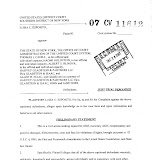
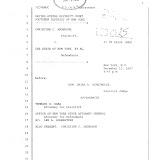
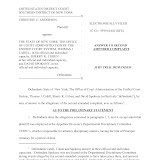
An attorney for the Appellate Division, First Department's disciplinary committee alleges in a federal lawsuit that she was sexually harassed by two now-retired officials at the watchdog agency while a third retaliated against her for complaining. Nicole Corrado also suggests that after she lodged a complaint officials retaliated by targeting her attorney in an unrelated property matter. She claims that the committee launched an investigation into allegations of bribery and forgery against her attorney, and then suddenly dropped the matter when he abandoned her case. Additionally, Corrado claims she was punished for supporting a lawsuit brought against the court system by a colleague. Corrado v. New York State Unified Court System, 12-cv-1748, filed in the Eastern District on April 10, alleges violations of the Civil Rights Act of 1964. Corrado, who has served as a principal attorney at the disciplinary committee since 2006, claims she endured years of harassment by her supervisor, Andral Bratton, and that the committee's chief investigator, Vincent Raniere, touched her inappropriately and forcibly kissed her on several occasions. According to the complaint, when Corrado reported the "pattern of sexual harassment" by Bratton and Raniere in 2008, the court system referred the matter to its inspector general. However, only the allegations against Bratton were investigated, the complaint claims. The complaint states that Bratton admitted during the Office of the Inspector General probe that he was "smitten" with Corrado and crossed "an emotional boundary." Bratton was transferred to another unit at the same salary and Corrado was simply told to "avoid" him, according to the complaint. Corrado alleges that while her sexual harassment complaint was pending, she retained an attorney to represent her in an unrelated action involving a property dispute. She claims the disciplinary committee instigated an investigation into that attorney—who is not named in her complaint—involving allegations of bribery and forgery. Corrado contends that after the attorney withdrew from her case and her claim was dismissed, all of the ethical charges against her lawyer were dropped. She claims that because of her attorney's abrupt withdrawal, her civil case was dismissed and she was "ultimately forced to settle her case for a fraction of its value." Bennitta Joseph of Borrelli & Associates in Great Neck, who is representing Corrado in the civil rights claim, declined to identify the allegedly intimidated attorney who represented her client in Corrado v. East End Pool & Hot Tub. Corrado also claims in her complaint that she was retaliated against for supporting the claim of a colleague who accused the agency of racial discrimination.
The complaint does not identify that employee, but Joseph confirmed in an interview that it was Christine Anderson, a former staff attorney who alleged she was wrongfully discharged in June 2007 on a pretext of insubordination after she revealed that the panel was protecting well-connected attorneys. A jury rejected her claims, and the U.S. Court of Appeals for the Second Circuit affirmed the verdict (NYLJ, Oct. 30, 2009). Corrado contends that after she agreed to corroborate Anderson's allegations of "racial discrimination and other improper conduct" by the disciplinary committee, Alan Friedberg, the committee's chief counsel, threatened her and gave her an unreasonable workload. Additionally, Corrado says Bratton threatened her. In light of Corrado's complaint, Anderson has asked the Second Circuit to reinstate her claim. Anderson contends in her petition that Corrado, who testified on her behalf at a deposition but not at trial, "was threatened and chilled into not testifying" at her trial, constituting a "manifest attack on our system of law and a clear denial of appellant's right to a fair trial." Corrado claims that because of the anxiety and stress from the harassment she endured at the disciplinary committee she took a two-year unpaid leave of absence between 2009 and 2011, returning only after Bratton, Raniere and Friedberg had left. According to the Office of Court Administration, all three took advantage of an early retirement incentive in the fall of 2010. "She feels like she has to do something," Joseph said. "She took a two-year leave of absence because the environment had become so toxic, and then once all the offending parties left, she came back." Raniere said the allegations are false. "I didn't do a damned thing," he said. Friedberg declined to comment. Bratton could not be reached. David Bookstaver, a spokesman for the Office of Court Administration, declined to respond, noting that the court system does not comment on pending litigation. John Caher can be contacted at jcaher@alm.com.
The New York Law Journal by John Caher - May 16, 2012
An attorney for the Appellate Division, First Department's disciplinary committee alleges in a federal lawsuit that she was sexually harassed by two now-retired officials at the watchdog agency while a third retaliated against her for complaining. Nicole Corrado also suggests that after she lodged a complaint officials retaliated by targeting her attorney in an unrelated property matter. She claims that the committee launched an investigation into allegations of bribery and forgery against her attorney, and then suddenly dropped the matter when he abandoned her case. Additionally, Corrado claims she was punished for supporting a lawsuit brought against the court system by a colleague. Corrado v. New York State Unified Court System, 12-cv-1748, filed in the Eastern District on April 10, alleges violations of the Civil Rights Act of 1964. Corrado, who has served as a principal attorney at the disciplinary committee since 2006, claims she endured years of harassment by her supervisor, Andral Bratton, and that the committee's chief investigator, Vincent Raniere, touched her inappropriately and forcibly kissed her on several occasions. According to the complaint, when Corrado reported the "pattern of sexual harassment" by Bratton and Raniere in 2008, the court system referred the matter to its inspector general. However, only the allegations against Bratton were investigated, the complaint claims. The complaint states that Bratton admitted during the Office of the Inspector General probe that he was "smitten" with Corrado and crossed "an emotional boundary." Bratton was transferred to another unit at the same salary and Corrado was simply told to "avoid" him, according to the complaint. Corrado alleges that while her sexual harassment complaint was pending, she retained an attorney to represent her in an unrelated action involving a property dispute. She claims the disciplinary committee instigated an investigation into that attorney—who is not named in her complaint—involving allegations of bribery and forgery. Corrado contends that after the attorney withdrew from her case and her claim was dismissed, all of the ethical charges against her lawyer were dropped. She claims that because of her attorney's abrupt withdrawal, her civil case was dismissed and she was "ultimately forced to settle her case for a fraction of its value." Bennitta Joseph of Borrelli & Associates in Great Neck, who is representing Corrado in the civil rights claim, declined to identify the allegedly intimidated attorney who represented her client in Corrado v. East End Pool & Hot Tub. Corrado also claims in her complaint that she was retaliated against for supporting the claim of a colleague who accused the agency of racial discrimination.
The complaint does not identify that employee, but Joseph confirmed in an interview that it was Christine Anderson, a former staff attorney who alleged she was wrongfully discharged in June 2007 on a pretext of insubordination after she revealed that the panel was protecting well-connected attorneys. A jury rejected her claims, and the U.S. Court of Appeals for the Second Circuit affirmed the verdict (NYLJ, Oct. 30, 2009). Corrado contends that after she agreed to corroborate Anderson's allegations of "racial discrimination and other improper conduct" by the disciplinary committee, Alan Friedberg, the committee's chief counsel, threatened her and gave her an unreasonable workload. Additionally, Corrado says Bratton threatened her. In light of Corrado's complaint, Anderson has asked the Second Circuit to reinstate her claim. Anderson contends in her petition that Corrado, who testified on her behalf at a deposition but not at trial, "was threatened and chilled into not testifying" at her trial, constituting a "manifest attack on our system of law and a clear denial of appellant's right to a fair trial." Corrado claims that because of the anxiety and stress from the harassment she endured at the disciplinary committee she took a two-year unpaid leave of absence between 2009 and 2011, returning only after Bratton, Raniere and Friedberg had left. According to the Office of Court Administration, all three took advantage of an early retirement incentive in the fall of 2010. "She feels like she has to do something," Joseph said. "She took a two-year leave of absence because the environment had become so toxic, and then once all the offending parties left, she came back." Raniere said the allegations are false. "I didn't do a damned thing," he said. Friedberg declined to comment. Bratton could not be reached. David Bookstaver, a spokesman for the Office of Court Administration, declined to respond, noting that the court system does not comment on pending litigation. John Caher can be contacted at jcaher@alm.com.
No Joke, Hal Lieberman Writes about 'Ethics' and 'Due Process'
New York's Attorney Discipline System: How Much 'Process' Is 'Due'?
The New York Law Journal by Hal R. Lieberman - April 4, 2012
This article concerns the due process rights of New York lawyers facing disciplinary charges. It highlights the historical constitutional development of due process rights in attorney discipline cases, briefly focuses on the relatively few precedents that address procedural due process in New York's uniquely disjointed lawyer disciplinary system, and then describes the ABA's Model Rules of Disciplinary Enforcement. Subsequent columns will discuss particular aspects of New York's disciplinary system—e.g., interim suspensions, collateral estoppel, burden of proof, evidentiary standards, among other issues—from the standpoint of whether those components meet due process requirements. Constitutional Precedents As far back as 1824, the U.S. Supreme Court recognized that lawyers facing suspension from the bar have due process rights, stating: "…the profession of any attorney is of great importance to an individual, and the prosperity of his whole life may depend on its exercise. The right to exercise it ought not to be lightly or capriciously taken from him." Ex Parte Burr (1824).1 The Supreme Court emphatically reiterated this sentiment in two Civil War era cases, Ex Parte Garland (1866)2 and Ex Parte Bradley (1868).3 In Bradley, the Supreme Court articulated more directly, in the context of a finding of contempt below, the right of an attorney to notice and an opportunity to be heard before his license to practice is removed: [The lower court] possessed no power to punish him, upon an ex parte proceeding, without notice or opportunity of defense or explanation for misbehavior, or for any particular instance of the same generally in his office as attorney of the court, as claimed in the words of the return, "irrespective of the doctrine of contempts."4 Fast forward to 1968. In a landmark case, Matter of Ruffalo,5 the Supreme Court recognized, as part of the guarantee of procedural due process, that an attorney in a disciplinary matter is constitutionally entitled to fair notice. John Ruffalo Jr. had appealed from a disbarment order of the Ohio Supreme Court, which order was partially predicated on amended charges that were only lodged against Ruffalo midstream in the hearing and after he (and another witness) had testified at length on all the material facts in the case. Declaring that disbarment proceedings are "of a quasi-criminal nature," the Supreme Court stated that, "The charge must be known before the proceedings commence. They become a trap when, after they are underway, the charges are amended on the basis of testimony of the accused. He can then be given no opportunity to expunge the earlier statements and start fresh."6 Two other Supreme Court cases also touch on due process rights of lawyers. In Spevack v. Klein,7 a case out of New York that preceded Ruffalo by one year, the Supreme Court held that the Fifth Amendment (via the 14th Amendment) self-incrimination clause extends its protection to lawyers in disciplinary cases, who cannot be disbarred (or otherwise disciplined) solely based on their own admissions. Subsequently, in Gentile v. State Bar of Nevada,8 the Supreme Court reversed a Nevada disciplinary sanction against a lawyer who convened a press conference after his client was indicted on criminal charges, holding, in part, that the Nevada rule prohibiting lawyers from making extrajudicial statements to the press that have a "substantial likelihood of prejudicing an adjudicative proceeding," as formulated in Disciplinary Rule 7-107 and interpreted by the Nevada Supreme Court, was void for vagueness. Notwithstanding the foregoing history, and the Supreme Court's periodic expressions of constitutional support for lawyers' due process rights, challenges by lawyers attempting to remedy alleged state court due process abuses in the lower federal courts have almost uniformly been rejected on abstention grounds.9 Thus, from the standpoint of federal constitutional guidance, we are left with fundamental, but only very general notions that while notice and the opportunity to be heard are the hallmarks of due process rights for lawyers, due process as applied will be left to case-by-case, state-by-state determinations, with broad discretion vested in each jurisdiction to provide a system of lawyer regulation that comports with what can be characterized as the minimal requirements of due process.
New York Cases
New York provides a prime example. In Murray v. Murphy10 the New York Court of Appeals affirmed that "[t]he first fundamental of due process is notice of the charges made." But in Matter of Kelly,11 decided shortly after Ruffalo, the Court of Appeals acknowledged— but limited—the ruling in Ruffalo, stating: The Ruffalo case holds only that since disciplinary proceedings are adversary proceedings of a "quasi-criminal" nature, due process requires that there be notice of the disciplinary charges before the proceedings are begun. The case, therefore, hardly stands for an equation of criminal and disciplinary proceedings, a most unlikely view. (citation omitted)12 As the Court of Appeals further explained in Matter of Dondi:13 The practice of law is a privilege, and while an attorney subject to discipline is entitled to due process, the protection of the public from the unscrupulous practitioner may interdict relief from certain unfairness that may arise in the course of the imposition of professional discipline. (citations omitted; emphasis added)14 Some may consider "certain unfairness" to be an unfortunate choice of words, but the Court of Appeals undoubtedly meant what it said about the relatively low level of "process" that is "due" in approving a civil burden of proof—the fair preponderance of evidence—in attorney disciplinary cases (Matter of Capoccia),15 and in holding that an attorney could be suspended without a hearing pending consideration of disciplinary charges so long as adequate notice is provided and the suspension order is based on the attorney's admissions or other uncontroverted evidence of misconduct immediately threatening the public interest (Matter of Padilla).16 Writing more than 35 years ago in Mildner v. Gulotta, 405 F.Supp. 182 (1976), one of New York's most distinguished federal jurists, Judge Jack Weinstein, had this to say in his dissent from the majority of a three-judge panel designated to review a constitutional challenge to New York's disciplinary scheme (the majority rejected the challenge on abstention grounds): Despite my high regard for New York's tradition in maintaining the high ethical standards of its bar, I reluctantly conclude that its disciplinary procedure is constitutionally infirm in denying attorneys the due process and equal protection guaranteed by the Fourteenth Amendment of the U.S. Constitution. There is no inconsistency between fair treatment of lawyers and maintenance of the long tradition of their discipline by the courts. There is no good reason why members of the legal profession, who have done so much to protect the constitutional rights of others, should be deprived of justice with due process in hearings and appeals—rights available to all other professionals. As construed by New York courts, the statutory disciplinary procedure, Judiciary Law Sec. 90, is invalid.17 Judge Weinstein's basic criticisms concerned the use of referees whose role is to "hear and report," but not to "hear and determine." He noted that the Appellate Division, as courts of original jurisdiction, decide facts without hearing and seeing witnesses, deny counsel the opportunity to orally argue the merits, and often fail to give reasons for a decision even when rejecting the report of the referee who has heard the witnesses.18 ABA's Model Rules More than 20 years after Ruffalo, in 1989, the ABA promulgated the Model Rules for Disciplinary Enforcement. It hoped they would provide guidance to every jurisdiction that would be revising (or establishing for the first time) its formal rules of procedure in attorney discipline cases pursuant to the recommendations of the Clark Commission.19 Among other things, the ABA Model Enforcement Rules provide for such due process rights as: fair notice of the charges; right to counsel; right to cross-examine witnesses; right to present arguments to the adjudicators; right of appeal, including the filing of briefs and presentation of oral arguments before the court pursuant to the state rules governing civil appeals, with a requirement that the decision of the court be in writing and state the reasons for the decision (Model Rule 11); right to subpoena and discovery (Model Rules 14 and 15); and, application of the state rules of evidence in civil non-jury matters and, except as otherwise provided, the state rules of civil procedure, with "clear and convincing evidence" as the standard of proof (Model Rule 18).20 The ABA Model Enforcement Rules are useful as guideposts for national standards. A number of reputable authorities have also written excellent articles for law reviews and other legal publications regarding the due process rights of lawyers facing disciplinary charges.21 These, too, are valuable sources of reference regarding what a constitutionally valid system of lawyer regulation ought to look like. In subsequent columns we will discuss whether particular aspects of New York's attorney disciplinary procedures appear to comport with due process in light of the foregoing brief history and prevailing national standards. Hal R. Lieberman, formerly chief counsel to the Departmental Disciplinary Committee (First Department), is a partner at Hinshaw & Culbertson. Harvey Prager, an associate at Hinshaw, assisted in the preparation of this article.
Endnotes:
1. 22 U.S. 529 (1824).
2. 71 U.S. 333 (1866).
3. 74 U.S. 364 (1868).
4. Id. at 375.
5. 390 U.S. 544 (1968).
6. Id. at 551.
7. 385 U.S. 511 (1967).
8. 501 U.S. 1030 (1991).
9. In Younger v. Harris, 401 U.S. 37 (1971) and its progeny, the U.S. Supreme Court espoused a strong federal policy against federal court interference with pending state judicial proceedings absent extraordinary circumstances. The basis for "Younger abstention" is the notion of "comity," which includes "a proper respect for state functions." Id. at 44. Accordingly, where vital state interests are involved, a federal court should abstain "unless state law clearly bars the interposition of the constitutional claims." Moore v. Sims, 442 U.S. 415, 426 (1975). In Middlesex County Ethics Committee v. Garden State Bar Ass'n, 457 U.S. 423 (1982), the Supreme Court applied "Younger abstention" to bar disciplinary proceedings. In brief, federal courts will generally abstain from stopping a state disciplinary proceeding after it has begun. Moreover, the "Rooker-Feldman" doctrine, named for two Supreme Court cases interpreting federal subject matter jurisdiction under 28 U.S.C. §1257, limits review of state disciplinary proceedings, once they are over, to the U.S. Supreme Court through a petition for a writ of certiorari.
10. 24 N.Y.2d 150 (1969) (affirming the principle in an administrative proceeding).
11. 23 N.Y.2d 368 (1968).
12. Id. at 384.
13. 63 N.Y.2d 331 (1984).
14. Id. at 339.
15. 59 N.Y.2d 549 (1983).
16. 67 N.Y.2d 440 (1986).
17. Id. at 201-202.
18. Id. at 220.
19. In the 1960s, an American Bar Association commission chaired by former U.S. Supreme Court Justice Tom Clark conducted a comprehensive study of bar discipline systems throughout the United States. The Clark Commission issued a scathing report in 1970 which described the state of lawyer discipline as a "scandalous" process. See Special Comm. on Evaluation of Disciplinary Enforcement, American Bar Ass'n, Problems and Recommendations in Disciplinary Enforcement 1 (1970). The Clark Commission's findings became a catalyst for action. By the mid-1970s, many state courts around the country assumed greater responsibility for managing their disciplinary processes and hired professional lawyers and investigators to staff disciplinary agencies. The ABA's House of Delegates adopted the Model Enforcement Rules in August 1989, and amended them in 1993, 1996, 1999, and 2002.
20. The ABA Model Enforcement Rules are available at http://www.americanbar.org/groups/professional_responsibility/resources/lawyer_ethics_regulation/model_rules_for_lawyer_disciplinary_enforcement.html. 21. See, e.g., Mark J. Fucile, "Giving Lawyers Their Due: Due Process Defenses in Disciplinary Proceedings," 20 No. 4 Prof. Law. 28 (2011); Mary M. Devlin, "The Development of Attorney Disciplinary Procedures in the United States," 2008 Prof. Law. 359 (2008); Wilburn Brewer, Jr., "Due Process in Lawyer Disciplinary Cases: From the Cradle to the Grave," 42 S.C. L. Rev. 925 (1991).
SEE RELATED STORIES:
The New York Law Journal by Hal R. Lieberman - April 4, 2012
This article concerns the due process rights of New York lawyers facing disciplinary charges. It highlights the historical constitutional development of due process rights in attorney discipline cases, briefly focuses on the relatively few precedents that address procedural due process in New York's uniquely disjointed lawyer disciplinary system, and then describes the ABA's Model Rules of Disciplinary Enforcement. Subsequent columns will discuss particular aspects of New York's disciplinary system—e.g., interim suspensions, collateral estoppel, burden of proof, evidentiary standards, among other issues—from the standpoint of whether those components meet due process requirements. Constitutional Precedents As far back as 1824, the U.S. Supreme Court recognized that lawyers facing suspension from the bar have due process rights, stating: "…the profession of any attorney is of great importance to an individual, and the prosperity of his whole life may depend on its exercise. The right to exercise it ought not to be lightly or capriciously taken from him." Ex Parte Burr (1824).1 The Supreme Court emphatically reiterated this sentiment in two Civil War era cases, Ex Parte Garland (1866)2 and Ex Parte Bradley (1868).3 In Bradley, the Supreme Court articulated more directly, in the context of a finding of contempt below, the right of an attorney to notice and an opportunity to be heard before his license to practice is removed: [The lower court] possessed no power to punish him, upon an ex parte proceeding, without notice or opportunity of defense or explanation for misbehavior, or for any particular instance of the same generally in his office as attorney of the court, as claimed in the words of the return, "irrespective of the doctrine of contempts."4 Fast forward to 1968. In a landmark case, Matter of Ruffalo,5 the Supreme Court recognized, as part of the guarantee of procedural due process, that an attorney in a disciplinary matter is constitutionally entitled to fair notice. John Ruffalo Jr. had appealed from a disbarment order of the Ohio Supreme Court, which order was partially predicated on amended charges that were only lodged against Ruffalo midstream in the hearing and after he (and another witness) had testified at length on all the material facts in the case. Declaring that disbarment proceedings are "of a quasi-criminal nature," the Supreme Court stated that, "The charge must be known before the proceedings commence. They become a trap when, after they are underway, the charges are amended on the basis of testimony of the accused. He can then be given no opportunity to expunge the earlier statements and start fresh."6 Two other Supreme Court cases also touch on due process rights of lawyers. In Spevack v. Klein,7 a case out of New York that preceded Ruffalo by one year, the Supreme Court held that the Fifth Amendment (via the 14th Amendment) self-incrimination clause extends its protection to lawyers in disciplinary cases, who cannot be disbarred (or otherwise disciplined) solely based on their own admissions. Subsequently, in Gentile v. State Bar of Nevada,8 the Supreme Court reversed a Nevada disciplinary sanction against a lawyer who convened a press conference after his client was indicted on criminal charges, holding, in part, that the Nevada rule prohibiting lawyers from making extrajudicial statements to the press that have a "substantial likelihood of prejudicing an adjudicative proceeding," as formulated in Disciplinary Rule 7-107 and interpreted by the Nevada Supreme Court, was void for vagueness. Notwithstanding the foregoing history, and the Supreme Court's periodic expressions of constitutional support for lawyers' due process rights, challenges by lawyers attempting to remedy alleged state court due process abuses in the lower federal courts have almost uniformly been rejected on abstention grounds.9 Thus, from the standpoint of federal constitutional guidance, we are left with fundamental, but only very general notions that while notice and the opportunity to be heard are the hallmarks of due process rights for lawyers, due process as applied will be left to case-by-case, state-by-state determinations, with broad discretion vested in each jurisdiction to provide a system of lawyer regulation that comports with what can be characterized as the minimal requirements of due process.
New York Cases
New York provides a prime example. In Murray v. Murphy10 the New York Court of Appeals affirmed that "[t]he first fundamental of due process is notice of the charges made." But in Matter of Kelly,11 decided shortly after Ruffalo, the Court of Appeals acknowledged— but limited—the ruling in Ruffalo, stating: The Ruffalo case holds only that since disciplinary proceedings are adversary proceedings of a "quasi-criminal" nature, due process requires that there be notice of the disciplinary charges before the proceedings are begun. The case, therefore, hardly stands for an equation of criminal and disciplinary proceedings, a most unlikely view. (citation omitted)12 As the Court of Appeals further explained in Matter of Dondi:13 The practice of law is a privilege, and while an attorney subject to discipline is entitled to due process, the protection of the public from the unscrupulous practitioner may interdict relief from certain unfairness that may arise in the course of the imposition of professional discipline. (citations omitted; emphasis added)14 Some may consider "certain unfairness" to be an unfortunate choice of words, but the Court of Appeals undoubtedly meant what it said about the relatively low level of "process" that is "due" in approving a civil burden of proof—the fair preponderance of evidence—in attorney disciplinary cases (Matter of Capoccia),15 and in holding that an attorney could be suspended without a hearing pending consideration of disciplinary charges so long as adequate notice is provided and the suspension order is based on the attorney's admissions or other uncontroverted evidence of misconduct immediately threatening the public interest (Matter of Padilla).16 Writing more than 35 years ago in Mildner v. Gulotta, 405 F.Supp. 182 (1976), one of New York's most distinguished federal jurists, Judge Jack Weinstein, had this to say in his dissent from the majority of a three-judge panel designated to review a constitutional challenge to New York's disciplinary scheme (the majority rejected the challenge on abstention grounds): Despite my high regard for New York's tradition in maintaining the high ethical standards of its bar, I reluctantly conclude that its disciplinary procedure is constitutionally infirm in denying attorneys the due process and equal protection guaranteed by the Fourteenth Amendment of the U.S. Constitution. There is no inconsistency between fair treatment of lawyers and maintenance of the long tradition of their discipline by the courts. There is no good reason why members of the legal profession, who have done so much to protect the constitutional rights of others, should be deprived of justice with due process in hearings and appeals—rights available to all other professionals. As construed by New York courts, the statutory disciplinary procedure, Judiciary Law Sec. 90, is invalid.17 Judge Weinstein's basic criticisms concerned the use of referees whose role is to "hear and report," but not to "hear and determine." He noted that the Appellate Division, as courts of original jurisdiction, decide facts without hearing and seeing witnesses, deny counsel the opportunity to orally argue the merits, and often fail to give reasons for a decision even when rejecting the report of the referee who has heard the witnesses.18 ABA's Model Rules More than 20 years after Ruffalo, in 1989, the ABA promulgated the Model Rules for Disciplinary Enforcement. It hoped they would provide guidance to every jurisdiction that would be revising (or establishing for the first time) its formal rules of procedure in attorney discipline cases pursuant to the recommendations of the Clark Commission.19 Among other things, the ABA Model Enforcement Rules provide for such due process rights as: fair notice of the charges; right to counsel; right to cross-examine witnesses; right to present arguments to the adjudicators; right of appeal, including the filing of briefs and presentation of oral arguments before the court pursuant to the state rules governing civil appeals, with a requirement that the decision of the court be in writing and state the reasons for the decision (Model Rule 11); right to subpoena and discovery (Model Rules 14 and 15); and, application of the state rules of evidence in civil non-jury matters and, except as otherwise provided, the state rules of civil procedure, with "clear and convincing evidence" as the standard of proof (Model Rule 18).20 The ABA Model Enforcement Rules are useful as guideposts for national standards. A number of reputable authorities have also written excellent articles for law reviews and other legal publications regarding the due process rights of lawyers facing disciplinary charges.21 These, too, are valuable sources of reference regarding what a constitutionally valid system of lawyer regulation ought to look like. In subsequent columns we will discuss whether particular aspects of New York's attorney disciplinary procedures appear to comport with due process in light of the foregoing brief history and prevailing national standards. Hal R. Lieberman, formerly chief counsel to the Departmental Disciplinary Committee (First Department), is a partner at Hinshaw & Culbertson. Harvey Prager, an associate at Hinshaw, assisted in the preparation of this article.
Endnotes:
1. 22 U.S. 529 (1824).
2. 71 U.S. 333 (1866).
3. 74 U.S. 364 (1868).
4. Id. at 375.
5. 390 U.S. 544 (1968).
6. Id. at 551.
7. 385 U.S. 511 (1967).
8. 501 U.S. 1030 (1991).
9. In Younger v. Harris, 401 U.S. 37 (1971) and its progeny, the U.S. Supreme Court espoused a strong federal policy against federal court interference with pending state judicial proceedings absent extraordinary circumstances. The basis for "Younger abstention" is the notion of "comity," which includes "a proper respect for state functions." Id. at 44. Accordingly, where vital state interests are involved, a federal court should abstain "unless state law clearly bars the interposition of the constitutional claims." Moore v. Sims, 442 U.S. 415, 426 (1975). In Middlesex County Ethics Committee v. Garden State Bar Ass'n, 457 U.S. 423 (1982), the Supreme Court applied "Younger abstention" to bar disciplinary proceedings. In brief, federal courts will generally abstain from stopping a state disciplinary proceeding after it has begun. Moreover, the "Rooker-Feldman" doctrine, named for two Supreme Court cases interpreting federal subject matter jurisdiction under 28 U.S.C. §1257, limits review of state disciplinary proceedings, once they are over, to the U.S. Supreme Court through a petition for a writ of certiorari.
10. 24 N.Y.2d 150 (1969) (affirming the principle in an administrative proceeding).
11. 23 N.Y.2d 368 (1968).
12. Id. at 384.
13. 63 N.Y.2d 331 (1984).
14. Id. at 339.
15. 59 N.Y.2d 549 (1983).
16. 67 N.Y.2d 440 (1986).
17. Id. at 201-202.
18. Id. at 220.
19. In the 1960s, an American Bar Association commission chaired by former U.S. Supreme Court Justice Tom Clark conducted a comprehensive study of bar discipline systems throughout the United States. The Clark Commission issued a scathing report in 1970 which described the state of lawyer discipline as a "scandalous" process. See Special Comm. on Evaluation of Disciplinary Enforcement, American Bar Ass'n, Problems and Recommendations in Disciplinary Enforcement 1 (1970). The Clark Commission's findings became a catalyst for action. By the mid-1970s, many state courts around the country assumed greater responsibility for managing their disciplinary processes and hired professional lawyers and investigators to staff disciplinary agencies. The ABA's House of Delegates adopted the Model Enforcement Rules in August 1989, and amended them in 1993, 1996, 1999, and 2002.
20. The ABA Model Enforcement Rules are available at http://www.americanbar.org/groups/professional_responsibility/resources/lawyer_ethics_regulation/model_rules_for_lawyer_disciplinary_enforcement.html. 21. See, e.g., Mark J. Fucile, "Giving Lawyers Their Due: Due Process Defenses in Disciplinary Proceedings," 20 No. 4 Prof. Law. 28 (2011); Mary M. Devlin, "The Development of Attorney Disciplinary Procedures in the United States," 2008 Prof. Law. 359 (2008); Wilburn Brewer, Jr., "Due Process in Lawyer Disciplinary Cases: From the Cradle to the Grave," 42 S.C. L. Rev. 925 (1991).
SEE RELATED STORIES:
- Former DDC Chief Counsel Hal Lieberman Strickes Again -- Split Panel Suspends Attorney Caught in Internet Sex Sting
- Holocaust Survivor Leads Charge in Planned NYS Senate Corrupton Hearings -- Holocaust Survivor Meets New York "Ethics" - Hal Lieberman's Letter to Self in Extraordinary Conflict
Attorney Is Arrested for Alleged Role in Tax Fraud
Attorney Is Arrested for Alleged Role in Tax Fraud
The New York Law Journal by Mark Hamblett - May 16, 2012
A British attorney was arrested late on May 10 for allegedly engaging in an 11-year tax fraud scheme to hide over $10 million for an American family. Michael Little, 61, who also has a residence in Long Island City, was taken into custody at John F. Kennedy International Airport and charged with helping members of the Seggerman family park money in Swiss banks and then bring it back into the United States, usually in amounts less than $10,000. One family member, Suzanne Seggerman, pleaded guilty in 2010 to a conspiracy to defraud the Internal Revenue Service and awaits sentencing before Southern District Judge Kevin Duffy. The family allegedly used code words when communicating about the scheme, with "small" being the word for Little, "beef" the word for money, "lbs" for $1,000, and "FDA" for the IRS. Little, licensed to practice in New York, allegedly advised the family on establishing bank accounts that were nominally controlled by himself or a Swiss lawyer and counseled them to disguise money transfers back to the U.S. as related to the sales of artwork or jewelry. Little, who made an initial appearance before Southern District Magistrate Judge Frank Maas on May 11, faces a maximum of five years in prison if convicted. Assistant U.S. Attorney Stanley Okula is handling the prosecution in United States v. Little, 12-mj-01241. Little is represented by Benjamin Fischer of Morvillo, Abramowitz, Grand, Iason, Anello & Bohrer.
RELATED STORY:
Lawyer Little Charged With 11-Year Swiss Tax-Fraud Scheme
Bloomberg by Patricia Hurtado - May 11, 2012
The U.S. charged Michael Little, an attorney, with participating in an 11-year conspiracy that defrauded the Internal Revenue Service using Swiss bank accounts and sham mortgage transactions. Little and unidentified co-conspirators, including five members of an U.S.-based family, first met at a New York hotel in August 2001, Manhattan U.S. Attorney Preet Bharara said in a criminal complaint filed today. During the meeting, Little advised family members, identified in court papers as the “S Family,” on how they could bring back to the U.S., without paying taxes, $10 million in overseas accounts that belonged to the family’s recently deceased patriarch. Little assisted family members with opening an account at UBS AG in Switzerland and conducting sham mortgage transactions designed to get the money into the U.S. without alerting the IRS, the government alleged in the filing in federal court in Manhattan. From 2001 and 2008 Little met with the matriarch of the family to discuss the transfer of funds and “caused millions of dollars” to be sent from offshore to the U.S. account of an entity she controlled, according to the complaint. The matriarch “made personal and other use of the money,” prosecutors said. Other unidentified people involved in the scheme include a New Jersey accountant, a lawyer in Switzerland and the eldest member of the S Family, described as a New York businessman who also inherited funds in offshore accounts. One of the relatives has pleaded guilty to federal charges and is cooperating with the government’s investigation, prosecutors said. Two of that person’s siblings have also provided information to the U.S., prosecutors say. The case is U.S. v. Little, 12-MAG-1241, U.S. District Court, Southern District of New York (Manhattan). To contact the reporter on this story: Patricia Hurtado in New York at pathurtado@bloomberg.net - To contact the editor responsible for this story: Michael Hytha at mhytha@bloomberg.net
RELATED STORY:
British attorney held on $2M bail on NY tax charge
The Associated Press - May 11, 2012
NEW YORK — Bail was set at $2 million and home detention with electronic monitoring was ordered Friday for a British attorney arrested and accused of advising the family of a former top Fidelity Investments executive how to dodge U.S. taxes by hiding millions of dollars overseas. Michael Little, 61, of Hampshire, England, was likely to remain incarcerated overnight after a U.S. magistrate judge in Manhattan ordered bail secured by at least $1 million in cash or property on the charge of conspiracy to commit tax fraud. The German-born Little, who has a residence in Long Island City, was arrested Thursday night as he arrived at Kennedy International Airport on a flight from London, where he lives with his wife and children. Assistant U.S. Attorney Stanley Okula said Little engaged in a decade-long tax evasion scheme in which he counseled the family of the late Harry Seggerman how to hide at least $10 million overseas. He called the evidence "compelling, strong." Seggerman died in May 2001. He retired as a vice chairman of Fidelity in 1992. Okula urged a high bail, saying Little was a flight risk because he had substantial money and ties to the United Kingdom, which has been reluctant in the past to extradite to the U.S. individuals charged with tax crimes. A lawyer for Little said in court that he had been a lawful permanent resident in the United States for 40 years and was licensed to practice as a lawyer in New York, where he has cases pending, including in the courthouse where he sat, his blue shirt dangling over his pants. Afterward, another defense attorney, Elkan Abramowitz, emailed a statement, saying: "We are studying the charges contained in the complaint. We are confident that in the end we will be able to demonstrate that there is no merit to any of them." In court papers, the government said Little met with Seggerman's beneficiaries and descendants at a Manhattan hotel in August 2001 and told them that the patriarch had left them about $10 million of a more than $20 million estate in overseas accounts that had never been declared to U.S. taxing authorities. The government said Little defrauded the Internal Revenue Service by telling family members how to continue hiding those assets by establishing Swiss bank accounts that would be nominally owned or controlled by Little and a Swiss lawyer. It said he also advised them that they could bring money back to the United States in "little chunks" through traveler's checks or by disguising money transfers to the United States as being related to the sales of artwork or jewelry. The government said he transferred some of the money from Switzerland to London, where Seggerman family members could pick up funds during trips there and bring all or part of the money back to the United States as cash, generally in amounts less than $10,000. To hide communications, members of the Seggerman family used code works in which "small" was used to refer to Michael Little, "beef" meant money, "lbs" meant $1,000 and "FDA" referenced the IRS, the government said. Suzanne Seggerman in December 2010 pleaded guilty to conspiring to defraud U.S. taxing authorities and subscribing to false individual tax returns. Her lawyer, Russell Gioiella, said his client "fully cooperated with the government investigation into the overseas accounts left to the family by her father." IRS Agent Lola Fox said in a criminal complaint that information provided by Suzanne Seggerman had proven to be "highly reliable." She said she also received information from two other members of the Seggerman family, including notes one of them took in various meetings with Little.
The New York Law Journal by Mark Hamblett - May 16, 2012
A British attorney was arrested late on May 10 for allegedly engaging in an 11-year tax fraud scheme to hide over $10 million for an American family. Michael Little, 61, who also has a residence in Long Island City, was taken into custody at John F. Kennedy International Airport and charged with helping members of the Seggerman family park money in Swiss banks and then bring it back into the United States, usually in amounts less than $10,000. One family member, Suzanne Seggerman, pleaded guilty in 2010 to a conspiracy to defraud the Internal Revenue Service and awaits sentencing before Southern District Judge Kevin Duffy. The family allegedly used code words when communicating about the scheme, with "small" being the word for Little, "beef" the word for money, "lbs" for $1,000, and "FDA" for the IRS. Little, licensed to practice in New York, allegedly advised the family on establishing bank accounts that were nominally controlled by himself or a Swiss lawyer and counseled them to disguise money transfers back to the U.S. as related to the sales of artwork or jewelry. Little, who made an initial appearance before Southern District Magistrate Judge Frank Maas on May 11, faces a maximum of five years in prison if convicted. Assistant U.S. Attorney Stanley Okula is handling the prosecution in United States v. Little, 12-mj-01241. Little is represented by Benjamin Fischer of Morvillo, Abramowitz, Grand, Iason, Anello & Bohrer.
RELATED STORY:
Lawyer Little Charged With 11-Year Swiss Tax-Fraud Scheme
Bloomberg by Patricia Hurtado - May 11, 2012
The U.S. charged Michael Little, an attorney, with participating in an 11-year conspiracy that defrauded the Internal Revenue Service using Swiss bank accounts and sham mortgage transactions. Little and unidentified co-conspirators, including five members of an U.S.-based family, first met at a New York hotel in August 2001, Manhattan U.S. Attorney Preet Bharara said in a criminal complaint filed today. During the meeting, Little advised family members, identified in court papers as the “S Family,” on how they could bring back to the U.S., without paying taxes, $10 million in overseas accounts that belonged to the family’s recently deceased patriarch. Little assisted family members with opening an account at UBS AG in Switzerland and conducting sham mortgage transactions designed to get the money into the U.S. without alerting the IRS, the government alleged in the filing in federal court in Manhattan. From 2001 and 2008 Little met with the matriarch of the family to discuss the transfer of funds and “caused millions of dollars” to be sent from offshore to the U.S. account of an entity she controlled, according to the complaint. The matriarch “made personal and other use of the money,” prosecutors said. Other unidentified people involved in the scheme include a New Jersey accountant, a lawyer in Switzerland and the eldest member of the S Family, described as a New York businessman who also inherited funds in offshore accounts. One of the relatives has pleaded guilty to federal charges and is cooperating with the government’s investigation, prosecutors said. Two of that person’s siblings have also provided information to the U.S., prosecutors say. The case is U.S. v. Little, 12-MAG-1241, U.S. District Court, Southern District of New York (Manhattan). To contact the reporter on this story: Patricia Hurtado in New York at pathurtado@bloomberg.net - To contact the editor responsible for this story: Michael Hytha at mhytha@bloomberg.net
RELATED STORY:
British attorney held on $2M bail on NY tax charge
The Associated Press - May 11, 2012
NEW YORK — Bail was set at $2 million and home detention with electronic monitoring was ordered Friday for a British attorney arrested and accused of advising the family of a former top Fidelity Investments executive how to dodge U.S. taxes by hiding millions of dollars overseas. Michael Little, 61, of Hampshire, England, was likely to remain incarcerated overnight after a U.S. magistrate judge in Manhattan ordered bail secured by at least $1 million in cash or property on the charge of conspiracy to commit tax fraud. The German-born Little, who has a residence in Long Island City, was arrested Thursday night as he arrived at Kennedy International Airport on a flight from London, where he lives with his wife and children. Assistant U.S. Attorney Stanley Okula said Little engaged in a decade-long tax evasion scheme in which he counseled the family of the late Harry Seggerman how to hide at least $10 million overseas. He called the evidence "compelling, strong." Seggerman died in May 2001. He retired as a vice chairman of Fidelity in 1992. Okula urged a high bail, saying Little was a flight risk because he had substantial money and ties to the United Kingdom, which has been reluctant in the past to extradite to the U.S. individuals charged with tax crimes. A lawyer for Little said in court that he had been a lawful permanent resident in the United States for 40 years and was licensed to practice as a lawyer in New York, where he has cases pending, including in the courthouse where he sat, his blue shirt dangling over his pants. Afterward, another defense attorney, Elkan Abramowitz, emailed a statement, saying: "We are studying the charges contained in the complaint. We are confident that in the end we will be able to demonstrate that there is no merit to any of them." In court papers, the government said Little met with Seggerman's beneficiaries and descendants at a Manhattan hotel in August 2001 and told them that the patriarch had left them about $10 million of a more than $20 million estate in overseas accounts that had never been declared to U.S. taxing authorities. The government said Little defrauded the Internal Revenue Service by telling family members how to continue hiding those assets by establishing Swiss bank accounts that would be nominally owned or controlled by Little and a Swiss lawyer. It said he also advised them that they could bring money back to the United States in "little chunks" through traveler's checks or by disguising money transfers to the United States as being related to the sales of artwork or jewelry. The government said he transferred some of the money from Switzerland to London, where Seggerman family members could pick up funds during trips there and bring all or part of the money back to the United States as cash, generally in amounts less than $10,000. To hide communications, members of the Seggerman family used code works in which "small" was used to refer to Michael Little, "beef" meant money, "lbs" meant $1,000 and "FDA" referenced the IRS, the government said. Suzanne Seggerman in December 2010 pleaded guilty to conspiring to defraud U.S. taxing authorities and subscribing to false individual tax returns. Her lawyer, Russell Gioiella, said his client "fully cooperated with the government investigation into the overseas accounts left to the family by her father." IRS Agent Lola Fox said in a criminal complaint that information provided by Suzanne Seggerman had proven to be "highly reliable." She said she also received information from two other members of the Seggerman family, including notes one of them took in various meetings with Little.
Tuesday, May 15, 2012
Obama Slower Than Predecessors to Nominate Judges
Obama Slower Than Predecessors to Nominate Judges
The National Law Journal by Todd Ruger - May 15, 2012
WASHINGTON, D.C. - President Barack Obama stands to become the first president in at least 30 years to have more openings on the federal bench at the end of his first term than when he started. The administration and Senate Democrats have called this a "judicial emergency" for the short-handed U.S. courts. During the last few months, Democrats have held conference calls and hosted activists from around the country to say the reason fewer federal judges have been confirmed during the last three years is clear: Republicans in the Senate have used their powers to stall most of the president's nominees, even the noncontroversial ones. But as a window appears to be closing at least temporarily to send any new judicial nominees to Capitol Hill, law professors and advocacy groups say Obama could have had more judges confirmed to the bench had he simply made more nominations over his first three-plus years in office. Since Obama took office, he's had a chance to make nominations for 241 federal judgeships. Some of them—55—were vacant slots held over from the Bush administration. Obama has nominated 188 judges, and the Senate has approved 147 of them. That leaves a current total of 94 vacancies—77 vacant slots and 17 held by judges who have said they plan to retire. (The president can nominate a new judge before the position becomes vacant.) Obama has had 25 vacancies on the U.S. Court of Appeals for the Second Circuit and the four district courts in New York. He has succeeded in winning approval for 17 judges, a brisker pace than for the nation as a whole.

The National Law Journal by Todd Ruger - May 15, 2012
WASHINGTON, D.C. - President Barack Obama stands to become the first president in at least 30 years to have more openings on the federal bench at the end of his first term than when he started. The administration and Senate Democrats have called this a "judicial emergency" for the short-handed U.S. courts. During the last few months, Democrats have held conference calls and hosted activists from around the country to say the reason fewer federal judges have been confirmed during the last three years is clear: Republicans in the Senate have used their powers to stall most of the president's nominees, even the noncontroversial ones. But as a window appears to be closing at least temporarily to send any new judicial nominees to Capitol Hill, law professors and advocacy groups say Obama could have had more judges confirmed to the bench had he simply made more nominations over his first three-plus years in office. Since Obama took office, he's had a chance to make nominations for 241 federal judgeships. Some of them—55—were vacant slots held over from the Bush administration. Obama has nominated 188 judges, and the Senate has approved 147 of them. That leaves a current total of 94 vacancies—77 vacant slots and 17 held by judges who have said they plan to retire. (The president can nominate a new judge before the position becomes vacant.) Obama has had 25 vacancies on the U.S. Court of Appeals for the Second Circuit and the four district courts in New York. He has succeeded in winning approval for 17 judges, a brisker pace than for the nation as a whole.
At this point in their presidencies, George W. Bush had nominated 220 judges for 236 positions, and Bill Clinton had nominated 231 out of 260, according to a report by the Alliance for Justice, a left-leaning court advocacy group. And despite filibuster threats and other behind-the-scenes delaying tactics, senators have confirmed Obama's judicial picks at the same rate—roughly three out of four—as during the Clinton and Bush terms. "I think the president hasn't made judicial nominations a real priority of his agenda," said Dan Urman, the director of Northeastern University's Law & Policy Doctorate Program, who teaches a class on the nomination process. "If the president had nominated more, and this rate holds up, then he'd have had more people confirmed." The president of Alliance for Justice, Nan Aron, agrees that had Obama made more nominations, more new judges likely would have been confirmed by now. But she said many Republican senators are withholding their recommendations or approval of potential nominees. For instance, three judge vacancies in Georgia, including a spot on the U.S. Court of Appeals for the Eleventh Circuit, are considered judicial emergencies, but have remained empty because the White House and Georgia's two GOP senators have been unable to agree on suitable choices, The Atlanta Journal-Constitution reported on May 9.
Late last year, congressional Republicans blocked the nomination of Monroe County District Attorney Michael Green to a long-vacant judgeship in the Western District of New York (NYLJ, Dec. 23).The nomination was returned by the Senate and the White House did not resubmit it. There has been no replacement nomination. Democrats have blamed Republican stall tactics for the low number of confirmations. Senator Patrick Leahy, D-Vermont, chairman of the Judiciary Committee, said last month that 27 vacancies involve a Republican home-state senator who has refused to either recommend a candidate or agree to a judicial nominee, and there are seven nominations on which the Senate Judiciary Committee cannot proceed because Republican senators have not returned blue slips, a courtesy given to home-state senators allowing them to express their opinion before a nomination hearing. White House spokesman Eric Schultz did not directly address why the White House had a slower nomination pace. When asked, Schultz said in a written statement that the Senate could act now on the 19 remaining judicial nominees, half of whom would fill judicial emergencies and almost all of whom had bipartisan support. "But they continue to wait four to five times longer than President Bush's judicial nominees did for a confirmation vote," Schultz said. "We urge Senate Republicans to drop these unprecedented delays because Americans from all walks of life deserve a functioning judiciary." Senator Mike Lee, R-Utah, who has led opposition to Obama's judicial nominees, blamed the president's failure to nominate more judges for the glut of judicial openings. "I don't have a problem with him taking his time, what I have a problem with is him taking his time and then suggesting the reason there [are] so many judicial vacancies is because of us," Lee said in an interview. It was threats of opposition from Lee and other Republicans this year that led Senate Democrats to make a rare move to force votes on judicial nominees. The fight over judicial nominees reached a standoff in March, only to have Senate leaders from both sides agree to hold votes on 14 nominees at a pace of about two judges per week through May 7. Senate Democrats and Lee say they anticipate the pace continuing for the rest of the year, despite the so-called "Thurmond Rule," an unwritten gentlemen's agreement among the senators that supposedly calls for judicial confirmations to slow down in the last six months of a presidential term. Russell Wheeler, a Brookings Institution fellow who tracks judicial nominations, said private attorneys who become nominees are put in professional limbo and can be reluctant to go forward if there is such a long delay before confirmation. "If you send up someone you know a senator is going to refuse, you're wasting everybody's time," he said. At this point in the administration, the chances of a new nominee making it through the confirmation process are "very slim," Wheeler said. Todd Ruger, a reporter for The National Law Journal, an affiliate, can be contacted at truger@alm.com.
Racketeering Suit Proceeds Against Attorney
Judge Narrows Claims in Chevron Lawsuit
The Wall Street Journal by Chad Bray - May 14, 2012
NEW YORK, NY — A federal judge narrowed Chevron Corp.'s CVX -0.73% claims in its racketeering lawsuit against a lawyer involved in long-running environmental litigation against the company. Last year, an Ecuadorean court issued a $18.2 billion judgment against Chevron over environmental damage in that country's Amazon region. The environmental claims relate to alleged oil damage by Texaco Inc., which Chevron acquired in 2001. Chevron, in a separate lawsuit in the U.S., claims the environmental litigation is little more than an elaborate shakedown scheme and has accused the Ecuadorean plaintiffs and their lawyers of manufacturing evidence and improperly influencing the Ecuadorean court. On Monday, U.S. District Judge Lewis Kaplan allowed the racketeering and state law claims by Chevron to continue against Steven Donziger, the Ecuadoreans' U.S. legal adviser, but dismissed other claims, including tortious interference. "As the Donziger defendants have not recovered on the judgment to date, the unjust enrichment claim is premature at best," the judge said. "It cannot be said at this point that the Donziger defendants have been enriched—unjustly or otherwise—especially considering that none of Chevron's assets have been seized to satisfy the judgment, and the Donziger defendants have yet to receive any contingent fees." Separately, the judge denied a request by Chevron for an order attaching more than $700 million in assets in order to cover potential damages in its racketeering case. "Today's order affirms the core premise of Chevron's RICO [Racketeer Influenced and Corrupt Organizations Act] and fraud case," a Chevron spokesman said. "We are eager to progress our racketeering case and remain resolute in our efforts to hold the perpetrators of this unprecedented fraud and misconduct accountable." Karen Hinton, a spokeswoman for the Ecuadorean plaintiffs, said, "Judge Kaplan's decisions to deny Chevron attachment and to throw out several fraud claims represent yet another setback for the oil company and its shareholders." A lawyer for Mr. Donzinger didn't immediately respond to a request for comment Monday. Write to Chad Bray at chad.bray@wsj.com
RELATED STORY:
Chevron Racketeering Suit Proceeds Against Attorney
The New York Law Journal by Mark Hamblett - May 15, 2012
Southern District Judge Lewis Kaplan yesterday refused to dismiss the racketeering lawsuit brought by Chevron alleging that a multi-billion dollar environmental damages judgment secured against the oil giant in Ecuador was secured by a fraud committed by Ecuadoran plaintiffs, New York attorney Steven Donziger and others. But Kaplan somewhat trimmed the case of Chevron v Donziger, 11 Civ. 0691, by dismissing some state law claims, including one that he ruled was "premature": Chevron's assertion that Donziger and the co-called Lago Agrio plaintiffs would be unjustly enriched as a result of the judgment. In a 53-page opinion, Kaplan let stand claims by Chevron of conspiracy under the Racketeer Influenced and Corrupt Organizations Act, part of a claim in fraud to the extent it alleges detrimental reliance by Chevron, a state law claim for civil conspiracy alleging the Ecuadoran plaintiffs and Donziger conspired to commit substantive state law violations and a claim that Donziger violated §487 of the New York Judiciary Law. In a separate seven-page ruling, Judge Kaplan declined to grant Chevron an order of attachment against Donziger to secure the recoverability of damages under RICO.
The Wall Street Journal by Chad Bray - May 14, 2012
NEW YORK, NY — A federal judge narrowed Chevron Corp.'s CVX -0.73% claims in its racketeering lawsuit against a lawyer involved in long-running environmental litigation against the company. Last year, an Ecuadorean court issued a $18.2 billion judgment against Chevron over environmental damage in that country's Amazon region. The environmental claims relate to alleged oil damage by Texaco Inc., which Chevron acquired in 2001. Chevron, in a separate lawsuit in the U.S., claims the environmental litigation is little more than an elaborate shakedown scheme and has accused the Ecuadorean plaintiffs and their lawyers of manufacturing evidence and improperly influencing the Ecuadorean court. On Monday, U.S. District Judge Lewis Kaplan allowed the racketeering and state law claims by Chevron to continue against Steven Donziger, the Ecuadoreans' U.S. legal adviser, but dismissed other claims, including tortious interference. "As the Donziger defendants have not recovered on the judgment to date, the unjust enrichment claim is premature at best," the judge said. "It cannot be said at this point that the Donziger defendants have been enriched—unjustly or otherwise—especially considering that none of Chevron's assets have been seized to satisfy the judgment, and the Donziger defendants have yet to receive any contingent fees." Separately, the judge denied a request by Chevron for an order attaching more than $700 million in assets in order to cover potential damages in its racketeering case. "Today's order affirms the core premise of Chevron's RICO [Racketeer Influenced and Corrupt Organizations Act] and fraud case," a Chevron spokesman said. "We are eager to progress our racketeering case and remain resolute in our efforts to hold the perpetrators of this unprecedented fraud and misconduct accountable." Karen Hinton, a spokeswoman for the Ecuadorean plaintiffs, said, "Judge Kaplan's decisions to deny Chevron attachment and to throw out several fraud claims represent yet another setback for the oil company and its shareholders." A lawyer for Mr. Donzinger didn't immediately respond to a request for comment Monday. Write to Chad Bray at chad.bray@wsj.com
RELATED STORY:
Chevron Racketeering Suit Proceeds Against Attorney
The New York Law Journal by Mark Hamblett - May 15, 2012
Southern District Judge Lewis Kaplan yesterday refused to dismiss the racketeering lawsuit brought by Chevron alleging that a multi-billion dollar environmental damages judgment secured against the oil giant in Ecuador was secured by a fraud committed by Ecuadoran plaintiffs, New York attorney Steven Donziger and others. But Kaplan somewhat trimmed the case of Chevron v Donziger, 11 Civ. 0691, by dismissing some state law claims, including one that he ruled was "premature": Chevron's assertion that Donziger and the co-called Lago Agrio plaintiffs would be unjustly enriched as a result of the judgment. In a 53-page opinion, Kaplan let stand claims by Chevron of conspiracy under the Racketeer Influenced and Corrupt Organizations Act, part of a claim in fraud to the extent it alleges detrimental reliance by Chevron, a state law claim for civil conspiracy alleging the Ecuadoran plaintiffs and Donziger conspired to commit substantive state law violations and a claim that Donziger violated §487 of the New York Judiciary Law. In a separate seven-page ruling, Judge Kaplan declined to grant Chevron an order of attachment against Donziger to secure the recoverability of damages under RICO.
Law Professor Says Lippman Plan 'Deeply Flawed'
Rethinking Pro Bono
The New York Times - OP-ED - by Ben Trachtenberg - May 13, 2012
The chief judge of New York State, Jonathan Lippman, announced at a Law Day ceremony on May 1 that, starting next year, aspiring lawyers must perform 50 pro bono service hours before joining the state bar. The goal is to provide legal services to needy clients, including those facing eviction, foreclosure and domestic abuse. Mandatory pro bono work for lawyers is a good idea. But Judge Lippman’s plan is deeply flawed, as it affects only aspiring lawyers who have not yet gained admission to the bar. As a result, the beneficiaries of Judge Lippman’s largess will be served by people unlicensed to practice law — who by definition have no real practice experience. (Though internships and law school clinics are useful training grounds for future lawyers, they are no substitute for the rigors of licensed practice.) The Lippman plan hurts these budding lawyers most of all. Recent law school graduates face a growing employment crisis: the Law School Transparency Data Clearinghouse lists 67 schools (out of the 185 that were scored) with full-time legal employment rates below 55 percent. At the same time, law school tuition and student debt have skyrocketed. The average 2011 law graduate from Syracuse owes $132,993, not including any debt incurred for undergraduate education. At Pace, the figure is $139,007; at New York Law School, $146,230. After commencement, things get worse. Law graduates often borrow more money for bar preparation, to pay for both living expenses and prep courses, which can cost more than $3,000. Even graduates with good jobs lined up face tight summer budgets; many work in retail or food service to make ends meet, as do many law students. The irony is that many recent law graduates may well qualify for the free legal services Judge Lippman will bestow on New York’s poor. It is from these struggling New Yorkers that Judge Lippman demands over a week’s unpaid labor. How might New York better solve the problems Judge Lippman has identified? Any or all of these measures would address the issue: the state might impose a small annual pro bono requirement on all licensed lawyers (pro bono service is now encouraged but voluntary). The state bar could charge additional fees when lawyers reregister every two years, using the proceeds to pay new lawyers to serve the poor, along with hiring experienced lawyers to train and supervise them. Or the state could raise taxes and provide legal services in a manner similar to the provision of public schools, highways and state parks. If New York is to begin a free legal-services program, the burden should be shared fairly, either by all lawyers or by taxpayers generally. The state should also ensure that participants perform quality work. Judge Lippman’s plan does neither. It forces law students and recent graduates — many of whom have a negative net worth — to provide services they are neither qualified nor in a financial position to perform. Ben Trachtenberg is an associate professor of law at the University of Missouri.
The New York Times - OP-ED - by Ben Trachtenberg - May 13, 2012
The chief judge of New York State, Jonathan Lippman, announced at a Law Day ceremony on May 1 that, starting next year, aspiring lawyers must perform 50 pro bono service hours before joining the state bar. The goal is to provide legal services to needy clients, including those facing eviction, foreclosure and domestic abuse. Mandatory pro bono work for lawyers is a good idea. But Judge Lippman’s plan is deeply flawed, as it affects only aspiring lawyers who have not yet gained admission to the bar. As a result, the beneficiaries of Judge Lippman’s largess will be served by people unlicensed to practice law — who by definition have no real practice experience. (Though internships and law school clinics are useful training grounds for future lawyers, they are no substitute for the rigors of licensed practice.) The Lippman plan hurts these budding lawyers most of all. Recent law school graduates face a growing employment crisis: the Law School Transparency Data Clearinghouse lists 67 schools (out of the 185 that were scored) with full-time legal employment rates below 55 percent. At the same time, law school tuition and student debt have skyrocketed. The average 2011 law graduate from Syracuse owes $132,993, not including any debt incurred for undergraduate education. At Pace, the figure is $139,007; at New York Law School, $146,230. After commencement, things get worse. Law graduates often borrow more money for bar preparation, to pay for both living expenses and prep courses, which can cost more than $3,000. Even graduates with good jobs lined up face tight summer budgets; many work in retail or food service to make ends meet, as do many law students. The irony is that many recent law graduates may well qualify for the free legal services Judge Lippman will bestow on New York’s poor. It is from these struggling New Yorkers that Judge Lippman demands over a week’s unpaid labor. How might New York better solve the problems Judge Lippman has identified? Any or all of these measures would address the issue: the state might impose a small annual pro bono requirement on all licensed lawyers (pro bono service is now encouraged but voluntary). The state bar could charge additional fees when lawyers reregister every two years, using the proceeds to pay new lawyers to serve the poor, along with hiring experienced lawyers to train and supervise them. Or the state could raise taxes and provide legal services in a manner similar to the provision of public schools, highways and state parks. If New York is to begin a free legal-services program, the burden should be shared fairly, either by all lawyers or by taxpayers generally. The state should also ensure that participants perform quality work. Judge Lippman’s plan does neither. It forces law students and recent graduates — many of whom have a negative net worth — to provide services they are neither qualified nor in a financial position to perform. Ben Trachtenberg is an associate professor of law at the University of Missouri.
Chief Judge to Ignore Court Corruption on Live Webcast
Lippman Plans Webcast to Address Judges, Lawyers
The New York Law Journal by Joel Stashenko - May 15, 2012
Chief Judge Jonathan Lippman has announced that he will make an online address tomorrow [May 16, 2012] to discuss funding for the courts, his efforts to increase pro bono work and other issues facing the judiciary and legal profession. Lippman said yesterday that he also is likely to touch on his current lobbying effort with lawmakers to make reforms in the juvenile justice system. The 35-minute address is set to begin at 4 p.m. at www.courts.state.ny.us/currents-broadcast.shtml.
The New York Law Journal by Joel Stashenko - May 15, 2012
Chief Judge Jonathan Lippman has announced that he will make an online address tomorrow [May 16, 2012] to discuss funding for the courts, his efforts to increase pro bono work and other issues facing the judiciary and legal profession. Lippman said yesterday that he also is likely to touch on his current lobbying effort with lawmakers to make reforms in the juvenile justice system. The 35-minute address is set to begin at 4 p.m. at www.courts.state.ny.us/currents-broadcast.shtml.
Monday, May 14, 2012
Attorney Is Disbarred Over Mortgage Fraud Conviction
Attorney Is Disbarred Over Mortgage Fraud Conviction
The New York Law Journal by Mike Paquette - April 26, 2012
A Long Island lawyer who was arrested in 2009 for mortgage fraud and pleaded guilty last summer to two counts of first-degree grand larceny and one count of second-degree grand larceny has been disbarred. The lawyer, Brandon Lisi of Glen Cove, was one of six lawyers caught in what Southern District prosecutors dubbed Operation Bad Deeds, an inter-agency task force mortgage fraud sweep that used straw buyers to obtain large loans using phony documents and intentionally defaulting on the loans and other schemes. Lisi's disbarment by the Appellate Division, Second Department, was automatic after his felony convictions. He has yet to be sentenced. Another Long Island lawyer, Cheddi Goberdhan of Elmont, was sentenced last year to five years in prison after he admitted to his role in the massive mortgage fraud that netted a total of 40 people accused of cheating banks out of $23 million (NYLJ, June 9, 2011). Matter of Lisi, 2011-07456.
CLICK HERE TO SEE Related Background Story, "NY Attorney Pleads Guilty in Manhattan Federal Court in $23 Million Scam"
The New York Law Journal by Mike Paquette - April 26, 2012
A Long Island lawyer who was arrested in 2009 for mortgage fraud and pleaded guilty last summer to two counts of first-degree grand larceny and one count of second-degree grand larceny has been disbarred. The lawyer, Brandon Lisi of Glen Cove, was one of six lawyers caught in what Southern District prosecutors dubbed Operation Bad Deeds, an inter-agency task force mortgage fraud sweep that used straw buyers to obtain large loans using phony documents and intentionally defaulting on the loans and other schemes. Lisi's disbarment by the Appellate Division, Second Department, was automatic after his felony convictions. He has yet to be sentenced. Another Long Island lawyer, Cheddi Goberdhan of Elmont, was sentenced last year to five years in prison after he admitted to his role in the massive mortgage fraud that netted a total of 40 people accused of cheating banks out of $23 million (NYLJ, June 9, 2011). Matter of Lisi, 2011-07456.
CLICK HERE TO SEE Related Background Story, "NY Attorney Pleads Guilty in Manhattan Federal Court in $23 Million Scam"
Former Lawyer Sentenced to 15 Years in Mortgage Bailout Frauds
Former Chicago Lawyer Sentenced to 15 Years in Prison for Mortgage Fraud Involving at Least 102 Fraudulent Bailouts
U.S. Attorney’s Office - January 20, 2012 - Northern District of Illinois - (312) 353-5300
CHICAGO, IL —A former Chicago lawyer was sentenced to 15 years in federal prison for engaging in mortgage and bankruptcy fraud schemes involving a so-called “mortgage bailout” program that purported to “rescue” financially distressed homeowners but instead tricked victims into relinquishing title to their homes and declaring bankruptcy. The defendant, Norton Helton, participated in at least 102 fraudulent mortgage bailout transactions and more than a dozen fraudulent bankruptcies in 2004 and 2005. He was ordered to pay more than $3.2 million in mandatory restitution to various lenders and financial institutions that were not repaid by the borrowers or fully recovered through subsequent foreclosure sales, federal law enforcement officials announced today. Helton, 50, of Atlanta and formerly of Chicago, was sentenced Wednesday by U.S. District Judge Samuel Der-Yeghiayan in federal court in Chicago. He was ordered to begin serving his sentence in June. Helton and two co-defendants, Charles White and Felicia Ford, were convicted of multiple fraud counts following a five-week trial in June and July 2010. White, 43, of Chicago, was sentenced late last year to more than 22 years in prison, while Ford, 39, of Chicago, is awaiting sentencing next month. White owned and operated Eyes Have Not Seen (EHNS), which purported to offer insolvent homeowners mortgage bailout services that would prevent them from losing their homes in foreclosure by selling their property to third-party investors for whom the defendants fraudulently obtained mortgage financing. The victim-clients were assured they could continue living in their homes rent and mortgage-free for a year while they attempted to eliminate their debt and repair their credit. EHNS misled clients concerning the operation of the purported program. In particular, victim-clients were not told that their homes were, in fact, being sold to third parties and that ENHS would strip their homes of any available equity at the time of sale, which EHNS did. Instead, ENHS clients were told that they were only temporarily transferring their homes and would preserve their ownership rights. Helton was recruited by White to represent ENHS participants at the real estate transactions it orchestrated. The victim-clients typically met Helton for the first time at the closings at which they sold their homes. Helton worked to placate individuals who questioned the program and to dissuade them from retaining independent legal advice. He received above-market legal fees for appearing at closings at which he did little more than guide victim-clients through the paperwork that sold their homes with EHNS receiving all of the profits from the sale. Helton further used the ENHS real estate closings to recruit prospective bankruptcy clients, informing them that bankruptcy would serve as a component of the bailout program. Helton subsequently filed more than a dozen bankruptcy petitions for victim-clients that omitted any reference to their recent EHNS property sales. In addition to participating in ENHS’s bailout program, Helton attempted to implement his own mortgage bailout program through Diamond Management of Chicago, Inc., a foreclosure avoidance company comparable to EHNS. Helton marketed Diamond’s bailout program and his bankruptcy services as part of a “credit repair” system. Patrick J. Fitzgerald, United States Attorney for the Northern District of Illinois, announced the sentence today with Robert D. Grant, Special Agent in Charge of the Chicago Office of the Federal Bureau of Investigation; Barry McLaughlin, Special Agent in Charge of the U.S. Housing and Urban Development Office of Inspector General in Chicago; and Thomas P. Brady, Inspector in Charge of the U.S. Postal Inspection Service in Chicago. The U.S. Trustee Program, a Justice Department component that oversees administration of bankruptcy cases and private trustees, also assisted in the investigation. The government is being represented by Assistant U.S. Attorneys Joel Hammerman and Mark E. Schneider. The case is part of a continuing effort to investigate and prosecute mortgage fraud in northern Illinois and nationwide under the umbrella of the interagency Financial Fraud Enforcement Task Force, which was established to lead an aggressive, coordinated, and proactive effort to investigate and prosecute financial crimes. For more information on the task force, visit: www.StopFraud.gov.
Related Background Story:
Lawyer convicted of mortgage-rescue fraud
The Chicago Tribune by Ameet Sachdev - July 13, 2012
Norton Helton, a former Chicago attorney who once offered personal-finance advice on the radio, was found guilty Friday of bilking distressed homeowners through a fraudulent foreclosure rescue program. His conviction offers a cautionary tale for delinquent borrowers who are the most vulnerable to the myriad of mortgage fraud swindles. Helton was involved in a scheme when the housing market was on the way up. But suspect foreclosure assistance programs have become more rampant during the housing downturn, according to federal law enforcement. Helton was the subject of a 2006 Tribune investigation into mortgage fraud. In its investigation the Tribune found that in 2005 Helton helped persuade a 91-year-old woman to sign over her sole asset, a brick home on Chicago's West Side co-owned with her nephew. Nine months after the story was published, federal prosecutors charged Helton with bankruptcy fraud for allegedly concealing home sales from U.S. Bankruptcy Court. The nephew, Kelvin Martin, was one of at least nine alleged victims. After a monthlong trial, the jury convicted Helton of all the charges against him — nine counts of bankruptcy fraud and three counts of wire fraud related to mortgage loans. Each count of wire fraud carries a maximum penalty of 20 years in prison, and he faces a maximum five years in prison for each bankruptcy charge. Helton is free on bond pending his sentencing, scheduled for the end of September. Helton could not be reached for comment Monday, and his attorney did not return phone calls. Two other defendants, Charles White and Felicia Ford, were later added to Helton's case. They also were found guilty of wire fraud. Gregg Szilagyi, a bankruptcy trustee who testified at trial, described the crime as "despicable." "They were taking advantage of people at their lowest point, facing foreclosure," Szilagyi said. "They wound up stealing their property." The government presented a paper trail of thousands of documents, according to interviews with the prosecutor, defense attorneys and court records. Evidence showed that Helton worked with White, who owned a real estate company that offered troubled homeowners a "mortgage bailout" program. Under the scheme, homeowners were persuaded to sell their property to "investors" with the expectation they would be allowed to remain in their homes while they paid down debt and repaired their credit through bankruptcy. After a year, clients would have the right to repurchase their homes, if financially able to do so. At the time of sale, White stripped the homeowners of their equity. He also obtained more than $1.6 million in mortgage financing for the investors by preparing fraudulent loan applications with fake employment and income information. He did so with the help of Ford, a closing agent who worked for a title company that shared offices with White's company. White advertised his company on gospel radio shows. Even the name of his company, Eyes Have Not Seen Inc., is taken from a biblical passage. Helton appeared at the closings of White's real-estate transactions. He promoted the bailout program on his weekly radio show "All Things Are Possible Now," which aired on WVON. He also operated his own foreclosure rescue program through Diamond Management of Chicago Inc. "The people who went through bankruptcy did so as part of a bailout program," said Assistant U.S. Attorney Joel Hammerman. "The individuals were told they could improve their credit by going through Chapter 7.'' Prosecutors charged that Helton hid the home transfers from the bankruptcy petition so he could keep $400,000 in his clients' assets under wraps. White's attorney, Steven Greenberg, said his client is disappointed in the verdict and plans to appeal. Ford's attorney, Nishay Sanan, said there was insufficient evidence to convict his client and also plans to appeal. asachdev@tribune.com
U.S. Attorney’s Office - January 20, 2012 - Northern District of Illinois - (312) 353-5300
CHICAGO, IL —A former Chicago lawyer was sentenced to 15 years in federal prison for engaging in mortgage and bankruptcy fraud schemes involving a so-called “mortgage bailout” program that purported to “rescue” financially distressed homeowners but instead tricked victims into relinquishing title to their homes and declaring bankruptcy. The defendant, Norton Helton, participated in at least 102 fraudulent mortgage bailout transactions and more than a dozen fraudulent bankruptcies in 2004 and 2005. He was ordered to pay more than $3.2 million in mandatory restitution to various lenders and financial institutions that were not repaid by the borrowers or fully recovered through subsequent foreclosure sales, federal law enforcement officials announced today. Helton, 50, of Atlanta and formerly of Chicago, was sentenced Wednesday by U.S. District Judge Samuel Der-Yeghiayan in federal court in Chicago. He was ordered to begin serving his sentence in June. Helton and two co-defendants, Charles White and Felicia Ford, were convicted of multiple fraud counts following a five-week trial in June and July 2010. White, 43, of Chicago, was sentenced late last year to more than 22 years in prison, while Ford, 39, of Chicago, is awaiting sentencing next month. White owned and operated Eyes Have Not Seen (EHNS), which purported to offer insolvent homeowners mortgage bailout services that would prevent them from losing their homes in foreclosure by selling their property to third-party investors for whom the defendants fraudulently obtained mortgage financing. The victim-clients were assured they could continue living in their homes rent and mortgage-free for a year while they attempted to eliminate their debt and repair their credit. EHNS misled clients concerning the operation of the purported program. In particular, victim-clients were not told that their homes were, in fact, being sold to third parties and that ENHS would strip their homes of any available equity at the time of sale, which EHNS did. Instead, ENHS clients were told that they were only temporarily transferring their homes and would preserve their ownership rights. Helton was recruited by White to represent ENHS participants at the real estate transactions it orchestrated. The victim-clients typically met Helton for the first time at the closings at which they sold their homes. Helton worked to placate individuals who questioned the program and to dissuade them from retaining independent legal advice. He received above-market legal fees for appearing at closings at which he did little more than guide victim-clients through the paperwork that sold their homes with EHNS receiving all of the profits from the sale. Helton further used the ENHS real estate closings to recruit prospective bankruptcy clients, informing them that bankruptcy would serve as a component of the bailout program. Helton subsequently filed more than a dozen bankruptcy petitions for victim-clients that omitted any reference to their recent EHNS property sales. In addition to participating in ENHS’s bailout program, Helton attempted to implement his own mortgage bailout program through Diamond Management of Chicago, Inc., a foreclosure avoidance company comparable to EHNS. Helton marketed Diamond’s bailout program and his bankruptcy services as part of a “credit repair” system. Patrick J. Fitzgerald, United States Attorney for the Northern District of Illinois, announced the sentence today with Robert D. Grant, Special Agent in Charge of the Chicago Office of the Federal Bureau of Investigation; Barry McLaughlin, Special Agent in Charge of the U.S. Housing and Urban Development Office of Inspector General in Chicago; and Thomas P. Brady, Inspector in Charge of the U.S. Postal Inspection Service in Chicago. The U.S. Trustee Program, a Justice Department component that oversees administration of bankruptcy cases and private trustees, also assisted in the investigation. The government is being represented by Assistant U.S. Attorneys Joel Hammerman and Mark E. Schneider. The case is part of a continuing effort to investigate and prosecute mortgage fraud in northern Illinois and nationwide under the umbrella of the interagency Financial Fraud Enforcement Task Force, which was established to lead an aggressive, coordinated, and proactive effort to investigate and prosecute financial crimes. For more information on the task force, visit: www.StopFraud.gov.
Related Background Story:
Lawyer convicted of mortgage-rescue fraud
The Chicago Tribune by Ameet Sachdev - July 13, 2012
Norton Helton, a former Chicago attorney who once offered personal-finance advice on the radio, was found guilty Friday of bilking distressed homeowners through a fraudulent foreclosure rescue program. His conviction offers a cautionary tale for delinquent borrowers who are the most vulnerable to the myriad of mortgage fraud swindles. Helton was involved in a scheme when the housing market was on the way up. But suspect foreclosure assistance programs have become more rampant during the housing downturn, according to federal law enforcement. Helton was the subject of a 2006 Tribune investigation into mortgage fraud. In its investigation the Tribune found that in 2005 Helton helped persuade a 91-year-old woman to sign over her sole asset, a brick home on Chicago's West Side co-owned with her nephew. Nine months after the story was published, federal prosecutors charged Helton with bankruptcy fraud for allegedly concealing home sales from U.S. Bankruptcy Court. The nephew, Kelvin Martin, was one of at least nine alleged victims. After a monthlong trial, the jury convicted Helton of all the charges against him — nine counts of bankruptcy fraud and three counts of wire fraud related to mortgage loans. Each count of wire fraud carries a maximum penalty of 20 years in prison, and he faces a maximum five years in prison for each bankruptcy charge. Helton is free on bond pending his sentencing, scheduled for the end of September. Helton could not be reached for comment Monday, and his attorney did not return phone calls. Two other defendants, Charles White and Felicia Ford, were later added to Helton's case. They also were found guilty of wire fraud. Gregg Szilagyi, a bankruptcy trustee who testified at trial, described the crime as "despicable." "They were taking advantage of people at their lowest point, facing foreclosure," Szilagyi said. "They wound up stealing their property." The government presented a paper trail of thousands of documents, according to interviews with the prosecutor, defense attorneys and court records. Evidence showed that Helton worked with White, who owned a real estate company that offered troubled homeowners a "mortgage bailout" program. Under the scheme, homeowners were persuaded to sell their property to "investors" with the expectation they would be allowed to remain in their homes while they paid down debt and repaired their credit through bankruptcy. After a year, clients would have the right to repurchase their homes, if financially able to do so. At the time of sale, White stripped the homeowners of their equity. He also obtained more than $1.6 million in mortgage financing for the investors by preparing fraudulent loan applications with fake employment and income information. He did so with the help of Ford, a closing agent who worked for a title company that shared offices with White's company. White advertised his company on gospel radio shows. Even the name of his company, Eyes Have Not Seen Inc., is taken from a biblical passage. Helton appeared at the closings of White's real-estate transactions. He promoted the bailout program on his weekly radio show "All Things Are Possible Now," which aired on WVON. He also operated his own foreclosure rescue program through Diamond Management of Chicago Inc. "The people who went through bankruptcy did so as part of a bailout program," said Assistant U.S. Attorney Joel Hammerman. "The individuals were told they could improve their credit by going through Chapter 7.'' Prosecutors charged that Helton hid the home transfers from the bankruptcy petition so he could keep $400,000 in his clients' assets under wraps. White's attorney, Steven Greenberg, said his client is disappointed in the verdict and plans to appeal. Ford's attorney, Nishay Sanan, said there was insufficient evidence to convict his client and also plans to appeal. asachdev@tribune.com
Federal Judge Issues Contempt Order Over Subpoenas
Jailed Executive Found in Contempt for Failing to Answer Divorce Subpoenas
The New York Law Journal by Brendan Pierson - May 3, 2012
Global Net Inc. founder Myron Gushlak, who pleaded guilty to securities fraud in 2003 and has been ordered to pay $42 million in fines and restitution, now has been held in contempt of court for failing to respond to subpoenas served on him and his alleged girlfriend by his wife, who is in the process of divorcing him in the Cayman Islands. Eastern District Judge Nicholas Garaufis on April 30 ordered Mr. Gushlak and the alleged girlfriend, Yelena Furman, each to pay $250 per day until they have complied with subpoenas served by Gushlak's wife, Debbie Gushlak. If they do not comply within 30 days, they will face "more coercive" sanctions, which could include confinement. The order adopted a Jan. 30 report and recommendation from Magistrate Judge James Orenstein. The judge also ordered one of Mr. Gushlak's lawyers, Alan Futerfas, to show cause within 10 days why he should not be sanctioned for making arguments that Garaufis said were frivolous and made in bad faith. The case, In re Application of Debbie Gushlak, 1:11-mc-00218, began when Ms. Gushlak applied to the Eastern District for leave to serve subpoenas on Mr. Gushlak and Furman. Mr. Gushlak was serving a six-year prison sentence for securities fraud at the Metropolitan Detention Center in Brooklyn, and Furman, who had allegedly helped Mr. Gushlak with several illegal transactions, lived in Brooklyn. Ms. Gushlak was seeking information about Mr. Gushlak's finances and business ventures to help with her divorce proceeding. Garaufis, who also presided over the criminal case against Mr. Gushlak, granted Ms. Gushlak's application, and she served subpoenas. He said that if Mr. Gushlak wanted to oppose the subpoenas, he would have to do so by filing a motion to quash them. Instead, Mr. Gushlak appealed Garaufis' decision granting Ms. Gushlak's application to the U.S. Court of Appeals for the Second Circuit, where it remains pending. Mr. Gushlak and Furman never responded to the subpoenas, and in October 2011, Ms. Gushlak moved to hold them in contempt. Mr. Gushlak raised several arguments in his defense, all of which Garaufis rejected in his order granting the contempt motion. Among other things, Mr. Gushlak said he should not have to respond to the subpoena because his wife had stolen his phone records to use while preparing it. The judge found this irrelevant. "At issue here is whether Respondents should be held in contempt for failing to comply with the terms of a court-ordered subpoena," the judge wrote. "It is therefore irrelevant whether Ms. Gushlak stole Mr. Gushlak's phone records. To the extent that this alleged fact somehow undermines the merits of Ms. Gushlak's application, then the appropriate time and place for such an argument was in a motion to quash the subpoenas." The judge also rejected Mr. Gushlak's argument that he had never been heard on the merits of Ms. Gushlak's application to serve the subpoenas, writing that this "simply has no bearing" on whether he must respond to them. "The court expressly invited Mr. Gushlak to file a motion to quash the subpoenas…but, for reasons known only to Mr. Gushlak and his counsel, he declined to exercise this right," the judge wrote. "It is now too late for him to litigate the validity of Ms. Gushlak's application." Mr. Gushlak also had asked the court to stay enforcement of the subpoenas pending his appeal to the Second Circuit, but Garaufis refused, saying his likelihood of success on appeal was "remote." "To begin with, by failing to challenge the subpoenas in this court, Mr. Gushlak may have waived his right to contest them on appeal," the judge wrote. "Moreover, even if the Court of Appeals does reach the merits of Mr. Gushlak's arguments, the court considers these arguments to be weak." Furthermore, the judge wrote, granting a stay would prejudice Ms. Gushlak, who "has already waited almost a year for Respondents to comply with two facially valid subpoenas. He continued, "The discovery she seeks is likely time-sensitive as it is needed to help prevent Mr. Gushlak from secreting assets to which Ms. Gushlak may have a claim. Every day that Respondents remain noncompliant expands the opportunity for Mr. Gushlak to hide his assets."
'Frivolous' Objection
Finally, Garaufis said that one of the objections made by Futerfas, one of Mr. Gushlak's lawyers—that the court had no jurisdiction to enforce the subpoenas while the appeal was pending—"is frivolous and may be sanctionable." "Absent a stay, district courts retain jurisdiction to enforce their orders while review of those orders is pending on appeal," the judge wrote. "In the event that Respondents' own legal research did not reveal this well-settled principle, the nearly two pages of accurate supporting citations" appearing in the report and recommendations "should have put them on notice." The judge further said that the argument was likely made in bad faith because Mr. Gushlak had simultaneously asked the circuit for a stay. "On the record as it stands now, the court cannot credit counsel's certification that he believed his argument on jurisdiction was 'warranted by existing law,'" the judge said. He ordered Futerfas to show cause within seven days why he should not be sanctioned for making the argument. In imposing the sanctions against Mr. Gushlak and Furman, Garaufis said he was "tempted" to go further and order them confined, which in Mr. Gushlak's case would mean adding time to his prison sentence. He said he agreed with Ms. Gushlak that monetary sanctions would likely have little effect on Mr. Gushlak because he already owes $42 million to the government and investors. "In short, there is a legitimate risk that a monetary sanction will not affect Mr. Gushlak because he will sense that he is paying the sanction with other people's money," the judge wrote. "Nevertheless, the court will for now give him the benefit of the doubt." The judge added that after 30 days he would consider more coercive sanctions. Brian Rosner of Rosner & Napierala, another attorney for Mr. Gushlak, said he was unable to reach his client immediately to talk about the order because he was being transferred to a new room in prison, but expected to talk to him soon about how to proceed. Futerfas declined to comment. Gerald Lefcourt, Ms. Gushlak's counsel, also declined to comment. Mr. Gushlak, who was a director of telecommunications company Global Net Inc., has admitted that in 1999 and 2000 he worked to inflate the value of Global Net stock, partly by paying kickbacks to brokers who bought the stock for their clients, in order to enrich himself. When the fraud came to an end in 2000, Global Net's stock lost value and investors suffered losses. But the scheme did not come to light until after the company stopped trading publicly in 2002, soon after Global Net was acquired by The Titan Corp. (Titan was in turn acquired by L-3 Communications Corp. in 2005.) In November 2010, Mr. Gushlak was ordered to pay a $25 million fine and sentenced to six years in prison. In April, he was ordered to pay $17 million in restitution to investors (NYLJ, April 24). Brendan Pierson can be contacted at bpierson@alm.com.
The New York Law Journal by Brendan Pierson - May 3, 2012
Global Net Inc. founder Myron Gushlak, who pleaded guilty to securities fraud in 2003 and has been ordered to pay $42 million in fines and restitution, now has been held in contempt of court for failing to respond to subpoenas served on him and his alleged girlfriend by his wife, who is in the process of divorcing him in the Cayman Islands. Eastern District Judge Nicholas Garaufis on April 30 ordered Mr. Gushlak and the alleged girlfriend, Yelena Furman, each to pay $250 per day until they have complied with subpoenas served by Gushlak's wife, Debbie Gushlak. If they do not comply within 30 days, they will face "more coercive" sanctions, which could include confinement. The order adopted a Jan. 30 report and recommendation from Magistrate Judge James Orenstein. The judge also ordered one of Mr. Gushlak's lawyers, Alan Futerfas, to show cause within 10 days why he should not be sanctioned for making arguments that Garaufis said were frivolous and made in bad faith. The case, In re Application of Debbie Gushlak, 1:11-mc-00218, began when Ms. Gushlak applied to the Eastern District for leave to serve subpoenas on Mr. Gushlak and Furman. Mr. Gushlak was serving a six-year prison sentence for securities fraud at the Metropolitan Detention Center in Brooklyn, and Furman, who had allegedly helped Mr. Gushlak with several illegal transactions, lived in Brooklyn. Ms. Gushlak was seeking information about Mr. Gushlak's finances and business ventures to help with her divorce proceeding. Garaufis, who also presided over the criminal case against Mr. Gushlak, granted Ms. Gushlak's application, and she served subpoenas. He said that if Mr. Gushlak wanted to oppose the subpoenas, he would have to do so by filing a motion to quash them. Instead, Mr. Gushlak appealed Garaufis' decision granting Ms. Gushlak's application to the U.S. Court of Appeals for the Second Circuit, where it remains pending. Mr. Gushlak and Furman never responded to the subpoenas, and in October 2011, Ms. Gushlak moved to hold them in contempt. Mr. Gushlak raised several arguments in his defense, all of which Garaufis rejected in his order granting the contempt motion. Among other things, Mr. Gushlak said he should not have to respond to the subpoena because his wife had stolen his phone records to use while preparing it. The judge found this irrelevant. "At issue here is whether Respondents should be held in contempt for failing to comply with the terms of a court-ordered subpoena," the judge wrote. "It is therefore irrelevant whether Ms. Gushlak stole Mr. Gushlak's phone records. To the extent that this alleged fact somehow undermines the merits of Ms. Gushlak's application, then the appropriate time and place for such an argument was in a motion to quash the subpoenas." The judge also rejected Mr. Gushlak's argument that he had never been heard on the merits of Ms. Gushlak's application to serve the subpoenas, writing that this "simply has no bearing" on whether he must respond to them. "The court expressly invited Mr. Gushlak to file a motion to quash the subpoenas…but, for reasons known only to Mr. Gushlak and his counsel, he declined to exercise this right," the judge wrote. "It is now too late for him to litigate the validity of Ms. Gushlak's application." Mr. Gushlak also had asked the court to stay enforcement of the subpoenas pending his appeal to the Second Circuit, but Garaufis refused, saying his likelihood of success on appeal was "remote." "To begin with, by failing to challenge the subpoenas in this court, Mr. Gushlak may have waived his right to contest them on appeal," the judge wrote. "Moreover, even if the Court of Appeals does reach the merits of Mr. Gushlak's arguments, the court considers these arguments to be weak." Furthermore, the judge wrote, granting a stay would prejudice Ms. Gushlak, who "has already waited almost a year for Respondents to comply with two facially valid subpoenas. He continued, "The discovery she seeks is likely time-sensitive as it is needed to help prevent Mr. Gushlak from secreting assets to which Ms. Gushlak may have a claim. Every day that Respondents remain noncompliant expands the opportunity for Mr. Gushlak to hide his assets."
'Frivolous' Objection
Finally, Garaufis said that one of the objections made by Futerfas, one of Mr. Gushlak's lawyers—that the court had no jurisdiction to enforce the subpoenas while the appeal was pending—"is frivolous and may be sanctionable." "Absent a stay, district courts retain jurisdiction to enforce their orders while review of those orders is pending on appeal," the judge wrote. "In the event that Respondents' own legal research did not reveal this well-settled principle, the nearly two pages of accurate supporting citations" appearing in the report and recommendations "should have put them on notice." The judge further said that the argument was likely made in bad faith because Mr. Gushlak had simultaneously asked the circuit for a stay. "On the record as it stands now, the court cannot credit counsel's certification that he believed his argument on jurisdiction was 'warranted by existing law,'" the judge said. He ordered Futerfas to show cause within seven days why he should not be sanctioned for making the argument. In imposing the sanctions against Mr. Gushlak and Furman, Garaufis said he was "tempted" to go further and order them confined, which in Mr. Gushlak's case would mean adding time to his prison sentence. He said he agreed with Ms. Gushlak that monetary sanctions would likely have little effect on Mr. Gushlak because he already owes $42 million to the government and investors. "In short, there is a legitimate risk that a monetary sanction will not affect Mr. Gushlak because he will sense that he is paying the sanction with other people's money," the judge wrote. "Nevertheless, the court will for now give him the benefit of the doubt." The judge added that after 30 days he would consider more coercive sanctions. Brian Rosner of Rosner & Napierala, another attorney for Mr. Gushlak, said he was unable to reach his client immediately to talk about the order because he was being transferred to a new room in prison, but expected to talk to him soon about how to proceed. Futerfas declined to comment. Gerald Lefcourt, Ms. Gushlak's counsel, also declined to comment. Mr. Gushlak, who was a director of telecommunications company Global Net Inc., has admitted that in 1999 and 2000 he worked to inflate the value of Global Net stock, partly by paying kickbacks to brokers who bought the stock for their clients, in order to enrich himself. When the fraud came to an end in 2000, Global Net's stock lost value and investors suffered losses. But the scheme did not come to light until after the company stopped trading publicly in 2002, soon after Global Net was acquired by The Titan Corp. (Titan was in turn acquired by L-3 Communications Corp. in 2005.) In November 2010, Mr. Gushlak was ordered to pay a $25 million fine and sentenced to six years in prison. In April, he was ordered to pay $17 million in restitution to investors (NYLJ, April 24). Brendan Pierson can be contacted at bpierson@alm.com.
Sunday, May 13, 2012
Attorney Sentenced to Prison for Investment Fraud Conspiracy
Attorney and Real Estate Developer Sentenced to Prison for Investment Fraud Conspiracy
U.S. Attorney’s Office - May 08, 2012 - District of New Jersey - (973) 645-2700
TRENTON, NJ —Two New Jersey real estate developers were sentenced today for their roles in an investment fraud conspiracy that embezzled nearly $1 million in connection with purported commercial real estate developments, U.S. Attorney Paul J. Fishman announced. Allen Weiss, 60, of Marlboro, New Jersey, was sentenced by U.S. District Judge Anne E. Thompson in Trenton federal court to 27 months in prison; co-conspirator David Moulakis, 55, of Toms River, New Jersey, was sentenced to 12 months in prison. Both men previously pleaded guilty before Judge Thompson to informations charging them with conspiracy to commit wire fraud. According to documents filed in this case and statements made in court: From January 2009 to February 2010, Weiss and Moulakis conspired with each other and others in a scheme to embezzle investment funds they raised in connection with purported commercial real estate developments, including professional service locations for physicians in Holdmel, Hazlet, and Neptune, New Jersey. As part of their fraudulent scheme, Weiss, Moulakis, and others solicited new investors through promises of high returns and fictitious guarantees on investments and assured existing investors that their investments were secure through fraudulent account and mortgage documentation. Weiss, Moulakis, and their co-conspirators embezzled nearly $1 million in investment funds, using the money to fund their personal expenses. None of the real estate sites associated with the purported project were ever developed. In addition to the prison terms, Judge Thompson sentenced Weiss to five years’ supervised release and Moulakis to three years’ supervised release; the two men were also ordered to pay total restitution of $1,348,808. U.S. Attorney Fishman credited special agents of the FBI, under the direction of Special Agent in Charge Michael B. Ward, for the investigation leading to today’s sentences. The government is represented by Assistant U.S. Attorney Shirley U. Emehelu of the U.S. Attorney’s Office Economic Crimes Unit in Newark. This case was brought in coordination with President Barack Obama’s Financial Fraud Enforcement Task Force. President Obama established the interagency Financial Fraud Enforcement Task Force to wage an aggressive, coordinated, and proactive effort to investigate and prosecute financial crimes. The task force includes representatives from a broad range of federal agencies, regulatory authorities, inspectors general, and state and local law enforcement who, working together, bring to bear a powerful array of criminal and civil enforcement resources. The task force is working to improve efforts across the federal executive branch and, with state and local partners, to investigate and prosecute significant financial crimes, ensure just and effective punishment for those who perpetrate financial crimes, combat discrimination in the lending and financial markets, and recover proceeds for victims of financial crimes.
RELATED STORY:
Developers sentenced in NJ investment fraud scheme
The Associated Press - May 8, 2012
TRENTON, N.J. — Two real estate developers are headed to federal prison for their roles in a scheme to embezzle funds from investors in commercial real estate projects in New Jersey. Sixty-year-old Allen Weiss of Marlboro received a 27-month sentence Tuesday, while 55-year-old Toms River resident David Moulakis got a one-year term. Both had previously pleaded guilty to complaints charging them with conspiracy to commit wire fraud. Prosecutors say the men conspired with others between January 2009 and February 2010 to embezzle nearly $1 million in investors' funds that were supposed to be used to develop projects in Holmdel, Hazlet and Neptune. Weiss also was ordered to serve five years supervised release once he's freed from prison, while Moulakis got three years supervised release. They also must pay $1,348,808 in total restitution.
U.S. Attorney’s Office - May 08, 2012 - District of New Jersey - (973) 645-2700
TRENTON, NJ —Two New Jersey real estate developers were sentenced today for their roles in an investment fraud conspiracy that embezzled nearly $1 million in connection with purported commercial real estate developments, U.S. Attorney Paul J. Fishman announced. Allen Weiss, 60, of Marlboro, New Jersey, was sentenced by U.S. District Judge Anne E. Thompson in Trenton federal court to 27 months in prison; co-conspirator David Moulakis, 55, of Toms River, New Jersey, was sentenced to 12 months in prison. Both men previously pleaded guilty before Judge Thompson to informations charging them with conspiracy to commit wire fraud. According to documents filed in this case and statements made in court: From January 2009 to February 2010, Weiss and Moulakis conspired with each other and others in a scheme to embezzle investment funds they raised in connection with purported commercial real estate developments, including professional service locations for physicians in Holdmel, Hazlet, and Neptune, New Jersey. As part of their fraudulent scheme, Weiss, Moulakis, and others solicited new investors through promises of high returns and fictitious guarantees on investments and assured existing investors that their investments were secure through fraudulent account and mortgage documentation. Weiss, Moulakis, and their co-conspirators embezzled nearly $1 million in investment funds, using the money to fund their personal expenses. None of the real estate sites associated with the purported project were ever developed. In addition to the prison terms, Judge Thompson sentenced Weiss to five years’ supervised release and Moulakis to three years’ supervised release; the two men were also ordered to pay total restitution of $1,348,808. U.S. Attorney Fishman credited special agents of the FBI, under the direction of Special Agent in Charge Michael B. Ward, for the investigation leading to today’s sentences. The government is represented by Assistant U.S. Attorney Shirley U. Emehelu of the U.S. Attorney’s Office Economic Crimes Unit in Newark. This case was brought in coordination with President Barack Obama’s Financial Fraud Enforcement Task Force. President Obama established the interagency Financial Fraud Enforcement Task Force to wage an aggressive, coordinated, and proactive effort to investigate and prosecute financial crimes. The task force includes representatives from a broad range of federal agencies, regulatory authorities, inspectors general, and state and local law enforcement who, working together, bring to bear a powerful array of criminal and civil enforcement resources. The task force is working to improve efforts across the federal executive branch and, with state and local partners, to investigate and prosecute significant financial crimes, ensure just and effective punishment for those who perpetrate financial crimes, combat discrimination in the lending and financial markets, and recover proceeds for victims of financial crimes.
RELATED STORY:
Developers sentenced in NJ investment fraud scheme
The Associated Press - May 8, 2012
TRENTON, N.J. — Two real estate developers are headed to federal prison for their roles in a scheme to embezzle funds from investors in commercial real estate projects in New Jersey. Sixty-year-old Allen Weiss of Marlboro received a 27-month sentence Tuesday, while 55-year-old Toms River resident David Moulakis got a one-year term. Both had previously pleaded guilty to complaints charging them with conspiracy to commit wire fraud. Prosecutors say the men conspired with others between January 2009 and February 2010 to embezzle nearly $1 million in investors' funds that were supposed to be used to develop projects in Holmdel, Hazlet and Neptune. Weiss also was ordered to serve five years supervised release once he's freed from prison, while Moulakis got three years supervised release. They also must pay $1,348,808 in total restitution.
Ethics Report Critical of Suffolk County Officials
Ethics Report Is Critical of Suffolk County Officials
The Associated Press - April 20, 2012
A special grand jury report finds that unidentified Suffolk County officials used an ethics commission as a "political sword" to attack enemies. It says the commission also was used as a "political shield" to authorize questionable conduct. Suffolk District Attorney Thomas Spota released the 56-page report on April 19 following a two year investigation. State law bars the grand jury from naming the public officials cited in the report. Spota said the report exposes behavior by public officials acting in the name of the Ethics Commission that was unprincipled and wrong, but not criminal. He urged new laws that would make public officials in the future subject to prosecution. The report said the commission permitted its work to be dictated by certain county officials for political purposes.
RELATED STORY:
Timeline of the Suffolk ethics issues
Newsday - April 19, 2012
The Associated Press - April 20, 2012
A special grand jury report finds that unidentified Suffolk County officials used an ethics commission as a "political sword" to attack enemies. It says the commission also was used as a "political shield" to authorize questionable conduct. Suffolk District Attorney Thomas Spota released the 56-page report on April 19 following a two year investigation. State law bars the grand jury from naming the public officials cited in the report. Spota said the report exposes behavior by public officials acting in the name of the Ethics Commission that was unprincipled and wrong, but not criminal. He urged new laws that would make public officials in the future subject to prosecution. The report said the commission permitted its work to be dictated by certain county officials for political purposes.
RELATED STORY:
Timeline of the Suffolk ethics issues
Newsday - April 19, 2012
- June 3, 2008 Ben Zwirn, Suffolk County Executive Steve Levy's top legislative aide, files an ethics complaint against Legis. Ed Romaine (R-Center Moriches). The complaint alleges that Romaine has a conflict of interest advocating for the county's nursing home because Romaine's wife and sister-in-law work there.
- Oct. 8 Newsday publishes a story about an ethics complaint filed by three Levy staffers -- Zwirn, Jeffrey Szabo and Jim Morgo -- against former Deputy County Executive Paul Sabatino. The complaint alleges that Sabatino -- who only learned of the complaint from a reporter -- violated a rule that banned for two years former county employees from working on matters that were pending when they left.
- March 18, 2009 After five months of trying to get a report of the complaint, Sabatino is served with the papers outlining the charges.
- Oct. 18 In a story in Newsday, Presiding Officer William Lindsay says he was surprised that Levy knew about the ethics complaint regarding Romaine, as they are supposed to be confidential.
- June 7, 2010 Suffolk District Attorney Thomas Spota subpoenas records related to the county's financial disclosure forms. The subpoena comes after Newsday inquiries about why Levy filed a state financial disclosure form rather than the more detailed county form mandated by county law.
- June 22 Lindsay announces that he is forming a special legislative committee to probe the ethics commission. He says the commission's decisions do not appear to be independent. "Maybe they're independent decisions, but it doesn't appear to be that," he says.
- July 8 Newsday reports that court reporting firms owned by Levy's wife, Colleen West, have received work from businesses that have been paid millions of dollars in county contracts. Levy said nothing in county ethics law requires him to disclose these relationships.
- Aug. 3 Levy releases redacted county financial disclosure forms that he filled out after the subpoena.
- Aug. 17 The Suffolk Legislature votes 13-5 to hire former federal prosecutor Joseph Conway as counsel to the special legislative committee investigating the ethics commission. Levy spokesman Dan Aug says, "The hiring of an attorney is not only wasteful and unnecessary, it is a slap at the integrity of the ethics commission members without a scintilla of evidence that they have been anything but honorable." Lindsay says he told Spota's office about lobbying against the hiring of a special counsel by the Levy administration. Legis. Jon Cooper (D-Lloyd Harbor) says Levy tried to threaten him before the vote by disclosing information from his financial form.
- Sept. 21 On the eve of the first hearing of the special legislative committee probing the ethics commission, Levy issues a statement saying that the inquiry is "politically motivated in an effort to discredit the county executive."
- Sept. 22 Newsday reports that Legis. DuWayne Gregory (D-Amityville) says in a sworn statement that Levy knew the legislator was late in filing his financial disclosure form. He says it is against county law to disclose information from the disclosure forms. Levy spokesman Dan Aug says any information Levy obtained about Gregory's form was learned through the Freedom of Information Law.
- Oct. 13 Newsday reports that some ethics commissioners and staffers have made campaign contributions to the very officials they regulate -- a practice some government ethics experts say undermines the body's independence.
- Oct. 26 Newsday reports that the special committee investigating the ethics commission has subpoenaed records. The committee takes action after failing to negotiate the release of the records.
- March 30, 2011 The Suffolk district attorney subpoenas the time sheets of ethics commission Executive Director Alfred Lama. County Comptroller Joseph Sawicki says that a review of the time sheets uncovered questions about Lama's hours. Records obtained by Newsday show that Lama has not worked full time since 2005, even though his position is full time.
- SOURCE: Suffolk grand jury report, Newsday research
Subscribe to:
Posts (Atom)


 Posts
Posts