MLK said: "Injustice Anywhere is a Threat to Justice Everywhere"

End Corruption in the Courts!

Court employee, judge or citizen - Report Corruption in any Court Today !! As of June 15, 2016, we've received over 142,500 tips...KEEP THEM COMING !! Email: CorruptCourts@gmail.com

Friday, March 6, 2009

Governor Announces Judicial Appointments

FOR IMMEDIATE RELEASE:
March 5, 2009
GOVERNOR PATERSON ANNOUNCES APPELLATE DIVISION APPOINTMENTS AND COURT OF CLAIMS NOMINATIONS

Governor David A. Paterson today announced several appointments and nominations for judicial vacancies.  The Governor will appoint the Honorable Roslyn Richter to fill a vacancy in the Appellate Division, First Department. He will also appoint the Honorable Leonard B. Austin, the Honorable L. Priscilla Hall and the Honorable Plummer E. Lott to fill three vacancies in the Appellate Division, Second Department. Further, the Governor will appoint the Honorable Elizabeth A. Garry to fill a vacancy on the Appellate Division, Third Department.  “I am proud to appoint and nominate such a talented group of individuals to serve on our courts,” said Governor Paterson. “Their experience and dedication will be a tremendous addition to New York’s highly accomplished and respected courts.”

Justice Richter has been a Justice of the Supreme Court since January 2003, and was an Acting Supreme Court Justice from 2000 to 2002. She currently presides over matrimonial and guardianship cases, and has had experience presiding over civil and criminal matters. From 1998 to 2000, Justice Richter was the Supervising Judge in Bronx Criminal Court, and the Deputy Supervising Judge in that court during 1997. She was a criminal court judge in New York County from 1990 to 1996, and from 1993 to 1996, also served as a part-time judge in the Midtown Community Court. From 1987 to 1990, she presided over administrative proceedings in the New York City Office of Administrative Trials. She served in the Brooklyn District Attorney’s Office from 1983 to 1987, as the Executive Director of Lambda Legal Defense and Education Fund from 1980 to 1983, and as an associate in private practice from 1978 to 1979. Justice Richter also teaches at New York Law School, and serves on a number of court advisory groups and bar association committees. Justice Richter received her Bachelor of Arts from Barnard College in 1976, and her Juris Doctor from Brooklyn Law School in 1979.

Justice Austin is currently assigned to the Commercial Division of the Supreme Court of Nassau County, a position he has held since October 2000. Since 2002, Justice Austin has also served as a Special Professor of Law at the Hofstra University School of Law. From January 2000 to October 2000, Justice Austin was assigned to a dedicated Matrimonial Part and the Commercial Division of the Supreme Court of Nassau County. From January 1999 to December 1999, he was a Justice assigned to a Dedicated Matrimonial Part of the Supreme Court of Suffolk County. From August 1990 to December 1998, Justice Austin was in private practice, where he focused on commercial, matrimonial and family law and was a litigator. From July 1988 to July 1990, Justice Austin was a partner at the law firm of Wolfson, Grossman & Austin. From November 1980 to August 1988, Justice Austin was a partner at the law firm of Stillman, Herz & Austin. From January 1980 to December 1981, he was Associate Counsel to the Honorable Stanley Fink, Speaker of the New York State Assembly. From December 1979 to November 1980, Justice Austin was a partner at the law firm of Stillman & Austin. From June 1978 to November 1979, he was in private practice. Justice Austin received his Bachelor of Arts from Georgetown University in 1971and his Juris Doctor from the Hofstra University School of Law in 1977. Justice Hall is currently an elected Justice of the Supreme Court of Kings County, a position she has held since January 1994. Justice Hall is also currently the Administrative Judge of the Criminal Division of the Kings County Supreme Court, a position she has held since February 2008. She has served as Judge of the New York State Court of Claims, from July 1990 to January 1994; Acting Justice of the Supreme Court of Kings County, from March 1990 to July 1990; a Judge of the Criminal Court of New York City from February 1986 to March 1990, and as Inspector General of the New York City Human Resources Administration, from November 1982 to February 1986. She served as Assistant Attorney General of the New York State Department of Labor, from February 1982 to November 1982, and as Inspector General of the New York State Department of Employment, from October 1979 to March 1982. Justice Hall was an Assistant District Attorney in New York County, from February 1974 to June 1979, and a corporate attorney for General Electric from August 1973 to February 1974. Justice Hall received her Bachelor of Arts from Howard University in 1964, graduating magna cum laude. She graduated cum laude in 1969 from the Columbia University School of Journalism. Justice Hall received her Juris Doctor from the Columbia University School of Law in 1973.

Justice Lott is currently an elected Justice in the Criminal Term of the Supreme Court of Kings County, a position he has held since 1995. His current docket consists primarily of high profile felonies. From 1991 until his election to the Supreme Court, Justice Lott served as a Judge in the Criminal Court of New York and Kings Counties. From 1983 to 1991, Justice Lott was in private practice as a criminal defense lawyer. From 1981 to 1983, he was an Assistant General Counsel in the Human Resources Administration, where he supervised over 50 lawyers dealing with child abuse and neglect cases. From 1978 to 1981 he was an Assistant District Attorney in the Queens County District Attorney's Office. From 1969 until 1971, Justice Lott played professional basketball for the Seattle Supersonics in the NBA. Justice Lott received his Bachelor of Arts from Seattle University in 1969 in Political Science. He received his Juris Doctor from the University of Washington Law School in 1972.  Justice Garry was elected to the State Supreme Court, 6th Judicial District in November 2006. From 2001 through 2006, she served as Town Justice for the Town of New Berlin, and from 1995 through 2006, she worked at the Joyce Law Firm in Sherburne, New York, as a litigator primarily handling plaintiff’s personal injury litigation. From 1990 through 1994, she clerked for Justice Irad Ingraham. She graduated from Alfred University in 1984 and Albany Law School in 1990. Justice Garry resides with her same sex life partner, step-son and adopted son. The annual salary for Justices of the Appellate Division is $144,000 and the appointments are not subject to Senate confirmation.

In addition, the Governor has nominated Ann M. Donnelly, the Honorable Jeffrey D. Lebowitz and the Honorable Juan Merchan to fill three vacancies on the Court of Claims.  Since 1984, Ms. Donnelly has served in the New York County District Attorney’s office. From 2005 to present, she has been the Bureau Chief, Family Violence Child Abuse Bureau. From 1997 to 2005, she was Senior Trial Counsel. From 1989 to 2005, she worked on the Major Offense Career Criminal Program. From 1984 to 1989, she worked in the New York County District Attorney's Office Appeals Bureau. Ms. Donnelly received her Bachelor of Arts from the University of Michigan in 1981 and her Juris Doctor from Ohio State University in 1984.

Judge Lebowitz is currently an Acting Supreme Court Justice in the Matrimonial Term of the Supreme Court of Queens County; his term began in January 2004. Justice Lebowitz has also held several other judicial positions: Acting Supreme Court Justice assigned to the Queens Family Court, from February 2003 to January 2004; Acting Supreme Court Justice in the Civil Term of the Queens Supreme Court, from January 2001 to January 2003; Acting Supreme Court Justice in the Criminal Term of the Queens Supreme Court, from October 1999 to January 2001; Acting Supreme Court Justice in the Arraignment, Trial and All Purpose Parts of the Queens Criminal Court, from April 1994 to October 1999;-and Acting Supreme Court Justice in the Arraignment, Trial and All Purpose Parts of the Bronx Criminal Court, from August 1993 to April 1994. From 1989 until 1993, Justice Lebowitz was an Arbitrator in Small Claims Court. From August 1977 to August 1993, Justice Lebowitz was a Law Secretary to the Honorable Philip J. Chetta, who was a Justice in the Appellate Term of the New York State Supreme Court. Justice Lebowitz was an Instructor of Paralegal Studies at Long Island University in 1977. Justice Lebowitz was appointed by Mayor Dinkins in 1993, Mayor Giuliani in 1994, Mayor Bloomberg in 2002 and again by Mayor Bloomberg in 2005. Justice Lebowitz received his Bachelor of Arts from the State University of New York at Binghamton in 1973 and received his Juris Doctor from Hofstra University School of Law in 1976, where he was a law fellow.

Judge Merchan is currently a Judge in the Family Court of New York City – a position he has held since August 2006. In this capacity, he presides over juvenile delinquencies and designated felonies. In addition, Judge Merchan is an adjunct faculty member at the Hofstra University School of Law, where he teaches in the Trial Advocacy Program – a position he has held since summer 2001. From October 2003 to August 2006, he was the Assistant Attorney General in charge of the Nassau County region at the New York Attorney General's Office. From February 2002 to October 2003, he was the Assistant Attorney General in charge of public advocacy for Nassau and Suffolk Counties at the New York Attorney General's Office. From March 1999 to February 2002, Judge Merchan was the Deputy Assistant Attorney General in charge of the Nassau County Regional Office of the New York Attorney General's Office. From March 1998 to March 1999, Judge Merchan was an Assistant District Attorney in the Special Prosecutions Bureau of the Investigations Division of the New York County District Attorney's Office. From September 1994 to March 1998, Judge Merchan was an Assistant District Attorney in the Trial Division of the New York County District Attorney's Office. Judge Merchan received his Bachelor of Business Administration from Baruch College, the City University of New York, in 1990 and his Juris Doctor from the Hofstra University School of Law in 1994.  The annual salary of a Court of Claims Judge is $136,700 and the nominations are subject to Senate confirmation.  The Governor also nominated Edward F. Skoda to fill a vacancy on the Family Court in Fulton County and the Honorable Andrew G. Ceresia to fill a vacancy on the County Court in Rensselaer County.

Edward F. Skoda has represented Fulton County in Family Court in abuse, neglect and support proceedings since 1985. He has been an active lawyer engaged in a broad spectrum of practice in Gloversville since admission to the bar in February 1974. Born in 1948, Mr. Skoda attended local schools in Gloversville and graduated from Bishop Burke High School in 1966. He graduated from Siena College in 1970 and from Albany Law School in 1973. Mr. Skoda is married with three grown daughters. Justice Ceresia is currently a North Greenbush Town Justice, first elected in 1999. He is an Appellate Court Attorney, Supreme Court Appellate Division, Third Judicial Department. He has been an Acting City Court Judge in Albany, Hudson and Rensselaer. Justice Ceresia is a graduate of SUNY Oneonta, Bachelor of Science, 1993 and Albany Law School, Juris Doctor, magna cum laude, 1998. Justice Ceresia, his wife and son reside in Rensselaer County. 

Under the New York State Constitution, the Governor may nominate individuals to fill vacancies on the Supreme Court, County Court, Surrogate’s Court and Family Court outside of New York City until the vacancies can be filled at the next general election.  The annual salaries for the nominations to the Family Court in Fulton County and the County Court in Rensselaer County is $119,800 are subject to Senate confirmation.

Suit Accuses Officials of Land Scheme

Suit accuses Freeport, Nassau officials of land scheme
NEWSDAY BY EDEN LAIKIN - March 5, 2009

A developer has filed a civil racketeering lawsuit against a dozen Freeport Village and former Nassau County officials, accusing them of conspiring to take a 4-acre parcel he owns by unlawful means. The suit claims that Freeport Mayor William Glacken and his brother-in-law, village attorney Harrison J. Edwards, plotted with former Nassau deputy treasurer Keith Sernick and others between 2000 and 2004 to take the property through an unlawful tax deed scheme. The defendants acquired the property, which the owner subsequently retrieved through court action. The complaint, filed by attorneys for the property owner, Huntington developer Gary Melius, seeks $8.5 million and alleges the defendants worked together to impede development of the property by making it hard for him to get approvals to build condos. Edwards, Glacken, and other then-village and county officials "purposely stalled and delayed development of the property . . . in the hopes of coming up with a plan to get the property away from Gary all together," according to the complaint filed under the federal Racketeer Influenced and Corrupt Organizations Act. The defendants have until March 24 to answer. Peter Meisels, the White Plains attorney for Edwards and Glacken, said they would not comment but would seek to have the suit dismissed. "I think it's clear the village was not a part of it," Meisels said. Calls to Sernick, of Connecticut, and his lawyer were not returned. Sernick, the attorney for the company accused of acquiring the property without Melius' knowledge, was also working as a tax lien consultant for the county at that time.

Melius, owner of the Oheka Castle hotel in Huntington, said he bought the Freeport property known as Water Works from Nassau County in 1989. The property supplied water to Brooklyn in the late 1800s and was vacant except for a crumbling building, he said, adding that he has invested $1.5 million in it. Melius said that because the property was not yet income producing, he would delay paying the taxes of about $300,000 a year until just before the county was due to sell a lien on the property for the unpaid taxes. Melius alleges that in 2003 and 2004, the defendants arranged for Edwards' longtime client, Just Assets, to purchase the Water Works tax liens as the first step in getting title to the property. His lawsuit also claims the defendants altered the tax lien form served on him, removing a section explaining that if the tax deadline were missed, Just Assets would begin to take title. Instead, the complaint said, the notice stated Just Assets would start foreclosure proceedings, leaving the impression that Melius had months to pay the taxes. Just Assets took possession of the property in July 2004. Melius said he learned of the sale when he found new locks on the fence and a new ownership sign. In January 2006, Melius won the property in court. But, he and his attorney, Ronald Rosenberg, of Garden City, say the defendants continued delaying and denying approvals. eden.laikin@newsday.com

Lawyers Support Embattled Bruno, Ignore Widespread Corruption

Lawyers support embattled Bruno
Capital Region group says indictment flawed
The Albany Times Union by JAMES M. ODATO - March 6, 2009

ALBANY, NEW YORK — A group of area attorneys have banded together to publicly criticize the federal indictment against former Senate Majority Leader Joseph L. Bruno. Calling themselves "Lawyers For Bruno," the group is sharing a point of view that echoes many of the remarks Bruno has made since he was indicted by a federal grand jury Jan. 23 on eight criminal counts. Led by E. Stewart Jones Jr. of Troy and Stephen Coffey of Albany, the 10 lawyers claim the U.S. Attorney for the Northern District has constructed charges on a flawed premise using the theft of honest services statute with dangerous disregard for fairness. "This prosecution is unwise, unwarranted and . . . unwinnable," Coffey said in a news release. He did not return a call. Coffey has represented witnesses in the case against Bruno. He is working for Susan Bruno, the oldest daughter of the senator, whose job with the Research Foundation of the State University of New York has come under scrutiny because of FBI inquiries about her assignments and her spotty attendance at her office at the foundation. Jones, who also has represented witnesses who testified during the grand jury probe of the senator, said the group has reached out to non-lawyers as well to join in supporting Bruno. "As citizens of the Capital District we stand by Joe Bruno," Jones said. "As officers of the court we are appalled at this indictment because of its fundamental legal flaws." 

The group includes Michael D. Assaf, Jack Casey, Jim Crane, Harry Dagostino, Patricia DeAngelis, Marc Ehrlich, Andrew Martin and James Towne. Many "Lawyers for Bruno" members have benefited from business or political ties to the ex-senator. "I don't think people appreciate just how amorphous this allegation is and how lacking in substance it is," Jones said. "It is a non-disclosure crime he's charged with here; he's accused of not disclosing information that did not help or hurt anybody. There's no quid pro quo, no crime charged." William Pericak, assistant U.S. Attorney in the Bruno prosecution, said: "we have no comment on that." His office has defended the charges against Bruno as part of anti-corruption legislation passed by Congress to keep public officials honest.

Thursday, March 5, 2009

U.S. Attorney General Eric Holder Asked to 
Appoint New York Ethics Prosecutor
  • PART I - Manhattan Ethics Chairman, Roy L. Reardon, Accused of White-Washing Crimes by Attorneys.
  • PART II - Statewide Judicial Ethics Chairman, Robert Tembeckjian, Accused of widespread corruption. 
CLICK HERE FOR FULL STORY

The United States Attorney General, Eric H. Holder, Jr., was formally asked this week to appoint a Special Prosecutor to investigate the violations of federal laws within New York's so-called "Ethics" Committees.  Attorney General Holder, a native of New York City, has been briefed on the staggering extent of the corruption, and violations of federal law, involving those charged with reviewing ethics complaints against New York's state judges and attorneys.  A source close to Mr. Holder says the Attorney General understands how,  "the lack and manipulation of ethics inquiries in New York since 1995 has largely contributed to the current financial crisis." In 1976, Mr. Holder joined the Department of Justice's then-newly formed Public Integrity Section in Washington, D.C., the office that prosecuted official corruption on the local, state and federal levels.

PART I - Manhattan Ethics Chairman, Roy L. Reardon, Accused of White-Washing Crimes by Attorneys

Manhattan's "attorney ethics committee," known as the Departmental Disciplinary Committee ("DDC"), is a primary target of the U.S. Attorney General's office. The DDC Chairman, Roy L. Reardon, Chief Counsel Alan W. Friedberg and Deputy Chief Counsel Sherry K. Cohen, have all been formally accused of the widespread covering-up of serious ethics complaints against attorneys who conduct business in the Bronx and Manhattan. According to a source close to the Chariman's Lexington Avenue law firm, Simpson Thacher & Bartlett, Mr. Reardon was once regarded as a gentlemen with high ethical standards but, according to the source, "he has sold his soul." The source says many workers are furious that Reardon has personally allowed crimes by connected attorneys to be swept under the rug. "This animal [Reardon] has a blind eye toward sexual assaults upon woman by New York Lawyers, and he has even [given] blanket free passes to any attorney who is politically connected."

Holder's Ethics Straw: Sexual Assaults and Harassment by Politically Connected Attorneys

The Civil Rights violations of two specific New York cases are most troubling for the nation's chief law enforcement officer. One victim, Luisa Esposito, says her former New York attorney, Allen H. Isaac, allegedly sexually abused her and wanted oral sex in exchange for his legal representation. Attorney Isaac's political connections were apparently good enough to not only thwart the attorney ethics complaint against him, but to keep him from getting arrested. As one Manhattan District Attorney Police Detective advised Ms. Esposito, "... phone calls were made.... favors were called in...... sorry...." That police detective had previously advised Ms. Esposito that he was going to make the arrest.  Ms. Esposito's evidence is quite compelling: she has audiotape proof, and her story has been televised on various TV programs. CLICK HERE TO SEE The CBS TV Story of the attorney caught offering legal representation in exchange for oral sex.  

Sexual Harassment AND Witness Tampering - Threats on a Federal Witness

The other case involves a Manhattan state-employed Ethics supervising attorney who not only allegedly sexually harassed an attorney under his direction, he confronted her before her sworn testimony in a federal court case with a "message," according to a source, adding, “You have a very serious situation requiring immediate involvement by federal authorities anytime someone confronts a federal witness and warns that a death may result from testimony.”

The New York Norm: Obstruction of Justice

Ethics Chairman Reardon apparently ordered that the involved DDC Ethics supervising attorney, Andral Niven Bratton, Esq., be immediately transferred to the courthouse at 27 Madison Avenue from the Ethics' offices on Broadway where the threatened attorney worked. Another court insider says no one wanted another scandal or anyone talking to any federal agents. The source close to Chairman Reardon's offices says people were appalled that, "Reardon not only failed to report the crime to the authorities, he purposely ignored the obligation to report the incident to the EEOC [U.S. Equal Employment Opportunity Commission].” CLICK HERE TO SEE "FBI Probes Threats on Federal Witnesses in NY Ethics Scandal"

One Phone Can Just About Fix Anything

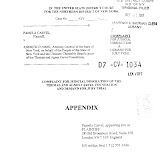
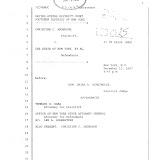
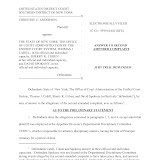
It has been long rumored that virtually any ethics complaint, no matter how serious or criminal, could be made to disappear for “favored attorneys.” “The feds are now beginning to understand that a ‘favored attorney’ in New York doesn’t just involve political connections. A New York ‘favored attorney’ is one who pays,” says one attorney who has practiced in the federal court system for over thirty years, and who asked not to be identified.  A DDC Whistleblower lawsuit in late 2007 exposed the corruptive operating procedures at the attorney ethics committee. That federal action, Anderson v. State of New York (SDNY), is pending before U.S. District Court Judge Shira Scheindlin, and involves charges of discrimination and corruption at the DDC. (CLICK HERE to see the Anderson Lawsuit)

“Win at all Costs” and “No Regard for Laws or Ethics” Hits National Agenda

The latest allegations coincide with the obstruction of justice case in the Eastern District Court in Brooklyn against defense attorney Robert Simels and his associate Arienne Irving, who each face up to 10 years in prison for allegedly seeking to use bribes and violence to prevent witnesses from testifying against one of their clients.

Tamanny Hall II – New York Court’s Cesspool Seeps to Washington, D.C.

In November of 2008, the U.S. Supreme Court decided to hear Caperton v. A.T. Massey Coal, a case that centers on state level ethics and judges beholden to financial supporters. The Brennan Center and other advocacy groups have called the issues egregious, matters that raise underlying questions about due process on a national level.

See, "The Unethical Ethics Committee" and the Background story on New York-Style Ethics, "Sex Scandal at Attorney Committee on Character and Fitness"

TOMORROW, PART TWO - U.S. Attorney Holder asked to End Violations of Federal Law Against New York State Judges.


Call New York State Senator John L. Sampson TODAY

PLEASE Call New York Senator John L. Sampson TODAY at 718-649-7653 and/or 518-455-2788.

Tell him that you support his efforts to expose the corruption within and about the New York State Court system. URGE SENATOR SAMPSON TO HOLD PUBLIC HEARINGS. Please take a moment right now and express your support of Senator John Sampson (quick phone message, letter, email....) Senator John L. Sampson - sampson@senate.state.ny.us
  • 9114 Flatlands Avenue, Brooklyn, NY 11236 -- Tel: (718) 649-7653; Fax: (718) 649-7661
  • 506 Legislative Office Building, Albany, NY 12247 -- Tel: (518) 455-2788; Fax: (518) 426-6806

Wednesday, March 4, 2009

Chief Judge Lippman Wants You to Like Him

Lippman has long list of reforms to pursue
The Journal News by Rebecca Baker - March 4, 2009

The key to having an impact on New York's court system, new Chief Judge Jonathan Lippman says, is getting people to like you. Particularly if they're in politics. "Up in Albany, you know, people come through these offices - 9 million people. You want to be someone who has a rapport, who people feel warmly about," he said. "Having that kind of entree, that relationship, helps you to do your business." As the new head of the state's highest court, the Court of Appeals, Lippman's business is managing a sprawling judicial system long criticized for its political clubbiness and inefficiency. Lippman, who lives in Rye Brook, was sworn in Feb. 25 and has pledged to change the court system by continuing the reforms of his respected predecessor, Judith Kaye, who retired. But skeptics who have fought to improve the court system - and are aware of Albany's slow response to change - are taking a wait-and-see approach. "We'll see how he does in action," said Kent Yalowitz, a partner at the Manhattan-based firm Arnold & Porter. "Everyone has high hopes for him." Yalowitz's firm was part of a 2004 federal lawsuit claiming New York's political party-based system for choosing state trial judges was unconstitutional. The U.S. Supreme Court upheld the existing system, one that helped Lippman win his first election, but Yalowitz called the party-controlled selection a "sham." Lippman defended the state's 1,300 judges, those who are elected and those who are appointed by state officials. He said he thinks New York, overall, has the best judiciary in the country. "I think there are good judges - great judges - that come out of both systems," he said. "I believe that the goal should be to make both those systems more transparent and comprehensible to the public." Lippman, who has spent his entire career in the state court system, does not shy away from mentioning his friends in politics. He talked about growing up on the Lower East Side with Assembly Speaker Sheldon Silver, and he recalled working with Gov. David Paterson when Paterson was the state Senate's minority leader. "I'm pleased that, in my new role, I have so many relationships in the Legislature and the executive branch," he said. Lippman insists, however, that he is not partisan and works with officials from both parties. He said he would need their help to improve the courts by recruiting more Family Court judges, reconfiguring the indigent defense system, raising money for civil legal services, improving the probation system, and reforming town and village courts, among his many goals. "I think our good deeds is how the public judges us," he said. "That's how we want the public to view us." During his 12 years as the state's chief administrative judge, Lippman said, he was Kaye's "junior partner in reform" and worked with her to funnel more money into the court system, improve jury service, and create special courts for mental illness, drug abuse and domestic violence. Lippman, 63, has never been a prosecutor or defense attorney. He started as a law clerk and moved up to be the court system's deputy chief administrator. He was later appointed to the Court of Claims, then successfully ran for a state Supreme Court seat in the 9th Judicial District, which covers the Lower Hudson Valley.

Lippman, a Democrat, won that seat in a cross-endorsement deal brokered by the political leaders in the 9th Judicial District that benefited Republican Judge Joseph Alessandro. A state judicial ethics group has recommended Alessandro be removed from the bench, saying he tried to defraud his former campaign manager and then lied about it. Lippman served just two years on the state bench before then-Gov. Eliot Spitzer appointed him in 2007 to run a midlevel appeals court in Manhattan. Tuckahoe Village Justice David Otis Fuller Jr., a member of the state's Special Commission on the Future of the New York State Courts, said Lippman's lifelong career in the court system has led to relationships with political leaders that "can't help being advantageous" to the courts. "He has more of an outlook of someone who has been in the system for many years," said Fuller, past president of the state Magistrates Association. "If anyone can get things done, he'd be the one I'd put my confidence in." Lippman said there were ways to improve the court system that would not affect the state's cash-strapped budget. He wants to bring cameras inside local, county and state courtrooms, arguing that the more the public knows about what goes on inside, the more support the courts will get. The idea is unpopular among prosecutors, defense lawyers and judges, but Lippman said he could "find a formula" that would satisfy all sides. Lippman has experience reaching compromises. As chief administrative judge, he brokered a deal with county and state officials in 2004 to finish building the new Westchester County Courthouse in White Plains. The deal involved scaling back the project, securing extra state aid and issuing bonds to cover about $42 million in cost overruns. "I'd be the last to say to you that it wasn't contentious," Lippman said. "It was an adventure, to be sure. But, in the end, it was so worthwhile." Gary S. Brown, the former executive director of the Fund for Modern Courts, said he thought Lippman was the best person to try to make those much-needed reforms happen. "He offers as much hope as anyone," he said. "His years working with Kaye can only benefit him. He was learning from the master." Brown, now the director of the Westchester County Department of Consumer Protection, said New York needs to streamline its 11 "inefficient" trial courts, improve special-treatment courts and modernize town and village courts, where some judges have no legal background and operate in makeshift buildings. He said Lippman would have an uphill task in getting lawmakers to spend money on those kinds of changes. "Not too many legislators get elected based on their position on court issues," he said. "But Jonathan Lippman knows the issues and knows the people and knows the history. He's proven he wants to change the system. I honestly believe he'll make every change he can."

Fraudulent Fun in Westchester, the Epicenter of New York Corruption

Trial opens in Mt. Vernon corruption case
The Journal News by Timothy O'Connor - March 4, 2009

A former Mount Vernon official illegally steered $2.3 million worth of city business and loans to her boyfriend, a federal prosecutor said yesterday. Former Planning Commissioner Constance "Gerrie" Post's efforts on behalf of Wayne Charles allowed him to reap hundreds of thousands of dollars in profits, the prosecutor said, part of which they intended to use to go into business together. 

"This is a case about fraud, theft and corruption," Assistant U.S. Attorney Cynthia Dunne said during opening arguments of Post and Charles' federal trial in White Plains. "It's about two people who lied and cheated in order to enrich themselves to the tune of hundreds of thousands of dollars." Post, 59, and Charles, 56, had plans to buy and develop parcels of land with the ill-gotten gains, Dunne said. But defense lawyers described Post and Charles as industrious individuals who did nothing illegal. "Gerrie Post was a dedicated, hard-working public servant," said her lawyer, Andrew Rubin. "She may have ruffled some people's feathers along the way. ... But she did not engage in any scheme to defraud the city of Mount Vernon." Charles' lawyer said whatever he got from Mount Vernon he got legally, and in exchange, he was willing to take on redevelopment projects in a blighted part of the city where officials were begging for help. "The government's case ... is nonsense," lawyer Richard Ware Levitt said. "It's based on a complete misunderstanding of the transactions in question." Levitt acknowledged that Charles "doesn't dot every i, doesn't always cross every t." "But he did not intend to defraud the city of its money or property," Levitt said. "And he did not intend to defraud Mount Vernon of the honest services of Ms. Post." Post and Charles are charged with mail fraud, theft of services and conspiracy. Charles also is charged with lying to federal investigators. They were indicted a year ago by a federal grand jury.

Post is accused of arranging the extension of a computer services contract to a company called Micros Only that was controlled by Charles, a contract that cost the city more than $1 million. She also is charged with arranging a $250,000 loan from the city to Charles that was not entered on the city's books until after federal investigators asked her about it in 2005. But lawyers for Post and Charles said the city was guilty of faulty record keeping. The loan wasn't entered on the books due to sloppy bookkeeping, not because of Post's deception, Rubin said. "It wasn't her job to put something on the books," he said. "It wasn't her job to send out the bills." Neither side explicitly mentioned the romantic relationship between Post and Charles, which both acknowledged during interviews with federal authorities. But both sides did allude to a personal as well as professional relationship between the two. Rubin said they met in 1997, when city officials and business people went on a trip to China. They developed a relationship sometime later. "In the later years, the friendship became more personal," he said. "So what?" The trial is expected to last four weeks, with federal prosecutors expected to call as many as 40 witnesses to the stand.

Shake-Up Begins at Manhattan DA's Office

Morgenthau Confirms Top Aide’s Resignation
The New York Times By JOHN ELIGON - March 4, 2009

Marilynn K. Yee/The New York Times When Robert M. Morgenthau announced on Friday that he would not seek re-election, his top aide, Daniel J. Castleman, left, was at his side. Robert M. Morgenthau, the Manhattan district attorney who is giving up his post after nearly four decades, confirmed during a news conference on Wednesday that his top deputy and longtime confidant, Daniel J. Castleman, had submitted a letter of resignation. Mr. Castleman, the chief assistant district attorney, tendered his resignation on Monday after Mr. Morgenthau said he told him he was unsure whether he would support him if he decides to run for district attorney. Mr. Morgenthau announced last week that he would not seek re-election in November for a 10th term. He said he told Mr. Castleman that he would like him to stay and that the offer still stands. If Mr. Castleman does not withdraw the letter, his resignation would take effect in six weeks, Mr. Morgenthau said. Mr. Castleman was not in the office when Mr. Morgenthau discussed the issue and was not immediately available for comment on Wednesday afternoon. Mr. Castleman’s resignation is the most conspicuous indication of discord in a district attorney’s office unaccustomed to change. Mr. Morgenthau, 89, has been at the helm of the office for 35 years, longer than any Manhattan district attorney before him. Mr. Castleman’s departure has caused some uneasiness throughout the office, with many senior assistants unsure of their future as several candidates vie to take over Mr. Morgenthau’s seat. Mr. Castleman would be the favored choice of many prosecutors because he would have represented an extension of Mr. Morgenthau’s work and would have been expected to keep the office’s hierarchy intact.

Mr. Morgenthau on Wednesday praised Mr. Castleman’s work as a lawyer with vast responsibilities but said he was unsure about his ability to handle many of the public obligations that come with leading what is considered in legal circles as the country’s premier prosecutor’s office. “When I think of my successor, I’ve got to think about who’s the best qualified to deal with the outside and inside,” Mr. Morgenthau said. “Mr. Inside and Mr. Outside are two different talents.” Mr. Morgenthau did not commit to supporting any of the people who have announced their candidacy to succeed him. The list includes two former assistants who worked under him — Cyrus R. Vance Jr. and Richard Aborn. It is clear that Mr. Morgenthau wants to ensure that whichever candidates he backs will defeat Leslie Crocker Snyder, a former judge and former Manhattan prosecutor, who lost a bitter, hard-fought Democratic primary against Mr. Morgenthau last year. Many expect Mr. Vance, the son and namesake of the former United States secretary of state, to receive Mr. Morgenthau’s backing. Mr. Vance has been raising money for more than a year and his background includes a strong dose of politics. Mr. Castleman would have had to leave his post to run for district attorney. Now, it appears he may not run, but he is still leaving the office because his boss and close friend would not support him. Mr. Morgenthau said his decision not to offer Mr. Castleman his support at this time was hard. “Probably the most difficult decision I’ve had to make here in the office,” he said.

G-Men Bid to Boot Madoff's Lawyer

G-Men Bid to Bounce Bernie Madoff's Lawyer From Case
The New York Law Journal by Mark Hamblett - March 4, 2009

A hearing is scheduled for today on the claim of federal prosecutors that the attorney for Bernard Madoff, Ira Sorkin of Dickstein Shapiro, is laboring under a conflict of interest in his representation of the accused operator of a multi-billion dollar Ponzi scheme. Southern District Judge Leonard Sand will hear from both sides on whether there is an actual conflict. If he finds one, he will then go on to inquire whether Mr. Madoff would waive any rights to claim the conflict affected the quality of his defense. It has been reported that one alleged conflict is that Mr. Sorkin represented two accountants in a 1992 case brought by the Securities and Exchange Commission. The accountants were later linked to Mr. Madoff. Another reason for the hearing is that Mr. Sorkin's name was on a list of more than 13,000 client accounts in the bankruptcy filing of Bernard L. Madoff Securities. Mr. Sorkin told the Law Journal last month that the account referred to in the bankruptcy filing belonged to his late father and then his mother. The reason Mr. Sorkin's name appeared on the list was that his mother's mail was sent to his house for several years. "There is no conflict because I was never a client, customer or had any beneficial interest in an account at the Madoff firm," he said.

U.S. Supreme Court Considers When a Judge Should Bow Out

Justices Consider When a Judge Should Bow Out
Case Involves Campaign Contributor With Business Before Recipient's Court
The Washington Post by Robert Barnes - March 4, 2009

The Supreme Court struggled yesterday with how to set a standard for when elected judges should recuse themselves when their campaign supporters have business before their courts. But a majority indicated that a case from West Virginia provided a dramatic example of why such a standard is needed. Justice John Paul Stevens was blunt about whether a state Supreme Court justice should have stepped aside rather than cast the deciding vote in favor of a coal company whose chief executive had spent $3 million to help the justice get elected. "We have never confronted a case as extreme as this before," Stevens said, adding that it brought to mind former justice Potter Stewart's famous observation about obscenity: "I know it when I see it." The case asks the court to find that an appearance of bias on behalf of a judge violates a person's constitutional right of due process and a fair trial, and it seemed to split the court along familiar ideological grounds.

Justice Anthony M. Kennedy, often the deciding vote in such situations, indicated that he sided with liberals on the court who expressed concern about the appearance of impartiality in the West Virginia case. "Our whole system is designed to ensure confidence in our judgments," Kennedy said, adding that "it seems to me litigants have an entitlement to that under the Due Process Clause." But he said he worried about how to set such a standard. The case is brought by Hugh Caperton, the owner of a small coal company who convinced a jury that the business tactics of A.T. Massey Coal and its chief executive, Don Blankenship, drove Caperton's company into bankruptcy. The jury awarded $50 million. In the next statewide election, Blankenship spent $3 million to oppose a state Supreme Court justice he disliked, and to elect newcomer Brent Benjamin. When Massey's appeal of the $50 million award came to the high court, Benjamin refused to recuse himself, and twice cast the decisive vote in 3 to 2 decisions overturning the verdict. Caperton asks the court to order a rehearing without Benjamin.

The case has drawn a spotlight on the skyrocketing costs of judicial elections, especially state Supreme Court races, which Caperton's attorney, Theodore B. Olson, told the court were "spiraling out of control." Justice at Stake, a judicial reform group, notes that state Supreme Court candidates raised almost $168 million from 2000 to 2007, nearly double the amount raised during the 1990s. Among the most prominent critics of the campaign spending is former justice Sandra Day O'Connor, who was in the packed courtroom during the arguments. Olson found the justice who would be his greatest adversary quickly, just seconds into his argument that his client's constitutional right to a fair trial "means not only the absence of actual bias, but a guarantee against even the probability of an unfair tribunal." "Who says?" shot back Justice Antonin Scalia. "Have we ever held that?"

Joined by Chief Justice John G. Roberts Jr., Scalia sharply questioned Olson's position that an appearance of bias based on a "debt of gratitude" that judges owe to those who fund their campaigns creates a due process problem. He said that Olson was asking for a standard of probable bias adopted "out of nowhere," and that Olson's view of the appearance of bias could be extended to justices such as those on the Supreme Court, who are appointed. "I was appointed to the bench by Ronald Reagan," Scalia said, adding that he and others on the court routinely rule on issues involving the president who appointed them. "Should I have been any less grateful to Ronald Reagan than -- than the judge here was grateful to the person who spent a lot of money in his election?" Olson said there is a difference between justices who receive lifetime appointments and those who depend on campaign contributors for election and reelection. Stevens and others were equally aggressive with Massey's attorney, Andrew Frey. Stevens questioned Frey's position that an appearance of bias could never trigger a due process violation. Justice David H. Souter said the appearance of bias was one factor in a public perception that "the system that we have depended upon up to this point is not working very well."

Frey said that "judges are clothed with a presumption of impartiality," and that what the court was being asked to do would open the doors to limitless challenges from litigants. He defended Benjamin's reasons for not recusing himself: Blankenship spent his money independently, and Benjamin had no control over it; Caperton's recusal motion was not based on allegation of personal friendship between the two; and Benjamin had no personal financial interest in the case, until now the court's basis for when a judge should recuse himself. "I ask the court to ask yourselves if you were in Justice Benjamin's situation, do you really think you would be incapable of rendering an impartial decision in a case involving Massey?" Frey said. Olson countered with a different question for the justices: "Would you think it would be fair and would it be a fair tribunal if the judge in your case was selected with a $3 million subsidy by your opponent?" Beyond the specific case, though, Kennedy said he found Olson's argument about the standard the court should look to for recusal to be lacking. "Your standard is an unacceptable risk of impropriety or perception of bias, but I -- I need some more specific standards," Kennedy said. The case is Caperton v. A.T. Massey Coal Co.

CLICK HERE TO SEE RELATED STORY, "Case May Define When a Judge Must Recuse Self"

Tuesday, March 3, 2009

Destroying Our Faith in Our Government

USA TODAY EDITORIAL - March 3, 2009:

Our view on filling court seats:
Mining case shows sooty side of big-money judicial elections
Public confidence suffers when special interests finance court races
You've got to give mining executive Don Blankenship credit for this much: By spending $3 million on venomous ads to unseat a West Virginia Supreme Court justice, Blankenship has inadvertently done what no reform group ever could: He has vividly illustrated how big money corrupts judicial elections. It puts justice up for sale to the highest bidder — or at least raises that suspicion. That's the only reasonable interpretation of the long-running battle — which lands in the U.S. Supreme Court today — between the nation's fourth largest coal mining company, A.T. Massey Coal, where Blankenship is CEO, and Hugh Caperton, the owner of a defunct West Virginia mining company.
In 2002, Caperton won a $50 million verdict against Massey after a jury agreed with Caperton's claim that Massey had fraudulently run him out of business. Massey appealed to the state's Supreme Court, but not before Blankenship used $3 million of his own money for ads to unseat a judge he considered anti-business and replace him with a judge he liked. Once on the bench, the new justice, Brent Benjamin, provided a crucial vote to overturn the $50 million verdict against Massey. Benjamin refused to recuse himself from the case — as Caperton had asked — saying he could be impartial. There oughta be a law, right? But there isn't, either against a judge hearing a case involving someone who bankrolled ads for his election, or against special interests deluging candidates for the bench with millions of dollars to buy friendly justice. Judicial races, once staid, low-budget affairs, have in the past decade turned into mudslinging, multimillion-dollar brawls that have shaken public confidence in justice. All over the nation, Republicans and business interests often vie against Democrats, trial lawyers and labor unions to shop for judges who will vote their way.

West Virginia might be the worst example, but it's certainly not the only one. In 2004 in Illinois, business interests and trial lawyers spent $9 million on a Supreme Court race. The business-backed candidate who won soon cast crucial votes in two high-stakes cases, both times in favor of business interests. Even if the Illinois judge, or Benjamin in West Virginia, voted strictly on the merits, their actions undermined the justice system's credibility. In the West Virginia case, the U.S. Supreme Court could offer some relief. Caperton argues that Benjamin should have removed himself from the case because of Blankenship's huge expenditures. We agree. Any judge who is blind to such an obvious conflict of interest cannot be trusted. Huge donations taint any decision he might make in favor of a contributor. In virtually all cases, however, judges have the last word on whether they will step aside. Regardless of how the Supreme Court rules, a better system is needed.. Beyond that, the underlying problem — special interests buying justice — won't be resolved until special-interest money is banished from judicial selection. About two dozen states do this by using "merit selection" to pick judges for their highest courts. Publicly financed judicial elections, used in North Carolina and New Mexico, are also proving their worth. Every system has drawbacks. But nothing could be worse than putting "for sale" signs on the doors of the nation's courts.


RELATED STORY:

Federal Judge Michael Mills: "But you destroyed the faith of the people in their government."

Nowlin to serve thirty months in prison
The Oxford Eagle - by Alyssa Schnugg - February 1, 2008

Despite numerous letters from prominent community members and a glowing report of cooperation from the U.S. Attorney’s Office, insurance agent Ken Nowlin was sentenced Thursday to spend 30 months behind bars in a federal prison for conspiracy. Nowlin was charged in June with conspiracy for paying former Lafayette County Supervisor Gary Massey a “commission” during Massey’s term as supervisor. In late July Nowlin pleaded guilty to the charge and had been awaiting his sentencing hearing which was held Thursday afternoon at the Federal Courthouse in Oxford before U.S. District Judge Michael Mills. The Ecru insurance agent told Mills he was sorry for his actions. “I’d like to apologize to you, Judge (Glen H.) Davidson, the court, Lafayette County, my family and colleagues,” Nowlin said before the judge. “I’m sorry I made this terrible mistake ... I know I broke the law ... Somehow I was mislead.” “Who mislead you?” Mills asked. “An elected official, your honor,” Nowlin replied.

U.S. Assistant Attorney Dave Sanders told Mills that Nowlin has fully cooperated with the investigation by supplying documents and testifying before a grand jury against Massey. “Mr. Nowlin has met with us on several occasions and sat down and clarified some things,” Sanders said. “It’s a complicated case and he’s always been cooperative.” According to the Federal Sentencing Guidelines, Nowlin faced up to 30 months in prison. The U.S. Attorney’s Office filed a motion for downward departure in Nowlin’s favor, asking the court to consider a sentence less than the guidelines stipulate since Nowlin was so cooperative. But despite the request and his cooperation, Mills sentenced Nowlin to the maximum sentence of 30 months.

“Up until this offense your record was exemplary,” Mills said to Nowlin. “I’ve received many letters from some impressive people on your behalf ... But you destroyed the faith of the people in their government.” Nowlin was also sentenced to pay $275,942 in restitution back to Lafayette County. Nowlin’s attorney, Tony Farese, told Mills that Nowlin had already paid the full restitution on Tuesday. Mills allowed Nowlin to remain out of custody on bail until March 31 when he will have to report to a prison facility that will be determined at a later date. Massey and Nowlin were originally charged in June for conspiracy, public corruption and money laundering in a 53-count indictment, which alleged Massey accepted payments in excess of $827,000 during his term as supervisor from 1996 -2003, for the Lafayette County Employee Health Care Contract paid through Nowlin, the agent of record at the time.

Massey pleaded guilty in September to one count of conspiracy and two counts of public corruption. He is still awaiting a sentencing date. Sanders announced during Thursday’s hearing that the remaining 52 counts against Nowlin will be dropped by the U.S. Attorney’s Office. Before he became a supervisor in 1995, Massey was the insurance agent of record for Lafayette County. Federal prosecutors claim Massey used his influence to get Nowlin the job as insurance agent of record in exchange for the commission. Prosecutors said Nowlin would receive payment for services in two checks made out to his office from plan administrator Total Plan Services. Nowlin took the checks and told his office to write a separate one to Massey for a “consulting fee.”

Attorney Pleads Guilty To Bribery, Tax Charges

Avon Attorney Pleads Guilty To Bribery, Tax Charges
The Hartford Courant - Courant Staff Report -February 28, 2009

HARTFORD, CT - An attorney from Avon pleaded guilty Friday in U.S. District Court in Hartford to charges of bribing a public official and aiding and assisting in the preparation of a false tax return, the U.S. attorney's office has announced. Sebastian S. Ciarcia, 56, entered the plea before U.S. District Judge Donna F. Martinez. In a prepared statement, acting U.S. Attorney for Connecticut Nora R. Dannehy said the evidence showed that Ciarcia, who is licensed to practice law in Connecticut, conducted business with the U.S. Department of Veterans Affairs through two companies, Escarnio Construction LLC and Fischer Supply LLC.

Dannehy said that beginning in approximately May 2002, Ciarcia gave things of value to Kevin Malarney, a VA employee, in exchange for Malarney's recommending and steering VA contracts for services and supplies to Escarnio Construction and Fischer Supply. Ciarcia paid Malarney's personal expenses, including auto loan payments, student loans, various insurance policy payments and the cost of trips to St. Maarten and New York. The value of the bribes given was approximately $45,600, Dannehy said. Between May 2002 and August 2005, Malarney, now 57, assisted in the awarding of 27 VA contracts worth approximately $303,000 to Ciarcia's companies. Malarney also directly authorized or caused to be authorized 48 payments totaling approximately $81,000 to Fischer Supply for services and supplies on his government purchase card. Ciarcia managed and controlled Escarnio Construction and Fischer Supply, even though Janet Escarnio is listed as the principal and owner of both companies.

In pleading guilty, Ciarcia admitted that he assisted in the preparation of Janet Escarnio's individual federal income tax returns for business income for the 2003, 2004 and 2005 calendar years. The returns under-reported the gross receipts of the companies for those years, causing a tax loss to the government of approximately $18,000. Ciarcia is scheduled to be sentenced May 15. He faces a maximum prison term of 15 years and a fine of up to $250,000 on the bribery charge, and a maximum prison term of three years and a fine of up to $100,000 on the charge of aiding and assisting a false tax return charges. On June 20, 2007, Malarney pleaded guilty to one count of bribery of a public official, and one count of filing a false federal tax return. He awaits sentencing.


******************* FBI PRESS RELEASE***********

U.S. Department of Justice, United States Attorney, District of Connecticut
PRESS RELEASE - February 27, 2009

ATTORNEY PLEADS GUILTY TO BRIBING VA EMPLOYEE, TAX FRAUD

Nora R. Dannehy, Acting United States Attorney for the District of Connecticut, announced that SEBASTIAN S. CIARCIA, 56, of Avon, pleaded guilty today before United States District Judge Donna F. Martinez in Hartford to one count of bribery of a public official, and one count of aiding and assisting in the preparation of a false tax return. According to documents filed with the Court and statements made in court, CIARCIA is an attorney licensed to practice law in the State of Connecticut, and Escarnio Construction, LLC (“Escarnio Construction”) and Fischer Supply, LLC (“Fischer Supply”) were the names of entities through which CIARCIA conducted business with the United States Department of Veterans Affairs (“VA”). Beginning in approximately May 2002, CIARCIA gave things of value to Kevin Malarney, a VA employee, in exchange for Malarney recommending and steering VA contracts for services and supplies to Escarnio Construction and Fischer Supply. CIARCIA paid Malarney’s personal expenses, including auto loan payments, student loans, various insurance policy payments and trips to St. Maarten and New York. The value of the bribes given by CIARCIA to Malarney was approximately $45,600.42. Between May 2002 and August 2005, Malarney assisted in the awarding of 27 VA contracts worth approximately $303,000 to CIARCIA’s companies. Malarney also directly authorized or caused to be authorized 48 payments in the total amount of approximately $81,000 to Fischer Supply for services and/or supplies on his government purchase card.

CIARCIA managed and controlled Escarnio Construction and Fischer Supply, even though Janet Escarnio is listed as the principal and owner of both companies. In pleading guilty, CIARCIA admitted that he assisted in the preparation of Janet Escarnio’s individual federal income tax returns for business income received by the companies for the 2003, 2004 and 2005 calendar years. The returns were fraudulent because the Schedule C’s of both companies under-reported the gross receipts of the companies for these years, causing a tax loss of approximately $18,000. CIARCIA is scheduled to be sentenced by United States District Judge Alvin W. Thompson on May 15, 2009, at which time CIARCIA faces a maximum term of imprisonment of 15 years and a fine of up to $250,000 on the bribery charge, and a maximum term of imprisonment of three years and a fine of up to $100,000 on the charge of aiding and assisting a false tax return charges. On June 20, 2007, Malarney pleaded guilty to one count of bribery of a public official, and one count of filing a false federal tax return. He awaits sentencing. This case was investigated by the Internal Revenue Service – Criminal Investigation Division; the Department of Veterans Affairs, Office of Inspector General; the Unites States General Services Administration, Office of Inspector General; the Federal Bureau of Investigation, and the VA Police Service. The case is being prosecuted by Assistant United States Attorneys Douglas P. Morabito and William M. Brown.

Monday, March 2, 2009

Ethics Panel Cover-Up, Fraud, and Now Layoffs, Plague Latham & Watkins

3 Stories follow:

1.   Latham & Watkins Cuts 190 Lawyers 
2.   Ex-Latham Partner Pleads to Federal Fraud Scheme
3.   NY Ethics Scandal Tied to International Espionage Scheme


Latham & Watkins Cuts 190 Lawyers
Huge Global Firm Lays Off 250 Others
The Washington Post by V. Dion Haynes - February 28, 2009

In a vivid illustration of how the global recession is battering the legal profession, Latham & Watkins, one of the largest law firms in the nation, announced yesterday that it will let go 190 lawyers and 250 paralegal and support staff. Latham & Watkins, which represents clients such as District-based Carlyle Group, Goldman Sachs, Harrah's Entertainment and UBS, has nearly 270 lawyers in Washington and more than 2,000 worldwide. The firm is struggling with declining profits as corporate clients slash legal spending because of a reduction in mergers and acquisitions, capital finance and transactions. The job cuts are among thousands that have roiled through the industry in recent months. In February, hundreds of jobs were cut at firms with District offices, including 243 at Holland & Knight, 134 at Bryan Cave and 29 at Dechert. Officials at Latham and the other firms declined to say how many of the dismissals were in Washington. Legal experts say 2008, following years of steady expansion and growing profits, was the worst year in recent memory for many law firms. Given the spate of layoffs this year, they expect 2009 to be no better.

"I think in 2009 you'll see that more [firms will experience a lower] profit level than we've ever seen. No doubt about it," said Thomas S. Clay, principal of Altman Weil, which provides management consulting services to law firms. Clay, noting that profits dropped 30 percent at some firms, added: "They could go through another round of layoffs if the work doesn't come back." Bob Dell, who is Latham's chairman and managing partner and works out of the firm's San Francisco office, said yesterday that the 440 jobs being eliminated represent 12 percent of the firm's associates and 10 percent of its paralegals. The cuts will occur in several of Latham's 28 offices, including those in the District, New York and Los Angeles, the firm said. In recent years, the firm expanded its hiring of associates, based on revenue that were growing 15 percent annually, Dell said. But revenue declined to $1.9 billion in 2008 from $2 billion in 2007 as transactional work fell off, prompting an examination of staffing levels, he said.

"We had an overcapacity [in staff] for some time. We were willing to live with that," Dell said in an interview. But in talking to clients, "we concluded this is not a normal recession. It will be longer lasting and a slower recovery. We couldn't maintain that overcapacity." Nationwide, the number of employees working in the legal profession grew steadily during the past decade before taking a turn last year, according to Bureau of Labor Statistics data. Last January, 1.16 million were working in the profession, down from 1.17 million in January 2007. It fell to 1.15 million in January 2009. Many lawyers have indicated that they think the job cuts will continue this year. In a recently published survey by the ABA Journal, 39 percent of 14,000 lawyers polled said they expected layoffs at their firm this year. Nearly 20 percent said they expected to lose their jobs this year.

Firms also are cutting costs through voluntary reductions. Hogan & Hartson this month offered buyouts in an attempt to reduce 257 support staff positions -- including 149 in the District. "As technological capabilities evolve, our attorneys are able to generate more of their work product and we're finding out we don't need the same level of support," firm Chairman J. Warren Gorrellsaid. "We're trying to make sure we're being appropriately cost conscious," he added. "We've been living with overcapacity for some time." Latham's growth strategy reversed quickly. Just three months ago, Latham announced it had named 28 associates and two other lawyers as partners in Chicago, Hamburg, London and several other offices. Dell said the workers losing their jobs will be offered a more generous severance package than usual. The employees will receive salary for six months, instead of two to three months, he said. They also will retain their health coverage for that period, he said.

*************** Related Latham Story *****************

Ex-Latham Partner Pleads to Federal Fraud Scheme 
Ex-Latham Partner Pleads to Fraud Charge
The New York Law Journal by Anthony Lin - March 31, 2008

A former partner at Latham & Watkins pleaded guilty Friday to defrauding both clients and his own firm by charging them more than $300,000 in personal or false expenses. Samuel A. Fishman, a mergers and acquisition specialist in Latham's New York office from 1993 to 2005, was designated billing partner for a number of firm clients. According to prosecutors at the Southern District U.S. Attorney's Office, Mr. Fishman, 51, used his position to carry out a fraudulent scheme over the course of several years. Responsible for supervising and approving invoices sent to clients, Mr. Fishman added to the bills a number of inappropriate items, mischaracterizing them as charges for photocopying or express mail. He also fraudulently sought reimbursement from his firm for a number of personal expenses he claimed were for business. The U.S. Attorney's Office did not identify Latham as Mr. Fishman's firm in a criminal information filed with the guilty plea, nor was the firm's name mentioned in court yesterday afternoon when Mr. Fishman entered his plea to one count of mail fraud. But in a statement yesterday, the firm acknowledged Mr. Fishman as a former partner and said his misconduct had come to light in 2005.

Latham "immediately acted to protect our clients fully, and disclosed the matter to appropriate law enforcement authorities," said David Gordon, Latham's New York managing partner. "Mr. Fishman resigned from the firm at the time the issues were discovered. Since that time, we have cooperated fully with the investigation." In announcing Mr. Fishman's guilty plea, prosecutors noted that the firm had reimbursed its clients hundreds of thousands of dollars that had been fraudulently charged. A firm spokesman yesterday declined to identify the clients defrauded by Mr. Fishman. The criminal information said Mr. Fishman's clients were in the banking, utilities, telecommunications and entertainment industries. He has previously acted as lead counsel for companies including movie theater chain AMC Entertainment Inc. and JPMorgan Partners, the private equity arm of JPMorgan Chase & Co. Accompanied at yesterday's hearing by defense lawyer Jack Litman of Litman, Asche & Goiella, Mr. Fishman expressed remorse to Southern District Judge Victor Marrero. "I am very sorry for what I did," he told the judge. Mr. Fishman's sentencing is scheduled for June 27. The mail fraud charge carries a maximum sentence of 20 years in prison. Mr. Fishman also has agreed to forfeit $350,000 in ill-gotten wealth. He also faces likely disbarment. A number of major firms have had to deal in recent years with fraud by partners, though most instances have resulted in disbarment or other disciplinary sanction as opposed to criminal prosecution.

In 2006, former WilmerHale intellectual property partner William P. DiSalvatore resigned from the bar after admitting to a litany of misconduct, including falsifying expense reports and assigning associates to perform "pro bono" work for friends and family. He claimed more than $109,000 in false personal expense. (NYLJ, Aug. 14, 2006) Willkie Farr & Gallagher and the former Kronish Lieb Weiner & Hellman are two other firms that have also terminated partners for fraudulently seeking reimbursement for personal expenses. (NYLJ, July, 31, 2006 and June 19, 2002) In most such cases, including that of Mr. Fishman, the defrauded amounts have been small compared to what the perpetrators earn as partners. Last month, Latham said it had profits per partner of $2.3 million in 2007. Steven Lubet, a legal ethics professor at Northwestern University School of Law, said he always found it "incredible" that highly paid partners would resort to fraud. He said he could only imagine that such people were overspending trying to emulate the lifestyles of those they represented.

"The clients have that kind of money, the lawyers don't," said Mr. Lubet. "Sometimes, lawyers decide they want to live like their clients and that extra money has to come from somewhere." Perhaps the most well-known case of a lawyer bilking his clients and firm was Webster Hubbell, the former associate attorney general under President Bill Clinton. Mr. Hubbell was forced to resign his position in 1994 after his former partners at Arkansas' Rose Law Firm discovered billing irregularities. He later pleaded guilty to fraudulently charging almost $500,000 for personal expenses and legal work never actually performed. He served 16 months in prison.  Anthony Lin can be reached at alin@alm.com. Additional reporting by Mark Hamblett.

*************** Related Latham Story *****************

NY Ethics Scandal Tied to International Espionage Scheme
Tammany Hall II Ethics Scandal Reaching New Heights - April 1, 2008

Reports surfaced in New York and around Washington, D.C. last week detailing a massive communications satellite espionage scheme involving major multi-national corporations and the interception of top-secret satellite signals. The evidence in the corporate eavesdropping cover-up “is frightening,” according to an informed source who has reviewed the volumes of documentation. The espionage scheme, he says, is directly tied to the growing state bar ethics scandal at the Appellate Division First Department, Departmental Disciplinary Committee (DDC) in Manhattan. Rumors had been Circulating Linking the NY Bar Scandal to International Corporate Espionage Ops Using Satellites. The highflying spy operation involves private and public companies, mainly in the U.S. and Europe, that operate apart- but not too far- from national intelligence services. Confidential sources have learned that the original source of much of the secret information comes from satellite intercepts sold by telecom companies under contract to government spy agencies.

Although it’s rarely addressed in any official proceedings, basically all private telephone conversations and email transmissions in the U.S., and essentially worldwide, are routinely intercepted by one government authority or another. Much of the work is done by independent telecom companies that transmit the signals on to giant computers that translate the text in real time. This instant translation capability put an end to many embarrassing backlogs, as in the case of the first World Trade Center bombing, where the FBI had received an intercept, but hadn’t translated the key incriminating conversation before that 1993 event. Once translated, the reviewing super computers search for key words to flag suspect conversations and transmissions. Proper names of people, buildings, addresses, codes, arms, explosives and the like will trip a full-scale investigation of a transcript.

Apart from the official surveillance of signal intelligence (or “sigint” in the spy trade), what confidential sources have discovered is that there is lots of freelance spying going on, where top-secret corporate information is being offered for sale to the highest bidder. The payments are allegedly made for a tip of such secrets as planned corporate acquisitions, mergers, or some very positive or negative performance reports. Advance knowledge of corporate information, and the corresponding improper company stock activity, has long been the focus of many insider trading investigations but has not, until now, directly involved New York City’s attorney ethics committee. One source says it’s been the ‘perfect crime.’ "The brains behind this organized scheme have thwarted attorney ethics investigations in New York, federal criminal inquiries and various civil actions around the country by simply citing ‘national security,’” says the source.

Enter the DDC, again

Since this secret corporate information is sent across public telecom networks that are constantly subject to interception, the black market in top-secret corporate intel continues to grow, and it generally evades detection. Last week, however, investigators tripped across evidence of a law firm protecting a client that had been on the selling side of corporate espionage. When complaints were filed with the New York Attorney Disciplinary Committee against the firm for a series of ethical violations, those grievances apparently disappeared into one of the now-well-known DDC black holes. Another trusted source from outside New York has indicated that federal court filings will soon provide detailed evidence showing how the dysfunctional DDC machinery covered-up actions by certain New York attorneys involved in the corporate spying activities.

U.S. Supreme Court Case May Define Whan a Judge Must Recuse Self

Case May Define When a Judge Must Recuse Self
The Washington Post by Robert Barnes - March 2, 2009
W.Va. Justice Ruled for a Man Who Spent Millions to Elect Him

BECKLEY, W.Va. -- Hugh Caperton was born into the coal business, but for more than a decade he has spent more time in a courthouse than in a mine. The complex, intrigue-filled legal tale he will present to the Supreme Court this week was literally enough to spawn a suspense novel, but it boils down to this: Caperton and his little coal company sued a huge coal company on claims that it unlawfully drove him out of business, and a jury agreed, awarding him $50 million. That company's chief executive vowed an appeal to the West Virginia Supreme Court -- but first, he spent an unprecedented $3 million to persuade voters to get rid of a justice he didn't like and elect one he did.

That justice provided the decisive vote in overturning Caperton's multimillion-dollar award. And the case raises profound questions about the way Americans elect their judges, the duty of judges to recuse themselves when the people who bankrolled their campaigns come before them and, even, the very meaning of judicial impartiality. The facts are so compelling that John Grisham used them as a basis for his bestseller "The Appeal." On opposing sides during oral arguments Tuesday will be two of the court's most prolific and persuasive practitioners, former solicitor general Theodore B. Olson and Andrew L. Frey.

But the implications go far beyond West Virginia, energizing critics of the multimillion-dollar political campaigns that are now the norm in many of the 39 states that elect judges, where no-holds-barred television advertising has replaced the staid and polite debates of the past. Among the outpouring of supporters for Caperton are a number of unlikely compatriots -- Wal-Mart siding with the Brennan Center for Justice at the New York University School of Law, for instance. "It's about the fundamental responsibility of the judiciary: a fair hearing before an impartial arbiter," said James Sample of the Brennan Center. "This is a fact-bound, multi-factor, worst-of-the-worst scenario; if any sort of floor exists for due process, this is the best case to plumb those depths."

But the facts, according to Caperton's nemesis, Don Blankenship, chief executive of A.T. Massey Coal Co., are these: Blankenship made lawful contributions to and on behalf of now-Justice Brent Benjamin. As in other political causes he has supported, he has a right to his political views about who is best to serve on the West Virginia Supreme Court. And there is no evidence that Benjamin had anything to gain financially from the dispute between Caperton and Blankenship, the only reason for recusal the Supreme Court until now has recognized. Blankenship attorney Frey, in his brief to the court, rejects arguments from Caperton that Benjamin had an obligation to recuse himself because of bias or "the probability of bias" or because he owed Blankenship a "debt of gratitude." "Such a theory . . . would have no limiting principle, would be entirely unworkable and would create serious administrative problems for courts," Frey wrote.

He spins an intriguing set of conflicts. Should a judge sit on a case involving a newspaper that endorsed his campaign? Is recusal necessary when one party is an interest group that worked for the judge's election? If the justice Blankenship worked so hard to oust had been reelected, would he harbor such animus that he should recuse himself from the case? "If 'probability of bias' were the constitutional standard," Frey wrote to the justices, "many members of this court would quite likely have been acting unconstitutionally by participating in numerous cases decided over the past 200 years." Caperton attorney Olson dismisses such a "slippery-slope/parade-of-horrible argument" as a distraction. "The thing I ask people is: 'If you had an important case coming up and your opponent gave $3 million to elect the judge who was going to decide it, would you think that was fair?'" Olson said. "I haven't met a person yet who thinks that's fair."

Caperton said that certainly was his thought in 2006, the first time he entered the ornate chambers of the West Virginia Supreme Court. His legal battles had been largely successful to that point, despite what he said was an early warning from Blankenship. "He said, 'I spend a million dollars a month on attorneys, and I'll tie you up for years in court,' " Caperton said. " 'Every expert you get, I'll find three.' " Blankenship and Benjamin declined to be interviewed. Nevertheless, Caperton convinced juries in Virginia and West Virginia that Massey Coal's business tactics -- including buying Caperton's coal purchaser and canceling contracts -- had unlawfully driven Caperton out of business.  Blankenship appealed to the West Virginia high court, but not before he got heavily involved in its 2004 elections. Although he gave only the allowed maximum $1,000 to Benjamin's campaign, he formed a political fundraising organization to "beat Warren McGraw," a longtime state politician and justice who was up for reelection and would be Benjamin's opponent.

The $3 million Blankenship spent on the race was more than all of Benjamin's other contributors combined. Blankenship and business groups supported Benjamin, labor unions and defense lawyers supported McGraw, and the result was one of the nastiest races in state history. "I'd been in some of the meanest campaigns in West Virginia," said McGraw, who has served in many state political offices and is now a judge in tiny Pineville. "But this campaign for the Supreme Court was without honor." Though Blankenship's dispute with Caperton was in the background of the race, the ads portrayed McGraw as voting to release a child molester: "Letting a child rapist go free? To work in our schools? That's radical Justice Warren McGraw." Benjamin, the first non-incumbent Republican elected to the court since the 1920s, declined to recuse himself when Blankenship's appeal reached the court. "No objective information is advanced to show that this justice has a bias for or against any litigant . . . or that this justice will be anything but fair and impartial," he wrote.

So when Caperton entered the court that day and looked at the five justices who would decide his case, he saw one whose campaign was financed by Blankenship and another rumored to be one of Blankenship's best friends. "I'm not thinking due process and I'm not thinking 14th Amendment; as a citizen I'm sitting there saying, 'How in the world? I've got two votes against me and we haven't even started yet,' " Caperton said. The court reversed the award, 3 to 2, saying among other things that the suit was not filed in the proper jurisdiction. But that was only the beginning of what became something of a meltdown on the West Virginia Supreme Court. Caperton's attorney received photos of Blankenship and Justice Elliott "Spike" Maynard, the one with whom he was rumored to be friendly, at a dinner on vacation on the French Riviera. And Justice Larry Starcher was quoted in the New York Times saying Blankenship's bankrolling of Benjamin's campaign made him want to "puke."

A rehearing was scheduled, with two circuit judges taking the places of Maynard and Starcher. The vote again was 3-2, with Benjamin again casting the decisive vote. "I just want a hearing in front of an impartial court of justices," Caperton said, and his petition asks for a remand to the West Virginia Supreme Court, without Benjamin. Caperton has drawn lopsided support in the case from legal and business groups, as well as those who worry about the role money now plays in judicial elections. Wal-Mart joined with Lockheed Martin, Pepsi and other corporations on Caperton's side, telling the court in a brief that requiring Benjamin's recusal "would signal to businesses and the general public that judicial decisions cannot be bought and sold."

Justice at Stake, a judicial reform group that has been sounding the alarm about the role of money in judges' races, notes that the amount of money raised by state supreme court candidates from 2000 to 2007 was almost $168 million, nearly double that raised during the 1990s. Former Supreme Court justice Sandra Day O'Connor is among those sharply critical of those elections. The Justice at Stake brief, joined by Common Cause, the League of Women Voters and a host of others, warns the court that it would "weaken state reform efforts" to find no "constitutionally significant threat to equal justice" in the case. Frey said the real goal of those lined up against his client is their desire that judges be appointed, not elected. "I'm no fan of judicial elections either, but it's not the job of the Supreme Court" to decide that, Frey said. The other side, Frey said, would erase the "presumption that a judge really will be impartial." And he said that in all the briefs filed on behalf of his opponent, no one proposes a clear line for what level of support -- be it financial or editorial or even gratitude to the chief executive who appointed a judge -- to call that presumption of impartiality into question.

Sunday, March 1, 2009

Clerk of Courts' Son Arrested after Meth Lab Found in his Home

Clerk of Courts' son arrested after meth lab found in his home
The News Sun by TREY CHRISTY - February 27, 2009

SEBRING, FL -- An illegal trash dumping complaint led to the uncovering of a methamphetamine lab Wednesday and the arrest of five people. Tracee Brown, 18, of Sebring; Joseph Nicklaus, 24, of Lake Placid; Fernando Chaidez, 29, of Fort Meade; and Edwin Townsend, 31, of Avon Park were all charged on Wednesday with manufacturing methamphetamine, possession of methamphetamine and possession of drug paraphernalia. Dustin Germaine, who reportedly owns the house with his father, Clerk of Courts Bob Germaine, was arrested Friday and booked on the same charges. Wednesday afternoon, Germaine was the subject of a manhunt near the area of his home Wednesday afternoon, but wasn't located then. Germaine was booked into the jail at 5:45 a.m. Friday morning. A representative from the HCSO said that the time listed on the booking sheet highlandssheriff.com, which says that Germaine was booked at 1 p.m. on Thursday, is an error. Items in the trash disposed of at Little Froggies Convenience Store were items used in the production of methamphetamine, said Capt. Randy Labelle of the Highlands County Sheriff's Office. The investigation led to 1108 Denise Ave. where numerous subjects occupied the residence and suspicious activity was noted by the responding officers, said a press release from the HCSO. When officers from the Sebring Police Department, who initially uncovered the operation, were granted access to the residence, "numerous items consistent with a methamphetamine cook were observed in plain view," the press release said.

The SPD and HCSO were joined by the Florida Department of Law Enforcement and the Drug Enforcement Administration and served a search warrant on the residence that led to the arrest of the four suspects. Labelle said the type of operation they uncovered is typical. "It's what we are starting to see more and more," he said. It is called a one-cook or one-pot method and is more basic than methamphetamine production methods that have been used in the past. "You don't need all the items the traditional meth lab would see," he said. "It's pretty simple." Numerous items used to manufacture methamphetamine were seized as evidence. Drain cleaner, lighter fluid, tubing, lithium batteries and coffee filters are just a few of the items used to produce the drug that were found in the discarded trash and inside the residence. LaBelle said it appeared that the operation had made previous batches of the drug. While Labelle said the HCSO is not actively looking for anyone specifically, he said the investigation continues. "There is, for the lack of a better word, other people on the radar," he said. trey.christy@newssun.com

Saturday, February 28, 2009

Important Corruption Notice

Please, please. We need 30 seconds of your time ....
Please call New York Senator John L. Sampson at 718-649-7653 and/or 518-455-2788.

Leave a message for the Senator. Tell him that you support his efforts to expose the corruption within and about the New York State Court system. If you want to leave your name and telephone number, someone from his staff will call you back. If you have a specific issue to relay to Senator Sampson, let him know.

Please take a moment right now and express your support of Senator John Sampson (quick phone message, letter, email....)

Senator John L. Sampson - sampson@senate.state.ny.us
  • 9114 Flatlands Avenue, Brooklyn, NY 11236 -- Tel: (718) 649-7653;  Fax: (718) 649-7661
  • 506 Legislative Office Building, Albany, NY 12247 -- Tel: (518) 455-2788; Fax: (518) 426-6806

Blog Archive

See Video of Senator John L. Sampson's 1st Hearing on Court 'Ethics' Corruption

The first hearing, held in Albany on June 8, 2009 hearing is on two videos:


               Video of 1st Hearing on Court 'Ethics' Corruption
               The June 8, 2009 hearing is on two videos:
         
               CLICK HERE TO SEE Part 1
               CLICK HERE TO SEE Part 2
Add to Technorati Favorites