Thursday, September 16, 2010
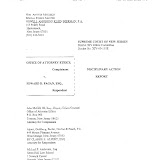
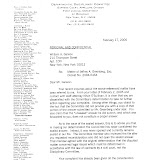
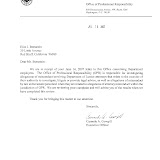
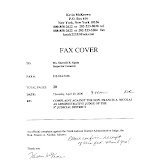
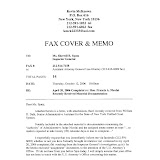
Corrupt Ethics Attorney Sherry K. Cohen Departing, Finally
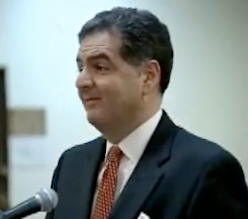
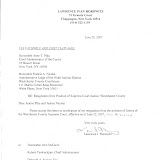
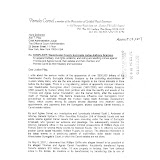
Sherry Kruger Cohen, the corrupt Deputy Chief Counsel of the Appellate Division, First Department Attorney Departmental Disciplinary Committee (the "DDC") has agreed to take the state-offered buy-out. Mrs. Cohen, a graduate of Hofstra University Law School, will leave her post at the 61 Broadway state offices at the end of the year.


Wednesday, September 15, 2010
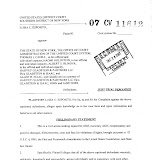
Anderson Moves to Disqualify NY Attorney General
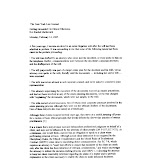
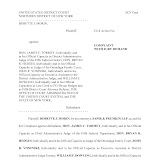
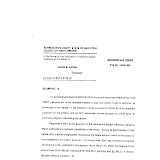
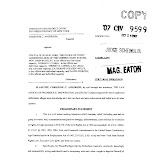
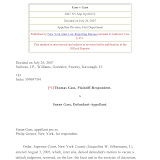
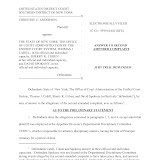
CLICK HERE TO READ ANDERSON'S FILING TO DISQUALIFY THE ATTORNEY GENERAL
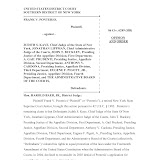
UNITED STATES COURT OF APPEALS FOR THE SECOND CIRCUIT
------------------------------------------------------------------X
Christine C. Anderson,
Case No.: 07cv9599
Plaintiff-Appellant, (SAS) (AJP)
2d Cir. No. 09-5059-cv v.
The State of New York,
Defendants-Appellees.
------------------------------------------------------------------X
NOTICE OF MOTION
PLEASE TAKE NOTICE that upon the accompanying affirmation, Plaintiff-Appellant Christine C. Anderson will move this Honorable Court, at the United States Courthouse, 500 Pearl Street, New York, New York 10007, at a date and time to be determined by the Court, for an order:
(1) DISQUALIFYING the Office of the New York State Attorney General from representation of defendants; and
(2) for such other and further relief as the Court may find just and proper.
Dated: New York, New York
September 14, 2010
Christine C. Anderson, plaintiff, pro se
227 Riverside Drive – Suite 2N
New York, New York 10025
917-817-7170 tel
To: Monica Wagner, Esq., Assistant Attorney General, Office of the NYS Attorney General, 120 Broadway, 24th floor, New York, New York 10271
UNITED STATES COURT OF APPEALS FOR THE SECOND CIRCUIT
------------------------------------------------------------------X
Christine C. Anderson,
Case No.: 07cv9599
Plaintiff-Appellant, (SAS) (AJP)
2d Cir. No. 09-5059-cv
v.
The State of New York,
Defendants-Appellees.
------------------------------------------------------------------X
AFFIRMATION IN SUPPORT OF MOTION
I, Christine C. Anderson, make the following affirmation under penalties of perjury:
I, Christine C. Anderson, am the plaintiff-appellant in the above entitled action, and respectfully move this court to issue an order disqualifying the Office of the New York
State Attorney General from representing defendant-employees of the State of New York
in any legal proceeding involving the herein before any federal or state court, agency or any other tribunal. The reasons why I am entitled to the relief I seek, and pending remand to the district court for a new trial as herein explained, are the following:
I. Introduction
1. The trial court abused its discretion in denying my request for a new trial, a reversible error, inter alia. That error continues before this appellate body and requires immediate correction. Because of the unique perspective of the trial judge, the decision as to whether to grant a new trial is committed to the district court's sound discretion and will be reversed only for a clear abuse of that discretion. Kempner Mobile Electronics, Inc. v. Southwestern Bell Mobile Systems, 428 F.3d 706, 716 (7th Cir. 2005); Latino v. Kaizer, 58 F.3d 310, 314 (7th Cir.1995). The trial judge advanced a miscarriage of justice by denying the application for a new trial. Remand is clearly indicated in this matter.
2. Fed.R.Civ.P. 59 does not list the grounds for which a new trial may be granted. (Wright § 95). In federal courts, common law must be looked to in determining the available grounds. Of the numerous grounds justifying a grant of new trial, one is that the “interests of justice” require a new trial. See e.g., Fort Howard Paper Co. v. Standard Havens, Inc., 901 F.2d 1373, 1379 (7th Cir. 1990) (affirming grant of new trial after a three-week jury trial). Among the grounds cited for seeking new trials are the following:
(1) Irregularity of the proceedings;
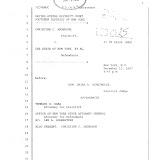
(2) Misconduct of jury;
(3) Accident or surprise;
(4) Newly discovered evidence;
(5) Insufficient evidence;
(6) Verdict against law;
(7) Error in law;
(8) Excessive or inadequate damages.
3. A court has broad discretion in considering a Rule 59(e) motion. Hagerman v. Yukon Energy Corp., 839 F.2d 407, 413 (8th Cir.), cert. denied, 488 U.S. 820 (1988). Rule 59(e) was adopted to clarify that “the district court possesses the power to rectify its own mistakes in the period immediately following the entry of judgment.” White v. New Hampshire Dep’t of Employment Sec., 455 U.S. 445, 450 (1982) (internal quotations omitted). A Rule 59(e) motion may be granted to correct a manifest error of law or fact, or to consider newly-discovered evidence. See Hagerman, 890 F.2d at 414.
II. The Attorney General’s Representation of the Defendants Constitutes
A Clear Conflict of Interest, and Violates Plaintiff’s Right to Due Process
4. In this action, plaintiff Anderson was confronted with an unquestionably unfair set of circumstances. She brought her complaint against three individuals, who, although employed by the State of New York, were also sued in their individual capacities. These defendants in turn were at all times represented by the New York State Attorney General. Thus, while the plaintiff charged the defendants with serious violations of law, the Attorney General stood before the jury defending these very same actions as proper and within the law. This arrangement seriously prejudiced the plaintiff, as jurors could and likely did conclude that the State of New York supported fully the conduct of the defendants.
Ongoing Conflict of Interest
5. Representation by the New York Attorney General’s office in the pending appeal continues the improper prejudice against plaintiff. Furthermore, not only did the Attorney General’s representation of the defendants unduly prejudice the plaintiff, but it also raised serious conflict of interest issues with respect to the defendants themselves. To protect their own rights, each of the defendants had to have their own attorneys in order to permit them to cross claim or make admissions, including their own right to protect their own individual rights in this appeal. Under New York State and federal conflict of interest rules, each of the defendants must be free to undertake these independent actions. To do so, they must have their own counsel. (See NYS Code of Professional Conduct Cannon 5 Conflict of Interest Rules.[1]) The Attorney General as a state attorney is bound by these rules as well. [2]
6. This constitutes New York State law, and the attorney who violates these safeguards must be immediately removed from the case. Further, should the defendants seek to waive the conflict- they would have to submit an affidavit to that effect to the court. Notwithstanding a defendant’s attempt to waive his right to independent counsel, the court can deny the waiver, based on a finding that ultimately this conflict cannot properly be waived. The trail court improperly ignored the obligation to address the inherent conflict up to and including the trial. This court, however, must now disqualify the Attorney General from any representation of the defendants.
7. As a result of these conflict of interest issues, the Attorney General cannot properly represent the defendants, either as a group or individually, in these appellate proceedings. Each defendant must have the right to advance his or her own position on appeal, to cross claim against the others, and to bring a counterclaim against the State. These actions most certainly could not be undertaken in a case where the Attorney General represents all the named defendants. All defendants clearly are in conflict with each other, especially in their individual capacities. Without question, the Attorney General violated its ethical rules and the public trust in undertaking to represent all of the defendants. The Attorney General continues to violate its ethical rules by appearing before this appellate body. This would be the case, even were it established that the defendants had sought to consent to such representation.
The Clear Need For Remand
8. The involvement of the New York Attorney General in refuting plaintiff's allegations, which involved serious violations of federal and state law and ethical standards, and in presenting the case of each defendants, denied plaintiff's due process and equal protection guarantees, and right to a fair and impartial trial. See Snyder v. Massachusetts, 291 U.S. 97, 105 (1934) ("if a practice or rule offends some principle of justice so rooted in the traditions and conscience of our people as to be ranked as fundamental") and Eldridge v. Williams, 424 U.S. 319 335 (1974) [3]
9. The conflict here is particularly acute given the nature of the claims brought by plaintiff Anderson. Plaintiff’s charges warranted an independent investigation by the New York State Attorney General’s Office to review the basic claims given that Anderson was formerly a Departmental Disciplinary Committee staff attorney with considerable experience and over the years received excellent evaluations. The fact is that these are not allegations from a lay person.
10. While at the DDC, Plaintiff Anderson was charged with investigating cases involving possible criminal and civil misconduct by attorneys. She carried out her duties as a duly authorized officer of the Court. The New York State Attorney General’s Office was therefore obligated to protect her and to investigate her claims of serious misconduct against the named parties. To the Contrary, the New York State Attorney General’s Office failed to do so.
11. The Attorney General is a publicly funded arm of the State. It was conflicted from the outset of this case because it could not possibly defend any of the defendants, while simultaneously investigating plaintiff’s claims of serious ongoing misconduct by the defendants. Indeed, no explanation has ever been provided as to why the Attorney General did not represent plaintiff Anderson against any of the original defendants. This was itself a misappropriation of public funds by a state investigative agency with prosecution powers.
12. Federal law mandates that a special prosecutor be substituted into the case, and this was not done. The actions of the Attorney General here confused, misled and confounded the jury, by creating a false impression that the acts were officially sanctioned by the state.
13. Furthermore, Christine Anderson’s allegations have substantial impact on the public, the bench and bar, and cannot be ignored by the New York State Attorney General’s Office merely because they were motivated to defend this lawsuit. This serious conflict demanded independent counsel for the defendants as a matter of fairness and high ethical conduct to all involved, particularly to Christine Anderson. Having denied independent counsel to the defendants, the Attorney General prejudiced plaintiff by making it appear to the jury that the State of New York and the New York State Attorney General’s Office supported defendants’ conduct. This was a burden Christine Anderson could never overcome and, at a minimum, warrants a new trial. The unfair burden continues before this appellate court.
14. Additionally, Remand is also certain as the trial Court was concerned about the aforestated conflict of interest and in one of its last instructions to the jury, the Court warned the jury not to draw a negative inference adverse to the defendants for their joint representation by the New York State Attorney General’s Office. That instruction was injurious to the plaintiff, Christine Anderson, in that it prejudiced the jury against her and in and of itself warrants a new trial for the following reasons:
a. It was one of the last instructions to the jury and thus was ingrained in the minds of the jury as a lasting impression. Furthermore, as one of the last instructions to the jury, it elevated its importance over and above all prior instructions as something that had to be considered indifference to all else.
b. There was no countervailing instruction to the jury that it could find a negative inference of the representation by the New York State Attorney General’s Office favorable to the plaintiff. This failure prejudiced the jury against the plaintiff by implying at a minimum, that the state supported all of the defendants’ conduct and found that it was within the bounds of the law.
c. Had the Court even given the jury an instruction not to draw a negative inference of the representation of the defendants by the New York State Attorney General’s Office as against either or both the plaintiff and the defendants, such an instruction only demonstrates the proof that there is an impermissible conflict of interest in the manner in which this case was conducted, that can only hurt one party over another. Further, the representation by the New York State Attorney General’s Office made it appear New York State supported the defendants’ conduct and that it was within the bounds of the law.
d. By the Court issuing the jury instruction not to draw a negative inference adverse to the defendants for their representation by the New York State Attorney General’s Office, the court preserved the argument to be raised in this motion and appeal.
e. Allowing all of the defendants to be represented by the same counsel and by the New York State Attorney General’s Office created an impermissible conflict of interest. Indeed, the conflict was so strong, that had the jury ruled against any one or all of the defendants, they would have been entitled to seek a new trial for impermissible conflict of interest as they would entitled to their own independent counsel. This court is thus faced with the fact any unsuccessful litigant in this case appeal could be expected to move for and would be entitled to a new trial because of the impermissible conflict of interest, as all of the defendants are required to have their own independent counsel, and to be represented their own counsel.
15. The American Bar Association's Code of Professional Responsibility elaborates on the duty of a public prosecutor such as the New York Attorney General to seek justice as follows:
"This special duty exists because: (1) the prosecutor represents the sovereign and therefore should use restraint in the discretionary exercise of governmental powers, such as in the selection of cases to prosecute; (2) during trial the prosecutor is not only an advocate but he also may make decisions normally made by an individual client, and those affecting the public interest should be fair to all ...." (ABA Code of Prof. Responsibility, EC 7-13, emphasis added.)
16. Therefore, a prosecutor's duty of neutrality is born of two fundamental aspects of his employment. First, the prosecutor, in this case the Attorney General, is a representative of the sovereign, and consequently must act with the impartiality required of those who govern. Second, the Attorney General can at all times call upon the vast power of the government, by utilizing public funds, and therefore must refrain from abusing that power by failing to act evenhandedly.
17. These key duties are not limited to criminal prosecutions, but must also be observed in civil cases as well. These safeguards are included in the ABA Code. "A government lawyer in a civil action or administrative proceeding has the responsibility to seek justice and to develop a full and fair record, and he should not use his position or the economic power of the government to harass parties or to bring about unjust settlements or results." (Id., EC 7-14, emphasis added.)
18. In the present case, the Attorney General was under the ethical duty to withdraw in order to preserve plaintiff's right to a fair and impartial trial. In a case such as this, not only is the Attorney General's neutrality essential to a fair outcome for the plaintiff, it is critical to the proper function of the judicial process as a whole. Our system of justice relies for its validity on the confidence of society. Without a continuing belief by the people that the system is just and impartial, the concept of the rule of law cannot survive. (See id., EC 9-1, 9-2.)
19. The New York State Attorney General is a public official elected by statewide ballot [4]. The American Bar Association's Code of Professional Responsibility addresses the special considerations applicable to a lawyer who is also a public official as follows: "A lawyer who is a public officer, whether full or part-time, should not engage in activities in which his personal or professional interests are or foreseeably may be in conflict with his official duties." (ABA Code of Prof. Responsibility, EC 8-8.) "[A]n attorney holding public office should avoid all conduct which might lead the layman to conclude that the attorney is utilizing his public position to further his professional success or personal interests." (ABA Committee on Prof. Ethics, opn. No. 192 (1939); see also People v. Conner, 34 Cal.3d 141, 146.)
20. The government's investigative and prosecutorial interests must be balanced against the public interest in insuring that the individuals and organizations receive effective representation, and are accorded their full constitutional rights and protections.
21. There are at least two reasons why a court should satisfy itself that no conflict exists or at least provide notice to the affected party if one does. First, a court is under a continuing obligation to supervise the members of its Bar. E.g., In re Taylor, 567 F.2d at 1191; see Musicus v. Westinghouse Electric Corp., 621 F.2d 742, 744 (5th Cir.1980) (per curiam) (district court obligated to take measures against unethical conduct occurring in proceedings before it). Second, trial courts have a duty "to exercise that degree of control required by the facts and circumstances of each case to assure the litigants of a fair trial." Koufakis v. Carvel, 425 F.2d 892, 900-01 (2d Cir.1970); see ABA Code of Judicial Conduct, Canon 3(A)(4).
22. For example, when a litigant's statutorily appointed counsel is acting against that person’s interests because of a conflict that the party has not been informed of and cannot be expected to understand on his own, it can be concluded that the litigant is not receiving a fair trial. Cf. Wood v. Georgia, 450 U.S. 261, 101 S.Ct. 1097, 67 L.Ed.2d 220 (1981) (divided loyalties of counsel may create due process violation).
23. Attorneys are officers of the court, Clark v. United States, 289 U.S. 1, 12, 53 S.Ct. 465, 468, 77 L.Ed. 993 (1933), and are obligated to adhere to all applicable disciplinary rules, and to report incidents of which they have unprivileged knowledge involving violations of a disciplinary rule. ABA Code of Professional Responsibility, DR 1-102(A), 1-103(A); see In re Walker, 87 A.D.2d 555, 560, 448 N.Y.S.2d 474, 479 (1st Dep't 1982) (as officers of the court, attorneys are required to notify parties and the court of errors including conflicts of interest).
24. Occupying a position of public trust, the Attorney General, as any public prosecutor is 'possessed ... of important governmental powers that are pledged to the accomplishment of one objective only, that of impartial justice.' (Professional Responsibility: Report of the Joint Conference (1958) 44 A.B.A.J. 1159, 1218.) The duty of a government attorney has been characterized as 'a sober inquiry into values, designed to strike a just balance between the economic interests of the public and those of the landowner,' is of high order." (Id. at p. 871.)
25. Canon 9, "A Lawyer Should Avoid Even the Appearance of Professional Impropriety," has been invoked by this Court in attorney conflict cases. See, e.g., Fund of Funds, Ltd. v. Arthur Andersen & Co., 567 F.2d 225, 234-35 (2d Cir.1977). The Model Rules of Professional Conduct, adopted by the ABA House of Delegates on August 2, 1983 contain similar provisions and language. See Rules 1.7, 8.4.
26. Furthermore, and central to the issue of preventing prejudicial influence of government attorneys on court proceedings, it is common for states to adopt statutes or regulations that prohibit those holding the office of Attorney General, as well as their
deputies and staff attorneys, from participating as attorneys in private litigation matters. (see e.g. Arizona Revised Statutes §41-191[5] Attorney general; Florida Statutes, Section 27.51(3), [6] Maryland Statutes and Procedures Governing Pro Bono Services of Attorney General Office[7] .)
27. The reason for adopting these restrictions is most obvious. For the Attorney General or any member of the staff to participate in a civil trial involving a private litigant will create the prejudicial inference that the state has reviewed and approved the position advocated by the government attorney. Such an inference can and likely will influence the outcome of the matter to the detriment of the opposing party.
28. It is for the above stated reasons that no Attorney General or staff member should be permitted to represent a private litigant in any adversarial proceeding. Only such an outright prohibition will properly preserve the standards of fairness and impartiality guaranteed to all litigants under federal and state constitutions. The present lack of statutory and/or ethical policy guidelines barring the participation of state law officers from representing private litigants in civil proceedings must be addressed by courts even if not by policy makers.
III. The Attorney General’s Office Cannot Ethically Continue Any Representation
29. The irregularity of the proceedings below were confusing, misleading and prejudicial to the plaintiff enough without the involvement of the Attorney General. Indeed, remand will result after review of the Instructions to the jury, the court marked-up Verdict Sheet after a written jury question to the court concerning the whitewashing of attorney ethics complaints and wide-practiced corruption that, in fact, counsel for the defendants- The New York State Attorney General’s Office- had an obligation to investigate, inter alia.
30. Improperly, the top law enforcement officer of the state was silent and action was, and is, absent. This cannot be condoned by this appellate court.
31. The involvement of the Attorney General’s office improperly left the jury, and proceeding itself, in an unclear, puzzling and convoluted condition. This confusion resulted in a proceeding which is in a word repugnant.
32. The mere presence of the Attorney General has at all times been prejudicial to the plaintiff and, at best, confusing to the jury. It has been established that both inconsistent or equivocal instructions and incorrect statements of the law may be prejudicially erroneous, Bollenbach v. United States, 326 U.S. 607, 612, 66 S.Ct. 402, 90 L.Ed. 350 (1946); United States v. Neilson, 471 F.2d 905, 908 (9th Cir. 1973); Bolden v. Kansas City Southern Ry. Co, 468 F.2d 580; Ratay v. Lincoln National Life Ins. Co., 378 F.2d 209 (3d Cir.), cert. denied, 389 U.S. 973, 88 S.Ct. 472, 19 L.Ed.2d 465 (1967), and that comments made by the court shortly before the jury retires are critical, Norfleet v. Isthmian Lines, Inc., 355 F.2d 359, 362 (2d Cir. 1966).
33. The lower court improperly allowed representation of the defendants by the Attorney General. In fact, the court below improperly condoned the Attorney General’s presence, accordingly directing the jury that the Attorney General’s representation was proper when it was not. It is generally assumed that juries “act in accordance with the instructions given them...and that they do not consider and base their decisions on legal questions with respect to which they are not charged.” Dist. Council 37 v. New York City Dept. of Parks and Recreation 113 F3d 347,356 (2d Cir. 1997).
34. It was never up to the jury to consider the ethical failings of the Attorney General’s representation. It was the obligation of the Attorney General’s office, and upon the failure of that duty, the obligation of the court.
35. There is also no record that the role of the Attorney General as defense counsel was properly and adequately explained to the jury. While this also constitutes another reversible error by the Court which will be addressed by the appeal itself, representation of the Attorney General’s office improperly remains.
IV. Newly Discovered Evidence At Trial Required Immediate Disqualification
36. The court gave the jury above-referenced instructions and its members adjourned to the jury room to deliberate at approximately 1:25 pm on Thursday, October 29, 2009. After the jury left the courtroom, the court first announced that she had denied the defendants’ pending motion for a directed verdict. She next stated words to the effect that she found that , "....Cahill was aware of the whitewashing allegations..." (Exhibit A, pages 808-809) The judge read this statement related to defendant Cahill’s conduct into the record as part of her order denying defendant's directed verdict. This fact alone requires a new trial, and should have resulted in the Attorney General’s office immediately withdrawing from the case.
37. In addition, Courts have an obligation to report and order investigation into official and at times criminal misconduct. This is a duty of the Court. There is no record to date as to any action having been undertaken by the Court regarding this central question. (See also recent decisions on spoliation of evidence which are state and federal crimes. Acorn v. Nassau County - cv052301 (2009 USDistLEXIS 19459) and Gutman v. Klein, 03cv1570. 2008 WL 5084182, 2008 WL 4682208.
38. The Court’s finding of culpability on the part of Defendant Cahill constitutes newly discovered evidence, which directly supports the fundamental allegations of Plaintiff.
Remand to the District Court for a new trial is highly likely as the trial court abused its discretion in denying a new trial. The Attorney General’s failure to withdraw is, in fact, sanctionable and worthy of referral to the attorney ethics committee.
39. Clearly the newly discovered fact that defendant Cahill, as the head of the DDC and supervisor of the other named defendants, had full knowledge of whitewashing activities would in all likelihood have changed the outcome of the case. This central fact establishing the liability of all named defendants could not have been discovered earlier and is not merely cumulative or impeaching. (See Farragher v. Boca Raton , 524 U.S. 775, 18 S. Ct. 2275 (1998) which imputes liability to supervisors in any event. In Farragher, the Supreme Court held that an employer is vicariously liable for actionable discrimination caused by a supervisor. All defendants are jointly and severally liable here. In fact, the State of New York is liable under Faragher, all while representation of the Attorney General’s office improperly continued.
JUDICIAL FINDING KEPT FROM A DELIBERATING JURY
40. Here, the new evidence establishes that in the view of the Court, Defendant Cahill, the head officer of the DDC and the supervisor of the other defendants, had full knowledge of the practice of whitewashing as alleged by Plaintiff, leading to the parallel conclusion that whitewashing was accepted as a common practice by the defendants, and presumably other staff members of the DDC. Had such facts been confirmed during the trial stage, the jury would have come to know and understand the illegal activities that were accepted as everyday practice by the DDC staff, a finding totally consistent with a main element of Plaintiff’s case. At all times relevant, however, the Attorney General’s office improperly continued their representation of the very people the Court found had acted illegally.
41. The Court’s statement after the close of trial accepting the establishing the whitewashing activities by Defendant Cahill will demand remand for a new trial. Meanwhile, the damage to the rule of law and ethics by the Attorney General’s office must be dealt with by this appellate court.
V. Witness Tampering – Threat on Witness in a Federal Proceeding
42. The Attorney General and the trial court were aware that in August of 2008, one of the plaintiff’s witnesses, DDC staff attorney Nicole Corrado, was threatened. Two days prior to her deposition testimony, state employee, and DDC Deputy Chief Counsel, Andral N. Bratton, and who had been her immediate supervisor for approximately 5 years, confronted Corrado. Bratton advised Corrado that in 2007 he had admitted himself into a psychiatric hospital for serious emotional problems, that he had “suicidal tendencies,” and that he was “warning” her accordingly. When Corrado asked Bratton why he was warning her, Bratton simply repeated several times in a very serious and stern tone by saying, “I’m just warning you.”
43. Following Corrado’s deposition testimony on August 21, 2008, Bratton’s behavior toward Corrado became more harassing, troubling, frightening and threatening as he began to follow her inside and outside of the state office where they both worked. Corrado subsequently reported these serious issues to DDC chief counsel Allan Friedberg, Deputy chief Counsel Sherry Cohen, a defendant in the current proceeding, and DDC Chief Investigator Vincent Raniere- all of whom who took no required action.
44. Plaintiff’s former counsel, John Beranbaum, advised the court, and by copy, the Attorney General, of this incident in a letter to the court dated October 24, 2008. In the Beranbaum submission, it was made clear to the court and the Attorney General that Ms. Corrado was given a ‘“warning’ about the testimony she was to gave at the deposition[,]” and further advised that “Ms. Corrado is very upset about the entire experience.
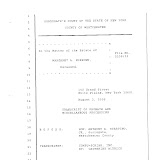
45. Mr. Beranbaum again raised the issue on the record four days later on October 30, 2008. (See Exhibit, “B” – Transcript of October 30, 2008 hearing, Page 26 (lines 17-25), and page 27 (lines 1-8). The court, in responding to the letter advising of the threat on plaintiff’s witness, commented, “You [Mr. Beranbaum] seem to want to tell me something or report it to me. Okay. You report it to me.”
46. It is plaintiff’s belief that the court had an obligation to report the matter to federal agents and, further, to interview Ms. Corrado concerning the incident. In addition, the Attorney General also had an obligation as the state’s top enforcer of the law.
47. Plaintiff believes she has been severely prejudiced by the threat upon her witness, Ms. Corrado, and, as the lower court and Attorney General were aware, Ms. Corrado did not appear as a witness in this proceeding.
48. While plaintiff is aware that counsel within the Office of the New York Attorney General’s office offered to “fully” compensate Mr. Beranbaum for ALL of his legal fees, expenses, etc., if plaintiff settled her case, she is unaware of the exact timing of when the compensation offer, believed to be between $120,000.00 and $150,000.00, was actually made.
VI. Conclusion
49. For the reasons set forth, Moving respectfully requests that this Court in the interest of justice issue an order restraining the Office of the New York State Attorney General’s office from representing employees of the State of New York in any legal proceeding involving the herein before any federal or state court, agency or any other tribunal grant a new trial.
50. As noted, the participation of the Attorney General in failing to investigate the charges submitted by plaintiff against the defendants, and subsequently representing these same persons in the instant court proceedings, denied plaintiff’s constitutionally protected right to a fair and impartial trial. This denial of basic rights was compounded by unclear, confusing and convoluted instructions to the jury, discovery of new evidence and serious allegations of intimidation of witnesses, which all support the de novo pending appeal and granting of the instant motion for disqualification.
51. Wherefore, Moving respectfully requests that the court grant the within Motion, as well as such other and further relief that may be just and proper. I declare under penalty of perjury that the foregoing is true and correct.
Executed on September 14, 2010
New York, New York Christine C. Anderson
Plaintiff, Pro Se
[1] http://www.law.cornell.edu/ethics/ny/code/NY_CODE.HTM ; Conflict of Interest Disciplinary Rule 5
http://www.law.cornell.edu/ethics/ny/code/
[2] As head of the Department of Law, the Attorney General is both the “People's Lawyer” and the State's chief legal officer. As the “People's Lawyer,” the Attorney General serves as the guardian of the legal rights of the citizens of New York, its organizations and its natural resources. In his role as the State's chief legal counsel, the Attorney General not only advises the Executive branch of State government, but also defends actions and proceedings on behalf of the State. http://www.oag.state.ny.us/our_office.html
[3] The Supreme Court set out the following balancing test for applying procedural due process protections: "[I]dentification of the specific dictates of due process generally requires consideration of three distinct factors: first, the private interest that will be affected by the official action; second, the risk of an erroneous deprivation of such interest through the procedures used, and the probable value, if any, of additional or substitute procedural safeguards; and, finally, the Government's interest, including the function involved and the fiscal and administrative burdens that the additional or substitute procedural requirement would entail."
[4] The fact that the Attorney General is elected by the voters of New York State raises a question with respect to the qualification of the jurors. No juror in the present case was asked whether he or she had voted for Attorney General Andrew Cuomo at the last election, or, for that matter, whether they supported the actions undertaken by him since assuming office, or further. whether they, as a general matter, agree with the general or specific policies of or initiatives undertaken and/or advocated by his office.
[5] B. The attorney general and his assistants shall devote full time to the duties of the office and shall not directly or indirectly engage in the private practice of law or in an occupation conflicting with such duties, except:
1. Such prohibition shall not apply to special assistants, except that in no instance shall special assistants engage in any private litigation in which the state or an officer thereof in his official capacity is a party.
2. Assistant attorney general may, but in no circumstances shall be required to, represent private clients in pro bono, private civil matters under the following circumstances:
(a) The representation will be conducted exclusively during off hours or while on leave and the attorney will not receive any compensation for such services.
(b) The client is not seeking an award of attorney fees for the services.
(c) The services are for an individual in need of personal legal services who does not have the financial resources to pay for the professional services or for a nonprofit, tax exempt charitable organization formed for the purpose of providing social services to individuals and families.
(d) The representation will not interfere with the performance of any official duties.
(e) The subject matter of pro bono representation is outside of the area of practice to which the attorney is assigned in the attorney general's office and the activity will not appear to create a conflict of interest.
(f) The activity will not reflect adversely on this state or any of its agencies.
(g) The assistant attorney general's position will not influence or appear to influence the outcome of any matter.
(h) The activity will not involve assertions that are contrary to the interest or position of this state or any of its agencies.
(i) The activity does not involve a criminal matter or proceeding or any matter in which this state is a party or has a direct or substantial interest.
(j) The activity will not utilize resources that will result in a cost to this state or any of its agencies.
(k) The attorney's supervisor may require the attorney to submit a prior written request to engage in pro bono work which includes a provision holding the agency harmless from any of the work undertaken by the attorney.
[6] Florida Statutes,Section 27.51 provides:"Each public defender shall serve on a full-time basis and is prohibited from engaging in the private practice of law while holding office. Assistant public defenders shall give priority and preference to their duties as assistant public defenders and shall not otherwise engage in the practice of criminal law." (e.s.)
[7] Private practice of Law and Pro Bono Representation.
Tuesday, September 14, 2010
More On Federal Judge Impeachment Trial
First Senate impeachment trial since Clinton starts
The Washington Post by Ed O'Keefe - September 14, 2010The first Senate impeachment trial in more than a decade begins Monday as senators meet to consider removing U.S. District Judge G. Thomas Porteous Jr. The House voted unanimously in March to impeach Porteous, almost two years after the Judicial Conference of the United States referred him to Congress for impeachment proceedings. The 63-year-old judge, based in New Orleans, faced four articles of impeachment, including allegations that he lied during background investigations related to his 1994 nomination to the federal bench. Federal court officials on Friday extended his suspension from the bench through the end of the year. The 12-member Senate Impeachment Trial Committee, led by Claire McCaskill (D-Mo.) and Orrin Hatch (R-Utah), will start hearing arguments from lawyers representing the House of Representatives and Porteous. The panel will vote at the end of the trial whether to refer a conviction to the Senate. Porteous would be the eighth federal judge in U.S. history removed by Congress, if convicted by the Senate. The proceedings will be similar to a trial, with each side allotted up to 20 hours to call witnesses and present evidence, according to the committee. Senators are allowed to ask questions of the witnesses. The hearings will run from about 8 a.m. through 7 p.m. each day through Thursday and likely will continue next Tuesday, aides said. Reps. Adam Schiff (D-Calif.) and Bob Goodlatte (R-Va.) will serve as lead managers for the House with the assistance of Zoe Lofgren (D-Calif.), Hank Johnson (D-Ga.) and James Sensenbrenner (R-Wis.).
Porteous is represented by a team of lawyers led by George Washington University Professor Jonathan Turley and Dan Schwartz with the law firm of Bryan Cave. The four articles of impeachment are either vague or relate to events that occurred before Porteous joined the federal bench, they argue in their pre-trial statement: "The House has made, and can be expected to continue to make, vague references to offenses, such as 'kickback' and 'bribery,' as if they had been alleged by the House in voting out the Articles of Impeachment, when in fact they were not," the lawyers said. "Three of the four Articles seek to remove Judge Porteous largely on the basis of conduct that allegedly occurred while he was a state court judge, although it is generally agreed that such 'pre-federal' conduct should not be a basis for removing a federal judge. ... If removed on the basis of an appearance of impropriety, the Senate would set a dangerously low and ill-defined standard for future impeachments – the very danger that the Framers sought to avoid in carefully crafting the impeachment language." But a New Orleans Times-Picayune editorial published Saturday called for a swift conviction: "We've had to live with this crooked judge in office for far too long," the paper said, noting that allegations of wrongdoing first surfaced more than seven years ago.
"A mountain of evidence, and guilty pleas from several people involved, have since shown how Judge Porteous further prostituted his office," the editorial board wrote, adding later, "If all this is not enough to kick a judge off the bench, then the impeachment process is meaningless." This is the first Senate impeachment trial for a federal judge since 1989, according to the committee. Hatch is the only member of the committee who also sat for that trial. According to the National Law Journal (subscription required), the House impeached U.S. District Judge Samuel Kent last year after he pleaded guilty to obstructing a sexual harassment investigation against him. He resigned before the Senate could hold a trial.
Members of the Senate Impeachment Trial Committee:
Claire McCaskill (D-Mo.) -- Chairman
Orrin G. Hatch (R-Utah) -- Vice Chairman
John Barrasso (R-Wyo.)
Jim DeMint (R-S.C.)
Mike Johanns (R-Neb.)
Ted Kaufman (D-Del.)
Amy Klobuchar (D-Minn.)
James E. Risch (R-Idaho)
Jeanne Shaheen (D-N.H.)
Tom Udall (D-N.M.)
Sheldon Whitehouse (D-R.I.)
Roger Wicker (R-Miss.)
Monday, September 13, 2010
Impeachment Trial of Federal Judge Begins in U.S. Senate
Impeachment trial of federal judge gets under way in U.S. Senate
by the CNN Wire Staff - September 13, 2010
STORY HIGHLIGHTS
Washington, D.C. (CNN) -- The U.S. Senate on Monday started the impeachment trial of federal judge G. Thomas Porteous Jr. -- the first such trial since the impeachment of former President Bill Clinton in 1999. The Senate Impeachment Trial Committee will submit its summary to the full Senate, which is expected to vote later this year. The judge is accused of corruption and accepting kickbacks, as well as lying about his past to the Senate and FBI regarding his nomination to the federal bench. In March, the House of Representatives voted unanimously to impeach Porteous, making him the nation's 15th federal judge ever impeached. Porteous is from the U.S. District Court for the Eastern District of Louisiana. Last year, the House Judiciary Committee Task Force on Judicial Impeachment held evidentiary hearings that led to unanimous approval of the four articles of impeachment, citing evidence that Porteous "intentionally made material false statements and representations under penalty of perjury, engaged in a corrupt kickback scheme, solicited and accepted unlawful gifts, and intentionally misled the Senate during his confirmation proceedings," a House release said. "Our investigation found that Judge Porteous participated in a pattern of corrupt conduct for years," U.S. Rep. Adam Schiff, D-California, chairman of the House Judiciary Committee Task Force on Judicial Impeachment, said in March. "Litigants have the right to expect a judge hearing their case will be fair and impartial, and avoid even the appearance of impropriety. Regrettably, no one can have that expectation in Judge Porteous' courtroom." In a statement at the time, Porteous' lawyer, Richard W. Westling, said the Justice Department had decided not to prosecute because it did not have credible evidence. "Unfortunately, the House has decided to disregard the Justice Department's decision and to move forward with impeachment," he said. "As a result, we will now turn to the Senate to seek a full and fair hearing of all of the evidence." Porteous was appointed to the federal bench in 1994. In 2007, after an FBI and federal grand jury investigation, the Justice Department alleged "pervasive misconduct" by Porteous and mentioned evidence "that Judge Porteous may have violated federal and state criminal laws, controlling canons of judicial conduct, [and] rules of professional responsibility, and conducted himself in a manner antithetical to the constitutional standard of good behavior required of all federal judges." The complaint said the department had opted not to seek criminal charges for reasons including statute-of-limitations issues. But Westling said the statute of limitations was not applicable.
The impeachment task force held hearings late last year that focused on allegations of misconduct by Porteous, including:
by the CNN Wire Staff - September 13, 2010
STORY HIGHLIGHTS
- Judge G. Thomas Porteous Jr. was impeached by the U.S. House of Representatives (Porteous is from the U.S. District Court for the Eastern District of Louisiana)
- Task force: Porteous engaged in a kickback scheme and intentionally misled the Senate
- Rep. Adam Schiff: Porteous "participated in a pattern of corrupt conduct for years"
Washington, D.C. (CNN) -- The U.S. Senate on Monday started the impeachment trial of federal judge G. Thomas Porteous Jr. -- the first such trial since the impeachment of former President Bill Clinton in 1999. The Senate Impeachment Trial Committee will submit its summary to the full Senate, which is expected to vote later this year. The judge is accused of corruption and accepting kickbacks, as well as lying about his past to the Senate and FBI regarding his nomination to the federal bench. In March, the House of Representatives voted unanimously to impeach Porteous, making him the nation's 15th federal judge ever impeached. Porteous is from the U.S. District Court for the Eastern District of Louisiana. Last year, the House Judiciary Committee Task Force on Judicial Impeachment held evidentiary hearings that led to unanimous approval of the four articles of impeachment, citing evidence that Porteous "intentionally made material false statements and representations under penalty of perjury, engaged in a corrupt kickback scheme, solicited and accepted unlawful gifts, and intentionally misled the Senate during his confirmation proceedings," a House release said. "Our investigation found that Judge Porteous participated in a pattern of corrupt conduct for years," U.S. Rep. Adam Schiff, D-California, chairman of the House Judiciary Committee Task Force on Judicial Impeachment, said in March. "Litigants have the right to expect a judge hearing their case will be fair and impartial, and avoid even the appearance of impropriety. Regrettably, no one can have that expectation in Judge Porteous' courtroom." In a statement at the time, Porteous' lawyer, Richard W. Westling, said the Justice Department had decided not to prosecute because it did not have credible evidence. "Unfortunately, the House has decided to disregard the Justice Department's decision and to move forward with impeachment," he said. "As a result, we will now turn to the Senate to seek a full and fair hearing of all of the evidence." Porteous was appointed to the federal bench in 1994. In 2007, after an FBI and federal grand jury investigation, the Justice Department alleged "pervasive misconduct" by Porteous and mentioned evidence "that Judge Porteous may have violated federal and state criminal laws, controlling canons of judicial conduct, [and] rules of professional responsibility, and conducted himself in a manner antithetical to the constitutional standard of good behavior required of all federal judges." The complaint said the department had opted not to seek criminal charges for reasons including statute-of-limitations issues. But Westling said the statute of limitations was not applicable.
The impeachment task force held hearings late last year that focused on allegations of misconduct by Porteous, including:
- Involvement in a corrupt kickback scheme;
- Failure to recuse himself from a case he was involved in;
- Allegations that Porteous made false and misleading statements, including concealing debts and gambling losses;
- Allegations that Porteous asked for and accepted "numerous things of value, including meals, trips, home and car repairs, for his personal use and benefit" while taking official actions on behalf of his benefactors; and
- Allegations that Porteous lied about his past to the Senate and to the FBI about his nomination to the federal bench "in order to conceal corrupt relationships," Schiff said in a prepared statement. Porteous was invited to testify, but he declined to do so, Schiff said. "His long-standing pattern of corrupt activity, so utterly lacking in honesty and integrity, demonstrates his unfitness to serve as a United States District Court judge," he said.
Porteous, 63, has not worked as a judge since he was suspended with pay in the fall of 2008, Westling said. The last impeachment of a federal judge occurred last year, when Judge Samuel B. Kent of the U.S. District Court for the Southern District of Texas resigned after being impeached on charges of sexual assault, obstructing and impeding an official proceeding and making false and misleading statements, according to the website of the Federal Judicial Center. The Senate, sitting as a court of impeachment, dismissed the articles. Before then, Judge Walter L. Nixon of U.S. District Court for the Southern District of Mississippi was impeached in 1989 on charges of perjury before a federal grand jury. The Senate convicted him and removed him from office that year.
Judging Judges - A Look Back
Judging Brooklyn’s judges
The New York Post by Aaron Short - February 18, 2010
You can’t judge a book by its cover, but you can judge a judge by her political allegiances. That was the message during a two-hour discussion on February 3 in a freezing community room of St. Johns Evangelical Lutheran Church (334 South 5th Street, williamsburg) where four Brooklyn attorneys spoke to a crowd of 30 members of the New Kings Democrats political club about the county’s highly politicized judicial selection process. “The lack of respect for the judicial system is off everybody’s radar screen,” said Brooklyn Corporation A’s Marty Needelman. “It’s just incredible how bad the system of justice is because nobody cares and it requires a huge amount of logistical planning.” Needelman joined Central Brooklyn Independent Democrats President and Judicial Delegate Chris Owens, Democratic District Leader Alan Fleischman, and attorney Matthew Chachere to discuss the role that politics plays in choosing judges to Kings County Supreme Court. “It’s all electoral politics and insider baseball. Lots of lawyers want to be judges, but if you don’t know the district leader, electeds and political clubs, if you can’t get into the Democratic establishment, you can’t be a judge in Brooklyn,” said Fleischman. In Brooklyn, as is the case for other counties in the state, judicial nominees for State Supreme Court are chosen through a judicial convention process by delegates, who petition for the seat during election cycles once every two years. Civil court judges, as panelist Michael Chachere explained, elected along with Congressmembers and state legislators, are the gatekeepers to many of the issues that affect Brooklynites in their daily lives.
“Most people in Brooklyn have a greater chance of having their lives affected by their interactions with a judge than with a person in the legislature,” said Chachere. “Who is responsible for ruling on their immigration status and for deciding whether they can post bail? The vast majority of the people don’t understand who they are voting for and what the position means.” Chachere would know from firsthand experience. His spouse, Surrogate’s Court Judge Margarita López Torres, was at the center of the evening’s discussion regarding the reformation of the judicial selection process. López Torres lost a Supreme Court battle in 2008 after suing the New York State Board of Elections when party leaders denied her bid to run for State Supreme Court. She did win a Surrogate Court position in 2005 despite a strong effort from Democratic leader Vito Lopez and the Kings County Democratic Party, which ran an opponent against her and then created another Surrogate judgeship position after López Torres won. “Vito was friendly with (then Governor George) Pataki and created a new surrogate to dilute her power, which (former Assemblymember) Frank Seddio won,” said Owens. “The punch line is after Seddio resigned, a new battle between the woman who lost previously and Vito’s new candidate emerged and we won again.” Calls and emails to Assemblymember Lopez’s office were not returned by the time this article went to press. The panelists contrasted Torres’ experience with that of Civil Court Judge Pamela Fisher who ran unopposed for her judgeship last year and won, despite not appearing before a selection committee to interview over her qualifications. In response to the discussion, New Kings Democrats Vice President Lincoln Restler vowed that his organization would pay more attention to court nominees and continue to run its members for Kings County Committee positions this fall. “Our distinguished panelists made it perfectly clear that most seats on the bench in Brooklyn are reserved for the family and friends of Brooklyn Democratic Party officials and the ultimate political insiders,” said Restler. “I am outraged by the absurd and arcane system the Brooklyn County Machine and Boss Vito Lopez use to place cronies on the bench. Our system of justice is undermined by their shenanigans. Brooklyn deserves better.” ashort@cnglocal.com
The New York Post by Aaron Short - February 18, 2010
You can’t judge a book by its cover, but you can judge a judge by her political allegiances. That was the message during a two-hour discussion on February 3 in a freezing community room of St. Johns Evangelical Lutheran Church (334 South 5th Street, williamsburg) where four Brooklyn attorneys spoke to a crowd of 30 members of the New Kings Democrats political club about the county’s highly politicized judicial selection process. “The lack of respect for the judicial system is off everybody’s radar screen,” said Brooklyn Corporation A’s Marty Needelman. “It’s just incredible how bad the system of justice is because nobody cares and it requires a huge amount of logistical planning.” Needelman joined Central Brooklyn Independent Democrats President and Judicial Delegate Chris Owens, Democratic District Leader Alan Fleischman, and attorney Matthew Chachere to discuss the role that politics plays in choosing judges to Kings County Supreme Court. “It’s all electoral politics and insider baseball. Lots of lawyers want to be judges, but if you don’t know the district leader, electeds and political clubs, if you can’t get into the Democratic establishment, you can’t be a judge in Brooklyn,” said Fleischman. In Brooklyn, as is the case for other counties in the state, judicial nominees for State Supreme Court are chosen through a judicial convention process by delegates, who petition for the seat during election cycles once every two years. Civil court judges, as panelist Michael Chachere explained, elected along with Congressmembers and state legislators, are the gatekeepers to many of the issues that affect Brooklynites in their daily lives.
“Most people in Brooklyn have a greater chance of having their lives affected by their interactions with a judge than with a person in the legislature,” said Chachere. “Who is responsible for ruling on their immigration status and for deciding whether they can post bail? The vast majority of the people don’t understand who they are voting for and what the position means.” Chachere would know from firsthand experience. His spouse, Surrogate’s Court Judge Margarita López Torres, was at the center of the evening’s discussion regarding the reformation of the judicial selection process. López Torres lost a Supreme Court battle in 2008 after suing the New York State Board of Elections when party leaders denied her bid to run for State Supreme Court. She did win a Surrogate Court position in 2005 despite a strong effort from Democratic leader Vito Lopez and the Kings County Democratic Party, which ran an opponent against her and then created another Surrogate judgeship position after López Torres won. “Vito was friendly with (then Governor George) Pataki and created a new surrogate to dilute her power, which (former Assemblymember) Frank Seddio won,” said Owens. “The punch line is after Seddio resigned, a new battle between the woman who lost previously and Vito’s new candidate emerged and we won again.” Calls and emails to Assemblymember Lopez’s office were not returned by the time this article went to press. The panelists contrasted Torres’ experience with that of Civil Court Judge Pamela Fisher who ran unopposed for her judgeship last year and won, despite not appearing before a selection committee to interview over her qualifications. In response to the discussion, New Kings Democrats Vice President Lincoln Restler vowed that his organization would pay more attention to court nominees and continue to run its members for Kings County Committee positions this fall. “Our distinguished panelists made it perfectly clear that most seats on the bench in Brooklyn are reserved for the family and friends of Brooklyn Democratic Party officials and the ultimate political insiders,” said Restler. “I am outraged by the absurd and arcane system the Brooklyn County Machine and Boss Vito Lopez use to place cronies on the bench. Our system of justice is undermined by their shenanigans. Brooklyn deserves better.” ashort@cnglocal.com
Sunday, September 12, 2010
Ticket-Fixing Judge Is Handed Jail Term but May Not Serve
Ticket-Fixing N.J. Judge Is Handed Jail Term but May Not Serve
The New Jersey Law Journal by Mary Pat Gallagher - September 1, 2010
Wanda Molina, the Jersey City, N.J., chief municipal judge at the center of a ticket-fixing scandal that caused her and three other judges to lose their jobs and face criminal charges, was sentenced on Aug. 27 to 364 days in jail, though she may be able to avoid hard time. Bergen County Superior Court Judge Harry Carroll also imposed a three-year probationary term to be served first, and at the end of it, Molina can apply to vacate the prison sentence. "We're very happy with the result because basically she won't do any jail time as long as she successfully completes probation and there is no reason to believe that that won't happen," says Molina's lawyer, Anna Cominsky of Krovatin Klingeman in Newark. If Molina does end up behind bars, she will be incarcerated in the county jail rather than a state prison because her sentence is for less than one year. The sentence also requires Molina to perform 500 hours of community service and make restitution for the value of the fixed tickets. Cominsky says that should be no problem for Molina, who has "always been very active in her community" providing free legal services to those who need them and aiding women's groups and Hispanic groups. Molina pleaded guilty on June 4 to tampering with and falsifying public records, which are third- and fourth- degree offenses. She admitted that between Oct. 30, 2006, and April 2, 2007, while she was Jersey City's chief municipal judge, she caused eight parking tickets issued to her live-in companion to be dismissed. On three of them, she wrote the word "emergency," falsely indicating that there were compelling circumstances to justify the illegal parking. The ticket tampering came to light in September 2007 after Hudson County Assignment Judge Maurice Gallipoli and Trial Court Administrator Joseph Davis received a tip about it and launched an internal probe with assistance from the Administrative Office of the Courts.
The inquiry led to the suspension of former Jersey City municipal court administrator Virginia Pagan and another court worker on Sept. 10, followed on Sept. 21 by the resignation of Molina, who had been chief judge since December 2004. By early October, three other judges -- Irwin Rosen, Pauline Sica and Victor Sison -- had taken unpaid leaves of absence, opening up a four-judge hole on the Jersey City bench that was filled by judges from Bayonne, Harrison, Hoboken and other municipal courts within the vicinage until new judges could be appointed. The Supreme Court installed Superior Court Judge Sheila Venable as acting municipal chief judge in Jersey City and assigned Gallipoli to run the court's day-to-day operations. Criminal charges were lodged against the four judges and Pagan. They were arraigned in Hudson County before Superior Court Judge Peter Vazquez but the cases were transferred to Bergen County because the chief prosecution witnesses were expected to be Gallipoli and Davis. A grand jury issued an indictment in December 2008. Sica and Sison were allowed into the pretrial intervention program last year and will likely see the charges against them dismissed on successful completion of its two-year term. Both had confessed to ticket-fixing. Charges against Rosen over dismissal of a single ticket against himself were thrown out at the request of the Attorney General's Office "in the interest of justice," based on Rosen's explanation that he followed a long-standing practice regarding parking outside places of worship. The proper procedure would have been for another judge to review and dismiss it, but Rosen's actions "did not rise to the level of a crime," says Peter Aseltine, a spokesman for the office. A fifth judge, Vincent Signorile, was investigated but not charged.
Pagan, who fixed many more tickets than Molina, was sentenced Aug. 20 to three years in state prison after pleading guilty on June 17 to official misconduct. Pagan admitted that between Nov. 9, 1999, and April 1, 2007, she accessed the court's computer record system and made entries dismissing 215 parking tickets issued to herself and her daughter. She must also make full restitution for the more than $5,000 in fines, penalties and costs associated with the dismissed tickets. Molina is permanently barred from public employment in New Jersey. She has a law practice in Jersey City and is "really looking forward to putting this all behind her and moving on," Cominsky says. "This has taken up the past three years of her life." Attorney General Paula Dow said after the sentencing "Ms. Molina broke the law and violated a fundamental rule of judicial conduct prohibiting judges from adjudicating matters in which they have a personal interest." To date, no complaint against any of the judges has been lodged by the Advisory Committee on Judicial Conduct. In the wake of the ticket scandal, a comprehensive review of ticket-dismissal procedures around the state by the AOC resulted in new directives concerning the disposition of cases involving court employees and their family members. The AOC also increased ethics training for local judges and court administrators; directed the Conference of Municipal Court Division Managers to recommend improvements to the monitoring of dismissals; and improved the interface between computer systems of the Motor Vehicle Commission to allow better monitoring of ticket dismissals.
********************************************
OFFICE OF THE NJ ATTORNEY GENERAL PRESS RELEASE
For Immediate Release:
For Further Information:
Office of The Attorney General - Paula T. Dow, Attorney General
Division of Criminal Justice - Stephen J. Taylor, Director
Media Inquiries-Peter Aseltine 609-292-4791;Citizen Inquiries-609-292-4925
The New Jersey Law Journal by Mary Pat Gallagher - September 1, 2010
Wanda Molina, the Jersey City, N.J., chief municipal judge at the center of a ticket-fixing scandal that caused her and three other judges to lose their jobs and face criminal charges, was sentenced on Aug. 27 to 364 days in jail, though she may be able to avoid hard time. Bergen County Superior Court Judge Harry Carroll also imposed a three-year probationary term to be served first, and at the end of it, Molina can apply to vacate the prison sentence. "We're very happy with the result because basically she won't do any jail time as long as she successfully completes probation and there is no reason to believe that that won't happen," says Molina's lawyer, Anna Cominsky of Krovatin Klingeman in Newark. If Molina does end up behind bars, she will be incarcerated in the county jail rather than a state prison because her sentence is for less than one year. The sentence also requires Molina to perform 500 hours of community service and make restitution for the value of the fixed tickets. Cominsky says that should be no problem for Molina, who has "always been very active in her community" providing free legal services to those who need them and aiding women's groups and Hispanic groups. Molina pleaded guilty on June 4 to tampering with and falsifying public records, which are third- and fourth- degree offenses. She admitted that between Oct. 30, 2006, and April 2, 2007, while she was Jersey City's chief municipal judge, she caused eight parking tickets issued to her live-in companion to be dismissed. On three of them, she wrote the word "emergency," falsely indicating that there were compelling circumstances to justify the illegal parking. The ticket tampering came to light in September 2007 after Hudson County Assignment Judge Maurice Gallipoli and Trial Court Administrator Joseph Davis received a tip about it and launched an internal probe with assistance from the Administrative Office of the Courts.
The inquiry led to the suspension of former Jersey City municipal court administrator Virginia Pagan and another court worker on Sept. 10, followed on Sept. 21 by the resignation of Molina, who had been chief judge since December 2004. By early October, three other judges -- Irwin Rosen, Pauline Sica and Victor Sison -- had taken unpaid leaves of absence, opening up a four-judge hole on the Jersey City bench that was filled by judges from Bayonne, Harrison, Hoboken and other municipal courts within the vicinage until new judges could be appointed. The Supreme Court installed Superior Court Judge Sheila Venable as acting municipal chief judge in Jersey City and assigned Gallipoli to run the court's day-to-day operations. Criminal charges were lodged against the four judges and Pagan. They were arraigned in Hudson County before Superior Court Judge Peter Vazquez but the cases were transferred to Bergen County because the chief prosecution witnesses were expected to be Gallipoli and Davis. A grand jury issued an indictment in December 2008. Sica and Sison were allowed into the pretrial intervention program last year and will likely see the charges against them dismissed on successful completion of its two-year term. Both had confessed to ticket-fixing. Charges against Rosen over dismissal of a single ticket against himself were thrown out at the request of the Attorney General's Office "in the interest of justice," based on Rosen's explanation that he followed a long-standing practice regarding parking outside places of worship. The proper procedure would have been for another judge to review and dismiss it, but Rosen's actions "did not rise to the level of a crime," says Peter Aseltine, a spokesman for the office. A fifth judge, Vincent Signorile, was investigated but not charged.
Pagan, who fixed many more tickets than Molina, was sentenced Aug. 20 to three years in state prison after pleading guilty on June 17 to official misconduct. Pagan admitted that between Nov. 9, 1999, and April 1, 2007, she accessed the court's computer record system and made entries dismissing 215 parking tickets issued to herself and her daughter. She must also make full restitution for the more than $5,000 in fines, penalties and costs associated with the dismissed tickets. Molina is permanently barred from public employment in New Jersey. She has a law practice in Jersey City and is "really looking forward to putting this all behind her and moving on," Cominsky says. "This has taken up the past three years of her life." Attorney General Paula Dow said after the sentencing "Ms. Molina broke the law and violated a fundamental rule of judicial conduct prohibiting judges from adjudicating matters in which they have a personal interest." To date, no complaint against any of the judges has been lodged by the Advisory Committee on Judicial Conduct. In the wake of the ticket scandal, a comprehensive review of ticket-dismissal procedures around the state by the AOC resulted in new directives concerning the disposition of cases involving court employees and their family members. The AOC also increased ethics training for local judges and court administrators; directed the Conference of Municipal Court Division Managers to recommend improvements to the monitoring of dismissals; and improved the interface between computer systems of the Motor Vehicle Commission to allow better monitoring of ticket dismissals.
********************************************
OFFICE OF THE NJ ATTORNEY GENERAL PRESS RELEASE
For Immediate Release:
For Further Information:
Office of The Attorney General - Paula T. Dow, Attorney General
Division of Criminal Justice - Stephen J. Taylor, Director
Media Inquiries-Peter Aseltine 609-292-4791;Citizen Inquiries-609-292-4925
August 27, 2010
Former Chief Judge of Jersey City Municipal Court Sentenced for Fixing Parking Tickets
TRENTON, NJ – Attorney General Paula T. Dow and Criminal Justice Director Stephen J. Taylor announced that Wanda Molina, former Chief Judge of the Jersey City Municipal Court, was sentenced to jail today for fixing parking tickets. According to Director Taylor, Molina, 51, of Jersey City, was sentenced to 364 days in county jail as a condition of a term of three years of probation by Superior Court Judge Harry G. Carroll in Bergen County. The judge also ordered Molina to perform 500 hours of community service. On June 4, Molina pleaded guilty to tampering with public records or information and falsifying records. Those charges were contained in a Dec. 11, 2008 state grand jury indictment obtained by the Division of Criminal Justice Corruption Bureau.
In pleading guilty, Molina admitted that between October 30, 2006 and April 2, 2007, she took judicial action to dismiss eight parking tickets that were issued to a close personal companion. She admitted that she wrote the word “emergency” on three of the tickets, falsely indicating that there were compelling circumstances to justify the illegal parking, when in fact there were not. Molina was ordered to pay restitution in the amount of the dismissed tickets. Molina resigned as chief judge on Sept. 21, 2007 in connection with this case, and she will be permanently barred from public employment in New Jersey. Deputy Attorney General Richard Queen took the guilty plea and represented the Division of Criminal Justice at the sentencing. “Ms. Molina broke the law and violated a fundamental rule of judicial conduct prohibiting judges from adjudicating matters in which they have a personal interest,” said Attorney General Dow. “This sentence demonstrates that no one is above the law.” “Whenever there are allegations of criminal conduct by court officials, it can shake public confidence in our judicial system,” said Director Taylor. “By vigorously prosecuting such cases, we hope to restore public confidence and prevent misconduct going forward.” On Aug. 20, Virginia Pagan, 55, of Jersey City, the former Administrator of the Jersey City Municipal Court, was sentenced to three years in state prison by Judge Carroll. She pleaded guilty on June 17 to second-degree official misconduct, a charge contained in a July 14, 2008 state grand jury indictment obtained by the Division of Criminal Justice Corruption Bureau. Pagan admitted that between Nov. 9, 1999 and April 1, 2007, she used her official position to access the court’s computer record system and make entries dismissing 215 parking tickets, carrying potential fines in excess of $5,000, which had been issued to her and her daughter. The judge ordered Pagan to pay full restitution for the fines, penalties and costs associated with the dismissed tickets. Pagan resigned from her court position in September 2007 after her alleged misconduct came to light. As a result of the guilty plea, she was also ordered to be permanently barred from public employment in New Jersey. Hudson County Assignment Judge Maurice J. Gallipoli initially investigated allegations regarding irregularities in the disposition of tickets in Jersey City Municipal Court. He referred the matter to the Attorney General’s Office. The case was investigated by Detective Lisa Cawley and Sgt. Lisa A. Shea of the Division of Criminal Justice Corruption Bureau. Deputy Attorney General Asha Vaghela presented the cases to the state grand jury. Attorney General Dow noted that the Division of Criminal Justice Corruption Bureau has established a toll-free Corruption Tipline for the public to report corruption, financial crime and other illegal activities. The statewide Corruption Tipline is 1-866-TIPS-4CJ. Additionally, the public can log on to the Division of Criminal Justice Web site at www.njdcj.org to report suspected wrongdoing. All information received through the Division of Criminal Justice Corruption Tipline or Web page will remain confidential. ###
Former Chief Judge of Jersey City Municipal Court Sentenced for Fixing Parking Tickets
TRENTON, NJ – Attorney General Paula T. Dow and Criminal Justice Director Stephen J. Taylor announced that Wanda Molina, former Chief Judge of the Jersey City Municipal Court, was sentenced to jail today for fixing parking tickets. According to Director Taylor, Molina, 51, of Jersey City, was sentenced to 364 days in county jail as a condition of a term of three years of probation by Superior Court Judge Harry G. Carroll in Bergen County. The judge also ordered Molina to perform 500 hours of community service. On June 4, Molina pleaded guilty to tampering with public records or information and falsifying records. Those charges were contained in a Dec. 11, 2008 state grand jury indictment obtained by the Division of Criminal Justice Corruption Bureau.
In pleading guilty, Molina admitted that between October 30, 2006 and April 2, 2007, she took judicial action to dismiss eight parking tickets that were issued to a close personal companion. She admitted that she wrote the word “emergency” on three of the tickets, falsely indicating that there were compelling circumstances to justify the illegal parking, when in fact there were not. Molina was ordered to pay restitution in the amount of the dismissed tickets. Molina resigned as chief judge on Sept. 21, 2007 in connection with this case, and she will be permanently barred from public employment in New Jersey. Deputy Attorney General Richard Queen took the guilty plea and represented the Division of Criminal Justice at the sentencing. “Ms. Molina broke the law and violated a fundamental rule of judicial conduct prohibiting judges from adjudicating matters in which they have a personal interest,” said Attorney General Dow. “This sentence demonstrates that no one is above the law.” “Whenever there are allegations of criminal conduct by court officials, it can shake public confidence in our judicial system,” said Director Taylor. “By vigorously prosecuting such cases, we hope to restore public confidence and prevent misconduct going forward.” On Aug. 20, Virginia Pagan, 55, of Jersey City, the former Administrator of the Jersey City Municipal Court, was sentenced to three years in state prison by Judge Carroll. She pleaded guilty on June 17 to second-degree official misconduct, a charge contained in a July 14, 2008 state grand jury indictment obtained by the Division of Criminal Justice Corruption Bureau. Pagan admitted that between Nov. 9, 1999 and April 1, 2007, she used her official position to access the court’s computer record system and make entries dismissing 215 parking tickets, carrying potential fines in excess of $5,000, which had been issued to her and her daughter. The judge ordered Pagan to pay full restitution for the fines, penalties and costs associated with the dismissed tickets. Pagan resigned from her court position in September 2007 after her alleged misconduct came to light. As a result of the guilty plea, she was also ordered to be permanently barred from public employment in New Jersey. Hudson County Assignment Judge Maurice J. Gallipoli initially investigated allegations regarding irregularities in the disposition of tickets in Jersey City Municipal Court. He referred the matter to the Attorney General’s Office. The case was investigated by Detective Lisa Cawley and Sgt. Lisa A. Shea of the Division of Criminal Justice Corruption Bureau. Deputy Attorney General Asha Vaghela presented the cases to the state grand jury. Attorney General Dow noted that the Division of Criminal Justice Corruption Bureau has established a toll-free Corruption Tipline for the public to report corruption, financial crime and other illegal activities. The statewide Corruption Tipline is 1-866-TIPS-4CJ. Additionally, the public can log on to the Division of Criminal Justice Web site at www.njdcj.org to report suspected wrongdoing. All information received through the Division of Criminal Justice Corruption Tipline or Web page will remain confidential. ###
Subscribe to:
Posts (Atom)


 Posts
Posts