MLK said: "Injustice Anywhere is a Threat to Justice Everywhere"

End Corruption in the Courts!

Court employee, judge or citizen - Report Corruption in any Court Today !! As of June 15, 2016, we've received over 142,500 tips...KEEP THEM COMING !! Email: CorruptCourts@gmail.com

Saturday, March 28, 2009

Chief Judge Lippman: Judges Matter

Trust judges in drug reform
The Albany Times Union by JONATHAN LIPPMAN - March 25, 2009

Albany is abuzz with proposals and counter-proposals to reform New York's drug sentencing laws, commonly known as the Rockefeller Drug Laws. Among the issues being debated are which drug offenders should be prosecuted and incarcerated, which offenders should be diverted to drug treatment and whether these determinations should be made by judges or by prosecutors. How these issues are resolved will have important consequences for enhancing public safety, reducing prison expenditures and ensuring fairness in drug sentencing. In crafting a solution, it is imperative that policymakers be mindful of the critical role that judges perform in the successful outcome of these cases. No matter the final form of legislation negotiated by the Legislature and the governor, it must affirm one key value: Judges matter. Starting in the mid-1990s, well before reform of the Rockefeller Drug Laws was a politically viable possibility, the New York State Court System began experimenting with judicially monitored treatment as an alternative to incarceration. Specific practices in our "drug courts" vary from jurisdiction to jurisdiction, but in every model addicted offenders submit to substance abuse treatment monitored by the judge. If the offenders successfully complete treatment, the charges against them are dismissed or reduced. Those who fail are sent to jail or prison.

Unlike other efforts to link offenders to treatment, the New York model emphasizes rigorous accountability. Judges closely monitor each offender's compliance through regular drug testing and ongoing court appearances. The judge encourages progress by administering rewards and sanctions. There is ample evidence that this carrot-and-stick approach makes a difference. The average one-year retention rate in treatment for drug court participants in New York is 66 percent. By contrast, only 10 to 30 percent of addicts who enroll in treatment voluntarily are still active in treatment one year later. More important, a statewide evaluation completed by the Center for Court Innovation documented a 32 percent reduction in recidivism among those who participated in judicially mandated treatment. Another study documented $9,488 in government savings — mostly in reduced incarceration costs — per drug court participant. Two factors have been crucial to our success with addicted offenders. The first is motivational. There must be clear legal incentives for addicts to complete treatment. The knowledge that failure in treatment can lead to incarceration is a powerful inducement to stick with the program, even in the face of the inevitable obstacles and relapses. In fact, felony offenders tend to do better than misdemeanor offenders in treatment, in part because the consequences of failure are greater. The second key element is judicial supervision. Outcomes are consistently better when addicted offenders are required to appear biweekly before a judge, which underscores a message of accountability. The impact of appearing regularly before a judge is especially pronounced for high-risk offenders who have previously failed treatment. Judges can ensure that treatment is a real sentence for them, not just a get out of jail free card.

New York's court system has shown that treatment, when combined with clear legal incentives and active judicial involvement, can be successful. We know what works. And that's where reform of the Rockefeller Drug Laws comes in. New York's drug courts now admit 2,600 new felony offenders each year, a small fraction of the 43,000 new felony drug arrests that come through the system. While not every case is appropriate for diversion to treatment, many more offenders could benefit from the opportunities that judicially monitored alternatives to incarceration provide them. So the bottom line of Rockefeller Drug Law reform is crystal clear. Above all else, legislative reform must recognize and bolster the critical role that judges perform in these cases. By expanding judges' discretion to divert more offenders to treatment, the legislation that emerges can serve the public interest by enabling the courts to do more of what we have been doing for years — using the authority wielded by judges to help addicted offenders turn their lives around, making New York a safer place for all of us. Jonathan Lippman is chief judge of New York.

Friday, March 27, 2009

Six NY Lawyers Busted for Not Paying Taxes

State charges 6 Rochester-area lawyers with not filing taxes
The Rochester Democrat and Chronicle by Claudia Vargas - March 27, 2009

Six area lawyers, including a town supervisor, are facing felony charges of not filing or paying personal state taxes in more than three years as part of an increased effort by the state Department of Taxation and Finance to crack down on tax delinquent professionals. Deputy Commissioner of Enforcement for the Department of Taxation and Finance Bill Comiskey said the department launched a professional non-filer project in late 2007 that targets people in professional fields, from business owners to doctors, who do not file their taxes. The department increased the number of statewide investigators from just over two dozen in 2007 to about 125 today. Ten of those investigators are in Rochester. Karolyne N. Armer, David R. Coletti, Nat O. "Buddy" Lester III, Paul W. Martin, Steven J. Seidman and D. Scott Young were arraigned Thursday in Rochester City Court on separate charges of failing to file returns for three or more consecutive tax years while having a tax liability in each of those years, a Class E felony. Lester submitted a resignation letter from his position as Sweden supervisor on Monday.

The six lawyers pleaded not guilty Thursday and the charges against them will be heard by a grand jury. The department estimated that all together the six lawyers failed to report more than $1.4 million in income and failed to pay more than $84,000 in tax liability. Tom Bergin, a spokesman for the Department of Taxation and Finance, said he was unable to release the amount each lawyer owed in taxes because not all figures were included in the criminal complaint making them public. If convicted, each lawyer could face up to four years in state prison and lose his or her law license under State Judiciary Law. If a lawyer is charged with a crime, his or her license is not affected, said Dan Drake, principal counsel of the Attorney Grievance Committee of the 7th Judicial District. But if a lawyer is found guilty of a New York state felony, the lawyer is automatically disbarred.

The six lawyers were not informed of the investigation until each was served a subpoena in late January or early February. Had the lawyers not owed money for tax liability, they would have faced misdemeanor charges instead, Bergin said. What elevated their charges to felonies, he said, is that not only did they fail to file taxes for more than three years but they also owed money for each of those years. "We want to motivate the hundreds of thousands of non-filers (to file)," Comiskey said. "We are coming." Comiskey said the department likes doing large round-ups of non-filers to get attention and encourage those who have not filed their taxes to file. The department's investigators throughout the state have had several round-ups in the last month, including a group of three Manhattan business owners who were charged in separate felony cases for failing to report millions of dollars in taxable sales and for underreporting income. The criminal charges of the six Rochester-area lawyers were the result of an investigation by the Rochester Special Investigations Unit of the state Department of Taxation and Finance, which was created just over a year ago.

Here's a list of those arraigned Thursday:

Armer, 59, of 449 Black Walnut Drive, Greece, a solo practitioner in domestic relations and divorce law with offices in Penfield, was charged with three felony counts of failing to file personal income tax returns for tax years 2001 to 2007. According to court documents, Armer told a Department of Taxation and Finance auditor in February that she had failed to file personal income tax returns in recent years because of "bookkeeping problems." Armer stated to the auditor that that she had three different bookkeepers since 2001 and realized that charges were not filed correctly in her book. "She felt that the deductions may have been overstated, thus she did not feel they should be filed," court documents stated. Armer did not return a call for comment.

Coletti, 44, of 119 Moxon Drive, Greece, a partner in the Rochester law firm of Christiano, Gallant & Coletti, was charged with two felony counts of failing to file personal income tax returns for tax years 2004 to 2007. Coletti filed his taxes for taxable years 2004 to 2007 on Jan. 28, after being notified that the department was conducting a criminal investigation, and paid $10,000 of the total unpaid personal income tax liability of $18,168. Coletti had no comment Thursday.

Lester, 48, of 20 Timber Trail in Brockport, the sole member of the Brockport firm of Lester & Lester and the supervisor for the town of Sweden since 1998, was charged with two felony counts of failing to file personal income tax returns for tax years 2004 to 2007. According to court documents, Lester told tax investigators that he fell behind on taxes after the death of his father in 2003. Lester said his father had run the legal practice and Lester had no experience running it. He also said he was unfamiliar with the accounting aspects of the firm and therefore fell behind. Lester had no comment Thursday.

Martin, 49, of 69 Blue Ridge Road in Penfield, a member of the Fairport law firm of Fix, Spindelman, Brovitz & Gold since 2008, was charged with four felony counts for failing to file personal income tax returns since 1998. According to court documents, Martin told a Department of Taxation and Finance auditor that after being laid off from a law firm in 1999, he "basically survived on savings and help from family when he wasn't making enough to survive" and therefore he did not think he was required to file taxes. Martin did not return a call for comment.

Seidman, 52, of 118 Beckwith Terrace in Rochester, a solo practitioner in domestic relations and divorce law with offices in Pittsford, was charged with a single felony count of failing to file personal income tax returns for tax years 2005 through 2007. According to court documents, Seidman told a Department of Taxation and Finance investigator that "his bookkeeper had messed up his records to such an extent that he could not figure out his income." Seidman had no comment Thursday.

Young, 48, of 21 Deer Path in Honeoye Falls, a partner in the Rochester law firm of Ashcraft, Franklin & Young, was charged with four felony counts of failing to file personal income tax returns for tax years 2002 through 2007. According to court documents, he told a Department of Taxation and Finance auditor that he had "serious financial problems" in the last several years and did not have funds to pay his taxes. Young did not return a call for comment.
Comiskey said people who have not filed their taxes for previous tax years should consider contacting the department's Voluntary Disclosure Program to avoid penalties and possibly criminal charges. He added that the Rochester lawyers would have been eligible for the program before the criminal investigation began. "Hopefully they see this as an incentive to do the right thing," he said.  CLVARGAS@DemocratandChronicle.com

Additional Facts
State tax amnesty program available

The state Department of Taxation and Finance started a "Voluntary Disclosure" program that offers eligible taxpayers a form of tax amnesty and helps taxpayers clean up old tax liabilities while avoiding punitive actions such as criminal charges and significant monetary penalties. About 1,700 people in New York state participated in the program since it began last year. Department officials say those who have not filed their taxes in one or more years and owe money will avoid all penalties if they come forward through the disclosure program. However, if an investigation has begun into a particular tax delinquent, that person is not eligible for the program. For more information about the program, go to www.nystax.gov.

********************************************************

The New York Law Journal - News Watch - March 27, 2009
Six NY Lawyers Busted for Not Paying Taxes

Six lawyers in the Rochester region, one of them a part-time town supervisor, have been charged with failing to pay state income taxes for three years or more. Officials say the Town of Sweden's supervisor, Nat Lester, resigned from his post after being charged along with lawyers D. Scott Young, Karolyne Armer, David Coletti, Paul Martin and Steven Seidman. All six pleaded not guilty at an arraignment yesterday. Investigators with the Department of Taxation and Finance estimate the lawyers failed to report a combined $1.4 million in income. If convicted, they could lose their licenses and get up to four years in prison. Authorities say the lawyers acted independently and their cases are not connected.

Thursday, March 26, 2009

Rate Your Judge on "Robe Probe"

Completely Legal
The Journal News Legal Blog

GO BEHIND THE BENCH TO EXAMINE THE COURTS AND CASES IN THE LOWER HUDSON VALLEY.

Rate your judge on “Robe Probe”
March 25, 2009

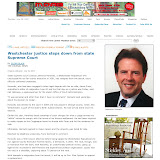
There’s a website called Robeprobe.com, and if enough attorneys and their clients in the Lower Hudson Valley find out about this, things could get very interesting.  Basically, it’s a rating system for judges at all levels, from U.S. Supreme down to municipal judges. Even judges from other countries are listed. Billing itself as “the world’s most trusted judge rating site” (like there are so many others), the site’s search engine asks you to choose the jurisdiction (state, county, municipal, appellate, etc.) then type in the name of the judge and give them one to 5 stars. If your judge isn’t listed, you can add him/her to the list. I typed in a few names of judges from Westchester County. The only ones who were listed were State Supreme Court Justices Lester Adler and Richard Molea, and county Judge Barbara Zambelli. Judge Francis Nicolai, the court administrator for the 9th Judicial District, was listed, as was Court of Appeals Chief Judge Jonathan Lippman – the top judge in New York state. No one has rated them yet, so if you’re so inclined, you know where to find them. 

Wednesday, March 25, 2009

Morganthau Reportedly Taking Second Look at 'bad' Cases

LUSTY LAWYER
The New York Post by KIERAN CROWLEY - November 27, 2006

Attorney Taped 'Demanding Sex'

'Devil' Advocate: Allen Isaac was fired form his law firm after Luisa Espostio sued him, alleging he wanted sex for taking her case.

November 27, 2006 -- A woman claims in a $70 million lawsuit that her former lawyer demanded oral sex in his Wall Street office - and authorities failed to prosecute, although she recorded him admitting it. "The Manhattan District Attorney's Office and the Police Department have absolute, unquestionable proof of a sexual assault, but because that predator is a well-known lawyer, nothing has been done," said alleged victim Luisa Esposito, 48. "There was a cover-up. I told the DA's office I'd take a lie-detector test, but they never gave me one - because they know I was telling the truth." She said she had approached the lawyer, Allen Isaac, 72, a married father of three from North Woodmere, L.I., about a case involving a traffic accident.

In addition to asking for sex, he asked her to send "sexy pictures of myself to his home" - along with a list of sex acts she could no longer perform because of her accident, she said. On a subsequent visit, on Oct. 7, 2005, she wore a recording device, attached by a friend. She played the recording for The Post as well as the DA. Isaac is heard saying he took her case because "you had a charming thing for me. I don't know, maybe you got big t-ts." He admitted on the tape that he'd asked for sex and that she'd said no. "Like it's a big deal for 30 seconds," he said. Isaac said the sex demand "was a test, and you flunked and I flunked." Isaac then demanded sex again: "What did I ask for in return? What did I ask for? B- - - job. Am I going to get it?" "You still want it?" Esposito asked. "Yeah," Isaac said.

Esposito tried to delay by saying she would "take care of you when the case is over" - a phrase she said meant she would report him to authorities. But Isaac demanded an answer. "No," Esposito responded, breaking down in tears. Her civil lawyer, Jeff Lisabeth, said the suit names Isaac and his law firm, which dumped him after the suit was filed. He believes the firm knew what Isaac was up to, and "not to do anything about it . . . is almost as heinous" as the alleged acts. The firm did not return calls for comment.

Manhattan DA Robert Morgenthau also refused comment, and the detective assigned to the case did not return calls. Esposito also notified the Appellate Division's Departmental Disciplinary Committee, which investigates lawyer misconduct. In a written reply to the agency, viewed by The Post, a lawyer for Isaac admitted, "The discussion, on at least one occasion, shifted to sex and Mr. Isaac asked Ms. Esposito for oral sex and this time she said no. "Though it was wrong to suggest any sexual contact between them, Mr. Isaac foolishly and wrongly believed in his own mind that it was permissible because he and Ms. Esposito had a relationship apart from the attorney-client one," said the lawyer, Michael Ross. kieran.crowley@nypost.com

Trial Lawyers' Boon

TRIAL LAWYERS' BOON
The New York Post by FREDRIC U. DICKER - March 25, 2009

ALBANY, N.Y. -  Gov. Paterson wants to hand the state's powerful trial lawyers a huge cash bonanza by rolling back a two-decades-old reform law that capped legal fees from medical-malpractice awards, The Post has learned. The rollback, long sought by the Trial Lawyers Association who since 2004 have donated more than $2 million to top state politicians, including Paterson and Assembly Speaker Sheldon Silver was discussed Monday night as part of the secret state budget talks being conducted at the Capitol between aides to the governor and legislative leaders, four sources said. It was described as part of a "package" of medical-malpractice legislation that would include in what a source close to the talks said was an effort to tamp down objections from the state Medical Society a one-year freeze on malpractice-insurance premiums for doctors and other health-care professionals. "They were told Monday night that this is something the governor really wants," said a source briefed on the meeting. Raising the fee cap is a move fought for years by insurance companies, the Medical Society and other health-care groups. It would generate millions of dollars in windfall earnings for some of the state's most politically influential law firms including Weitz & Luxenberg, where Silver is employed. It would also benefit lawyers at Meyer, Suozzi, English & Klein, the Long Island firm where Paterson's father, Basil, is a partner.

Joseph Baker, a top health adviser to Paterson, has begun informing interested parties that the fee-cap rollback is likely to occur, a source who said he had spoken with Baker told The Post. A spokesman for Paterson refused to say if a fee-cap rollback was under discussion. Paterson received a $54,900 contribution from the trial lawyers' LawPAC political action committee after becoming governor last year and a total of $78,900 since 2005, state Board of Elections records show. LawPAC separately contributed more than $200,000 to the state Democratic Party last year. A medical-malpractice reform law, passed at the behest of Gov. Mario Cuomo in 1986, capped the money lawyers can receive as a result of successful lawsuits. The law limited payments at 30 percent for the first $250,000 in judgments, 25 percent for the next $250,000, 20 percent for the following $500,000, 15 percent for the next $250,000 and, finally, at 10 percent for amounts over $1.25 million. Under Paterson's proposal, all the caps would be lifted and a 33 percent commission on the total award would be authorized, according to the source who spoke to Baker. "It would be a bonanza for lawyers," said a source familiar with the proposal. Silver, who has repeatedly refused to publicly disclose how much he is paid by Weitz & Luxenberg, has long been described as the trial lawyers' most powerful friend in state government.  fredric.dicker@nypost.com

Tuesday, March 24, 2009

Fifteen Years of Hell Over: Governor Paterson Appoints Justice Gonzalez

FOR IMMEDIATE RELEASE:
Office of the Governor - March 24, 2009

GOVERNOR PATERSON APPOINTS JUSTICE LUIS A. GONZALEZ AS PRESIDING JUSTICE OF THE APPELLATE DIVISION, FIRST JUDICIAL DEPARTMENT

Governor David A. Paterson today announced the historic appointment of Justice Luis A. Gonzalez to serve as Presiding Justice of the Appellate Division of the Supreme Court for the First Judicial Department.  Justice Gonzalez has been an Associate Justice on the Appellate Division, First Department for the last seven years. He has held a variety of civil, criminal and administrative judicial posts. He was the Administrative Judge of the Bronx Supreme Court from January 1999 to March 2002. In 1998, he served on the Appellate Term, First Department, and from 1993 to 1997 was a Justice of the Supreme Court, Bronx County. He was an Acting Justice in that same court in 1992 and from 1987 to 1992 was a Judge of the Civil Court of the City of New York. From 1985 to1986 he was in the Housing Part of the Civil Court, and prior to that was a Hearing Officer with the New York State Division of Housing and Community Renewal. From 1980 to 1981 Mr. Gonzalez was General Counsel of the South Bronx Community Housing and Development Corporation and from 1978 to 1980 was General Counsel to the Commonwealth of Puerto Rico as legal counsel to the National Director. Mr. Gonzalez was in private practice from 1976 to 1978 and was an Investigator with the New York City Department of Investigation from 1975 to 1976.

Justice Gonzalez, who is the first Latino to be appointed to this position, received his Bachelor of Arts degree from Eastern Mennonite University in 1968 and his Juris Doctor from Columbia University School of Law in 1975. “Throughout his career, Justice Gonzalez has displayed the strength of character and profound respect for the law that makes him an outstanding choice,” said Governor Paterson. “Justice Gonzalez has a compelling and inspiring life story and I have no doubt that he will continue to serve New Yorkers with great distinction. He is a true leader” Justice Luis A. Gonzalez said: “I am humbled and grateful to the Governor for entrusting in me the stewardship of the Appellate Division, First Department. I am committed and dedicated to preserving the preeminence that this court enjoys in the legal community. I am very much aware of the historical importance of this appointment and his trust and faith, I repeat, will always be appreciated.”

The First Department Judicial Screening Committee submitted seven names, each a sitting member of the court, to the Governor, all of whom were deemed “highly qualified.” All of the seven candidates displayed integrity, independence, leadership, intellect, legal ability, judgment, temperament and experience.  Governor Paterson added: “I was presented with outstanding candidates from which to choose and I salute each of them. Justice Gonzalez will assume leadership of a very talented and tremendously significant court.” Under the New York State Constitution and Judiciary Law, the Governor has the authority to appoint the Presiding Justice of each Appellate Division from among those who have been elected as Justices of the Supreme Court. The Governor’s appointment is not subject to Senate confirmation.  The annual salary for the Presiding Justice is $147,600.

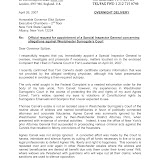
Governor Asked to Confront Presiding Judge Candidates on Corruption

Integrity in the Courts
ExposeCorruptCourts.blogspot.com
“Injustice anywhere is a threat to justice everywhere.” (Dr. Martin Luther King, Jr.)

March 24, 2009

The Honorable David Paterson,
Governor of The State of New York
The State Capital
Albany, New York 12224

Via U.S. Mail & facsimile 518-408-2549

RE: Appointment of Presiding Justice of Appellate Division, First Department

Dear Governor Paterson:

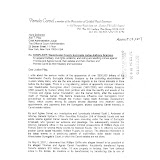
As you consider whom to appoint as the next Presiding Justice of the Appellate Division, First Department, we respectfully ask you to consider the following.

As you and your staff are fully aware, our research has revealed, and fully documented, a troubling state court “ethics” oversight structure that is itself corrupt. We have documented countless examples where the law, attorneys, litigants, state employees and, in fact, judges have been targeted for annihilation simply because of a political whim or from the vengeful, misguided desires of a few. Conversely, we have evidence of many outrageous and criminal acts by certain individuals within and about the state court system that have been substantively overlooked for no other reason than their favored position or political affiliation.

What you might not know is that within the last 30 days, we presented three (3) judges to appropriate federal entities in Washington, D.C. who personally appeared in support of the need for extraordinary measures to deal with the outrageous conduct of the New York State Commission on Judicial Conduct, which is irreversibly corrupt, statewide attorney "ethics" committees and, specifically, the Manhattan attorney “ethics” committee, the Departmental Disciplinary Committee (“DDC”). (Incidentally, we have over two dozen judges who will similarly testify as to the corruption within New York’s “ethics” entities.)

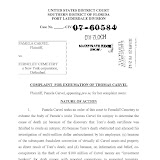
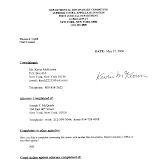
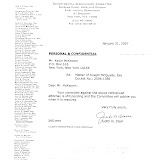
We believe that any candidate for the position of Presiding Justice of the Appellate Division, First Department, and who will be responsible for all DDC activity, should adequately review and be able to sufficiently deal with the current and past criminal acts conducted at the DDC, mostly under the supervision of DDC chief counsel Alan Friedberg, his predecessor Thomas Cahill, and at all times under deputy chief counsel Sherry Cohen.

Over the next few days we will specifically list for you some of the many criminal acts at the DDC. Meanwhile, we ask that you ask every candidate for Presiding Justice of the Appellate Division, First Department, two questions:

(1) Have you read “The Murphy Report?”
(available at the bottom of page one at www.FrankBrady.org); and

(2) Are you aware of the allegations of state and federal criminal acts at the DDC
(available at www. ExposeCorruptCourts.blogspot.com—In the upper left search box, use search words: “Friedberg” and “Cahill” and “DDC”)

Your gubernatorial presence has renewed the promise of hope to the great people of New York. We have long yearned for leadership in reforming the condition of avarice and corruption that exists within and about our state’s court system. We need you to insure that the First Department is led by a Presiding Judge who is committed to equal justice over all ethics issues.
We continue to be confident that future generations will echo our gratitude of your restoration of our faith in our government and in our system of law.

Very truly yours.

Franklin N. Brady

Integrity in the Courts &
ExposeCorruptCourts.blogspot.com
corruptcourts@gmail.com
347-632-9775 tel

Monday, March 23, 2009

Mayor Considers Martial Law Over Police Corruption; Courts?
Schenectady mayor considers options, martial law over police woes
Capital News 9 by Steve Ference - March 19, 2009

SCHENECTADY, N.Y. -- Schenectady Police Chief Mark Chaires said, "This is unprecedented - all these officers getting in trouble at the same time for all these different reasons. Five Schenectady police officers recently accused of everything from driving drunk to beating up a man are leading city officials to look at taking drastic action to fix a department tainted by the few who may have acted illegally, like Darren Lawrence and Michael Brown who are accused of driving while intoxicated. Chief Chaires said, "Those two officers, we're definitely going to seek termination, and we're not ruling it out with any of the officers who are out there. Police Chief Mark Chaires told us you basically have to fire yourself - essentially a million dollar fine in lost benefits over a lifetime. Still, Schenectady Mayor Brian Stratton said, "We believe there are five officers now who could face possible termination." But it's not just the threat of termination. Mayor Stratton told us he's looking at all options, including disbanding the police department - basically starting over. "It's something we're certainly looking into. I think the public has had it up to here," said the mayor. Currently, officials are reviewing the legal options and planning to present a full report in early April - options like a consolidated county-wide police force or bringing in the State Police.

The mayor said there is another option - and that would be declaring martial law. The governor would have to declare it and then the National Guard would come in. The mayor said it's more for a transition to a new police force if that were to happen. He said, "It may be that as a stopgap measure, that you would need military forces - State Police, National Guard." Mayor Stratton said the temporary measure would last until the new police force took over. Schenectady's Corporation Counsel John Van Norden said, "If you abolish the police department you still have a need - not an obligation - but a need to police the community. You would need something in transition. Declaring martial law would be one way to bridge the gap." "It's a contrived scenario," said the mayor. "But it's not beyond the realm of possibilities if you go that particular route." Chief Chaires said, "When I think of martial law, I think of rioting. I think of Watts riots and things like that. I haven't seen anything that rises to that level. I was a little surprised to hear that." But whether the National Guard needs to be called in or not, we'll take a more-in-depth look on Thursday at the county-wide and State Police options, as officials try to deal with an unprecedented situation in unprecedented ways.

Governor Must Ask Presiding Judge Candidates About Corruption

The Governor must ask the candidates for the Presiding Justice of the First Department opening about the systemic corruption in and about the Manhattan Ethics Committee (the "DDC") and, importantly the statewide corruption within the Commission on Judicial Conduct...More on this later today..... 

Four Judges Line Up Top Post Interviews
The New York Law Journal by Joel Stashenko - March 23, 2009

ALBANY, N.Y. - Governor David A. Paterson has scheduled interviews for today with his top four candidates for the vacant presiding judgeship of the Appellate Division, First Department, sources familiar with the selection process said.  All four are members of the Manhattan-based First Department: Justices Rolando T. Acosta, Luis A. Gonzalez and Angela M. Mazzarelli, and Acting Presiding Justice Peter Tom.

The interviews were scheduled to take place in Albany. One source said the sessions could stretch past today depending on last-minute changes in the schedule of Mr. Paterson, who is attempting to negotiate a new state budget with legislative leaders by April 1 for the 2009-10 fiscal year.  The governor is not expected to interview any other candidates to fill the opening he created when he selected former Presiding Justice Jonathan Lippman as chief judge to succeed the retired Judith S. Kaye (NYLJ, Jan. 14). While Mr. Paterson said he was deeply impressed by Justice Lippman's credentials, the governor also complained about the nomination process that forced him to choose from a list of candidates from the Commission on Judicial Nomination that included seven men, six of them white (NYLJ, Dec. 4, 2008). Mr. Paterson said the list did not reflect the racial or gender diversity of the state.


Still in the Running


Rolando T. Acosta, 53

A former Legal Aid Society attorney, Justice Acosta was elected to Manhattan Supreme Court in 2002 and was among the first two selections of then-Governor Eliot Spitzer to the Appellate Division in 2007. He is a Columbia Law graduate.

Luis A. Gonzalez, 63

Elected to the Bronx Supreme Court in 1992, he was administrative judge in the 12th Judicial District from 1999 to 2002. He was appointed to the Appellate Division in 2002 by Governor George E. Pataki. Justice Gonzalez is a Columbia Law graduate.

Peter Tom, 62

The current acting presiding justice was elected to Manhattan Supreme Court in 1990. Justice Tom became the first - and is still the only - Asian-American on the Appellate Division with his appointment in 1994 by Governor Mario M. Cuomo. Justice Tom is a Brooklyn Law School graduate who once won a New York City Golden Gloves boxing championship.

Angela M. Mazzarelli, 62

A Columbia Law School graduate and former Bronx Legal Services attorney, she was elected to Manhattan Supreme Court in 1992 after four years as an acting Supreme Court justice. Justice Mazzarelli was appointed to the Appellate Division in 1994 by Mr. Cuomo. Of the four candidates for the First Department position, Justice Tom is Asian-American, Justice Mazzarelli is a white woman and Justices Gonzalez and Acosta are Hispanic.  No Asian-American or Hispanic has been a permanent presiding Appellate Division justice, although Carmen Beauchamp Ciparick, a Hispanic, is senior associate judge on the Court of Appeals. Three women have served as a presiding justice, including A. Gail Prudenti, the current presiding justice in the Second Department.

Since becoming governor last year, Mr. Paterson, who is black, has shown an inclination to promote minority judges or women to the Appellate Division. Of his eight appointments, two have been black men, two black women, three white women and one white man. It was not known how many of the presiding justice candidates were declared "highly qualified" by the First Department Judicial Screening Committee. Mr. Paterson can choose only among candidates found to be "highly qualified" by the committee. Sources have told the New York Law Journal that at least three other sitting First Department judges applied for the presiding judgeship. In addition to the four Mr. Paterson will interview, Justices Richard T. Andrias, David B. Saxe and Dianne T. Renwick also applied (NYLJ, March 11). Gubernatorial appointments to the Appellate Division do not require confirmation by the state Senate. Joel.Stashenko@incisivemedia.com

Sunday, March 22, 2009

Journal News Editorial: More Light on "Sunshine"

More light on 'sunshine'
EDITORIAL by The Journal News - March 22, 2009

Everyone, it seems, wants to let the sunshine in, when it works for them - "sunshine'' being the term used for government transparency and access to information. Last week in Albany, for example, Senate Minority Leader Dean Skelos, top Republican from Long Island, complained loudly that ruling Democrats were excluding the GOP from deliberations over a new state spending plan for the fiscal year starting April 1. "It's tragic that all the advances we made to open up the budget process are being completely ignored,'' he said, "and that the governor is turning back the clock to the days of three men in a room that came to symbolize the dysfunction of state government," Jay Gallagher of our Albany bureau reported. It's worth noting, of course, that Skelos, who was the Senate majority leader last fall, before the Democrats won the majority in his house, was himself once one of the three men in the room after his predecessor, former state Sen. Joseph Bruno, stepped down. Bruno was one of those "three men'' for a long, long time.

"New bills related to broadening (the Freedom of Information Law) and open meetings are disingenuous when we see that a $122 billion budget is being discussed completely behind closed doors - with the public shut out," Skelos said pointedly - at a Senate panel hearing on ways to open up government operations and records to the public. The hearing, along with many other events and campaigns in New York, Washington and elsewhere, marked "Sunshine Week,'' a commemoration initiated by publishers and newspapers that has emphasized the public's right to know about its government and its workings. Open government is essential if democracy is to thrive. In New York, progress has been slow but steady, thanks to several lawmakers who champion government transparency, and the New York State Committee on Open Government, headed by Robert Freeman, its indefatigable executive director. The committee fights to preserve and expand freedom of information, open government and personal privacy rights.

State, federal efforts

Skelos is right, of course. He and fellow lawmakers in both parties should remember that as a host of proposed bills regarding open government meetings and freedom of information make their way through the Senate and Assembly.

According to the New York Newspaper Publishers Association, for example, the Senate "plans to study the feasibility, cost and benefit of requiring state and local governments to proactively disclose records of public significance on their Websites.'' Other bills under consideration, including some with companion bills already in the Assembly:

- Expanding the definition of a "public body'' for the purpose of open-meetings law compliance;

- Requiring government bodies to post meeting notices on their Web sites and permit audio-visual coverage of open meetings;

- Giving judges expanded penalties to impose for willful violations of the open-meetings law;

- Requiring certain records discussed at open meetings to be made available to the public prior to such meetings; and

- Permitting agencies to waive reproduction fees for FOIL requests.

Several are sponsored by members of the Lower Hudson Valley delegation, and they are to be applauded. Now the bills must be reconciled and passed by both houses, then sent to Gov. David Paterson for his review. Advocates will be sure to recommend which deserve his signature. State lawmakers and the governor should take a hint on the desire for transparency not just from the public but also from the Obama administration. Federal agencies were advised Thursday to release their records and information to the public unless foreseeable harm would result. Attorney General Eric Holder issued new guidelines that fleshed out President Barack Obama's Jan. 21 order to reveal more government records to the public under the federal Freedom of Information Act whenever another law doesn't prohibit release, The Associated Press reported. The new standard replaced a more restrictive policy imposed by the Bush administration, under which the Justice Department defended any sound legal argument for withholding records. "We are making a critical change that will restore the public's ability to access information in a timely manner," Holder said in a written statement. Obama had given Holder until mid-May to issue these guidelines, but the attorney general acted much more quickly, making sure they came out during Sunshine Week. Good effort, and good timing, indeed.

Additional Facts - On the Web

- Sunshine Week, led by the American Society of Newspaper Editors, is a national initiative about the importance of open government and freedom of information. Participants include print, broadcast and online news media, civic groups, libraries, nonprofits, schools and others interested in the public's right to know: www.sunshineweek.org

- New York State Committee on Open Government: www.dos.state.ny.us/coog/coogwww.html

True Oversight Returning to NY, via Inspector General Joseph Fisch

NY Lawyer Fired Over Personal Use of Office Credit Card, Computer
The New York Law Journal by Joel Stashenko - March 20, 2009

The counsel at the state Division of Human Rights has been fired after an Inspector General's probe of his use of a state credit card for personal expenses and doing private legal work on his work computer. Inspector General Joseph Fisch said Thomas Shanahan ran up $530 in improper charges on his credit card, including charges from Manhattan restaurants. Mr. Fisch said Mr. Shanahan had been counseled in May 2008 over making improper charges. The inspector General said Mr. Shanahan also had sought, and been denied, permission to do outside legal work from his state office. Mr. Shanahan, 41, who lives in Manhattan, made $144,070 a year as deputy commissioner and counsel.

Saturday, March 21, 2009

Fox News: Aging Judges Still on Bench

Aging Judges Still on the Bench
Fox News, Washington, D.C. by Tisha Thomspon - March 19, 2009

WASHINGTON, D.C. - When you think about powerful people, who comes to mind? Congress? Obama? How about Federal judges? Retired pilot Joe Norman didn’t know much about Federal judges until he became entangled in a lawsuit. The judge, William Hoeveler, has presided over high-profile cases like the Elian Gonzalez trial. But Norman has filed court documents claiming the judge made mistakes in his case and blames Hoeveler’s age. The judge had a well-publicized stroke during the Gonzalez case and is 86 years old. “Whether we like it or not,” Norman says, “people decline with age and I think Hoeveler should have to retire. The United States Constitution says Federal judges “shall hold their offices during good behavior” and never have to retire. But, when the founding fathers wrote the Constitution, Supreme Court justices rarely lived past their fifties, according to a recent Northwestern University study. That’s not the case today. When Fox 5 added up the ages of today’s Federal judges, we found more than 1/3 are 70 or older. That’s the same age at which most states force their judges to retire, including Maryland and Virginia.

"You want people who have physical and mental acumen," says Sheila Sachs. She chairs the committee that nominates Maryland’s judges. Sachs says mandatory retirement also encourages diversity. "You're not going to have an opportunity to get greater diversity on the bench unless you have more senior people move out and younger people come in." Our investigation found Federal courts are dominated by white men, with minorities making up 15% of the bench. “There's plenty of examples of judges serving in their seventies and eighties and they are doing a great job," says Russell Wheeler of the Brookings Institution. Wheeler says judges need to have life tenure so they can make the tough decisions without fear of retribution or being yanked off the bench. Wheeler says, "if you were to say to all Federal judges, 'at age 70 the President has the right to remove you from office,' that's a host of trouble."

Wheeler says Congress created something called “Senior Status,” which allows judges to keep their salary as they get old while hearing fewer cases if they want. But some Senior Status judges, like U.S. District Court Judge Wesley E. Brown in Wichita, KS, continue to hear a full case load even though he’s almost 102 years old. Brown did a rare interview with KAKE-TV just before his 100th birthday. In that interview, he said, "I really don't want to be known as a judge at 99. I want to be known as a judge who does his job and does the best that he's able under the circumstances of his life." The Federal government says Senior Status judges hear nearly one out of every five cases. Some say Judge Brown is an example of why age shouldn’t matter. 88 year-old Supreme Court Justice John Paul Stevens is another.

Duke University Professor Paul Carrington says, "Justice Stevens is a very fine justice who is still doing a great job, but if the price of that is having everybody hang around for 30 years, there's not enough rotation in the institution and it is ossifying." Carrington is 77 years old himself and says Supreme Court justices in particular tend to hang on to their jobs too long. He says, it’s “too much fun, too much power. And they're not going to quit just because they're 75 and a little dotty. That's not a good enough reason." Chief Justice William Rehnquist spent 33 years on the Supreme Court. After he died in 2005, the FBI released his file, which showed Rehnquist had been addicted to painkillers for at least a decade. The file quotes a doctor who says Rehnquist had “bizarre ideas and outrageous thoughts” and believed there was “a CIA plot against him.” The only way to remove a Federal judge is impeachment. But Fox 5 found only 11 have ever been forced out of office. Just one for “mental instability” – in 1804.

Carrington and 33 other legal experts are now proposing major reforms. That might require changing the Constitution, or at least an act of Congress. But even Carrington thinks that is unlikely. “There is the reality that justices and judges have a lot of friends in high places and they like things the way they are, so who wants to take them on?" All of the Federal judges Fox 5 contacted for this story, including Judge Hoeveler, declined to comment. Joe Norman did file a complaint against Hoeveler but suspects it won’t go very far. “We’ve got a major problem and nobody but nobody wants to open Pandora’s box,” he says. “And I contend the state of the Federal judiciary is America’s Pandora’s box.”

Friday, March 20, 2009

Federal Judges Meet in Secret, As Usual

Federal Judges' Confab Revises Ethics Rules, Asks for More Judges
The New York Law Journal by Tony Mauro - March 19, 2009

WASHINGTON, D.C. - The Judicial Conference on Tuesday adopted revisions to the federal judiciary's code of conduct aimed at broadening and clarifying how judges should handle conflicts of interest and the "appearance of impropriety." The conference also agreed to ask Congress to create 63 new judgeships - 12 appeals court judges and 51 at the district court level. The number of appellate judges has remained at 179 since 1990, while case filings have increased by 42 percent. District judgeships have increased 4 percent, to 674 from 645, but filings have risen by 34 percent. As usual, the conference, which is the policy-making body for the federal judiciary, met behind closed doors at the U.S. Supreme Court, with Chief Justice John Roberts Jr. presiding. The revised ethics code, which takes effect July 1, defines for the first time the term "appearance of impropriety," which judges are commanded to avoid as much as actual impropriety. The definition: "An appearance of impropriety occurs when reasonable minds, with knowledge of all the relevant circumstances disclosed by a reasonable inquiry, would conclude that the judge's honesty, integrity, impartiality, temperament, or fitness to serve as a judge is impaired."

The conference decided to "clean things up" in the wording of the code, and to provide judges with clearer guidance, said Anthony Scirica, chief judge of the U.S. Court of Appeals for the Third Circuit and chair of the conference's executive committee. Judge Scirica briefed reporters afterward, stating that the new code also makes it clearer that the code covers "not just professional but personal conduct." He said the revisions also specify that judges may not tell court personnel to do something that would violate the code if judges did it themselves. The new code retains provisions for the disqualification but adds new language imposing an obligation on judges who learn of a possible code violation to take "appropriate action".  Another change: Judges are now specifically permitted to encourage lawyers to do pro bono work.

Judge Scirica said the changes Tuesday represent the conference's final action to implement the recommendations of the so-called Breyer Committee, chaired by Justice Stephen Breyer, which issued a report in 2006 on the judiciary's policies and procedures for handling misconduct complaints against judges (NYLJ, Sept. 20, 2006). Congress at the time was pressuring the judiciary to improve its ethics procedures. The revisions also reflect recent case law as well as changes made by the American Bar Association to its judicial code of ethics. The Judicial Conference does not set rules for the U.S. Supreme Court, but by tradition, the Court adheres to the Code of Conduct as a matter of policy. On the issue of creating judgeships, Judge Scirica said the conference "hopes the administration and Congress will move ahead on this." Senators Patrick Leahy, D-Vt., and Arlen Specter, R-Pa., both addressed the conference and indicated their support for more judgeships, Judge Scirica said.  The recommendations made by the conference would add five judges to the Ninth Circuit, two each to the Second and Third, and one each to the First, Sixth and Eighth.  Read the recommendation on additional judgeships. Two judges would be added in each of the Southern and Eastern Districts of New York and one in the Western District. No additions were recommended for the Northern District.  Some of the new positions would be permanent seats and some would be temporary - meaning that when the judge appointed retires or dies, it would not be refilled.

In a separate action, the conference also voted to make the existence of sealed cases more apparent in online dockets. Press and citizen groups have complained that some sealed cases simply vanish from the docket in many district courts, making it impossible to learn about them or challenge the sealing. The conference said even sealed cases should be listed with a docket number and a name, such as Sealed v. Sealed. Judge Scirica also was asked about the law passed by Congress last year barring judges from accepting honorary or free memberships valued at more than $50 to private clubs. The ABA Journal recently reported that the University Club in Washington, D.C., had devised a deeply discounted membership fee for judges that the club believed complies with the law, but ethics experts questioned it.  Judge Scirica said the issue was not discussed, but said the conference "has become aware" of efforts by clubs to find ways for judges to become members in spite of the law.  Several judges have asked the code of conduct committee for advice, Judge Scirica said.  "We're looking into it more systematically," he said.

Tony Mauro covers the U.S. Supreme Court for Incisive Media, the Law Journal's parent. He can be reached at Tony.Mauro@incisivemedia.com

Thursday, March 19, 2009

Kickbacks. Pay-to-Play. In New York ?!?!

Aides to Hevesi Indicted in Kickback Scheme
The New York Times by DANNY HAKIM - March 19, 2009

ALBANY, NEW YORK — Two top advisers to Alan G. Hevesi, the former state comptroller, were charged on Thursday in a 123-count indictment that said they had turned New York’s $120 billion pension fund into a criminal enterprise that netted them and other Hevesi associates tens of millions of dollars in kickbacks from firms investing the fund’s money. Hank Morris, who was once Mr. Hevesi’s chief political adviser and a nationally known Democratic consultant, was charged with myriad counts — including falsifying records, bribery, money laundering, grand larceny and fraud — in an indictment brought by the state attorney general, Andrew M. Cuomo. Mr. Morris collected more than $15 million in fees from investment companies during Mr. Hevesi’s tenure as comptroller, from 2003 to 2006, according to court papers.

David Loglisci, who was the top investment officer of the pension fund, was charged with multiple counts related to official misconduct, falsifying records and fraud. The two men, arraigned in State Supreme Court in Manhattan, pleaded not guilty and were released pending the posting of bail, which was set at $1 million for Mr. Morris and $350,000 for Mr. Loglisci. The indictment said that at least two other people participated in the criminal conspiracy, but it did not name them. While Mr. Hevesi was not charged, the investigation is continuing and Mr. Cuomo did not rule out future actions against him. Mr. Cuomo said that Mr. Hevesi had benefited from the scheme because Mr. Morris encouraged investment firms to pour millions of dollars in contributions into Mr. Hevesi’s campaign fund. “This is the first of several cases and developments that will be announced on this matter,” said Mr. Cuomo, adding in a statement that “mixing politics, self-dealing, kickbacks and billions in taxpayer funds is nothing short of the perfect public-integrity storm.”

The Securities and Exchange Commission, which conducted a parallel investigation, also charged the men with violating several federal securities laws and is seeking to recoup the proceeds from their scheme. P. David Soares, the Albany County district attorney, also took part in the investigation, which started in his office. Mary L. Schapiro, the chairwoman of the S.E.C., said, “These two men used their influential positions to extract kickbacks from investment firms that wanted to do business with New York’s common retirement funds.” The two men are accused of directing half of the $10 billion that the pension fund invested in so-called alternative investments, like hedge funds and private equity firms, to those that used Mr. Morris or his associates as paid intermediaries. Firms that were not willing to pay were often turned down, according to the indictment. To conceal his conduct, the indictment said, Mr. Morris laundered payments through a half-dozen limited liability companies he had created, and through Searle & Co., a Connecticut investment firm that he worked for while he was advising the comptroller.

The firms that paid fees to Mr. Morris or firms with which he was affiliated included some of Wall Street’s best known: the Carlyle Group, Pequot Capital and HM Capital, formerly known as Hicks, Muse, Tate & Furst, the indictment said. None of the investment firms or their employees were charged, though the S.E.C. filed civil charges against three companies Mr. Morris created. Mr. Morris, 55, is also accused of rewarding Mr. Loglisci, 38, and another unnamed top official in the comptroller’s office for their help. Mr. Morris invested $100,000 in an independent film, “Chooch,” produced by Mr. Loglisci’s brother, investment firms doing business with the fund also invested in the movie, according to the indictment. “You couldn’t make this up,” Mr. Cuomo said.

William J. Schwartz, a lawyer for Mr. Morris, said, “The New York State pension fund made hundreds of millions, if not billions, of dollars on investments Hank Morris lawfully introduced to it, and the fund did not pay him one penny.” “There was no fraud and no corruption,” he added. “Hank Morris is innocent and we will defeat these charges at trial.” Mr. Cuomo’s office said it had frozen $11 million worth of Mr. Morris’s assets. Irving P. Seidman, a lawyer for Mr. Loglisci, said the indictment was “based on false and misleading evidence.” “The statements contained in the legal documents filed in this matter are manipulative, fictional writings by an investigation that had all sorts of political conflicts of interest,” he added, without elaborating. A lawyer for Mr. Hevesi did not have immediate comment.

Jack Chartier, Mr. Hevesi’s former chief of staff, was not charged. He has been a subject of the investigation, with scrutiny focusing on gifts that investment firms made on his behalf to the actress Peggy Lipton, a close friend, as well as a large loan and rental payments. Scott Fein, a lawyer for Ms. Lipton, said that “she cooperated fully in the investigation and I believe all would agree she was blameless.” Mr. Cuomo would not say whether some of the unnamed people participating in the criminal conspiracy faced charges in the future or had already cut deals with his office in exchange for cooperation. He said, “An unnamed high-ranking official in the comptroller’s office secured from Morris and others doing business with the office gifts and bribes, including cash, rent payments for his female companion’s luxury Manhattan apartment, a sham $100,000 loan for the girlfriend and a job and other benefits for her daughter.” A lawyer for Mr. Chartier did not return calls for comment immediately after the indictment was released.

Mr. Hevesi resigned as comptroller in late 2006 after he pleaded guilty to a felony related to his use of state workers to drive his ailing wife. After his departure, local, state and eventually federal investigators expanded that investigation to encompass broader practices in his office. The state comptroller has unusual sway over the pension fund, since he serves as its sole trustee; many other states have opted to have their funds overseen by boards. The current comptroller, Thomas P. DiNapoli, has defended the sole trusteeship, while Mr. Cuomo continued to express concerns about it on Thursday. Mr. Morris, a native of Long Island, is a political operative known for his intense and aggressive style. He directed Charles E. Schumer’s successful 1998 campaign to unseat Senator Alfonse M. D’Amato — he made sure everyone knew that Mr. D’Amato had used an expletive to refer to Mr. Schumer — and even pushed his own mother, Rita, a retired professor, to run for Congress in 1992. She lost. He also advised Senator Dianne Feinstein’s failed 1990 campaign for California governor.

But he was closest to Mr. Hevesi. The two men met in the 1970s, when Mr. Hevesi was a fledgling assemblyman from Queens and Mr. Morris was on the staff of the Assembly speaker, Stanley Steingut. Mr. Morris helped shape Mr. Hevesi’s rise to become comptroller of New York City and then state comptroller, and managed his unsuccessful run for mayor in 2001. According to the indictment, after Mr. Hevesi was elected comptroller in 2002, Mr. Morris ousted the chief investment officer of the pension fund and installed Mr. Loglisci in the job. He then held wide sway over investment decisions made by the pension fund. He even held meetings with Mr. Loglisci and other officials from the comptroller’s office at the offices of his political consulting firm, Morris & Carrick. The indictment calls him “a de facto gatekeeper for alternative investment transactions” made by the pension fund. “When you follow the money in New York, the biggest pool of money is the New York State pension fund,” Mr. Cuomo said. “Morris used the fund as his own piggy bank.”

Wednesday, March 18, 2009

Another Proud Day for New York Lawyers

Disgraced NY Firm Leader Now Charged With Stealing $700 Million as New Victims Come Forth
The New York Law Journal by Mark Hamblett - March 18, 2009

Indicted attorney Marc S. Dreier sold more than $700 million in phony real estate development notes and fake pension plan notes during his four-year scam, according to a superceding indictment released yesterday. The new indictment, which adds a count of money laundering, also alleges a greater number of victims than initially thought. It accuses Mr. Dreier of selling notes to at least 13 different funds and three individuals between 2004 and 2008, with the purchase price wired to an attorney trust fund maintained by his firm. The overall loss to investors in Mr. Dreier's schemes remains roughly $400 million, but the realization that he sold as much as $700 million in bogus notes allowed the government to increase the amount it is now seeking in forfeiture.

In addition to the new money laundering charge, the former sole equity partner in the now defunct 250-member Dreier LLP faces charges of conspiracy to commit securities fraud and wire fraud, one substantive count of securities fraud and five substantive counts of wire fraud. The superceding indictment sheds some new light on the scope of Mr. Dreier's efforts. The money laundering count covers transfers he allegedly made "into and out of various Dreier LLP bank accounts in order to promote fraud in the sale of securities and wire fraud." In addition to the 13 different funds and three individuals who are now alleged victims of his scams, the indictment states that Mr. Dreier "enlisted financial professionals to assist him in finding purchasers of the fictitious promissory notes and paid those individuals a percentage of the proceeds received." It also states that Mr. Dreier "attempted to sell the notes to numerous additional potential investors and funds."

Mr. Dreier also represented himself as the lawyer for the issuers or holders of the promissory notes. "In order to carry out the fraud and to lend credibility to these representations, Dreier directed purchasers of the notes to wire the purchase price into the attorney trust account held in the name of Dreier LLP," the indictment states. Mr. Dreier has been free on bail since Feb. 13 following a two-month bail fight by Assistant U.S. Attorney Jonathan Streeter and Gerald Shargel, Mr. Dreier's lawyer. Southern District Judge Jed S. Rakoff approved a bail package on Feb. 5 that allowed Mr. Dreier, 58, to put up a $10 million personal recognizance bond and to pay $70,000 for round-the-clock armed guards at his Manhattan apartment. Mr. Dreier was arrested on Dec. 7 upon his return from Toronto, where he had been taken into custody for pretending to be an executive with the Ontario Teachers' Pension Plan who was pitching pension plan notes to a hedge fund.

The incident in Canada occurred as Southern District investigators were closing in on Mr. Dreier for selling in excess of $200 million in phony developer notes to hedge funds in New York City and Connecticut. That estimate of the out-of-pocket-loss for the hedge funds was later increased to $400 million, The indictment alleges a conspiracy that stretches from 2004 through Mr. Dreier's arrest in December. One alleged confederate in the conspiracy, Kosta Kovachev, was arrested Dec. 23 for posing as the controller of the Solow Realty and Development Co., the company Mr. Dreier pretended was issuing promissory notes that offered a good deal for the hedge funds. Others yet to be named are mentioned in the indictment also played the role of impersonator to help Mr. Dreier pull off the sales. Mr. Shargel said yesterday that the superceding indictment has not changed his view of the case. "The money laundering charge was not unexpected," he said. "This has been raised in discussions with the U.S. attorney's office." Mr. Shargel and Mr. Dreier are scheduled to appear before Judge Rakoff for a status conference tomorrow at 10 a.m.

Tuesday, March 17, 2009

Criminal Judge Drops Charges Against Federal Judge

Judge drops charges against federal judge James Peck accused of slapping his wife
The New York Daily News by MELISSA GRACE - March 16, 2009

The criminal case against a federal judge charged with slapping his wife was dismissed and sealed in a Manhattan courtroom Monday after she decided not to help prosecutors, officials said. James Peck, the bankruptcy judge overseeing the breakup of Lehman Brothers, hit his wife, Judith, in a dispute in their Park Ave. apartment, cops said. "I was defending myself," Peck, 63, told NYPD officers when they showed up at the couple's home. Manhattan Criminal Court Judge Michael Yavinsky, acting on a recommendation from prosecutors, tossed the charges. "On the motion of the people, the case is dismissed and sealed," he declared. Peck, who also briefly handled bankruptcy court proceedings in the case of Bernard Madoff, did not show up in court and his lawyer, Barry Bohrer, said that because the case was now sealed he could not comment.

Prosecutors moved to dismiss for "a number of reasons, including the complaining witness being uncooperative in this case," Assistant District Attorney Melissa Sussman told Judge Yavinsky. "We cannot prove the case beyond a reasonable doubt." The alleged violence erupted on a Saturday in January when Peck's wife of 42 years was late returning from the Hampton's, prompting an argument over a ladder she'd left in his closet. Peck told cops he was moving the ladder out when "she slapped me in the face ... I put the ladder down and slapped her back." Judith Peck, who cops said suffered "substantial pain," locked herself in a room and dialed 911. She was later treated at New York-Presbyterian Hospital, according to a police report. The judge faced a misdemeanor assault charge and a charge of harassment, a violation, and up to 90 days in jail. According to now-sealed court records, Peck told cops the two had been having problems since October. mgrace@nydailynews.com

Previous Story in The New York Times - FEBRUARY 2, 2009:

Judge in Lehman Case Is Charged With Assault

The federal court judge overseeing the bankruptcy case of Lehman Brothers was arrested on Saturday afternoon and charged with hitting his wife. United State Bankruptcy Judge James M. Peck, 63, is charged with third-degree attempted assault and second-degree harassment after a fight with his wife, Judith, in their Manhattan home, according to the complaint filed in New York State Supreme Court. It said Judge Peck slapped her in the face, causing bruising. Mrs. Peck was taken to a hospital for treatment. Judge Peck was released without bail and is scheduled to appear in court on March 16, a spokeswoman for the Manhattan district attorney, Robert M. Morgenthau, told DealBook. According to The New York Post, citing unnamed sources, Judge Peck told police that he and his wife began arguing after her late arrival from the Hamptons, in Long Island. The two then hit each other, before Mrs. Peck called police. By the time police arrived, The Post said, the two were in separate rooms. As the man overseeing the bankruptcy proceedings of Lehman, Judge Peck has gained an increasingly high profile. A former bankruptcy litigator at the law firms Schulte, Roth & Zabel and Duane Morris, Judge Peck is known for his patience in handling matters as complex as the Lehman case. He was sworn as a bankruptcy court judge in 2006, according to his biography at Web site for the Federal Bankruptcy Court for the Southern District of Manhattan. Judge Peck also briefly oversaw the bankruptcy proceeding of Bernard L. Madoff Securities, the trading operations run by the eponymous financier. But he recused himself from the case in late December, and it is now being handled by Judge Burton R. Lifland, also of the Southern District of New York. A native of New York, Judge Peck graduated from Dartmouth and New York University Law School –Michael J. de la Merced

Monday, March 16, 2009

Court-Appointed Corruption: A National Problem

Ahearn: How did it all go wrong?
The News-Record by LORRAINE AHEARN - November 2, 2008

"They treat me like I'm already dead."

We all get old; we all get sick. Lifelong factory worker Dorothy “Dot” Williams planned for that. She saved, signed a will with durable power of attorney, set up a $300,000 annuity and took out home health insurance to avoid having to go to a nursing home. Yet that’s where she was Friday — in a cramped, semiprivate room at Evergreens, where she shares a bathroom with three others and was hoping to be moved to her own room. Williams, 78 and widowed, built circuit boards for Western Electric and Lucent for more than 30 years. But now she is a ward of the state, diagnosed with Alzheimer’s and declared legally incompetent at the request of her estranged daughter, who had been removed from the mother’s will. And because her court-appointed guardian decided it was for the best, she has been placed in a nursing home despite paying for round-the-clock coverage for home health care. “I have never seen somebody get the treatment she’s gotten,” said her last home health aide, Melissa Tilley. “It’s sad to know she worked all of her life, and this is what happens.” Until recently, Williams had a neat, well-appointed room with a private bath, sun porch and closed-circuit camera for security at the home of her son, Randy Clark.

In 2007, Williams had given her son power of attorney, and he hired home health aides to take care of his mother 24 hours a day. Clark saw no problem in providing for his mother. “She’s been frugal all her life, never hurt anybody,” he said. “She always took care of me, and it was my turn to take care of her.” But things grew complicated once the court system got involved, after Williams was declared incompetent. Instead of her certified nursing assistants being paid through health insurance claims, according to accounting records filed at the courthouse in September, the certified nursing assistants and the son were reimbursed sporadically by personal check through a court-appointed estate guardian.

According to Williams’ last CNA, the paychecks became so unpredictable that Clark often paid out of pocket, and in several instances, the bank records show backlogs of multiple reimbursement checks from the guardian written on single dates. The court-appointed guardian of the estate, Greensboro attorney Wanda Daughtry, said she cannot discuss finances of clients, and in September petitioned to resign from the case at the request of Guilford County Clerk of Court David Churchill. Churchill said Friday that it would be more convenient to appoint a guardian in High Point to watch over the estate. But in the meantime, according to the letter of resignation filed with the court, guardian Daughtry blamed delays on lack of cooperation from Williams’ bank and holding company, slow payments from Social Security and missing tax documents.

The letter does offer a solution: “Sufficient funds have been identified to allow the placement of the ward in a care facility in High Point as requested and anticipated by this guardian since June 2008,” wrote Daughtry, who received a $5,830 commission. “Said placement is needed since the care providers found it increasingly difficulty (sic) to offer continuing quality care for the ward.” The son reluctantly acquiesced, having little legal standing. When Williams’ last CNA left on maternity leave, the son could not hire a replacement, unsure of when the worker would get paid. “It would have been a piece of cake,” Clark said of his mother’s wish to stay at home. “But if they’re not paying for your wages or your supplies, they’re basically starving you out. I have to be there basically 24/7.” The social worker assigned to Williams’ case by the county Department of Social Services could not be reached for comment, and calls to his supervisor were not returned. According to Churchill, the court clerk, DSS had to approve the nursing home placement. The only matter before Churchill now is whether Williams herself will have to pay the $14,830 in attorneys’ fees, including the services of a private detective, that her daughter incurred in getting Williams declared incompetent. The daughter, Dawn Johnson, could not be reached for comment Friday. Williams’ old friend, Mable Phillips, said Williams would not have wanted to live in a nursing home. She felt the problem grew out of a family dispute over money.

“It’s not right. She has property; she has money. She worked so hard to save for her children,” Phillips said. “Dot was always energetic, a go-getter. She was hilarious.” And isn’t it typical: We’ve recounted this whole story without hearing from “the ward” herself. Since last summer, when she sat for an interview and a photo on the sun porch at her son’s lakeside house, Williams has grown more confused. At the nursing home Friday, she no longer talked about trips to her favorite lunch counter, Carolina Diner, or to her hairdresser at Studio 13. She didn’t talk about the years at Western Electric, scrimping and saving, tearing paper towels in half before that was the thing to do, staying a few rows back on beach vacations, because it was cheaper. As the jukebox in the nursing-home lobby played oldies, Dot Williams’ eyes danced. But not with joy. “They treat me,” she said, “like I’m already dead.” Contact Lorraine Ahearn at 373-7334 or lorraine.ahearn@news-record.com

Sunday, March 15, 2009

Nasty, Corrupt Lawyer Facing Payback

Adams resigns as lawyer as legal problems mount
The Buffalo News by Patrick Lakamp - March 15, 2009

BUFFALO, NEW YORK - Anne E. Adams has resigned from practicing law and now is banned from appearing as an attorney. In a March 6 order, the Appellate Division struck Adams from the state’s roll of attorneys. Two weeks earlier, Adams had pleaded guilty to three misdemeanors for drunken driving and her role in trying to fix the case. But her legal problems went beyond drunken driving and trying to tamper with evidence.

The Attorney Grievance Committee for the State Supreme Court’s Eighth Judicial District was ready to recommend formal disciplinary charges over the way Adams dealt with a client in a divorce case, according to documents obtained by The Buffalo News. Adams, of Orchard Park, resigned before the committee’s scheduled March 26 meeting. “Her resignation has the same effect on her license as a disbarment, and, consequently, no further action will be taken by this office regarding your complaint,” Guy C. Giancarlo, the committee’s associate counsel, wrote Thursday in a letter to the client. “However, in submitting her resignation, Ms. Adams admitted all of the allegations related to your complaint.” John Elmore, the chairman of the Attorney Grievance Committee, would not comment on Adams’ case. James P. Harrington, Adams’ attorney, confirmed her resignation but had no other comment.

Among the client’s allegations, Adams:

• Was paid $15,000, but she never provided a bill — despite requests over six years — or an accounting of her time spent on the case.

• Did not deposit separate checks worth $2,000 and $4,000 into a client trust account but cashed the checks through a teller at a local bank.

• Falsely claimed the divorce case file was destroyed in a fire rather than produce the file when the former client pursued formal procedures to get some of her money back.

• Brought forth untrue information when she unsuccessfully appealed to a State Supreme Court judge to overturn an arbitration panel’s decision that she owed the former client a $4,775 refund. As part of the divorce settlement, the then-client received a $10,000 check from her former husband in August 2000. But Adams took it and said it would be held in a trust account until another of the client’s minor legal issues was resolved. The woman tried for six years to get some of that money returned.

“That check was meant to be a settlement award to me and not an award of attorney’s fees,” the former client said in her formal complaint to the grievance committee. “I turned to Ms. Adams for counsel and advice during a terrible time in my life — not expecting that a member of the legal profession would further victimize me.” The former client spoke only on condition of anonymity because she wants her privacy. The News agreed to her request because she has copies of court documents relating to the complaint that would not otherwise be available. The court system keeps them secret. The former client said she had never sought legal counsel before her divorce. She was in debt after her divorce and had an income of only about $22,000 a year. “To take the money that the judge granted me as a settlement only makes her conduct more despicable,” the former client told the grievance committee. In 2007, the former client won a nearly $5,000 refund from an arbitration panel, which heard the dispute between her and Adams. Adams then filed an appeal.

State Supreme Court Justice Kevin M. Dillon rejected Adams’ appeal and ordered Adams to pay the former client $4,825. In the end, the former client paid $9,000 in attorney fees for her divorce and slightly more than $1,000 for four to six hours of legal work on related civil matters. She said her former husband paid his divorce lawyer $3,000. She and her former husband did not have children, and she did not seek an interest in her former husband’s business. The former client also had to spend $1,800 in legal fees to contest Adams’ appeal.

The former client filed her complaint against Adams with the grievance committee after Adams lost the appeal. “At that point, it wasn’t a matter of money,” the former client told The News. “I pursued it so that vulnerable women like me, in duress, don’t fall victim to her unethical practices.” The former client said she decided to talk about her case — even after Adams’ resignation — because she does not want the public to think Adams’ legal problems stemmed from just the driving-while-intoxicated arrest last September. She also praised the work of the grievance committee, whose lawyers “restored my faith in the judicial system.” Adams pleaded guilty last month before Erie County Judge Sheila A. DiTullio to three misdemeanors: drunken driving, offering a false instrument for filing and attempted tampering with physical evidence. plakamp@buffnews.com

Governor Right to Dump Useless Ethics Group

N.Y. investigation commission faces possible sunset
The Journal News by Valerie Bauman and Michael Virtanen
The Associated Press - March 15, 2009

ALBANY, NEW YORK - In the 1950s and '60s, the state Commission of Investigation put away mobsters nabbed at the 1957 clandestine gangland meeting in the Southern Tier town of Apalachin that confirmed the existence of the Mafia in America. Since the 1970s, it took on crooked judges, cops on the take, corrupt union bosses and politicians and drug labs. But, in a town known for some notorious lawbreakers among its 212 lawmakers, many say New York politics did what organized crime couldn't: It iced Albany's top cop. The Commission of Investigation, which hasn't fully investigated an elected state official in at least 30 years, will end March 31 unless the state Legislature that good-government groups say made it a shadow of its former self renews the SIC's enabling legislation.

Gov. David Paterson proposed saving $4.15 million in the next fiscal year by letting the SIC expire. "When it comes to political corruption, the SIC has been MIA," said Blair Horner, legislative director for the New York Public Interest Research Group. Horner believes the lack of action against lawmakers can be attributed, in part, to political influence. Commissioners are appointed by the state Senate majority leader, the Assembly speaker and the governor, making them less likely to investigate those who gave them their jobs, he said. They are paid $101,600 annually, except for Chairman Alfred Lerner, who is paid $109,800.

The commission, for example, didn't investigate then-Gov. Eliot Spitzer, who resigned in 2008, after he was named in a federal prostitution investigation; or then-Health Commissioner Antonia Novello, accused of using state workers to chauffeur her on shopping sprees; or then-Comptroller Alan Hevesi, who pleaded guilty in 2006 to using state workers as chauffeurs and companions for his wife. In the Legislature, the SIC hasn't investigated Assemblyman Anthony Seminerio, accused of selling access to fellow lawmakers; or the criminal case of state Sen. Hiram Monserrate, accused of assaulting his girlfriend with a broken glass; or Michael Boxley, counsel to powerful Assembly Speaker Sheldon Silver, who was taken out of the Capitol in handcuffs, charged with rape and eventually pleaded guilty to sexual misconduct. Also infamous, and untouched by the SIC, are the sexual exploits that led to a crackdown on the legislative intern program, and the many other lawmakers slapped with misdemeanors and felonies over the years. As for the current biggest political probe in Albany, former Senate Majority Leader Joseph Bruno, R-Brunswick, has been indicted by the federal government, accused of using his political position to reap millions of dollars as a consultant - claims the SIC found too flimsy to pursue.

"We don't go after anybody unless there is a complaint against someone," said George Friedman, one of six SIC commissioners. "We don't go looking for law violators." In some cases, other investigative bodies just get to the cases first, Friedman said. In Bruno's case, the commission was unable to investigate, due to a "very, very full plate," Friedman said. "You have to balance the availability of your employees, what assets you can devote to which investigations," Friedman said. "The ones that seem the flimsiest fall by the wayside and don't get attended to." "In New York City, where most of these things go on, you have five separate pros - district attorneys, full staffs - and they have the best police department in the world, fully staffed to invest in those activities," Friedman said. Whether the SIC survives, is combined with other agencies or disappears, good government groups argue that New York needs an entity monitoring lawmakers and the executive branch that's completely independent of political influence. If an effective, independent system were put in place, the broad powers the SIC has to issue subpoenas, and in some cases offer immunity in exchange for testimony, could be effective.

The Legislative Ethics Commission, for example, has fielded 13 complaints about lawmakers since 1995. Twelve ended in no violation and one is pending. The state Senate Standing Committee on Ethics has not investigated a single senator in the past 10 years. Over the same period, the Assembly Standing Committee on Ethics and Guidance has investigated four lawmakers and taken action against three. Only one had to resign - Democratic Assemblyman Roger Green of New York City in 2004 after 24 years in office. He pleaded guilty to three misdemeanors for stealing from the state by submitting fake travel claims for expenses he never incurred. "What we're trying to do is make sure that legislators are educated as to what is proper and what isn't," said Assemblyman William Magnarelli, co-chairman of the Legislative Ethics Commission. "There are some fine lines on things, believe it or not."

The commission often receives questions from lawmakers about potential private business ventures and other ethical issues. The commission gives recommendations on how to operate within the guidelines of public officers law. It also provides materials to new members about financial disclosure and legal statutes. At the SIC, commissioners can privately share any findings with the political figures who appointed them. Critics say that's another reason it's become a paper tiger. "They (the lawmakers who appointed them) have the power to make a suggestion to the commissioner they've appointed," Friedman acknowledged, but he said they don't have the power to halt an investigation. "Each of them has two appointments at this time. They can make suggestions to their two appointees, along the lines of 'Gee, I would really appreciate it if you could do something to avoid that investigation.'"

Friedman and Commissioner Vincent Nicolosi were appointed by Assembly Speaker Sheldon Silver. Two others, Henry Nahal and Robert Price, were appointed by Bruno. Lerner and the newest commissioner, John Cahill, were appointed by Gov. George Pataki. They serve four-year terms. Asked about the SIC's fate, Sisa Moyo, spokeswoman for Assembly Speaker Sheldon Silver, said they were examining all options. She added that the Manhattan Democrat "absolutely" did not have special access to information about cases or complaints before the SIC from the two commissioners he appointed. A spokesman for state Senate Majority Leader Malcolm Smith, D-Queens, said no decision has been reached by the state Senate Democratic Conference. The SIC will be discussed as part of the budget process, Austin Shafran said. Right now the commission is making the case to combine itself with the Inspector General's Office and the Public Integrity Commission - the state's other watchdog - into one entity. If the SIC does dissolve, so will its broad investigative powers.

Blog Archive

See Video of Senator John L. Sampson's 1st Hearing on Court 'Ethics' Corruption

The first hearing, held in Albany on June 8, 2009 hearing is on two videos:


               Video of 1st Hearing on Court 'Ethics' Corruption
               The June 8, 2009 hearing is on two videos:
         
               CLICK HERE TO SEE Part 1
               CLICK HERE TO SEE Part 2
Add to Technorati Favorites