MLK said: "Injustice Anywhere is a Threat to Justice Everywhere"

End Corruption in the Courts!

Court employee, judge or citizen - Report Corruption in any Court Today !! As of June 15, 2016, we've received over 142,500 tips...KEEP THEM COMING !! Email: CorruptCourts@gmail.com

Saturday, April 12, 2008

NY Post Editorial on Judges' Pay Lawsuit

JUDGES SUE FOR RAISES . . .

April 12, 2008 -- For three years now, New York's chief judge, Judith Kaye, has been demand ing pay raises for all 1,300 of her robed colleagues. They haven't had a salary hike since 1999.
Problem is, Assembly Speaker Sheldon Silver won't OK a pay raise for them unless his members get one, too.

So what's Judge Kaye gone and done? Why, just what you'd expect a lawyer to do: She's hired her own high-powered attorney - former White House counsel Bernard Nussbaum - and sued. Now, we realize that 15 years in Albany likely has made even Justice Kaye oblivious to the inherent conflict of interest here, but how can any judge be expected to preside dispassionately over such a case when his or her own paycheck is riding on the outcome?

Answer: Lawyers, who craft loopholes for a living, have concocted something called the "rule of necessity," which authorizes trial judges to hear cases affecting their own interests. Convenient, no? But what happens if this case winds up before Kaye's own Court of Appeals, the state's top tribunal?

As the named plaintiff, can she pull a super rule of necessity out of some dusty law book and decide the appeal - maybe all by herself? Or would she have to recuse herself - and let her colleagues on the high court decide whether whopping raises for themselves are permissible under the ordinary rule? What Judge Kaye really wants is lawmakers' refusal to grant raises declared unconstitutional. (She can't actually force the Legislature to grant raises, of course; you know, separation of powers, and all that.)

Basically, she wants a judge to order the state (whatever that is under her rule of necessity) simply to bypass the Legislature and start writing checks for the increased pay - to $169,300, a 20 percent hike, retroactive to 2005 - on its own. As it happens, Judge Kaye's financial arguments are not entirely without merit: State judges probably do deserve raises - most of them, anyway. But, again, those salary hikes have been held hostage to Albany politics. Just like a lot of other worthy public-policy goals - tort reform and tax relief, to cite just two.

Maybe Kaye can conjure a "rule of necessity" to deal with them, too. No? Didn't think so. Bottom line: Judges who feel they can't live on their current pay are free to quit. Why should they be exempt from Albany's continuing dysfunction?

Friday, April 11, 2008

Kaye Sues State Over Judicial Salaries

Kaye Sues State Over Judicial Salaries
The New York Law Journal by Joel Stashenko and Daniel Wise - April 11, 2008

ALBANY - Stymied for a fourth straight fiscal year in securing a pay raise for state court judges, Chief Judge Judith S. Kaye sued the Legislature and Governor David A. Paterson yesterday to force the first judicial salary increase in New York since 1999. At about the time attorney Bernard W. Nussbaum was filing the complaint in Supreme Court in Manhattan at 60 Centre Street, Chief Judge Kaye and Chief Administrative Judge Ann Pfau (See Profile) sent a message to the 1,300 judges saying that the exclusion of a pay raise in the budget adopted in Albany on Wednesday was the last straw.

"At this point, we are left with no choice but to take legal action to address this intolerable situation," the judges said. They called the need to file a suit, first threatened by the chief judge in April 2007 but often cited by her since then as a last resort, as "regrettable." The complaint, Kaye v. Silver, names the chief judge and the Unified Court System as plaintiffs. The defendants are Assembly Speaker Sheldon Silver, Senate Majority Leader Joseph Bruno, Mr. Paterson and the State of New York. State Attorney General Andrew M. Cuomo has decided to stay out of the case, his chief of staff Steven Cohen said yesterday. At any one time, the attorney general represents all the parties in the suit, Mr. Cohen said, as well as appearing daily in state courts presided over by the Judiciary.

"The most rational and reasonable approach is for us not to represent any of the parties," he said in an interview. "The potential conflicts here are obvious and unavoidable." The suit asks the court to order the state comptroller to pay judges raises back to April 1, 2005, the start of the first fiscal year in which the governor and Legislature failed to enact a pay increase proposed by Judge Kaye. Such raises, linking the salary of state Supreme Court justices to those given U.S. District judges, would cost the state $148 million.

In a letter to Supreme Court Justice Edward H. Lehner (See Profile) accompanying the complaint, Mr. Nussbaum asked that a trial be scheduled on or about May 14. Mr. Nussbaum, who is representing Chief Judge Kaye and the judiciary pro bono, wrote that "a prompt trial is needed because the judicial-pay impasse has risen to the level of a constitutional crisis." Mr. Nussbaum, a partner at Wachtell, Lipton, Rosen & Katz, said he would call the chief judge to the stand to testify about the negative impacts that nine years without a pay increase have had on the judiciary. He said he would also seek to call Messrs. Bruno, Silver and Paterson as witnesses to ask them why pay hike bills have repeatedly foundered at the Capitol.

"They must be made to explain their insistence that judicial pay increases (which all agree are warranted) be held hostage to the desire of legislators to increase their own salaries, or the desire of the Executive to push through other initiatives resisted by the Legislature," Mr. Nussbaum wrote in his letter. Mr. Nussbaum requested that the case be assigned to Justice Lehner, who is familiar with the basic issues in the case, having decided Larabee v. Spitzer, 112301/07, one of two other suits filed by judges or judicial organizations seeking higher judicial pay.

Causes of Action

Mr. Nussbaum's complaint cites three causes of action. It argues that the lack of a pay raise is a violation of separation of powers and of the independence of the judiciary in two ways: because the governor and Legislature have a constitutional duty to adequately fund the judiciary and because judicial pay bills have repeatedly failed when linked to issues unrelated to the Judiciary. The stagnant pay situation also violates the state Constitution's prohibition against judges' pay being reduced once their terms have begun, the complaint claims. By failing to approve any pay increases, the governor and Legislature have effectively cut judges' pay by about 27 percent, the amount their salaries have lost to inflation since 1999, Mr. Nussbaum contended.

"In the last decade, judges salaries have declined by 27 percent while the pay of state employees has increased by 24 percent," Mr. Nussbaum said yesterday on the courthouse steps at 60 Centre St. after filing the action. "This is an awful and outrageous situation that at some point becomes unconstitutional and that is what has happened." Chief Judge Kaye declined comment past her electronic mail to state judges yesterday about the suit, Court of Appeals spokesman Gary Spencer said. At a news conference last week in Albany at which she urged legislators to raise judges' pay, the chief judge spoke with exasperation of being repeatedly assured in recent years that a pay hike was just over the horizon, only to be disappointed when bills never won final passage (NYLJ, April 1).

Twice in 2007, the Senate approved bills raising judges' pay and creating a commission to authorize future pay increases. But twice the Assembly did not take up the measures as Democratic members balked at hiking judges' pay without also being allowed to increase their own salaries. Traditionally in Albany judges' and legislators' pay have been linked. Legislators also have not had an increase in their $79,500-a-year base pay since 1999.

The filing of the suit harkened back to the 1991 litigation filed by then-Chief Judge Sol Wachtler against Governor Mario Cuomo (NYLJ, April 17, 2007). Wachtler v. Cuomo was designed to invalidate the $77 million reduction Mr. Cuomo made in a $966 million budget submission by the Judiciary. After a year of poisonous relations between the courts and the governor, Mr. Cuomo restored the funding in the next budget cycle and Mr. Wachtler agreed to drop the litigation. Chief Judge Kaye had said since last year that she delayed filing her suit because of the chill it was likely to bring to the Judiciary's relations with the other two branches of government.

Last Resort

Albany County Family Court Judge W. Dennis Duggan (See Profile) said the impasse over pay had become intolerable. "I think the law suit is supported by virtually the entire judiciary," Judge Duggan said in an interview. "We all believe it is a meritorious claim that will prevail and we have a high degree of confidence in Bernard Nussbaum. It is sort of the last resort. There was nothing else that we could do."

Fund for Modern Courts Chairman Victor A. Kovner also said yesterday that Chief Judge Kaye essentially had no choice but to file her suit. "I think every person who practices law in the state is saddened that it has come to this, but it is quite clear that at this point it was appropriate to commence the litigation," Mr. Kovner said. He said members of his group would study Mr. Nussbaum's papers and may consider filing an amicus curiae in support of the Judiciary. Mr. Bruno blamed the Assembly for the failure of judicial pay bills. "Judges don't need to sue to get a pay raise, they need to step up pressure on the state Assembly to act on either of two judges' salary increase bills already approved by the state Senate," Mr. Bruno said in a statement released by his office.

Mr. Silver's spokesman, Dan Weiller, said the speaker has long favored a pay raise for judges along with state legislators and commissioners in the executive branch. Mr. Weiller said the inclusion of the $48 million appropriation in the budget, though it was a "dry" one, showed that Mr. Silver is sympathetic to judges' quest for more money. Mr. Paterson's communications director, Risa B. Heller, said the governor "personally believed that a pay increase is warranted" for judges. "However, these issues should be addressed through the normal legislative process, and not through litigation," Ms. Heller said. "We will continue to work with the Legislature and the Judiciary to address this issue."

Larabee v. Spitzer is on appeal to the Appellate Division, First Department, while the other pay suit, Maron v. Silver, 4108/07, is being appealed to the Third Department. In both cases, trial judges rejected the plaintiffs' claim that stagnant judicial pay violated the Constitution's prohibition against judicial pay being diminished during judges' terms. But Justice Lehner and Acting Albany County Supreme Court Justice Thomas J. McNamara (See Profile) allowed the judges' suits to go forward on separation-of-power claims.

- Joel Stashenko can be reached at jstashenko@alm.com.  Daniel Wise can be reached at dwise@alm.com.

Thursday, April 10, 2008

7th Case in Tammany Hall II

Federal Judge “…I’m not going to authorize service upon all of these defendants.”

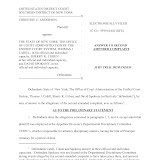
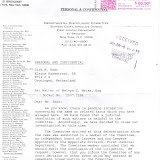
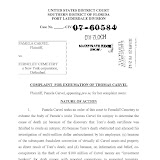
On January 22, 2008, New York attorney Eleanor Capogrosso filed a complaint in the United States District Court for the Southern District of New York, Capogrosso v New York State Commission on Judicial Conduct (08cv0526).

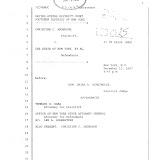
A transcript obtained from the publicly available court case file indicates that a hearing was held with the judge “in the robing room” at 5:20pm on February 15, 2008. The hearing was attended by the U.S. District Court Judge, the Hon. Thomas P. Griesa, New York State Attorney General Monica A. Connell, and the plaintiff-attorney, Eleanor Capogrosso.

Initially, the Court explained the purpose of the hearing, “The reason we’re having this conference, I have a new action – the plaintiff is acting pro se – and the action is against a number of state court judges, as well as the New York State Commission on Judicial Conduct. And what I wanted to tell you is that the complaint appears to be without merit; we’ve reviewed it, and I am not going to authorize service upon all of these defendants…”

The Court then addresses Assistant Attorney General Monica Connell, who is appearing on behalf at least one of the defendants. “All right. Now, look, in situations like this there’s an orderly way to deal with the case which is fair to both sides. What I would like you to do is to consider what you believe should be done in response to this, and maybe you have already done so. But when there are many defendants, such as state court judges and so forth, there is no – nothing to be gained by having lot of people served, not that it’s a huge burden, but, you know, if the Marshals have to do it and so forth, why I don’t want to engage in that.”

The public record indicates that there are 11 defendants: The New York State Commission on Judicial Conduct, Raoul Felder, Hon. Fern Fisher Brandveen, Hon. Martin A. Shulman, Hon. Joan B. Carey, Hon. Carol R. Edmead, Hon. Eileen A. Rakower, Hon. Jeffrey K. Oing, Hon. Geoffrey D. Wright, Hon. Joan M. Kenney, and Sarah Jo Hamilton.

Ms. Connell advised the Court that she believed the case was baseless and frivolous, adding, “I know some of them [the defendants] have contacted me already to tell me that they have been served.” Her request to submit a letter motion was then denied by the Court, “No, don’t do a letter motion…it is not a lot of trouble to have a formal notice of motion and a brief memorandum.”

Various attorneys, and who have reviewed the publicly available complaint and exhibits, respectfully disagree that the action is without merit. A former federal prosecutor, who asked not to be named, believes that perhaps the matter does not belong in a federal civil court proceeding. “It is shockingly clear to me that certain state court judges violated the law. This belongs is federal court as a criminal case,” he says. “It’s public corruption.”

The underlying issue concerns attorney Capogrosso’s inability to perform her duties as an attorney shortly after the World Trade Center bombings. Since her law office was in the bombing frozen zone, she had no access to her computer or files. And at a court hearing just weeks after 9/11, a state court judge firmly opposed her request for an adjournment, even though then-governor Pataki, Chief Judge Kaye and then-Chief Administrative Judge Lippman had enacted emergency, and widely advertised, Orders dealing with, and staying, any limitations of time in court proceedings.

Not surprising is the fact that the underlying case was against an attorney for alleged wrongdoing. And that attorney, of course, is well connected to the First Department, Departmental Disciplinary Committee and the State Commission on Judicial Conduct.

More on this story soon…… And if you would like the court transcript or complaint emailed to you as a pdf file, let us know at corruptcourts@gmail.com. We’re living history. This is Tammany Hall II.

NY Budget Ignores Ethics Crisis in State Courts

Lawmakers Pass State Budget Without Pay Raise for Judges
The New York Law Journal by Joel Stashenko - April 10, 2008

The Legislature yesterday passed the 2008-09 state budget, a $121.7 billion spending plan that does not contain a judicial pay raise. The budget does include a provision providing for $48 million for a judicial pay hike retroactive to Jan. 1, 2008, but no funds were appropriated to implement the provision.

The so-called "dry appropriation" was made to preserve the possibility, at least theoretically, that lawmakers could get to a judicial pay increase at some point before the end of this year, said Assemblywoman Helene Weinstein, D-Brooklyn, chairwoman of the Assembly Judiciary Committee.

"It keeps it alive for potential action in the future," she said. "It's a recognition that we understand that there is a need to be addressed." The budget does not mention a pay raise for legislators, a prerequisite among Assembly Democrats for their passage of a pay increase for judges. Neither judges nor lawmakers have had pay increases since 1999.

Chief Administrative Judge Ann Pfau (See Profile) called the latest failure to provide a judicial pay raise "terribly disappointing," but declined to discuss the judiciary's response. Last week, Chief Judge Judith S. Kaye strongly suggested the judiciary was prepared to sue the Legislature and governor this month if there was no pay raise in the fiscal year that began April 1. (NYLJ, April 1)

Assembly Speaker Sheldon Silver, D-Manhattan, said yesterday that litigation by the judiciary would not affect the chances of his chamber returning later this year and appropriating money to make good on the $48 million dry appropriation. "I do not believe there will be any impact on judicial raises as a result of that lawsuit," he said.

Wednesday, April 9, 2008

Washington Post Editorial: A Fall and a Lesson

A Fall and a Lesson
The guilty pleas of three trial lawyers signal a need for balanced tort reform.
The Washington Post - EDITORIAL - April 9, 2008; A18

AT ONE TIME, William S. Lerach, Melvyn I. Weiss and Richard F. Scruggs would have been described as three of the nation's most feared and successful trial lawyers. Today, all three can simply be called crooks.

Mr. Weiss pleaded guilty last week to paying kickbacks to plaintiffs he recruited to file class action lawsuits against companies. He must pay a $10 million fine and faces up to 33 months in prison. His former law partner, Mr. Lerach, pleaded guilty to similar charges last fall; he was fined $8 million and was sentenced to one year behind bars. Mr. Scruggs, who came to national prominence in the 1990s as one of the lead lawyers in the massive litigation against tobacco companies, last month pleaded guilty to conspiring to bribe a Mississippi judge. Mr. Scruggs could be imprisoned for up to five years and be fined $250,000.

Many business figures and others who did battle with the trio are understandably celebrating the developments. These three, after all, came to be seen as the epitome of all that is wrong with a legal system that business believes is driven by lawyers who concoct legal claims to blackmail corporations into huge settlements. They were, in short, seen as opportunistic leeches, offering little or no benefits to clients and pursuing litigation only to line their own pockets. And each did become wealthy, earning tens, if not hundreds, of millions of dollars over his legal career. Apparently the risk of prison time wasn't enough to keep Mr. Weiss, Mr. Lerach and Mr. Scruggs from stooping to criminality in their quest for more riches.

Businesses are pointing to the terrible trio as proof positive that, for example, class actions should be abolished, punitive damages capped and losing parties compelled to pay the legal fees of their opponents. These changes would undeniably tilt the scales in favor of corporate interests, which may be exactly what business wants. But such a possible imbalance is not necessarily what would be best.

The truth is that there have always been and will always be voracious and ethically challenged lawyers, just as there have always been and will always be voracious and ethically challenged people in business. Both sets of scoundrels deserve to be punished. What is needed now is a sober discussion about how best to achieve a fairer, more balanced legal system through comprehensive tort reform. Such a system would not be lopsided but would shield businesses from legal blackmail, just as it would protect the rights of legitimate plaintiffs to win just compensation from negligent businesses that caused them real harm. Smart and ethical businesspeople and lawyers -- and, yes, there are many who fit the bill -- would be wise to start working together to craft such a fix.

Bribery Convicted Lawmaker Rumored to be 'Fed Chatting'

B'KLYN POL CONVICTED OF BRIBERY
By ALEX GINSBERG

April 9, 2008 -- Four-term Brooklyn Assemblywoman Diane Gordon was convicted yesterday of accepting a promise of a free house in return for helping a crooked developer win a contract to build on city land.
Gordon, a Democrat, was found guilty of third-degree bribe-receiving and official misconduct.

The panel acquitted her of the most serious charge, second-degree bribe-receiving, following almost three days of deliberation in Brooklyn Supreme Court. The disgraced pol nevertheless faces up to 10 years in prison. "Talk to the lawyer," was the only comment Gordon offered as she left court free on $35,000 bail until her May 20 sentencing. "We're going to do our best to see that the sentence is one of probation or less," said the lawyer, Bernard Udell.

Regardless of what that sentence turns out to be, Assembly rules require that Gordon, 58, be stripped of her seat, which means her East New York district will go unrepresented until the winner of this November's election takes office in January.

Additional reporting by Kenneth Lovett alex.ginsberg@nypost.com

Keep it Going, David: Gov Axes Commish

GOV AXES COMMISH
The New York Post by FREDRIC U. DICKER

April 9, 2008 -- ALBANY - Gov. Paterson yesterday dumped state Human Rights Commissioner Kumiki Gibson, a former counsel to then-Vice President Al Gore who was the subject of human-rights complaints herself.
Patersonannounced Gibson's pending replacement in a statement that thanked her for her service but didn't explain her departure.

Two white women in their 60s who were fired early last year by Gibson filed a federal action alleging racial and age discrimination. They contended Gibson - who is of African-American and Japanese descent - had told employees that she wanted "young folks, young people" shortly before they were fired.

Tuesday, April 8, 2008

Gotti 'son' rats out judges, officials

Gotti 'son' rats out judges, officials
The New York Daily News by JOHN MARZULLI - April 8, 2008

Besides ratting out members of the Mafia, John Gotti's "adopted son" fingered three crooked judges and corrupt officials in Nassau County, the Daily News has learned. Lewis Kasman named two Queens Supreme Court judges in a written statement to federal prosecutors and the FBI, spelling out his knowledge of crimes and crooks, documents reviewed by The News show.

One judge is still on the bench; the other was booted after a felony conviction a decade ago. Kasman said an unnamed Nassau County judge took a bribe from the late mob lawyer Michael Coiro, who was a mentor to Kasman and introduced him to organized crime figures, including the late Gambino crime boss John Gotti. Kasman also claimed that associates of the Luchese crime family bribed officials in the Town of Hempstead to issue certificates of occupancy.

He named a corrupt "enforcement guy" in the town, and revealed that the son of a prominent former politician was on Kasman's "payroll." It's unclear what personal dealings Kasman had with the judges and town officials. His cooperation agreement confers immunity for "participation in bribery of various public officials from approximately 1986 through 1999." The feds identified Kasman in court papers as a rat two weeks ago, but the extent of his undercover work is just beginning to emerge. The FBI approached him in 1997, and he was receptive because he felt disrespected by Gambino crime family mobsters after Gotti went to jail.

After Gotti died in 2002, his brothers, Richard and Peter Gotti, squeezed him for money. Kasman recorded conversations with wiseguys, mob associates and lawyers; John A. (Junior) Gotti, and even Gotti's widow and daughter. The feds even gave Kasman a second chance after learning he stole $80,000 from a businessman in 2006 and lied to his FBI handlers about the scam.       jmarzulli@nydailynews.com

Monday, April 7, 2008

Pillsbury Partner May Face Criminal Charges (MORE, CLICK HERE)

BigLaw Firm Faces Financial Hit While Partner May Face Criminal Charges

New York Lawyer by Niraj Chokshi - April 7, 2008

The court-appointed trustee in the SonicBlue bankruptcy case has asked the judge to order two law firms and three creditors to pay a total of at least $30 million in compensatory damages for breaches of fiduciary duty.

In the complaints filed last week, the trustee asks San Jose bankruptcy Judge Marilyn Morgan to force the Los Angeles-based firms — Pillsbury Winthrop Shaw Pittman and Levene, Neale, Bender, Rankin & Brill — to disgorge all fees and expenses. Pillsbury has collected $4.2 million in the case, and Levene earned $1.2 million.

The filings ask for compensatory damages of at least $11 million from Pillsbury, former counsel for SonicBlue; $5 million from Levene, former counsel for the creditors' committee; and $14 million from the group of three creditors. The trustee also asks that the court consider punitive damages for Pillsbury and the creditors.

"These are large numbers for any firm, for anybody. And the threat of punitive damages is always something that can make you stay up at night," said Michael Cooper, a partner with Wendell, Rosen, Black & Dean who represents various parties in bankruptcies and is not involved in the case. The trustee, Dennis Connolly, was appointed at the urging of the U.S. bankruptcy trustees last year when misconduct allegations heated up.

Monday's filings came 10 days after a creditor's attorney asked the judge to refer Pillsbury partner William Freeman to the U.S. attorney for the Northern District of California for alleged criminal misconduct relating to a failure to disclose information under penalty of perjury.

Bankruptcy lawyers noted that there's no guarantee Morgan will adopt the trustee's position, or set any compensatory damages so high.

Courtroom Fireworks Predicted as DC Madam Trial Opens (MORE, CLICK HERE)

Courtroom Fireworks Predicted as DC Madam Trial Opens
The Legal Times by Joe Palazzolo - April 7, 2008

WASHINGTON - Deborah Jean Palfrey hasn't been your standard-issue defendant.

The alleged D.C. madam -- she prefers "Washington Madam," thinking it more refined -- announced her own trial in a news release and has held raucous press conferences outside the federal courthouse and in Georgetown eateries.

Since her indictment last March, she's cycled through four lawyers, depending on how you count, and two judges. After haggling with a federal judge, she got her company's phone records released and implicated customers, including a U.S. senator, a former State Department deputy, the defense strategist who coined the phrase "shock and awe," and a prominent lobbyist. Even an Akin Gump Strauss Hauer & Feld secretary was dismissed last year formoonlighting as one of Palfrey's employees.

If a hearing in federal court on Friday was any indication, the trial is bound to serve up heaps of make-you-blush moments. Assistant U.S. Attorney Daniel Butler asked Judge James Robertson if in opening statements he could mention that a witness had contracted a sexually transmitted disease (presumably, in the course of employment for Palfrey). After giving his approval, Robertson deadpanned: "By the time we get past a day or two of this [trial], STDs will be the least of our worries."

At that same hearing, Henry Asbill of Dewey & LeBoeuf moved to quash a subpoena issued to his client by Palfrey's lawyer, Preston Burton of Orrick, Herrington & Sutcliffe. Robertson denied the request.

The name of Asbill's client was not mentioned, but Asbill has representedSen. David Vitter, R-La., in the case since the summer. Vitter hired Asbill after his name turned up in phone records Palfrey kept of her escort service, Pamela Martin & Associates. In July, Vitter apologized for committing "a very serious sin."

Asbill said calling his client to testify would be "totally inappropriate" and accused Burton attempting to publicly embarrass him. Asbill's client is on standby to testify in the case.

The pretrial hype may be great gossip page fodder, but Palfrey faces some very serious charges as she heads to trial Monday. She's been indicted on four counts of racketeering and one count of conspiracy money laundering. She faces up to 55 years in prison if convicted.

Still, Palfrey seems to have a sense of humor about it all, and she's sharply tuned into the media's appetite for sex and the absurd. Her proposed jury questionnaire asks: "How closely, if at all, would you say you have followed the news reports of the following criminal investigations or trials: 1. Heidi Fleiss 2. Eliot Spitzer."

At one point, she tried to subpoena Sen. Patrick Leahy, D-Vt., chairman of the Senate Judiciary Committee, to testify about political corruption in the Justice Department. The relevance of such testimony was never fully explained.

Court filings also reveal a more typical strategy: For a time Palfrey's lawyers tried to choke the prosecution -- led by Assistant U.S. Attorneys Catherine Connelly, Daniel Butler and William Cowden -- with motions, more than 50 in about a year's time.

While the U.S. Attorney's Office for the District of Columbia declined to estimate the cost of the investigation and the anticipated three to four weeks of trial, it's clear that the $2 million and change Palfrey earned in 13 years as proprietor of Pamela Martin & Associates will seem a modest sum next to the government's tab.

Burton, declined to comment, except to say that he's prepared for a trial. Palfrey did not return e-mails or phone calls for comment.

14 COOPERATORS

Palfrey was indicted after a three-year joint investigation launched by the Internal Revenue Service and U.S. Postal Service.

What began as a tax case -- as it turns out, Palfrey is a diligent taxpayer -- turned into an investigation into an alleged criminal enterprise. Prosecutors say that Pamela Martin & Associates was a high-class prostitution ring in the D.C. area managed by Palfrey from her home in Vallejo, Calif., until August 2006.

Prosecutors claim Palfrey's employees mailed her cut of the profits in money orders, which provided the foundation for two of the racketeering charges and the money laundering charge.

Palfrey says she purveyed in erotic fantasies rather than prostitution, and that her employees, about 130 women mostly in their mid-twenties, were bound by contract to pleasure their clients only to the extent of the law.

The only named government witness, thus far, is Detective Keith Haight, a 34-year veteran of the Los Angeles Police Department who has been involved in about 2,000 prostitution investigations. According to declarations filed last month, he will be the government's expert on terms of art from the oldest profession -- for instance, "PSE" (porn star experience); "get comfortable" (translation: get naked); and "reckless eyeballing" (when a prostitute looks at another pimp). Robertson said on Friday that he would decide later in the trial whether to admit Haight as a witness. At Friday's hearing, Zuckerman Spaeder partner Steven Salky argued that the government shouldn't disclose his client, a man whose name is under seal. The client was granted immunity to testify during the grand jury probe, and Salky said prosecutors should grant him immunity again, if they want him to testify at trial. Robertson told Salky it appeared likely his client would be called to the stand.

AUSA Butler confirmed the man's name would be on the witness list when it was presented to the jury this week. "If the government wants to go spreading the names around ... it's on their heads to do it," Robertson replied at the April 4 hearing.

The indictment lists 14 former escorts who are cooperating with the government, all of whom are expected to testify. That could pose a tough challenge for Palfrey and Burton.

"If these women have a rather colorful past, you can stand before the jury and say, 'They're not worthy of your belief,'" says Herald Price Fahringer, a longtime lawyer for the adult entertainment industry who famously representedHustler publisher Larry Flynt before the Supreme Court. "But by the time they bring the 12th or 14th witness, it gets a little tough."

Fahringer was Palfrey's criminal lawyer of choice. With her assets frozen as a result of the racketeering charges, Palfrey could not convince Senior U.S. District Judge Gladys Kessler to free up $150,000 to pay for his representation.

It's not clear yet if any of Palfrey's former clients will take the stand. Vitter is the most obvious candidate, but there's also State Department official Randall Tobias, who resigned as director of U.S. Foreign Assistance and administrator of the U.S. Agency for International Development in April 2007, after admitting to using Palfrey's services. Tobias said he used the service for massages.

LAWYER SWAP

Burton, who represented Monica Lewinsky in President Bill Clinton's impeachment hearings, returned to the case earlier this year. He was Palfrey's second court-appointed attorney from May to October. Palfrey traded him in -- citing "irreconcilable differences," as she did with her first counsel, Federal Public Defender A.J. Kramer -- for her civil lawyer and former confidant,Montgomery Blair Sibley. The case was transferred from Kessler to Judge James Robertson in November, without explanation.

Palfrey fired Sibley in January, saying only that she had "lost faith" in him. Robertson put Burton back on the case, giving him about two months to prep for trial.

Sibley, who declined to comment, is still Palfrey's lawyer in civil forfeiture proceedings and in a breach of contract suit she filed against a former employee -- one of the 14 cooperating with the government. The suit says the woman engaged clients in "illegal sexual activities" without Palfrey's consent.

Prosecutors asked Robertson to allow them to introduce a past conviction at trial. The judge on Friday, however, ruled that it would be excluded from trial. But he raised the possibility that the government could use the conviction if Palfrey testified in her own defense.

Palfrey was sentenced to 18 months in jail in 1992 for a felony pandering conviction in California. In her sentencing memorandum, Palfrey confided to the judge that her parents had threatened to disown her if "this sort of thing" ever happened again. "They, as well as I, could not bear a repeat performance," she wrote in her 31-page plea for probation. "Therefore, there is no intent on my part to re-enter the escort business and chance such an occurrence."

Sunday, April 6, 2008

Insight Into How Long and How Deep NY Corruption Goes (MORE, CLICK HERE)

ENABLING ELIOT'S ILLUSION
A New York Post OP-ED By JOHN FASO

March 17, 2008 -- LIKE every New Yorker, I was amazed by the events that cul minated in Eliot Spitzer's resig nation as governor - saddened for his family and shocked to see a once-promising political career end this way.

Of course, since I lost (in a landslide) to Spitzer in 2006, the thought has crossed my mind as to what might have been had all this come out during the campaign. But "what if" is one of the most pointless exercises in life.  That said, this sad story holds a lesson on the state of our democracy in New York state - on how voters and the media consider candidates, their positions and their qualifications for office.

I knew my bid for governor was a long shot. But I believed Spitzer's policies for New York were wrong and unlikely to work. And I hoped that the public might see why Spitzer's persona was wrong for a governor.

I take little pleasure now in having argued back then that Spitzer wasn't what he appeared to be - in questioning whether he was temperamentally suited to be governor. Few listened when I said he seemed to have one set of rules for himself and another set for everyone else.

Spitzer could be an engaging and convincing candidate, and he'd earned a reputation as an effective and innovative prosecutor. But his bullying of respected people like former Wall Streeter John Whitehead and others convinced me he shouldn't be entrusted with the governorship.  And some of his cases, such as those against former stock exchange CEO Dick Grasso and tax giant H&R Block, seemed motivated more by headline-seeking than any desire to actually protect the public.
 
Spitzer didn't seem to care who or what he ran over, so long as it advanced his political career. Yet many New Yorkers thought that was just fine, so long as he was going after "rich guys" or "big business."  What I didn't count on was the credulousness of the media in simply buying - hook, line and sinker - the claims made by Spitzer's campaign. The spin, buttressed by millions in TV advertising, created the absurd notion of one man able to change everything on "Day One."

There was little critical analysis of his record, including the fact that Spitzer had lied about the source of the questionable millions poured into his earlier campaigns. Apparently, lying about political money wasn't relevant, since he was standing up for truth and righteousness.  Newspapers endorsed him (even ones that knew better, like The Post), paying little attention to Spitzer's tactics as AG or the fiscal house of cards created by his proposals. News "analysis" was often no more than reporting the latest polls or which candidate had raised the most money.
 
The media treated the race as a foregone conclusion. One prominent New York journalist even addressed an open letter to the new governor the day before the election.  In the short term, New York faces real problems that aren't going away anytime soon. Finances at the state and local level are a mess. Our new governor, David Paterson, and the Legislature will have their work cut out for them as they tackle serious budget and economic issues.  Longer term? Well, after the experience of the last 14 months, perhaps all of us will pay a bit more attention to the issues, the promises and the candidates' records the in 2010, when New York next elects a governor.  John Faso is a partner in the law firm of Manatt Phelps & Phillips LLP.


New York Post Letter to the Editor

FASO’S LAMENT

March 23, 2008 -- It is apropos for John Faso to be the first individual to throw his hat in the ring for the 2010 gubernatorial campaign ("Enabling Eliot's Illusion," March 17).  In the 2006 race, neither the voters nor the media looked at the issues. Both became overly involved in Eliot Spitzer's frequent headline-grabbing spectacles of bullying respected Wall Street figures and giant corporations.

Faso can cry all he wants about media coverage and voter irresponsibility, but the bottom line is that no governor will be effective while obstructionists Joe Bruno and Assembly Speaker Sheldon Silver have powerful positions in Albany.  Get rid of the dynamic duo; then elect a no-nonsense governor. Easier said than done.  Elio Valenti, Brooklyn

Faso writes about the media's "credulous" failure to analyze Spitzer's campaign claims and record in the 2006 gubernatorial election, yet Faso is silent about his own failure.  As the Republican nominee, Faso failed to expose what the media had long known but not reported: Spitzer's record of corruption as attorney general - from the hoax of his "public integrity unit" to the modus operandi of litigation fraud to defeat citizen lawsuits challenging the very governmental corruption his unit was neither investigating nor prosecuting.

Exposing this would have won the election for Faso, bringing Spitzer's candidacy to an explosive and scandalous end.  We wrote this to Faso in a letter entitled "Informing the Voters: Attorney General Eliot Spitzer's readily verifiable corruption in office - covered up by an election-rigging press."  That was more than four months before the election and is available on our Web site. [www.judgewatch.org]

Readers can judge Faso's complicity with the media in engineering Spitzer's landslide victory.
If the media have learned any lesson, they will now probe Spitzer's record as attorney general. That would propel systemic reforms more sweeping than any Spitzer, or Faso, might have advanced.  Elena Ruth Sassower, Director Center for Judicial Accountability Inc.,  White Plains

Saturday, April 5, 2008

Why Aren't "Plaintiffs" Lawyers Joining NY Ethics Scandal Lawsuits? (MORE, CLICK HERE)

Costco, Kinko's Battle Trial Lawyers Over Credit-Card Receipts
Bloomberg.com by Cynthia Cotts

April 5 (Bloomberg) -- Costco Wholesale Corp., FedEx Corp.'s Kinko's unit and scores of other retail companies are under siege by lawyers pursuing them for billions of dollars in damages through a new federal identity-theft law.

Lawyers are filing suits that put retailers at such financial risk, to the point of threatening bankruptcy, that some judges are refusing to certify them as class actions. Defendants are settling cases to avoid the cost of attorney fees and the risk of damages, according to court papers and defense lawyers.

``The plaintiffs have not actually been injured,'' the Pacific Legal Foundation, a Sacramento, California-based public interest group, wrote in a brief. ``The defendants have not profited from the infraction.'' It dubbed the cases ``legal extortion.''

The law prohibits retailers from showing credit-card expiration dates or more than five digits of account numbers on printed receipts, with penalties of $100 to $1,000 for each infraction. More than 300 suits alleging violations have been filed since the law took effect in December 2006, the U.S. Chamber of Commerce says.

At least 12 California judges have refused to grant class- action status to customer complaints bundled by lawyers, calling the cases potentially bankrupting. No cases have been tried yet, and many are on hold pending an appeal to the 9th U.S. Circuit Court of Appeals in San Francisco.

Swamping Profit

Costco, the largest U.S. warehouse-club chain, might have to pay as much as $17 billion without having harmed anyone, U.S. District Judge A. Howard Matz said in January, refusing to certify a class action. That's 15 times the Issaquah, Washington-based company's 2007 profit. Joel Benoliel, Costco's chief legal officer, didn't return calls seeking comment.

Cost Plus Inc., an Oakland, California-based home- furnishings retailer, and StubHub, an EBay Inc. ticket-sales unit, are among companies that settled. Coffee Bean Tea & Leaf, a Los Angeles-based coffee-shop chain, agreed to give customers free drinks and pay customer lawyers $110,000.

``Plaintiffs' lawyers are taking the smaller companies and squeezing them, saying, `You guys will be bankrupt if this goes to trial, so give away a free drink and pay us off,''' said Lance Orloff, an attorney for Taps Fish House & Brewery in Brea, California, which was also sued.

StubHub said in court papers that it might face liability of as much as $2 billion. Cost Plus put its exposure as high as $3.4 billion. Both settled for undisclosed terms. Michelle Doolin, an attorney for StubHub, and Marcy Bergman, a lawyer who represents Cost Plus, declined to discuss the lawsuits.

A class action against the Adidas Promotional Retail Operations unit of Adidas AG, based in Herzogenaurach, Germany, was approved by U.S. District Court Judge Gary Allen Feess in California. The company said it faced at least $10 million in damages.

Toys `R' Us

The Costco and Adidas cases are on hold until the appeals court rules, as are suits against Kinko's, part of Memphis, Tennessee-based FedEx, and Toys ``R'' Us Inc. of Wayne, New Jersey.

``The minute we file these cases, every one of the defendants has changed their practices,'' said Greg Hafif of Herbert Hafif Law Offices in Claremont, California. ``Every consumer out there is now protected from identity theft.''

Jenny Robertson, a spokeswoman for FedEx Kinko's, declined to say whether the company was in compliance with the law when the suit was filed. Congress wrote the rules into the Fair and Accurate Credit Transactions Act, which allows consumers to obtain credit reports for free, in 2003.

The issue before the appeals court is whether the so-called annihilating-damages defense can be used to protect Taps, the California brewery, from a class action. The appeal previously included Coffee Bean, which said it might owe $48 million.

`Horrendous' Damage

That would be a ``horrendous, possibly annihilating punishment unrelated to any damage,'' U.S. District Judge R. Gary Klausner in Los Angeles wrote last year, rejecting a Coffee Bean class action.

Hafif called the defendants' claim that they could be wiped out ``pure spin.'' If a jury awards disproportionate damages, the court can reduce the amount, he said. The judge in the Taps case approved a class action. Taps said it could be liable for as much as $46 million in damages. ``It's a crapshoot, and it's going to be tough on small businesses if they come down the wrong way,'' said Orloff, the Taps lawyer.

New Tactic

A Florida judge in February gave some retailers a new defense in a ruling for Movietickets.com, a joint venture of companies including AMC Entertainment and Viacom Inc. The court said the law doesn't apply to Internet sales because receipts aren't printed.

That decision could be adopted in other cases, said Richard Levine, a lawyer with New York-based Weil Gotshal & Manges who represents Movietickets.com. It already has been cited in suits against Macy's Inc. and 1-800-Flowers.com Inc. Judges in all other such suits have ruled that the law applies to Internet sales, said Miami lawyer Matthew Sarelson, who sued Movietickets.com.

``Congress gave companies a three-year grace period,'' Sarelson said. ``How in the world does a large company that makes millions or billions of dollars annually based on Internet transactions not know what the law is?'' If the class actions proceed and plaintiffs can prove willfulness, it's likely that significant damages will be assessed, said Amar Sarwal, a lawyer with the U.S. Chamber of Commerce. ``No one's going to risk their companies on these kinds of cases,'' Sarwal said. ``They're all going to have to settle.''

Martin Fineman, an attorney for Adidas, did not respond to a request for comment. Richard Hoffman, an attorney for Toys ``R'' Us, and David Block, an attorney for 1-800-Flowers.com Inc., declined to comment on the pending litigation. The appeals case is Soualian v. International Coffee & Tea, 07-56377, U.S. Court of Appeals for the Ninth Circuit (San Francisco).

To contact the reporter on this story: Cynthia Cotts in New York at ccotts@bloomberg.net.

Who's Been Watching the Watchers? (MORE, CLICK HERE)

Spitzer's embattled NY inspector general resigns
BY THE ASSOCIATED PRESS - April 3, 2008

State Inspector General Kristine Hamann, who was appointed by former Gov. Eliot Spitzer and was criticized for her two investigations into his administration, has resigned.

Her spokesman, Stephen DelGiacco, said Hamann submitted her resignation Thursday and it will be effective April 10. Her one-page letter said she was honored to serve and proud of her accomplishments in just over a year in office. But Hamann's biggest investigations drew severe criticism by the Senate's Republican majority that was in open conflict with Democratic Gov. Spitzer and his administration.

Republicans faulted her for her investigation of Spitzer when his top aides were accused of plotting to discredit Senate Republican leader Joseph Bruno. Her July 2007 report on the scandal involving the use of state police to compile travel records on Bruno was a one-page letter that said she concurred with Attorney General Andrew Cuomo, who found no laws were broken but that aides had acted inappropriately.

She said she determined in her investigation that she had a conflict of interest because her boss, then-Secretary to the Governor Rich Baum, was one of the Spitzer officials who had internal conversations about the case. Hamann reported to Baum, who recently left the executive chamber. In February, Hamann also faced scrutiny for her 10-month investigation of a former Spitzer energy policy adviser who was accused of threatening the job of a Republican-appointee on the independent Public Service Commission.

Her investigation found no conclusive proof that Spitzer energy adviser Steven Mitnick threatened the job of state Public Service Commission member Cheryl Buley or tried to force her to vote for Spitzer policies. Buley had said Mitnick threatened her job last year to make room for a Spitzer appointment.

Bruno had no comment, said spokesman Mark Hansen. Bruno and Senate Republicans have questioned Hamann's investigations and whether she was independent from the governor. The Inspector General's office is responsible for detecting and investigating allegations of corruption, fraud, criminal activity, conflicts of interest and abuse involving state agencies, departments, commissions and authorities headed by appointees of the governor. Not all of her investigations were contentious.

In December, she found New York City Police Department's crime lab cut corners analyzing evidence and submitted results in drug cases without having done the required tests in 2002. In September she found that while thousands of people waited years for affordable apartments in New York City, the agency that regulates low-cost housing allowed ineligible renters to move into the projects. And on Wednesday, she reported that a former state employee certified more than 200 unqualified crane operators even though they failed the practical exam.
Gov. David Paterson, who succeeded Spitzer last week after he was implicated in a prostitution investigation, is expected to replace Hamann in the $145,000-a-year job. The governor accepted the resignation and thanked Hamann for her service, said Errol Cockfield, the governor's spokesman. Dennis E. Martin, special deputy to the inspector general, was named acting inspector general.

Hamann spent 30 years in the Manhattan district attorney's office. She served as executive assistant district attorney to Robert Morgenthau since 1998, leading the development of procedures for DNA testing and the creation of a child advocacy center. Before that, she headed the office's criminal court trial division and headed training efforts for three years and worked briefly in the district attorney's office when Spitzer worked there.

Friday, April 4, 2008

Federal Judge Asks Why So Many Lawyers Seek Fees (MORE, CLICK HERE)

Judge Asks Why So Many Law Firms Seek Fees in Suits
In the Courts


The New York Sun by JOSEPH GOLDSTEIN - April 1, 2008

A federal judge in Manhattan is expressing surprise at the multitude of lawyers who are seeking a chunk of a $336 million settlement with Mastercard and Visa, as well as member banks such as JPMorgan Chase and Citibank.

The settlement, reached in 2006, came in lawsuits alleging that the companies had overcharged cardholders on purchases made abroad and had hidden the added fees. The card issuers were alleged to have colluded to fix an added fee of between 1% and 3% on foreign purchases. Based on the number of claims expected, the majority of class members will receive $25.

More than 30 law firms are asking for a total of about $86 million of the settlement, or just under 26%. The lawyers say they deserve the amount because it is difficult to make a case based on allegations of collusion, and because their lawsuits did not piggyback on any regulatory action taken by the government.

By January, only 25 of the 21 million class members had objected to the fees the lawyers were requesting. At a court hearing yesterday prompted by those objections, a lawyer at the San Diego-based firm Coughlin Stoia Geller Rudman & Robbins, Bonny Sweeney, said the various plaintiffs’ attorneys and paralegals had spent 77,000 hours on the case in all.

The federal judge who will decide how much the lawyers will receive did not seem concerned about the percentage of the take that the lawyers were seeking. Rather, the judge, William Pauley of U.S. District Court in Manhattan, seemed bothered by the number of law firms involved in the process and whether some law firms had already received payment for the work in a separate settlement.

“Can you explain to me why 31 law firms had to be involved with the plaintiffs?” Judge Pauley asked, adding that he “found a disconnect” between the number of the different groups of plaintiffs and the number of law firms.

Ms. Sweeney explained that the “bulk of the work” — 84.7% — was done only by just six firms. Among those six firms are Ms. Sweeney’s firm as well as the Philadelphia-based firms of Berger & Montague and Kohn Swift & Graf. One sticking point yesterday involved a separate $32 million legal fee award that the card issuers had agreed to pay Coughlin Stoia and three other firms. The fee came in a similar lawsuit brought in California that was dismissed on appeal.

A lawyer who was objecting to the settlement, Irving Bizar, yesterday advised Judge Pauley to take those $32 million away from the law firms and add it to settlement pool. Mr. Bizar objected not only to the legal fees but the settlement in general, saying that it did not “pass the smell test” and recovered only “a small fraction of the damages.”

One lawyer who played a lead role in the cases, Merrill Davidoff of Berger & Montague said the $336 million represented between 9% and 42% of the fees that the card issuers had wrongfully charged.

Thursday, April 3, 2008

NY POST EDITORIAL: Dirty Tricks, Dirty Probes (MORE, CLICK HERE)

DIRTY TRICKS, DIRTY PROBES
New York Post Editorial - April 2, 2008

It's quite clear why the state Commission of Investigation yesterday chose to begin "investigating the investigations" of Eliot Spitzer's Dirty Tricks: Those "probes" reek of coverup. That includes the "review" by Spitzer's hand-picked inspector general, Kristine Hamann; the one by his friends at the Public Integrity Commission - and especially the one (er, two) by his political ally, Albany DA David Soares. These "sleuths," beholden to Spitzer, took pains to hide the truth. Now, someone needs to expose them.

Their sham inquiries, of course, weren't the only "probes" into Spitzer's Dirty Tricks, which had State Police spying on Senate Majority Leader Joe Bruno. Attorney General Andrew Cuomo did a crackerjack job, finding last July that Spitzer & Co. had acted "improperly." But the AG, lacking subpoena power, couldn't dig to the bottom. Monday, Gov. Paterson asked Cuomo to finish his probe - this time, with full prosecutorial power. Cuomo accepted the job yesterday, vowing to "restore New Yorkers' trust in their government." But that still leaves Larry, Curly and Moe - er, Soares, Hamann and the Public Integrity Commission. All three were hopelessly conflicted from the start:

*** Soares owed much to Spitzer - starting with the former gov's endorsement of him in his '04 run for DA. The two also shared support from the Working Families Party - which spent $165,000 on the DA's race. Some $81,500 of that, in turn, came from the Drug Policy Alliance Network, a radical left-wing group that opposes the war on drugs and is funded by even more left-wing billionaire George Soros. No wonder Soares tried to whitewash his fellow Dem and WFP candidate's Dirty Tricks, claiming that the former gov was entitled to target Bruno. Soares changed his tune after Spitzer quit - but still went easy on his ol' pal.
*** Hamann, meanwhile, owed her job to Spitzer. She never completed a probe, but she let everyone think she had.
*** Spitzer picked most of the Public Integrity Commission's members. Its executive director's law firm backed him financially, and the panel reportedly conferred with his folks on its "probe."

So let's see what kind of job the Commission on Investigation can do. Hey, if its probe of the other probes falls short, maybe Andrew Cuomo can probe that.

Wednesday, April 2, 2008

Picking the Bones: Profiting from 9/11 (MORE, CLICK HERE)

Picking the Bones: Profiting from 9/11

A first in a series called Picking the Bones, Anthony DePalma of The New York Times discusses how big money is made off the dead, here from victims of that fateful day.

9/11 Lawyer Made Name in Lawsuit on Diet Pills
The New York Times by ANTHONY DePALMA - March 30, 2008

In the years since the 9/11 attack, more than 9,000 ground zero workers have sued New York City, saying it failed to protect them from the toxic dust at the site that they say made them sick.

Nearly all of them are represented by two lead lawyers. One, David E. Worby, is well known to most of them because he often appears on television and in newspaper articles as a spokesman for their cause. But few of the workers recognize the other lawyer, Paul J. Napoli, or know much about him.

Mr. Napoli made his name and fortune in one of the biggest class-action lawsuits of the last decade, the case involving the diet drug combination known as fen-phen. He won thousands of fen-phen users compensation for heart damage, but he has also been criticized for his conduct of that litigation. A federal judge overseeing some of those cases in 2002 dismissed scores of his fen-phen claims, saying the heart scans he submitted were medically unreasonable. And former clients, business associates and an ex-employee have accused him of misrepresentation and ethical breaches.

Most of those claims against Mr. Napoli have been dropped. But in late January, a New York State appellate court cleared the way for a trial on a suit brought by former clients and a law firm once associated with Mr. Napoli charging that he manipulated the distribution of fen-phen settlement money for 5,600 clients. The suit contends that the settlement — reportedly $1 billion — was managed in a way that favored some clients over others and thereby increased the lawyers' fees for Mr. Napoli's Manhattan firm. No trial date has been set.

"There's no federal order or state order that says I ever did anything wrong," said Mr. Napoli, who is known in New York's legal circles as a self-assured young lawyer with a penchant for taking on tough cases that other lawyers pass up. "We tried to do the right thing."

There are no claims of misconduct in the ground zero cases.

But the appellate court ruling on the fen-phen suit, which might otherwise have gone unnoticed, takes on added significance because Mr. Napoli is involved in the ground zero cases, which could also move toward a settlement. Last fall, Mr. Napoli and Mr. Worby asked their ground zero clients for authority to negotiate a broad settlement with the city.

Lester Brickman, a professor of legal ethics at the Benjamin N. Cardozo Law School at Yeshiva University who has studied Mr. Napoli's role in the fen-phen litigation, said he was disturbed that the Napoli firm was now representing ground zero workers. "I am deeply concerned," he said, "given the allegations that the firm flouted its ethical obligations."

Ground zero clients said there has been no reason to believe that Mr. Napoli and Mr. Worby, who was not involved in the fen-phen cases, have been less than aggressive in protecting their interests. Most have no knowledge of the fen-phen controversy, but some clients, when informed about the case, were wary. Joseph Lutrario, a retired New York City police officer from Long Island who was buried under the trade center rubble and believes he was sickened by the dust, said in an interview, "Why wasn't I notified of their prior history?"

In interviews at his office on lower Broadway overlooking ground zero, Mr. Napoli, 40, said he has not discussed that history with the 9/11 clients because the two legal actions were wholly unconnected. He also said that when all the confidential fen-phen settlement documents were unsealed at a trial, they would prove that he had handled that litigation properly and had protected all the people he represented.

Invited to the Case

Mr. Napoli was brought into the ground zero cases in 2004 by Mr. Worby, a successful personal injury lawyer from White Plains. Mr. Worby sued the city in 2003 on behalf of his son's hockey coach, a New York City police detective who had been told that he had leukemia, which doctors feared might have been caused by exposure to toxic dust from the five months he spent at ground zero.

As word of the suit spread and hundreds of workers poured into his office seeking legal representation, Mr. Worby realized that he needed help. He turned to Mr. Napoli, who was known for his success in the fen-phen litigation and his sophisticated computer system that could handle thousands of cases.

While Mr. Napoli handles day-to-day logistics of the case, Mr. Worby oversees issues of medical causation that could come up in a trial. Although they had not worked together before, Mr. Worby said he had "100 percent confidence" in Mr. Napoli and his firm. "I've looked into every aspect of what they did in the fen-phen case," he said, "and I don't think they did a darn thing wrong."

When Mr. Napoli became a major participant in the fen-phen litigation in 1997, he was just five years out of St. John's University Law School. After graduation, he joined a small Long Island law firm but quickly moved on to win medical malpractice cases in his own personal injury practice. In a relatively short time, his work in class-action lawsuits like fen-phen proved so profitable that he was able to give St. John's $500,000 and have an auditorium there named after him when he was just 37.

He first read about fen-phen in a 1997 Mayo Clinic report on five obese women who underwent heart valve surgery after taking the prescription drugs to lose weight. Immediately after the federal Food and Drug Administration called for the drugs to be withdrawn from the market on Sept. 15, 1997, Mr. Napoli and a partner, Marc Jay Bern, took out a newspaper ad soliciting fen-phen users. In time, the partners would draw in 5,600 clients who would sue the drug maker, American Home Products.

Challenging a Settlement

The American Lawyer magazine has called the fen-phen litigation a "mass tort debacle." Forbes magazine portrayed it as a "$22 billion gold rush." Hundreds of lawyers around the country cashed in.

The Napoli-Bern firm, with a few dozen lawyers, was among the biggest winners in the fen-phen sweepstakes. In 2001, it negotiated a settlement with American Home Products, now Wyeth, the pharmaceutical giant headquartered in Madison, N.J. The details of the settlement were sealed by the courts, but The New York Law Journal and other publications estimated that it was worth $1 billion and that it provided legal fees of roughly $350 million.

Now there is a chance that those fees and the awards paid to clients could have to be renegotiated because the courts, in a rare move, have decided to re-examine Mr. Napoli's seven-year-old fen-phen settlement.

On Jan. 31, the New York State Appellate Division, First Department, upheld a decision by Justice Charles E. Ramos of State Supreme Court in Manhattan ordering a trial on "allegations of misrepresentations and manipulation" related to the way Mr. Napoli and his firm dealt with their fen-phen clients.

That suit was filed by a New York law firm — now known as Parker Waichman Alonso — that had referred several hundred fen-phen clients to Mr. Napoli in 2001. Around 400 of those clients are also plaintiffs in the suit.

The suit maintains that Mr. Napoli and his associates violated ethics rules by misrepresenting to clients how their awards had been determined. It says they led clients to believe he had negotiated individual awards for them from the drug company when in fact his firm had negotiated a single lump sum and then divided up the money on its own. Court documents show that in letters to his fen-phen clients, Mr. Napoli said awards being offered were "based on the final offer made by A.H.P. to settle your case."

The Parker firm, which received $5.3 million in fees, contends that clients it referred to the Napoli firm received smaller awards than clients whom the Napoli firm recruited on its own, causing a larger portion of the lawyers' fees to go to the Napoli firm. Mr. Napoli declined to discuss details of the case because of the litigation. But he said that the individual awards were the result of negotiations with the manufacturer, and that a legal ethicist had reviewed the settlement approach.

"This case was never about anything being done wrong," Mr. Napoli said. "It's a lawyers' fight, and they're trying to put our clients in the middle." Arnold E. DiJoseph III, who represents the Parker firm, disagreed. "This is about the clients, not about fees — clients who got money taken out of their pockets," he said.

If a trial shows that there was misrepresentation in the handling of the settlement, some or all of the legal fees could be forfeited. The compensations paid to clients could also be re-examined. Another aspect of Mr. Napoli's record that has raised the concerns of Professor Brickman and other legal experts was his firm's use of diagnostic tests in additional fen-phen claims that were litigated after the 2001 settlement.

In those cases, a federal judge accused the firm and its associates of running a medical mill that churned out questionable echocardiograms to show that clients had suffered damage to their heart valves. The judge, Harvey J. Bartle III of Federal District Court in Philadelphia, dismissed 78 cases, finding they were based on "medically unreasonable" screenings and allowed the manufacturer to audit every test the Napoli team submitted.

Mr. Napoli challenged the judge's findings, and court documents indicate that all of the claims that had been dismissed were eventually paid, although the amounts are confidential. "The judges were wrong and we were right," Mr. Napoli said. "We did not stop. That's what the ground zero people should know."

Concessions on the Dust

It may be a long time before the claims of the ground zero workers are resolved. The city administration has conceded that exposure to the dust has led to respiratory problems, and it has provided millions for treatment while also lobbying the federal government for medical assistance. At the same time, the city has argued that it is immune to lawsuits for actions taken in response to an enemy attack.

Last week, the United States Court of Appeals for the Second Circuit upheld an earlier decision by Federal District Court in Manhattan, which allowed the suits to go forward, with immunity to be determined on a case-by-case basis depending on the facts of individual cases. Judge Alvin K. Hellerstein of the Federal District Court, who is overseeing the cases, has made it clear that he wants them settled.

He has raised the possibility of using $1 billion that Congress provided to insure New York City against liability claims as a victims' compensation fund for injured workers, but that may require Congressional approval. If the money is made available for a settlement, individual compensation awards are likely to be based on a complex evaluation of factors like severity of illness and intensity of exposure to the hazardous dust.

Unlike fen-phen claims, which were based largely on echocardiograms done by doctors paid by the lawyers, ground zero clients have been examined by their own doctors or the Mount Sinai World Trade Center Medical Monitoring and Treatment Program. Mr. Napoli said his firm had already spent more than $10 million on the litigation, including hiring 50 nurses to evaluate the workers' medical records.

Of course, if he and Mr. Worby succeed in obtaining settlements for the workers, they could make hundreds of millions in lawyers' fees. Mr. Napoli said his legal team had done everything to ensure fairness, including engaging an independent expert to oversee a settlement. "I've got a job to do and I'm going to do it," he said. "These ground zero guys are going to be protected."


Tuesday, April 1, 2008

NY Ethics Scandal Tied to International Espionage Scheme (MORE, CLICK HERE)

Tammany Hall II Ethics Scandal Reaching New Heights

Reports surfaced in New York and around Washington, D.C. last week detailing a massive communications satellite espionage scheme involving major multi-national corporations and the interception of top-secret satellite signals.

The evidence in the corporate eavesdropping cover-up “is frightening,” according to an informed source who has reviewed the volumes of documentation. The espionage scheme, he says, is directly tied to the growing state bar ethics scandal at the Appellate Division First Department, Departmental Disciplinary Committee (DDC) in Manhattan.

Rumors had been Circulating Linking the NY Bar Scandal to International Corporate Espionage Ops Using Satellites

The highflying spy operation involves private and public companies, mainly in the U.S. and Europe, that operate apart- but not too far- from national intelligence services. Confidential sources have learned that the original source of much of the secret information comes from satellite intercepts sold by telecom companies under contract to government spy agencies.

Although it’s rarely addressed in any official proceedings, basically all private telephone conversations and email transmissions in the U.S., and essentially worldwide, are routinely intercepted by one government authority or another. Much of the work is done by independent telecom companies that transmit the signals on to giant computers that translate the text in real time. This instant translation capability put an end to many embarrassing backlogs, as in the case of the first World Trade Center bombing, where the FBI had received an intercept, but hadn’t translated the key incriminating conversation before that 1993 event.

Once translated, the reviewing super computers search for key words to flag suspect conversations and transmissions. Proper names of people, buildings, addresses, codes, arms, explosives and the like will trip a full-scale investigation of a transcript.

Apart from the official surveillance of signal intelligence (or “sigint” in the spy trade), what confidential sources have discovered is that there is lots of freelance spying going on, where top-secret corporate information is being offered for sale to the highest bidder. The payments are allegedly made for a tip of such secrets as planned corporate acquisitions, mergers, or some very positive or negative performance reports.

Advance knowledge of corporate information, and the corresponding improper company stock activity, has long been the focus of many insider trading investigations but has not, until now, directly  involved New York City’s attorney ethics committee. One source says it’s been the ‘perfect crime.’  "The brains behind this organized scheme have thwarted attorney ethics investigations in New York, federal criminal inquiries and various civil actions around the country by simply citing ‘national security,’” says the source.

Enter the DDC, again

Since this secret corporate information is sent across public telecom networks that are constantly subject to interception, the black market in top-secret corporate intel continues to grow, and it generally evades detection. Last week, however, investigators tripped across evidence of a law firm protecting a client that had been on the selling side of corporate espionage. When complaints were filed with the New York Attorney Disciplinary Committee against the firm for a series of ethical violations, those grievances apparently disappeared into one of the now-well-known DDC black holes.

Another trusted source from outside New York has indicated that federal court filings will soon provide detailed evidence showing how the dysfunctional DDC machinery covered-up actions by certain New York attorneys involved in the corporate spying activities.

Stay Tuned......More Soon.....

American Lawyer: NY Lawyers Litigation 'Mass Tort Debacle' (MORE, CLICK HERE)

9/11 Lawyer Made Name in Lawsuit on Diet Pills
The New York Times by Anthony DePalma - March 30, 2008

In the years since the 9/11 attack, more than 9,000 ground zero workers have sued New York City, saying it failed to protect them from the toxic dust at the site that they say made them sick.

Nearly all of them are represented by two lead lawyers. One, David E. Worby, is well known to most of them because he often appears on television and in newspaper articles as a spokesman for their cause. But few of the workers recognize the other lawyer, Paul J. Napoli, or know much about him.

Mr. Napoli made his name and fortune in one of the biggest class-action lawsuits of the last decade, the case involving the diet drug combination known as fen-phen. He won thousands of fen-phen users compensation for heart damage, but he has also been criticized for his conduct of that litigation. A federal judge overseeing some of those cases in 2002 dismissed scores of his fen-phen claims, saying the heart scans he submitted were medically unreasonable. And former clients, business associates and an ex-employee have accused him of misrepresentation and ethical breaches.

Most of those claims against Mr. Napoli have been dropped. But in late January, a New York State appellate court cleared the way for a trial on a suit brought by former clients and a law firm once associated with Mr. Napoli charging that he manipulated the distribution of fen-phen settlement money for 5,600 clients. The suit contends that the settlement — reportedly $1 billion — was managed in a way that favored some clients over others and thereby increased the lawyers’ fees for Mr. Napoli’s Manhattan firm. No trial date has been set.

“There’s no federal order or state order that says I ever did anything wrong,” said Mr. Napoli, who is known in New York’s legal circles as a self-assured young lawyer with a penchant for taking on tough cases that other lawyers pass up. “We tried to do the right thing.” There are no claims of misconduct in the ground zero cases.

But the appellate court ruling on the fen-phen suit, which might otherwise have gone unnoticed, takes on added significance because Mr. Napoli is involved in the ground zero cases, which could also move toward a settlement. Last fall, Mr. Napoli and Mr. Worby asked their ground zero clients for authority to negotiate a broad settlement with the city.

Lester Brickman, a professor of legal ethics at the Benjamin N. Cardozo Law School at Yeshiva University who has studied Mr. Napoli’s role in the fen-phen litigation, said he was disturbed that the Napoli firm was now representing ground zero workers. “I am deeply concerned,” he said, “given the allegations that the firm flouted its ethical obligations.”

Ground zero clients said there has been no reason to believe that Mr. Napoli and Mr. Worby, who was not involved in the fen-phen cases, have been less than aggressive in protecting their interests. Most have no knowledge of the fen-phen controversy, but some clients, when informed about the case, were wary. Joseph Lutrario, a retired New York City police officer from Long Island who was buried under the trade center rubble and believes he was sickened by the dust, said in an interview, “Why wasn’t I notified of their prior history?”

In interviews at his office on lower Broadway overlooking ground zero, Mr. Napoli, 40, said he has not discussed that history with the 9/11 clients because the two legal actions were wholly unconnected. He also said that when all the confidential fen-phen settlement documents were unsealed at a trial, they would prove that he had handled that litigation properly and had protected all the people he represented.

Invited to the Case

Mr. Napoli was brought into the ground zero cases in 2004 by Mr. Worby, a successful personal injury lawyer from White Plains. Mr. Worby sued the city in 2003 on behalf of his son’s hockey coach, a New York City police detective who had been told that he had leukemia, which doctors feared might have been caused by exposure to toxic dust from the five months he spent at ground zero.

As word of the suit spread and hundreds of workers poured into his office seeking legal representation, Mr. Worby realized that he needed help. He turned to Mr. Napoli, who was known for his success in the fen-phen litigation and his sophisticated computer system that could handle thousands of cases.

While Mr. Napoli handles day-to-day logistics of the case, Mr. Worby oversees issues of medical causation that could come up in a trial. Although they had not worked together before, Mr. Worby said he had “100 percent confidence” in Mr. Napoli and his firm.

“I’ve looked into every aspect of what they did in the fen-phen case,” he said, “and I don’t think they did a darn thing wrong.”

When Mr. Napoli became a major participant in the fen-phen litigation in 1997, he was just five years out of St. John’s University Law School. After graduation, he joined a small Long Island law firm but quickly moved on to win medical malpractice cases in his own personal injury practice. In a relatively short time, his work in class-action lawsuits like fen-phen proved so profitable that he was able to give St. John’s $500,000 and have an auditorium there named after him when he was just 37.

He first read about fen-phen in a 1997 Mayo Clinic report on five obese women who underwent heart valve surgery after taking the prescription drugs to lose weight. Immediately after the federal Food and Drug Administration called for the drugs to be withdrawn from the market on Sept. 15, 1997, Mr. Napoli and a partner, Marc Jay Bern, took out a newspaper ad soliciting fen-phen users. In time, the partners would draw in 5,600 clients who would sue the drug maker, American Home Products.

Challenging a Settlement

The American Lawyer magazine has called the fen-phen litigation a “mass tort debacle.” Forbes magazine portrayed it as a “$22 billion gold rush.” Hundreds of lawyers around the country cashed in.

The Napoli-Bern firm, with a few dozen lawyers, was among the biggest winners in the fen-phen sweepstakes. In 2001, it negotiated a settlement with American Home Products, now Wyeth, the pharmaceutical giant headquartered in Madison, N.J. The details of the settlement were sealed by the courts, but The New York Law Journal and other publications estimated that it was worth $1 billion and that it provided legal fees of roughly $350 million.

Now there is a chance that those fees and the awards paid to clients could have to be renegotiated because the courts, in a rare move, have decided to re-examine Mr. Napoli’s seven-year-old fen-phen settlement. On Jan. 31, the New York State Appellate Division, First Department, upheld a decision by Justice Charles E. Ramos of State Supreme Court in Manhattan ordering a trial on “allegations of misrepresentations and manipulation” related to the way Mr. Napoli and his firm dealt with their fen-phen clients.

That suit was filed by a New York law firm — now known as Parker Waichman Alonso — that had referred several hundred fen-phen clients to Mr. Napoli in 2001. Around 400 of those clients are also plaintiffs in the suit.

The suit maintains that Mr. Napoli and his associates violated ethics rules by misrepresenting to clients how their awards had been determined. It says they led clients to believe he had negotiated individual awards for them from the drug company when in fact his firm had negotiated a single lump sum and then divided up the money on its own. Court documents show that in letters to his fen-phen clients, Mr. Napoli said awards being offered were “based on the final offer made by A.H.P. to settle your case.”

The Parker firm, which received $5.3 million in fees, contends that clients it referred to the Napoli firm received smaller awards than clients whom the Napoli firm recruited on its own, causing a larger portion of the lawyers’ fees to go to the Napoli firm. Mr. Napoli declined to discuss details of the case because of the litigation. But he said that the individual awards were the result of negotiations with the manufacturer, and that a legal ethicist had reviewed the settlement approach.

“This case was never about anything being done wrong,” Mr. Napoli said. “It’s a lawyers’ fight, and they’re trying to put our clients in the middle.” Arnold E. DiJoseph III, who represents the Parker firm, disagreed. “This is about the clients, not about fees — clients who got money taken out of their pockets,” he said.

If a trial shows that there was misrepresentation in the handling of the settlement, some or all of the legal fees could be forfeited. The compensations paid to clients could also be re-examined. Another aspect of Mr. Napoli’s record that has raised the concerns of Professor Brickman and other legal experts was his firm’s use of diagnostic tests in additional fen-phen claims that were litigated after the 2001 settlement.

In those cases, a federal judge accused the firm and its associates of running a medical mill that churned out questionable echocardiograms to show that clients had suffered damage to their heart valves. The judge, Harvey J. Bartle III of Federal District Court in Philadelphia, dismissed 78 cases, finding they were based on “medically unreasonable” screenings and allowed the manufacturer to audit every test the Napoli team submitted.

Mr. Napoli challenged the judge’s findings, and court documents indicate that all of the claims that had been dismissed were eventually paid, although the amounts are confidential. “The judges were wrong and we were right,” Mr. Napoli said. “We did not stop. That’s what the ground zero people should know.”

Concessions on the Dust

It may be a long time before the claims of the ground zero workers are resolved. The city administration has conceded that exposure to the dust has led to respiratory problems, and it has provided millions for treatment while also lobbying the federal government for medical assistance. At the same time, the city has argued that it is immune to lawsuits for actions taken in response to an enemy attack.

Last week, the United States Court of Appeals for the Second Circuit upheld an earlier decision by Federal District Court in Manhattan, which allowed the suits to go forward, with immunity to be determined on a case-by-case basis depending on the facts of individual cases.

Judge Alvin K. Hellerstein of the Federal District Court, who is overseeing the cases, has made it clear that he wants them settled. He has raised the possibility of using $1 billion that Congress provided to insure New York City against liability claims as a victims’ compensation fund for injured workers, but that may require Congressional approval.

If the money is made available for a settlement, individual compensation awards are likely to be based on a complex evaluation of factors like severity of illness and intensity of exposure to the hazardous dust.

Unlike fen-phen claims, which were based largely on echocardiograms done by doctors paid by the lawyers, ground zero clients have been examined by their own doctors or the Mount Sinai World Trade Center Medical Monitoring and Treatment Program.

Mr. Napoli said his firm had already spent more than $10 million on the litigation, including hiring 50 nurses to evaluate the workers’ medical records. Of course, if he and Mr. Worby succeed in obtaining settlements for the workers, they could make hundreds of millions in lawyers’ fees.

Mr. Napoli said his legal team had done everything to ensure fairness, including engaging an independent expert to oversee a settlement. “I’ve got a job to do and I’m going to do it,” he said. “These ground zero guys are going to be protected.”

NY Gov: 'Bad people should be rooted out...' (MORE, CLICK HERE)

HEAT ON 'HATCHET SQUAD'
The New York Post by FREDRIC U. DICKER - April 1, 2008

ALBANY - Gov. Paterson last night authorized Attorney General Andrew Cuomo to launch an unprecedented criminal probe of the State Police in the wake of The Post's report that a renegade unit may have compiled damaging personal information on Paterson and other top state officials.

The extraordinary authorization - contained in a letter from the governor to Cuomo that was obtained by The Post - grants the attorney general full subpoena power to call witnesses and obtain documents in what is expected to be a wide-ranging investigation of the State Police and its activities. Paterson took the stunning action after consulting with Senate Majority Leader Joseph Bruno (R-Rensselaer) and Assembly Speaker Sheldon Silver (D-Manhattan).

In the letter, Paterson wrote, "Recent reported events raise questions of possible political interference with the State Police and I am determined to not only ascertain the veracity of such reports but to do everything within my power to protect and strengthen the reputation of the State Police." "I will instruct the State Police to be fully cooperative with your investigation," Paterson added. An aide to Paterson told The Post, "Bad people should be rooted out, and this is why we have an attorney general and why we have this law."

"What is most important is that the governor is looking to protect the brave men and women of the State Police who put their lives on the line for New Yorkers and who should not be unfairly besmirched by the improper or illegal activities of anyone." Cuomo is expected to probe whether members of Eliot Spitzer's personal security detail were aware the then-governor was patronizing prostitutes and, if so, what actions were taken.

Cuomo is expected to probe the suspected behind-the-scenes role current state Power Authority Inspector General Daniel Wiese had in managing the State Police. Wiese is a one-time head of Gov. George Pataki's State Police security unit and a Spitzer friend. Cuomo is also likely to revisit the Dirty Tricks Scandal to determine the full extent of the decision-making process that led to the State Police effort to damage Bruno.

One case that may be scrutinized is that of former Rep. John Sweeney, a Republican from Saratoga Springs defeated in 2006, largely as a result of leaked State Police information he claimed originated with his political enemies. Paterson's action came under two sections of the state's Executive Law that authorize the attorney general, at the direction of the governor, to investigate and prosecute "the alleged commission of any indictable offense or offenses in violation of the law." Cuomo had no immediate comment.

The Post reported yesterday that the State Police force was suspected of harboring a renegade unit that for years secretly compiled personal information on top state officials. The Post said Paterson had been approached by several members of the Legislature who suspected that they had been targeted by the State Police for unjustified traffic stops and unspecified "interference in their personal lives.".      fredric.dicker@nypost.com

NEW YORK POST EDITORIAL - April 1, 2008

CUOMO ON THE CASE

It's up to Attorney General Andrew Cuomo now: Gov. Paterson, as The Post's Fredric U. Dicker reports today, has asked the AG to open a criminal probe of the State Police in the wake of Eliot Spitzer's Dirty Tricks campaign. Good for the governor.

"Recent reported events raise questions of possible political interference with the State Police," Paterson wrote to Cuomo, "and I am determined to not only ascertain the veracity of such reports but to do everything within my power to protect . . . the reputation of the State Police." Paterson's move followed Dicker's report yesterday that troopers may have run a renegade Dirty Tricks unit - possibly for years.

Lawmakers complained to Paterson that troopers targeted them for unwarranted traffic stops and "interfered in their personal lives," a top Paterson aide told Dicker. One source said a State Police unit may have kept tabs on numerous lawmakers, "unfriendly" journalists - and maybe Paterson himself.

Spitzer's Dirty Tricks plot involved information gathered by troopers to smear Senate Majority Leader Joe Bruno. Oddly, Albany County DA David Soares, who issued his second report on Spitzer's scheming Friday, said hardly a word about the role of the troopers in that affair (let alone in any other plot).

Soares had more than enough dots to connect - if he truly wanted to see the whole picture. He even noted that Spitzer arranged for a key former State Police official, Dan Wiese, to tell a newspaper that troopers "had long held concerns" about Bruno. The obvious question: Did they also "long" keep tabs on Bruno - and others? Soares' eyes must have been wide shut. His ears, too.

But that was then; this is now. Cuomo has his hands full. The brief handed him by Paterson allows him to open a full criminal investigation of the State Police, and a parallel civil undertaking as well. "I will instruct the State Police to be fully cooperative with your investigation," Paterson wrote.

Cuomo's own report last year got the Dirty Tricks scheme right the first time - and he didn't have subpoena power then; now he does. And he's armed for bear. Go to it, Andrew.

Blog Archive

See Video of Senator John L. Sampson's 1st Hearing on Court 'Ethics' Corruption

The first hearing, held in Albany on June 8, 2009 hearing is on two videos:


               Video of 1st Hearing on Court 'Ethics' Corruption
               The June 8, 2009 hearing is on two videos:
         
               CLICK HERE TO SEE Part 1
               CLICK HERE TO SEE Part 2
Add to Technorati Favorites