MLK said: "Injustice Anywhere is a Threat to Justice Everywhere"

End Corruption in the Courts!

Court employee, judge or citizen - Report Corruption in any Court Today !! As of June 15, 2016, we've received over 142,500 tips...KEEP THEM COMING !! Email: CorruptCourts@gmail.com

Tuesday, January 6, 2009

Massive Attorney Conflict in Madoff Scam

Integrity in the Courts by Frank Brady – January 6, 2009

On Monday, January 5, 2009, members of the House Financial Services Committee promised widespread reform in the U.S. financial regulatory process- a miserably abused financial machine known for self-serving blindness and favored whitewashing- failings recently brought to light by Madoff’s self-proclaimed $50 billion swindle.

Failed Head-Scratching

Something else was oddly overlooked yesterday, even by members of Congress. As members questioned why such a fraud had not been revealed earlier, they should have also been asking, “What other pertinent information is being withheld right now from the committee and the American people?” Had they asked that simple question, they just might have gotten some sort of answer. But since they didn’t even ask, a farcical New York-styled “investigation” will proceed.

The only hint of the latest Madoff surprise can be gleaned from the growing beads of sweat upon the forehead of Irving H. Picard, the court-appointed trustee for the liquidation of Bernie Madoff’s company. Mr. Picard, an attorney at the Baker & Hostetler law firm, is in the process of conducting a “broad investigation” of Madoff’s affairs, and he was recently able to get $28 million of Madoff money from the Bank of New York Mellon Corporation to fund his courageous efforts. That $28 million is now, most likely, in one of the Baker & Hostetler law firm bank accounts

Crack or Crater

The Congressional Committee needs to digest the reality that the financial regulatory deficiencies are not simply “cracks’ through which a few errant misdeeds crept. The misdeeds are the norm in an era of non-existent oversight, a void of accountability reserved for those who are connected to the right people.

Going back momentarily, there was another hint to the latest Madoff surprise, in addition to Mr. Picard’s perspiration. In a January 2, 2009 Bloomberg News article by Christopher Scinta, David Glovin and Erik Larson, un-New-York-like silence is noted, “George Stamboulidis, an attorney at Baker & Hostetler who represents Picard, didn’t return a call seeking comment.”
(See reference 1 below)

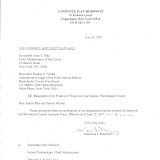
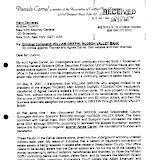
It seems that Mr. Picard’s attorney is the same George Stamboulidis who is enforcing the Bank of New York’s 2005 “Non-Prosecution Agreement.” (See Agreement below) That’s right, the Bank of New York, so to avoid the status as a convicted felon, entered into a “Non-Prosecution Agreement” in 2005 with the U.S. Attorney’s office in New York; and Mr. Stamboulidis was charged with overseeing the bank’s compliance with that agreement. News articles in November of 2005, in the New York Times and Wall Street Journal, point to serious crimes by top management at the Bank of New York. That not-so-proud moment in Banking just might turn out to be the beginning of events to come involving Madoff and the various yet-unnamed financial institutions.

It was no surprise to the many who read Laura Italiano’s December 29, 2008 New York Post story, “Bernie Cash Stash- Offshore loot sought.” (See reference 2 below) In quoting the London Observer, the silence of Picard and Stamboulidis might be best explained by the words of the official receiver of Madoff’s now-defunct fund, Securities Investor Protection Corp. (SIPC) Chief Executive Stephen Harbeck, “There are accounts at New York Mellon Bank that we have been looking at that appear to have sent and received money from offshore locations. We will trace funds wherever the trail goes.” We’ll see about that.

No Worry: Rooster Has Hen House Covered

In theory, Mr. Stamboulidis, of Baker & Hostetler, has been overseeing The Bank of New York’s compliance with the 2005 “Non-Prosecution Agreement” for the last few years. And now, in theory, court appointed Mr. Picard, of Baker & Hostetler, will dutifully conduct “broad investigations,” that just might reveal additional wrongdoings, and possibly by the Bank of New York.

This type of a set-up is considered a “conflict of interest” in most third worlds. But this is New York, the home of George Washington Plunkitt, of Tammany Hall fame, and who so eloquently clarified the difference between “honest” and “dishonest” graft as he became a millionaire off the public teat.

Would it be a surprise to anyone that the Bank of New York, and their successor company may, at some point, become a defendant in one or more of the growing list of Madoff court cases? And especially since the SIPC has said that it has already found oversea transfers for Madoff through the Bank of New York.

The time might have finally arrived for someone- outside of New York- to look into the affairs of The Bank of New York, including that $3 billion the bank recently received in the Fed bailout package. If a review of any worth does ever begin, there are a few other New York banks that could use a closer look.

NY State Ex-Senator George Plunkitt, who had a knack for cheaply buying land before public development plans were announced, wanted his epitaph to read, “He Seen His Opportunities, and He Took ‘Em.” Justice, and the American people, want Congress to restore accountability and impartial oversight. Congress would do well to start with New York. (Frank Brady can be reached at FrankNBrady@gmail.com)

##################


See Related article, “FBI Swamped with Bank of New York Violations”


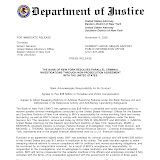
Here's the Bank of New York "Non-Prosecution Agreement"

U.S. Department of Justice
United States Attorney - Eastern District of New York
United States Attorney - Southern District of New York

IMMEDIATE RELEASE
November 8, 2005
Contacts:Robert NardozaHerbert Hadad / Megan Gaffney
United States Attorney’s Office Bridget Kelly / Heather Tasker
Eastern District of New York
United States Attorney’s Office (718) 254-6323
Southern District of New York
(212) 637-2600 

PRESS RELEASE

THE BANK OF NEW YORK RESOLVES PARALLEL CRIMINALINVESTIGATIONS THROUGH NON-PROSECUTION AGREEMENTWITH THE UNITED STATES 

Bank Acknowledges Responsibility for its ConductAgrees to Pay $38 Million in Penalties and Victim Compensation 

Agrees to Adopt Sweeping Reforms to Address Reporting Failures under the Bank Secrecy Act and Deficiencies in its Suspicious Activity and Anti-Money LaunderingSafeguards

The Bank of New York (“BNY”) has agreed to pay $38 million in penalties and victim compensation to resolve parallel criminal investigations conducted by the United StatesAttorneys’ Offices for the Eastern and Southern Districts of New York relating to BNY’s responsibility for crimes involving fraud and money laundering, as well as BNY’s failure to comply with mandatory reporting obligations under the Bank Secrecy Act. 

The resolution, announced today by ROSLYNN R. MAUSKOPF and MICHAEL J. GARCIA, United States Attorneys for the Eastern and Southern Districts of New York, respectively, MARK J.MERSHON, Assistant Director-in-Charge, Federal Bureau of Investigation, New York Field Division, and MICHAEL J. THOMAS, Special Agent-in-Charge, Internal Revenue Service –Criminal Investigation, New York, represents one of the largest financial settlements ever by a U.S. financial institution. Pursuant to an agreement signed today, BNY has admitted its criminal conductand will forfeit $26 million to the United States and pay $12 million in restitution to its victims. 

The bank has also agreed to make sweeping internal reforms to ensure compliance with its anti-fraud and money-laundering obligations, and be monitored by an independent examiner. As a result of BNY’s acceptance of responsibility, its cooperation in the investigations, and its willingness to make restitution and take significant remedial action, BNY will not be prosecuted for the unlawful practices of its officers and employees provided it fully complieswith the terms of its cooperation agreement with the government for a period of three years. BNY is the oldest bank in the United States and the principal subsidiary of The Bank of New York Company, Inc., a publicly traded corporation. BNY maintains retail branch locations across the United States, provides global financial services, and is a leading participant in capital markets throughout the world. 

Overview 

Today’s announcement is the culmination of lengthy investigations by the two United States Attorneys’ Offices, conducted between 1998 and 2004 in conjunction with theFBI and the IRS, that uncovered systemic failures in BNY’s suspicious activity reporting The Bank Secrecy Act requires banks to have anti-money laundering programs sufficient to identify and report suspicious financial transactions to the Financial CrimesEnforcement Network (“FinCEN”), part of the U.S. Treasury Department, by filing SuspiciousActivity Reports (“SARs”). The SAR database is a valuable tool for law enforcement in areasranging from complex financial investigations to terrorism, practices and anti-money laundering procedures. 

These failures permitted criminal fraud and money laundering activities by BNY employees and customers to proceed undetected andunchecked for more than a decade. The SDNY investigation uncovered a scheme, which was facilitated by a corrupt BNY vice president, involving the unlicensed transmission of billions of dollars originating in Russia through BNY accounts in the United States to third-party transferees around the world. 

The EDNY investigation uncovered a scheme involving the submission by a BNY commercial customer of fraudulent loan applications that were supportedby sham escrow agreements executed by a corrupt BNY branch manager, and that resulted in millions of dollars in losses to victim banks throughout the United States. To date, these schemes have resulted in the criminal convictions of at least nine individuals, including aformer BNY vice president and a former BNY branch manager. 

In admitting responsibility, BNY acknowledged, among other things, that it failed to have an effective anti-money laundering program, that it intentionally failed to take steps to report known evidence of suspected criminal conduct by a bank customer and BNYemployees as required under the mandatory reporting obligations of the Bank Secrecy Act even after that evidence came to the attention of senior BNY executives, and that both the bank’sgeneral counsel, managing counsel, and other senior executives repeatedly ignored the bank’s
legal obligations to file the required Suspicious Activity Report (“SAR”), doing so only after the principals of a BNY customer were arrested months later by federal authorities. 

The SAR that was ultimately filed was both inaccurate and incomplete, in that it failed to make any reference to the misconduct of BNY personnel relating to the escrow agreements, or how the escrow agreements were used to defraud other banks. During this period, BNY was already under compulsion to correct problems in its anti-money laundering program pursuant to an agreement between BNY, the Federal Reserve Bank of New York, and the New York State Banking Department that placed the bank under heightened regulatory scrutiny and required enhanced due diligence and suspicious activity reporting procedures by the bank (the“Regulator Agreement”). BNY’s failures allowed the fraudulent activities to continue,resulting in at least $18 million in losses to victims. 

“Banks occupy a pivotal position of trust in both our financial system and our system of law enforcement, one that requires diligence and dispatch in detecting and reporting clear evidence of criminal conduct,” stated United States Attorney MAUSKOPF. “When that trust is knowingly violated at the highest levels of a financial institution, as happened here,fraud and other criminal activities continue unabated, victims suffer staggering losses, and the integrity of our financial systems is seriously undermined. This agreement fixes responsibility for the illegal conduct by bank executives, officers, and employees, secures immediate compensation for victims, and ensures accountability going forward in the exercise of an essential public trust.”

“The Bank Secrecy Act and the anti-money laundering laws are critical to
protecting our financial system, and all United States banks must be vigilant in complying with them,” said United States Attorney GARCIA. “Although this agreement closes the book on BNY’s role in an underground Russian money transfer system that moved $7 billion through BNY accounts, the agreement requires BNY to continue and enhance its money laundering compliance programs and subjects BNY to oversight by an independent examiner for a period of three years."

The Southern District of New York Investigation 

The Southern District of New York investigation focused on misconduct related to the opening in 1996 of accounts at a retail branch of BNY in the names of Benex International Co., Inc. (“Benex”) and BECS International LLC (“BECS”). These accounts were opened by Peter Berlin, a Russian émigré, with the assistance of his wife, Lucy Edwards, also a Russian émigré, who was a BNY vice president. During the next three and one-half years, approximately $7 billion originating in Russia flowed through the Benex and BECS accounts to third-party transferees around the world.The Benex and BECS accounts were part of an underground money transfer business that was operated by a bank located in Moscow and a company located in Queens, New York. From a small single-room office in Queens, company employees executed hundreds of wire transfers per day from the Benex and BECS accounts, using electronic banking software provided by BNY to carry out wire transfer instructions provided by the Moscow bank. 

Despite the obvious money laundering risks associated with such an operation,BNY failed to conduct adequate due diligence or make “know your customer” inquiries with regard to Berlin or the Benex and BECS accounts. Some BNY executives in the Retail Banking Division believed, incorrectly, that Berlin was in the “import/export” business, but no employee ever sought to verify that belief. Other BNY executives in the Cash Management Division understood, correctly, that Benex and BECS essentially acted as payment brokers or money transmitters, whose businesses consisted solely of transferring funds on behalf of other parties, but those executives did not make any inquiry as to whether Benex and BECS were properly licensed as money transmitters.

BNY also failed to monitor adequately the activity in the Benex and BECS accounts, which were the highest fee-producing accounts in the One Wall Street Branch where they were located. Indeed, on the two occasions that employees in the Cash Management Division sought to conduct a money laundering review of Benex and BECS accounts, they were advised by a manager in the Funds Transfer Division that BNY did not have an automated system for reviewing account activity and that it would be impractical to conduct a manual review of the Benex and BECS accounts, given the tremendous volume of activity in those accounts. 

As a result of the failure to monitor the activity in the Benex and BECS accounts, a number of highly suspicious circumstances that should have raised flags about money laundering went undetected. In February 2000, Berlin and Edwards pled guilty to, among other crimes, conspiring to conduct unauthorized and unregulated banking activities, operate an illegal money transmitting business, and launder money to promote wire fraud, in connection with the operation of the Benex and BECS accounts at BNY. Berlin and Edwards acknowledged that the illegal banking network of which the Benex and BECS accounts were a part was designed,in part, to allow Russian individuals and businesses to wire transfer funds in and out of Russia

On March 5, 2004, PLS and seven individual defendants, including Myrna Katz, were charged in a superseding indictment for crimes arising from their involvement in the scheme. Five of the defendants have pled guilty, including Katz. Two defendants, Barry Drayer and Stephen Barker, are scheduled to be tried before United States District Judge Arthur D. Spatt, in violation of Russian currency controls, and thereby to defraud the Russian government of customs duties and tax revenues. Also in February 2000, as a result of the investigation into the Benex and BECS accounts, BNY entered into the Regulator Agreement with the Federal Reserve and NYSBD, referred to above.

The Eastern District of New York Investigation

The Eastern District of New York investigation uncovered that from approximately 1991 to 2002, BNY branch managers and employees working at a BNY retail branch in Island Park, New York, executed unauthorized and materially false and misleading escrow agreements for a BNY commercial customer, RW Professional Leasing Services Corp.(“PLS”) in Island Park, New York, that was engaged in the business of arranging financing formedical providers, ostensibly for the leasing of medical equipment. Although the escrow agreements obligated BNY to act as an escrow agent for other banks that were financing themedical equipment leases, BNY deliberately failed to establish any escrow accounts or performany terms of the escrow agreements. The financing banks relied on the escrow agreements inapproving loan requests totaling tens of millions of dollars.

In October 2005, Myrna Katz, a former BNY branch manager at the Island Parkbranch, pled guilty to making false statements to insured banks in connection with the phony escrow agreements. In pleading guilty, Katz admitted that she executed the escrow agreements. SARs generally must be filed by a bank within 30 days after detecting facts constituting the suspicious activity, and in no event later than 60 days after the detection of suspicious activity. In cases calling for immediate attention, a bank is required to provide telephonic notification to an appropriate law enforcement authority in addition to filing a written report. 

To assist a highly valued customer of the branch secure approval of its loan requests, and that she knew at the time she executed the agreements that they would not be implemented and that no escrow accounts would be established. The scheme proceeded undetected for more than a decade and continued during the period that BNY was bound by the enhanced due diligence and reporting requirements ofthe Regulator Agreement. 

As noted, after learning in early 2002 of the illegal conduct at the Island Park branch, BNY executives, including its general counsel and managing counsel,continued to ignore the bank’s reporting obligations under the Bank Secrecy Act, and intentionally failed to take steps to file a SAR and notify law enforcement authorities in atimely manner. 

In fact, the investigation disclosed that BNY did not file a SAR, or otherwise notify law enforcement of any problem, even after the bank had computed a potential liabilityof $72 million arising from its dissemination of the sham escrow agreements and had learned ofallegations of the fraud from BNY’s outside counsel and various bank funding institutions. Instead, BNY denied any wrongdoing relating to the escrow agreements in communications with various bank funding institutions, concealed information about the employee misconductthat had caused the escrow agreements to be issued, and directed BNY personnel not to discuss the bank’s culpability or liability with any third parties. The report that BNY ultimately filed inJuly 2002 was both incomplete and inaccurate.

Provisions of the Agreement

The United States Attorneys’ Offices for the Eastern and Southern Districts ofNew York have entered into a written agreement with BNY to resolve the criminal investigations of the bank.  Significantly, this agreement secures immediate compensation for victimized bank funding institutions. Under the terms of the agreement executed today: 

• BNY has accepted responsibility for its criminal conduct, and its chairman of the board of directors has signed a statement admitting the criminal conduct indetail.

• BNY has agreed to pay $12 million for purposes of compensating banks for losses arising out of the company’s criminal conduct, and to forfeit an additional $26 million as a penalty for its illegal conduct.

• BNY has agreed to continue cooperating with the investigations in the Eastern and the Southern Districts of New York and has begun to take steps to prevent repetition of the misconduct and criminal activity uncovered during those investigations. BNY fired three branch managers who were involved in overseeing the execution of the sham escrow agreements at the Island Parkbranch, and terminated or disciplined 16 others who were involved in the misconduct. BNY has shared the substance of numerous interviews conductedwith current and former BNY employees, as well as tens of thousands of pages of documents, including internal memoranda and email messages. BNY also waived the attorney-client and work-product privileges to assist the investigations, adopted remedial measures, and made available numerous witnesses for government interviews. 

• BNY has agreed to take numerous remedial actions in response to the misconduct at BNY, including but not limited to the following:the termination or disciplining of employees at all levels of the company whose improper activities and/or lax supervision resulted either in the execution of the sham escrow agreements orthe failure to report criminal activity as required by BNY policy and the Bank Secrecy Act;the creation of a new senior-level position within the Legal Division called Head of Law Enforcement and Investigations,with responsibility for responding to all law enforcement inquiries and coordinating the preparation of Suspicious Activity Reports throughout BNY; the introduction of new policies and procedures for, among otherthings, the auditing of retail branches; identifying, investigating and reporting illegal, suspicious or unusual activity; and usingand signing forms for customers; the training of BNY employees to identify and report suspicious activities, including the dissemination of false statements to financial institutions; the investigation of counter parties to the largest retail account holders and other suspect account holders to check whether the counter party is a real entity; and the adoption of procedures to ensure that information concerning possible criminal activity is shared with BNY departments responsible for filing SARs as required under the Bank SecrecyAct.

• BNY has agreed to the appointment of an independent examiner to serve for three years to monitor and report to the government, the Federal Reserve Bank of New York, the New York State Banking Department and BNY on BNY’s suspicious activity reporting practices, its anti-money laundering procedures relating to those practices, and its compliance with the agreement reached with the government. In light of BNY’s acceptance of responsibility, continued cooperation, remedial measures, and agreement to compensate the victims of its unlawful conduct, the United States Attorneys’ Offices for the Eastern and Southern Districts of New York have agreed not to prosecute BNY for the unlawful practices engaged in by its executives and employees, provided that BNY complies for three years with all the terms of the agreement executed today. Should BNY violate the terms of the agreement, or commit any other crimes, it shall be subject to prosecution, including prosecution for the criminal conduct described in the agreement.

In addition to recognizing the outstanding investigative work conducted by the Special Agents of the Federal Bureau of Investigation and Internal Revenue Service, United States Attorneys GARCIA and MAUSKOPF thanked the Federal Reserve Bank of New York and the New York State Banking Department for their assistance.The Eastern District of New York case was prosecuted by Assistant United States Attorneys Geoffrey Kaiser and Richard Lunger.The Southern District of New York case was prosecuted by Assistant UnitedStates Attorneys Celeste L. Koeleveld, Barbara A. Ward, and Michael G. McGovern.

end


Monday, January 5, 2009

New Year, New Court Corruption Exposed: Bailiff Tampering

Bribery probe snares bailiff
Defendants allegedly could buy secret friend in courtroom
The Cincinnati EnquirerBy Kimball Perry -January 2, 2009 - kperry@enquirer.com

Hoping to crack a federal drug case, investigators were listening in on telephone calls when they stumbled across a conversation that is sending shock waves through Hamilton County's judicial system. On that wiretap, federal officials heard what they believe was an attempt by convicted drug dealer Charles Johnson to buy his freedom by arranging a meeting with a court bailiff he hoped would fix his sentence. That alleged incident is the centerpiece of a criminal investigation into Damon Ridley, who was the bailiff for Hamilton County Common Pleas Judge John "Skip" West until Ridley was confronted with the allegations and resigned. Johnson's case has investigators poring over thousands of court documents involving criminal cases before West over the last five years. They are looking at why some cases presided over by West never had their sentences carried out and why other cases before him had no activity for years.

The issue is whether Ridley, 37, who also is the girls' varsity basketball coach at Woodward High, accepted money or favors in exchange for fixing sentences handed down by West or delaying them so long that thousands of dollars in fines and court fees were never paid. Bailiffs run the day-to-day operations of courtrooms and schedule when cases are heard. Johnson was arrested in July 2007, accused of selling heroin and cocaine in Over-the-Rhine. He was staring at 8½ years behind bars after police caught him with drugs and $2,165 in cash. That's when Johnson made a few calls, heard on the wiretaps, and arranged a meeting at a Spring Grove Avenue baseball field to try to avoid jail time. Johnson, now also under a federal drug indictment, was offering to pay Ridley $1,000 to help Johnson fix his criminal case so he wouldn't go to prison, Hamilton County Prosecutor Joe Deters said. Ridley showed up at the baseball field, Deters said, but the prosecutor wouldn't discuss the issue further, citing an ongoing investigation. Johnson pleaded guilty March 25 before West to reduced charges that still could have sent him to prison for 5½ years. Instead, West sentenced Johnson to probation and to serve up to six months in the River City Correctional Center, a drug-rehabilitation center run by Hamilton County judges. Investigators asked Ridley on Oct. 29 about the allegation. He resigned the next day. "I can tell you (Ridley) has told us numerous stories," Deters said.

None of what Deters says is true, Ridley told The Enquirer. "I haven't done anything wrong," Ridley said, denying he ever took money or favors for altering sentences. Ridley confirms he was questioned by investigators who asked him if he took money to alter West's sentences - which he denied - but said he hasn't spoken to investigators "in the last two months." "They just put my name on a lot of stuff that is not true," Ridley said. Investigators, Ridley said, also asked him about his visits to Indiana's riverboat casinos, where Ridley admits he gambles often. Ridley resigned after being questioned, he said, to lessen any impact on the judge. "I have a lot of respect for Judge West and I wasn't going to bring anything (negative) to him," Ridley said. He declined to answer additional questions, he said, on the advice of his attorney. He refused to say who his attorney was. If the allegations are proved, Ridley's actions could be disastrous to the Hamilton County court system as the public - and criminals - may infer the judicial system was undermined by one person's greed. "When you've got someone putting their thumb on the scales of justice, it's a very serious offense," University of Cincinnati law professor Christo Lassiter said. "You lose faith in government and there is a very serious threat to the judicial branch.

"The whole idea is to have a neutral arbiter. Why do that if there is a judge whose decisions are being bought by a bailiff? We may as well not have a judicial system." Deters is unsure of what role, if any, the judge has in the delay of cases, but he doesn't believe West is involved in wrongdoing. "Wherever this leads, we will go," Deters said, "but it would shock me to my core if the judge was involved. The judge is cooperating with us." West has refused to talk about the investigation, referring questions to Deters. Because Johnson's case is one of many being looked at, Deters asked for help from the Ohio Bureau of Criminal Identification and Investigation, an arm of the Ohio Attorney General. Investigators seized all of West's notes and files on the cases he presided over since 2003, shortly after Ridley became West's bailiff. In late November, Investigator McKinley Brown and several other prosecutor's staff took so many documents from West's fifth-floor courtroom they needed a flatbed to take them to the prosecutor's office. Ridley's work computer also was seized and its hard drive pulled for analysis. While on the bench, West talked about several of the stalled cases in question.

In three specific cases, West acknowledged from the bench that the case files he uses to track each case's progress contained handwriting that wasn't his. Generally, judges write their notes from each case on a case file or card they keep for their records. Some judges, though, cede the responsibility of maintaining the case file to their bailiffs. In each of those three cases, the person charged with a crime had no action taken on their case in at least two years. In each, West insisted he knew nothing about why those cases were dormant and noted there were no legal documents - especially none signed by him - that allowed the cases to be continued or set for another court date. Lawyers representing those three defendants admit they have been questioned by investigators about why the cases were dormant for years. Two of those lawyers - Kevin BoBo and Gloria Smith - said the investigators asked them if they had ever given Ridley money or loaned him money to continue the case. Each denied giving or lending Ridley money and denied any wrongdoing. But Ridley did borrow money from some lawyers, Deters said. "Some defense attorneys called us and said they loaned him money," Deters said.

At a Nov. 18 court hearing, West called the case of Josh Ludlum, who pleaded guilty Feb. 15, 2005 - 3½ years earlier - to attempted possession of cocaine. West sentenced Ludlum at that time to pay court costs and a fine. West then allowed Ludlum until March 15, 2005, to pay the fines and fees. But they were never paid. "I have no other record of this defendant being before this court," West said that day. "I have no indication that the fine or the court costs have been paid." The judge then turned to Brown, the prosecutor's investigator who was in the courtroom, and said, "Mr. Brown, this is one of those ones (cases) we discussed." "Yes sir," Brown responded. The second case in question that day involved the 2005 drug case against Gary Walker. "The entry that appears on the (judge's) card and not in my writing is that on 2/24/06, this matter was continued to 4/13/06 for plea or trial setting," West said. "There is no other entry, and I don't know what's happened since then."

In another case that day, Sakinah Thomas, a co-defendant of Walker, had her drug case called. It dated from 2005, three years before. Thomas was represented by attorney Smith. The week before, she told West that the case was still dormant. "You brought it to my attention last week and I'm very curious about that," West told Smith. "But more so, there is an investigator here and that's also curious. ... I know he wants to speak to your client." Smith confirmed she and her client had been interviewed by investigators about the case. West then noted that the last entry made on Thomas' case file was from March 9, 2006, which set the next court date for April 13, 2006. "I made no other notation," West said. "The next notation that appears on my note card is not in my writing, and it's dated 4/13/06, and it says 'continued to 5/10/06 ...' " In a Dec. 15 hearing on Thomas' case, her attorney told the judge she and Thomas had been to the courthouse "many times" to try to plead guilty and dispose of the case. "The case has always been continued," Smith told the judge. "By whom?" West asked. "Mr. Ridley," Smith answered. West also noted that all of the activity on the Thomas case "took place on dates when I wasn't in court" and there were no court entries continuing the case. "All of this is contrary to the way I do business," West told Smith.
Prosecutors became so frustrated with the slow pace of justice in West's courtroom that one, Katherine Pridemore, filed a legal motion requiring her to be contacted on a specific case that had been continued - without her knowledge or agreement - dozens of times. David Gvozdanovic was convicted Oct. 25, 2003, in West's room for trafficking in marijuana. Almost three years later, an exasperated Pridemore filed a motion that showed her frustration. Titled "State's Supplemental motion to be present for any further action taken on this case," the motion reads, in part: "On August 31, 2006, it came to the attention of the State that this case was yet again moved from the September 1, 2006 docket to September 11, 2006 without notice to the State, causing this case to be continued for the 34th time." The investigation has taken an emotional toll on West. West was close personally to Ridley, treating him like family. West and his family vacationed with Ridley and socialized with him. In West's courthouse chambers, there is a studio portrait of West, Ridley and another of West's court workers. Ridley worked for the Hamilton County Clerk of Courts office from April 16, 1997, until Nov. 15, 2002, when he began working as West's bailiff. Ridley's annual salary when he resigned after being confronted by investigators was $43,957. Deters predicted the investigators' audit of West's files would be complete within "two to three weeks."

Madoff Transferred $1 Million, Feds Want Him in Prison

U.S. Seeks to Imprison Madoff for $1 Million Transfer 
Bloomberg News by David Glovin - January 5, 2009

Jan. 5 (Bloomberg) -- U.S. prosecutors asked a federal judge to imprison Bernard Madoff as he awaits trial, arguing his $10 million bail should be revoked because he transferred $1 million of valuables in violation of an asset freeze order. Madoff disposed of five items including “very valuable jewelry,” Assistant U.S. Attorney Marc Litt told a federal magistrate judge today in Manhattan federal court. The government has only three of the items in its possession, Litt told U.S. Magistrate Judge Ronald Ellis. Some of the items were mailed by Madoff and his wife Ruth to third parties, he alleged. Litt said the transfer began on Dec. 29 and is the “changed circumstance” required under federal law to alter the terms of Madoff’s bail. The transfer violated a freeze agreed to as part of a Securities and Exchange Commission lawsuit filed last month against Madoff. “The case against the defendant is strong, and it’s getting stronger,” Litt said, making it more likely Madoff will attempt to flee. The transfer is an “obstruction of justice,” he said. Madoff, 70, was charged last month with one count of securities fraud for allegedly directing a $50 billion Ponzi scheme out of his New York investment firm. scheme out of his New York investment firm. “The bail conditions that were originally set by this court haven’t been violated in one iota,” defense lawyer Ira Sorkin said at the hearing. The case is U.S. v. Madoff, 08-mag-2735, U.S. District Court, Southern District of New York (Manhattan). To contact the reporter on this story: David Glovin in New York federal court at dglovin@bloomberg.net.

And here's an updated story:

Madoff Remains Free as Judge Considers Prison Request 
Bloomberg News by David Glovin

Jan. 5 (Bloomberg) -- Bernard Madoff, awaiting trial for securities fraud, remained free on bail while a federal judge considered a request by prosecutors to send him to prison for mailing $1 million of valuables in violation of an asset freeze. Madoff disposed of five items including “very valuable jewelry,” Assistant U.S. Attorney Marc Litt said today in Manhattan federal court. The government has three of the items, Litt told U.S. Magistrate Judge Ronald Ellis. Defense lawyer Ira Sorkin said the objects, including watches and cuff links, were heirlooms innocently sent to Madoff’s relatives. Sorkin said he told his client to retrieve them and alerted the government. Madoff, 70, was charged last month for allegedly directing a $50 billion Ponzi scheme out of his New York investment firm. He is free on $10 million bail while under house arrest and electronic surveillance. Litt said the transfer of valuables is a “changed circumstance” allowing the revocation of bail. Ellis declined to immediately rule on the government request, asking for legal briefs from both sides by Jan. 7. As Madoff fought today to stay out of jail, his alleged victims continued to detail their losses with him and regulators sought to identify assets they could use to repay customers.

Disclosed Today

Bard College’s president disclosed today that the Annandale- on-Hudson, New York liberal-arts school had lost about $3 million in investments related to Madoff. Harley International Ltd., a hedge fund run by Cayman Islands-based Euro-Dutch Management Ltd., invested all of its assets with Madoff, a person familiar with the matter said. The fund managed $2.76 billion as of Oct. 31. Last week, Rosenman Family LLC, managed by Martin Rosenman, president of Bronx-based Stuyvesant Fuel Service Corp., sued Irving Picard, the trustee appointed to supervise the unwinding of Madoff’s firm, seeking return of a $10 million investment. Picard has identified $830 million in liquid assets in Madoff’s defunct brokerage firm, Bernard L. Madoff Investment Securities LLC, according to the Securities Investor Protection Corp. The assets may be subject to recovery by Madoff’s customers, SIPC Chief Executive Officer Stephen Harbeck told a congressional committee today in prepared testimony. Picard sent 8,000 claim forms Jan. 2 to people who appeared to have invested with Madoff, and published a notice telling them how to recover lost money. The forms were sent to people “who appear to have been customers” of Madoff’s firm “with open accounts within the past 12 months,” according to a statement. Madoff’s advisory business was estimated to have had more than 4,000 customers, people familiar with the matter said last month.

Bail Hearing

At today’s bail hearing, Litt argued that the mailing of the valuables by Madoff and his wife Ruth, which Sorkin said began Dec. 24, violated an agreement to freeze Madoff’s assets as part of a Securities and Exchange Commission lawsuit. “The bail conditions that were originally set by this court haven’t been violated one iota,” Sorkin responded in court, adding that he learned of the government revocation bid today. Litt argued that the dispersal of the valuables constituted a risk to investors and the public that justified imprisonment before trial. He said that the likelihood that Madoff would be eventually imprisoned increased his risk of flight. “The case against the defendant is strong, and it’s getting stronger,” the prosecutor said, making it more likely Madoff will flee. The transfer was an “obstruction of justice.” Janice Oh, a spokeswoman for Interim Manhattan U.S. Attorney Lev Dassin, declined to comment on how prosecutors first learned of the asset transfers or the break down of their alleged $1 million value.

Pair of Mittens

The items included cuff links, watches, a pin and a pair of mittens, Sorkin said. The cuff links are worth $25 and the watches are worth more, he added, without being more specific. He told the Madoffs on Dec. 30 to get the items back, Sorkin said. The items were mailed to his brother Peter Madoff, his two sons, a daughter-in-law and an unnamed New York City couple now vacationing in Florida, Sorkin and Litt said. The mittens were given to Madoff by his granddaughter, Sorkin said. Peter Madoff’s lawyer, John Wing, didn’t immediately return a call seeking comment. Some of the items belong to Madoff and some to his wife, Ruth. On Dec. 26, Ruth Madoff agreed with the government not to dispose of her assets, Litt said. She hasn’t been charged and is also represented by Sorkin’s firm. “There was no attempt by Mr. Madoff or Mrs. Madoff to violate the terms of bail,” Sorkin told the judge. “Nothing has changed.”

Legal Issue

In declining to rule today, Ellis said the legal issue is whether the dissipation of assets constitutes a risk of harm to the community that would warrant a change in Madoff’s bail status. The judge asked both sides to file briefs on the matter. Prosecutors will deliver their brief by tomorrow. The defense response is due Jan. 7. Litt is the prosecutor who convinced a federal judge to jail Amerindo Investment Advisors Inc. cofounder Alberto Vilar last month pending his sentencing in March. Vilar, convicted Nov. 12 of stealing as much as $20 million from clients, had asked to remain free on $10 million bail. Madoff’s firm collapsed in December after he told his sons it was a fraud, according to a criminal complaint by the FBI and a lawyer for the brothers. Madoff was placed under 24-hour house arrest in his $7 million New York City apartment last month after prosecutors warned of his “harm or flight.”

Original Order

He was originally ordered to have electronic monitoring and a 7 p.m. curfew. He is now barred from leaving his Upper East Side Manhattan apartment except for court appearances, and his building is monitored by security guards and video surveillance. Madoff’s wife, Ruth, agreed to give up homes in Montauk, New York, and Palm Beach, Florida, if her husband flees. Bernard Madoff was arrested Dec. 11 after telling his sons that his firm was “one big lie,” the SEC said. U.S. Magistrate Judge Gabriel Gorenstein in Manhattan also ordered the Madoffs to surrender their passports. The case is U.S. v. Madoff, 08-mag-2735, U.S. District Court, Southern District of New York (Manhattan).

To contact the reporter on this story: David Glovin in New York federal court at dglovin@bloomberg.net.

Sunday, January 4, 2009

Paybacks and Kickbacks via Foundations

Foundation under scrutiny
Discrepancies in resume for Bruno's daughter at nonprofit
The Albany Times Union by JAMES M. ODATO AND BRENDAN J. LYONS - January 4, 2009

ALBANY — The FBI's investigation of former Senate Majority Leader Joseph L. Bruno has expanded to the Research Foundation of the State University of New York, according to sources familiar with the probe. In particular, a knowledgeable source said, the FBI is probing the work activities of Susan M. Bruno, the elder daughter of the former Senate leader. The recent FBI inquiry at the Research Foundation — a private arm of SUNY that handles about $1 billion a year in grants and other funds for the SUNY campuses and employs more than 17,000 people — is tied to the ongoing federal grand jury investigation of Joseph Bruno's political activities and private business dealings. In recent weeks, federal agents questioned top SUNY official John J. O'Connor, according to two people familiar with the matter. O'Connor, president of the Research Foundation since 2000, last month was named interim chancellor of the 64-campus SUNY system. He has been SUNY's vice chancellor since 1997.

A knowledgeable source said the FBI inquired about Susan Bruno's fundraising activities on behalf of SUNY's Maritime College in New York City, including donations to the college made by political acquaintances of the former senator. Joseph Bruno, 79, resigned his Senate seat in July after 32 years in the chamber, the last 14 as its leader. He is the subject of a three-year federal criminal investigation. In recent months, the federal probe has intensified. Numerous people who have had business dealings with Joseph Bruno — including some who hired him as a private consultant during his public career, served with him in the Senate, represented labor unions or were linked to his thoroughbred horse-breeding interests — have been summoned before a grand jury in Albany.

Susan Bruno, 47, was hired by the Research Foundation in 2003. She currently serves as a special assistant to O'Connor and is paid $84,120 a year. According to material supplied by SUNY, some of her duties involve trying to develop academic bridges to England, an area of special interest to O'Connor. "We are declining comment," SUNY spokesman David Henahan said on behalf of both SUNY and O'Connor in response to the Times Union's questions about the federal probe. Associates of Susan Bruno say privately that during the past five years, she seldom appeared at the office — perhaps once a month, according to one person — and that she was allowed the unusual arrangement of working from her home. Her long absences from foundation offices at the corner of State Street and Broadway led staffers to use her private office for meetings, according to those who have worked with her. Susan Bruno did not respond to requests for comment made through the foundation.

The Times Union found several discrepancies on the one-page resume Bruno provided the Research Foundation around the time she was hired in May 2003 as an assistant director of foundation relations for legislation. The position requires a "bachelor's degree or equivalent," according to a job description provided by the Research Foundation. Bruno's resume, turned over to the Times Union under a Freedom of Information Law request, states she attended SUNY Cobleskill for "two full years of college courses" and also holds an "NYS Real Estate License." There are no dates listed for either entry in the document. There are unanswered questions, however, about each of those entries. "We do not have a Susan Bruno on record, and we've checked all of our records," said Kate Birchenough, a spokeswoman for SUNY Cobleskill. She added that the college's records system would show enrollment and attendance for any student by that name going back to 1916.

Mary Jo Moore, a spokeswoman for the New York Department of State, which licenses real estate professionals, said their records go back to 2002; the agency has no record of a professional real estate license under the name Susan Bruno. Moore, at the newspaper's request, checked the files for appraisers, brokers and salespersons, which all are licensed professions. "She's not licensed as a real estate broker or salesperson," Moore said, later adding that there was nothing on file for an appraisal license. Bruno's resume is spotted with typographical errors and misspellings. It indicates she took a "design course" at the "Ritner School of Design" in Boston. Steve Rittner, head of Rittners School of Floral Design, confirmed last week that Bruno attended and completed a floral design course there in the summer of 1981, when she was 20. "She successfully completed the course and she left a very positive record here," Rittner said. "It was a summer program. ... She took an accelerated version." The floral design course is a postsecondary course that does not yield a degree, Rittner said. Her resume also includes work experience from 1985 to 1991 as a customer service representative at her father's former telecommunications company, Coradian.

Her resume states that while at Coradian, Bruno handled client relations with two large companies: Einhorn Yaffee Prescott, an architecture and engineering firm that has an office in Albany, and Finch Pruyn & Co. Inc., a paper company in Glens Falls. The names of both companies are misspelled on Bruno's resume. From 1991 to 2003, Bruno's resume indicates she was a legislative assistant in the state Assembly. Records on file with the state comptroller place Bruno's pay at $44, 563 annually at the time she left the post with the Assembly Republicans. A former GOP Assembly staff official said Bruno was "autonomous," meaning no one seemed to supervise her during her legislative career, and that she was highly paid for the post she held. Former Assemblywoman Maureen O'Connell recalled Bruno as providing "excellent" support.

When the Research Foundation hired Susan Bruno five years ago as an assistant director for foundation relations, she was paid a salary of $70,000. Cathy Kaszluga, a foundation spokeswoman, confirmed Bruno's salary but declined to say whether she was officially allowed to work from home. Kaszluga also declined to answer questions about the apparent discrepancies in Bruno's resume — including whether her qualifications met the requirements for the job. ''I do not think I'll be able to give you anything beyond what we've already provided, given that she is a private citizen working for a private company,'' Kaszluga said in an e-mail last week. The foundation had turned over some of Bruno's personnel information to the Times Union, but declined to provide copies of her time and attendance records. The foundation maintains it is not subject to the Freedom of Information Law and is allowed to choose what it discloses. However, Robert J. Freeman, executive director of the State Committee on Open Government, an arm of the Secretary of State's office, said a recent decision by an Albany-based state Supreme Court justice ruled the foundation is subject to New York's FOI law.

General information provided by the Research Foundation indicates Bruno's duties involve four areas: an effort to accumulate grants for young SUNY faculty researchers; two annual dinners to recognize faculty researchers and those who have patented or licensed inventions; a U.S./Britain community college information exchange; and encouraging SUNY participation in a scholarship program for study in Britain. A person who spoke on condition of anonymity said the FBI's inquiry reached out to Matthew P. Behrmann, a former vice president for foundation relations, about Susan Bruno. When contacted by a reporter, Behrmann said, "I don't think I can help you out," and declined further comment. Behrmann no longer works for the foundation.

The FBI's inquiry has been broad. Recently, investigators have displayed an interest in CMA Consulting in Latham, the company Joseph Bruno joined as CEO after quitting the Senate, according to a grand jury witness. CMA, with tens of millions of dollars in state contracts, has had a long-standing business relationship with the Research Foundation, which has paid the firm more than $1.5 million. Brendan J. Lyons can be reached at 454-5547 or by e-mail at blyons@timesunion.com; James M. Odato can be reached at 454-5083 or by e-mail at jodato@timesunion.com.

Saturday, January 3, 2009

NY Chief Judge UPDATE (Chief Judge Theodore T. Jones, Jr.)

Paterson stuck with all-male list of candidates to lead Court of Appeals
The New York Daily News bY GLENN BLAIN  - January 2, 2009

ALBANY - Gov. Paterson said he has no choice but to use a flawed list of candidates to pick a new leader for the state's highest court. Paterson said he's frustrated the Commission on Judicial Nomination did not include a woman among its seven candidates to lead the Court of Appeals, but he must use its list. "I don't see constitutionally any way that I can't," Paterson told reporters. Paterson has until Jan. 15 to replace Chief Judge Judith Kaye, who retired last month. He said he will begin interviewing candidates next week. "In spite of my frustration at that [commission], who I think was more political than any political club I've ever seen, I will comply," Paterson said. The 12-member commission was created by a constitutional amendment and was intended to replace elections with a merit selection system. It is made up of four appointees of the governor, four by the court's chief judge and one each from the legislative leaders. Angered by its failure to include any women among the candidates, Paterson last month asked state Attorney General Andrew Cuomo to review his legal options. gblain@nydailynews.com

Whistleblowers File Federal Suit Against State Attorney General

Troopers File Suit Against Attorney General
The New York Times by TRACY GORDON FOX - January 3, 2009

EIGHT state troopers have filed a federal lawsuit against State Attorney General Richard Blumenthal, charging that he is unable to protect whistleblowers in cases against the state government because his office also has to defend those accused of wrongdoing. The lawsuit, filed Dec. 22 in United States District Court in New Haven, said that Mr. Blumenthal was unable to protect the whistleblowers from harassment and retaliation after they came forward and cooperated with a 2006 investigation into charges of corruption within the State Police. “Statutorily, the attorney general’s office is placed in an untenable position to investigate whistleblower complaints and to represent those individuals they believe are retaliating against them,” said Norm Pattis, a lawyer representing the troopers. “The Connecticut State Police cases illustrate this.”

Mr. Pattis said that because Mr. Blumenthal must represent state employees, such whistleblower cases should be handled by another agency. The lawsuit also names two assistant attorneys general and an investigator from Mr. Blumenthal’s office. Mr. Blumenthal said in an interview that he shared the whistleblowers’ frustration over his lack of statutory teeth to protect them from claims of retaliation, which he says has been limited by the Connecticut law. “With all due respect, the lawsuit is an act of frustration,” Mr. Blumenthal said. “But the lawsuit cannot accomplish legislative change, and the lawsuit is factually and legally baseless.” Mr. Blumenthal said he went before the legislature last session in an attempt to strengthen his authority to protect whistleblowers from retaliation, but his request for new legislation was turned down. He said he planned to return to the legislature this year with an even stronger proposal. Among the items turned down was a proposal to give the attorney general’s office the authority to intervene in an agency’s decision to transfer, demote or place a whistleblower into a hostile work situation. As the law stands, Mr. Blumenthal can make only nonbinding recommendations, as he has done in some of the State Police cases.

The eight plaintiffs had sought protection from Mr. Blumenthal’s office as registered whistleblowers and said they had cooperated with the investigation. Connecticut authorities asked the New York State Police to conduct an independent review of the Connecticut State Police internal affairs division after complaints about conduct began to mount in 2005. The investigation resulted in several troopers leaving the department, changes in management and a new internal affairs policy. The report examined charges of sexual assault, drunken driving, domestic violence and larceny, as well as accusations that the department was run by favoritism and cronyism. Those filing the lawsuits were Troopers Patrick Carozza, Karen Nixon, Theodore Driscoll and John Butkevicius; Sgts. Andrew Matthews and Stephen Sampson; Master Sgt. Theresa Freeman; and Lt. Benjamin Pagoni. The complaint also charges that one of the attorney general’s investigators was slipping confidential information to the state troopers about their whistleblower cases, and that the investigator gave one trooper $7,000 to hire a private lawyer to defend himself.

According to the lawsuit, the investigator, Jeffrey Meyers, informed the troopers that confidential information about them had been shared with senior members of the State Police. He told the troopers, according to the lawsuit, that “there was no effective separation between the units in the office of the attorney general’s office responsible for protecting whistleblowers and for defending senior managers retaliating against whistleblowers.” Mr. Blumenthal said that on Dec. 1, the day he learned about Mr. Meyers’s communication with the troopers, he had him placed on administrative leave. Mr. Meyers resigned the same day, according to court records. Mr. Blumenthal said the walls between the lawyers defending whistleblowers and those defending state employees accused of retaliation had never been breached.“We have a strong firewall to prevent any unethical flow of information,” Mr. Blumenthal said. Mr. Meyer’s lawyer, Richard R. Brown, said his client “did not violate any rules of the office of the attorney general.” “My client is extremely disappointed these individuals saw fit to file any lawsuit that would involve him,” he said in a telephone interview.

Madoff Subpoenas To Shed More Light on Ethics Oversight Void

Madoff Trustee Seeks Wide Power to Subpoena
The New York Times by DIANA B. HENRIQUES - January 3, 2009

The trustee overseeing the bankruptcy of Bernard L. Madoff’s trading firm has made an urgent request to the court for unusually broad authority to subpoena witnesses and documents, citing the vast scale of what is alleged to be a $50-billion Ponzi scheme. While not unprecedented, the request from the trustee, Irving H. Picard, is far from routine, and it illustrates how much Mr. Picard’s burdens have expanded beyond a trustee’s traditional tasks of identifying assets and selling them to satisfy claims. Noting that “the debtor’s operations were allegedly a massive fraudulent enterprise,” Mr. Picard said he needed the authority to issue expedited subpoenas to investigate those allegations — and that his need was “most urgent.”

The request was filed Wednesday amid new allegations that Mr. Madoff had been pulling in fresh investors — and at least $10 million in cash — within a week of his arrest on Dec. 11 on federal fraud charges. The trustee is just one of several investigators trying to determine what Mr. Madoff did with investors’ money. Federal prosecutors are conducting a criminal investigation, while the Securities and Exchange Commission continues its regulatory inquiry. The S.E.C. is also conducting an internal examination of why it failed to respond aggressively to previous warnings about Mr. Madoff, going back several years. And the House Financial Services Committee will hold a hearing on Monday to explore the regulatory implications of the Madoff case, with a witness list that includes the S.E.C.’s inspector general. According to his lawyers, Mr. Madoff — free on a $10 million bond but confined to his Manhattan apartment — is cooperating with federal authorities.

Few details have emerged about the case beyond those included in the earliest complaints: That Mr. Madoff’s sons questioned him on Dec. 10 about his plan to distribute several hundred million dollars in bonuses two months ahead of schedule; when confronted, he confessed that his business was a fraud whose losses could run as high as $50 billion. His sons promptly reported the confession to federal authorities, and their father was arrested the next day. In a case where so much remains unknown, the new complaint filed this week by one of Mr. Madoff’s final investors offers a small glimpse into his dealings with his customers in the days just before he was arrested. The accusation was made by a family corporation set up by Martin Rosenman, a resident of Great Neck, N.Y., and the president of Stuyvesant Fuel Service, a heating oil distributor in the New York area. According to his lawyer, Howard Kleinhendler of Wachtel & Masyr, Mr. Rosenman had been referred to Mr. Madoff by a friend who invested successfully with him over many years — “the usual story, unfortunately,” he added.

Around Dec. 3 — about the time Mr. Madoff was expressing some concern to colleagues about getting $7 billion in redemption demands, according to other court filings — Mr. Rosenman called Mr. Madoff at his office, Bernard L. Madoff Investment Securities. Mr. Rosenman wanted to invest $10 million with Mr. Madoff, according to the complaint, filed in federal bankruptcy court on Wednesday. “Mr. Madoff stated that the fund was closed until Jan. 1, 2009, but that Mr. Rosenman could wire money to a BMIS account where it would be held until the fund opened after the New Year,” the complaint continued. The money was wired to a Madoff bank account at JPMorgan Chase on Dec. 5.

On Dec. 9 — the day Mr. Madoff proposed the early bonus payments and two days before he was arrested — Mr. Rosenman was notified by the Madoff firm that his money had been received and invested. No record of that transaction has been found, Mr. Kleinhendler said. “We don’t think it happened — we don’t think any securities were bought or sold,” he added. “To the contrary, we think he was deliberately collecting money,” he continued. “He was trying to get more money in the door for this final distribution he wanted to make.” Although Mr. Madoff reportedly told his sons he had $100 million and $200 million to distribute, it is up to Mr. Picard, the bankruptcy trustee, to determine what assets can be recovered for the benefit of customers of the firm. Besides his investigative efforts, Mr. Picard is seeking a buyer for the separate proprietary and wholesale stock-trading operations that, before this scandal, were the foundation of Mr. Madoff’s reputation. Those operations have been suspended since the scandal broke, and Lazard Frères & Company has been hired by the trustee to help find a buyer for them.

In an exclusive interview on Friday, Mr. Picard said he was hopeful that those stock-trading businesses would be sold quickly, “perhaps by the end of next week.” It is not clear what the businesses will fetch. Greg LaRoche of LaRoche Research in Providence, R.I., said that one rule of thumb would value them at about three times their net income, which would yield a price of about $200 million based on an audit from late 2007 — a substantial discount from the firm’s reported net worth of roughly $670 million at that time. Other investment bankers were reluctant to put a price on the Madoff operations, citing the uncertain market environment and the cloud the firm is now under, although one said the range could be $200 million to $400 million.

Mr. Picard was named bankruptcy trustee at the request of the Securities Investor Protection Corporation, the federal agency that oversees the liquidation of failed brokerage firms. On Friday, he sent SIPC claims applications to every customer who had an open account at Madoff within 12 months of the bankruptcy filing, regardless of when the customer last made a deposit or withdrawal. Even an investor who closed a Madoff account during the last year should be on the mailing list, he said. People who believe they had a Madoff account but who do not get a claims package can print out the documents from the trustee’s Web site, madofftrustee.com, or from the SIPC site, sipc.org.

Add Misprison of Felony to Resume of Attorney Marc Dreier

Man of Contradictions, Accused in a Scheme
The New York Times by WILLIAM K. RASHBAUM and CHARLES V. BAGLI - January 3, 2009

He has no real address. He has no real job. His cellphone comes back to the Harvard Club and the address on his driver’s license is a defunct post office box in Florida. Yet last year he traveled to Qatar and Dubai and before that he visited Canada several times. He went to Switzerland in 2005 and Thailand in 2002. Born in Belgrade and educated at Columbia University and Harvard Business School, the Kosta S. Kovachev who stood before a magistrate judge in United States District Court in Manhattan last week appeared to be a man of contradictions. Prosecutors have suggested that Mr. Kovachev, a former stockbroker, served as something of an aide-de-camp to Marc S. Dreier, the New York lawyer whose Ponzi scheme collapsed last month, stunning the legal community and blowing multimillion-dollar holes in several prominent New York hedge funds.

Mr. Kovachev, 57, according to a criminal complaint and a description of him offered by an assistant United States attorney at his bail hearing last week, helped Mr. Dreier, 58, sell more than $200 million in phony promissory notes. The notes, which purported to represent debt issued by a Manhattan real estate developer, were sold at a steep discount. But they were not issued by the developers, and were in fact worthless. The complaint naming Mr. Kovachev, unsealed 16 days after Mr. Dreier was arrested on securities fraud charges, accuses him of helping the lawyer carry out a series of elaborate schemes; prosecutors have said Mr. Dreier’s crimes have led to losses of more than $380 million. The complaint says that Mr. Kovachev impersonated the developer’s controller in a meeting with a hedge fund manager who bought $115 million of the notes, that he contacted another hedge fund’s founder to tell him that Mr. Dreier had notes for sale, and that he impersonated the real estate firm’s chief executive on a conference call with an employee of a third hedge fund, which later bought $100 million worth of the notes.

In one instance, according to the complaint, the two men were recorded on security video inside the offices of the developer, Sheldon Solow, for whom Mr. Dreier had done legal work in the past. There, they appropriated a glass-walled conference room so, according to a criminal complaint, Mr. Kovachev could impersonate the developer’s chief financial officer. He did so to allay the concerns of a man to whom Mr. Dreier had already sold phony notes, but who was concerned after the notes were not repaid on time. Prosecutors have disclosed few details about the full extent of the relationship between Mr. Kovachev and the high-living Mr. Dreier, who headed a 250-lawyer firm and had homes in New York City, Long Island and Santa Monica, Calif., along with a $16 million yacht and half a dozen cars. But the men have known each other for nearly a decade, according to a deposition Mr. Dreier gave in an earlier, unrelated civil lawsuit, and people who know both men said they had been involved in business before.

Indeed, the complaint against Mr. Kovachev says that he had access to Mr. Dreier’s law firm, Dreier L.L.P. He had an electronic pass to let himself into the firm’s offices at 499 Park Avenue, he had access to its computers and he used various offices there. He appears to have regularly worked with Mr. Dreier, although the prosecutor who spoke at the bail hearing, Jonathan R. Streeter, indicated that Mr. Kovachev was not an employee of the firm. Mr. Kovachev’s lawyer, Andrew S. Rendeiro, acknowledged at the bail hearing last week that accusations leveled against his client were “substantial,” but said, “I certainly dispute some of the criminal allegations.” Mr. Rendeiro contended that the crimes alleged were committed almost entirely by Mr. Dreier. “It seems that the allegations fall into the lap of Mr. Dreier to 99.9 percent” degree, and an “extremely minor percentage to my client,” he said, and “whoever else is allegedly involved in this large-scale fraud.” (The prosecutor at the hearing indicated that there were others involved as well, noting that the investigation has shown that “Mr. Dreier has paid other people up to $100,000 to engage in one impersonation on a phone call.”)

During the hearing, Mr. Rendeiro told the magistrate judge, Frank Maas, that his client had traveled to the Middle East as part of an effort to seek capital and develop business, which he said has been Mr. Kovachev’s work for the past 20 to 30 years. In arguing for bail, Mr. Rendeiro seemed to suggest that his client, who he said had a grown son in the Navy from his first marriage and five other children from a second marriage, both of which ended in divorce, had fallen on hard times, and noted that he had an outstanding debt tied to child support. “So, your honor, under the circumstances, he’s not a man with financial ability right now,” he said. “He’s a man who may in the past, many, many years ago, had financial ability, but now he’s a man who doesn’t and is trying his best to make ends meet with a large number of obligations.” But Mr. Rendeiro offered nothing more at the hearing by way of explanation for Mr. Kovachev’s unusual circumstances — his lack of regular employment, permanent address or an explanation for why his cellphone bills were sent to the Harvard Club. Reached on Monday, he declined to comment further, saying only, “We deny the allegations.”

The son of two doctors who emigrated from Serbia in 1964 and had successful practices in New York City, Mr. Kovachev began his Wall Street career in 1987 when, according to regulatory filings, he joined Morgan Stanley. He left there after five years for a succession of smaller firms, each one less well known than the last, before voluntarily giving up his broker’s license in 2002. The next year, he was named in a civil case brought by the Securities and Exchange Commission that accused him and nine others of selling timeshares as part of a Ponzi scheme that defrauded at least 600 investors in 30 states out of more than $28 million. In 2006, Mr. Kovachev consented to a final judgment in the case, without admitting or denying wrongdoing, which ordered him to pay $358,146 in penalties and interest. His lawyer then was Mr. Dreier. In Mr. Kovachev’s current case, he is charged with a single count of conspiracy to commit wire fraud and, if convicted, faces a maximum sentence of five years in prison. Judge Maas ordered Mr. Kovachev held on $300,000 bail. Benjamin Weiser contributed reporting.

Friday, January 2, 2009

Long Island Famiy Sues Madoff over $2 Million

LI family sues Madoff over $2M loss
Crain's New York Businesss - January 2, 2009

A Long Island family that says it had $2 million tied up with Bernard Madoff has sued to prevent the disgraced financier from distributing whatever money he has left to other clients or employees. The suit was filed Dec. 30 in federal court in Manhattan by Anthony Sciremammano, his wife Maria, and daughter Toni, all of Massapequa Park. Business records show Mr. Sciremammano was owner of M&M Automatic Transmissions in Massapequa, which appears to no longer be operating. None of the plaintiffs, nor their attorney, J. Garth Foley, could be reached for comment.

The Sciremammanos, who had invested with Mr. Madoff since 1995 according to their complaint, join the fast-growing list of former clients who have sued Mr. Madoff since his alleged $50 billion Ponzi scheme came to light last month. Earlier this week, Mr. Madoff provided the Securities and Exchange Commission with information on the amounts and whereabouts of his firm’s assets, though the report’s contents haven’t been made public yet. On Thursday, Bloomberg News reported that former hedge fund manager and New York Sun co-owner Michael Steinhardt lost about $2 million investing with Ezra Merkin, who is emerging as a key player in the scandal because he invested $1.8 billion with Mr. Madoff on behalf of wealthy New Yorkers and institutions. New York University claims to have lost $24 million and a New York state Supreme Court judge is scheduled to hold a hearing Tuesday on the school’s lawsuit against Mr. Merkin and his Ariel Fund and Gabriel Capital. New York Law School, which invested $3 million with Mr. Merkin, has also sued Mr. Merkin, his investment firm Ascot Partners, and accounting firm BDO Seidman. Responses from Mr. Merkin, Ascot, and BDO Seidman to the law school’s suit are due Tuesday.

SEC Eyes More Madoff Ponzi Schemes

SEC Said to Probe More Ponzi Schemes After Madoff Disclosures
Bloomberg News By David Scheer - January 2, 2009

Jan. 2 (Bloomberg) -- U.S. regulators working to untangle Bernard Madoff’s alleged $50 billion Ponzi scheme are probing other money managers suspected of using similar tactics, two people with knowledge of the inquiries said. The U.S. Securities and Exchange Commission is pursuing at least one case in which investors may have been cheated out of as much as $1 billion, according to one person, who declined to name the manager and asked not to be identified because the probe isn’t public. Regulators may discover additional Ponzi arrangements as declining stock markets prompt investors to withdraw their cash and they question how their money is being managed. This week, the SEC said it halted what the agency described as a $23 million scam targeting Haitian-Americans, and said the Florida- based operators had tried as recently as last month to bring in more investors. Investigators haven’t found evidence the suspected frauds are of the same magnitude as in the Madoff case, which would be the biggest of its kind in history, the people said. In a Ponzi scheme, early investors are typically paid with money from later participants.

Madoff, 70, was charged Dec. 11 at federal court in Manhattan with securities fraud after allegedly telling his sons his New York-based investment advisory business had been “one big lie” and that he was “finished.” The SEC, which sued him, is seeking to unravel the extent of the losses and recoup money for investors. A catalog of Madoff’s assets provided by his attorneys to the SEC on Dec. 31 hasn’t revealed any major sources of additional cash, a person familiar with the matter said. Madoff said before his arrest that he had as much as $300 million remaining, according to the agency’s complaint. SEC spokesman John Heine declined to comment. The case is Securities and Exchange Commission v. Madoff, 08-cv-10791, U.S. District Court, Southern District of New York (Manhattan). To contact the reporter on this story: David Scheer in New York at dscheer@bloomberg.net.

Madoff Took $10 Million 6 Days Before Arrest

Madoff Accepted $10 Million Six Days Before Arrest
Bloomberg News by Christopher Scinta, David Glovin and Erik Larson - January 2, 2009

Jan. 2 (Bloomberg) -- Just six days before he was charged with running a $50 billion Ponzi scheme, Bernard Madoff allegedly agreed to invest $10 million for a family that had turned an ice delivery business into one of the largest independent heating oil distributors in New York City. Rosenman Family LLC, managed by Martin Rosenman, president of Bronx-based Stuyvesant Fuel Service Corp., sued Irving Picard, the trustee appointed to supervise the unwinding of Madoff’s business. He is seeking a ruling that Picard has no claim to the $10 million. Rosenman, who hadn’t previously invested with Bernard L. Madoff Investment Securities LLC, said he spoke by phone with Madoff Dec. 3 about investing the money, according to a complaint filed yesterday in bankruptcy court in Manhattan. “Madoff stated that the fund was closed until Jan. 1, 2009, but that Mr. Rosenman could wire money” before that date into a Madoff account, “where it would be held until the fund opened after the new year,” according to the complaint. Rosenman’s lawyers said Madoff was reputed to be “safe and reliable.” Madoff’s firm collapsed last month after he told his sons it was a fraud, according to a criminal complaint by the FBI. The firm is liquidating under the Securities Investor Protection Corp., whose funds cover securities and cash claims of as much as $500,000 per customer, including as much as $100,000 in cash.

Launched in 1934

Stuyvesant, acquired by Hess Corp. last year, was launched in 1934 by Rosenman’s grandfather as an ice delivery firm and evolved into a coal supplier. The company owns a 22-million gallon deep-water oil terminal in the Bronx and a natural gas business called Stuyvesant Energy. Unlike the midtown Manhattan skyscraper housing Madoff Securities, Stuyvesant’s headquarters on Southern Boulevard in the Bronx is located among a mixture of bleak apartment blocks, delis and storefront churches. A two-story, brick building painted red with no windows, Stuyvesant takes up a third of a city block and is situated between the Cathedral of Deliverance and the Citizens Advice Bureau. A woman who answered the intercom at the building’s entrance, a black-painted metal door, said Rosenman wasn’t there today and repeatedly declined further comment. In his lawsuit, Rosenman said he received a fax from Madoff Securities employee Jodi Crupi on Dec. 5 instructing him to transfer the $10 million to a JPMorgan Chase & Co. account, which he did.

Four Days Later

Four days later, Rosenman received a confirmation from Madoff Securities telling him he’d sold short $10 million in U.S. Treasury bills, a transaction he “never authorized,” according to the court filing. “The confirmation contains a CUSIP number (an identification number) for the transaction,” Rosenman said in his complaint. “Multiple electronic searches for securities under this number have shown that it does not exist. In other words, BMIS never transacted a trade of U.S. Treasury Bills,” on Rosenman’s behalf, according to the suit. Rosenman declined to comment, said attorney David Yeger of New York-based Wachtel & Masyr. Messages left at his homes in Great Neck, New York, and Palm Beach Gardens, Florida, weren’t returned. Crupi didn’t return a call seeking comment. The day after Rosenman allegedly received the trade confirmation, Madoff revealed the fraud to his sons, saying no more than $300 million was left in his accounts, according to the FBI. The next day, Madoff, 70, was arrested and charged by federal prosecutors with a count of securities fraud. He faces as much as 10 years in prison and a $5 million fine if convicted.

$10 Million

“Like many of the victims, word spread through the community that investments with the Madoff firm were safe and reliable,” Howard Kleinhendler, another lawyer for Rosenman, told Bloomberg Television. “Madoff was planning on distributing between $200 million and $300 million to his friends, family and loyal” employees, Kleinhelder said. “This was part of the collection process to increase the amount to distribute.” Kleinhelder added that “we feel pretty good that our money we wired to Chase bank is still there.” Picard said the $10 million claimed by Rosenman is property of the firm’s estate, according to court papers. Rosenman Family LLC is seeking an order from U.S. Bankruptcy Judge Burton Lifland requiring New York-based JPMorgan to turn over the funds. CNBC reported that Picard has set aside $10 million for Rosenman.

Maximizing Assets

Picard, tasked with maximizing assets for the firm, reached a deal with Bank of New York Mellon Corp. to access about $28 million of Madoff Securities’ funds to pay for the liquidation process. On Dec. 31, Picard filed a motion seeking subpoena power to “conduct a broad investigation” of the firm’s property, liabilities and conduct. Madoff filed a list of his remaining assets with the U.S. Securities and Exchange Commission on Dec. 31, according to the SEC. George Stamboulidis, an attorney at Baker & Hostetler who represents Picard, didn’t return a call seeking comment. JPMorgan spokesman Joseph Evangelisti and Ira Sorkin, Madoff’s personal defense attorney, declined to comment. Picard will mail claim forms to customers and creditors of Madoff Securities by Jan. 9, the SIPC has said. Madoff’s firm was the 23rd-largest market maker on Nasdaq in October, handling an average of about 50 million shares a day, according to exchange data. It took orders from online brokers for some of the largest U.S. companies, including General Electric Co. and Citigroup Inc.

Securities Fraud

Madoff, who hasn’t formally responded to the securities fraud charge, is due in court Jan. 12, unless he is indicted before then. Prosecutors and defense lawyers may also agree to postpone the court date. Sorkin has said previously Madoff’s company is cooperating with the government. Jon Pepper, a spokesman for New York-based Hess Corp., the fifth-biggest U.S. oil producer, said his company purchased Stuyvesant last summer. “Stuyvesant was a good fit for our energy marketing business, which sells fuel oil, gas and electricity to commercial and industrial customers in the eastern U.S.,” Pepper said. The case is Securities Investor Protection Corp. v. Bernard L. Madoff Investment Securities LLC, 08-01789, U.S. Bankruptcy Court, Southern District of New York (Manhattan). To contact the reporter on this story: Christopher Scinta in New York bankruptcy court at cscinta@bloomberg.net;  David Glovin in New York federal court at dglovin@bloomberg.net; Erik Larson in the Bronx, New York, at elarson4@bloomberg.net.

Thursday, January 1, 2009

Chief Judge: Paterson's Most Important Appointment

Paterson's Other Big Appointment
The New York Observer bY JIMMY VIELKIND - January 1, 2009

ALBANY—With a list of seven candidates, none of whom are traveling the state or giving interviews, the coming appointment of the state's top judge might, on its face, be a simpler prospect for David Paterson than the circus surrounding the U.S. Senate seat being vacated by Hillary Clinton. And this appointment has a clear time frame: someone must be named to fill the Court of Appeals seat of retiring Chief Judge Judith Kaye by January 15. Kaye, who has served on the court for a quarter century, must leave after reaching the mandatory retirement age of 70. The seven candidates were put forward by the Commission on Judicial Nomination. They are: George Carpinello, Evan Davis, Steven Fisher, Theodore Jones, Jonathan Lippman, Eugene Pigott and Peter Zimroth. "I think that the odds-on favorite is Theodore Jones, for a few reasons," said Vincent Bonventre, a professor at Albany Law School and an avid Court of Appeals watcher.

"There are only two candidates who are presently on the Court of Appeals, and every chief judge for over a century has come from within the Court of Appeals," he said. "And it would be a historic choice: the first African-American chief judge. Governors, like presidents, like to make historic choices. Plus, Jones is well-liked and well-respected." The appointment would also make some political sense: if Paterson appoints Jones (or Pigott, who currently sits on the Court), Paterson will then be given a new list of names by the nominating commission to fill that slot. He and Attorney General Andrew Cuomo hemmed and hawed over the fact that the commission's list did not contain any women, but have been quiet on the issue since it became more or less clear that Paterson was bound by it. Having made the point, he could start fresh. 

The nominating commission doesn't comment about its deliberations, but based on the amount of coverage Paterson's comments got, no doubt the seed has been planted. There is a report, however, that Kaye prefers Lippman for the post. It substantiates murmurs around the Capitol that he, with lots of experience as an administrator, would be a good fit for a job that is as much bureaucrat as jurist. Lippman was also rated as "exceptionally well-qualified" by the New York City Bar Association. As was Davis. The State Bar Association also rated the candidates, but everyone was deemed well-qualified except Carpinello. Bonventre had kind words for all the candidates. Which suggests, if nothing else, that Paterson's choice for the judge position might not be such any easy one either.

Former DDC Chief Counsel Hal Lieberman Strikes Again

Split Panel Suspends Attorney Caught in Internet Sex Sting
The New York Law Journal by Mark Fass - December 31, 2008

An associate who was fired from Kirkland & Ellis in 2004 after admitting he attempted to arrange a meeting "to engage in an oral sexual act" with someone he thought was a 13-year-old girl has been suspended from practicing law for three years. In a rare 3-2 decision in a disciplinary matter, a five-judge panel of the Appellate Division, First Department, agreed that Steven J. Lever "brought shame to himself and to this State's Bar" by using the Internet "to prey on minors for purposes of sexual gratification." They also agreed his conduct required "a significant sanction." However, finding a dearth of New York precedent on point, the judges could not agree on the appropriate punishment.

The three-judge majority, looking at similar cases from other states, cited the "substantial and credible mitigation evidence" in confirming a hearing panel's recommended three-year suspension. "From the beginning, respondent has admitted responsibility for his actions and has taken 'uncommon' efforts to rehabilitate himself," the majority wrote in its per curiam opinion, Matter of Lever, M-1412. "After his arrest, he voluntarily entered sex offender treatment and all evidence in the record supports the therapist's opinions that such therapy appears to be working and that the likelihood of respondent repeating the misconduct was 'low.'"

Justices Luis A. Gonzalez, Eugene Nardelli and James M. McGuire joined the majority. In a vehement dissent, Justices David B. Saxe (See Profile) and James M. Catterson argued for disbarment. Justice Catterson wrote for the two.

"Because I believe that a convicted and registered sex offender has forfeited the privilege of admission to the bar and the elevated status of the officer of the court, I must respectfully take the unusual step in a disciplinary proceeding and dissent," Justice Catterson wrote. "I believe that any penalty short of disbarment would not comport with the standards to which a member of the bar should adhere. I do not believe that we can reconcile the status of registered sex offender with that of a member of the bar in good standing." The majority and the dissent did not dispute the basic facts. Mr. Lever, a patents and intellectual property associate at Kirkland & Ellis, graduated from the University of Pennsylvania Law School in 1999 and was admitted to the New York bar in 2000.

In July 2004, using his law firm computer, Mr. Lever logged onto a chat room for "older men and younger women."  According to the decision, Mr. Lever "commenced an online conversation with a female who claimed she was thirteen and who purportedly lived with her mother on Long Island but who was, in fact, a police officer." Mr. Lever and the officer engaged in six sexually explicit phone calls over the next three months. On Oct. 16, 2004, Mr. Lever, then 30, agreed to meet with the purported girl at the Ronkonkoma train station in Suffolk County to engage in oral sex. When he arrived at the station, he was instead met by the police.  The Suffolk County district attorney charged Mr. Lever with six felony counts of disseminating indecent material to minors and one misdemeanor count of attempted criminal sexual act.  In November 2005, Mr. Lever pleaded guilty to the single misdemeanor charge and was sentenced to six years' probation and certified as a level-one sexual offender.

Under New York law, attorneys convicted of a felony are automatically disbarred, but disciplinary authorities have discretion when a misdemeanor is involved.  Citing the mitigating evidence, a court-appointed referee recommended a six-month suspension. By a vote of 5-1, the Departmental Disciplinary Committee Hearing Panel recommended a three-year suspension or until the end of his probation, whichever is longer. (As Mr. Lever's six-year probation began in November 2005, at this date the three-year suspension will last longer.) According to the committee's report, "[P]reying upon . . . minors for sexual gratification by means of the internet should be dealt with more harshly" than the referee's proposed six-month suspension. The committee moved to confirm its findings. Yesterday, the First Department granted the motion.

Lack of Case Law

The main obstacle to unanimity was the lack of case law, the majority and dissent agreed. The majority focused its attention on several cases from other states, including Matter of Engl, 283 Wis 2d 140, a Wisconsin action in which an attorney was only reprimanded for having sexual conversations with and arranging to meet someone whom he believed to be a 14-year-old girl.  In Attorney Grievance Commn. of Maryland v. Childress, 364 Md 48, the Maryland Court of Appeals imposed an indefinite suspension with no opportunity for reinstatement until after one year on an attorney who convinced five underage girls to meet with him, though there were no sexual conversations or contact. While finding both Engl and Childress too lenient, the majority said they stand for the proposition that disbarment "is not the exclusive sanction for a single sexual offense involving solicitation of a minor, especially where significant mitigation exists." Here, the mitigating factors - such as seeking treatment, taking responsibility for his actions and cooperating with the criminal and disciplinary investigation - merited only suspension, the majority concluded.

However, "in light of the inherent difficulty in predicting whether respondent's rehabilitative efforts will ultimately render him fit to resume practicing law," the panel required Mr. Lever to submit to a psychiatric evaluation before reinstatement. As the suspension begins immediately, he will be eligible to apply for reinstatement on Dec. 30, 2011. In his dissent, Justice Catterson agreed there is no "New York authority directly on point," but he disagreed as to which cases were "germane to the analysis." He cited as relevant Matter of Harlow, 280 A.D.2d 870, in which an attorney corresponded with a 13-year-old over the Internet, then arranged to meet with her to have sex. The attorney was suspended by Connecticut, but disbarred by New York. "The only substantive difference between Harlow and the instant case is that here, respondent was caught in a police sting," Justice Catterson wrote. "But for that fortuitous intervention, it is beyond cavil that respondent fully intended to have sex with a thirteen-year-old girl in Suffolk County."

In a footnote, Justice Catterson bemoaned the lack of uniformity or predictability in attorney sanctions. Alluding to the dissent in Dickerson v. United States, 530 U.S. 428, he wrote, "The instant case demonstrates the danger of this Court becoming, to paraphrase [U.S. Supreme Court] Justice [Antonin] Scalia, a five-headed Caesar." After his 2004 arrest, Kirkland & Ellis terminated Mr. Lever's employment, according to the decision. In January 2006, he "began temporary employment on a contract basis doing document review, corporate law firm litigation support and other projects," the panel said in a footnote. 

Hal Lieberman of Hinshaw & Culbertson represented Mr. Lever. Mr. Lieberman declined to comment. Raymond Vallejo represented the Departmental Disciplinary Committee. Reached by phone, the committee's chief attorney, Alan W. Friedberg, said, "The decision speaks for itself." Mark.Fass@incisivemedia.com

Blog Archive

See Video of Senator John L. Sampson's 1st Hearing on Court 'Ethics' Corruption

The first hearing, held in Albany on June 8, 2009 hearing is on two videos:


               Video of 1st Hearing on Court 'Ethics' Corruption
               The June 8, 2009 hearing is on two videos:
         
               CLICK HERE TO SEE Part 1
               CLICK HERE TO SEE Part 2
Add to Technorati Favorites