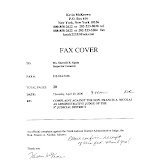
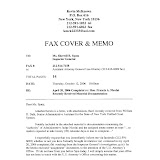
Plaintiff's Lawyer Reinstated After 16-Year Disbarment
The New York Law Journal by Nate Raymond June 17, 2010
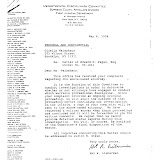
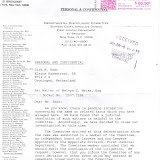
Sixteen years after losing his license, personal injury lawyer Theodore H. Friedman has won his crusade to be reinstated, with the help of a federal judge who first complained about his conduct. Mr. Friedman, 79, once a prominent member of Manhattan's plaintiffs bar, lost his license in 1994 over charges that included giving false testimony after a judge accused him of providing to a jury an exhibit that had not been submitted into evidence. Mr. Friedman said in a statement this week that he is looking forward to returning to practice so long after being disbarred, something he said should "never have happened." "I am well rested and will move on from here and plan to return as soon as possible to trial work," Mr. Friedman said. The Appellate Division, First Department, in a brief order issued Tuesday, accepted the September 2009 recommendation of a departmental disciplinary committee hearing panel that Mr. Friedman be reinstated. The panel rejected a recommendation by staff counsel that Mr. Friedman should not be reinstated because of the severity of his original conduct, his failure to admit his conduct and the possibility that he could repeat his unethical behavior. Mr. Friedman has over the years had the backing of various judges and lawyers in his quest for reinstatement. But after two failed attempts, he received some unlikely assistance from the federal judge who first accused him of submitting evidence to the jury that had not been admitted. Second Circuit Judge Pierre N. Leval in a letter to the chief counsel to the disciplinary committee, called Mr. Friedman's continued disbarment "unfair." "I believe his thirteen years of disbarment have been sufficient punishment," wrote Judge Leval, who declined comment. A lawyer for Mr. Friedman, Paul Grand of Morvillo, Abramowitz, Grand, Iason, Anello & Bohrer, said he believed what "in real measure made the difference" in the panel's decision to reinstate his client was the letter from Judge Leval. Mr. Friedman was also represented by Manhattan lawyer Michael S. Ross.
Mr. Friedman, a Harvard Law School graduate, was a prominent member of New York's personal injury bar and a name partner in Friedman & Eisenstein. His wife is former Manhattan Surrogate Eve Preminger. A referee in 1993 overseeing his disciplinary case called Mr. Friedman "one of, if not the best, trial lawyers in New York." He was a member of the Inner Circle of Advocates and College of Trial Lawyers, and won two cases before the U.S. Supreme Court, according to a 2009 hearing panel report. But in the 1980s, Mr. Friedman was involved in two separate lawsuits that ultimately became the basis of his disbarment. The Manhattan District Attorney's Office in 1987 charged Mr. Friedman with attempting to bribe a potential witness in a wrongful death action against New York City. A jury acquitted him in 1988. Before that, in 1983, Judge Leval, then a district court judge in the Southern District, found that Mr. Friedman "surreptitiously included" an exhibit to be sent to the jury room that had been excluded from evidence in a wrongful death case.
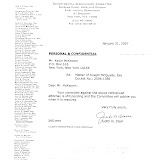
In an affidavit, Mr. Friedman claimed that his co-counsel, Frederick J. Cuccia, accidently sent the exhibit to the jury room thinking it was part of the evidence. But Judge Leval found that Mr. Friedman had not contacted Mr. Cuccia, who was out of the country at the time. In an April 2007 his letter to the First Department disciplinary committee, the judge said Mr. Friedman had "wrongfully offered the court the explanation that Mr. Cuccia had innocently sent in the exhibit." After his 1983 decision, Judge Leval then sent a letter of complaint to the federal court's disciplinary committee, which brought four charges against Mr. Friedman. In a plea deal, Mr. Friedman admitted to one charge that he submitted the affidavit without personal knowledge of the facts. The committee issued a letter of censure in 1986. Both cases then became the subject of an investigation by the First Department's disciplinary committee. Mr. Friedman was accused of 23 counts of professional misconduct, including acts of intentional dishonesty, knowingly filing false and misleading affidavits, and soliciting false testimony from a witness. A special referee, Donald J. Sullivan, in 1993 recommended a two-year suspension after affirming 14 of the counts. Mr. Sullivan sustained counts related to Mr. Friedman's making false statements in an affidavit, but said the committee failed to establish he had put the exhibit in the jury room in the first place. The Appellate Division in 1994 rejected Mr. Sullivan's recommendation and ordered Mr. Friedman disbarred. The court in part appeared to have relied on Judge Leval's 1983 decision, saying Mr. Friedman had "unfairly and reprehensibly cast his own guilt upon a blameless fellow member of the Bar." Matter of Friedman, 196 AD 2d 280. Mr. Friedman has tried at various times to win reinstatement. In 1999, the court denied his motion to modify his disbarment order to a 41/2-year suspension. A hearing panel in 2003 recommended reinstatement on the report of a referee, Thomas A. Demakos. But the Appellate Division also denied that request. Mr. Friedman's 2006 attempt to gain reinstatement was also rejected.
Letters From Judges
His latest effort was made in 2008. Several prominent judges and friends wrote or testified on Mr. Friedman's behalf, often about his public service activities. Ernst Rosenberger, a retired First Department justice who is now of counsel at Stroock & Stroock & Lavan, in a letter said Mr. Friedman had "shown a commitment to worthy public causes," including working with groups seeking Middle East peace and volunteering at a soup kitchen. Also submitted was an April 2007 letter to the disciplinary committee from Judge Leval, who said that although his 1983 decision "was supported by the evidence before me in the post-trial hearing, I believe it would be unfair to Mr. Friedman to continue his disbarment on the basis of my finding." Judge Leval said the Appellate Division's 1994 statement that Mr. Friedman had "cast his own guilt" on his co-counsel "was necessarily predicated on the belief that Mr. Friedman had placed the exhibit in the jury room." Judge Leval said that statement would apparently mean that in researching its decision, the Appellate Division had relied not on Mr. Sullivan's "no doubt different" record but on the judge's earlier conclusion. Judge Leval noted that, unlike in the disciplinary proceedings, Mr. Friedman did not have notice to defend himself in 1983, nor did he have counsel present. The hearing panel's September 2009 report in response to Mr. Friedman's latest petition for reinstatement took note of Judge Leval's letter, saying that while it was clear Mr. Friedman was not disbarred solely on the basis of one issue, the letter was "useful in considering the appropriate disposition" of the petition. At last June's hearing, Mr. Friedman described how he had changed from "resistance to remorse." At first, Mr. Friedman said he fought disbarment because he wanted to remain at the front of the plaintiff's bar and sought to avoid staining his wife's reputation by association. But as the years progressed, Mr. Friedman said his wife did not want him to keep fighting just for her sake. And Mr. Friedman said he came to terms with his misconduct. The First Department panel that ordered Mr. Friedman reinstated included Justices Angela M. Mazzarelli, Richard T. Andrias (See Profile), Karla Moskowiz, Rolando T. Acosta and Dianne T. Renwick. The panel did not discuss the reasons for its action. Nate Raymond can be reached at nraymond@alm.com.
Thursday, June 17, 2010


Wednesday, June 16, 2010
Corrupt Westchester Judge Scarpino OK with Convicted Felon as Trust Fiduciary
- Westchester Surrogate Judge Anthony A. Scarpino OK with Convicted Felon as Trust Fiduciary
- Judge Scarpino ignores any conflict as he used to work for the same Convicted Felon- Banker's Trust Company
- Scarpino, Pfau, Spatz and OCA continue to ignore fraudulent Letters Testamentary
Matter of Estate of Ralph P. Manny
WESTCHESTER COUNTY - Trusts and Estates
New York Law Journal - June 4, 2010
WESTCHESTER COUNTY - Trusts and Estates
New York Law Journal - June 4, 2010
Surrogate Scarpino - PETITIONERS filed the instant proceeding to judicially settle their intermediate account as co-trustees of an irrevocable inter vivos trust established by decedent for the benefit of his great-grandchildren and their issue. Objectants alleged petitioner co-trustees should be surcharged and/or forfeit any commissions they retained for the years in which they did not provide annual statements in compliance with Surrogate's Court Procedure Act §2309(4) and §2312(6). The court stated that even though it had the discretion to disregard minor deviations from the statutory requirements, petitioner co-trustees' complete failure to provide any great-grandchild and his/her parents with the required annual statements for a 20-year period cannot be considered a minor deviation. Therefore, the court ruled that petitioner co-trustees must pay the trust statutory interest, 9 percent per annum, on the commissions improperly taken in 1977, 1978, and from 1982 through 1997.
Decision of Interest
Published in the New York Law Journal 6/4/2010
Matter of Estate of Ralph P. Manny, 1992-1319/B_Decided: May 20, 2010
Surrogate Anthony A. Scarpino
WESTCHESTER COUNTY - Surrogate’s Court
Bleakley Platt, & Schmidt represented: Petitioner - Deutsche Bank AG, New York (formerly Bankers Trust Co.);, Feinstein & Naishtut represented: Objectant — David M. Place. --- Robert L. Byrne, Esq. represented: Objectants — Lauren C. O'Brien, Chrystie O'Brien, John W. Young, Brittany Young, and Zachary H. Place. --- Stephen O'Brien — Objectant, acting Pro Se; and Anne Penachio, Esq. — Guardian Ad Litem for all Infant Great-Grandchildren and Great-Great-Grandchildren of Ralph P. Manny
DECISION AFTER TRIAL
This is a contested proceeding commenced by Deutsche Bank AG, New York (f/k/a Bankers Trust Company ["the Bank"]) and James F. Downey ("Downey" [collectively "petitioners"]) to judicially settle the first intermediate account of the co-trustees of an irrevocable inter vivos trust established by Ralph P. Manny ("decedent") for the benefit of his great-grandchildren and their issue ("Trust"). From November 9 — 17, 2009, a non-jury trial occurred as to the objections filed to the account, which covers the period December 21, 1976 through March 31, 1999 ("accounting period"). The adult objectants who appeared at trial by counsel are Lauren C. O'Brien ("Lauren"), Chrystie O'Brien ("Chrystie"), John W. Young, Brittany Young ("Brittany"), Zachary H. Place, and David M. Place. Stephen O'Brien, Jr. ("Stephen"), the brother of Lauren and Chrystie (collectively "O'Brien siblings"), appeared pro se at the trial. The court also appointed a guardian ad litem ("GAL") for decedent's infant great-grandchildren and great-great-grandchildren, and she filed objections on their behalf and represented their interests at trial.
BACKGROUND
The Trusts Created for Decedent's Three Daughters and Their Issue In 1972, decedent, who died on February 12, 1993, established separate trusts for the benefit of each of his three daughters — Ella Place, Sally Cross and Ann Beck — and their respective "issue" ("Place Trust","Cross Trust" and "Beck Trust", respectively). Each trust contains virtually identical language for the benefit of each daughter's family, differing solely with respect to the identity of current, presumptive and contingent beneficiaries. Also, each trust authorizes the trustees to pay, in quarterly or other "convenient" installments, net income and/or principal, in its "absolute discretion" for the benefit of each daughter and/or her living issue. In 1991, the Bank became sole trustee of each of these trusts, and continued to serve in that capacity through the accounting period. 1
The Subject Trust
In or about August 1976, Downey, then an attorney at the law firm of Webster & Sheffield ("Webster firm"), which handled decedent's legal affairs at that time, developed the idea of creating the Trust as an estate planning tool for decedent in response to pending Congressional legislation known as the "generation-skipping" tax bill (T: 52-68, 72-76, 90-93). On December 21,1976, decedent executed the Trust (Pet. Ex. 2), appointing the Bank and Frederick Van Vechten ("VanVechten"), one of Downey's senior law partners at the Webster firm, as original co-trustees. VanVechten and the Bank served as co-trustees of the Trust until VanVechten's death on January 7, 1991. On January 18, 1991, Downey succeeded VanVechten as co-trustee (Pet. Ex. 108). Article I of the Trust provides (emphasis added): A. The Trustees shall pay, in quarterly or more frequent convenient installments, or apply to or for the benefit of such of [decedent's great-grandchildren and their issue (hereinafter called the "beneficiaries")] as are living at the time of the payment or application * * * so much of the net income as the Trustees may in their absolute discretion consider to be in the best interests of the particular beneficiaries, it being [decedent's] intention that the income need not be equally divided among them; and that the Trustees shall accumulate and add to the principal any balance of the net income not so paid or applied. Without limiting the generality of the foregoing, [decedent] recommends that the Trustees consider using some or all of such income to help defray, in appropriate cases, some of the educational costs of the beneficiaries. B. During the continuance of the [T]rust, the Trustees are authorized to pay or apply from time to time to or for the benefit of a beneficiary such amounts of the principal as the Trustees, in their absolute discretion may determine to be necessary because of an accident to, illness of, or other emergency affecting such beneficiary. Pursuant to Article I(C), the Trust will terminate upon the occurrence of the earlier of the following dates: (i) 21 years after the death of the last surviving grandchild who was living at the time the Trust was created; or (ii) when the last great-grandchild attains the age of 21 — currently projected for 2026. Upon its termination, the Trust's remaining principal must be paid equally to all living great-grandchildren and to the then-living issue of any deceased great-grandchild per stirpes (Pet. Ex. 2; T: 366-369). Also, Article II(B) entitles the trustees to "deduct and retain without court approval" such commissions as may be "allowed from time to time" under applicable New York law.
Decedent's Great-Grandchildren and Great-Great-Grandchildren. At the time he established the Trust, decedent had seven great-grandchildren: the three O'Brien siblings, who are grandchildren of Ella Place, as well as Eva Breneman, Reed Breneman, Aaron Kielhack and Sarah Kielhack, who are grandchildren of Sally Cross. The eldest great-grandchild — Stephen — was born in 1968. Upon decedent's death in 1993, there were 17 great-grandchildren. Currently, there are 22 great-grandchildren (four infants) and 11 great-great-grandchildren (all infants) (T: 548-549).
The Account
The Trust was funded with securities valued at $995,052.00. At the close of the accounting period, the Trust's principal had realized gains in the sum of $3,175,466.61 and realized losses in the sum of $358,814.93. Also, the principal balance on hand had an inventory value of $2,643,058.44 and a market value of $7,102,076.30. There were no distributions of principal during the accounting period (Pet. Ex. 1 — Sch. A, A-1, B, F, D). Additionally, the Trust earned income in the sum of $2,326,212.89, of which $938,898.32 was distributed to or for the benefit of 10 great-grandchildren, including the O'Brien siblings. Also, through August 1995, income totaling $531,002.20 had been accumulated and transferred to principal. Subsequent to August 1995, petitioners retained any income in an investment account they established in or around 1998 ("retained income account"), the aggregate value of which was $406,519.00 at the close of the accounting period. There were income credits of $1,917,108.99, leaving $409,103.90 as the balance of undistributed income remaining on hand (Pet. Ex. 1 — Sch. AA, A-2, C-2, D-1, F).
As to income distributions during the accounting period, in 1977 and 1978, upon learning of financial difficulties of Bonnie Post, the O'Brien siblings' mother, during marital proceedings, VanVechten and the Bank approved of income distributions of $2,000.00 on behalf of each O'Brien sibling (Pet. Ex. 7, 11; GAL Ex. 3-5, 8). Consequently, VanVechten and the Bank made similar income distributions of $2,000.00 on behalf of Eva Breneman, Reed Breneman, Aaron Kielhack and Sarah Kielhack — decedent's four other great-grandchildren alive at that time (Pet. Ex. 8-12; GAL Ex. 6-8). In 1979 and 1980, the only income distributions made were for the benefit of Reed ($2,350.00) and Eva Breneman ($1,375.00) toward their primary school education in Singapore (Pet. Ex. 15, 16, 18-21; GAL Ex. 13-21). Notably, these were the only income distributions made for primary school education costs during the accounting period.
While no income distributions were made in 1981 (Pet. Ex. 1 — Sch. D-1), each year from 1982 through March 1999, income distributions, totaling $921,173.32, were made to or for the benefit of 10 great-grandchildren toward tuition and/or attendant costs (i.e., housing, meals, student activities, etc.) for preparatory ("prep") school and/or college, to wit (Pet. Ex. 1 — Sch. D-1):
Issue of Ella Place (i.e. O'Brien siblings) — $439,685.17, as follows: Stephen received $117,787.32 from 1982 to 1991 (Pet. Ex. 28-30, 35, 43, 46, 55, 56, 59, 60, 76-79, 81, 86, 103-105, 109, 110, 111); Lauren received $112,995.72 from 1985 to 1992 (Pet. Ex. 28, 36, 37, 42, 45, 57, 70, 70B, 73, 84, 85, 89, 90, 95-98, 100, 111, 119); and Chrystie received $208,902.13 from 1988 to 1997 (Pet. Ex. 48-51, 58, 71-73, 75, 86, 87, 92, 93, 101, 102, 105, 106, 127, 130-132, 135, 154-157, 170-173; GAL Ex. 43);
Issue of Sally Cross — $481,488.15, as follows: Eva Breneman received $68,915.00 from 1986 to 1991 (Pet. Ex. 23-25, 35A, 39-41, 44, 63-65, 94, 107, 112); Reed Breneman received $120,458.87 from 1989 to 1996 (Pet. Ex. 61, 68, 79, 83, 113,140, 141); Aaron Kielhack received $75,927.28 from 1989 to 1993 (Pet. Ex. 62, 62A, 67); Sarah Kielhack received $77,045.00 from 1991 to 1995 (Pet. Ex. 132, 133); Douglas Kingham received $85,162.00 from 1993 to 1999 (Pet. Ex. 125, 137, 141, 142, 171-173, 177-180); James Kingham received $52,110.00 from 1995 to 1998 (Pet. Ex. 137, 141, 142, 174, 175); and Campbell Cross received $1,870.00 in 1999.
No income distributions were made to or for the benefit of any issue of Ann Beck during the entire accounting period (Pet. Ex. 1 — Sch. D-1).
Also, throughout the accounting period, VanVechten and petitioners (collectively "the co-trustees") took annual principal and income commissions on a quarterly basis. In this respect, paid commissions charged to principal total $406,523.86, with $56,909.57 paid to VanVechten, $260,104.16 paid to the Bank, and $89,510.13 paid to Downey (Pet. Ex. 1 — Sch. C), while paid commissions charged to income total $302,921.84, with $56,909.57 paid to VanVechten, $191,799.90 paid to the Bank, and $54,212.37 paid to Downey (Pet. Ex. 1 — Sch. C-2). Also, the account shows a total of $40,274.09 in unpaid principal paying commissions sought, pursuant to SCPA 2309(1) and/or SCPA 2312(4)(a), by VanVechten ($6,511.19 [Dec. 26, 1976 — Jan. 1, 1991]), Downey ($10,423.66 [Jan. 18, 1991 — March 31, 1999]), and the Bank ($23,339.24 [Dec. 26, 1976 — Mar. 31, 1999]) (Pet. Ex. 1 — Sch. C-1, H). However, despite the fact that, except for 1979, income distributions were made each year from 1977 through 1999 to or for the benefit of at least one great-grandchild, the co-trustees failed to provide annual statements to any great-grandchild or their parents, as required by SCPA 2309(4) and 2312(6), until 1998.
Additionally, the co-trustees paid fiduciary income taxes of $1,293,093.58 chargeable to principal (New York — $305,243.90; Federal — $987,849.68) and $141,799.34 chargeable to income (New York — $40,390.35; Federal — $101,408.99) (Pet Ex. 1 — Sch. C, C-2).
The Instant Proceeding and Objections
On February 1, 2000, petitioners commenced the instant proceeding to judicially settle their intermediate account as co-trustees, which also encompasses the final account of VanVechten's proceedings as a co-trustee through January 7, 1991. The seven adult objectants — all of whom are members of the Place family — and the GAL (collectively "objectants") allege that the co-trustees abused their discretion and/or breached their fiduciary duty to them in several respects. They further allege that the co-trustees should be surcharged for retaining annual commissions without furnishing the annual statement(s) required by SCPA 2309(4) and 2312(6), and that the Bank should be surcharged for retaining commissions exceeding the minimum compensation awardable under SCPA 2312. In addition, certain objectants challenge the amount of $50,000.00 in counsel fees sought by the law firm of Stroock Stroock & Lavan, LLP ("Stroock firm" [Pet. Ex. 1 — Sch. C-1]) and/or seek removal of petitioners from office. Finally, although unpleaded, objectants allege that the Bank was disqualified to serve as a trustee at the end of the accounting period, due to its 1999 felony conviction under Federal law, and that its failure to inform them of this conviction is grounds for surcharge and/or removal.
At trial, Downey and John P. Genn, III ("Genn"), the Bank's administrative officer for the Trust from November 1998 through the end of accounting period, testified on petitioners' behalf. Petitioners also offered pre-trial examination transcripts of: (i) William J. Wilkie ("Wilkie"), an employee of the Bank for 43 years who was unavailable to testify at trial for medical reasons (Pet. Ex. 196); (ii) Norman C. Cross, Jr., a grandson of decedent (Pet. Ex. 197); and (iii) Ralph P. M. Beck, also a grandson of decedent (Pet. Ex. 196). Stephen and Lauren, as well as Lauren Young, mother of John and Brittany Young, and David L. Place, father of Zachary Place, testified on objectants' behalf. Objectants' also offered the pre-trial examination transcript of Eva Breneman (GAL Ex. 49).
APPLICABLE LAW AND CONCLUSIONS
It is well settled that in a contested accounting proceeding, this court has the power to initiate an inquiry into all pertinent items of the account before approving them (Matter of Stortecky v. Mazzone, 85 NY2d 518 [1995]; Matter of Hawwa A., 9 AD3d 362 [2004]). Upon reviewing the account and hearing the parties' proof, SCPA 2211(1) grants this court broad discretion to make "such order or decree as justice shall require" (Matter of Acker, 128 AD2d 867 [1987]). Applying the foregoing rule upon a finding of misfeasance by a fiduciary, the court may fashion any remedy it deems necessary to redress a successful objectant, including, but not limited to: (i) surcharge; (ii) denial of all or some commissions; and (iii) imposing interest on a surcharge. When it is warranted, the court may impose all of the foregoing remedies (Matter of Kaskawits, 25 Misc 3d 1228[A], 2009 NY Slip Op 52317[U] [2009]).
The Bank's Felony Conviction
Although not originally pleaded in any objections filed, objectants contend that the Bank should be surcharged or denied commissions and/or removed as trustee for continuing to act as a fiduciary after it was named, in March 1999, in a federal felony information and pleaded guilty, in July 1999, to three counts of unlawful diversion of unclaimed funds (see 18 USC §§1005, 2). Initially, in view of the thorough treatment the parties' have given this issue in their post-trial submissions, the court will deem all objections to be amended to include the foregoing allegations (CPLR 3025[c]; see AVR Acquisition Corp. v. Schorr Bros. Develop. Corp., 270 AD2d 372 [2000]). However, the court disagrees with objectants' contention, and denies their requests for relief against the Bank. Although the court could have removed the Bank as co-trustee of the Trust on the basis of its felony convictions (see SCPA 719[6]), whether to do so is discretionary with the court (Matter of Tissot, NYLJ, Aug. 27, 1997, at 24, col. 5 [Sur Ct, Nassau]). Generally, the test is whether the conduct for which the fiduciary has been convicted is deemed to endanger the estate or trust or seriously impede the administration thereof (Matter of Strickland, NYLJ, July 23, 2001, at 36, col. 5 [Sur Ct, Suffolk]; Matter of Tissot, supra; see also Matter of Braloff, 3 AD2d 912 [1957], affd 4 NY2d 847 [1958]).
Here, the court finds that surcharge and/or denial of commissions is not warranted. The Bank was not a convicted felon until its sentencing on July 26, 1999 — after the final date of its account in this proceeding. Further, on December 2, 1999, less than six months after its conviction, New York State issued a certificate of relief from disabilities, specifically relieving the Bank of "forfeitures, disabilities, or bars" under SCPA 707(1)(d) (Pet. Ex. 191). Additionally, by order dated May 19, 2000, the Supreme Court, New York County granted the Bank's application pursuant to Banking Law §154, seeking to substitute its affiliate, Bankers Trust Company of New York, in its place to administer its fiduciary accounts (Pet. Ex. 190, 192).
Abuse of Discretion / Breach of Duty Objectants' numerous allegations of the co-trustees' breach of fiduciary duty and/or abuse of discretion can be summarized as follows: Abuse of Discretion : (i) the co-trustees operated the Trust in an "arbitrary and capricious" manner and/or "without any set plan of administration", especially when they stopped making "sprinkle" payments of any income after 1978 (Objections — Lauren/Chrystie & GAL: # 3; Objections — Stephen: # 8); (ii) the co-trustees refused to honor some reasonable requests for income distributions for educational purposes by narrowly interpreting Article I(A) of the Trust to limit distributions solely for prep school and/or college costs, and they misconstrued decedent's intent with regard to "equality of payments" (Objections — Lauren/Chrystie & GAL: # 1; Objections — Stephen: # 2); and (iii) the co-trustees denied all reasonable requests for distributions of principal under the "accident/illness/emergency" provisions of Article I(B) of the Trust, particularly Stephen's request attendant to his 1994 auto accident, Lauren Young's 1997 request attendant to severe burns sustained by Brittany, and Bonnie Post's 1998 request attendant to certain medical issues Chrystie had incurred (Objections — Lauren/Chrystie & Objections — GAL: # 2; Objections — Stephen: # 3). Breach of Duty : (i) the co-trustees improperly assessed the requests of different beneficiaries by "disparate standards", especially by favoring members of the Cross family over members of the Place family (Objections — Lauren/Chrystie & GAL: # 6; Objections — Stephen: # 9); and (ii) the co-trustees retained excessive income, thereby generating unnecessary Federal and New York state fiduciary income taxes and improperly increasing their commission base, instead of making income distributions (Objections — Lauren/Chrystie & Objections — GAL: # 4, 10; Objections — Stephen: # 1, 5, 11).
Abuse of Discretion - A party who alleges that a trustee has abused its absolute discretion with respect to requests for trust invasions bears the burden of proving such abuse of discretion (see Matter of Snow, 136 Misc 771 [1930], affd 232 App Div 655 [1931]). In such circumstances, "[t]o determine whether a trustee's distribution of trust assets was proper, the settlor's intent controls," as determined from the unambiguous language of the trust instrument itself (Matter of Wallens, 9 NY3d 117, 122 [2007]; see Matter of Chase Manhattan Bank, 6 NY3d 456 [2006]; Matter of Flyer, 23 NY2d 579, 584 [1969]; Matter of Stillman, 107 Misc 2d 102, 105 [1980]). A court will not interfere with the trustee's actions unless the trustee, in exercising or failing to exercise the stated discretionary power, has acted: (i) dishonestly; or (ii) with an improper, even though not dishonest, motive; or (iii) beyond the bounds of reasonable judgment; or (iv) in a manner where the trustee has failed to use its judgment (Restatement [Second] of Trusts §187, comment e; see Matter of Stillman, 107 Misc2d at 110; see also Matter of Sanders, 158 Misc 2d 606, 608 [1991]; Matter of Carter, 15 Misc 2d 599, 601 [1958]; Matter of Riddle, NYLJ, Nov. 21, 1994, at 29, col. 6 [Sur Ct, New York]). In the instant case, the court concludes that the record is devoid of any evidence that the co-trustees acted dishonestly, or with an improper motive, or beyond the bounds of reasonable judgment, or in a manner where they failed to use their judgment in any respect in administering the Trust during the accounting period (Restatement [Second] of Trusts §187, comment e; Matter of Stillman, 107 Misc 2d at 110). Specifically, Genn testified that the Bank's general procedure for handling a request for distribution was as follows: (i) if necessary, the administrative officer would request additional financial information and/or documents in support of the request from the beneficiary requesting the distribution; (ii) the administrative officer would prepare an in-house memorandum, which usually included a summary of the Trust's history, its value and estimated income, previous distributions, the pertinent trust provisions, and a recommendation on the request; and (iii) the Bank's Discretionary Payments Group ("DPG"), comprised of three senior trust department members, would review the memorandum and determine whether to grant, modify, or deny the requested distribution (PTT — T: 84-87, 115-118, 149-150, 351-352, 416; T: 333-337). Downey would routinely consult with the Bank on all matters affecting the Trust, and would usually refer to the Bank any requests for distributions by or on behalf of any great-grandchildren (T: 96-97). As to the Trust's creation, according to Downey, decedent intended to ensure that each of his great-grandchildren would have a "chance at a good education" and receive "a substantial lump sum gift" after all of them had been properly educated (Pet. Ex. 4; T: 93-94). From the Trust's creation, consistent with decedent's intentions and the terms of Article I(A), the Bank and VanVechten adopted a "policy" to administer the Trust to produce sufficient income to provide to any great-grandchild the opportunity to attend prep school and college. This policy, of which Downey was fully aware from its inception, did not include distributions for primary or secondary school education otherwise available through public school systems, where appropriate (Pet. Ex. 4; T: 77-80, 85-86). In implementing this policy, the record reflects that the co-trustees consistently monitored the Trust's portfolio to ensure the availability of sufficient income to pay for prep school and college costs for any great-grandchild who reached that level of education during the accounting period (Pet. Ex. 13, 15, 32, 38, 90, 129, 136, 146, 148, 169, 176). It further reflects that, after August 1995, petitioners retained / invested excess income and, ultimately, created the accumulated income account to ensure that income was readily available not only for those great-grandchildren in prep school or college at that time but also for the benefit of those great-grandchildren who would be attending prep school and/or college prospectively (Pet. Ex. 136, 182; GAL Ex. 38, 40, 41, 44). In reviewing the co-trustees' distributions of income, the record reflects that before any great-grandchildren were old enough to attend prep school or college, $2,000.00 was distributed for the benefit of each great-grandchild alive at that time, including the three O'Brien siblings (Pet. Ex. 7-12; GAL Ex. 3-8). Also, the only income distributions made during the entire accounting period for primary school education costs ($3,725.00) were made in 1979 and 1980 for the benefit of two Cross great-grandchildren living in Singapore at that time (Pet. Ex. 15, 16, 18 — 21; GAL Ex. 13-21). Again, these distributions were made before any great-grandchildren had reached prep school age.
The record further reflects that, prior to VanVechten's death, the co-trustees denied only two requests for income distributions pertaining to educational purposes, to wit: (i) in 1998 and 1989, requests for $8,000.00 in costs attendant to an educational camp Chrystie had attended each summer were denied because Chrystie was not yet officially enrolled in prep school or college when she attended those camps (Pet. Ex. 52-55, 69); and (ii) Stephen's 1989 request for the tuition balance ($1,920.00) attendant to a summer school class abroad was denied, since the "demands on the [T]rust" at that time mitigated against payment of costs for summer school programs (Pet. Ex. 76, 77). Subsequently, petitioners denied Chrystie's 1995 request to have the Trust pay any taxes incurred on the Trust income applied for her benefit, on the basis that it was the beneficiary's personal responsibility to pay such taxes (Pet. Ex. 130, 131, 134, 135). Thus, on all applicable occasions, the co-trustees acted consistently with their policy in administering the Trust, and neither Chrystie nor Stephen can claim any prejudice or harm from the foregoing decisions, given the significant amounts of Trust income each received toward their respective prep school and college educations during the accounting period (Pet. Ex. 1 — Sch. D-1). The record also establishes that in November 1991, Lauren Young made a request for reimbursement of pre-school tuition ($3,000.00) on behalf of her son, John Young (Pet. Ex. 5; GAL Ex. 26), and David L. Place made a request for an income distribution of $2,500.00 per month for the benefit of Zachary Place on account of their family's financial difficulties at that time (GAL Ex. 28). In January 1992, after discussions with the Bank's officials (Pet. Ex. 6; GAL Ex. 23), Downey sent an "introductory" letter to all great-grandchildren of decedent, copying their parents and grandparents (Pet. Ex. 4, 114). Therein, he carefully explained the Trust's genesis and the co-trustees' policy of limiting any distributions of income therefrom for prep school and college, and reiterated the financial reasons for not permitting income distributions for costs attendant to pre-school or primary school prospectively, as many great-grandchildren were fast approaching prep school and/or college attendance at that time (Pet. Ex. 4, 114; SOB Ex. 10; GAL Ex. 31). From 1992 through 1995, Downey received several inquiries from or on behalf of Place and Cross great-grandchildren as to the prospective use of Trust income and/or the implementation of a "policy" for post-college education purposes, including law school (Pet. Ex. 115, 122, 124, 138; GAL Ex. 34). After extensive internal discussions about the viability of these requests and the Trust's prospective ability to continue to provide prep school and college educations to those great-grandchildren who had yet to attain prep school age (Pet. Ex. 118, 121, 123, 126, 143; GAL Ex. 32, 36), petitioners declined to alter their existing policy until a post-college education scenario actually arose (Pet. Ex. 124, 144). In September 1997, a request was made for annual income distributions from the Trust of $10,000.00 each to six Place great-grandchildren, including the O'Brien siblings, Zachary Place, and David M. Place (Pet. Ex. 152, 159-161; SOB Ex. 28, 29). In response, Downey again wrote to all great-grandchildren, copying their parents and grandparents, in which he described the financial status of the Trust at that time (i.e., market value in excess of $5.4 million, producing $125,000.00 in income annually), and projected that as many as eight great-grandchildren were going to need Trust income for prep school and/or college costs from 2004 through 2011 (Pet. Ex. 162; SOB Ex. 7). In sum, Downey reiterated the enforcement of the existing policy, "[w]ithout ruling out a possible change of policy in the future" (Pet. Ex. 162; SOB Ex. 7). Clearly, the record establishes that the co-trustees administered the Trust well within the parameters of the language in Article I(A). More particularly, once Stephen — the eldest great-grandchild — was old enough to attend prep school, the co-trustees not only implemented their policy of limiting income distributions to prep school and college costs consistently, but also adhered to a standard process in gathering information and reviewing the applicable circumstances under which each request for distribution was made (see Restatement [Second] of Trusts §187, comment h). Accordingly, to the extent that the objectants allege that the co-trustees' denials of any requests for distributions were "arbitrary and capricious" and/or that they operated the Trust "without any set plan of administration," their objections are dismissed. For similar reasons, Stephen's request for a construction of the Trust instrument to direct petitioners to pay income for purposes other than prep school and/or college costs is also denied. As to petitioners' rejection of requests for principal distributions under the "accident/illness/emergency" provision of Article I(B), the record reflects that on the three occasions cited in the parties' objections, petitioners acted well within the bounds of their discretion in denying principal distributions from the Trust. Specifically, in April 1994, Stephen requested a distribution of $7,434.00 from the Trust to cover medical expenses he had sustained in a one-car accident three months earlier (Pet. Ex. 128; SOB Ex. 11). At the Place Trust trial, Stephen did not recall if he ever received a response his request (PTT-T: 627-628). Three years later, he requested that petitioners distribute $7,070.10 to him from the Trust "for payment of medical expenses" in connection with his 1994 accident. Petitioners rejected this request (SOB Ex. 25, 30). In October 1997, Jonathan Manny Place, Stephen's uncle ("Jonathan"), contacted the Bank on Stephen's behalf and requested $12,000.00 from the Trust for various expenses Stephen had incurred as a result of his 1994 accident, including $3,415.00 in unpaid medical bills (SOB Ex. 19). On October 23, 1997, the Bank informed Jonathan that, in light of the co-trustee's policy of using the Trust solely for educational purposes, it would consider Stephen's request under the Place Trust, rather than the Trust (SOB — Ex. 26). In November 1997, the Bank approved a distribution to Stephen of $3,415.00 from the Place Trust for "out of pocket" medical expenses, but denied reimbursement for other expenses, citing Stephen's failure to maintain proper insurance to cover those other expenses at the time they were incurred (SOB Ex. 30, 31). Similarly, the requests made on behalf of objectants Brittany and Chrystie, respectively, although initially presented to petitioners, were ultimately reviewed by the Bank as sole trustee of the Place Trust, and, thereupon, partial distributions were made as follows: (i) in July 1997, the Bank approved of a $13,740.00 payment to Lauren Young, covering all requested expenses incurred in connection with Brittany's burn accident, except for lost wages ($5,525.00) and an unnamed miscellaneous expense ($235.00) (PTT-Pet. Ex. 68, 69); and (ii) in July 1998, the Bank approved of $4,259.00 for legal fees attendant to Bonnie Post becoming guardian for Chrystie and $5,377.00 for expenses incurred during Chrystie's hospitalization, while rejecting payment of $2,367.00 for unspecified items deemed "inappropriate" (GAL Ex. 33; PTT — Pet. Ex. 93).
In short, objectants have failed to establish that petitioners' denial of the subject requests for principal distributions under the Trust's "accident/illness/emergency" provisions prejudiced them in any way, and they have failed to submit any evidence in support of their claim that these transactions amounted to an abuse of discretion by petitioners in their administration of the Trust (see Matter of Winston, 39 AD3d 765 [2007]; Matter of Holstein, 38 AD3d 1333 [2007]). Accordingly, Objections — Lauren/Chrystie and Objections — GAL: # 1, 2, and 3, and Objections — Stephen: # 2, 3 and 8 are hereby dismissed.
Breach of Fiduciary Duty
It is well settled that "'a fiduciary owes a duty of undivided and undiluted loyalty to those whose interests the fiduciary is to protect.' * * * 'This is a sensitive and "inflexible rule of fidelity, barring not only blatant self-dealing, but also requiring avoidance of situations in which a fiduciary's personal interest possibly conflicts with the interest of those owed a fiduciary duty'" (Matter of Wallens, 9 NY3d at 122, quoting Birnbaum v. Birnbaum, 73 NY2d 461, 466 [1989]; see Matter of Rothko, 43 NY2d 305 [1977]; Matter of Gould, NYLJ, Oct. 21, 2002, at 26, col. 6 [Sur Ct, Nassau]). Additionally, a trustee has a duty to administer a trust in a manner that is impartial with respect to the various beneficiaries of the trust, requiring that: (a) in investing, protecting and distributing the trust estate, and in other administrative functions, the trustee must act impartially, with due regard for the diverse beneficial interests created by the terms of the trust; and (b) in consulting and otherwise communicating with beneficiaries, the trustee must proceed in a manner that fairly reflects the diversity of their concerns and beneficial interests (Restatement [Third] of Trusts §79). The court finds no evidence in the record that the co-trustees breached their fundamental duty of loyalty to objectants by self-dealing. More particularly, objectants' contentions that the co-trustees generated Federal and New York state fiduciary income taxes unnecessarily instead of making distributions to the beneficiaries is wholly unsupported by the record. In this respect, objectants utterly failed to refute petitioners' evidence that any fiduciary taxes incurred and paid from principal ($1,293,093.58) were a result of capital gains generated upon the sale of successful investments. Similarly, objectants failed to establish that any fiduciary taxes incurred and paid from income through August 1995 ($141,799.34) were not the direct result of the co-trustees' compliance with the express directives in Article I(A) of the Trust to retain undistributed income. Also, objectants do not present any evidence to refute petitioners' proof that after August 1995, no additional taxes were incurred and/or paid from income, due to petitioners' investment of any retained income in tax-free vehicles and, ultimately, their establishment and administration of the accumulated income account. To the extent that the objectants allege that the co-trustees gave "preferential treatment" to members of the Cross family regarding income distributions for education, their objections are dismissed. This contention is belied by the fact that, of the nearly $939,000.00 in income distributed during the accounting period, three Place great-grandchildren (i.e., the O'Brien siblings) received only $40,000.00 less than seven Cross great-grandchildren. Moreover, Chrystie received nearly $80,000.00 more than any member of the Cross family, and while all three O'Brien siblings were reimbursed for virtually all of their prep school and college costs, two members of the Cross family — Aaron Kielhack and Sarah Kielhack — received no distributions for their respective education until each attended college (Pet. Ex. 1 — Sch. D-1). Finally, the record is devoid of any additional evidence sustaining this allegation (see Matter of Winston, 39 AD3d 765, supra; Matter of Holstein, 38 AD3d 1333, supra). Accordingly, Objections — Lauren/Chrystie and Objections — GAL: # 4, 6 and 10, and Objections — Stephen: # 1, 5, 9 and 11 are hereby dismissed.
Retained Commissions Without Statements — SCPA 2309(4) and 2312(6)
Objectants contend that the co-trustees should be surcharged and/or forfeit any commissions they retained for the years in which they did not provide annual statements to them in compliance with SCPA 2309(4), SCPA 2312 (6) and/or CPLR 8005 (Objections — Lauren/Chrystie & Objections — GAL: # 5; Objections — Stephen: # 4). In its Decision and Order dated May 28, 2002 (see Matter of Manny, NYLJ, June 10, 2002, at 37, col. 1), this court granted certain objectants' motion for summary judgment, determining that the co-trustees had failed to send out annual statements pursuant to SCPA 2309(4) and/or 2312(6) to all beneficiaries of the Trust entitled thereto, and ordered a hearing on the appropriate surcharge, if any, to be imposed. The facts on this issue are undisputed: (i) the co-trustees took commissions in each year in which such commissions were earned throughout the accounting period; (ii) until 1998, no great-grandchild or his/her parent(s) received annual statements pursuant to SCPA 2309(4) and/or 2312(6); (iii) except for 1981, income distributions were made from the Trust each year to or for the benefit of at least one great-grandchild; and (iv) for 1977 and 1978 and from 1982 through 1997, income distributions were made from the Trust each year to or for the benefit of at least one of the O'Brien siblings, who are the only objectants herein who received income distributions from the Trust prior to 1998. Pursuant to SCPA 2309(4) and 2312(6), an individual and/or corporate trustee, respectively, may retain commissions during the year in which such commissions are earned, provided that such trustee "furnishes annually * * *, to each beneficiary currently receiving income, and to any other beneficiary interested in the income and to any person interested in the principal of the trust who shall make a demand therefor, a statement showing the principal assets on hand on that date, and at least annually or more frequently if the trustee so elects, a statement showing all his receipts of income and principal during the period with respect to which the statement is rendered including the amount of any commissions retained and the basis upon which such commissions were computed." However, as to inter vivos trusts, during the grantor's lifetime, the trustee is required to furnish such statements only to "beneficiaries currently receiving income" (CPLR 8005). Thus, except for 1981, from 1977 until decedent's death in February 1993, the co-trustees were entitled to retain commissions as long as they provided annual statements required by SCPA 2309(4) and/or 2312(6) to any great-grandchild and/or his/her parent(s) on whose behalf income distributions were made (CPLR 8005). However, under the plain language of SCPA 2309(4) and/or 2312(6), the co-trustees improperly took commissions in 1977, 1978, and from 1982 through 1997 because they failed to provide any O'Brien sibling who received income distributions during those years and/or his/her parents with the annual statements required by SCPA 2309(4) and/or 2312(6) in order to take commissions without prior court approval. "In paying commissions to itself without prior court approval, a * * * trustee acts at its peril, since it is subject to liability for interest on commissions improperly taken" (Matter of Hawwa A., 9 AD3d 362, 364, supra). Although it appears that the court has discretion to disregard relatively minor deviations from the statutory requirements (Matter of Collins, 36 AD3d 1191 [2007]), the co-trustees' complete failure to provide any great-grandchild and/or his/her parent(s) with the required annual statements for a 20-year period cannot be considered such a minor deviation. Therefore, the co-trustees — including VanVechten's estate — must pay the Trust statutory interest (i.e., 9 percent per annum) on the commissions improperly taken in 1977, 1978, and from 1982 through 1997 (Matter of Hawwa A., 9 AD3d at 364; Matter of Prankard, 245 AD2d 566 [1997]). Such interest shall be calculated from the respective dates of each such improper commission payment to the date that petitioners' account was filed (i.e., February 1, 2000). Objectants' claim that the co-trustees should forfeit any commissions for those years or any other commissions sought is without merit. Accordingly, Objections — Lauren/Chrystie and Objections — GAL: # 5, and Objections — Stephen: # 4 are sustained to the extent indicated, supra.
Objectants contend that the co-trustees should be surcharged and/or forfeit any commissions they retained for the years in which they did not provide annual statements to them in compliance with SCPA 2309(4), SCPA 2312 (6) and/or CPLR 8005 (Objections — Lauren/Chrystie & Objections — GAL: # 5; Objections — Stephen: # 4). In its Decision and Order dated May 28, 2002 (see Matter of Manny, NYLJ, June 10, 2002, at 37, col. 1), this court granted certain objectants' motion for summary judgment, determining that the co-trustees had failed to send out annual statements pursuant to SCPA 2309(4) and/or 2312(6) to all beneficiaries of the Trust entitled thereto, and ordered a hearing on the appropriate surcharge, if any, to be imposed. The facts on this issue are undisputed: (i) the co-trustees took commissions in each year in which such commissions were earned throughout the accounting period; (ii) until 1998, no great-grandchild or his/her parent(s) received annual statements pursuant to SCPA 2309(4) and/or 2312(6); (iii) except for 1981, income distributions were made from the Trust each year to or for the benefit of at least one great-grandchild; and (iv) for 1977 and 1978 and from 1982 through 1997, income distributions were made from the Trust each year to or for the benefit of at least one of the O'Brien siblings, who are the only objectants herein who received income distributions from the Trust prior to 1998. Pursuant to SCPA 2309(4) and 2312(6), an individual and/or corporate trustee, respectively, may retain commissions during the year in which such commissions are earned, provided that such trustee "furnishes annually * * *, to each beneficiary currently receiving income, and to any other beneficiary interested in the income and to any person interested in the principal of the trust who shall make a demand therefor, a statement showing the principal assets on hand on that date, and at least annually or more frequently if the trustee so elects, a statement showing all his receipts of income and principal during the period with respect to which the statement is rendered including the amount of any commissions retained and the basis upon which such commissions were computed." However, as to inter vivos trusts, during the grantor's lifetime, the trustee is required to furnish such statements only to "beneficiaries currently receiving income" (CPLR 8005). Thus, except for 1981, from 1977 until decedent's death in February 1993, the co-trustees were entitled to retain commissions as long as they provided annual statements required by SCPA 2309(4) and/or 2312(6) to any great-grandchild and/or his/her parent(s) on whose behalf income distributions were made (CPLR 8005). However, under the plain language of SCPA 2309(4) and/or 2312(6), the co-trustees improperly took commissions in 1977, 1978, and from 1982 through 1997 because they failed to provide any O'Brien sibling who received income distributions during those years and/or his/her parents with the annual statements required by SCPA 2309(4) and/or 2312(6) in order to take commissions without prior court approval. "In paying commissions to itself without prior court approval, a * * * trustee acts at its peril, since it is subject to liability for interest on commissions improperly taken" (Matter of Hawwa A., 9 AD3d 362, 364, supra). Although it appears that the court has discretion to disregard relatively minor deviations from the statutory requirements (Matter of Collins, 36 AD3d 1191 [2007]), the co-trustees' complete failure to provide any great-grandchild and/or his/her parent(s) with the required annual statements for a 20-year period cannot be considered such a minor deviation. Therefore, the co-trustees — including VanVechten's estate — must pay the Trust statutory interest (i.e., 9 percent per annum) on the commissions improperly taken in 1977, 1978, and from 1982 through 1997 (Matter of Hawwa A., 9 AD3d at 364; Matter of Prankard, 245 AD2d 566 [1997]). Such interest shall be calculated from the respective dates of each such improper commission payment to the date that petitioners' account was filed (i.e., February 1, 2000). Objectants' claim that the co-trustees should forfeit any commissions for those years or any other commissions sought is without merit. Accordingly, Objections — Lauren/Chrystie and Objections — GAL: # 5, and Objections — Stephen: # 4 are sustained to the extent indicated, supra.
Commissions and Reasonable Compensation — SCPA 2312
Objectants allege that the Bank should be surcharged for taking commissions at the rate allowable to corporate trustees under SCPA 2312, and since they are only entitled to commissions at the rate set forth in SCPA 2309, they have understated the principal and income on hand for the subject accounting period (Objections — Lauren/Chrystie & Objections — GAL: # 7 and 8; Objections — Stephen: # 6 and 10). At both the Place Trial and the subject trial, Genn testified that the Bank provided in-house administrative, investment and tax services in the following manner: (i) as for administrative matters, the Bank was responsible for knowing and carrying out the terms of the Trust, the collection and management of assets, the retention of records, corresponding with counsel in terms of legal issues, corresponding with the beneficiaries; (ii) as for investment matters, the Bank was responsible for identifying appropriate assets in the Trust for sales, raising cash, and ensuring that the trust generated sufficient income for distribution to the beneficiaries; and (iii) as to tax matters, the Bank was responsible for the preparation of annual fiduciary tax returns and tax letters, or K-1 forms, which are provided to beneficiaries for their individual tax liability (PTT-T:183-186, 201-206; T: 334-335, 351). Genn also testified to the Bank's role in retaining and investing excess income and the creation / administration of the retained income account subsequent to August 1995 (T: 358-362). He further testified as to the various rates used by the Bank during the accounting period, as well as the Bank's elimination of a "paying out" commission in 1992 upon its increase in its annual commission rate, and testified that the Bank's corporate commission rates were comparable to those he was familiar with in the industry (PTT-T:178-183, 188-189; T: 339-350, 362-364). Pursuant to SCPA 2312, for trusts with principal exceeding $400,000, a corporate trustee is entitled to "reasonable" commissions, if the trust instrument does not specifically set forth a different rate of compensation, or contains only general language as to commissions allowed by law (SCPA 2312[2]). In reviewing the reasonableness of such commissions charged, absent a surcharge, a corporate trustee is entitled, at a minimum, to compensation equal to that of an individual trustee's commissions under SCPA 2309 (SCPA 2312[4]). In Matter of Prankard (187 Misc 2d 566, 578-579 [2000]), this court determined that in a contested proceeding, when analyzing the "reasonableness" of a corporate trustee's commissions retained pursuant to SCPA 2312, the court should consider the following criteria, where applicable: (1) the size of the trust; (2) the responsibilities involved; (3) the character of the work involved; (4) the results achieved; (5) the knowledge, skill, and judgment required and used; (6) the time and services required; (7) the manner and promptness in performing its duties; (8) any unusual skill or experience of the trustee; (9) the fidelity or disloyalty of the trustee; (10) the amount of risk involved; (11) the custom in the community for allowance to trustees; and (12) any estimate of the trustee of the value of its services (see also Matter of McDonald, 138 Misc 2d 577, 580 [1988]). Additionally, the court should accord appropriate weight to the trustee's published fee rates within its respective marketplace as a significant factor for consideration (Matter of Prankard, 187 Misc.2d at 579). The corporate fiduciary bears the burden to prove its entitlement to commissions retained in excess of the statutory rate (Matter of Prankard, 245 AD2d 566). Applying the foregoing to the facts of this case, the court finds that the Bank has offered sufficient evidence to establish that it is entitled to "reasonable compensation" under SCPA 2312, to wit: (i) the market value of the Trust grew from $1 million to over $7 million during the accounting period; (ii) the Bank's responsibilities, the character of its work, the results achieved, its knowledge, skills and judgment, and the manner and promptness of performing its duties are all amply demonstrated by this record; (iii) the language of Article II(B) of the Trust instrument permits compensation in accordance with the applicable laws in effect during the accounting period; and (iv) the Bank served as a co-trustee from the Trust's inception. Accordingly, Objections — Lauren/Chrystie and Objections — GAL: # 7 and 8, and Objections — Stephen: # 6 and 10 are hereby dismissed. Additionally, although no objection has been made to the Bank's calculation of its commissions, under its discretion to review the entire account, the court concludes that the Bank has improperly calculated its unpaid principal paying commissions. The Bank seeks $23,339.24 in such commissions [Pet. Ex. 1 — Sch. C-1], as calculated in Schedule H of the Account. Based upon its own calculations, however, the court determines that the Bank is entitled to the reduced amount of $7,169.82 in principal paying commissions. Pursuant to SCPA 2312(4)(a), which refers to SCPA 2309(1), the Bank, as a corporate trustee, would ordinarily be entitled to "a commission from principal for paying out all sums of money constituting principal at a rate of [1 percent ]". At trial, however, Genn testified that effective January 1, 1992, the Bank "waived" its principal "paying out" commissions when it increased its annual commission rate at that time (PTT-T:178-183; T: 334-335, 364-366). Thus, the Bank is entitled to commissions of 1 percent of all money paid from principal from the inception of the Trust through December 31, 1991. The court's review of Schedule C of the Account shows that a total of $716,982.43 was paid from Trust principal through December 31, 1991, and 1 percent of that amount is $7,169.82. Notably, the Bank's calculations would result in more than 3.25 percent commissions on the amount paid from principal through December 31, 1991, and more than 1.37 percent commissions on the total amount paid from principal for the entire accounting period. Therefore, the Bank is directed to amend Schedules C-1 and H of the account in accordance with the foregoing determination.
Counsel Fees
Certain objectants have challenged the propriety of the counsel fees sought by the Stroock firm for legal and professional services that firm performed on petitioners' behalf (Objections — Lauren/Chrystie and Objections — GAL: # 9; Objections — Stephen: # 7). In support of the fee application, the Stroock firm has submitted an affidavit of services from Downey, a retired member of the Stroock firm (22 NYCRR 207.45) and attendant time/billing records. These documents indicate that from March 2, 1999 through March 30, 2000, Downey (44 hours, at an hourly rate of $450.00 per hour) and several associates (nearly 148 hours at an average hourly rate of roughly $135.00 per hour) performed numerous legal services attendant to the instant proceeding, including the preparation of the subject account, ascertaining beneficiaries and whether they were adults or infants, and the service and filing of the appropriate papers and documents, billing $37,351.50 in fees. In December 2000, the Stroock firm received a partial payment from the Trust in the sum of $30,000.00 (Downey Aff. of Servs, at 4-5; Ex. B).
It is settled not only that counsel has the burden of establishing the reasonable value of the legal services for which compensation is sought (Matter of Spatt, 32 NY2d 778 [1973]), but also that the Surrogate bears the ultimate responsibility to decide what constitutes reasonable professional compensation in estate and trust matters (Matter of Stortecky v. Mazzone, 85 NY2d 518 [1995]; Matter of Tendler, 12 AD3d 520 [2004]). In determining the reasonableness of the professional fees sought, the court should consider all relevant factors, including: (i) the size of the trust or trusts; (ii) the difficulty of the questions presented; (iii) the skill required to handle the problems presented; (iv) the professional's experience, ability and reputation; (v) the responsibilities involved; and (vi) the benefit resulting to the trust or trusts from the services rendered (see Matter of Freeman, 34 NY2d 1 [1974]; Matter of Potts, 213 App Div 59, affd 241 NY 593 [1968]). Applying the foregoing to the facts of this case, after due consideration of Downey's affirmation of legal services and the time records submitted therewith, the court approves and allows the sum of $37,351.50, as requested, including the $30,000.00 already paid to the Stroock firm, for all legal services rendered through March 30, 2000. The remaining counsel / professional fees charged by the Stroock firm after March 30, 2000 and all other counsel fee applications emanating from the pre-trial litigation and the instant trial shall be evaluated and fixed upon settlement of petitioners' supplemental accounting or pursuant to application(s) made under SCPA 2110. Accordingly, Objections — Lauren/Chrystie and Objections — GAL: # 9, and Objections — Stephen: # 7 are hereby dismissed.
Remaining Contentions
As for certain objectants' contentions that petitioners should be removed based on the court's findings herein, the court denies that application for the reasons set forth, infra, noting that not every misdeed by a fiduciary warrants removal (see Matter of Duke, 87 NY2d 465 [1996]; Matter of Collins, 36 AD3d 1191 [2007]). For similar reasons, any application for punitive damages is hereby denied. The account shall be amended in accordance with the foregoing determination. This proceeding is restored to the court's calendar of Wednesday, August 4, 2010, at 9:30 a.m., for an all-purpose conference after the matter is called that day. Settle decree. 1. Prior to the subject trial, a separate trial occurred in connection with the Bank's intermediate account, covering the period from May 8, 1991 through March 31, 1999, as sole trustee of the Place Trust ("Place Trust trial"). A written decision following that trial was rendered on March 29, 2010. By stipulation of the parties, portions of the transcript and certain exhibits from the Place Trust trial were incorporated into the record of the subject trial, and will be referenced herein by the notation, " PTT ".
Judge Sanctions Law Firms Over 'Frivolous' Estate Claim
N.J. Judge Sanctions Firms Over Perelman's 'Frivolous' Estate Claim
The New York Law Journal by Mark Fass - June 16, 2010
A New Jersey judge has sanctioned two firms, Paul, Weiss, Rifkind, Wharton & Garrison and Lowenstein Sandler, for pursuing a "frivolous" and "ridiculous" legal claim on behalf of billionaire Ronald Perelman against his 85-year-old ex-father-in-law. Mr. Perelman had alleged that Robert Cohen, the father of Mr. Perelman's ex-wife, Claudia Cohen, who died in 2007, had promised Ms. Cohen that she would receive one half of Mr. Cohen's estate. Superior Court Judge Ellen L. Koblitz ruled that Mr. Perelman's attorneys should have known that the claim was unsupportable.
"No competent attorney could have missed the frivolous nature of this promise claim once the unhelpful testamentary documents were received," Judge Koblitz said in ordering the sanctions last Wednesday. "There was no legal or factual basis for the plaintiffs to proceed with their amended complaint given the evidence they had and the state of the law in New Jersey." Read a transcript of the New Jersey court proceedings. Although not the basis for the sanction, the judge also criticized Paul Weiss, and in particular its former head of litigation, Martin Flumenbaum, for the bare-knuckled tactics the firm employed in pursuing this and other claims against Mr. Cohen. "Counsel for the estate engaged in hard-fought litigation that at times crossed the boundary of appropriate litigation tactics," Judge Koblitz wrote. She said Mr. Flumenbaum's examination of Mr. Cohen, who suffers from Parkinson's, was "harsh and painful." She ordered Paul Weiss and Lowenstein Sandler to pay Mr. Cohen's fees and costs for opposing the claim and set a hearing for July 8 to determine the amount. The defense, led by Wilson, Sonsini, Goodrich & Rosati partner Robert Gold and of counsel Mitchell Epner, has estimated that those fees will total several million dollars. In addition to Mr. Flumenbaum, Paul Weiss' legal team included litigation department chairman Theodore Wells and partner Roberta Kaplan. Lowenstein Sandler's team included Zulima Farber, the former attorney general of New Jersey. Paul Weiss chairman Brad S. Karp said in a statement, "We firmly believe that the representation we provided our clients throughout this case was appropriate in all respects and we intend to appeal the lower court's ruling." Mr. Gold of Wilson Sonsini declined to comment on the case, saying only, "I have great respect for Paul Weiss. I said it all in court." Ms. Farber of Lowenstein did not return a call for comment. Mr. Perelman, an investor whose holdings include a majority share of Revlon, filed the underlying action in 2008 on behalf of his daughter, Samantha, and the estate of Ms. Cohen, whom he divorced in 1994, against Ms. Cohen's father, Robert Cohen, who built up the Hudson County News Company, one of the largest regional magazine wholesalers in the nation. Mr. Perelman sought to enforce Mr. Cohen's alleged promise to his daughter, Claudia, that she would receive one half of his estate. A will signed by Ms. Cohen shortly before her death from ovarian cancer left the majority of her estate, which would include any funds from her father, in trust to Samantha. As executor of Ms. Cohen's will, Mr. Perelman would oversee the trust. Judge Koblitz granted a directed verdict in favor of Mr. Cohen in August 2009 after a seven-week trial.
In a memorandum filed last month, Mr. Cohen argued that Mr. Perelman's counsel should be sanctioned for pursuing the claim. The judge's ruling came in response to that request. Under New Jersey law, the promise would have to have been made before Sept. 1, 1978, when the state barred oral testamentary promises. It would also have had to extend to Ms. Cohen's unborn children. Mr. Perelman's attorneys should have known that there was no evidence of any such promise and that neither Mr. Perelman nor his daughter Samantha, who was not born until 1990, would even testify that such a promise had been made, Mr. Cohen argued. (Mr. Perelman never testified to a "promise," but rather to the "concept" that Mr. Cohen had intended.) Paul Weiss argued, among other defenses, that it had sufficient evidence to advocate the claim and expected to uncover even more. According to a court transcript of last week's hearing, Paul Weiss partner Robert Atkins told the judge, "The sin, if there is one, is that at the end the day we presented insufficient evidence… But the record evidence was that [Mr. Perelman] heard from both Mr. Cohen and his wife and later his former wife on multiple occasions [about] a commitment by Mr. Cohen to divide his estate. Judge Koblitz, ruling from the bench, found that Paul Weiss and Lowenstein Sandler had violated New Jersey Court Rules by filing the amended complaint after receiving documents showing the claim was untenable. "In September 1978, Claudia was 27 years old, unmarried and childless. She did not meet Perelman until 1983," Judge Koblitz wrote. "The testimony of Perelman did not support the promise claim. No other evidence was introduced to support the promise. The changing nature of the purported promise is an additional indication of the frivolous nature of the promise claim." The case is one of at least five lawsuits Mr. Perelman has filed against his former in-laws, four of which have been dismissed. The fifth action, filed in Manhattan Surrogate's Court, also suggests that Mr. Cohen had promised Claudia Cohen one half of his estate. Mark Fass can be reached at mfass@alm.com.
The New York Law Journal by Mark Fass - June 16, 2010
A New Jersey judge has sanctioned two firms, Paul, Weiss, Rifkind, Wharton & Garrison and Lowenstein Sandler, for pursuing a "frivolous" and "ridiculous" legal claim on behalf of billionaire Ronald Perelman against his 85-year-old ex-father-in-law. Mr. Perelman had alleged that Robert Cohen, the father of Mr. Perelman's ex-wife, Claudia Cohen, who died in 2007, had promised Ms. Cohen that she would receive one half of Mr. Cohen's estate. Superior Court Judge Ellen L. Koblitz ruled that Mr. Perelman's attorneys should have known that the claim was unsupportable.
"No competent attorney could have missed the frivolous nature of this promise claim once the unhelpful testamentary documents were received," Judge Koblitz said in ordering the sanctions last Wednesday. "There was no legal or factual basis for the plaintiffs to proceed with their amended complaint given the evidence they had and the state of the law in New Jersey." Read a transcript of the New Jersey court proceedings. Although not the basis for the sanction, the judge also criticized Paul Weiss, and in particular its former head of litigation, Martin Flumenbaum, for the bare-knuckled tactics the firm employed in pursuing this and other claims against Mr. Cohen. "Counsel for the estate engaged in hard-fought litigation that at times crossed the boundary of appropriate litigation tactics," Judge Koblitz wrote. She said Mr. Flumenbaum's examination of Mr. Cohen, who suffers from Parkinson's, was "harsh and painful." She ordered Paul Weiss and Lowenstein Sandler to pay Mr. Cohen's fees and costs for opposing the claim and set a hearing for July 8 to determine the amount. The defense, led by Wilson, Sonsini, Goodrich & Rosati partner Robert Gold and of counsel Mitchell Epner, has estimated that those fees will total several million dollars. In addition to Mr. Flumenbaum, Paul Weiss' legal team included litigation department chairman Theodore Wells and partner Roberta Kaplan. Lowenstein Sandler's team included Zulima Farber, the former attorney general of New Jersey. Paul Weiss chairman Brad S. Karp said in a statement, "We firmly believe that the representation we provided our clients throughout this case was appropriate in all respects and we intend to appeal the lower court's ruling." Mr. Gold of Wilson Sonsini declined to comment on the case, saying only, "I have great respect for Paul Weiss. I said it all in court." Ms. Farber of Lowenstein did not return a call for comment. Mr. Perelman, an investor whose holdings include a majority share of Revlon, filed the underlying action in 2008 on behalf of his daughter, Samantha, and the estate of Ms. Cohen, whom he divorced in 1994, against Ms. Cohen's father, Robert Cohen, who built up the Hudson County News Company, one of the largest regional magazine wholesalers in the nation. Mr. Perelman sought to enforce Mr. Cohen's alleged promise to his daughter, Claudia, that she would receive one half of his estate. A will signed by Ms. Cohen shortly before her death from ovarian cancer left the majority of her estate, which would include any funds from her father, in trust to Samantha. As executor of Ms. Cohen's will, Mr. Perelman would oversee the trust. Judge Koblitz granted a directed verdict in favor of Mr. Cohen in August 2009 after a seven-week trial.
In a memorandum filed last month, Mr. Cohen argued that Mr. Perelman's counsel should be sanctioned for pursuing the claim. The judge's ruling came in response to that request. Under New Jersey law, the promise would have to have been made before Sept. 1, 1978, when the state barred oral testamentary promises. It would also have had to extend to Ms. Cohen's unborn children. Mr. Perelman's attorneys should have known that there was no evidence of any such promise and that neither Mr. Perelman nor his daughter Samantha, who was not born until 1990, would even testify that such a promise had been made, Mr. Cohen argued. (Mr. Perelman never testified to a "promise," but rather to the "concept" that Mr. Cohen had intended.) Paul Weiss argued, among other defenses, that it had sufficient evidence to advocate the claim and expected to uncover even more. According to a court transcript of last week's hearing, Paul Weiss partner Robert Atkins told the judge, "The sin, if there is one, is that at the end the day we presented insufficient evidence… But the record evidence was that [Mr. Perelman] heard from both Mr. Cohen and his wife and later his former wife on multiple occasions [about] a commitment by Mr. Cohen to divide his estate. Judge Koblitz, ruling from the bench, found that Paul Weiss and Lowenstein Sandler had violated New Jersey Court Rules by filing the amended complaint after receiving documents showing the claim was untenable. "In September 1978, Claudia was 27 years old, unmarried and childless. She did not meet Perelman until 1983," Judge Koblitz wrote. "The testimony of Perelman did not support the promise claim. No other evidence was introduced to support the promise. The changing nature of the purported promise is an additional indication of the frivolous nature of the promise claim." The case is one of at least five lawsuits Mr. Perelman has filed against his former in-laws, four of which have been dismissed. The fifth action, filed in Manhattan Surrogate's Court, also suggests that Mr. Cohen had promised Claudia Cohen one half of his estate. Mark Fass can be reached at mfass@alm.com.
Tuesday, June 15, 2010
Imprisoned Ex-NY BigLaw Partner Settles With SEC
Imprisoned Ex-NY BigLaw Partner Settles With SEC
The National Law Journal by Jenna Greene - June 15, 2010
Former Mayer Brown partner Joseph Collins, already sentenced to seven years in prison, has settled final charges with the Securities and Exchange Commission. The judgment against Collins, to which he consented without admitting or denying SEC allegations, doesn't have much sting. He's simply enjoined from violating Section 10(b) of the Securities Exchange Act of 1934. The rule bars the use of manipulative and deceptive practices in the purchase or sale of securities. The SEC originally also sought monetary penalties against Collins. In July 2009, Collins was found guilty by a Manhattan jury on conspiracy, two counts of securities fraud, and two counts of wire fraud in connection to the 2005 collapse of Refco Inc.. He was sentenced to prison in January. The SEC, in its complaint, alleged that Collins aided and abetted a financial fraud by substantially assisting Refco in its failure to disclose hundreds of millions of dollars in related party indebtedness.
Former Mayer Brown partner Joseph Collins, already sentenced to seven years in prison, has settled final charges with the Securities and Exchange Commission. The judgment against Collins, to which he consented without admitting or denying SEC allegations, doesn't have much sting. He's simply enjoined from violating Section 10(b) of the Securities Exchange Act of 1934. The rule bars the use of manipulative and deceptive practices in the purchase or sale of securities. The SEC originally also sought monetary penalties against Collins. In July 2009, Collins was found guilty by a Manhattan jury on conspiracy, two counts of securities fraud, and two counts of wire fraud in connection to the 2005 collapse of Refco Inc.. He was sentenced to prison in January. The SEC, in its complaint, alleged that Collins aided and abetted a financial fraud by substantially assisting Refco in its failure to disclose hundreds of millions of dollars in related party indebtedness.
Monday, June 14, 2010
NY State Judge and Attorney Hit With Sanctions in Federal Case
Tormey, lawyer hit with sanctions over Klim data in civil rights lawsuit
The Syracuse Post-Standard by Jim O'Hara - April 30, 2010
Syracuse, NY - Fifth Judicial District Administrative Justice James Tormey and his state lawyer have been ordered to pay $2,000 for “gross negligence” for using negative information about former Family Court Judge David Klim to try to get a civil rights lawsuit against Tormey dismissed. In a 17-page decision released Thursday, U.S. Magistrate Andrew Baxter concluded Assistant Attorney General Charles Quackenbush – the lawyer representing Tormey and three other local court officials in the lawsuit – should have kept the information confidential as required by a court order or shared it with the other side. The case involves a 2007 lawsuit filed by Bobette Morin, the former chief clerk of Onondaga County Family Court, claiming she was forced out of her job after refusing to help Tormey gather negative information about Klim when Klim was running for state Supreme Court in 2002. The lawsuit claims Tormey then orchestrated a campaign to have former executive assistant John Voninski, Family Court Judge Bryan Hedges and Hedges’ law clerk William Dowling, undermine Morin. They are all named along with Tormey as defendants. They and their lawyer are all liable for the $2,000 sanction. That lawsuit is on hold pending the defense appeal of U.S. District Judge David Hurd’s decision that the defendants were not entitled to immunity. It was the defense motion to have the Morin lawsuit dismissed – rejected by Hurd in June – that touched off the dispute resulting in Baxter’s blunt criticism of the defense. The defense had gotten U.S. Magistrate Gustave DiBianco to issue two orders that any information the defense had generated about Klim should be kept confidential to protect the reputation of Klim, who died in 2006. That information included documentation about Klim lagging behind in his Family Court caseload and his billing the state on one occasion for attending a conference in New York City when the conference was actually held in Albany. Klim acknowledged the error, stated the conference had moved without him realizing that and repaid the state for the trip upon discovering the mistake. When the defense filed papers last year seeking to have Morin’s lawsuit dismissed, some of those Klim-related documents were attached to an affidavit from Tormey in support of the dismissal motion. When Morin’s lawyer, William Frumkin, complained to Hurd, Quackenbush said the documents had been provided to Frumkin as part of the discovery process. That was not true and it led to the matter coming before Baxter for sanctions. Baxter rejected the defense claims they did not know DiBianco’s protective orders covered Klim’s caseload and travel documents. He noted some of the documents were attached to the defense motion to keep the information confidential in the first place. If that information was to be used by the defense, it had to be shared with Morin’s lawyer, Baxter noted. Failure to do so “is an inexcusable violation of Judge DiBianco’s orders that reflects, at least, gross negligence,” Baxter wrote. Baxter noted he was not making any finding about whether Quackenbush intentionally misled Hurd when he claimed the documents had been provided to Frumkin as part of discovery. “However, defense counsel’s various efforts to explain his conduct are troubling to this court and provide no justification for his failure to comply with Judge DiBianco’s discovery orders,” Baxter concluded. Frumkin declined comment Friday. A spokesman for the Attorney General’s Office said the state was reviewing the decision and its options. Tormey’s office said he would not comment.
See background stories:
Former Federal Prosecutor To Pay Penalty in Porn Case
Ex-prosecutor must pay penalty in porn case
The Detroit News by Paul Egan - June 14, 2010
Detroit, MI -- A judge has ordered a former federal prosecutor to pay a $2,000 penalty for mishandling a child pornography case. U.S. District Judge Bernard Friedman said attorney John Freeman broke a local court rule and tried to intimidate the victim's mother when representing Craig Aleo, a former Walled Lake Schools official who was sentenced to 60 years in prison in April for manufacturing child pornography in which he victimized a 4-year-old girl. Freeman, of Troy, filed a motion before Aleo's sentencing in which he asked Friedman to order the prosecutor to seek permission for the victim's mother to speak at the sentencing. Friedman said the lawyer, who worked as an assistant U.S. attorney in Detroit from 2000-07, inaccurately cited the Crime Victim's Rights Act as a basis for his "unwarranted and baseless" request. Freeman also broke a local court rule by failing to seek agreement from prosecutors before filing his motion, the judge said in an order Thursday. Freeman was given 10 days to pay $2,000 to the court clerk. "I'm disappointed that he's imposed sanctions," said Martin Crandall, Freeman's Detroit attorney. "It appears the judge believes there was an inappropriate ulterior motive in John filing his motion, which I respectfully disagree with. "We are looking at our options as to how best to clear this up." In a court filing, Freeman denied trying to intimidate the victim's mother, saying he wanted to "address a potential conflict between (Aleo's) due process rights and a victim's right to be heard at sentencing." The National Association of Criminal Defense Lawyers supported Freeman in opposing the sanctions. Detroit attorney James Feinberg, a representative of the association, said lawyers must be free to zealously and aggressively defend their clients.
The Detroit News by Paul Egan - June 14, 2010
Detroit, MI -- A judge has ordered a former federal prosecutor to pay a $2,000 penalty for mishandling a child pornography case. U.S. District Judge Bernard Friedman said attorney John Freeman broke a local court rule and tried to intimidate the victim's mother when representing Craig Aleo, a former Walled Lake Schools official who was sentenced to 60 years in prison in April for manufacturing child pornography in which he victimized a 4-year-old girl. Freeman, of Troy, filed a motion before Aleo's sentencing in which he asked Friedman to order the prosecutor to seek permission for the victim's mother to speak at the sentencing. Friedman said the lawyer, who worked as an assistant U.S. attorney in Detroit from 2000-07, inaccurately cited the Crime Victim's Rights Act as a basis for his "unwarranted and baseless" request. Freeman also broke a local court rule by failing to seek agreement from prosecutors before filing his motion, the judge said in an order Thursday. Freeman was given 10 days to pay $2,000 to the court clerk. "I'm disappointed that he's imposed sanctions," said Martin Crandall, Freeman's Detroit attorney. "It appears the judge believes there was an inappropriate ulterior motive in John filing his motion, which I respectfully disagree with. "We are looking at our options as to how best to clear this up." In a court filing, Freeman denied trying to intimidate the victim's mother, saying he wanted to "address a potential conflict between (Aleo's) due process rights and a victim's right to be heard at sentencing." The National Association of Criminal Defense Lawyers supported Freeman in opposing the sanctions. Detroit attorney James Feinberg, a representative of the association, said lawyers must be free to zealously and aggressively defend their clients.
Sunday, June 13, 2010
Dave pushing plan to feed lawyers' greed
Dave pushing plan to feed lawyers' greed
The New York Post by BRENDAN SCOTT - June 12, 2010
ALBANY, NY -- Gov. Paterson is quietly planning to hand the state's powerful trial lawyers a massive payday by gutting a two-decade-old cap on legal fees from medical-malpractice awards, The Post has learned. The proposal, which sources believe will be looked upon favorably by the Democratic-controlled Legislature, would raise the attorney's share of malpractice awards by as much as 50 percent, two sources said. The state Trial Lawyers Association has pushed for a fee hike since the current cap was put in place under then-Gov. Mario Cuomo in 1986 to curb a meteoric rise in malpractice-insurance premiums that threatened the state's medical community. The group, which spends about $2 million in Albany each year on campaign donations and lobbying expenses, has demanded the windfall in exchange for its support for a "package" of medical-malpractice legislation that Paterson hopes to get passed before lawmakers leave town, the sources said. "Like many things that happen at the end of session, this is an attempt -- under the rubric of reforming 'med mal' -- to give a present to the trial lawyers," said a person briefed on the proposal. "At a time when everybody else is taking cuts, they've got their hands out," said a second person familiar with the plan. "Give me a break!" Both the Assembly and the Senate are now led by lawyers -- Speaker Sheldon Silver in the Assembly and Majority Leader John Sampson in the Senate. The hike would send millions of dollars in new fees flowing into some of the state's most politically influential personal-injury law firms, including Weitz & Luxenberg, where Silver (D-Manhattan) is employed, and Belluck & Fox, where Sampson (D-Brooklyn) serves "of counsel." It would also be a boon for lawyers at Meyer, Suozzi, English & Klein, the prominent Long Island firm that employs the governor's father, Basil Paterson. Paterson spokesman Morgan Hook declined to comment on the proposal. ''We will not comment on any discussions staff have had about legislation we haven't even drafted yet,'' Hook said Paterson's top counsel, Peter Kiernan, has circulated details of the proposal in the last few days and told interested groups to expect a draft by early next week, a source said. For years, insurance companies, hospitals and doctors have fought any increase, on the grounds that it could hurt victims of malpractice by taking a bite out of their awards. More likely, they say, it would further drive up already sky-high insurance premiums paid by doctors and hospitals. Current law caps attorney fees on a five-tier sliding scale that drops as awards increase. For instance, attorneys can collect up to 30 percent on judgments of less than $250,000 but can claim no more than 10 percent of awards of more than $1.25 million. The new proposal would nearly double each threshold to account for inflation since the cap was enacted 24 years ago, according to an analysis of the plan. It would slash altogether the cap on the top tier, meaning lawyers can claim 15 percent of the biggest awards, instead of the current 10 percent. If approved, lawyers would reap $1.5 million in fees on a $10 million judgment, up from $1 million under the current statute. An award totaling $900,000 would garner $225,000 in legal fees, compared to $180,000 now. brendan.scott@nypost.com
The New York Post by BRENDAN SCOTT - June 12, 2010
ALBANY, NY -- Gov. Paterson is quietly planning to hand the state's powerful trial lawyers a massive payday by gutting a two-decade-old cap on legal fees from medical-malpractice awards, The Post has learned. The proposal, which sources believe will be looked upon favorably by the Democratic-controlled Legislature, would raise the attorney's share of malpractice awards by as much as 50 percent, two sources said. The state Trial Lawyers Association has pushed for a fee hike since the current cap was put in place under then-Gov. Mario Cuomo in 1986 to curb a meteoric rise in malpractice-insurance premiums that threatened the state's medical community. The group, which spends about $2 million in Albany each year on campaign donations and lobbying expenses, has demanded the windfall in exchange for its support for a "package" of medical-malpractice legislation that Paterson hopes to get passed before lawmakers leave town, the sources said. "Like many things that happen at the end of session, this is an attempt -- under the rubric of reforming 'med mal' -- to give a present to the trial lawyers," said a person briefed on the proposal. "At a time when everybody else is taking cuts, they've got their hands out," said a second person familiar with the plan. "Give me a break!" Both the Assembly and the Senate are now led by lawyers -- Speaker Sheldon Silver in the Assembly and Majority Leader John Sampson in the Senate. The hike would send millions of dollars in new fees flowing into some of the state's most politically influential personal-injury law firms, including Weitz & Luxenberg, where Silver (D-Manhattan) is employed, and Belluck & Fox, where Sampson (D-Brooklyn) serves "of counsel." It would also be a boon for lawyers at Meyer, Suozzi, English & Klein, the prominent Long Island firm that employs the governor's father, Basil Paterson. Paterson spokesman Morgan Hook declined to comment on the proposal. ''We will not comment on any discussions staff have had about legislation we haven't even drafted yet,'' Hook said Paterson's top counsel, Peter Kiernan, has circulated details of the proposal in the last few days and told interested groups to expect a draft by early next week, a source said. For years, insurance companies, hospitals and doctors have fought any increase, on the grounds that it could hurt victims of malpractice by taking a bite out of their awards. More likely, they say, it would further drive up already sky-high insurance premiums paid by doctors and hospitals. Current law caps attorney fees on a five-tier sliding scale that drops as awards increase. For instance, attorneys can collect up to 30 percent on judgments of less than $250,000 but can claim no more than 10 percent of awards of more than $1.25 million. The new proposal would nearly double each threshold to account for inflation since the cap was enacted 24 years ago, according to an analysis of the plan. It would slash altogether the cap on the top tier, meaning lawyers can claim 15 percent of the biggest awards, instead of the current 10 percent. If approved, lawyers would reap $1.5 million in fees on a $10 million judgment, up from $1 million under the current statute. An award totaling $900,000 would garner $225,000 in legal fees, compared to $180,000 now. brendan.scott@nypost.com
Wednesday, June 9, 2010
Bogus Court Documents Attorney Gets 50 Years
Florida Ponzi mastermind gets 50-year sentence
Reuters by Tom Brown - June 9, 2010
FORT LAUDERDALE, Florida (Reuters) - South Florida Ponzi scheme mastermind Scott Rothstein was sentenced to 50 years in prison on Wednesday for an investment fraud that bilked clients out of more than $1 billion. The sentence was more than the 40 years federal prosecutors had recommended for Rothstein, a disbarred lawyer who pleaded guilty to racketeering and fraud conspiracy charges in January. He had faced up to 100 years in prison but his lawyer had asked U.S. District Judge James Cohn to give him no more than 30 years. Rothstein, who turns 48 on Thursday, fled to Morocco as his fraud scheme collapsed in late October, apparently lured by the fact that the country has no extradition treaty with the United States. He voluntarily came back to Florida in early November and has been jailed since he surrendered to the FBI in December. Upon his return, Rothstein cooperated with investigators unraveling his investment scheme, which prosecutors cited in asking that he be given a sentence of no more than 40 years. But Cohn tore into Rothstein for his "greed and arrogance" before handing down the tougher sentence, stressing that Rothstein had committed his fraud while serving as a licensed attorney. Part of that fraud involved forging bogus court documents, making it especially egregious to a federal judge, Cohn said. "There can be no conduct more reviled," he said.
"OPULENT LIFESTYLE ... STOLEN MONEY"
Cohn said more than $400 million had been lost to investors through Rothstein's scheme and set an August 20 court date for a restitution hearing. Cohn waived any substantial financial penalty as part of Rothstein's sentencing, saying he had already agreed to forfeit all his assets to help repay some of the more than 400 investors in his scheme. Rothstein has been compared to other Ponzi scheme kingpins including Bernard Madoff, who pleaded guilty to a $65 billion investment fraud and is now serving a 150-year prison sentence. Both men, who had all the trappings of success, prayed on wealthy South Florida investors, among others, who were lured by the promise of a steady income stream and better-than-average return on their investment. Court documents have said Rothstein acted with co-conspirators to carry out the $1.2 billion scheme, creating false bank documents that conned investors. Rothstein, who appeared in court in manacles and wearing a white dress shirt and dark blue pants, apologized for his crime while saying he did not expect forgiveness. "I'm ashamed and I'm embarrassed," he said. A frequent campaign contributor often photographed with local politicians, Rothstein used what Cohn described as "an opulent lifestyle funded by stolen money" to build up the connections aimed at luring rich friends and patrons to investment with him. "It was all about influence, wealth power and influence," Cohn said. Prosecutors have said Rothstein's fraud centered on the sale of shares in fabricated legal settlements to unsuspecting investors since at least 2005 and used new investor money to pay previous investors in the classic Ponzi scheme model. Debra Villegas, the former chief operating officer of Rothstein's Fort Lauderdale law firm, has been charged in the scheme and charges against others may be coming. (Editing by Jane Sutton; Editing by Bill Trott)
Reuters by Tom Brown - June 9, 2010
FORT LAUDERDALE, Florida (Reuters) - South Florida Ponzi scheme mastermind Scott Rothstein was sentenced to 50 years in prison on Wednesday for an investment fraud that bilked clients out of more than $1 billion. The sentence was more than the 40 years federal prosecutors had recommended for Rothstein, a disbarred lawyer who pleaded guilty to racketeering and fraud conspiracy charges in January. He had faced up to 100 years in prison but his lawyer had asked U.S. District Judge James Cohn to give him no more than 30 years. Rothstein, who turns 48 on Thursday, fled to Morocco as his fraud scheme collapsed in late October, apparently lured by the fact that the country has no extradition treaty with the United States. He voluntarily came back to Florida in early November and has been jailed since he surrendered to the FBI in December. Upon his return, Rothstein cooperated with investigators unraveling his investment scheme, which prosecutors cited in asking that he be given a sentence of no more than 40 years. But Cohn tore into Rothstein for his "greed and arrogance" before handing down the tougher sentence, stressing that Rothstein had committed his fraud while serving as a licensed attorney. Part of that fraud involved forging bogus court documents, making it especially egregious to a federal judge, Cohn said. "There can be no conduct more reviled," he said.
"OPULENT LIFESTYLE ... STOLEN MONEY"
Cohn said more than $400 million had been lost to investors through Rothstein's scheme and set an August 20 court date for a restitution hearing. Cohn waived any substantial financial penalty as part of Rothstein's sentencing, saying he had already agreed to forfeit all his assets to help repay some of the more than 400 investors in his scheme. Rothstein has been compared to other Ponzi scheme kingpins including Bernard Madoff, who pleaded guilty to a $65 billion investment fraud and is now serving a 150-year prison sentence. Both men, who had all the trappings of success, prayed on wealthy South Florida investors, among others, who were lured by the promise of a steady income stream and better-than-average return on their investment. Court documents have said Rothstein acted with co-conspirators to carry out the $1.2 billion scheme, creating false bank documents that conned investors. Rothstein, who appeared in court in manacles and wearing a white dress shirt and dark blue pants, apologized for his crime while saying he did not expect forgiveness. "I'm ashamed and I'm embarrassed," he said. A frequent campaign contributor often photographed with local politicians, Rothstein used what Cohn described as "an opulent lifestyle funded by stolen money" to build up the connections aimed at luring rich friends and patrons to investment with him. "It was all about influence, wealth power and influence," Cohn said. Prosecutors have said Rothstein's fraud centered on the sale of shares in fabricated legal settlements to unsuspecting investors since at least 2005 and used new investor money to pay previous investors in the classic Ponzi scheme model. Debra Villegas, the former chief operating officer of Rothstein's Fort Lauderdale law firm, has been charged in the scheme and charges against others may be coming. (Editing by Jane Sutton; Editing by Bill Trott)
Thursday, June 3, 2010
Sex-for-Representation Lawyer Suspended for 6 Months
Panel slaps perv lawyer
The New York Post by DAREH GREGORIAN - June 3, 2010
An elderly lawyer has been suspended for six months for sexual misconduct with one of his clients. The state Appellate Division found that Allen Isaac, 76, had made "unwelcome sexual advances" to a client he propositioned for oral sex. The client, Luisa Esposito, got Isaac to 'fess up -- while secretly recording him -- to having groped her and asking her to service him in return for his work on a personal-injury case. On one of the tapes, which Esposito posted on YouTube, he said all he wanted was "30 seconds of pleasure." Isaac said that at the time, he "believed the touching was consensual." The state disciplinary committee recommended he be disbarred, but the panel of five appellate judges slapped him with a six-month suspension, citing his "age and his long and unblemished record practicing law."
The New York Post by DAREH GREGORIAN - June 3, 2010
An elderly lawyer has been suspended for six months for sexual misconduct with one of his clients. The state Appellate Division found that Allen Isaac, 76, had made "unwelcome sexual advances" to a client he propositioned for oral sex. The client, Luisa Esposito, got Isaac to 'fess up -- while secretly recording him -- to having groped her and asking her to service him in return for his work on a personal-injury case. On one of the tapes, which Esposito posted on YouTube, he said all he wanted was "30 seconds of pleasure." Isaac said that at the time, he "believed the touching was consensual." The state disciplinary committee recommended he be disbarred, but the panel of five appellate judges slapped him with a six-month suspension, citing his "age and his long and unblemished record practicing law."
The New York Law Journal:
76-Year-Old Lawyer Suspended for 6 Months for Sexual Misconduct
Attorney's age and 'long and unblemished record practicing law' cited as factors in setting suspension length
The New York Law Journal by Nate Raymond - June 2, 2010
76-Year-Old Lawyer Suspended for 6 Months for Sexual Misconduct
Attorney's age and 'long and unblemished record practicing law' cited as factors in setting suspension length
The New York Law Journal by Nate Raymond - June 2, 2010
A personal injury lawyer who was caught on tape making unwelcome sexual advances to a client has been suspended from practicing law for six months. Allen H. Isaac, 76, avoided the harsher five-year suspension sought by a hearing panel and total disbarment sought by the Departmental Disciplinary Committee. The committee had charged Isaac with acts of professional misconduct after he allegedly asked a client for oral sex and made inappropriate comments about the judiciary, much of which the client secretly caught on tape. The Appellate Division, 1st Department, cited Isaac's age and "long and unblemished record practicing law" in suspending him for only six months. It rejected Isaac's argument that a public censure was appropriate as his testimony and arguments before the court revealed "a disturbing lack of comprehension as to the depth and extent of his misconduct." Isaac, who was admitted in 1958, declined comment. His lawyer, Richard Godosky of Godosky & Gentile, did not respond to a request for comment. Alan Friedberg, chief counsel for the Departmental Disciplinary Committee, declined comment on Matter of Isaac, M-2029, 2671. The former client who first complained about Isaac, Luisa Esposito, called the six-month suspension "an absolute joke." "The man should have been disbarred, period," she said.
The suspension stems from a 2005 complaint to the Departmental Disciplinary Committee by Esposito, who secretly recorded two phone calls and a meeting in the lawyer's office. Esposito, who is identified only as "L.E." in the 1st Department's decision, later filed two lawsuits against Isaac, both of which were dismissed. The committee, which charged Isaac with acts of professional misconduct, alleged that he made unwanted sexual advances toward Esposito while representing her. He also allegedly bragged to her that he could improperly influence Appellate Division judges and used an epithet to describe one. The committee also charged him with making suggestive comments to his secretary and inappropriately touching her. Isaac admitted to some of the allegations but otherwise denied the charges. Based on the recordings and Isaac's admissions, a referee hearing the case recommended a two-year suspension based on his sexual behavior and a public censure because of his comments about the judiciary. The referee dismissed the other charges. Testimony by Esposito in the hearing was struck after she did not return for the rest of her cross-examination, even after the court issued a subpoena, according to the decision. A hearing panel affirmed the referee's decision regarding Isaac's sexual conduct but dismissed the charges regarding his comments, saying they were not violations of disciplinary rules since they were made in private. The hearing panel recommended a five-year suspension. The disciplinary committee petitioned to sustain all of the charges upheld by the referee and voted to disbar Isaac. He, in turn, moved for just a public censure and to modify the referee's and hearing panel's reports to sustain only one charge of sexual misconduct and one regarding his boasting about influencing judges.
The Appellate Division opted for a six-month suspension.
The panel cited several past cases where attorneys who had had sexual relations with their clients were suspended for two years. It added that shorter suspensions had been imposed where attorneys had made sexually oriented or offensive comments. Here, "[c]onsidering respondent's age and his long and unblemished record in practicing law," the panel concluded, "respondent is suspended for a six-month period." According to a footnote in the decision, Esposito also filed a complaint with the Manhattan district attorney's office, which ultimately did not prosecute the case. She also sued Isaac, his firm, his partner and Isaac's son, but that case was dismissed. Finally, Esposito filed a suit in federal court against, among others, the district attorney, the city and the court system and its disciplinary arm alleging conspiracy and civil rights violations. That action also was rejected.
**************************************
Matter of Isaac
2010 NY Slip Op 04659
Decided on June 1, 2010
Appellate Division, First Department
Per Curiam
Published by New York State Law Reporting Bureau pursuant to Judiciary Law § 431.
This opinion is uncorrected and subject to revision before publication in the Official Reports.
Decided on June 1, 2010
SUPREME COURT, APPELLATE DIVISION
First Judicial Department
David Friedman,Justice Presiding,
James M. Catterson
Leland G. DeGrasse
Sheila Abdus-Salaam
Nelson S. RomÁn, Justices.
M2029 M2671
[*1]In the Matter of Allen H. Isaac, (admitted as Allen Harold Isaac), an attorney and counselor-at-law: Departmental Disciplinary Committee for the First Judicial Department, Petitioner, Allen H. Isaac, Respondent.
Disciplinary proceedings instituted by the Departmental Disciplinary Committee for the First Judicial Department. Respondent, Allen H. Isaac, was admitted to the Bar of the State of New York at a Term of the Appellate Division of the Supreme Court for the First Judicial Department on February 19, 1958.
Alan W. Friedberg, Chief Counsel, Departmental
Disciplinary Committee, New York
(Naomi F. Goldstein, of counsel), for petitioner.
Godosky & Gentile, P.C. (Richard Godosky, of counsel),
Michael Ross, for petitioner.
M-2029, M-2671 (June 9, 2009)
IN THE MATTER OF ALLEN H. ISAAC, AN ATTORNEY
Per Curiam [*2]
Respondent Allen H. Isaac was admitted to the practice of law in the State of New York by the First Judicial Department on February 19, 1958, under the name Allen Harold Isaac. At all times relevant to this proceeding, he maintained an office for the practice of law within the First Judicial Department. An investigation commenced into this matter upon a complaint from a former client, "L.E.", filed with the Departmental Disciplinary Committee on November 25, 2005. Some of the alleged misconduct was secretly recorded by the client during telephone conversations and a meeting in respondent's office. The client provided the Committee with recordings of two telephone conversations and a meeting that took place in respondent's office in October 2005 which were admitted into evidence at the disciplinary hearing. The Committee charged respondent with acts of professional misconduct including making unwelcome sexual advances to L.E. in violation of DR 1-102(A)(7), asking L.E. for oral sex incident to his representation as trial counsel in violation of DR 5-111(B), boasting to L.E. that he is able to influence improperly Appellate Division judges in violation of DR 9-101(C), calling one of the First Department judges a "prick" in violation of DR 1-102 (A)(7) and making suggestive comments to his secretary and inappropriately touching her in violation of DR 1-102(A)(7).
Respondent submitted an answer to the charges in which he made some admissions but otherwise denied the charges. At the lengthy hearing before the Referee, L.E.'s direct examination was completed but her cross-examination was interrupted at her request and an extended adjournment granted, based upon proffered health reasons. When L.E. failed to return for the balance of her cross-examination, at the request of the Committee this Court issued a subpoena which was served upon L.E. but she did not comply and did not appear [FN1]. Thereafter, the Referee granted respondent's motion to strike L.E.'s testimony from the record but ruled that the recording of the October 2005 meeting, the two telephone conversation recordings, and the transcripts of those recordings would not be stricken because they had been identified by respondent. Based upon the preponderance of the evidence and admissions made by respondent, the Referee sustained the charges relating to unwelcome sexual advances and sexual misconduct [*3]involving L.E., as well as the charges involving inappropriate comments about this Court, and dismissed the other charges as unsustained. The Referee recommended a two-year suspension for the violations concerning respondent's inappropriate sexual behavior and public censure for the comments made about the judiciary. The Hearing Panel affirmed the Referee's decision relating to respondent's inappropriate sexual conduct but reversed the Referee's findings of liability regarding the offensive comments about the judiciary, concluding that they did not constitute violations of the Disciplinary Rules as they were made in private. The Panel recommended a five-year suspension.
The Committee petitions to disaffirm the Hearing Panel's conclusions of law and, instead, asks this Court to sustain all charges as found by the Referee and to disbar respondent.[FN3] Respondent cross-moves to modify both the reports of the Referee and Hearing Panel so that only one charge relating to sexual misconduct and one charge relating to his boasting that he could influence the judiciary be sustained, and for a public censure. He acknowledges that his conduct was inappropriate and regrettable, but explains that at the time, he believed that the touching was consensual and not uninvited given his previous flirtatious and personal discussions with L.E., and that they had a special relationship separate from the attorney-client relationship. Respondent contends that L.E. recorded additional conversations and "cherry-picked" only a small fraction of the many conversations that they shared in order to falsely portray respondent as someone who sexually assaulted and intimidated her. Respondent also apologizes for his disrespectful comments about this Court. In mitigation, the approximately 76-year-old respondent lists his professional and public activities, the awards he has received, his character witnesses attesting to his honesty and his unblemished 50-year legal career. He urges that his conduct was isolated and aberrational and not part of a pattern, that he does not pose a threat to the public and that there is no likelihood he will act improperly in the future. He maintains that a public censure is the fair and appropriate sanction.
Upon a review of the record, we confirm the findings of fact of both the Referee and the Hearing Panel which relate to respondent's sexual misconduct and the charges pertaining to comments concerning this Court; disaffirm the Referee's conclusions of law and confirm the Panel's conclusions of law with respect to those latter charges, and suspend respondent from the practice of law for six months. Initially, we agree with the Panel that respondent's comments about this Court and his ability to influence the Court, made in a private conversation, are not subject to professional discipline as they were uttered "outside the precincts of a court"(Matter of Erdmann, 33 NY2d 559 [1973]; compare Matter of Hayes, 7 AD3d 108 [2004][public censure for accusing court and clerk of prejudice and racism during court colloquy, and making other disrespectful comments]); Matter of Dinhofer, 257 AD2d 326 [1999][three-month suspension for calling a judge "corrupt" during a telephone status conference]; Matter of Golub, 190 AD2d 110 [1993][public censure for making undignified and degrading comments about a New York County Supreme Court Justice to the press]). [*4] Regarding respondent's sexual misconduct, we do not believe that disbarment is warranted here. Disbarment has been imposed for conduct far more egregious than the very troubling conduct at issue here (see Matter of Singer (290 AD2d 197 [2002][aggravated sexual battery of a child and similar conduct with other children]; Matter of Romano (246 AD2d 152 [1998][attorney directed three female clients to disrobe and touched them in intimate places]). However, we reject respondent's position that a public censure is appropriate. His testimony at the hearing, and his arguments here, reveal a disturbing lack of comprehension as to the depth and extent of his misconduct.
In disciplinary proceedings involving sexual misconduct, two-year suspensions have been imposed where the attorneys had sexual relations with their clients (see Matter of Weinstock,
241 AD2d 1 [1998]; Matter of Lieber, 205 AD2d 47 [1994]; Matter of Rudnick, 177 AD2d 121 [1992]; and Matter of Bowen, 150 AD2d 905 [1989], lv denied 74 NY2d 610 [1989]). Shorter periods of suspension are appropriate where an attorney has made sexually oriented or offensive comments (see Matter of Kahn (16 AD3d 7 [2005][six-month suspension]; Matter of Feinman (225 AD2d 200 [1996][six-month suspension]; Matter of Gilbert (194 AD2d 262 [1993][one-year suspension]). Considering respondent's age and his long and unblemished record practicing law (see e.g. Matter of Lubell, 285 AD2d 267 [2001]; Matter of Einhorn, 88 AD2d 95 [1982] where the attorney's age was considered in determining the appropriate sanction), respondent is suspended for a six-month period. Accordingly, the Hearing Panel's findings of fact and conclusions of law should be confirmed, the sanction disaffirmed, and respondent suspended from the practice of law for a period of six months. Respondent's cross motion should be denied, except insofar as it seeks to confirm the Referee's report and Hearing Panel's determination sustaining charge 5.
All concur.
Order filed.
[June 1, 2010]
Friedman, J.P., Catterson, DeGrasse, Abdus-Salaam, and RomÁn, JJ.
Respondent suspended from the practice of law in the State of New York for a period of six months, effective July 1, 2010 and until further order of this Court. Cross motion denied. Opinion Per Curiam. All concur.
Footnotes
Footnote 1:This Court notes that following the October 2005 meeting with respondent, L.E. filed a complaint with the N.Y. District Attorney's Office but it declined to prosecute. In July 2006, she commenced a lawsuit against respondent, his former law firm and law partner, and respondent's son and his law firm alleging, inter alia, that respondent sexually and verbally assaulted her. That lawsuit was dismissed against respondent and the order of dismissal was affirmed by this Court (68 AD3d 483 [2009]). In addition, she filed a federal lawsuit against, among others, respondent, the Committee Referee, the Committee, the Manhattan District Attorney's Office, the City of New York, and the Office of Court Administration, alleging conspiracy and civil rights violations. That lawsuit was dismissed by the Hon. Shira A. Scheindlin and affirmed by the Second Circuit (Esposito v New York, 2009 U.S. App. LEXIS 26666 [2d Cir. 2009])
Footnote 3:The Committee does not seek to disaffirm the dismissal of the three unsustained charges as found by both the Referee and Hearing Panel.
The suspension stems from a 2005 complaint to the Departmental Disciplinary Committee by Esposito, who secretly recorded two phone calls and a meeting in the lawyer's office. Esposito, who is identified only as "L.E." in the 1st Department's decision, later filed two lawsuits against Isaac, both of which were dismissed. The committee, which charged Isaac with acts of professional misconduct, alleged that he made unwanted sexual advances toward Esposito while representing her. He also allegedly bragged to her that he could improperly influence Appellate Division judges and used an epithet to describe one. The committee also charged him with making suggestive comments to his secretary and inappropriately touching her. Isaac admitted to some of the allegations but otherwise denied the charges. Based on the recordings and Isaac's admissions, a referee hearing the case recommended a two-year suspension based on his sexual behavior and a public censure because of his comments about the judiciary. The referee dismissed the other charges. Testimony by Esposito in the hearing was struck after she did not return for the rest of her cross-examination, even after the court issued a subpoena, according to the decision. A hearing panel affirmed the referee's decision regarding Isaac's sexual conduct but dismissed the charges regarding his comments, saying they were not violations of disciplinary rules since they were made in private. The hearing panel recommended a five-year suspension. The disciplinary committee petitioned to sustain all of the charges upheld by the referee and voted to disbar Isaac. He, in turn, moved for just a public censure and to modify the referee's and hearing panel's reports to sustain only one charge of sexual misconduct and one regarding his boasting about influencing judges.
The Appellate Division opted for a six-month suspension.
The panel cited several past cases where attorneys who had had sexual relations with their clients were suspended for two years. It added that shorter suspensions had been imposed where attorneys had made sexually oriented or offensive comments. Here, "[c]onsidering respondent's age and his long and unblemished record in practicing law," the panel concluded, "respondent is suspended for a six-month period." According to a footnote in the decision, Esposito also filed a complaint with the Manhattan district attorney's office, which ultimately did not prosecute the case. She also sued Isaac, his firm, his partner and Isaac's son, but that case was dismissed. Finally, Esposito filed a suit in federal court against, among others, the district attorney, the city and the court system and its disciplinary arm alleging conspiracy and civil rights violations. That action also was rejected.
**************************************
Matter of Isaac
2010 NY Slip Op 04659
Decided on June 1, 2010
Appellate Division, First Department
Per Curiam
Published by New York State Law Reporting Bureau pursuant to Judiciary Law § 431.
This opinion is uncorrected and subject to revision before publication in the Official Reports.
Decided on June 1, 2010
SUPREME COURT, APPELLATE DIVISION
First Judicial Department
David Friedman,Justice Presiding,
James M. Catterson
Leland G. DeGrasse
Sheila Abdus-Salaam
Nelson S. RomÁn, Justices.
M2029 M2671
[*1]In the Matter of Allen H. Isaac, (admitted as Allen Harold Isaac), an attorney and counselor-at-law: Departmental Disciplinary Committee for the First Judicial Department, Petitioner, Allen H. Isaac, Respondent.
Disciplinary proceedings instituted by the Departmental Disciplinary Committee for the First Judicial Department. Respondent, Allen H. Isaac, was admitted to the Bar of the State of New York at a Term of the Appellate Division of the Supreme Court for the First Judicial Department on February 19, 1958.
Alan W. Friedberg, Chief Counsel, Departmental
Disciplinary Committee, New York
(Naomi F. Goldstein, of counsel), for petitioner.
Godosky & Gentile, P.C. (Richard Godosky, of counsel),
Michael Ross, for petitioner.
M-2029, M-2671 (June 9, 2009)
IN THE MATTER OF ALLEN H. ISAAC, AN ATTORNEY
Per Curiam [*2]
Respondent Allen H. Isaac was admitted to the practice of law in the State of New York by the First Judicial Department on February 19, 1958, under the name Allen Harold Isaac. At all times relevant to this proceeding, he maintained an office for the practice of law within the First Judicial Department. An investigation commenced into this matter upon a complaint from a former client, "L.E.", filed with the Departmental Disciplinary Committee on November 25, 2005. Some of the alleged misconduct was secretly recorded by the client during telephone conversations and a meeting in respondent's office. The client provided the Committee with recordings of two telephone conversations and a meeting that took place in respondent's office in October 2005 which were admitted into evidence at the disciplinary hearing. The Committee charged respondent with acts of professional misconduct including making unwelcome sexual advances to L.E. in violation of DR 1-102(A)(7), asking L.E. for oral sex incident to his representation as trial counsel in violation of DR 5-111(B), boasting to L.E. that he is able to influence improperly Appellate Division judges in violation of DR 9-101(C), calling one of the First Department judges a "prick" in violation of DR 1-102 (A)(7) and making suggestive comments to his secretary and inappropriately touching her in violation of DR 1-102(A)(7).
Respondent submitted an answer to the charges in which he made some admissions but otherwise denied the charges. At the lengthy hearing before the Referee, L.E.'s direct examination was completed but her cross-examination was interrupted at her request and an extended adjournment granted, based upon proffered health reasons. When L.E. failed to return for the balance of her cross-examination, at the request of the Committee this Court issued a subpoena which was served upon L.E. but she did not comply and did not appear [FN1]. Thereafter, the Referee granted respondent's motion to strike L.E.'s testimony from the record but ruled that the recording of the October 2005 meeting, the two telephone conversation recordings, and the transcripts of those recordings would not be stricken because they had been identified by respondent. Based upon the preponderance of the evidence and admissions made by respondent, the Referee sustained the charges relating to unwelcome sexual advances and sexual misconduct [*3]involving L.E., as well as the charges involving inappropriate comments about this Court, and dismissed the other charges as unsustained. The Referee recommended a two-year suspension for the violations concerning respondent's inappropriate sexual behavior and public censure for the comments made about the judiciary. The Hearing Panel affirmed the Referee's decision relating to respondent's inappropriate sexual conduct but reversed the Referee's findings of liability regarding the offensive comments about the judiciary, concluding that they did not constitute violations of the Disciplinary Rules as they were made in private. The Panel recommended a five-year suspension.
The Committee petitions to disaffirm the Hearing Panel's conclusions of law and, instead, asks this Court to sustain all charges as found by the Referee and to disbar respondent.[FN3] Respondent cross-moves to modify both the reports of the Referee and Hearing Panel so that only one charge relating to sexual misconduct and one charge relating to his boasting that he could influence the judiciary be sustained, and for a public censure. He acknowledges that his conduct was inappropriate and regrettable, but explains that at the time, he believed that the touching was consensual and not uninvited given his previous flirtatious and personal discussions with L.E., and that they had a special relationship separate from the attorney-client relationship. Respondent contends that L.E. recorded additional conversations and "cherry-picked" only a small fraction of the many conversations that they shared in order to falsely portray respondent as someone who sexually assaulted and intimidated her. Respondent also apologizes for his disrespectful comments about this Court. In mitigation, the approximately 76-year-old respondent lists his professional and public activities, the awards he has received, his character witnesses attesting to his honesty and his unblemished 50-year legal career. He urges that his conduct was isolated and aberrational and not part of a pattern, that he does not pose a threat to the public and that there is no likelihood he will act improperly in the future. He maintains that a public censure is the fair and appropriate sanction.
Upon a review of the record, we confirm the findings of fact of both the Referee and the Hearing Panel which relate to respondent's sexual misconduct and the charges pertaining to comments concerning this Court; disaffirm the Referee's conclusions of law and confirm the Panel's conclusions of law with respect to those latter charges, and suspend respondent from the practice of law for six months. Initially, we agree with the Panel that respondent's comments about this Court and his ability to influence the Court, made in a private conversation, are not subject to professional discipline as they were uttered "outside the precincts of a court"(Matter of Erdmann, 33 NY2d 559 [1973]; compare Matter of Hayes, 7 AD3d 108 [2004][public censure for accusing court and clerk of prejudice and racism during court colloquy, and making other disrespectful comments]); Matter of Dinhofer, 257 AD2d 326 [1999][three-month suspension for calling a judge "corrupt" during a telephone status conference]; Matter of Golub, 190 AD2d 110 [1993][public censure for making undignified and degrading comments about a New York County Supreme Court Justice to the press]). [*4] Regarding respondent's sexual misconduct, we do not believe that disbarment is warranted here. Disbarment has been imposed for conduct far more egregious than the very troubling conduct at issue here (see Matter of Singer (290 AD2d 197 [2002][aggravated sexual battery of a child and similar conduct with other children]; Matter of Romano (246 AD2d 152 [1998][attorney directed three female clients to disrobe and touched them in intimate places]). However, we reject respondent's position that a public censure is appropriate. His testimony at the hearing, and his arguments here, reveal a disturbing lack of comprehension as to the depth and extent of his misconduct.
In disciplinary proceedings involving sexual misconduct, two-year suspensions have been imposed where the attorneys had sexual relations with their clients (see Matter of Weinstock,
241 AD2d 1 [1998]; Matter of Lieber, 205 AD2d 47 [1994]; Matter of Rudnick, 177 AD2d 121 [1992]; and Matter of Bowen, 150 AD2d 905 [1989], lv denied 74 NY2d 610 [1989]). Shorter periods of suspension are appropriate where an attorney has made sexually oriented or offensive comments (see Matter of Kahn (16 AD3d 7 [2005][six-month suspension]; Matter of Feinman (225 AD2d 200 [1996][six-month suspension]; Matter of Gilbert (194 AD2d 262 [1993][one-year suspension]). Considering respondent's age and his long and unblemished record practicing law (see e.g. Matter of Lubell, 285 AD2d 267 [2001]; Matter of Einhorn, 88 AD2d 95 [1982] where the attorney's age was considered in determining the appropriate sanction), respondent is suspended for a six-month period. Accordingly, the Hearing Panel's findings of fact and conclusions of law should be confirmed, the sanction disaffirmed, and respondent suspended from the practice of law for a period of six months. Respondent's cross motion should be denied, except insofar as it seeks to confirm the Referee's report and Hearing Panel's determination sustaining charge 5.
All concur.
Order filed.
[June 1, 2010]
Friedman, J.P., Catterson, DeGrasse, Abdus-Salaam, and RomÁn, JJ.
Respondent suspended from the practice of law in the State of New York for a period of six months, effective July 1, 2010 and until further order of this Court. Cross motion denied. Opinion Per Curiam. All concur.
Footnotes
Footnote 1:This Court notes that following the October 2005 meeting with respondent, L.E. filed a complaint with the N.Y. District Attorney's Office but it declined to prosecute. In July 2006, she commenced a lawsuit against respondent, his former law firm and law partner, and respondent's son and his law firm alleging, inter alia, that respondent sexually and verbally assaulted her. That lawsuit was dismissed against respondent and the order of dismissal was affirmed by this Court (68 AD3d 483 [2009]). In addition, she filed a federal lawsuit against, among others, respondent, the Committee Referee, the Committee, the Manhattan District Attorney's Office, the City of New York, and the Office of Court Administration, alleging conspiracy and civil rights violations. That lawsuit was dismissed by the Hon. Shira A. Scheindlin and affirmed by the Second Circuit (Esposito v New York, 2009 U.S. App. LEXIS 26666 [2d Cir. 2009])
Footnote 3:The Committee does not seek to disaffirm the dismissal of the three unsustained charges as found by both the Referee and Hearing Panel.
Tuesday, June 1, 2010
Disbarred NY Lawyer Ordered to Pay $500,000 in Malpractice Lawsuit
Disbarred NY Lawyer Ordered to Pay $500,000 in Malpractice Lawsuit
The New York Law Journal by Nate Raymond - May 26, 2010
An attorney who was suspended and later disbarred for misappropriating client funds has been ordered to pay a former client nearly $500,000 in a malpractice case. A special referee in Manhattan Supreme Court ordered Howard L. Blau to pay the sum to Donald Glassman, a former Barnard College employee who had been charged with third-degree rape and sought counsel from Mr. Blau. Mr. Glassman was found guilty. He then fired Mr. Blau, brought on new counsel and was acquitted. Mr. Blau did not appear in the malpractice case, and the referee ordered judgment on default. Mr. Glassman will now seek to collect the sum, said his lawyer, Kenneth F. McCallion at McCallion & Associates in Manhattan. The decision in Glassman v. Blau, 111703/2008, by the referee, Nicholas Doyle, has given Mr. Glassman "some vindication with regard to his claims of being wrongfully and improperly and negligently represented by Mr. Blau," Mr. McCallion added. "He hasn't quite been able to get his life back, and probably never will," Mr. McCallion said. However, the written decision and a judgment against Mr. Blau gives Mr. Glassman "some minimal satisfaction," Mr. McCallion said. A call to the last known number for Mr. Blau found it had been disconnected. He did not respond to an e-mail seeking comment.The judgment would be the latest in a string of problems facing Mr. Blau. The Appellate Division, First Department, suspended him in February 2008 after he allegedly misappropriated nearly $764,000 from three clients' funds. When Mr. Blau continued to practice law despite the suspension, the First Department disbarred him in October 2009. Other default judgments in suits by ex-clients have accumulated since the suspension. Mr. Blau was hired in 2007 by Mr. Glassman, a former archivist at Barnard College who faced assault, battery and rape charges based on claims by his ex-wife, according to Mr. Doyle's decision. Mr. Blau was also retained to represent Mr. Glassman in his divorce. In his complaint, Mr. Glassman said he hired Mr. Blau because he claimed he was "the best criminal defense attorney in New York," with experience in, among other things, domestic violence cases. In reality, Mr. Blau had never handled a domestic violence case, according to Mr. Glassman's complaint. Mr. Blau also had been the subject of at least five malpractice suits from 1998 to 2006 for, among other things, negligence in handling criminal matters, misrepresenting his qualifications and failing to properly investigate cases, the complaint said. Mr. Blau did not prepare for the trial, according to the referee's decision. He did not interview witnesses, nor keep in contact with Mr. Glassman in the run up to trial. At trial, Mr. Blau did not cross-examine witnesses and failed to put on a case. Though he told the jury Mr. Glassman would testify on his own behalf, he never did. In October 2007, the jury found Mr. Glassman guilty of rape in the third degree and two misdemeanors of prohibited contact. Mr. Glassman hired two new lawyers, solo Robert J. Feldman and Mark M. Baker at Brafman & Associates, for $55,000, who were able to get the verdict set aside. Mr. Glassman was retried, represented by a court-appointed lawyer and was acquitted of all charges. Mr. Glassman filed an arbitration request for attorney's fees against Mr. Blau in November 2007. The arbitration panel awarded Mr. Glassman $32,500 in August 2008. Days later, Mr. Glassman brought the malpractice suit, seeking $10 million as a result of legal fees, loss of employment and pain and suffering. Mr. Glassman had lost his $48,700-a-year job at Barnard after his conviction and briefly landed a job at the American Civil Liberties Union until his employers learned of his conviction. In March 2009, Mr. Glassman was hired by the New York Grant Company, a consulting firm run by Ann G. Kayman, who practiced with Mr. Blau under the name Blau, Kayman & Barrows. Ms. Kayman did not respond to a request for comment. Mr. Doyle, the referee in the malpractice action, last week ruled that Mr. Glassman was entitled to $496,302 in legal fees, lost earnings and lost future earnings. But the referee found that while alleged emotional and psychological injuries were "understandable," relief was not available in a malpractice case. Mr. Doyle's decision is final and will not need approval of Justice Lucy Billings, Mr. McCallion said.
The New York Law Journal by Nate Raymond - May 26, 2010
An attorney who was suspended and later disbarred for misappropriating client funds has been ordered to pay a former client nearly $500,000 in a malpractice case. A special referee in Manhattan Supreme Court ordered Howard L. Blau to pay the sum to Donald Glassman, a former Barnard College employee who had been charged with third-degree rape and sought counsel from Mr. Blau. Mr. Glassman was found guilty. He then fired Mr. Blau, brought on new counsel and was acquitted. Mr. Blau did not appear in the malpractice case, and the referee ordered judgment on default. Mr. Glassman will now seek to collect the sum, said his lawyer, Kenneth F. McCallion at McCallion & Associates in Manhattan. The decision in Glassman v. Blau, 111703/2008, by the referee, Nicholas Doyle, has given Mr. Glassman "some vindication with regard to his claims of being wrongfully and improperly and negligently represented by Mr. Blau," Mr. McCallion added. "He hasn't quite been able to get his life back, and probably never will," Mr. McCallion said. However, the written decision and a judgment against Mr. Blau gives Mr. Glassman "some minimal satisfaction," Mr. McCallion said. A call to the last known number for Mr. Blau found it had been disconnected. He did not respond to an e-mail seeking comment.The judgment would be the latest in a string of problems facing Mr. Blau. The Appellate Division, First Department, suspended him in February 2008 after he allegedly misappropriated nearly $764,000 from three clients' funds. When Mr. Blau continued to practice law despite the suspension, the First Department disbarred him in October 2009. Other default judgments in suits by ex-clients have accumulated since the suspension. Mr. Blau was hired in 2007 by Mr. Glassman, a former archivist at Barnard College who faced assault, battery and rape charges based on claims by his ex-wife, according to Mr. Doyle's decision. Mr. Blau was also retained to represent Mr. Glassman in his divorce. In his complaint, Mr. Glassman said he hired Mr. Blau because he claimed he was "the best criminal defense attorney in New York," with experience in, among other things, domestic violence cases. In reality, Mr. Blau had never handled a domestic violence case, according to Mr. Glassman's complaint. Mr. Blau also had been the subject of at least five malpractice suits from 1998 to 2006 for, among other things, negligence in handling criminal matters, misrepresenting his qualifications and failing to properly investigate cases, the complaint said. Mr. Blau did not prepare for the trial, according to the referee's decision. He did not interview witnesses, nor keep in contact with Mr. Glassman in the run up to trial. At trial, Mr. Blau did not cross-examine witnesses and failed to put on a case. Though he told the jury Mr. Glassman would testify on his own behalf, he never did. In October 2007, the jury found Mr. Glassman guilty of rape in the third degree and two misdemeanors of prohibited contact. Mr. Glassman hired two new lawyers, solo Robert J. Feldman and Mark M. Baker at Brafman & Associates, for $55,000, who were able to get the verdict set aside. Mr. Glassman was retried, represented by a court-appointed lawyer and was acquitted of all charges. Mr. Glassman filed an arbitration request for attorney's fees against Mr. Blau in November 2007. The arbitration panel awarded Mr. Glassman $32,500 in August 2008. Days later, Mr. Glassman brought the malpractice suit, seeking $10 million as a result of legal fees, loss of employment and pain and suffering. Mr. Glassman had lost his $48,700-a-year job at Barnard after his conviction and briefly landed a job at the American Civil Liberties Union until his employers learned of his conviction. In March 2009, Mr. Glassman was hired by the New York Grant Company, a consulting firm run by Ann G. Kayman, who practiced with Mr. Blau under the name Blau, Kayman & Barrows. Ms. Kayman did not respond to a request for comment. Mr. Doyle, the referee in the malpractice action, last week ruled that Mr. Glassman was entitled to $496,302 in legal fees, lost earnings and lost future earnings. But the referee found that while alleged emotional and psychological injuries were "understandable," relief was not available in a malpractice case. Mr. Doyle's decision is final and will not need approval of Justice Lucy Billings, Mr. McCallion said.
Subscribe to:
Posts (Atom)


 Posts
Posts