MLK said: "Injustice Anywhere is a Threat to Justice Everywhere"

End Corruption in the Courts!

Court employee, judge or citizen - Report Corruption in any Court Today !! As of June 15, 2016, we've received over 142,500 tips...KEEP THEM COMING !! Email: CorruptCourts@gmail.com

Thursday, October 6, 2011

Grand Jury Indicts Two Attorneys in Mortgage Fraud Scam

Two Attorneys Charged in Mortgage Fraud Scheme
The New York Law Journal by Andrew Keshner  -  October 6, 2011

Two Queens attorneys are facing federal charges for their alleged involvement in a mortgage fraud ring that raked in more than $25 million over some 10 years. Attorneys Matthew Burstein and Aaron Rabinowitz of Burstein & Rabinowitz in Forest Hills were two of six people indicted by an Eastern District grand jury for the scheme that occurred between January 2001 and July 2010.  Allegedly working with a real estate agent, two loan officers and someone who recruited straw buyers, the lawyers submitted mortgage applications containing false information such as larger bank accounts and incomes. Though down payments were required for the mortgages' issuance, the six individuals allegedly falsified documentation to wrongly show the payments had been made. The ring profited from the commissions and loan fees. The scheme involved about 30 properties mostly located in Queens, but stretching from the Bronx to Suffolk County.  Messrs. Burstein and Rabinowitz face charges of wire fraud and conspiracy to commit bank fraud and wire fraud. Assistant U.S. Attorney Alexander A. Solomon is prosecuting the case. Mr. Rabinowitz, 40, graduated from the Maurice A. Deane School of Law at Hofstra University and was admitted in 2002. Mr. Burstein, 40, graduated from Benjamin N. Cardozo School of Law and was admitted in 1998.

The Indictment:
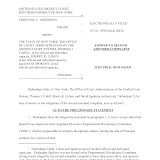
DAS/LM:AAS F.#2010R01348
UNITED STATES DISTRICT COURT EASTERN DISTRICT OF NEW YORK

- - - - - - - - - - - - - - -X
UNITED STATES OF AMERICA
- against -
MATTHEW BURSTEIN,
ELIAS COMPRES,
JOHN CONSTANTANIDES,
ARTURO GIRALDO,
AARON RABINOWITZ and
ROLANDO E. ROLDAN,
Defendants.
– - - - - - - - - - - - - - -X
THE GRAND JURY CHARGES:
S U P E R S E D I N G INDICTMENT
Cr. No. 10-623 (S-2)(ARR)(T. 18, U.S.C., §§ 
981(a)(1)(c), 982(a)(2)(A), 1343, 1344, 1349,
2 and 3551 et seq.; T. 21, U.S.C., § 853(p); 
T. 28, U.S.C., § 2461(c))
page1image8928
page1image9200
page1image9472
page1image9744
                           INTRODUCTION
          At all times relevant to this Superseding Indictment:
          1.   The defendants MATTHEW BURSTEIN, ELIAS COMPRES,
JOHN CONSTANTANIDES, ARTURO GIRALDO, AARON RABINOWITZ and ROLANDO
E. ROLDAN, together with others, defrauded various lending
institutions (the “Lenders”) by obtaining mortgages on properties
(the “Properties”) located in the Eastern District of New York
and elsewhere through fraudulent means, including by falsifying
mortgage loan applications, appraisals, title reports and other
documents.  That false information made the borrowers appear to
be more creditworthy, and falsely enhanced the purported value of
the Properties.  As a result, the Lenders were fraudulently
induced to issue mortgage loans secured by the Properties.  The
amount of the mortgage loans obtained by defendants BURSTEIN,
page1image16408
COMPRES, CONSTANTANIDES, GIRALDO, RABINOWITZ, ROLDAN and others
exceeded $25 million.
I.        The Defendants
          2.   The defendants MATTHEW BURSTEIN and AARON
RABINOWITZ were attorneys licensed to practice law in the State
of New York.  BURSTEIN and RABINOWITZ acted as attorneys
representing buyers and mortgage lenders in real estate
transactions involving some of the Properties.
          3.   The defendant ELIAS COMPRES was a real estate
agent licensed in the State of New York.  COMPRES recruited
individuals to pose as purchasers of some of the Properties (the
“Straw Buyers”).
          4.   The defendants JOHN CONSTANTANIDES and ARTURO
GIRALDO were loan officers.  CONSTANTANIDES and GIRALDO submitted
mortgage applications and other documents containing false and
fraudulent information to the Lenders in an effort to obtain home
mortgage loans.
          5.   The defendant ROLANDO E. ROLDAN recruited Straw
Buyers to pose as purchasers of some of the Properties.
II.       The Lenders
          6.   Chase Home Finance was a wholly-owned subsidiary
of JP Morgan Chase (“JP Morgan”), a bank, the deposits of which
were insured by the Federal Deposit Insurance Corporation
(“FDIC”).
page2image10704
page2image10976
          7.   Countrywide Home Loans was a wholly-owned
subsidiary of Countrywide Financial (“Countrywide”), a bank, the
deposits of which were insured by the FDIC.
          8.   Fremont Investment and Loan (“Fremont”) was a
bank, the deposits of which were insured by the FDIC.
          9.   IndyMac Mortgage Services was a wholly-owned
subsidiary of IndyMac Bank (“IndyMac”), a bank, the deposits of
which were insured by the FDIC.
          10.  National City Mortgage was a wholly-owned
subsidiary of National City Corporation (“National City”), a
bank, the deposits of which were insured by the FDIC.
          11.  Sun Trust Mortgage, Inc. (“Sun Trust Mortgage”)
was a bank, the deposits of which were insured by the FDIC.
          12.  Wells Fargo Home Mortgage was a wholly-owned
subsidiary of Wells Fargo & Company (“Wells Fargo”), a bank, the
deposits of which were insured by the FDIC.
          13.  Lend-Mor Mortgage Bankers Corporation (“Lend-Mor”)
was a wholesale mortgage lender doing business throughout the
United States, including in New York.
          14.  Mortgage Lenders Network USA, Inc. (“Mortgage
Lenders”) was a wholesale mortgage lender doing business
throughout the United States, including in New York.
          15.  New Century Mortgage Corporation (“New Century”)
was a wholesale mortgage lender doing business throughout the
United States, including in New York.
          16.  The Federal Housing Administration (“FHA”)
provided insurance on mortgage loans for single-family and multi-
family homes issued by FHA-approved Lenders.  The FHA insured
some of the loans issued by the Lenders.
III.      The Borrowers
          17.  The defendants ELIAS COMPRES and ROLANDO E.
ROLDAN, together with others, recruited purchasers (the
“Purchasers”) who desired to purchase the Properties for their
own use.  The Purchasers generally were individuals with good
credit scores, but with income and assets that were insufficient
to secure a mortgage loan.  The defendants COMPRES and ROLDAN,
together with others, often promised the Purchasers either that
no down payment would be necessary to purchase the Properties, or
that any down payment would be refunded to them at the closings.
          18.  The defendants ELIAS COMPRES and ROLANDO E.
ROLDAN, together with others, also recruited Straw Buyers to pose
as the purchasers of some of the Properties.  Like the
Purchasers, the Straw Buyers generally were individuals with good
credit scores, but with income and assets that were insufficient
to secure a mortgage loan.  Unlike the Purchasers, however, the
Straw Buyers did not intend to inhabit or control the Properties.
Instead, the defendants COMPRES and ROLDAN, together with others,
were the true owners of the Properties purportedly purchased by
the Straw Buyers.  In exchange for the use of their names and
good credit, the Straw Buyers often received a fee.
page4image12744
          19.  In some cases, the defendant ELIAS COMPRES and
others (the “Co-conspirators”) purchased multiple Properties in
their own names.  Like the Purchasers and the Straw Buyers, the
defendant COMPRES and the Co-conspirators had good credit scores,
but insufficient income and assets to secure multiple mortgage
loans.  Like the Straw Buyers, COMPRES and the Co-conspirators
did not intend to inhabit the Properties but rather purchased the
Properties as investments.
IV.       The Fraudulent Scheme
          20.  Once Purchasers or Straw Buyers were recruited,
the defendants ELIAS COMPRES, JOHN CONSTANTANIDES, ARTURO GIRALDO
and ROLANDO E. ROLDAN, together with others, prepared and caused
to be prepared mortgage applications for the Properties.  These
mortgage applications contained numerous misrepresentations and
material falsehoods designed to make the Purchasers, Straw
Buyers, the defendant COMPRES and the Co-conspirators appear more
creditworthy.  Among other things, the mortgage applications
falsely inflated the bank account balances and income for the
Purchasers, Straw Buyers, the defendant COMPRES and the Co-
conspirators.  Additionally, some of the mortgage applications
falsely stated that the mortgage applicants would live at the
Properties.  The defendants MATTHEW BURSTEIN, COMPRES,
CONSTANTANIDES, GIRALDO, AARON RABINOWITZ and ROLDAN, together
with others, caused these applications and supporting documents
page5image11168
to be sent to the Lenders by facsimile or via electronic
transmissions.
          21.  As a condition for issuing the mortgage loans, the
Lenders required the Purchasers, Straw Buyers, the defendant
ELIAS COMPRES and the Co-conspirators to make down payments on
the purchase of the Properties.  Notwithstanding these
requirements, the Purchasers, Straw Buyers, the defendant COMPRES
and the Co-conspirators often did not make any down payments.
          22.  To conceal these facts from the Lenders, the
defendants MATTHEW BURSTEIN, ELIAS COMPRES, JOHN CONSTANTANIDES,
ARTURO GIRALDO, AARON RABINOWITZ and ROLANDO E. ROLDAN, together
with others, falsified Department of Housing and Urban
Development forms (the “Falsified HUD Forms”), designed to
deceive the Lenders about the disbursements at closings.  For
example, the Falsified HUD Forms represented that some of the
Purchasers, Straw Buyers, the defendant COMPRES and the Co-
conspirators had made a down payment or other cash payment to the
sellers when, in fact, none had been made.
          23.  In many instances, the Purchasers, Straw Buyers,
the defendant ELIAS COMPRES and the Co-conspirators failed to
make mortgage payments to the Lenders, and the mortgage loans for
the Properties defaulted.
          24.  The fraudulent scheme included the following
transactions:
                                        PROPERTY ADDRESS
32-40 95th Street
East Elmhurst, New York 31-21 84th Street
Jackson Heights, New York 86-05 25th Avenue
East Elmhurst, New York 95-08 89th Street
Ozone Park, New York
67-33A Cloverdale Lane
New York, New York
23 Lurcott Lane
Central Islip, New York 31-22 79th Street
Jackson Heights, New York 26-18 95th Street
East Elmhurst, New York 237-09 

93rd Avenue Bellerose, New York
94-10 50th Avenue
Elmhurst, New York
25-29 97th Street
East Elmhurst, New York
848 Quincy Ave
Bronx, New York
25-37 100th Street
East Elmhurst, New York 

93-53 Hollis Court Boulevard Queens Village, New York 86-05 25th Avenue
East Elmhurst, New York 31-37 101st Street
East Elmhurst, New York 22-25 128th Street
College Point, New York 98-15 32nd Avenue
East Elmhurst, New York 23-43 100th Street
East Elmhurst, New York 89-09 84th Street
Woodhaven, New York
24-50 93rd Street East Elmhurst, New York 

108-35Ditmars Boulevard East Elmhurst, New York
41-13 Denman Street Elmhurst, New York


    APPROXIMATE CLOSING DATE
September 30, 2005 October 28, 2005 
November 30, 2005 February 8, 2006 
February 13, 2006 February 22, 2006 
March 14, 2006 April 28, 2006 
June 28, 2006 June 28, 2006 
July 19, 2006 July 31, 2006 
July 31, 2006 September 21, 2006 
September 23, 2006 November 20, 2006 
November 20, 2006 November 20, 2006 
November 28, 2006 January 31, 2007 
January 31, 2007 June4,2007 August 10, 2007


PROPERTY ADDRESS
page8image2632
APPROXIMATE CLOSING DATE
31-29 93rd Street
Jackson Heights, New York
page8image5168
August 20, 2007
23-16 99th Street
East Elmhurst, New York
page8image8336
August 30, 2007
81-09 91st Avenue
Woodhaven, New York
page8image11744
December 5, 2007
88-19 77th Street
Woodhaven, New York
page8image15152
December 28, 2007
1754 Lacombe Avenue
Bronx, New York
page8image18568
January 16, 2008
page8image20320
172 Sylvester Street
Westbury, New York
page8image22008
February 29, 2008
80-33 88th Road
Woodhaven, New York
page8image25144
March 5, 2009
                            COUNT ONE
            (Conspiracy to Commit Bank and Wire Fraud)
          25.  The allegations contained in paragraphs one
through twenty-four are realleged and incorporated as if set
forth fully in this paragraph.
          26.  In or about and between January 2001 and July
2010, both dates being approximate and inclusive, within the
Eastern District of New York and elsewhere, the defendants
MATTHEW BURSTEIN, ELIAS COMPRES, JOHN CONSTANTANIDES, ARTURO
GIRALDO, AARON RABINOWITZ and ROLANDO E. ROLDAN, together with
others, did knowingly and intentionally conspire to:
               a.   execute a scheme and artifice to defraud JP
Morgan, through its subsidiary Chase Home Finance, Countrywide,
through its subsidiary, Countrywide Home Loans, Fremont, IndyMac,
through its subsidiary, IndyMac Mortgage Services, National City,
through its subsidiary, National City Mortgage, Sun Trust
Mortgage and Wells Fargo, through its subsidiary, Wells Fargo
page8image37264
Home Mortgage, all financial institutions, and to obtain moneys,
funds and credits owned by and under the custody and control of
said financial institutions by means of materially false and
fraudulent pretenses, representations and promises, contrary to
Title 18, United States Code, Section 1344; and
               b.   devise a scheme and artifice to defraud Lend-
Mor, Mortgage Lenders, New Century and others, and to obtain
money and property from Lend-Mor, Mortgage Lenders, New Century
and others by means of materially false and fraudulent pretenses,
representations and promises, and for the purpose of executing
such scheme and artifice, to transmit and cause to be transmitted
by means of wire communication in interstate commerce, writings,
signs, signals, pictures and sounds, contrary to Title 18, United
States Code, Section 1343.
          (Title 18, United States Code, Sections 1349 and 3551
et seq.)
COUNT TWO
(Bank Fraud -- 32-40 95th Street, East Elmhurst, New York)

          27.  The allegations contained in paragraphs one
through twenty-four are realleged and incorporated as if set
forth fully in this paragraph.
          28.  On or about September 30, 2005, a closing was held
for a mortgage loan issued by Countrywide, through its
subsidiary,
Countrywide Home Loans and secured by 32-40 95th
Street, East
Elmhurst, New York. This closing was held in
Harrison, New York.
          29.  In or about and between August 2005 and October
2005, both dates being approximate and inclusive, within the
Eastern District of New York and elsewhere, the defendant ELIAS
COMPRES, together with others, did knowingly and intentionally
execute a scheme and artifice to defraud Countrywide, through its
subsidiary, Countrywide Home Loans, and to obtain moneys, funds
and credits owned by and under the custody and control of said
financial institution by means of materially false and fraudulent
pretenses, representations and promises. (Title 18, 
United States Code, Sections 1344, 2 and 3551 et seq.)
COUNT THREE
(Bank Fraud -- 95-08 89th Street, Ozone Park, New York)

          30.  The allegations contained in paragraphs one
through twenty-four are realleged and incorporated as if set
forth fully in this paragraph.
          31. On or about February 8, 2006, a closing was held
for a mortgage loan issued by Fremont and secured by 95-08 89th 
Street, Ozone Park. This closing was held in Hauppauge, New York.
          32.  In or about and between February 2006 and March
2006, both dates being approximate and inclusive, within the
Eastern District of New York and elsewhere, the defendant ARTURO
GIRALDO, together with others, did knowingly and intentionally
execute a scheme and artifice to defraud Fremont and to obtain
moneys, funds and credits owned by and under the custody and
page10image12840
page10image13112
page10image13384
control of said financial institution by means of materially
false and fraudulent pretenses, representations and promises.
          (Title 18, United States Code, Sections 1344, 2 and
3551 et seq.)
COUNT FOUR
(Bank Fraud -- 25-37 100th Street, East Elmhurst, New York)

          33.  The allegations contained in paragraphs one
through twenty-four are realleged and incorporated as if set
forth fully in this paragraph.
          34. On or about July 31, 2006, a closing was held for
a mortgage loan issued by Countrywide, through its subsidiary,
Countrywide Home Loans and secured by 25-37 100th Street, East
Elmhurst, New York. This closing was held in Queens, New York
at the offices of the defendants MATTHEW BURSTEIN and 
AARON RABINOWITZ.
          35.  In or about and between June 2006 and August 2006,
both dates being approximate and inclusive, within the Eastern
District of New York and elsewhere, the defendants MATTHEW
BURSTEIN, ELIAS COMPRES and AARON RABINOWITZ, together with
others, did knowingly and intentionally execute a scheme and
artifice to defraud Countrywide, through its subsidiary,
Countrywide Home Loans, and to obtain moneys, funds and credits
page11image10744
page11image11016
page11image11288
owned by and under the custody and control of said financial
institution by means of materially false and fraudulent
pretenses, representations and promises.
          (Title 18, United States Code, Sections 1344, 2 and
3551 et seq.)
                            COUNT FIVE
           (Bank Fraud –- 93-53 Hollis Court Boulevard,
                    Queens Village, New York)
          36.  The allegations contained in paragraphs one
through twenty-four are realleged and incorporated as if set
forth fully in this paragraph.
          37.  On or about September 21, 2006, a closing was held
for a mortgage loan issued by JP Morgan, through its subsidiary
Chase Home Finance, and secured by 93-53 Hollis Court Boulevard,
Queens Village, New York.  This closing was held in Great Neck,
New York.
          38.  In or about and between October 2006 and December
2006, both dates being approximate and inclusive, within the
Eastern District of New York and elsewhere, the defendant ARTURO
GIRALDO, together with others, did knowingly and intentionally
execute a scheme and artifice to defraud JP Morgan, through its
subsidiary Chase Home Finance, and to obtain moneys, funds and
page12image10544
page12image10816
page12image11088
credits owned by and under the custody and control of said
financial institution by means of materially false and fraudulent
pretenses, representations and promises.
          (Title 18, United States Code, Sections 1344, 2 and
3551 et seq.)
COUNT SIX
(Bank Fraud -- 31-37 101st Street, East Elmhurst, New York)

          39.  The allegations contained in paragraphs one
through twenty-four are realleged and incorporated as if set
forth fully in this paragraph.
          40. On or about November 20, 2006, a closing was held
for a mortgage loan issued by Sun Trust Mortgage and secured by
31-37 101st Street, East Elmhurst, New York. This closing was 
held in Queens, New York at the offices of the defendants 
MATTHEW BURSTEIN and AARON RABINOWITZ.
          41.  In or about and between July 2006 and November
2006, both dates being approximate and inclusive, within the
Eastern District of New York and elsewhere, the defendants
MATTHEW BURSTEIN, ELIAS COMPRES and AARON RABINOWITZ, together
with others, did knowingly and intentionally execute a scheme and
artifice to defraud Sun Trust Mortgage and to obtain moneys,
funds and credits owned by and under the custody and control of
said financial institution by means of materially false and
fraudulent pretenses, representations and promises.
          (Title 18, United States Code, Sections 1344, 2 and
3551 et seq.)
page13image12688
page13image12960
page13image13232
page13image13504
page13image13776
COUNT SEVEN
(Wire Fraud -- 22-25 128th Street, College Point, New York)

          42.  The allegations contained in paragraphs one
through twenty-four are realleged and incorporated as if set
forth fully in this paragraph.
          43. On or about November 20, 2006, a closing was held
for a mortgage loan issued by New Century and secured by 22-25
128th Street, College Point, New York. This closing was held in 
Queens, New York at the offices of the defendants MATTHEW BURSTEIN
and AARON RABINOWITZ.
          44.  In or about and between July 2006 and November
2006, both dates being approximate and inclusive, within the
Southern District of New York and elsewhere, the defendants
MATTHEW BURSTEIN, ELIAS COMPRES and AARON RABINOWITZ, together
with others, did knowingly and intentionally devise a scheme and
artifice to defraud New Century, and to obtain money and property
from New Century by means of materially false and fraudulent
pretenses, representations and promises, and for the purpose of
executing such scheme and artifice, did transmit and cause to be
transmitted, by means of wire communication in interstate
commerce, writings, signs, signals, pictures and sounds, to wit:
a funding wire transmission from Deutsche Bank in New York, New
York to Commerce Bank in Mt. Laurel, New Jersey on November 20,
2006.
          (Title 18, United States Code, Sections 1343, 2 and
3551 et seq.)
page14image12808
page14image13080
page14image13352
COUNT EIGHT
(Bank Fraud -- 98-15 32nd Avenue, East Elmhurst, New York)

          45.  The allegations contained in paragraphs one
through twenty-four are realleged and incorporated as if set
forth fully in this paragraph.
          46. On or about November 20, 2006, a closing was held
for a mortgage loan issued by National City, through its 
subsidiary National City Mortgage and secured by 98-15 32nd 
Avenue, East Elmhurst, New York. This closing was held in
Northport, New York.
          47.  In or about and between July 2006 and November
2006, both dates being approximate and inclusive, within the
Eastern District of New York and elsewhere, the defendant ELIAS
COMPRES, together with others, did knowingly and intentionally
execute a scheme and artifice to defraud National City, through
its subsidiary National City Mortgage, and to obtain moneys,
funds and credits owned by and under the custody and control of
said financial institution by means of materially false and
fraudulent pretenses, representations and promises.
          (Title 18, United States Code, Sections 1344, 2 and
3551 et seq.)
COUNT NINE
(Bank Fraud -- 23-43 100th Street, East Elmhurst, New York)

          48.  The allegations contained in paragraphs one
through twenty-four are realleged and incorporated as if set
forth fully in this paragraph.
page15image12320
page15image12592
page15image12864
page15image13136
          49. On or about November 28, 2006, a closing was 
held for a mortgage loan issued by Fremont and secured by 22-43
100th Street, East Elmhurst, New York. This closing was held in
Queens, New York at the offices of the defendants MATTHEW 
BURSTEIN and AARON RABINOWITZ.
          50.  In or about and between July 2006 and November
2006, both dates being approximate and inclusive, within the
Eastern District of New York and elsewhere, the defendants
MATTHEW BURSTEIN, ELIAS COMPRES and AARON RABINOWITZ, together
with others, did knowingly and intentionally execute a scheme
and artifice to defraud Fremont and to obtain moneys, funds 
and credits owned by and under the custody and control of said
financial institution by means of materially false and fraudulent
pretenses, representations and promises.
          (Title 18, United States Code, Sections 1344, 2 and
3551 et seq.)
COUNT TEN
(Bank Fraud -- 89-09 84th Street, Woodhaven, New York)

          51.  The allegations contained in paragraphs one
through twenty-four are realleged and incorporated as if set
forth fully in this paragraph.
          52. On or about January 31, 2007, a closing was held
for a mortgage loan issued by Countrywide, through its 
subsidiary, Countrywide Home Loans and secured by 89-09 84th
Street, Woodhaven, New York. This closing was held in Queens,
page16image12376
New York at the offices of the defendants MATTHEW BURSTEIN
and AARON RABINOWITZ.
          53.  In or about and between December 2006 and February
2007, both dates being approximate and inclusive, within the
Eastern District of New York and elsewhere, the defendants
MATTHEW BURSTEIN and AARON RABINOWITZ, together with others, did
knowingly and intentionally execute a scheme and artifice to
defraud Countrywide, through its subsidiary, Countrywide Home
Loans, and to obtain moneys, funds and credits owned by and under
the custody and control of said financial institution by means of
materially false and fraudulent pretenses, representations and
promises.
          (Title 18, United States Code, Sections 1344, 2 and
3551 et seq.)
COUNT ELEVEN
(Wire Fraud -- 24-50 93rd Street, Woodhaven, New York)

          54.  The allegations contained in paragraphs one
through twenty-four are realleged and incorporated as if set
forth fully in this paragraph.
          55. On or about January 31, 2007, a closing was held
for a mortgage loan issued by New Century and secured by 
24-50 93rd Street, Woodhaven, New York. This closing was held 
in Queens, New York at the offices of the defendants 
MATTHEW BURSTEIN and AARON RABINOWITZ.
          56.  In or about and between December 2006 and February
2007, both dates being approximate and inclusive, within the
page17image12472
page17image12744
page17image13016
Southern District of New York and elsewhere, the defendants
MATTHEW BURSTEIN and AARON RABINOWITZ, together with others, did
knowingly and intentionally devise a scheme and artifice to
defraud New Century, and to obtain money and property from New
Century by means of materially false and fraudulent pretenses,
representations and promises, and for the purpose of executing
such scheme and artifice, did transmit and cause to be
transmitted, by means of wire communication in interstate
commerce, writings, signs, signals, pictures and sounds, to wit:
a funding wire transmission from Deutsche Bank in New York, New
York to Commerce Bank in Mt. Laurel, New Jersey on January 31,
2007. (Title 18, United States Code, Sections 1343, 2 and
3551 et seq.)
                           COUNT TWELVE
(Bank Fraud -- 108-35 Ditmars Boulevard, East Elmhurst, New York)
          57.  The allegations contained in paragraphs one
through twenty-four are realleged and incorporated as if set
forth fully in this paragraph.
          58.  On or about June 4, 2007, a closing was held for a
mortgage loan issued by Countrywide, through its subsidiary,
Countrywide Home Loans and secured by 108-35 Ditmas Boulevard,
East Elmhurst, New York.  This closing was held in Red Bank, New
Jersey.
          59.  In or about and between May 2007 and June 2007,
both dates being approximate and inclusive, within the Eastern
page18image12680
page18image12952
page18image13224
District of New York and elsewhere, the defendant ELIAS COMPRES,
together with others, did knowingly and intentionally execute a
scheme and artifice to defraud Countrywide, through its
subsidiary, Countrywide Home Loans, and to obtain moneys, funds
and credits owned by and under the custody and control of said
financial institution by means of materially false and fraudulent
pretenses, representations and promises.
          (Title 18, United States Code, Sections 1344, 2 and
3551 et seq.)
COUNT THIRTEEN
(Bank Fraud -- 187-29 91st Avenue, Hollis, New York)

          60.  The allegations contained in paragraphs one
through twenty-four are realleged and incorporated as if set
forth fully in this paragraph.
          61. On or about July 17, 2007, a closing was held 
for a mortgage loan issued by Wells Fargo, through its subsidiary,
Wells Fargo Home Mortgage and secured by 187-29 91st Avenue, 
Hollis, New York. This closing was held in Queens, New York at 
the offices of the defendants MATTHEW BURSTEIN and AARON
RABINOWITZ.
          62.  In or about and between June 2007 and August 2007,
both dates being approximate and inclusive, within the Eastern
District of New York and elsewhere, the defendants MATTHEW
BURSTEIN, JOHN CONSTANTINIDES and AARON RABINOWITZ, together with
others, did knowingly and intentionally execute a scheme and
artifice to defraud Wells Fargo, through its subsidiary, Wells
page19image12640
page19image12912
page19image13184
Fargo Home Mortgage, and to obtain moneys, funds and credits
owned by and under the custody and control of said financial
institution by means of materially false and fraudulent
pretenses, representations and promises.
          (Title 18, United States Code, Sections 1344, 2 and
3551 et seq.)
COUNT FOURTEEN
(Bank Fraud -- 31-29 93rd Street, Jackson Heights, New York)

          63.  The allegations contained in paragraphs one
through twenty-four are realleged and incorporated as if set
forth fully in this paragraph.
          64. On or about August 20, 2007, a closing was 
held for a mortgage loan issued by Wells Fargo, through its subsidiary, Wells Fargo Home Mortgage and secured by 31-29 93rd
Street, Jackson Heights, New York. This closing was held in 
Queens, New York at the offices of the defendants MATTHEW 
BURSTEIN and AARON RABINOWITZ.
          65.  In or about and between July 2007 and September
2007, both dates being approximate and inclusive, within the
Eastern District of New York and elsewhere, the defendants
MATTHEW BURSTEIN, JOHN CONSTANTINIDES and AARON RABINOWITZ,
together with others, did knowingly and intentionally execute a
scheme and artifice to defraud Wells Fargo, through its
subsidiary, Wells Fargo Home Mortgage, and to obtain moneys,
page20image11672
page20image11944
page20image12216
funds and credits owned by and under the custody and control of
said financial institution by means of materially false and
fraudulent pretenses, representations and promises.
          (Title 18, United States Code, Sections 1344, 2 and
3551 et seq.)
COUNT FIFTEEN
(Bank Fraud -- 23-16 99th Street, East Elmhurst, New York)

          66.  The allegations contained in paragraphs one
through twenty-four are realleged and incorporated as if set
forth fully in this paragraph.
67. On or about August 30, 2007, a closing was held for a mortgage loan issued by Wells Fargo, through its subsidiary, Wells Fargo Home Mortgage and secured by 23-16 99th Street, East Elmhurst, New York. This closing was held in Queens, New York at the offices of the defendants MATTHEW BURSTEIN and AARON RABINOWITZ.
          68.  In or about and between July 2007 and September
2007, both dates being approximate and inclusive, within the
Eastern District of New York and elsewhere, the defendants
MATTHEW BURSTEIN, JOHN CONSTANTINIDES and AARON RABINOWITZ,
together with others, did knowingly and intentionally execute a
scheme and artifice to defraud Wells Fargo, through its
subsidiary, Wells Fargo Home Mortgage, and to obtain moneys,
page21image11288
funds and credits owned by and under the custody and control of
said financial institution by means of materially false and
fraudulent pretenses, representations and promises.
          (Title 18, United States Code, Sections 1344, 2 and
3551 et seq.)
COUNT SIXTEEN
(Bank Fraud -- 81-09 91st Avenue, Woodhaven, New York)

          69.  The allegations contained in paragraphs one
through twenty-four are realleged and incorporated as if set
forth fully in this paragraph.
70. On or about December 5, 2007, a closing was held for a mortgage loan issued by IndyMac, through its subsidiary, IndyMac Mortgage Services and secured by 81-09 91st Avenue, Woodhaven, New York. This closing was held in Queens, New York at the offices of the defendants MATTHEW BURSTEIN and AARON RABINOWITZ.
          71.  In or about and between November 2007 and January
2008, both dates being approximate and inclusive, within the
Eastern District of New York and elsewhere, the defendants
MATTHEW BURSTEIN and AARON RABINOWITZ, together with others, did
knowingly and intentionally execute a scheme and artifice to
defraud IndyMac, through its subsidiary, IndyMac Mortgage
Services, and to obtain moneys, funds and credits owned by and
page22image11208
page22image11480
page22image11752
under the custody and control of said financial institution by
means of materially false and fraudulent pretenses,
representations and promises.
          (Title 18, United States Code, Sections 1344, 2 and
3551 et seq.)
COUNT SEVENTEEN
(Bank Fraud -- 88-19 77th Street, Woodhaven, New York)

          72.  The allegations contained in paragraphs one
through twenty-four are realleged and incorporated as if set
forth fully in this paragraph.
73. On or about December 28, 2007, a closing was held for a mortgage loan issued by Wells Fargo, through its subsidiary, Wells Fargo Home Mortgage and secured by 88-19 77th Street, Woodhaven. This closing was held in Queens, New York at the offices of the defendants MATTHEW BURSTEIN and AARON RABINOWITZ.
          74.  In or about and between November 2007 and January
2008, both dates being approximate and inclusive, within the
Eastern District of New York and elsewhere, the defendants
MATTHEW BURSTEIN, JOHN CONSTANTINIDES, and AARON RABINOWITZ,
together with others, did knowingly and intentionally execute a
scheme and artifice to defraud Wells Fargo, through its
subsidiary, Wells Fargo Home Mortgage, and to obtain moneys,
page23image10888
page23image11160
funds and credits owned by and under the custody and control of
said financial institution by means of materially false and
fraudulent pretenses, representations and promises. (Title 18, United States Code, Sections 1344, 2 and 3551 et seq.)
COUNT EIGHTEEN
(Wire Fraud -- 80-33 88th Road, Woodhaven, New York)

          75.  The allegations contained in paragraphs one
through twenty-four are realleged and incorporated as if set
forth fully in this paragraph.
          76. On or about March 5, 2009, a closing was held 
for a mortgage loan issued by Lend-Mor and secured by 80-33
88th Road, Woodhaven, New York. This closing was held in 
New York, New York.
          77.  In or about and between December 2008 and March
2009, both dates being approximate and inclusive, within the
Eastern District of New York and elsewhere, the defendant ROLANDO
E. ROLDAN, together with others, did knowingly and intentionally
devise a scheme and artifice to defraud Lend-Mor, and to obtain
money and property from Lend-Mor by means of materially false and
fraudulent pretenses, representations and promises, and for the
purpose of executing such scheme and artifice, did transmit and
cause to be transmitted, by means of wire communication in
interstate, writings, signs, signals, pictures and sounds, to
wit: a facsimile of a verification of employment form from Lend-
page24image12496
Mor in Valley Stream, New York to Westmore Fuel Company in
Greenwich, Connecticut on February 12, 2009.(Title 18, United States Code, Sections 1343, 2 and
3551 et seq.)
                  CRIMINAL FORFEITURE ALLEGATION
          78.  The United States hereby gives notice to the
defendants that, upon their conviction of any of the above-
charged offenses, the government will seek forfeiture in
accordance with Title 18, United States Code, Section
981(a)(1)(c) and Title 28, United States Code, Section 2461(c),
which require any person convicted of such offenses to forfeit
any property constituting or derived from proceeds obtained
directly or indirectly as a result of such offenses.
          79.  If any of the above-described forfeitable
property, as a result of any act or omission of the defendants:
               (a)  cannot be located upon the exercise of due
diligence;
               (b)  has been transferred or sold to, or deposited
with, a third party;
page25image9504
page25image9776
page25image10048
(c)  has been placed beyond the jurisdiction of
(d)  has been substantially diminished in value;
(e)  has been commingled with other property which
the court; or cannot be divided without difficulty;it is the intent of the United States, pursuant to Title 21,United States Code, Section 853(p), as incorporated by Title 28,United States Code, Section 2461(c), to seek forfeiture of anyother property of the defendants up to the value of theforfeitable property described in this forfeiture allegation.(Title 28, United States Code, Section 2461(c); Title 18, United States Code, Sections 981(a)(1)(c) and 982(a)(2)(A); Title 21, United States Code, Section 853(p))
A TRUE BILL, FOREPERSON
page26image5472
page26image5744
LORETTA E. LYNCH,UNITED STATES ATTORNEY, EASTERN DISTRICT OF NEW YORK

Wednesday, October 5, 2011

Move to Impose Tougher Supreme Court Ethics

Democrats Seek to Impose Tougher Supreme Court Ethics
The New York Times -  The Caucus  -  by Eric Lichtblau  -  September 8, 2011

House Democrats, seeking to capitalize on recent questions about the political leanings of several Supreme Court justices, are pushing for toughened ethics standards that would hold the justices on the high court to the same judicial requirements as federal judges.  In a letter that is being sent Friday to House Judiciary Committee leaders, 43 Democrats called for a hearing on a bill that would require Supreme Court justices to follow the ethics requirements of the Judicial Conference Code of Conduct in withdrawing from cases where they may have a financial or political conflict. The justices now use the code for “guidance” but are not required to follow it.  The bill, sponsored by Rep. Christopher S. Murphy, Democrat of Connecticut, would also require the justices to disclose publicly their reasons for any withdrawal from a case and would set up a process to review possible conflicts if a justice refuses to step aside.  The notion of imposing higher ethics standards on the Supreme Court appears to be gaining momentum among House Democrats and outside legal scholars, but its prospects in the Republican-controlled House are still uncertain.  The bill “would go a long way towards restoring the public’s confidence in the Supreme Court” after several recent controversies, the Democratic lawmakers said in the letter. An advance copy was provided to the New York Times.  The Democrats singled out three conservative justices -– Antonin Scalia, Clarence Thomas, and Samuel Alito –- for “alarming reports” of their appearances at politically themed events.  Justice Thomas has received the most recent scrutiny not only for his appearances before Republican-backed groups, but also for his acceptance of favors from a prominent conservative contributor in Texas, Harlan Crow, and his wife’s work as an advocate for conservative legal causes.  Conservatives, in turn, have sought to spotlight politically tinged appearances and trips by members of the Supreme Court’s liberal wing, including Justices Ruth Bader Ginsburg and Stephen Breyer. The Democrats’ letter does not mention any of the liberal justices, however.

Tuesday, October 4, 2011

Disciplinary Case to Proceed Against Surrogate Judge

Disciplinary Case to Proceed Against Bronx Surrogate
The New York Law Journal by Brendan Pierson  -  October 4, 2011

Bronx Surrogate Lee L. Holzman has lost a bid to stay a disciplinary proceeding brought against him by the Commission on Judicial Conduct for allegedly allowing Michael Lippman, a former counsel to the Bronx public administrator, to collect $300,000 in excessive fees. The case against the surrogate is now set to resume on Oct. 11.  The commission has charged Surrogate Holzman with failing to prevent Mr. Lippman from collecting insufficiently documented fees in 2005 and 2006 beyond those authorized by an oversight commission, which the surrogate oversaw (NYLJ, Sep. 13). Surrogate Holzman became the chairman of the Administrative Board of the Offices of the Public Administrators in 2002, the year the body formulated guidelines for the payment of counsel to public administrators. The guidelines, which are not mandatory, set compensation at 6 percent of the first $750,000 at issue in an estate case, with the percentage declining in increments to 1.5 percent for amounts exceeding $5 million. Mr. Lippman was indicted last year for allegedly collecting excess fees in five cases, and is now facing criminal charges in the Bronx. Surrogate Holzman eventually fired Mr. Lippman in 2006.  Surrogate Holzman had asked Acting Supreme Court Justice Barbara Jaffe (See Profile) for a stay of his disciplinary proceeding while Mr. Lippman's criminal case was pending on the grounds that Mr. Lippman would exercise his Fifth Amendment right not to testify about the matter before the conduct commission. But Justice Jaffe ruled that, because Mr. Lippman's trial would not begin until Nov. 1 at the earliest, it was not practical to stay Surrogate Holzman's proceeding.

Monday, October 3, 2011

Attorney Sanctioned For Wasting Time

Attorney Sanctioned for Wasting Time During Depositions
The New York Law Journal by Mark Hamblett  -  October 3, 2011

A plaintiff's attorney in a failed lawsuit seeking a fee for introducing potential business partners has been sanctioned $6,400 for conducting wasteful depositions.  Attorney Michael Q. Carey was put on notice more than once by Southern District Judge Paul Crotty to keep depositions to a minimum or sanctions would be in the offing, but the judge said the attorney kept on going.  "In the face of Mr. Carey's demand for more and more, wider and wider, and hope-springs-eternal discovery, the court warned him that he would be sanctioned if the depositions were not meaningful and productive," the judge said in Vioni v. American Capital Strategies Ltd., 08 Civ. 2950.  The $6,400 is a sanction for "$400 per wasted hour" on eight depositions conducted by the attorney on behalf of his client, Lisa Vioni, who sued American Capital Strategies Ltd., a publicly traded investment corporation, and Providence Investment Management LLC and Providence Investment Partners LLC, a small investment management company headed by Russell Jeffrey.  Ms. Vioni and her company, Hedge Connection Inc., claimed that she had separate agreements with American Capital and Providence to act as a finder for new business opportunities and that she met her obligations by bringing the two together in 2007 through the introduction of Mr. Jeffrey and Robert Grunewald, the managing director of American Capital.  The two men began negotiating a series of transactions through which American Capital would acquire Providence's investments, funds, clients and employees. Ms. Vioni claimed she was repeatedly told, in person and by e-mail, that she would be compensated once the transactions were completed.  But when she was not compensated, she filed suit in 2008. Judge Crotty dismissed claims of breach of contract and promissory estoppel in 2009, leaving only claims in quantum meruit.

The defendants moved for summary judgment on those claims in 2010. In an opinion issued Sept. 26 in which he also sanctioned Mr. Carey, Judge Crotty discussed e-mails between Ms. Vioni and the two men and explained why the statute of frauds barred the claim from proceeding—the e-mails did not provide written assurance that Ms. Vioni had a deal and, in context, "the introduction appears to be a minor happening, incidental to a larger deal that was never consummated."  As to Mr. Jeffrey, the judge said Ms. Vioni had shown only "a vague offer to meet and talk," and did not present "a genuine dispute as to whether Jeffrey accepted Vioni's offer to introduce him to Grunewald with the understanding she expected compensation."  And as for Mr. Grunewald, the judge said, "Although two emails show that Grunewald accepted Vioni's offer to arrange the introduction…there is no indication that he understood he was employing her in this respect."  The motion for sanctions was made by the defendants under 28 U.S.C. §1927 and the court's inherent power. It targeted depositions of Mr. Jeffrey and three others from Providence and four people from American Capital.  Mr. Carey contended the depositions were necessary to calculate Ms. Vioni's fee and elicit information about American Capital's document retention and information technology systems to see if it had failed to produce relevant e-mails.  But Judge Crotty warned him at a March 4, 2010, conference there "would be consequences" if he did not get relevant information.  And again, at a May 13, 2010, conference, Judge Crotty said that if the depositions are "just rambling through, there'll be consequences in the form of sanctions. I repeat that."  "Despite these warnings, Mr. Carey made no attempt to target his inquiries or proceed in a deliberate manner," the judge said in his decision. "Indeed, he seemed to proceed in the opposite direction, beginning with those who knew the least, before proceeding with the key witnesses."  In the case of some of the witnesses, the judge said, "minimal time was spent on Vioni's services," and one witness was never even asked about her.  On one witness, he said, "Mr. Carey took up 60 pages on background questions," about the employee's "personal employment history, asking follow up questions about previous jobs on a fishing boat, a shrimp business and a noodle factory."  "While Vioni and her counsel are entitled to extract information that may be relevant to the reasonable value of Vioni's services, this does not justify or excuse redundant questioning on topics that are irrelevant or that the witness cannot be expected to know," Judge Crotty said. "In other words, Mr. Carey has failed to rebut defendants' demonstration that his depositions were unjustifiably protracted."  Mr. Carey said Friday he would seek relief from the rulings.  "Plaintiffs will appeal the final decision and expect it will be reversed on sanctions and the ruling on the motion for summary judgment will be reversed and remanded for further proceedings," Mr. Carey said.  Stewart D. Aaron of Arnold & Porter, one of the attorneys who represented American Capital, said the defendants were heartened by the judge's decision on summary judgment but declined comment on the sanctions issue.  Mark Hamblett can be contacted at mhamblett@alm.com.

Wednesday, September 21, 2011

Still Mum on Corruption, Lippman Calls for Long Overdue Juvenile Change

New York Judge Seeks New System for Juveniles
The New York Times by Mosi Secret  -  September 21, 2011

New York State has long dealt with 16- and 17-year-old defendants more severely than almost every other state, trying all of them as adults in criminal courts. Now, New York’s chief judge is calling for a less punitive approach that would focus on finding ways to rehabilitate them.  The judge, Jonathan Lippman, is proposing that the state transfer jurisdiction for 16- and 17-year-olds accused of less serious crimes to family courts, which have more social services, while continuing to prosecute the most violent juveniles as adults. The plan reflects an emerging consensus in many states that troubled teenagers have been mishandled by the adult court system.  If the state adopts the plan, it will most likely have to allocate more money for social services and for the court system, which is already financially overburdened. The change would require a reorganization of the network of city and state agencies in the criminal justice system. The roles of judges, prosecutors, correction and probation officers and many others would change.  “I think it’s complex but feasible,” said Edwina G. Richardson-Mendelson, the administrative judge for New York City Family Court, which would have to handle tens of thousands more cases each year under the plan.  Judge Lippman’s proposal would have to be approved by Gov. Andrew M. Cuomo and the State Legislature. The Republican majority in the State Senate has often favored more stringent criminal justice measures, and may be reluctant to approve it.  A spokesman for Mr. Cuomo did not immediately respond to requests for comment. A spokesman for the Senate majority leader, Dean G. Skelos of Long Island, said his office would review the proposal.  The Democratic majority in the Assembly has historically supported such measures.

New York and North Carolina are the only states that try all 16-year-olds as adults. This year, North Carolina lawmakers introduced legislation to move those cases to juvenile court. Several other states have made similar moves in recent years.  In a speech that Judge Lippman is scheduled to give on Wednesday to the Citizens Crime Commission of New York City, he is to push for the state’s sentencing commission to draft a bill to be introduced in the State Legislature at the beginning of the 2012 session in January.  He also plans, in the coming months, to establish a pilot program of adolescent criminal courts, dedicated to handling the cases of 16- and 17-year-old defendants. These defendants would continue to be processed in the adult court system, but judges would handle the cases as if the defendants were in Family Court.  “I want to be able to show that this works while the legislation is pending,” Mr. Lippman said in an interview.  The judge’s proposal spotlights an issue that state lawmakers and judicial officials have long pledged to tackle. When the state’s juvenile justice law, the Family Court Act, was enacted in 1962, the Legislature chose 16 as the age of criminal responsibility as a temporary measure until public hearings and research could be conducted. The state did not carry out those steps, and the age was never changed.  Judge Lippman said the time had passed for another legislative task force. “To be sure, there are issues that have to be addressed, and we will do that,” he said. “But I don’t believe we should be studying this to death.”  Instead, Judge Lippman said, he will turn to an informal network that has been working behind the scenes on the legal and procedural issues of raising the age of juvenile jurisdiction.  “We will be speaking with the advocacy groups and the institutional players to make sure we understand their concerns and address their concerns,” said Richard M. Aborn, president of the Citizens Crime Commission.  Judge Lippman is also working with the New York Center for Juvenile Justice, run by a retired judge, Michael A. Corriero, an advocate for raising the age.  Every state maintains one court and correctional system for juveniles and another for adults. The juvenile system generally has more employees as well as programming that focuses on treatment and rehabilitation. Juvenile court records are sealed, making it easier for young people who do not commit crimes as adults to find jobs, apply for public housing and receive financial aid for college.  Thirty-seven states, the District of Columbia and the federal government have set the age of criminal responsibility at 18; 11 states have set the age at 17.  There were 45,873 youths ages 16 and 17 arrested last year in New York State, according to the New York State Division of Criminal Justice Services. The overwhelming majority of the arrests were for nonviolent crimes.  Opponents of changes in the system in other states have questioned the costs of transferring more people to juvenile courts at a time when states are facing deep budget deficits.  Many supporters have pointed to a 2005 decision by the Supreme Court, in Roper v. Simmons, which banned the death penalty for defendants who were younger than 18 when their crimes were committed. The court’s majority based its decision on the “general differences” distinguishing people under 18 from adults: lack of maturity, greater susceptibility to peer pressure and undeveloped character.  Studies have also concluded that adolescents who are tried as adults are more likely to go on to commit other crimes.  John Feinblatt, the chief criminal justice adviser for Mayor Michael R. Bloomberg, offered tentative support for Mr. Lippman’s proposal.  “The practical considerations should not shut down the discussion,” Mr. Feinblatt said. “They should be part of the discussion.”

An Open Court

An Open Court
The New York Times  -  EDITORIAL  -  September 18, 2011

The Reporters Committee for Freedom of the Press proposed last week that the Supreme Court adopt a new rule saying every document filed in or by the court “shall be available to the public for inspection” unless it orders that the document be sealed. That presumption of openness would be in the interest of everyone — the Supreme Court, lawyers who practice before the court, scholars who study the court and, of course, the American public.  It is sometimes necessary to restrict public access to court documents — to protect privacy, genuine secrets and people in danger, and for other reasons. But in the last 18 years, the court has gone from allowing records to be sealed in two cases per term to 24 last term out of 9,066 petitions for review. While the fraction remains tiny, the increase is disturbing.  Informed self-government is essential to a healthy democracy. The First Amendment’s guarantees of free speech and press are intended to ensure that. It is important that the Supreme Court’s rules reflect its long-stated preference for the open administration of justice.  The court has ruled that access to proceedings and records in criminal cases can be limited only in exceptional circumstances. Federal appeals courts have said so convincingly about civil proceedings, including records. But the Supreme Court needs a clear rule that ensures transparency whenever possible.  The Reporters Committee urges the court to adopt a rule about the presumption of public access like that of the United States Court of Appeals for the Seventh Circuit. Judge Frank Easterbrook of that circuit wrote, “The political branches of government claim legitimacy by election, judges by reason. Any step that withdraws an element of the judicial process from public view makes the ensuing decision look more like fiat.” His argument is compelling.

Tuesday, September 20, 2011

OCA's Dysfunction Strikes Again

Judge Resigns Second Department Over Wages
The New York Law Journal by Daniel Wise  -  September 20, 2011

Justice Joseph Covello of the Appellate Division, Second Department, who resigned last week, expressed disappointment yesterday that the pay raise approved by a special commission last month "isn't a ton of money," especially since the state's 1,300 judges have only received one raise in the last 20 years.  Justice Covello called his decision to leave the bench to join an eight-lawyer litigation firm in Mineola "incredibly bittersweet," but "clearly an economic one." With his arrival, the firm has been changed to Lynn, Gartner, Dunne & Covello.  Justice Covello is the third Appellate Division judge to cite the pay drought as what drove him from the bench. The others are Robert Spolzino in the Second Department (NYLJ, Aug. 4, 2009) and James M. McGuire in the First Department (NYLJ, Nov. 15, 2010).  The commission created by statute to end the stalemate over raises for the state judges approved an increase in the salary of Appellate Division justices from the current $139,700 to $168,600 next April, to $176,000 in 2013 and to $183,300 in 2014. Those raises will take effect automatically unless the Legislature and the governor object.  Justice Covello was elected to Nassau District Court in 1995 and to Supreme Court in 2000. He was appointed to the Second Department bench in 2005.

Monday, September 19, 2011

Scheindlin Considers Pledge for Jurors on Internet Use

Judge Considers Pledge for Jurors on Internet Use
The New York Times by Colin Moynihan  -  September 19, 2011

As a federal judge looked over lists of proposed questions for prospective jurors in the case of Viktor Bout, a Russian businessman accused of planning to sell weapons to Colombian rebels, one question suddenly stood out to her: “Do you go on the Internet?”  That question, rhetorical as it might seem nowadays, prompted the judge, Shira A. Scheindlin of Federal District Court in Manhattan, to muse aloud about problems caused by jurors who look up information in cyberspace to supplement evidence presented in the courtroom.  “I am keenly aware that there are convictions set aside all over the country when we learn later during deliberations a juror looked up the keyword or the key name,” the judge said at the hearing, held this month. “We in the judiciary have been discussing this.”  A few moments later, Judge Scheindlin told the lawyers that she would write a pledge that jurors might be required to sign, promising that they would not turn to the Web to look up Mr. Bout or anything related to his trial until it was over.  Those who signed the pledge, Judge Scheindlin said, would be subject to perjury charges if they broke the agreement.  While it is not clear whether other judges have used similar measures, several lawyers and experts said they did not know of any other instances.  “I have never heard of a judge asking jurors to sign a pledge or any kind of written document,” said Tara Trask, the president of the American Society of Trial Consultants, who commended Judge Scheindlin for a “forward-thinking idea.”  Jurors rendering a verdict may consider only evidence presented during a trial, and judges have tried to ensure that deliberations are not contaminated by outside information.  Juries are typically instructed not to read newspaper articles or watch television programs about the cases they are involved in. Judges now often add instructions telling jurors not to research cases on the Web, but the ubiquity of laptops, smartphones and other devices has made it easier and perhaps more tempting for jurors to do exactly that.  In the Bout case, defense lawyers immediately endorsed Judge Scheindlin’s idea. Prosecutors appeared more reluctant to embrace the possibility of a pledge, saying they thought an oral directive could suffice.  But some legal scholars wondered whether the normal instructions were effective in preventing jurors from doing Internet research.  “I think it is inevitable that courts will have to do something more than simply ask jurors not to look at what is available to them every time they turn on the computer,” said Suzanne B. Goldberg, a professor at Columbia Law School.  Over the last few years, some lawyers have begun using the phrase “Google mistrial” to refer to cases disrupted by jurors searching the Web.  One of the more notable examples took place in Florida in 2009, when a judge declared a mistrial in a federal drug prosecution after learning that nine jurors had used the Web to research the case.  The Bout trial would appear to offer particularly rich fodder for independent research.  Mr. Bout, who has pleaded not guilty, is accused of agreeing to sell millions of dollars’ worth of weaponry, including surface-to-air missiles and AK-47s, to federal agents posing as members of the Revolutionary Armed Forces of Colombia, or FARC. The agents claimed that they wanted the arms to use against American pilots monitoring drug trafficking.  Mr. Bout, a former Soviet air force officer who speaks several languages, is considered by many to be the world’s biggest arms dealer and has been referred to by some as the Merchant of Death.  He is thought to have provided the basis for the 2005 film “Lord of War,” in which Nicolas Cage portrays a weapons seller pursued by Interpol.  In pretrial hearings, Judge Scheindlin and the lawyers in the case have carefully carved out which parts of Mr. Bout’s history will be presented to the jurors and which parts will be left out.  The judge has said, for instance, that she will not allow the mention of countries like Libya, Liberia and Rwanda, which have come up in connection with Mr. Bout, because references to those nations could prejudice the jury.  During the hearing this month, Judge Scheindlin told the lawyers that she wanted to figure out a practical way of dissuading jurors from doing searches that would violate the parameters she had agreed upon with the lawyers.  “I can’t seize their computers and their BlackBerrys,” she said. “I can’t lock them up. I can try to intimidate them.”  It remains to be seen how well a pledge, if instituted, might work, said Stephen Gillers, a professor at New York University law school.  “Judge Scheindlin apparently believes that the affirmative act of actually signing a specific pledge may more dramatically impress jurors with their duty and increase the likelihood of obedience,” Professor Gillers wrote in an e-mail message. “I think she’s correct. It can help and certainly can’t hurt.”
Sunday, September 18, 2011

Manhattan AG's Office Suspends Lawyer Who Moonlights as a Dominatrix

Manhattan AG's office suspends lawyer who moonlights as a dominatrix
The New York Post by Jamie Schram and Bob Fredericks  -  September 17, 2011

A well-respected lawyer in the state Attorney General’s Office spends her days toiling in securities fraud -- and her nights moonlighting as a dominatrix, The Post has learned.  Alisha Smith, 36, who dresses demurely as a buttoned-down prosecutor, turns up the heat when she becomes perky persecutor “Alisha Spark,” a nom de dom she uses when she performs at S&M events for pay, according to a fetish source.  “They pay her to go to the events. She dominates people, restrains them and whips them,” the fetish source said.  At a recent event in which she posed for photos with fellow fetishists, she was espied wearing a skin-tight, see-through latex dress with heart-shaped pasties. Now Smith is on the receiving end of some serious discipline from her bosses at the AG’s office. Yesterday, she was removed from her duties -- for which she earns $78,825 annually -- after The Post inquired about her saucy S&M lifestyle.  “The employee has been suspended without pay, effective immediately, pending an internal investi-gation,” said a spokesman for state Attorney General Eric Schneiderman.  The spokesman would not elaborate on why Smith was being professionally spanked.  It comes just three years after she was lauded by then-AG Andrew Cuomo for her role in obtaining a $5 billion settlement from Bank of America and others in a securities-fraud case.  Smith declined to speak to The Post when approached outside her Manhattan home.  Her attorney, Marshall Mintz, would not comment on her side work or on whether she’s been paid.  Sources familiar with the issue say Smith’s punishment has less to do with her personal pleasure and more to do with the possibility that she profited from it.  It is common in the S&M community for dominatrixes to receive payment for appearances at fetish parties, where they unleash tawdry torments on eager sub missives.  Sources cited a standing executive order in the Attorney General’s Office that requires employees to “obtain prior approval from the [Employment Conduct Committee] before engaging in any outside pursuit ... from which more than $1,000 will be received or is anticipated to be received.”  Smith has left traces of her secret S&M life online.  In an Aug. 5 Twitter posting to friend and well-known dominatrix Jade Vixen, Smith tweeted, “Ricky’s doesn’t have the 500ml. www.liberator.com is the cheapest I could find for Eros” -- a reference to Eros Power, “a premium cream lubricant” on a sex-products Web site.  “They’ve known each other for years,” the S&M source said of Smith and Vixen, whose real name is Edythe Maa. “They’re very close.”  The source said Smith and Vixen regularly attend fetish parties where they “work together on one” submissive.  In a recent photo from a fetish event, a sexy Smith is seen sandwiched between Vixen and Vixen’s boyfriend, each of whom is dressed in a rubber nurse’s costume.  Three of Vixen’s male associates have met untimely deaths since 2008.  On Aug. 18, she found her boyfriend, 49-year-old engineer Peter Stelzenmuller, dead in the attic of their Pennsylvania home. The attic was filled with paraphernalia, including rubber masks and clothes and cans of whipped cream.  Stelzenmuller is believed to have died of self-suffocation, police said. His obituary claimed he had been trying on scuba gear.  In December 2008, a former Vixen client, David Krieg, shot and killed her then-boyfriend, Anthony Ottaviano, a lawyer.  Krieg later blew his own brains out.  On Aug. 19, a day after finding Stelzenmuller dead, Vixen tweeted: “Ladies night with Mistress Tyler, Alisha Spark and Lydia Mischief.”  Additional reporting by Eric Kriss and Reuven Fenton  -  jamie.schram@nypost.com

Thursday, September 15, 2011

Law Students Get Proof That All Of NY Justice Has A Price

Hofstra Renames Law School for Contributor of $20 Million
The New York Law Journal by Andrew Keshner  -  September 14, 2011

Hofstra University School of Law will be renamed in honor of a graduate who has agreed to donate $20 million to the Long Island school, the school announced yesterday.  It will become the Maurice A. Deane School of Law at Hofstra University in recognition of a wealthy retired pharmaceutical executive who enrolled in the school at age 50 and was the valedictorian in the class of 1981, receiving awards for both constitutional law and evidence.  The donation will approximately double the law school's endowment to about $40 million, according to Dean Nora V. Demleitner.  She said interest from the gift will be used to help with student loans and enhance offerings like student fellowships, research and travel.  In deciding how to best use the funds from the interest, Ms. Demleitner said she was "mindful" to address important issues facing law students—finding good professional positions after graduation and attempting to control debt loads.  Calling it "a wonderful opportunity for the law school," which has about 1,000 students, Ms. Demleitner said the donation "allows us to build on the future and round out the year."  More than half of the gift has been received in the past month, with the remainder coming in the next 15 months, she said.  The school said that for 30 years Mr. Deane, now in his mid-80s, has been an adviser and benefactor of the university and its law school. He served on the university's board of trustees from 1982 to 2007 and was the board's chair from 1989 to 1991. In 2008, he was named chair emeritus.  His latest contribution will be dedicated to enhancing the academic quality of the law school. Previously, he had endowed a distinguished professorship in constitutional law and a scholarship with his wife, Barbara. The law school's library is already named for Mr. Deane and his wife.  Mr. Deane passed the bar in 1982. Though he did not practice after graduation, he thinks his legal education "really served him well," Ms. Demleitner said.  Mr. Deane is "exceptionally fond of the law school," she said, adding that a condition of the donation was that it exclusively benefit the law school.  Ms. Demleitner said she and Hofstra University President Stuart Rabinowitz, who was once the law school's dean, decided to rename the school in light of the donation.  Ms. Demleitner said Mr. Deane's contributions to the law school were in the "millions," with this gift being his single largest donation.  A spokeswoman for the law school declined to comment on which side approached the other about a donation, but said the gift was "a continuation" of Mr. Deane's longtime support for the school.  Alexandria Sawyer, president of the law school's student bar association and a third-year student, said news of the donation created "a lot of talk and a lot of excitement" among the students yesterday. "The students recognize how important and influential this will be to our school immediately," she said, noting how the donation would be used, in part, for scholarships. "This is someone as students we look up to as a role model and an inspiration," she said of Mr. Deane.  Mr. Deane helped build Endo Pharmaceuticals into one of the largest privately run pharmaceutical companies in the nation. The company was sold in 1970 to E.I. du Pont de Nemours and Co. Mr. Deane served as its president until his retirement eight years later.  Mr. Deane did not make himself available for interviews yesterday.  Andrew Keshner can be contacted at akeshner@alm.com.

Former Head of Make-Believe Integrity Unit Becomes Parter

Former Integrity Head Joins Kirkland & Ellis
The New York Law Journal by Joel Stashenko  -  September 15, 2011

The former head of the state Commission on Public Integrity, Mitra Hormozi, has become a partner in Kirkland & Ellis, the firm announced yesterday. She will specialize in government investigations and defending those facing white-collar prosecutions, said Jeffrey C. Hammes, chair of Kirkland's global management executive committee.  Ms. Hormozi, the former deputy chief of staff to then-attorney general Andrew M. Cuomo, was tapped as chair of the integrity panel earlier this year after Mr. Cuomo became governor (NYLJ, Jan. 19).  In the attorney general's office, Ms. Hormozi coordinated initiatives on public integrity and consumer fraud. Before that, she spent six years as an assistant U.S. attorney in the Eastern District, working primarily on organized crime and racketeering cases.  The Public Integrity Commission is now being transformed into a new Joint Commission on Public Ethics with additional powers that the old panel did not have when it was formed by Mr. Spitzer in 2007 (NYLJ, Aug. 16).

Tuesday, September 13, 2011

Tembeckjian's Corrupt Judicial Panel Accuses Surrogate of Wrongdoing

Conduct Panel Accuses Surrogate of Inaction in P.A. Counsel Scandal
The New York Law Journal by Daniel Wise  -  September 13, 2011

The New York State Commission on Judicial Conduct has accused Bronx Surrogate Lee L. Holzman of failing to turn in to the authorities a former counsel to the Bronx public administrator after learning the attorney, Michael Lippman, had received payments exceeding those authorized by an oversight commission headed by the surrogate.  The charges became public when Surrogate Holzman waived his right yesterday to have the commission proceedings against him remain confidential.  The commission issued charges on Jan. 4, 2011. But while the first witness was on the stand yesterday, a judge in Manhattan ordered the hearing temporarily stayed.  In its formal complaint, the commission charged Surrogate Holzman with misapplying guidelines for the payment of counsel to the public administrator in a case linked to Mr. Lippman, who was indicted in 2010 for collecting $300,000 in excessive fees (NYLJ, July 9, 2010).  The commission's complaint charged that in 2005-06 when Surrogate Holzman became aware that Mr. Lippman had received fees in excess of the 2002 guidelines, the judge failed to report Mr. Lippman to either law enforcement or professional disciplinary authorities.  Surrogate Holzman similarly failed to report payments that had been advanced to Mr. Lippman by a former Bronx public administrator, according to the complaint.  Surrogate Holzman's lawyer, David Godosky fired back that Surrogate Holzman "took immediate action" in late 2005 and early 2006 as soon as he learned of any misconduct in the Public Administrator's Office.  "Investigations by the Bronx District Attorney's Office, the New York City Department of Investigations and the FBI all concluded that the problem was in the Public Administrator's Office, not the Surrogate's Court," said Mr. Godosky, of Godosky & Gentile. Only the conduct commission has taken the position that Surrogate Holzman is "somehow responsible under a theory of respondeat superior," he added.  Surrogate Holzman became the chairman of the Administrative Board of the Offices of the Public Administrators in 2002, the year the body formulated guidelines for the payment of counsel to public administrators. The guidelines, which are not mandatory, set compensation at 6 percent of the first $750,000 at issue in an estate case, with the percentage declining in increments to 1.5 percent for amounts exceeding $5 million.  Surrogate Holzman remained the board's chairman through 2009 and continues to serve as a member.  The Surrogate's Court in each county appoints both the public administrator and his or her counsel. Public administrators are responsible for distributing the assets of persons who die without a will and who have no close relative to wind up their affairs.  Mr. Lippman was indicted in 2010 for receiving a total of $300,000 in excessive fees in five cases. Also, according to the conduct commission complaint, he received improper advances on his fees from a former public administrator, Esther Rodriguez. Those advances had not been approved by Surrogate Holzman.  The commission listed nearly 50 cases in which Mr. Lippman had received either excessive fees or advances on his earnings.  After learning of the improper payments in 2006, Surrogate Holzman fired both Ms. Rodriguez and Mr. Lippman, according to the commission's complaint, but allowed Mr. Lippman to continue working with the understanding that any fees he earned would be applied against the excessive or advance fees already paid to him.  A new public administrator and counsel were appointed, and during the next three years, Mr. Lippman, though no longer counsel, continued to work on 20 percent of the new cases that came into the office, said John J. Reddy Jr., who replaced the interim counsel in 2009.  Any amounts Mr. Lippman earned on those accounts were also used to replenish estates on which Mr. Lippman had received improper payments from Ms. Rodriguez, Mr. Reddy said.  With Mr. Reddy's arrival, Mr. Lippman's work on the Bronx office's cases ceased. At the time, according to Mr. Reddy, about 300 cases remained in which either overpayments or advances had not been worked off by Mr. Lippman.  Now that number is down to 32, he said.  Mr. Reddy said that fees generated by work that he or his firm, Reddy Levy & Ziffer, performed on Mr. Lippman's cases are used to replenish the estates that paid the excessive or advance fees to Mr. Lippman. Mr. Reddy said that to recover his own fees, he would have to sue Mr. Lippman for hundreds of thousands of dollars.

Stay Issued

Manhattan Justice Barbara Jaffe stayed the commission hearing yesterday morning while Ms. Rodriguez, the first witness, was on the stand.  Last Thursday Justice Jaffe had denied Surrogate Holzman's Article 78 petition for a stay to enable him to secure testimony from Mr. Lippman, who is certain to invoke his right to protection against self-incrimination until the criminal case is over. The criminal case, brought by the Bronx District Attorney's office, is still in the motion phase.  Surrogate Holzman also asked to delay the commission's hearing until the completion of Mr. Lippman's criminal case so the judge could obtain records compiled by law enforcement agencies in conjunction with the prosecution.  Yesterday, however, Justice Jaffe granted Surrogate Holzman's motion to reargue the Article 78 and stayed the commission hearing until the next court date, Sept. 21.  Daniel Wise can be contacted at dwise@alm.com.

CLICK HERE TO READ DOCUMENTS FROM THE COMMISSION

Saturday, September 3, 2011

Prosecutor May Face Disciplinary Action For Screw-Ups

DA aide's flub trouble
The New York Post b Jamie Schram, Larry Celona and Kirstan Conley 

A senior Bronx prosecutor may face disciplinary action from the Bronx district attorney for blowing deadlines that freed a parolee accused of trying to kill an NYPD cop, The Post has learned.  "Discipline is not off the table," said Steven Reed, spokesman for DA Robert Johnson. "There are a number of things we have to look at before we determine what, if anything, should be done."  Christine Scaccia, a 20-year veteran with the lofty title of director of gang prosecutions, was supposed to try Darren Morris for allegedly firing two bullets at Officer Daniel Beddows in November 2009.  Beddows tackled Morris, who was charged with attempted murder.  But Scaccia dragged her feet when she got the case and missed several deadlines that forced the charges to be dropped, sources said.  "Ultimately the case in question was dismissed because it appears that there was a serious professional lapse in the assistant's performance of the duties necessary to move the case forward," Reed said.  The arresting officers plan to meet with the US Attorney's Office next week -- and there's a good chance federal prosecutors will take the case, police sources said.  "They're definitely looking to take it," one source insisted.  Originally, the feds had shown interest because they wanted to see Morris, 27, get a stiffer penalty, but state prosecutors won out in their negotiations.  Under the "Trigger-Lock Program," gun violators convicted in federal court receive harsher sentences than they would in state court.  In 2006, Morris also pulled a gun on cops, who restrained him before he could open fire. While being cuffed, Morris tried to wrestle a cop's service weapon from his holster, the sources added.  He was convicted of criminal possession of a weapon and paroled last year.  Scaccia's bungling is the second black eye for the Bronx DA's Office this year.  In April 2011, Assistant DA Jennifer Troiano was busted on a DWI charge after being allegedly involved in a three-car wreck on the Major Deegan Expressway a year earlier.  Troiano is awaiting trial but still working for the office.  jamie.schram@nypost.com

Friday, September 2, 2011

Charges of Irresponsible Accounting in Lippman's Judicial Pay Raise Mess

Raises for Justices Mean Higher Pay for Some D.A.s
The New York Law Journal by John Caher  -  September 2, 2011

With last week's recommendation to increase judicial pay 27 percent over the next three years, many upstate and Long Island chief prosecutors are in line for a substantial raise under Judiciary Law §183-a, which links their salaries to judges'. However, district attorney salaries, unlike judicial salaries, are primarily a local expense, and the counties, already reeling over a new law that imposes a limit on property tax increases and perpetually leery of mandates that do not come with money, are alarmed.

ALBANY, NY - A statutory link between judicial and district attorney salaries means many upstate and Long Island chief prosecutors are in line for substantial pay increases over the next three years, and the increased cost may be entirely borne by counties already up in arms over "unfunded mandates."  Under Judiciary Law §183-a, district attorneys in counties outside of New York City with more than 500,000 residents are entitled to the same salary as Supreme Court justices, and full-time prosecutors in counties with populations between 100,000 and 500,000 get paid the same as a county judge.  The provision would affect 22 of 57 counties outside New York City. The law does not apply to the city's district attorneys, who earn $190,000 a year.  With last week's recommendation by the Special Commission on Judicial Compensation to increase judicial salaries 17 percent next April and 27 percent over the next three years—which is binding unless the Legislature and Governor Andrew M. Cuomo enact legislation rejecting the proposal—district attorneys will receive the same raise. Supreme Court justices now make $136,700 and county court judges are paid between $119,800 and $136,700.  However, district attorney salaries, unlike judicial salaries, are primarily a local expense.  In the past, when judicial salaries were determined by the Legislature, lawmakers routinely added an offset to help cover the additional expense for prosecutors imposed on counties.  For instance, the last time judicial and district attorney salaries were increased, in 1999, the state picked up between 36 percent and 42 percent of the cost of the D.A. raises, depending on the county.  But in this round, the Legislature and governor are not involved in setting judicial, and therefore district attorney, salaries and, so far, there is no offset. And the counties, already reeling over a new law that imposes a limit on property tax increases and perpetually leery of mandates that do not come with money, are alarmed.  "It was incredibly irresponsible [to not factor in district attorney salaries while debating judicial salaries], especially as the counties are all earnestly working to cap their property taxes," said Stephen J. Acquario, executive director of the New York State Association of Counties.  William C. Thompson Jr., the former New York City comptroller and the chairman of the now dissolved pay commission, was not immediately available for comment.  Mr. Acquario said he and the counties are lobbying for additional state funds, but it remains unclear whether the state will cover any portion of the increased expense.  Mary Pat Hancock, chairwoman of the Genesee County Legislature, is hopeful that when the monies are actually appropriated for the judicial raises funds will be included to reimburse the counties for the district attorney raises.  "I certainly hope they do it, because we sure don't need another mandate," Ms. Hancock said.  Michael Whyland, spokesman for Assembly Speaker Sheldon Silver, D-Manhattan, said that if the matter is addressed, it will have to be addressed in Mr. Cuomo's budget for the next fiscal year, which begins on April 1, 2012, the same day the first phase of the raises takes effect.  Mr. Cuomo's Division of Budget did not respond to several inquiries on the issue this week.  John Caher can be contacted at jcaher@alm.com.

Judge Asked to Revisit Prosecutorial Misconduct in Grand Jury Proceedings

Nassau Prosecutors Ask Judge to Revisit Allegations in Opinion
The New York Law Journal by Andrew Keshner  -  September 2, 2011

The Nassau County District Attorney's Office has decried what it characterizes as a judge's unfounded accusation in a written opinion that prosecutors had improperly manipulated a grand jury, allegations that a prosecutor said would "besmirch" his reputation.  Assistant District Attorney Michael Bushwack on Wednesday moved to reargue an Aug. 23 decision by Acting Supreme Court Justice George Peck in People v. Draper, Indictment No. 894N-11, dismissing two counts of criminally negligent homicide and one count of third-degree criminally negligent assault against upstate trucker Ryan Draper.  "[T]here is absolutely no evidence of prosecutorial misconduct or improper influence on the Grand Jury," District Attorney Kathleen Rice said in a statement yesterday. "If Judge Peck examined the record closely and allowed prosecutors a fair hearing, he would know that these outstanding ADAs did nothing wrong. Instead, he admittedly based his conclusions on assumptions and speculation, with reckless disregard for the facts. We have moved to reargue to ensure that Judge Peck appreciates the law and the propriety of the prosecutors' conduct throughout this case. If the motion is denied, we will appeal."  Mr. Draper was charged in connection with an April 2010 multi-car collision at a Bethpage intersection that resulted in the deaths of Barbara Ryan, 44, and her 11-year-old daughter, Joanna.

Justice Peck held that the prosecution had presented insufficient evidence to demonstrate that the incident was anything other than an accident. But he also said that he was dismissing the negligence counts "for the reason of improper prosecutorial conduct and unfair dealing which usurped the power of the Grand Jury."  On the morning of May 19, the grand jury declined to indict Mr. Draper for homicide but charged him with criminally negligent assault, reckless driving and two traffic infractions. But the judge complained that Mr. Bushwack returned and initiated a colloquy with the grand jury in the afternoon although it had not asked for his legal advice.  After Mr. Bushwack re-instructed the grand jury on the law, it reversed its earlier decision by indicting Mr. Draper for homicide.  "There might be an appropriate explanation why the prosecutors took the action they did," the judge said. "However, on the state of this record, this court can only conclude that it is more likely than not that the prosecutors were dissatisfied with the recorded action of [the grand jury's] morning session and thereafter in the afternoon session exercised improper influence which undermined the integrity of the Grand Jury."  Mr. Bushwack said in his motion that he had been merely trying to determine how many grand jurors had voted to dismiss the charges because, by law, a grand jury cannot dismiss a charge without the agreement of 12 members.  "The lack of any evidence that there is impropriety is striking," he wrote. "This court undertook no investigation and had no hearing before making its damaging finding. The Court's decision, which mentions me by name, will henceforth besmirch my reputation based solely upon speculation about matters not appearing in the record of this proceedings."  Mr. Bushwack recounted that during the morning deliberations he had gone to handle a case in another building, leaving the grand jury in the care of Vehicular Crimes Bureau Chief Maureen McCormick, his supervisor. At lunch, Mr. Bushwack said that he had run into Ms. McCormick and she told him about his result.  However, Ms. McCormick said that the foreperson of the grand jury had not been asked if there were 12 votes for dismissal. Ms. McCormick said in an affirmation that she does not usually present cases to the grand jury and that she had simply forgotten to ask.  Mr. Bushwack recommended that the question be posed in the afternoon, and she agreed. He stressed that he never communicated with any jurors between the time he left to deal with another case to his grand jury appearance after lunch.  "Just as there is nothing improper about confirming that a petit jury has followed a court's instructions, for example, by polling jurors to confirm that their verdict is unanimous, there is nothing improper about confirming that a Grand Jury has followed a prosecutor's instructions to ensure that the proceedings are proper and not subject to dismissal pursuant to CPL §210.20(c)," he wrote, referring to a provision authorizing an indictment's dismissal due to a defective grand jury proceeding.

Question of Evidence

Mr. Bushwack also argued that there was ample evidence to let the criminal negligence charges go forward.  According to statements made to police that were later cited by prosecutors, Mr. Draper took his eyes off the road momentarily to check his mirrors and reach for a lighter. He never saw a light at the intersection change to red and saw Ms. Ryan's car too late.  Mr. Draper was allegedly traveling between 47 and 50 m.p.h. at the time of the incident. The posted speed limit is 40 m.p.h.  There were no drugs or alcohol involved in the case; nor was there bad weather or heavy construction at the time.  Mr. Draper, of Lowville, has pleaded not guilty and is free on bail.  Justice Peck concluded that prosecutors had presented insufficient evidence to demonstrate Mr. Draper's "gross deviation" from what a reasonable person would have done, noting "[n]ot all conduct which evinces a lack of care or prudence amounts to criminal conduct."  Viewing the evidence "in its best light," Mr. Draper could have been speeding "to a slight degree" before the traffic light turned red, Justice Peck wrote.  Prosecutors brought in an accident reconstruction expert, Ronald Baade, who Justice Peck said was there "presumably to testify among things as to his opinion as to the defendant's speed at impact with the victim's car."  But Justice Peck said Mr. Baade was "inexplicably" never asked for an opinion on Mr. Draper's speed.  "In essence there was no competent sworn expert testimony of the witness concerning his opinion as to the defendant's speed at impact," Justice Peck wrote, saying Mr. Baade's testimony had to be discounted.  Mr. Bushwack argued that Mr. Baade had indeed stated an opinion although he couched it in other words, by stating that he had reached his "conclusion" using "industry standards" and "scientifically acceptable methods."  Joseph A. LoPiccolo of Hession, Bekoff & Lo Piccolo in Garden City represents Mr. Draper.  In an interview, he said Justice Peck's dismissal of the case's top charges was a "verification of the fact that sometimes an accident is just an accident. There's not criminal culpability to every accident."  Mr. LoPiccolo called the district attorney's decision to file the motion to reargue "essentially a stall tactic" that allows more time for the office to determine whether to appeal to the Appellate Division, Second Department.  "It's a unique decision here because the judge didn't just dismiss on the law, he dismissed on the grounds of prosecutorial misconduct to the grand jury," he said.  Andrew Keshner can be contacted at akeshner@alm.com.

Thursday, September 1, 2011

EDITORIAL: Return to The Bad Old Days, Thanks to Certain Courts

Bad old days
The New York Post -  EDITORIAL  -  August 31, 2011

Younger New Yorkers can be forgiven bemusement when their elders speak of the time, not so long ago, when New York City seemed totally out of control.  Back then, before 1993, criminals and crazies ruled the seedy streets, City Hall was paralyzed and the rights of everyday New Yorkers were subordinate to the whims of psychos and social misfits.  It was a time captured in Tom Wolfe’s justly celebrated novel, “The Bonfire of the Vanities” -- and symbolized by a Post front page that pleaded with the city’s then-mayor: “Dave, Do Something.”  That New York is long gone, thankfully -- but is the pendulum swinging back?  Take Carol Feinman, the Bronx jurist who seems to be channeling the late Judge “Turn-’Em Loose” Bruce Wright by repeatedly setting violent criminals free without bail.  Feinman -- a former Lower East Side community board chair -- sprang one thug accused of robbery and assault because she didn’t believe the victim’s testimony.  She also let walk a serial burglar busted for breaking into a church after his DNA matched a sample from the scene, asserting that the perp was too experienced a criminal to leave DNA.  Mind-boggling.  Like Bruce Wright, Feinman and her defenders cite the Eighth Amendment, which forbids excessive bail.  But, just like Wright, Feinman seems to believe that any bail is excessive.  Then there was yesterday’s New York Times story about Sojourner Hardeman, a vagrant panhandler who’s won a court-approved stipulation in which the NYPD agreed not to arrest her unless she’s otherwise breaking the law -- which may seem reasonable, but which is not.  Hardeman is not a mentally ill drug-abuser, like so many of the deinstitutionalized homeless of the ’80s -- including the notoriously deranged “Billie Boggs,” who became a media darling for successfully challenging a Koch administration policy that mandated treatment for vagrants deemed dangerous.  Unlike “Boggs” -- who used to sit in her own excrement and scream at passersby -- Hardeman’s panhandling is passive: She doesn’t aggresively demand money. But she’s no victim, either; the Times reports that she quit a job as a law-firm assistant to find something “more fulfilling.”  Now she’s busy asserting her First Amendment right to block pedestrian traffic on high-volume streets.  Just as a group called Picture the Homless this month trumpeted the “First Amendment right” of vagrants to sleep anywhere they want -- Penn Station, the subways, Grand Central -- because city shelters don’t offer sufficient “respect.”  Talk about back to the future.  Feinman, elected last year to the Civil Court but transferred to the criminal bench to fill a vacancy, reportedly hates the gig -- though she’s not saying for sure.  “Get the f--k away from me or I’m calling the police,” she growled at a Post reporter yesterday. Nice.  Jonathan Lippman, the state’s top judge and a fellow old enough to remember the bad old days, needs to find Feinman a job that she’s up to, before she lets a killer free.  Traffic court, maybe?

Judge With a Grudge

Bail-fail judge with a grudge
The New York Post by Amber Sutherland, Kirstan Conley and Bob Fredericks  -  August 31, 2011

The rookie Bronx judge who has been allowing violent criminals to walk free without bail despises her job -- and hopes she'll force a transfer from the rough-and-tumble Criminal Court to the cushier civil division, a well-placed source told The Post.  Carol "Set 'Em Free" Feinman, 57, was elected as a $125,000-a-year civil court judge, but was bumped to criminal court immediately after her Jan. 3 start date because of a heavy backlog of cases.  "She's unhappy on the criminal side," the law-enforcement source said. "Most of the judges who get transferred step up to the plate."  Feinman had no criminal-law experience before she was elected, having served 25 years as an administrative-law judge, earning nearly $87,000 in that job in 2009.  Cops and Bronx prosecutors are outraged that Feinman has free rein to let dangerous perps walk free, beholden to no one except voters in 2020.  A source said no complaints have been filed against the judge and it is unclear if any action could be taken against her if they had.  Court spokesman David Bookstaver declined to comment on Feinman's status -- but suggested a transfer is possible.  "The decisions about judicial assignments for next year will be addressed in the fall," he said.  Feinman -- a longtime West Village activist and former chair of Community Board 2 -- yesterday snapped at a Post photographer outside her apartment.  'Get the f - - k away from me or I'm calling the police!" she snarled.  Among her rogues' gallery of freed thugs is Ramon Barroso, 45, an ex-con with four burglary convictions since 1985.  The career thug was charged with breaking into the Miracle Provider City Church in The Bronx on June 29, after cops matched his DNA to a sample from a safe.  Barroso told cops he was an expert safe cracker who would have worn gloves.  At his arraignment, prosecutors asked for $50,000 bail -- but Feinman incredibly declined.  "I am going to release the defendant," she said. "I think his past history would indicate that if he were to commit a burglary, he would be smart enough to wear gloves."  Pastor Kenneth Hunter was dumbfounded.  "I'm not looking to judge the person, but the person should have a judge. Until that time, he should be held so that he cannot commit these same crimes," Hunter said.  In another controversial case, she released a teen with a previous gun arrest who allegedly mugged a cop, ignoring the assistant DA's request for $25,000 bail.  And she also sprang an accused armed robber because she didn't buy the victim's story that he was able to overpower his attacker.  Additional reporting by Daniel Gold, Helen Freund, Larry Celona

Blog Archive

See Video of Senator John L. Sampson's 1st Hearing on Court 'Ethics' Corruption

The first hearing, held in Albany on June 8, 2009 hearing is on two videos:


               Video of 1st Hearing on Court 'Ethics' Corruption
               The June 8, 2009 hearing is on two videos:
         
               CLICK HERE TO SEE Part 1
               CLICK HERE TO SEE Part 2
Add to Technorati Favorites