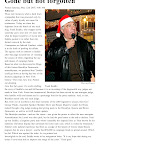
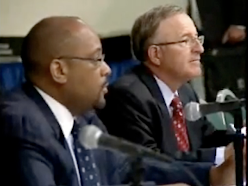
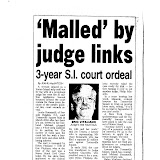
Last week, Brooklyn Federal Judge Nicholas Garaufis effectively ordered the immediate dismantlement of New York's system of privately run, but state-licensed, group homes for the mentally ill. That decision was a slam-dunk victory for activists -- if not for the mentally ill themselves. The judge ordered the cash-strapped state to build 1,500 housing units in each of the next three years -- almost exactly as the activists demanded. And he blasted the state's compromise plan as "patently inadequate." As we noted then, moving the mentally ill into situations with reduced supervision invites disaster: It's why New York had a profound homeless crisis in the '70s and '80s. Garaufis' decision makes no real-world sense -- but he could have had more of a vested interest in this case than most might suspect. It turns out that his wife for 18 years has been an active board member of Fountain House, which describes its mission as "dedicated to the recovery of men and women with mental illness by providing opportunities for our members to live, work and learn" and "the ultimate elimination of stigma against those with mental illness." In short, it's an activist group for the rights of the mentally ill. And while the organization was not a party to the lawsuit, the relationship still constitutes a startling conflict of interest on the part of Judge Garaufis. According to the attorney general's office, which represented the state, Garaufis did raise his wife's affiliation with lawyers for both sides back in 2006, when he first began to hear the case. True, the state's lawyers did not see grounds for a mandatory recusal, in which the judge would automatically disqualify himself from hearing the case. But that's only half the story. Formally challenging the judge to step aside over a question of possible unfairness is fraught with potential professional dangers for a lawyer -- not only in the case at hand, but in future appearances before the same jurist. So Garaufis continued to preside. Frankly, it wasn't enough for the judge simply to raise the issue. He should have understood that his wife's active involvement with the group represented the appearance -- if not the actuality -- of a blatant conflict of interest. He should have stepped aside -- without waiting for the state's lawyers to demand it. As we noted earlier, the judge found wrongly on the merits -- dangerously so. Now the decision resides under an ethical cloud -- unnecessarily so.
MLK said: "Injustice Anywhere is a Threat to Justice Everywhere"
End Corruption in the Courts!
Most Read Stories
- Tembeckjian's Corrupt Judicial 'Ethics' Commission Out of Control
- As NY Judges' Pay Fiasco Grows, Judicial 'Ethics' Chief Enjoys Public-Paid Perks
- New York Judges Disgraced Again
- Wall Street Journal: When our Trusted Officials Lie
- Massive Attorney Conflict in Madoff Scam
- FBI Probes Threats on Federal Witnesses in New York Ethics Scandal
- Federal Judge: "But you destroyed the faith of the people in their government."
- Attorney Gives New Meaning to Oral Argument
- Wannabe Judge Attorney Writes About Ethical Dilemmas SHE Failed to Report
- 3 Judges Covered Crony's 9/11 Donation Fraud
- Former NY State Chief Court Clerk Sues Judges in Federal Court
- Concealing the Truth at the Attorney Ethics Committee
- NY Ethics Scandal Tied to International Espionage Scheme
- Westchester Surrogate's Court's Dastardly Deeds
Tuesday, March 9, 2010
The Conflicted State of New York
Last week, Brooklyn Federal Judge Nicholas Garaufis effectively ordered the immediate dismantlement of New York's system of privately run, but state-licensed, group homes for the mentally ill. That decision was a slam-dunk victory for activists -- if not for the mentally ill themselves. The judge ordered the cash-strapped state to build 1,500 housing units in each of the next three years -- almost exactly as the activists demanded. And he blasted the state's compromise plan as "patently inadequate." As we noted then, moving the mentally ill into situations with reduced supervision invites disaster: It's why New York had a profound homeless crisis in the '70s and '80s. Garaufis' decision makes no real-world sense -- but he could have had more of a vested interest in this case than most might suspect. It turns out that his wife for 18 years has been an active board member of Fountain House, which describes its mission as "dedicated to the recovery of men and women with mental illness by providing opportunities for our members to live, work and learn" and "the ultimate elimination of stigma against those with mental illness." In short, it's an activist group for the rights of the mentally ill. And while the organization was not a party to the lawsuit, the relationship still constitutes a startling conflict of interest on the part of Judge Garaufis. According to the attorney general's office, which represented the state, Garaufis did raise his wife's affiliation with lawyers for both sides back in 2006, when he first began to hear the case. True, the state's lawyers did not see grounds for a mandatory recusal, in which the judge would automatically disqualify himself from hearing the case. But that's only half the story. Formally challenging the judge to step aside over a question of possible unfairness is fraught with potential professional dangers for a lawyer -- not only in the case at hand, but in future appearances before the same jurist. So Garaufis continued to preside. Frankly, it wasn't enough for the judge simply to raise the issue. He should have understood that his wife's active involvement with the group represented the appearance -- if not the actuality -- of a blatant conflict of interest. He should have stepped aside -- without waiting for the state's lawyers to demand it. As we noted earlier, the judge found wrongly on the merits -- dangerously so. Now the decision resides under an ethical cloud -- unnecessarily so.
Friday, March 5, 2010
Committee to Governor Paterson: Turn Corruption Upside Down
PRESS RELEASE
For Immediate Release
Recently Formed Governmental Oversight Organization on Public Integrity Asks Governor to Investigate Operations of All State Ethics Units
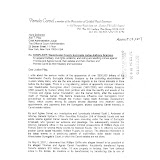
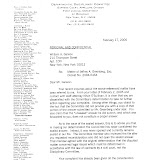
New York, New York - Committee on Public Integrity (CPI) , a newly formed statewide coalition of government watchdog groups, has asked New York State Governor David A. Paterson to immediately suspend funding of the state’s ethics bodies, including the Commission on Judicial Conduct and the four attorney grievance committees. In addition, CPI has requested that Governor Paterson issue an Executive Order initiating a “Performance Audit” of all statewide ethics entities. In seeking the Governor’s immediate intervention, CPI cited the past conduct of the New York State Commission on Judicial Conduct, which it has called “irreversibly corrupt.” In addition, CPI confirmed that four-year-long research by its members has specifically documented dozens of criminal acts at the attorney ethics committees in Manhattan, Brooklyn and Westchester. CPI also noted that this endemic corruption has created a state fiscal problem which has led to the diversion of hundreds of millions of dollars from the state treasury. In addition to CPI, numerous elected New York State judges have recently appeared before federal and state legislative committees in support of the immediate need for extraordinary measures to deal with the conduct of the New York State Commission on Judicial Conduct. Other judges and attorneys have called upon federal and state legislators adopt measures to place the four statewide departmental attorney ethics committees under the control of a federal monitor. Frank Brady, chairman of co-founder Integrity in the Courts, issued the following statement in support of the CPI actions: “In New York State, well documented complaints of malpractice, personal attacks and even theft, filed by individuals victimized by judges and attorneys have revealed that the court system is corrupt to the core. The intervention of Governor Patterson is a necessary step in a process designed to hold court officials and attorneys accountable for their illegal actions, which threaten to undermine the standards of fairness and integrity on which our system of justice is founded.” John T. Whitely, president of Public Committee on Attorney Conduct stated, “For too long, we have allowed our court system to be controlled by officials and employees often to the detriment of the citizens they are expected to serve. Indeed, the system is often found to be dominated and controlled strictly by money, favoritism and cronyism. The time has come for a top to bottom review of the fatally flawed government system which remains shielded from public scrutiny.”
Inquiries should be sent to Committee onPublic Integrity via email at: Committee onPublicIntegrity@gmail.com. Telephone inquiries can be directed to 347-632-9775. For additional information, contact the CPI website at www.committeeonpublicintegrity.com.
Committee On Public Integrity
www.CommitteeOnPublicIntegrity.com
“Injustice anywhere is a threat to justice everywhere.” (Dr. Martin Luther King, Jr.)
February 26, 2010
The Honorable David Paterson,
Governor of The State of New York
The State Capital
Albany, New York 12224
Via U.S. Mail Delivery Confirmation # 03081400000250073184
RE: Request to Suspend Funding for, and the Issuance of an Executive Order Directing a “Performance Audit” over, all Statewide “Ethics” Bodies.
Dear Governor Paterson:
We understand you and your staff are fully aware that our research has revealed, and fully documented, the corruption that plagues the New York State Court “ethics” oversight structure. We have documented countless examples where attorneys, litigants, state employees and, in fact, judges have been targeted for annihilation because of a political whim or as the result of the vengeful, misguided desires and illegal actions of a few. Conversely, we have discovered evidence of many outrageous, unethical and criminal acts by certain individuals within and about the state court system that have been routinely overlooked and covered up as the result of their favored positions or political affiliations and contributions.
We have presented numerous elected New York State judges to appropriate federal entities in Washington, D.C., and before state legislative committees, who personally appeared in support of the immediate need for extraordinary measures to deal with the outrageous conduct of the New York State Commission on Judicial Conduct. Without question, the CJC is irreversibly corrupt. So too are the four statewide departmental attorney ethics committees. (Incidentally, we have over three dozen judges who will similarly testify as to the corruption within New York’s “ethics” entities.)
Immediately troubling is the revelation from public testimony before Senate Judiciary Chairman Senator John L. Sampson of the existence of dozens of complaints that have been systematically “white-washed” by the Commission on Judicial Conduct. (See attached NYS Senate hearing transcripts: Albany-June 8, 2009 & Manhattan –September 24, 2009) This endemic corruption presents a state fiscal problem as well. Kindly note the tabbed section pertaining to the diversion of hundreds of millions of dollars away from the state coffers. Furthermore, our four-year-long research has specifically documented dozens of criminal acts at the Manhattan attorney ethics committee, under Alan Friedberg, and at the Westchester ethics committee under Gary Cassella. It must be noted, however, that the improper acts by those charged with ethics oversight is indeed a state-wide problem.
The time for action is now. Accordingly, we respectfully request that you immediately suspend all funding- except for, perhaps, essential funding- directed to all statewide “ethics” bodies. In addition, we request that you issue an immediate Executive Order directing that a “Performance Audit” of all “ethics” entities in the state be initiated. We are confident that future generations of New Yorkers will echo our gratitude for your initiative in moving to restore our faith in our government and in our system of law.
Very truly yours,
Franklin N. Brady
Committee on Public Integrity
347-632-9775
Tuesday, March 2, 2010
Committee Calls On Feds for Federal Monitor Over NY State Court System
March 2, 2010
The Honorable Preet Bharara,
United States Attorney for the Southern District of New York
The United States Department of Justice
New York, New York 10007
The Honorable Joseph M. Demerest, Jr.
Assistant Director in Charge , New York
26 Federal Plaza, 23rd Floor
New York, New York 10278-0004
RE:
2 top New York State Judges (Hon. Jonathan Lippman and Hon. Charles Ramos)
(2) Request for Appointment of Federal Monitor Over the New York State Court System
Dear Sirs:
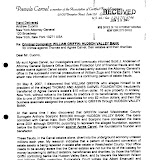
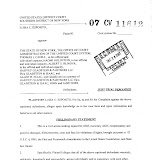
Our research has revealed, and fully documented, a troubling state court “ethics” oversight structure that is itself corrupt. We have documented countless examples where the law, attorneys, litigants, state employees and, in fact, judges have been targeted for annihilation simply because of a political whim or from the vengeful, misguided desires of a few. Conversely, we have evidence of many outrageous and criminal acts, in violation of various federal laws, by certain individuals within and about the New York State court system that have been substantively overlooked for no other reason than their favored position or political affiliation.
It is most troubling when evidence and witnesses appear to be ignored involving serious allegations that involve New York State’s Chief Justice, Jonathan Lippman, and an Appellate Division Associate Justice, Charles Ramos. The apparent common denominators are “greed of money” and “thirst for power,” results propelled by a corrupted “ethics” oversight structure in and about the entire New York State Court System. The widespread crimes, in violation of federal laws, against families, state employees and citizens are outrageous, and must end. New York State needs Federal Intervention.
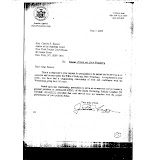
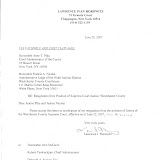
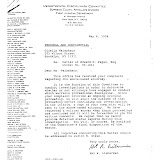
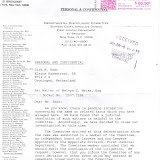
OVERVIEW: New York State Supreme Court Justice Charles E. Ramos received a "waiver" of the Rules Governing Judicial Conduct from then-Chief Administrative Judge Lippman based upon information he (Ramos) provided in writing. The “waiver” pre-approved Judge Ramos to be co-executor of two estates of a couple who were alive; the “waiver” also approved Judge Ramos’ in a role over various family trusts.
DOCUMENTED FACTS: The highly unusual "waiver" of the State Judicial Rules was given by then-Chief Administrative Judge Jonathan Lippman on May 7, 2003. The May 7, 2003 dated letter from the Administrative Judge allowed Judge Ramos "to be named and to serve as a co-executor and trustee under the Wills of Ruth and Herb Weissberg.” (see attached) However, on May 7, 2003, Ruth and Herb were very much alive. And though Herbert Weissberg would die about 2 months later, on July 3, 2003, it was known that Herb had had a stroke and couldn’t speak, due to dementia and aphasia, for well over one year prior to his death.
While Judge Lippman's letter reiterates Justice Ramos' contention that he "had a longstanding relationship of trust and confidence with the Weissbergs going back 36 years"(see attached), there is no mention as to why the original March 24, 2002 dated Will did not name Charles E. Ramos as an executor or trustee but, instead, the Last Will named trusted accountant Andrew Rubin and long-time friend attorney Paul Herman as co-executors. It was only by virtue of a subsequent Codicil, purportedly by the long-incapacitated and dying Herbert Weissberg that Andrew Rubin and Paul Herman were removed as named co-fiduciaries, and replaced with Judge Ramos and the frail, soon-to-be-widow, Ruth Weissberg as the new named co-fiduciaries. Witnesses confirm that Herb could barely say “yes” or “no” and was in a fetal position during the last year of his life. People who knew the Weissberg family for decades were shocked to hear that Judge Ramos had presented himself as a long time "dear friend" of Herbert Weissberg.
It appears that other plans to wrestle control of Herb's millions were in the works. It is also alleged that in October of 2001, Herbert Weissberg’s attorney, Paul Herman, went to the hospital to visit Herb, who was at that time extremely ill and unable to speak due to dementia and aphasia. While it cannot be determined exactly how many documents, purportedly signed by Herbert Weissberg, emerged from that hospital visit, or exactly from whom, what is certain is that Herb’s signature varies significantly from one writing to another on papers with the exact same date. One document, supposedly prepared by Herb, misspells the word “Gramercy” – as in the Gramercy Park Hotel- the place Herbert Weissberg had run for decades. Out of thin air, but with a judicial waiver in hand, Judge Ramos then appeared and became a paid trustee. The question remains that if Judge Ramos was such “a close, personal friend of the family” and as was presented to Judge Lippman, then Judge Ramos surely would have known that Herb Weissberg had been very ill, could barely scribble a signature, and could not communicate or understand anything complex- all long before the codicil giving him (Ramos) so much was even drafted. Simply, people with Dementia and Aphasia do not initiate complex estate changes.
ALLEGATIONS: (1) Judge Ramos, in early 2003, filed papers within the New York State Court system containing knowingly false information, so to advance a scheme, in violation of various federal laws, where he would improperly, and financially, gain; and (2) Judge Lippman, since at least mid-2007, has been aware of the false presentation of information by Judge Ramos, and he has failed, and he continues to fail, to take appropriate action as required by law.
In late 2007, and as arranged by FBI SSA R-E-D-A-C-T-E-D, the attached information was personally presented to FBI Special Agents R-E-D-A-C-T-E-D and R-E-D-A-C-T-E-D. As confirmed in January of 2010, and upon information and belief, material witnesses have never been contacted. In fact, and as also presented during that meeting, was a list of over R-E-D-A-C-T-E-Dnames of state employees willing to testify as to the involved crimes and cover-up. Upon information and belief, not one person has been contacted.
As we continue our efforts with elected officials in Albany and Washington, D.C., we are confident that future generations will echo our gratitude that both of you will begin a process to restore New York citizens’ sadly lost faith in their government and in their system of law.
Accordingly, we respectfully request that you immediately begin the process for the appointment of a Federal Monitor over the affairs of the New York State Court System. To that end, we ask that you further, and publicly, announce a hotline where citizens may contact a federal entity to present evidence and allegations of violations of federal laws within and about the New York State Court System.
All the best,
Franklin N. Brady
CommitteeOnPublicIntegrity.com &
ExposeCorruptCourts.blogspot.com
CommitteeOnPublicIntegrity@gmail.com
Watchdog Groups Combine Efforts Against Corruption
PRESS RELEASE
For Immediate Release
Coalition of New York Court Watchdog Groups Combine Efforts by Jointly Founding Committee on Public Integrity – CPI
New Governmental Oversight Organization on Public Integrity Is Formed by Public Committee on Attorney Conduct, Committee on Public Integrity, Litigation Recovery Trust, Integrity in the Courts and Expose Corrupt Courts Blog Organizations
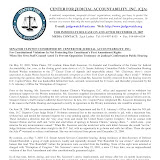
New York, New York - Committee on Public Integrity - CPI - has been founded as part of a national movement to hold New York State governmental organizations, officials and employees accountable under stringent standards of fairness, transparency and citizen review. The new organization has been established jointly by Public Committee on Attorney Conduct, Citizens United for Court Reform, Litigation Recovery Trust, a New York based rights administration organization, and Integrity in the Courts and Expose Corrupt Courts, leading Internet blogs focused on attorney disciplinary process and procedures. Committee on Public Integrity is being headquartered in New York City. In announcing plans for the new oversight group, John T. Whitely, president of Public Committee on Attorney Conduct stated, “For too long, we have allowed government to be controlled by officials and employees often to the detriment of the citizens they are expected to serve. Indeed, the system is often found to be dominated and controlled strictly by money, favoritism and cronyism. The keystone of this reform effort must be to change and in some cases replace the current failed system with new structures, directly answerable to the general public.” William J. Hallenbeck, executive director of Litigation Recovery Trust, stated that this new umbrella reform organization is being founded in part as a result of the growing number of federal whistle blower lawsuits. In New York State in particular suits have been filed to expose cronyism, self-dealing and fraud within the justice system. Mr. Hallenbeck noted, “Clearly, as suits against the court administration system continue to be filed, the time has come for a top to bottom review of the fatally flawed government system which remains shielded from public scrutiny.” Frank Brady, chairman and co-founder of Integrity in the Courts, also issued the following statement: “In New York State, well documented complaints of malpractice, personal attacks and even theft, filed by individuals victimized by attorneys have revealed that the court system is corrupt to the core. The establishment of Committee on Public Integrity is a necessary step in a process designed to hold officials accountable for their illegal actions, which threaten to undermine the standards of fairness and integrity on which our system of government is founded.” According to the founding organizations, Committee on Public Integrity will include as members individuals, who through their personal and professional lives have established a reputation of responsibility and fairness. Mr. Hallenbeck added, “We are in search of a committee to be made up of members with broad and diverse business experience and expertise, as well as impeccable records of fairness and sound judgment to review breaches of law and ethics.”
##### 30 ####
John T. Whitely
Chairman Executive Search Committee
Public Committee on Attorney Conduct
515 Madison Avenue
New York, NY 10022
Telephone 347-632-9775
E-mail: pcacinformation@gmail.com
Web: pcac.8k.com
Expose Corrupt Courts
Email:corruptcourt@gmail.com
Web: www.exposecorruptcourts.blogspot.com
Litigation Recovery Trust
515 Madison Avenue
New York, New York
Telephone 6462019269
E-mail: lrtinformation@gmail.com
Web: litigationrecoverytrust.8k.com
Frank Brady
www.frankbrady.org
Email: franknbrady@gmail.com
About Public Committee on Attorney Conduct
The Public Committee On Attorney Conduct reviews both past and present cases brought before the New York State grievance committees to provide an independent assessment and analysis of the facts, and issue proposed findings. With respect to past cases, the committee will hear from persons, who maintain that they have been treated unfairly and unjustly by the state disciplinary committees. As part of its efforts, the committee is actively seeking documentation of all complaints against any attorneys dating to January 1, 1988. Public Committee On Attorney Conduct includes as members individuals, who through their personal and professional lives have established a reputation of responsibility and fairness. While attorneys will be available to the PCAC as advisers, all voting members issuing formal reports and decisions will be non attorneys. PCAC is the first such lawyer conduct review organization in the U.S. to be controlled solely by non attorneys.
About Litigation Recovery Trust
Founded in 1995, Litigation Recovery Trust is a New York based claims and rights administration organization. LRT pursues claims and causes of action worldwide, and processes single and group litigation claims, as well as general rights fees and awards. LRT also participates in legislative and administrative initiatives designed to protect or advance individual claims and rights.
About Integrity in the Courts
Integrity in the Courts is a Internet blog, which focuses on ethical and legal issues related to the administration of justice nationwide. Issues impacting both the judiciary and the bar are examined, including compliance with codes of judicial conduct, and codes of professional responsibility. Violations of law and failure to abide by codes of conduct are monitored, together with actions leading to disciplinary rulings, including attorney admonishments, reprimands, censures, suspensions and court ordered losses of licenses to practice law.
About Expose Corrupt Courts
Since beginning publication in March 2007, Expose Corrupt Courts has become one of the leading sources of both public and inside information concerning bench and bar misconduct. While the blog focuses primary attention on the court system of New York State, it regularly covers stories of interest throughout the U.S. Expose Corrupt Courts has led coverage of the massive corruption charges that have been filed against the attorney grievance committees in New York resulting in the filing of over a dozen law suits with the federal district court in Manhattan.
Friday, February 26, 2010
Governor Learns Exactly How Corrupt New York Machine Is
The New York Law Journal by Joel Stashenko - February 26, 2010
ALBANY, NY - Denise O'Donnell resigned yesterday as Governor David A. Paterson's deputy secretary for public safety, saying she had been kept in the dark about the possible intervention of New York State Police personnel on behalf of a close aide to Mr. Paterson who had been accused of domestic violence. "I regret to inform you that recent events make it impossible for me, in good conscience, to remain a member of your Administration," Ms. O'Donnell, 62, wrote to the governor in a brief letter. "Please accept my resignation, effective immediately." Ms. O'Donnell said in a statement that she had not known about the involvement of the state police, one of the agencies she supervised, until Wednesday night after The New York Times reported that the alleged domestic violence victim had complained that the troopers had harassed her in an effort to persuade her to drop her bid for an order of protection in Bronx Family Court against David W. Johnson, Mr. Paterson's aide. The Times also reported that Mr. Paterson had talked with the woman just before she was due to return to court for a final order. She did not show up for the scheduled appearance, and her request was dismissed without prejudice. "The fact that the governor and members of the State Police have acknowledged direct contact with a woman who had filed for an order of protection against a senior member of the governor's staff is a very serious matter," Ms. O'Donnell said in a statement. "These actions are unacceptable regardless of their intent." Ms. O'Donnell said that she had been informed in January by State Police Superintendent Harry Corbitt that a senior administrative aide had been involved months earlier in a violent incident with his girlfriend. However, she said that Mr. Corbitt had assured her the matter would be handled by local police and the state police would stay out of it. Ms. O'Donnell, a former U.S. attorney for the Western District and one-time candidate for state attorney general, said, "It is particularly distressing that this could happen in an administration that prides itself on its record of combating domestic violence. The behavior alleged here is the antithesis of what many of us have spent our entire careers working to build—a legal system that protects victims of domestic violence and brings offenders to justice." Mr. Paterson has denied any wrongdoing in the scandal. While he acknowledges that he talked to Mr. Johnson's girlfriend, he insisted that she had called him to reassure the governor that she was not the source of rumors about his private life, according to the Times. Lawrence B. Safler, the lawyer for the woman, whom the Associated Press identified as Sherruna Booker, 40, disputes both claims. He said she was called by an intermediary, who said the governor wanted to talk to her, which she did.
Mr. Paterson suspended Mr. Johnson without pay and requested an investigation by the state police and Attorney General Andrew Cuomo, a probable rival in this year's campaign for governor. Mr. Cuomo issued a brief statement yesterday in which he said his office is "proceeding to determine if criminal or other wrongdoing is involved" in the matter. The New York Post reported on its blog that Mr. Cuomo had asked the state police to "stand down" from looking into the Johnson matter because of the agency's possible involvement. The state police said that it would not comment on any aspect of the investigation; Mr. Paterson's office had no immediate comment on Ms. O'Donnell's resignation. In an appearance earlier in the day on a New York City radio station, Mr. Paterson said he had turned the Johnson matter over to Mr. Cuomo and did not care to comment. Mr. Johnson, 37, started as an intern for Mr. Paterson when the future governor was a state senator. Mr. Johnson, who had risen to become one of the most senior and influential aides to the governor, was earning $132,000 a year as director of executive services when he was suspended.
Growing Influence Cut Short
Ms. O'Donnell had steadily gathered titles and influence over law enforcement matters during her three-plus years within state government. Appointed by former Governor Eliot Spitzer as commissioner of Criminal Justice Services, she headed an agency that largely collected crime statistics, coordinated law enforcement efforts between agencies and helped apply for crime-fighting grants. But in July 2007, Ms. O'Donnell was named by Mr. Spitzer as assistant secretary for criminal justice amid an earlier scandal in which then-state police superintendent Preston L. Felton was accused of using state police personnel to improperly compile the travel records of Mr. Spitzer's bitter political rival, Senator Joseph L. Bruno. At that time, Mr. Spitzer said, "It is critical that we take immediate and direct action to restore public confidence in one of our most important government functions" by giving Ms. O'Donnell supervisory duties over the state police (NYLJ, July 26, 2007). Elevated to deputy secretary for public safety when Michael Balboni resigned in January 2009, Ms. O'Donnell also was given supervisory control over 13 other law enforcement and criminal justice agencies in addition to the state police. They included the Department of Correctional Services, the Division of Parole and the Office of Homeland Security. She also was called upon by Mr. Paterson for crisis management, helping direct the state's response to the February 2009 commuter airplane crash near Buffalo in which 50 people were killed, and the April 2009 shooting rampage at a Binghamton immigration center that left 14 dead. She headed several commissions or study groups, including the Commission on Sentencing Reform, which recommended simplifying the state's patchwork of criminal codes. She earned high marks from families of prison inmates for being willing to discuss with them face-to-face their frustrations at state parole board policies that seemed to consign some inmates to perpetually being denied their release by parole boards, despite their often excellent programming and rehabilitation records while behind bars. Ms. O'Donnell earned a salary of $165,000. She maintained her campaign committee following her unsuccessful run for the 2006 Democratic nomination for attorney general against Mr. Cuomo. According to the fund's January 2010 filing with the state Board of Elections, Ms. O'Donnell had $346,650 in hand, well below other potential Democratic attorney general hopefuls who have said they would run if Mr. Cuomo takes on Mr. Paterson for governor (NYLJ, Jan. 19). Mr. Paterson brought Mr. Corbitt out of retirement in 2008 to fill the opening originally created by the retirement of Mr. Felton. Mr. Felton was ultimately fined $10,000 by the state Commission on Public Integrity for violating Public Officers Law in allowing state police personnel to be used to discredit Mr. Bruno. Mr. Corbitt had been a 25-year veteran of the state police when he retired in 2004, working his way up from trooper to deputy superintendent. Most recently, he had been in charge of security at Albany High School.
Calls to Quit Campaign
With Ms. O'Donnell's resignation, calls for Mr. Paterson to end his candidacy for a full term rose in volume. "That's a very serious blow," Senator Bill Perkins, a Democrat who represents the Harlem district Mr. Paterson once served as senator, said of Ms. O'Donnell's departure. "She has been loyal, so the Cabinet, so to speak, is falling apart." Mr. Paterson was lieutenant governor in March 2008 when Mr. Spitzer resigned amid a prostitution scandal. "What we are learning is unacceptable, and the viability of [Mr. Paterson's] candidacy is obviously crippling," Mr. Perkins told The Associated Press, calling the reports "very, very serious allegations." "I obviously am torn in terms of having to take the position I am taking," Mr. Perkins said. "I have known him for over 20 years." Representative Steve Israel, a fellow Democrat and longtime congressional member from Long Island, said it is time for friends to be straight with Mr. Paterson. "I think it's become apparent that he should not seek election and should announce it soon," Mr. Israel said. "And sometimes friends have to speak unpleasant truths."
The fact that the Governor and members of the State Police have acknowledged direct contact with a woman who had filed for an order of protection against a senior member of the Governor's staff is a very serious matter. These actions are unacceptable regardless of their intent. It is particularly distressing that this could happen in an Administration that prides itself on its record of combating domestic violence. The behavior alleged here is the antithesis of what many of us have spent our entire careers working to build – a legal system that protects victims of domestic violence and brings offenders to justice.In early January, following a breakfast meeting on another subject, State Police Superintendent Harry Corbitt informed me that a senior Administration staff member had been involved in an incident months earlier where a Domestic Incident Report was filed. Superintendent Corbitt told me the staff member had an argument with his girlfriend, that a Domestic Incident Report had been filed, but that there was no arrest and that the matter was being handled as a local police matter by the New York Police Department. My immediate concern was what role the State Police would take in the investigation and I was assured by Superintendent Corbitt that the State Police were not involved. It was only last night when I learned from press reports the contrary details, including the involvement of the State Police. For these reasons, I am resigning my position as Commissioner of the Division of Criminal Justice Services and Deputy Secretary of Public Safety effective today.
Legal Experience: New York State Deputy Secretary for Public Safety, since 2009; Commissioner, Division of Criminal Justice Services, since 2007; Partner, Hodgson Russ, 2001-2007; U.S. attorney for the Western District, 1997-2001 (the nation's first woman U.S. attorney);Assistant U.S. attorney, Western District, 1985-1997
Other: Democratic primary candidate, New York attorney general, 2006
Education: J.D., Buffalo Law School, 1982; M.S.W., State University at Buffalo; B.A., Canisius College
Personal: Born in Buffalo; married to Supreme Court Justice John F. O'Donnell; two children
Thursday, February 25, 2010
Family Court Attorney is a Prostitute and Dominatrix, says Ex
The New York Post by TOM TOPOUSIS and SELIM ALGAR - February 25, 2010
Wednesday, February 24, 2010
Lack of Judges' Raise Unconstitutional; Corruption Whistleblower Retaliation Still OK
Court of Appeals rules for jurists, but lawmakers cite huge budget deficit
The Albany Times Union by JIMMY VIELKIND - February 24, 2010
So the fate of judicial pay now stands where it began: before the governor and the Legislature. The Pigott ruling did contain a warning that "it should keep in mind, however, that whether the Legislature has met its constitutional obligations in that regard is within the province of this Court. ... We therefore expect appropriate and expeditious legislative consideration." "The Assembly will consider this matter when economic conditions improve," Speaker Sheldon Silver, D-Manhattan, said in a statement. His staffers said state revenues are growing more slowly than projected. "It is difficult to justify pay raises for anyone in public service," concurred Senate Democratic Conference Leader John Sampson. "Controlling spending among all sectors of government is not an easy decision, but it is the right decision at this time for the people of New York." Through his spokesman, Gov. David Paterson renewed his call for the Legislature to establish a Quadrennial Commission "that periodically would review and adjust judicial compensation." Its recommendations would be submitted to the Legislature for an up-or-down vote "without linkage to any extraneous notions." "The judiciary deserves such a straightforward analytical approach," said Paterson spokesman Morgan Hook. The governor's office also struck a fiscally conservative note: "We note that today's ruling from the Court of Appeals does not order any immediate legislative action. Indeed, considering New York's finances, a full pay raise at this time would be a large burden as we try and close a $8.2 billion deficit," Hook said in a statement. Chief Judge Jonathan Lippman recused himself from the court proceedings, and called the decision "groundbreaking." "The Legislature must now remedy the constitutional violation, and we expect them to do so in good faith and expeditiously," Lippman said in a broadcast address to the state's judges. "We are cognizant of the state's fiscal situation, but that does not detract one iota from the fact that judges have not received so much as a single cost of living adjustment in more than 11 years. If the other branches do not proceed in accordance with the court's decision, I will not hesitate to act in a manner consistent with the constitutional duties and obligations imposed upon me as the head of an independent branch of government." Lippman did not elaborate on what actions he might take. Staff writer Jimmy Vielkind can be reached at 454-5081 or by e-mail at jvielkind@timesunion.com.
Pay for the bench - The base pay of judges in the state ranges from $120,000 to $156,000:
Chief judge: $156,000
Associate judges: $151,000
Appellate Division: $144,000
State Supreme Court: $136,700
County: $137,000-$120,000
Family: $137,000-$120,000
Note: Some judges receive an additional stipend.
***** HERE'S THE DECISION:
Maron v. Silver, 16; Larabee v. Governor, 7; Chief Judge v. Governor, 18
NEW YORK STATE COURT OF APPEALS
Government - New York Law Journal -February 24, 2010
Opinion by Judge Pigott. Judges Ciparick, Graffeo, Read and Jones concur. Judge Smith dissents and votes to affirm in an opinion. Chief Judge Lippman took no part.
Feb. 23, 2010; Case No. 16: Steven Cohn, for appellants; Richard H. Dolan, for respondents; Association of Justices of the Supreme Court of the State of New York, et al., amici curiae
Case No. 17: Richard H. Dolan, for appellants-respondents and respondent; Thomas E. Bezanson, for respondents-appellants; Association of Justices of the Supreme Court of the State of New York, et al.; New York County Lawyers' Association; Atlantic Legal Foundation et al.; Zachary W. Carter; Asian American Bar Association of New York, et al., amici curiae
Case No. 18:Bernard W. Nussbaum, for appellants-respondents; Richard H. Dolan, for respondents-appellants; Fund for Modern Courts; Association of Justices of the Supreme Court of the State of New York, et al., amici curiae
PIGOTT, J.—The constitutional arguments raised in these judicial compensation appeals are premised upon, among other things, alleged violations of the New York State Constitution's Compensation Clause and the Separation of Powers Doctrine. Because the Separation of Powers doctrine is aimed at preventing one branch of government from dominating or interfering with the functioning of another co-equal branch, we conclude that the independence of the judiciary is improperly jeopardized by the current judicial pay crisis and this constitutes a violation of the Separation of Powers Doctrine.
I. Factual Background
The compensation of justices and judges of the Unified Court System, with certain exceptions not applicable here, is governed by article 7-B of the Judiciary Law (see Judiciary Law §§221-221-i). Article VI, section 25-a of the New York Constitution, also known as the "Compensation Clause", directs that the compensation of justices and judges "shall be established by law and shall not be diminished during the term of office for which he or she was elected or appointed." The last time the Legislature adjusted judicial compensation was in 1998, through the amendment of Judiciary Law article 7-B (see L 1998, ch 630 §1, eff. Jan. 1, 1999). That adjustment increased the annual salaries of this State's Judiciary to make them commensurate with the salaries paid their federal counterparts.1 Now, however, New York State ranks nearly last of the 50 states in its level of judicial compensation, adjusting for the cost of living. It is estimated that, over the last eleven years, the real value of judicial salaries has declined by approximately 25 percent to 33 percent. At the time the roughly 1300 judges and justices who comprise the so-called "Article VI judges" (i.e. judges covered by Article VI of the New York State Constitution) received the pay raise that was enacted in 1998, they presided over 3.5 million cases. Ten years later, in 2008, the judges presided over a staggering 4.5 million cases, 38 percent of which were criminal (approximately 1.71 million cases), 42 percent civil (approximately 1.89 million cases), 17 percent family court (approximately 765,000 cases) and 3 percent surrogates court (approximately 135,000 cases) (see New York State Unified Court System, Annual Report 1998 and 2008).
In 2006, the Judiciary submitted to Governor Pataki, as part of its proposed annual budget, a request for $69.5 million to fund salary adjustments for the approximately 1300 Article VI judges, retroactive to April 1, 2005. The intention was to restore pay parity with federal judicial salaries. Although made part of the State budget (see L 2006, ch 51, §2), the Legislature failed to authorize disbursement of the appropriation, because the Legislature and the Governor could not agree on a pay increase for the legislators themselves. The following year, Governor Spitzer included in his Executive Budget more than $111 million for judicial pay raises, retroactive to April 1, 2005, which, if implemented, would have placed salaries of State Supreme Court justices at an amount roughly on a par with federal judicial compensation. The Legislature removed that provision from the budget two months later. In April 2007, the Senate passed a bill (2007 NY Senate Bill S5313) increasing judicial compensation, this time retroactive to January 1, 2007, and calling for the creation of a commission to review future salary increases for both judges and legislators. Governor Spitzer refused to support this legislation, however, unless the Legislature enacted campaign finance and ethics reform measures. Two months later, the Governor expressed support for a "judges only" pay bill. Shortly thereafter, the Senate passed another bill (2007 NY Senate Bill S6550) providing for an increase in judicial salaries, this time without any corresponding increase for legislators. It also called for the establishment of a commission to examine future increases in judicial salaries taking into account the needs of the Judiciary and the State's ability to pay. The Assembly refused to act on that bill because it did not provide for an increase in legislative pay. The following year, Governor Paterson and the Legislature approved a budget for 2008-2009 that included $48 million for judicial salary increases. Like the 2006-2007 appropriation, this was a so-called "dry appropriation" requiring further legislation before the salaries could be paid— legislation that was never enacted. All parties to this litigation agree that Article VI justices and judges have earned and deserve a salary increase. That is what makes this litigation unique. Although the parties have been in accord regarding the need to adjust judicial compensation, the failure of the Legislature and the Executive to come to an agreement on legislation effecting a pay increase has led to the continuing inertia underlying this dispute.
II. Procedural History
Maron v. Silver, et al.
The Maron petitioners—current and former State Supreme Court Justices—commenced this hybrid CPLR article 78 proceeding/declaratory judgment action against respondents Sheldon Silver, as Speaker of the Assembly, Joseph Bruno, then Temporary President of the Senate, Eliot Spitzer, then Governor of New York, Thomas DiNapoli in his capacity as State Comptroller, the Assembly and Senate and the Office of Court Administration.2 The article 78 proceeding seeks mandamus relief compelling the Comptroller to disburse all retroactive sums and pay the budgeted raises allocated in the 2006-2007 state budget for judicial salary reform. The petition also asserts violations of the Separation of Powers Doctrine, equal protection and the state Compensation Clause. Supreme Court, Albany County, partially granted defendants' motion to dismiss the petition for failure to state a cause of action, leaving intact the separation of powers claim. The court further held that Silver, Bruno and Spitzer were immune from suit because setting judicial salaries is a legislative act, and concluded that to the extent the petition alleged a constitutional violation against the Assembly and Senate, those allegations constituted claims against the State.3 In a 4-1 decision, the Appellate Division dismissed the petition, holding, among other things, that the Maron petitioners' failure "to allege a discriminatory attack on the judicial branch that has impaired or imminently threatened the Judiciary's independence and ability to function" was fatal to their separation of powers claim (Maron v. Silver, 58 AD3d 102, 123 [3d Dept 2008]). The Maron petitioners appealed to this Court as of right on the constitutional questions presented. This Court retained jurisdiction over the appeal and denied leave to appeal as unnecessary (see Maron v. Silver, 12 NY3d 909 [2009]).
Larabee v. Governor, et al.
The Larabee plaintiffs—members of the New York State Judiciary—commenced this declaratory judgment action against Eliot Spitzer, in his capacity as Governor, the New York State Assembly and Senate, and the State, alleging violations of the state Compensation Clause and the Separation of Powers Doctrine. Supreme Court, New York County, granted the State defendants' motion to dismiss the Compensation Clause cause of action but, similar to the Supreme Court in Maron, concluded that the Larabee plaintiffs had sufficiently pleaded a separation of powers claim (see Larabee v. Spitzer, 19 Misc 3d 226, 231-237 [Sup Ct, New York County 2008]). Supreme Court dismissed the complaint in its entirety as against Governor Spitzer, noting that the Larabee plaintiffs conceded that he was not an "essential party" to the action, all parties having agreed that the Assembly, Senate and State were proper parties (see id. at 237-239). Supreme Court subsequently granted the Larabee plaintiffs summary judgment on the separation of powers cause of action (see Larabee v. Governor, 20 Misc 3d 866, 877 [Sup Ct, New York County 2008]). The State defendants appealed from that order and the Larabee plaintiffs cross-appealed from Supreme Court's order dismissing their Compensation Clause claim. The Appellate Division affirmed both orders (Larabee v. Governor, 65 AD3d 74 [1st Dept 2009]). The Larabee plaintiffs and State defendants appealed as of right and we retained jurisdiction.
Chief Judge v. Governor, et al.
The Chief Judge plaintiffs—former Chief Judge Judith S. Kaye4 and the New York State Unified Court System—commenced this declaratory judgment action asserting three causes of action against David Paterson, Sheldon Silver, Joseph Bruno, all in their respective official capacities, and the Assembly, Senate and State. The complaint asserts one cause of action premised on a violation of the state Compensation Clause under a different theory than that posed by the Maron and Larabee plaintiffs; namely, that the diminution in judicial salaries has had a discriminatory effect on the Judiciary, rendering unconstitutional the salaries codified in Judiciary Law §§221 through 221-i. The two remaining claims are grounded on the Separation of Powers Doctrine. One of the claims is similar to those raised in the Maron and Larabee litigation; the other is premised on the theory that the Judiciary cannot function as a co-equal branch if it is not assured of receiving "adequate compensation," and that the judicial salaries codified in Judiciary Law §§221-221-i are constitutionally insufficient. The State defendants moved to dismiss the complaint for failure to state a cause of action. Supreme Court, New York County, searched the record and granted the Chief Judge plaintiffs summary judgment on the separation of powers claim that was similar to the one raised in Larabee, but dismissed the remaining causes of action attacking the constitutionality of Judiciary Law §§221-221-i (see Chief Judge v. Governor, 25 Misc 3d 268, 271-273 [Sup Ct, New York County [2009]). As in Larabee, Supreme Court dismissed the complaint in its entirety as against the Governor (see id. at 271-272). The State defendants appealed to the Appellate Division, which affirmed for the reasons stated in Larabee (see Chief Judge v. Governor, 65 AD3d 898, 898 [1st Dept 2009]). The Chief Judge plaintiffs appealed Supreme Court's order directly to this Court pursuant to CPLR 5601(b)(2) and we retained jurisdiction over the appeal. Because the Chief Judge plaintiffs challenged the constitutionality of the judicial salaries set forth in Judiciary Law §§221-221-i, the direct appeal from the order of Supreme Court was proper.5 The State defendants appealed as of right from the Appellate Division's affirmance of Supreme Court's order granting the Chief Judge plaintiffs summary judgment on the separation of powers claim.
III. Rule of Necessity
Members of the Court of Appeals are paid via the salary schedule delineated in Judiciary Law §221 and therefore will be affected by the outcome of these appeals. Ordinarily, when a judge has an interest in litigation, recusal is warranted. But this case falls within a narrow exception to that rule. Because no other judicial body with jurisdiction exists to hear the constitutional issues raised herein, this Court must hear and dispose of these issues pursuant to the Rule of Necessity (see Maresca v. Cuomo, 64 NY2d 242, 247 n 1 [1984], appeal dismissed 474 US 802 [1985] [addressing a challenge to the state Constitution's mandatory retirement age requirements for certain state judges] citing Matter of Morgenthau v. Cooke, 56 NY2d 24, 29 n 3 [1982]).
IV. Non-Constitutional Statutory Claim (Maron Petitioners Only)
The Maron petitioners assert that the constitutional issues raised on these appeals can be avoided should this Court find that they are entitled to relief in the nature of mandamus compelling the Comptroller to pay the $69.5 million appropriated in the 2006-2007 state budget. As support for this argument, petitioners focus on chapter 51 of the laws of 2006 addressing "Judicial Compensation Reform." That provision contained a $69.5 million budget item "[f]or expenses necessary to fund adjustments in the compensation of state-paid judges and justices of the unified court system pursuant to a chapter of the laws of 2006" (emphasis supplied). Petitioners claim that the Comptroller improperly impounded these funds and should be ordered to release them to provide for judicial salary increases. A CPLR article 78 proceeding seeking mandamus to compel the performance of a specific duty applies only to acts that are ministerial in nature and not those that involve the exercise of discretion (see Gimprich v. Board of Educ. of City of N.Y., 306 NY 401, 406 [1954]; see also Siegel, NY Prac §558, at 958 [4th ed]). Because of the constitutional requirement that judicial compensation be "established by law" (NY Const, art VI, §25 [a]), mandamus does not lie in this instance because no subsequent chapter law was enacted either amending the Judiciary Law salary schedules or directing the disbursement of the funds. The $69.5 million referenced in the Judicial budget was explicitly made contingent upon the adoption of additional legislation, i.e. a chapter of the laws of 2006. Had the Legislature intended that the judicial compensation appropriation be self-executing, as petitioners claim, there would have been no need for the qualifying language. Moreover, a mere provision calling for a lump sum payment of $69.5 million without repeal or revision of the Judiciary Law article 7-B judicial salary schedules is further evidence that additional legislation was required before the funds could be disbursed. We, therefore, conclude that the Appellate Division properly dismissed petitioners' cause of action seeking mandamus against the Comptroller.
V. Constitutional Claims (All Litigants)
A. Equal Protection
The Judiciary as a "Suspect Class" (Maron Petitioners)
The Maron petitioners are the only litigants in these appeals who have alleged that the Judiciary constitutes a "suspect class" that has been denied equal protection under the law because judicial pay raises have been historically contingent on or "tied to" salary increases for legislators. They also assert that the State defendants' rationale for refusing to increase judicial salaries fails to pass the "strict scrutiny" test or the less stringent rational basis test. For the reasons set forth in the Appellate Division order, we conclude that Supreme Court properly dismissed that cause of action (see Maron, 58 AD3d at 123-124).
B. Compensation Clause
The Maron petitioners and the Larabee plaintiffs assert Compensation Clause causes of action that are premised on their claims that judicial salaries have been unconstitutionally diminished because of inflation. The Chief Judge plaintiffs posit an additional argument, asserting that the Legislature's act of freezing judicial salaries while increasing the salaries of 195,000 other state employees amounted to discrimination against the Judiciary.
Diminution by "Pure Inflation" (Maron and Larabee)
The state Compensation Clause provides, in relevant part, that the compensation of members of the Judiciary "shall be established by law and shall not be diminished during the term of office for which he or she was elected or appointed" (NY Const, art VI, §25 [a]). The purpose of this "Compensation Clause" is the same as its federal counterpart: to promote judicial independence and ensure that the pay of prospective judges, who choose to leave their practices or other legal positions for the bench, will not diminish (see United States v. Will, 449 US 200, 221 [1980]). The Maron petitioners and Larabee plaintiffs base their Compensation Clause arguments on an identical theory: By failing to increase judicial compensation, the Legislature has allowed inflation to considerably diminish the "real value" of judicial salaries, violating the state Compensation Clause's prohibition against diminution. They further claim that the state Compensation Clause's prohibition against diminishment should include the diminishment of compensation by any cause, including inflation. Since the inception of our State Constitution, this State has grappled with the issue of how best to establish the parameters of judicial compensation. In 1846, the Constitutional Convention adopted the phrase "shall not be increased or diminished"; an 1869 amendment, however, deleted the words, "increased or," allowing for the increase of compensation, but not a decrease (see Carter, New York State Constitution: Sources of Legislative Intent, at 85 [1988]). The 1894 Constitution restored the 1846 "shall not be increased or diminished" language, which was thereafter deleted in its entirety in 1909 and adopted a specific constitutional provision fixing salaries for certain judges at $10,000 per year (see Matter of Gresser v. O'Brien, 146 Misc 909, 917-918 [Sup Ct, New York County 1933], affd 263 NY 622 [1934]). In 1921, a Judiciary Constitutional Convention was held to consider, among other things, amendments to the state Constitution concerning judicial compensation (see Judiciary Constitutional Convention of 1921: Report to Legislature, at 3 [1/4/22]). The Convention criticized the 1909 Compensation Clause amendment's inclusion of a salary schedule in the Constitution, stating that judicial compensation "'should, in the judgment of the present convention, be left entirely to the legislature, which after all is the body always directly in touch with and responsible to the people'" (New York State Constitutional Convention Committee, Problems Relating to Judicial Administration and Organization, at 339 [1938], quoting Judiciary Constitutional Convention of 1921: Report to Legislature, at 29).
In recommending removal of the salary schedule, the Convention considered the deleterious effects of inflation on judicial compensation and how it could negatively impact the independence and effectiveness of the Judiciary, ultimately concluding that the Legislature was in the best position to address that issue (see Judiciary Constitutional Convention of 1921: Report to Legislature, at 29). In 1925, the state Compensation Clause's "shall not be diminished" language was reinstated and remains unchanged (see Carter, at 85). It is evident from the events pre-dating the 1925 amendment that the concept of diminution of compensation was of paramount concern, and the final outcome was to authorize the Legislature to remedy any deficiencies; notably, the Legislature was precluded from diminishing salaries in recognition of the risk that salary manipulation might be used as a tool to retaliate for unpopular judicial decisions. Although the state Compensation Clause plainly prohibits the diminution of judicial compensation by legislative act during a judge's term of office, there is no evidence in the history of the Clause's enactment or subsequent amendments that supports a broad interpretation embracing indirect diminishment by neglect. Thus, there is no evidence that the state Compensation Clause's "no diminishment" rule was intended to affirmatively require that judicial salaries be adjusted to keep pace with the cost of living.6 In this regard, the state provision is comparable to the federal Compensation Clause (US Const, art III, §1) which also contains the same "shall not be diminished" language. Like the drafters of the state Compensation Clause, the Framers of the federal Constitution were cognizant of the effects of inflation on judicial compensation, but nonetheless left that determination to the discretion of the Legislature.
At least two proposals concerning inflation were offered at the federal Constitutional Convention. One suggestion was that the fluctuations in the value of judicial compensation could be accounted for "by taking for a standard wheat or some other thing of permanent value" (2 M. Farrand, The Records of the Federal Convention of 1787, at 45 [1911]). The other suggestion left judicial compensation to the discretion of the Legislature, which was in a better position to address inflationary concerns (see Will, 449 US at 219-220, supra; see also Hamilton, Federalist No. 79 ["It (is) therefore necessary to leave it to the discretion of the legislature to vary (compensation) in conformity to the variations in circumstances, yet under such restrictions as to put it out of the power of that body to change the condition of the individual for the worse"]). The latter approach carried the day, with the Convention adopting a motion to allow an increase of judicial compensation by Congress and, as a result, "accepting a limited risk of external influence in order to accommodate the need to raise judges' salaries when times changed" (Will, 449 US at 220). Contrary to the contention of the Maron petitioners and Larabee plaintiffs, federal jurisprudence does not support their assertion that the state and federal Compensation Clauses prohibit "indirect" diminution of compensation due to inflation. Although the cases cited support the general proposition that judicial compensation may not be either "directly" or "indirectly" reduced, none of them stands for the proposition that the Legislature's failure to adjust compensation to account for inflation constitutes an indirect attack on judicial compensation. In Evans v. Gore, a federal judge challenged, on federal Compensation Clause grounds, Congress's authority to include sitting federal judges within the scope of a federal income tax law that the Sixteenth Amendment had authorized years earlier, claiming that the imposition of such a tax constituted a diminishment in salary (see 253 US 245, 247 [1920], overruled by United States v. Hatter, 532 US 557 [2001]). In finding the tax violative of the federal Compensation Clause, the Evans court noted that "diminution may be effected in more ways than one. Some may be direct and others indirect and even evasive… But all which by their necessary operation and effect withhold or take from the judge a part of that which has been promised by law for his services must be regarded as within the prohibition" (id. at 254). In Miles v. Graham, the United States Supreme Court extended the Evans holding to those judges who assumed office after the tax had become law (see Miles v. Graham, 268 US 501, 508-509 [1925], overruled in part by O'Malley v. Woodrough, 307 US 277 [1939]). The O'Malley court overruled Miles, but left the core holding of Evans intact (see O'Malley, 307 US at 282-283). However, the Supreme Court in United States v. Hatter overruled Evans "insofar as it holds that the Compensation Clause forbids Congress to apply a generally applicable, nondiscriminatory tax to the salaries of federal judges, whether or not they were appointed before enactment of the tax" (Hatter, 532 US at 567). The Hatter court agreed with Evans, however, "insofar as it holds that the Compensation Clause offers protections that extend beyond a legislative effort directly to diminish a judge's pay, say, by ordering a lower salary… Otherwise a legislature could circumvent even the most basic Compensation Clause protection by enacting a discriminatory tax law, for example, that precisely but indirectly achieved the forbidden effect" (id. at 569 [emphasis supplied]). The evolution of Supreme Court jurisprudence from Evans to Hatter establishes that a nondiscriminatory tax that treats judges the same as other citizens is permissible, but direct diminution of compensation or the discriminatory taxation of judges is not. In either case, it is the diminishment of salary by Congress, be it direct or indirect, that is prohibited. Here, the Legislature has not enacted legislation that has directly diminished judicial compensation in violation of the state Compensation Clause, nor has it enacted discriminatory legislation that has indirectly resulted in the diminution of judicial compensation. The claim is that inflation has had this effect. However, at least as far as the federal Compensation Clause is concerned, the intention of the Framers was that Congress would serve as the failsafe that prevents inflation from eating away at the real value of judicial salaries (see Atkins v. United States, 556 F2d 1028, 1048 [US Ct of Claims 1977] cert denied 434 US 1009 [1978] [addressing inflation]). There is no reason for this Court to depart from that rationale, because it is evident from the history surrounding the enactment of our state Compensation Clause that, although the diminution in value of judicial compensation by inflation was a concern, the drafters decided that the best way to combat the effects of inflation was to count on the Legislature—the body directly accountable to the public—to assure the fair and appropriate compensation of the judiciary. We therefore determine that the Legislature's failure to address the effects of inflation in this case does not equate to a per se violation of the Compensation Clause.
Compensation Clause—Discrimination (Chief Judge)
The Chief Judge plaintiffs' Compensation Clause argument is distinctly different from the claims raised by the other litigants. Rather than contending that inflation resulted in the unconstitutional diminution of judicial salaries, they assert that by freezing judicial salaries while repeatedly increasing the salaries of almost all of the remaining 195,000 state employees to keep pace with the cost of living, the State defendants discriminated against the Judiciary in violation of the state Compensation Clause. This argument is premised exclusively on the Supreme Court's holding in Hatter (532 US 557, supra), which involved a Social Security tax law that, at the time of its enactment, mandated that all newly-hired federal employees participate in the Social Security program. The law also offered almost all of the then-currently employed federal employees (96 percent) the option to participate without any additional financial obligation. But it created an exception for the remaining four percent of currently employed federal employees, however, which required members of that class—who contributed to a "covered" retirement program—to participate in the system without any further additional financial obligation. The legislation left those who did not participate in a "covered" program (i.e., a group consisting "almost exclusively" of federal judges) without a choice; their financial obligations and payroll deductions would increase as a result of the imposition of the new tax (id. at 562-564). In finding the law violative of the federal Compensation Clause as discriminatory against judges, the Hatter court noted that the Social Security legislation was "special—in its manner of singling out judges for disadvantageous treatment, in its justification as necessary to offset advantages related to constitutionally protected features of the judicial office, and in the degree of permissible legislative discretion that would have to underlie any determination that the legislation has 'equalized' rather than gone too far." It was these elements that made the Social Security tax distinctly different from a nondiscriminatory tax (id. at 576). According to the Chief Judge plaintiffs, just as the Social Security tax law in Hatter imposed a discriminatory tax on the Judiciary, inflation has the same impact on judicial compensation as a tax and, although the failure to remedy it in and of itself may not violate the state Compensation Clause, in this case the Judiciary has been singled out because nearly all of the other 195,000 state employees have received salary increases to compensate in part for inflation. We are unpersuaded that relief is warranted under the Hatter analysis. First, Hatter involved a legislative enactment that discriminated against federal judges by reducing the compensation of judges only; the situation here does not involve any legislative enactment that directly or indirectly diminishes judicial compensation. Second, although other state employees have received adjustments to account for inflation, judges are not the only state employees whose salaries have not been adjusted; the Governor, Lieutenant Governor, members of the Legislature and other constitutional officers have also not received salary increases since 1999. We therefore cannot say that judges have been disadvantaged in a manner comparable to the discriminatory treatment in Hatter. Therefore, Supreme Court properly dismissed this cause of action.
C. Separation of Powers
Speech or Debate Clause Defense (State Defendants)
Before we address plaintiffs' separation of powers arguments, we consider the legislative defendants' primary defense that both houses of the Legislature and their leaders are immune from any such claim under the Speech or Debate Clause. The state Speech or Debate Clause provides that "[f]or any speech or debate in either house of the legislature, the members shall not be questioned in any other place" (NY Const, art III, §11). The scope of immunity this provision bestows upon members of the Legislature provides "as much protection as the immunity granted by the comparable provision of the Federal Constitution" (People v. Ohrenstein, 77 NY2d 38, 53 [1990] [citation omitted]), and "protects against inquiry into acts that occur in the regular course of the legislative process and into the motivation for those acts" (United States v. Brewster, 408 US 501, 525 [1972]). The Appellate Division in Maron dismissed the separation of powers cause of action because, to the extent the Legislature failed to either increase judicial compensation due to inaction or because it tied such increases to "political wrangling over unrelated issues," such failure constitutes a legislative function protected by article III, §11 (Maron, 58 AD3d at 121-123). The courts in Larabee and Chief Judge, however, concluded that the Speech or Debate Clause did not bar review. The Speech or Debate Clause applies to only "members" and to "any speech or debate in either house." Nowhere does the Clause state that such immunity applies to either house of the Legislature as a whole, and therefore, it does not apply to the Assembly or the Senate. For the same reason, the State may not assert this defense. In any event, all of the parties acknowledge that the Judiciary is entitled to an increase in compensation, and the State defendants have made proclamations outside of the Legislative and Executive Chambers as to why such an increase has not occurred (see e.g. Ohrenstein, 77 NY2d at 54 [issuance of press releases and newsletters deemed not protected legislative acts]; see also Rivera v. Espada, 98 NY2d 422, 428 [2002] [same]; Hutchinson v. Proxmire, 443 US 111 [1979]). As a result, this Court need not inquire "into acts that occur in the regular course of the legislative process" or the Legislature's motives for such acts (see Brewster, 408 US at 525), eliminating the danger of the Judiciary intruding upon the independence of the legislative branch. We therefore address the merits of the separation of powers arguments. Failure by Legislature to Independently and Objectively Consider Compensation Increases (Maron, Larabee and Chief Judge)
The Maron petitioners and the Larabee and Chief Judge plaintiffs all make the same separation of powers argument: By tying judicial compensation to unrelated legislative objectives and policy initiatives, as opposed to conducting an independent assessment of judicial compensation, the Legislature has disregarded the Separation of Powers Doctrine and threatened the independence of the Judiciary. The State defendants counter that there is nothing in the constitutional text or framework prohibiting the Legislature from considering judicial compensation along with other prerogatives. Furthermore, any declaration condemning that practice as unconstitutional would itself constitute a separation of powers violation by the Judiciary through intrusion into budgetary and appropriations processes. In Maron, the Appellate Division dismissed petitioners' claim on the ground that their failure "to allege a discriminatory attack on the judicial branch that has impaired or imminently threatened the Judiciary's independence and ability to function" was fatal to the claim (Maron, 58 AD3d at 123). This claim met with greater success in Larabee and Chief Judge, where the Appellate Divisions in each of those cases upheld the Supreme Court's award of summary judgment to those plaintiffs (see Chief Judge, 65 AD3d 898, 898 [1st Dept 2009]; Larabee, 65 AD3d at 74).
The concept of the separation of powers is the bedrock of the system of government adopted by this state in establishing three co-ordinate and co-equal branches of government, each charged with performing particular functions (see generally Under 21, Catholic Home Bur. for Dependent Children v. City of New York, 65 NY2d 344, 355-356 [1985]; Oneida County v. Berle, 49 NY2d 515, 522 [1980]). The Constitution's aim "is to regulate, define and limit the powers of government by assigning to the executive, legislative and judicial branches distinct and independent powers," thereby ensuring "an even balance of power [among] the three" (People ex rel. Burby v. Howland, 155 NY 270, 282 [1898]). The separation of the three branches is necessary "'for the preservation of liberty itself,'" and "'[i]t is a fundamental principle of the organic law that each department should be free from interference, in the discharge of its peculiar duties, by either of the others'" (Berle, 49 NY2d at 522 quoting Burby, 155 NY at 282). To accomplish this important goal, Articles III, IV and VI of the state Constitution address the respective powers conferred upon, and respective compensation of, the Legislature, Executive and Judiciary. Article III states that "[t]he legislative power of this state shall be vested in the senate and the assembly" (NY Const, art III, §1), and that "[e]ach member of the legislature shall receive for his or her services a like annual salary, to be fixed by law…[but] the salary of any member…may [not] be increased or diminished during, and with respect to, the term for which he or she shall have been elected" (NY Const, art III, §6). Article IV states that "[t]he executive power shall be vested in the governor, who shall hold office for four years" (NY Const, art IV, §1), and who "shall receive for his or her services an annual salary to be fixed by joint resolution of the senate and assembly" (NY Const, art IV, §3). Article VI states that "[t]here shall be a unified court system of the state" (NY Const, art VI, §1) and that the compensation of judges and justices within that system "shall be established by law and shall not be diminished during the term of office for which he or she was elected or appointed" (NY Const, art VI, §25 [a]). We find it significant that the compensation provisions for each branch of government are not contained in Article III where the powers of the legislative branch are articulated, but rather are separately addressed in the article for each respective branch. Although a function of the Legislature is to approve the compensation of each of the three branches, this fact underscores only the checks and balances of the system; it does not rebut the fact that the compensation to be paid to members of each particular branch must be determined separately and distinctly from the others. Indeed, whether the Judiciary is entitled to a compensation increase must be based upon an objective assessment of the Judiciary's needs if it is to retain its functional and structural independence. Simply put, by failing to consider judicial compensation increases on the merits, and instead holding it hostage to other legislative objectives, the Legislature "[w]eaken[s the Judiciary]…by making it unduly dependent" on the Legislature (Burby, 155 NY at 282).
Separate budgets, separate articles in the Constitution, and separate provisions concerning compensation are all testament to the fact that each branch is independent of the other. This, of course, does not mean that the branches operate without concern for the other. Both the Legislature and the Governor rely on the good faith of the other and of the Judiciary for the good of the State. As members of the two "political" branches, the Governor and Legislature understandably have the power to bargain with each other over all sorts of matters including their own compensation. Judges and justices, on the other hand, are not afforded that opportunity. They have no seat at the bargaining table and, in fact, are precluded from participating in politics. The judicial branch therefore depends on the good faith of the other two branches to provide sufficient funding to fulfill its constitutional responsibilities. Given its unique place in the constitutional scheme, it is imperative that the legitimate needs of the judicial branch receive the appropriate respect and attention. This cannot occur if the Judiciary is used as a pawn or bargaining chip in order to achieve ends that are entirely unrelated to the judicial mission. For instance, the Constitution prohibits legislators from increasing or decreasing their own salaries during their two-year term of office, but there is no such prohibition against the Legislature addressing judicial compensation at any time. Moreover, state legislators are part-time and may supplement their income through committee assignments, leadership positions and other outside employment. Judges are constitutionally forbidden from engaging in any employment that would interfere with their judicial responsibilities (see NY Const, art VI, §2 [b] [4]). But by failing to consider judicial compensation independently of legislative compensation, the State defendants have imposed upon the Judiciary the same restrictions that have been imposed on the Legislature, and have blurred the line between the compensation of the two branches, thereby threatening the structural independence of the Judiciary.
The State defendants assert that it is within their legislative rights to consider judicial compensation not on the merits but relative to unrelated policy initiatives. But they overlook the fact that they are treating judicial compensation—which falls within the scope of their constitutional duties—as if it were merely another government program appropriation as opposed to compensation for members of a co-equal branch. We do not attribute the State defendants' failure to increase judicial compensation to any nefarious purpose. Indeed, it is not necessary to consider, or find, the existence of any improper motive. All parties agree that a salary increase is justified and, yet, those who have the constitutional duty to act have done nothing to further that objective due to disputes unrelated to the merits of any proposed increase. This inaction not only impairs the structural independence of the Judiciary, but also deleteriously affects the public at large, which is entitled to a well-qualified, functioning Judiciary (see O'Donoghue v. United States, 289 US 516, 533 [1933] [prohibition against diminution is to attract competent people to the bench, promote independence of the Judiciary, and for the public interest]).
It must be remembered that the Separation of Powers Doctrine "is a structural safeguard rather than a remedy to be applied only when specific harm, or risk of specific harm, can be identified. In its major features…it is a prophylactic device, establishing high walls and clear distinctions because low walls and vague distinctions will not be judicially defensible in the heat of interbranch conflict" (Plaut v. Spendthrift Farm, Inc., 514 US 211, 239 [1995] [emphasis in original]). Here, the allegations by the Maron petitioners are sufficient to state a separation of powers claim. As that case is here before us on a CPLR 3211 motion to dismiss, our corrective action is limited to a reinstatement of that cause of action. In Larabee and Chief Judge, the procedural posture of the cases is not so limiting and we may now issue a declaration. We hold that under these circumstances, as a matter of law, the State defendants' failure to consider judicial compensation on the merits violates the Separation of Powers Doctrine. However, when "fashioning specific remedies for constitutional violations, we must avoid intrusion on the primary domain of another branch of government" (Campaign for Fiscal Equity, Inc. v. State of New York, 8 NY3d 14, 28 [2006]). Indeed, deference to the Legislature—which possess the constitutional authority to budget and appropriate—is necessary because it is "in a far better position than the Judiciary to determine funding needs throughout the state and priorities for the allocation of the State's resources" (id. at 29). The Judiciary may intervene in the state budget "only in the narrowest of instances" (Wein v. Carey, 41 NY2d 498, 505 [1977]), and we do not believe that it is necessary here to order specific injunctive relief. When this Court articulates the constitutional standards governing state action, we presume that the State will act accordingly.
Failure to Provide Adequate Compensation (Chief Judge)
The Chief Judge plaintiffs make a separation of powers claim not raised by the Maron petitioners or Larabee plaintiffs: The separation of powers doctrine requires that the State defendants provide the Judiciary with "adequate judicial compensation" and, because judicial salaries are constitutionally inadequate, the State defendants have breached their constitutional duty. The constitutional inadequacy of judicial salaries, the Chief Judge plaintiffs posit, threatens to impair the Judiciary's ability to function as a co-equal branch. The Compensation Clause was enacted to preserve judicial independence, and we agree with the conclusion of high courts in other jurisdictions that this is dependent, in part, on judges receiving adequate compensation (see Glancy v. Casey, 447 PA 77, 86 [1972] ["it is the constitutional duty and the obligation of the legislature, in order to insure the independence of the judicial…branch of government, to provide compensation adequate in amount and commensurate with the duties and responsibilities of the judges involved"]). Moreover, adequate judicial compensation is necessary to ensure that the public will have its matters heard by competent judges (see Judiciary Constitutional Convention of 1921: Report of the Legislature, at 29, supra) and that judges will be free to issue decisions in accordance with the law without fear of retribution by the other two branches of government. Therefore, we reject the State defendants' claim that the Compensation Clause's language that compensation "shall not be diminished" is the opposite of an "adequate compensation" guarantee. Even counsel for the State defendants in Larabee concede that judicial compensation "could be so low that it could be constitutionally objected to."
The Chief Judge plaintiffs posit that the current salaries of Judiciary Law article 7-B judges and justices are inadequate when compared to other legal positions in the public and private sectors. This argument is one that is best addressed in the first instance by the Legislature. All of the State defendants have conceded, at one point or another, that judicial compensation must be increased. We anticipate that our holding today will permit them to consider, in good faith, judicial salary increases on the merits. The Legislature might find the record compiled in the Chief Judge case to be helpful. There, plaintiffs demonstrate— without rebuttal from the State—that, in real value, New York judges' salaries now rank below judicial salaries in other states and the federal judiciary, despite the complexity of legal issues presented in New York—a world economic center—and the burgeoning case load faced by New York judges. The argument for a cost-of-living increase is not that, in some objective sense, New York Judges do not earn a living wage. Judges made no such argument when this litigation commenced in much better economic times and certainly do not press such a contention now. The claim is that, due to the lack of a cost-of-living increase for more than 11 years, judges no longer earn salaries that are appropriate given the significance of their position in our tri-partite form of government and the role they play in ensuring the rights of all members of society. That role has increased substantially since the last compensation adjustment. For instance, the Judiciary's workload has increased by 10 percent over the past four years alone. Since 2005, Family Court's workload has increased 16 percent, civil filings in Supreme Court have increased more than 14 percent, and the caseloads in the New York City Civil Courts and those city courts outside of New York City have risen by 13 and 17 percent, respectively. Moreover, state courts handle over 90 percent of the filings as compared to the less than 10 percent handled by our federal courts. Judicial salaries need not be exorbitant, but they must be sufficient to attract well-qualified individuals to serve. Otherwise, only those with means will be financially able to assume a judicial post, negatively impacting the diversity of the Judiciary and discriminating against those who are well qualified and interested in serving, but nonetheless unable to aspire to a career in the Judiciary because of the financial hardship that results from stagnant compensation over the years.
IV. Conclusion
It is unfortunate that this Court has been called upon to adjudicate constitutional issues relative to an underlying matter upon which all have agreed; namely, that the Judiciary is entitled to a compensation adjustment. By ensuring that any judicial salary increases will be premised on their merits, this holding aims to strike the appropriate balance between preserving the independence of the Judiciary and avoiding encroachment on the budget-making authority of the Legislature. Therefore, judicial compensation, when addressed by the Legislature in present and future budget deliberations cannot depend on unrelated policy initiatives or legislative compensation adjustments. Of course, whether judicial compensation should be adjusted, and by how much, is within the province of the Legislature. It should keep in mind, however, that whether the Legislature has met its constitutional obligations in that regard is within the province of this Court (see Marbury v. Madison, 1 Cranch 137, 177 [1803]). We therefore expect appropriate and expeditious legislative consideration. Accordingly, In Maron, the order of the Appellate Division should be modified, without costs, by remitting to Supreme Court for further proceedings in accordance with this opinion, and as so modified, affirmed. In Larabee, the order of Appellate Division should be modified, and in Chief Judge, the judgment of Supreme Court and the order of the Appellate Division should be modified, without costs, by granting judgment declaring that under the circumstances of these cases, as a matter of law, the State defendants' failure to consider judicial compensation on the merits violates the Separation of Powers Doctrine, and by allowing for the remedy discussed in this opinion, and, as modified, affirmed.
SMITH, J. (dissenting)—I share my colleagues' dismay at the Legislature's behavior in dealing with, or rather failing to deal with, judges' salaries, but I cannot agree that any of its actions or inactions are unconstitutional. The majority holds that the Legislature has violated the separation of powers by its failure to consider judicial salaries "based upon an objective assessment of the Judiciary's needs" (op at 27) or to give "appropriate respect and attention" to the needs of the judicial branch (op at 28). Undoubtedly, all branches of government should evaluate each other's needs objectively and treat each other with respect, but I know no warrant for thinking that objectivity and respect are commanded by the Constitution. These qualities are so amorphous and subjective that they can provide no workable standard for constitutional decision-making. As the Appellate Division in Maron put it, "nothing in the NY Constitution forbids the political branches from engaging in politics when carrying out their political functions" (Maron v. Silver, 58 AD3d 102, 122 [3d Dept 2008]). Separation of powers is violated not when one of the three branches acts irresponsibly—that happens all the time—but when one threatens the place of another in the constitutional scheme. Thus I might well agree that separation of powers was violated if the actual or imminent effect of the Legislature's conduct were to make the recruitment of competent judges impossible, or to render judges subservient to the other branches of government. I need not expand on this point; it is well explained both in the Appellate Division's Maron opinion (58 AD3d at 116-23)and in Atkins v. United States (556 F2d 1028, 1054-57 [Ct Cl 1977], cert denied 434 US 1009 [1978]), a federal case involving facts much like those before us now. Bad as the present situation is, neither of the disastrous conditions I have mentioned—a bench that cannot be filled with competent people, or one whose financial dependence makes it the slave of the Legislature —exists or is close to existing. It is a depressing truth that some of our finest judges have left, or are thinking of leaving, their jobs because of the Legislature's failure to deal with the salary issue; but it is also true that there are still plenty of able judges, and plenty of able people who would willingly become judges, even at today's pay levels. And I have seen no evidence of judicial subservience to the Legislature; the problem, if there is one, is to restrain judges' understandable displeasure with that branch of our government. I would affirm the Appellate Division order in Maron, and would modify the orders in Larabee and Chief Judge to dismiss all claims in the complaints.
Case No. 16: Order modified, without costs, by remitting to Supreme Court, Albany County, for further proceedings in accordance with the opinion herein. Opinion by Judge Pigott. Judges Ciparick, Graffeo, Read and Jones concur. Judge Smith dissents and votes to affirm in an opinion. Chief Judge Lippman took no part.
Case No. 17: Order modified, without costs, by granting judgment declaring that, under the circumstances of this case, as a matter of law, the State defendants' failure to consider judicial compensation on the merits violates the separation of powers doctrine, and by allowing for the remedy discussed in the opinion herein, and, as so modified, affirmed. Opinion by Judge Pigott. Judges Ciparick, Graffeo, Read and Jones concur. Judge Smith dissents in an opinion. Chief Judge Lippman took no part.
Case No. 18: On plaintiffs' appeal and defendants' cross appeal, judgment of Supreme Court and order of the Appellate Division modified, without costs, by granting judgment declaring that, under the circumstances of this case, as a matter of law, the State defendants' failure to consider judicial compensation on the merits violates the separation of powers doctrine, and by allowing for the remedy discussed in the opinion herein, and, as so modified, affirmed. Opinion by Judge Pigott. Judges Ciparick, Graffeo, Read and Jones concur. Judge Smith dissents in an opinion. Chief Judge Lippman took no part.
- 1. For reference, according to the Federal Judicial Center, more than 90 percent of the cases filed annually are in state courts, less than 10 percent are filed in the federal system.
- 2. The sole claim asserted against the OCA involved judicial health benefits. That claim has been severed from this action by stipulation and is not at issue on this appeal.
- 3. For ease of reference, all defendants to these litigations are collectively referred to as "State defendants."
- 4. The parties have since stipulated to substitute Chief Judge Jonathan Lippman for former Chief Judge Kaye.
- 5. Based on these conclusions, the State defendants' contention that the Chief Judge plaintiffs' appeal from Supreme Court should be dismissed for lack of jurisdiction is with out merit.
- 6. That being said, as indicated later in this opinion, we do not rule out the possibility that a total neglect by the Legislature to consider or address judicial salaries could never, depending on the passage of time and changes in the value of money, cause salaries to dip so low that they fall below a constitutionally permissible floor. To choose an extreme example, if the Legislature had not raised salaries since 1909 when certain judges earned an annual salary of $10,000, a very different case would be presented.
New York State Court of Appeals - Opinion by Judge Pigott. Judges Ciparick, Graffeo, Read and Jones concur. Judge Smith dissents and votes to affirm in an opinion. Chief Judge Lippman took no part. Feb. 23, 2010