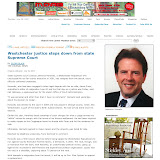
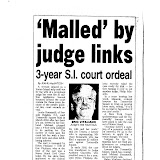
Judge borrows 8OG from real estate family, then hires lender's brother
The New York Daily News By NANCIE L. KATZ
DAILY NEWS STAFF WRITER - Tuesday, February 12th 2008
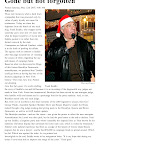
Mitchell Shpelfogel
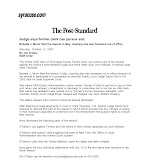
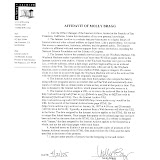
A Brooklyn judge who took an $80,000 loan from a prominent real estate family hired one of the sons for her coveted court attorney job - even before he passed the bar exam.
Brooklyn Civil Court Judge Lila Gold appointed Mitchell Shpelfogel, then 22, in January 2006 for the competitive $63,000-a-year state post - only weeks after he graduated from law school.
He passed the bar a month later.
Shpelfogel - whose family's Brighton Beach buildings have had hundreds of violations - said hiring him had nothing to do with his brother, Rafael, 27, lending Gold the money for her uncontested 2003 bid. The loan was quickly repaid.
"There was no quid pro quo. I'm a capable, talented person. We've been family friends for many years," he said. "Why shouldn't she take a family friend, if he's qualified?"
Few state judges hire assistants right out of law school, because the job requires drafting legal opinions. Experienced lawyers often seek the positions as a path to the bench.
Shpelfogel said he doesn't want a judgeship or any other court post when Gold retires.
"I took this job because I'm able to be home and be with my family," said Shpelfogel, a father of two. Gold did not return calls.
The Shpelfogels own at least nine Brooklyn buildings, including a multimillion-dollar Manhattan Beach house and two apartment houses cited for multiple violations.
"They are using the money of their long-suffering tenants to get ahead politically," charged Zev Yourman, a community activist who sued Shpelfogel for defamation.
Tenants at 2822 Brighton Eighth St., owned by patriarch Sam Shpelfogel, showed the Daily News leaks in walls, malfunctioning stoves, uneven floors, mold, broken cabinets and complained of mice.
The city sued Shpelfogel twice since 2004 for more than 1,000 violations settled after he fixed them. Shpelfogel still owes $9,000 for emergency repairs.
Former tenant Yustus Kotz said she moved from 15 Brighton Eighth - where Sam Shpelfogel owes the city $1,468 for emergency repairs and 275 housing violations are listed - after Mitchell Shpelfogel threatened her when she complained about terrible conditions.
"He kicked my door, demanded rent in cash and called me an illegal immigrant and a prostitute," she said.
"You are not impartial," Sam Shpelfogel told a reporter. Rafael Shpelfogel could not be reached.
nkatz@nydailynews.com
Click Here To See Related Story
Wednesday, February 13, 2008


Forged Documents by Big NY Attorney Center of Merrill Lynch Fraud Suit (MORE, CLICK HERE)
Forged Letters From Prominent Local Lawyer at Heart of Merrill Lynch Fraud Suit
New York Lawyer - February 13, 2008
By Mary Pat Gallagher - New Jersey Law Journal
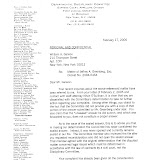
Forged opinion letters, purported to be from a prominent New Jersey lawyer, are at the center of $7 million loan fraud case in federal court in Newark, N.J.
The lawyer, Ben Becker, is the alleged signer of two letters provided to Merrill Lynch Business Financial Services in 2004, along with allegedly fake financial statements, based upon which Merrill Lynch loaned money to an import-export company.
The company, PITTRA G.B. International of Morristown, N.J., thereafter filed for bankruptcy, and the alleged fraud came to light in the Chapter 7 case.
Becker has said he had nothing to do with the opinion letters, which summarize and report the status of certain suits then pending against the Morristown-based company
In a certification dated Sept. 29, 2006, Becker said the signatures were not his, the secretary's initials were not those of his secretary, the font was wrong and, "most importantly, the substance of the letters is unknown to me."
He also said the stationery used for the letters was outdated and did not reflect the composition of the firm at the time the letters were written.
He says he was shocked by the forgery but relieved that it was easy to show that the letters were phony. His disavowal was bolstered by the fact that Amper, Politziner & Mattia, the accounting firm whose name appeared on the financial documents, also disclaimed any connection.
Becker's firm, Becker Meisel in Livingston, N.J., had done work for a company owned by one of PITTRA's principals, Arthur Kupperman, and PITTRA's Chapter 7 case was being handled by Becker Meisel of counsel Douglas Kent.
James Scarpone, the lawyer for the Chapter 7 trustee, says the opinion letters and allegedly fake financial statements were among records he subpoenaed from Merrill Lynch. He also came across documents indicating Wachovia Bank was holding $10 million in escrow for PITTRA's impending sale.
He says he called the accountants, Becker and the bank and discovered that none of the documents purportedly originating with them was legitimate.
The accountants had done work for PITTRA years earlier and Wachovia knew nothing about the $10 million.
Becker says that when Scarpone called him, he didn't think he had written the letters and asked Scarpone to fax them over. Once he saw them, he was certain. Within a day or two, the firm was in court, asking to be let out of the Chapter 7 case. U.S. Bankruptcy Judge Morris Stern granted the request on Oct. 6, 2006.
During a hearing around the same time, Stern asked the U.S. trustee to refer the matter of the allegedly forged documents to the U.S. Attorney's Office.
Jane Limprecht, a spokeswoman for the Office of the U.S. Trustee in Washington, D.C., says she cannot confirm or deny a criminal referral or investigation. Michael Drewniak, a spokesman for the U.S. Attorney's Office, did not return a call seeking comment.
Scarpone says use of fictitious documents to defraud lenders only works if no one checks on the authenticity.
"Old-fashioned bankers used to make phone calls. They used to talk to live people," says Scarpone, of Newark's Robertson Freilich Bruno & Cohen. "Now everything is paper."
Meanwhile, on Oct. 5, 2006, Merrill Lynch sued to recover $4,139,146 loaned to PITTRA. The company was protected by the automatic bankruptcy stay so Merrill Lynch went after the loan guarantors, Kupperman, E. Ross Browne and Paulette Krelman, and PGB International, to which PITTRA allegedly transferred assets to evade creditors. Merrill Lynch claims that PITTRA ceased operations in 2003 but misled it so that it could continue to borrow money.
In their answers, the individual defendants asserted the Fifth Amendment privilege against self-incrimination. Krelman later waived the privilege and has denied knowledge of any fraud.
Merrill Lynch later added JP Morgan Chase Bank as a defendant after learning it loaned $3 million to PGB. The amended complaint alleges that its loan has priority.
Chase has cross-claimed against the other defendants, alleging it loaned the money based on inflated statements showing $8 million in accounts receivable when PGB actually had less than $1.7 million.
George Hirsch, who represents Merrill Lynch, says, "if Ben Becker says he didn't write the letter, you can take that to the bank." Modern technology makes it easy to forge a document, says Hirsch, of Bressler, Amery & Ross in Florham Park.
Hirsch says he has not been contacted by the U.S. attorney about any investigation into the provenance of the opinion letters, "though I probably have information and documents that would be helpful."
Frederick Polak, who represents Krelman, says his client knew nothing about any forgery and had nothing to do with it. "It was appropriate to advise her to take the Fifth until we had an opportunity to review the allegations and facts," says Polak, of Post Polak Goodsell MacNeill & Strauchler in Roseland, N.J. "Based on our analysis, we determined she had done nothing wrong."
A. Michael Covino, of Budd Larner in Short Hills, N.J., who represents Kupperman and PGB, did not return a call for comment. Nor did Browne's lawyer, Vincent Papalia, of Saiber in Newark.
The suit, Merrill Lynch Business Financial Services v. Kupperman, 06-Civ.-4802, is pending before U.S. District Judge Dennis Cavanaugh in Newark, based on diversity jurisdiction. Merrill Lynch is incorporated in Delaware.
New York Lawyer - February 13, 2008
By Mary Pat Gallagher - New Jersey Law Journal
Forged opinion letters, purported to be from a prominent New Jersey lawyer, are at the center of $7 million loan fraud case in federal court in Newark, N.J.
The lawyer, Ben Becker, is the alleged signer of two letters provided to Merrill Lynch Business Financial Services in 2004, along with allegedly fake financial statements, based upon which Merrill Lynch loaned money to an import-export company.
The company, PITTRA G.B. International of Morristown, N.J., thereafter filed for bankruptcy, and the alleged fraud came to light in the Chapter 7 case.
Becker has said he had nothing to do with the opinion letters, which summarize and report the status of certain suits then pending against the Morristown-based company
In a certification dated Sept. 29, 2006, Becker said the signatures were not his, the secretary's initials were not those of his secretary, the font was wrong and, "most importantly, the substance of the letters is unknown to me."
He also said the stationery used for the letters was outdated and did not reflect the composition of the firm at the time the letters were written.
He says he was shocked by the forgery but relieved that it was easy to show that the letters were phony. His disavowal was bolstered by the fact that Amper, Politziner & Mattia, the accounting firm whose name appeared on the financial documents, also disclaimed any connection.
Becker's firm, Becker Meisel in Livingston, N.J., had done work for a company owned by one of PITTRA's principals, Arthur Kupperman, and PITTRA's Chapter 7 case was being handled by Becker Meisel of counsel Douglas Kent.
James Scarpone, the lawyer for the Chapter 7 trustee, says the opinion letters and allegedly fake financial statements were among records he subpoenaed from Merrill Lynch. He also came across documents indicating Wachovia Bank was holding $10 million in escrow for PITTRA's impending sale.
He says he called the accountants, Becker and the bank and discovered that none of the documents purportedly originating with them was legitimate.
The accountants had done work for PITTRA years earlier and Wachovia knew nothing about the $10 million.
Becker says that when Scarpone called him, he didn't think he had written the letters and asked Scarpone to fax them over. Once he saw them, he was certain. Within a day or two, the firm was in court, asking to be let out of the Chapter 7 case. U.S. Bankruptcy Judge Morris Stern granted the request on Oct. 6, 2006.
During a hearing around the same time, Stern asked the U.S. trustee to refer the matter of the allegedly forged documents to the U.S. Attorney's Office.
Jane Limprecht, a spokeswoman for the Office of the U.S. Trustee in Washington, D.C., says she cannot confirm or deny a criminal referral or investigation. Michael Drewniak, a spokesman for the U.S. Attorney's Office, did not return a call seeking comment.
Scarpone says use of fictitious documents to defraud lenders only works if no one checks on the authenticity.
"Old-fashioned bankers used to make phone calls. They used to talk to live people," says Scarpone, of Newark's Robertson Freilich Bruno & Cohen. "Now everything is paper."
Meanwhile, on Oct. 5, 2006, Merrill Lynch sued to recover $4,139,146 loaned to PITTRA. The company was protected by the automatic bankruptcy stay so Merrill Lynch went after the loan guarantors, Kupperman, E. Ross Browne and Paulette Krelman, and PGB International, to which PITTRA allegedly transferred assets to evade creditors. Merrill Lynch claims that PITTRA ceased operations in 2003 but misled it so that it could continue to borrow money.
In their answers, the individual defendants asserted the Fifth Amendment privilege against self-incrimination. Krelman later waived the privilege and has denied knowledge of any fraud.
Merrill Lynch later added JP Morgan Chase Bank as a defendant after learning it loaned $3 million to PGB. The amended complaint alleges that its loan has priority.
Chase has cross-claimed against the other defendants, alleging it loaned the money based on inflated statements showing $8 million in accounts receivable when PGB actually had less than $1.7 million.
George Hirsch, who represents Merrill Lynch, says, "if Ben Becker says he didn't write the letter, you can take that to the bank." Modern technology makes it easy to forge a document, says Hirsch, of Bressler, Amery & Ross in Florham Park.
Hirsch says he has not been contacted by the U.S. attorney about any investigation into the provenance of the opinion letters, "though I probably have information and documents that would be helpful."
Frederick Polak, who represents Krelman, says his client knew nothing about any forgery and had nothing to do with it. "It was appropriate to advise her to take the Fifth until we had an opportunity to review the allegations and facts," says Polak, of Post Polak Goodsell MacNeill & Strauchler in Roseland, N.J. "Based on our analysis, we determined she had done nothing wrong."
A. Michael Covino, of Budd Larner in Short Hills, N.J., who represents Kupperman and PGB, did not return a call for comment. Nor did Browne's lawyer, Vincent Papalia, of Saiber in Newark.
The suit, Merrill Lynch Business Financial Services v. Kupperman, 06-Civ.-4802, is pending before U.S. District Judge Dennis Cavanaugh in Newark, based on diversity jurisdiction. Merrill Lynch is incorporated in Delaware.
NY High Court to Hear UNCONSCIONABLE Fee Case (MORE, CLICK HERE)
NY Firm Accused of Billing "Unconscionable" Fee Faces Day in High Court
February 13, 2008 -New York Law Journal By Anthony Lin
The Court of Appeals will hear a case in which a law firm is accused of foisting an "unconscionable" contingent fee arrangement on a client months before the settlement of her case.
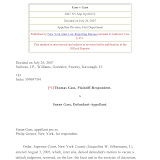
The Appellate Division, First Department, last week granted leave to appeal to Alice Lawrence in her lawsuit against Manhattan law firm Graubard Miller, which represented her for over two decades in litigation over the estate of her late husband, real estate developer Sylvan Lawrence.
In her suit, Ms. Lawrence, 83, sought recission of a January 2005 agreement to pay Graubard Miller 40 percent of a $105 million settlement reached in May 2005. Ms. Lawrence had argued that the contingent fee was "an unconscionable and excessive amount as a matter of law" because the firm sought the arrangement near the end of the litigation rather than at the beginning.
She had previously paid the firm some $18 million in hourly bills, with three individual partners additionally requesting "gifts" totalling $5 million.
In a 4-1 decision last November, Justices Richard T. Andrias, David Friedman, George D. Marlow and Eugene Nardelli ruled that Graubard Miller's fee arrangement was not unconscionable on its face and that further proceedings exploring the parties' understandings would be needed to determine its propriety. But, in a blistering dissent, Justice James M. Catterson, said no court could condone such an excessive fee, regardless of the parties' discussions.
Graubard Miller, represented by Mark Zauderer of Flemming Zulack Williamson Zauderer, has argued that Ms. Lawrence was a sophisticated client who knowingly entered the fee arrangement at issue. Ms. Lawrence is represented by Leslie D. Corwin of Greenberg Traurig.
February 13, 2008 -New York Law Journal By Anthony Lin
The Court of Appeals will hear a case in which a law firm is accused of foisting an "unconscionable" contingent fee arrangement on a client months before the settlement of her case.
The Appellate Division, First Department, last week granted leave to appeal to Alice Lawrence in her lawsuit against Manhattan law firm Graubard Miller, which represented her for over two decades in litigation over the estate of her late husband, real estate developer Sylvan Lawrence.
In her suit, Ms. Lawrence, 83, sought recission of a January 2005 agreement to pay Graubard Miller 40 percent of a $105 million settlement reached in May 2005. Ms. Lawrence had argued that the contingent fee was "an unconscionable and excessive amount as a matter of law" because the firm sought the arrangement near the end of the litigation rather than at the beginning.
She had previously paid the firm some $18 million in hourly bills, with three individual partners additionally requesting "gifts" totalling $5 million.
In a 4-1 decision last November, Justices Richard T. Andrias, David Friedman, George D. Marlow and Eugene Nardelli ruled that Graubard Miller's fee arrangement was not unconscionable on its face and that further proceedings exploring the parties' understandings would be needed to determine its propriety. But, in a blistering dissent, Justice James M. Catterson, said no court could condone such an excessive fee, regardless of the parties' discussions.
Graubard Miller, represented by Mark Zauderer of Flemming Zulack Williamson Zauderer, has argued that Ms. Lawrence was a sophisticated client who knowingly entered the fee arrangement at issue. Ms. Lawrence is represented by Leslie D. Corwin of Greenberg Traurig.
Scariest Lawyer in the World Gets 2 Years (MORE, CLICK HERE)
Contrite and Cowed, "Scariest Lawyer in the World" Gets 2 Years
New York Lawyer - February 13, 2008 - The Recorder By Dan Levine
The gray-haired man in the black robe huffed. And he puffed.
But in the end, Los Angeles federal judge John Walter didn't blow up William Lerach's plea deal. Walter did, however, sentence the former securities class action king Monday to two years in jail — the highest penalty allowed under Lerach's agreement with the government.
The conspiracy at Lerach's former firm, Milberg Weiss, to kick back fees to class action name plaintiffs — and the lies told in court to cover it up — deprived other law firms "who played by the rules" a fair shot at lead counsel in securities cases, Walter said. Indeed, the lies formed the very bedrock of Milberg Weiss's business model, allowing it to prosper and collect millions in fees over the years, the judge said, all based on falsely earned credibility.
Such conduct stands in stark contrast to the generous and bright lawyer described in 159 letters submitted to the court on Lerach's behalf, the judge said.
"With all of his intelligence, I cannot imagine how Mr. Lerach lost his moral compass to become a key member of the conspiracy," Walter said.
Lerach, appearing in a black suit and a subdued blue tie that matched his tone, uttered just a few sentences to Walker, punctuated with pauses just long enough for the row of reporters to take down every word.
"I pled guilty in this case because I was guilty. I knew what I was doing was wrong," he said, halting. "It was, as they say, felony stupid."
Lerach apologized to his family, his former law firm, "and to the legal system I've abused." He added: "The conduct was completely unacceptable. I guess all I can hope is that you won't find it completely unforgivable."
Lerach, 61, pleaded guilty in September to conspiracy in connection with kickbacks paid to Daniel Cooperman, a former Beverly Hills doctor who fingered Lerach in exchange for leniency in an unrelated art fraud prosecution. The government indicted Lerach's former firm, Milberg Weiss, in 2006, along with partners David Bershad and Steven Schulman. The indictments capped a seven-year investigation.
Both Bershad and Schulman have pleaded guilty and agreed to cooperate. They await sentencing, which is scheduled for June. Melvyn Weiss, meanwhile, has pleaded not guilty and is currently scheduled for an August trial.
Some defense lawyers involved in the case said before Lerach's sentencing that if Walter took a harsh posture toward Lerach, it might make Weiss, 72, more likely to take his chances with a jury, figuring that the prospect of leniency before Walter would not be great. Given Weiss' age, though, a conviction at trial could effectively mean a life sentence. Weiss' lawyer, Benjamin Brafman, declined to comment.
Other name plaintiffs involved in the scheme, Howard Vogel and Seymour Lazar, have already been sentenced.
On Monday, Judge Walter did not seem in a forgiving mood. Walter told the full, but not packed, courtroom that but for the plea agreement, he would have sentenced Lerach to a prison term "substantially in excess" of 24 months. The government had asked for 24 months, while Lerach sought six months in jail and six months home confinement.
Before ultimately accepting the deal, Walter interrogated federal prosecutors about their reasons for entering into it. This created a window into the negotiations between the government and Lerach's lawyers, John Keker and Elliott Peters of Keker & Van Nest.
Assistant U.S. Attorney Robert McGahan noted that Lerach came to the government to discuss a plea before Lerach had been notified he would be indicted. Jail time was on the table from the very start of negotiations, McGahan said. The prosecutor at one point described Lerach as a "volunteer" for entering into talks with the government.
That set Walter off.
"Mr. Lerach certainly was not a volunteer in terms of Mr. Lerach calling the government, knocking on their door and saying, 'Here I am,'" the judge said.
Walter noted that Lerach had been under investigation for years, undermining any claim that he suddenly "saw the light."
"That's just not factually true," Walter said. "Being a former federal prosecutor, I know that didn't happen."
At that point McGahan expanded his answer, saying that although the government was confident in its analysis that the statute of limitations would not be an impediment to prosecuting Lerach, it was still a risk.
On the defense side, Keker said he told the government in negotiations that Cooperman was a "defense lawyer's dream" because of all of his shady behavior, and so would not be a credible witness. But Keker also noted that taking the case to a jury would have carried a big risk for Lerach as well, given the huge jail sentence that could follow a conviction.Probing the Milberg Weiss Probe
Federal prosecutors have it in for the ailing class action leviathan. Follow our complete coverage of the kickback investigation.
Ultimately, Walter said he respected the prosecutors and defense lawyers on the case, and that they were "assisted by a well-respected member of the court" who was a former federal prosecutor.
Walter did not identify the mediator, but a lawyer familiar with the case said he believed it was Central District Judge A. Howard Matz, who had already presided over discovery issues in the Milberg Weiss prosecution.
"I have a great deal of respect for my colleague's judgment," Walter said. Moreover, "judges should not intrude on charging decisions of prosecutors," he added.
Lerach will also be on supervised release for two years, pay a $250,000 fine, and disgorge nearly $8 million in fees. He also must complete 1,000 hours of community service.
In 2004 Milberg Weiss Bershad Hynes & Lerach split into two firms: one then known as Lerach Coughlin Stoia Geller Rudman & Robbins in San Diego, and Milberg Weiss Bershad & Schulman in New York.
New York Lawyer - February 13, 2008 - The Recorder By Dan Levine
The gray-haired man in the black robe huffed. And he puffed.
But in the end, Los Angeles federal judge John Walter didn't blow up William Lerach's plea deal. Walter did, however, sentence the former securities class action king Monday to two years in jail — the highest penalty allowed under Lerach's agreement with the government.
The conspiracy at Lerach's former firm, Milberg Weiss, to kick back fees to class action name plaintiffs — and the lies told in court to cover it up — deprived other law firms "who played by the rules" a fair shot at lead counsel in securities cases, Walter said. Indeed, the lies formed the very bedrock of Milberg Weiss's business model, allowing it to prosper and collect millions in fees over the years, the judge said, all based on falsely earned credibility.
Such conduct stands in stark contrast to the generous and bright lawyer described in 159 letters submitted to the court on Lerach's behalf, the judge said.
"With all of his intelligence, I cannot imagine how Mr. Lerach lost his moral compass to become a key member of the conspiracy," Walter said.
Lerach, appearing in a black suit and a subdued blue tie that matched his tone, uttered just a few sentences to Walker, punctuated with pauses just long enough for the row of reporters to take down every word.
"I pled guilty in this case because I was guilty. I knew what I was doing was wrong," he said, halting. "It was, as they say, felony stupid."
Lerach apologized to his family, his former law firm, "and to the legal system I've abused." He added: "The conduct was completely unacceptable. I guess all I can hope is that you won't find it completely unforgivable."
Lerach, 61, pleaded guilty in September to conspiracy in connection with kickbacks paid to Daniel Cooperman, a former Beverly Hills doctor who fingered Lerach in exchange for leniency in an unrelated art fraud prosecution. The government indicted Lerach's former firm, Milberg Weiss, in 2006, along with partners David Bershad and Steven Schulman. The indictments capped a seven-year investigation.
Both Bershad and Schulman have pleaded guilty and agreed to cooperate. They await sentencing, which is scheduled for June. Melvyn Weiss, meanwhile, has pleaded not guilty and is currently scheduled for an August trial.
Some defense lawyers involved in the case said before Lerach's sentencing that if Walter took a harsh posture toward Lerach, it might make Weiss, 72, more likely to take his chances with a jury, figuring that the prospect of leniency before Walter would not be great. Given Weiss' age, though, a conviction at trial could effectively mean a life sentence. Weiss' lawyer, Benjamin Brafman, declined to comment.
Other name plaintiffs involved in the scheme, Howard Vogel and Seymour Lazar, have already been sentenced.
On Monday, Judge Walter did not seem in a forgiving mood. Walter told the full, but not packed, courtroom that but for the plea agreement, he would have sentenced Lerach to a prison term "substantially in excess" of 24 months. The government had asked for 24 months, while Lerach sought six months in jail and six months home confinement.
Before ultimately accepting the deal, Walter interrogated federal prosecutors about their reasons for entering into it. This created a window into the negotiations between the government and Lerach's lawyers, John Keker and Elliott Peters of Keker & Van Nest.
Assistant U.S. Attorney Robert McGahan noted that Lerach came to the government to discuss a plea before Lerach had been notified he would be indicted. Jail time was on the table from the very start of negotiations, McGahan said. The prosecutor at one point described Lerach as a "volunteer" for entering into talks with the government.
That set Walter off.
"Mr. Lerach certainly was not a volunteer in terms of Mr. Lerach calling the government, knocking on their door and saying, 'Here I am,'" the judge said.
Walter noted that Lerach had been under investigation for years, undermining any claim that he suddenly "saw the light."
"That's just not factually true," Walter said. "Being a former federal prosecutor, I know that didn't happen."
At that point McGahan expanded his answer, saying that although the government was confident in its analysis that the statute of limitations would not be an impediment to prosecuting Lerach, it was still a risk.
On the defense side, Keker said he told the government in negotiations that Cooperman was a "defense lawyer's dream" because of all of his shady behavior, and so would not be a credible witness. But Keker also noted that taking the case to a jury would have carried a big risk for Lerach as well, given the huge jail sentence that could follow a conviction.Probing the Milberg Weiss Probe
Federal prosecutors have it in for the ailing class action leviathan. Follow our complete coverage of the kickback investigation.
Ultimately, Walter said he respected the prosecutors and defense lawyers on the case, and that they were "assisted by a well-respected member of the court" who was a former federal prosecutor.
Walter did not identify the mediator, but a lawyer familiar with the case said he believed it was Central District Judge A. Howard Matz, who had already presided over discovery issues in the Milberg Weiss prosecution.
"I have a great deal of respect for my colleague's judgment," Walter said. Moreover, "judges should not intrude on charging decisions of prosecutors," he added.
Lerach will also be on supervised release for two years, pay a $250,000 fine, and disgorge nearly $8 million in fees. He also must complete 1,000 hours of community service.
In 2004 Milberg Weiss Bershad Hynes & Lerach split into two firms: one then known as Lerach Coughlin Stoia Geller Rudman & Robbins in San Diego, and Milberg Weiss Bershad & Schulman in New York.
Tuesday, February 12, 2008
UPDATE: “Judge Confiscates Transcripts - Funny Business as Usual” (MORE, CLICK HERE)
An early report revealed the illegal confiscation of transcripts by Judge Herman Cahn with the collusion of Judges Jackie Silbermann and Bernard Fried. In an effort to obtain the transcripts and to bring the three rogue judges to account, Galison filed a complaint with the Commission on Judicial Conduct (CJC), and with the Institute for Judicial Studies.
While the CJC is yet to rule on the case, the IJS did some due diligence that turned up hard evidence, indeed proof, of wrongdoing by Judge Cahn. Heidi Bruggink, a reporter from the IJS interviewed Myron Calderon, the court reporter who recorded the ex parte conference that was illegally redacted by Judge Cahn. When asked about the case and the missing transcript, Mr. Calderon wrote to the Ms. Bruggink: "Hi, Heidi, I remember this case specifically. There was a record made in camera and was sealed. It was not transcribed or released as per orders of the court. What was done was approved by the court and released as such. Anything further must be addressed to the court. Myron"
Note, when Calderon says "a record was made" but that "it was not transcribed" he means that the record of the ENTIRE conference was taken in steno form, but that only the portion approved by Cahn was "transcribed" into plain English".
Mr. Calderon is an example of a court reporter who is willing to tell the truth, even though it reflects poorly on his superiors. He should be congratulated and admired by the community of court reformers and held as an example to his peers. Mr. Calderon’s confession confirms Mr. Galison’s account that the entire proceeding was recorded, but that only a portion was “approved and released as per orders of the court”. In other words, Judge Cahn removed two thirds of the record from the public record without going through the mandatory process of sealing the transcripts. It is particularly interesting that Cahn “approved” the final portion of the transcript before releasing it. He wanted to throw Galison a bone and make him go away, but first he had to have the record transcribed so that he could be sure there was nothing in there to get him busted.
Clearly, Cahn declined to legally seal the transcripts because sealing the transcripts can be challenged and appealed- a fundamental civil right Cahn could not afford to allow. It must be assumed that the portions that were “redacted” (read “stolen") were incriminating to either Cahn himself or to the two lawyers, Wendy Stryker and Leon Friedman, (whose firm represents the Bonanno Crime Family), who have been struggling for two years to keep the transcripts from Galison.
Coincidentally, Friedman is the lawyer for Myron Beldock, the lawyer alleged to have had corrupt influence over the DDC (see "Sealing the Truth"). More sinister is why Judge Bernard Fried and Judge Silbermann both supported Cahn and the lawyers in their efforts to deprive Galison – and the public- to the transcripts that they own as citizens. Mr. Galison hopes to work with the CJC, the IJS and others to get to the bottom of this.
To be clear, there is NO provision in New York law to withhold or remove transcripts without going through the bothersome process of “sealing” in accordance with section 216 of the Rules of the Unified Court System. Therefore, Judge Cahn appears to be guilty of : S 215.40 Tampering with physical evidence. Also, believing that certain physical evidence is about to be produced or used in an official proceeding or a prospective official proceeding, and intending to prevent such production or use, he suppresses it by any act of concealment, alteration or destruction, or by employing force, intimidation or deception against any person. Tampering with physical evidence is a class E felony.
Cahn appears to have conspired with Cahn and Silbermann and the lawyers to withhold these transcripts, which would make them all guilty of 105.10 Conspiracy in the fourth degree. A person is guilty of conspiracy in the fourth degree when, with intent that conduct constituting a felony be performed, he or she, being over eighteen years of age,agrees with one or more persons under sixteen years of age to engage in or cause the performance of such conduct; Conspiracy in the fourth degree is a class E felony.
Let us now see whether the CJC has the integrity to investigate this matter fully, with special attention to what undue influence is held over these judges by the primary Defense counsel to the Bonanno Crime Family. Galison is preparing a lawsuit against the OCA and will be seeking criminal charges against Cahn and his gang.
Stay Tuned!!!
For important background information concerning this story, see:
November 10, 2007- The Unethical Ethics Committee: The "Sealed Envelope Defense"
and
January 29, 2008- Funny Business, Part 1
While the CJC is yet to rule on the case, the IJS did some due diligence that turned up hard evidence, indeed proof, of wrongdoing by Judge Cahn. Heidi Bruggink, a reporter from the IJS interviewed Myron Calderon, the court reporter who recorded the ex parte conference that was illegally redacted by Judge Cahn. When asked about the case and the missing transcript, Mr. Calderon wrote to the Ms. Bruggink: "Hi, Heidi, I remember this case specifically. There was a record made in camera and was sealed. It was not transcribed or released as per orders of the court. What was done was approved by the court and released as such. Anything further must be addressed to the court. Myron"
Note, when Calderon says "a record was made" but that "it was not transcribed" he means that the record of the ENTIRE conference was taken in steno form, but that only the portion approved by Cahn was "transcribed" into plain English".
Mr. Calderon is an example of a court reporter who is willing to tell the truth, even though it reflects poorly on his superiors. He should be congratulated and admired by the community of court reformers and held as an example to his peers. Mr. Calderon’s confession confirms Mr. Galison’s account that the entire proceeding was recorded, but that only a portion was “approved and released as per orders of the court”. In other words, Judge Cahn removed two thirds of the record from the public record without going through the mandatory process of sealing the transcripts. It is particularly interesting that Cahn “approved” the final portion of the transcript before releasing it. He wanted to throw Galison a bone and make him go away, but first he had to have the record transcribed so that he could be sure there was nothing in there to get him busted.
Clearly, Cahn declined to legally seal the transcripts because sealing the transcripts can be challenged and appealed- a fundamental civil right Cahn could not afford to allow. It must be assumed that the portions that were “redacted” (read “stolen") were incriminating to either Cahn himself or to the two lawyers, Wendy Stryker and Leon Friedman, (whose firm represents the Bonanno Crime Family), who have been struggling for two years to keep the transcripts from Galison.
Coincidentally, Friedman is the lawyer for Myron Beldock, the lawyer alleged to have had corrupt influence over the DDC (see "Sealing the Truth"). More sinister is why Judge Bernard Fried and Judge Silbermann both supported Cahn and the lawyers in their efforts to deprive Galison – and the public- to the transcripts that they own as citizens. Mr. Galison hopes to work with the CJC, the IJS and others to get to the bottom of this.
To be clear, there is NO provision in New York law to withhold or remove transcripts without going through the bothersome process of “sealing” in accordance with section 216 of the Rules of the Unified Court System. Therefore, Judge Cahn appears to be guilty of : S 215.40 Tampering with physical evidence. Also, believing that certain physical evidence is about to be produced or used in an official proceeding or a prospective official proceeding, and intending to prevent such production or use, he suppresses it by any act of concealment, alteration or destruction, or by employing force, intimidation or deception against any person. Tampering with physical evidence is a class E felony.
Cahn appears to have conspired with Cahn and Silbermann and the lawyers to withhold these transcripts, which would make them all guilty of 105.10 Conspiracy in the fourth degree. A person is guilty of conspiracy in the fourth degree when, with intent that conduct constituting a felony be performed, he or she, being over eighteen years of age,agrees with one or more persons under sixteen years of age to engage in or cause the performance of such conduct; Conspiracy in the fourth degree is a class E felony.
Let us now see whether the CJC has the integrity to investigate this matter fully, with special attention to what undue influence is held over these judges by the primary Defense counsel to the Bonanno Crime Family. Galison is preparing a lawsuit against the OCA and will be seeking criminal charges against Cahn and his gang.
Stay Tuned!!!
For important background information concerning this story, see:
November 10, 2007- The Unethical Ethics Committee: The "Sealed Envelope Defense"
and
January 29, 2008- Funny Business, Part 1
Monday, February 11, 2008
NY Judges' Groups Balk at Proposed Pay Resolution
NY Judges' Groups Balk at Proposed Pay Resolution
New York Lawyer - February 11, 2008
By Daniel Wise - New York Law Journal
An effort to encourage the state's judicial associations to back a resolution expressing "unwavering support" for Chief Judge Judith S. Kaye's efforts to secure a pay raise has stalled, primarily because the proposal also expresses gratitude to the governor and legislative leaders for backing a raise.
The resolution, which was first adopted by the state County Court Judges Association has since been rejected by four groups and was tabled on Feb. 1 by the executive committee of the Association of Justices of the Supreme Court.
Meanwhile, the executive committee of the Association of 60 Centre Street Board of Justices, which represents Manhattan Supreme Court judges, has endorsed the resolution.
The Association of Judges of the Family Court, however, has adopted a streamlined version of the resolution dropping laudatory language for Chief Judge Kaye, Governor Eliot Spitzer and legislators.
The groups that rejected the proposal said they were reluctant to show gratitude to Mr. Spitzer and legislative leaders, at least for now, because of Albany gridlock on the pay issue.
Chemung County Court Judge Peter C. Buckley, president of the County Court judges group, said last week that he was not aware of any other associations adopting the resolution, but added that the judges strongly "support the efforts of Chief Judge Kaye and Chief Administrative Judge Ann T. Pfau and hope the Legislature does the right thing."
An e-mail sent on Jan. 14 to all of the state's trial judges by Judge Eugene F. Pigott Jr. of the Court of Appeals proposed "a resolution of support for our Chief and Chief Administrative Judge so our elected officials know they speak for all of us without equivocation."
Judge Pigott also wrote, "I suggest we stop whining, support our leaders, and target the real problem, our legislators, with letters and e-mail showing our unity."
Inspired by Judge Pigott's message, the County Court judges adopted their resolution the next day, Jan. 15, and forwarded copies of it to 15 judicial groups offering it as a template should the others "see fit" to use it as "a sign of unity" among New York's 1,300 judges, Judge Buckley has stated.
In calling for the adoption of raises by April 1 as part of the budget process, the resolution states that on the pay-hike issue "Chief Judge Kaye and Chief Administrative Judge Pfau speak on our behalf with our full gratitude and support."
The resolution also expressed "gratitude" to Mr. Spitzer, the Senate and Assembly Speaker Sheldon Silver, D-Manhattan. The Senate was thanked for passing a pay raise bill, and Messrs. Spitzer and Silver for "their repeated expressed support."
Praise for the politicians doomed the resolution, according to the leaders of three associations that decided against adoption: the Association of Criminal Court Judges of the City of New York, the Board of Judges of the Civil Court of the City of New York and the Association of Housing Judges of the Civil Court of the City of New York.
Pocket Vetoes Exercised
Brooklyn Housing Court Judge Anthony Fiorella, head of the Housing Court judges group, reported that he declined to send the measure to a vote, as did Staten Island Civil Court Judge Philip Straniere, head of the Civil Court judges association. Members of the Criminal Court judges group voted the resolution down.
Brooklyn Justice Herbert Kramer, who heads the borough's Supreme Court justices association, said his group did not adopt the resolution because "there was a consensus that we should not deal with this issue at this time in this way. This should be done at the end of the process, not in the middle."
Justice Kramer added that the reaction of the Brooklyn group was "not positive in any regard" with respect to praising the judiciary's leaders or those of the executive and legislative branches.
Retired Acting Supreme Court Justice Robert D. Lippmann, who heads the Designated Supreme Court Justices Association, said his group has not yet considered the resolution but that its members strongly support the efforts of Judge Kaye and Judge Pfau while loath to praise those of Mr. Spitzer and legislative leaders.
Staten Island Supreme Court Justice Philip G. Minardo, head of the Supreme Court Justices Association of the City of New York, said his group would consider the County Court judges' resolution when it next meets on Feb. 26.
Justice Kramer, head of the Brooklyn group, said that Judge Pigott's e-mail did "achieve a purpose" in "toning down" the "level of vituperation" in the e-mails that trial judges send each other concerning the efforts of the chief judge, governor and legislative leaders.
And Judge Theodore T. Jones of the Court of Appeals made reference to the "unjust criticism of Judge Kaye's efforts" on the pay raise issue at a Feb. 2 meeting of the Judicial Section of the New York State Bar Association. About 50 judges attended the gathering.
Supreme Court Justice Leonard B. Austin of Nassau County, chairman of the state bar's Judicial Section, said Judge Jones urged the judges "to disagree without being disagreeable to each other."
The remarks were "well taken and well appreciated by the audience," Justice Austin added.
Queens Justice Joseph G. Golia, head of the Association of Justices of the Supreme Court of the State of New York, said his group's executive committee tabled consideration of the County Court judges' resolution without discussion.
Justice Golia, however, said that Judge Kaye received a round of applause after he praised her efforts to win a raise at a breakfast meeting preceding the statewide group's annual meeting Feb. 2, which was attended by about 100 justices. The meeting was held in conjunction with the New York State Bar Association's annual meeting at the Marriott Marquis in Times Square.
Pay Raise Maneuvering
The fate of a pay raise as part of this year's budget process remains uncertain. Mr. Spitzer has included an increase in his budget that would raise the salary of Supreme Court justices starting April 1 from $136,200 to the $169,300 now paid to U.S. District Court judges, with a component retroactive to April 1, 2006. The salaries of other judges would be adjusted proportionately.
Mr. Spitzer has agreed to accept a judicial pay raise without conditions, and the Senate passed a bill in December raising the salaries of judges only. But Mr. Silver has refused to move any legislation in the Assembly that does not also provide a raise for legislators. Raises for lawmakers and judges have historically been linked.
There have been reports that Mr. Silver has told his members that Mr. Spitzer is considering offering a bill that would provide for raises for legislators but it is unclear whether the Senate would go along with such a bill even though it passed a similar one last year.
Meanwhile, the judges have gone without a raise for more than nine years, longer than judges of any other state. Since the last raise went into effect, inflation has risen by more than 26 percent, and the salaries of New York's judges has slipped to 49th in the nation when adjusted for the cost of living.
New York Lawyer - February 11, 2008
By Daniel Wise - New York Law Journal
An effort to encourage the state's judicial associations to back a resolution expressing "unwavering support" for Chief Judge Judith S. Kaye's efforts to secure a pay raise has stalled, primarily because the proposal also expresses gratitude to the governor and legislative leaders for backing a raise.
The resolution, which was first adopted by the state County Court Judges Association has since been rejected by four groups and was tabled on Feb. 1 by the executive committee of the Association of Justices of the Supreme Court.
Meanwhile, the executive committee of the Association of 60 Centre Street Board of Justices, which represents Manhattan Supreme Court judges, has endorsed the resolution.
The Association of Judges of the Family Court, however, has adopted a streamlined version of the resolution dropping laudatory language for Chief Judge Kaye, Governor Eliot Spitzer and legislators.
The groups that rejected the proposal said they were reluctant to show gratitude to Mr. Spitzer and legislative leaders, at least for now, because of Albany gridlock on the pay issue.
Chemung County Court Judge Peter C. Buckley, president of the County Court judges group, said last week that he was not aware of any other associations adopting the resolution, but added that the judges strongly "support the efforts of Chief Judge Kaye and Chief Administrative Judge Ann T. Pfau and hope the Legislature does the right thing."
An e-mail sent on Jan. 14 to all of the state's trial judges by Judge Eugene F. Pigott Jr. of the Court of Appeals proposed "a resolution of support for our Chief and Chief Administrative Judge so our elected officials know they speak for all of us without equivocation."
Judge Pigott also wrote, "I suggest we stop whining, support our leaders, and target the real problem, our legislators, with letters and e-mail showing our unity."
Inspired by Judge Pigott's message, the County Court judges adopted their resolution the next day, Jan. 15, and forwarded copies of it to 15 judicial groups offering it as a template should the others "see fit" to use it as "a sign of unity" among New York's 1,300 judges, Judge Buckley has stated.
In calling for the adoption of raises by April 1 as part of the budget process, the resolution states that on the pay-hike issue "Chief Judge Kaye and Chief Administrative Judge Pfau speak on our behalf with our full gratitude and support."
The resolution also expressed "gratitude" to Mr. Spitzer, the Senate and Assembly Speaker Sheldon Silver, D-Manhattan. The Senate was thanked for passing a pay raise bill, and Messrs. Spitzer and Silver for "their repeated expressed support."
Praise for the politicians doomed the resolution, according to the leaders of three associations that decided against adoption: the Association of Criminal Court Judges of the City of New York, the Board of Judges of the Civil Court of the City of New York and the Association of Housing Judges of the Civil Court of the City of New York.
Pocket Vetoes Exercised
Brooklyn Housing Court Judge Anthony Fiorella, head of the Housing Court judges group, reported that he declined to send the measure to a vote, as did Staten Island Civil Court Judge Philip Straniere, head of the Civil Court judges association. Members of the Criminal Court judges group voted the resolution down.
Brooklyn Justice Herbert Kramer, who heads the borough's Supreme Court justices association, said his group did not adopt the resolution because "there was a consensus that we should not deal with this issue at this time in this way. This should be done at the end of the process, not in the middle."
Justice Kramer added that the reaction of the Brooklyn group was "not positive in any regard" with respect to praising the judiciary's leaders or those of the executive and legislative branches.
Retired Acting Supreme Court Justice Robert D. Lippmann, who heads the Designated Supreme Court Justices Association, said his group has not yet considered the resolution but that its members strongly support the efforts of Judge Kaye and Judge Pfau while loath to praise those of Mr. Spitzer and legislative leaders.
Staten Island Supreme Court Justice Philip G. Minardo, head of the Supreme Court Justices Association of the City of New York, said his group would consider the County Court judges' resolution when it next meets on Feb. 26.
Justice Kramer, head of the Brooklyn group, said that Judge Pigott's e-mail did "achieve a purpose" in "toning down" the "level of vituperation" in the e-mails that trial judges send each other concerning the efforts of the chief judge, governor and legislative leaders.
And Judge Theodore T. Jones of the Court of Appeals made reference to the "unjust criticism of Judge Kaye's efforts" on the pay raise issue at a Feb. 2 meeting of the Judicial Section of the New York State Bar Association. About 50 judges attended the gathering.
Supreme Court Justice Leonard B. Austin of Nassau County, chairman of the state bar's Judicial Section, said Judge Jones urged the judges "to disagree without being disagreeable to each other."
The remarks were "well taken and well appreciated by the audience," Justice Austin added.
Queens Justice Joseph G. Golia, head of the Association of Justices of the Supreme Court of the State of New York, said his group's executive committee tabled consideration of the County Court judges' resolution without discussion.
Justice Golia, however, said that Judge Kaye received a round of applause after he praised her efforts to win a raise at a breakfast meeting preceding the statewide group's annual meeting Feb. 2, which was attended by about 100 justices. The meeting was held in conjunction with the New York State Bar Association's annual meeting at the Marriott Marquis in Times Square.
Pay Raise Maneuvering
The fate of a pay raise as part of this year's budget process remains uncertain. Mr. Spitzer has included an increase in his budget that would raise the salary of Supreme Court justices starting April 1 from $136,200 to the $169,300 now paid to U.S. District Court judges, with a component retroactive to April 1, 2006. The salaries of other judges would be adjusted proportionately.
Mr. Spitzer has agreed to accept a judicial pay raise without conditions, and the Senate passed a bill in December raising the salaries of judges only. But Mr. Silver has refused to move any legislation in the Assembly that does not also provide a raise for legislators. Raises for lawmakers and judges have historically been linked.
There have been reports that Mr. Silver has told his members that Mr. Spitzer is considering offering a bill that would provide for raises for legislators but it is unclear whether the Senate would go along with such a bill even though it passed a similar one last year.
Meanwhile, the judges have gone without a raise for more than nine years, longer than judges of any other state. Since the last raise went into effect, inflation has risen by more than 26 percent, and the salaries of New York's judges has slipped to 49th in the nation when adjusted for the cost of living.
Judge May Face Perjury Charges
Judge Facing Ethics Probe Over Comment About Colleague Now May Face Perjury Charges
New York Lawyer - February 11, 2008
TALLAHASSEE, Fla. (AP) -- An appellate judge facing ethics charges over a comment he made about a colleague is now facing perjury charges as well.
In 2006, First District Court of Appeal Judge Michael Allen suggested that District Judge Charles Kahn violated the public trust by participating in a former Florida Senate president's bribery case although he had a conflict of interest.
Last year, the state Judicial Qualifications Commission alleged Allen violated judicial cannons by writing the comments without regard to the truth based on newspaper articles that were outside the court record and which he admittedly could not verify. Allen also may have violated judicial cannons by showing his prejudice against Kahn and unnecessarily attacking a fellow judge, the commission found.
Now, the commission has accused Allen of lying when he went before its members in October and said he held no animosity toward Kahn. It ordered Allen to appear before the commission before Feb. 28 to face new charges.
The judge had been scheduled to face trial on the original charges on March 10 but that will be postponed until the new charges are considered.
Allen's attorney, Bruce Rogow, argued in a prehearing statement filed Thursday that Allen was concerned for the integrity of the court and not personal animus.
Messages left by The Associated Press at Rogow's law office and university office were not immediately returned Saturday evening.
New York Lawyer - February 11, 2008
TALLAHASSEE, Fla. (AP) -- An appellate judge facing ethics charges over a comment he made about a colleague is now facing perjury charges as well.
In 2006, First District Court of Appeal Judge Michael Allen suggested that District Judge Charles Kahn violated the public trust by participating in a former Florida Senate president's bribery case although he had a conflict of interest.
Last year, the state Judicial Qualifications Commission alleged Allen violated judicial cannons by writing the comments without regard to the truth based on newspaper articles that were outside the court record and which he admittedly could not verify. Allen also may have violated judicial cannons by showing his prejudice against Kahn and unnecessarily attacking a fellow judge, the commission found.
Now, the commission has accused Allen of lying when he went before its members in October and said he held no animosity toward Kahn. It ordered Allen to appear before the commission before Feb. 28 to face new charges.
The judge had been scheduled to face trial on the original charges on March 10 but that will be postponed until the new charges are considered.
Allen's attorney, Bruce Rogow, argued in a prehearing statement filed Thursday that Allen was concerned for the integrity of the court and not personal animus.
Messages left by The Associated Press at Rogow's law office and university office were not immediately returned Saturday evening.
Sunday, February 10, 2008
NJ Ethics Counsel says NY Holocaust Lawyer Ed Fagan should be Disbarred
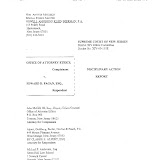
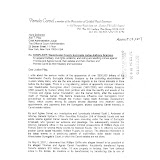
In a report dated January 24, 2008, New Jersey Special Ethics Master, Arthur Minuskin, recommended that attorney Edward D. Fagan be disbarred from the practice of law in the Garden State. Fagan, who disputed the New Jersey charges, currently holds a license to practice law in New York.
Edward Fagan is most known for representing the original first named plaintiff, Gizella Weisshaus, in the 1996 Holocaust lawsuit against the Union Bank of Switzerland. That heavily litigated proceeding resulted in a $1.25 Billion dollar settlement in 2001, and generated a $1.3 million dollar legal fee to Fagan.
The blistering New Jersey Ethics Report concluded that Ed Fagan improperly used $39,902.25 of Holocaust Survivor Gizell Weisshaus’ money to pay his New York law office rent at 26 Broadway in Manhattan.
The disciplinary probe by the Office of Attorney Ethics of the Supreme Court of New Jersey also found that Mr. Fagan had lied about being authorized to disburse monies totaling nearly $400,000.00 given to him by Mrs. Weisshaus and another holocaust survivor, Estelle Sapir.
The New Jersey complaint resulted from a routine investigation conducted by the Office of Attorney Ethics when Mr. Fagan failed to pay his required annual client security fund fee. After he was suspended for nonpayment of the client security fund fee, the ethics committee further investigated Fagan to determine whether he was practicing law during the period of the suspension. That investigation raised questions about his possible misuse of trust account funds, including the Weisshaus and Sapir monies.
Fagan’s testimony during the ethics hearings revealed that in July of 2001, he received a $4.3 million lee fee in a Holocaust related German Global property settlement, in addition to the $1.3 million fee from the Swiss Bank case.
Previously, on Tuesday, August 28, 2007, this forum reported on one of the on-going horrors facing what people who know her describe as "the strong and beautiful Holocaust survivor Weisshaus." That report was titled, "Patentgate Ethics Scam Hits Holocaust Survivor."
As a young girl, Mrs. Gizella Weisshaus survived the Holocaust, but recently and now 77-years-old, she finds herself on the growing list of victims ensnarled in the Manhattan attorney ethics scandal shaking the New York State Court system.
Background
In July of 2007, it became publicly known that many ethics complaints against attorneys in the Bronx and Manhattan were methodically mishandled-- effectively buried or stalled—due to politically-based connections, favors or back-room deals. The "Patentgate" matter quickly highlighted the need in New York for federal intervention since the alleged theft of dozens of U.S. patents by the inventor's own New York lawyers-- the once respected and politically connected Proskauer Rose law firm-- went largely and substantively unaddressed. The Patentgate ethics complaints were obscured in New York at the very same time the identical issues found The United States Department of Justice widening their own investigation and, additionally, where members of the U.S. Senate and House Judiciary committees called for further probes. The ongoing ethics shake-up resulted in the quickly announced "retirement" of Manhattan's top State ethics Chief Counsel, Thomas J. Cahill, Esq., and whose replacement is expected to be announced soon. (See the related August 24, 2007 story below: "Justice Department Widens "Patentgate" Probe Buried by Ethics Chief Thomas J. Cahill" )
Holocaust Survivor meets New York “Ethics”
Mrs. Gizella Weisshaus was the named plaintiff in the 1996 filed historic lawsuit against Swiss banks that, after being designated as a class action proceeding, was settled in 1998 on behalf of thousands of Holocaust survivors for $1.25 billion.
Gizella, however, opted out of that settlement because, she says, certain involved attorneys were more interested in paying themselves millions of dollars even before some of the survivors had received any money. She would also learn, she says, that someone "manufactured" a necessary amended complaint in 2000 by backdating that court document to 1997. And she would also find that in an unrelated estate proceeding where she was the executrix, her own lawyer, Edward D. Fagan, had failed to deposit more than $82,000.00 into an attorney escrow account choosing, instead, to use the money for his own various personal expenses. (Mr. Fagan also represented Mrs. Weisshaus in the subsequent filing against the Swiss banks and from where he ultimately received millions of dollars in legal fees)
The Devil's Advocate
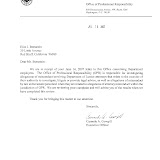
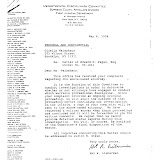
An attorney ethics complaint followed, and in a letter dated May 6, 1998, attorney disciplinary Chief Counsel Thomas J. Cahill's predecessor, Hal R. Lieberman, Esq., wrote to Gizella to advise that since her complaint against attorney Edward Fagan had involved an "ongoing criminal proceeding" his office would await the outcome of that proceeding before concluding their disciplinary investigation. Then-Chief Counsel Lieberman also advised Gizella that his New York State ethic's office had requested a written answer to the complaint from attorney Fagan. Edward Fagan then hired his own lawyer.
Letter to Self
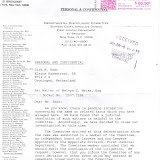
Approximately 9 weeks later, in a July 15, 1998 dated formal answer to the charges against him, attorney Fagan's lawyer submitted a 6-page denial of the various charges made by Mrs. Weisshaus. Astonishingly, attorney Fagan's lawyer, who he had recently engaged, was none other than Hal R. Lieberman who, in a 9-week period of time, had left his position as Chief Counsel of the New York Supreme Court, Appellate Division, First Department Disciplinary Committee to join the law firm Beldock Levin & Hoffman, LLP.
So, essentially, on July 15, 1998 private attorney Hal Lieberman was responding to himself-- to his own May 6, 1998 letter wherein he, as the New York state-employed Ethics Chief Counsel had advised Gizella of the request for a written answer from the attorney she had filed a complaint against, and the same person who was to be Lieberman's client-- Edward Fagan.
Concerning the various ethics complaints against him in New York, no known action has ever been taken against attorney Edward D. Fagan.
To the right, see the documents marked:
1. NJ Ethics Findings- Disbar Fagan; and
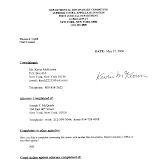
2. "Weisshaus Fagan Lieberman" A May 6, 1998 dated letter from NY State Attorney Disciplinary Committee Chief Counsel Hal R. Lieberman to Mrs. Gizella Weisshaus RE: Edward Fagan (1 page); and A July 15, 1998 dated Answer to Complaint from private attorney Hal R. Lieberman to Mrs. Gizella Weisshaus RE: Edward Fagan (6 pages).
A Special Report by Expose Corrupt Courts by Frank Brady (c) 2008
Edward Fagan is most known for representing the original first named plaintiff, Gizella Weisshaus, in the 1996 Holocaust lawsuit against the Union Bank of Switzerland. That heavily litigated proceeding resulted in a $1.25 Billion dollar settlement in 2001, and generated a $1.3 million dollar legal fee to Fagan.
The blistering New Jersey Ethics Report concluded that Ed Fagan improperly used $39,902.25 of Holocaust Survivor Gizell Weisshaus’ money to pay his New York law office rent at 26 Broadway in Manhattan.
The disciplinary probe by the Office of Attorney Ethics of the Supreme Court of New Jersey also found that Mr. Fagan had lied about being authorized to disburse monies totaling nearly $400,000.00 given to him by Mrs. Weisshaus and another holocaust survivor, Estelle Sapir.
The New Jersey complaint resulted from a routine investigation conducted by the Office of Attorney Ethics when Mr. Fagan failed to pay his required annual client security fund fee. After he was suspended for nonpayment of the client security fund fee, the ethics committee further investigated Fagan to determine whether he was practicing law during the period of the suspension. That investigation raised questions about his possible misuse of trust account funds, including the Weisshaus and Sapir monies.
Fagan’s testimony during the ethics hearings revealed that in July of 2001, he received a $4.3 million lee fee in a Holocaust related German Global property settlement, in addition to the $1.3 million fee from the Swiss Bank case.
Previously, on Tuesday, August 28, 2007, this forum reported on one of the on-going horrors facing what people who know her describe as "the strong and beautiful Holocaust survivor Weisshaus." That report was titled, "Patentgate Ethics Scam Hits Holocaust Survivor."
As a young girl, Mrs. Gizella Weisshaus survived the Holocaust, but recently and now 77-years-old, she finds herself on the growing list of victims ensnarled in the Manhattan attorney ethics scandal shaking the New York State Court system.
Background
In July of 2007, it became publicly known that many ethics complaints against attorneys in the Bronx and Manhattan were methodically mishandled-- effectively buried or stalled—due to politically-based connections, favors or back-room deals. The "Patentgate" matter quickly highlighted the need in New York for federal intervention since the alleged theft of dozens of U.S. patents by the inventor's own New York lawyers-- the once respected and politically connected Proskauer Rose law firm-- went largely and substantively unaddressed. The Patentgate ethics complaints were obscured in New York at the very same time the identical issues found The United States Department of Justice widening their own investigation and, additionally, where members of the U.S. Senate and House Judiciary committees called for further probes. The ongoing ethics shake-up resulted in the quickly announced "retirement" of Manhattan's top State ethics Chief Counsel, Thomas J. Cahill, Esq., and whose replacement is expected to be announced soon. (See the related August 24, 2007 story below: "Justice Department Widens "Patentgate" Probe Buried by Ethics Chief Thomas J. Cahill" )
Holocaust Survivor meets New York “Ethics”
Mrs. Gizella Weisshaus was the named plaintiff in the 1996 filed historic lawsuit against Swiss banks that, after being designated as a class action proceeding, was settled in 1998 on behalf of thousands of Holocaust survivors for $1.25 billion.
Gizella, however, opted out of that settlement because, she says, certain involved attorneys were more interested in paying themselves millions of dollars even before some of the survivors had received any money. She would also learn, she says, that someone "manufactured" a necessary amended complaint in 2000 by backdating that court document to 1997. And she would also find that in an unrelated estate proceeding where she was the executrix, her own lawyer, Edward D. Fagan, had failed to deposit more than $82,000.00 into an attorney escrow account choosing, instead, to use the money for his own various personal expenses. (Mr. Fagan also represented Mrs. Weisshaus in the subsequent filing against the Swiss banks and from where he ultimately received millions of dollars in legal fees)
The Devil's Advocate
An attorney ethics complaint followed, and in a letter dated May 6, 1998, attorney disciplinary Chief Counsel Thomas J. Cahill's predecessor, Hal R. Lieberman, Esq., wrote to Gizella to advise that since her complaint against attorney Edward Fagan had involved an "ongoing criminal proceeding" his office would await the outcome of that proceeding before concluding their disciplinary investigation. Then-Chief Counsel Lieberman also advised Gizella that his New York State ethic's office had requested a written answer to the complaint from attorney Fagan. Edward Fagan then hired his own lawyer.
Letter to Self
Approximately 9 weeks later, in a July 15, 1998 dated formal answer to the charges against him, attorney Fagan's lawyer submitted a 6-page denial of the various charges made by Mrs. Weisshaus. Astonishingly, attorney Fagan's lawyer, who he had recently engaged, was none other than Hal R. Lieberman who, in a 9-week period of time, had left his position as Chief Counsel of the New York Supreme Court, Appellate Division, First Department Disciplinary Committee to join the law firm Beldock Levin & Hoffman, LLP.
So, essentially, on July 15, 1998 private attorney Hal Lieberman was responding to himself-- to his own May 6, 1998 letter wherein he, as the New York state-employed Ethics Chief Counsel had advised Gizella of the request for a written answer from the attorney she had filed a complaint against, and the same person who was to be Lieberman's client-- Edward Fagan.
Concerning the various ethics complaints against him in New York, no known action has ever been taken against attorney Edward D. Fagan.
To the right, see the documents marked:
1. NJ Ethics Findings- Disbar Fagan; and
2. "Weisshaus Fagan Lieberman" A May 6, 1998 dated letter from NY State Attorney Disciplinary Committee Chief Counsel Hal R. Lieberman to Mrs. Gizella Weisshaus RE: Edward Fagan (1 page); and A July 15, 1998 dated Answer to Complaint from private attorney Hal R. Lieberman to Mrs. Gizella Weisshaus RE: Edward Fagan (6 pages).
(If you would like a pdf copy of the New Jersey Ethics complaint emailed to you, advise us at corruptcourts@gmail.com)
A Special Report by Expose Corrupt Courts by Frank Brady (c) 2008
Saturday, February 9, 2008
Lawbreaker lawmakers
Lawbreaker lawmakers - Arguably, about 1-in-5 state legislators has violated the law. How can this be?
The Albany Times Union - By MARY CUDDEHE, ELLEN GABLER and EMILY PICKRELL, Special to the Times Union - First published: Sunday, December 30, 2007
In a perfect world, elected lawmakers would always obey the laws they alone are entrusted to enact, but public records show that in Albany, lawmakers are anything but perfect.
An investigation for the Times Union by the Stabile Center for Investigative Reporting at Columbia University found that about one-fifth of elected legislators in New York have, by some measure, broken some law in recent years. While most of those cases were traffic violations, more than a dozen involved acts charged as crimes -- frequently bribery or theft.
Currently, two accused lawmakers have refused to leave office despite a mountain of evidence compiled by citizen grand juries who indicted them for felony crimes -- and legislative leaders have done nothing to officially discipline or remove them.
Assemblywoman Diane Gordon, D-Brooklyn, continues to hold office even after the Brooklyn district attorney released video recordings showing her agreeing to receive a house in exchange for arranging a $2 million land deal for a developer. She declined to comment.
State Sen. Efrain Gonzalez, D-Bronx, continues to hold office while awaiting trial on federal charges that he funneled $423,000 in taxpayer money through a charity to finance his cigar company, buy Yankees tickets and pay his daughter's tuition.
"You're innocent until proven guilty beyond a reasonable doubt," said Gonzalez, who was re-elected by a landslide in the Bronx last year.
Such cases have become a perennial disappointment for good-government advocates in Albany who for years have pressed for real ethics reform that, when it comes to lawmakers themselves, has never really come.
"I think what most citizens would say to them is how dare you do this to the working men and women of New York," said Barbara Bartoletti, legislative director for the League of Women Voters. "You are in a cherished position, voted into office by your constituency, and you let them down; you violated their trust."
Two lawmakers charged with driving while intoxicated this year had their driver's licenses suspended after they refused to take a Breathalyzer test: Assemblyman Karim Camara, D-Brooklyn, and Sen. John Sabini, D-Queens. Sabini said it was inappropriate for two student journalists to surprise him in the Capitol this month with a video camera and ask, on behalf of voters, if he was drunk when police arrested him in Albany. "No, I pleaded not guilty," he said.
Like many lawmakers, Sabini bristles at the suggestion he deserves to be labeled a lawbreaker in the press before his day in court. "I'm only charged at this stage," he said.
Sometimes lawmakers advocate legislation even as they violate the letter or spirit of the laws they propose.
Nancy Calhoun, a Republican assemblywoman from Blooming Grove, has called herself "a prime advocate for fighting crime." In 2005, the same year she co-sponsored a bill to strengthen anti-stalking laws, Calhoun pleaded guilty to two counts of second-degree harassment for stalking an ex-boyfriend. The case was subsequently sealed in Orange County.
Rarely, a lawmakers admits his or her mistake and becomes a determined advocate to strengthen the law.
Assemblyman Charles Lavine, D-Nassau, received a ticket for speeding in October 2006. Since then, Lavine has voted in favor of cameras that catch speeders and co-sponsored a bill to double fines for speeding in a school zone. "In an age in which few accept responsibility for their faults, you may find it refreshing to know that I actually was guilty," Lavine said.
Since 2000, 13 members, past and present, occupying one of the 212 seats in the New York state Senate and Assembly combined, faced criminal charges or were convicted of crimes.
Another 10 lawmakers have had their driver's licenses suspended, typically for failing to respond to a court summons. Another 10 have been cited for speeding, driving while talking on a cellphone, ignoring a traffic signal or driving without a seat belt. Still another 15 had a traffic violation that prompted them to attend class to erase points from their driving record. That's 48 lawmakers implicated in or found guilty of lawbreaking.
One former assemblyman, Clarence Norman, formerly chairman of Brooklyn's Democratic Party, is currently serving a 3-to-9-year sentence in state prison for stealing the public's money and selling his party's control over judgeships.
Adult arrest rates for crimes within large populations in the United States are measured in different, sometimes flawed ways by states and the federal government, but depending on the criteria, they can range from a few percentage points to more than 5 percent. That suggests the arrest rate for the state Legislature, arguably just above 5 percent, may be normal.
However, these are elected lawmakers. While outright crime is the exception rather than the norm at the Capitol, government watchdog groups bemoan a system of legal loopholes in Albany that encourages bribery and a legislative culture prone to winks and nods with only private wrist-slapping for any ethics violations.
"I don't think it's just a few bad apples. I think the system is just ripe for corruption," said Rachel Leon, the former executive director of Common Cause, a citizens' group that lobbies for clean elections and ethical standards for elected officials.
"In most states, if you have one arrest, you get reform handed to you on a platter. In New York, you get person after person after person" arrested without censure, she said. "It's an entrenched system, an old-world style of politics that really needs to be updated."
Voters should not hold their breath.
In March 2007, a sweeping ethics reform bill approved by the Legislature combined the state's Ethics and Lobbying commissions under the new Commission on Public Integrity. But during the bill's drafting the Legislature insisted on a separation of powers from the new commission's authority, which has effectively left lawmakers in charge of policing their own ethical misconduct -- just as they had, or had not, under their existing ethics laws.
In fact, the former Legislative Ethics Committee, comprised solely of lawmakers chosen by legislative leaders, never rebuked a single legislator for any ethics violations during its 20-year existence. That inaction was predictable of what happens when powerful people are left alone to judge and punish themselves, said David Grandeau, formerly director of the now-disbanded state Temporary Commission on Lobbying.
"It is very difficult to perform your job if you're worried you'll be fired for it," Grandeau said. "These integrity commissions need to have not only independence, but there needs to be an effective buffer for the employees."
"You are going to have bad people doing bad things throughout the country," Grandeau said. "What we do have is a structure that enables it."
Albany observers say that a lack of campaign finance control contributes to corrupt behavior.
New York's current campaign finance laws let corporations receiving economic development aid and unions benefiting from public contracts contribute huge sums to politicians, creating the perception of a "pay-to-play" system, according to a 2006 Brennan Center for Justice study. Direct corporate donations to politicians are illegal in federal elections.
Some New York legislators have gone to town with their campaign funds, financing everything from lavish vacations to college tuition to private cellphone bills. In 2001, Senate Majority Leader Joseph L. Bruno, a Republican, used campaign funds to buy a swimming pool cover for his property in Brunswick, later claiming that he used the area for political events.
Former state Sen. Guy Velella, R-Bronx, used his campaign funds for his legal defense against charges he had accepted bribes. He eventually pleaded guilty to conspiracy charges for steering public works contracts to favored bidders who, in turn, made payments to law firms he controlled.
A lawmaker accused of a crime in New York does not automatically lose office. Some win re-election. Some don't even try.
Former state Sen. John "Randy" Kuhl Jr., R-Hammondsport, pleaded guilty to driving while intoxicated in September 1997. That conviction surfaced in 2004, when he was elected U.S. representative of the 29th District.
In 2003, former Assemblywoman Gloria Davis, D-Bronx, agreed to resign and spent two months in jail for collecting state travel expenses for free automobile trips to Albany. She also admitted receiving $24,000 from a contractor she helped reward with an $880,000 contract. Though former Assemblyman Roger Green, D-Brooklyn, was convicted of petty larceny in 2004 for also using free rides, he was re-elected.
In 2006, former assemblyman and labor leader Brian McLaughlin, D-Queens, pleaded not guilty to 44 charges, including labor bribery and money-laundering. He was indicted for stealing $2.2 million from, among other groups, a Little League baseball team. McLaughlin resigned.
Former Sen. Ada Smith, D-Queens, was found guilty of second-degree harassment in Albany for throwing hot coffee at an aide who had commented on her weight. She was fined $250, ran for re-election in 2006 and lost in a primary race.
"What all these indictments say generally about Albany is that the environment is still ripe" for corruption, said Bartoletti of the League of Women Voters. "Until we close loopholes on ethics and campaign reform, we'll continue to have these kinds of problems," Bartoletti said. "We have the most loophole-ridden law in the nation."
This year's ethics reform law has been widely panned as ineffective and an agreement for some campaign finance reform fell apart amid squabbling between Bruno and the governor, but some good government groups view the recent conviction of Norman as a sign that accountability is possible in the courts.
"Any political leader that would ever again force somebody to pay money in exchange for support will do so at their own peril," Brooklyn District Attorney Charles Hynes declared this year after finishing his case against Norman. "The jury spoke loud and clear that this kind of conduct will not be tolerated."
Others are more skeptical, saying that without true reform of campaign finance rules and an overhaul of ethics oversight for lawmakers, change will never come.
"The only way to force them to do what's right is exposure," said Grandeau. "If they know what they do today they are going to read about in tomorrow's paper, they think twice."
Times Union staff writer Irene Jay Liu, a graduate of the Stabile Center for Investigative Journalism at Columbia University's Graduate School of Journalism in Manhattan, contributed to this report. Mary Cuddehe is a student at Columbia's journalism school. Ellen Gabler and Emily Pickrell are graduates of the Stabile Center at Columbia. They prepared this story under the supervision of Times Union Senior Editor Bob Port, who can be reached at 454-5064 or e-mail at bport@timesunion.com.
The Albany Times Union - By MARY CUDDEHE, ELLEN GABLER and EMILY PICKRELL, Special to the Times Union - First published: Sunday, December 30, 2007
In a perfect world, elected lawmakers would always obey the laws they alone are entrusted to enact, but public records show that in Albany, lawmakers are anything but perfect.
An investigation for the Times Union by the Stabile Center for Investigative Reporting at Columbia University found that about one-fifth of elected legislators in New York have, by some measure, broken some law in recent years. While most of those cases were traffic violations, more than a dozen involved acts charged as crimes -- frequently bribery or theft.
Currently, two accused lawmakers have refused to leave office despite a mountain of evidence compiled by citizen grand juries who indicted them for felony crimes -- and legislative leaders have done nothing to officially discipline or remove them.
Assemblywoman Diane Gordon, D-Brooklyn, continues to hold office even after the Brooklyn district attorney released video recordings showing her agreeing to receive a house in exchange for arranging a $2 million land deal for a developer. She declined to comment.
State Sen. Efrain Gonzalez, D-Bronx, continues to hold office while awaiting trial on federal charges that he funneled $423,000 in taxpayer money through a charity to finance his cigar company, buy Yankees tickets and pay his daughter's tuition.
"You're innocent until proven guilty beyond a reasonable doubt," said Gonzalez, who was re-elected by a landslide in the Bronx last year.
Such cases have become a perennial disappointment for good-government advocates in Albany who for years have pressed for real ethics reform that, when it comes to lawmakers themselves, has never really come.
"I think what most citizens would say to them is how dare you do this to the working men and women of New York," said Barbara Bartoletti, legislative director for the League of Women Voters. "You are in a cherished position, voted into office by your constituency, and you let them down; you violated their trust."
Two lawmakers charged with driving while intoxicated this year had their driver's licenses suspended after they refused to take a Breathalyzer test: Assemblyman Karim Camara, D-Brooklyn, and Sen. John Sabini, D-Queens. Sabini said it was inappropriate for two student journalists to surprise him in the Capitol this month with a video camera and ask, on behalf of voters, if he was drunk when police arrested him in Albany. "No, I pleaded not guilty," he said.
Like many lawmakers, Sabini bristles at the suggestion he deserves to be labeled a lawbreaker in the press before his day in court. "I'm only charged at this stage," he said.
Sometimes lawmakers advocate legislation even as they violate the letter or spirit of the laws they propose.
Nancy Calhoun, a Republican assemblywoman from Blooming Grove, has called herself "a prime advocate for fighting crime." In 2005, the same year she co-sponsored a bill to strengthen anti-stalking laws, Calhoun pleaded guilty to two counts of second-degree harassment for stalking an ex-boyfriend. The case was subsequently sealed in Orange County.
Rarely, a lawmakers admits his or her mistake and becomes a determined advocate to strengthen the law.
Assemblyman Charles Lavine, D-Nassau, received a ticket for speeding in October 2006. Since then, Lavine has voted in favor of cameras that catch speeders and co-sponsored a bill to double fines for speeding in a school zone. "In an age in which few accept responsibility for their faults, you may find it refreshing to know that I actually was guilty," Lavine said.
Since 2000, 13 members, past and present, occupying one of the 212 seats in the New York state Senate and Assembly combined, faced criminal charges or were convicted of crimes.
Another 10 lawmakers have had their driver's licenses suspended, typically for failing to respond to a court summons. Another 10 have been cited for speeding, driving while talking on a cellphone, ignoring a traffic signal or driving without a seat belt. Still another 15 had a traffic violation that prompted them to attend class to erase points from their driving record. That's 48 lawmakers implicated in or found guilty of lawbreaking.
One former assemblyman, Clarence Norman, formerly chairman of Brooklyn's Democratic Party, is currently serving a 3-to-9-year sentence in state prison for stealing the public's money and selling his party's control over judgeships.
Adult arrest rates for crimes within large populations in the United States are measured in different, sometimes flawed ways by states and the federal government, but depending on the criteria, they can range from a few percentage points to more than 5 percent. That suggests the arrest rate for the state Legislature, arguably just above 5 percent, may be normal.
However, these are elected lawmakers. While outright crime is the exception rather than the norm at the Capitol, government watchdog groups bemoan a system of legal loopholes in Albany that encourages bribery and a legislative culture prone to winks and nods with only private wrist-slapping for any ethics violations.
"I don't think it's just a few bad apples. I think the system is just ripe for corruption," said Rachel Leon, the former executive director of Common Cause, a citizens' group that lobbies for clean elections and ethical standards for elected officials.
"In most states, if you have one arrest, you get reform handed to you on a platter. In New York, you get person after person after person" arrested without censure, she said. "It's an entrenched system, an old-world style of politics that really needs to be updated."
Voters should not hold their breath.
In March 2007, a sweeping ethics reform bill approved by the Legislature combined the state's Ethics and Lobbying commissions under the new Commission on Public Integrity. But during the bill's drafting the Legislature insisted on a separation of powers from the new commission's authority, which has effectively left lawmakers in charge of policing their own ethical misconduct -- just as they had, or had not, under their existing ethics laws.
In fact, the former Legislative Ethics Committee, comprised solely of lawmakers chosen by legislative leaders, never rebuked a single legislator for any ethics violations during its 20-year existence. That inaction was predictable of what happens when powerful people are left alone to judge and punish themselves, said David Grandeau, formerly director of the now-disbanded state Temporary Commission on Lobbying.
"It is very difficult to perform your job if you're worried you'll be fired for it," Grandeau said. "These integrity commissions need to have not only independence, but there needs to be an effective buffer for the employees."
"You are going to have bad people doing bad things throughout the country," Grandeau said. "What we do have is a structure that enables it."
Albany observers say that a lack of campaign finance control contributes to corrupt behavior.
New York's current campaign finance laws let corporations receiving economic development aid and unions benefiting from public contracts contribute huge sums to politicians, creating the perception of a "pay-to-play" system, according to a 2006 Brennan Center for Justice study. Direct corporate donations to politicians are illegal in federal elections.
Some New York legislators have gone to town with their campaign funds, financing everything from lavish vacations to college tuition to private cellphone bills. In 2001, Senate Majority Leader Joseph L. Bruno, a Republican, used campaign funds to buy a swimming pool cover for his property in Brunswick, later claiming that he used the area for political events.
Former state Sen. Guy Velella, R-Bronx, used his campaign funds for his legal defense against charges he had accepted bribes. He eventually pleaded guilty to conspiracy charges for steering public works contracts to favored bidders who, in turn, made payments to law firms he controlled.
A lawmaker accused of a crime in New York does not automatically lose office. Some win re-election. Some don't even try.
Former state Sen. John "Randy" Kuhl Jr., R-Hammondsport, pleaded guilty to driving while intoxicated in September 1997. That conviction surfaced in 2004, when he was elected U.S. representative of the 29th District.
In 2003, former Assemblywoman Gloria Davis, D-Bronx, agreed to resign and spent two months in jail for collecting state travel expenses for free automobile trips to Albany. She also admitted receiving $24,000 from a contractor she helped reward with an $880,000 contract. Though former Assemblyman Roger Green, D-Brooklyn, was convicted of petty larceny in 2004 for also using free rides, he was re-elected.
In 2006, former assemblyman and labor leader Brian McLaughlin, D-Queens, pleaded not guilty to 44 charges, including labor bribery and money-laundering. He was indicted for stealing $2.2 million from, among other groups, a Little League baseball team. McLaughlin resigned.
Former Sen. Ada Smith, D-Queens, was found guilty of second-degree harassment in Albany for throwing hot coffee at an aide who had commented on her weight. She was fined $250, ran for re-election in 2006 and lost in a primary race.
"What all these indictments say generally about Albany is that the environment is still ripe" for corruption, said Bartoletti of the League of Women Voters. "Until we close loopholes on ethics and campaign reform, we'll continue to have these kinds of problems," Bartoletti said. "We have the most loophole-ridden law in the nation."
This year's ethics reform law has been widely panned as ineffective and an agreement for some campaign finance reform fell apart amid squabbling between Bruno and the governor, but some good government groups view the recent conviction of Norman as a sign that accountability is possible in the courts.
"Any political leader that would ever again force somebody to pay money in exchange for support will do so at their own peril," Brooklyn District Attorney Charles Hynes declared this year after finishing his case against Norman. "The jury spoke loud and clear that this kind of conduct will not be tolerated."
Others are more skeptical, saying that without true reform of campaign finance rules and an overhaul of ethics oversight for lawmakers, change will never come.
"The only way to force them to do what's right is exposure," said Grandeau. "If they know what they do today they are going to read about in tomorrow's paper, they think twice."
Times Union staff writer Irene Jay Liu, a graduate of the Stabile Center for Investigative Journalism at Columbia University's Graduate School of Journalism in Manhattan, contributed to this report. Mary Cuddehe is a student at Columbia's journalism school. Ellen Gabler and Emily Pickrell are graduates of the Stabile Center at Columbia. They prepared this story under the supervision of Times Union Senior Editor Bob Port, who can be reached at 454-5064 or e-mail at bport@timesunion.com.
Junkets for Judges (MORE, CLICK HERE)
Junkets for Judges - They should end, in return for higher pay.
The Washington Post - Saturday, February 9, 2008; A14
FOR YEARS, federal judges have complained, with justification, about salaries that dramatically lag behind those of even inexperienced lawyers in the private sector. Perhaps as a result, many judges have felt justified in indulging in an unseemly practice: accepting all-expenses-paid trips to lavish resorts for seminars funded by interest groups with business before the courts.
Last week the Senate Judiciary Committee tackled both of these long-standing problems with a sensible compromise that strikes a blow for both fairer judicial pay and higher standards of judicial ethics.
Under the Senate bill, which calls for 29 percent raises, trial judges' salaries would increase to $218,000; appeals judges would earn $231,100; Supreme Court associate justices, $267,900; and the chief justice, $279,900. Judges would continue to enjoy extraordinarily generous pensions, and they would be entitled to automatic annual cost-of-living raises. Similar legislation has been approved by the House Judiciary Committee.
Judges should be cheering, but they're not, because the bill contains restrictions that could limit their financial gains in other ways. The biggest hit comes in the form of limits to the amount of outside income judges may earn and restrictions on reimbursements for educational seminars. Under the Senate bill, judges can be reimbursed for expenses related to a seminar "a significant purpose of which is the education" of judges if the event is sponsored by bar associations, judicial associations or the judicial division of the American Bar Association. The purpose of this amendment is to stop judges from accepting thousands of dollars worth of transportation, lodging and food from interest groups that hold "seminars" to push their legal and ideological agendas to a captive audience.
The move to prohibit these junkets is long overdue, but it may have unintended consequences. Judges may accept no more than a $2,000 reimbursement per event or $20,000 annually for attending approved educational seminars, speaking engagements, or teaching opportunities. As the Judicial Conference of the United States noted in a letter to the Senate Judiciary Committee, such caps could "severely and unnecessarily restrict judges from traveling to law schools for lectures, conferences and moot courts." This is probably true and would be unfortunate. Lawmakers should stand firm in banning reimbursement for private junkets, but they should consider increasing the caps for approved events.
The Washington Post - Saturday, February 9, 2008; A14
FOR YEARS, federal judges have complained, with justification, about salaries that dramatically lag behind those of even inexperienced lawyers in the private sector. Perhaps as a result, many judges have felt justified in indulging in an unseemly practice: accepting all-expenses-paid trips to lavish resorts for seminars funded by interest groups with business before the courts.
Last week the Senate Judiciary Committee tackled both of these long-standing problems with a sensible compromise that strikes a blow for both fairer judicial pay and higher standards of judicial ethics.
Under the Senate bill, which calls for 29 percent raises, trial judges' salaries would increase to $218,000; appeals judges would earn $231,100; Supreme Court associate justices, $267,900; and the chief justice, $279,900. Judges would continue to enjoy extraordinarily generous pensions, and they would be entitled to automatic annual cost-of-living raises. Similar legislation has been approved by the House Judiciary Committee.
Judges should be cheering, but they're not, because the bill contains restrictions that could limit their financial gains in other ways. The biggest hit comes in the form of limits to the amount of outside income judges may earn and restrictions on reimbursements for educational seminars. Under the Senate bill, judges can be reimbursed for expenses related to a seminar "a significant purpose of which is the education" of judges if the event is sponsored by bar associations, judicial associations or the judicial division of the American Bar Association. The purpose of this amendment is to stop judges from accepting thousands of dollars worth of transportation, lodging and food from interest groups that hold "seminars" to push their legal and ideological agendas to a captive audience.
The move to prohibit these junkets is long overdue, but it may have unintended consequences. Judges may accept no more than a $2,000 reimbursement per event or $20,000 annually for attending approved educational seminars, speaking engagements, or teaching opportunities. As the Judicial Conference of the United States noted in a letter to the Senate Judiciary Committee, such caps could "severely and unnecessarily restrict judges from traveling to law schools for lectures, conferences and moot courts." This is probably true and would be unfortunate. Lawmakers should stand firm in banning reimbursement for private junkets, but they should consider increasing the caps for approved events.
Friday, February 8, 2008
Big Lawyer Has Big Problem, Charged with Laundering Drug Money
Defense Bar Rallies Behind Attorney Charged With Laundering Drug Money
New York Lawyer - February 8, 2008 - By John Pacenti - Daily Business Review
MIAMI -- Colleagues call Ben Kuehne a lawyer's lawyer, an attorney whose ethics are beyond reproach. Vice President Al Gore relied on him in his fight to get ballots recounted in the 2000 presidential election.
But the Miami attorney appeared Thursday before a federal magistrate charged with laundering $5.2 million in drug money that was transferred to celebrity lawyer Roy Black to defend Colombian cocaine kingpin Fabio Ochoa. "I am completely innocent of these charges," Kuehne told U.S. Magistrate Judge Stephen Brown. Kuehne wore a blue suit, his trademark bowtie and American flag lapel pin for his court appearance. The defense and prosecutors agreed to a $250,000 bond.
The indictment revives the issue of the legal suitability of money accepted by criminal defense attorneys from clients accused of drug trafficking and money laundering. Medellin kingpin Fabio Ochoa faced charges of plotting to smuggle 30 tons of powder cocaine per month into the United States from 1997 to 1999. Since it's illegal to accept funds from a criminal enterprise, Black paid Kuehne $197,300 to vet money coming from horse and cattle holdings of the Ochoa family and property offered to cover Black's fees.
Kuehne's investigation played out in an elaborate procedure prior to Ochoa's trial in front of U.S. District Judge K. Michael Moore in 2003. The attorney produced six opinion letters concluding funds transferred to Black for Ochoa's defense were legitimate, the six-count indictment said. But prosecutors charge almost $1 million tracked to Black ran through five federal undercover operations that intercepted drug money in Miami, New York and Houston in 2002. Kuehne, Colombian attorney Oscar Saldarriaga Ochoa and Colombian accountant Gloria Florez Velez knew the money was tainted but told the defense team it did not have a criminal taint, prosecutors charged.
"This is a sad day for the Department of Justice," said John Nields, a partner at the Howrey law firm in Washington and one of Kuehne's attorneys. "They have indicted one of the finest attorneys in Miami."
Nields served as chief counsel to a House committee investigating the Iran-Contra scandal. Besides Nields, Kuehne's defense team includes Miami attorney Jane Moscowitz of Moscowitz & Moscowitz, and Evan J. Werbel and Jason Raofield, two other Howrey partners.
Moscowitz filed a five-page motion to expedite the defense's challenge to the laundering charge in advance of a dismissal motion, saying Kuehne's conduct is not covered by the statute.
"This highly improbable charge involves important and unprecedented issues of law, policy and procedure," Moscowitz wrote. The indictment was brought by Assistant U.S. Attorneys John Seller and Thomas Pinder of the Justice Department's asset forfeiture and money laundering section in Washington. The case went to Washington because the U.S. Attorney's office in Miami had a conflict as Ochoa's prosecutor. Magistrate Brown's courtroom overflowed with attorneys who support Kuehne. They included CNN legal commentator Jayne Weintraub and criminal defense attorney Frank Quintero Jr., who won a hard-fought acquittal on drug-smuggling conspiracy and laundering charges. Others waited outside because the courtroom was too small for everyone who wanted to attend. Leaving court, Kuehne was upbeat and thanked everyone for their support. "Ben Kuehne has more integrity than any lawyer I know," Weintraub said. The prosecution is "an indictment on the legal profession."
Other lawyers angrily denounced the charges."It's now official: It's a crime to be a criminal defense attorney," Miami criminal defense attorney Milton Hirsch said. Referring to Kuehne's courtly, buttoned-down demeanor, he said, "They picked a guy who sleeps with wing-tipped shoes on and indicted him for going above and beyond to make sure legal fees paid to a different lawyer are clean."
Jon May of May & Cohen in Fort Lauderdale, Fla., distributed a statement saying the case represents the first time charges have been brought against a lawyer who offered advice about compensation.
"To target an adversary like Ben Kuehne, who is held in such high regard by the community and whose integrity is unquestioned, sends a message that any lawyer is at risk," the statement said.
Kuehne represented Gore in Palm Beach County, Fla., where the infamous butterfly ballot forced a recount and numerous other politicians.
He also represented Miami Mayor Joe Carollo in a successful challenge to a strong-mayor referendum in 2000. He teamed with former U.S. Attorney Kendall Coffey in a 2006 challenge to a Sarasota congressional election and successfully challenged the outcome of the City of Miami's mayoral election won by Xavier Suarez. Kuehne, who served as a federal prosecutor and an assistant attorney general in Florida, was recognized by the People for the American Way in 2006 with one of its Spirit of Liberty Awards as "a lawyer's lawyer," which prosecutors allege became his literal downfall. In the field of civil liberties, he challenged a policy prohibiting voter registration after citizenship ceremonies and litigated applications of the federal wet-foot, dry-foot policy for refugees intercepted at sea. Much of his high-profile work has been pro bono.
"I think this case has just as much to do with him being a criminal defense lawyer as it does with him being a prominent Democrat," said Miami attorney David O. Markus, president of the Miami chapter of the Federal Bar Association. "The intent here is to send a message to the criminal defense bar to stay away from these cases. Unfortunately, this case may reignite the war between criminal defense bar and the government, a war many of us had thought was long dead."
Miami attorney Jeffrey Weiner, a former president of the National Association of Criminal Defense Lawyers, said he didn't believe the indictment was political. Weiner knows Sellers and said he is "above playing politics with anyone, especially and including a lawyer."
Coral Gables, Fla., attorney Joel Hirschhorn, who made national news in 1989 when he decided to stop taking drug defendants, said the indictment is "sad and peculiar in many respects. The defense bar is certainly concerned."
Supporters of Kuehne repeatedly castigated the indictment.
"I am assuming they have somebody giving information in a certain light that allows the government to charge a lawyer who was just doing his job," Miami criminal defense attorney Roy Kahn said. Others said they believed it improbable that Kuehne would sacrifice his reputation for a $200,000 side job.
"I don't how many lawyers, me included, who have sought his advice on ethical issues. I hold him in the highest regard," West Palm Beach criminal defense attorney Richard Lubin said. "There has been a war against criminal defense attorneys for a long time, and I think Ben is obvious a casualty of that war."
Quintero said the task of identifying legal fees as crime-free money is daunting.
"I can ask as many questions as I want, look at as many documents. That in itself is not going to say the money is legit," he said. But the indictment comes with a lifelong stain. "Even if he wins, he loses. You are always going to carry that taint because of that accusation."
Kuehne was indicted last October when he was added to the 2005 laundering indictment of Salarriaga, who sat through Ochoa's trial at the defense table, and Flores. The Daily Business Review reported in January 2006 that Kuehne was under investigation.
While the indictment was under wraps, Kuehne closed out his longtime Miami law partnership with Jon Sale and resigned from The Florida Bar's board of governors. The indictment alleges the defendants prepared false and fraudulent spreadsheets, receipts, letters and others documents to buttress Kuehne's opinion letters to the Ochoa defense team that the money was clean.
Prosecutors allege Kuehne, Florez and Saldarriaga commingled drug proceeds through the black market peso exchange operated by money brokers who change drug cartel dollars to Latin American currencies, the indictment said.
Black's firm, Black Srebnick Kornspan & Stumpf, issued a statement backing up Kuehne's work on Ochoa's behalf. "During the course of Ben's work on this matter, the lawyers involved in the Ochoa defense saw nothing to suggest that Ben was doing anything other than his typically careful, factual research and legal analysis," the statement said. "They still stand behind Ben's work in this regard today." Federal magistrates have vetted legal retainers for years at hearings to check the source of funds and ensure attorneys aren't accepting crime proceeds to defend clients.
The Justice Department has cracked down over time by digging deeper into the source of funds, primarily in drug cases.
In Kuehne's case, prosecutors focused on 57 wire transfers to a trust account controlled by Kuehne.
Kuehne attributed 23 of the wire transfers worth a total of $2.3 million to Miami flower merchant Hernando Saravia and two companies he owned.
In reality, $1.8 million from that pool of funds consisted of drug profits routed through federal undercover operations in New York and Miami, the indictment said.
A letter purportedly from Saravia was forged, and most of the statements in it were false, according to the indictment. The two businesses attributed to Saravia were operated by undercover agents.
New York Lawyer - February 8, 2008 - By John Pacenti - Daily Business Review
MIAMI -- Colleagues call Ben Kuehne a lawyer's lawyer, an attorney whose ethics are beyond reproach. Vice President Al Gore relied on him in his fight to get ballots recounted in the 2000 presidential election.
But the Miami attorney appeared Thursday before a federal magistrate charged with laundering $5.2 million in drug money that was transferred to celebrity lawyer Roy Black to defend Colombian cocaine kingpin Fabio Ochoa. "I am completely innocent of these charges," Kuehne told U.S. Magistrate Judge Stephen Brown. Kuehne wore a blue suit, his trademark bowtie and American flag lapel pin for his court appearance. The defense and prosecutors agreed to a $250,000 bond.
The indictment revives the issue of the legal suitability of money accepted by criminal defense attorneys from clients accused of drug trafficking and money laundering. Medellin kingpin Fabio Ochoa faced charges of plotting to smuggle 30 tons of powder cocaine per month into the United States from 1997 to 1999. Since it's illegal to accept funds from a criminal enterprise, Black paid Kuehne $197,300 to vet money coming from horse and cattle holdings of the Ochoa family and property offered to cover Black's fees.
Kuehne's investigation played out in an elaborate procedure prior to Ochoa's trial in front of U.S. District Judge K. Michael Moore in 2003. The attorney produced six opinion letters concluding funds transferred to Black for Ochoa's defense were legitimate, the six-count indictment said. But prosecutors charge almost $1 million tracked to Black ran through five federal undercover operations that intercepted drug money in Miami, New York and Houston in 2002. Kuehne, Colombian attorney Oscar Saldarriaga Ochoa and Colombian accountant Gloria Florez Velez knew the money was tainted but told the defense team it did not have a criminal taint, prosecutors charged.
"This is a sad day for the Department of Justice," said John Nields, a partner at the Howrey law firm in Washington and one of Kuehne's attorneys. "They have indicted one of the finest attorneys in Miami."
Nields served as chief counsel to a House committee investigating the Iran-Contra scandal. Besides Nields, Kuehne's defense team includes Miami attorney Jane Moscowitz of Moscowitz & Moscowitz, and Evan J. Werbel and Jason Raofield, two other Howrey partners.
Moscowitz filed a five-page motion to expedite the defense's challenge to the laundering charge in advance of a dismissal motion, saying Kuehne's conduct is not covered by the statute.
"This highly improbable charge involves important and unprecedented issues of law, policy and procedure," Moscowitz wrote. The indictment was brought by Assistant U.S. Attorneys John Seller and Thomas Pinder of the Justice Department's asset forfeiture and money laundering section in Washington. The case went to Washington because the U.S. Attorney's office in Miami had a conflict as Ochoa's prosecutor. Magistrate Brown's courtroom overflowed with attorneys who support Kuehne. They included CNN legal commentator Jayne Weintraub and criminal defense attorney Frank Quintero Jr., who won a hard-fought acquittal on drug-smuggling conspiracy and laundering charges. Others waited outside because the courtroom was too small for everyone who wanted to attend. Leaving court, Kuehne was upbeat and thanked everyone for their support. "Ben Kuehne has more integrity than any lawyer I know," Weintraub said. The prosecution is "an indictment on the legal profession."
Other lawyers angrily denounced the charges."It's now official: It's a crime to be a criminal defense attorney," Miami criminal defense attorney Milton Hirsch said. Referring to Kuehne's courtly, buttoned-down demeanor, he said, "They picked a guy who sleeps with wing-tipped shoes on and indicted him for going above and beyond to make sure legal fees paid to a different lawyer are clean."
Jon May of May & Cohen in Fort Lauderdale, Fla., distributed a statement saying the case represents the first time charges have been brought against a lawyer who offered advice about compensation.
"To target an adversary like Ben Kuehne, who is held in such high regard by the community and whose integrity is unquestioned, sends a message that any lawyer is at risk," the statement said.
Kuehne represented Gore in Palm Beach County, Fla., where the infamous butterfly ballot forced a recount and numerous other politicians.
He also represented Miami Mayor Joe Carollo in a successful challenge to a strong-mayor referendum in 2000. He teamed with former U.S. Attorney Kendall Coffey in a 2006 challenge to a Sarasota congressional election and successfully challenged the outcome of the City of Miami's mayoral election won by Xavier Suarez. Kuehne, who served as a federal prosecutor and an assistant attorney general in Florida, was recognized by the People for the American Way in 2006 with one of its Spirit of Liberty Awards as "a lawyer's lawyer," which prosecutors allege became his literal downfall. In the field of civil liberties, he challenged a policy prohibiting voter registration after citizenship ceremonies and litigated applications of the federal wet-foot, dry-foot policy for refugees intercepted at sea. Much of his high-profile work has been pro bono.
"I think this case has just as much to do with him being a criminal defense lawyer as it does with him being a prominent Democrat," said Miami attorney David O. Markus, president of the Miami chapter of the Federal Bar Association. "The intent here is to send a message to the criminal defense bar to stay away from these cases. Unfortunately, this case may reignite the war between criminal defense bar and the government, a war many of us had thought was long dead."
Miami attorney Jeffrey Weiner, a former president of the National Association of Criminal Defense Lawyers, said he didn't believe the indictment was political. Weiner knows Sellers and said he is "above playing politics with anyone, especially and including a lawyer."
Coral Gables, Fla., attorney Joel Hirschhorn, who made national news in 1989 when he decided to stop taking drug defendants, said the indictment is "sad and peculiar in many respects. The defense bar is certainly concerned."
Supporters of Kuehne repeatedly castigated the indictment.
"I am assuming they have somebody giving information in a certain light that allows the government to charge a lawyer who was just doing his job," Miami criminal defense attorney Roy Kahn said. Others said they believed it improbable that Kuehne would sacrifice his reputation for a $200,000 side job.
"I don't how many lawyers, me included, who have sought his advice on ethical issues. I hold him in the highest regard," West Palm Beach criminal defense attorney Richard Lubin said. "There has been a war against criminal defense attorneys for a long time, and I think Ben is obvious a casualty of that war."
Quintero said the task of identifying legal fees as crime-free money is daunting.
"I can ask as many questions as I want, look at as many documents. That in itself is not going to say the money is legit," he said. But the indictment comes with a lifelong stain. "Even if he wins, he loses. You are always going to carry that taint because of that accusation."
Kuehne was indicted last October when he was added to the 2005 laundering indictment of Salarriaga, who sat through Ochoa's trial at the defense table, and Flores. The Daily Business Review reported in January 2006 that Kuehne was under investigation.
While the indictment was under wraps, Kuehne closed out his longtime Miami law partnership with Jon Sale and resigned from The Florida Bar's board of governors. The indictment alleges the defendants prepared false and fraudulent spreadsheets, receipts, letters and others documents to buttress Kuehne's opinion letters to the Ochoa defense team that the money was clean.
Prosecutors allege Kuehne, Florez and Saldarriaga commingled drug proceeds through the black market peso exchange operated by money brokers who change drug cartel dollars to Latin American currencies, the indictment said.
Black's firm, Black Srebnick Kornspan & Stumpf, issued a statement backing up Kuehne's work on Ochoa's behalf. "During the course of Ben's work on this matter, the lawyers involved in the Ochoa defense saw nothing to suggest that Ben was doing anything other than his typically careful, factual research and legal analysis," the statement said. "They still stand behind Ben's work in this regard today." Federal magistrates have vetted legal retainers for years at hearings to check the source of funds and ensure attorneys aren't accepting crime proceeds to defend clients.
The Justice Department has cracked down over time by digging deeper into the source of funds, primarily in drug cases.
In Kuehne's case, prosecutors focused on 57 wire transfers to a trust account controlled by Kuehne.
Kuehne attributed 23 of the wire transfers worth a total of $2.3 million to Miami flower merchant Hernando Saravia and two companies he owned.
In reality, $1.8 million from that pool of funds consisted of drug profits routed through federal undercover operations in New York and Miami, the indictment said.
A letter purportedly from Saravia was forged, and most of the statements in it were false, according to the indictment. The two businesses attributed to Saravia were operated by undercover agents.
Thursday, February 7, 2008
Federal Judge on DDC Ethics Scandal: "Whistleblower"
The federal court transcript of the December 12, 2007 hearing in Tammany Hall II - New York's newest Ethics Scandal has been obtained, and is posted to the right, "Ethics Scandal Update: February 7, 2008".
The hearing before U.S. Federal District Court Judge Shira A. Scheindlin preceded the two now-approved as related cases in the New York attorney ethics scandal. The 3rd case, entered Monday, January 14, 2008, is Esposito v. The State of New York. (SDNY 07cv11612) The Esposito case joins Anderson v. The State of New York, which unearthed the apparent long-held practice of cover-ups and whitewashing of complaints against favored attorneys at the Manhattan based attorney Departmental Disciplinary Committee.
The Esposito ruling followed the January 11, 2008 announcement that a 2nd case, the 1.5 Billion dollar Iviewit lawsuit, known throughout the world in technical, intellectual property circles as "Patentgate," had also been ruled by Judge Scheindlin as related to the Ethics Scandal. (SDNY Bernstein v. Appellate Division First Department Departmental Disciplinary Committee)
Other filings seeking to be designated by Judge Scheindlin as 'related' to the ethics scandal matter are expected soon.
Stay tuned....more to come soon....This is History is the making: Tammany Hall II
If you would like a a PDF version of the transcript emailed to you, send your request to CorruptCourts@gmail.com
CLICK HERE TO SEE RELATED STORY
The hearing before U.S. Federal District Court Judge Shira A. Scheindlin preceded the two now-approved as related cases in the New York attorney ethics scandal. The 3rd case, entered Monday, January 14, 2008, is Esposito v. The State of New York. (SDNY 07cv11612) The Esposito case joins Anderson v. The State of New York, which unearthed the apparent long-held practice of cover-ups and whitewashing of complaints against favored attorneys at the Manhattan based attorney Departmental Disciplinary Committee.
The Esposito ruling followed the January 11, 2008 announcement that a 2nd case, the 1.5 Billion dollar Iviewit lawsuit, known throughout the world in technical, intellectual property circles as "Patentgate," had also been ruled by Judge Scheindlin as related to the Ethics Scandal. (SDNY Bernstein v. Appellate Division First Department Departmental Disciplinary Committee)
Other filings seeking to be designated by Judge Scheindlin as 'related' to the ethics scandal matter are expected soon.
Stay tuned....more to come soon....This is History is the making: Tammany Hall II
If you would like a a PDF version of the transcript emailed to you, send your request to CorruptCourts@gmail.com
CLICK HERE TO SEE RELATED STORY
Spitzer Names Three Justices To Third Department Bench
The New York Law Journal - By Joel Stashenko - February 7, 2008
ALBANY - Governor Eliot Spitzer yesterday appointed Justices E. Michael Kavanagh (See Profile) and Bernard J. Malone Jr. (See Profile) of the Appellate Division, First Department, to the Third Department, along with Supreme Court Justice Leslie E. Stein (See Profile), who will sit on an appellate bench for the first time.
Mr. Spitzer's selection of the two First Department veterans had been expected for months (NYLJ, Nov. 1, 2007). Both justices live within the Third Department and had been appointed to the Manhattan-based First Department by then-Governor George E. Pataki. Mr. Pataki, a Republican, said he was seeking the best judicial minds when designating the upstaters for the First Department, but the assignments created some hard feelings that the seats did not go to justices from the heavily Democratic First Department.
Justices Kavanagh and Malone, both Republicans, have spent much of the past two months on temporary assignment to the Third Department under an agreement between Presiding Justice Jonathan Lippman (See Profile) of the First Department and Presiding Justice Anthony V. Cardona of the Third (NYLJ, Nov. 23, 2007).
Mr. Spitzer released a statement yesterday praising all three judges as "incredibly accomplished and respected jurists with a wide range of judicial and legal experience." Justice Kavanagh, 64, a former Ulster County district attorney, has been a Supreme Court justice in Ulster County since 1999. He was appointed to the First Department by Mr. Pataki in 2006.
Justice Malone, 64, was appointed by Mr. Pataki to the First Department in 2005, after seven years as an Albany County Supreme Court justice. He is a former assistant U.S. attorney in the Northern District. Justice Stein, 51, a Democrat, was an Albany City Court and acting Albany County Family Court judge before becoming an Albany County Supreme Court justice in 2002. Since 2006, she has been presiding judge of the Rensselaer County Integrated Domestic Violence Part. She will be the second woman on the court.
Justices Malone and Stein graduated from Albany Law School. Justice Kavanagh has a law degree from Villanova University School of Law in Pennsylvania. Both Justices Kavanagh and Malone released statements through Mr. Spitzer's office saying they were pleased to be joining the Third Department.
Justice Stein, also in a statement released by Mr. Spitzer's office, said, "The Third Department hears some of the most important cases in the state, and I very much look forward to working with the many fine jurists on that bench." Mr. Spitzer's selections do not need confirmation by the state Senate. Appellate Division justices earn $144,000 a year.
There were two openings in the Third Department created by last year's retirements due to age of Carl J. Mugglin and D. Bruce Crew III. In addition, Justice Cardona successfully asked Mr. Spitzer to create two new judgeships in the department. When Mr. Spitzer fills the fourth vacancy, the Third Department will have 12 justices.
The Third Department covers 28 counties between the Pennsylvania border to Canada. Its calendars are typically dominated by cases involving state government, especially Workers' Compensation and unemployment insurance matters and challenges to state actions filed by prison inmates.
Mr. Spitzer's appointments yesterday create more openings in the First Department. In addition to selecting replacements for Justices Kavanagh and Malone, he must fill a vacancy created by the departure of Justice George D. Marlow to Dutchess County Supreme Court and to head a statewide ethics education initiative (NYLJ, Oct. 17, 2007).
Mr. Spitzer has already appointed two new judges to the First Department, former Manhattan Supreme Court Justices Karla Moskowitz (See Profile) and Rolando T. Acosta (See Profile) (NYLJ, Jan. 2). The First Department will have 18 judges when it is up to full strength.
- Joel Stashenko can be reached at jstashenko@alm.com.
ALBANY - Governor Eliot Spitzer yesterday appointed Justices E. Michael Kavanagh (See Profile) and Bernard J. Malone Jr. (See Profile) of the Appellate Division, First Department, to the Third Department, along with Supreme Court Justice Leslie E. Stein (See Profile), who will sit on an appellate bench for the first time.
Mr. Spitzer's selection of the two First Department veterans had been expected for months (NYLJ, Nov. 1, 2007). Both justices live within the Third Department and had been appointed to the Manhattan-based First Department by then-Governor George E. Pataki. Mr. Pataki, a Republican, said he was seeking the best judicial minds when designating the upstaters for the First Department, but the assignments created some hard feelings that the seats did not go to justices from the heavily Democratic First Department.
Justices Kavanagh and Malone, both Republicans, have spent much of the past two months on temporary assignment to the Third Department under an agreement between Presiding Justice Jonathan Lippman (See Profile) of the First Department and Presiding Justice Anthony V. Cardona of the Third (NYLJ, Nov. 23, 2007).
Mr. Spitzer released a statement yesterday praising all three judges as "incredibly accomplished and respected jurists with a wide range of judicial and legal experience." Justice Kavanagh, 64, a former Ulster County district attorney, has been a Supreme Court justice in Ulster County since 1999. He was appointed to the First Department by Mr. Pataki in 2006.
Justice Malone, 64, was appointed by Mr. Pataki to the First Department in 2005, after seven years as an Albany County Supreme Court justice. He is a former assistant U.S. attorney in the Northern District. Justice Stein, 51, a Democrat, was an Albany City Court and acting Albany County Family Court judge before becoming an Albany County Supreme Court justice in 2002. Since 2006, she has been presiding judge of the Rensselaer County Integrated Domestic Violence Part. She will be the second woman on the court.
Justices Malone and Stein graduated from Albany Law School. Justice Kavanagh has a law degree from Villanova University School of Law in Pennsylvania. Both Justices Kavanagh and Malone released statements through Mr. Spitzer's office saying they were pleased to be joining the Third Department.
Justice Stein, also in a statement released by Mr. Spitzer's office, said, "The Third Department hears some of the most important cases in the state, and I very much look forward to working with the many fine jurists on that bench." Mr. Spitzer's selections do not need confirmation by the state Senate. Appellate Division justices earn $144,000 a year.
There were two openings in the Third Department created by last year's retirements due to age of Carl J. Mugglin and D. Bruce Crew III. In addition, Justice Cardona successfully asked Mr. Spitzer to create two new judgeships in the department. When Mr. Spitzer fills the fourth vacancy, the Third Department will have 12 justices.
The Third Department covers 28 counties between the Pennsylvania border to Canada. Its calendars are typically dominated by cases involving state government, especially Workers' Compensation and unemployment insurance matters and challenges to state actions filed by prison inmates.
Mr. Spitzer's appointments yesterday create more openings in the First Department. In addition to selecting replacements for Justices Kavanagh and Malone, he must fill a vacancy created by the departure of Justice George D. Marlow to Dutchess County Supreme Court and to head a statewide ethics education initiative (NYLJ, Oct. 17, 2007).
Mr. Spitzer has already appointed two new judges to the First Department, former Manhattan Supreme Court Justices Karla Moskowitz (See Profile) and Rolando T. Acosta (See Profile) (NYLJ, Jan. 2). The First Department will have 18 judges when it is up to full strength.
- Joel Stashenko can be reached at jstashenko@alm.com.
More Signs of Return of Common Sense (and Integrity) to the First Department
Court Panel Questions School Ban on Phones
The New York Times By ANEMONA HARTOCOLLIS - February 7, 2008
Most of the judges on a state appellate court panel seemed to be sympathetic on Wednesday to arguments by parents that a ban on cellphones in New York City schools trampled on their right to make decisions about the safety of their children.
During a hearing in Manhattan on the constitutionality of the ban, the five judges indicated that they were looking for a compromise policy.
They asked lawyers for the city and the parents whether it would make sense for children to be able to bring phones into a school building as long as the phones were turned off, and they wondered aloud whether the schools chancellor was being insensitive to the wishes of parents.
One justice, David B. Saxe, remarked that if the chancellor, Joel I. Klein, had been more directly accountable to parents — instead of the mayor — he would probably be out of a job by now.
“I suspect that in a smaller school district, if the school superintendent tried such a ban, they’d probably fire the whole school board,” Justice Saxe said. But, he added, parents “can’t easily fire the chancellor.”
Even the judge who seemed most inclined to support the ban, Richard T. Andrias, asked why the school system had rejected a suggestion by the teachers’ union to allow the principal of each school to make the decision about cellphones.
In that way, Justice Andrias said, a principal could decide, “my school’s a nice quiet school,” and permit cellphones.
The city’s lawyer, Alan G. Krams, objected that allowing principals to decide would be unfair to law-abiding students at troubled schools.
The city has argued that cellphones in schools are disruptive, because students use them to talk, send text messages and take pictures during school hours. Parents say their children should be able to phone home immediately in an emergency.
A lower-court judge, Lewis Bart Stone of State Supreme Court in Manhattan, upheld the cellphone ban in May, saying that it was “rational” and that neither the federal nor state Constitution guaranteed a “right to bear cellphones.” The parents then appealed to the Appellate Division of State Supreme Court.
Norman Siegel, a lawyer for the parents, told the appellate judges on Wednesday that the issue was not the “right to bear cellphones,” but the constitutional right of parents to make decisions about the well-being of their children.
He cited a court ruling in the 1990s striking down a plan to distribute condoms in New York City schools without parental permission. In that decision, Mr. Siegel said, the court ruled that parents had a right to make decisions concerning the “custody, care and control” of their children.
Justice Saxe said the parental interest in teaching children about sex “sounds like it’s far more intimate,” and therefore, perhaps, more compelling.
Justice Andrias said that when his children were in school, they did not have cellphones, and he was not able to communicate with them all day. Nonetheless, he said, he was never investigated for child neglect.
David Leichtman, another lawyer for the parents, responded that the situation had changed after 9/11.
Mr. Leichtman said the cellphone ban was overly broad. He compared it to a 1969 case on Long Island, in which the Hicksville school district wanted to stop girls from wearing hot pants and bell-bottoms to school, and so barred them from wearing any style of pants. The ban was struck down in court.
Justice Andrias asked whether permitting cellphones would lead to children’s being allowed to carry hand-held computers in schools.
“Do I have a right to check my computer device between classes?” he asked.
Mr. Siegel replied: “Good question. I think that’s where we’re going.”
The New York Times Company
The New York Times By ANEMONA HARTOCOLLIS - February 7, 2008
Most of the judges on a state appellate court panel seemed to be sympathetic on Wednesday to arguments by parents that a ban on cellphones in New York City schools trampled on their right to make decisions about the safety of their children.
During a hearing in Manhattan on the constitutionality of the ban, the five judges indicated that they were looking for a compromise policy.
They asked lawyers for the city and the parents whether it would make sense for children to be able to bring phones into a school building as long as the phones were turned off, and they wondered aloud whether the schools chancellor was being insensitive to the wishes of parents.
One justice, David B. Saxe, remarked that if the chancellor, Joel I. Klein, had been more directly accountable to parents — instead of the mayor — he would probably be out of a job by now.
“I suspect that in a smaller school district, if the school superintendent tried such a ban, they’d probably fire the whole school board,” Justice Saxe said. But, he added, parents “can’t easily fire the chancellor.”
Even the judge who seemed most inclined to support the ban, Richard T. Andrias, asked why the school system had rejected a suggestion by the teachers’ union to allow the principal of each school to make the decision about cellphones.
In that way, Justice Andrias said, a principal could decide, “my school’s a nice quiet school,” and permit cellphones.
The city’s lawyer, Alan G. Krams, objected that allowing principals to decide would be unfair to law-abiding students at troubled schools.
The city has argued that cellphones in schools are disruptive, because students use them to talk, send text messages and take pictures during school hours. Parents say their children should be able to phone home immediately in an emergency.
A lower-court judge, Lewis Bart Stone of State Supreme Court in Manhattan, upheld the cellphone ban in May, saying that it was “rational” and that neither the federal nor state Constitution guaranteed a “right to bear cellphones.” The parents then appealed to the Appellate Division of State Supreme Court.
Norman Siegel, a lawyer for the parents, told the appellate judges on Wednesday that the issue was not the “right to bear cellphones,” but the constitutional right of parents to make decisions about the well-being of their children.
He cited a court ruling in the 1990s striking down a plan to distribute condoms in New York City schools without parental permission. In that decision, Mr. Siegel said, the court ruled that parents had a right to make decisions concerning the “custody, care and control” of their children.
Justice Saxe said the parental interest in teaching children about sex “sounds like it’s far more intimate,” and therefore, perhaps, more compelling.
Justice Andrias said that when his children were in school, they did not have cellphones, and he was not able to communicate with them all day. Nonetheless, he said, he was never investigated for child neglect.
David Leichtman, another lawyer for the parents, responded that the situation had changed after 9/11.
Mr. Leichtman said the cellphone ban was overly broad. He compared it to a 1969 case on Long Island, in which the Hicksville school district wanted to stop girls from wearing hot pants and bell-bottoms to school, and so barred them from wearing any style of pants. The ban was struck down in court.
Justice Andrias asked whether permitting cellphones would lead to children’s being allowed to carry hand-held computers in schools.
“Do I have a right to check my computer device between classes?” he asked.
Mr. Siegel replied: “Good question. I think that’s where we’re going.”
The New York Times Company
Wednesday, February 6, 2008
State judges can sue for pay raise
By MELISSA GRACE - DAILY NEWS STAFF WRITER
The New York Daily News - Wednesday, February 6th 2008
State judges have the right to sue for a pay raise because the Legislature violated the constitutional separation of powers doctrine, a Manhattan appeals court ruled Tuesday. Four New York judges sued Gov. Spitzer and the Legislature last September, claiming their rights have been violated because state judges haven't gotten a raise in nine years.
Justice Edward Lehner said the judges' rights were violated when the Legislature linked pay raises for judges to several bills, including a campaign finance reform bill. The bills did not pass. "It's a wonderful watershed moment for separation of powers," said Tom Bezans, a lawyer representing the suing judges.
"It's the first time a court has suggested the practice linking judicial pay to political issues in the Legislature is inappropriate." Lehner let Spitzer out of the suit, saying he had immunity in the case.
The New York Daily News - Wednesday, February 6th 2008
State judges have the right to sue for a pay raise because the Legislature violated the constitutional separation of powers doctrine, a Manhattan appeals court ruled Tuesday. Four New York judges sued Gov. Spitzer and the Legislature last September, claiming their rights have been violated because state judges haven't gotten a raise in nine years.
Justice Edward Lehner said the judges' rights were violated when the Legislature linked pay raises for judges to several bills, including a campaign finance reform bill. The bills did not pass. "It's a wonderful watershed moment for separation of powers," said Tom Bezans, a lawyer representing the suing judges.
"It's the first time a court has suggested the practice linking judicial pay to political issues in the Legislature is inappropriate." Lehner let Spitzer out of the suit, saying he had immunity in the case.
Two Lawyers Disbarred for Bid to Dig Up Dirt on Judge
New York Lawyer - February 6, 2008
BOSTON (AP) - The state's highest court has upheld the disbarment of two lawyers accused of trying to discredit a judge who ruled against their clients in the fight over the DeMoulas supermarket chain.
The ruling Wednesday by the Supreme Judicial Court upheld a decision by the state Board of Bar Overseers. The board said that Gary Crossen and Kevin Curry should be disbarred for their conduct after a 1995 ruling by Superior Court Judge Maria Lopez.
Lopez ruled that the heirs of George Demoulas had been cheated out of millions of dollars by other family members. She ordered a massive transfer of assets.
Curry and Crossen were accused of attempting to get information from Lopez's law clerk that would discredit the judge and invalidate the judgment.
BOSTON (AP) - The state's highest court has upheld the disbarment of two lawyers accused of trying to discredit a judge who ruled against their clients in the fight over the DeMoulas supermarket chain.
The ruling Wednesday by the Supreme Judicial Court upheld a decision by the state Board of Bar Overseers. The board said that Gary Crossen and Kevin Curry should be disbarred for their conduct after a 1995 ruling by Superior Court Judge Maria Lopez.
Lopez ruled that the heirs of George Demoulas had been cheated out of millions of dollars by other family members. She ordered a massive transfer of assets.
Curry and Crossen were accused of attempting to get information from Lopez's law clerk that would discredit the judge and invalidate the judgment.
Lawyer Disbarred Again But Still Practicing
New York Lawyer - February 6, 2008
The Recorder By Petra Pasternak
IP attorney Malcolm Wittenberg, who caused a stir in the legal community seven years ago with an insider trading conviction, was recently disbarred in Washington, D.C.
Wittenberg, who used to be head of the patent practice at what is now Reed Smith and was then Oakland's Crosby, Heafey, Roach & May, is now of counsel at San Francisco's Dergosits & Noah.
The D.C. Court of Appeals disbarred Wittenberg on Jan. 31 based on a reciprocal proceeding in Virginia, where Wittenberg was disbarred in March 2002. California's State Bar Court had previously given Wittenberg three years of actual suspension but declined to disbar him.
In 2001, he had pleaded guilty to a felony charge of using inside information to obtain shares of stock in Forte Software Inc. days before the company merged with Sun Microsystems Inc. Wittenberg, who had done some work for Forte, made a $14,000 profit. A federal judge in California placed him on three years' probation and fined him $10,000.
Wittenberg told Legal Times, a Recorder affiliate, that he never challenged the D.C. Bar Counsel investigation and hasn't practiced in the District since the 1970s. He declined to comment on his felony conviction. "This was an event that happened in 1999. Quite frankly, I've moved beyond it," he said.
The Recorder By Petra Pasternak
IP attorney Malcolm Wittenberg, who caused a stir in the legal community seven years ago with an insider trading conviction, was recently disbarred in Washington, D.C.
Wittenberg, who used to be head of the patent practice at what is now Reed Smith and was then Oakland's Crosby, Heafey, Roach & May, is now of counsel at San Francisco's Dergosits & Noah.
The D.C. Court of Appeals disbarred Wittenberg on Jan. 31 based on a reciprocal proceeding in Virginia, where Wittenberg was disbarred in March 2002. California's State Bar Court had previously given Wittenberg three years of actual suspension but declined to disbar him.
In 2001, he had pleaded guilty to a felony charge of using inside information to obtain shares of stock in Forte Software Inc. days before the company merged with Sun Microsystems Inc. Wittenberg, who had done some work for Forte, made a $14,000 profit. A federal judge in California placed him on three years' probation and fined him $10,000.
Wittenberg told Legal Times, a Recorder affiliate, that he never challenged the D.C. Bar Counsel investigation and hasn't practiced in the District since the 1970s. He declined to comment on his felony conviction. "This was an event that happened in 1999. Quite frankly, I've moved beyond it," he said.
Tuesday, February 5, 2008
1st Department Continues Dirty Job of Correcting Corruption of Last 10 Years
NY Lawyer Loses License for 30 Months Over "Exorbitant" Fees, Ethical Breaches
The New York Law Journal By Daniel Wise - February , 2008
A Manhattan divorce lawyer who took nearly $41,000 in fees from an escrow fund that had been designated for other purposes must be suspended for 2 1/2 years, the Appellate Division, First Department, ruled last week.
The panel also found that the lawyer, Leah Larsen, 68, violated ethical rules by demanding an "exorbitant" fee not backed by time records and by pressuring her client to withdraw a complaint about the fee he had made to the Dutchess County judge handling the divorce.
One judge on the panel, Justice James M. McGuire (See Profile), would have disbarred Ms. Larsen. But the majority, consisting of Justices Richard T. Andrias (See Profile), David B. Saxe (See Profile), Eugene Nardelli (See Profile) and John W. Sweeny Jr. (See Profile), found the suspension severe enough in view of Ms. Larsen's previously unblemished 28-year career.
According to the opinion in Matter of Larsen, M-5004, Ms. Larsen had told her client, Conrad Tebbetts, that he could pay her with $40,750 from the proceeds of the sale of the divorcing couple's home.
Justice James V. Brands had ordered the money be paid into Mr. Tebbetts' 401(k). Mr. Tebbetts suggested Ms. Larsen take only about $30,000 for the fee. Ms. Larsen then sent her client a one-page bill for $168,400, claiming 852 hours of work at $200 an hour without detailing her work, the decision reported.
When Mr. Tebbetts wrote to Justice Brands to complain about the bill, Ms. Larsen threatened to collect the entire $138,000 balance due at an arbitration unless he withdrew his letter to the judge.
The New York Law Journal By Daniel Wise - February , 2008
A Manhattan divorce lawyer who took nearly $41,000 in fees from an escrow fund that had been designated for other purposes must be suspended for 2 1/2 years, the Appellate Division, First Department, ruled last week.
The panel also found that the lawyer, Leah Larsen, 68, violated ethical rules by demanding an "exorbitant" fee not backed by time records and by pressuring her client to withdraw a complaint about the fee he had made to the Dutchess County judge handling the divorce.
One judge on the panel, Justice James M. McGuire (See Profile), would have disbarred Ms. Larsen. But the majority, consisting of Justices Richard T. Andrias (See Profile), David B. Saxe (See Profile), Eugene Nardelli (See Profile) and John W. Sweeny Jr. (See Profile), found the suspension severe enough in view of Ms. Larsen's previously unblemished 28-year career.
According to the opinion in Matter of Larsen, M-5004, Ms. Larsen had told her client, Conrad Tebbetts, that he could pay her with $40,750 from the proceeds of the sale of the divorcing couple's home.
Justice James V. Brands had ordered the money be paid into Mr. Tebbetts' 401(k). Mr. Tebbetts suggested Ms. Larsen take only about $30,000 for the fee. Ms. Larsen then sent her client a one-page bill for $168,400, claiming 852 hours of work at $200 an hour without detailing her work, the decision reported.
When Mr. Tebbetts wrote to Justice Brands to complain about the bill, Ms. Larsen threatened to collect the entire $138,000 balance due at an arbitration unless he withdrew his letter to the judge.
Monday, February 4, 2008
Lawyer Sentenced: Pawn of Corrupt Legal System, or Common Thug?
Retired Lawyer Sentenced in Case Over NY Firm's Alleged Kickback Scheme
New York Lawyer - January 29, 2008 - By Thomas Watkins - The Associated Press
Seymour Lazar, a retired attorney who pleaded guilty in a lucrative kickback scheme involving class action lawsuits against some ofAmerica's largest corporations, was sentenced Monday to six monthshome detention and two years probation. Federal prosecutors have said the 80-year-old Lazar was paid about$2.6 million to be a professional plaintiff and help the prestigious law firm now known as Milberg Weiss in its pursuit of the lawsuits. Authorities said the firm made an estimated $250 million over two decades by filing such legal actions. Seven people, including three former partners at the firm, have pleaded guilty in the case. Lazar was the first to be sentenced. Healso was fined $600,000.U.S. District Judge John F. Walter said he was outraged that a former attorney could "flatly lie" as part of legal proceedings.
The lack of respect for the legal system amounted to the "absolute height of arrogance," the judge said, adding that he would not have hesitated to send Lazar to prison it not for his age and deteriorating health. Wearing a dark blue suit with a knitted sweater draped across his shoulders, presumably for extra warmth, the frail-sounding Lazar said he understood Walter's concerns but felt he had already been punished for his wrongdoing. "I have been under investigation for seven or eight years and it has been seven or eight years of hard time," Lazar said. "That's all I can say. "
With the judge's consent, Lazar remained seated throughout the hearing. Lazar pleaded guilty in October to obstruction of justice, subscribing to a false tax return and making a false declaration to the court.
He could have faced up to 18 years in federal prison but prosecutors recommended home detention because of Lazar's declining health and his age. Walter said he spent the weekend thinking about a suitable sentencefor Lazar, worrying that a noncustodial term would send a message that wealthy defendants can buy their way out of confinement. But ultimately, Walter said Lazar's infirmity made him unsuitable for prison. Lazar thanked the judge after the sentencing."Good luck to you," the judge replied. Lazar then left the courtroom and was greeted by members of his family. Lazar has already repaid $1.5 million of the money prosecutors said hewas paid as part of the scheme. The law firm, previously known as Milberg Weiss Bershad & Schulman, paid $11.3 million in kickbacks to people who became plaintiffs inclass action lawsuits against companies such as AT&T, Lucent,WorldCom, Microsoft and Prudential Insurance, prosecutors said. The tactic allowed attorneys with the firm to be among the first to file litigation and secure the lucrative position as lead plaintiffs'counsel, according to court documents. The firm dominated the industry in securities class action lawsuits, which involve shareholders who claim they suffered losses because executives misled them about a company's financial condition. The three former partners who have pleaded guilty are William Lerach, Steven Schulman and David Bershad. Lerach's high-profile legal victories included a $7 billion judgment against now-defunct energy giant Enron Corp. He pleaded guilty as part of a deal to conspiracy to obstruct justice and make false statements. Schulman pleaded guilty to a racketeering conspiracy charge. He agreed to forfeit $1.85 million to the government and to pay a $250,000 fine.
Bershad pleaded guilty to conspiracy and agreed to cooperate with the government. Firm co-founder Melvyn Weiss has pleaded not guilty to one count each of conspiracy, mail fraud, money laundering and obstruction of justice in a revised indictment. The Milberg Weiss firm itself has pleaded not guilty to two counts of conspiracy and one count each of obstruction of justice and making false statements.
New York Lawyer - January 29, 2008 - By Thomas Watkins - The Associated Press
Seymour Lazar, a retired attorney who pleaded guilty in a lucrative kickback scheme involving class action lawsuits against some ofAmerica's largest corporations, was sentenced Monday to six monthshome detention and two years probation. Federal prosecutors have said the 80-year-old Lazar was paid about$2.6 million to be a professional plaintiff and help the prestigious law firm now known as Milberg Weiss in its pursuit of the lawsuits. Authorities said the firm made an estimated $250 million over two decades by filing such legal actions. Seven people, including three former partners at the firm, have pleaded guilty in the case. Lazar was the first to be sentenced. Healso was fined $600,000.U.S. District Judge John F. Walter said he was outraged that a former attorney could "flatly lie" as part of legal proceedings.
The lack of respect for the legal system amounted to the "absolute height of arrogance," the judge said, adding that he would not have hesitated to send Lazar to prison it not for his age and deteriorating health. Wearing a dark blue suit with a knitted sweater draped across his shoulders, presumably for extra warmth, the frail-sounding Lazar said he understood Walter's concerns but felt he had already been punished for his wrongdoing. "I have been under investigation for seven or eight years and it has been seven or eight years of hard time," Lazar said. "That's all I can say. "
With the judge's consent, Lazar remained seated throughout the hearing. Lazar pleaded guilty in October to obstruction of justice, subscribing to a false tax return and making a false declaration to the court.
He could have faced up to 18 years in federal prison but prosecutors recommended home detention because of Lazar's declining health and his age. Walter said he spent the weekend thinking about a suitable sentencefor Lazar, worrying that a noncustodial term would send a message that wealthy defendants can buy their way out of confinement. But ultimately, Walter said Lazar's infirmity made him unsuitable for prison. Lazar thanked the judge after the sentencing."Good luck to you," the judge replied. Lazar then left the courtroom and was greeted by members of his family. Lazar has already repaid $1.5 million of the money prosecutors said hewas paid as part of the scheme. The law firm, previously known as Milberg Weiss Bershad & Schulman, paid $11.3 million in kickbacks to people who became plaintiffs inclass action lawsuits against companies such as AT&T, Lucent,WorldCom, Microsoft and Prudential Insurance, prosecutors said. The tactic allowed attorneys with the firm to be among the first to file litigation and secure the lucrative position as lead plaintiffs'counsel, according to court documents. The firm dominated the industry in securities class action lawsuits, which involve shareholders who claim they suffered losses because executives misled them about a company's financial condition. The three former partners who have pleaded guilty are William Lerach, Steven Schulman and David Bershad. Lerach's high-profile legal victories included a $7 billion judgment against now-defunct energy giant Enron Corp. He pleaded guilty as part of a deal to conspiracy to obstruct justice and make false statements. Schulman pleaded guilty to a racketeering conspiracy charge. He agreed to forfeit $1.85 million to the government and to pay a $250,000 fine.
Bershad pleaded guilty to conspiracy and agreed to cooperate with the government. Firm co-founder Melvyn Weiss has pleaded not guilty to one count each of conspiracy, mail fraud, money laundering and obstruction of justice in a revised indictment. The Milberg Weiss firm itself has pleaded not guilty to two counts of conspiracy and one count each of obstruction of justice and making false statements.
Sunday, February 3, 2008
Federal Judge: "But you destroyed the faith of the people in their government."
It takes a little longer for a big city investigation to come to light than it would in a smaller locale. But in addition to being patient, New Yorkers should be encouraged by the recent words of Federal U.S. District Court Judge Michael Mills, notably this Super Bowl day from the town that brought New York Eli Manning- Oxford, Mississippi. There are many issues common to little Oxford, Mississippi and big New York, New York: a need for federal intervention over state corruption; conspiracy; public corruption; and the destruction of the faith people have in their government.
Nowlin to serve thirty months in prison
The Oxford Eagle - by Alyssa Schnugg - February 1, 2008
Despite numerous letters from prominent community members and a glowing report of cooperation from the U.S. Attorney’s Office, insurance agent Ken Nowlin was sentenced Thursday to spend 30 months behind bars in a federal prison for conspiracy.
Nowlin was charged in June with conspiracy for paying former Lafayette County Supervisor Gary Massey a “commission” during Massey’s term as supervisor.
In late July Nowlin pleaded guilty to the charge and had been awaiting his sentencing hearing which was held Thursday afternoon at the Federal Courthouse in Oxford before U.S. District Judge Michael Mills. The Ecru insurance agent told Mills he was sorry for his actions.
“I’d like to apologize to you, Judge (Glen H.) Davidson, the court, Lafayette County, my family and colleagues,” Nowlin said before the judge. “I’m sorry I made this terrible mistake ... I know I broke the law ... Somehow I was mislead.”
“Who mislead you?” Mills asked.
“An elected official, your honor,” Nowlin replied.
U.S. Assistant Attorney Dave Sanders told Mills that Nowlin has fully cooperated with the investigation by supplying documents and testifying before a grand jury against Massey.
“Mr. Nowlin has met with us on several occasions and sat down and clarified some things,” Sanders said. “It’s a complicated case and he’s always been cooperative.”
According to the Federal Sentencing Guidelines, Nowlin faced up to 30 months in prison. The U.S. Attorney’s Office filed a motion for downward departure in Nowlin’s favor, asking the court to consider a sentence less than the guidelines stipulate since Nowlin was so cooperative.
But despite the request and his cooperation, Mills sentenced Nowlin to the maximum sentence of 30 months.
“Up until this offense your record was exemplary,” Mills said to Nowlin. “I’ve received many letters from some impressive people on your behalf ... But you destroyed the faith of the people in their government.”
Nowlin was also sentenced to pay $275,942 in restitution back to Lafayette County. Nowlin’s attorney, Tony Farese, told Mills that Nowlin had already paid the full restitution on Tuesday.
Mills allowed Nowlin to remain out of custody on bail until March 31 when he will have to report to a prison facility that will be determined at a later date.
Massey and Nowlin were originally charged in June for conspiracy, public corruption and money laundering in a 53-count indictment, which alleged Massey accepted payments in excess of $827,000 during his term as supervisor from 1996 -2003, for the Lafayette County Employee Health Care Contract paid through Nowlin, the agent of record at the time.
Massey pleaded guilty in September to one count of conspiracy and two counts of public corruption. He is still awaiting a sentencing date.
Sanders announced during Thursday’s hearing that the remaining 52 counts against Nowlin will be dropped by the U.S. Attorney’s Office.
Before he became a supervisor in 1995, Massey was the insurance agent of record for Lafayette County. Federal prosecutors claim Massey used his influence to get Nowlin the job as insurance agent of record in exchange for the commission.
Prosecutors said Nowlin would receive payment for services in two checks made out to his office from plan administrator Total Plan Services. Nowlin took the checks and told his office to write a separate one to Massey for a “consulting fee.”
Nowlin to serve thirty months in prison
The Oxford Eagle - by Alyssa Schnugg - February 1, 2008
Despite numerous letters from prominent community members and a glowing report of cooperation from the U.S. Attorney’s Office, insurance agent Ken Nowlin was sentenced Thursday to spend 30 months behind bars in a federal prison for conspiracy.
Nowlin was charged in June with conspiracy for paying former Lafayette County Supervisor Gary Massey a “commission” during Massey’s term as supervisor.
In late July Nowlin pleaded guilty to the charge and had been awaiting his sentencing hearing which was held Thursday afternoon at the Federal Courthouse in Oxford before U.S. District Judge Michael Mills. The Ecru insurance agent told Mills he was sorry for his actions.
“I’d like to apologize to you, Judge (Glen H.) Davidson, the court, Lafayette County, my family and colleagues,” Nowlin said before the judge. “I’m sorry I made this terrible mistake ... I know I broke the law ... Somehow I was mislead.”
“Who mislead you?” Mills asked.
“An elected official, your honor,” Nowlin replied.
U.S. Assistant Attorney Dave Sanders told Mills that Nowlin has fully cooperated with the investigation by supplying documents and testifying before a grand jury against Massey.
“Mr. Nowlin has met with us on several occasions and sat down and clarified some things,” Sanders said. “It’s a complicated case and he’s always been cooperative.”
According to the Federal Sentencing Guidelines, Nowlin faced up to 30 months in prison. The U.S. Attorney’s Office filed a motion for downward departure in Nowlin’s favor, asking the court to consider a sentence less than the guidelines stipulate since Nowlin was so cooperative.
But despite the request and his cooperation, Mills sentenced Nowlin to the maximum sentence of 30 months.
“Up until this offense your record was exemplary,” Mills said to Nowlin. “I’ve received many letters from some impressive people on your behalf ... But you destroyed the faith of the people in their government.”
Nowlin was also sentenced to pay $275,942 in restitution back to Lafayette County. Nowlin’s attorney, Tony Farese, told Mills that Nowlin had already paid the full restitution on Tuesday.
Mills allowed Nowlin to remain out of custody on bail until March 31 when he will have to report to a prison facility that will be determined at a later date.
Massey and Nowlin were originally charged in June for conspiracy, public corruption and money laundering in a 53-count indictment, which alleged Massey accepted payments in excess of $827,000 during his term as supervisor from 1996 -2003, for the Lafayette County Employee Health Care Contract paid through Nowlin, the agent of record at the time.
Massey pleaded guilty in September to one count of conspiracy and two counts of public corruption. He is still awaiting a sentencing date.
Sanders announced during Thursday’s hearing that the remaining 52 counts against Nowlin will be dropped by the U.S. Attorney’s Office.
Before he became a supervisor in 1995, Massey was the insurance agent of record for Lafayette County. Federal prosecutors claim Massey used his influence to get Nowlin the job as insurance agent of record in exchange for the commission.
Prosecutors said Nowlin would receive payment for services in two checks made out to his office from plan administrator Total Plan Services. Nowlin took the checks and told his office to write a separate one to Massey for a “consulting fee.”
Saturday, February 2, 2008
Our Culture of Destroying Evidence: Patentgate, the DDC, and our Courts; Now the NFL
POL EYES CHEAT COVER-UP
The New York Post By ANDY SOLTIS
February 2, 2008 -- A powerful Republican senator yesterday blasted the NFL for destroying the "Spygate" videotapes - and for ignoring his questions for more than two months about the New England Patriots' cheating.
After Sen. Arlen Specter's criticism, NFL Commissioner Roger Goodell responded that he was "more than willing" to meet Specter and provide his "very good" explanation for zapping the tapes.
Goodell also said there was no indication the Patriots had cheated in winning previous Super Bowls - and denied that the scandal would taint their record if they beat the Giants tomorrow and finish with an unprecedented 19-0 season.
Spygate broke open in September, when the NFL confiscated a video camera during the Patriots' season-opening win over the Jets. The league fined the Patriots $250,000 and head coach Bill Belichick $500,000 for illegally stealing Jet signals. A week later, the NFL destroyed six tapes that the Patriots had surrendered.
Specter said Thursday that he wrote Goodell in November asking about the league's probe - and again in December after learning of the "inexplicable destruction of the tapes."
He said he didn't get a response until Thursday, when Goodell wrote back saying he did away with the tapes to ensure that the Patriots "would not secure any possible competitive advantage as a result of the misconduct" - apparently fearful the tapes could fall into the hands of other teams.
But Specter, the ranking Republican on the Senate Judiciary Committee, said that "absolutely makes no sense at all."
"I don't see any reason for the destruction of the tapes," he told reporters in Washington.
He made a veiled threat to repeal the NFL's antitrust exemption, which allows the league to sign billion-dollar TV contracts for all 32 teams.
Specter said destroying the Spygate tapes may not be as bad as the CIA destroying interrogation tapes, but "the integrity of football is very important."
"There's a credibility issue here," he said.
Goodell replied yesterday at a press conference, "The reason I destroyed the tapes is they were totally consistent with what the team told me."
"It's not exciting," he said of the tapes' content.
Asked by reporters if he had thought before de stroying the tapes that it would look like a cover-up, he said, "No, I didn't."
Goodell, son of a former US senator from New York, said that if he merely locked the tapes up, they might have been leaked - as one tape was shortly after the scandal erupted.
Destroying the tapes "was the best way to make sure the Patriots followed my instructions, to make sure that bit of information would not appear anywhere again," he said. "If it did, I'd know they didn't hand me all the information."
The commissioner said the videotape cheating "probably had limited, if any, effect on any game" because NFL coaches take precautions to avoid their signals being stolen.
The tapes were from the 2007 preseason and the 2006 season. Goodell didn't say how far back the Patriots' taping began.
But he said he could assure Specter, an avid Philadelphia Eagles fan, that the Eagles' loss to the Patriots in the 2005 Super Bowl was not due to signal theft.
Eagles head coach "Andy Reid is a very smart coach," he said.
andy.soltis@nypost.com
The New York Post By ANDY SOLTIS
February 2, 2008 -- A powerful Republican senator yesterday blasted the NFL for destroying the "Spygate" videotapes - and for ignoring his questions for more than two months about the New England Patriots' cheating.
After Sen. Arlen Specter's criticism, NFL Commissioner Roger Goodell responded that he was "more than willing" to meet Specter and provide his "very good" explanation for zapping the tapes.
Goodell also said there was no indication the Patriots had cheated in winning previous Super Bowls - and denied that the scandal would taint their record if they beat the Giants tomorrow and finish with an unprecedented 19-0 season.
Spygate broke open in September, when the NFL confiscated a video camera during the Patriots' season-opening win over the Jets. The league fined the Patriots $250,000 and head coach Bill Belichick $500,000 for illegally stealing Jet signals. A week later, the NFL destroyed six tapes that the Patriots had surrendered.
Specter said Thursday that he wrote Goodell in November asking about the league's probe - and again in December after learning of the "inexplicable destruction of the tapes."
He said he didn't get a response until Thursday, when Goodell wrote back saying he did away with the tapes to ensure that the Patriots "would not secure any possible competitive advantage as a result of the misconduct" - apparently fearful the tapes could fall into the hands of other teams.
But Specter, the ranking Republican on the Senate Judiciary Committee, said that "absolutely makes no sense at all."
"I don't see any reason for the destruction of the tapes," he told reporters in Washington.
He made a veiled threat to repeal the NFL's antitrust exemption, which allows the league to sign billion-dollar TV contracts for all 32 teams.
Specter said destroying the Spygate tapes may not be as bad as the CIA destroying interrogation tapes, but "the integrity of football is very important."
"There's a credibility issue here," he said.
Goodell replied yesterday at a press conference, "The reason I destroyed the tapes is they were totally consistent with what the team told me."
"It's not exciting," he said of the tapes' content.
Asked by reporters if he had thought before de stroying the tapes that it would look like a cover-up, he said, "No, I didn't."
Goodell, son of a former US senator from New York, said that if he merely locked the tapes up, they might have been leaked - as one tape was shortly after the scandal erupted.
Destroying the tapes "was the best way to make sure the Patriots followed my instructions, to make sure that bit of information would not appear anywhere again," he said. "If it did, I'd know they didn't hand me all the information."
The commissioner said the videotape cheating "probably had limited, if any, effect on any game" because NFL coaches take precautions to avoid their signals being stolen.
The tapes were from the 2007 preseason and the 2006 season. Goodell didn't say how far back the Patriots' taping began.
But he said he could assure Specter, an avid Philadelphia Eagles fan, that the Eagles' loss to the Patriots in the 2005 Super Bowl was not due to signal theft.
Eagles head coach "Andy Reid is a very smart coach," he said.
andy.soltis@nypost.com
Friday, February 1, 2008
Former Bx DA Warns he's a "yeller" - Tells Law Sec To "Move Her Fat Ass" (MORE, CLICK HERE)
Lawyer's Bullying Secretary Over Weight, Demands She Exercise Were Likely "Outrageous," Judge Rules
The Connecticut Law Tribune - By Thomas B. Scheffey - February 1, 2008
Noted Greenwich, Conn., criminal lawyer Philip Russell's conduct toward his legal secretary will probably be considered "outrageous" by the judge or jury hearing her civil trial, concluded Bridgeport, Conn., Superior Court Judge Richard P. Gilardi, awarding her a $75,000 pre-trial lien. Megan Lamothe is suing Russell for intentional infliction of emotional distress.
Russell is currently on leave from his firm, serving a home confinement sentence for his admitted destruction of a hard drive containing child pornography while working for a Greenwich church. The church's music director was implicated. Russell, a former Bronx, N.Y., assistant district attorney, pled guilty to a single count of obstruction of justice, and was spared prison time.
Lamothe says Russell warned her at her first job interview that his law firm was in disarray and that he was a "yeller." Within a few months "he fulfilled his prophecy," with Lamothe resigning after the final outburst. During her course of employment, Russell said she had been a good employee, but harangued the 300-pound woman about her weight gain. She was diagnosed with uterine cancer in February 2006.
She had diabetes and testified she was concerned about her ability to have a child.
Russell told the court "it's none of my business," about her health problems, but allegedly ordered Lamothe to exercise daily, to walk from the train station, and, she says, "constantly belittled, berated and screamed at her in front of her fellow employees," wrote Gilardi in his Jan. 18 ruling. Russell allegedly told her to "move her fat ass," called her "fat" and threw objects at or near her.
The alleged incidents of physical contact convinced Gilardi to issue the pre-judgment remedy. At one time a workman broke a light fixture in a stairwell and Lamothe called the building's management to clean up the debris. Upset, Russell allegedly grabbed her arm and brought her to the basement to get a vacuum cleaner. "When he couldn't open the basement door because the vacuum was in the way he pushed the door open, grabbed the vacuum, and threw it down the stairs, breaking it," Gilardi noted.
He then allegedly took Lamothe nearby to the lobby of the Patriot National Bank and "in front of the bank tellers and customers yelled to ask if there was a dust pan or a broom" Lamothe could use, then made her go get them.
On another occasion, Lamothe says she was outside smoking a cigarette, and Russell "came up and grabbed the cigarette out of her mouth and stomped it on the ground. He announced to everyone that she is '(expletive) sick' and told her that if he ever saw her smoking again she would be fired," Gilardi recounted. Russell conceded he might have told Lamothe she was sick because she was "fat," Gilardi noted, adding, "He said it was not beyond the realm of possibility that he told plaintiff she was 'retarded.'"
Russell, a former member of the Connecticut Law Tribune's editorial board, is defended in this case by Lewis H. Chimes of New Haven, Conn.'s Garrison, Levin-Epstein, Chimes & Richardson.
"I think, given the very low standard for a PJR in Connecticut, this wasn't a surprise, although I was surprised at the amount," Chimes said. "I think once the facts are known, it will be clear this is a garden variety workplace stress situation. [The tort of] Intentional infliction of emotional distress has a very high standard, and 90 percent of claims are not allowed." He added, "I don't think this case meets this threshold."
Lamothe is represented by the five-lawyer New Milford, Conn., firm of Guendelsberger, Collins, Henry & Guendelsberger. Her lawyer, Rebecca E. Guendelsberger, said her client is currently employed in a Bridgeport law office. She said the judge, "obviously recognized that my client was hurt. This is something that no employee should have to experience, especially someone who works for an attorney."
The Connecticut Law Tribune - By Thomas B. Scheffey - February 1, 2008
Noted Greenwich, Conn., criminal lawyer Philip Russell's conduct toward his legal secretary will probably be considered "outrageous" by the judge or jury hearing her civil trial, concluded Bridgeport, Conn., Superior Court Judge Richard P. Gilardi, awarding her a $75,000 pre-trial lien. Megan Lamothe is suing Russell for intentional infliction of emotional distress.
Russell is currently on leave from his firm, serving a home confinement sentence for his admitted destruction of a hard drive containing child pornography while working for a Greenwich church. The church's music director was implicated. Russell, a former Bronx, N.Y., assistant district attorney, pled guilty to a single count of obstruction of justice, and was spared prison time.
Lamothe says Russell warned her at her first job interview that his law firm was in disarray and that he was a "yeller." Within a few months "he fulfilled his prophecy," with Lamothe resigning after the final outburst. During her course of employment, Russell said she had been a good employee, but harangued the 300-pound woman about her weight gain. She was diagnosed with uterine cancer in February 2006.
She had diabetes and testified she was concerned about her ability to have a child.
Russell told the court "it's none of my business," about her health problems, but allegedly ordered Lamothe to exercise daily, to walk from the train station, and, she says, "constantly belittled, berated and screamed at her in front of her fellow employees," wrote Gilardi in his Jan. 18 ruling. Russell allegedly told her to "move her fat ass," called her "fat" and threw objects at or near her.
The alleged incidents of physical contact convinced Gilardi to issue the pre-judgment remedy. At one time a workman broke a light fixture in a stairwell and Lamothe called the building's management to clean up the debris. Upset, Russell allegedly grabbed her arm and brought her to the basement to get a vacuum cleaner. "When he couldn't open the basement door because the vacuum was in the way he pushed the door open, grabbed the vacuum, and threw it down the stairs, breaking it," Gilardi noted.
He then allegedly took Lamothe nearby to the lobby of the Patriot National Bank and "in front of the bank tellers and customers yelled to ask if there was a dust pan or a broom" Lamothe could use, then made her go get them.
On another occasion, Lamothe says she was outside smoking a cigarette, and Russell "came up and grabbed the cigarette out of her mouth and stomped it on the ground. He announced to everyone that she is '(expletive) sick' and told her that if he ever saw her smoking again she would be fired," Gilardi recounted. Russell conceded he might have told Lamothe she was sick because she was "fat," Gilardi noted, adding, "He said it was not beyond the realm of possibility that he told plaintiff she was 'retarded.'"
Russell, a former member of the Connecticut Law Tribune's editorial board, is defended in this case by Lewis H. Chimes of New Haven, Conn.'s Garrison, Levin-Epstein, Chimes & Richardson.
"I think, given the very low standard for a PJR in Connecticut, this wasn't a surprise, although I was surprised at the amount," Chimes said. "I think once the facts are known, it will be clear this is a garden variety workplace stress situation. [The tort of] Intentional infliction of emotional distress has a very high standard, and 90 percent of claims are not allowed." He added, "I don't think this case meets this threshold."
Lamothe is represented by the five-lawyer New Milford, Conn., firm of Guendelsberger, Collins, Henry & Guendelsberger. Her lawyer, Rebecca E. Guendelsberger, said her client is currently employed in a Bridgeport law office. She said the judge, "obviously recognized that my client was hurt. This is something that no employee should have to experience, especially someone who works for an attorney."
Thursday, January 31, 2008
NY Times Editorial on AG Mukasey (MORE, CLICK HERE)
A Disappointing Debut
The New York Times - January 31, 2008 - EDITORIAL
About the best we can say about Attorney General Michael Mukasey’s testimony Wednesday in the Senate is that he was no Alberto Gonzales, with the frequent memory lapses and possibly intentional misstatements. But that is a very low bar. On torture, domestic spying and other important matters, Mr. Mukasey parroted the Bush administration’s deplorable line. He was particularly disappointing in his see-no-evil approach to the misconduct at the Justice Department before he arrived.
The American people deserve better from their highest law-enforcement official, who was making his first appearance before the Senate Judiciary Committee since taking office in November. To a disturbing degree, he has adopted his predecessor’s habit of saying precisely what the White House wanted to hear.
It should not have been hard for Mr. Mukasey to admit that waterboarding — the odious practice of making prisoners believe they are about to be drowned — is torture. He frankly conceded that if it were done to him it “would feel that way.” But he weaved and dodged questions from senators about whether it is torture when it is done to other people, and whether it is illegal.
Mr. Mukasey also pushed Congress to give immunity to telecommunications companies for any illegal acts they committed while helping the administration carry out its outlaw domestic spying program. Mr. Mukasey is responsible for enforcing the law. Pushing Congress to immunize lawbreakers, especially before it learns what laws were broken, is inconsistent with this duty.
Mr. Mukasey took office in the wake of a scandal — accusations that federal prosecutions were politicized, that nonpolitical positions were filled with partisans and that Mr. Gonzales lied about it to Congress. These serious charges did not go away simply because Mr. Gonzales did. Mr. Mukasey needs to ensure that they are investigated, and to assure the public that any misconduct in his department has been cleaned up.
He has yet to do so. In his written testimony, Mr. Mukasey ignored the scandal that roiled his department last year. His answers to questions from senators on the subject were lackadaisical. He seemed to know and care little about well-publicized charges by Scott Bloch, the chief of the Office of Special Counsel, that the Justice Department is impeding his investigation.
Mr. Mukasey was equally disappointing about the refusal of certain administration witnesses to answer Congressional subpoenas to testify about the United States attorneys scandal. He suggested that if the administration believes that executive privilege shields them, that ends the matter. He could not be more mistaken.
Mr. Mukasey has taken some important steps to depoliticize the Justice Department, notably establishing a better wall between the White House and the department. His testimony was an unfortunate reminder, however, that he has yet to show the independence and respect for the rule of law that the job requires.
The New York Times Company
The New York Times - January 31, 2008 - EDITORIAL
About the best we can say about Attorney General Michael Mukasey’s testimony Wednesday in the Senate is that he was no Alberto Gonzales, with the frequent memory lapses and possibly intentional misstatements. But that is a very low bar. On torture, domestic spying and other important matters, Mr. Mukasey parroted the Bush administration’s deplorable line. He was particularly disappointing in his see-no-evil approach to the misconduct at the Justice Department before he arrived.
The American people deserve better from their highest law-enforcement official, who was making his first appearance before the Senate Judiciary Committee since taking office in November. To a disturbing degree, he has adopted his predecessor’s habit of saying precisely what the White House wanted to hear.
It should not have been hard for Mr. Mukasey to admit that waterboarding — the odious practice of making prisoners believe they are about to be drowned — is torture. He frankly conceded that if it were done to him it “would feel that way.” But he weaved and dodged questions from senators about whether it is torture when it is done to other people, and whether it is illegal.
Mr. Mukasey also pushed Congress to give immunity to telecommunications companies for any illegal acts they committed while helping the administration carry out its outlaw domestic spying program. Mr. Mukasey is responsible for enforcing the law. Pushing Congress to immunize lawbreakers, especially before it learns what laws were broken, is inconsistent with this duty.
Mr. Mukasey took office in the wake of a scandal — accusations that federal prosecutions were politicized, that nonpolitical positions were filled with partisans and that Mr. Gonzales lied about it to Congress. These serious charges did not go away simply because Mr. Gonzales did. Mr. Mukasey needs to ensure that they are investigated, and to assure the public that any misconduct in his department has been cleaned up.
He has yet to do so. In his written testimony, Mr. Mukasey ignored the scandal that roiled his department last year. His answers to questions from senators on the subject were lackadaisical. He seemed to know and care little about well-publicized charges by Scott Bloch, the chief of the Office of Special Counsel, that the Justice Department is impeding his investigation.
Mr. Mukasey was equally disappointing about the refusal of certain administration witnesses to answer Congressional subpoenas to testify about the United States attorneys scandal. He suggested that if the administration believes that executive privilege shields them, that ends the matter. He could not be more mistaken.
Mr. Mukasey has taken some important steps to depoliticize the Justice Department, notably establishing a better wall between the White House and the department. His testimony was an unfortunate reminder, however, that he has yet to show the independence and respect for the rule of law that the job requires.
The New York Times Company
Subscribe to:
Posts (Atom)


 Posts
Posts