Cameron DA faces bribery charges
The San Antonio News-Express by Lynn Brezosky - May 8, 2012
Villalobos says he's innocent and won't drop out of U.S. House race.
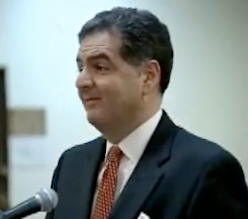
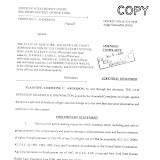
BROWNSVILLE, TX — Cameron County District Attorney Armando Villalobos and Eduardo “Eddie” Lucio, his former law partner, were arrested Monday under a 12-count indictment alleging a scheme to pocket more than $100,000 in bribes and kickbacks to fix or dismiss court cases. Among the many scathing accusations in the indictment are that Villalobos, 44, a congressional hopeful who serves as both county and district attorney, took from a wrongful death lawsuit settlement that doubled as bail and allowed convicted murderer “A.L.” a reprieve before starting a 23-year sentence. State District Judge Abel Corral Limas, who pleaded guilty last year to running his courtroom as a cash-generating enterprise, in 2007 gave convicted murderer Amit Livingston 60 days to get his affairs in order before reporting to prison. Livingston, who pleaded guilty to murdering Hermila Hernandez of Edinburg, has now been a fugitive for more than five years. Of the $500,000 settlement, $200,000 allegedly was attorney fees to Lucio, of which $80,000 went to Villalobos. Other allegations against Villalobos and Lucio, 43, who is no relation to state Sen. Eddie Lucio or his son, state Rep. Eddie Lucio III, involve complex deals to dismiss cases, engineer plea deals, jiggle fines and dip into cash seizures.
“Villalobos solicited and accepted bribe money and otherwise extorted money from attorneys handling criminal cases and matters pending with the office of the district and county attorney of Cameron County, in return for favorable acts of prosecutorial discretion, including but not limited to, minimizing charging decisions, pretrial diversion agreements, agreements on probationary matters and case dismissals,” the indictment said. Villalobos and Lucio are charged with one count of violating the Racketeer Influenced and Corrupt Organizations Act and one count of conspiracy to violate the act. Villalobos also is charged with seven counts of extortion and three counts of honest services fraud. Lucio faces three counts of extortion and two counts of honest services fraud. The indictment alleges that a “Person 1,” identified as a former state district judge, and Persons “G” and “E,” identified as attorneys and unindicted co-conspirators, were involved in the web of corruption, which prosecutors say dates to October 2006. Villalobos knew the indictment was coming, calling a few local media outlets to a news conference in his office Monday morning to stand surrounded by family, admit to being under investigation and say he was innocent and had no intentions of resigning from office or dropping out of the race for Congressional District 34. Shortly after, he and Lucio were behind closed doors in a federal courtroom, arranging to surrender to warrants and be quickly arraigned on the charges. Both pleaded innocent and were released on $50,000 unsecured bail. They waived a reading of the indictment. Villalobos emerged from the courthouse to cheers of about 20 supporters in red campaign T-shirts, among them the paid spokesman for the district attorney's office. Villalobos and his two attorneys said he would be vindicated. “We're going to go forward; I'm not going to resign from the D.A.'s office, and I'm not going to withdraw from the race,” he said. “I'm innocent of all charges. I look forward to going to court so we can get this thing over with.” Said defense attorney Joel Androphy: “This is just a piece of paper. ... Indictments are brought by secret bodies that hear evidence in a secret fashion. We've had no ability to respond to it, no ability to rebut it, no ability to speak to the grand jury about it. ... It's one side of the story, and I promise you there is an entirely different other side of the story.” John Blaylock, who is defending Lucio, said he, too, was looking forward to seeing what he called a “very weak” case based on coerced informants play out before a jury. “It's going to be kind of fun,” he said. “You've got these ‘Person 1,' and ‘Person G,' like dancing chickens. ... That's what the government's done to these other people, and I feel sorry for them, but they've had a lot of heat applied to them and now they're performing. This entire indictment is based upon that kind of performance.” Blaylock said the allegations were associated with the wide-ranging federal probe into Limas, who along with others, including former state Rep. Jose Santiago “Jim” Solis, is awaiting sentencing. lbrezosky@express-news.net
Tuesday, May 8, 2012


Appellate Court Backs First Amendment
Talk Radio Host's Remarks Ruled 'Caustic' Opinion
The New York Law Journal by John Caher - May 8, 2012
A radio talk host who asked a woman whose brother had been acquitted of criminally negligent homicide how it felt to have a "cold-blooded murderer" as a sibling is immune from a defamation suit because his remarks were "obviously intended to be caustic and confrontational, rather than factual," the Appellate Division, Fourth Department, has held in Gisel v. Clear Channel Communications, 11-01968. The panel concluded that Rochester-area talk show host Robert Lonsberry's statements were "nonactionable expressions of pure opinion." The dispute involved a conversation that Lonsberry had on air with a woman whose brother was found not guilty of a homicide charge brought in connection with a hunting accident. Lonsberry opined that the incident could not have been an accident and asked the woman whether her brother "put a notch in the stock of his gun as he kills people."
The New York Law Journal by John Caher - May 8, 2012
A radio talk host who asked a woman whose brother had been acquitted of criminally negligent homicide how it felt to have a "cold-blooded murderer" as a sibling is immune from a defamation suit because his remarks were "obviously intended to be caustic and confrontational, rather than factual," the Appellate Division, Fourth Department, has held in Gisel v. Clear Channel Communications, 11-01968. The panel concluded that Rochester-area talk show host Robert Lonsberry's statements were "nonactionable expressions of pure opinion." The dispute involved a conversation that Lonsberry had on air with a woman whose brother was found not guilty of a homicide charge brought in connection with a hunting accident. Lonsberry opined that the incident could not have been an accident and asked the woman whether her brother "put a notch in the stock of his gun as he kills people."
Monday, May 7, 2012
Judge Denies Alleged Misdeeds in Another Look Behind the Bench
Judge Denies Alleged Misdeeds
The Daily Report by R. Robin McDonald - May 3, 2012
Bannister suit against sheriff in Gwinnett also attacks his wife; Brown says records vindicate her
LAWRENCEVILLE, GA -- A civil rights suit filed Monday by a former Gwinnett County commissioner against the county sheriff includes allegations of judicial misconduct against the sheriff's wife—a Gwinnett County state court judge. State Court Judge Carla Brown told the Daily Report Tuesday that case management records maintained by the county court administrator contradict allegations by former Commission Chairman Charles Bannister that she rarely went to work while Bannister was in office.
RELATED BACKGROUND STORY:
Judge Responds to Bannister's claims in Lawsuit
The Gwinnett Daily Post by Josh Green - May 2, 2012
LAWRENCEVILLE, GA -- A Gwinnett State Court judge on Wednesday called claims about her work ethic made by the county's former Commission Chairman Charles Bannister in a federal lawsuit meritless. Judge Carla Brown, who is married to Gwinnett County Sheriff Butch Conway, is not among the three county employees -- Conway and two deputies under his command -- being sued by the former head of Gwinnett's government. But the 40-page suit, filed Monday in U.S. District Court in Atlanta, points to Bannister's probe of the judge's absences from the bench as fodder for Conway's aversion to his boss -- and part of Conway's motivation for arresting Bannister on DUI charges that were later dropped. According to the suit, Bannister made inquiries into the workplace habits of Brown, who he suspected of abusing public funds by "rarely" showing up for her full-time judgeship; her absences forced magistrate judges to cover for her, the suit claims. In response, Brown said court records detailing when judges sat in for her and the size of her case load over the years clearly disprove those claims. "My judicial assistance use is in line with all other state court judges," said Brown. "The caseload numbers don't lie, and they're readily available." Among other claims against Brown, Bannister's suit states that he requested records showing when the judge's access card was used to enter and exit Gwinnett's courthouse -- actions that not only infuriated the judge and Conway, but spurred the sheriff to change the access card system so that no records could be kept, the suit claims. Brown said the access card system had been changed before she was appointed to the bench in 2003 by Gov. Sonny Perdue. Brown won an election for the seat in 2004 and wasn't opposed at the end of that four-year term in 2008, she said. Constitutional rights protecting Bannister against illegal search and seizure during the DUI arrest, and granting him the right to voice opposition to Conway in past political arenas, were violated, entitling him to whatever damages a federal jury will deem fit, the suit claims. Bannister's attorney, David Walbert, said he's hopeful the case will be tried some time next year. He said compensatory and punitive damages should be awarded to Bannister for millions of dollars. The suit alleges Conway tried to "catch" Bannister and arrest him on "trumped-up" charges when he left Cafe Hot Wing, a Lilburn restaurant Bannister frequented for "conversation, food and an occasional beer" in June 2010. The DUI arrest came months before Bannister suddenly resigned to avoid a perjury charge as a special grand jury was investigating controversial land deals conducted under his watch. Throughout the ordeal, Conway denied that he and Bannister were political adversaries. He called the arrest and baseless charges more a product of poor judgment than animosity. This week the sheriff reiterated his apology to Bannister and his family. josh.green@gwinnettdailypost.com
The Daily Report by R. Robin McDonald - May 3, 2012
Bannister suit against sheriff in Gwinnett also attacks his wife; Brown says records vindicate her
LAWRENCEVILLE, GA -- A civil rights suit filed Monday by a former Gwinnett County commissioner against the county sheriff includes allegations of judicial misconduct against the sheriff's wife—a Gwinnett County state court judge. State Court Judge Carla Brown told the Daily Report Tuesday that case management records maintained by the county court administrator contradict allegations by former Commission Chairman Charles Bannister that she rarely went to work while Bannister was in office.
RELATED BACKGROUND STORY:
Judge Responds to Bannister's claims in Lawsuit
The Gwinnett Daily Post by Josh Green - May 2, 2012
LAWRENCEVILLE, GA -- A Gwinnett State Court judge on Wednesday called claims about her work ethic made by the county's former Commission Chairman Charles Bannister in a federal lawsuit meritless. Judge Carla Brown, who is married to Gwinnett County Sheriff Butch Conway, is not among the three county employees -- Conway and two deputies under his command -- being sued by the former head of Gwinnett's government. But the 40-page suit, filed Monday in U.S. District Court in Atlanta, points to Bannister's probe of the judge's absences from the bench as fodder for Conway's aversion to his boss -- and part of Conway's motivation for arresting Bannister on DUI charges that were later dropped. According to the suit, Bannister made inquiries into the workplace habits of Brown, who he suspected of abusing public funds by "rarely" showing up for her full-time judgeship; her absences forced magistrate judges to cover for her, the suit claims. In response, Brown said court records detailing when judges sat in for her and the size of her case load over the years clearly disprove those claims. "My judicial assistance use is in line with all other state court judges," said Brown. "The caseload numbers don't lie, and they're readily available." Among other claims against Brown, Bannister's suit states that he requested records showing when the judge's access card was used to enter and exit Gwinnett's courthouse -- actions that not only infuriated the judge and Conway, but spurred the sheriff to change the access card system so that no records could be kept, the suit claims. Brown said the access card system had been changed before she was appointed to the bench in 2003 by Gov. Sonny Perdue. Brown won an election for the seat in 2004 and wasn't opposed at the end of that four-year term in 2008, she said. Constitutional rights protecting Bannister against illegal search and seizure during the DUI arrest, and granting him the right to voice opposition to Conway in past political arenas, were violated, entitling him to whatever damages a federal jury will deem fit, the suit claims. Bannister's attorney, David Walbert, said he's hopeful the case will be tried some time next year. He said compensatory and punitive damages should be awarded to Bannister for millions of dollars. The suit alleges Conway tried to "catch" Bannister and arrest him on "trumped-up" charges when he left Cafe Hot Wing, a Lilburn restaurant Bannister frequented for "conversation, food and an occasional beer" in June 2010. The DUI arrest came months before Bannister suddenly resigned to avoid a perjury charge as a special grand jury was investigating controversial land deals conducted under his watch. Throughout the ordeal, Conway denied that he and Bannister were political adversaries. He called the arrest and baseless charges more a product of poor judgment than animosity. This week the sheriff reiterated his apology to Bannister and his family. josh.green@gwinnettdailypost.com
Man Who Appoints Many Judges Sees No Corruption
Mike’s bizarre turn
The New York Post - EDITORIAL - May 6, 2012
It’s fair to to wonder what state Mayor Bloomberg lives in, given his mind-bogglingly out-of-touch comments last week about political ethics in New York. Even as corruption by several pols continues to make news, Mike was urging weaker ethics laws and a beefed-up pork system: “We’ve changed the ethics laws,” he said Friday, referring to recent restrictions on lawmakers. “You’ve got to love the unintended consequences,” he added — sarcastically. Bloomberg suggests that limits on pols’ junkets means that they can’t “get together” and “build relationships.” As a result, “they don’t talk to one another.” It’s weird logic — but maybe not as strange as his plug for more pork: “The way you manage a legislature is, the leadership doles out [pork],” he said. No doubt, he missed word that ex-state Sen. Carl Kruger recently drew a seven-year sentence for corruption tied to his official duties. That ex-Sen. Pedro Espada was awaiting a verdict in his political-corruption trial. That ex-Sen. Hiram Monserrate pleaded guilty Friday to using city pork for his own personal benefit. That City Councilman Larry Seabrook will face a re-trial on charges that he, too, abused city funds. City Council Speaker Chris Quinn may finally understand the need to clamp down. Last week, she told Seabrook: No more pork for you. (Or in his case, cream cheese.) Quinn said the indicted Bronx pol won’t get his grubby hands on $300,000 in “member item” cash. Recall that in December — less than three weeks after his first corruption trial ended in a hung jury — Quinn said he was still in line for the money. Her decision then seemed strange, to say the least: Prosecutors had charged the councilman with funneling $1.2 million in city funds to fake nonprofits he secretly controlled, directing much of the cash to his girlfriend and relatives — and, for good measure, seeking $177 in illegal reimbursements for a bagel and a Snapple. A retrial was all but certain. Yet she was going to give him more taxpayer cash? Fact is, as we’ve often argued, the member-item system invites abuse. Yes, historically, “discretionary spending” has been used, in part, to help legislative leaders enforce discipline among their membership. But in New York, it’s become a source of endless scandals. Has Bloomberg missed those scandals — or does he want to encourage more of them? Because that’s what taking his advice would surely lead to.
The New York Post - EDITORIAL - May 6, 2012
It’s fair to to wonder what state Mayor Bloomberg lives in, given his mind-bogglingly out-of-touch comments last week about political ethics in New York. Even as corruption by several pols continues to make news, Mike was urging weaker ethics laws and a beefed-up pork system: “We’ve changed the ethics laws,” he said Friday, referring to recent restrictions on lawmakers. “You’ve got to love the unintended consequences,” he added — sarcastically. Bloomberg suggests that limits on pols’ junkets means that they can’t “get together” and “build relationships.” As a result, “they don’t talk to one another.” It’s weird logic — but maybe not as strange as his plug for more pork: “The way you manage a legislature is, the leadership doles out [pork],” he said. No doubt, he missed word that ex-state Sen. Carl Kruger recently drew a seven-year sentence for corruption tied to his official duties. That ex-Sen. Pedro Espada was awaiting a verdict in his political-corruption trial. That ex-Sen. Hiram Monserrate pleaded guilty Friday to using city pork for his own personal benefit. That City Councilman Larry Seabrook will face a re-trial on charges that he, too, abused city funds. City Council Speaker Chris Quinn may finally understand the need to clamp down. Last week, she told Seabrook: No more pork for you. (Or in his case, cream cheese.) Quinn said the indicted Bronx pol won’t get his grubby hands on $300,000 in “member item” cash. Recall that in December — less than three weeks after his first corruption trial ended in a hung jury — Quinn said he was still in line for the money. Her decision then seemed strange, to say the least: Prosecutors had charged the councilman with funneling $1.2 million in city funds to fake nonprofits he secretly controlled, directing much of the cash to his girlfriend and relatives — and, for good measure, seeking $177 in illegal reimbursements for a bagel and a Snapple. A retrial was all but certain. Yet she was going to give him more taxpayer cash? Fact is, as we’ve often argued, the member-item system invites abuse. Yes, historically, “discretionary spending” has been used, in part, to help legislative leaders enforce discipline among their membership. But in New York, it’s become a source of endless scandals. Has Bloomberg missed those scandals — or does he want to encourage more of them? Because that’s what taking his advice would surely lead to.
New York Needs Real Legal System Reform, Not Lipp Service
While Pro Bono Goal Applauded, Questions About Details Abound
The New York Law Journal by Joel Stashenko - May 7, 2012
Each year since Hurricane Katrina inundated the Gulf Coast in 2005, about 60 students from Touro Law Center have spent winter or spring breaks in Louisiana and Mississippi performing pro bono legal work for residents who are still trying to recover from the disaster. Now, however, Thomas Maligno, executive director of Touro's public advocacy center, is wondering how the students' "really wonderful work" will be affected by a new requirement that will make pro bono service a prerequisite for admission to New York's bar. "The question is, will it meet this new [bar admission] requirement?" Maligno asked. "And if it doesn't, will that make it harder to find students to do this type of work in the future?" Maligno is not alone in asking questions about the implications of Chief Judge Jonathan Lippman's generally-applauded announcement last week that candidates for admission starting next year will be required to certify they performed at least 50 hours of pro bono service before they can be admitted (NYLJ, May 2). "The unmet need [for legal services] is huge," said Kim Diana Connolly, director of clinical legal education at SUNY Buffalo Law School. "The idea of mobilizing the brilliant minds I teach every day is great. But it is going to be a great deal of work to tromp through the slop to see how we are going to make this happen. Right now it is rather murky." And it is likely to remain murky for a while. Lippman said that the rules shaping the new requirement would not be circulated until late August or early September.
Judge Lippman said he intentionally made his announcement eight months before the requirements are to go into effect to give court officials time to hear from law schools, law firms, legal services providers, the bar admissions departments of the Appellate Division and others about how to implement the new prerequisite. "Before I put out the exact rules, I want to talk to the stakeholders," Judge Lippman said in an interview. Meanwhile, law students on several campuses said they were supportive of the chief judge's initiative. Some students are "so caught up" with the idea of winning a lucrative position in corporate law that they have lost track of an attorney's responsibility to society, said Elaine Lorenzo, a first-year student at the Maurice A. Deane School of Law at Hofstra University. "This will shift the focus back to what we're meant to do," she said. "It's not a burden, it's a week. Get over it." Another Hofstra student, Ahmad Almadallal, the president of a campus organization encouraging public-sector service, said that the requirement could expand the legal horizons of some students. "A lot of students don't even think of [pro bono work]," he said. "It might open their eyes to other areas of the law." Michael Legge, a first-year student at New York University Law School, agreed. "You are admitted to the bar to be an officer of the court and the court is meant to be in service to the public, so this seems to fit with that," he said. But the consensus among NYU students interviewed last week is that most students already do pro bono work. In fact, the school bestows a "Pro Bono Service Award" on those who have donated 50 hours of their time between the second semester of their first year and graduation. "Fifty hours is not a lot of time—you can do that in a week," said first-year Shira Burton, adding that NYU Law students typically do public service work during the summer between their first and second years.
At Touro, which has a 40-hour pro bono prerequisite for graduation, second-year student Erica Vladimer said she did not think the new state rule would unduly inconvenience most students. In any case, she said, the benefits will outweigh any drawbacks. "It is very easy to get lost in the books and very easy to just get into your study habits," Vladimer said. "But to go out there in the community and utilize what you are learning...that is something that nobody can deny feels good." Albany Law School second-year Ben Pomerance, who organizes legal clinics for veterans with the help of volunteer local lawyers and other students, said the pro bono admissions requirement is "one of the most positive advances that the state could make in the legal education realm." "It instills in us an ethic of service that should...be within every student and professional," Pomerance said. "Justice is meant for everyone." Lippman said he believes that to be acceptable pro bono programs must provide legal services to low-income communities. Moreover, the students must receive meaningful supervision from lawyers or service providers. "We are not talking about granting [pro bono] credits for sitting in a classroom," he said. "We don't want them to go willy-nilly without the proper preparation and supervision. You just can't take these kids and say, 'Go out there and do good things.'" Lippman estimated that the new requirement will add 500,000 hours of legal assistance to low-income New Yorkers each year. But he acknowledged that no one keeps statistics now on how many hours law students put in providing legal aid to the poor. The chief judge said in a meeting with reporters after his annual Law Day speech last week that "a little flexibility" will be built into the rules to allow applicants to demonstrate that they fulfilled the pro bono requirement in their home states or native countries. "We're not going to diminish doing pro bono in Connecticut or Arizona," the judge said. "But for the most part, that pro bono work will be in the state of New York." While rules for acceptable pro bono work performed by prospective lawyers outside New York have yet to be worked out, Lippman said the Touro Law student work with Hurricane Katrina victims would seem, at first blush, to fit the bill. "I think that would qualify because you are coming from a New York law school and responding to an emergency," Judge Lippman said. "Just as OCA sent court personnel down to the Gulf after Hurricane Katrina, that is the emergency kind of situation involving human tragedies that transcends setting a rule like this."
'A Culture of Public Service'
Two of the 13 New York law schools, Columbia and Touro, already require students to donate at least 40 hours of closely supervised community service before they graduate. Ellen Chapnick, dean for social justice initiatives at Columbia Law, said the 18-year-old Columbia pro bono requirement has accomplished Lippman's aims. "It really does create a culture of public service," Chapnick said in an interview. "Every student at Columbia Law School and much of the faculty understand the obligation to do public service as a public responsibility. It is not charity. It is a public responsibility." Chapnick said that the majority of students do more than the required 40 hours. And although all students do not initially embrace the school's pro bono requirement, many initial skeptics end up acknowledging its value. She recalled that one student who worked on an eviction case responded to a survey by saying that "he still thought of it as 'communism, fascism and slavery.' He also referred to it as representing, 'Maybe the most worthwhile thing I have done in my life, maybe the only worthwhile thing I have done in my life.'" Alicia Oulette, professor of law and associate dean for student affairs at Albany Law School, said many students there participate in voluntary programs to help low-income people that are supervised by more experienced students. In addition, Albany, like its counterparts, places significant emphasis on attorney-supervised clinical programs as part of its curriculum. Second- and third-year students represent consumers, the unemployed, immigrants and domestic violence victims among others. Students can earn up to 20 hours of academic credits toward the 87 credit hours needed for graduation by participating in the clinics. She said that Albany and other law schools will have to make available to students the kinds of pro bono programs that would help qualify them for admission. "I would say it is our job to help those students to become qualified," Oulette said. "We need to know what counts, what records we need to keep. Is there a structure that each of the [Appellate Division] departments is going to have in terms of record-keeping?" Both Oulette and Connolly, from Buffalo Law, said mandatory pro bono for prospective lawyers will require more supervision by legal services providers and private attorneys. Buffalo has introduced a "practicum" course in criminal law in which students work with defense lawyers through the local assigned counsel program. "Something we have been struggling with in terms of developing these new practicum courses is the level of commitment with the outside lawyers," Connolly said. In addition to the types of programs that will qualify, framers of the new rules will consider whether to allow current first- and second-year students to perform less than 50 hours of service to qualify for admission, Lippman said. For example, students with only one year left in law school might be required to perform only one-third of the requirement—about 17 hours. "We are not giving anybody a pass," he said. The chief judge also said some consideration will be given to hardship cases, where students are too busy working their way through law school to meet the 50-hour obligation. However, he said such exemptions should be "very, very rare." @|Joel Stashenko can be contacted at jstashenko@alm.com. Andrew Keshner and Laura Haring contributed to this story.
The New York Law Journal by Joel Stashenko - May 7, 2012
Each year since Hurricane Katrina inundated the Gulf Coast in 2005, about 60 students from Touro Law Center have spent winter or spring breaks in Louisiana and Mississippi performing pro bono legal work for residents who are still trying to recover from the disaster. Now, however, Thomas Maligno, executive director of Touro's public advocacy center, is wondering how the students' "really wonderful work" will be affected by a new requirement that will make pro bono service a prerequisite for admission to New York's bar. "The question is, will it meet this new [bar admission] requirement?" Maligno asked. "And if it doesn't, will that make it harder to find students to do this type of work in the future?" Maligno is not alone in asking questions about the implications of Chief Judge Jonathan Lippman's generally-applauded announcement last week that candidates for admission starting next year will be required to certify they performed at least 50 hours of pro bono service before they can be admitted (NYLJ, May 2). "The unmet need [for legal services] is huge," said Kim Diana Connolly, director of clinical legal education at SUNY Buffalo Law School. "The idea of mobilizing the brilliant minds I teach every day is great. But it is going to be a great deal of work to tromp through the slop to see how we are going to make this happen. Right now it is rather murky." And it is likely to remain murky for a while. Lippman said that the rules shaping the new requirement would not be circulated until late August or early September.
Judge Lippman said he intentionally made his announcement eight months before the requirements are to go into effect to give court officials time to hear from law schools, law firms, legal services providers, the bar admissions departments of the Appellate Division and others about how to implement the new prerequisite. "Before I put out the exact rules, I want to talk to the stakeholders," Judge Lippman said in an interview. Meanwhile, law students on several campuses said they were supportive of the chief judge's initiative. Some students are "so caught up" with the idea of winning a lucrative position in corporate law that they have lost track of an attorney's responsibility to society, said Elaine Lorenzo, a first-year student at the Maurice A. Deane School of Law at Hofstra University. "This will shift the focus back to what we're meant to do," she said. "It's not a burden, it's a week. Get over it." Another Hofstra student, Ahmad Almadallal, the president of a campus organization encouraging public-sector service, said that the requirement could expand the legal horizons of some students. "A lot of students don't even think of [pro bono work]," he said. "It might open their eyes to other areas of the law." Michael Legge, a first-year student at New York University Law School, agreed. "You are admitted to the bar to be an officer of the court and the court is meant to be in service to the public, so this seems to fit with that," he said. But the consensus among NYU students interviewed last week is that most students already do pro bono work. In fact, the school bestows a "Pro Bono Service Award" on those who have donated 50 hours of their time between the second semester of their first year and graduation. "Fifty hours is not a lot of time—you can do that in a week," said first-year Shira Burton, adding that NYU Law students typically do public service work during the summer between their first and second years.
At Touro, which has a 40-hour pro bono prerequisite for graduation, second-year student Erica Vladimer said she did not think the new state rule would unduly inconvenience most students. In any case, she said, the benefits will outweigh any drawbacks. "It is very easy to get lost in the books and very easy to just get into your study habits," Vladimer said. "But to go out there in the community and utilize what you are learning...that is something that nobody can deny feels good." Albany Law School second-year Ben Pomerance, who organizes legal clinics for veterans with the help of volunteer local lawyers and other students, said the pro bono admissions requirement is "one of the most positive advances that the state could make in the legal education realm." "It instills in us an ethic of service that should...be within every student and professional," Pomerance said. "Justice is meant for everyone." Lippman said he believes that to be acceptable pro bono programs must provide legal services to low-income communities. Moreover, the students must receive meaningful supervision from lawyers or service providers. "We are not talking about granting [pro bono] credits for sitting in a classroom," he said. "We don't want them to go willy-nilly without the proper preparation and supervision. You just can't take these kids and say, 'Go out there and do good things.'" Lippman estimated that the new requirement will add 500,000 hours of legal assistance to low-income New Yorkers each year. But he acknowledged that no one keeps statistics now on how many hours law students put in providing legal aid to the poor. The chief judge said in a meeting with reporters after his annual Law Day speech last week that "a little flexibility" will be built into the rules to allow applicants to demonstrate that they fulfilled the pro bono requirement in their home states or native countries. "We're not going to diminish doing pro bono in Connecticut or Arizona," the judge said. "But for the most part, that pro bono work will be in the state of New York." While rules for acceptable pro bono work performed by prospective lawyers outside New York have yet to be worked out, Lippman said the Touro Law student work with Hurricane Katrina victims would seem, at first blush, to fit the bill. "I think that would qualify because you are coming from a New York law school and responding to an emergency," Judge Lippman said. "Just as OCA sent court personnel down to the Gulf after Hurricane Katrina, that is the emergency kind of situation involving human tragedies that transcends setting a rule like this."
'A Culture of Public Service'
Two of the 13 New York law schools, Columbia and Touro, already require students to donate at least 40 hours of closely supervised community service before they graduate. Ellen Chapnick, dean for social justice initiatives at Columbia Law, said the 18-year-old Columbia pro bono requirement has accomplished Lippman's aims. "It really does create a culture of public service," Chapnick said in an interview. "Every student at Columbia Law School and much of the faculty understand the obligation to do public service as a public responsibility. It is not charity. It is a public responsibility." Chapnick said that the majority of students do more than the required 40 hours. And although all students do not initially embrace the school's pro bono requirement, many initial skeptics end up acknowledging its value. She recalled that one student who worked on an eviction case responded to a survey by saying that "he still thought of it as 'communism, fascism and slavery.' He also referred to it as representing, 'Maybe the most worthwhile thing I have done in my life, maybe the only worthwhile thing I have done in my life.'" Alicia Oulette, professor of law and associate dean for student affairs at Albany Law School, said many students there participate in voluntary programs to help low-income people that are supervised by more experienced students. In addition, Albany, like its counterparts, places significant emphasis on attorney-supervised clinical programs as part of its curriculum. Second- and third-year students represent consumers, the unemployed, immigrants and domestic violence victims among others. Students can earn up to 20 hours of academic credits toward the 87 credit hours needed for graduation by participating in the clinics. She said that Albany and other law schools will have to make available to students the kinds of pro bono programs that would help qualify them for admission. "I would say it is our job to help those students to become qualified," Oulette said. "We need to know what counts, what records we need to keep. Is there a structure that each of the [Appellate Division] departments is going to have in terms of record-keeping?" Both Oulette and Connolly, from Buffalo Law, said mandatory pro bono for prospective lawyers will require more supervision by legal services providers and private attorneys. Buffalo has introduced a "practicum" course in criminal law in which students work with defense lawyers through the local assigned counsel program. "Something we have been struggling with in terms of developing these new practicum courses is the level of commitment with the outside lawyers," Connolly said. In addition to the types of programs that will qualify, framers of the new rules will consider whether to allow current first- and second-year students to perform less than 50 hours of service to qualify for admission, Lippman said. For example, students with only one year left in law school might be required to perform only one-third of the requirement—about 17 hours. "We are not giving anybody a pass," he said. The chief judge also said some consideration will be given to hardship cases, where students are too busy working their way through law school to meet the 50-hour obligation. However, he said such exemptions should be "very, very rare." @|Joel Stashenko can be contacted at jstashenko@alm.com. Andrew Keshner and Laura Haring contributed to this story.
Maybe Out-Of-State Based Firms Can Clean NY Legal Cesspool... a little
LeClairRyan Boosts New York Office With Eight From Epstein Becker
The American Lawyer by Brian Baxter - May 7, 2012
Epstein Becker & Green is losing eight attorneys—seven of them partners—in New York to LeClairRyan, the latest in a series of hires the Richmond-based firm has made in recent months in a push to expand its corporate, litigation, and commercial real estate expertise. Leading the team headed for LeClairRyan is Adrian Zuckerman, cochair of New York-based Epstein Becker's corporate services practice. Zuckerman will cohead the real estate industry group at LeClairRyan. Joining Zuckerman in LeClairRyan's New York office, which now boasts 32 lawyers, is Barry Cozier, a labor and employment litigation partner and former Appellate Division, Second Department judge; Scott Drago, health care and life sciences partner, corporate partners Cynthia Mitchell, Ralph Berman, and Linda Bielik, and senior corporate counsel Andrea Lawrence, who joins LeClairRyan as a partner. Associate Lauren Margiano and two staff members are also jumping to LeClairRyan. LeClairRyan had 342 lawyers at the end of 2011, an increase of nearly 30 lawyers over the previous year, according to annual head count data compiled by affiliate publication The National Law Journal. The firm picked up 14 of those lawyers by merging in July with New York's Biedermann, Reif, Hoenig & Ruff in a bid for more European work. That move came six months after LeClairRyan opened an office in Rochester, N.Y., and bolstered its presence in four other cities by adding 16 lawyers from Nixon Peabody. LeClairRyan also held merger talks last year with Bullivant Houser Bailey, a struggling Portland, Ore.-based firm.
As for Epstein Becker, the firm issued a statement on the departures, most of whom joined the firm in 2007 from Lowenstein Sandler. "The firm fully supports Adrian's decision to find a platform that better suits his group's objectives and wishes them the best of luck," Epstein Becker chief operating officer Steven Di Fiore said in the statement. "We are pleased this worked out mutually for both the firm and the departing attorneys." Epstein Becker added that it is proceeding with its strategy of focusing on the fields of health care and life sciences, labor and employment, litigation, corporate services, and employee benefits. Founded in 1973, Epstein Becker suffered several key lateral departures last year. Among the biggest blows: the loss of the 14-lawyer Houston office to Cozen O'Connor and the defection of seven San Francisco-based lawyers to Crowell & Moring. The firm also lost its real estate practice chair in Atlanta to DLA Piper and closed its Miami office after partners departed for Duane Morris and Gordon & Rees. At the same time, Epstein Becker notes that it has also brought on 15 hires of its own in several cities throughout the country since January 2011. This year, the firm hired former Proskauer Rose special labor counsel Adam Abrahms in Los Angeles as a partner, as well as litigation partner William Barron, the former head of the New York litigation practice at Atlanta-based Smith, Gambrell & Russell. @|Brian Baxter, a reporter for The American Lawyer, an affiliate publication of the Law Journal, can be contacted at bbaxter@alm.com.
The American Lawyer by Brian Baxter - May 7, 2012
Epstein Becker & Green is losing eight attorneys—seven of them partners—in New York to LeClairRyan, the latest in a series of hires the Richmond-based firm has made in recent months in a push to expand its corporate, litigation, and commercial real estate expertise. Leading the team headed for LeClairRyan is Adrian Zuckerman, cochair of New York-based Epstein Becker's corporate services practice. Zuckerman will cohead the real estate industry group at LeClairRyan. Joining Zuckerman in LeClairRyan's New York office, which now boasts 32 lawyers, is Barry Cozier, a labor and employment litigation partner and former Appellate Division, Second Department judge; Scott Drago, health care and life sciences partner, corporate partners Cynthia Mitchell, Ralph Berman, and Linda Bielik, and senior corporate counsel Andrea Lawrence, who joins LeClairRyan as a partner. Associate Lauren Margiano and two staff members are also jumping to LeClairRyan. LeClairRyan had 342 lawyers at the end of 2011, an increase of nearly 30 lawyers over the previous year, according to annual head count data compiled by affiliate publication The National Law Journal. The firm picked up 14 of those lawyers by merging in July with New York's Biedermann, Reif, Hoenig & Ruff in a bid for more European work. That move came six months after LeClairRyan opened an office in Rochester, N.Y., and bolstered its presence in four other cities by adding 16 lawyers from Nixon Peabody. LeClairRyan also held merger talks last year with Bullivant Houser Bailey, a struggling Portland, Ore.-based firm.
As for Epstein Becker, the firm issued a statement on the departures, most of whom joined the firm in 2007 from Lowenstein Sandler. "The firm fully supports Adrian's decision to find a platform that better suits his group's objectives and wishes them the best of luck," Epstein Becker chief operating officer Steven Di Fiore said in the statement. "We are pleased this worked out mutually for both the firm and the departing attorneys." Epstein Becker added that it is proceeding with its strategy of focusing on the fields of health care and life sciences, labor and employment, litigation, corporate services, and employee benefits. Founded in 1973, Epstein Becker suffered several key lateral departures last year. Among the biggest blows: the loss of the 14-lawyer Houston office to Cozen O'Connor and the defection of seven San Francisco-based lawyers to Crowell & Moring. The firm also lost its real estate practice chair in Atlanta to DLA Piper and closed its Miami office after partners departed for Duane Morris and Gordon & Rees. At the same time, Epstein Becker notes that it has also brought on 15 hires of its own in several cities throughout the country since January 2011. This year, the firm hired former Proskauer Rose special labor counsel Adam Abrahms in Los Angeles as a partner, as well as litigation partner William Barron, the former head of the New York litigation practice at Atlanta-based Smith, Gambrell & Russell. @|Brian Baxter, a reporter for The American Lawyer, an affiliate publication of the Law Journal, can be contacted at bbaxter@alm.com.
Sunday, May 6, 2012
The NY Times, "Some judges and lawyers fear Judge Lippman..."
The Powers of New York
 Tony Cenicola/The New York Times

CLICK HERE TO READ THE FULL NEW YORK TIMES REPORT, "The Powers of New York"
The New York Times - May 5, 2012
Influence in New York is now wielded by a larger and more diverse array of people. As part of a special issue of Metropolitan, here’s a look at who is at the top and who may be on the way, as identified by the reporters of The New York Times.
Jonathan LippmanNew York Courts
By WILLIAM GLABERSON
Tony Cenicola/The New York TimesThe job of the state’s chief judge, Jonathan Lippman, who leads not only New York’s highest court but also its vast judicial bureaucracy, by definition comes with clout. But in Judge Lippman’s 11 years as the top administrator under the last chief judge,
**********
Preet BhararaFederal Court
By BENJAMIN WEISER
Tony Cenicola/The New York Times
In the past year, Preet Bharara, the
CLICK HERE TO READ THE FULL NEW YORK TIMES REPORT, "The Powers of New York"
Saturday, May 5, 2012
Corrupt Courthouse Bookkeeper Stole $2.6 Million From The Dead
Corrupt Brooklyn courthouse bookkeeper stole $2.6 million from the dead
The New York Daily News by Greg B. Smith and Janon Fisher - May 4, 2012
Theft funded lavish shopping sprees for camera equipment, Gucci products, Apple computers and even a New Year’s Eve weekend in Las Vegas: officials
Richard Paul was the alleged ringleader of four people from the Brooklyn Public Administrator who were indicted and charged with stealing $2.6 million from the estates of the deceased. George Bethea was one of four people from the Brooklyn Public Administrator indicted and charged with stealing $2.6 million from the estates of the deceased.
A corrupt county bookkeeper in the Brooklyn courthouse stole $2.6 million from the estates of dead people and funneled the money to three of his cronies, according to indictments unsealed Friday. Richard Paul, who worked in the Kings County Public Administrator’s office, used his own password to get access to the funds of people who died without wills, cut checks to phony names and deposited them into a TD Bank account in the Garment District. Paul, who was arrested in January, and his cohort Taryn Miller, 33, are both charged with two counts of grand larceny. Miller’s husband, George Bethea, 34, and former city department of corrections officer Ransel Sangster, 35, were charged with grand larceny in the second degree. All pleaded not guilty. “By breaching the public trust in order to line his pockets, the defendant violated his obligations to the City and to all New Yorkers,” District Attorney Cyrus Vance said of Paul. The fraud uncovered by Investigations Department exposed a weakness in the city’s system of maintaining so-called “abandoned” estates — estates where no legitimate relative comes forward to claim the money. When the public administrators can’t find next of kin, they’re supposed to send the money by check to the city Finance Department, which holds on to it in case a relative comes forward later. But investigators discovered the public administrators and finance weren’t double-checking to make sure the money got to where it was supposed to go. In Brooklyn, investigators discovered one out of every four checks went missing — $12.7 million of $34.4 million from abandoned estates between 2004 and 2011. That included the $2.6 million allegedly stolen by Paul. The problem may exist in the other boroughs as well, where 567 checks from abandoned estates worth $110 million have been written to the finance department since Jan. 1, 2007, officials said. Finance auditors are now going back over all those checks to make sure they were deposited correctly Finance auditors are now checking. “This investigation exposed an audacious and calculated scheme to steal money from the dead” DOI Commissioner Rose Gill Hearn said. “Investigators quickly found that a key insider and his accomplices methodically raided the accounts of a City office charged with safeguarding decedents’ property. DOI is recommending measures to the relevant City agencies to prevent a recurrence of the fraud uncovered by the investigation.” Paul, who worked at the Public Administrator’s office for 10 years, used his own password to log into the computer that controls the funds, prosecutors say. Starting in August 2008 through November of last year, prosecutors say he cut checks for draw-dropping amounts of cash. Sangster, deposited a $390,287.41 in his bank account in August 2008 and another for $200,000 in November 2011 while he was still working for the DOC, prosecutors say. Bethea was the recipient of $150,000 that should have gone in the public coffers, according to court papers. The crew went on shopping sprees, spending $44,000 on camera equipment, Gucci products and Apple computers, investigators believe. Sangster also treated himself to a New Year’s Eve weekend in Las Vegas. He declined to comment. Paul’s lawyer, Louis Rosenthal, said that his client trained others on the computer bookkeeping system and his password was available to many employees. “Half a dozen people have his password and passcode,” he said. “It’s unthinkable that he would use his own code to cut forged checks.” Darren Fields, the lawyer for Miller, said that his client has no association with the county office. “She never worked for the public administrator, she never received funds from the public administrator,” he said. “She’s a victim of circumstance.” jfisher@nydailynews.com
The New York Daily News by Greg B. Smith and Janon Fisher - May 4, 2012
Theft funded lavish shopping sprees for camera equipment, Gucci products, Apple computers and even a New Year’s Eve weekend in Las Vegas: officials
Richard Paul was the alleged ringleader of four people from the Brooklyn Public Administrator who were indicted and charged with stealing $2.6 million from the estates of the deceased. George Bethea was one of four people from the Brooklyn Public Administrator indicted and charged with stealing $2.6 million from the estates of the deceased.
A corrupt county bookkeeper in the Brooklyn courthouse stole $2.6 million from the estates of dead people and funneled the money to three of his cronies, according to indictments unsealed Friday. Richard Paul, who worked in the Kings County Public Administrator’s office, used his own password to get access to the funds of people who died without wills, cut checks to phony names and deposited them into a TD Bank account in the Garment District. Paul, who was arrested in January, and his cohort Taryn Miller, 33, are both charged with two counts of grand larceny. Miller’s husband, George Bethea, 34, and former city department of corrections officer Ransel Sangster, 35, were charged with grand larceny in the second degree. All pleaded not guilty. “By breaching the public trust in order to line his pockets, the defendant violated his obligations to the City and to all New Yorkers,” District Attorney Cyrus Vance said of Paul. The fraud uncovered by Investigations Department exposed a weakness in the city’s system of maintaining so-called “abandoned” estates — estates where no legitimate relative comes forward to claim the money. When the public administrators can’t find next of kin, they’re supposed to send the money by check to the city Finance Department, which holds on to it in case a relative comes forward later. But investigators discovered the public administrators and finance weren’t double-checking to make sure the money got to where it was supposed to go. In Brooklyn, investigators discovered one out of every four checks went missing — $12.7 million of $34.4 million from abandoned estates between 2004 and 2011. That included the $2.6 million allegedly stolen by Paul. The problem may exist in the other boroughs as well, where 567 checks from abandoned estates worth $110 million have been written to the finance department since Jan. 1, 2007, officials said. Finance auditors are now going back over all those checks to make sure they were deposited correctly Finance auditors are now checking. “This investigation exposed an audacious and calculated scheme to steal money from the dead” DOI Commissioner Rose Gill Hearn said. “Investigators quickly found that a key insider and his accomplices methodically raided the accounts of a City office charged with safeguarding decedents’ property. DOI is recommending measures to the relevant City agencies to prevent a recurrence of the fraud uncovered by the investigation.” Paul, who worked at the Public Administrator’s office for 10 years, used his own password to log into the computer that controls the funds, prosecutors say. Starting in August 2008 through November of last year, prosecutors say he cut checks for draw-dropping amounts of cash. Sangster, deposited a $390,287.41 in his bank account in August 2008 and another for $200,000 in November 2011 while he was still working for the DOC, prosecutors say. Bethea was the recipient of $150,000 that should have gone in the public coffers, according to court papers. The crew went on shopping sprees, spending $44,000 on camera equipment, Gucci products and Apple computers, investigators believe. Sangster also treated himself to a New Year’s Eve weekend in Las Vegas. He declined to comment. Paul’s lawyer, Louis Rosenthal, said that his client trained others on the computer bookkeeping system and his password was available to many employees. “Half a dozen people have his password and passcode,” he said. “It’s unthinkable that he would use his own code to cut forged checks.” Darren Fields, the lawyer for Miller, said that his client has no association with the county office. “She never worked for the public administrator, she never received funds from the public administrator,” he said. “She’s a victim of circumstance.” jfisher@nydailynews.com
Friday, May 4, 2012
Former Judge Pleads Guilty To Accepting Bribes
The Crooked Bench: Virginia Magistrate Joins Handful Of Bribe-Takers
The Wall Street Journal - May 3, 2012
The wheels of the justice system are rarely explicitly greased by bribes, but one recent case stands out. A former state magistrate in Portsmouth, Va. pleaded guilty Wednesday in federal court to taking bribes from a bail bondsman. Deborah Clark admitted to taking the bribes in exchange for giving the bondsman favorable treatment in setting bonds for defendants, according to a statement. Clark took cash and gifts from 2009 through February 2012 for referring arrestees to the bondsman, and for taking his advice on the amount of bond to set in particular case. In addition to cash, she admitted to taking payments for gas, meals and expense money for trips. She faces a maximum penalty of 10 years in prison and a fine of $250,000 when she is sentenced Oct. 3. But is she the only U.S. judicial official to be sentenced recently for taking bribes? No, of course not. Recall some cases from the past year or so, including one of the top-five convictions in Corruption Currents’ first year. Former judge Mark Ciavarella was sentenced to 28 years in prison following a conviction for money laundering and conspiracy for sending children to detention centers in exchange for kickbacks from the builder of the detention facilities. Or what about the former judge in Brownsville, Texas convicted last year for taking bribes in exchange for favorable rulings? And the judge in Texas convicted for taking a bribe that boosted her election chances in exchange for favorable rulings? Americans don’t think that highly of their judicial system, anyway. Transparency International’s 2010 Global Corruption Barometer asked respondents to score the extent of corruption in institutions on a scale of five, with five being extremely corrupt. U.S. respondents rated its judiciary at 3.4, barely edging out police, which rated a 3.3 but beating the press, which scored a 3.5.
RELATED:
Former Magistrate in Portsmouth Pleads Guilty to Accepting Bribes
U.S. Attorney’s Office - May 02, 2012 - Eastern District of Virginia - (757) 441-6331
NORFOLK, VA—A former state magistrate in Portsmouth, Virginia pleaded guilty today to accepting bribes from a bail bondsman in exchange for giving him favorable treatment in setting bonds for criminal defendants who had been arrested, U.S. Attorney Neil H. MacBride for the Eastern District of Virginia and Assistant Attorney General Lanny A. Breuer of the Justice Department’s Criminal Division announced today. Deborah Clark, 52, of Portsmouth, Virginia, pleaded guilty before U.S. District Judge Henry C. Morgan Jr. Clark was charged in a criminal information filed on April 16, 2012. She faces a maximum penalty of 10 years in prison and a fine of $250,000 when she is sentenced on Oct. 3, 2012. According to a statement of facts filed with her plea agreement, Clark was a state magistrate in Portsmouth from January 1993 until April of this year. She was authorized to issue arrest and search warrants, and to set bail or order the detention of arrestees. From 2009 through February 2012, she accepted cash and gifts from a bondsman in exchange for referring arrestees to the bondsman as prospective clients and seeking and accepting his advice on the amount of bond to set in particular cases. In addition to regular cash payments, Clark admitted receiving payments for gas, meals and expense money for trips. Clark is subject to prosecution for bribery under a federal statute because, as a magistrate, she was an agent of the Commonwealth of Virginia, which receives annual benefits in excess of $10,000 under federal programs involving grants and other forms of assistance. This case was investigated by the FBI. Assistant U.S. Attorney Alan M. Salsbury and Special Assistant U.S. Attorney Amy E. Cross of the Eastern District of Virginia and Trial Attorneys Peter Mason and Monique Abrishami of the Public Integrity Section in the Justice Department’s Criminal Division are prosecuting the case. A copy of this press release may be found on the website of the United States Attorney’s Office for the Eastern District of Virginia at http://www.justice.gov/usao/vae. Related court documents and information may be found on the website of the District Court for the Eastern District of Virginia at http://www.vaed.uscourts.gov or on https://pcl.uscourts.gov.
The Wall Street Journal - May 3, 2012
The wheels of the justice system are rarely explicitly greased by bribes, but one recent case stands out. A former state magistrate in Portsmouth, Va. pleaded guilty Wednesday in federal court to taking bribes from a bail bondsman. Deborah Clark admitted to taking the bribes in exchange for giving the bondsman favorable treatment in setting bonds for defendants, according to a statement. Clark took cash and gifts from 2009 through February 2012 for referring arrestees to the bondsman, and for taking his advice on the amount of bond to set in particular case. In addition to cash, she admitted to taking payments for gas, meals and expense money for trips. She faces a maximum penalty of 10 years in prison and a fine of $250,000 when she is sentenced Oct. 3. But is she the only U.S. judicial official to be sentenced recently for taking bribes? No, of course not. Recall some cases from the past year or so, including one of the top-five convictions in Corruption Currents’ first year. Former judge Mark Ciavarella was sentenced to 28 years in prison following a conviction for money laundering and conspiracy for sending children to detention centers in exchange for kickbacks from the builder of the detention facilities. Or what about the former judge in Brownsville, Texas convicted last year for taking bribes in exchange for favorable rulings? And the judge in Texas convicted for taking a bribe that boosted her election chances in exchange for favorable rulings? Americans don’t think that highly of their judicial system, anyway. Transparency International’s 2010 Global Corruption Barometer asked respondents to score the extent of corruption in institutions on a scale of five, with five being extremely corrupt. U.S. respondents rated its judiciary at 3.4, barely edging out police, which rated a 3.3 but beating the press, which scored a 3.5.
RELATED:
Former Magistrate in Portsmouth Pleads Guilty to Accepting Bribes
U.S. Attorney’s Office - May 02, 2012 - Eastern District of Virginia - (757) 441-6331
NORFOLK, VA—A former state magistrate in Portsmouth, Virginia pleaded guilty today to accepting bribes from a bail bondsman in exchange for giving him favorable treatment in setting bonds for criminal defendants who had been arrested, U.S. Attorney Neil H. MacBride for the Eastern District of Virginia and Assistant Attorney General Lanny A. Breuer of the Justice Department’s Criminal Division announced today. Deborah Clark, 52, of Portsmouth, Virginia, pleaded guilty before U.S. District Judge Henry C. Morgan Jr. Clark was charged in a criminal information filed on April 16, 2012. She faces a maximum penalty of 10 years in prison and a fine of $250,000 when she is sentenced on Oct. 3, 2012. According to a statement of facts filed with her plea agreement, Clark was a state magistrate in Portsmouth from January 1993 until April of this year. She was authorized to issue arrest and search warrants, and to set bail or order the detention of arrestees. From 2009 through February 2012, she accepted cash and gifts from a bondsman in exchange for referring arrestees to the bondsman as prospective clients and seeking and accepting his advice on the amount of bond to set in particular cases. In addition to regular cash payments, Clark admitted receiving payments for gas, meals and expense money for trips. Clark is subject to prosecution for bribery under a federal statute because, as a magistrate, she was an agent of the Commonwealth of Virginia, which receives annual benefits in excess of $10,000 under federal programs involving grants and other forms of assistance. This case was investigated by the FBI. Assistant U.S. Attorney Alan M. Salsbury and Special Assistant U.S. Attorney Amy E. Cross of the Eastern District of Virginia and Trial Attorneys Peter Mason and Monique Abrishami of the Public Integrity Section in the Justice Department’s Criminal Division are prosecuting the case. A copy of this press release may be found on the website of the United States Attorney’s Office for the Eastern District of Virginia at http://www.justice.gov/usao/vae. Related court documents and information may be found on the website of the District Court for the Eastern District of Virginia at http://www.vaed.uscourts.gov or on https://pcl.uscourts.gov.
Thursday, May 3, 2012
Lawyer Is Indicted for Stealing Building From Elderly Woman
Lawyer Is Indicted for Stealing Building From Elderly Woman
The New York Law Journal by Brendan Pierson - May 3, 2012
Federal prosecutors in Manhattan have indicted a Brooklyn lawyer and his employee who allegedly swindled an elderly woman out of a multi-million dollar Washington Heights property. The attorney, Ifeanyichukwu Eric Abakporo, and his employee, Latanya Pierce, allegedly befriended the owner of a large apartment building on St. Nicholas Avenue and 163rd Street in early 2006. The pair earned her trust by, among other things, offering to help manage the property, according to the newly unsealed indictment from the Southern District U.S. Attorney's office. The indictment identifies the woman as Victim-1. The Daily News identifies her as Ina McCarther, 80, a wheelchair-bound retired teacher. It states that Abakporo and Pierce collected rent from McCarther's tenants, but pocketed it for themselves. Later, they persuaded her to sell the 37-unit, block-long property to them for $3.1 million, according to the indictment. At the closing, they allegedly presented her with multiple fraudulent checks for the property. After her attorney left the closing, they persuaded her to give the checks back to them for safekeeping, and said they would give her a "private mortgage" on the property, under which they would pay her in monthly installments for the money she had effectively loaned them, the indictment says. The two presented McCarther with a document attesting to this mortgage, according to the indictment, but never registered it. Instead, they obtained a $1.8 million mortgage for themselves from Washington Mutual by representing that they had bought the property outright and owned it free and clear. They never paid back that mortgage, and the building went into default, according to the indictment. Abakporo and Pierce have been charged with wire fraud, bank fraud, wire fraud conspiracy, and bank fraud conspiracy. The wire fraud and wire fraud conspiracy charges each carry a maximum prison term of 20 years, and the bank fraud and bank fraud conspiracy charges each carry a maximum prison term of 30 years. Abakporo, 52, is a Nigerian citizen who lives in Queens, and Pierce, 43, lives in Brooklyn, according to a news release from the Southern District prosecutors. Abakporo is being held and may be released if he posts a $1 million bail bond secured by property and co-signed by three people. Pierce has been released on $500,000 bail, co-signed by three people and secured by property. "As alleged, these two defendants preyed on an elderly woman, using false documents and fraudulent representations to essentially steal her property out from under her," U.S. Attorney Preet Bharara said yesterday in a news release. "They then allegedly took their brazen scheme one step further, using the property to deceive a bank into lending them more than a million dollars. Sadly, this type of mortgage fraud scheme and exploitation of vulnerable victims have become all too familiar, but as these charges make clear, we are committed to bringing those who perpetrate these types of harmful schemes to justice." The complex fraud unit of the U.S. Attorney's office investigated the matter in cooperation with the Federal Bureau of Investigation and the New York Attorney General's Office. The case is United States v. Abakporo, 1:12-cr-00340. Brendan Pierson can be contacted at bpierson@alm.com.
The New York Law Journal by Brendan Pierson - May 3, 2012
Federal prosecutors in Manhattan have indicted a Brooklyn lawyer and his employee who allegedly swindled an elderly woman out of a multi-million dollar Washington Heights property. The attorney, Ifeanyichukwu Eric Abakporo, and his employee, Latanya Pierce, allegedly befriended the owner of a large apartment building on St. Nicholas Avenue and 163rd Street in early 2006. The pair earned her trust by, among other things, offering to help manage the property, according to the newly unsealed indictment from the Southern District U.S. Attorney's office. The indictment identifies the woman as Victim-1. The Daily News identifies her as Ina McCarther, 80, a wheelchair-bound retired teacher. It states that Abakporo and Pierce collected rent from McCarther's tenants, but pocketed it for themselves. Later, they persuaded her to sell the 37-unit, block-long property to them for $3.1 million, according to the indictment. At the closing, they allegedly presented her with multiple fraudulent checks for the property. After her attorney left the closing, they persuaded her to give the checks back to them for safekeeping, and said they would give her a "private mortgage" on the property, under which they would pay her in monthly installments for the money she had effectively loaned them, the indictment says. The two presented McCarther with a document attesting to this mortgage, according to the indictment, but never registered it. Instead, they obtained a $1.8 million mortgage for themselves from Washington Mutual by representing that they had bought the property outright and owned it free and clear. They never paid back that mortgage, and the building went into default, according to the indictment. Abakporo and Pierce have been charged with wire fraud, bank fraud, wire fraud conspiracy, and bank fraud conspiracy. The wire fraud and wire fraud conspiracy charges each carry a maximum prison term of 20 years, and the bank fraud and bank fraud conspiracy charges each carry a maximum prison term of 30 years. Abakporo, 52, is a Nigerian citizen who lives in Queens, and Pierce, 43, lives in Brooklyn, according to a news release from the Southern District prosecutors. Abakporo is being held and may be released if he posts a $1 million bail bond secured by property and co-signed by three people. Pierce has been released on $500,000 bail, co-signed by three people and secured by property. "As alleged, these two defendants preyed on an elderly woman, using false documents and fraudulent representations to essentially steal her property out from under her," U.S. Attorney Preet Bharara said yesterday in a news release. "They then allegedly took their brazen scheme one step further, using the property to deceive a bank into lending them more than a million dollars. Sadly, this type of mortgage fraud scheme and exploitation of vulnerable victims have become all too familiar, but as these charges make clear, we are committed to bringing those who perpetrate these types of harmful schemes to justice." The complex fraud unit of the U.S. Attorney's office investigated the matter in cooperation with the Federal Bureau of Investigation and the New York Attorney General's Office. The case is United States v. Abakporo, 1:12-cr-00340. Brendan Pierson can be contacted at bpierson@alm.com.
Supreme Court Favorability Hits New Low
Pew poll finds 52 percent see Supreme Court favorably, lowest approval rating in 25 years
The Associated Press - May 1, 2012
WASHINGTON, D.C. — A new survey finds the Supreme Court’s popularity is at a 25-year low, though still much higher than that of Congress. The Pew Research Center says 52 percent of Americans have a favorable opinion of the court, the lowest rating since the group started asking Americans their view of the high court in 1987. Even at 52 percent, the court ranks well ahead of Congress. In a January poll, just 23 percent of Americans said they view Congress favorably. The court’s highest rating was in July 1994, when 80 percent of Americans reported holding a favorable view of it. The poll on the court was conducted April 4-15 among a random national sample of 1,514 adults and has a margin of sampling error of plus or minus 2.9 percentage points.
The Associated Press - May 1, 2012
WASHINGTON, D.C. — A new survey finds the Supreme Court’s popularity is at a 25-year low, though still much higher than that of Congress. The Pew Research Center says 52 percent of Americans have a favorable opinion of the court, the lowest rating since the group started asking Americans their view of the high court in 1987. Even at 52 percent, the court ranks well ahead of Congress. In a January poll, just 23 percent of Americans said they view Congress favorably. The court’s highest rating was in July 1994, when 80 percent of Americans reported holding a favorable view of it. The poll on the court was conducted April 4-15 among a random national sample of 1,514 adults and has a margin of sampling error of plus or minus 2.9 percentage points.
“Anatomy of Injustice: A Murder Case Gone Wrong” by Raymond Bonner
“Anatomy of Injustice: A Murder Case Gone Wrong” by Raymond Bonner
The Washington Post by Jonathan Yardley - February 24, 2012
In January 1982, a white South Carolina widow named Dorothy Edwards — “seventy-six years old but could have passed for fifty-six, a petite five foot three, size 6,” not rich but certainly “well-off” — was found dead in the closet of her bedroom in Greenwood, a small town a little more than an hour’s drive west of Columbia, the state capital. The crime shocked the town, not merely because it happened but because it was exceptionally bloody. As a forensic pathologist testified in the murder trial that followed soon after, she had “thirty-three wounds on her chest, abdomen, and back,” 13 of her ribs had been broken, and “altogether, there were fifty-two wounds, most of them no more than a third of an inch deep.” Many of the wounds had been inflicted before Edwards’s death. As subsequent events made all too plain, the police of Greenwood and the state agents brought in to assist them often displayed the competence of Keystone Kops and the racial sensitivity of the Ku Klux Klan, but they certainly moved with dispatch. Within hours of the discovery of the body, they arrested a black handyman named Edward Lee Elmore, a few days shy of his 33rd birthday. He had done occasional jobs for Edwards, and police claimed to have found his fingerprints in her house. He was known as “a steady, trustworthy handyman,” though his IQ “was measured at 61, which psychologists classify as within the range of ‘mild mental retardation.’” Many of his customers were well-to-do whites such as Edwards, and they liked him: “He was polite, deferential, sweet-natured — in a word, he was ‘servile,’ as blacks were supposed to be.” He was also unlucky: not only unlucky to be black in a part of South Carolina that still revered the Confederacy and conducted public affairs accordingly; not only to be a resident of a state that “has been executing criminals as long as it has existed, as a colony and a state,” often with gusto; not only to have been the wrong man in the wrong place at the wrong time; not only to have been arrested in a town where law enforcement officials — police, state investigators and prosecutors alike — were far more interested in a speedy trial with a predictable outcome than in the unbiased administration of justice. As Raymond Bonner writes in this taut account of his trial and its long aftermath, the story is much more than at first it seems to be: “In many ways, Elmore’s is a garden-variety death penalty case: a young black male of limited intelligence convicted of murdering a white person after a trial in which his lawyers’ performance was so poor that it could barely be called a defense. But the case is also exceptional, and not just because it involved ‘sex, violence, and racism,’ as one of Mrs. Edwards’s neighbors put it, convinced that this was the only reason reporters were interested. Elmore’s story raises nearly all the issues that mark the debate about capital punishment: race, mental retardation, bad trial lawyers, prosecutorial misconduct, ‘snitch’ testimony, DNA testing, a claim of innocence.”
The trial opened a mere 84 days after the victim’s body was found. The two lawyers assigned to defend Elmore were Geddes Dowling Anderson and John Beasley. The former was “as affable as they come, and in truth, he was pretty good in the courtroom — when he was sober.” As the trial progressed “Elmore smelled alcohol on Anderson’s breath every day, and his behavior in the courtroom reinforced the suspicion that he had been drinking when he should have been preparing.” As for Beasley, he “was an undistinguished criminal defense lawyer, known around town for boasting that he really didn’t care much for work.” He also didn’t much like black people, and once was heard referring to Elmore with a harsh racial epithet. The two lawyers “did virtually nothing. They consulted no independent experts, no pathologists, no fingerprint specialists. . . . They didn’t even read the police interviews with the witnesses, which the prosecution had turned over to them by law.” They simply were plowed under by William Townes Jones III, Greenwood’s “renowned, powerful and feared” prosecutor, who “had a ferocious temper and a reputation as a bit of a bully.” Rather than fight Jones, Anderson and Beasley “accepted the state’s case more than they challenged it,” even though the holes in that case were big enough to drive a locomotive through. The case was “loaded with doubt,” not a scintilla of which Anderson or Beasley attempted to explore. There were doubts about fingerprints, about the charge of rape that prosecutors added to the murder charge and in particular about the role played by Jimmy Holloway, the neighbor who was so friendly with Edwards that he had a key to her house and “liked to slip over in the afternoon for a cocktail.” Some people “thought there was more to the relationship between Holloway and Dorothy Edwards than just being good neighbors.” It was Holloway who had led police to her body and who had given them an elaborate tour of the death scene. A decade later, when a lawyer named Diana Holt read Holloway’s testimony, she was “aghast, dumbfounded”: “A writer of a cheapo crime novel wouldn’t have dared to invent the kind of things that took place. The police had let Holloway into the house to clean it less than twenty-four hours after the crime, before anyone had been arrested, before even an arrest warrant had been issued. That the policemen . . . had allowed the person who had found the body, and who therefore in Criminal Investigation 101 should have been a prime suspect, to roam through the house unescorted was beyond comprehension.” Eventually Holt came to believe that Holloway might have killed Edwards in a fit of jealousy; he knew that she was planning to remarry and a “lovers’ quarrel ensued,” with fatal results. Since all parties to the encounter (if indeed it took place) are now dead, her suspicions cannot be proved — or disproved. Still, the role played by Holt in bringing at least a measure of justice to Elmore cannot be denied. A fierce opponent of the death penalty who works for the South Carolina Post-Conviction Community Defender Organization, she took Elmore under her wing after three trials — the first in 1982 and two subsequent retrials on appeal — had left him with a verdict of guilty and a sentence of death. Because “Anatomy of Injustice” has some of the elements of a (good) crime novel, it would be unfair to reveal what her labors led to: not as much as she had hoped for, but perhaps more than in the end she had thought possible. Bonner, who reported on the Elmore case while working as a staff reporter for the New York Times, is a lawyer as well as a journalist and brings professional expertise to the book. He also brings passionate feelings about the proper roles of prosectors and defense attorneys. He came to admire a New Yorker named J. Christopher Jensen, a corporate lawyer “who felt a need to do something more meaningful than help rich people get richer” and helped defend many accused persons in South Carolina. “Jensen never asked himself whether Elmore was guilty or innocent,” Bonner writes. “It was not a question he had to address. For Jensen, like many criminal defense lawyers, in defending a criminal suspect he is defending the integrity of the judicial system and the Constitution, as well as the individual. By demanding that a guilty person have a fair trial, defense lawyers are ensuring that an innocent person will as well.” As for prosecutors, “a bedrock principle of the American judicial system” is “the duty of the prosecution . . . not to obtain a conviction but to do justice.” Later Bonner writes: “If there is a flaw in the adversarial system of justice that has developed in America, it is that the adversarial nature of it outweighs justice. Prosecutors want to win in trial court. Appellate lawyers want to win on appeal. Justice often gets lost.” From the first prosecutor who went after Elmore to the last, every single one violated that basic rule. The next time you read about justice in America, think twice. yardleyj@washpost.com
The Washington Post by Jonathan Yardley - February 24, 2012
In January 1982, a white South Carolina widow named Dorothy Edwards — “seventy-six years old but could have passed for fifty-six, a petite five foot three, size 6,” not rich but certainly “well-off” — was found dead in the closet of her bedroom in Greenwood, a small town a little more than an hour’s drive west of Columbia, the state capital. The crime shocked the town, not merely because it happened but because it was exceptionally bloody. As a forensic pathologist testified in the murder trial that followed soon after, she had “thirty-three wounds on her chest, abdomen, and back,” 13 of her ribs had been broken, and “altogether, there were fifty-two wounds, most of them no more than a third of an inch deep.” Many of the wounds had been inflicted before Edwards’s death. As subsequent events made all too plain, the police of Greenwood and the state agents brought in to assist them often displayed the competence of Keystone Kops and the racial sensitivity of the Ku Klux Klan, but they certainly moved with dispatch. Within hours of the discovery of the body, they arrested a black handyman named Edward Lee Elmore, a few days shy of his 33rd birthday. He had done occasional jobs for Edwards, and police claimed to have found his fingerprints in her house. He was known as “a steady, trustworthy handyman,” though his IQ “was measured at 61, which psychologists classify as within the range of ‘mild mental retardation.’” Many of his customers were well-to-do whites such as Edwards, and they liked him: “He was polite, deferential, sweet-natured — in a word, he was ‘servile,’ as blacks were supposed to be.” He was also unlucky: not only unlucky to be black in a part of South Carolina that still revered the Confederacy and conducted public affairs accordingly; not only to be a resident of a state that “has been executing criminals as long as it has existed, as a colony and a state,” often with gusto; not only to have been the wrong man in the wrong place at the wrong time; not only to have been arrested in a town where law enforcement officials — police, state investigators and prosecutors alike — were far more interested in a speedy trial with a predictable outcome than in the unbiased administration of justice. As Raymond Bonner writes in this taut account of his trial and its long aftermath, the story is much more than at first it seems to be: “In many ways, Elmore’s is a garden-variety death penalty case: a young black male of limited intelligence convicted of murdering a white person after a trial in which his lawyers’ performance was so poor that it could barely be called a defense. But the case is also exceptional, and not just because it involved ‘sex, violence, and racism,’ as one of Mrs. Edwards’s neighbors put it, convinced that this was the only reason reporters were interested. Elmore’s story raises nearly all the issues that mark the debate about capital punishment: race, mental retardation, bad trial lawyers, prosecutorial misconduct, ‘snitch’ testimony, DNA testing, a claim of innocence.”
The trial opened a mere 84 days after the victim’s body was found. The two lawyers assigned to defend Elmore were Geddes Dowling Anderson and John Beasley. The former was “as affable as they come, and in truth, he was pretty good in the courtroom — when he was sober.” As the trial progressed “Elmore smelled alcohol on Anderson’s breath every day, and his behavior in the courtroom reinforced the suspicion that he had been drinking when he should have been preparing.” As for Beasley, he “was an undistinguished criminal defense lawyer, known around town for boasting that he really didn’t care much for work.” He also didn’t much like black people, and once was heard referring to Elmore with a harsh racial epithet. The two lawyers “did virtually nothing. They consulted no independent experts, no pathologists, no fingerprint specialists. . . . They didn’t even read the police interviews with the witnesses, which the prosecution had turned over to them by law.” They simply were plowed under by William Townes Jones III, Greenwood’s “renowned, powerful and feared” prosecutor, who “had a ferocious temper and a reputation as a bit of a bully.” Rather than fight Jones, Anderson and Beasley “accepted the state’s case more than they challenged it,” even though the holes in that case were big enough to drive a locomotive through. The case was “loaded with doubt,” not a scintilla of which Anderson or Beasley attempted to explore. There were doubts about fingerprints, about the charge of rape that prosecutors added to the murder charge and in particular about the role played by Jimmy Holloway, the neighbor who was so friendly with Edwards that he had a key to her house and “liked to slip over in the afternoon for a cocktail.” Some people “thought there was more to the relationship between Holloway and Dorothy Edwards than just being good neighbors.” It was Holloway who had led police to her body and who had given them an elaborate tour of the death scene. A decade later, when a lawyer named Diana Holt read Holloway’s testimony, she was “aghast, dumbfounded”: “A writer of a cheapo crime novel wouldn’t have dared to invent the kind of things that took place. The police had let Holloway into the house to clean it less than twenty-four hours after the crime, before anyone had been arrested, before even an arrest warrant had been issued. That the policemen . . . had allowed the person who had found the body, and who therefore in Criminal Investigation 101 should have been a prime suspect, to roam through the house unescorted was beyond comprehension.” Eventually Holt came to believe that Holloway might have killed Edwards in a fit of jealousy; he knew that she was planning to remarry and a “lovers’ quarrel ensued,” with fatal results. Since all parties to the encounter (if indeed it took place) are now dead, her suspicions cannot be proved — or disproved. Still, the role played by Holt in bringing at least a measure of justice to Elmore cannot be denied. A fierce opponent of the death penalty who works for the South Carolina Post-Conviction Community Defender Organization, she took Elmore under her wing after three trials — the first in 1982 and two subsequent retrials on appeal — had left him with a verdict of guilty and a sentence of death. Because “Anatomy of Injustice” has some of the elements of a (good) crime novel, it would be unfair to reveal what her labors led to: not as much as she had hoped for, but perhaps more than in the end she had thought possible. Bonner, who reported on the Elmore case while working as a staff reporter for the New York Times, is a lawyer as well as a journalist and brings professional expertise to the book. He also brings passionate feelings about the proper roles of prosectors and defense attorneys. He came to admire a New Yorker named J. Christopher Jensen, a corporate lawyer “who felt a need to do something more meaningful than help rich people get richer” and helped defend many accused persons in South Carolina. “Jensen never asked himself whether Elmore was guilty or innocent,” Bonner writes. “It was not a question he had to address. For Jensen, like many criminal defense lawyers, in defending a criminal suspect he is defending the integrity of the judicial system and the Constitution, as well as the individual. By demanding that a guilty person have a fair trial, defense lawyers are ensuring that an innocent person will as well.” As for prosecutors, “a bedrock principle of the American judicial system” is “the duty of the prosecution . . . not to obtain a conviction but to do justice.” Later Bonner writes: “If there is a flaw in the adversarial system of justice that has developed in America, it is that the adversarial nature of it outweighs justice. Prosecutors want to win in trial court. Appellate lawyers want to win on appeal. Justice often gets lost.” From the first prosecutor who went after Elmore to the last, every single one violated that basic rule. The next time you read about justice in America, think twice. yardleyj@washpost.com
Wednesday, May 2, 2012
A Compromised Judiciary Jeopardizes Justice
Advance legal columnist: A compromised judiciary jeopardizes justice
The Staten Island Advance by Daniel Leddy - May 1, 2012
In a poll, only 16 percent knew that John G. Roberts Jr. is even on the Supreme Court, let alone the fact that he is the nation's chief justice.
STATEN ISLAND, N.Y. -- Today is Law Day, an annual event first celebrated in 1958, when President Dwight D. Eisenhower issued a proclamation urging Americans to reflect proudly on the legal system bequeathed to them by the founding fathers. This year’s theme, developed as usual by the American Bar Association, is “No Courts, No Justice, No Freedom.” Unlike the organization’s thought-provoking topics of previous years, however, this one is self-evident. So, instead of wasting space embellishing on the obvious, today’s column takes a look at some difficult challenges facing the judiciary in today’s America. Courts are only effective when presided over by competent judges. At a minimum, this means jurists who are intelligent, have a solid understanding of the law, treat lawyers and litigants with dignity and respect, and have the courage of their convictions. The problem is that nobody has yet devised, much less implemented, a system reasonably guaranteed to put such people - and only such people - on the bench.
Some argue that judges are best selected by voters at general elections. In truth, though, elections are often won by the candidate who has the most money to spend, the most savvy advisers to help him spend it wisely and a well-oiled political machine to get people to the polls. All this might be an acceptable consequence of the elective process if voters were nonetheless capable of casting informed ballots in judicial races. But they are not. Poll after poll has confirmed what can only be called an abysmal ignorance among the general public about this country’s legal system. How bad is it? Well, two years ago, a poll commissioned by Findlaw found that nearly two thirds of those interviewed could not name a single member of the U.S. Supreme Court. And only 16 percent knew that John G. Roberts Jr. is even on the court, much less serves as the nation’s chief justice. Moreover, in those areas that are heavily Democratic or Republican, the relatively few voters who are well informed are irrelevant because the candidate securing the dominant party’s nomination inevitably wins. That translates into party bosses effectively picking judges by deciding which of their reliable supporters, financial and otherwise, will be rewarded with the guaranteed-to-win nomination. Staten Islanders suffered under this cruel charade for decades when this county was linked to Brooklyn as a single judicial district. Given the overwhelming number of Democratic voters in that borough, it didn’t matter how Staten Islanders cast their ballots. Nobody became a judge without the blessing of the Brooklyn Democratic bosses.
MERIT SELECTION
Merit selection is the popular alternative to having judges elected by voters. In general terms, a supposedly independent committee interviews prospective candidates for judgeships, evaluates their credentials, and presents a list of approved applicants to the public official charged with making the appointment. He, in turn, then selects the judges from the approved list. It may sound good in theory, but in practice, it’s susceptible to its own brand of abuse. In New York City, for example, the mayor appoints judges to the Family Court. Yet, two major types of cases handled by that court, juvenile delinquency proceedings and child abuse and neglect proceedings, are prosecuted by the city corporation counsel, who happens to be the mayor’s own lawyer. While the mayor employs an advisory committee to review candidates for appointment and reappointment, it is no secret that the corporation counsel’s office weighs in heavily on the candidates before that committee. While other attorneys and institutions familiar with the applicant may similarly comment to the committee, the mayor is highly unlikely to appoint or reappoint an individual strongly opposed by his own corporation counsel. Which explains why many Family Court judges convict an inordinately high percentage of children accused of juvenile delinquency, and an equally high number of parents and other care-givers are charged with abuse or neglect. The inability to devise a better system for selecting judges is but one of the problems undermining the effectiveness of the courts. Mandatory retirement ages for judges - 70 in New York - often force highly capable and experienced judges to leave the bench when they are fully capable of continuing excellence. Not only are such policies counterproductive to an effective judiciary, but they’d be illegal if perpetrated by private employers. The judiciary also suffers when overcrowded courtrooms and overbearing administrators have judges worrying more about their disposition rates than giving each individual litigant a meaningful day in court.
Heavy court calendars also force even the toughest prosecutors to plea bargain criminal cases that they would much rather try, lest endless postponements that they cannot control be deemed to violate a defendant’s constitutional right to a speedy trial. As the nation marks Law Day, it’s not enough to reflect upon the importance of the judiciary in dispensing justice and ensuring freedom. Equal consideration must be given to conditions that jeopardize that historic mandate. Those discussed here today are but a few of them. There are many more. Daniel Leddy’s column appears each Tuesday on the Advance Editorial Page. His e-mail address is JudgeLeddy@si.rr.com.
The Staten Island Advance by Daniel Leddy - May 1, 2012
In a poll, only 16 percent knew that John G. Roberts Jr. is even on the Supreme Court, let alone the fact that he is the nation's chief justice.
STATEN ISLAND, N.Y. -- Today is Law Day, an annual event first celebrated in 1958, when President Dwight D. Eisenhower issued a proclamation urging Americans to reflect proudly on the legal system bequeathed to them by the founding fathers. This year’s theme, developed as usual by the American Bar Association, is “No Courts, No Justice, No Freedom.” Unlike the organization’s thought-provoking topics of previous years, however, this one is self-evident. So, instead of wasting space embellishing on the obvious, today’s column takes a look at some difficult challenges facing the judiciary in today’s America. Courts are only effective when presided over by competent judges. At a minimum, this means jurists who are intelligent, have a solid understanding of the law, treat lawyers and litigants with dignity and respect, and have the courage of their convictions. The problem is that nobody has yet devised, much less implemented, a system reasonably guaranteed to put such people - and only such people - on the bench.
Some argue that judges are best selected by voters at general elections. In truth, though, elections are often won by the candidate who has the most money to spend, the most savvy advisers to help him spend it wisely and a well-oiled political machine to get people to the polls. All this might be an acceptable consequence of the elective process if voters were nonetheless capable of casting informed ballots in judicial races. But they are not. Poll after poll has confirmed what can only be called an abysmal ignorance among the general public about this country’s legal system. How bad is it? Well, two years ago, a poll commissioned by Findlaw found that nearly two thirds of those interviewed could not name a single member of the U.S. Supreme Court. And only 16 percent knew that John G. Roberts Jr. is even on the court, much less serves as the nation’s chief justice. Moreover, in those areas that are heavily Democratic or Republican, the relatively few voters who are well informed are irrelevant because the candidate securing the dominant party’s nomination inevitably wins. That translates into party bosses effectively picking judges by deciding which of their reliable supporters, financial and otherwise, will be rewarded with the guaranteed-to-win nomination. Staten Islanders suffered under this cruel charade for decades when this county was linked to Brooklyn as a single judicial district. Given the overwhelming number of Democratic voters in that borough, it didn’t matter how Staten Islanders cast their ballots. Nobody became a judge without the blessing of the Brooklyn Democratic bosses.
MERIT SELECTION
Merit selection is the popular alternative to having judges elected by voters. In general terms, a supposedly independent committee interviews prospective candidates for judgeships, evaluates their credentials, and presents a list of approved applicants to the public official charged with making the appointment. He, in turn, then selects the judges from the approved list. It may sound good in theory, but in practice, it’s susceptible to its own brand of abuse. In New York City, for example, the mayor appoints judges to the Family Court. Yet, two major types of cases handled by that court, juvenile delinquency proceedings and child abuse and neglect proceedings, are prosecuted by the city corporation counsel, who happens to be the mayor’s own lawyer. While the mayor employs an advisory committee to review candidates for appointment and reappointment, it is no secret that the corporation counsel’s office weighs in heavily on the candidates before that committee. While other attorneys and institutions familiar with the applicant may similarly comment to the committee, the mayor is highly unlikely to appoint or reappoint an individual strongly opposed by his own corporation counsel. Which explains why many Family Court judges convict an inordinately high percentage of children accused of juvenile delinquency, and an equally high number of parents and other care-givers are charged with abuse or neglect. The inability to devise a better system for selecting judges is but one of the problems undermining the effectiveness of the courts. Mandatory retirement ages for judges - 70 in New York - often force highly capable and experienced judges to leave the bench when they are fully capable of continuing excellence. Not only are such policies counterproductive to an effective judiciary, but they’d be illegal if perpetrated by private employers. The judiciary also suffers when overcrowded courtrooms and overbearing administrators have judges worrying more about their disposition rates than giving each individual litigant a meaningful day in court.
Heavy court calendars also force even the toughest prosecutors to plea bargain criminal cases that they would much rather try, lest endless postponements that they cannot control be deemed to violate a defendant’s constitutional right to a speedy trial. As the nation marks Law Day, it’s not enough to reflect upon the importance of the judiciary in dispensing justice and ensuring freedom. Equal consideration must be given to conditions that jeopardize that historic mandate. Those discussed here today are but a few of them. There are many more. Daniel Leddy’s column appears each Tuesday on the Advance Editorial Page. His e-mail address is JudgeLeddy@si.rr.com.
Judge Says Twice Convicted Man Is Victim of 'Manifest Injustice'
Judge: Missouri man twice convicted in neighbor’s 1990 slaying victim of ‘manifest injustice’
The Associated Press - May 1, 2012
COLUMBIA, Mo. — A Missouri judge ruled Tuesday that a man twice convicted in the 1990 slaying of a local farm wife was the victim of “a manifest injustice” and that no jury would have convicted him had investigators done their jobs. Boone County Circuit Judge Gary Oxenhandler, who was appointed by the Missouri Supreme Court to review the case, said prosecutors failed to turn over key evidence to Mark Woodworth’s lawyers and overlooked numerous conflicts of interest among prosecutors, a judge and law enforcement. Woodworth was 16 when his neighbor, Cathy Robertson, was fatally shot as she slept in her rural home in Chillicothe, a farming community 90 miles north of Kansas City. He was charged nearly three years later, with prosecutors basing their case on a single fingerprint found on an ammunition box inside Robertson’s shed and a common manufacturing defect in his father’s handgun. Woodworth, whose father farmed with Robertson’s husband, was sentenced to life in prison. “There was nothing fundamentally fair about the investigation of the Robertson crimes, or in turn, Woodworth’s prosecutions and convictions for those crimes,” Oxenhandler wrote in his 35-page ruling, the culmination of his work since a weeklong hearing in June. “Had there been a balanced investigation ... no jury would have convicted Woodworth of the crimes charged.” Bob Ramsey, Woodworth’s attorney, said he would petition the Supreme Court to have his client freed on bond while justices decide how to proceed. Oxenhandler recommended that the convictions be set aside, but the Supreme Court will have the final say. “We won,” Ramsey said. “I’m very gratified. I thought we presented some very strong proof that from the beginning, it was a frame-up.”
A spokeswoman for the Missouri Attorney General’s Office, which is handling the Woodworth case, said the agency is reviewing the decision. The state has 30 days to file a response. Oxenhandler determined that state prosecutors failed to provide Woodworth’s attorneys with copies of letters that casted doubt on Woodworth’s guilt. The letters were between a Livingston County judge, state and local prosecutors and the victim’s husband, Lyndel Robertson, who also was shot but survived the attack in his home. Oxenhandler chastised the county sheriff for allowing a private investigator hired by Lyndel Robertson to “inexcusably” lead the murder inquiry, and said the judge who oversaw grand jury proceedings acted like a prosecutor. He also noted that an attorney who represented Woodworth early in the case had represented the judge and Robertson’s daughter in other legal matters. “Woodworth’s constitutionally guaranteed judicial process was ignored,” Oxenhandler wrote. “This is a case where the process went bad.” The prosecutor at Woodworth’s first trial was Kenny Hulshof, who went on to serve six terms in Congress but whose career as a special state prosecutor was marked by a pattern of court rulings questioning his courtroom behavior. Two men he helped convict for murder have since been released after judges cited prosecutorial misconduct by Hulshof. Oxenhandler said that while he couldn’t determine whether Hulshof and the subsequent state prosecutor, Rachel Smith, intentionally withheld evidence, it wasn’t necessary to find intent. One of the letters not turned over by state prosecutors described how Lyndel Robertson “was adamant that we charge another young man.” That letter was written by the local prosecutor at the time, Doug Roberts, who said he didn’t have solid evidence to charge Woodworth and asked to be removed from the case because of pressure from the judge and Lyndel Robertson to file charges. From his hospital bed after the shooting, Robertson initially identified his oldest daughter’s abusive ex-boyfriend as the likely shooter, according court records. But he later testified that he only named that man, who denied involvement, as a possible suspect. The letters were first publicly disclosed by The Associated Press in 2009 as part of an investigation into the Woodworth case and Hulshof’s prosecutorial record. Hulshof, now a lawyer in private practice specializing in government relations, said through a spokeswoman that he was traveling and had not yet read the ruling. Although more than two decades have passed since the shootings, interest in the case hasn’t diminished in Chillicothe. A group of business owners, former state lawmakers and other community leaders — including the current sheriff — have consistently proclaimed Woodworth’s innocence, even as Lyndel Robertson and his five children remain convinced of Woodworth’s guilt. On Tuesday, a family spokeswoman said the Robertsons were shocked by the judge’s ruling. “They are absolutely crushed by this opinion,” said family representative Susan Ryan. “They really believe the judge has failed them, and failed all crime victims in Missouri, by ignoring the evidence in this case.” Alan Scher Zagier can be reached at http://twitter.com/azagier
The Associated Press - May 1, 2012
COLUMBIA, Mo. — A Missouri judge ruled Tuesday that a man twice convicted in the 1990 slaying of a local farm wife was the victim of “a manifest injustice” and that no jury would have convicted him had investigators done their jobs. Boone County Circuit Judge Gary Oxenhandler, who was appointed by the Missouri Supreme Court to review the case, said prosecutors failed to turn over key evidence to Mark Woodworth’s lawyers and overlooked numerous conflicts of interest among prosecutors, a judge and law enforcement. Woodworth was 16 when his neighbor, Cathy Robertson, was fatally shot as she slept in her rural home in Chillicothe, a farming community 90 miles north of Kansas City. He was charged nearly three years later, with prosecutors basing their case on a single fingerprint found on an ammunition box inside Robertson’s shed and a common manufacturing defect in his father’s handgun. Woodworth, whose father farmed with Robertson’s husband, was sentenced to life in prison. “There was nothing fundamentally fair about the investigation of the Robertson crimes, or in turn, Woodworth’s prosecutions and convictions for those crimes,” Oxenhandler wrote in his 35-page ruling, the culmination of his work since a weeklong hearing in June. “Had there been a balanced investigation ... no jury would have convicted Woodworth of the crimes charged.” Bob Ramsey, Woodworth’s attorney, said he would petition the Supreme Court to have his client freed on bond while justices decide how to proceed. Oxenhandler recommended that the convictions be set aside, but the Supreme Court will have the final say. “We won,” Ramsey said. “I’m very gratified. I thought we presented some very strong proof that from the beginning, it was a frame-up.”
A spokeswoman for the Missouri Attorney General’s Office, which is handling the Woodworth case, said the agency is reviewing the decision. The state has 30 days to file a response. Oxenhandler determined that state prosecutors failed to provide Woodworth’s attorneys with copies of letters that casted doubt on Woodworth’s guilt. The letters were between a Livingston County judge, state and local prosecutors and the victim’s husband, Lyndel Robertson, who also was shot but survived the attack in his home. Oxenhandler chastised the county sheriff for allowing a private investigator hired by Lyndel Robertson to “inexcusably” lead the murder inquiry, and said the judge who oversaw grand jury proceedings acted like a prosecutor. He also noted that an attorney who represented Woodworth early in the case had represented the judge and Robertson’s daughter in other legal matters. “Woodworth’s constitutionally guaranteed judicial process was ignored,” Oxenhandler wrote. “This is a case where the process went bad.” The prosecutor at Woodworth’s first trial was Kenny Hulshof, who went on to serve six terms in Congress but whose career as a special state prosecutor was marked by a pattern of court rulings questioning his courtroom behavior. Two men he helped convict for murder have since been released after judges cited prosecutorial misconduct by Hulshof. Oxenhandler said that while he couldn’t determine whether Hulshof and the subsequent state prosecutor, Rachel Smith, intentionally withheld evidence, it wasn’t necessary to find intent. One of the letters not turned over by state prosecutors described how Lyndel Robertson “was adamant that we charge another young man.” That letter was written by the local prosecutor at the time, Doug Roberts, who said he didn’t have solid evidence to charge Woodworth and asked to be removed from the case because of pressure from the judge and Lyndel Robertson to file charges. From his hospital bed after the shooting, Robertson initially identified his oldest daughter’s abusive ex-boyfriend as the likely shooter, according court records. But he later testified that he only named that man, who denied involvement, as a possible suspect. The letters were first publicly disclosed by The Associated Press in 2009 as part of an investigation into the Woodworth case and Hulshof’s prosecutorial record. Hulshof, now a lawyer in private practice specializing in government relations, said through a spokeswoman that he was traveling and had not yet read the ruling. Although more than two decades have passed since the shootings, interest in the case hasn’t diminished in Chillicothe. A group of business owners, former state lawmakers and other community leaders — including the current sheriff — have consistently proclaimed Woodworth’s innocence, even as Lyndel Robertson and his five children remain convinced of Woodworth’s guilt. On Tuesday, a family spokeswoman said the Robertsons were shocked by the judge’s ruling. “They are absolutely crushed by this opinion,” said family representative Susan Ryan. “They really believe the judge has failed them, and failed all crime victims in Missouri, by ignoring the evidence in this case.” Alan Scher Zagier can be reached at http://twitter.com/azagier
NY High Court to Review Attorney Suspension, But Still Ignores Statewide 'Ethics' Corruption
Court of Appeals to Review Galasso Suspension
The New York Law Journal by Andrew Keshner - May 2, 2012
New York's highest court agreed yesterday to review a two-year suspension levied on a prominent Long Island divorce attorney for failing to prevent the embezzlement by his brother, who was his firm's bookkeeper, of more than $4 million in client funds. The Court of Appeals granted leave to Peter Galasso of Galasso, Langione, Catterson & LoFrumento in Garden City, who is challenging his suspension by the Appellate Division, Second Department. The court also stayed Galasso's suspension pending resolution of the case. In February, the Second Department held Galasso failed to maintain "appropriate vigilance over his firm's bank accounts" looted by Galasso's brother, Anthony. Anthony Galasso is now incarcerated after pleading guilty in 2008 to charges including grand larceny (NYLJ, Feb. 27). Peter Galasso argued that the the Second Department had wrongly held him to a strict liability standard. Galasso's appeal prompted support from several bar associations (NYLJ, March 29). The Court of Appeals accepted the amicus briefs filed on his behalf by the Nassau County Bar Association, Matrimonial and Family Law Bar Association of Suffolk County, Bronx County Bar Association and New York State Trial Lawyers Association. Robert Wolff, Bronx County Bar Association president, said in an interview that he was pleased to hear the Court of Appeals agreed to hear the case. "I think the lower court just went a little out of bounds and basically concluded vicarious liability or responsibility for what his brother had done," Wolff said, adding that if the Second Department's suspension were to be upheld "the precedent would be overreaching, to say the least."
RELATED BACKGROUND STORY:
Bars Rally Around Suspended Attorney
The New York Law Journal by Andrew Keshner - March 29, 2012
Several bar organizations are supporting the effort of a suspended Long Island attorney to challenge in the state's highest court what he describes as the overly strict approach of the Appellate Division, Second Department, to enforcing disciplinary rules governing attorney escrow accounts. A Second Department panel suspended Peter J. Galasso of Galasso, Langione, Catterson & LoFrumento in Garden City for what it called his failure to exercise "appropriate vigilance over his firm's bank accounts" from which the firm's bookkeeper—Mr. Galasso's brother Anthony—embezzled $4 million in client funds (NYLJ, Feb. 27). Peter Galasso cooperated with the prosecution of his brother, who is now in prison. Mr. Galasso's suspension was to begin on March 21, but on March 19, Court of Appeals Judge Victoria A. Graffeo stayed the suspension pending determination of Mr. Galasso's motion for leave to appeal. The Grievance Committee for the Ninth Judicial District is due to file a response by April 2. Mr. Galasso argues in court papers that the Second Department wrongly used a strict liability standard that required attorneys "to be insurers of all escrow deposits" and "unfairly results in a lawyer's law license being posted as additional collateral for his costly designation on an attorney escrow account." "[A]side from imposing an unattainable level of managerial and investigative skills upon lawyers, the Appellate Division has declared that attorneys in operating escrow accounts, beyond any financial exposure they may face, must now post their licenses as some sort of additional collateral to their exposure in damages," Mr. Galasso argued. He later added, "With this holding, the prospects of finding attorneys willing to hold client escrow will be bleak. In the end, the public will suffer as well."
The New York State Trial Lawyers Association, the Nassau County Bar Association, Matrimonial and Family Law Bar Association of Suffolk County and the Bronx County Bar Association all plan to file amicus briefs urging the Court of Appeals to grant Mr. Galasso's motion for leave to appeal. While it was "not common" for the Court of Appeals to agree to hear an appealed disciplinary ruling, it was "not unheard of" either, according to Court of Appeals spokesman Gary Spencer. Grace Moran of Moran & Karamouzis in Rockville Centre, one of Mr. Galasso's attorneys in the disciplinary matter, said in an e-mailed statement that as news of the suspension circulated, fellow attorneys reached out to her, Mr. Galasso and other members of his firm "to express their shock and dismay over the decision." "When members of the Bar asked what they could do to help, it was suggested they contact their Bar Associations to support Peter's application for leave to appeal and to demonstrate the Bar as a whole is concerned with the precedent set by Matter of Galasso," she said. The Bronx County Bar and the Matrimonial and Family Law Bar of Suffolk County said they will press in their amicus briefs for leave to be granted in order to annul the suspension, arguing that a purported strict liability standard should not have been applied. Bronx County Bar Association President Robert H. Wolff said in an interview it was "unfair to suspend somebody under these facts and circumstances...I think the court went far afield. "Howard Leff, president of the Matrimonial and Family Law Bar Association of Suffolk County, said the Second Department's ruling "creates such an unreasonable standard. It really makes it almost illogical for anyone to maintain an escrow account, let alone accept any money. It's not only illogical, it makes it dangerous to accept money." Mr. Leff's organization also held a recent event entitled "Your Escrow Account. Can what happened to Peter Galasso happen to you?" "I think everybody had a real visceral reaction by what the appellate division has done by creating this standard," he said.
Meanwhile, the Nassau County Bar Association's brief does not take a position on the merits of the suspension according to Susan Katz Richman, president of the group. In an interview, Ms. Richman said the group's brief will take up the "limited issue of whether or not an attorney should be held vicariously and in effect strictly liable for the illegal acts of a third party with respect to the attorney's escrow account." Ms. Richman said the bar association's board, in deciding to file an amicus, felt that "the notion that an attorney could be held responsible and lose their license, their privilege to practice law, due to the surreptitious criminal conduct of a third party, threatens the livelihood of all our members and their practice of law." A spokesman for the New York State Trial Lawyers Association said that the group planned to join one of the other briefs on the motion seeking leave. Ms. Moran said her client's firm was "grateful that the Court of Appeals has stayed Peter's suspension while it decides his application for leave to appeal. Equally encouraging has been the support of the Bar which determined that Matter of Galasso has consequences to the entire Bar," she said. Jeffrey Catterson of Galasso, Langione, Catterson & LoFrumento also represents Mr. Galasso. In court papers, Mr. Galasso argues that the liability standard for fiduciaries was "far more forgiving" than what the Second Department had applied in his case, with liability being limited to "instances of willful misconduct or gross negligence." He acknowledges that the Second Department was "troubled" by the "immense amount" of money stolen. But he says that did not justify the harsh penalty. "Nowhere is it written or directed that an inescapable responsibility will be imposed upon an attorney if the escrowed amounts are so great that the attorney cannot make good on them out of his or her own pocket if they are stolen," Mr. Galasso argues, contending that the "only articulated rules" on escrow accounts require the maintenance of certain records, no co-mingling of funds and no conversion of funds. Aprilanne Agostino, clerk of the court for the Appellate Division, Second Department, noted in an interview that the disciplinary rules on escrow accounts that guide Second Department rulings were the same rules that applied for all of the Appellate Division departments. "With respect to the standards applied, our decisions speak for themselves," she said. A representative of the grievance committee for the Ninth Judicial District declined to comment. The committee has not responded to Mr. Galasso's motion. The case was transferred from the 10th Judicial District because one of the members of its grievance committee, Steven J. Eisman, had represented in a civil suit a former client of Mr. Galasso who lost more than $4 million through the embezzlement. Ironically, Mr. Eisman suggested that the Nassau bar support Mr. Galasso in seeking review of his suspension. "Peter Galasso is a lawyer who I have a great deal of respect for as a colleague and as an adversary, and I felt it necessary to bring to the attention of the bar a request to file an amicus because I feel the Appellate Division was setting an unjust standard," Mr. Eisman said in an interview. Chris McDonough of McDonough and McDonough practices in professional ethics and at one time served as an assistant counsel to the Grievance Committee for the 10th Judicial District. Mr. McDonough, who is not involved the Galasso case, viewed the two-year suspension as "too harsh." Given the mitigating factors in this case such as Mr. Galasso's "great" reputation and "unblemished history," Mr. McDonough suggested a one-year suspension might have been more appropriate. Mr. McDonough said in his 25 years of experience, when it comes to alleged mishandling of escrow accounts, the Second Department "[does] take it more seriously and seem to sanction more strongly," than the other departments. Andrew Keshner can be reached at akesnher@alm.com
The New York Law Journal by Andrew Keshner - May 2, 2012
New York's highest court agreed yesterday to review a two-year suspension levied on a prominent Long Island divorce attorney for failing to prevent the embezzlement by his brother, who was his firm's bookkeeper, of more than $4 million in client funds. The Court of Appeals granted leave to Peter Galasso of Galasso, Langione, Catterson & LoFrumento in Garden City, who is challenging his suspension by the Appellate Division, Second Department. The court also stayed Galasso's suspension pending resolution of the case. In February, the Second Department held Galasso failed to maintain "appropriate vigilance over his firm's bank accounts" looted by Galasso's brother, Anthony. Anthony Galasso is now incarcerated after pleading guilty in 2008 to charges including grand larceny (NYLJ, Feb. 27). Peter Galasso argued that the the Second Department had wrongly held him to a strict liability standard. Galasso's appeal prompted support from several bar associations (NYLJ, March 29). The Court of Appeals accepted the amicus briefs filed on his behalf by the Nassau County Bar Association, Matrimonial and Family Law Bar Association of Suffolk County, Bronx County Bar Association and New York State Trial Lawyers Association. Robert Wolff, Bronx County Bar Association president, said in an interview that he was pleased to hear the Court of Appeals agreed to hear the case. "I think the lower court just went a little out of bounds and basically concluded vicarious liability or responsibility for what his brother had done," Wolff said, adding that if the Second Department's suspension were to be upheld "the precedent would be overreaching, to say the least."
RELATED BACKGROUND STORY:
Bars Rally Around Suspended Attorney
The New York Law Journal by Andrew Keshner - March 29, 2012
Several bar organizations are supporting the effort of a suspended Long Island attorney to challenge in the state's highest court what he describes as the overly strict approach of the Appellate Division, Second Department, to enforcing disciplinary rules governing attorney escrow accounts. A Second Department panel suspended Peter J. Galasso of Galasso, Langione, Catterson & LoFrumento in Garden City for what it called his failure to exercise "appropriate vigilance over his firm's bank accounts" from which the firm's bookkeeper—Mr. Galasso's brother Anthony—embezzled $4 million in client funds (NYLJ, Feb. 27). Peter Galasso cooperated with the prosecution of his brother, who is now in prison. Mr. Galasso's suspension was to begin on March 21, but on March 19, Court of Appeals Judge Victoria A. Graffeo stayed the suspension pending determination of Mr. Galasso's motion for leave to appeal. The Grievance Committee for the Ninth Judicial District is due to file a response by April 2. Mr. Galasso argues in court papers that the Second Department wrongly used a strict liability standard that required attorneys "to be insurers of all escrow deposits" and "unfairly results in a lawyer's law license being posted as additional collateral for his costly designation on an attorney escrow account." "[A]side from imposing an unattainable level of managerial and investigative skills upon lawyers, the Appellate Division has declared that attorneys in operating escrow accounts, beyond any financial exposure they may face, must now post their licenses as some sort of additional collateral to their exposure in damages," Mr. Galasso argued. He later added, "With this holding, the prospects of finding attorneys willing to hold client escrow will be bleak. In the end, the public will suffer as well."
The New York State Trial Lawyers Association, the Nassau County Bar Association, Matrimonial and Family Law Bar Association of Suffolk County and the Bronx County Bar Association all plan to file amicus briefs urging the Court of Appeals to grant Mr. Galasso's motion for leave to appeal. While it was "not common" for the Court of Appeals to agree to hear an appealed disciplinary ruling, it was "not unheard of" either, according to Court of Appeals spokesman Gary Spencer. Grace Moran of Moran & Karamouzis in Rockville Centre, one of Mr. Galasso's attorneys in the disciplinary matter, said in an e-mailed statement that as news of the suspension circulated, fellow attorneys reached out to her, Mr. Galasso and other members of his firm "to express their shock and dismay over the decision." "When members of the Bar asked what they could do to help, it was suggested they contact their Bar Associations to support Peter's application for leave to appeal and to demonstrate the Bar as a whole is concerned with the precedent set by Matter of Galasso," she said. The Bronx County Bar and the Matrimonial and Family Law Bar of Suffolk County said they will press in their amicus briefs for leave to be granted in order to annul the suspension, arguing that a purported strict liability standard should not have been applied. Bronx County Bar Association President Robert H. Wolff said in an interview it was "unfair to suspend somebody under these facts and circumstances...I think the court went far afield. "Howard Leff, president of the Matrimonial and Family Law Bar Association of Suffolk County, said the Second Department's ruling "creates such an unreasonable standard. It really makes it almost illogical for anyone to maintain an escrow account, let alone accept any money. It's not only illogical, it makes it dangerous to accept money." Mr. Leff's organization also held a recent event entitled "Your Escrow Account. Can what happened to Peter Galasso happen to you?" "I think everybody had a real visceral reaction by what the appellate division has done by creating this standard," he said.
Meanwhile, the Nassau County Bar Association's brief does not take a position on the merits of the suspension according to Susan Katz Richman, president of the group. In an interview, Ms. Richman said the group's brief will take up the "limited issue of whether or not an attorney should be held vicariously and in effect strictly liable for the illegal acts of a third party with respect to the attorney's escrow account." Ms. Richman said the bar association's board, in deciding to file an amicus, felt that "the notion that an attorney could be held responsible and lose their license, their privilege to practice law, due to the surreptitious criminal conduct of a third party, threatens the livelihood of all our members and their practice of law." A spokesman for the New York State Trial Lawyers Association said that the group planned to join one of the other briefs on the motion seeking leave. Ms. Moran said her client's firm was "grateful that the Court of Appeals has stayed Peter's suspension while it decides his application for leave to appeal. Equally encouraging has been the support of the Bar which determined that Matter of Galasso has consequences to the entire Bar," she said. Jeffrey Catterson of Galasso, Langione, Catterson & LoFrumento also represents Mr. Galasso. In court papers, Mr. Galasso argues that the liability standard for fiduciaries was "far more forgiving" than what the Second Department had applied in his case, with liability being limited to "instances of willful misconduct or gross negligence." He acknowledges that the Second Department was "troubled" by the "immense amount" of money stolen. But he says that did not justify the harsh penalty. "Nowhere is it written or directed that an inescapable responsibility will be imposed upon an attorney if the escrowed amounts are so great that the attorney cannot make good on them out of his or her own pocket if they are stolen," Mr. Galasso argues, contending that the "only articulated rules" on escrow accounts require the maintenance of certain records, no co-mingling of funds and no conversion of funds. Aprilanne Agostino, clerk of the court for the Appellate Division, Second Department, noted in an interview that the disciplinary rules on escrow accounts that guide Second Department rulings were the same rules that applied for all of the Appellate Division departments. "With respect to the standards applied, our decisions speak for themselves," she said. A representative of the grievance committee for the Ninth Judicial District declined to comment. The committee has not responded to Mr. Galasso's motion. The case was transferred from the 10th Judicial District because one of the members of its grievance committee, Steven J. Eisman, had represented in a civil suit a former client of Mr. Galasso who lost more than $4 million through the embezzlement. Ironically, Mr. Eisman suggested that the Nassau bar support Mr. Galasso in seeking review of his suspension. "Peter Galasso is a lawyer who I have a great deal of respect for as a colleague and as an adversary, and I felt it necessary to bring to the attention of the bar a request to file an amicus because I feel the Appellate Division was setting an unjust standard," Mr. Eisman said in an interview. Chris McDonough of McDonough and McDonough practices in professional ethics and at one time served as an assistant counsel to the Grievance Committee for the 10th Judicial District. Mr. McDonough, who is not involved the Galasso case, viewed the two-year suspension as "too harsh." Given the mitigating factors in this case such as Mr. Galasso's "great" reputation and "unblemished history," Mr. McDonough suggested a one-year suspension might have been more appropriate. Mr. McDonough said in his 25 years of experience, when it comes to alleged mishandling of escrow accounts, the Second Department "[does] take it more seriously and seem to sanction more strongly," than the other departments. Andrew Keshner can be reached at akesnher@alm.com
Tuesday, May 1, 2012
Focus on Faulty Jury Instructions, Supreme Court Upholds Ex-Gov. Appeal
Ray of hope for imprisoned ex-Gov. Ryan after high court tells lower court reexamine appeal
The Associated Press - April 30, 2012
CHICAGO, IL — The U.S. Supreme Court on Monday ordered a lower court to again look at former Illinois Gov. George Ryan’s bid to overturn his corruption convictions, offering the imprisoned Republican a chance, however slim, at a new trial. The decision marks one of the few significant rulings that have gone in Ryan’s favor since he was convicted of accepting vacations, gifts and cash for steering state business to insiders. When told of the ruling, the 78-year-old former governor sounded pleased, said Jim Thompson, one of Ryan’s attorneys. “He was very gratified ... I could hear it in his voice,” Thompson, himself a former Illinois governor, told The Associated Press. “This is his first legal victory since proceedings against him started more than six years ago.” The high court took issue with how the 7th U.S. Circuit Court of Appeals reached its decision to reject his appeal — but it stopped well short of overturning Ryan’s convictions. Any new trial, if it happened, would solely focus on several fraud convictions, Thompson said. Gal Pissetzky, a Chicago-based defense attorney unconnected to the Ryan case, said the 7th Circuit is renowned for its reluctance to overturn convictions. He said that may not bode well for Ryan. “It seems like the Supreme Court did open the door ever so slightly for the appeals court decision to be reverse,” he said. “It’s another shot — but a long shot.” Ryan is serving the tail end of a 6 1/2-year sentence in a federal prison in Terre Haute, Ind., on multiple convictions, which in addition to fraud included tax fraud and false statements to the FBI. His successor as governor, Democrat Rod Blagojevich, is also in prison for corruption; he began serving a 14-year term in March. Even if Ryan wins a new trial, Thompson said, prosecutors may not have the stomach for another costly, time-consuming process and could agree to have Ryan resentenced on the convictions not in dispute. That could lead to his release on time served, he said. A spokesman for the U.S. Attorney’s office in Chicago, Randall Samborn, declined to comment on the Supreme Court decision. Both sides must now submit new filings to the 7th Circuit by the end of June, and oral arguments could take place in autumn, Thompson said. Another Ryan attorney, Albert Alschuler, said it would take time for legal issues to play out. Regardless of those legal options, Ryan is due to be released in mid-2013 because of federal rules allowing inmates with good behavior to serve only 80 percent of their sentences. The federal appeals court rejected Ryan’s appeal last year shortly after the death of his wife of 55 years, Lura Lynn Ryan. The former governor was released for several hours to be at his wife’s side before she died, though he wasn’t allowed to attend her funeral. The main legal question at issue is whether Ryan waived any objections during his trial to supposedly faulty jury instructions. In upholding Ryan’s convictions, the appeals court last year concluded that defense attorneys did not make a timely objection to jury instructions about “honest services” laws and, even if they had, Ryan’s conviction would not have been affected. Defense lawyers have long criticized honest services laws as too vague and a last resort of prosecutors in corruption cases that lack the evidence to prove money is changing hands — and the Supreme Court largely agreed in a ruling in 2010. The high-court ruling sharply curtailed “honest services” laws, with the justices saying such laws must be applied to clear instances of bribery or kickbacks. Ryan’s appeal last year was one of several attempts to overturn his convictions based on that ruling. During Ryan’s appeal a year ago, government prosecutors said they did not think Ryan had defaulted on his chance to bring up the Supreme Court’s “honest services” decision. But the appellate judges in Chicago disregarded prosecutors on that point. In a separate case, the U.S. Supreme Court ruled in April that appellate courts could sometimes ignore prosecutors’ view. In Ryan’s case, however, the high court justices said the 7th Circuit should look at that issue anew.
RELATED STORY:
Supreme Court Upholds Ex-Gov. Ryan Appeal
WLS/ABC News by Paul Meincke - April 30, 2012
CHICAGO, IL -- The U.S. Supreme Court ordered a lower court to reconsider the appeal of former Illinois governor George Ryan. Ryan is serving a six-and-a-half year sentence on corruption charges. He has served four-and-a-half years of that sentence. The decision represents a victory for the former governor, with the potential of shaving off some of his prison time. "I think it's fair to say that he was very happy," said Jim Thompson, Ryan friend and attorney. "He was very grateful to the Supreme Court for giving him this chance. " Ryan's attorneys have argued that the jury instructions in his trial were flawed. The 7th Circuit Court of Appeals in Chicago ruled earlier that Ryan didn't make a timely argument on that subject so the convictions and sentence should stand. But now the Supreme Court says the argument about jury instructions can be made, and the circuit court needs to re-think the issue. "If the 7th Circuit comes to the conclusion that the jury instructions were erroneous, then they're going to have to send it back for a new trial," said Prof. Richard Kling, Kent College of Law. That's one possibility, but many consider it unlikely that Ryan would be retried on a limited number of charges. Furthermore, by the time it might come to trial, Ryan will already have served most, if not all, his sentence. "This isn't going to shorten his sentence very much," said Prof. Leonard Cavise, DePaul College of Law. "Even if they send it back to district court on a couple of those counts, you can't get much done in the next six months or so." Ryan is serving his time at the federal prison camp in Terre Haute. His scheduled releae date from federal custody is Independence Day, 2013. But one thing that could happen more immediately is that his attorney's would ask for an appeal bond, presenting the possibility that Ryan could be released on bond while the appeals court decides what to do next. Thompson said the decision has not yet been made on whether or not to seek an appeal bond. "Some people have done that," he said. "Conrad Black did that. He got the Supreme Court sending his case back to the 7th Circuit and won some and lost some and had to go back." That's the down side, according to Thompson. You might win an appeal bond and get to come home, but then you could lose the appeal and have to return to prison -- when you've technically got 14-months and some days left in your sentence. The appeal bond decision likely won't come until late June when both the Ryan defense team and the government outline their arguments in where the appeal should go.
The Associated Press - April 30, 2012
CHICAGO, IL — The U.S. Supreme Court on Monday ordered a lower court to again look at former Illinois Gov. George Ryan’s bid to overturn his corruption convictions, offering the imprisoned Republican a chance, however slim, at a new trial. The decision marks one of the few significant rulings that have gone in Ryan’s favor since he was convicted of accepting vacations, gifts and cash for steering state business to insiders. When told of the ruling, the 78-year-old former governor sounded pleased, said Jim Thompson, one of Ryan’s attorneys. “He was very gratified ... I could hear it in his voice,” Thompson, himself a former Illinois governor, told The Associated Press. “This is his first legal victory since proceedings against him started more than six years ago.” The high court took issue with how the 7th U.S. Circuit Court of Appeals reached its decision to reject his appeal — but it stopped well short of overturning Ryan’s convictions. Any new trial, if it happened, would solely focus on several fraud convictions, Thompson said. Gal Pissetzky, a Chicago-based defense attorney unconnected to the Ryan case, said the 7th Circuit is renowned for its reluctance to overturn convictions. He said that may not bode well for Ryan. “It seems like the Supreme Court did open the door ever so slightly for the appeals court decision to be reverse,” he said. “It’s another shot — but a long shot.” Ryan is serving the tail end of a 6 1/2-year sentence in a federal prison in Terre Haute, Ind., on multiple convictions, which in addition to fraud included tax fraud and false statements to the FBI. His successor as governor, Democrat Rod Blagojevich, is also in prison for corruption; he began serving a 14-year term in March. Even if Ryan wins a new trial, Thompson said, prosecutors may not have the stomach for another costly, time-consuming process and could agree to have Ryan resentenced on the convictions not in dispute. That could lead to his release on time served, he said. A spokesman for the U.S. Attorney’s office in Chicago, Randall Samborn, declined to comment on the Supreme Court decision. Both sides must now submit new filings to the 7th Circuit by the end of June, and oral arguments could take place in autumn, Thompson said. Another Ryan attorney, Albert Alschuler, said it would take time for legal issues to play out. Regardless of those legal options, Ryan is due to be released in mid-2013 because of federal rules allowing inmates with good behavior to serve only 80 percent of their sentences. The federal appeals court rejected Ryan’s appeal last year shortly after the death of his wife of 55 years, Lura Lynn Ryan. The former governor was released for several hours to be at his wife’s side before she died, though he wasn’t allowed to attend her funeral. The main legal question at issue is whether Ryan waived any objections during his trial to supposedly faulty jury instructions. In upholding Ryan’s convictions, the appeals court last year concluded that defense attorneys did not make a timely objection to jury instructions about “honest services” laws and, even if they had, Ryan’s conviction would not have been affected. Defense lawyers have long criticized honest services laws as too vague and a last resort of prosecutors in corruption cases that lack the evidence to prove money is changing hands — and the Supreme Court largely agreed in a ruling in 2010. The high-court ruling sharply curtailed “honest services” laws, with the justices saying such laws must be applied to clear instances of bribery or kickbacks. Ryan’s appeal last year was one of several attempts to overturn his convictions based on that ruling. During Ryan’s appeal a year ago, government prosecutors said they did not think Ryan had defaulted on his chance to bring up the Supreme Court’s “honest services” decision. But the appellate judges in Chicago disregarded prosecutors on that point. In a separate case, the U.S. Supreme Court ruled in April that appellate courts could sometimes ignore prosecutors’ view. In Ryan’s case, however, the high court justices said the 7th Circuit should look at that issue anew.
RELATED STORY:
Supreme Court Upholds Ex-Gov. Ryan Appeal
WLS/ABC News by Paul Meincke - April 30, 2012
CHICAGO, IL -- The U.S. Supreme Court ordered a lower court to reconsider the appeal of former Illinois governor George Ryan. Ryan is serving a six-and-a-half year sentence on corruption charges. He has served four-and-a-half years of that sentence. The decision represents a victory for the former governor, with the potential of shaving off some of his prison time. "I think it's fair to say that he was very happy," said Jim Thompson, Ryan friend and attorney. "He was very grateful to the Supreme Court for giving him this chance. " Ryan's attorneys have argued that the jury instructions in his trial were flawed. The 7th Circuit Court of Appeals in Chicago ruled earlier that Ryan didn't make a timely argument on that subject so the convictions and sentence should stand. But now the Supreme Court says the argument about jury instructions can be made, and the circuit court needs to re-think the issue. "If the 7th Circuit comes to the conclusion that the jury instructions were erroneous, then they're going to have to send it back for a new trial," said Prof. Richard Kling, Kent College of Law. That's one possibility, but many consider it unlikely that Ryan would be retried on a limited number of charges. Furthermore, by the time it might come to trial, Ryan will already have served most, if not all, his sentence. "This isn't going to shorten his sentence very much," said Prof. Leonard Cavise, DePaul College of Law. "Even if they send it back to district court on a couple of those counts, you can't get much done in the next six months or so." Ryan is serving his time at the federal prison camp in Terre Haute. His scheduled releae date from federal custody is Independence Day, 2013. But one thing that could happen more immediately is that his attorney's would ask for an appeal bond, presenting the possibility that Ryan could be released on bond while the appeals court decides what to do next. Thompson said the decision has not yet been made on whether or not to seek an appeal bond. "Some people have done that," he said. "Conrad Black did that. He got the Supreme Court sending his case back to the 7th Circuit and won some and lost some and had to go back." That's the down side, according to Thompson. You might win an appeal bond and get to come home, but then you could lose the appeal and have to return to prison -- when you've technically got 14-months and some days left in your sentence. The appeal bond decision likely won't come until late June when both the Ryan defense team and the government outline their arguments in where the appeal should go.
Cloud of Criminal Investigation Fuels Big Law Firm Partners to Bolt
Dewey & LeBoeuf Said to Encourage Partners to Leave
The New York Times by Peter Lattman - April 30, 2012
Dewey & LeBoeuf, the New York law firm crippled by financial mismanagement, an exodus of partners and a criminal investigation of its former chairman, encouraged its partners on Monday evening to look for another job, according to an internal memo. The firm’s leadership has been scrambling in recent days to stave off failure by merging with another law firm and persuading its lenders not to push it into liquidation. “All partners,” said the memo, which was reviewed by The New York Times, “are encouraged to seek out alternative opportunities.” The memo represents the latest chapter in a tumultuous period for Dewey, which has come apart after disappointing profits forced its leadership to slash partners’ compensation. An accelerating wave of partner defections since January — more than 85 of its 300 partners have left, including at least 11 on Monday — imperiled the firm.
Last week the firm announced that the Manhattan district attorney had begun a criminal investigation into allegations of wrongdoing by Steven H. Davis, the firm’s former chairman, who was stripped from his leadership posts this past weekend. If Dewey were to file for bankruptcy, it would most likely lead to the firm’s dissolution, industry experts say. Unlike an operating company with physical assets that can reorganize in a bankruptcy, Dewey — a private partnership whose only real assets are lawyers — will be left with nothing to restructure once its lawyers walk out the door. “There are no plans to file bankruptcy,” Martin Bienenstock, the head of Dewey’s restructuring practice and a member of the office of the chairman, said late Monday. “And anyone who says differently doesn’t know what they’re talking about.” Before the recent departures, Dewey employed about 2,000 people — roughly 1,000 lawyers in 25 offices across the globe and the other half support staff including legal secretaries, mailroom clerks and paralegals. Dewey was formed through the 2007 merger of Dewey Ballantine and LeBoeuf, Lamb, Greene & MacRae. The two firms created a 1,300-lawyer behemoth with about 25 offices across the world and revenues of about $1 billion, making it the largest law firm merger in history. Driving the deal was Mr. Davis, a Yale-educated energy-industry lawyer who had spent his entire career at LeBoeuf and had ascended to its chairmanship. A genial and low-key leader, Mr. Davis had a vision to create a firm with the size and international footprint to compete in an increasingly competitive marketplace. “You have to be bigger,” Mr. Davis said in an interview at the time.
They called the new partnership Dewey & LeBoeuf, honoring a commitment that Dewey Ballantine had made to the estate of Thomas E. Dewey, the former New York governor who once ran the firm. When Mr. Dewey died in 1971, his will said that the firm could no longer use his name. The firm struck a deal with the estate to continue to use “Dewey,” so long as it always appeared first. When the combination was struck, the partners had a saying that “LeBoeuf married up, and Dewey married rich.” The century-old Dewey, a storied firm with a strong mergers-and-acquisition practice, was hurting financially after numerous partners left after a failed 2006 merger with Orrick, Herrington & Sutcliffe. LeBoeuf, on the other hand, was financially sound, churning out lucrative work in its leading practices representing utilities and insurers. Despite the old-school name, Dewey jettisoned traditional notions of a law firm partnership. Instead, Mr. Davis promoted a star system where top-producing partners had guaranteed contracts paying them millions of dollars a year. Some partners, the so-called rainmakers who brought in the business, made more than 10 times Dewey’s lowest-ranking ones, the service partners who earned a salary of about $300,000 drafting legal briefs and proofreading merger agreements. The timing of the merger, struck in August 2007, could not have been worse. Just as the firms were combining, the credit markets seized up. A year later, Lehman Brothers collapsed, setting off the global financial crisis and a precipitous decline in the demand for legal services. Dewey, like other large law firms, struggled through the deep recession. Yet in 2010, anticipating a business recovery, Mr. Davis began a hiring spree, snaring partners from other firms by luring them with huge multiyear contracts. Last year alone, Dewey brought on 37 lateral partners. On just one day in January 2011, the firm brought on seven partners from three firms. Each was accompanied by a guaranteed pay package and a glowing press release. The problem was that Dewey could not afford to pay its existing partners, let alone these new ones. Cash was already running low; partners were already owed tens of millions of dollars in back pay. The firm had fallen so behind on collecting unpaid legal bills that management sent out an e-mail offering partners free iPads and iPhones if their clients paid them on time.
Last October, as it became clear that Dewey was not going to meet its lofty projections for 2011, Mr. Davis held a partners’ meeting to discuss the firm’s finances. He dropped a bombshell: The firm had extended guarantees to nearly 100 of its lawyers, creating compensation commitments that it could not possibly meet. Partners with large contracts who were already owed millions of dollars would be asked to take additional pay cuts. By March, Dewey’s partners were already in revolt when they crammed into a conference room for another meeting. Jeffrey L. Kessler, a top sports-industry lawyer who represents the National Football League players’ union, took the microphone and delivered, according to people present, the law firm equivalent of a locker room pep talk. “There’s a crisis of confidence here but the only thing that can sink the ship is us,” Mr. Kessler said. “Instability is creating a problem but give us six months and people will be happy.” Yet the partners had already lost confidence in management’s ability to save the firm. Groups of partners continued to jump ship, and the steep decline in its partnership ranks caused Dewey to breach covenants on its loans. A dissolution of Dewey would be expected to result in ugly legal battles over money between creditors, bondholders and the partners owed back pay. In a bankruptcy proceeding, Dewey’s partners could also be on the hook for millions of dollars in so-called clawback claims brought by creditors seeking to recover money. Mr. Davis has hired Barry A. Bohrer, a criminal defense lawyer at Morvillo, Abramowitz, Grand, Iason, Anello & Bohrer, to represent him. On Sunday, Mr. Davis e-mailed his partners, defending his tenure as the firm’s chairman. “A dispassionate and disinterested review of the facts will confirm that I have not engaged in any misconduct,” Mr. Davis wrote. “I did my best to navigate the firm through challenging and turbulent times, and I deeply regret our current situation.”
The New York Times by Peter Lattman - April 30, 2012
Dewey & LeBoeuf, the New York law firm crippled by financial mismanagement, an exodus of partners and a criminal investigation of its former chairman, encouraged its partners on Monday evening to look for another job, according to an internal memo. The firm’s leadership has been scrambling in recent days to stave off failure by merging with another law firm and persuading its lenders not to push it into liquidation. “All partners,” said the memo, which was reviewed by The New York Times, “are encouraged to seek out alternative opportunities.” The memo represents the latest chapter in a tumultuous period for Dewey, which has come apart after disappointing profits forced its leadership to slash partners’ compensation. An accelerating wave of partner defections since January — more than 85 of its 300 partners have left, including at least 11 on Monday — imperiled the firm.
Last week the firm announced that the Manhattan district attorney had begun a criminal investigation into allegations of wrongdoing by Steven H. Davis, the firm’s former chairman, who was stripped from his leadership posts this past weekend. If Dewey were to file for bankruptcy, it would most likely lead to the firm’s dissolution, industry experts say. Unlike an operating company with physical assets that can reorganize in a bankruptcy, Dewey — a private partnership whose only real assets are lawyers — will be left with nothing to restructure once its lawyers walk out the door. “There are no plans to file bankruptcy,” Martin Bienenstock, the head of Dewey’s restructuring practice and a member of the office of the chairman, said late Monday. “And anyone who says differently doesn’t know what they’re talking about.” Before the recent departures, Dewey employed about 2,000 people — roughly 1,000 lawyers in 25 offices across the globe and the other half support staff including legal secretaries, mailroom clerks and paralegals. Dewey was formed through the 2007 merger of Dewey Ballantine and LeBoeuf, Lamb, Greene & MacRae. The two firms created a 1,300-lawyer behemoth with about 25 offices across the world and revenues of about $1 billion, making it the largest law firm merger in history. Driving the deal was Mr. Davis, a Yale-educated energy-industry lawyer who had spent his entire career at LeBoeuf and had ascended to its chairmanship. A genial and low-key leader, Mr. Davis had a vision to create a firm with the size and international footprint to compete in an increasingly competitive marketplace. “You have to be bigger,” Mr. Davis said in an interview at the time.
They called the new partnership Dewey & LeBoeuf, honoring a commitment that Dewey Ballantine had made to the estate of Thomas E. Dewey, the former New York governor who once ran the firm. When Mr. Dewey died in 1971, his will said that the firm could no longer use his name. The firm struck a deal with the estate to continue to use “Dewey,” so long as it always appeared first. When the combination was struck, the partners had a saying that “LeBoeuf married up, and Dewey married rich.” The century-old Dewey, a storied firm with a strong mergers-and-acquisition practice, was hurting financially after numerous partners left after a failed 2006 merger with Orrick, Herrington & Sutcliffe. LeBoeuf, on the other hand, was financially sound, churning out lucrative work in its leading practices representing utilities and insurers. Despite the old-school name, Dewey jettisoned traditional notions of a law firm partnership. Instead, Mr. Davis promoted a star system where top-producing partners had guaranteed contracts paying them millions of dollars a year. Some partners, the so-called rainmakers who brought in the business, made more than 10 times Dewey’s lowest-ranking ones, the service partners who earned a salary of about $300,000 drafting legal briefs and proofreading merger agreements. The timing of the merger, struck in August 2007, could not have been worse. Just as the firms were combining, the credit markets seized up. A year later, Lehman Brothers collapsed, setting off the global financial crisis and a precipitous decline in the demand for legal services. Dewey, like other large law firms, struggled through the deep recession. Yet in 2010, anticipating a business recovery, Mr. Davis began a hiring spree, snaring partners from other firms by luring them with huge multiyear contracts. Last year alone, Dewey brought on 37 lateral partners. On just one day in January 2011, the firm brought on seven partners from three firms. Each was accompanied by a guaranteed pay package and a glowing press release. The problem was that Dewey could not afford to pay its existing partners, let alone these new ones. Cash was already running low; partners were already owed tens of millions of dollars in back pay. The firm had fallen so behind on collecting unpaid legal bills that management sent out an e-mail offering partners free iPads and iPhones if their clients paid them on time.
Last October, as it became clear that Dewey was not going to meet its lofty projections for 2011, Mr. Davis held a partners’ meeting to discuss the firm’s finances. He dropped a bombshell: The firm had extended guarantees to nearly 100 of its lawyers, creating compensation commitments that it could not possibly meet. Partners with large contracts who were already owed millions of dollars would be asked to take additional pay cuts. By March, Dewey’s partners were already in revolt when they crammed into a conference room for another meeting. Jeffrey L. Kessler, a top sports-industry lawyer who represents the National Football League players’ union, took the microphone and delivered, according to people present, the law firm equivalent of a locker room pep talk. “There’s a crisis of confidence here but the only thing that can sink the ship is us,” Mr. Kessler said. “Instability is creating a problem but give us six months and people will be happy.” Yet the partners had already lost confidence in management’s ability to save the firm. Groups of partners continued to jump ship, and the steep decline in its partnership ranks caused Dewey to breach covenants on its loans. A dissolution of Dewey would be expected to result in ugly legal battles over money between creditors, bondholders and the partners owed back pay. In a bankruptcy proceeding, Dewey’s partners could also be on the hook for millions of dollars in so-called clawback claims brought by creditors seeking to recover money. Mr. Davis has hired Barry A. Bohrer, a criminal defense lawyer at Morvillo, Abramowitz, Grand, Iason, Anello & Bohrer, to represent him. On Sunday, Mr. Davis e-mailed his partners, defending his tenure as the firm’s chairman. “A dispassionate and disinterested review of the facts will confirm that I have not engaged in any misconduct,” Mr. Davis wrote. “I did my best to navigate the firm through challenging and turbulent times, and I deeply regret our current situation.”
Lawyer Smells Fishy Cop Deal
Lawyer for Occupy Wall Street organizer Marisa Holmes says charges dropped to keep 'pepper-spray cop' off stand
The New York Daily News by Shayna Jacobs - April 30, 2012
Holmes was charged with hindering an arrest by NYPD's Anthony Bologna while filming protest in September
Prosecutors dismissed a case against an Occupy Wall Street organizer so pepper-spray cop Anthony Bologna could avoid testifying, her lawyer says. Hunter College grad student and documentary filmmaker Marisa Holmes, 25, was charged with hindering the high-ranking cop's arrest of Robert Stephens as she filmed the collar on Sept. 24, the day Bologna pepper-sprayed demonstrators. Holmes allegedly kicked and flailed her arms as Detective Kenneth O'Donnell tried to handcuff her, although video of the event shows the small-framed Holmes -- weighed down by a heavy backpack -- remaining still. Her trial was set to begin on Monday, April 16, but prosecutors dismissed the obstruction of governmental administration charge she faced on the Friday before and offered her a conditional dismissal of resisting arrest and disorderly conduct charges, her attorney Martin Stolar said. While prosecutors told Holmes' lawyer they would not be calling Bologna as a witness, Stolar make it clear he would have subpoenaed the controversial cop to appear in Manhattan Criminal Court. "It is my understanding and belief that the reason the charge was withdrawn was to avoid the appearance on the witness stand of Deputy Inspector Anthony Bologna," Stolar said. Holmes, who is planning events for Tuesday's “'May Day” demonstrations, said she wanted to see Bologna testify but accepted the offer because she would have missed classes to fight the charges at trial. "I would have loved to see 'Tony Baloney' on the stand," she said, referencing a “Daily Show” skit that mocked the Bologna flap. Bologna was docked 10 vacation days as a punishment for the improper pepper spraying following an Internal Affairs investigation. In October he was transferred from Manhattan South to another assignment at a precinct on Staten Island, where he lives. The Manhattan district attorney's office declined to comment. sjacobs@nydailynews.com
The New York Daily News by Shayna Jacobs - April 30, 2012
Holmes was charged with hindering an arrest by NYPD's Anthony Bologna while filming protest in September
Prosecutors dismissed a case against an Occupy Wall Street organizer so pepper-spray cop Anthony Bologna could avoid testifying, her lawyer says. Hunter College grad student and documentary filmmaker Marisa Holmes, 25, was charged with hindering the high-ranking cop's arrest of Robert Stephens as she filmed the collar on Sept. 24, the day Bologna pepper-sprayed demonstrators. Holmes allegedly kicked and flailed her arms as Detective Kenneth O'Donnell tried to handcuff her, although video of the event shows the small-framed Holmes -- weighed down by a heavy backpack -- remaining still. Her trial was set to begin on Monday, April 16, but prosecutors dismissed the obstruction of governmental administration charge she faced on the Friday before and offered her a conditional dismissal of resisting arrest and disorderly conduct charges, her attorney Martin Stolar said. While prosecutors told Holmes' lawyer they would not be calling Bologna as a witness, Stolar make it clear he would have subpoenaed the controversial cop to appear in Manhattan Criminal Court. "It is my understanding and belief that the reason the charge was withdrawn was to avoid the appearance on the witness stand of Deputy Inspector Anthony Bologna," Stolar said. Holmes, who is planning events for Tuesday's “'May Day” demonstrations, said she wanted to see Bologna testify but accepted the offer because she would have missed classes to fight the charges at trial. "I would have loved to see 'Tony Baloney' on the stand," she said, referencing a “Daily Show” skit that mocked the Bologna flap. Bologna was docked 10 vacation days as a punishment for the improper pepper spraying following an Internal Affairs investigation. In October he was transferred from Manhattan South to another assignment at a precinct on Staten Island, where he lives. The Manhattan district attorney's office declined to comment. sjacobs@nydailynews.com
Subscribe to:
Posts (Atom)


 Posts
Posts