MLK said: "Injustice Anywhere is a Threat to Justice Everywhere"

End Corruption in the Courts!

Court employee, judge or citizen - Report Corruption in any Court Today !! As of June 15, 2016, we've received over 142,500 tips...KEEP THEM COMING !! Email: CorruptCourts@gmail.com
Showing posts sorted by relevance for query schumer. Sort by date Show all posts

Monday, December 15, 2008

New York's Widening Net of Corruption

THE RECKONING
A Champion of Wall Street Reaps Benefits
The New York Times by ERIC LIPTON and RAYMOND HERNANDEZ - December 14, 2008

“We are not going to rest until we change the rules, change the laws and make sure New York remains No. 1 for decades on into the future.”
— Senator Charles E. Schumer, referring to financial regulations, Jan. 22, 2007

WASHINGTON — As the financial crisis jolted the nation in September, Senator Charles E. Schumer was consumed. He traded telephone calls with bankers, then became one of the first officials to promote a Wall Street bailout. He spent hours in closed-door briefings and a weekend helping Congressional leaders nail down details of the $700 billion rescue package. The next day, Mr. Schumer appeared at a breakfast fund-raiser in Midtown Manhattan for Senate Democrats. Addressing Henry R. Kravis, the buyout billionaire, and about 20 other finance industry executives, he warned that a bailout would be a hard sell on Capitol Hill. Then he offered some reassurance: The businessmen could count on the Democrats to help steer the nation through the financial turmoil. “We are not going to be a bunch of crazy, anti-business liberals,” one executive said, summarizing Mr. Schumer’s remarks. “We are going to be effective, moderate advocates for sound economic policies, good responsible stewards you can trust.” The message clearly resonated. The next week, executives at firms represented at the breakfast sent in more than $135,000 in campaign donations.

Senator Schumer plays an unrivaled role in Washington as beneficiary, advocate and overseer of an industry that is his hometown’s most important business. An exceptional fund raiser — a “jackhammer,” someone who knows him says, for whom “ ‘no’ is the first step to ‘yes,’ ” — Mr. Schumer led the Democratic Senatorial Campaign Committee for the last four years, raising a record $240 million while increasing donations from Wall Street by 50 percent. That money helped the Democrats gain power in Congress, elevated Mr. Schumer’s standing in his party and increased the industry’s clout in the capital. But in building support, he has embraced the industry’s free-market, deregulatory agenda more than almost any other Democrat in Congress, even backing some measures now blamed for contributing to the financial crisis.

Other lawmakers took the lead on efforts like deregulating the complicated financial instruments called derivatives, which are widely seen as catalysts to the crisis. But Mr. Schumer, a member of the Banking and Finance Committees, repeatedly took other steps to protect industry players from government oversight and tougher rules, a review of his record shows. Over the years, he has also helped save financial institutions billions of dollars in higher taxes or fees. He succeeded in limiting efforts to regulate credit-rating agencies, for example, sponsored legislation that cut fees paid by Wall Street firms to finance government oversight, pushed to allow banks to have lower capital reserves and called for the revision of regulations to make corporations’ balance sheets more transparent.

“Since the financial meltdown, people have been asking, ‘Where was Congress? Why didn’t they see this coming? Why didn’t they provide better oversight?’ ” said Barbara Roper, director of investor protection for the Consumer Federation of America. “And the answer for some, including Senator Schumer, is that they were actually too busy pursuing a deregulatory agenda. Their focus was on how we have to lighten up regulation on Wall Street.” In recent weeks, Mr. Schumer has worked closely with the Bush administration to try to mitigate the damage to New York’s financial institutions. And as members of Congress and President-elect Barack Obama have called for new regulations to prevent future upheavals, Mr. Schumer has endorsed the need for reforms while still trying to make them palatable for Wall Street. Calling himself “an almost obsessive defender of New York jobs,” Mr. Schumer has often talked of the need to avoid excessive regulation of an industry that is increasingly threatened by global competition. At the same time, Mr. Schumer has cast himself as a populist who looks out for the middle class.

In an interview, Mr. Schumer said that until the recent market turmoil, he did not fully appreciate how much risk Wall Street had assumed and how much damage its practices could inflict on ordinary Americans. “It is a learning process, no question about it, an evolution,” he said, adding that he now believed that investors and homeowners must be better protected. But he defended his record. “Wall Street and Main Street are tied together,” he said. “Often times, they are not in conflict. When they are in conflict, I tend to side with Main Street.” While Mr. Schumer has taken some pro-consumer stances, his critics fault him for tilting too far toward Wall Street in balancing his responsibilities. “He is serving the parochial interest of a very small group of financial people, bankers, investment bankers, fund managers, private equity firms, rather than serving the general public,” said John C. Bogle, the founder and former chairman of the Vanguard Group, the giant mutual fund house. “It has hurt the American investor first and the average American taxpayer.”

Navigating the Street

Brash and brainy (perfect SATs and double Harvard degrees), Chuck Schumer, now 58, learned early in his career how to talk to the financiers and chief executives who would become a vital constituency for him. Though he did not grow up in that world — his father owned a small exterminating business in Brooklyn — he quickly showed a keen grasp of complex financial issues. And, recognizing how central Wall Street is to the city’s economy, he committed himself to keeping it strong. “So much of what happens in this town is because we are the world financial center,” Mr. Schumer said at City Hall in January 2007. “It helps support our museums, it provides the tax base for schools and health care. If we lose being the financial center, the rest goes down the drain.” Soon after arriving in Congress in 1981, Mr. Schumer snared a seat on the Financial Services Committee, which he viewed as the best way to help New York. While reliably liberal on many social issues, he established himself as a pragmatic Democrat willing to align with powerful business interests. Mr. Schumer’s political rise — he moved in 1999 to the Senate, where he now has a party leadership post — paralleled Wall Street’s growing influence in Washington. As more Americans invested in the markets and financial institutions had a greater global reach, the industry came to rival the manufacturing sector as a driving force of the United States economy. And in the 1990s, Democratic officials developed close links to a new generation of Wall Street leaders — labeled “New Moneycrats” by one author — who shared a free-market agenda.

Mr. Schumer became a magnet for campaign donations from wealthy industry executives, including Jamie Dimon, now the chief executive of JPMorgan Chase; John J. Mack, the chief executive at Morgan Stanley; and Charles O. Prince III, the former chief executive of Citigroup. And he was not at all reluctant to ask them for more. Donors describe the Schumer pitch as unusually aggressive: He calls repeatedly to suggest breakfast or dinner, coffee or cocktails. He enlists intermediaries to invite prospects to events and recruits several senators to tag along. And he presses for the maximum contribution — “I need you to max out,” he is known to say — then follows up by asking that a donor’s spouse and four or five friends write checks, too. “He was probably the kid that sold the most candy in grade school,” said Julie Domenick, a Democratic lobbyist who has given to the senatorial campaign committee. “He is not shy.” Mr. Schumer, in the interview, acknowledged his full-speed-ahead approach. “Any job I do, I work hard at and I try to succeed at,” he said. As a result, he has collected over his career more in campaign contributions from the securities and investment industry than any of his peers in Congress, with the exception of Senator John F. Kerry of Massachusetts, the Democratic nominee for president in 2004, according to the Center for Responsive Politics, which analyzed federal data. (By 2005, Mr. Schumer had so much cash in reserve that he shut down his fund-raising efforts.)

In the last two-year election cycle, he helped raise more than $120 million for the Democrats’ Senate campaign committee, drawing nearly four times as much money from Wall Street as the National Republican Senatorial Committee. Donors often mention his “pro-business message” and record of addressing their concerns. John A. Kanas, the former chief executive of North Fork Bank, said: “He would solicit my opinion, listen to my advice and he appeared to take it into consideration.” Lee A. Pickard, a lawyer representing clients including the Bank of New York, whose employees have been significant donors to Mr. Schumer and other Senate Democrats, turned to Mr. Schumer last year to successfully beat back a regulatory initiative by the Securities and Exchange Commission. “If you get Chuck Schumer on your side, you are O.K.,” he said. That may help explain why some of the wealthiest financiers in Manhattan attended the Sept. 22 breakfast hosted by Mr. Kravis at his office overlooking Central Park. A Republican with long ties to the Bush family, Mr. Kravis spent much of this year trying to help Senator John McCain, the eventual Republican nominee for president.

But last year, Mr. Kravis went to Capitol Hill to oppose a proposal that would have more than doubled taxes for executives at hedge funds and private equity firms like his, costing them up to $25 billion over 10 years. Mr. Schumer had said publicly he would support the measure only if it also applied to executives at energy, venture capital and real estate partnerships, and he introduced alternative legislation that would do just that. His position was identical to that of lobbyists for a group paid by Mr. Kravis and other finance industry executives.

The Schumer bill, called a “poison pill” by the leading Republican advocate of the tax increase, went nowhere after provoking opposition from an array of industries. At the breakfast meeting, Mr. Schumer, accompanied by fellow Senate Democrats Kent Conrad of North Dakota and Maria Cantwell of Washington, assessed the political landscape as debate over the bailout was beginning. “On the right, you have those who view any government intervention as a threat to free markets,” one executive recalled Mr. Schumer explaining. “On the left, you have people who choose to view this as a government handout to the rich. In the middle, you have everyone who knows and takes the Treasury secretary seriously and recognizes that if something is not done here, we could be staring into an abyss.” Within days, the businessmen sent out checks to the Senate campaign committee.

‘Their Go-To Guy’

To Christopher Cox, the Republican chairman of the Securities and Exchange Commission, the need for action was obvious in the spring of 2006. His agency, which would later be criticized for a 2004 ruling that let banks pile up debt, had grown deeply concerned about lack of oversight of the nation’s largest credit-rating agencies, like Standard & Poor’s and Moody’s Investors Service. Linchpins of the financial system, their ratings are vital to safeguarding investors by evaluating the risks of bonds and other debt. After the collapse of Enron and WorldCom, which had repeatedly been awarded favorable ratings, the agencies had agreed to meet voluntary standards.

But the S.E.C. concluded that those agreements were inadequate, so Mr. Cox urged Congress to give his agency oversight powers. “Without additional legislative authority, the S.E.C. will not be able to regulate in a thoroughgoing way,” he told the Senate banking committee at an April 2006 hearing. The plan drew broad, bipartisan support on Capitol Hill. But executives at the credit-rating agencies soon began pressing Mr. Schumer and other allies in Congress to block the proposal or at least limit its reach, according to current and former employees. “They knew Schumer would support them,” said one former Moody’s executive, who asked not to be named because he still works in the industry. “He was their go-to guy,” the executive said. While the Manhattan-based agencies were not significant campaign donors to Mr. Schumer or the Senate campaign committee, their lobbyists and many of their clients were.

At that time, revenues for the agencies were skyrocketing. The housing market was robust, and Wall Street investment firms were paying the agencies to rate various mortgage-backed securities after first advising the firms — and also collecting fees — on how to package them to get high credit ratings. It was an obvious conflict of interest, financial experts now say. Despite their high ratings, many of those securities, based on risky loans, would prove worthless, roiling markets and threatening financial institutions worldwide. But Mr. Schumer argued that the companies voluntarily met requirements to eliminate such possible conflicts. He suggested that regulators simply encourage competition and disclosure of agencies’ ratings methods. There was perhaps no need for an intrusive new law, he said in the spring of 2006. “They’ve implemented their codes of conduct,” Mr. Schumer told Mr. Cox at a Senate hearing. “They’re making good-faith efforts.”

Mr. Schumer could not stop the legislation from passing, but he managed to get the measure amended so that it explicitly prohibited the S.E.C. from regulating the procedures and methods the agencies use to determine ratings. Richard Y. Roberts, a former S.E.C. commissioner, said the amendment Mr. Schumer won was troubling, adding that it could block the S.E.C. from punishing a credit-rating agency that consistently issued unreliable ratings. Sean J. Egan, managing director of a small Pennsylvania agency, Egan-Jones Ratings, and a proponent of the tougher regulations, was more blunt. “The bill was eviscerated,” he said. “You have stripped away basic safeguards for the investors.” At times in Congress, Mr. Schumer has teamed up with Republicans, like former Senator Phil Gramm of Texas, who aggressively promoted a free-market agenda. Mr. Schumer pushed for the Gramm-Leach-Bliley law, passed in November 1999, which knocked down the walls between investment banks and commercial banks and allowed financial supermarkets to flourish. The law also weakened regulatory oversight by fracturing it among different agencies. 

In 2001, Mr. Schumer and Mr. Gramm jointly proposed legislation that would cut fees paid by Wall Street firms and others to the S.E.C. in half, or by $14 billion, over the coming decade. Their proposal included some extra money for salaries of commission employees. But with trading volumes high, Mr. Schumer argued, the government was collecting far too much money from those fees and using it to subsidize other government operations. “It is a tax, an unintended but very real tax, on all sorts of investors,” he said at the time. But some Democrats, pointing to the recent corporate accounting scandals, argued that the S.E.C. budget should be doubled or tripled so it could more effectively combat fraud that could lead to a major economic collapse. “We are making a tragic mistake,” Representative John J. LaFalce, Democrat of New York, warned in arguing for a much smaller reduction in S.E.C. fees. “We give the industry what it asks for unwittingly.” Mr. Schumer’s argument prevailed, and the fee cut passed overwhelmingly. Some consumer advocates laud Mr. Schumer for his stances on consumer finance issues, including combating high interest rates on credit cards, challenging predatory lending practices and advocating legislation to allow bankruptcy courts to force banks to accept lower interest rates so that families facing foreclosure could stay in their homes. “He is a strong advocate for families and homeowners to make sure they are not taken advantage of,” said Eric Stein, senior vice president at the Center for Responsible Lending, a nonprofit group that combats abusive lending practices.

But those efforts mostly affect commercial banks and mortgage lending operations around the country and in New York, not the securities and investment businesses in Manhattan. “He built his career in large part based on his ties to Wall Street,” said Christopher Whalen, managing director of Institutional Risk Analytics, which advises investors on the regulatory system. “And he has given the Street what it wanted.” Mr. Schumer, though, has a surprising defender in Alfonse M. D’Amato, the onetime Republican senator he ousted. “Don’t take someone to task simply because a group has supported him politically and now he supports legislation that helps them,” Mr. D’Amato said. “The question is, is the legislation good or bad? With Chuck, it is clear he tries to do what is best for the state and city as a whole.”

Doling Out Criticism

For Mr. Schumer, Wall Street’s crisis has been especially painful to watch. “It is horrible, just awful,” he said in the interview. “And it affects everybody.” And he has already begun identifying those he faults for the devastation. Subprime lenders top the list, but he has lashed out with particular fury at the credit-rating industry, which he once defended but now says misled him and the investing public. “The work at these ratings firms was severely compromised, and the companies were some of the biggest contributors to the current financial crisis,” Mr. Schumer said earlier this month in response to an S.E.C. move that same day to tighten control over the agencies. “The lesson from this is that the three major firms’ stranglehold on the ratings industry must be loosened.” Mr. Schumer has also blamed the Bush administration for its push to ease rules. “After eight years of deregulatory zeal by the Bush administration, an attitude of ‘the market can do no wrong’ has led it down a short path to economic recession,” Mr. Schumer said on the Senate floor in September. He has not assigned responsibility to himself or fellow Democrats, saying he had no way of knowing of the misdeeds going on on Wall Street. “I wish I was omniscient,” he said. “I’m not.”

Since the economy began to fall apart, Mr. Schumer has joined others in calling for new regulations to combat abuses. He has proposed tougher rules for credit-rating agencies, even changing the way they are paid so they are compensated by investors, not by the companies they are evaluating. He has said he is open to imposing regulations on hedge funds, which currently operate with limited government oversight. And while he previously succeeded in limiting consumers’ rights to sue financial institutions, he says he now favors offering that remedy in certain circumstances. But he is also warning that any new rules must be carefully crafted so they don’t impose excessive burdens. “You need to provide safety and security to investors in order to attract them to the markets,” Mr. Schumer told Wall Street executives in a speech last month. “On the other hand, you must be sure that regulation does not snuff out the entrepreneurial vigor and financial innovation that drives economic growth and makes financial institutions successful and profitable.” And he is seeking some regulatory concessions for some Wall Street supporters. He has proposed, for example, that the government lift a cap on how big the giant banks can get, an issue important to institutions like JPMorgan Chase. Lifting the cap would allow the biggest banks to absorb weaker ones, but it would also limit competition and increase the risks to the financial system posed by failure of one of the giants.

Mr. Schumer is also calling for the adoption of European-style regulations that impose far fewer rules and instead require banks to meet certain performance standards, a system institutions generally prefer but some banking experts criticize as not rigorous enough. In recent weeks, Mr. Schumer has listened to Wall Street leaders for advice on what should come next. At a dinner at Morgan Stanley’s headquarters the night before the presidential election, John Mack, the chief executive, and a dozen top hedge fund officials talked with Mr. Schumer about possible changes affecting their industry. “People feel like he is going to be fair and reasonable,” said one Morgan Stanley executive, who asked not to be identified because the session was private. “He is mindful that this is a very big part of his constituency — Wall Street.” Griff Palmer contributed reporting from New York.

Friday, April 23, 2010

Schumer Quiet On New York's Corruption

Friend to Wall Street, Schumer Is Suddenly Quiet
The New York Times by CARL HULSE - April 23,2010

WASHINGTON, D.C. — Senator Charles E. Schumer of New York has long been known as one of Wall Street’s best friends on Capitol Hill, but there are apparently limits to that friendship. After years of being a go-to guy for the elite of high finance, Mr. Schumer has embraced new legislation that would put constraints on his hometown’s leading industry. The stance has put him at odds with Mayor Michael R. Bloomberg, caused consternation among his allies at the investment houses and led to suggestions that he was putting political ambition ahead of protecting New York’s interests. “There are some on Wall Street who want me to say Wall Street right or wrong, and I’m not going to do it,” Mr. Schumer said in interview on Thursday, a few hours after Democrats brought their overhaul of financial rules to the floor. “Clearly they did a lot of things wrong,” he said. “Too many Wall Street firms had no one looking over their shoulder, and they went off the deep end.” Mr. Schumer acknowledges that his evolution on the issue has not been without some anguish as he navigates gingerly between the financial patrons he has mined for millions in campaign donations for himself and his party, and constituents who were hurt by the economic collapse. Normally among the most visible and audible of Democrats, Mr. Schumer has taken an uncharacteristically low profile on the touchy subject, a strategy that somewhat boomeranged when it drew some tabloid heat in New York, as well as a criticism from Mr. Bloomberg. An outspoken defender of the financial industry, Mr. Bloomberg has opposed imposing new costs on or limiting the size of banks, in part out of concern that undercutting Wall Street’s profitability could eat into the city’s tax revenues. The mayor expected Mr. Schumer to join him in backing Wall Street, and when he did not, Mr. Bloomberg used private meetings, including one on April 12 with Senator Mitch McConnell of Kentucky, the Republican leader, to express frustration with Mr. Schumer’s position.

Mr. Schumer said he was caught off guard by reports of the friction since the mayor had not mentioned it to him, sparking an air-clearing phone conversation between the men on Wednesday. “He said, ‘I don’t want to get in a fight with this’ and I said neither do I, but you have to tell me — I may agree, I may disagree — which parts of this bill are good in your opinion, and which are detrimental to New York,” Mr. Schumer recounted. He said their respective staffs are now trying to identify the trouble spots. The mayor’s rebuke also stirred some resentment among other members of the New York Congressional delegation, who at a private meeting Thursday made their views known to a representative of the mayor’s office. Aides insist that Mr. Schumer and Mr. Bloomberg remain friendly and they expect no lasting repercussions from the dust-up. Mr. Schumer’s wife, Iris, served as a commissioner in the Bloomberg administration until 2007, and the couple is known to dine with Mr. Bloomberg and his companion, Diana L. Taylor. But with the legislation now heading toward a showdown in the Senate, Wall Street has been left to defend itself with little public help from Mr. Schumer, who has long been among the top recipients of campaign donations from the financial services industry.

Beyond his concerns with the substance of the issue, Mr. Schumer also has to balance pressure from a crucial constituency at home against national political trends. With Senator Harry Reid of Nevada, the majority leader, facing a tough re-election fight this year, Mr. Schumer is often mentioned by Democrats as a possible successor as party leader. In the current climate being seen as too close to Wall Street would not be an advantage. Mr. Schumer said any suggestion that a leadership contest was a driving factor in his thinking is “bunk,” saying he does not expect one since he anticipates Mr. Reid will win. “This is about doing the right thing for the country and doing the right thing for New York. Period,” he said. Mr. Schumer said he had used his influence as the third-ranking Democrat in the Senate and his senior membership on the Banking Committee to help draw up balanced legislation that seeks to correct flaws in the regulation of the financial industry while avoiding a legislative response that was punitive or vindictive. Colleagues give him credit for applying his expertise on what is a complicated subject. “He understands that world very well,” said Senator Christopher Dodd, Democrat of Connecticut and chairman of the Banking Committee. “He understands the importance of getting a structure in place that works. He knows these people, he knows these institutions and he understands the importance of reform.” “The last thing we want to do is put these people out of business,” Mr. Dodd said.

Even as Mr. Schumer has become a staunch supporter of the Democratic bill in his public comments on the issue he seems to prefer criticizing Republicans to criticizing Wall Street. While Mr. Reid, the majority leader, used a news conference Thursday to lash out at the “endless greed” on Wall Street, and the No. 2 Democrat, Richard J. Durbin of Illinois, said, “Wall Street and many big banks got away with murder,” Mr. Schumer took aim at Republicans, accusing them of spreading lies about the Democratic legislation. “It’s time for Republicans to step up to the plate and do the right thing,” he said. Mr. Schumer said he was comfortable with where he found himself on the Wall Street bill. “In instances when you have difficult terrain,” he said, “follow your internal gyroscope and have a thick skin for the criticisms and it will all work out.”
Michael Barbaro contributed reporting from New York.

Sunday, December 25, 2011

Schumer Plays Santa in Federal Judgeship to Brother-In-Law

Schumer bro-in-law judge nod stuns NJ
The New York Post - EXCLUSIVE - by Josh Margolin  -  December 26, 2011

Sen. Charles Schumer’s brother-in-law was quietly nominated this month to a federal judgeship in New Jersey — a move that has some in the Garden State crying political foul, The Post has learned.  Kevin McNulty, who is married to Schumer’s sister, Fran, was named to the US District Court by the White House late on Friday, Dec. 16. According to a boilerplate quote, President Obama believes McNulty is a “distinguished individual” who “will serve the American people with integrity and a steadfast commitment to justice.”  New Jersey’s two US senators, Frank Lautenberg and Robert Menendez, followed that up with their own news release heaping praise on the nominee.  What no one mentioned is that McNulty, 57, was the last-minute choice of Lautenberg, who had been leaning toward other candidates until surprisingly submitting McNulty’s name to the White House.  Lautenberg and his aides have given no public explanation for the decision to go with McNulty even though the latter had never been publicly touted as a contender for the job, which carries life tenure and a $174,000-a-year salary.  “No one knows why he did it,” said one person involved in the nomination process. “Everyone thinks it’s all about 2014 and Frank making sure he has Chuck in his corner.”  The White House declined to comment, as did McNulty.  Lautenberg’s reps denied any political motives and stressed that McNulty, who lives in upscale Short Hills, won the nod on the merits. He is a senior partner at Gibbons PC in Newark.  Aides also insisted that Lautenberg was clueless about McNulty’s relationship to Schumer when he first looked at him in 2009.  “It is complete fiction to suggest that there was any deal or that Kevin McNulty was brought into the process at the last minute,” said Lautenberg spokesman Caley Gray.  People involved in the judicial-nomination process in New Jersey told The Post they believe the surprise nomination was a naked political maneuver by the 87-year-old Lautenberg to stay in Schumer’s good graces. Lautenberg is worried that party elders will try to push him out of his beloved Senate seat because of his advanced age — something that Schumer, one of the party’s top opinion makers and fund-raisers, would be able to stop.  “McNulty came out of left field,” said another source involved in the Jersey judicial politics. “McNulty’s not a dumb guy, but people were just, like, ‘How’d that happen?’” Schumer spokesman Mike Morey said Schumer played no part in his brother-in-law’s nod. He insisted Lautenberg could never lose Schumer’s backing.  “Chuck Schumer has supported Frank Lautenberg through thick and thin, both in primaries and general elections,” Morey said. “It’s laughable to think he wouldn’t support him in the future.”  jmargolin@nypost.com

Wednesday, May 6, 2009

Schumer's Picks to Clean Up Public Corruption

NY Partner Urged to Take Encore As U.S. Attorney by Schumer
The New York Law Journal by Mark Fass - May 6, 2009

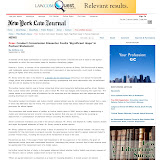
U.S. Senator Charles E. Schumer announced yesterday that he has recommended Loretta Lynch to be the next U.S. attorney for the Eastern District of New York. Ms. Lynch (pictured), who turns 50 later this month, previously held the post from 1999 to 2001, under President Bill Clinton. She is now a partner at Hogan & Hartson, specializing in commercial litigation, white-collar criminal defense and corporate compliance issues. Although the senator's recommendation does not guarantee Ms. Lynch's appointment, President Barack Obama is likely to follow the endorsement of a senior, home-state senator, particularly given Mr. Schumer's status as a ranking member of the Senate Judiciary Committee.  In a press release announcing the recommendation, Mr. Schumer said, "Loretta's tremendous experience and steadfast commitment to justice make her the ideal candidate to lead the U.S. Attorney's office in the Eastern District of New York. She is brilliant, dedicated, and fair and her commitment to, and experience in, the Eastern District is simply without parallel."

Mr. Schumer yesterday also announced his recommendations for U.S. attorney in the Western and Northern districts. Richard Hartunian, 48, the senator's choice to head the Northern District, which centers on Albany, has worked as an assistant U.S. attorney in that office for 11 years. He is the Northern District's narcotics supervisor and organized crime drug enforcement task force coordinator. Prior to joining the Northern District, Mr. Hartunian was an assistant district attorney in Albany. William Hochul, 50, the nominee for U.S. Attorney for the Western District, which includes Buffalo and Rochester, joined the office in 1991. He heads the office's national security division.  In February, the senator recommended his own chief counsel, Preet Bharara, as U.S. attorney for the Southern District. The nominees must now be interviewed and vetted by the Obama administration and approved by the Senate.

Ms. Lynch's nomination came as a surprise to the odds-makers handicapping the anticipated replacement of the interim U.S. attorney, Benton J. Campbell. Most short lists included Mr. Campbell; former Eastern District prosecutors Jim Walden, who is a litigation partner at Gibson, Dunn & Crutcher; Eric Corngold, now the state's executive deputy attorney general for economic justice; and current criminal division chief Greg Andres. Recently, Nassau County District Attorney Kathleen Rice was rumored to be the senator's preference. Numerous sources said yesterday that Mr. Schumer was disappointed when President George W. Bush asked Ms. Lynch to resign as U.S. attorney in 2001 and saw this as his first chance to re-seat her. A spokesman for the senator said Ms. Lynch had previously served on his informal selection committee for U.S. attorney's openings, but not for the present one. In 11 years at the Eastern District U.S. Attorney's Office, Ms. Lynch worked her way up from a line prosecutor, where she focused on narcotics and violent crimes, to the head of the office, one of the most prestigious and influential federal prosecutor's offices in the country. While in the Eastern District, Ms. Lynch served as lead prosecutor in a series of trials alleging public corruption in Brookhaven, Long Island. She also served on the prosecution team in United States v. Volpe, the civil rights action against several New York City police officers for the sexual assault of Abner Louima.
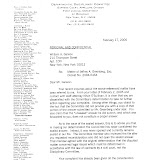
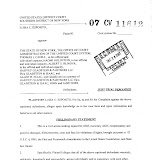
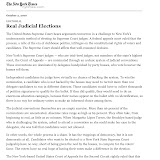
Ms. Lynch is a 1981 graduate of Harvard College and a 1984 graduate of Harvard Law School. Zachary W. Carter, who preceded Ms. Lynch as U.S. attorney for the Eastern District and appointed her his chief assistant, called her nomination an "excellent" decision. "First of all, she's actually served in the position," said Mr. Carter, now a partner at Dorsey & Whitney. "She served quite ably in that position. She is a known quantity. Before she was U.S. attorney she had been the head of the Long Island division of the Eastern District office, which by itself would probably be one of the 10 largest U.S. attorneys' offices in the country, and acquitted herself very well in that position." With an authorized head count of 180 assistant U.S. attorneys, the Eastern District ranks as one of the largest federal prosecutor's offices in the country. It covers Brooklyn, Queens, Staten Island and Long Island, with offices in Brooklyn and Central Islip. Ms. Lynch did not return a call for comment.

Tuesday, December 16, 2008

Tammany Hall 2009: Madoff Implicates Schumer, Paterson to Pick 2 US Senators

BREAKING NEWS: Tammany Hall 2009: Madoff Implicates Schumer, Paterson to Pick 2 U.S. Senators.

Federal Government sources have revealed that New York Governor David Paterson was formally advised last week that interviews in the Bernard Madoff $50 billion fraud implicate the Empire State's senior U.S. Senator, Charles E. Schumer. "The problem is what Schumer knew, and how long he knew it," says the source. "The federal government had an obligation to brief New York's Governor... few believe Senator Schumer will be able to finesse his way out of this." Paterson insiders say the Governor was initially stunned by the allegations but has since embraced the challenge, becoming empowered by the "golden opportunity to restore integrity and the glory that all New Yorkers deserve." New York's Corruption Scandal is everything a fiction thriller would promise: unimaginable greed, widespread corruption and, of course, sex. It may even end with a global financial crisis, a crazy idea led by Wall Street bankers and lawyers in a system void of oversight. Affectionately called 'Tamanny Hall II" since late 2007, you are welcomed to New York- The Big Rotten Apple, an unimaginable cesspool of corruption.

.....More on Tammany Hall 2009 on Wednesday, December 17, 2008........... 

Friday, February 13, 2009

Schumer Recommends Bharara for U.S. Attorney

Schumer Recommends Bharara for U.S. Attorney
The New York Law Journal - NEWS BRIEF - February 13, 2009

Senator Charles Schumer D-N.Y., has recommended to the White House that President Barack Obama appoint Mr. Schumer's chief counsel, Preet Bharara, as the next U.S. Attorney for the Southern District. Mr. Bharara spearheaded the three-month investigation into the firing of eight U.S. attorneys that led to the resignation of former U.S. Attorney Alberto Gonzales. A former line assistant in the Southern District office, Mr. Bharara helped to run large-scale prosecutions of organized crime. A native of New Jersey, Mr. Bharara attended Harvard University and Columbia Law School. The office's last U.S. attorney, Michael Garcia, stepped down in November. Mr. Bharara would replace acting U.S. Attorney Lev Dassin. Mr. Schumer is a powerful member of the Senate Judiciary Committee and is central to many appointments to New York's federal bench and U.S. Attorney's offices. It is expected that the White House would approve the recommendation and send Mr. Bharara's name to the Judiciary committee for review.

Tuesday, December 27, 2011

Schumer's Brother-in-Law Stirs Controversy in Federal Judicial Nomination

Short Hills resident's nomination stirs controversy
www.NorthJersey.com by Lindsey Kelleher  -  December 27, 2011

Short Hills resident Kevin McNulty was nominated by President Barack Obama to serve as U.S. District Court Judge for the District of New Jersey earlier this month.  The nomination, announced by Sen. Frank Lautenberg (D-N.J.) and Sen. Robert Menendez (D-N.J.) Dec. 16, has recently stirred up controversy.  The New York Post reported McNulty, 57, who is Sen. Charles Schumer's (D-N.Y.) brother-in-law, was nominated for this judge position at the last minute by Lautenberg so the two senators would stay politically close and connected. According to the Post article from Dec. 26, 87-year-old Lautenberg is concerned about losing his Senate seat during re-election time in 2014 because of his age. Schumer, who is influential in the Democratic Party, could stop Lautenberg from losing this position, the report continued.  According to Lautenberg's spokesman Caley Gray, information in the New York Post article is untrue.  "The New York Post story is complete fiction from a New York tabloid with a well-known partisan agenda. Sen. Lautenberg always maintains the highest standards in the judicial nominations process, and Kevin McNulty is one of the finest lawyers the senator has ever recommended for the bench," said Gray in a press release.  Gray said in an interview with The Item of Millburn and Short Hills Dec. 27 that former federal judge John J. Gibbons - and not Schumer - recommended McNulty to Lautenberg for the judge position in 2009. According to Gray, in 2009 Lautenberg and members of his staff interviewed McNulty for this position, and he has been on Lautenberg's radar for this position since then.  Gray said that McNulty is ranked as unanimously well-qualified by the American Bar Association, and that Lautenberg nominated McNulty as New Jersey's district court judge for his merits.  In a press release from Sen. Lautenberg's office from October 2011, Lautenberg stated, "Mr. McNulty is an accomplished lawyer with decades of experience in public service and the private sector."  Gibbons, a former Millburn resident who now lives in Maplewood, told The Item Dec. 27 that he recommended McNulty to Lautenberg. Gibbons and McNulty are partners at Gibbons P.C. Law Firm in Newark. According to Gibbons, McNulty has significant trial experiences, and has previously worked in the U.S. Attorney's Office as chief of the appellate section.  "He is an excellent appellate lawyer and a fine writer," Gibbons said. "The public will benefit from his nomination."  According to a biography about McNulty on the Gibbons law firm's website, he has litigated and counseled clients in a wide variety of pharmaceutical, intellectual property, commercial, criminal and appellate matters. McNulty has a B.A. from Yale University and graduated from New York University School of Law, (J.D., cum laude), in 1983.  In an email to The Item, McNulty said he is unable to comment on his nomination.  E-mail: kelleher@northjersey.com

Friday, December 23, 2011

More Political Chaos Keeps Federal Bench Unable to Deal with Justice

U.S. Senate Blocks Green Nomination for Western District
The New York Law Journal by John Caher  -  December 23, 2011

A long vacant federal judgeship in the Western District will apparently remain vacant for the time being as Congressional Republicans have blocked the nomination of Monroe County District Attorney Michael C. Green.  Mr. Green yesterday said he was advised by the White House that his nomination has been returned by the Senate and will not be resubmitted. The White House confirmed that the nomination is dead.  "I appreciate the fact that the president nominated me," Mr. Green said. "Certainly, I was frustrated that after three years I couldn't even get the Senate to vote on it."  Mr. Green, 50, a prosecutor in Rochester for the past 25 years and the district attorney for eight years, was recommended by Democratic Senator Charles Schumer for the vacancy created in March 2009 when Judge David Larimer took senior status. Mr. Green did not seek re-election this year as the Senate Judiciary Committee advanced his nomination on June 16.  White House spokesman Brandon Lepow confirmed that Mr. Green's nomination was returned to President Barack Obama by the Senate and will not be resubmitted. Mr. Lepow would not comment on why the nomination was blocked, but Mr. Schumer said in a statement that "partisan politics stood in the way."  A spokeswoman for Senator Charles Grassley, an Iowa Republican on the Judiciary Committee, yesterday said problems surfaced during a background investigation of Mr. Green.  "Members had concerns with his background," said spokeswoman Beth Levine. "Mr. Green knows what the committee's concerns were. There were questions that arose during the background investigation. It turns out the White House isn't re-nominating so it sounds like they had concerns as well."  Mr. Green disputed Ms. Levine's statement and said the background investigation was completed before he went to, and was approved 17-1 by the Judiciary Committee.  "All of the background information was before the Judiciary Committee and I got thrown a 17-1 vote, with the only 'no' vote coming from [Republican] Senator [Mike] Lee of Utah, who publicly issued a statement saying he had concerns because I had never done federal civil work," Mr. Green said. "It is unbelievable [that Mr. Grassley's office] would say that."  Mr. Green said he was not given details as to why his nomination was derailed, but suggested it had to do with local politics. He said Mr. Schumer's office told him that someone in the Rochester area was attempting to undermine the nomination and got the ear of Mr. Grassley.  "The only questions Grassley raised were about a local political race, a local D.A.'s race," Mr. Green said. "Why he was getting involved in that, I have no idea."

Stephen Gillers, a professor at New York University School of Law and an ethics expert, said the U.S. Department of Justice contacted him after receiving an anonymous letter alleging that Mr. Green had violated ethical standards by endorsing his first assistant as his successor in the district attorney's office while the nomination was pending. Mr. Gillers said he had never heard of Mr. Green until receiving that request.  "Green's nomination got derailed because someone wrote an anonymous letter after he was confirmed [by the committee] but before the Senate voted," Mr. Gillers said in an interview. "Justice asked me if it was a legitimate criticism."  Mr. Gillers said it was unclear where the anonymous letter came from or the motivation behind it. He said he reviewed the letter and a subsequent letter Mr. Grassley sent to Mr. Green raising questions about his ethics.  "There are a lot of factors that go into these things," Mr. Gillers said. "It may have been intended to embarrass the president. It may have been political pay-back. And it may have been an erroneous belief that he did violate ethics. My job was to speak to the ethical issues, and I did."  In a Dec. 2 letter to Mr. Grassley and Judiciary Committee Chairman Patrick Leahy, D-Vermont, Mr. Gillers said Mr. Green did nothing wrong in endorsing his assistant, Sandra Doorley.  "Mr. Green endorsed one candidate only, had the support of [a] State Bar opinion that doing so was appropriate, indeed of value, and had a non-partisan basis for his endorsement," Mr. Gillers said in the letter. "His decision was ethical and compliant with the New York Rules of Professional Conduct and the Code of Conduct for U.S. Judges."  Mr. Gillers said in the letter that there is "no basis to conclude" that Mr. Green endorsed Ms. Doorley to further his chances of Senate confirmation.  Additionally, an issue arose locally when Mr. Green kept on the payroll for the remainder of the year five prosecutors Ms. Doorley intended to fire. It is unclear why that would be an issue, but Mr. Green said it was raised by his opponents in Congress.  Mr. Green, a former Republican who switched parties to run for district attorney when his own party would not support his nomination, is highly regarded and his nomination was strongly endorsed by local attorneys.  In an interview last summer with the Law Journal, Monroe County Public Defender Timothy P. Donaher, whose office butted heads with Mr. Green's office, repeatedly praised the prosecutor.  "Mike, before he became D.A., was known as one of the most prepared trial prosecutors that office had ever seen," Mr. Donaher said. "I don't think anyone works harder. From a defense perspective, he is a thorough, aggressive prosecutor, but a fair guy who is always willing to listen."  A local community leader said Mr. Green was instrumental in establishing a program in which drug forfeiture monies are used to support an educational/athletic/mentoring program at the local Boys and Girls Club.  "Mike is incredibly committed to this community," said I.C. Shah, former chairman of the Boys and Girls Club. "He is intelligent. He is passionate. He knows the law. It is very rare to find a combination of passion, commitment, knowledge and dedication, and he has all four."  Mr. Green's first boss, Rochester attorney James Morris of Morris & Morris, where he began his legal career, said Mr. Green "is a good lawyer. But he has one characteristic above all. He is scrupulously honest and highly ethical."  The only open opposition to Mr. Green's appointment, at least until the issues arose in the district attorney's race, came from a minority of the American Bar Association vetting committee, which expressed concern over his lack of experience in civil practice.  Mr. Green said he has not decided what he will do when his tenure as district attorney ends next week and is considering his options.  "It is time to look forward," Mr. Green said. "The fact that this opportunity closes just means others become open. I am excited about those opportunities."  Mr. Obama has suffered a number of setbacks in his efforts to fill judicial vacancies. Currently, 16 nominees, all of whom were approved unanimously by the Judiciary Committee, are awaiting Senate action.  Earlier this month, Senate Republicans blocked the nomination of Caitlin J. Halligan for the U.S. Court of Appeals for the District of Columbia Circuit. Ms. Halligan, a former New York solicitor general, is general counsel for the Manhattan District Attorney's Office.  John Caher can be contacted at jcaher@alm.com.

Tuesday, August 11, 2009

New Top Manhattan Fed, Preet Bharara, Ready to Rock

Bharara Confirmed As U.S. Attorney
The New York Law Journal by Mark Hamblett - News In Brief - August 11, 2009

Preetinder S. Bharara was confirmed Friday by the U.S. Senate as the next U.S. attorney for the Southern District of New York. Mr. Bharara, 40, is a veteran of the Southern District who worked as chief counsel to U.S. Senator Charles E. Schumer, D-N.Y., and headed the Senate Judiciary Committee investigation into whether the firings of U.S. attorneys in several districts by the Bush administration were politically motivated. Mr. Bharara served as a prosecutor in the Southern District from 2000 to 2005, working in the general crimes, narcotics and organized crime/terrorism units. He follows in the footsteps of Michael L. Garcia, who served in the post from 2005 until Dec. 1, 2008, and veteran prosecutor Lev Dassin, who has served as acting U.S. attorney since December. The Senate went into recess last week without taking action on President Obama's nomination of Loretta Lynch, a partner at Hogan & Hartson, as the next U.S. attorney in the Eastern District, where she served as the district's top prosecutor from 1999 to 2001. — Mark Hamblett

Here's The New York Times on Bharara:

MAN IN THE NEWS | PREET BHARARA

For Manhattan’s Next U.S. Attorney, Politics and Prosecution Don’t Mix

He worked for one of the most partisan Democratic senators in Washington, and a few years ago helped to uncover political maneuverings by the Justice Department in the administration of President George W. Bush. But perhaps the most telling aspect about Preet Bharara, the next United States attorney in Manhattan, may be how he managed to win the trust and respect of even those who might have been his natural opponents. Mr. Bharara, who served as the chief counsel to Senator Charles E. Schumer of New York, played a major role in the Senate Judiciary Committee’s investigation into the firings of United States attorneys around the country. As he took sworn testimony from witnesses, handled the issuance of subpoenas and negotiated with administration officials over the production of documents and other materials, he drew praise for his evenhanded approach. He even won over one fired prosecutor, David C. Iglesias of New Mexico, a Republican who said he had wavered over whether to testify voluntarily before the panel, fearing that it would degenerate into a “partisan circus.” But after their conversations, Mr. Iglesias said, he concluded that Mr. Bharara was approaching the investigation like a prosecutor, not a politician. “It gave me a lot of assurance," Mr. Iglesias said. “He completely understood what was at stake here.” A key factor, Mr. Iglesias added, was that Mr. Bharara had formerly worked as a prosecutor in the United States attorney’s office in Manhattan, an office with a reputation for independence and nonpartisanship.

Now, Mr. Bharara, 40, will be asked to carry on that tradition. On Friday, the Senate confirmed him to be the next United States attorney for the Southern District of New York. Although he declined to comment for this article, he spoke last year about his role in the Senate inquiry and his feelings that a line between federal prosecutors and politics had been crossed. “You’re talking about the Department of Justice,” he said, “that employs 100,000 people, that used to be led by Bobby Kennedy, that a lot of people in America look to.” IN his new post, Mr. Bharara will oversee more than 200 lawyers who handle some of the country’s most prominent cases, like the prosecution of Bernard L. Madoff for his multibillion-dollar Ponzi scheme.

As a naturalized American citizen from India, Mr. Bharara also brings a diversity of background to the post And while recent United States attorneys in Manhattan have come directly from prosecutors’ jobs, Mr. Bharara’s background on Capitol Hill will serve him well, said Daniel C. Richman, a law professor at Columbia University and a former Southern District prosecutor. “He contributes things that we’ve not seen before,” Professor Richman said. “He’s thought hard about what a U.S. attorney’s place should be within a broader federal enforcement system and the train wrecks that can develop when unthinking or ill-thinking bureaucrats tamper with that. Preetinder S. Bharara was born in Ferozepur, India, and he was an infant when his parents immigrated to the United States in 1970. He grew up in Monmouth County, N.J., and graduated from Harvard in 1990 and Columbia Law School in 1993. That summer, he worked for several weeks as a volunteer in Mark Green’s campaign for public advocate, occasionally driving the candidate to campaign events. He has reflected on his roots and the improbable journey his family took to get to this country. His father, a Sikh, and his mother, who was Hindu, were born in what is now Pakistan, before India and Pakistan were separate countries. In the violent migration that occurred after the 1947 partition, his father and mother both moved to the Indian side, with their families losing property and most of their possessions, Mr. Bharara has said.

His wife’s father, a Muslim, also moved, from the Indian side into Pakistan, also losing his home “and much, much more,” as Mr. Bharara put it. And his wife’s mother was born in Palestine, after her father, who was Jewish, escaped with his family from Nazi Germany. “Four different families, practicing four different faiths — all compelled to flee a half century ago because of their religion,” Mr. Bharara said in a speech to the South Asian Bar Association of New York in 2007. “It also means,” he joked, “that even when my wife fasts for Yom Kippur, and my father-in-law fasts for Ramadan, I get to stuff my face with samosas all day.” In 2000, after about six years in private practice, Mr. Bharara became a Southern District prosecutor, first under Mary Jo White, and later under James B. Comey. For five years, he prosecuted organized crime, narcotics and securities fraud, among other crimes. One major case, with dozens of defendants, involved Chinese organized crime. He was a hard worker who had a self-deprecating wit and stayed cool under pressure, according to former associates. “Preet was one of those guys in the office who everyone wanted to try a case with,” said Christopher P. Conniff, a prosecutor at the time.

IN 2005, Mr. Bharara became Senator Schumer’s chief counsel. Former colleagues described him as a skilled staff member in a political caldron where Democrats were often negotiating among themselves as much as they were with Republicans. “He does have an incredible manner and ability to work with others,” said the New Jersey attorney general, Anne Milgram, who in 2005 served as counsel to Jon S. Corzine, then a United States senator, and got to know Mr. Bharara through their work on judiciary issues. “He never carries himself like he’s the smartest guy in the room, even though he often is,” she added. Mr. Bharara said in a speech in 2007, “Party affiliation can’t tell you whether to indict a case, whether to plead it out, or how to try it. His approach has allowed him to remain close to people with whom he otherwise disagrees sharply. One friend from college, Viet D. Dinh, who served as an assistant attorney general in the George W. Bush administration and now teaches law at Georgetown University, said, “To this day I cannot find a single big political philosophical issue upon which Preet and I agree, but I can’t imagine two other people trusting each other implicitly the way Preet and I do.”

During the Judiciary Committee’s investigation into the prosecutor firings, Mr. Bharara was aided by his background as a federal prosecutor in Manhattan. “To the extent that Preet was the driving force of the investigation, it was conducted in a completely fair, thorough and professional manner,” said Michael M. Purpura, a former Southern District colleague who was a senior lawyer in the Bush Justice Department and later an associate White House counsel. The investigation, along with a separate inquiry by the House Judiciary Committee, culminated in the 2007 resignation of Attorney GeneralAlberto R. Gonzales.Mr. Bharara, in a bar association talk last year, said that the investigation’s focus had been not only on whether there had been violations of law, but also on whether “the great traditions of the department were violated. He added, “The more that was uncovered, the more it seemed clear that there was politicization,” not only in how United States attorneys were being fired or hired, but even at the lowest level — “the line level,” as he put it — “where there should never be any politics at all.”

Tuesday, May 10, 2011

Fed Probers Digging Deeper

Fed probers demand Qns. pol's pork files
The New York Post by Fredric U. Dicker  -  May 9, 2011

Federal probers are focusing on a Queens senator under inves tigation for steering hundreds of thousands of public dollars to not-for-profit groups with ties to her family and friends.  Sen. Shirley Huntley, a Democrat, received a federal subpoena seeking records and documents related to her obtaining more than $400,000 for the nonprofits through the Legislature's notorious "member item" system of government earmarks, a source familiar with the situation told The Post.  The federal subpoena came on top of a probe that included the issuance of state subpoenas by Attorney General Eric Schneiderman, first reported by The Post in March, of possible violations involving the Huntley-connected nonprofits.  State government insiders and law-enforcement sources said the Manhattan and Brooklyn district US attorneys' offices have broad probes of Senate members including Huntley under way.  The probes focus on fraudulent distribution of member-item monies, the aborted Aqueduct/AEG casino contract in 2010 involving then-Gov. David Paterson and then-Senate Democratic leaders John Sampson of Brooklyn and Malcolm Smith of Queens, and, of course, charges of individual bribe taking by lawmakers like those brought in March by federal prosecutors against Sen. Carl Kruger (D-Brooklyn).  Insiders said the investigations appear to be accelerating at the same time Gov. Cuomo is struggling to get the Legislature to pass a sweeping ethics-reform law requiring lawmakers to fully disclose their outside incomes and the names of their clients.  "The feds are all over the Senate. They're looking at Aqueduct, they're looking at Huntley and other senators, and they are working at a steady pace," said a law-enforcement insider.  "I wouldn't expect any new big developments for at least several more months."  A Senate Democratic spokesman, Austin Shafran, referred questions to Huntley's lawyer, Mark Pollard, who did not return calls for comment.

With runaway gasoline prices, a hobbled economy and a Middle East crisis to deal with in Washington, US Sen. Charles Schumer recently weighed in on what he must consider an even more important issue: unfair toll charges on state highways.  The publicity-craving Democrat held a press conference dealing with what is legally Cuomo's concern without even a blush, and the governor's office was clearly unhappy, even while remaining tight-lipped.  A top Cuomo aide, asked about the appropriateness of Schumer's concern, remained conspicuously silent.

Senate Democrats are rejecting the claim of gadfly Democratic megamillionaire William Samuels, another notorious publicity hound who funds a purported reform group called the New Roosevelt Initiative, that Cuomo didn't do enough to help them keep the majority in last fall's election.  "Senate Democrats disavow and disagree with any notion that the governor didn't work hard for us during the campaigns," said a top Senate Democrat.  "The question is, 'Who is Samuels speaking for?' because it sure isn't Senate Democrats, who want to partner with the governor."  Samuels, son of 1974 Democratic gubernatorial hopeful and one-time OTB chief Howard "Howie the Horse" Samuels, also delivered on upstate's YNN what has to be the most bizarre claim of the year as he insisted Spitzer was more of a government reformer than is Cuomo.  Spitzer -- who unleashed the State Police against a Republican foe, signed an ethics "reform" bill that made Albany's corruption worse, engaged in illegal banking transactions and patronized at least one prostitute -- was, in fact, the most crooked New York governor in modern times, the record clearly shows. fredric.dicker@nypost.com

Thursday, May 21, 2009

Obama Nominates Bharara As Manhattan U.S. Attorney

Obama Nominates Bharara As Manhattan U.S. Attorney
The New York Law Journal by Mark Hamblett, NEW IN BRIEF- May 18, 2009

President Barack Obama Friday nominated Preet Bharara to be the next U.S. Attorney for the Southern District of New York. The 40-year-old Mr. Bharara is chief counsel to New York Senator Charles Schumer. He served as a prosecutor in the Southern District from 2000 to 2005, working in the general crimes, narcotics and organized crime/terrorism units. Mr. Bharara’s nomination was one of six U.S. attorney nominations by the White House, including Paul Fishman, a partner at Friedman, Kaplan Seiler & Adelman in Newark, for the District of New Jersey. If confirmed by the Senate, Mr. Bharara would fill the post now held by Acting U.S. Attorney Lev Dassin. There have been no nominations in New York’s other three districts , but Mr. Schumer has recommended Hogan & Hartson partner Loretta Lynch to return as the top prosecutor in the Eastern District, where she served form 1999 to 2001, and federal prosecutors Richard Hartunian and William Hocheul for the Northern and Western Districts respectfully.

Thursday, March 19, 2009

Kickbacks. Pay-to-Play. In New York ?!?!

Aides to Hevesi Indicted in Kickback Scheme
The New York Times by DANNY HAKIM - March 19, 2009

ALBANY, NEW YORK — Two top advisers to Alan G. Hevesi, the former state comptroller, were charged on Thursday in a 123-count indictment that said they had turned New York’s $120 billion pension fund into a criminal enterprise that netted them and other Hevesi associates tens of millions of dollars in kickbacks from firms investing the fund’s money. Hank Morris, who was once Mr. Hevesi’s chief political adviser and a nationally known Democratic consultant, was charged with myriad counts — including falsifying records, bribery, money laundering, grand larceny and fraud — in an indictment brought by the state attorney general, Andrew M. Cuomo. Mr. Morris collected more than $15 million in fees from investment companies during Mr. Hevesi’s tenure as comptroller, from 2003 to 2006, according to court papers.

David Loglisci, who was the top investment officer of the pension fund, was charged with multiple counts related to official misconduct, falsifying records and fraud. The two men, arraigned in State Supreme Court in Manhattan, pleaded not guilty and were released pending the posting of bail, which was set at $1 million for Mr. Morris and $350,000 for Mr. Loglisci. The indictment said that at least two other people participated in the criminal conspiracy, but it did not name them. While Mr. Hevesi was not charged, the investigation is continuing and Mr. Cuomo did not rule out future actions against him. Mr. Cuomo said that Mr. Hevesi had benefited from the scheme because Mr. Morris encouraged investment firms to pour millions of dollars in contributions into Mr. Hevesi’s campaign fund. “This is the first of several cases and developments that will be announced on this matter,” said Mr. Cuomo, adding in a statement that “mixing politics, self-dealing, kickbacks and billions in taxpayer funds is nothing short of the perfect public-integrity storm.”

The Securities and Exchange Commission, which conducted a parallel investigation, also charged the men with violating several federal securities laws and is seeking to recoup the proceeds from their scheme. P. David Soares, the Albany County district attorney, also took part in the investigation, which started in his office. Mary L. Schapiro, the chairwoman of the S.E.C., said, “These two men used their influential positions to extract kickbacks from investment firms that wanted to do business with New York’s common retirement funds.” The two men are accused of directing half of the $10 billion that the pension fund invested in so-called alternative investments, like hedge funds and private equity firms, to those that used Mr. Morris or his associates as paid intermediaries. Firms that were not willing to pay were often turned down, according to the indictment. To conceal his conduct, the indictment said, Mr. Morris laundered payments through a half-dozen limited liability companies he had created, and through Searle & Co., a Connecticut investment firm that he worked for while he was advising the comptroller.

The firms that paid fees to Mr. Morris or firms with which he was affiliated included some of Wall Street’s best known: the Carlyle Group, Pequot Capital and HM Capital, formerly known as Hicks, Muse, Tate & Furst, the indictment said. None of the investment firms or their employees were charged, though the S.E.C. filed civil charges against three companies Mr. Morris created. Mr. Morris, 55, is also accused of rewarding Mr. Loglisci, 38, and another unnamed top official in the comptroller’s office for their help. Mr. Morris invested $100,000 in an independent film, “Chooch,” produced by Mr. Loglisci’s brother, investment firms doing business with the fund also invested in the movie, according to the indictment. “You couldn’t make this up,” Mr. Cuomo said.

William J. Schwartz, a lawyer for Mr. Morris, said, “The New York State pension fund made hundreds of millions, if not billions, of dollars on investments Hank Morris lawfully introduced to it, and the fund did not pay him one penny.” “There was no fraud and no corruption,” he added. “Hank Morris is innocent and we will defeat these charges at trial.” Mr. Cuomo’s office said it had frozen $11 million worth of Mr. Morris’s assets. Irving P. Seidman, a lawyer for Mr. Loglisci, said the indictment was “based on false and misleading evidence.” “The statements contained in the legal documents filed in this matter are manipulative, fictional writings by an investigation that had all sorts of political conflicts of interest,” he added, without elaborating. A lawyer for Mr. Hevesi did not have immediate comment.

Jack Chartier, Mr. Hevesi’s former chief of staff, was not charged. He has been a subject of the investigation, with scrutiny focusing on gifts that investment firms made on his behalf to the actress Peggy Lipton, a close friend, as well as a large loan and rental payments. Scott Fein, a lawyer for Ms. Lipton, said that “she cooperated fully in the investigation and I believe all would agree she was blameless.” Mr. Cuomo would not say whether some of the unnamed people participating in the criminal conspiracy faced charges in the future or had already cut deals with his office in exchange for cooperation. He said, “An unnamed high-ranking official in the comptroller’s office secured from Morris and others doing business with the office gifts and bribes, including cash, rent payments for his female companion’s luxury Manhattan apartment, a sham $100,000 loan for the girlfriend and a job and other benefits for her daughter.” A lawyer for Mr. Chartier did not return calls for comment immediately after the indictment was released.

Mr. Hevesi resigned as comptroller in late 2006 after he pleaded guilty to a felony related to his use of state workers to drive his ailing wife. After his departure, local, state and eventually federal investigators expanded that investigation to encompass broader practices in his office. The state comptroller has unusual sway over the pension fund, since he serves as its sole trustee; many other states have opted to have their funds overseen by boards. The current comptroller, Thomas P. DiNapoli, has defended the sole trusteeship, while Mr. Cuomo continued to express concerns about it on Thursday. Mr. Morris, a native of Long Island, is a political operative known for his intense and aggressive style. He directed Charles E. Schumer’s successful 1998 campaign to unseat Senator Alfonse M. D’Amato — he made sure everyone knew that Mr. D’Amato had used an expletive to refer to Mr. Schumer — and even pushed his own mother, Rita, a retired professor, to run for Congress in 1992. She lost. He also advised Senator Dianne Feinstein’s failed 1990 campaign for California governor.

But he was closest to Mr. Hevesi. The two men met in the 1970s, when Mr. Hevesi was a fledgling assemblyman from Queens and Mr. Morris was on the staff of the Assembly speaker, Stanley Steingut. Mr. Morris helped shape Mr. Hevesi’s rise to become comptroller of New York City and then state comptroller, and managed his unsuccessful run for mayor in 2001. According to the indictment, after Mr. Hevesi was elected comptroller in 2002, Mr. Morris ousted the chief investment officer of the pension fund and installed Mr. Loglisci in the job. He then held wide sway over investment decisions made by the pension fund. He even held meetings with Mr. Loglisci and other officials from the comptroller’s office at the offices of his political consulting firm, Morris & Carrick. The indictment calls him “a de facto gatekeeper for alternative investment transactions” made by the pension fund. “When you follow the money in New York, the biggest pool of money is the New York State pension fund,” Mr. Cuomo said. “Morris used the fund as his own piggy bank.”

Friday, May 15, 2009

Hacks Hold On, Oppose Governor's Corruption Clean-Up

Counsel Defends Integrity Head; No Members Step Down
The New York Law Journal by By Joel Stashenko - May 15, 2009

ALBANY, NEW YORK - Herbert Teitelbaum, executive director of the state Commission on Public Integrity, and Robert Hermann, a figure in the Spitzer administration, were at one time as close as the "Odd Couple," and their familiarity led to Mr. Hermann inadvertently seeing sensitive information about a commission investigation of Mr. Spitzer's inner circle, an attorney for the commission contended yesterday. State Inspector General Joseph Fisch this week reported that Mr. Teitelbaum improperly leaked information to Mr. Hermann about the commission's investigation of whether aides to former Governor Eliot Spitzer misused State Police resources to discredit a political rival, state Senate Majority Leader Joseph Bruno. Zachary W. Carter of Dorsey & Whitney, pro bono attorney for the commission, argued that Mr. Hermann was a "dear friend" and former law partner of Mr. Teitelbaum and that the two chatted frequently and often had dinner together when both were working in Albany. "They were like Oscar and Felix, that's how often they talked on the phone," Mr. Carter said. "They were two older guys who were up in Albany with nothing else to do."

During one of Mr. Hermann's visits to Mr. Teitelbaum's apartment, Mr. Carter said Mr. Hermann saw notes made on a yellow pad by Mr. Teitelbaum about the commission referring former Spitzer communications director Darren Dopp to the Albany County district attorney's office for a possible perjury prosecution. "He saw this on a pad and goes off and reports this" to Lloyd Constantine, Mr. Spitzer's counsel, and other top advisers to the former governor, said Mr. Carter in an interview yesterday. As to the source of the information, Mr. Hermann testified to the inspector general that he told Mr. Constantine, "I had come upon it from Herb." According to Mr. Fisch's report, Mr. Hermann told the investigators the "yellow pad" story. Mr. Hermann said he had seen words including "inconsistencies" and the "district attorney" and put "two and two together," knowing from media reports that Mr. Dopp had just been in to give testimony before Mr. Teitelbaum.

Mr. Fisch's report concluded that Mr. Hermann told Mr. Constantine and other Spitzer aides more than he could glean from notes on a pad. The information included a legal analysis of the implications to the commission's investigation that was similar to one prepared a week earlier for Mr. Teitelbaum by Meave Tooher, commission counsel, according to the inspector general's report. Mr. Carter also defended the contacts Mr. Teitelbaum had with Mr. Hermann soon after the commission launched its investigation in 2007. Mr. Teitelbaum was trying to use Mr. Hermann to get documents released voluntarily that the Spitzer administration was reluctant to turn over and, in general, to move the in-vestigation along, Mr. Carter said. "He was saying [to Mr. Hermann], 'Listen, I know you are friendly with these guys. Enough already,'" Mr. Carter said. "Not only is that not improper, it is admirable." Mr. Hermann was head of the Governor's Office of Regulatory Reform at the time of the alleged leaks. He now works for state Senate Democrats and did not return calls for comment. Mr. Teitelbaum remained on the job yesterday, as did all members of the commission.

No Resignations

On Wednesday, Governor David A. Paterson called for the six gubernatorial appointees on the commission to step down, and he urged the other political leaders in Albany with selections to the commission to urge their designees to do the same. Mr. Paterson said it was necessary to give his newly named chairman of the commission, Michael G. Cherkasky, a "fresh start" at the embattled agency (NYLJ, May 14). "They are not resigning," Mr. Carter said yesterday. "There is no basis for them to resign."


Members of the Commission on Public Integrity

• Daniel R. Alonso, partner, Kaye Scholer, appointed by then-Governor Eliot Spitzer, term expires October 2012

• Virginia M. Apuzzo, former president of the Civil Service Commission, appointed by Assembly Speaker Sheldon Silver, term expires November 2009

• John M. Brickman, partner, Ackerman, Levine, Cullen, Brickman & Limmer, appoint-ed by Comptroller Thomas DiNapoli, term expires October 2011

• Andrew G. Celli Jr., partner, Emery Celli Brinckerhoff & Abady, appointed by Mr. Spitzer, term expires October 2010

• Chairman Michael G. Cherkasky, president and CEO of U.S. Investigations Services, appointed by Governor David A. Paterson, term expires October 2009.

• Richard D. Emery, partner, Emery Celli Brinckerhoff & Abady, appointed by then-Senate Minority Leader Malcolm Smith, term expires November 2012

• Daniel J. French, partner, French-Alcott, appointed by Attorney General Andrew M. Cuomo, term expires October 2009

• Robert J. Giuffra Jr., partner, Sullivan & Cromwell, appointed by Mr. Spitzer, term expired October 2008, serving as a holdover until Mr. Paterson makes a new appointment.

• David L. Gruenberg, solo practitioner, Troy, appointed by then-Senate Majority Leader Joseph Bruno, term expires November 2011

• James P. King, former Court of Claims judge, appointed by Mr. Spitzer, term expires October 2012

• Howard A. Levine, former state Court of Appeals judge, appointed by Mr. Spitzer, term expires October 2011

• Loretta E. Lynch, partner, Hogan & Hartson, appointed by Mr. Spitzer, term expires November 2012

• John T. Mitchell, of counsel, Tobin and Dempf, appointed by then-Assembly Minority Leader James Tedisco, term expires November 2012

Other Albany leaders did not comply with Mr. Paterson's request. State Senate Majority Leader Malcolm Smith, D-Queens, said he has "total confidence" in Richard Emery, Mr. Smith's appointee to the commission. State Assembly Minority Leader Brian Kolb, R-Canandaigua, said the Assembly Republican's appointee to the commission, John T. Mitchell, has "outstanding legal credentials and a commitment to ethics and integrity" and should remain on the panel. After an appearance yesterday in Manhattan, Mr. Paterson said he was "very surprised" that the commissioners were not stepping aside voluntarily. "I frankly was surprised and shocked that I am getting this reaction," Mr. Paterson told reporters. Mr. Paterson equated his call for the commissioners' resignations to the letters of resignation he required all commissioners and other agency heads to give him when he succeeded Mr. Spitzer in 2008. Mr. Paterson accepted only a handful of the letters then and said yesterday that some commission members could "quite validly be reappointed." Mr. Paterson said he will study the structure of the board and propose changes if he concludes it contributed to the misconduct that Mr. Fisch reported on Wednesday. Mr. Fisch's report was critical of conversations that Loretta E. Lynch, until Wednesday the acting chairwoman of the commission, had with the inspector general in the weeks leading up to the release of the report.

Ms. Lynch made "strained and specious" attacks on Mr. Constantine and repeatedly called into question his veracity as a witness, according to the report. She also attempted to "distance" Mr. Teitelbaum as the source of the leaked information despite the evidence gathered to the contrary, the report said. Ms. Lynch, a partner at Hogan & Hartson, has been recommended as U.S. Attorney for the Eastern District of New York by U.S. Sen. Charles Schumer (NYLJ, May 6). Ms. Lynch held the post from 1999 to 2001. Mr. Paterson said yesterday he did not believe Ms. Lynch's work on the public integrity commission should affect her candidacy for the Eastern District post, calling her an "outstanding prosecutor who I think would serve well." Neither Mr. Schumer's office nor Ms. Lynch returned calls seeking comment yesterday. Also yesterday, the former chairman of the commission, John D. Feerick, released a statement about Mr. Fisch's report. Mr. Feerick was said by the inspector general to have been aware of evidence of possibly improper conduct by Mr. Teitelbaum but did not question the executive director strenuously or push for a formal commission investigation before Mr. Feerick resigned from the commission in January. "I did my work with the commission and as its chair to the best of my ability and with honesty and integrity," Mr. Feerick said. "I am proud of the work done by the commission and was privileged to serve with a distinguished group of commissioners, consisting of prominent public servants, Republicans and Democrats, among them former United States' attorneys and judges, all of whom had volunteered their time at great personal sacrifice." Joel.Stashenko@incisivemedia.com

Wednesday, April 15, 2009

DA Office Fumbles as Mortgage Frauds Score

Prosecutions Lag as N.Y. Foreclosure Frauds Surge
The New York Times by MICHAEL POWELL - April 15, 2009

Many New York City prosecutors reacted slowly and brought few indictments as foreclosure swindles and mortgage fraud swept the city during the past decade, allowing problematic operators to flourish even as the nation’s housing market rose and crashed, according to housing lawyers, prosecutors and federal reports. As early as 2000, the federal Department of Housing and Urban Development declared the city a foreclosure fraud “hot zone.” In 2005, the National Consumer Law Center wrote an influential report, “Dreams Foreclosed: The Rampant Theft of Americans’ Homes Through Equity-Stripping Foreclosure ‘Rescue’ Scams,” warning that the F.B.I. and local prosecutors remained dangerously understaffed in this fight. Yet a review of civil lawsuits suggests that many fraud cases go unprosecuted. Officials with several of New York’s district attorneys acknowledge the problem, saying they lack the staff to investigate and prosecute more than a fraction of the potential deed-theft and mortgage-fraud cases. Such cases are typically complex and time consuming; as a consequence, prosecutors say, they often know the names of sophisticated fraudulent operators but have trouble getting indictments.

“Am I frustrated and can I feel the frustration of those who send us the cases? Absolutely,” said Gregory C. Pavlides, the chief of the economic crimes unit in the Queens district attorney’s office. His unit’s 14 lawyers also handle money laundering, counterfeiting, identity theft and environmental cases. For years many district attorneys viewed mortgage fraud as taking a second seat to traditional show-stoppers: homicides, counterfeiting, burglaries and even gambling. At least one New York district attorney still takes that view. “Our natural inclination is that these are civil cases,” said William Smith, spokesman for the Staten Island district attorney, Daniel M. Donovan. Yet mortgage and deed fraud, assistant district attorneys say, are among the most economically destructive crimes prosecuted by their offices. Bank robbers average less than $2,000 and face a 75 percent chance of being caught; a mortgage fraud ring walks away with hundreds of thousands of dollars per house, prosecutors say, and runs little risk of arrest. “Robbing a bank with a gun is not as smart as going into mortgage fraud,” Mr. Pavlides said. “Because of the sheer volume, you have a decent chance of getting away with it.”

Nationwide, mortgage fraud and deed theft cost homeowners $4 billion to $6 billion annually, according to the F.B.I. In New York City, housing fraud has wiped out tens of millions of dollars for thousands of predominantly black and Latino homeowners in large parts of Brooklyn, Queens and Staten Island. Mortgage fraud comes in several varieties. Most common today are deed thieves, who approach distressed owners and offer to straighten out finances by temporarily taking over deeds. Then they refinance and abscond with the owners’ equity. Others, more frequently during the boom years, rely on circles of appraisers who deliver inflated appraisals on demand, and on lawyers paid by the seller but purporting to represent the buyer, and on mortgage brokers, to persuade buyers to take on overpriced and often dilapidated homes. As the foreclosure crisis has deepened, officials have promised a tougher line. Last week, Treasury Secretary Timothy F. Geithner announced plans for federal and state agencies to fight mortgage and foreclosure fraud. And last month, District Attorney Charles J. Hynes of Brooklyn and Senator Charles E. Schumer announced the creation of a real estate fraud unit in Brooklyn, to address what Mr. Hynes described as “the recent flood of mortgage fraud cases plaguing New Yorkers.”

But the lawyers who have pleaded with district attorneys, chased witnesses and pointed out the same suspected law breakers for years say that prosecutors failed to stop fraud when it was most rampant. “We gift-wrapped these cases,” said Jessica Attie, co-director of the foreclosure prevention project at South Brooklyn Legal Services. “These are crimes committed in plain sight.” When Doris Dickinson walked into Joe Sanders’s office at Brooklyn Legal Services Corporation A, he noted the sort of detail he thought an assistant district attorney would love. The men who sold one of Ms. Dickinson’s houses filled out a deed in 2002 claiming that she was dead. “Exhibit A: This is Ms. Dickinson and she’s alive,” Mr. Sanders said. “I figured that was a good place for a prosecutor to start.” Ms. Dickinson, 53, is blind, and her father, a transit worker, had scrimped and purchased several homes in hopes of giving her a lifelong income stream. According to a lawsuit in State Supreme Court, two men used the forged deed to obtain a mortgage. Then they sold the house to an accomplice — or straw buyer — and refinanced it, taking $570,000 in equity, court papers say. Ms. Dickinson spent years fighting to regain legal title, eventually taking her case to Richard Farrell, one of the few prosecutors in the Brooklyn district attorney’s office who handles mortgage fraud.

“He gave me his card and said what was done to me was wrong,” said Ms. Dickinson, whose curls cascade around large black sunglasses. Mr. Farrell has called witnesses and searched records, and he has located a suspect. But a year later, no grand jury has been called or indictments brought. “It’s in my hopper,” Mr. Farrell said. Mr. Farrell, chief of the new mortgage fraud unit, said the Brooklyn district attorney’s office has brought 50 cases since 2000 and has obtained 45 pleas and convictions, or five per year in a county of 2.4 million people. In Queens, the district attorney, Richard A. Brown, said in a recent interview that his office obtains 35 to 45 mortgage fraud indictments annually, although often of individual suspects rather than larger operators. The district attorneys speak of their frustration in tracking the more sophisticated operators. “I’m simply emphasizing how difficult these cases are,” Mr. Farrell said. “Each case tends to take in excess of a year.”

Federal and state prosecutors have made more progress. Benton J. Campbell, the United States attorney for the Eastern District of New York, formed a mortgage fraud squad a year ago and recently obtained a conviction of the owner of Olympia Mortgage for defrauding Fannie Mae, the federal mortgage giant, on hundreds of mortgages. The Southern District office, too, has gained several convictions of high-volume swindlers. Mr. Donovan, on Staten Island, is the only New York City district attorney who says his county has no mortgage fraud problem, although his county ranks near the top in foreclosures per capita statewide. “We don’t see many complaints,” said Mr. White, his spokesman. But lawyers with Staten Island Legal Services and State Senator Diane J. Savino, who represents parts of Brooklyn and Staten Island, say they get many reports of fraud and have walked some cases over to Mr. Donovan’s office. “We’ve gotten very little response,” Ms. Savino said.

Linda and Wesley Bryce can attest to Staten Island’s fraud problems. They own a small, $169,000 home on the borough’s working-class north shore. Mr. Bryce, 71, worked in a pigments factory; Ms. Bryce, 55, worked as a chemical technician. Then she injured her spine, and their granddaughter, who is in their care, needed surgery, and in 2006 they fell behind on their mortgage payments. The bank filed notice and a day later two “rescue” specialists from a mortgage broker in Queens knocked on the Bryces’ door. Temporarily share the mortgage with us, the men said, and we’ll give you $10,000 of the refinance proceeds and put your home on solid footing. The Bryces, who are quick to say they lack financial sophistication, agreed. According to a lawsuit in State Supreme Court, the so-called rescuers transferred the deed to a straw buyer. A year later, they told the Bryces that they would have to pay $324,000 to get their house back, or start paying rent of $3,000 per month. When the Bryces protested, the rescue firm filed a petition to evict them. “It was all done in a couple of hours,” Ms. Bryce recalled, resting her chin on her cane, in an interview in their lawyer’s office. The Bryces called Mr. Donovan, and a detective tried to help them. Mr. Donovan’s top deputy said his office investigated but dropped the case after discovering that federal prosecutors had obtained an indictment of one of the mortgage brokers in an unrelated case. An associate of the broker, however, continues to claim ownership of the Bryces’ home; a state judge has intervened but the Bryces still face eviction. “There is this mentality that the victims are complicit if they sign papers they don’t understand,” said Margaret Becker of Staten Island Legal Services. “But who would ever knowingly sell their home for $10,000? Of course it’s fraud.”

And then there is Dr. Janet Mitchell, 58, the daughter of a butler and a maid who became chief of perinatology at Harlem Hospital Center and a national advocate for black pregnant women with H.I.V. In 1992, she purchased a handsome and affordable brownstone in Fort Greene, Brooklyn. Then early-onset dementia struck. Dr. Mitchell stopped paying her bills in 2005, leading lenders to foreclose. Soon afterward, she walked into a mortgage company, according to a lawsuit filed by her niece. A mortgage specialist persuaded her to sign a handwritten transfer with no lawyer present and paid off her $210,000 in loans. Then he refinanced her house, taking $1.7 million in cash. The doctor now lives, penniless, with her sister in Colorado. South Brooklyn Legal Services gave the files to the Brooklyn district attorney’s office. The prosecutors have not yet brought a case. “We are constantly trying to get them to pursue this case,” Ms. Attie said. “These are the most defenseless of all.”

Tuesday, November 11, 2008

Wall Street Journal on Top Prosecutor for Tammany Hall II Corruption Probe

Garcia Considers Law-Firm Post
The Wall Street Journal by Amir Efrati - November 10, 2008

Michael Garcia, the U.S. attorney for the Southern District of New York, in Manhattan, could resign his position as early as this week and is likely to join a private law firm in New York, say people close to his office. Under his three-year leadership, Mr. Garcia's office became well known for the successful prosecution of public-corruption and terrorism-related cases. At the same time, the office also lost some of the luster it once had as the top Wall Street cop, stumbling in some high-profile cases and losing turf battles with other prosecutors' offices. The next U.S. attorney may be expected to step up the office's pursuit of corporate wrongdoing. Public pressure is growing to increase regulation of financial institutions and find people who may have contributed to the financial crisis. Names that have surfaced so far as possible candidates for the job include Lev Dassin, the current No. 2 prosecutor at the Southern District, who would take over for Mr. Garcia until the Obama administration makes an appointment next year; Mark Pomerantz, a prominent white-collar defense lawyer in New York and a former Southern District prosecutor; and Preet Bharara, a former Southern District prosecutor currently serving as Sen. Chuck Schumer's chief counsel on the U.S. Senate Judiciary Committee. Messrs. Garcia, Dassin, Pomerantz and Bharara declined to comment.

The Southern District has suffered some setbacks of late. Mr. Garcia's securities-fraud unit recently lost the chance to investigate mortgage investors Fannie Mae and Freddie Mac after the Justice Department gave the cases to federal prosecutors in Washington and Virginia, according to a person familiar with the matter. (Spokeswomen for the Southern District and for the Justice Department in Washington declined to comment.) In recent years, the office bungled two high-profile tax- and securities-fraud prosecutions, though both were initiated before Mr. Garcia arrived. And federal prosecutors in Brooklyn, rather than Manhattan, recently brought the first two securities-fraud prosecutions stemming from the credit crisis, a development viewed by some as a blow to Mr. Garcia's office. However, the Southern District still consistently brings big white-collar cases. Under Mr. Garcia, Manhattan prosecutors obtained guilty pleas in a fraud case against former executives of collapsed financial firm Refco Inc., and successfully prosecuted both large-scale insider trading at Wall Street firms and cases of stock-option backdating. The office also successfully prosecuted corruption cases stemming from the United Nations oil-for-food scandal. Last week, the office decided not to bring charges against former New York Gov. Eliot Spitzer, though its prosecution of organizers of a prostitution ring that counted Mr. Spitzer as a client helped prompt Mr. Spitzer to resign earlier this year. Since the credit crisis worsened, the Southern District has been active. It is investigating possible wrongdoing by executives at Countrywide Financial Corp. and at Lehman Brothers Holdings Inc. And last month, Mr. Garcia took the unusual step of confirming a report about his office's joint investigation -- with the New York attorney general's office -- of potentially improper trading in the credit-default swap market. Mr. Garcia has been in advanced talks to join the New York office of law firm Kirkland & Ellis. A spokesman for the firm declined to comment. Write to Amir Efrati at amir.efrati@wsj.com

Blog Archive

See Video of Senator John L. Sampson's 1st Hearing on Court 'Ethics' Corruption

The first hearing, held in Albany on June 8, 2009 hearing is on two videos:


               Video of 1st Hearing on Court 'Ethics' Corruption
               The June 8, 2009 hearing is on two videos:
         
               CLICK HERE TO SEE Part 1
               CLICK HERE TO SEE Part 2
Add to Technorati Favorites