MLK said: "Injustice Anywhere is a Threat to Justice Everywhere"

End Corruption in the Courts!

Court employee, judge or citizen - Report Corruption in any Court Today !! As of June 15, 2016, we've received over 142,500 tips...KEEP THEM COMING !! Email: CorruptCourts@gmail.com

Monday, September 17, 2007

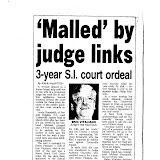
'Malled' by Staten Island Judge....CLICK HERE FOR FULL STORY

The New York Post's Jeane MacIntosh wrote this great article, 'Malled' by judge links, about some silly woman who sought justice in a Staten Island, New York courtroom after her car dropped four feet into a mall parking lot hole.  The problem: the person running the mall was married to very connected judge.....good story, sad story about our court system.....  

Another message from our courts of law: Be Carefull Against Whom You Seek Justice (There will be no "equal justice" in this Empire State!)

Here's the article:

'MALLED' BY JUDGE LINKS
By JEANE MacINTOSH


March 26, 2007 -- A woman injured in a Staten Island strip mall run by the wife of a prominent judge has seen her $5 million negligence lawsuit bounced around the court system for three years because of the jurist's political ties, court records reveal.
Laurie Romanelli, of Seaside Heights, N.J., sued Tottenville Square Mall in March 2004 after her family's car, driven by her husband, Michael, plunged into a 4-foot-deep sinkhole in its parking lot. The mother of three says the crash left her with a fractured neck and other debilitating injuries.

The mall is managed by Helen Vitaliano - wife of Eric Vitaliano, who at the time of the suit was a Staten Island Civil Court judge. He has since been appointed to the federal bench in Brooklyn.

Judge Vitaliano was randomly assigned to hear the case.

After lawyers for the Romanellis realized the husband-wife connection, the judge quickly recused himself, without having heard motions or making any rulings.

"There were no whispers or aspersions cast on Judge Vitaliano. He recused himself immediately upon learning the case involved his wife and her work," said Jay Umans, a lawyer who is representing Michael Romanelli, who has filed a separate $2 million suit against Tottenville Square.

In early 2005, the case was transferred to Judge Anthony Giacobbe, who presided over it for a year, until Helen Vitaliano disclosed in pretrial depositions that Giacobbe and her husband socialized.

Giacobbe recused himself in February 2006, court records show.

The case then went to Judge Thomas Aliotta, whose law firm, records show, contributed to Judge Vitaliano's failed 1997 run for Congress.

Despite the tangled web, the Romanellis said they are loath to cry foul, particularly since Judge Aliotta recently ruled the case ready for trial - before turning it over to yet another judge, Philip Minardo.

In a court hearing last week, Minardo ordered lawyers for Tottenville Square to wrap up pretrial loose ends, noting, "You'll be on trial by September if you don't settle."

A New York Courts spokeswoman said the Romanellis' lawyers could have asked to take the case out of Staten Island.

"Anytime there's a question of a potential conflict [of interest], it's up to the lawyers to apply for a venue change," she said.

Lawyers for the Romanellis have not filed any grievances or complaints about the judges.

Lawyers for Tottenville Square, which has countersued Michael Romanelli, did not return calls.

Helen Vitaliano declined comment. Laurie Romanelli's lawyer didn't return calls.

Michael Romanelli, a former firefighter, is no stranger to a courtroom. He fought, and lost, a nasty, protracted legal battle with the city over his disability payments.

"I vowed I'd never get involved in a lawsuit again," he said. "But my wife was severely injured, and we had no choice."

jeane.macintosh@nypost.com

Click Here to Link To Daily News Story

Sunday, September 16, 2007

Brooke Astor Court Attorney Living in Dead Lady's Home - Surprise to Family Members...CLICK HERE FOR FULL STORY

As, finally, the heat is on over how the affairs of retired Judge John L. Phillip's has been abused by a corrupt system, we revisit Westchester Surrogate’s Court’s "Dastardly Deeds," where we celebrate the 10-year anniversary of the scheme by the Surrogate's Court Law Department charged with over-seeing the wishes of the departed. The Court's own Law Department found their own court attorney moving into a decedant's Scarsdale home with her family. That same Law Department attorney-referee, Jody B. Keltz, is now involved in the Brooke Astor estate proceedings......MORE.....

When 88-year-old Berta M. Murray died on August 12, 1997, she probably had not previously considered that the Scarsdale home built by her father, and that had been in her family for decades, would soon be occupied by a Westchester County Surrogate’s Court attorney-referee who worked in the very same court’s law department charged with the duty to oversee the affairs of the deceased-- A fact that has been secreted from her surviving relatives, they say.

But Westchester Surrogate’s Court employee, attorney-referee Jody Keltz and her attorney-husband, Carl T. Peluso of Peluso & Touger in Manhattan, really liked that house at 168 Gaylor Road in Scarsdale, so in they moved in the Spring of 1998. And the two attorneys still call it home, even now as questions swirl as to just how they came to own the dead lady’s house.

By all accounts, the Keltz-Peluso attorneys never knew Berta, and they had most likely never invited the elderly widow to their prior home located at 75 Third Place in Brooklyn, New York.

“It’s outrageous that a Surrogate’s Court lawyer bought Berta’s house,” said an 80-plus-year-old cousin of Berta, and who only recently learned that Ms. Keltz was a lawyer in the Westchester Surrogate’s Court. “This stinks to high heaven, and I’m mad. It’s just not right, I don’t like this at all!” she added.

The real estate deal by the Keltz-Peluso team is reminiscent of a Brooklyn Surrogate Court “arrangement” in 2002 where, as the Village Voice described it, Judge Scholnick’s clerk “…snatched up the 11-room brownstone…of 85-year-old Elsie Perry…in a move that would make Donald Trump proud…” Honorably, Brooklyn Chief Court Clerk, George Crowley, refused to keep quite, saying publicly that, “If I did this, I would expect to be fired. The whole thing was unethical…the judge shouldn’t have allowed it…”

Brooklyn senior court official Crowley was so outraged by the cozy inside real estate deal that he took the highly unusual step of placing a note about it in the decedent’s Brooklyn Surrogate’s Court case file. But in the Westchester Murray-Keltz-Peluso transfer, no such concern has ever been voiced or documented by Surrogate’s Court Chief Clerk John Kelly or Surrogates Emanuelli or Scarpino. “Isn’t a Surrogate Court supposed to make sure everything is on the up-and-up, and handled properly?” asked Berta’s cousin, adding, “I knew Berta over seventy years, and everyone knew she wanted that house to stay in the family.”

Berta’s Dead: Enter The Vultures

A cursory review of Berta Murray’s estate file appears that it is largely normal, according to legal experts engaged to analyze the Murray estate transactions, and who are familiar with New York estate law, ethical obligations and the specific practices of the Westchester County Surrogate’s Court. However, they noted, the complete absence of any estate file “accounting” is quite unusual. And though not required, the name of Surrogate’s Court attorney-referee Jody B. Keltz, is nowhere to be found in the estate file. However, a review of the property Deed on file in the Westchester County Clerk’s office memorializes the transfer of ownership of 168 Gaylor Road in Scarsdale from the “Estate of Berta M. Murray…by The Bank of New York…to Carl T. Peluso and Jody B. Keltz, his wife.”

In a recent telephone conversation, a court employee confirmed that Ms. Keltz was still employed as an attorney-referee in the Surrogate’s Court’s law department. When asked to comment about the Keltz property transfer, she advised that, “If you want to keep your job around here, you keep your mouth shut.” When asked her name, the telephone connection ended.

Move from Scarsdale to an Astor Estate Would Be Nice

A quick review of Berta’s estate file also shows a relatively standard probate proceeding, and it is quickly observed that The Bank of New York is the fiduciary and that the house was valued at $350,000.00--approximately one half of the total estate value of $742,968.00.

  • But an in-depth analysis reveals some eyebrow-raising facts, including that Berta’s last will was substantially different than her stated wishes as expressed to friends and relatives since her husband Elmer died in December of 1982. “In Westchester, everyone gets a crumb,” one estate lawyer noted. But those associated with the “new” wishes of Berta Murray EACH received “crumbs” worth tens of thousands of dollars: Attorney W. Rowland Miller of the Judy, Miller & O’Connor law firm in Scarsdale, and who drafted the Will for Berta (and in which The Bank of New York is named as the new fiduciary), and who was then retained as the attorney for the fiduciary, The Bank of New York;
  • Attorney Samuel S. Yasgur, then of the Hall Dickler law firm, and who was appointed by former Hall Dicker lawyer and then-Judge Emanuelli to represent “unknown heirs”; and
  • Real estate agent Camille Paradise of Claire D. Leone Real Estate, who lived in Berta’s neighborhood and who was the realtor that handled the sale of the house to court employee Keltz and her husband.

“Judges and attorneys have an obligation to avoid even the appearance of impropriety,” observed one White Plains estate attorney who asked that his name be withheld, adding, “But that ethical requirement doesn’t apply here-- every player gets their piece of the pie-- that’s how court business is done in Westchester County.” He conceded that, “On its face, this doesn’t look good-- a state-employed attorney-referee working in the Surrogate’s Court shouldn’t be purchasing a house from any estate her court is overseeing.”

Under Westchester County Surrogate Anthony A. Scarpino, court attorney-referee Jody B. Keltz continues her work insuring a high level of integrity in the administration of estate proceedings, also while holding professional fiduciaries, such as banks, to a high set of ethical and performance standards.

The biggest “crumb” from the Estate of Berta M. Murray went to Westchester County Surrogate’s Court attorney-referee Jody B. Keltz and her attorney-husband Carl T. Peluzo. That “crumb” -- the house and property located at 168 Gaylor Road in Scarsdale is, according to the village of Scarsdale tax office, now conservatively valued at $950,000.00.

See recent stories on this forum about the abuse of Retired Judge John L. Phillips -- 3 stories: September 1st, 2nd and 3rd, of 2007.

by Frank Brady © 2007

Saturday, September 15, 2007

Lawyer's Fund Prepares for Cahill Ethics Claims Fallout....CLICK HERE FOR FULL STORY

Sources reveal that the state's Lawyers' Fund for Client Protection is bracing for a tidal wave of claims against dishonest lawyers once the dust settles over the lack of disciplinary enforcement at the First Department, Disciplinary Committee....MORE...

The committee's Chief Counsel, Thomas J. Cahill, will be "retiring" in October and though his replacement has been cautioned to "keep the lid on any backlash," everyone at OCA is concerned that a majority of the complaints filed against attorneys in Manhattan and The Bronx under Cahill over the last 8+ years will have to be revisted, and which will surely result in an historic payout to victims.

This newest revelation prompts the need to revisit a good article by Joel Stashenko in the April 13, 2007 New York Law Journal.

Paying the Tab of Rogue NY Lawyers: Misconduct Fund Braces for Surge

By Joel Stashenko
New York Law Journal
April 13, 2007

ALBANY - Dishonest attorneys prompted the awarding of $7.1 million in 2006 from the Lawyers' Fund for Client Protection, which warned yesterday that the fund is likely to start seeing claims from the largest case of lawyer theft in its 25-year history.

Last year, the fund paid out $1 million less than the $8.1 million awarded in 2005. The average awarded annually over the last five years has been just over $6.3 million. (The report is available at www.nylawfund.org .)

See the 2006 Annual Report and highlights from the report .

Officials say the fund's finances are "very strong," but claims for reimbursement from clients defrauded by Andrew F. Capoccia and two attorneys working for him in his debt-reduction practice could total $5 million to $6 million alone, although the claims might be spread over more than one year, said Timothy J. O'Sullivan, executive director and counsel to the fund. Several hundred, and possibly thousands of clients, may seek help once federal authorities distribute restitution payments, he said in an interview yesterday.

"These catastrophic losses will challenge the New York Fund's ability to be able to continue to serve as a model for effective law client protection in our nation," the fund's 2006 report warned.

The precise amount that former clients of the Andrew F. Capoccia Law Centers of Albany and a successor firm, the Law Centers of Consumer Protection that moved to Bennington, Vt., will seek from the fund depends on how much in assets and restitution federal authorities can secure from Mr. Capoccia and two attorneys who worked for him, Howard Sinnott and Thomas Daly. Mr. O'Sullivan said federal authorities have seized about $4 million in assets so far in the case.

Mr. Capoccia is serving 15-2/3 years in prison for conspiracy, mail fraud, wire fraud and other charges for his role with the two firms, which federal authorities said diverted millions in client funds to accounts controlled by Mr. Capoccia's wife. Carol Capoccia faces up to 10 years in prison and a fine of up to $250,000 when she is sentenced April 27 in connection with guilty pleas in January to obstructing a federal grand jury investigation.

Mr. O'Sullivan said he anticipates that the claims arising from the Capoccia case will ultimately be higher than the costliest claims now on its books, those attributed to Jay W. Rosen. Mr. Rosen, a disbarred solo practitioner from Garden City, Long Island, has prompted $4.5 million in reimbursements from the fund, including $1.1 million from 12 awards made to his former clients by the client protection fund in 2006, Mr. O'Sullivan said.

Claims related to Mr. Rosen, who received a 2-to-6-year sentence for stealing real estate escrow funds from clients, were the largest for any single lawyer or firm in 2006, Mr. O'Sullivan said. They were also the largest in 2005, when the fund paid Mr. Rosen's former clients $2.4 million.

Clients represented by the late James S. Falletta of Queens accounted for 13 awards and $780,450 in payments from the fund last year, Mr. O'Sullivan said. Mr. Falletta was not suspected of defrauding clients when he was alive, but shortages were found in his escrow accounts following his death. Since 2005, the fund has paid out $972,000 in restitution to 21 of Mr. Falletta's former clients, Mr. O'Sullivan said.

Money for the fund is largely supplied by the assignment of $60 of the $350 biennial registration fee required of lawyers in New York state. Small amounts are also raised through restitution, judicial sanctions and donations occasionally made to the fund. The maximum award the fund can make is $300,000. The median client award in 2006 was $13,000.

The fund could not take more of the registration fee money if it becomes overwhelmed by Capoccia-related claims and other reimbursements, Mr. O'Sullivan said. But it has access to other money through the state Office of Court Administration if it becomes financially stressed.

Finances 'Very Strong'

The fund started this year with a balance of $7 million.

"Our finances are very strong," Mr. O'Sullivan said. "We are not crying poverty. We're not going broke."

But he said the office is in close contact with federal prosecutors in Albany and Vermont who are seeking to seize assets from the Capoccias and their firms.

"It is something we are trying to keep a close eye on and monitor," said Mr. O'Sullivan.

Eleanor Breitel Alter, chairwoman of the fund and a partner with Kasowitz, Benson, Torres & Friedman, said yesterday the Capoccia claims will "skew everything," but that the fund will meet its obligations.

"We have always been assured if we need other money that OCA is behind us," said Ms. Alter. "These people will be taken care of because that's our goal, that's our mission and that's what we are set up to do. And we will not go bankrupt."

Chief Administrative Judge Jonathan Lippman said OCA will provide the fund with the necessary money to meet the anticipated spike in claims.

Thefts From Escrow

While trying to anticipate a new challenge, the fund said an old problem - the theft of money kept in escrow by lawyers for downstate residential property purchases - continues to plague the system, though to a somewhat lesser degree in 2006 than in 2005.

Sixty-two of the 147 awards last year went to cover $2.9 million in real estate escrow losses. That was down from the 116 awards totaling $5.2 million the fund paid for escrow losses in 2005.

The escrow loses are almost exclusively a New York City and Long Island problem. Sellers' attorneys there typically hold down payments for residential properties, often as much as 10 percent of the purchase price. Upstate, down payments tend to be much smaller and brokers usually hold the money.

A New York State Bar Association committee chaired by Ira S. Goldenberg of White Plains has been working for more than one year on a study of the real estate escrow process and ways to better protect clients' money.

Ms. Alter said the theft of real estate escrow, which has accounted for 36 percent, or $44.8 million, of all payments from the fund since 1982, is "certainly not a decreasing trend."

"It is not easily addressed," she said yesterday. "Lawyers and clients, they get used to doing it one way and it's often very hard to convince people to put in some safeguards and to change the practice. Most lawyers are good and honest and the honest ones don't want to change and their clients don't want them to change because it becomes more complicated."

The Nassau and Suffolk county bar associations have also been studying real estate escrow practices.

In its annual report, the fund called for the adoption of a court rule requiring the transfer or protection of escrow funds held for clients in instances where attorneys have been suspected of or disbarred for misconduct.

Ms. Alter and Mr. O'Sullivan emphasized that only a miniscule number of lawyers are involved in dishonest acts that lead to awards. In 2006, 35 lawyers were responsible for the $7.1 million in reimbursements. There are about 229,000 lawyers in New York state.

Ms. Alter added, however, that every "blood-curdling" instance of lawyer dishonesty discredits the profession.

"It is something so far from what we are expected to do or how we are expected to behave," she said.

END OF NEW YORK LAW JOURNAL ARTICLE

Friday, September 14, 2007

Judge Pfau, Bronx Bomber, Encouraging History…CLICK HERE FOR FULL STORY

It was only 18 months ago that a very unusual encounter emerged in The Bronx. It involved a Bronx political insider, attorney Stanley Schlein, and then-first deputy chief administrative judge, Ann T. Pfau...MORE....

Justice Pfau, now New York State’s Chief Administrative Judge, won, directing that Mr. Schlein’s name be removed from the list of those eligible to receive judicial appointments.

Many are hoping that the highly unusual, and drastic, measure by Judge Pfau last year is a sign of her deep commitment to ridding the New York courts of the systemic and deeply rooted abuses by the machine.

More on Judicial Appointments coming soon…… This is a good article by Andrew Wolf, and it may provide an insight into what Judge Pfau can do- think, and decisively act, outside the court's corruptive box.

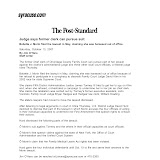
The March 2, 2006 article in The Sun, by Andrew Wolf follows, and it can also be seen to the right, marked, “Judge Pfau, Bronx Bomber”

Move To Bar Insider From Receiving Court Appointments Raises Brows
BY ANDREW WOLF - Special to the Sun
March 2, 2006


Bronx courthouse cognoscenti are furiously attempting to determine what is behind an unusual action by the state's Office of Court Administration that bars a well-known and powerful political operative from receiving lucrative court appointments.

On Monday, the administrative judge of the Bronx Supreme Court, Barry Salman, was directed by the first deputy chief administrative judge of New York State, Ann Pfau, to remove Stanley Schlein from the list of those eligible to receive judicial appointments. A spokesman for the Office of Court Administration, David Bookstaver, confirmed the action, which was first reported by the Riverdale Review, a Bronx weekly.

Such appointments include assignments by judges to act as a referee for real estate sales, as an arbitrator, or as a guardian for an estate. They usually require minimal work, and most often go to a small cadre of politically connected attorneys.

The action is highly unusual, and could be the first inkling of legal problems for Mr. Schlein and, by extension, the entire Bronx political establishment. Mr. Schlein serves as the counsel to the Bronx Democratic organization and is widely assumed to have enormous influence within the party and city government. These ties go back more than a quarter-century, as Mr. Schlein has served a parade of political bosses, neatly surviving each coup and scandal to solidify his position.

Calls to Mr. Schlein for comment were not returned.

Mr. Bookstaver noted that the law provides for removal from the eligible list for either of two reasons: "unsatisfactory performance" or for "conduct incompatible with the responsibilities of the appointment." It is the latter that has tongues wagging in the courthouse, which sits in the shadow of Yankee Stadium in the South Bronx. Mr. Schlein was one of 17 Bronx political leaders subpoenaed by a grand jury two years ago in an ongoing probe of the finances of non profit groups tied to elected officials.

There are also reports that complaints have been lodged regarding Mr. Schlein's handling of one of these appointments. However, such disputes have not in the past resulted in such a radical remedy as the directive issued Monday. Mr. Schlein, who has had hundreds of such appointments spanning many years, is thought unlikely to have egregiously mishandled any of the simple tasks associated with most of these assignments.

What concerns Bronx politicos is that removal from the list might signal an impending indictment or plea bargain, an action taken to protect the parties to these actions from harm and delay.

Mr. Schlein also has ties to the Bloomberg administration, having been reappointed as the chairman of the Civil Service Commission last year, a part-time post he has held through several administrations. It pays $335.60 a day. In a profile last year, the New York Times disclosed that Mr. Schlein in 2004 was able to earn $68,385 for this post despite the modest per diem rate.

Mr. Schlein also serves on the Assembly staff of the Bronx Democratic leader, Jose Rivera, for which he is compensated an additional $35,742.

At the same time as Mr. Schlein served as a Bloomberg appointee and lobbied the administration, he was a key behind-the-scenes player in the camp of the mayor's election opponent, Fernando Ferrer.

Mr. Schlein has weathered adversity before. In 1986, when the then-Bronx County Democratic leader, Stanley Friedman, was convicted of racketeering charges, Mr. Schlein and other top Friedman officials were widely expected to be purged from the party leadership. In addition to Mr. Friedman, the scandals brought down the borough president, Stanley Simon, and Reps. Mario Biaggi and Robert Garcia.

Mr. Schlein survived - and he emerged even more powerful after the 1994 ethnic coup that brought in the current Hispanic Bronx Democratic leadership.
END OF ARTICLE

See the article to the right, marked, “Judge Pfau, Bronx Bomber”

Thursday, September 13, 2007

Judicial Cannibalism Gnaws on Retired Judge…..CLICK HERE FOR FULL STORY

They continue to eat their own, destroying anyone who would dare to speak out against improper action even—perhaps, especially-- if that conduct is by a member of the judiciary. Enter the retaliatory destruction of the latest victim, now-retired Supreme Court Justice Frank V. Ponterio…….

The New York Law Journal reports that former judge Ponterio “claimed that court officials declined to recertify him for his Supreme Court position because he threatened to make public his belief that then-Appellate Division, First Department, Justice Betty Weinberg Ellerin ‘prompted’ his removal from hearing matrimonial cases on Staten Island.” Judge Ponterio's complaint says that Justice Ellerin "sought to replace [him] with a female judge of her choosing in order to influence decisions in matrimonial cases to favor female litigants."

So, the “powers that be” decided to get rid of a person who would who have the audacity to speak up for what was right— and even if that person is a judge. It doesn’t matter. The message is: “Obey or Be Destroyed”

  • Once again “judicial steering” and “influencing decisions.” We refer you to a related September 11, 2007 dated story on this forum: “3 Judges Covered Crony’s 9/11 Donation Fraud.”
  • Once again “retaliation”. We refer you to a related June 11, 2007 dated story on this forum: “Former NY State Chief Court Clerk Sues Judges in Federal Court.”
  • Once again “the system used against judges.” We refer you to 3 related stories on this forum: September 1, 2007, “Corruption Targets Retired Judge” – September 2, 2007, “More On: Corruption Targets Retired Judge Phillips” – and “September 3, 2007, “NY Post on Judge Phillips Attack.” 

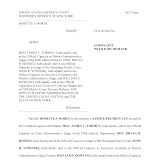
The federal court decision is posted to the right, marked: “Judge Frank V. Ponterio”

Here is the September 7, 2007 dated The New York Law Journal article by Mark Fass:

Ousted NY Judge Loses Again in Court Fight to Get His Job Back

By Mark Fass
New York Law Journal
September 7, 2007


A federal judge has thrown out the final remaining claim by former Supreme Court Justice Frank V. Ponterio against a group of top court officials who he claimed had retaliated against him by declining to extend his judicial certification.

Southern District Judge Harold Baer Jr. ruled that Mr. Ponterio's "class of one" equal-protection claim failed on two counts. Not only had Mr. Ponterio failed to satisfy the criteria for such a claim, Judge Baer held, but the defendants were also entitled to qualified immunity.

"In short, Ponterio points to no Justice like himself - past, present, or hypothetical - who had been denied certification or recertification on the merits and was subsequently treated differently than Ponterio," Judge Baer concluded in Ponterio v. Kaye, 06civ6289.

The decision will be published Wednesday.

Mr. Ponterio filed his complaint in August 2006 against then-Chief Administrative Judge Jonathan Lippman, the Administrative Board of the Courts and the board's members - Chief Judge Judith S. Kaye and the four presiding justices of the Appellate Division.

Certification is a biennial requirement for judges following their 70th birthdays until mandatory retirement at 76. Mr. Ponterio finished his regular term on Dec. 31, 2001, as he reached 70 during that year. He was certificated for 2002-2003 but rejected for a second two-year term.

The former judge claimed that court officials declined to recertify him for his Supreme Court position because he threatened to make public his belief that then-Appellate Division, First Department, Justice Betty Weinberg Ellerin "prompted" his removal from hearing matrimonial cases on Staten Island. According to Mr. Ponterio's complaint, Justice Ellerin had "sought to replace [him] with a female judge of her choosing in order to influence decisions in matrimonial cases to favor female litigants."

In January, Judge Baer dismissed Mr. Ponterio's First Amendment, state-law retaliation and "denial of access to the courts" claims, leaving only a so-called "class of one" equal protection claim. Specifically, Mr. Ponterio's sole remaining claim was that the Administrative Board of the Courts violated his equal protection rights when it declined to reconsider its 2003 denial of recertification.

Class-of-one claims require plaintiffs to demonstrate that they were "treated differently than someone who is prima facie identical in all relevant respects."

Mr. Ponterio failed to satisfy that element, Judge Baer ruled.

"Here, Ponterio has failed to identify any retired Justice who is substantially similar to him, let alone someone who is prima facie identical in all relevant respects," Judge Baer wrote. "The most relevant distinction between Ponterio and all other retired Justices whose applications were considered in 2004 is that Ponterio was denied recertification on the merits, unlike all the other Justices considered."

The defendants were also entitled to qualified immunity, which barred Mr. Ponterio's claim, Judge Baer added.

"Reliance on advice of counsel may, in some circumstances, suffice to establish qualified immunity," according to the decision. "Such is the case here, where counsel's advice objectively precluded a reasonable Board member from the knowledge that he or she was violating Ponterio's Equal Protection rights when he or she declined to reconsider his denial."

Kevin J. O'Neill of Gogick, Byrne & O'Neill represented Mr. Ponterio. He did not return a call for comment.

Assistant Attorney General Constantine Aristidis represented the court system. An Office of Court Administration spokesman declined to comment on the dismissal.

"The decision speaks for itself," he said.

END OF NYLJ ARTICLE

The federal court decision is posted to the right, marked: “Judge Frank V. Ponterio”

Wednesday, September 12, 2007

40 Million Dollar Judge Silent on Judicial Pay Raise...CLICK HERE FOR FULL STORY

No word from New York Supreme Court Justice Charles E. Ramos on the lawsuit seeking judicial pay raises, and which is to be filed in court today according to The New York Law Journal. Judge Ramos, who is seeking re-election to the bench this fall, has been recently embroiled in the revelation that he may have misled then-administrative Judge Jonathan Lippman when he sought a waiver of the rules regarding estate and trust participation by a judge for non-family members.....MORE..... (See other Ramos stories on this forum...)

One blog reader emailed us with his/her suggestion, "It's only fair to give every judge a waiver of the rules so that each justice may run a $40 Million Dollar trust and estate like Judge Ramos. This would be a good way to give the judges more money, and the state wouldn't have to give a salary increase."

We leave it to the readers to decide.....

The following is a good article by Joel Stashenko, from today's New York Law Journal.......

Judges From Four Groups To Sue State for Pay Hike

Joel Stashenko -09-12-2007- ALBANY - Members of four New York state judges' associations will filesuit today in Manhattan Supreme Court to force the governor and to give judges a pay raise.

The long-discussed suit is being filed now because the judges havebecome fed up with the apparent inability of lawmakers to agree toconvene in Albany and to take up the judicial pay increase bill they have had before them all year, Staten Island Civil Court Judge PhilipS. Straniere (See Profile) said in an interview yesterday. A judge from the group Judge Straniere heads, the Board of Judges ofthe Civil Court of the City of New York, as well as individual judges from the Family Court Judges Association, the New York City FamilyCourt Judges Association and the City Criminal Court Judges Association will be plaintiffs in the suit.

Judge Straniere declined to name the plaintiffs. He said there was some legal question whether the judges' associations themselves - there are 13 statewide - would have been deemed to have standing if they had formally joined the legal action. It was felt there would be no question as to the standing of individual judges, he said. However, even though the four associations are not plaintiffs, they are all supporting the action. When last seen in Albany in June, the Legislature was concluding its regular 2007 session, and its leaders were promising to soon return into session to address issues they failed to get to during a contentious first six months of the year.

Those issues included, state judicial administrators were assured, raising the pay of state judges for the first time since 1999. The judiciary was behind a bill to bring the pay of Supreme Court justices in line with federal district court judges and to give allother state judges proportional pay increases. The increases would average about 24 percent. The legislation would also create a commission to recommend future pay raises so judges would not have to periodically return to the governor and lawmakers for more money.

Since June, a political scandal involving Democratic Governor EliotSpitzer and his nemesis, Senate Majority Leader Joseph Bruno,R-Rensselaer, has ratcheted up the partisan animosity at the Capitol to the point that none of the leaders can demonstrate they can do business together, or when. Judge Straniere said this latest delay was the last straw for the judges in the suit to be filed today."I think everybody agreed over the summer that if they were not going to come back in September, then that would be it," said JudgeStraniere, the brother of a former assemblyman from Staten Island."Enough is enough."

The suit will name the Assembly, Senate and the governor for failing to provide fair pay for the state's 1,200 judges. It will seek to win court-ordered raises for judges retroactive to 2000 and to impose a system of annual cost-of-living increases going forward.

The suit has been mainly prepared pro bono by partners Thomas Bezanson and George Bundy Smith at Chadbourne & Parke. Mr. Smith is a formerjudge on the Court of Appeals. It will be the second suit filed by judges seeking higher pay. District Court Judge Edward A. Maron of Nassau County (See Profile), Brooklyn Supreme Court Justice Arthur Schack (See Profile) and Nassau Supreme Court Justice Joseph A. DeMaro (See Profile) have a similar action before Supreme Court Justice Thomas J. McNamara (See Profile) in Albany County.

Attorney General Andrew Cuomo's office has asked in that case for an extension until Friday to file a reply brief in the case. Attorneys for both sides say they expect Justice McNamara to decide the case on the briefs, without oral arguments.

Mr. Spitzer said earlier this summer that it would be a mistake for the judiciary to go to court in what he said would be a futile effort to compel the other two branches of government to give them a raise. And Chief Judge Judith S. Kaye has repeatedly said a lawsuit by the judiciary should be a last resort.

Traditionally, judges and lawmakers, who also have not had a raise since 1999, have gotten pay hikes at the same time. Chief Administrative Judge Ann T. Pfau had no comment on the impending suit yesterday. Spokesmen for Mr. Spitzer and Mr. Bruno declined comment. A spokesperson for Assembly Speaker Sheldon Silver,D-Manhattan, said the Assembly Democrats were committed to resolving the issue in line with the bill proposed by Chief Judge Kaye.- Joel Stashenko can be reached at jstashenko@alm.com. ……

Tuesday, September 11, 2007

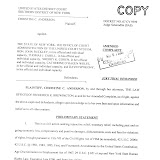
3 Judges Covered Crony's 9/11 Donation Fraud….CLICK HERE FOR FULL STORY

As directed by one of New York State's top administrative judges in writing last week, official complaints were filed today, September 11, 2007, against three judges for conspiring, it is alleged, to cover up an alleged fraudulent court filed “assignment of interest” that was designed to prevent the repayment of over $100,000.00 stolen in 2001 from 9/11 donations made to the American Red Cross….. MORE……

The judges named in the complaints are from Westchester County, in White Plains, New York: Surrogate’s Court Justice Anthony A. Scarpino, Jr.; Civil Court and 9th Judicial District Administrative Judge Francis A. Nicolai; and Civil Court Judge Gerald E. Loehr.

3 Blind Mice

The allegations against the judges include the organized stifling of justice- and for one reason: to protect their political friend and supporter, attorney Frank W. Streng of McCarthy Fingar, LLP, who drafted and filed the alleged fraudulent instrument in November of 2003.

The allegations include: judicial steering, corruption, denial of due process and obstruction of justice.

History Repeats Itself

Surrogate Scarpino, who handled the Harry Winston estate and is currently hearing the Brooke Astor estate, just a few months ago refused to remove himself from an Ice Cream Carvel estate proceeding when it was found that he had loans from one of the parties. Also, it was recently reported that for over 4 years attorney Frank Streng advertised on the internet, and his law firm website, the fact that he was on Surrogate Scarpino’s election transition committee, which angered many as that implied he had an "in" with the court.

Mr. Streng, in various capacities, has also been involved in the Astor and Carvel estates. And as reported in the New York Law Journal last year, allegations of judicial steering are nothing new to the Westchester County courts under Administrative Judge Nicolai. Last year’s brouhaha resulted in a large court organizational shake-up in Westchester.

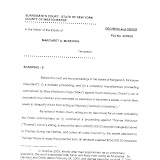
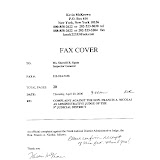
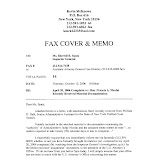
The underlying matter, The Estate of Margaret A. McKeown, has lingered in the Westchester courts since 2003, and the related 9/11 Red Cross donation fraud was subject of an April 28, 2006 article in The New York Times article, though the judges' names or the allegations against them were not mentioned.

Better Late Than Never

And though the alleged fraudulent assignment was filed in November of 2003, it would take until July of 2007 for the Westchester County Surrogate's Court Chief Clerk, Charles T. Scott, to “locate” the assignment papers and place them in the court’s estate case file.

Oddly, and also in July of 2007, Chief Clerk Scott advised in writing that he had corrected the three and one-half year “administrative oversight” by "back-dating" the filing date in the court’s computer.

……More on This Story- With Documents- Coming Soon………..

Monday, September 10, 2007

Carvel: Legacies Become Larcenies in NY Estate Courts….CLICK HERE FOR FULL STORY

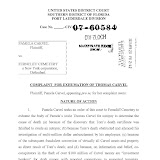
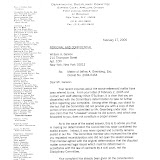
The niece of Tom Carvel filed a criminal complaint with the Office of New York State Attorney General Andrew M. Cuomo in June, it was recently learned. This followed her then-latest discovery, in May of 2007, of additional alleged wrongdoings involving the Ice Cream King’s money, intentions and charities....MORE....

Once again we see some remarkable happenings from New York’s Surrogate’s Courts that point to just about everything but the fulfillment of a decendant’s wishes.

While it appears that wealthy, dead folks-- and their big dollar trusts and estates-- are greeted with open arms in the state’s Surrogate Courthouses, it seems that family members are largely unwelcome-- to handle anything having to due with money or value, anyway.
Better to let the lawyers, bankers and friends-of-the-court handle the money, say the lawyers, bankers and friends-of-the-court.

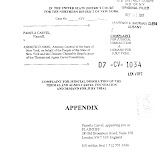
To see what can happen in a New York Surrogate’s Court, and how brazen and out-of-control the system is, read the documents to the right marked, CARVEL CRIMINAL COMPLAINT.
Sunday, September 9, 2007

One of the Few to Confront Corruption Flees Albany...CLICK HERE FOR FULL STORY
Remember the words of David Grandeau, "Ethics matters." The nearly-lone, and lonely, man in Albany overseeing state lobbying ethics, David Grandeau, is leaving. He was one of the few to speak up to the powerful about the lacking ethics in the game of politics. How he lasted 13 year in New York's ethical sewer, all the while speaking up for what was right and confronting what was improper, will forever remain a mystery....

Once again, The Daily News and Joe Mahoney come through with a great article. Unfortunately, most New Yorkers have never heard of David Grandeau or his work. Grandeau should not be quickly forgotten. Pass this article around:

Ethics 'worse' in Albany, says watchdog David Grandeau

BY JOE MAHONEY
DAILY NEWS ALBANY BUREAU CHIEF

Sunday, September 9th 2007

ALBANY - As New York's chief lobbying watchdog for 13 years, David Grandeau tangled with governors, legislative leaders, influence peddlers and Donald Trump.

He even tackled Joe Namath when the Jets legend bestowed on Joe Bruno, the state Senate majority leader, an autographed football that Grandeau reasoned violated a ban on gifts worth more than $75.

Now the state Temporary Commission on Lobbying is going out of business Sept. 21, with its remnants merged into a new Public Integrity Commission. Though good government advocates have often called him the only cop on the beat in Albany, Grandeau won't be at the helm. He didn't even make the team.

A beefy man who enjoys playing on a local curling team, Grandeau, 48, says he leaves state government keenly aware he has no friends in high places.

"I did my job, and I did it for 13 years without fear or favor, and I did it without pity or consideration to the political parties or the connections of the people we investigated," Grandeau said.

Assessing the current ethical climate in Albany - where news this summer was dominated by a scheme by Spitzer aides to damage Bruno and the senator's use of state aircraft - Grandeau said: "It's getting worse."

And having an integrity commission controlled by the governor, he reasoned, won't shake the public perception that misdeeds are papered over. "You're going to see that integrity [commission] investigations have serious partisan political overtones."
Amid the battles among state leaders, he wryly noted, "One of the few things they have been able to agree on is it's a good idea to get rid of me."

Over the years, Grandeau has embarrassed Democratic Assembly Speaker Sheldon Silver for getting a discount rate on a deluxe Las Vegas hotel room from a casino company looking to expand to New York. He also socked Trump with a $250,000 fine for secretly bankrolling ads attacking an Indian tribe looking to open a Catskills casino.

In his final weeks, he has taken on Bruno associate Jared Abbruzzese, who was involved in a group eying the state racing franchise while treating the senator to rides on his private plane.

Critics accuse Grandeau of being a headline-hunter who has carried out personal vendettas.

"He's unique and dramatic, and if someone could make ethics sing and dance, it's David Grandeau," said James Featherstonhaugh, a lobbyist for four decades. "But I don't think he wisely used his prosecutorial discretion. He didn't seem to distinguish between important wrongs and honest mistakes."

Grandeau plans to become a consultant to companies on how to comply with the state's complicated lobbying laws and ethics rules. "There is a competitive advantage to doing things the right way," he said. "Ethics matters."

jmahoney@nydailynews.com

See the New York Daily News Article to the right: David Grandeau, "Ethics matters."

Saturday, September 8, 2007

Shoe-In Lawyer Not on "Qualified" for Judge List...CLICK HERE FOR FULL STORY

Repeat the following words to yourself: "Robert R. Reed, Robert R. Reed." Then you'll know the latest reason why the United States Supreme Court will soon hear arguments on a New York federal judge's decision finding that the way the State of New York "elects" its judges is unconstitutional. The federal district court's finding had been upheld by the U.S. 2nd Circuit Court of Appeals. Everyone, except New York's then-Attorney General Spitzer, agreed that New York's way of "electing" judges was UNCONSTITUTIONAL....

Enter Robert R. Reed - Running - UNOPPOSED !?!

Once again, voters will not really decide who is elected. The party bosses have decided that Bob Reed will be the next civil court judge "elected" in New York County. End of discussion. The beginning, however, of another make believe "election."

And the word is out that if you dare an earnest attempt to squeeze your rump into this judicial seat-- against the wishes of the party bosses-- you'll be destroyed. But, of course, the decision is yours—it's a free country, you know. (Friendly Reminder: if you dare win, or make people really concerned: you, and everything and everyone dear to you, will be destroyed)

To add "voters-be-damned" insult to the "voters' rights" injury-- and for some yet-unexplained reason-- Wannabe Judge Reed's name did not appear on the "qualified" list of judicial candidates put together by a recently formed judicial screening panel. Chief Judge Kaye formed those committees around the state to "shore up public confidence" in the process to "elect" New York judges.

The New York Law Journal article also has a list of recent statewide candidates that made the "qualified" list for various elections including Manhattan's own $40 million dollar judge, State Supreme Court Justice Charles E. Ramos, who is "running" for "re-election." (See related NYSE Langone Grasso Ramos stories on this forum regarding then-Administrative Judge Jonathan Lippman's waiver of the rules for Judge Ramos to serve as the executor/trustee of certain Weissberg estate/trust matters. Another story on the $40 million dollar judge is coming soon.)

Noticeably absent from the NYLJ "qualified" lists are candidates from the 9th Judicial District, where most people agree that the art of cross-party endorsements and unopposed "elections" was perfected. (Just weeks ago, current Westchester District Attorney Janet DeFiore fled from the Republican party and joined the Democrats, this while everyone awaits former Republican D.A. Jeanine Pirro's federal indictment, which is to be announced soon.

Read The New York Law Journal September 7, 2007 article by Daniel Wise, Unopposed NY Lawyer Running for Judgeship Doesn't Make List of "Qualified" Candidates.

See the article to the right: "Robert R. Reed"


Here's the article but be sure to see the JPEG to the right!!


Unopposed NY Lawyer Running for Judgeship Doesn't Make List of "Qualified" Candidates

New York Lawyer
September 7, 2007

By Daniel Wise
New York Law Journal

The Democratic Party's candidate for a countywide Civil Court seat in Manhattan was not among the candidates rated as "qualified" on a list released Tuesday by a newly created court system screening panel.

Robert R. Reed, who is unopposed, is appealing his omission from the 15-member panel's list of qualified candidates, said Arthur Greig, counsel to the Manhattan Democratic Party.

The list of approved candidates released by the screening panel for the First Judicial District, which covers Manhattan, was one of seven that have been released to date.

A new court rule, Part 150 of the Rules of the Chief Administrative Judge, required that screening panels be appointed in each of the state's 12 judicial districts. Screening panels for the five remaining judicial districts - four in the Second Department and the Bronx in the First Department - will be released before the end of the month. This year's party primaries for Civil Court are Sept. 18.

Under the rule, the Office of Court Administration (OCA) is not releasing the names of candidates screened by the panels but found not qualified.

The screening process established by Part 150 is deeply flawed, said Mr. Greig, who called the failure to rate Mr. Reed qualified "a political hit on New York County's nominee."

In a statement released yesterday, Assemblyman Herman D. Farrell, the chairman of the Manhattan Democratic Party, likened the committee's interview process to the way black voters were grilled "in the 1930s" by election officials in the deep South, scrutinizing whether they had met literacy and other voter-qualification requirements. Mr. Reed is black.

Mr. Reed, a solo practitioner since 2006, was counsel in the commercial litigation department of Bryan Cave for six years before that. A 1984 graduate of Harvard law School, Mr. Reed had also worked for five years at the Attorney General's Office, where he rose to become deputy chief of the Civil Rights Bureau.

He declined to comment on the screening panel's decision.

David Bookstaver, the OCA's spokesman, did not respond to the criticism directly, but said the new statewide screening panels were "born out of a good government initiative and designed to give the public more information about candidates" for elected judicial office.

The requirement for the statewide screening of candidates for elected judgeships grew out of a recommendation by a committee headed by former Fordham Law School Dean John D. Feerick. The committee had been appointed by Chief Judge Judith S. Kaye to shore up public confidence in the state's elected judiciary in the wake of remarks by Democratic Party officials in Brooklyn that they were entitled to lucrative court appointments and the bribery indictment - and later conviction - of a Brooklyn Supreme Court justice.

The fact that Mr. Reed was not on the list released by the screening panel for the First Judicial Department was discovered by the Law Journal as it gathered information about those candidates who had been rated qualified.

Mr. Bookstaver said the rule forbidding the release of the names of those found not qualified was designed to protect them from embarrassment. He also said the prohibition was aimed at avoiding "an intrusion into the political process by suggesting that voters should choose one candidate over another."

Missed Deadline

At least one other active judicial candidate was not on the list of names released so far by the screening panels.

Incumbent Kingston City Court Judge James P. Gilpatric, in the Third Judicial District, said that while other incumbent City Court judges had received notification of the requirement to submit for the new review, he had not received any such notice. By the time he was alerted to the requirement, Judge Gilpatric said, he did not have time to prepare the extensive paperwork. The committee has since extended the deadline, and he will submit the required information by today and be given an interview in the next two weeks.

The Manhattan panel found eight candidates qualified for the sole opening this year on the Supreme Court in that borough. The only non-judge to make the cut was Mark R. Dwyer, chief of appeals in the Manhattan District Attorney's Office. Also found qualified were Civil Court Judges Paul G. Feinman, Ellen Gesmer, Judith J. Gische, Barbara Jaffe, Shirley W. Kornreich and Michael D. Stallman and Criminal Court Judge Laura E. Drager. All of the judges, except Judge Jaffe, are acting Supreme Court justices.

The Manhattan Democratic Party however, has its own screening panel, which was scheduled to meet last night to select three of the eight contenders for consideration by the party's judicial-nomination convention when it convenes on Sept. 24. By operation of a party rule, the convention delegates are bound to select the party's nominee from the three candidates recommended by its screening committee.

There are also three incumbent Supreme Court justices in Manhattan who have been found qualified by both the court system's and the party's screening panels. They are Justice Sheila Abdus-Salaam; Justice Fern A. Fisher, the administrative judge of the Civil Court; and Justice Charles E. Ramos.

Each of the 12 screening panels created by Part 150 has 10 members appointed by either the chief judge or a presiding justices of one of the four departments of the Appellate Division. The remaining five members of each panel are chosen by bar association leaders.

© 2006 ALM Properties, Inc.

Friday, September 7, 2007

New Chief Counsel at Judicial Ethics Committee

It was reported in the New York Law Journal on Wednesday, September 5, 2007, that Judge George D. Marlow, who chairs the New York State advisory commitee on judicial ethics, announced that Maryrita Dobiel was named chief counsel to the committee. Ms. Dobiel has been a staff attorney since 1999, and succeeds Raymond Hack, who is retiring. It was also reported that Mr. Hack will continue to serve on the committee on a volunteer basis as special counsel.

We have been requested to ask our readers for any information concerning the New York State Judicial Ethics Committee of which they believe the general public should be made more aware. Please post your information or comments, or send an email to corruptcourts@gmail.com - the requested information is for an upcoming story.

Thursday, September 6, 2007

Why Are Some Judges Disciplined Differently?

No problem with the Westchester Surrogate and his friend appearing in his court, and who was advertising for years on the internet an implied favortism with the judge. No problem with the 40 Million Dollar Manhattan Supreme Court judge who misled then-Chief Administrative Judge Lippman. But Judge Valcich gets in trouble....Why.... See the story to the right: "Judge Valcich"

Wednesday, September 5, 2007

40 Million Dollar Judge Has No Conflicts

New York Supreme Court Justice Charles Edward Ramos, who is currently attempting to explain how he received a waiver of the rules from then-Administrative Judge Jonathan Lippman to be an executor/trustee in the $40 Million Dollar Weissberg matters, will not recuse himself in the Rosado/Castillo case before him......See the August 13, 2007 decision to the right: "Judge Ramos Recusal: NO"

Tuesday, September 4, 2007

Ethics Committee Hides Another Complaint - The Wannabe Judge Who Wrote About Ethical Dilemmas SHE Failed to Report CLICK HERE FOR FULL STORY

And there's another serious complaint against a Manhattan attorney that appears to have been politically derailed by the Appellate Division, First Department, Attorney Disciplinary Committee...

It was reported in The Westchester Guardian (“Carvel Niece Fights Westchester Judicial Machine”, May 17, 2007) that Manhattan attorney Eve Markewich had “itemized in a New York Law Journal article how many different violations of professional ethics and disciplinary rules the attorneys in the Westchester Carvel proceedings inflicted on Agnes Carvel.” (See story to the right)

Many blog readers wrote to us saying they were confused, so we looked into the story.

We wondered whether Ms. Markewich did, in fact, author an article that explained how she saw violations of attorney disciplinary rules. “Impossible,” said one lawyer we asked. “She knows that she is obligated to report the improper acts of other attorneys to the disciplinary committee. She can’t use that knowledge as material for a story without reporting it.”

Well, we looked for, and found, that New York Law Journal article, dated Monday, February 14, 2005, “Getting Grounded On Ethical Dilemmas”. The article is a part of the Carvel estate file and available to the public. The New York Law Journal article provides the following credit: “Eve Rachel Markewich is a member of the Blank Rome litigation department. Barbara MacGrady, an associate with the firm, assisted in the preparation of this article.” (Note: Eve Rachel Markewich is no longer with Blank Rome)

We took further note that The Westchester Guardian reported that attorney Markewich had recently run for Manhattan Surrogate. Sure enough, we found attorney Eve Rachel Markewich’s name on the primary ballot for Manhattan Surrogate in 2006. (Note: Ms. Markewich lost the primary election to the current Surrogate, Kristen Booth Glen)

Very troubling facts were made known, including that: (1) the will was drafted by an attorney who never met the decedent, or even spoke to him on the telephone; (2) the wife was never advised to seek separate counsel, and never asked to consent to joint representation; (3) the attorney supervising the execution of the documents was not an estates practitioner but was charged with explaining the documents (which were not simple) to the wife; and (4) the wills named several executors, two of whom were corporate attorneys involved in the estate planning process, although they were not the ultimate drafters of the documents- and one of those lawyers also was named as a beneficiary.

Most attorneys would have confronted the lawyers about the astounding facts, and maybe advise the court attorney or judge, but surely report the revelations to the disciplinary committee. But Ms. Marchewich chose to say nothing about the astounding facts because those responsible for the improper acts must approve the $3 million in legal fees that she would be seeking. She then chose to write an article about the lacking ethics for The New York Law Journal, and then run for Manhattan Surrogate Court Judge in the next election.

The Westchester Guardian says, “The Estates of Thomas and Agnes Carvel are a microcosm of the political corruption that festers in Westchester Surrogate’s Court.” The facts in the 17-year-old Carvel estate case, and the actions and inaction of Ms. Markewich, point to the critical condition of certain courts in New York.

It is a fact that on Monday, February 14, 2005, the New York Law Journal published an article written by New York attorney Eve Rachel Markewich, titled “Getting Grounded On Ethical Dilemmas.” In that article, Ms. Markewich had that temerity to write about events subsequently brought to her attention in an estate proceeding that resulted in her penning, “It was astounding to me that none of the following issues had been raised in the probate proceeding.” Ms. Markewich then went on to list the grossly improper happenings and failures, which included numbers 1-4 from the above poised facts. Incredibly, wannabe judge Markewich then cites numerous attorney disciplinary rules in her “review of basic ethical precepts.”

The apparent and brazen disregard of Ms. Markewich’s own attorney ethical obligations to report the improper actions of other attorneys is only outdone by her nerve in then writing about it. And both of those acts are eclipsed by her gall in attempting to be elected Manhattan Surrogate Judge.

We are informed that Ms. Markewich is currently seeking legal fees in excess of $3 million dollars in the pending Westchester County Surrogate Court Carvel estate. (Meanwhile, Pamela Carvel, is still seeking reimbursement of $6,000.00 for Agnes’ 1998 funeral expenses.)

(Click on Markewich Ethics icon to the right to see NYLJ “Getting Grounded On Ethical Dilemmas.”)

Monday, September 3, 2007

NY Post on Judge Phillips Attack...CLICK HERE FOR FULL STORY

Part III - Judge Phillips...Today's New York Post covers the latest on the disgraceful abuse of a Judge, allowed by a corrupt system: EVEN JUDGES AREN'T SAFE!!....

JUDGE MONEY MELEE By ALEX GINSBERG

September 3, 2007 -- Court-appointed guardians for Alzheimer's-stricken ex-Judge John Phillips failed to file any income taxes for their elderly ward for more than five years - running up a million-dollar bill to the IRS, according to court papers.

In a flurry of strongly worded motions, current guardian James Cahill has slammed two predecessors, Ray Jones and Frank Livoti, for filing no taxes on Phillips' multimillion-dollar estate, which includes some dozen buildings in Brooklyn. In late August, Cahill noted that the judge - an incapacitated person, or "I.P." - filed his own taxes right up until the time he was declared mentally unfit.

"It appears that the I.P. was able to perform his obligation despite the disarray of his affairs and the issues regarding his competence," Cahill noted in an Aug. 22 motion. "Mr. Jones should at least be expected to perform the same task as his former ward."

But Jones said the nonpayment of taxes was the best course considering the judge's ever-dwindling funds. "My decision not to file income taxes was based upon an inability to obtain revenues," he said. Last week, in court, Jones said he believed Cahill was overestimating Phillips' tax bill and added that he would resist turning over documents that might help his successor prepare the filings.

The accusation set off the judge overseeing the problem-plagued guardianship, Michael Pesce. "I'm not concerned about that," a clearly irked Pesce cut in. "You should not be concerned about that. Your obligation is to turn over those documents so Mr. Cahill can perform a task you should have performed."

Meanwhile, on other fronts, Phillips' situation appears to be improving slowly. The court moved him from the Bronx nursing home where he was a virtual prisoner to a more relaxed setting in Park Slope closer to a devoted group of friends who continue to look after him.

Lawyers have also succeeded in reversing questionable sales of three of his buildings.

alex.ginsberg@nypost.com

Sunday, September 2, 2007

More On: Corruption Targets Retired Judge Phillips (CLICK HERE FOR FULL STORY)

PART II on retired judge John L. Phillips.... the following story was submitted to us... it supplies additional background information regarding the treatment of Judge Phillips........

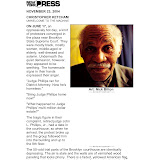
PRINTED WITH PERMISSION FROM NEW YORK PRESS by Christopher Ketcham:

Exactly how corrupt and vindictive is the Brooklyn District Attorney's office? Just ask retired judge John Phillips, if you can find him.

ON JUNE 17, an oppressively hot day, a knot of protestors converged in the plaza near Brooklyn State Supreme Court. They were mostly black, mostly women, middle-aged or elderly, well-dressed and solemn. Underneath the quiet demeanor, however, they appeared to be seething. The homemade signs in their hands expressed their anger.

"Judge Phillips ran for District Attorney. Now he's homeless."
"Bring Judge Phillips home now!"
"What happened to Judge Phillips' multi-million dollar estate?"

The tragic figure in their complaint, retired judge John L. Phillips, Jr., had a date in the courthouse, so when he arrived, the protest broke up and the group followed him into the building and up to the 9th floor.

The 50-odd trial parts of the Brooklyn courthouse are identically depressing. The air is stale and the walls are of varnished wood paneling that looks phony. There is a faded, yellowed American flag, also phony-looking; a putty-hued linoleum floor; and at the back of the room sit four rows of chipped hardwood pews carved with a thousand names, curses, prayers and jags—a palimpsest of boredom and calamity into which Phillips and his entourage settled.

John Phillips had been returning to these halls since early 2001, the year he was planning to run for Brooklyn district attorney. That was also the year he was placed under a guardianship program overseen by a county judge, which wrested from Phillips' legal control an estimated $10 million in real estate holdings, including at least 10 buildings and two movie theaters. Now the 80-year-old was back in the same courtroom, battling to regain his estate.

How Phillips came to this impasse depends on whom you talk to. Phillips' guardians and the judge in the matter claimed he was "mentally incapacitated"; they say he had Alzheimer's and was a bit crazy. But when I met him for the first time that June morning, he appeared normal and fit, if a little slow in his step, a handsome old man in a brown suit, tall and gaunt, with silvering hair and huge gnarled hands like pieces of root.

"These sonsabitches are stealing my buildings," he said.

Enter the defendant, attorney Ray Jones, one of Phillips' guardians, whom Phillips accused of illegally selling off portions of his estate while pocketing the money. Unshaven and looking as if he'd just woken up, Jones wore white shoes with no socks and a cream-colored silk suit that hung loose, giving him the look of a b-movie thug on a Caribbean vacation. Jones was supposed to be accompanied by another lawyer, a man named Alan Drezin.

The judge in the case, the Hon. Michael Pesce, immediately noticed the absence. "Does counsel have any idea where Mr. Drezin might be?" Pesce asked Jones, who shrugged. "Does anyone know where Mr. Drezin is?" Pesce asked the room. The case, it was determined, could not move forward without Drezin, and so it was adjourned for a month—stalled, really, just as it had been for four years, and just as it would be again a month later.

As for Alan Drezin, he was pacing outside the courtroom, and greeted Ray Jones as they together departed.

"These people have been playing so many monkey games," said Emani P. Taylor, Phillips' lawyer at the time.

Indeed, there's good reason to believe the powers that be in Brooklyn want the Phillips case adjourned forever, fearing what it will uncover. Or adjourned, at least, until John L. Phillips dies of heartbreak in a poor house. At the age of 80, it's not an unreasonable expectation.

POLITICS IN BROOKLYN HAS been a machine-run patronage mill as long as anyone can remember. It operates to make money for the Brooklyn Democratic Party and the party's hacks, most of whom, like politicians generally, happen to be lawyers. Few people get elected outside the secret purview of this machine, and nowhere is this more true than in the judiciary, where cronyism has long been the rule. In the 1970s, $50,000 reportedly bought a seat on the bench. The money was expected in cash, delivered in shopping bags. Today it's said the going price is $100,000, funneled through printing contracts for your so-called "campaign." (There is no campaign because the party's picks are rarely opposed.)

So when John Phillips, at the age of 52, ran for office in a 1976 civil court race, it was with amazing fortune that he beat the machine.

The unlikely victory was in part due to Phillips' eccentricities. Born poor on a farm in Ohio, he served in the Army infantry during World War II but never saw combat. After the war, he worked his way through Akron Law School and traveled China and Japan studying the martial arts, eventually developing his own school of combat, something he calls the "Gorilla-Gnat System of Scientific Movements and Defensive Fighting." He taught the style for 15 years in a dojo on Nostrand Avenue.

Naturally, his campaign posters touted him as the "Kung-Fu Judge." On the bench he was known to sweep his robes out, assume the warrior stance and announce that "kung-fu law" was about to be practiced. He dressed well, wore a pencil moustache and bore a charming resemblance to Duke Ellington. He served on the bench with distinction: In 13 years, he was reversed only once in the appellates—a possible Brooklyn record. By his early 50s, he had become a successful landowner as well, with vast property holdings that he used to fund his rebel campaigns.

Still, in 1986 he lost reelection in a machine counterassault. Undaunted, he took back the seat in 1992, only to be forced into retirement by state law three years later, at age 70. In 1997 he attempted to run for the office of Brooklyn district attorney, the most powerful elective seat in the borough, and in doing so he would challenge the two-term incumbent Charles "Joe" Hynes, a tough white-haired Irishman and machine loyalist—but Phillips' nominating petitions were disqualified under New York's tortuous ballot access laws. He spent several years practicing law out of his home in Bedford-Stuyvesant, then as today the centrifuge of African-American politics and activism in Brooklyn. Among his properties was the Slave Theatre on Fulton Street, where he once hosted up-and-comers and radicals like Al Sharpton and Alton Maddox, and painted the walls with murals exhorting his public to "visit the homeland of the African slaves" and learn the "gorilla style" of fighting. Portraits of Bruce Lee and Toussaint L'Ouverture lined the walls above the popcorn stand.

By late 2000, it was understood that Phillips would again attempt to tackle Hynes. He had the backing, the money and the foot soldiers to make a serious run of it.

Then a strange thing happened. Prosecutors under Joe Hynes moved to declare Phillips "mentally incompetent."

MUCH OF THE LEGAL FILE in the John Phillips matter is sealed to the public (why it was sealed has never been adequately explained by the court), but I got my hands on portions. The record shows that in November 2000, investigators with Hynes' office claim to have met with Phillips and concluded he was unfit to direct his finances. Describing the meeting, Joe Hynes told the New York Post, "It was clear [Phillips] was suffering from dementia."

A month later, in December 2000, a former assistant prosecutor from Queens named Frank J. Livoti filed a motion saying that John Phillips, "an alleged incapacitated person," had "requested that [Livoti] be appointed as Guardian" to oversee Phillips' "personal needs and property."

This was news to John Phillips, who claims he made no such request.

When I telephoned Frank Livoti to ask how he came to meet Phillips and get involved in the case, Livoti told me, "I'm not entirely comfortable telling you." (A lawyer close to the case who refused to go on the record later admitted Livoti made the motion specifically at the request of the Brooklyn D.A.'s office, backing Phillips' assertion.)

In New York State, anyone can file a motion to declare a person incompetent. The "alleged incapacitated person" must then defend himself before a judge, proving that he is sane and healthy enough to manage his assets. The county government, if it chooses, can then intervene to appoint a guardian.

The case against Phillips was vetted by an assistant prosecutor in Joe Hynes' senior citizen's fraud unit named Steven Kramer. According to court papers, Kramer alleged that portions of Phillips' vast holdings were being mis-deeded and that illegal mortgages valued at "hundreds of thousands of dollars" had been "fraudulently obtained." In other words, property was being sold off without Phillips' consent. Phillips, the records claim, had fallen victim to a crafty real estate scam, and now the Brooklyn D.A. was kindly stepping in to save him.

Phillips admits that he had "problems" with a former property manager, whom he fired, but says there was nothing of the far-flung fraud the D.A.'s office described. In Frank Livoti's court papers from December 2000, it was claimed that "[c]riminal prosecutions are now pending in Brooklyn with regard to those frauds." Phillips' lawyer, Emani P. Taylor, says that four years later no criminal charges have ever been filed in the matter. Indeed, in a telephone conversation with Steven Kramer that Phillips tape-recorded, Kramer admits that none of Phillips' buildings had in fact been stolen, contradicting his own assertions in the court record.

Kramer visited the old judge several times at his home during the spring of 2001, in one instance entering the house with a pair of detectives who allegedly held Phillips down while Kramer rifled through Phillips' banking and real estate records, eventually boxing them up and removing them to the D.A.'s office. According to that tape-recorded conversation, the records were handed over to a Park Ave. lawyer named Harvey Greenberg, who, as it happened, was Joe Hynes' former campaign treasurer and close friend of 30 years.

Sometime between November and December of 2000, Greenberg was appointed "temporary guardian" of the "mentally incapacitated" Phillips.

Joe Hynes' friend Harvey Greenberg now had control of Phillips' $10 million estate. Though he was guardian for only a few months—soon replaced by the silk-suited Ray Jones, who would allegedly go on to plunder Phillips' properties—Greenberg in February 2001 was effusive to the court about his accomplishment.

"[I]t's wonderful," he told the judge in the case, the Hon. Leonard Scholnick (who, as it happened, was a good friend of Greenberg's), "that all of us have gotten together…calling the world's attention to the plight of Judge Phillips and giving us a potential chance to help him in the future." The following winter, Phillips' heat was cut off, and neighbors found him living in squalor and poor health, wearing an overcoat and hat. As one acquaintance of Phillips' put it, "They wanted him to die." When asked about Phillips' allegations that he is a victim of political persecution, Hynes' spokesman Jerry Schmetterer would only comment that "Judge Phillips was in need of help and we provided it to him."

FRAUD, ABUSE AND CORRUPTION are common among guardianship appointments in every county in the United States. AARP Magazine reports there are at least 600,000 elderly Americans under guardianships, bound in a system "rife with opportunities for financial exploitation, medical neglect, and the wrongful usurping of a competent person's freedom." The keystone witnesses in these usurpations are often court-appointed medical examiners who make cursory, sweeping pronouncements of senility, incompetence, dementia, or, as an Associated Press investigation put it, "of being old and spending money foolishly."

In the case of John Phillips, the court-appointed examiner was downtown Brooklyn medical doctor James Lynch, who on various occasions between 2000 and 2002 diagnosed Phillips with senile dementia. Lynch concluded in August 2002 that "Judge John Phillips continues to suffer from signs and symptoms of cognitive loss" and that he "is unable to advocate for himself or protect himself from harm."

Two months later, Phillips visited a non-court-appointed doctor at the Family Medical Center in Bedford-Stuyvesant. This examiner came to a far rosier diagnosis: Phillips, despite a "mild deficiency in short-term memory," showed "no signs of dementia" and no "evidence of perceptual distortion," scoring 27 out of 30 on the definitive Mini Mental State Examination.

"The evaluation," concluded the examiner, "shows [an] intelligent, coherent, well-articulated male… He has never been a danger to himself or others."

I recently visited the old judge at the now-shuttered Slave Theatre, where Phillips sat with friends at a folding table in the adjoining storefront, discussing the Kafkaesque twists of his case. On the walls were the giant hortatory murals of his heyday. One depicted a dazed-looking black man in overalls and a straw hat, over the bolded caption: "Lost my name, tribal language, my homeland, African wealth! I have nothing!" Another showed a seven-foot-tall hairy gorilla baring its jagged white teeth.

"What do you think of my gorilla?" Phillips asked.

He was less feisty than when I saw him in court in June. His friends say the ordeal of the last four years has weakened his heart; he has more bad days than good. Back in June, he had hoped to nail guardian Ray Jones on allegations of larceny after Jones undersold three of his buildings, valued at $1.5 million, for a mere $425,000 and couldn't account for the proceeds.

But Jones had apparently slipped though the system, though Hynes claimed to have initiated Phillips' guardianship to prevent just such a theft. Meanwhile, Phillips' social security and pension checks, totaling more than $2000 a month, were disappearing into an unknown account, and Phillips was forced to defray the legal expenses of Frank Livoti and his Long Island law firm, which helped prepare the briefs in the ongoing court battle. (If the accused in a guardianship case opts to fight a court's decision, it is the accused who must reimburse the accuser's court fees.)

Thus Frank Livoti's firm, Shaw, Licitra, Bohner, Esernio, Schwartz & Pfluger of Garden City, was paid more than $12,000 from John Phillips' estate.

"This thing started politically, but it's not political today," says Phillips.

Now, he says, it's just about greed. As for Hynes, Phillips predicts that the Brooklyn D.A. will have trouble in his reelection bid next year.

"Hynes knocked me out because I was gonna beat him," Phillips tells me. "It wasn't because of my personality or my popularity in the community. It's because people didn't like Hynes. You must understand: The right guy runs against the D.A. and he'll win."

The right guy in 2001, or almost, turned out to be a woman. Civil rights attorney Sandra Roper, who grew up in Bed-Stuy hearing the legend of the "kung-fu judge," ran in John Phillips' stead in the 2001 primary for Brooklyn district attorney. Roper was warned not to proceed with the challenge but did, coming away with 37 percent of the vote.

In June 2003, she was indicted for her daring in the sullen halls of Brooklyn State Supreme Court. Her accuser, Mary Lee Ward, a former client, claimed Roper conned her out of $8000.

Ward first approached Joe Hynes with the allegations in August 2001, one month after Roper announced her candidacy, and Hynes then referred the complaint to the New York State Appellate Division's grievance committee, which handles claims of wrongdoing by lawyers in the New York bar.

Though the grievance committee dismissed the charges as spurious, Joe Hynes, avoiding the appearance of a conflict—this was by no means a political prosecution—referred the case to a special prosecutor in Manhattan. Seasoned observers asked why the matter was in criminal court in the first place, as fee disputes between lawyers and their clients are normally handled in civil chambers.

Still others wondered why the prosecution was mounted at all, since no less an authority than the state grievance committee had already thrown it out. Charged with multiple counts of grand larceny, Roper faces up to 12 years in prison, though her first trial ended in a hung jury earlier this month, with eight jurors voting to acquit.

When I asked old Judge John Phillips about the Roper case, he smiled and said, "Hynes indicts anyone who runs against him."

Meanwhile, Phillips, once a millionaire, is effectively penniless. At this writing, he's been moved out of his offices at the Slave Theatre and sent by one of his guardians to a room at the Bronx VA Medical Center, where the government can put him up for free.

See the New York Press Story to the right: "Part II - Judge Phillips"

Saturday, September 1, 2007

Corruption Targets Retired Judge...(CLICK HERE FOR FULL STORY)

The message is clear. Even retired, ailing New York State Supreme Court Judges are fair game for the savages who use a corrupted system to advance their despicable desires. And the focus here is the Judge’s $10 million….

Christopher Ketcham reports in the June 2007 AARP BULLETIN that once respected New York State Supreme Court Judge John L. Phillips, now a ward of the court, lives out his last days in an assisted living facility while the vultures lurk. But don’t worry, the $10 million is under someone’s watchful eyes, yet those court-appointed guardians forgot to file tax returns. Thankfully, though, one guardian remembered to write herself checks for $187,000.00. And, of course, the judge’s property was “sold” at unpublicized auctions.

We’re living history: just another day in the saga of New York’s crisis in the courts.

All New Yorkers should be quite proud that another example of the extent of the brazen greed and corruption in the New York court system has been written about in a nationally respected publication, the AARP BULLETIN.

The thugs who abuse our system of law for their own gain not only brutalize the living, cannibalize the departed—and their wishes-- but now they circle a dying judge who served society. Here, the thieves wait patiently for the final feast of the latest carrion.

So much for the brethren in black robes protecting each other. No one’s heard a peep from any active or retired judge. (This is how bad it is folks: even the honest judges can’t speak up against disgraceful injustices in the New York State court system— not even when it’s against one of their own.

So, we ask every judge in New York: What do you think about this? What are YOU going to do about? SPEAK UP & DO SOMETHING !

See the disgusting story to the right: “JUDGE JOHN L. PHILLIPS”

Thursday, August 30, 2007

Carvel Files Complaint Against Brooke Astor Judge Scarpino....(CLICK HERE FOR FULL STORY)

In a complaint filed August 28, 2007 with New York State Chief Administrative Judge Ann T. Pfau, the niece of beloved Ice Cream magnate Tom Carvel says Westchester County Surrogate Court Judge Anthony A. Scarpino, Jr., appears to be actively involved in the long-standing pattern of criminal activity against Thomas and Agnes Carvel, their estates and their charities. The "incestuous influence," says Pamela Carvel, includes the recently discovered findings that Judge Scarpino had serious conflicts involving his own personal bank "loans" worth $300,000.00-- "loans" from the sole adverse litigant to Carvel family members, the bank that wrestled control of all the Carvel millions.

Included in the complaint is her discovery on May 8, 2007, that, she says, shows attorney William E. Griffin fraudulently transferred a Carvel estate located in Ardsley, New York worth $10 million to the company of Griffin's law partner's brother for just 2 million. William Griffin-- the alleged president of the Thomas and Agnes Carvel Foundation, and Chairman and major stock controller of the Hudson Valley Bank—is currently the subject of an investigation by the office of New York's Attorney General Andrew Cuomo.

The complaint to Chief Administrative Judge Pfau is 115 pages, and we have only posted certain pages on this forum. Other information—on page 2—has been redacted but will, according to sources, be made public soon. (If any reader desires the full 115 page complaint, which includes the exhibits, send an email request to corruptcourts@gmail.com, and we will send a full copy via pdf format.)

See portions of the "Scarpino Complaint to Judge Pfau" to the right…..more to come on this story…..

Tuesday, August 28, 2007

Patentgate Ethics Scam Hits Holocaust Survivor...(CLICK HERE FOR FULL STORY)

As a young girl, Mrs. Gizella Weisshaus survived the Holocaust, but recently and now 77-years-old, she finds herself on the growing list of victims ensnarled in the Manhattan attorney ethics scandal shaking the New York State Court system....

Background

In July of 2007, it became publicly known that many ethics complaints against attorneys in the Bronx and Manhattan were methodically mishandled-- effectively buried or stalled—due to politically-based connections, favors or back-room deals. The "Patentgate" matter quickly highlighted the need in New York for federal intervention since the alleged theft of dozens of U.S. patents by the inventor's own New York lawyers-- the once respected and politically connected Proskauer Rose law firm-- went largely and substantively unaddressed. The Patentgate ethics complaints were obscured in New York at the very same time the identical issues found The United States Department of Justice widening their own investigation and, additionally, where members of the U.S. Senate and House Judiciary committees called for further probes. The ongoing ethics shake-up resulted in the quickly announced "retirement" of Manhattan's top State ethics Chief Counsel, Thomas J. Cahill, Esq., and whose replacement is expected to be announced soon. (See the related August 24, 2007 story below: "Justice Department Widens "Patentgate" Probe Buried by Ethics Chief Thomas J. Cahill")

Holocaust Survivor meets New York “Ethics”

Mrs. Gizella Weisshaus was the named plaintiff in the 1996 filed historic lawsuit against Swiss banks that, after being designated as a class action proceeding, was settled in 1998 on behalf of thousands of Holocaust survivors for $1.25 billion.

Gizella, however, opted out of that settlement because, she says, certain involved attorneys were more interested in paying themselves millions of dollars even before some of the survivors had received any money. She would also learn, she says, that someone "manufactured" a necessary amended complaint in 2000 by backdating that court document to 1997. And she would also find that in an unrelated estate proceeding where she was the executrix, her own lawyer, Edward D. Fagan, had failed to deposit more than $82,000.00 into an attorney escrow account choosing, instead, to use the money for his own various personal expenses. (Mr. Fagan also represented Mrs. Weisshaus in the subsequent filing against the Swiss banks and from where he ultimately received millions of dollars in legal fees)

The Devil's Advocate

An attorney ethics complaint followed, and in a letter dated May 6, 1998, attorney disciplinary Chief Counsel Thomas J. Cahill's predecessor, Hal R. Lieberman, Esq., wrote to Gizella to advise that since her complaint against attorney Edward Fagan had involved an "ongoing criminal proceeding" his office would await the outcome of that proceeding before concluding their disciplinary investigation. Then-Chief Counsel Lieberman also advised Gizella that his New York State ethic's office had requested a written answer to the complaint from attorney Fagan. Edward Fagan then hired his own lawyer.

Letter to Self

Approximately 9 weeks later, in a July 15, 1998 dated formal answer to the charges against him, attorney Fagan's lawyer submitted a 6-page denial of the various charges made by Mrs. Weisshaus. Astonishingly, attorney Fagan's lawyer, who he had recently engaged, was none other than Hal R. Lieberman who, in a 9-week period of time, had left his position as Chief Counsel of the New York Supreme Court, Appellate Division, First Department Disciplinary Committee to join the law firm Beldock Levin & Hoffman, LLP.

So, essentially, on July 15, 1998 private attorney Hal Lieberman was responding to himself-- to his own May 6, 1998 letter wherein he, as the New York state-employed Ethics Chief Counsel had advised Gizella of the request for a written answer from the attorney she had filed a complaint against, and the same person who was to be Lieberman's client-- Edward Fagan.

More on Mrs. Weisshaus, attorney Edward Fagan's arrest, the pending ethics inquiries in New Jersey against Fagan, and Chief Counsel Thomas J. Cahill's determination of no conflict of interest by the prior chief counsel, Hal Lieberman.... MORE.... LATER THIS WEEK..........

To the right, see the documents marked "Weisshaus Fagan Lieberman"

1. May 6, 1998 dated letter from NY State Attorney Disciplinary Committee Chief Counsel Hal R. Lieberman to Mrs. Gizella Weisshaus RE: Edward Fagan (1 page)

2. July 15, 1998 dated Answer to Complaint from private attorney Hal R. Lieberman to Mrs. Gizella Weisshaus RE: Edward Fagan (6 pages)

Friday, August 24, 2007

Justice Department Widens "Patentgate" Probe Buried by Ethics Chief Thomas J. Cahill...CLICK HERE FOR FULL STORY

In a letter dated July 16, 2007, the U.S. Department of Justice, Office of Professional Responsibility, announced from its Washington, D.C. headquarters that it was expanding its investigation into a bizarrely stalled FBI investigation that involves an almost surreal story of the theft of nearly 30 U.S. Patents, and other intellectual property, worth billions of dollars. The probe reaches some of New York's most prominent politicians and judges, and has already proven to be a stunning embarrassment to the State's ethics watchdog committees. (To the right, see the July 16, 2007 letter "D.O.J. Widens Patentgate Probe")...


Coming Soon: Iviewit's Patentgate –
Part II - Naming the Patentgate Players (New York's Top Politicians and Judges)
Part III – Why a Once-Top Law Firm Thought They'd Get Away with It ($$)
Part IV – The Groundbreaking Iviewit Technology & Patentgate Fraud Proof


Part I

The Fox and the Hen House

It was only recently exposed in July that the underlying "Patentgate" inquiries were effectively buried, or derailed, under the leadership of Manhattan's top State ethics Chief Counsel, Thomas J. Cahill, Esq. Mr. Cahill's "retirement" was then quickly announced after his own ethical failings in the Patentgate matter, along with other ethics complaints that were made, became known.

While no one can exactly figure out how inquiries under Mr. Cahill's charge went so awry, one thing is certain. At the same time the Patentgate probes were being secreted by state officials in New York, the United States Patent and Trademark Office Patent bar increased their own investigation into the same matter implicating the same attorneys. (Note: Mr. Cahill's replacement was recently decided, and an announcement is expected as early as next week by the Appellate Division, First Department Presiding Justice, Jonathan Lippman.)

"Patentgate"

The defrauded company is called "Iviewit" – pronounced, "I-view-it." The company's internet site originally advertised their groundbreaking technology. Now, the opening page of the company website (www.iviewit.tv) displays unsettling photographs of the inventor's family vehicle after it was bombed.

"This is quite serious," says an investigator close to the federal probe. "The charges allege that valuable 'back-bone enabling digital imaging technology'-- MPEG type intellectual property-- was stolen by the inventor's own attorneys, the once-untouchable Manhattan based law firm Proskauer Rose. This is going to get very ugly," he says.

Members of the U.S. Senate and U.S. House Judiciary Committees have known about the Iviewit investigation since about September of 2006, and it is in our nation's capital where the matter quickly earned its moniker "Patentgate." And the story was also globally known in technical, Intellectual Property circles. But the big question remains: how did such an explosive story like Patentgate stay off every mainstream media's radar screen—especially in New York.


"I know how," says a retired federal agent who asked not to be identified. "Phone calls were made—many phone calls. Plain and simple." And while this retired federal agent isn't surprised by the apparent "cover-up," he is alarmed by his own findings after a month-long independent review of all submitted Iviewit papers. "I can't find one discrepancy in the allegations, not one unsubstantiated charge," he says. "For one, you have the highest state courts in New York white-washing this thing with 'unpublished' rulings. And then you have state ethics committees contradicting themselves-- in writing, no less. It's a complete meltdown," he concludes. "The broken system appears to have finally fallen apart."

"Iviewit was been radio-active from day one," says one prosecutor who asked not to be named. "Considering who was involved, you know the phones were ringing off the hook, and with a simple directive: 'don't go near it' (an inquiry)." He believes, however that a serious shake-up is imminent. "The powers that be can't contain this story anymore—it's out, U.S. Senators and Congressman are talking about it. This involves national Commerce issues: attorneys stealing U.S. Patents from their own client, and the illegal failings of a state's ethics agency by its own cover-up, and selective, self-dealing, politically-based inaction. Patentgate appears to have exposed the true, and troubling, underbelly of ethics investigations in New York State. And its not pretty."

Additional Background Information

The original complaint involving Thomas Cahill and the Proskauer Rose law firm has been "pending" since February of 2003. The Cahill Proskauer Complaint is a high priority for the new State Chief Administrative Judge, the Honorable Ann T. Pfau.

The Cahill Proskauer issue became a hot topic in Washington, D.C. in early 2007 at the U.S. House Energy and Commerce Committee, the U.S. House Judiciary Committee and the U.S. Department of Commerce (The United States Patent and Trademark Office). And it has specifically caught the attention of U.S. Senator Dianne Feinstein, and U.S. House Representatives John D. Dingell and Nita Lowey.

The Cahill Proskauer Scandal involves many allegations: the alleged theft by Proskauer of numerous U.S. Patents from their own client; claimed losses over 10 years on a trillion dollar technology pool that has affected all forms of digital imaging and video; and the March, 2005 bombing in Boynton Beach, Florida of the inventor-client-complainant's family mini-van.

It is alleged that Mr. Cahill masterminded the scheme to indefinitely delay complaints against Proskauer Rose, himself, and former New York State Bar Association President and Proskauer partner Steven C. Krane, Proskauer Partner Kenneth Rubenstein, chief counsel for MPEGLA, and attorney Raymond Joao of Yonkers. It is also alleged that attorney Steven C. Krane initially interceded, with Mr. Cahill's knowledge and consent, in handling disciplinary complaints involving himself at the same time he was associated with the 1st Department in Manhattan.

Attorney Krane's conflicts were exposed when officials from the Iviewit company contacted Katherine O'Hagan Wolfe, who contradicted Cahill's statements and Krane's written denial of his 1st Dept roles. Ms. O'Hagan Wolfe advised that she was, in fact, on a Committee at the 1st Dept with both Cahill and Krane, and that they even had a meeting that same night.

The various Cahill Proskauer issues bounced around under the public radar screen at the Court of Appeals in Albany and were ultimately transferred from the 1st Department to the 2nd Department in Brooklyn. This was done after 5 justices of the 1st Dept ruled unanimously to investigate Krane, Rubenstein and Joao for conflict of interest and the appearance of impropriety after their review of the 1st Department complaint.

The Cahill inquiry is apparently "still pending" under attorney Martin R. Gold who, insiders say, was directed to "sit on it…forever."

Earlier this year, FBI headquarters in Washington, D.C. assigned additional agents to the Public Integrity Corruption squad at 26 Federal Plaza in Manhattan, and where agents have been actively conducting interviews.

Coming Soon: Iviewit's Patentgate – Part II

Blog Archive

See Video of Senator John L. Sampson's 1st Hearing on Court 'Ethics' Corruption

The first hearing, held in Albany on June 8, 2009 hearing is on two videos:


               Video of 1st Hearing on Court 'Ethics' Corruption
               The June 8, 2009 hearing is on two videos:
         
               CLICK HERE TO SEE Part 1
               CLICK HERE TO SEE Part 2
Add to Technorati Favorites