MLK said: "Injustice Anywhere is a Threat to Justice Everywhere"

End Corruption in the Courts!

Court employee, judge or citizen - Report Corruption in any Court Today !! As of June 15, 2016, we've received over 142,500 tips...KEEP THEM COMING !! Email: CorruptCourts@gmail.com

Wednesday, February 11, 2009

Voting Eyes Focused on State Judiciary Members

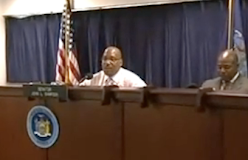
Statewide voters are focused on today's Senate Judiciary hearing where a sham vote to confirm nominee Jonathan Lippman as New York's next Chief Judge. We urge each and every Senator to do the right thing and table any vote.  

Each and every Senator, and the committee's counsel Tim Spotts, knows that Governor Paterson and Attorney General Cuomo have publicly slammed the process utilized to get to today's session.  Senate Judiciary Committee Chairman John Sampson has himself called the nomination process "a hijacking."  Importantly, Senators Diaz and Sampson have recently, and rightly, pointed to the dismissal percentage of minority names on the short nomination list from which Governor Paterson had to choose. 

Notably, each and every member is aware: (a) of the corruption in and about the Commission on Judicial Conduct- the entity relied upon, in part, to "clear" the names on the nomination list; and (b) the "whitewashing" of serious matters, including the violation of federal election laws.

We are hopeful that each and every member of the New York State Senate Judiciary Committee will abstain from voting today.  If they do not, or they vote in the affirmative, we believe they should further answer to the public before an appropriate panel hearing their sworn testimony.  And we promise: they will, indeed, be testifying. We are also comforted by the intentions of a "concerned citizen" who has pledged the legal limit, or  $5,000.00, per Judiciary Committee member to bring the issue before each committee member's district.

Senators, please: VOTE YOUR CONSCIENCE OR ABSTAIN!

List of Names on NYS Judiciary Committee

Senator John L. Sampson, Chairman
Timothy Spotts, Esq., Committee Counsel

Committee Members:
Senator George Onorato
Senator Eric Schneiderman
Senator Ruth Hassell-Thompson
Senator Ruben Diaz
Senator Jeff Klein
Senator Eric Adams
Senator Pedro Espada, Jr.
Senator Neil D. Breslin
Senator Martin Malave Dilan
Senator Diane J. Savino
Senator Bill Perkins
Senator George D. Maziarz
Senator John A. DeFrancisco
Senator Dale Volker
Senator Stephen M. Saland
Senator Kenneth P. LaValle
Senator John J. Bonacic
Senator George H. Winner, Jr.
Senator Michael F. Nozzolio
Senator Andrew J. Lanza
Senator Michael Ranzenhofer

Associated Press: NY Senate to Consider Lippman Nomination

NY Senate to consider Lippman nomination
The Associated Press - February 11, 2009 

ALBANY -- The state Senate is scheduled to consider the nomination of a longtime administrative judge to head New York's court system and preside at the Court of Appeals. The Senate Judiciary Committee has scheduled a confirmation hearing Wednesday for Justice Jonathan Lippman, who was nominated by Gov. David Paterson. Lippman, a midlevel appeals court judge, is the former chief administrative judge of the state's sprawling court system who worked for a decade with Chief Judge Judith Kaye on court reforms. Kaye retired Dec. 31. Paterson and several lawmakers criticized the Commission on Judicial Nomination for producing its short list of potential nominees without recommending any women.

Tuesday, February 10, 2009

Disembowelment Of Justice On Schedule

Lippman set to become chief judge
The Journal News by Joseph Spector, Albany Bureau - February 10, 2009

Jonathan Lippman is expected to be confirmed tomorrow by the state Senate to serve as chief judge of the state's top court. Lippman, 63, of Rye Brook, Westchester County, was nominated Jan. 13 by Gov. David Paterson as chief judge of the Court of Appeals to replace retired Chief Judge Judith Kaye. Lippman's confirmation has been slowed as the Democratic-led Senate held hearings on the judicial selection process, largely because the list of finalists picked by a committee last year lacked diversity. Senate Judiciary Committee Chairman John Sampson, D-Brooklyn, said he's ready to move Lippman's confirmation to the Senate floor tomorrow after Lippman had extensive meetings with Senate leaders over issues regarding judicial pay raises, diversity in the court system and boosting morale among judges. "We are comfortable now to move his confirmation forward," Sampson said. Lippman will face a confirmation hearing in the morning and then a vote is expected by the full Senate later in the day. Lippman served as Kaye's chief administrative judge from 1996 to 2007. Since then, he's been the presiding justice for the First Department of the Appellate Division.

The Village Voice today wrote extensively about Lippman's close friendship with Assembly Speaker Sheldon Silver, D-Manhattan, and how their relationship helped Lippman's career, including getting the judicial nomination from Paterson. Paterson said today that he has no qualms with picking Lippman, even though Paterson has also been critical of the selection process. He said waiting on a judicial pick until a new slate of candidates was brought forward would not have been productive. "I felt that that was going to be extending the process, and it would have in some respects been shirking the responsibility that the governor has to pick someone," he said. "I got the candidate I think I probably would have chosen anyway after I interviewed all the candidates." JSPECTOR@Gannett.com

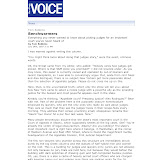
Village Voice: Justice is Blindsided

Wayne Barrett: How Shelly Silver Made His Pal Chief Judge
The Village Voice, Posted by Wayne Barrett at 10:34 AM, February 10, 2009 - www.VillageVoice.com

This week's Village Voice doesn't hit streets until tomorrow morning, but for our Runnin' Scared readers, we're offering tomorrow's cover story a day early. This one should rock Albany: our Wayne Barrett details state assembly speaker Sheldon Speaker's step-by-step scheme to boost his old LES pal Jonathan Lippman to the state's highest judicial post, an appointment which is scheduled to be confirmed later this week. Read it and rage. --[Village Voice] Ed.

Justice is Blindsided

Shelly Silver games Governor Paterson to get his childhood pal the state's top courts job By Wayne Barrett - February 11, 2009

Jonathan Lippman and Sheldon Silver grew up together on the Lower East Side in the 1950s, living next door in the insular Grand Street projects and sitting near each other's family in the neighborhood's Orthodox shul. After both graduated from law school in 1968 and drifted into low-level courthouse gigs in Manhattan in their early careers, one went on to become the longest-serving Democratic legislative leader in modern New York history, master of an unprecedented 107 to 43 majority in the State Assembly. The other remained largely unknown, except inside the state's vast court system. Last month, the two old friends reunited in the Red Room in the State Capitol to celebrate their emergence as the most powerful duo in state government.  Below the political radar, the black-hatted, still religious, and gravel-toned Silver, who is celebrating his 65th birthday and 15th year as speaker this month, has been quietly boosting the more secular Lippman for years. Last month, he finally pushed Lippman from the series of back-office management posts where he had labored for years to the job of top gavel in the State Judiciary.

Appointed Chief Judge of the Court of Appeals in mid-January by the accidental governor, David Paterson, whose troubled tenure continues to erode his own ranking among the state's power elite, Lippman is awaiting virtually certain confirmation in the next few days from the new and narrow Senate Democratic majority. He will take over a court system that spends $2.3 billion a year, employs 21,000, and is likely to deal with issues like gay marriage, the housing foreclosure crisis, Wall Street criminality, and the still anti-city school aid formula during the six years he will reign until his mandatory retirement at 70.  A year younger than his boyhood friend, Lippman awaits State Senate confirmation before becoming the first chief judge since 1898 to lead the state's highest court without ever serving as one of the court's nine members. When Silver gave a short speech at Paterson's announcement of the appointment, Lippman quipped: "Two kids from the Lower East Side--not too shabby."  In fact, the story of how Lippman reached this pinnacle has its shabby side. He exudes an above-politics reform aura, but he did not climb to the top of the state's judiciary without making some stops in the dark along the way. His ally, Silver, helped clear that path to power, working a system whose anti-democratic ways have been rebuked by two federal courts.

Lippman has been a hardworking ambassador and manager of the courts for decades, visiting almost all of the system's 343 locations and acquainting himself with virtually every one of its 1,300 judges. But he has also been its consummate political player, seemingly more interested in influence than law.  Jonathan Lippman will soon preside over the most complicated and significant cases in New York, even though he's never practiced as a private attorney. His legal career began in a judge's chambers as a law secretary and, when he turns 70 in six years, it will end there. In fact, he has spent so much of his career as a bureaucrat that he's written only 16 signed judicial opinions, 14 of them since Paterson's predecessor, Eliot Spitzer, made him the presiding justice of Manhattan's Appellate Division in 2007. With that scant a record as a jurist, it's impossible to know what his judicial philosophy is, and even his 24-year tenure in three appointive administrative posts offers no consistent thread about his judicial values or independence.
On one hand, he described himself in a 2006 speech as "unencumbered by parochial or partisan or political agendas," and is so widely considered a champion of court reform that New York's Bar Association found him "exceptionally well qualified" for chief judge, ahead of the "well-qualified" ratings it gave long-standing Appeals judges. The Times endorsed him, and he was given the Rehnquist Award for Judicial Excellence in November by U.S. Supreme Court Chief Judge John Roberts.  On the other hand, he is such a skilled and connected insider that when he ran for the first and only time in 2005, he was the only candidate in the state running for Supreme Court who couldn't be voted against. Lippman was on all five ballot lines: Democratic, Republican, Working Families, Conservative, and Independent. In fact, he had refused to allow his name to be put in the nomination unless every party backed him for the seat, which is the top trial court of the unified court system. (In New York, the "Supreme" Court is not actually supreme: The Court of Appeals is at the top of the judicial pile, above the Appellate Division and the Supreme Court, where major civil and criminal cases are heard.)

David Alpert, the onetime Democratic leader in Lippman's home county of Westchester, says the first time he ever heard of the man was when he got a call from a Republican, State Senator Nick Spano. Spano told him that he and a Westchester Democratic assemblyman, Richard Brodsky, had passed an amendment creating a new Supreme Court seat in Westchester, and Spano wanted Lippman "to be cross-endorsed for it." That meant Spano wanted the Democrats, Republicans, and other minor parties to all vote at their judicial nominating conventions to put Lippman's name on their ballot lines for this new, vacant seat, in exchange for which the Republicans would demand that the Democrats endorse at least one of their candidates.  "I didn't even know [Lippman] lived in Westchester," says Alpert, who was accustomed to promoting attorneys and county judges who had done their time for the party to Supreme Court slots. "I had breakfast with him, and the first thing he told me was that he and Shelly were raised together. He said he wanted to be cross-endorsed and that he wanted to go on to be an appellate judge." Alpert was just one of a legion of county leaders Lippman had to deal with over the years as he sought a Supreme Court seat--five counties with five parties occupy the 9th Judicial District--but Alpert says "we tried twice" (in 2000 and 2002, he believes) to deliver a multi-party cross-endorsement deal and couldn't.
Joseph Ruggiero, the Democratic leader from Dutchess County in 2002, said that on the day of the judicial convention when Democrats picked their Supreme Court nominees, Silver placed a conference call to a group of party leaders gathered at the Westchester headquarters and asked them to support Lippman. "We all said yes," recalled Ruggiero. How could they say no? With a Republican governor and Senate majority leader at the time, Silver was New York's top Democrat, and Denny Farrell, Silver's right hand in the assembly, was the state party chair. When the current Westchester Democratic leader, Reggie LaFayette, finally did deliver a deal for Lippman in 2005, he explained Lippman's unusual candidacy--clearly more top-down than the typical grassroots designation--to his executive committee this way: "I told them I don't create judge seats. It was created higher up than me, by the two houses of the legislature. And someone yelled out, 'You mean Assemblyman Silver,' and I said, 'Well, he had to vote for it.' " But the bigger problem for LaFayette was cajoling his fellow leaders into giving up a seat in a cross-endorsement deal and backing a Republican. Cross-endorsements are easy when the two parties are competitive and no one knows who will win, but Democrats had won five of six judgeships in 2004, without any deals, and felt no need to give the GOP anything.

The executive committee understood LaFayette's argument and signed on, but a few weeks later, the price of the Lippman package deal got much steeper. The leaders could live with cross-endorsing the initial Republican candidate, a respected county judge named Stewart Rosenwasser. But just days before the September judicial conventions, the Republicans replaced Rosenwasser with a candidate that horrified many Democrats: Joseph Alessandro, also a county judge.  Alessandro had been found "not qualified" by the Bar Association and was dogged by tawdry tax and lawsuit charges. The New York State Commission on Judicial Conduct is still investigating those charges, and Alessandro, who did become a Supreme Court judge, is now facing possible severe sanctions. Yet it was Lippman's demands that would put Alessandro on the bench.

Lippman wanted to be endorsed by all five parties, and that insistence created an opening for the county's most voracious party boss, Dr. Giulio Cavallo, who controlled the Independence Party. He wanted Alessandro, not Rosenwasser, to become Lippman's opposite number in the multi-party swap and get the cross-endorsements. LaFayette and the Republican leader, RoseMarie Panio, eventually decided to back Alessandro, but fights against the deal broke out on the floors of both of these ordinarily scripted and staid conventions. Challengers ran against Alessandro and, had he lost at either convention, Lippman's precious deal--and ultimately his route to the Court of Appeals--would have died. The inclusion of Alessandro so offended Working Families party chair Pat Welsh that he endorsed Lippman but refused to back Alessandro, telling the Voice that the deal was "unconscionable." (Lippman ran on five ballot lines; Alessandro, apparently unconcerned about the Working Families Party, four). A disgusted Rosenwasser wound up quitting the bench altogether.

At Lippman's January 2006 induction ceremony for Supreme Court in White Plains, Silver regaled the audience of bigwigs--at a special celebration separated from the swearing-in of the other new judges--with "our gang" stories from their first meeting at the age of six. Saying, "We have shared a common path," Silver joined in celebrating "with my colleagues in the legislature," many of whom were there, "who I say had a good hand in making today happen." While Lippman is now said to be downplaying Silver's role in his rise, he called him "family" in his speech and praised him for "marshaling the troops, and, boy, can he marshal the troops." Lippman called himself "basically an apolitical person," and then thanked 16 party leaders, referring to each of the five from Westchester, including Cavallo, as "my leader," singling out Spano, who, he said, "vouched for me on the Republican side." Judge Gail Prudenti, the presiding justice in the Appellate Division covering Westchester, spoke on behalf of what she called "the many, many, many campaign advisers to the seemingly never-ending 'Lippman for Justice' campaigns."

The unexamined side of the Lippman saga is revealed in these salty Westchester tales, where the judge who pretends he is above self-serving politics played it as skillfully as his sidekick from the neighborhood who does it for a living. Lippman created the state's Judicial Campaign Ethics Center to guide candidates for elected judgeships, but he told Alpert, and many others, that he wanted the seat handed to him without the inconvenience of an election because it would be unseemly for the chief administrative judge to solicit contributions.  Yet he had no problem brandishing the calling card of Silver's friendship, or dialing up county leaders and other powerbrokers, some of whom, including Senate Assistant Majority Leader and onetime GOP boss Spano, were receiving lucrative patronage assignments from his courts. He even had no hesitation about going forward with the deal though he knew it would result in the elevation of an already tarnished judge, Alessandro, who may soon be repudiated by the Conduct Commission.

In fact, just as he began his efforts to secure a Supreme Court slot in 2000, he opened an elaborate office for himself in state space, across the street from the White Plains courthouse, and began spending a lot of time there, deeply involving himself in the judicial politics of that district. Shortly before that, he abruptly asked the district's administrative judge, Angelo Ingrassia, a Republican from a small county in the district, to step down a year before his mandatory retirement age. He even gave Ingrassia a car and chauffeur for his final year to induce him to do it.  He then split Ingrassia's job into two positions and gave both to Spano allies--one a Republican and the other an influential Democrat from Westchester, the populous center of the district. The new administrative judge, Frank Nicolai, denied in a Voice interview that he "campaigned for Lippman" in the long-running effort to secure a Supreme Court seat, as some sources contend. That would be a violation of judicial ethics, which only permit judges to campaign for themselves. "If someone asked," Nicolai said, "I'd say he'd be an outstanding judge." Asked if he might have initiated some of those conversations, Nicolai added: "I might have."

Nicolai presided at Lippman's 2006 swearing-in, where Lippman, Silver, and his other prestigious friends were so self-congratulatory it was almost as if he had actually won an election--when all he'd really done was collect chits and lean on the party bosses who'd installed him. With all the editorial hubbub about the judicial nominating process in New York, spurred by the federal court decisions that the process was an unconstitutional infringement of the franchise, Lippman the reformer had inadvertently established by his own experience how poisonously anti-democratic it was.  Yet, at his induction, he called his campaign "a unique experience," and even praised the mix of elective and appointive positions in New York's judicial system. Indeed, he has proven, from his Supreme Court fix to his culminating appointment as chief judge, that he is the master of both processes, each with their own brand of incestuous networking. If that is merit, then Lippman is what many of his supporters see him as, the embodiment of the merit system in our courts.

Lippman wanted a Supreme Court spot to make himself legally eligible for appointment to a second-tier appellate post, which he saw as a vital stepping-stone to the top-tier Court of Appeals. He had to do it then because his other sponsor, Chief Judge Judith Kaye, would have to step down when she turned 70 in 2008, and even a brief stint on the appellate bench would give him an opportunity to build a record as a scholarly jurist, though it would be quite a lean one in comparison with competitors who'd actually written opinions for lifetimes.  But his timely and controversial "election" was hardly the only awkwardly abetted step on his unprecedented career ascension. Prior to it, Lippman had only been a Court of Claims judge--an appointment bestowed by Governor George Pataki a few months into his first year in office (1995), when the Democrat Lippman managed to secure a spot despite the hunger of Republicans eager to grab judicial patronage slots after 12 years of Democratic rule.

At the time, Lippman was the top deputy in the Office of Court Administration, and all he had going for him were his Silver ties; an assiduously cultivated friendship with GOP Senate Judiciary Chair Jim Lack; and the backing of Judge Kaye, who argued that Lippman should hold a judicial title since she intended to install him, as she did a few months later, as the chief administrative judge.  Spano, who had just become the Republican county leader in Westchester in 1995, met Lippman in the few days between Pataki's appointment and the Senate's confirmation. Since Lippman was technically a candidate from Spano's home turf, he had to sign off and did, endorsing Lippman on the Senate floor and launching what he concedes became a series of efforts on Lippman's behalf that he would make over the coming years. Three of the pivotal party brass--Westchester Conservative Gail Burns, Rockland County Republican Vince Reda, and Cavallo--were on Spano-engineered Senate payrolls when Lippman collected his cross-endorsements in 2005, and the senator concedes that he spoke to them, as well as to Westchester Republican RoseMarie Panio, a close ally. "I'm sure I expressed support for Judge Lippman," Spano tells the Voice. "Anytime his name was up, I was an enthusiastic supporter."

In fact, Spano, who was widely viewed as the Senate Republican closest to Silver, confirmed his call to Alpert and acknowledged that he'd pushed midnight legislation through in 2005 and earlier, aided by Brodsky, that created new Supreme Court seats in the judicial district covering Westchester. The bill in 2005 was introduced by Pataki on June 24 and passed by both houses that day. While Spano said he didn't think "it would be fair to say" the seats were "created for anyone," he concedes that "Lippman's name came up" when the bills were adopted. Lippman needed more than one bill because the cross-endorsement deals with the Republicans fell apart, for reasons having nothing to do with him (once the Republicans demanded four Republican cross-endorsements for Lippman). He even went so far as to be nominated by the Democrats in 2002, only to file a formal declination when the deal with the GOP broke down.

A few months after Spano helped engineer Lippman's 2005 cross-endorsement, his brother, Mike Spano, an assemblyman mired in the hopelessly outmanned Republican minority, quit the assembly and joined a premier Albany lobbying firm run by Silver's former chief of staff, Pat Lynch, who is perceived to be the lobbyist closest to the speaker. When Nick Spano was defeated for the Senate in 2006, he formed his own lobbying company that Lynch invested in and allowed him to operate until this month out of her Albany suite. Mike Spano eventually went back to the Assembly, but he later became a Democrat at a press conference attended by Silver. Nick Spano, who reported half a million dollars in lobbying fees in 2007, denies vociferously that his aggressive support for Lippman has anything to do with his current business. But his ties to Lynch, and Lynch's hiring of his brother (who was hardly an influential Albany player), are a measure of his alliance with Silver, who Nick Spano says he "might have talked to" about Lippman's candidacy over the years "in social settings."

All the while that Spano was aiding Lippman's candidacy, he was reaping at least $79,739 in fees as a "court evaluator," a person paid to measure the mental competency of someone named in a legal petition. Though Spano isn't a lawyer, he has received 31 of these assignments and four other referee assignments. OCA regulations require the disclosure of these fees, but Spano's fees in 15 cases aren't listed on the office's printout. While Lippman's OCA had nothing to do with choosing evaluators (individual judges do that), it did collect applications for appointments; approved evaluators, like Spano, for the list; and set the qualifications for appointment, which appear to permit just about any professional to sign up.  Evaluators look into the eyes of the subjects of these court petitions, many of whom are elderly and in nursing homes, and decide whether they should retain control of property and other assets, the value of which they also consider. Spano sponsored the law that created this position, and he and other pols in Westchester, including then Senator Guy Velella, wasted no time collecting assignments. Velella, who has since been convicted on unrelated charges, was another social friend of Lippman's, and dined with him and Senator Lack and their wives at Rao's, the famously exclusive restaurant in East Harlem. Even one of the restaurant owners collected 19 appointments as an evaluator.

Lack, however, never dipped into the evaluator till, but he did collect 66 court appointments as a guardian or referee while chairing the Senate Judiciary, 26 of which were from Judge Prudenti, who spoke about her adviser role in Lippman's never-ending campaign at the 2006 induction. A Court of Claims judge himself by then, Lack was also present at the swearing-in and was saluted by Lippman, though he'd left the Senate after chasing a woman to her home in a road-rage dispute and ducking under the garage door when she tried to hide from him. "Do I think it's a terrible thing that people involved in public office receive this?" Lippman once told Newsday, referring to judicial patronage. "No, I don't."  There's no indication that Lippman had anything to do with directly managing this grab bag of goodies--with evaluators often earning $3,000 for a couple hours of work. But if Lippman was so concerned about the appearances of being political that he effectively exempted himself from the requirement that he actually compete in the electoral arena, he might have been a bit more careful about the appearances of his alliances with the beneficiaries of this dubious bonanza.

The day after Lippman became a Supreme Court Judge, in 2006, he asked Judges Kaye and Prudenti to name him to the Appellate Term, a job he would perform in addition to the administrative post he retained. This assignment--which allowed him to hear appeals of some lower court decisions--was his only way of acquiring appeal experience without being formally elevated by the governor to the full Appellate Division.  When a vacancy developed in the Manhattan Appellate Division and Spitzer selected Lippman as the county's presiding judge, howls were heard because two of the most respected sitting judges on that Appellate Division were bypassed by the screening panel of lawyers that vets judicial candidates, narrowing the governor's choice.

The same thing happened in December, when the screening panel for chief judge excluded two sitting Court of Appeals judges, as well as all women and Latino candidates--giving Paterson an invitation he couldn't figure out how to refuse. The panel included four Kaye appointees and one from Silver. Panel member Leo Milonas was so close to Lippman he spoke at the induction. Lippman saluted Milonas then as "truly my friend for life," calling their friendship, which began when Lippman worked for him at OCA, "an unforgettable relationship that, to my great benefit, continues today in every way."  Reminded of that by the Voice, Milonas saw it as no reason to have recused himself from anointing Lippman, noting that he was "more qualified" to help pick a chief judge "because I know people." The panel's chair, John O'Mara, a Pataki appointee, sat with Lippman on the court's Capital Construction Board for years.  An angry Paterson asked Attorney General Andrew Cuomo to investigate the panel's exclusionary list of seven nominees, but he never released Cuomo's report or recommendations. Instead, he began openly associating the chief judge selection with the other grand decision that faced him--the choice of a new senator to succeed Hillary Clinton--sending the signal that he had to pick a woman for the Senate since the panel's list barred him from picking one for the court.

When Silver reversed course and supported Caroline Kennedy, insiders suspected it was all about his love for Lippman. At that point, the governor had also just about convinced everyone that he wanted Kennedy, and the assumption was that Silver got the message that if he wanted Lippman, he'd better sing "Auld Lang Syne" to his Kennedy animosity. Paterson was asked about this connection at the Lippman announcement and denied it, adding that he "actually did not know the extent" of Lippman's "relationship" with Silver until he called the speaker to tell him about the appointment--which would make the governor the only high-ranking New York official blind to it.  Ironically, of course, Paterson deserted Kennedy, and even claimed, improbably, that he never intended to pick her, though he revealed how important he thought Silver's opinion was about his eventual choice, Kirsten Gillibrand (another woman, to balance Lippman), when he said at her announcement that he moved it up to Friday from Saturday so the Sabbath-observing Silver could attend. It would be par for the course in Paterson's stumbling regime that he would agree to Silver's choice for chief judge in return for Silver's support of Kennedy, and then not get her, only to be stuck with Silver's pal for judge.

Whatever the deal, Paterson appeared boxed in when he announced that he would choose from the screening panel's list for chief judge. But there is one school of thought, citing interpretations from the OCA, that suggests that Paterson could simply have chosen to do nothing when the January 15 appointment deadline arrived. These analysts argue that Paterson could have named no one until later this year, when panel chair O'Mara steps down. That would have meant that Carmen Ciparick, a woman and a Hispanic who has been on the Court of Appeals for 15 years, could have continued serving as the acting chief judge, a position the other seven judges voted to give her when Kaye retired in January. The press office at the court says Ciparick is the chief judge "as long as the seat remains vacant." If Paterson had simply done nothing, he could have eventually asked the new panel for a new list, and Ciparick, who applied and was rejected by O'Mara's very politicized panel, might actually have gotten a chance to compete for the job.  The same is true should the Senate take no action now. In fact, several Democratic state senators have been making a fuss for weeks about the lack of Latino representation in positions of power--at any level of city or state government. It is an issue that threatened the Democratic takeover of the Senate majority at the same time that Paterson was deciding, unknown to anyone, to displace a sitting Latina chief judge he could have allowed to remain, and perhaps even wind up appointing. His simultaneous selection of the anti-immigrant Gillibrand for the Senate seat compounded Paterson's trouble with Hispanics.

New York's first black governor preferred the comfort of Silver and Kaye and Lippman and the old-line judicial establishment. Lippman had even been careful enough to establish a personal rapport with the governor when Paterson was the Senate minority leader, meeting with him on OCA issues. Unelected himself and unsure of the extraordinary powers of his office, Paterson seems to shrink in Silver's company, now blaming the millionaire's tax on him as if the speaker sets the budget agenda.  The graying gang from Grand Street rolled the neophyte governor from Harlem, and will soon double their choke hold on state government, a triumph of loyalty and intrigue, which, in old New York, adds up to just another measure of merit.

Research assistance by Dene-Hern Chen, Jana Kasperkevic, Sudip P. Mukherjee, and Jesus Ron

Village Voice Urged to Immediately Post Corruption Story

Top executives at the New York Village Voice have been formally asked to immediately post on their website an article now scheduled to be released in print on Wednesday, February 11, 2009. The story, by noted Village Voice reporter Wayne Barrett, had been in the works for about a month, and it exposes widespread corruption involving the highest levels of New York State's Court system. Mr. Barrett's story reportedly raises serious issues, and that are currently under federal review, involving pending chief judge nominee Jonathan Lippman.

The concern is that once it was widely known that Barrett's Corruption Article would appear in this week's February 11th print edition of the Village Voice, politicians close to Shelton Silver instructed state Judiciary Committee Chairman John L. Sampson to immediately confirm the nomination by Governor Paterson of Jonathan Lippman for New York's next Chief Judge. Insiders say that New York Senator John Sampson initially balked at ramming the chief judge confirmation before his Senate Judiciary Committee without full disclosure. However, it was learned that Shelton Silver advised personal associates over the weekend that the chief judge confirmation hearing was "all set" and that it would be "fast-tracked" the morning of Wednesday, February 11, 2009- the same day Barrett's Corruption story was to be available to the public.  

Widespread Corruption has been alleged at the state's Judicial Nomination Commission, the Commission on Judicial Conduct and the various statewide attorney grievance committees- and those charges are the focus of various federal committee and prosecutorial reviews.

The Judicial Nomination Commission has been publicly slammed recently by New York's Governor Paterson and Attorney General Andrew Cuomo for the "process" utilized in forming the list of names for NY's Chief Judge from which a choice had to be picked.

If you believe that Wayne Barrett's Village Voice article exposing Corruption in and about New York's Court system should be immediately posted on the paper's website, for full and immediate distribution to all media and New York State lawmakers, contact the Village Voice:

gberry@villagevoice.com      (Glenn Berry, Circulation Department)
cpettit@villagevoice.com      (Christina Pettit, Marketing)
Village Voice Main Telephone number: 212-475-3300

Court: Judge's Threats to Public Servants are Criminal

Ex-Judge's Law License Suspended for Threatening Cops During DWI Arrest
The New Jersey Law Journal by Charles Toutant - February 9, 2009

The New Jersey Supreme Court has suspended from law practice a former municipal court judge convicted of making threats to officers during a drunken-driving arrest. Though the Disciplinary Review Board had recommended only a reprimand for George R. Korpita, of Dover, finding his actions stemmed from his drunken state, not dishonesty, the court said a three-month suspension was the appropriate quantum of discipline. His threats of harm to public servants constituted a criminal act that reflects adversely on a his honesty, trustworthiness or fitness as a lawyer under Rule of Professional Conduct 8.4(c), the court said in an order issued Feb. 2.

Korpita, who had been a sitting judge in Rockaway Borough, Dover and Victory Gardens, was arrested in Roxbury, N.J., on Nov. 6, 2007, after a passing motorist called police to report a man passed out at the wheel of a car at a traffic signal on Route 46. Patrolman Jonathan Edmunds, as he arrived at the scene, observed Korpita's car drift slowly from the right to the left lane. When the officer put on his overhead lights, Korpita veered into the right lane, turned onto a side road and pulled into a driveway. Edmunds approached the car and asked for a driver's license. Korpita handed him a state judiciary identification card and said, "I'm a judge." When the officer again asked for the license, Korpita said, "I'm OK, bro, I'm OK." Edmunds took Korpita to the police station and said later, in a letter to Morris County Assignment Judge B. Theodore Bozonelis, that Korpita made "statements that caused [him] great concern as a police officer."

Korpita told Edmunds he was a supporter of law enforcement and "when the cops beat the shit out of a guy, I do the right thing ... . I'll never take care of cops again. After tonight, I'm done," according to Edmunds' letter. Korpita then said he had cases that could have gone either way and he had always decided in favor of the police. But, he added, "never again, I'm going to stick it up their asses. Get the Vaseline out and bend over." When another officer, Sgt. Kevin Carroll, asked Korpita whether that statement was a threat, Korpita said no, and then asked whether he could be charged with reckless driving instead of drunken driving, the letter continued.

Korpita resigned his municipal judge posts shortly after he was arrested, and on Dec. 28, 2007, he pleaded guilty to N.J.S.A. 2C:27-3A(3), which makes it a crime to threaten a public servant. He admitted saying to the police officers that he would take some adverse action against them in the future, if the arrest process were to continue. Judge Salem Vincent Ahto sentenced Korpita to three years' probation and 100 days community service instead of the two-year prison term the statute prescribed. Morris County Prosecutor Robert Bianchi had told Ahto that the mandatory incarceration was aimed at cracking down on corruption, which he said was not present in Korpita's case. However, Korpita was banned for life from holding public employment. He also pleaded guilty to drunken driving and had his license suspended for one year.

During proceedings at the DRB, Korpita said he was rehabilitated from his alcohol problem, had attended more than 200 Alcoholics Anonymous meetings and had been sober for 200 days. The DRB concluded last Dec. 4 that Korpita's conduct "was not the result of dishonesty or a flaw in his character, but the product of severe intoxication." The panel said that Korpita "paid a high price for his offenses. He lost his position as a judge in three municipalities, reportedly his principal source of income, and is barred from ever holding public employment. In view of the foregoing, we believe that a censure sufficiently addresses the extent of respondent's conduct and, at the same time, preserves the public's confidence in the disciplinary system and the judiciary as a whole," the DRB said.

Korpita did not dispute the Supreme Court's decision to suspend him, says Blair Zwillman, who represented him at the DRB level. Zwillman says the court likely gave Korpita a stiffer penalty because it did not want him to get off free after committing a crime. "I think the penalties he paid are enough. He's a lifetime felon," Zwillman said. The suspension is only the latest setback for Korpita, who practices with his father at Dover's Korpita & Korpita. On May 4, 2007, he had a confrontation with Warren Hartzman at a restaurant in Rockaway Borough. When Hartzman joined a woman friend outside the restaurant while she smoked a cigarette, he leaned against Korpita's Maserati and caused a scratch. After Korpita and Hartzman argued, Rockaway officers arrived and took Hartzman into custody, allegedly at Korpita's request. Hartzman, who was held for several hours but was not charged, sued Korpita and Rockaway for civil rights violations in U.S. District Court. The suit claimed that his arrest was in retaliation for scratching Korpita's car.

U.S. District Judge Susan Wigenton dismissed the civil case, Hartzman v. Korpita, 2:07-cv-03848, as settled on Jan. 21. The defendant's attorney, Robert Greenbaum of Greenbaum & Flanagan in Roseland, N.J., and the plaintiff's attorney, William Pinilis of Kaplan, Fox & Kilsheimer in Morristown, N.J., decline to discuss the settlement. While the Roxbury drunken-driving arrest was pending, Korpita was charged with drunken driving on Feb. 18, 2008, after his car was pulled over on Route 181 in Sparta, N.J. He was also charged with careless driving, failure to keep right and refusing to take a breath test. If convicted of a second DWI charge, Korpita could face another $1,000 in fines, loss of his license for an additional period of up to four years and up to 90 days in jail.

Monday, February 9, 2009

OCA Rats Scrambling in Preparation for Corruption Story

"It's like watching rats scrambling on a sinking ship"
(OCA Insider, February 5, 2009)

Grab the popcorn and a six-pack. You won't want to miss any state court news this week. The inside story from New York's Office of Court Administration is unsettling-- for some rats, anyway. This week's New York Village Voice is scheduled to go with a blistering story about some high-level vermin in the New York State Court System. "It's like watching rats scrambling on a sinking ship," said one gleeful OCA insider, adding, "I can't say anything more other that the bastards deserve everything they get."

The Village Voice article is to feature certain high-level, social parasites currently employed by the New York Unified Court System. The yet-unrevealed individuals are believed to be responsible for plunging statewide law and order into the bowels of injustice and indecency. "They've been working overtime- night and day- in preparation for a response to the Village Voice story," says another court employee. "They are quite adept at re-writing facts and whitewashing misdeeds," says the employee. "Their usual defense of 'Deny, Deny, Deny- Demand more proof,' just might not work this time. The spin-makers know the public is pretty fed-up with their corrupted court system."

"You dirty, yellow-bellied rat!" 
(James Cagney 1932)

Once the Village Voice article comes out, this forum will publicly request that each person named in the story appear before a public, and televised, forum to address any allegations or concerns that may come up in the story. If you work for OCA and are named in the Village Voice story, and you're NOT a dirty rat, then you have nothing to worry about, of course. Just consider the open forum 'free publicity" to tout your altruistic acts in the name of public service. And if you are a dirty rat, well then we look forward to having a little chat with you- in public, and before a live-televised audience.

Get ready, folks. The print copy of the Village Voice comes out Wednesday, February 11, 2009. We will, of course, post the electronic version as soon as it is made available. 

And as one dirty, fat, New York City rat recently said, 
"Spread the Word - Read the Village Voice this week!" 
(dirty, fat, NYC rat 2009)

ON WEDNESDAY, CLICK HERE:  www.VillageVoice.com

Sunday, February 8, 2009

Judge's Affair With Bailiff Ended in Suicide Attempt

Local Associate/Judge's Affair With Bailiff Ended in Suicide Attempt When He Broke It Off
The New Jersey Law Journal by Mary Pat Gallagher - February 6, 2009

Jersey City, N.J., Municipal Court Judge Wilson Campbell has been charged in an ethics complaint with having had an affair with a court worker, who apparently attempted suicide when it ended. In a complaint made public on Thursday, the New Jersey Advisory Committee on Judicial Conduct says Campbell, a judge since 2007, had an "intimate relationship" with Ann Kirolos, a bailiff assigned to his courtroom, from April to June last year. The affair came to light after Kirolos took a drug overdose on June 26 and, when asked why, said she was depressed over the break-up, according to the complaint. On June 30, Campbell admitted to the relationship at a meeting with Hudson County Assignment Judge Maurice Gallipoli, trial court administrator, Joseph Davis and Jersey City Municipal Court Chief Judge Nesle Rodriguez, the complaint says. Kirolos was reassigned to another courtroom and placed on different hours so that she would no longer be working at the same time as Campbell.

Though Campbell was not Kirolos' supervisor, he exercised supervisory control over her within his courtroom and thus engaged in an intimate relationship with a subordinate. That was a breach of Canons 1 and 2a, which require judges to observe high standards of conduct and to act at all times in a manner that promotes public confidence in the judiciary, and it was also conduct prejudicial to the administration of justice, in violation of Rule 2:15-8(a)(6), the complaint says. Campbell declines comment, referring questions to his lawyer, Brian Neary of Hackensack, N.J., who could not be reached. In addition to his part-time judgeship, Campbell is an associate with Sedgwick Detert Moran & Arnold in Newark, representing corporations in commercial, employment, product liability and personal injury litigation.

Campbell, 38, is a 1999 graduate of the Southern University Law Center in Baton Rouge and holds an LL.M. in Trial Advocacy from Temple University's Temple University's James E. Beasley School of Law. He was an assistant counsel in the Department of the Navy's Office of the General Counsel from 1999 to 2002; a part-time assistant staff judge advocate of the U.S. Air Force Reserves from 2002 to 2006; and an assistant U. S. Virgin Islands attorney general chief of its White Collar Division from 2004 to 2006. He was one of several replacements for Jersey City judges accused of improperly dismissing traffic and parking tickets for friends and relatives. They included former Chief Judge Wanda Molina, indicted last July for ticket fixing. The disciplinary case is In the Matter of Wilson J. Campbell, Judge of the Municipal Court, ACJC 2008-17.

Saturday, February 7, 2009

NY Attorney Consciously Avoided Truth, Guilty of Fraud

New York Attorney Convicted of Mortgage Fraud
The New York Law Journal by Mark Hamblett - Monday, February 09, 2009

The bogus world of a Brooklyn, N.Y., attorney who built a profitable business on title insurance while earning high fees on real estate closings came crashing down on Friday as a federal jury convicted him in a subprime mortgage scam.

Alexander M. Kaplan, 34, of Lerner & Kaplan, sat stoically at the defense table while a jury of 10 women and two men pronounced him guilty on all 18 counts in an indictment charging him with conspiracy and bank, mail and wire fraud. Kaplan, who testified in his own defense, is scheduled to be sentenced May 1 by Southern District Judge Richard Holwell. The verdict was a victory for Assistant U.S. Attorneys Avi Weitzman and Jonathan New, who persuaded the jury that Kaplan played a pivotal role in a wide-ranging conspiracy that ripped off lenders of millions of dollars.

Kaplan's role, they proved, was to keep lenders in the dark by representing the bank, the buyer and the seller in transactions where mortgage brokers, particularly lead actor Alexander Lipkin, would use the identities of innocent straw buyers to obtain huge loans on properties. Sometimes, they would flip the properties within weeks using even more phony documents. Weitzman told the jury during summations in the two-week trial that Kaplan was "a liar and fraudster," who "engaged in a massive fraud that was perpetrated by all these people. "He did so by telling lies to banks over and over again. He lied about who the real purchasers were and he lied about the amount of money he disbursed from the loan proceeds," Weitzman said. "His lies were all intended to protect his criminal partners and to make sure the real estate transactions looked legitimate."

Kaplan was one of 27 people indicted in the conspiracy. All of the other defendants except one have pleaded guilty, including Lipkin who admitted to guilt in two schemes in June 2008. He has yet to be sentenced. The first was part of a foreclosure "rescue scheme" whereby Lipkin induced distressed homeowners to transfer the deeds in their homes to straw buyers who would supposedly "save" their homes and promise to return the deed to the homeowners. In the end, Lipkin and his cohorts, using the straw buyers, would take out millions of dollars in loans on the property. They would then default on those loans, leaving both the banks and the straw buyers damaged.

The second scheme concerned subprime mortgages. Lipkin and others submitted applications for millions of dollars to lenders using fraudulent documents, a scheme that cost the lenders more than $4.5 million. Kaplan, the prosecutors said, was one of several dirty lawyers who helped facilitate these plots, including the signature scam in the indictment: the purchase of a block of apartments at 243 West 98th Street in Manhattan where Lipkin and several others, including Kaplan, never disclosed to the bank that the units were occupied and under rent control. Some tenants were paying as little as $393 a month. Kaplan made between $850 to $1,100 in fees per closing and much more in title fees, Weitzman said, and he made "tens of thousands" in fees on the West 98th Street deal.

AN UPHILL BATTLE

Defense lawyer Diarmuid White of White & White in Manhattan, was faced with an uphill battle. It did not help when his client took the witness stand and was unable to remember key details, claimed paralegals handled a good deal of the work, and conceded he did not file income taxes in 2006 and then blamed his accountant. White's strategy was to portray Kaplan as an ambitious young attorney who was trying to build a "mill" and who let things get away from him through sloppy business practices and mismanagement. "No question he did not act as diligently as he should have," White told the jury during opening statements, asking why Kaplan "would risk everything -- his law career, his business, everything, to willingly participate in such a conspiracy?" 

Kaplan, admitted to the bar in 1999 after graduating from New York Law School, started with a small firm practicing immigration, matrimonial and real estate law. After working for another real estate firm in Brooklyn, he and partner Garry Lerner, who is his cousin, started their own practice focusing on real estate. Kaplan got his foot in the door by becoming the closing agent for one bank. He soon became the agent for another six banks and, at the peak of his practice, did closings for as many as 60 banks.

By 2004, he was doing as many as 10 closings a day, employing teams of paralegals to handle most of the transactions. In the same building as Lerner & Kaplan on E. 12th Street in Brooklyn, Kaplan built a thriving 10-employee title company, Executive Settlement Services. "Why send this out? Why not have a title company that I control and all the fees that it generates?" White said to the jury during opening arguments. "Now that's good business, but it's not so good for a lawyer because there is a potential conflict of interest." There were ethical lapses, he said, and Kaplan "spread himself too thin" because "he couldn't possibly oversee every transaction." In his summation, White did not mince words, saying Lerner & Kaplan was "run poorly, not well supervised, not managed properly." "There was too much emphasis on growing the business," he said. "The practice was a mess."

White said that Lipkin, "the ringleader," lied to everyone along the way, the banks, the straw buyers, the other defendants and Kaplan, whom he played for a dummy. "He was a fool, a total fool," White said. "He was ripe for Lipkin to manipulate and that's what happened. He was duped." But Weitzman and New convinced the jury that it was impossible for Kaplan to sign off on one document after another on the closings, particularly the West 98th Street property, without knowing, or at least consciously avoiding, the truth. Weitzman compared Kaplan to the three monkeys who hear no evil, see no evil and speak no evil. "Essentially, Kaplan's defense is 'I didn't see nothing. I didn't hear nothing,'" he said. Kaplan faces a potential sentence of upwards of 30 years and a fine of $1 million, but is expected to receive much less under the U.S. Sentencing Guidelines.

Friday, February 6, 2009

NY Attorney Dreier: 'Master of Deceit'

Judge Sets Dreier Bail Conditions He Says Will Minimize Flight Risk
The New York Law Journal by Mark Hamblett - February 6, 2009

A judge issued a bail order yesterday paving the way for attorney Marc S. Dreier to exchange a jail cell for home detention while he awaits resolution of the $400 million fraud case against him.  "I'm very pleased," said Gerald Shargel, Mr. Dreier's attorney, who immediately sent a copy of the ruling to his client at the Metropolitan Correctional Center.  "This has been a long, two-month struggle and now we are working on getting him out," Mr. Shargel said. While acknowledging that Mr. Dreier is a risk to flee, Judge Jed S. Rakoff concluded yesterday that the bail package proposed by Mr. Shargel "goes far to minimize this risk."

The judge agreed to remove the requirement that Mr. Dreier post $20 million bond, with $10 million secured by at least four responsible parties - a condition Mr. Shargel said "effectively" denied bail for his client. Instead, the judge accepted the defense proposal to post a $10 million personal recognizance bond, that, while not secured by cash, will leave both Mr. Dreier's 19-year-old son, Spencer, and his 85-year-old mother, Mildred, on the hook if he fails to appear in court. The judge also adopted an admittedly controversial proposal that armed guards move into the Dreier apartment at 731 Lexington Ave. The guards will have the power to prevent Mr. Dreier from leaving and to use "'reasonable force' to thwart any attempt to flee," the judge said.

Mr. Dreier must pay the estimated $210,000 cost of the guards - representing $70,000 a month for the next three months - into an escrow account at the U.S. Attorney's Office. Mr. Shargel, who has said his client is "penniless," has indicated the money would come from relatives.  Mr. Dreier, 58, has been in custody since Dec. 7, when he arrived at John F. Kennedy International Airport from Toronto, where he had been arrested for criminal impersonation. He has been indicted on charges of conspiracy, wire and securities fraud. Mr. Shargel had argued without success before Magistrate Judge Douglas Eaton, first on Dec. 11 and again on Jan. 22, that having his son and mother as co-signers would apply "moral suasion" to Mr. Dreier and prevent him from fleeing the country. In addition to the guards, Mr. Dreier's detention would be monitored electronically and he would be expected to wear an electronic monitoring device.

Mr. Dreier must agree to remove all cell phones and computers, along with knives and anything that could be used as a weapon. He will be allowed to use a land-line phone but without call forwarding or a modem, caller ID, call waiting, or portable cordless phone connection. All visitors to his East Side apartment will be screened and pre-approved by court pretrial services officers in consultation with the U.S. Attorney's Office. Judge Rakoff said he would issue a formal order on Monday, the earliest Mr. Dreier could be released.

'Master of Deceit'

Judge Rakoff began his eight-page opinion by stating "How glorious to be an American citizen." "In so many countries, the rights of citizens are not worth the paper they are printed on," he said. "But here, any citizen - good, bad, indifferent, famous, infamous, or obscure - may call upon the courts to vindicate his constitutional rights and expect that call to be honored." And the judge said he was called on by "citizen Marc Dreier" to insure that the Eighth Amendment's prohibition against excessive bail was honored.

Judge Rakoff said he was persuaded to grant bail in part by the preliminary conclusions of court-appointed receiver Mark Pomerantz of Paul, Weiss, Rifkind, Wharton & Garrison that most of Mr. Dreier's funds had been accounted for and he was not maintaining a "cash hoard." "Yet, while this may reduce the risk of flight, it hardly eliminates it," Judge Rakoff said. "Whatever facts may ultimately emerge, the Government has carried its burden for the limited purposes of the bail hearing of showing that Dreier is not only a master of deceit and a doyen of dishonesty but the kind of person who, under stress, may resort to desperate measures." The judge referred to Mr. Dreier's "brazen impersonation" of a lawyer with the Ontario Teachers' Pension Plan - a man "he had met minutes earlier" while on another alleged fraud mission. Judge Rakoff also found that Mr. Dreier had deceived Magistrate Judge Eaton when he "emphatically" denied having taken a trip to Turkey and then later asserted "all too lamely" through counsel that he had forgotten the trip. "Furthermore, Dreier's motive to flee is palpable, for he faces potentially large sentences if convicted, his money and assets are either frozen or spent, his family ties appear strained, and he has become a pariah to the profession in which he once practiced, as well as to the community at large," Judge Rakoff said. But he added that the "considerable set of conditions" he was imposing were enough to reasonably assure that Mr. Dreier would appear when required.

At a bail hearing Monday night, the parties had debated the propriety of allowing some defendants to use their own funds to create "private prisons" while less prosperous defendants languished in jail. "It cannot be gainsaid that many kinds of bail conditions favor the rich, and conversely, that there are many defendants who are too poor to afford even the most modest of bail bonds or financial conditions of release," Judge Rakoff said in his decision. "This is a serious flaw in our system. But it is not a reason to deny a constitutional right to someone who, for whatever reason, can provide reasonable assurances against flight." 

The judge also defended the hiring of private security guards by Mr. Dreier. He said New York law provides for the licensing of bail enforcement agents who perform "precisely this kind of task," including apprehending people who fail to appear in court. The judge also said the Bail Reform Act contemplates releasing a defendant into the custody of someone who agrees to supervise them and assures the court the person will appear. "To be sure, a private security guard could face liability for using excessive force to prevent the defendant's flight . . . but this is just as true of a policeman or a U.S. Marshal," he said. Assistant U.S. Attorney Jonathan Streeter represents the government. The U.S. Attorney's Office declined to comment on the ruling. Mark.Hamblett@incisivemedia.com

Thursday, February 5, 2009

Dreier Released on $20 Million Bail, Agrees to House Arrest

Dreier Released on $20 Million Bail, Agrees to House Arrest
The New York Law Journal - February 05, 2009

A federal judge this morning issued a bail decision paving the way for attorney Marc S. Dreier's release from jail while he awaits resolution of the $400 million fraud case against him.  Southern District Judge Jed Rakoff removed a requirement that Mr. Dreier post a $20 million bond, with $10 million secured by at least four responsible parties.  Gerald Shargel, Mr. Dreier's attorney, has said that condition, which was imposed by Magistrate Judge Douglas Eaton before Mr. Dreier's indictment, "effectively" denied bail for his client.

Instead, Judge Rakoff will allow a $10 million personal recognizance bond, that, while not secured by cash, will be co-signed by Mr. Dreier's 19-year-old son, Spencer Dreier, and his 85-year-old mother, Mildred Dreier. Judge Rakoff also ordered 24-hour, seven-day a week home detention for Mr. Dreier, secured by electronic monitoring and armed guards who could use "'reasonable force' to thwart any attempt to flee."  The $210,000 three-month cost of the armed guards will be paid by Mr. Dreier’s relatives, the judge and Mr. Shargel have said. The money will be placed into an escrow account at the U.S. Attorney’s Office.  Mr. Dreier also must remove all cell phones and computers from his home, surrender all travel documents and submit to screening and search of pre-approved visitors.  With these conditions in place, the possibility of Mr. Dreier's flight would be "substantially reduced," the judge said.  Judge Rakoff said he would issue a formal order on Monday, Feb. 9, which would be the earliest Mr. Dreier could be released from the Metropolitan Correctional Center. He has been in jail since his arrest in New York on Dec. 7.

Wednesday, February 4, 2009

U.S. Attorney General Holder: "No One is Above the Law"

New Attorney General Promises To Restore Justice Department's Reputation
The National Law Jourman by Joe Palazzolo and Devlin Barrett - February 4, 2009

WASHINGTON - Attorney General Eric Holder, on his first day on the job, signaled a clean break with past policies of the Bush administration and promised to hold Wall Street accountable if any major financial institutions engaged in fraud that contributed to the global financial crisis. Vice President Joseph Biden swore in President Barack Obama's choice - the first black to hold the post - in a ceremony yesterday before dignitaries and employees at the Justice Department. The lanky, 58-year-old former prosecutor, federal judge and No. 2 official during the Clinton administration promised the start of a new era at the department, which was wracked by Bush administration scandals over politically motivated hirings and firings.

Mr. Holder has pledged to restore its reputation. "This is a place that has, I think, been hurting, but I think it's ready to heal," he told reporters. "I am determined to ensure that this shall be a new day for the dedicated career professionals that I am so honored to call my colleagues," Mr. Holder said after taking the oath. He said he was committed to remaking the department "into what it once was and what is always should be." Mr. Biden said the department, under Mr. Holder, would return to a past standard of "no politics, no ideology. Only a clear assessment of facts and law." Mr. Holder was confirmed Monday evening by a 75-21 Senate vote, with all the opposition coming from Republicans. Shortly after the swearing-in yesterday, Mr. Holder was questioned about Wall Street, reviled by some Americans for extravagant company bonuses while seeking taxpayer dollars to remain solvent. "We're not going to go out on any witch hunts, and yet we'll drill down and see" to what extent the economic troubles are the result of fraud or misconduct, Mr. Holder said. "We'll find it and hold people accountable."

However, Mr. Holder faces the challenge of balancing his goal of fighting financial fraud and the department's ever-increasing national security efforts. The FBI has been plain about the dearth of agents to investigate financial crimes, as the bureau has reconstituted itself to deal more effectively with terrorist threats. Mr. Holder will immediately take a leading role in shaping a new regime for detaining and interrogating suspected terrorists. He will also be at the fore of an effort to shut down the Guantanamo Bay detention facility within a year. That undertaking will include a review of each of the 245 detainees held there, and ultimately, resolving the thornier problem of whom to charge and how. The president has assigned Mr. Holder to lead two multi-agency groups to sort through these issues. A team of Justice Department lawyers has already begun the work in Mr. Holder's absence. National security will remain the department's top concern, and Mr. Holder has voiced support for most, if not all, of the tools created in the last eight years, including the Patriot Act, the amended Foreign Intelligence Surveillance Act, and new guidelines that give FBI agents uniform rules for assessing threats in both national security and criminal investigations.

Early Challenges

The new attorney general will face early tests that will reveal the president's notion of his own powers and the extent to which the Obama administration intends to stray from legal policies of the past eight years. In a case in the U.S. District Court for the District of Columbia, four men being held at the Bagram prison in Afghanistan are seeking to challenge their confinement under habeas corpus, as detainees at Guantanamo can. The Bush administration argued that Bagram was far outside the reach of U.S. courts. Judge John Bates has given the Justice Department until Feb. 20 to state its position. The department also has asked for more time to consider its stance in the case of Ali al-Marri, a Qatari national legally in the United States, held as an "enemy combatant" in a U.S. military brig. The Bush administration asserted broad powers to detainee him indefinitely. Earlier this month, acting Solicitor General Edwin Kneedler asked the U.S. Supreme Court for a delay until March 23. Mr. Al-Marri's counsel could then file a reply brief in time for oral argument during the week beginning April 27, Mr. Kneedler added. In a case in San Francisco involving the al-Haramain Islamic Foundation, which alleges that it was victim to an illegal warrantless wiretapping program, a federal judge last month ordered the government to hand over classified documents to the foundation's lawyers. The judge explicitly rejected the Bush administration's invocation of the state secrets doctrine to block the lawsuit. The Justice Department has until Feb. 13 to file a brief stating its position. If the department relents, the case could supply the fullest picture yet of the Bush administration's warrantless spying program.

'No One Is Above the Law'

Mr. Holder's unequivocal statement that waterboarding is a form of torture - voiced during his confirmation hearings - could lead to an investigation into the CIA's use of the tactic and its legal underpinnings. But Mr. Holder runs the risk of alienating factions in the CIA as the fledgling administration tries to form a more cohesive national security apparatus. He has been vague about his intentions in this regard, and his aides have refuted reports that Mr. Holder promised Republicans he would not prosecute individuals for their roles in authorizing or carrying out the now-banned interrogation method. "No one is above the law," Mr. Holder said at his Jan. 15 confirmation hearing. "We will follow the evidence, the facts, the law, and let that take us where we should." Days later, in a written response to a question from Senator Jeff Sessions, R-Ala., Mr. Holder wrote: "It is, and should be, exceedingly difficult to prosecute those who carry out policies in a reasonable and good faith belief that they are lawful based on assurances from the Department of Justice itself."

Mr. Holder will also inherit ongoing investigations into the destruction of CIA interrogation videos and the firings of nine U.S. attorneys during President George W. Bush's second term. John Durham, the prosecutor handling the CIA matter, has indicated in court filings that his investigation is nearing an end, perhaps as early as February. Mr. Holder will have final say over charging decisions in both probes. The department's credibility, was badly bruised in four joint reports by the Office of the Inspector General and Office of Professional Responsibility released over the past year. The department's internal watchdogs concluded that former appointees violated Justice Department policy and civil service law by dragging partisan considerations into the process of hiring career lawyers. Now, Mr. Holder must decide how to advise Mr. Obama on the order by Mr. Bush that three of his former top aides - Karl Rove, Harriet Miers and Josh Bolten - should not testify before Congress about firings of U.S. attorneys. Mr. Rove and Ms. Miers were former aides when Mr. Bush gave his order. If Mr. Obama reverses Mr. Bush's policy, it would create a new legal issue: whether a former president's order against testifying would still be valid.

Mr. Holder comes to the job after seven years in private practice at Covington & Burling, where he was a sought-after figure for companies, nonprofits and government agencies caught up in criminal or ethical investigations. Mr. Holder, who met Mr. Obama at a dinner party in 2004, advised the candidate on legal issues and led the team that vetted Mr. Obama's potential running mates. There never seemed any doubt Mr. Holder would be confirmed, but Republicans signaled early on that they intended for the job to come at a high price. Led by Senator Arlen Specter, R-Pa., the ranking member of the Senate Judiciary Committee, Republicans sought to rekindle controversy surrounding his role in the pardon by President Bill Clinton of fugitive financier Marc Rich and members of the violent Puerto Rican rebel group, FALN. But their concerns never gained enough purchase to inflict any real damage, and Mr. Holder emerged from his confirmation hearings with the support of all but two of the Senate Judiciary Committee's Republicans. Mr. Specter, his harshest questioner, voted yes. Joe Palazzolo is a reporter at Legal Times, a New York Law Journal affiliate in Washington. He can be reached at Joe.Palazzolo@ incisivemedia.com. Devlin Barrett is an Associated Press reporter.

Judicial Power Corrupts

Pedophile Local Judge Disbarred for Sexually Exploiting a Minor
The New Jersey Law Journal by Michael Booth - February 3, 2009

The New Jersey Supreme Court has ordered the disbarment of former Superior Court Judge Stephen Thompson based on his federal conviction of sexual exploitation of a minor, a crime found to reflect adversely on his honesty, trustworthiness or fitness as a lawyer. The court, in an order made public Monday, adopted the Disciplinary Review Board's recommendation that disbarment was the only appropriate sanction for Thompson's conduct, which included downloading child pornography in his chambers and traveling to Russia to have sex with an underage boy.

In April 2003, state police officers and Camden County Prosecutor's Office investigators raided Thompson's Haddon Township home and his summer house in Avalon, N.J. The search found child pornography, including a videotape of him engaged in a sex act with a boy believed to have been between 13 and 16. His passport showed he had traveled to St. Petersburg, Russia, on Sept. 20, 2002, and returned five days later. Thompson had been a Superior Court judge in Camden County for 14 years when he resigned in May 2003 after his indictment. Had he not, his removal would have been certain upon conviction. He was suspended from practice in 2005. At his criminal trial, Thompson's primary defense was that the traumatic effect of injuries suffered during combat service in Vietnam caused his pedophiliac tendencies, and the question for the court was whether he suffers from a mental disability that makes disbarment necessary to protect the public. Thompson was convicted of the crime of traveling interstate and engaging in foreign commerce with the intent of having sex with a minor in violation of 18 U.S.C.A. 2251A. He was found not guilty by reason of insanity of child pornography possession charges.

A report produced at sentencing said that Bureau of Prisons mental health professionals had diagnosed Thompson as a pedophile and that he suffered from post-traumatic stress disorder stemming from injuries, including the loss of a leg and genital mutilation, sustained during his service in Vietnam, for which he was awarded the Purple Heart. In April 2006, U.S. District Judge Joseph Irenas sentenced Thompson to 10 years in prison, the minimum allowable under federal sentencing guidelines, and imposed a $25,000 fine. Prosecutors did not seek a higher sentence. At a Jan. 20 hearing, Office of Attorney Ethics deputy counsel Nitza Blasini urged the state Supreme Court to strip Thompson, 61, of his law license, calling his acts "vile and repugnant" and an abuse of his position of trust. Thompson's attorney, Leonard Baker, asked the court to adopt the DRB minority recommendation of an indeterminate suspension. "Regardless of the acts Mr. Thompson committed, they never affected his ability to practice law," said Baker, of Haddonfield's Mitnick, Josselson, DePersia & Baker. "There have been no complaints about his abilities, his honesty, his competence and his trustworthiness." Baker said Thompson "fell down off the job" but added, "I think that citizens, Americans, can have confidence in his ability to be an attorney if they know his tragic story. ... The American people believe in second chances for people who pay their debts to society." The court issued no formal opinion in the case, In the Matter of Stephen W. Thompson, D-22-08.

Tuesday, February 3, 2009

Attorney Jail-Bound for Refusing to Hand Over Client's File

NY Lawyer Fined, Heading to Jail for Refusing to Turn Client's File Over to Her New Attorney
The New York Law Journal by Mark Fass - February 3, 2009

A state appeals panel has upheld a $10,000 sanction and 30-day jail term for a Manhattan attorney who refused to turn over a client's files to his successor. In the underlying wrongful-death action, attorney Kenneth Heller, 79, won a $25 million jury award, which the trial court reduced to $7.6 million and the Appellate Division, First Department, reversed and remanded. When Mr. Heller's client, Ruby Emanuel, whose husband died in a 1992 dry-docking accident, hired a new lawyer to retry the case, Mr. Heller refused to turn over his files, despite a sheriff's raid of his lower Manhattan office (NYLawyer, March 27, 2007). Bronx Supreme Court Justice Howard R. Silver sanctioned Mr. Heller and sentenced him to 30 days in jail. Last week, another First Department panel upheld Justice Silver's order. In its unsigned decision, the unanimous panel held in Emanuel v. Sheridan Transp. Corp., 00458/09, "The finding of contempt and subsequent punishment and seizure order were warranted by appellant's disobedience of successive court orders unequivocally directing him to turn over his file to plaintiff's new attorney and the resulting prejudice to plaintiff's right to a new trial in this action for maritime wrongful death."

Dreier Bail Decision by Friday; Madoff Enjoying Bon Bons at Home

Dreier Pleads Not Guilty, Judge Will Rule by Friday on Bail
The New York Law Journal by Noeleen Walder - February 3, 2009

Attorney Marc S. Dreier, who has been jailed since Dec. 7, renewed his efforts last night to be released on bail. Indicted last week by a federal grand jury on charges that he bilked hedge funds and other investors of more than $400 million, Mr. Dreier pleaded not guilty yesterday at his arraignment before Southern District Judge Jed S. Rakoff. Following a nearly four-hour hearing last night, Judge Rakoff promised to rule no later than Friday on whether to release Mr. Dreier on bail. The judge ordered both sides to submit briefs by 5 p.m. today on what lengths private armed guards could go to in the event Mr. Dreier attempted to flee his Park Ave. apartment. The government has suggested that Mr. Dreier has access to hidden funds and Assistant U.S. Attorney Jonathan Streeter said some of Mr. Dreier's co-conspirators still may be at large. Rebutting arguments that his "penniless" client was a flight risk, Gerald Shargel, Mr. Dreier's attorney, argued that any money missing from Dreier LLC, which Mr. Dreier founded and where he was the only equity partner, had gone to support the operations of the firm, to purchase luxury goods for himself, and to pay interest on the phony promissory notes he allegedly peddled.

Judge Rakoff arranged an impromptu conference call with Mark Pomerantz of Paul, Weiss, Rifkind, Wharton & Garrison, who is serving as a receiver in the case, to probe Mr. Dreier's finances. Reached at the airport en route to San Francisco, Mr. Pomerantz said he had seen "nothing to indicate that there will be substantial unaccounted for assets." He estimated that Mr. Dreier's apartment was worth $12 million, his artwork more than $40 million and his yacht $18 million. Mr. Pomerantz said a forensic accounting of Mr. Dreier's assets had not been done, but he "would be surprised at the end of the day if there is even $15 or $20 million left for Mr. Dreier." On Jan. 22, Southern District Judge Douglas Eaton held that Mr. Dreier could be released on $20 million bail, provided he found four financially sound persons to secure half of that amount, a package Mr. Shargel called "excessive" and said his client could not meet (NYLawyer, Jan. 23). Judge Rakoff was not bound by that decision, however.

Monday, February 2, 2009

Current Top Judge of NY State Asked to Act on Court Corruption

Today, New York State's Top Judge, The Honorable Carmen Beauchamp Ciparick, the Acting Chief Justice of the New York State Court of Appeals, was asked to publicly join state judges, attorneys, OCA employees, citizens and litigants in the call for public hearings into the widespread corruption in and about New York's court system.   

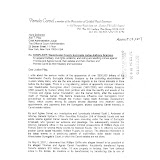
Here's the letter.......(more tomorrow........)


Integrity in the Courts
“Injustice anywhere is a threat to justice everywhere.” (Dr. Martin Luther King, Jr.)


February 2, 2009

The Honorable Carmen Beauchamp Ciparick
Acting Chief Justice of the New York Court of Appeals
REDACTED BY REQUEST
REDACTED BY REQUEST
via REDACTED BY REQUEST

RE: Call for Action on Corruption in the New York State Judiciary and Bar

Dear Judge Ciparick:

Your status as the state’s top Justice has renewed the promise of hope to the great people of New York. We loudly echo what the Hon. David Paterson said about you in November of 2007, “[Judge Ciparick] has pursued justice in accordance with the rule of law in an exemplary manner and is one of New York’s finest public servants.” Judge Ciparick, we need your immediate help and leadership in reforming the condition of avarice and corruption that exists within and about our state’s court system.

Immediately troubling is the revelation from public testimony at the January 27, 2009, NYS Senate Judiciary Committee hearing before Chairman, Senator John L. Sampson: the existence of dozens of complaints that have been “white-washed” by the Commission on Judicia Conduct, and that have resulted in tainted information produced by the CJC and sent to the Commission on Judicial Nomination.

The evidence is clear: the New York State Commission on Judicial Conduct and the statewide attorney grievance committees are irreversibly corrupt. The growing outcry, volume of lawsuits and complaints from every corner of this state represents the serious condition of wholesale corruption and lawlessness by those charged with “ethics oversight.” The time for action is now, and the most capable person is you, this state’s judicial leader. We respectfully request that you take immediate, and public, action.

Our two-year-long research has revealed a troubling state court “ethics” oversight structure that is itself corrupt. We have documented dozens of examples where the law, attorneys, litigants, state employees and, in fact, judges have been targeted for annihilation simply because of a political whim or the vengeful, misguided desires of a few. Conversely, we have evidence of many outrageous and criminal acts by certain individuals within and about the state court system that have been substantively ignored for no other reason than their favored position or political affiliation.

We have asked Senator Sampson to hold statewide, and televised, public hearings so that formal findings and recommendations may be presented to state lawmakers for appropriate action. We have commitments from current and retired New York attorneys and judges who wish to testify before him.

We ask that you publicly support the holding of public hearings, by the State Senate, into the corruption at the Commission on Judicial Conduct and the various attorney grievance committees.

True “ethics oversight” must be restored, and the current system of destruction and cover-up must end. We are confident that future generations will echo our gratitude of your restoration of our faith in our government and in our system of law.


Very truly yours,

Frank N. Brady
Integrity in the Courts
347-632-9775 (tel)


cc:

Governor David Paterson
All media outlets
All NYS Senators


TO SEE THE LETTER, CLICK HERE

Big News Coming Later Today, Monday, February 2, 2009

Big News Coming Later Today, 
Monday, February 2, 2009 - 
Check Back After 4:00pm

Sunday, February 1, 2009

On-Going Corruption at the Commission on Judicial Conduct

Judge Dread
The New York Post by Brad Hamilton - December 19, 2004 -- EXCLUSIVE

He could be the worst judge in the state.

At least that's what some people in Columbia County are saying about Paul Czajka, a local jurist under fire for allegedly making outrageous rulings, including giving custody to an abusive mom
who "circumcised" her boy with a lit cigarette.

The boy's father and at least six other litigants filed complaints about Czajka to the state's court watchdog, casting him as a vindictive tyrant who's sided with bad parents to favor lawyers he once worked with when he was the district attorney or in private practice. The judge also has been hit with a federal civil suit in Manhattan by Wall Street financial consultant John Chase, who claims Czajka ruled for his ex-wife Kristin despite her facing bank fraud charges. "He's the most complained-about judge we've ever seen," said George Courtney, who heads the Columbia County chapter of the statewide Fathers' Rights Association. But it's not just men he's outraged.

Three complaints are by women, including Michelle Mayer, a battered wife and mother of four who says Czajka illegally removed her kids because she exposed them to beatings she suffered by her ex-husband, though he was arrested when she called the cops.  But no action has been taken against Czajka (pronounced ch-EYE-kah), 50, a politicall connected Republican who narrowly won re-election to a 10-year term despite being ripped by one of the most respected lawyers in the state.

Complaints to the state's Commission on Judicial Conduct allege:

* The judge failed to protect a 13-year-old boy who's allegedly endured years of abuse, including the nightmarish circumcision, a scalding with hot water on his side and broken ribs.  The boy also accidentally severed his fingertips when his mother allowed him to play with a chainsaw, according to a complaint by the father, carpenter John Calkins, 32, who's been battling for custody of the kid.  Calkins claims the mother once informed him that her family knew the judge.

* Czajka has in two cases jailed fathers in custody fights, one who served time for violating a court order by discussing custody with his wife after an accident in which she got drunk and smashed into a telephone pole, injuring one of her daughters.

* Czajka engaged in a "vendetta" against another father, plumbing contractor George Ihlenburg, who did work at the judge's home and believes he was targeted because Czajka wasn't happy with the job, his complaint says.

* Czajka railroaded an elderly husband, Herbert Stickles, 69, into a sex-abuse conviction after false charges were brought against the man, by allowing his lawyer to not present a defense, according to his wife, Pat. She claims the case was retribution for her suing the county after being sickened by the social-services building where she worked in Hudson, an office put up over an old oil-storage facility. 

A court observer, John Dunne, said of the jurist: "The criticism is he's often insensitive to the needs of women and children." Dunne is the former head of the state senate's judiciary committee and now part of a blue-ribbon panel to restore public confidence in how New York judges are elected. He served as a juror in a case before Czajka — though it wasn't a family matter — and told The Post he came away with an "unfavorable" opinion of him, though he wouldn't elaborate.

So Dunne crossed party lines to back challenger Pam Joern, who slammed Czajka — who handles criminal, family and surrogate cases — claiming he's too quick to remove kids from their parents. Figures show that rural Columbia County has the highest number of children in foster care per capita in the state: 4 per 1,000 — the statewide average is 2.5. "The problem is he's an attractive man and kind of charming, but he gets on the bench and he's destructive," said Joern, a 54-year-old lawyer. "He's an arrogant, narcissistic, nasty person. He's got a huge chip on his shoulder." Said Philip Mann, an advocate who encouraged the litigants to tell their stories, "

Chief Judge Judith Kaye and Gov. Pataki were both sent these complaints, and I believe it was their acquiescence that empowered Judge Czajka." The CJC has never publicly censured Czajka and dismissed the Mayer and Ihlenburg complaints. Czajka, saying ethics prevented him from discussing cases, said, "There has never been a case before me where a parent has alleged to have burned a child's penis."

James Whitey Bulger

RE: James Whitey Bulger -- MEMO to "Concerned Citizen" with James "Whitey" Bulger Information -- Dear "Concerned Citizen," Yes. As you desire, your complete confidentiality can be assured. Frank Brady - telephone: 347-632-9775 telephone; email: corrupcourts@gmail.com or FrankNBrady@gmail.com

Blog Archive

See Video of Senator John L. Sampson's 1st Hearing on Court 'Ethics' Corruption

The first hearing, held in Albany on June 8, 2009 hearing is on two videos:


               Video of 1st Hearing on Court 'Ethics' Corruption
               The June 8, 2009 hearing is on two videos:
         
               CLICK HERE TO SEE Part 1
               CLICK HERE TO SEE Part 2
Add to Technorati Favorites